Ali Khamenei

Israeli military attacks Hezbollah in Lebanon

A damaged apartment in a building following an Israeli airstrike in Al Jamous, in Dahieh, southern suburbs of Beirut, Lebanon, on Monday, March 2, 2026. Photo by Wael Hamzeh/EPA

March 1 (UPI) — The Israeli military was attacking Hezbollah targets in neighboring Lebanon, amid worries that its war with the United States against Iran may escalate and spill across the region.

The Israel Defense Forces announced its military offensive hours after sirens triggered by projectiles launched from Lebanon sounded throughout northern Israel.

The Israeli strikes were retaliatory, the IDF said in a statement.

Strikes targeted senior Hezbollah operatives in the capital, Beirut, according to the Israeli Air Force, which said it also struck “a key terrorist” in southern Lebanon.

“Hezbollah opened a campaign against Israel overnight, and is fully responsible for any escalation,” IDF Chief of General Staff Lt. Gen. Eyal Zamir said in a statement.

“Any enemy that threatens our security will pay a heavy price — we will not allow any harm to come to the people of Israel and our northern border.”

In an update, the IDF said targets included command and control centers, launch sites and senior Hezbollah operatives.

In the recorded statement, an IDF spokesperson said they were prepared for a Hezbollah response prior to attacking Iran on Saturday.

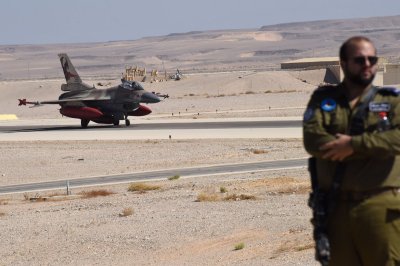
The spokesperson said Israeli fighter jets were continuing to strike Iran.

According to Lebanon’s Health Ministry, at least 31 people were killed and 149 wounded in the overnight attacks in the country’s south and Beirut’s Dahiyeh district, the state-run National News Agency reported.

It said 11 were killed and 58 injured in south Lebanon and 20 killed and 91 injured in the southern suburbs.

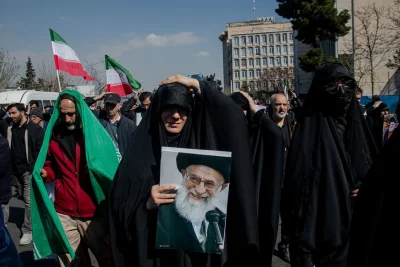
The strikes come less than 48 hours after the United States and Israel began their military operation to force regime change in Iran. Iran’s spiritual leader, Ayatollah Ali Khamenei, was killed in the strikes, along with other senior officials. Iran will form a three-member interim council until a new leader is chosen, according to the semi-official Tasnim News Agency.

Iran has responded by attacking U.S. bases throughout the Middle East. Tehran’s proxy militias have also launched attacks, including Hezbollah.

Three U.S. service members were killed and five seriously injured in Kuwait. At least nine Israelis were killed in strikes in Beit Shemesh, located about 20 miles west of Jerusalem, Israel’s Magen David Adom emergency service said in a statement. More than 20 were injured in the strike.

In Iran, more than 200 people have been killed, according to state media citing the Red Crescent. The Iran Mission to the United Nations said more than 150 school children were killed in a strike on a school in the southern city of Minab.

Lebanese Prime Minister Nawaf Salam condemned the launching of rockets from southern Lebanon toward Israel.

He described the Hezbollah strikes as “an irresponsible and suspicious act that endangers Lebanon’s security and safety and provides Israel with pretexts to continue its attacks.”

“We will not allow the country to be dragged into new adventures, and we will take all necessary measures to stop the perpetrators and protect the Lebanese.”

Source link

At least 22 people killed in anti-U.S. protests in Pakistan

Plumes of smoke rise above the skyline of Tehran, Iran’s capitol, after explosions in the city on Sunday. Protests have occurred across the Middle East, including one in Pakistan where more than 20 people died. Photo by Hossein Esmaeili/UPI | License Photo

March 1 (UPI) — Some 22 people were killed amid anti-U.S. protests in Pakistan Sunday, following the U.S.-Israeli offensive Saturday that left 200 people dead.

In Karachi, at least 10 people were killed as they attempted to storm the U.S. Consulate, while two were killed in Islamabad and another 10 killed in Gilgit-Baltistan, the New York Times reported.

“When Iran is attacked, we feel our faith, our identity and our very existence are being targeted,” a student protestor in Karachi said, The Times reported.

The country’s supreme leader, Ayatollah Ali Khamenei was among the dead following the U.S. and Israeli attacks.

In response, protests are swelling across the region, including in Iraq and India.

“We must also ensure that those who are mourning in Jammu and Kashmir are allowed to grieve peacefully,” said the area’s chief minister Omar Abdullah, NDTV World reported. “The police and administration should exercise utmost restrain and refrain from using force or restrictive measures.”

Barron’s reported that protests against the U.S. are anticipated in North Africa, South Asia and across the Middle East.

The U.S.-Israeli airstrikes followed indirect negotiations between the United States and Iran regarding nuclear weapons on Thursday.

Iranian officials had said that additional talks were planned.

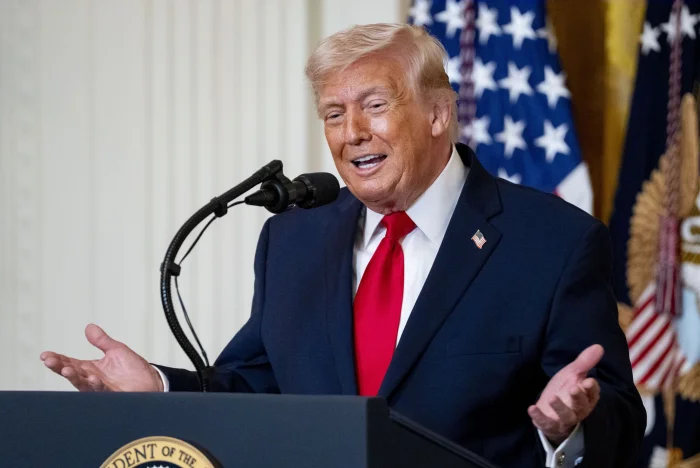
President Trump had previously increased military presence in the region and threatened escalation if no deal was reached.

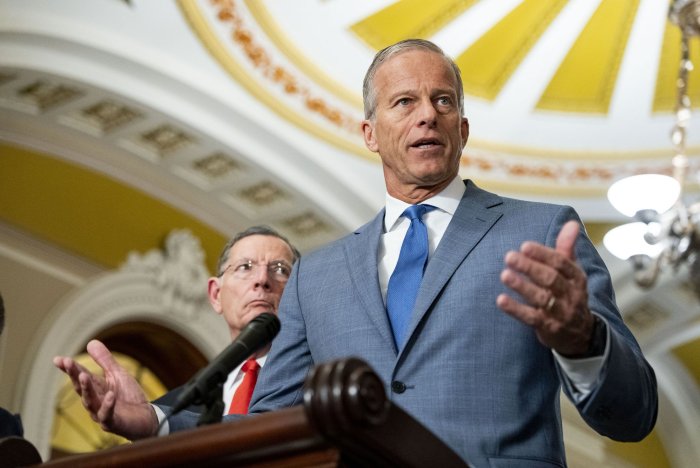
Senate Majority Leader John Thune, R-S.D., speaks during a press conference after the weekly Republican Senate caucus luncheon at the U.S. Capitol on Wednesday. Photo by Bonnie Cash/UPI | License Photo

Source link

Lebanon warns of ‘adventures’ dragging it into U.S.-led war on Iran

Lebanese Prime Minister Nawaf Salam, pictured at Lebanon’s presidential palace in Baabda in 2025, said that his country will not be dragged into “adventures” that threaten it’s security and unity. File Photo by Wael Hamzeh/EPA-EFE

Feb. 28 (UPI) — BERUIT — Lebanese Prime Minister Nawaf Salam said on Saturday that he rejects any attempt to drag his country into “adventures” that threaten its security and unity, indirectly calling on Iran-backed Hezbollah to refrain from involving Lebanon in the ongoing U.S.-led war on Iran.

Salam’s warning coincided with a statement from the U.S. Embassy in Lebanon urging U.S. citizens still in the country to leave “now, while commercial options remain available.”

In a post on X, the prime minister appealed to all Lebanese “to act with wisdom and patriotism” in light of the “dangerous developments in the region,” urging them to place Lebanon’s interests “above any other consideration.”

“I reiterate that we will not accept anyone dragging the country into adventures that threaten its security and unity,” he said, referring to Hezbollah, which previously announced that it would not remain neutral if Iran were attacked and its leader, Ayatollah Ali Khamenei, were targeted.

Salam, who also held a meeting with several ministers and relief officials, urged sparing the country the “repercussions” of the war on Iran, which broke out Saturday morning with joint U.S.-Israel attacks and prompted Iranian retaliatory strikes on Israel and U.S. targets across the Gulf Arab states.

When asked whether Hezbollah had reassured the Lebanese state that it would not participate in the war, he reiterated his call to spare Lebanon another war that “would bring even more suffering upon the Lebanese people.”

He was referring to the war with Israel that broke out on October 8, 2023, when Hezbollah opened a front in support of Gaza, during which top Hezbollah leaders, military commanders, and Lebanese civilians were killed, and substantial damage was inflicted, with border villages in southern Lebanon completely destroyed.

Despite a cease-fire agreement reached on Nov. 27, 2024, Israel continued to operate with near-total freedom, striking suspected Hezbollah operatives and positions almost daily, causing further destruction and casualties, including among civilians.

Salam and President Joseph Aoun also conducted diplomatic contacts in an effort to keep Lebanon “neutral and spare it from the repercussions” of the ongoing war in the region.

Aoun, for his part, affirmed that sparing Lebanon from “the disasters and horrors of external conflicts” and preserving its sovereignty, security, and stability are “absolute priorities.” Later, he was informed by U.S. Ambassador to Lebanon Michel Issa that Israel has “no intention of escalating” against Lebanon, as long as there are no hostile actions from the Lebanese side, according to a presidential statement.

Hezbollah, for its part, announced the postponement of a Saturday event during which its Secretary-General, Sheikh Naim Qassem, was scheduled to speak. Instead, it released a statement condemning “the treacherous U.S.-Israeli aggression” that targeted Iran after months of threats aimed at forcing it to “surrender.”

Hezbollah also expressed “full solidarity” with Tehran and urged the countries of the region to “stand against this aggressive scheme and recognize its dangers,” warning that “its dire consequences will affect everyone without exception if left unchallenged.”

It refrained from hinting to the possibility of supporting Iran militarily.

The Prime Minister condemned Iran’s strikes targeting Qatar, Bahrain, Jordan, the United Arab Emirates, Kuwait, and Saudi Arabia, during calls with their top officials to reaffirm Lebanon’s solidarity against such “aggressions.”

Asked whether the U.S. Embassy in Lebanon and the Hamat military base, which hosts U.S. training teams, might be targeted by Iran, Salam said he could not rule it out but noted that all necessary security measures had been taken to prevent such attacks.

He also confirmed that his government was prepared for “any emergency,” having adopted “proactive measures” in anticipation of war, and assured that food, medicine, and fuel were available in quantities sufficient to meet citizens’ needs for at least two months.

He noted that Beirut’s Rafik Hariri International Airport remains open, with the country’s national carrier, Middle East Airlines, operating as usual — except for countries in the region that have closed their airspace. He added that some airlines have canceled their flights to Lebanon.

His comments came at a time U.S. citizens were urged by the U.S. State department not to travel to Lebanon and those who are already in the country to leave “now while commercial options remain available.”

Senate Majority Leader John Thune, R-S.D., speaks during a press conference after the weekly Republican Senate caucus luncheon at the U.S. Capitol on Wednesday. Photo by Bonnie Cash/UPI | License Photo

Source link