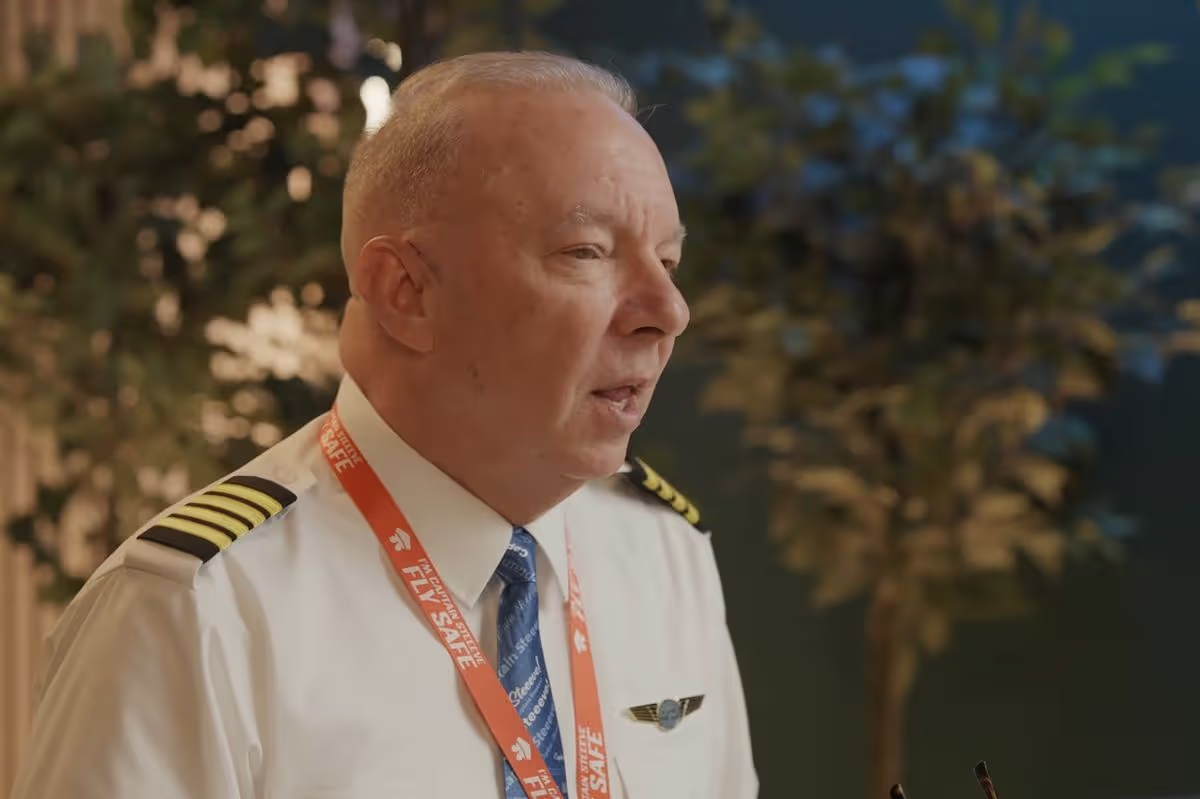
Captain Steve Scheibner, an American Airlines pilot popularly known as Captain Steeeve, noted that he turns his device off, stating that he can “live without” it until the plane reaches 10,000 feet

Captain Steve Scheibner was asked this question in a recent Q and A session
(Image: Captain Steeeve/YouTube)
An airline pilot has shared the real reason why we have to switch our phones to airplane mode when we take to the skies. A common query among passengers, activating airplane mode on our phones is considered a crucial safety precaution, and one pilot appears to have confirmed that it remains important when we travel in 2026.
Captain Steve Scheibner, an American Airlines pilot popularly known as Captain Steeeve to his YouTube audience, was asked this very question in a recent Q and A session for his channel.
In the video, titled “The TRUTH About Airplane Mode!”, when asked why we need to enable airplane mode during taxi, take-off, and landing, he addressed the initial “uncertainty” among authorities concerning the use of mobile phones.
He explained that, at the time, it was questioned whether these devices could “impact the navigation equipment” on the plane, and Steve wants to ensure that it’s not being “interfered with”.
Indeed, the airline pilot also described how the US‘ Federal Aviation Administration (FAA) completed a “whole bunch of tests” and made a decision based on an “abundance of caution”.
Captain Steve said: “Okay, so years and years ago, when we first started getting all these devices that we carried with us, there was a lot of uncertainty about if it would impact the navigation equipment of an airplane.
“So the FAA did a whole bunch of tests, and they came up with some stuff. They thought, you know, out of an abundance of caution, let’s get everybody to turn off their devices, or that’s what they came up with, airplane mode, and they just put them in airplane mode so they don’t transmit.
“And if you think about it, you’re in a long metal tube and at one end is all my electronic and navigation gear. So I want to make sure that that’s operating properly and it’s not being interfered with by anything.”
Steve claimed that you could, if you so desired, find “thousands” of YouTube videos and websites covering “what a bunch of bunk it is”, but he stressed that he simply wants to be “cautious and safe”.
He noted that he indeed turns his device off and pointed out that he can “live without” it until the plane reaches 10,000 ft, and “so can you”.
However, Steve also went on to highlight an occasion when they can be a “concern”.
He added: “On rare occasions, all those devices can cause some interference for the navigation gear, and that’s really a concern if I’m in bad weather.
“If it’s really clear outside, is it a big deal? Not really, but you know, you didn’t hear that here. Okay, there you go.”