Aid

Trump administration offers $100m in aid to Cuba in exchange for reform | Donald Trump News

Amid an oil blockade against the island, the US blames Cuba’s communist leadership for ‘standing in the way’ of aid.

The United States has offered $100m in humanitarian assistance to Cuba on the condition that the island’s communist government agrees to “meaningful reforms”.

The sum was made public in a statement from the US State Department on Wednesday, though the administration of President Donald Trump underscored it had made the offer privately in the past.

Recommended Stories

list of 3 itemsend of list

But the $100m comes with strings: namely, that Cuba’s government commits to Trump-approved changes.

“Today, the Department of State is publicly restating the United States’ generous offer to provide an additional $100 million in direct humanitarian assistance to the Cuban people,” the statement said.

“The decision rests with the Cuban regime to accept our offer of assistance or deny critical living-saving aid and ultimately be accountable to the Cuban people for standing in the way of critical assistance.”

The statement marks the latest chapter in an ongoing pressure campaign designed to destabilise Cuba’s communist leadership.

Since Cold War tensions in the 1960s, the US has placed a comprehensive trade embargo on the Caribbean island, in part as a reaction to the Cuban Revolution.

It has become the longest-running trade embargo in modern history, and the US has justified its continuation by pointing to systematic repression under Cuba’s communist government.

But critics have denounced the trade embargo as worsening humanitarian conditions on the island.

The crisis reached a tipping point in January, after Trump abducted Venezuelan President Nicolas Maduro, a close ally of Cuba.

In the following weeks, Trump cut off Venezuelan funds and oil supplies to Cuba. He then threatened economic penalties against any country that supplied Cuba with fuel, implementing a de facto oil blockade on the island.

Since then, only one Russian oil tanker has reached Cuba in late March. That month alone, the island suffered two island-wide blackouts.

Cuba relies heavily on foreign imports of oil to power its ageing energy grid. Only 40 percent of its oil supply is produced domestically, according to the International Energy Agency.

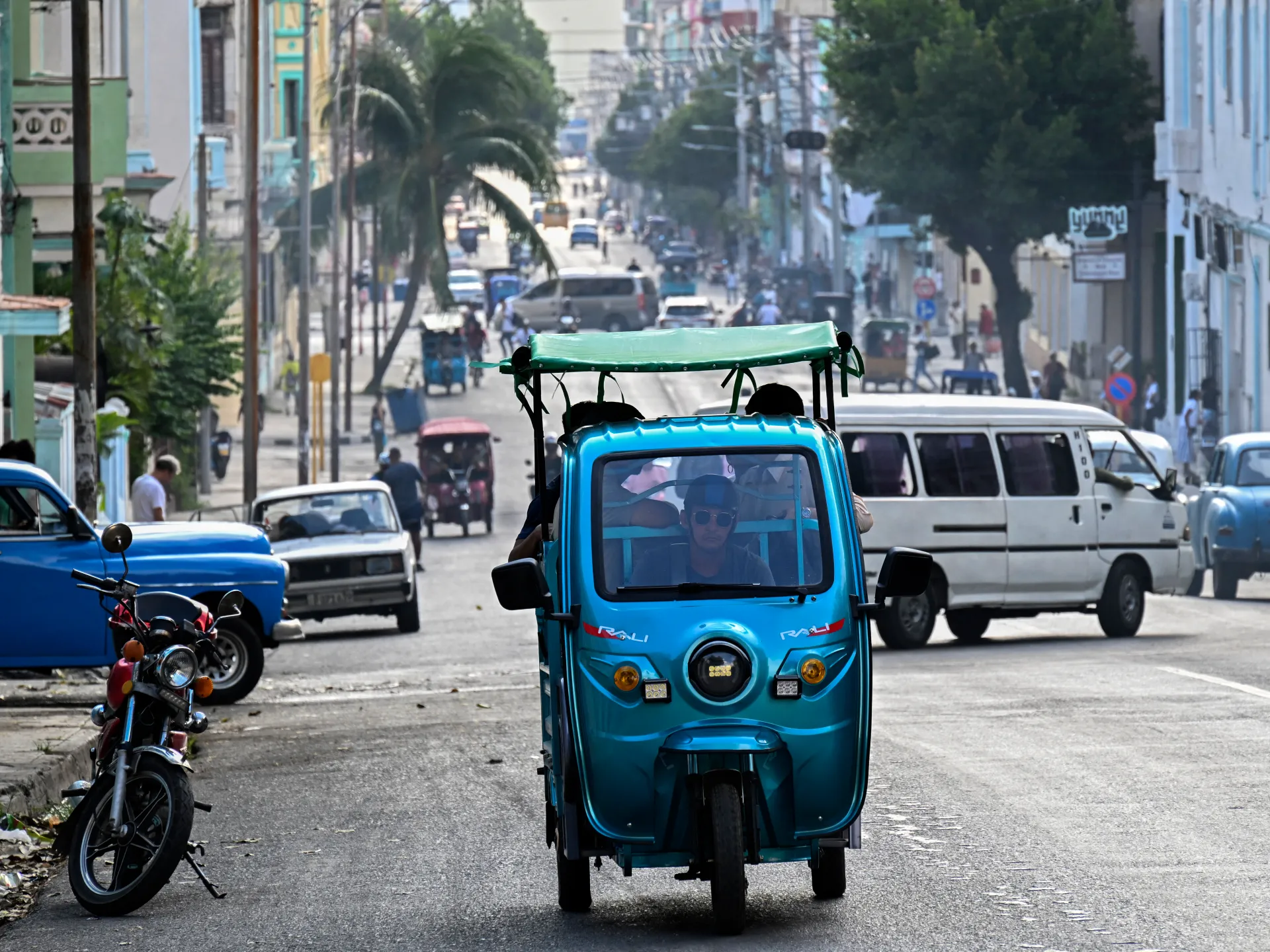
The United Nations warned earlier this year that Cuba faces the possibility of humanitarian “collapse”, with public transportation grinding to a halt, food prices soaring and public services like hospitals struggling to keep the lights on.

Trump, meanwhile, has repeatedly threatened to shift his focus to Cuba after the US-Israeli war on Iran ends, saying the island is “next” on his list of countries where he would like to see regime change.

“As we achieve a historic transformation in Venezuela, we’re also looking forward to the great change that will soon be coming to Cuba,” Trump told Latin American leaders at a summit in March.

“Cuba’s in its last moments of life as it was. It’ll have a great new life, but it’s in its last moments of life the way it is.”

Earlier this month, the US president issued a fresh wave of sanctions against the Cuban government, accusing the island of posing “an unusual and extraordinary threat to US national security and foreign policy”.

Media reports have also indicated that the Trump administration has stepped up its surveillance flights around Cuba, possibly in preparation for a surge of military assets to the Caribbean.

In Wednesday’s statement, the State Department blamed the communist system for having “only served to enrich the elites and condemn the Cuban people to poverty”.

It did not mention the US role in the humanitarian crisis on the island but instead described Cuba’s government as a hurdle to delivering much-needed aid.

“The regime refuses to allow the United States to provide this assistance to the Cuban people, who are in desperate need of assistance due to the failures of Cuba’s corrupt regime,” the State Department wrote.

It added that, should Cuba accept its terms, the $100m would be distributed through the Catholic Church and “other reliable independent humanitarian organizations”, rather than through the island’s government.

Source link

Cuba denies $100 million U.S. humanitarian aid offer exists

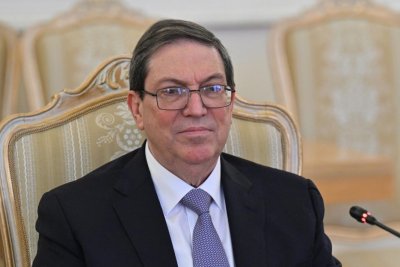
“Someone should ask the U.S. Secretary of State about the fable of the alleged offer of $100 million in humanitarian aid to Cuba, which nobody here knows anything about,” Cuban Foreign Minister Bruno Rodriguez Parrilla wrote on social media. File Photo by Hector Retamal/EPA/Pool

May 12 (UPI) — Cuba’s foreign minister has denied his government received a $100 million offer in humanitarian aid from the United States, after Secretary of State Marco Rubio publicly claimed Washington tried to send assistance and Cuban authorities refused to distribute it.

In a message posted on X, Bruno Rodríguez Parrilla described Rubio’s version as a “fable” and a “$100 million lie,” and questioned who would finance the aid, how it would be distributed and whether it would consist of cash, fuel, food or medicine.

“Someone should ask the U.S. secretary of state about the fable of the alleged offer of $100 million in humanitarian aid to Cuba, which nobody here knows anything about,” Rodríguez wrote.

Rodríguez also questioned whether the alleged assistance would be “a donation, a deception or a dirty business to undermine our independence,” and argued that “lifting the fuel blockade would be easier.”

The statements responded to comments made Friday by Rubio during a press conference in Italy, where he said the United States offered humanitarian aid to Cuba and that the island’s government did not allow its distribution.

“We have offered the regime there $100 million in humanitarian aid, which unfortunately so far they have not agreed to distribute to help the people of Cuba,” Rubio said.

The secretary of state added that Washington had previously delivered about $6 million in humanitarian aid channeled through Catholic charity Caritas and said the United States seeks to expand assistance because of the island’s economic and social deterioration.

“We want to help the people of Cuba, who are being hurt by this regime, which has destroyed the country and the economy,” Rubio said.

Meanwhile, President Donald Trump announced Tuesday that he will hold talks with Cuba, although he did not provide specific details about the scope of those contacts.

In a post on Truth Social, Trump described Cuba as “a failed country” and wrote, “Cuba is asking for help, and we’re going to talk!”

According to El Nuevo Herald, Rubio also said he discussed the Cuban situation with Pope Leo XIV during a meeting held at the Vatican. Rubio blamed the Cuban government for preventing greater humanitarian assistance.

The exchange came amid a renewed rise in tensions between the governments of Trump and Miguel Díaz-Canel after sanctions imposed by the Trump administration against the Cuban military conglomerate GAESA, its director and mining company Moa Nickel.

Rubio announced the measures last week as part of an economic offensive aimed at restricting the Cuban regime’s sources of income and pressuring the island for political and economic reforms.

“The sanctions imposed … demonstrate that the Trump administration will not stand idly by while the Cuban communist regime threatens our national security in our hemisphere,” Rubio wrote on social media.


Source link

Olly Murs fights back tears as he starts Soccer Aid challenge ‘I’m petrified’

Things took an emotional turn on ITV’s This Morning as Olly Murs admitted he’s ‘petrified’ ahead of his mammoth charity challenge

This Morning: Olly Murs discusses his marathon challenge

Olly Murs shared his fears before taking on the Soccer Aid UNICEF marathon.

Emotions were running high during the latest instalment of ITV’s This Morning, as 41-year-old singer Olly was interviewed before he set off on a five-day, 400km endurance challenge. Into The Unknown will see Olly travelling from Manchester’s Old Trafford to London Stadium, covering over 400km by running, rowing, and also cycling.

Appearing via video link from Old Trafford, Olly spoke to Jake Quickenden about the mammoth ordeal he has ahead of him. As This Morning presenters Ben Shephard and Cat Deeley watched from the studio, Olly said: “I’m petrified, I am scared. I’m nervous, I’m excited.

“It’s here now. I’ve done the ten weeks of training, you know there’s so many people behind the cameras. There are lovely people here who have come down to see me.”

When asked which activity he’s most scared to do, Olly confessed that the idea of rowing solo is making him feel nervous.

Later in the chat, a video was shown to viewers explaining why the former Voice judge was chosen for the challenge, which aims to raise money for children affected by the war in Ukraine.

After seeing the footage, Olly fought back tears. He said: “It makes me feel really emotional actually and it makes me more determined to get out and raise as much money as you can,” he added: “All we want to do is keep our kids safe and imagine doing that with a war going on.”

Olly will run, row and cycle from Manchester’s Old Trafford, the birthplace of Soccer Aid, all the way to London Stadium in Stratford, which will host this year’s landmark match.

The gruelling five-day challenge will push him to his limits, with each stage bringing fresh physical and mental demands. From steep climbs and difficult terrain to daunting stretches on the water, it’s set to be one of the toughest tests he’s ever faced.

To add to the pressure, Olly won’t discover the route for each day until just before he begins, with the details revealed live on national radio.

With no chance to prepare ahead of time, every stage will come with a new surprise.

This Morning airs weekdays from 10am on ITV1.

Source link