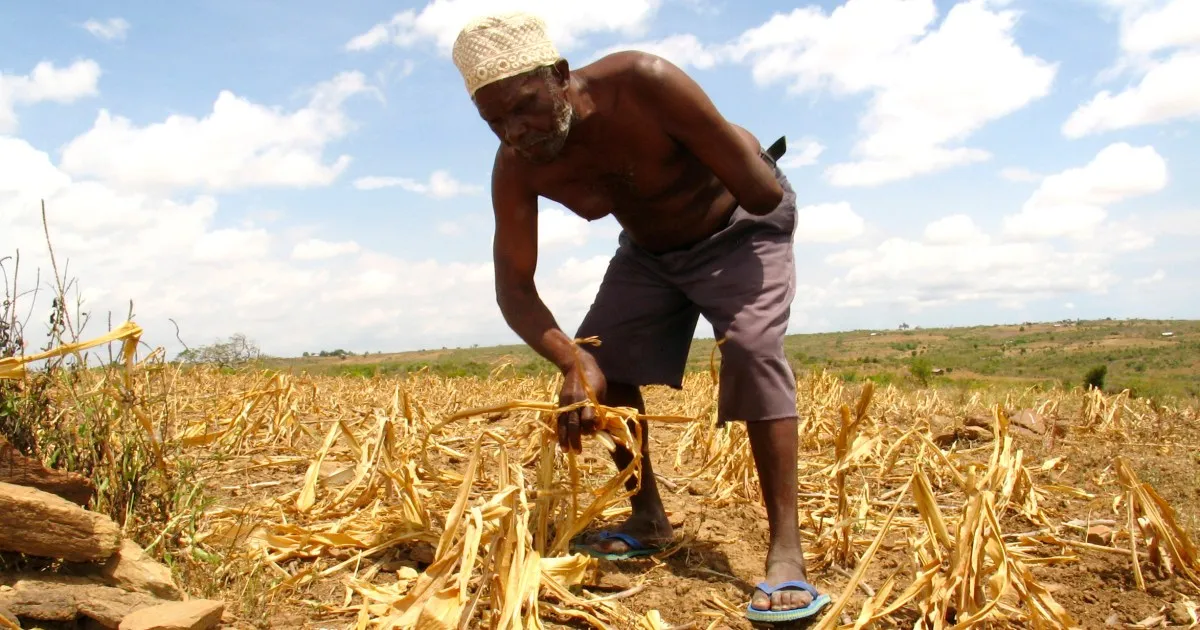
Israeli settlers have carried out attacks and pogroms disrupting the Palestinian olive harvest in the West Bank, while Israeli forces separately detained several Palestinians across the occupied territory.
At least 19 settler attacks were recorded on Friday by the Palestinian Colonization and Wall Resistance Commission, a Palestinian government body operating under the Palestine Liberation Organization (PLO).
Recommended Stories
list of 3 itemsend of list
The commission said the incidents included attacks on Palestinian olive harvesters, the burning and uprooting of olive trees, and the theft of crops and livestock. Other Palestinians and their vehicles were also targeted.
Settlers set fire to Palestinian-owned groves and stole olives in what is considered the most important season for harvesting the single-seeded stone fruit.
More than 50 olive trees were uprooted by settlers in Qusra, the commission said.
Settlers also assaulted and injured Palestinian farmers involved in the harvest in the Tal, where a Palestinian-owned vehicle was set on fire, it added.
Additionally, olive harvesters were attacked in Jorish, Beita, Naqoura, Birzeit, Deir Bzeih and Farata.
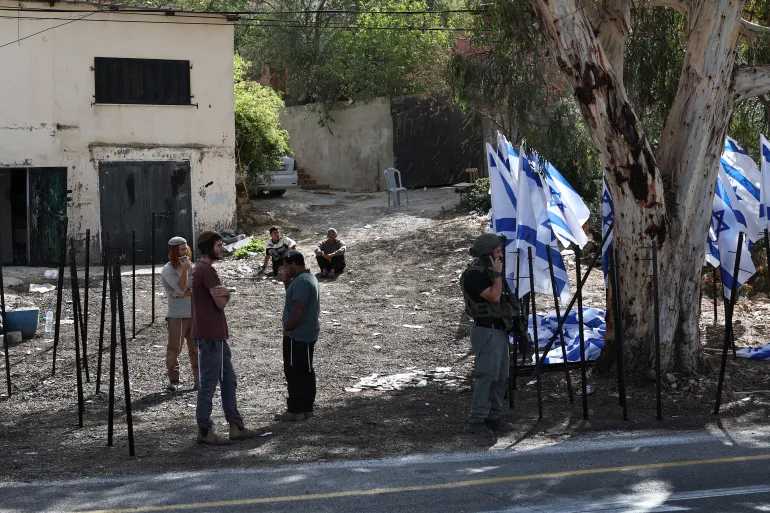
An Israeli security personnel member and Israeli settlers stand near Mou’ayad Mahmoud’s shop in al-Lubban Asharqiya, near Nablus in the West Bank, October 8, 2026 [Atef Safadi/EPA]
A farmer was injured in reported gunfire in Kafr ad-Dik, and the use of live ammunition was reported during a settler pogrom, backed by Israeli forces, in Deir Ballut.
Elsewhere, an elderly Palestinian woman in Berin, east of Hebron, was injured after settlers set their dogs on farmers while sheep were stolen in Ein Qinya.
A Palestinian man and his child were attacked and their vehicle stolen by settlers in Yabrud. Settler attacks on Palestinian-owned vehicles were also reported in the towns of Sarda and al-Rihan.
Brazen attacks against Palestinians
Al Jazeera’s Nida Ibrahim reporting from Ramallah in the occupied West Bank said settlers, backed Israeli forces, have grown more brazen in their attacks against Palestinians during the olive harvest despite the presence of foreign activists and observers.
“Palestinians have to go about the harvest in large groups, that include international solidarity activists, to try to stop settler intimidation and attacks,” Ibrahim said, adding that the settlers wait for the groups to start leaving at the end of the harvest, before springing into action.
“It has become a very difficult journey, as the Palestinians try to leave the harvesting areas, Israeli settlers continue to intimidate them under the protection of the Israeli army,” she said.
As Ibrahim reported, a Palestinian family was under attack by Israeli settlers who recently started building an illegal settlement outpost near Ramallah, “using it as a base to attack Palestinians”, she said.
“No one is being spared,” said Ibrahim.
For Palestinians, the olive harvest is supposed to be a joyous season, but instead, they fear settler attacks and intimidation backed by the Israeli forces.
Sixteen Palestinians arrested
As settler attacks and pogroms continue, the Israeli army arrested 16 Palestinians in raids across the occupied West Bank on Friday, according to the Palestinian Wafa news agency and local sources speaking to the Anadolu news agency.
In Hebron, southern West Bank, Israeli forces arrested nine Palestinians after raiding and searching their homes, including Ibrahimi Mosque Director Moataz Abu Sneineh and Hammam Abu Markhiya, an official responsible for the mosque’s custodians, Wafa reported.
In the city of Qalqilya, Israeli forces arrested five Palestinians during a raid, local sources said.
Two other Palestinians were arrested after Israeli forces raided and searched several homes in Beita, south of Nablus, the sources said.
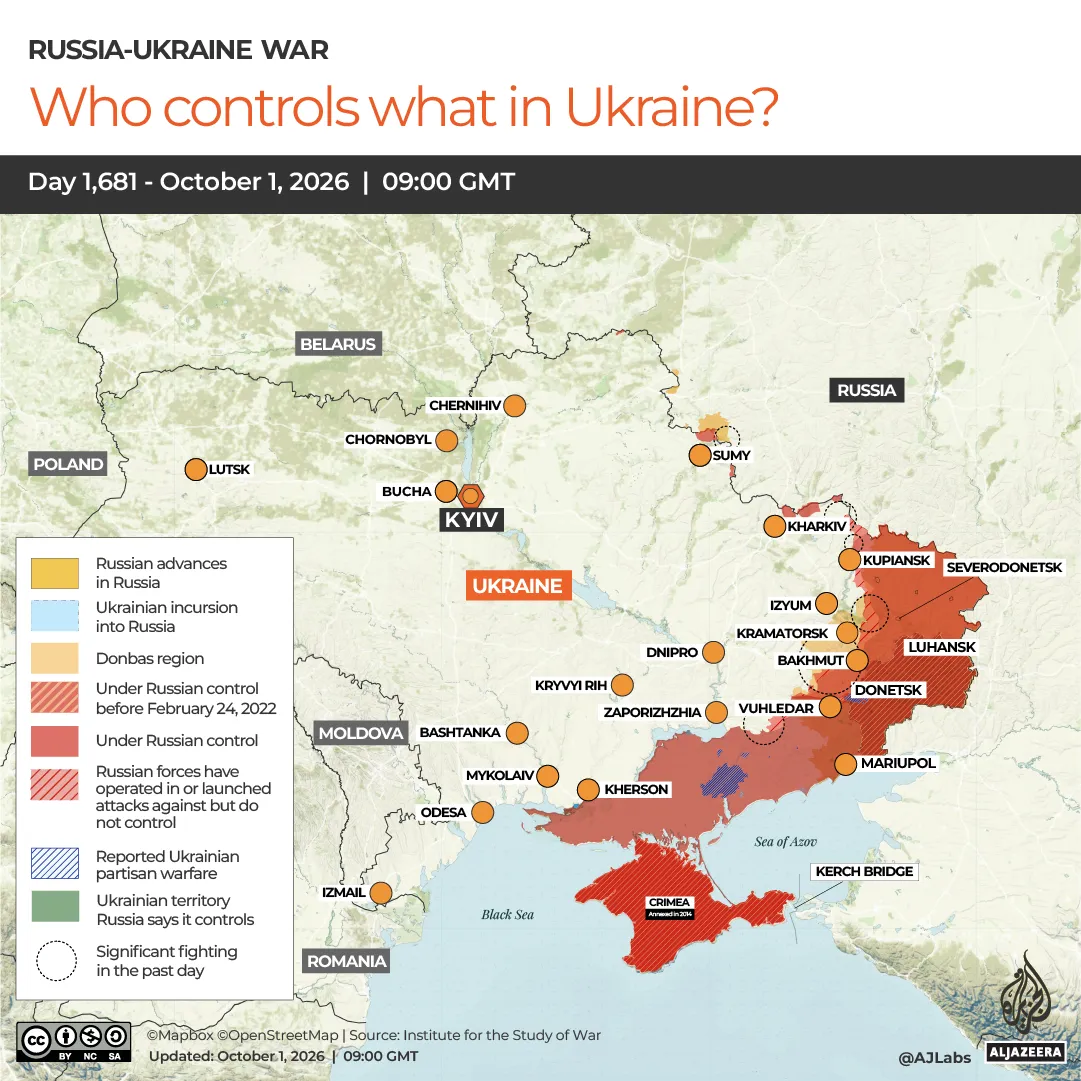
Ukraine says it has received proposals from India, Turkiye, Egypt and the United States to broker talks with Russia. The offers come as the two adversaries escalate attacks on each other’s energy and port infrastructure with their war now in its fifth year.
Ukrainian Foreign Minister Andrii Sybiha revealed the four proposals at a briefing in Kyiv on Friday and singled out New Delhi’s. “The most comprehensive is India’s proposal,” he said, adding that India had signalled a willingness to play a role for the first time.
Recommended Stories
list of 3 itemsend of list
None of the proposals aims to end the war. Each seeks a narrower truce, covering energy facilities, ports or commercial shipping in the Black Sea.
Here’s what we know:
What is India proposing?
India has not made its plan public. Quoting unnamed sources, however, Indian media have reported it has three parts. According to the Hindustan Times, it would aim to protect infrastructure, keep grain and energy supplies moving through Black Sea ports, and ensure the safety of commercial shipping.
The first part – mutually halting strikes on energy facilities and ports – matches what Kyiv has been demanding. Sybiha said any deal must be a complete energy truce that covers port infrastructure as well.
The second part builds on the Black Sea Grain Initiative, which Turkiye and the United Nations mediated in 2022 but Russia abandoned in 2023.
The third part, protecting merchant ships and their crews, is particularly important to India because Indian sailors have been killed or harmed on Black Sea routes.
The sources were quoted as saying India’s plan goes further than the other three proposals because it covers infrastructure and shipping together. A Ukrainian official told the Kyiv Independent that it incorporates elements of the Turkish, Egyptian and US initiatives. The Kyiv Post reported that Sybiha also described the plan as addressing a possible ceasefire along the front lines, although other accounts said he gave no specifics.
The proposal likely took shape during Indian External Affairs Minister Subrahmanyam Jaishankar’s first visit to Ukraine last month and in a later meeting with Sybiha at the UN General Assembly in New York, also in September. Jaishankar said New Delhi was “trying to be helpful, starting with the Black Sea safety of shipping issue”.
What do we know about the Turkish and Egyptian proposals?
Very little. Neither Ankara nor Cairo has published details. Both reportedly focus on keeping Black Sea grain supplies moving by suspending attacks on commercial shipping. Some reports said the two countries proposed a grain truce jointly while others described two separate plans.
Turkiye has done this before. With the UN, it steered the 2022 grain deal, one of the few narrow truces of the war to hold for any length of time. Ankara and the UN are now organising new Black Sea talks with a round planned for October.
Beyond its Black Sea focus, almost nothing is known about Egypt’s proposal. Its interest, however, is clear: Egypt relies on Ukraine for nearly one-third of its grain supplies.
What is the US pitching?
According to Ukrainian President Volodymyr Zelenskyy, Washington has proposed three steps: a mutual halt to energy strikes, a reopening of the grain corridor and a trilateral meeting with Ukraine and Russia, possibly in Abu Dhabi.
The latest effort began in early September when US President Donald Trump’s envoys visited Kyiv and Moscow and secured an agreement in principle for a trilateral meeting. Steve Witkoff and Jared Kushner met Russian President Vladimir Putin in Moscow on September 5 while Kremlin envoy Kirill Dmitriev visited the US twice in September.
The trilateral meeting has since been pushed back. It had been expected to take place in the United Arab Emirates in early October. Washington now wants it in late October, and people close to the talks blamed the delay on Russia.
Washington has also invited Putin to the Group of 20 summit in Miami, Florida, in December. “We hope that’s an invitation he’ll accept,” US Secretary of State Marco Rubio said. The Kremlin said no decision has been made.
At the same time, the US is applying pressure to try to end the war. Trump recently signed a law giving him sweeping powers to sanction buyers of Russian energy.
He has also called on Ukraine to stop targeting Russian diesel facilities amid a diesel prices crisis in the US, where Trump faces tricky midterm elections next month. “Mr Zelenskyy has to do one thing,” he said on September 13. “He has to stop knocking out diesel fuel in Russia.” This drew much criticism that Trump instead should focus his comments on Russia, which began the war with its invasion of Ukraine in February 2022.
He is reportedly sceptical about his own government’s latest diplomatic initiative. People familiar with his thinking have told US media that he doubted Putin would agree to an energy truce before winter.
(Al Jazeera)
How have Russia and Ukraine responded?
Sybiha said Ukraine would agree to a truce but with conditions. It would accept an energy and Black Sea shipping ceasefire, but only as a combined package, he said.
He added that Kyiv is also open to an unconditional ceasefire along the current front lines. Zelenskyy backs the US-proposed meeting but stressed it needs “not only Ukraine but also the Russian side” to support it.
Moscow has been warm in tone but has committed to nothing. Kremlin spokesperson Dmitry Peskov said Russia would welcome India’s peace efforts while Putin said Modi has “very good ideas aimed at finding mutually acceptable solutions”, but he did not elaborate.
In private, Moscow appears to have said no. A Ukrainian official told the Kyiv Independent that Russia has rejected India’s proposal although this has not been confirmed publicly. Ukraine’s agriculture minister said Russia had rejected every Black Sea ceasefire option the mediators have presented.
Why are Global South countries becoming more involved?
Food supplies, the lives of their citizens and fuel prices are all at stake.
“I think it’s clear to many countries that this war is not a localised war, but it’s a war that has these global consequences,” Fredrik Wesslau, a senior policy fellow at the European Council on Foreign Relations, told Al Jazeera.
Russia and Ukraine account for more than a quarter of global wheat shipments, and their attacks on each other’s ports helped push wheat futures to a three-year high in August.
Sailors from countries with no links to the war are being killed. At least five Indian seafarers have died in strikes on Black Sea shipping in recent months along with seven Azerbaijani crew members since June. On Saturday, a Russian strike on a Liberian-flagged ship in a port in the Odesa region killed a crew member. Ukraine, for its part, has targeted tankers it links to Russia’s shadow fleet since July.
The energy war is also being felt in global markets. Ukraine reported more than 194 drone attacks on Russian refineries this year, hitting all 11 of the largest. Bloomberg News estimated that Russia’s fuel output has fallen by more than 30 percent. With Middle East supply already down as a result of the US-Israel war on Iran, global diesel markets are more exposed to the loss of Russian supplies.
Maximilian Hess, a nonresident senior fellow in the Eurasia Program at the Foreign Policy Research Institute, said energy is at least as important as grain in driving the diplomatic efforts. He pointed to a “clear frustration” among many countries over high oil prices, which reflect both the Russia-Ukraine war and the crisis in the Middle East.
“Of course, Ukrainian grain is important for them, but the oil-price factor is important there as well,” he told Al Jazeera. “I think it is those commodity-shock concerns that are pushing them to re-embrace this rhetoric, rather than anything else.”
What are the challenges ahead?
Every previous attempt at diplomacy has failed to end the Russia-Ukraine war. A US-brokered, 30-day energy truce in early 2025 collapsed amid accusations of violations on both sides. At talks in Istanbul in May 2025, Zelenskyy complained that Russia had sent a junior delegation with no authority to sign a ceasefire.
In August 2025, a meeting between Trump and Putin in Alaska yielded no results despite Trump claiming to be close to a deal ahead of it.
Wesslau said Washington’s efforts have faltered partly because Trump – who had boasted he would end the war within 24 hours of taking office in January 2025 – has appeared unwilling to put real pressure on Moscow. “The Russians see this, and they conclude that they can continue this war,” he said.
Deep distrust remains. Oleksandr Merezhko, head of the Ukrainian parliament’s foreign affairs committee, said: “Putin never keeps agreements.”
Moscow’s actions on the ground suggest it is in no hurry, Wesslau said “They’re trying to strangle Ukraine, strangle the economy, and make it unliveable ahead of the winter,” he said. He added that Moscow’s occasionally softer rhetoric was aimed mainly at the Trump administration and “has always proved to be a bluff”.
Russia’s terms are another obstacle. Hess said Moscow’s demands have not softened at any point since it launched the war and at times have grown. Putin has demanded all of Ukraine’s Donetsk, Luhansk, Kherson and Zaporizhia regions, including territory Russian forces have never controlled, as well as a buffer zone in northern Ukraine. Moscow is also seeking sanctions relief and military concessions for any Black Sea deal.
“I don’t think it’s a question of who actually mediates. I think it’s really a question of the calculation in Moscow,” Wesslau said. “Fundamentally, the problem is that Putin doesn’t want a ceasefire or a peace agreement. He wants to continue the war. He believes that he can win.”
Analysts said only greater economic pressure is likely to change that calculation.
Wesslau said if Europe can close down Russia’s shadow fleet of oil tankers, “this would be a massive blow to Russia’s war economy.” Hess said the country best placed to shift things quickly is China, rather than the US, by cutting its purchases of Russian oil. However, he added: “I don’t think Beijing is interested in doing so.”
Hess said that unless there is an outside shock, the war “is much more likely to last another four years than another four months”.
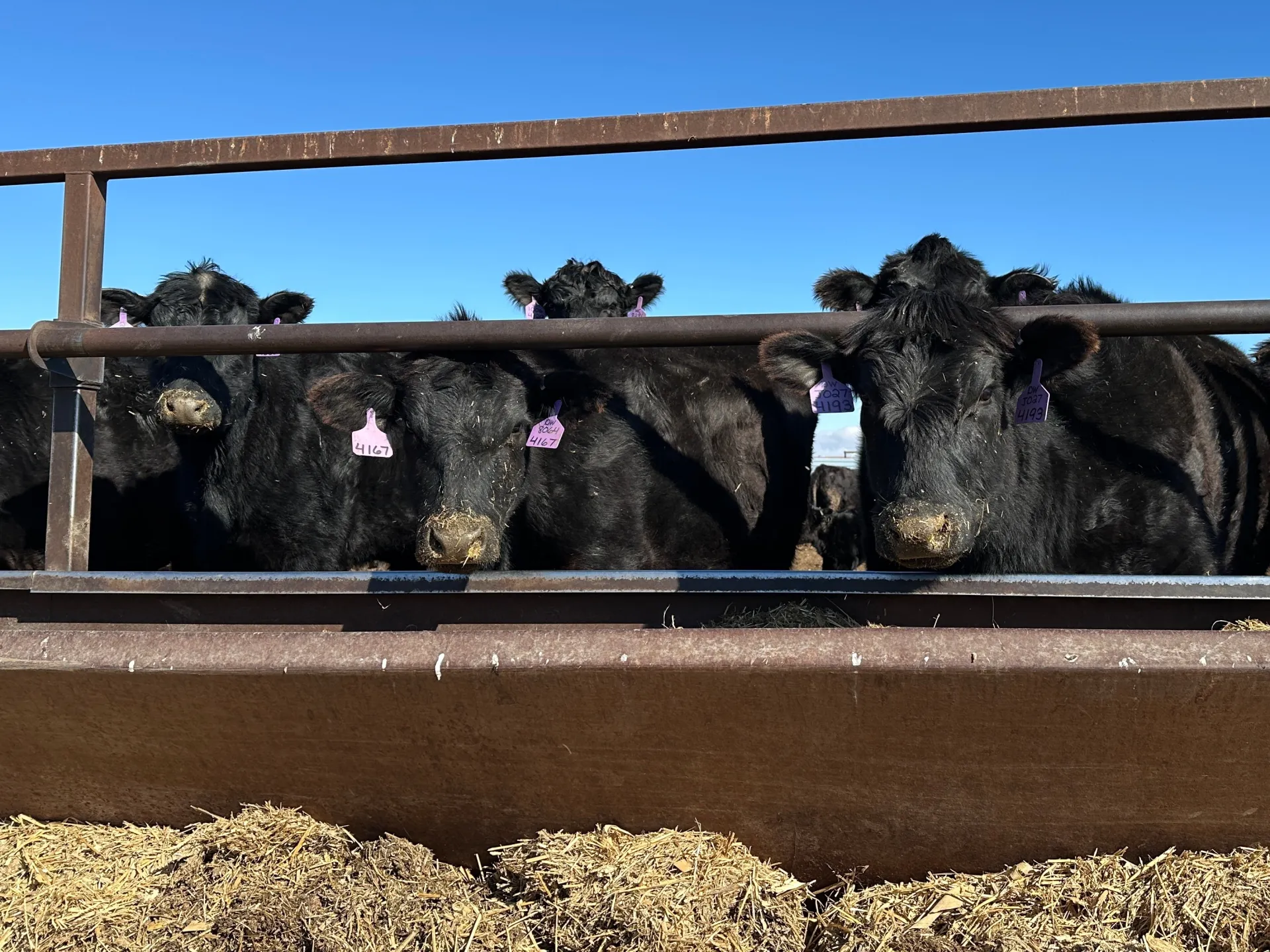
Beef prices are soaring in China. Across the Pacific Ocean in the United States, cattle farmers are complaining that their businesses are becoming increasingly unsustainable. And in India, poultry rearers are slashing their production targets because they cannot afford feed.
More than 90 percent of the world’s population eats meat in one form or another — and a looming meat crisis threatens to affect what they buy at the market, what they cook at home, and what’s served on the table.
At the heart of this is a chain of decisions and uncertainties that consumers rarely see. A cow has to be raised for years before it can become beef. Chickens need feed, much of it tied to global grain and soya bean markets. Farmers need land, water and weather conditions that allow them to keep animals alive and productive.
When any link in this chain is disrupted, a spiralling crisis ensues.
So what is putting the pressure on meat production, and what does it mean for billions of people around the world?
Declining cattle stocks in Brazil, US and China
Brazil, the US and China are the world’s three biggest beef producers, together supplying more than half of the world’s beef. But their cattle herds are shrinking at the same time.
According to a March estimate by the US Department of Agriculture (USDA), Brazil’s total herd this year is estimated at 177.4 million cattle — a nearly 8 percent drop from 192.5 million in 2024.
Over in the US, cattle numbers are at a historic low.
The USDA counted 86.2 million cattle and calves on farms on January 1, 2026. The number of beef cows — the females needed to produce future calves — was 27.6 million, down 1 percent from a year earlier. The 2025 calf crop was also down 2 percent.
In China, the USDA estimated a cattle head count of 94 million in January 2026, down 14 percent from 105 million in January 2024.
In all three cases, beef production is also projected to be down in 2026.
The USDA predicts a 2 percent decline in Brazil’s beef production and a 5 percent fall in exports. As for the US, beef production in 2026 is likely to be 4 percent lower than last year. China’s total beef supply this year is projected to be 12 percent lower than 2024.
The decline in domestic production, coupled with shrinking supplies that can be imported, has sent prices soaring in China — the world’s largest beef consumer and importer.
What’s driving down cattle herds and beef production?
The reasons are many, and they vary from country to country.
Brazil counts China and the European Union as two major markets for its beef exports. But both have imposed import restrictions that have disincentivised Brazilian beef manufacturers. That is partly responsible for the country’s decreased cattle head count, according to an analysis by Augusto Neto at S&P Global, the market intelligence firm.
Additionally, Brazil is currently in what is known as a cattle reversion cycle — when rearers reduce the slaughter of animals and instead try to preserve their female stock to help rebuild their herd — according to the USDA.
In the US, droughts have hit 60 percent of the country’s cattle-rearing area, according to a report by Sampad Nandy of S&P Global. With grazing areas decreasing, feed costs have risen.
Three major organisations, representing breeders in the states of Texas, Oklahoma and Kansas, issued a joint statement this week arguing that Immigration and Customs Enforcement (ICE) raids were disrupting their already strained operations. The meat industry depends heavily on immigrant workers.
If beef prices are rising, shouldn’t rearers want to produce more beef?
In theory, yes. But in practice, high prices do not automatically mean that more cattle can be produced quickly.
Cattle production is constrained by biological supply cycles, Kenneth Foster, professor of agricultural economics at Purdue University, told Al Jazeera. It can take a couple of years for a producer who receives a signal from the market to expand production and actually see the resulting animals enter the beef supply. The quickest way to rebuild a herd is to keep female cattle that might otherwise have been sold and use them for breeding. That is what Brazil is now doing.
But that creates a difficult economic calculation. A producer can sell an animal today at a high price, or keep it for breeding and wait for the next generation. That means carrying the costs and risks of keeping the animal while waiting for it to reproduce.
The result is a market in which strong demand and limited supply can persist even when prices are already high.
The USDA expects the cattle herd to begin rebuilding in the US, but the process is gradual.
The US and Brazil cases illustrate one of the central problems facing meat production: sometimes the constraint is not technology, land or money.
It is time.
Europe’s move from beef to poultry
Meanwhile, Europe presents a different picture. The continent is witnessing a structural change in what consumers are eating.
The EU produced about 42.7 million tonnes of meat in 2025. But EU meat production is projected to decline by about 3 percent between 2025 and 2035, with beef production projected to fall by 10 percent and pork by 7 percent. Poultry is the exception: production is projected to rise by 5 percent.
This shift is also visible in consumption.
Consumption of EU beef and pigmeat is projected to decline through 2035, while poultry consumption is expected to increase by 9 percent.
Beef and pork require longer production cycles and face different economic and environmental pressures. Poultry, by contrast, can respond much more quickly to changes in demand because chickens reach market weight within weeks rather than years.
That difference is becoming increasingly important. The OECD-FAO Agricultural Outlook expects poultry to be the fastest-growing major meat category globally over the next decade, helped by its relatively low cost and short production cycle.
Europe is therefore becoming an example of how a meat system can adapt without simply producing more of everything. Some forms of meat become harder or more expensive to produce, while others expand to fill part of the space.
Poultry has problems too — as India shows
Yet the poultry industry faces its own challenges, with India offering an example.
In June, a large section of India’s poultry industry announced plans to cut production by 25 percent after soya meal prices rose by more than 40 percent in a month.
The decision was announced by the All India Poultry Breeders’ Association after producers faced sharply higher feed costs and a seasonal decline in demand. Producers also began culling parent breeder stocks — birds needed to produce future generations of poultry.
Soya meal is an important protein source in animal feed. When its price rises sharply, poultry producers face a choice: absorb higher costs, raise prices, or reduce the number of birds they produce.
In India’s case, producers chose to cut production.
The consequences extended beyond individual farms. The Reuters news agency reported in May that Indian soya meal prices had risen 41 percent in one month to a four-year high of 66,000 rupees ($687.5) per tonne. India subsequently cancelled 25,000 tonnes of soya meal export contracts and began turning to soya bean imports from African countries.
The takeaway: a shock in one part of the agricultural system can move quickly through the meat supply chain globally.
As farmers try to protect their livelihoods and families try to keep food on the table, changing climates, rising prices, shifting dietary preferences and growing trade barriers are together reshaping the future of meat — and what we eat.
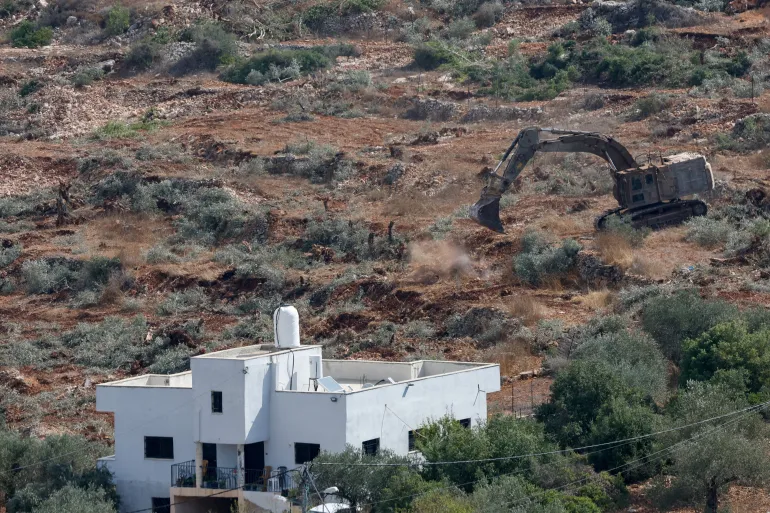
Israeli bulldozers uprooted olive groves near Ramallah in the occupied West Bank weeks before the annual harvest.
Published On 24 Sep 202624 Sep 2026
Israeli army bulldozers have ploughed through rows of olive trees in a village near Ramallah in the occupied West Bank, just as Palestinian farmers were preparing to begin their annual harvest, residents told the Reuters news agency.
Palestinian farmer and landowner Abd Alfattah Tamimi said the army had destroyed the olive trees planted on his family’s land as well as his neighbours’.
Recommended Stories
list of 3 itemsend of list
The demolition in the village of Deir Nidham started on Monday and continued on Tuesday, the Palestinian news agency Wafa reported.
“They don’t care about anyone, but God is up there, and we are steadfast here with our souls,” he said. “They are uprooting, and we will plant again with the help of God,” he said.
Another farmer, Nather Tamimi, told Reuters the timing of the demolition was designed to inflict maximum damage ahead of harvest season, which traditionally begins in October.
He said that his family produced about 120 drums of olive oil from the land each year.
The Israeli army also “uprooted all kinds of trees even from between the houses”, Nather Tamimi said.
Israeli military machinery uproots olive trees near the Palestinian village of Deir Nidham near Ramallah, in the occupied West Bank, September 23, 2026 [Mohammed Torokman/Reuters]
Israel’s military said it was checking Reuters’ request for comment but had not responded by Wednesday evening.
In the past, Israel has cited the need to clear land of olive trees to prevent security threats or ambushes on troops.
Palestinian human rights groups reject this, saying the destruction in effect deprives Palestinian farmers of income from the sale of olives and olive oil, while uprooting trees they view as a symbol of their connection to the land.
The Palestinian Authority’s Colonization and Wall Resistance Commission said Israeli attacks on agricultural land in August affected 21,508 trees, including 19,375 olive trees.
They estimated this year’s olive production at 21,000 tonnes, compared with local demand of about 15,000 tonnes.
Abbotsford, British Columbia – Every second day, 28,000 litres of raw milk leave Casey Pruim’s farm in Abbotsford in western Canada, entering a distribution system built on the assumption that the milk and the products made from it will have somewhere to go.
While most is consumed in Canada, some had been sold across the border to the United States.
Those sales have largely come to a standstill since US President Donald Trump’s 50 percent tariff on $20bn in Canadian goods, including dairy products, came into effect on August 22.
Pruim, who is also chair of the British Columbia Dairy Association representing about 400 dairy farmers across the province, told Al Jazeera that Canadian farmers do not individually decide which products are exported.
Instead, producers such as Pruim – whose farm has 330 cows milked three times a day – sell into the provincial milk-marketing system, which distributes milk to processors according to demand, including for products exported to the US.
If a processor loses US demand, it may require less milk, with the impact then spread across the provincial pool.
Dylan Kruger, director of public affairs at BC Dairy, told Al Jazeera “there is still considerable uncertainty around the impact of the US tariffs”.
He said it was too early to know how the industry would be impacted or whether milk no longer sold to the US could be sold elsewhere, mitigating financial losses.
But the tariffs and wider trade tensions have already introduced uncertainty and instability for businesses.
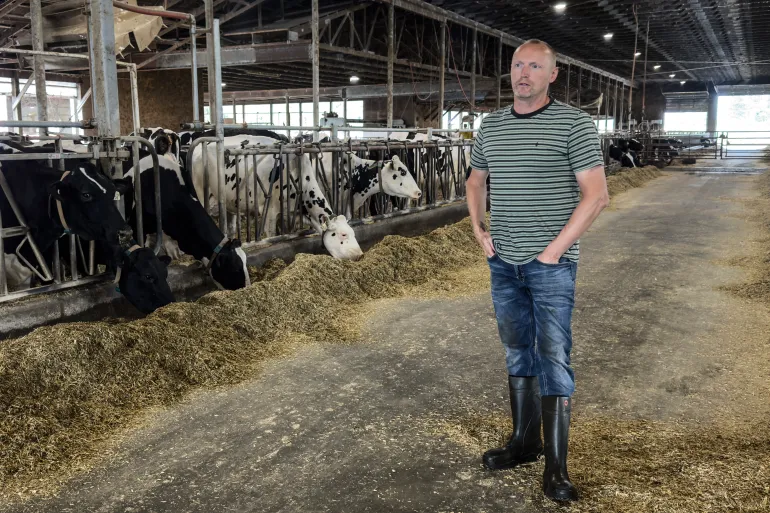
Casey Pruim, owner of Prime Acres Ltd dairy farm in Abbotsford, British Columbia, heads the BC Milk Producers Association in Canada’s western province [File: Ali Mustafa/Al Jazeera]
“If the processor who’s exporting some of his product to the United States can no longer sell into that market because he’s now priced out of the market with a 50 percent tariff, that’s how it would impact the dairy farm,” Pruim said.
Pruim said if processor demand is squeezed, farmers would be forced to dump the milk. In the worst-case scenario, the herd has to be cut.
“Cows aren’t like a tap; you can’t just turn them on or off,” he said.
His warning captures dairy’s particular vulnerability in a tariff war: Milk is highly perishable, collected on a tight schedule and dependent on processors whose demand can change much faster than farmers can adjust production.
“These tariffs are completely unwarranted,” David Wiens, president of the Dairy Farmers of Canada, told Canada’s CBC News, adding that they would affect “the supply chain, not only in Canada but in the US as well”.
Supply-management system
Dairy trade between Canada and the US has largely operated under a free trade agreement between the US, Mexico and Canada, known as CUSMA in Canada.
Canada manages the supply of dairy, poultry and eggs through a national agricultural policy known as supply management. The system uses production quotas and import controls, including tariffs, to provide farmers with more stable and predictable prices while maintaining domestic supply.
Critics describe the system as protectionist and as a government-backed cartel.
Washington argues that Canada’s supply-management system restricts US dairy exports. Trump posted on Truth Social that “Canada had been ripping off the United States of America for years” and accused it of imposing “ridiculously high tariffs” that made life impossible for US farmers.
Canadian producers reject that argument, saying the existing trade agreement already gives US imports substantial tariff-free access that is not fully utilised.
Canada’s dairy trade deficit with the US has grown significantly since CUSMA came into force on July 1, 2020, according to the Dairy Processors Association of Canada.
In 2020, Canada exported 241.3 million Canadian dollars ($173m) in dairy products to the US and imported 647.4 million Canadian dollars ($462.7m) worth of dairy and dairy products. In 2025, Canadian dairy exports had risen to 308.7 million Canadian dollars ($220.7m) while dairy imports from the US had more than doubled to 1.355 billion Canadian dollars ($968.5m), accounting for 13.8 percent of total value of US dairy exports, according to the association.
Nearly 14,000 litres of milk are stored daily in the refrigeration unit at Casey Pruim’s farm in Abbotsford, British Columbia, at a temperature of 2.8’C [File: Ali Mustafa/Al Jazeera]
Bryan Yu, chief economist at Central 1 credit union, said the immediate shock of losing a major market could be difficult for Canadian producers to absorb because replacement buyers cannot be found quickly.
“There is going to be pain in the near term for a lot of our producers,” Yu told Al Jazeera.
“You really can’t quickly adjust to a 50 percent tariff, because it’s uncharted waters for a lot of industries … and ultimately it shuts [Canadian producers] out, because a lot of them don’t have the margins that they can play with,” he said.
Yu said Canadian consumers might absorb some of the additional supply while exporters search for new markets and higher-value products, but neither adjustment is instantaneous.
“There are global markets as well, especially when you talk about chilled, chilled beef, chilled products and really it’s a question of whether … other types of markets that could be available.”
Canada has also imposed retaliatory tariffs, which came into effect on September 8 and cover $20bn worth of US products.
Dairy products are among the targeted goods. The list includes a 50 percent tariff on milk, cream and whey products and a 25 percent tariff on many cheeses imported from the US.
Casey Pruim has a herd of 330 cows at his dairy farm in Abbotsford, British Columbia [File: Ali Mustafa/Al Jazeera]
Canadian Prime Minister Mark Carney has framed Ottawa’s response as both retaliation and an attempt to build greater economic resilience.
Announcing the collapse of the latest negotiations, he said Canada would match Washington’s new tariffs “dollar for dollar” to protect workers, farmers, families and businesses.
But retaliatory measures carry risks of their own.
“Canada’s new retaliatory tariffs will help some industries but hurt most and weaken economic growth across the country by raising costs for producers and consumers,” Oxford Economics said in a report.
For now, geography remains important for perishable goods like dairy products that once moved quickly across the US border and cannot be redirected overnight to a distant market without new buyers, logistics and regulatory approvals.
Ottawa’s Trade Commissioner Service is advising affected companies to check their CUSMA compliance, explore available relief and contact trade commissioners about potential new markets.
Yu predicted that the US and Canada could reach a tariff deal in the following months but said the interim period could bring “higher prices, weaker economic activity and deeper mistrust”.
For Pruim, the uncertainty is as destabilising as the tariff threat itself.
“I think, like [for] any Canadian, it’s disappointing to have these trade talks collapse again and just the uncertainty around it.”
This year, AGRA, the donor-funded agricultural development initiative formerly known as the Alliance for a Green Revolution in Africa, is celebrating its 20th anniversary.
AGRA’s slogan is “sustainably growing Africa’s food systems”, but for years, researchers and farmers have warned that the policies it promotes are having a negative impact on African agriculture.
Our new research provides more evidence to that effect. We have documented how AGRA’s Green Revolution, with its well-funded promotion of commercial seeds, fertilisers and other inputs, has failed to spur the “productivity revolution” promised by its founders.
Worse still, its promotion of monocultures, such as maize, has led to the massive expansion of land dedicated to them. At the same time, more resilient and nutritious local crops, such as millet, are losing ground.
Funding the loss of traditional crops
Hunger continues to increase in Africa, driven by climate change, desertification, conflict and disruptions to international supply lines from international conflicts like the Ukraine war. The Green Revolution promoted by AGRA does not seem to have made much of a difference.
In countries where AGRA has had significant presence, the number of undernourished people has increased by about 60 percent – roughly the same rate as the rest of the continent.
The United Nations is calling for greater attention to “affordable healthy diets”. For Africa’s small-scale farmers, who grow what their families and communities eat, that means more, not less, crop diversity, which is the opposite of what the Green Revolution has produced.
In countries that have participated in AGRA projects, crops such as maize are promoted and funded with billions of dollars in subsidies and investment. Despite that, yields for maize have grown only modestly, just 40 percent over 18 years, well below the 100 percent improvement promised by AGRA.
Some countries, like Malawi and Ethiopia, have seen stronger yield growth for maize, but some, such as Kenya – where AGRA’s headquarters are located – have seen yields decline.
Maize production has soared across participant countries, driven mainly by the massive expansion of plantings as subsidies drive farmers to plant maize on new land.
In contrast, our research shows that traditional African staples such as sorghum, cassava, and groundnuts have lost land and investment. Since AGRA was launched in 2006, 13 countries that have participated have seen a decline in productivity of 21 percent for cassava and 10 percent for groundnuts in total.
But millet – a climate-resilient, nutritious grain – is the crop that has suffered the most. Before 2006, millet was as prevalent as maize in these countries. Since 2006, millet production has fallen 27 percent, while maize production has more than doubled. Millet yields have fallen 17 percent with the lack of investment. And as land allocated to maize production increased 71 percent, land for millet fell 12 percent.
Millet is not some backward crop waiting to be replaced by maize. For generations, it has fed communities across some of Africa’s driest regions. It can withstand heat and drought, grow with relatively few external inputs, and provide nutritious food where other crops struggle.
In 2023, the UN Food and Agriculture Organization (FAO) celebrated the “Year of Millets”, highlighting the multiple benefits of the crop to the environment and social welfare.
The same is true of many of Africa’s traditional crops – sorghum, fonio, cowpeas, cassava, indigenous vegetables and many others. They are part of the biological diversity of African farming, but also of our cuisines, knowledge and cultures.
At a time of climate change, pushing such crops aside makes particularly little sense. Farmers need more options in their fields, not fewer. A diverse farm spreads risk: when one crop suffers from drought, pests or disease, another may survive. Rotation and diversity of crops help keep soils more fertile.
Valuing diversity
Rhetorically, AGRA now professes to value the very crops that its Green Revolution helped push to the margins. It speaks of diverse, nutritious and climate-adapted crops, and its seed programmes include millet, sorghum, cowpea, groundnut and others.
We welcome serious investment in these crops. It is overdue. But there is no indication that AGRA and other Green Revolution proponents will abandon their chosen monocrops, such as maize. AGRA’s current seed strategy still emphasises improved varieties, certified seeds, faster variety turnover, commercialisation and market-oriented seed systems.
Investment needs to support farmers’ rights to save, use, exchange and develop their seeds, protect crop diversity and indigenous knowledge, and ensure that farmers and communities – not seed markets alone – determine which varieties survive and spread.
African farmers do not need saving, but their crops – millet, sorghum, cowpea, fonio, and other traditional crops need to be rescued from Green Revolution crop-breeders.
When a traditional crop disappears from farmers’ fields, we can lose locally adapted seed varieties, knowledge about how to grow and prepare them and foods that are central to local diets and identities.
This is why the decline of millet should concern us far beyond the millet field. Africa is already dangerously exposed to climate shocks and volatile international food and fertiliser markets. Diversity is one of our greatest protections against those risks. Yet we are subsidising its disappearance.
It is not enough for the UN to call for greater access for all to nutritious diets. For the majority of Africa’s rural populations, who are also among its least food-secure, crop diversity is key to diet diversity. It is time for AGRA, the African Development Bank, foreign donors and African governments to stop subsidising and promoting the crops that are driving the loss of such diversity.
The views expressed in this article are the authors’ own and do not necessarily reflect Al Jazeera’s editorial stance.



![Israeli military machinery uproots olive trees near the Palestinian village of Deir Nizam near Ramallah, in the occupied West Bank, September 23, 2026 [Mohammed Torokman/Reuters]](https://i0.wp.com/occasionaldigest.com/wp-content/uploads/2026/09/2026-09-23T080030Z_1529122039_RC2VONAGXX8I_RTRMADP_3_ISRAEL-PALESTINIANS-WEST-BANK-OLIVE-TREES-17902.webp?w=640&ssl=1)
![Casey Pruim, owner of Prime Acres Ltd. dairy farm in Abbotsford, British Columbia heads the BC Milk Producers Association in Canada's western province [Ali Mustafa/Al Jazeera]](https://i0.wp.com/www.aljazeera.com/wp-content/uploads/2026/09/PRUIM7-1789051532.jpg?w=640&ssl=1)
![Each day almost 14,000 litres of milk produced by cows is stored in the refrigeration unit at Casey Pruim's Prime Acres Ltd. dairy farm in Abbotsford, British Columbia at a temperature of 2.8'C [Ali Mustafa/Al Jazeera]](https://i0.wp.com/www.aljazeera.com/wp-content/uploads/2026/09/DSLR_PRUIM25-1789051502.jpg?w=640&ssl=1)
![Casey Pruim, owner of Prime Acres Ltd. has a herd of 330 cows at his dairy farm in Abbotsford, British Columbia [Ali Mustafa/Al Jazeera]](https://i0.wp.com/www.aljazeera.com/wp-content/uploads/2026/09/DSC01443-1789051497.jpg?w=640&ssl=1)