African

Melvin Edwards, sculptor who welded the African diaspora, dies at 88

Melvin Edwards, a sculptor best known for abstract steel works that illustrated the history and resistance of African Americans, died March 30 at his Baltimore home. He was 88.

His death was confirmed by Alexander Gray Associates, the gallery that represents him.

Edwards rose to prominence in 1963 with the first works of what would become his most notable series, “Lynch Fragments.” A collection of small, wall-mounted sculptures, he combined fragments of found and recycled steel and welded them into forms of chains, sharp tools, barbed wire and other metal objects.

The series spans several decades, drawing inspiration from racial violence during the civil rights movement, the Vietnam War, his personal relationship to Africa, people in his own community and across the African diaspora.

Over the years, Edwards made more than 300 “Lynch Fragments.”

Recurring materials in his works held layered meanings. Barbed wire served as a symbol of violence and oppression, but also of agriculture, cultivation and survival.

“Melvin was somebody who looked at multiple dimensions of any situation or person,” said Alexander Gray, a gallery owner and close personal friend of Edwards. “He really looked at the world, not through any kind of binary lens, but through a personal lens that was respectful of other people’s perspective.”

Born May 4, 1937, in Houston, the eldest of four children, Edwards grew up surrounded by racial segregation. As a child, he took drawing classes and visited museums, and he also played football.

“The world that I came from was American racism, segregation. I may have been young, but I paid attention,” Edwards said in an introduction to “Lynch Fragments” at the Museum of Modern Art in New York.

Edwards in a sculpture class at USC, about 1959-60. © 2026 Melvin Edwards/Artists Rights Society (ARS), New York

Melvin Edwards, seen here in fellow sculptor Hal Gebhardt’s class at USC sometime between 1959 and 1960, died March 30 at his home in Baltimore.

His artistic career began while studying art on a football scholarship at USC, where he met and was mentored by Hungarian painter Francis de Erdely. Edwards’ L.A. roots were critical to his identity as an artist. Here, he began experimenting with welded steel, which became his primary medium.

After moving to New York City in 1967, he became, in 1970, the first African American sculptor to have a solo exhibition at the Whitney Museum of American Art.

Throughout his career, Edwards remained committed to public art, creating sculptures for universities, public housing projects and museums around the world.

Those who knew him described him as overwhelmingly positive, which shaped both his work and his relationships.

“Melvin’s community of artists was remarkable because it spanned the globe. You could spin a globe, land anywhere, say the name of the country or the city, and he would know three people there, minimum,” said Gray. “He could recall a conversation he had with a person 35 years ago without any hesitation. He had an incredible constellation of people that he was surrounded by.”

Source link

Affordable African city to get massive new £960million airport expansion with space for 20million passengers

A POPULAR holiday destination just a few hours from the UK is getting a huge new £960million airport expansion.

Mohammed V Airport in Casablanca, Morocco is currently expanding its airport with a new terminal which will be able to handle up to 20million passengers a year.

Mohammed V Airport in Casablanca, Morocco, is getting a new terminalCredit: Je-découvre

The new terminal will be ‘H’ shaped and is expected to be operational by 2029, in time for the 2030 FIFA World Cup.

It will have three levels with shops, green spaces and an airport hotel.

In addition, the terminal will be connected to Morocco‘s high-speed rail (LGV) network with links to Kenitra and Marrakech.

According to Architects’ Journal, the terminal will feature “sweeping undulations of the roof [evoking] the waves and movement of the Atlantic”.

Read more on travel inspo

TAKING OFF

I’ve visited 50 countries & this much-loathed budget airline is the world’s best


HOL YES

I’m a travel editor & mum-of-3… my favourite family holidays from just £3pp a night

The project also includes a 3,700-metre runway, which will run alongside taxiways and a new 42-metre-tall air traffic control tower.

British architecture firm, RSHP – who designed London’s Millennium Dome and Heathrow Airport’s Terminal 5 and control tower – will design the new terminal at Mohammed V Airport.

Ivan Harbour, senior design director at RSHP, said: “The airport will be a celebration of light, warmth and human scale, undulating from grand central spaces to intimate and calming oases, a memorable experience for all travelling through it.

“It will be a state of the art, responsible, building that interprets and celebrates the landscape of its place to create a graceful threshold between Casablanca and the world beyond.”

The airport currently has two terminals and serves around 11.5million passengers each year.

Royal Air Maroc flies direct to Casablanca from London Heathrow with flights starting from £178 one-way.

Though, with the airport expansion there could be more services to the UK in the future.

Casablanca’s main attraction is the Hassan II Mosque, one of the largest mosques in the world.

It also has a popular seaside promenade with lots of hotels and restaurants as well as Habous Quarter (known for its Moorish-style architecture, olive souks and bookstores) and the Old Medina with traditional markets.

The city is pretty cheap as well – a three-course meal for two usually costs around £23.74, while a beer is less than £3.

And the famous 1942 film Casablanca was also set in the city during World War II.

Despite mostly being filmed in studios in California, the film depicts the bustling city of Casablanca when it was used by people fleeing Nazi-occupied Europe.

In other airport news, a major London airport has hiked its drop off fees to £10 – the second highest in the UK.

Plus, these are all the new routes launching from the UK’s biggest and busiest airport this spring and summer.

It is expected to be completed by 2029 in time for the 2030 FIFA World CupCredit: Je-découvre
It will feature three levels, with shops and green spacesCredit: Je-découvre

Source link

CAF strips Senegal of AFCON title, Morocco declared African champions | Football News

Governing body’s appeal board rules Senegal forfeited January final after players walked off pitch to protest referring decision.

African football’s governing body has stripped Senegal of the Africa Cup of Nations (AFCON) title they won in a chaotic final two months ago and declared Morocco the champions.

In a stunning decision, the Confederation of African Football (CAF) said on Tuesday that its appeals board ruled that Senegal is “declared to have forfeited” the match, a 1-0 victory. The result, it said, was now “being officially recorded as 3-0” ‌in favour of host nation Morocco.

At the January 18 final in Rabat, Senegal’s players walked off the pitch, led by coach Pape Thiaw, in protest against a penalty awarded late in regulation time to Morocco.

When play resumed after a delay of about 15 minutes, Morocco forward Brahim Diaz’s penalty was saved. In extra time, Pape Gueye scored the decisive goal that saw Senegal become champions of Africa for the second time.

The heated final also saw supporters trying to storm the field, players scuffling on the sidelines, reporters from the two countries fighting in media areas, and a bizarre sequence in which Moroccan ball boys tried to seize a towel being used by Senegalese goalkeeper Edouard Mendy – in an apparent bid to distract him and help their team win the continental title.

At a disciplinary hearing in January, CAF imposed fines of more than $1m as well as bans for Senegal and Morocco players and officials, but it had left the result untouched.

The case could go to a further appeal at the Court of Arbitration for Sport.

Source link

South African soldiers deploy in Johannesburg to tackle crime and gangs | Crime News

First troops touch down nearly a month after President Ramaphosa said organised crime threatened country’s democracy.

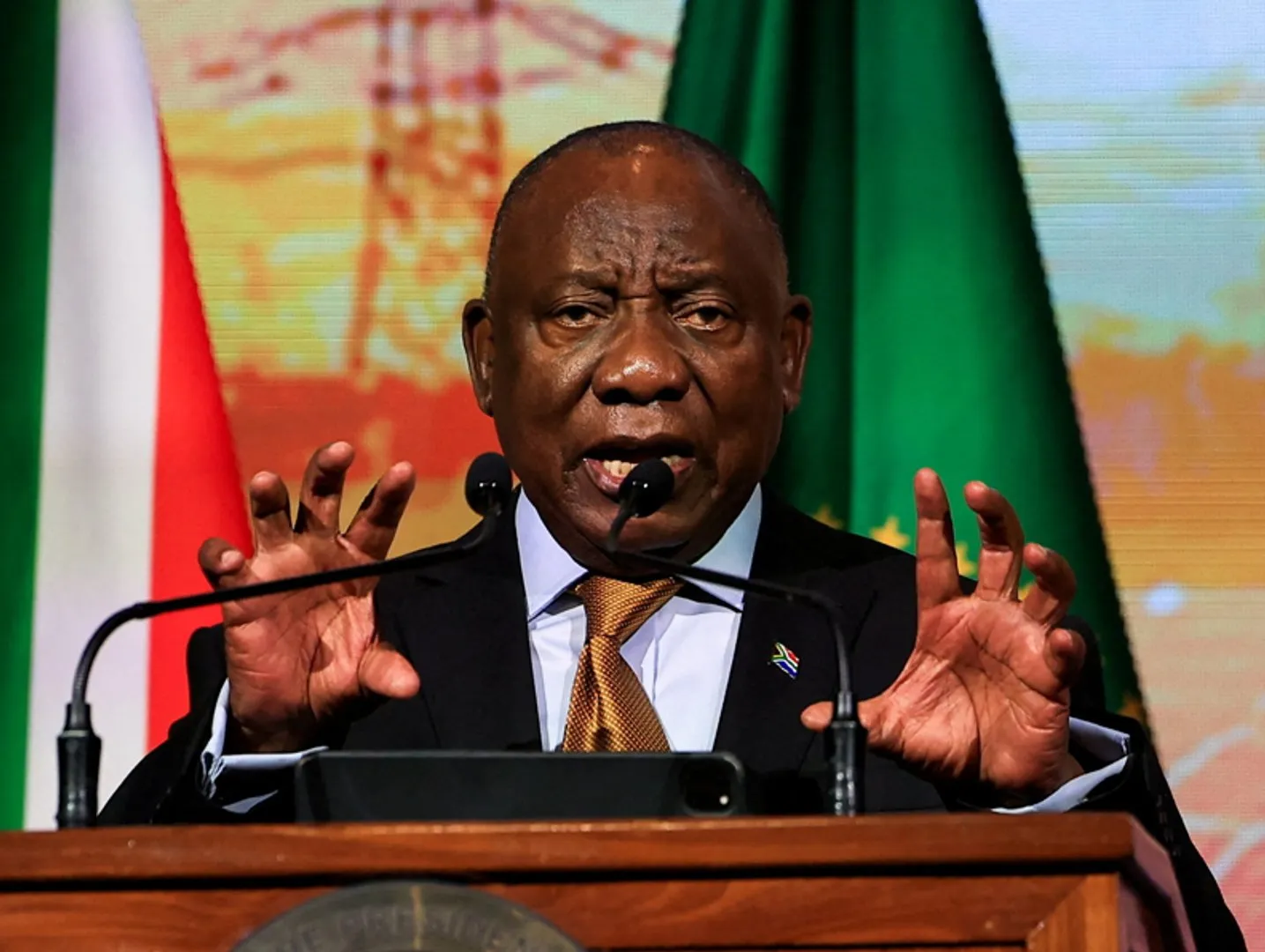
Soldiers have been deployed on the streets of South Africa’s biggest city nearly a month after the president announced the army would work alongside the police to tackle high levels of crime.

President Cyril Ramaphosa said in his annual State of the Nation address on February 12 that organised crime was the “most immediate threat” to South Africa’s democracy and economic development.

Recommended Stories

list of 3 itemsend of list

On Wednesday, troops touched down on the streets of Eldorado Park, a working class suburb in the country’s economic capital, Johannesburg, that has high levels of crime and gang violence.

Local media published pictures of armoured vehicles rolling into the area, and the Independent Online reported that local councillor Juwairiya Kaldine welcomed their arrival.

Soldiers were also seen in the Johannesburg suburb of Riverlea. Media reports said the soldiers were searching door-to-door.

South Africa’s national police service and the Department of Defence, which oversees the military, did not immediately provide details on the deployment. But the president said last month that the army will help the police service fight gang violence and illegal mining.

South African National Defence Force (SANDF) soldiers search a building during a patrol operation in Riverlea, near Johannesburg, on March 11, 2026.
South African soldiers search a building during a patrol operation in Riverlea, near Johannesburg [AFP]

Ramaphosa said in a notice to the speaker of parliament that 550 soldiers would be involved in an initial deployment in Gauteng province, which includes Johannesburg, to help combat crime and preserve law and order.

That deployment would last until the end of April, he said.

The government plans a wider deployment in five of its nine provinces, according to details submitted by police to parliament.

The deployment will focus on illegal mining in the Gauteng, North West and Free State provinces, and gang violence in the Western Cape and Eastern Cape provinces.

Parts of the national deployment could last more than a year, police officials said.

South Africa has high rates of violent crime. Police reported 6,351 homicides from October to December 2025, an average of nearly 70 a day in a country of about 63 million people.

However, not all residents of crime-affected communities are pleased about the plan to deploy the army.

In the Cape Flats, an impoverished area of the Western Cape with high levels of gang violence, where troops will also likely deploy, people told Al Jazeera last month that the military will not help fix the root causes of the violence or the social ills that make it easy to recruit people into gangs.

“It’s a very dangerous thing to bring the army because there’s an impatience with the fact that the police are not doing their job,” Irvin Kinnes, an associate professor with the University of Cape Town’s Centre for Criminology, told Al Jazeera at the time, calling the move “political”.

“It’s to show that the political leaders have kind of heard the public. But the call for the army hasn’t come from the community. It’s come from politicians,” he said.

Source link

Villagers on Príncipe, the ‘African Galapagos’, to be paid for protecting the ecosystem | Sao Tome and Principe

At the crumbling colonial farm buildings in Porto Real, agricultural worker Kimilson Lima, 43, has signed the agreement and he’s happy. “With this money we can have a proper floor in the house,” he said. “And an inside toilet.”

Lima is part of a ground-breaking experiment on the West African island of Príncipe, where villagers who agree to follow an environmental protection code will reap a quarterly dividend. To date nearly 3,000 have joined the Faya Foundation’s project, more than 60% of the adult population. The first payment of €816 (£708) has just been delivered, a large amount of money on the island. “This will be truly transformative, both for nature and for the people,” said the president of the self-governing region, Felipe Nascimento.

The special nature of Príncipe’s flora and fauna has been known since the 20-mile-long island was stumbled upon by Portuguese navigators in 1471. Uninhabited and separated from the African mainland by over 160 miles of ocean, both Príncipe and its larger southern neighbour, São Tomé, had evolved unique rainforests where giant land snails and crabs were among the top predators. Even now, new species are still being discovered, leading to the nickname “African Galapagos”.

The Portuguese started a cacao plantation economy, but after independence in 1975, that business fell apart. On Príncipe, the descendants of slaves and labourers from Angola and Cabo Verde became tight-knit communities of subsistence farmers, camping out in the increasingly decrepit colonial-era buildings. For the occasional visitor, it was picturesque, but problems were mounting for residents who were being pushed deeper into unexplored parts of the island, cutting trees and foraging.

Príncipe kingfisher, which are endemic to the island. Photograph: Kevin Rushby

Then, in 2010, South African billionaire Mark Shuttleworth arrived, looking for somewhere to build a house, an idea that was soon replaced by a philanthropic urge to help. One former plantation house was converted into a hotel with locals retrained as staff, but Shuttleworth did not stop there. His quest was to fund the type of sustainable development that also protected and improved the environment. “The normal path to development for Príncipe would be to cut down forest and grow ‘fair trade’ peppercorns,” Shuttleworth said. “But we want to reward them as stewards of their precious environment.”

That dream has now reached fruition, much to the surprise of local sceptics. “They’ve been let down in the past,” says Faya project CEO, Jorge Alcobia. “They didn’t expect us to keep our promises.”

There is still, however, a learning process about how to help the environment. “We have to explain that it’s not free money,” said Alcobia, “Dividends are reduced, for example, if there’s unauthorised tree-felling.” Faya is funding school improvements, organising the moribund cacao business, and giving financial advice. “A lot of people here have no bank account and little experience of handling money.”

So far, however, all the money comes from Shuttleworth’s fortune, a past and future commitment that totals about £87m. Among the developments is a new village, home to Clara Gomes and her daughter. “My money is going on a new kitchen and training in carpentry,” she said.

Clara Gomes at her house in a new village built by the Faya Foundation. Photograph: Kevin Rushby

Her neighbour, Edmundo, is selling cacao to the project. “I had no one to buy it before,” he said. “I’m hoping they might take vanilla next.” He has signed up for the dividend, but others remain sceptical. “It’s a monopoly,” shouted a bystander, “Is that good? And what if everyone buys motorbikes and chainsaws?”

For one man, years spent foraging in the forest have now blossomed into a career as wildlife guide. Yodiney dos Santos now leads scientific expeditions into the forest, discovering several new species, including a previously unknown owl. He knows only too well how fragile this environment is. “My ancestors came here from Angola,” he said. “And, for food, they brought the edible West African snail, which then escaped. Now those snails are pushing out the endemic Príncipe snails.”

This unique social experiment will be watched closely. “If it’s successful,” said Shuttleworth, “I hope other irreplaceable ecosystems might benefit from the idea at scale.”

Source link

Major airport in popular African holiday destination reveals plans for massive £743million makeover

A MEDITERRANEAN destination nicknamed ‘the land of jasmine’ will soon have an even bigger airport with space for millions more passengers.

Plans have been revealed to expand and modernise Tunis-Carthage International Airport in Tunisia, Africa as it aims to quadruple its passenger numbers in just five years.

Tunis-Carthage International Airport will undergo a £743million upgradeCredit: Alamy

The airport – which is the 10th busiest in Africa – will undergo a major £743million makeover over the next five years.

The country’s Transport Ministry shared that the plans will include building a new passenger terminal as well as the existing terminal being renovated.

Between the two terminals, the Transport Ministry aims to increase passenger numbers from five million people per year to 18.5million passengers by 2031.

There will also be a new technical building and the air traffic control tower will be upgraded.

Read more on travel inspo

TRIP TIPS

I’ve visited Disney 55 times… mistakes parents make that ruin trips & waste money


BUNNY WELL SPENT

Cheapest Easter days out whatever the weather & FREE kids activities

Some reports suggest that the broader project will involve adding VIP lounges as well.

In addition, the Transport Ministry hopes that it will improve connectivity placing Tunisia as a gateway to the Mediterranean with links to Africa, Europe and emerging destinations.

The upgrade could also pave the way for new airline partnerships and flight routes.

News of the makeover follows original plans for building a new airport being put on hold.

Known as ‘the land of jasmine’ for its use of jasmine flowers in festivals, cultural traditions and perfumes, Tunisia takes about three hours to fly to from the UK.

And flights in April are as cheap as £30 one-way.

The capital and main city to visit is Tunis.

The Sun’s Deputy Digital TV Editor Jill Robinson recently visited the city and said: “Winding my way through narrow streets, the smell of jasmine and mint tea fills the air as I pass craftsmen, locals doing their shopping and an abundance of cats.

“It would have been easy to think I was in the souks of Marrakech, but I’m in Tunis, the capital of Tunisia.

“While its Medina is not as chaotic as its Moroccan counterpart, the historic streets bustle with locals selling their wares as tourists like me squeeze through.

Tunisia is around three hours from the UK with flights in April costing as little as £30 one-wayCredit: Getty

“From traditional clothing to jewellery, perfume to sweet treats, there’s any amount of treasures to be found just as long as you’re prepared to haggle.

“The Medina was built around the big mosque — nicknamed the Olive Tree Mosque due to the trees there in the 8th century — but it is also home to 100 smaller mosques.

“While Tunisia is an Islamic country, its history and influences are vast — including Arab, Andalucian, Turkish and Berber — and are visible to see as you take in the colourful arched doorways, former palaces and humble homes.

“On a day trip from my hotel, I learned about the rich culture of Tunis and the ancient ruins of Carthage, whose most famous son Hannibal (of elephants fame) became one of history’s most celebrated generals and took on the might of the Roman Empire in the Second Punic War.”

If you fancy a beach day, head to La Marsa where you will find a number of calm beaches, with cosy cafes and crystal clear waters.

Nearby, you can also head to the blue-and-white village of Sidi Bou Said, which sits on a clifftop and is often compared to Santorini in Greece.

Near the capital Tunis, you can head to the blue-and-white village of Sidi Bou SaidCredit: Alamy

There’s Djerba Island as well, which is loved for its sandy beaches and vibrant nightlife.

The temperature can reach up to 20C in March and 22C in April, making it the ideal destination to grab a bit of warmth while the UK remains around 10C.

Nouvelair Tunisie offers direct flights from London Gatwick to Tunis-Carthage Airport and Tunisair offers direct flights from both London Heathrow and Gatwick Airports.

In other airport news, a closed UK airport reveals latest plans to finally reopen after 12 years.

Plus, a major UK airport is getting a new £30million upgrade with more shops, seating and even a ‘hidden speakeasy bar’.

And the city – as well as Tunisia more widely – has tonnes of sprawling sandy beachesCredit: Getty

Source link