Deported to Central African Republic, a transgender woman who lived openly in Miami is hiding again
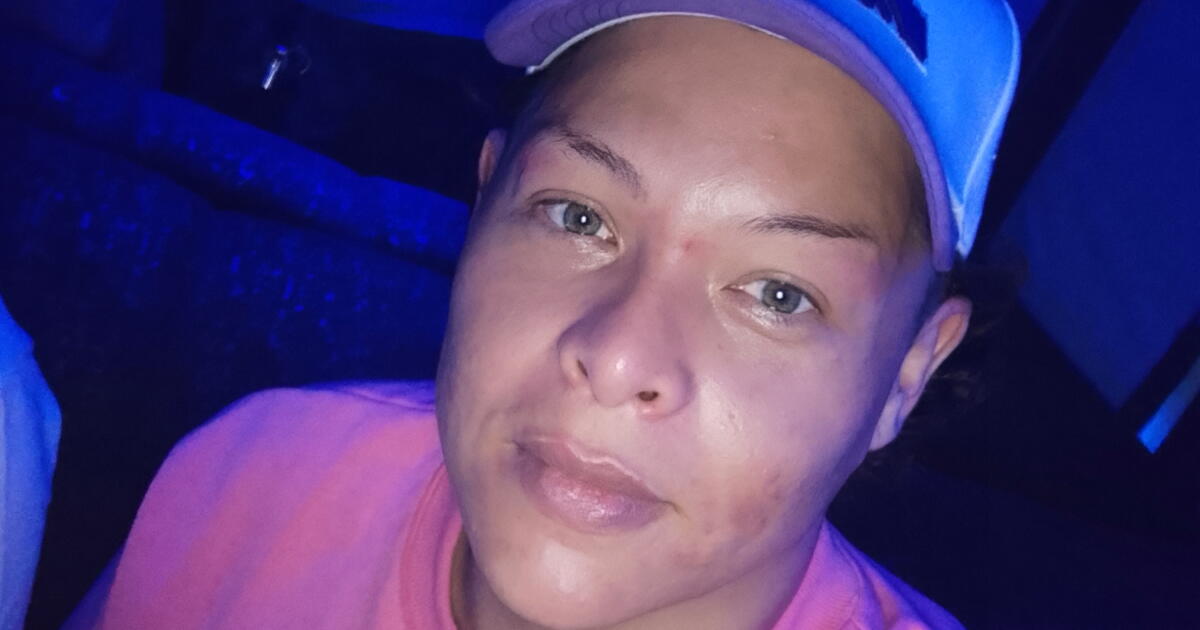
DAKAR, Senegal — In Miami, Daniela Fuentes styled hair for clients and performed in drag at a nightclub called Azúcar. She wore her blond wig in public and dressed as the woman she had known herself to be since adolescence in Cuba.
Now, more than 6,000 miles away in the Central African Republic, she wears men’s clothes, lowers her voice and tries not to draw attention to the breasts she developed after beginning hormone treatment as a teenager. As part of U.S. efforts to deport people to countries other than their own, authorities sent her Aug. 29 to a place where she has no ties and where advocacy groups have reported arbitrary detention, torture, and other rights violations of sexual and gender minorities.
“Everything is difficult here because I have to hide who I am,” said Fuentes, a 32-year-old transgender woman living on a compound she rarely leaves, sharing a room with four Cuban men also deported from the U.S. “I don’t know this place, the people or the language, and I have no idea what will happen to me.”
The Central African Republic — one of the world’s poorest countries, a place with a history of conflict that the U.S. State Department advises American travelers to avoid — is one of at least 12 African nations that signed agreements to accept “third-country” deportations, a policy the U.S. Supreme Court last month allowed to continue, at least temporarily.
In the Central African Republic — where transgender people have little to no legal protections and are marginalized in much of society — Fuentes dons her wig only in the privacy of her bathroom. She described disguising herself as protection, first in U.S. detention and now in a country she first heard of when she was already headed there on a deportation flight.
“My whole life, my whole identity, was taken away from me,” Fuentes said.
Public records say a judge ordered Fuentes to leave the U.S. but offer no other information. Immigration and Customs Enforcement officials did not reply to emailed questions.
Tens of thousands of people have been deported to “third countries”
Fuentes’ compound in the capital, Bangui, is an apartment complex where the government houses male deportees.
Fuentes said she can leave but that officials have advised her and others to avoid it — they have no identification, which could lead to issues with the police. It also means they can’t work, she said, and she’s waiting on travel documents that would allow her to leave the country. The International Organization for Migration, an agency associated with the United Nations, has provided food, and the migrants say they’ve crowdsourced for donations to buy groceries.
The U.S. — via agreements often not made public — has deported about 25,000 people to more than two dozen countries that aren’t their own, the vast majority to Mexico, according to a tally by Third Country Deportation Watch, a partnership of Refugees International and Human Rights First. The U.S. has not released numbers or details.
From January 2025 to August 2026, more than 500 were sent to countries in Africa, according to a Human Rights Watch report published Thursday — including at least 12 people who identify as lesbian, gay, bisexual or transgender and were deported to places that criminalize same-sex relations or public same-sex romantic conduct. Some advocates say the number is likely higher.
“These are not bureaucratic errors or isolated incidents,” said Bridget Crawford, of the group Immigration Equality. “They are the predictable result of policies that purposefully abandon our legal and moral obligation to protect LGBTQ+ immigrants fleeing persecution.”
The U.S. government says the policy is lawful and that receiving governments provide assurances deportees won’t be persecuted or tortured.
Daniela Fuentes says ICE detained her with men before deportation
Fuentes grew up in La Lisa, on Havana’s outskirts, and said she understood from childhood that she was different. She began living as a woman in adolescence and started taking hormones at 18.
She ran a salon from her home, coloring and cutting hair. She said she was harassed because of her gender identity and attacked at least twice, leaving scars on her arm and head. Police also questioned her about operating a private business, she said — though housefront businesses are common in the area.
In 2023, Fuentes sold her home and left amid a deepening economic crisis and a crackdown on dissent — even as Cuba, one of Latin America’s most progressive countries for LGBTQ+ rights, adopted new inclusion laws. Making her way to the U.S., she said, she presented as a man traveling through Central America; she believed it was safer.
After seven months in Mexico, she said, she entered the U.S. through Texas via CBP One, a President Joe Biden-era online appointment system that allowed migrants to live in the country for two years on humanitarian grounds. Then she went to Miami.
There, she began living openly as a woman again. She found work styling hair and performed at Azúcar. Though she lacked permanent legal status, Fuentes said Miami offered something she’d rarely experienced: the freedom to move through daily life as herself.
That ended when officers encountered her outside a motel. Fuentes said they learned she had missed an immigration court hearing in Texas. She said she asked that the case be moved to Florida but received no response.
Fuentes said she was taken into custody and later placed in immigration detention with men. Officials confiscated her wig and gave her a male detainee’s uniform, she said.
Such treatment is in line with a January 2025 executive order directing officials to exclude transgender women from women’s prisons and detention centers.
“When I learned that they were going to put me with men, I almost fainted,” Fuentes said.
Deportees said they boarded a flight without knowing the destination
Fuentes was held at two detention facilities in Florida, then transferred to Texas. When armed officers arrived there, she said, she suspected she was facing deportation, but they didn’t reveal she was being sent to Africa until about five hours into the flight.
Other deportees on the flight told AP they also weren’t told the destination until they were on the plane. Dozens have been sent to the Central African Republic, including an Iranian woman facing persecution in her home country and an Afghan whose brothers worked with the U.S. military.
Fuentes said she does not understand why she was sent to Africa rather than Cuba. She told AP she has no lawyer.
The U.S. does repatriate Cuban citizens, as part of agreements to resume deportation flights in 2023, despite tensions in relations between the countries. Charter flights have arrived in Havana regularly.
Yasmany Moreno, another Cuban deportee in Bangui, said that upon arriving, the group had no visas or documents establishing their legal status in the country. Officials spoke of providing assistance for 90 days, he said, but the deportees didn’t know what would happen afterward or where they would live.
Several told AP their longer-term status remained unclear and that U.S. authorities had taken their identity documents.
A policy officer at the Central African Republic’s Foreign Ministry said the deportees are in “good hands” and are being monitored by the International Organization for Migration. He spoke on condition of anonymity because he was not authorized to discuss the matter publicly.
The U.S. this year committed to $85 million in funding to IOM for Central African Republic operations including “assistance to migrants” and “community stabilization.”
IOM says migrants can seek asylum in the country, request assistance to return home or get help traveling to another place they’re authorized to enter. It referred questions about the deportees’ status and individual cases such as Fuentes’ to Central African Republic officials. A government spokesperson didn’t reply to phone calls and text messages seeking comment.
Human Rights Watch’s report says some people deported to third countries face detention, abuse and the prospect of persecution. Eswatini has held deportees in a maximum-security prison without charges. Equatorial Guinea has held them against their will at a hotel owned by the president’s family.
“Several of these African governments are not only complicit in U.S. abuses but have violated the human rights of these deported people themselves,” Michael Garcia Bochenek, of Human Rights Watch, said in a statement.
Fuentes and other deportees say they can’t work, with most days spent at the compound
Fuentes said the Cuban men in her room know she is a woman and look out for her. She rarely feels safe enough to leave. Once, at a supermarket, workers pointed at her breasts and initially refused to sell her fruit, she said. Other people in Bangui have mocked her and pointed at her.
“My personal appearance is awful,” she said. “I look like a different human being.”
Moreno described restrictions on the group’s movements, saying officers accompanied them to the market and on occasional outings but restricted them from going out at night.
Fuentes and Moreno said they have no passports or other identification and cannot work. Most days, Fuentes remains at the compound, looking at her phone and waiting for travel documents.
She said Cuba has agreed to accept her return — a Cuban embassy document shows she is authorized.
But Fuentes said she hopes to seek asylum elsewhere, possibly Canada.
“The harassment and economic hardship that caused me to flee still remain,” she said.
Banchereau writes for the Associated Press. Jean Fernand Koena in Bangui, Central African Republic; Tim Sullivan in Minneapolis; and Cristiana Mesquita in Havana contributed to this report.