Hundreds of flights have been cancelled in a union dispute that could affect thousands of passengers

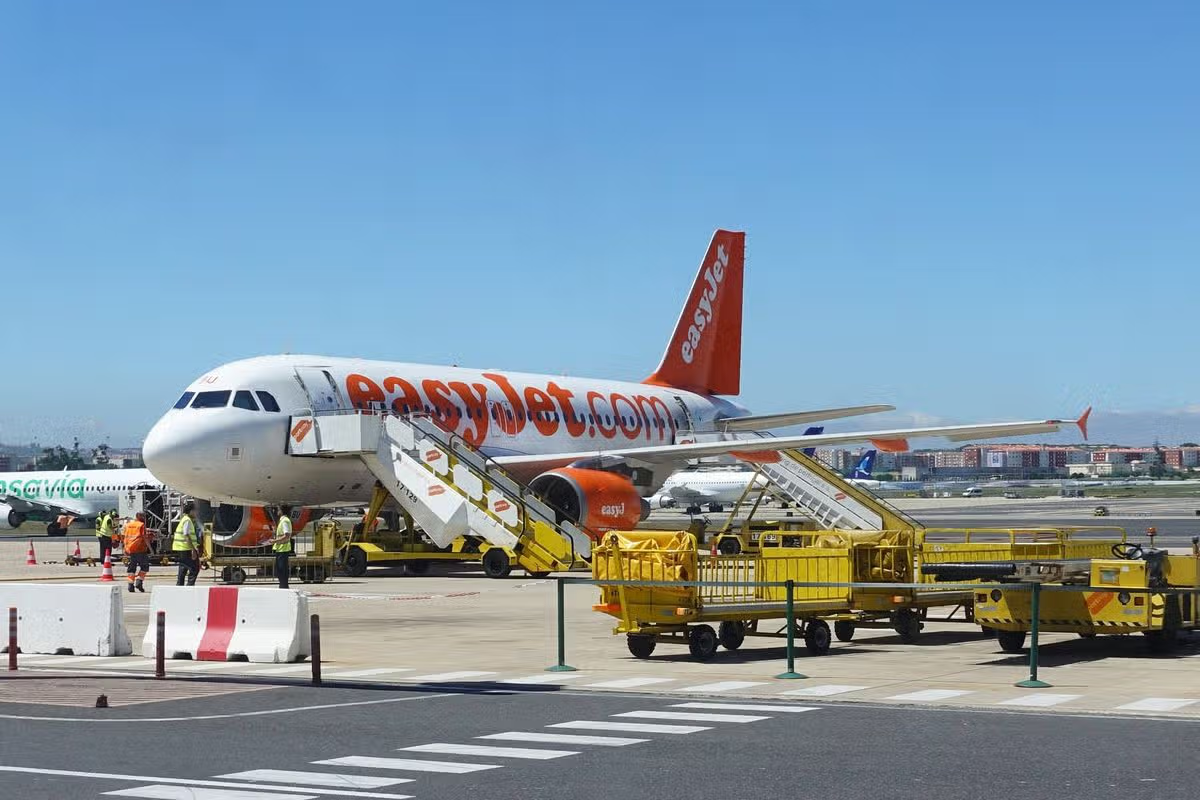
EasyJet says it is “extremely disappointed” that the action is taking place – file image of one of the airline’s planes at Lisbon airport(Image: Sergey Sokolnikov via Getty Images)
A ‘massive’ EasyJet cabin crew strike has resulted in the cancellation of hundreds of flights in a popular British tourist destination – and could jeopardise Christmas plans for holidaymakers.
The initial 5-day industrial action is expected to ground approximately 500 scheduled flights across Lisbon, Porto and Faro airports. And the festive period is also set to be disrupted.
The strike began this Friday, October 2, in Portugal and is the first of two walkouts planned for this year. The affected flights involve all domestic airports, but mainly Lisbon and Porto.
The EasyJet cabin crew strike goes on until Tuesday, with 443 flights from the Lisbon, Porto, and Faro bases already scrapped as of this morning, according to the National Union of Civil Aviation Flight Personnel (SNPVAC). “80% of flights involving the Lisbon, Porto, and Faro bases” between October 2 and 6 have already been cancelled, union official Ana Dias told local news agency Lusa. They noted that “the impact has already been massive.”
EasyJet, meanwhile, said 55% of flights were set to operate over the five-day strike period. The National Union of Civil Aviation Flight Personnel (SNPVAC) reported strong participation on Friday, the first of five scheduled strike days for EasyJet cabin crew, adding that only minimum services are being maintained.
EasyJet has confirmed that two return flights from Manchester Airport to Portugal have been axed in the coming days due to industrial action, the MEN reports. The walkout was announced by the National Union of Civil Aviation Flight Personnel and is set to impact flights from Lisbon, Porto and Faro airports, all served by EasyJet from Manchester Airport.
Sic Noticias reports that the union has said other currently scheduled flights could still be disrupted by the strike, although some may be operated by aircraft and crews from other European bases. An official EasyJet source told Lusa on Thursday that the airline anticipates operating approximately 55% of its schedule during the strike period. The source explained that, in addition to “minimum services” (representing about 22% of its Portugal-based operations), the airline is maintaining flights to and from the country operated by crews from other European bases.
The company says these operations are being conducted “in full compliance with applicable laws and regulations,”. The SNPVAC union deems the use of workers from other bases to replace striking staff “illegal” and is considering taking the matter to court.
EasyJet said it was “extremely disappointed” that the strike was taking place, despite its “ongoing efforts to maintain a constructive dialogue and reach an agreement.” It expressed regret over the disruption caused to passengers.
An EasyJet spokesperson said: “We are extremely disappointed that the union representing our Portugal-based cabin crew has announced an industrial action from 2 to 6 October, despite our willingness to continue a constructive dialogue and reach an agreement to meet our employees’ requests and protect the sustainability of EasyJet business in Portugal.
“We are sorry for the impact the unnecessary action will have on our customers, and are doing all we can to minimise disruption, including cancelling two return flights from Manchester in advance to allow our customers to rearrange their travel plans. Customers have been informed directly and offered options including a free transfer or a refund.
“We advise customers travelling to or from Portugal between 2 and 6 October to check the status of their flight via our Flight Tracker.”