adventures

10 of the best affordable family adventures in Europe | Family holidays

Sea kayaking in Greece

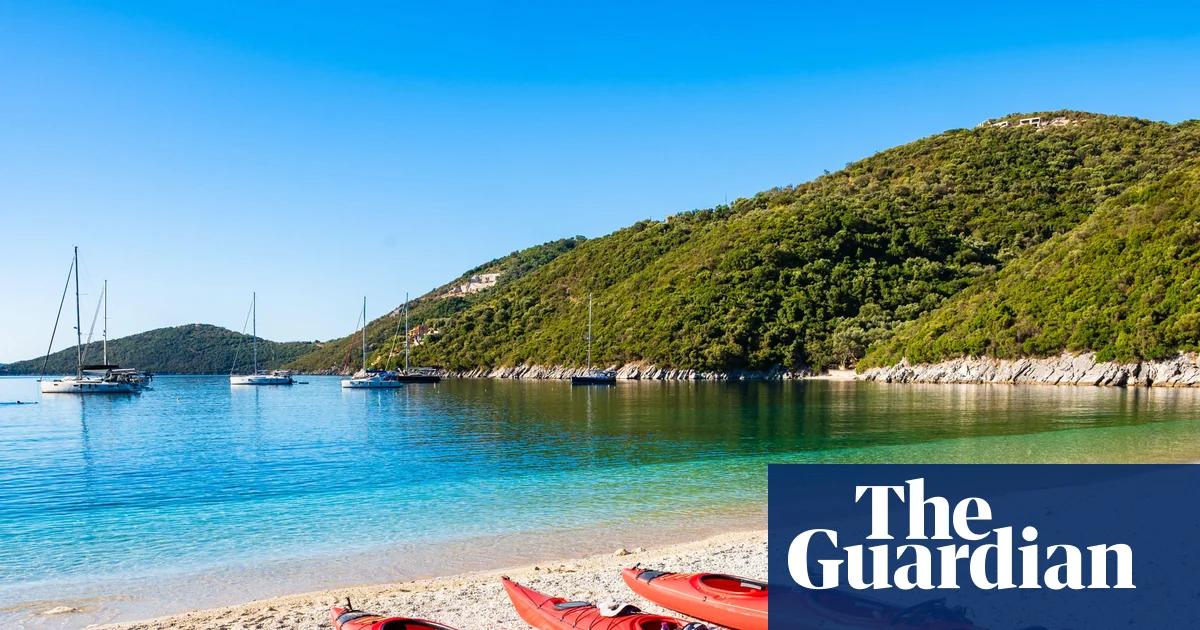
Several companies offer affordable multi-activity trips for families in Greece, but if you’re looking for something less frenetic, and a bit more challenging for teenagers, how about Greek island-hopping by sea kayak? Running on regular dates through the summer months, Trekking Hellas’s three-day, two‑night odysseys in the Ionian Sea start in Nidri, on Lefkada, and paddle on past Skorpios to Meganisi, camping out at Lakka before continuing the next day to Mikros Gialos for a second night under the stars before turning for home. There are stops for swimming, resting and barbecues along the way, and some thrilling cave detours, but with about six hours of paddling a day, the minimum age is 14.
From €352pp including kayaking and camping equipment, guiding and meals (trekking.gr)

A stylish refuge in France

Photograph: Hemis/Alamy

The world’s most handsome bothy? Cabane de Varlossière in Savoie is a strong contender. This simple, unstaffed mountain refuge sits in a spectacular Alpine valley surrounded by craggy peaks and the echo of goat bells. A stone former shepherd’s hut, it has been renovated recently and would look at home in an interiors magazine. A stream runs beside it, and inside there are bunks for four, plus a wood‑burning stove (you’ll need to bring all your bedding, food and cooking equipment). To make a trip of it, start from pretty Saint-Martin-de-Belleville and hike two hours to Gittamelon, a cosy, staffed refuge in the valley below. Depending on your children’s ages and stamina, you could either stop there just for a drink or stay the night and walk on another hour to Varlossière the following morning. From here, you can either continue on to other refuges along the Grand Tour de Tarentaise hiking trail or retrace your steps to Saint-Martin.
Overnight stays at Cabane de Varlossière are free, but consider booking a guide (from €25 per adult for half a day) or add-on activities such as canyoning through the local guiding association. There is no website for the cabin, which is owned by the local commune

Forest camping in Germany

Photograph: Martin Keppler

Until recently, camping out amid the dense trees, towering waterfalls and lofty peaks of the Black Forest was prohibited. In 2017, however, the Trekking Schwarzwald initiative began setting up basic forest camps through the region, where semi-wild camping is allowed. Bookable from May to October, there are now 21 camps. Each has space for three tents, a fire pit and a compost toilet, and strict rules govern their use; bookings are from 5pm to 10am, stays are limited to a single night and all rubbish must be carried away. String a few camps together to make a longer adventure of it with older kids, or choose a less remote camp (Camp Gutellbach is about 2.5 hours’ walk from Baiersbronn) for a 24-hour expedition with younger adventurers.
From €12 a tent (up to three people) (trekking-schwarzwald.de)

Spot the eclipse in Spain

Karst formations near the Serranía de Cuenca. Photograph: Jam World Images/Alamy

Most accommodation has already been snapped up in dark-sky hotspots along the path of this year’s solar eclipse on 12 August, but there is still some availability among the simple wooden cabins at Cabañas El Llano de los Conejos, near Cuenca. They are set within a forest, and there’s a saltwater pool and children’s play area on site, a river beach nearby and direct access to child-friendly hikes, bike rides and kayaking. Between the Serranía de Cuenca and Alto Tajo natural parks, the surrounding land is spiked with karst formations that look like something sketched by Dr Seuss. The bigger ones also make perfect viewing points for skygazers (though make sure you’re wearing eclipse glasses).
From €1,050 for four people for seven nights over the week of the eclipse (llanodelosconejos.com)

Ride and rest in Slovenia

If your kids are avid cyclists, the Rest and Ride bike-friendly hotel in the far west of Slovenia will give them plenty of opportunities to pedal. Within the Soča valley, surrounded by forests and mountains, its bright, modern bedrooms and add-on breakfasts (€12pp) – big on homemade jam and “coffee strong enough to climb a hill on its own” – make it a homely base for rafting, kayaking, zip lining and hikes to waterfalls. Most guests come to explore on two wheels; mountain bikers, gravel lovers and road cyclists will find secure storage, a repair shop, pre-bookable bike hire for all ages and guiding services.
From €150 a night for an apartment sleeping four (rest-ride.com)

Packrafting in Luxembourg and Germany

Combining hiking, paddling and camping, packrafting offers families with older children a footloose, Swallows and Amazons freedom. Navigating the watery bounds of the Luxembourg-Germany border, guided two-day trips start with a paddle and hike among the forested sandstone cliffs and gorges of the Mëllerdall Geopark, then take in a night under canvas before returning to the starting point via a paddle down the Sauer River and a hike through the South Eifel nature park. While there are no age restrictions, participants must be 140cm or taller and able to carry a pack, so it’s more suited to older teens than younger children.
From €135pp including portable inflatable rafts, lifejackets and hiking backpacks. Camping equipment (€35pp) and food kits (€39pp) can be added on, or take your own (packraftluxemburg.com)

Slow camping in Italy

Photograph: Image Professionals/Alamy

If your children love camping but you’re less convinced, Abruzzo’s Rocca di Sotto campsite might just persuade you to give it another go. Set among terraces of olive and fruit trees an hour’s drive from Pescara, this 17-pitch farm campsite offers pre-erected tents as well as DIY pitches and a trio of simple log cabins. Cook up rustic outdoor dinners with supplies gathered from the site’s veg patch and chickens, go chamois-spotting on the surrounding slopes, or head out on hiking or cycling expeditions across the Campo Imperatore, a high plateau within the neighbouring Gran Sasso and Laga Mountains national park, nicknamed Little Tibet. Seasoned campers can opt for a “slow camp” experience, staying out in the wilds about 45 minutes’ walk from the main campsite.
Pitches from €32 a night for a family of four (with under-10s); €44 a night for pre-erected tents (roccadisotto.com)

Rail and sail to Rotterdam in the Netherlands

Photograph: Robert Harding/Alamy

Start the adventure straight from your door with a Dutchflyer rail and sail ticket from London, or any Greater Anglia station, to Hoek van Holland via Harwich. Combined train and ferry fares are cheaper than separate tickets, with easy changes for foot passengers, and Hoek van Holland is just half an hour from Rotterdam on the metro. The city’s Stayokay hostel, in Rubik’s Cube-like houses, reopens on 10 April after a renovation, providing a practical but memorable base for exploring this offbeat, culture-crammed city. There’s lots of outdoorsy fun too – Adventure City is the largest adventure park in Europe, with everything from climbing to ziplining.
Dutchflyer fares start from £68 each way for an adult or £34 for a child (under-5s are free; stenaline.co.uk). Stayokay Rotterdam has four-bed rooms from €115

Become a castaway in Sweden

Photograph: Lars Sjöqvist

When you arrive on the Swedish island of Nåttarö to stay in one of 50 simple wooden cabins spread out between birch and pine trees, life immediately switches to a slower pace. This salt-scented, light-soaked, car-free island, one of Sweden’s first marine nature reserves, feels excitingly remote and yet is easily reached from Stockholm; take a one-hour train to Nynäshamn, then use the ferry (mid-June to mid-August), or a taxi boat, to shuttle across the water. Facilities on Nåttarö stretch to a restaurant, shop and sauna, but mostly it’s a place to hike along quiet paths, swim and snorkel off white sand beaches, pedal along forest tracks to find the island’s cave (bike hire from £8pp), or hire kayaks and standup paddleboards (from £20pp).
Self-catering cabins from about £84 a night for four people (nattaro.se)

Stay in a border post in Montenegro

Set within the Komovi nature park, Hostel Mojan is a former military border post that has been converted into a simple mountain retreat. Rooms ranging from singles to twins, triples, quadruples and quintuples mean most shapes and sizes of family are catered for, and the menu is plump with local prosciutto, honey and polenta-like kačamak, making it an ideal base for biking, hiking and lake swimming. There’s also a football field and a basketball court on site.
Hostel Mojan has quadruple rooms from €85 room-only, with homemade dinners for about €10pp
Source link

‘Children see magic in the smallest adventures’: exploring Scotland with my four-year-old | Highlands holidays

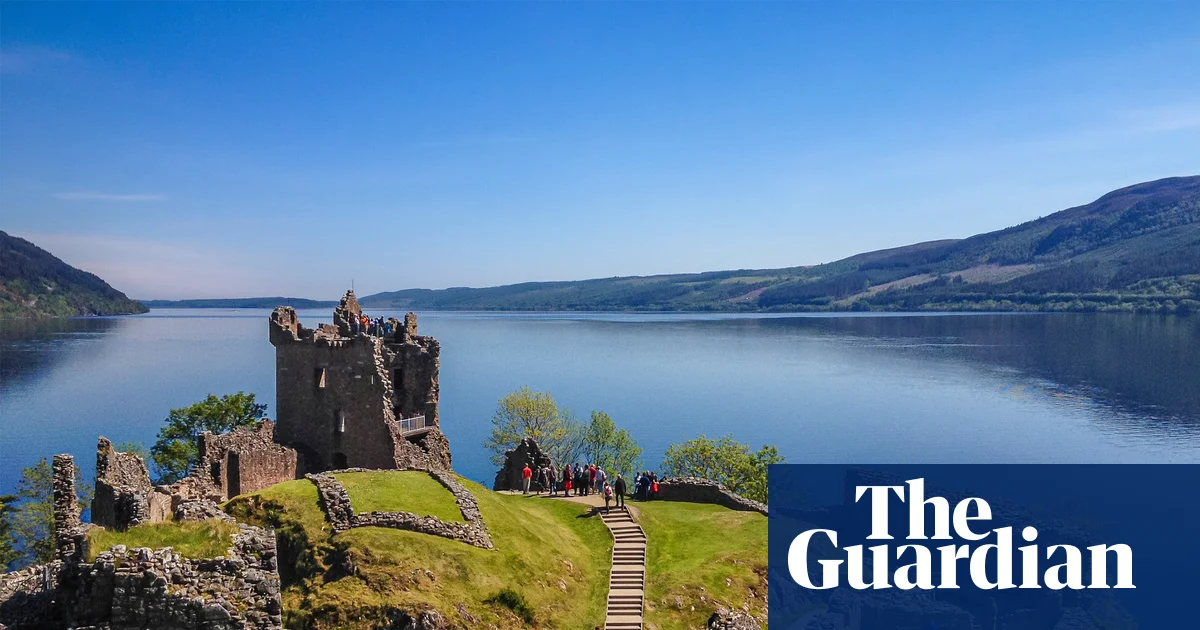
‘There! There – I can see it!” The cries of my four-year-old echoed around the ruins of 13th-century Urquhart Castle, causing a group of US tourists to come running over to the corbelled bartizans (overhanging turrets) where we stood. “It’s Nessie, I saw her,” he insisted, pointing at the ripples spinning out from the back of a sightseeing vessel on Loch Ness.

This was day four of a budget, week-long Scotland adventure for the two of us, and we were spending the day in Drumnadrochit, on the shores of the country’s most famous body of water, looking for the fabled monster.

It wasn’t the first time that reality and wishful thinking had seemingly combined on this holiday. When I told people I was going to take my son on a week-long trip across Scotland and my budget was £500, they were sceptical – especially as we were travelling in the school holidays. But as a woman who likes a challenge, I was up for proving them all wrong.

We’d begun our adventure in Glasgow, having travelled by train (£30), then picked up a cheap hire car for the five-hour drive to the Isle of Skye. Accommodation on Skye is pricey, but I had a secret weapon – my tent.

The car journey was punctuated by stops at lochs so enchanting they could have been lifted from the pages of a children’s book. We finally reached the island and checked in at Camping Skye, a community-owned campsite by the sea in Broadford. For the £16 cost of a pitch, we spent the evening playing beneath the flanks of Beinn na Caillich, eating chips and mushy peas from the local shop, and roasting marshmallows on a firepit.

Camasunary Bay near Elgol on the Isle of Skye was a hit with Phoebe Smith’s son. Photograph: Phoebe Smith

The next morning, primed for a mini-expedition and stocked up with supplies, we drove to the southern enclave of Elgol. The crowds who flock to the island for the Fairy Pools and spectacular Quiraing rock forms melted away as we went deeper into the countryside. We pulled over at a nondescript parking area and I explained the plan to my son. We were going to walk about 2.5 miles (4km) to our accommodation – and no, mummy couldn’t carry him as I would be carrying all our supplies. Excited by the carrot on a stick in the form of a bag of Percy Pigs, we set off, me with a full backpack, him clad in waterproofs, clutching a walking pole.

“I can do this. It’s going to be hard, but it’s going to be worth it,” I heard him muttering to himself as the ascent kicked in. Along the way I pointed out the purple petals of the devil’s-bit scabious flower – mythology claims the devil was so enraged by the plant’s healing properties that he chewed its roots, leaving them short and jagged. My son loved how stories such as this and the landscape combined, and it distracted him from the climb. When we reached the highest point, we could see down to Camasunary Bay, and the thought of playing on the beach made our descent fly by.

Our accommodation was a free (unbookable) bothy and, being first to arrive, we picked the top bunk of the sleeping platform, and I laid out our things. As more people came, my boy confidently greeted the guests as though welcoming them into his own home, proudly telling them this was his first bothy.

Reindeer in the Cairngorms national park. Photograph: Simon Whaley Landscapes/Alamy

That evening was spent running around on the near-black sand beach just outside the door, making trenches, cooking pesto pasta on my camping stove and laughing at the “loo with a view” that sits above the bothy on the hillside.

Having stayed in many bothies over the past 15 years, I had wondered how taking a child would pan out. But his presence brought everyone together in an amazing way, and by 9pm all 12 residents were fast asleep, likely lulled by the white noise I was playing for him on my phone.

Next morning, my son’s determination to reach the car was only eclipsed by his desire to have ice-cream for breakfast, which I had promised as an incentive to climb up the hill. He was beaming with pride when he told the owner of The Creel pop-up cafe by Elgol harbour that he’d walked more than 5 miles “all by myself” and made friends in a bothy.

From there, it was back to the mainland and a two-hour drive on to Drumnadrochit for a stay in a private room at Loch Ness Backpackers Lodge (£60), with an afternoon spent in the nearby Loch Ness Centre, learning all about Nessie. After the novelty of sharing a bunk bed (me on top, him below), the next day was reserved for paddling in the shallows of the loch, running around the aforementioned Urquhart Castle and getting visitors’ hopes up with proclaimed sightings of the legendary plesiosaur.

That afternoon we journeyed to our final stop – the Cairngorms national park. At the reindeer centre in Glenmore Forest, we met the UK’s only free-ranging herd (which had been brought here to be checked over by a vet) and joined a scavenger hunt designed to teach children about these creatures. We ended the day at Loch Morlich, building sandcastles with children my son befriended in that easy way kids seem to do. I pointed up to the summit of Cairn Gorm – the sixth highest mountain in Britain. “That,” I told him, “is where we go tomorrow.”

Phoebe Smith’s son was happy to walk miles with the right incentives. Photograph: Phoebe Smith

After a night in a camping pod at the Speyside Trust’s Badaguish outdoor centre (£75), we braved the mountain during rain squalls on a guided hike (£35) which involved taking the mountain railway to Ptarmigan top station at 1,097m, then an hour’s walk to the summit. As we stood on the misty peak, our guide told us we were at 1,245m. I’ve never seen such a proud look on my son’s face.

The UK’s highest restaurant, the Ptarmigan, sits at the railway’s top station, and we indulged in hot chocolate before exploring the learning zone’s exhibition, with its panoramic film showcasing the landscapes around us in much better weather than we experienced. There are also interactive sandboxes where children can create their own natural environments. We rounded off the day by taking the train back down and going tubing (£15pp), laughing gleefully as we slid down the purpose-built dry slope in giant rubber rings.

Determined to make the journey home part of the adventure, I had booked the sleeper train back to London – our biggest indulgence at £170 for a cabin with a private loo and shower. Dusk hit as we boarded in Inverness, and the sky began to turn black outside the picture windows while we ate macaroni cheese in the dining car and my son told incredulous strangers about our adventures.

The truth is that kids love holidays – but they love spending time with their parents most of all. And by taking my son on my kind of adventure, I had bonded with him in a way I never thought possible. Children see magic in even the smallest of adventures – and their enthusiasm is utterly infectious. Our total spend after six days away was just under £500 which, when I think of the memories we have made, and the stories my son continues to tell, seems to me the best buy ever – even more fantastical than a magic monster that lives in Scotland’s largest loch.

Phoebe Smith is the author of Wayfarer: Love, Loss and Life on Britain’s Pilgrim Paths (Harper North). To buy a copy for £9.89, go to guardianbookshop.com. Delivery charges may apply


Source link

‘In Switzerland, it’s possible to sledge between two railway stations’: readers’ favourite family adventures in Europe | Family holidays

Take the toboggan to the train, Switzerland

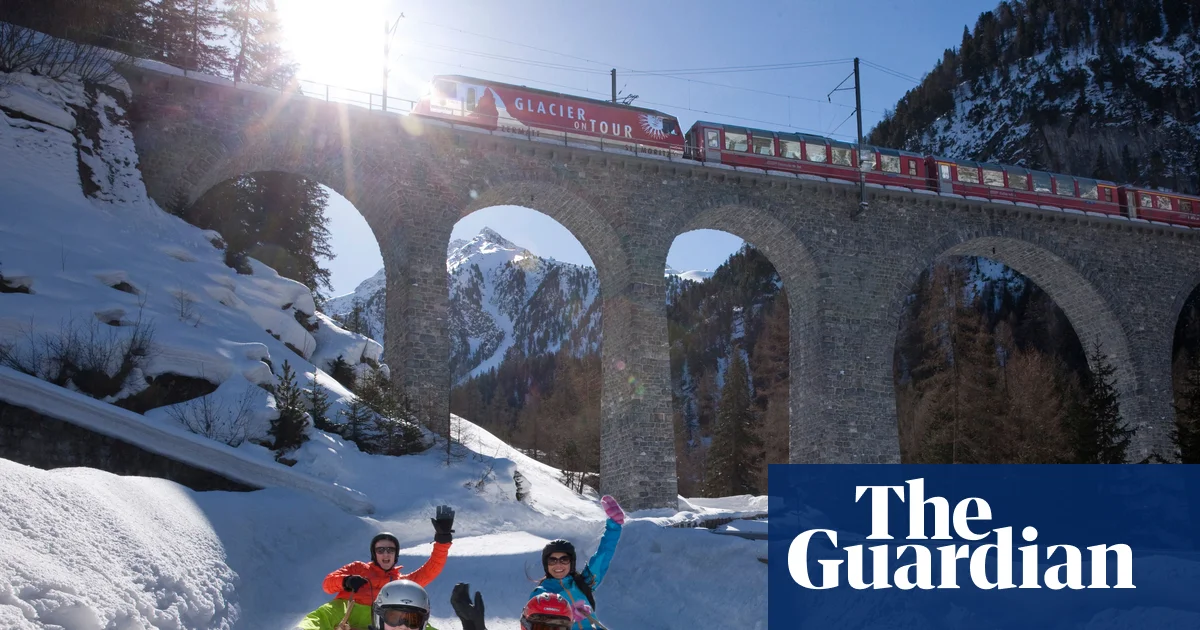
Travelling by rail in Europe gives you plenty of opportunity for ad-hoc adventure. We were returning from a ski trip in Italy and took the Bernina Express part of the way. We’d heard that if you disembark at Bergün, leave your luggage at the station and take the train back one stop to Preda village it’s possible to sledge between the two stations. So there we found ourselves renting traditional wooden sledges from Preda and walking the short distance to the start of the tobogganing run. What we thought might be a gentle run into town turned into a fast and fun-filled couple of hours as we hurtled down the tree-lined course. At times it felt like we were in the game Mario Kart and at one point a children’s birthday party overtook us, the birthday girl’s sledge trailing balloons. About 5 miles later we arrived back in Bergün, before continuing our train journey onwards.
Layla Astley

Profile

Readers’ tips: send a tip for a chance to win a £200 voucher for a Coolstays break

Show

Guardian Travel readers’ tips

Every week we ask our readers for recommendations from their travels. A selection of tips will be featured online and may appear in print. To enter the latest competition visit the readers’ tips homepage

Thank you for your feedback.

Interrail to Venice

The Rialto Bridge. Photograph: Marco Bottigelli/Getty Images

Interrailing as a family of five was full of special moments, but taking the night train from Vienna to Venice was the cherry on the cake. Arriving in Venice Santa Lucia around 8am, you can take the vaporetto (water bus) before the city has fully woken. We wandered quietish streets, lingered on the Rialto Bridge in relative solitude, and took our time crisscrossing canals before the hustle and bustle began. It was truly special, and completely unexpected in mid-August. We nearly skipped it – assuming it would just be too busy – but left with a precious couple of hours we’ll never forget.
Sophie

A Swiss Alps adventure with the kids

The Allmendhubel playground has views of the Eiger. Photograph: Image Broker/Alamy

Exploring the Lauterbrunnen valley, Switzerland, in summer with our young children was full of surprises. Superb trains on long-distance services to Interlaken include playground family carriages. Epic alpine playgrounds, such as Allmendhubel Alpen Playground, are reached by cable cars (some gondolas have karaoke machines). At Wengen, we enjoyed playing with the marble runs and hiring a “fondue backpack” to accompany our walks. Many of the shorter walks have family-friendly activities en route, such as blowing the alpine horn or milking a model cow. There are many waymarked routes for all abilities – and all without the crowds of a coastal resort.
Lucy

Teenage boys let loose in Norway

White-water rafting in Norway. Photograph: Image Professionals/Alamy

Last summer, as a family we explored Norway, starting in Oslo with saunas and fjord jumps, then visiting the Olympic Park in Lillehammer. We spent a week hiking in Jotunheimen national park, climbed Norway’s highest mountain, Galdhøpiggen (2,469m), explored a glacier, and went white-water rafting. The combination of dramatic scenery, outdoor activities and adventure made it a perfect summer holiday, especially for our teenage boys who love the outdoors.
Lucy Bissell

Dutch road trip joy

Efteling theme park.

We decided to change things up from an all-inclusive summer break and went on a road trip through the Netherlands for two weeks with our two kids. After enjoying Amsterdam, we picked up a rental car and headed towards Duinrell Eurocamp, which was perfectly pitched for our kids aged nine and 12. We stayed in a cabin for four days, then drove to our next destination, Efteling theme park. I can’t tell you how much my kids enjoyed this park: mythical, magical, thrilling! Our final destination was Texel, an island just off the northern coast of the Netherlands. The kids loved the ferry. Again we stayed in a hut, which came with bikes. Lots of cycle paths, sandy beaches – a slower, more relaxing end to the holiday.
Noreen

Winning tip: a waterfall walk in the Pyrenees

The Cirque du Gavarnie in the French Pyrenees. Photograph: Miguel Moya/Alamy

Our young family travelled to the Hautes-Pyrénées in France and, ignoring the offer of a donkey ride, walked for nearly 6 miles from the village of Gavarnie up to the Grande Cascade (a waterfall of 420 metres) in the Cirque du Gavarnie. It made for an easy day out in summer and was great for our five-year-old and seven-year-old, who enjoyed seeing whistling marmots, circling lammergeiers (also called bearded vultures) with their 2.5-metre wingspans, and snow bridges over streams. Spray from the waterfall provided us with a free shower at the walk’s end.
Chris Henshall

Source link

Lebanon warns of ‘adventures’ dragging it into U.S.-led war on Iran

Lebanese Prime Minister Nawaf Salam, pictured at Lebanon’s presidential palace in Baabda in 2025, said that his country will not be dragged into “adventures” that threaten it’s security and unity. File Photo by Wael Hamzeh/EPA-EFE

Feb. 28 (UPI) — BERUIT — Lebanese Prime Minister Nawaf Salam said on Saturday that he rejects any attempt to drag his country into “adventures” that threaten its security and unity, indirectly calling on Iran-backed Hezbollah to refrain from involving Lebanon in the ongoing U.S.-led war on Iran.

Salam’s warning coincided with a statement from the U.S. Embassy in Lebanon urging U.S. citizens still in the country to leave “now, while commercial options remain available.”

In a post on X, the prime minister appealed to all Lebanese “to act with wisdom and patriotism” in light of the “dangerous developments in the region,” urging them to place Lebanon’s interests “above any other consideration.”

“I reiterate that we will not accept anyone dragging the country into adventures that threaten its security and unity,” he said, referring to Hezbollah, which previously announced that it would not remain neutral if Iran were attacked and its leader, Ayatollah Ali Khamenei, were targeted.

Salam, who also held a meeting with several ministers and relief officials, urged sparing the country the “repercussions” of the war on Iran, which broke out Saturday morning with joint U.S.-Israel attacks and prompted Iranian retaliatory strikes on Israel and U.S. targets across the Gulf Arab states.

When asked whether Hezbollah had reassured the Lebanese state that it would not participate in the war, he reiterated his call to spare Lebanon another war that “would bring even more suffering upon the Lebanese people.”

He was referring to the war with Israel that broke out on October 8, 2023, when Hezbollah opened a front in support of Gaza, during which top Hezbollah leaders, military commanders, and Lebanese civilians were killed, and substantial damage was inflicted, with border villages in southern Lebanon completely destroyed.

Despite a cease-fire agreement reached on Nov. 27, 2024, Israel continued to operate with near-total freedom, striking suspected Hezbollah operatives and positions almost daily, causing further destruction and casualties, including among civilians.

Salam and President Joseph Aoun also conducted diplomatic contacts in an effort to keep Lebanon “neutral and spare it from the repercussions” of the ongoing war in the region.

Aoun, for his part, affirmed that sparing Lebanon from “the disasters and horrors of external conflicts” and preserving its sovereignty, security, and stability are “absolute priorities.” Later, he was informed by U.S. Ambassador to Lebanon Michel Issa that Israel has “no intention of escalating” against Lebanon, as long as there are no hostile actions from the Lebanese side, according to a presidential statement.

Hezbollah, for its part, announced the postponement of a Saturday event during which its Secretary-General, Sheikh Naim Qassem, was scheduled to speak. Instead, it released a statement condemning “the treacherous U.S.-Israeli aggression” that targeted Iran after months of threats aimed at forcing it to “surrender.”

Hezbollah also expressed “full solidarity” with Tehran and urged the countries of the region to “stand against this aggressive scheme and recognize its dangers,” warning that “its dire consequences will affect everyone without exception if left unchallenged.”

It refrained from hinting to the possibility of supporting Iran militarily.

The Prime Minister condemned Iran’s strikes targeting Qatar, Bahrain, Jordan, the United Arab Emirates, Kuwait, and Saudi Arabia, during calls with their top officials to reaffirm Lebanon’s solidarity against such “aggressions.”

Asked whether the U.S. Embassy in Lebanon and the Hamat military base, which hosts U.S. training teams, might be targeted by Iran, Salam said he could not rule it out but noted that all necessary security measures had been taken to prevent such attacks.

He also confirmed that his government was prepared for “any emergency,” having adopted “proactive measures” in anticipation of war, and assured that food, medicine, and fuel were available in quantities sufficient to meet citizens’ needs for at least two months.

He noted that Beirut’s Rafik Hariri International Airport remains open, with the country’s national carrier, Middle East Airlines, operating as usual — except for countries in the region that have closed their airspace. He added that some airlines have canceled their flights to Lebanon.

His comments came at a time U.S. citizens were urged by the U.S. State department not to travel to Lebanon and those who are already in the country to leave “now while commercial options remain available.”

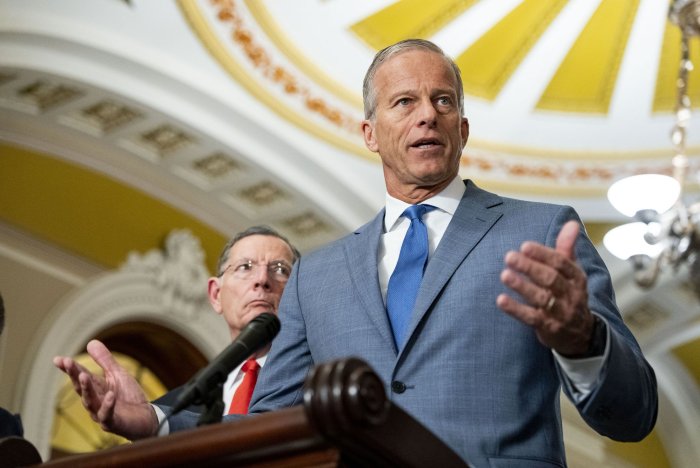
Senate Majority Leader John Thune, R-S.D., speaks during a press conference after the weekly Republican Senate caucus luncheon at the U.S. Capitol on Wednesday. Photo by Bonnie Cash/UPI | License Photo

Source link