Dodgers blow chance to seize control of NLDS, fall to Braves in Game 2
Michael Harris II shouldn’t have been 90 feet away from scoring the go-ahead run in the first place.
But he was, after Teoscar Hernández took a bad route to his line-drive triple. Then, to make matters worse, Dodgers left-hander Kris Bubic lost control of a sweeper. It flew high and outside, off the end of catcher Will Smith’s glove and to the edge of the grass behind home plate.
Harris scored standing up. And the Dodgers handed the lead back to the Atlanta Braves.
The Dodgers had every advantage heading into Game 2 of the National League Division Series against the Braves. In a 3-2 loss to even the series at one win apiece, they gave away every edge they had.
“The advantage for us is we have an opportunity to not let their pitching staff come up for air,” manager Dave Roberts said this week, when asked about how taxed the Braves pitching staff was coming out of their wild-card series. “… We have an opportunity to really expose them if we take the right at-bats and the right approach.”
Braves left-hander Ray Kerr, who excelled out of the Braves bullpen down the stretch as a long reliever, served as the opener Sunday, in the Braves’ second straight bullpen game this series and third overall. And for the second straight day, the Dodgers failed to score against the Braves opener or even run up his pitch count to get him out of the game early.
The Dodgers managed just two hits off Kerr, each to open an inning. Freddie Freeman lined a single into right field to kick off the second inning. And Miguel Rojas sent a double into the left-field corner to begin the third.
The Dodgers stranded both.
The failure to bring in Rojas was especially egregious. Tommy Edman popped up a bunt immediately after. Then Mookie Betts, the Dodgers’ only other baserunner before Kerr handed over the ball with two outs in the third inning, drew a four-pitch walk. Shohei Ohtani came up to the plate with two runners on and popped up a high cutter on a full count. He was the last batter Kerr faced.
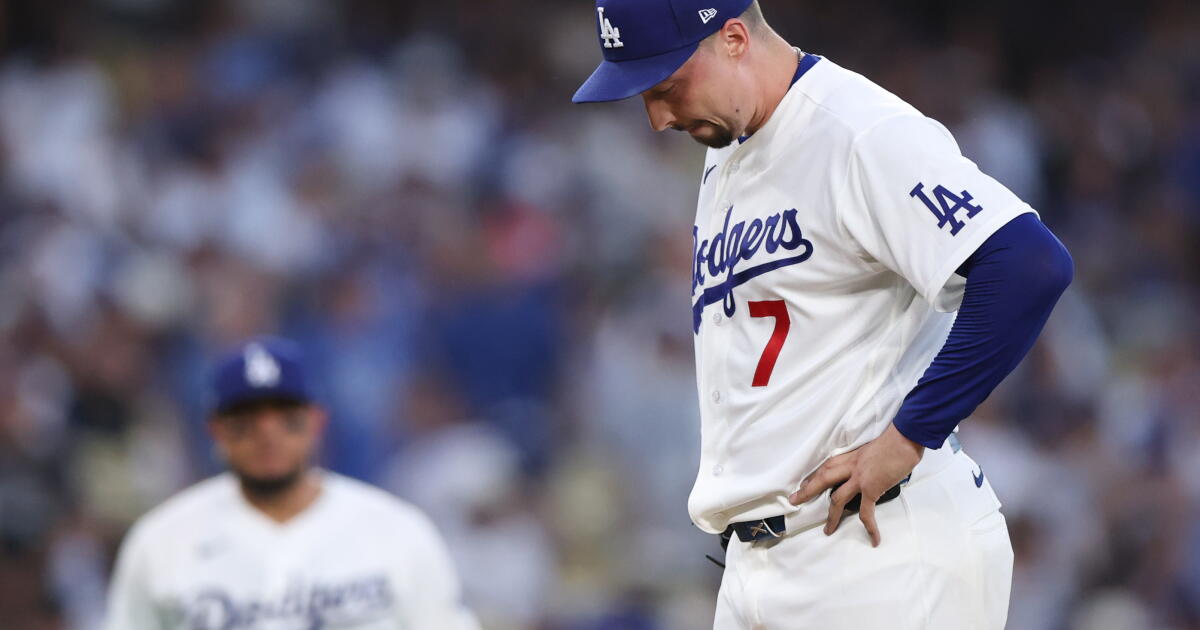
So, the Dodgers offense let the Braves come up for air. And Dodgers left-handed starter Blake Snell’s short start forfeited their starting pitching advantage Sunday.
His first inning could have been a bigger blow. With one out, Snell gave up a single to Ronald Acuña Jr. and then walked Matt Olson and Ozzie Albies to load the bases. He escaped with just one run scored, on a grounder up the middle from Mauricio Dubón. Betts made a diving stop but had no chance at throwing out Dubón at first.
Snell then struck out Sean Murphy to end the inning, finishing the at-bat with three straight curveballs for strikes.
The one-run deficit could be erased. But the damage on his pitch count, up to 27 in that first inning, was done.
Snell surrendered just one more hit, but when he issued his fifth walk of the game, with two outs in the fourth inning, his pitch count was already up to 90 pitches. Roberts strode from the dugout to pull him from the game. Snell had lasted just one inning longer than the Braves’ opener.
In the bottom half of the inning, Freeman, who was optimistic that he could shake off his September slump over the bye week, tied up the game with a solo homer. But in the fifth, the Dodgers handed the lead right back to the Braves.
With two outs, in an 0-2 count, Bubic got Harris to chase an outside sweeper moving away from him. Harris leaned over to get his bat out to it and send a line drive into the left field corner.
Hernández took a circuitous route to the ball, trying to cut it off and then having to adjust back when it became clear he was too shallow. He still only missed the ball by inches, and it carromed off the wall, allowing Harris to reach third base, in position to score on a wild pitch.
The Braves expanded their lead in the seventh inning against Dodgers hard-throwing right-hander Edgardo Henriquez, who gave up a single to Olson and an RBI double to Harris.
Then right-hander Roki Sasaki got himself into a bases-loaded situation in the eighth, with Ronald Acuña Jr. at the plate, but got out of it with a double play. Sasaki then retired the side in order in the ninth.
By contrast, the Dodgers offense barely threatened in the late innings. The Braves relievers retired 15 of the last 16 batters they faced to end the game, with Max Muncy’s solo home run in the ninth the only exception.
Rookie Josue De Paula made his psotseason debut as a pinch hitter, with two outs in the ninth. But he popped up in foul territory to end the game.
Next, the series heads to Atlanta, where the Braves will have home-field advantage for two games.