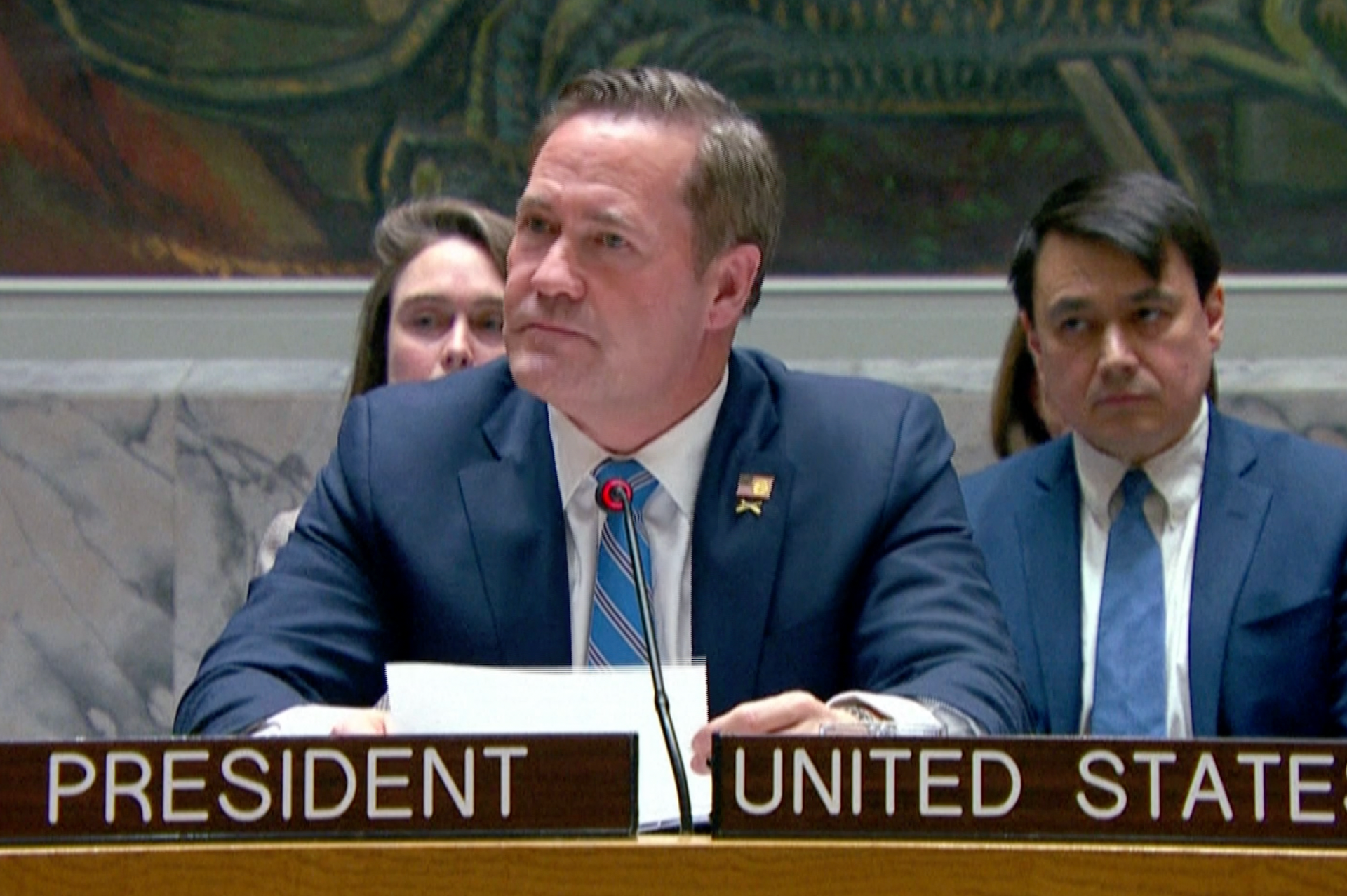
Ukraine’s Deputy Foreign Minister Mariana Betsa attends a United Nations Security Council meeting on peace and security marking the fourth anniversary of Russia’s full-scale invasion in New York, New York, on Tuesday, February 24, 2026. Photo by Olga Fedorova/EPA
Feb. 24 (UPI) — The United Nations General Assembly on Tuesday adopted a resolution calling for an immediate, full and unconditional cease-fire in Russia’s war in Ukraine, despite the United States’ abstention and a failed U.S. bid to strip language identifying the Kremlin’s aggression.
The 193-member body met on the fourth anniversary of Moscow’s full-scale invasion and voted 107 in favor, 12 against and 51 abstentions to adopt the “Support for lasting peace in Ukraine” resolution.
President Volodymyr Zelensky of Ukraine thanked the nations for standing with Ukraine against Russia’s invasion.
“These are the right and necessary steps,” he said on social media. “And we will keep working actively to achieve peace, together with our partners.”
Among nations that abstained in the vote were China and the United States.
Washington had proposed a motion of division to vote separately on two paragraphs in the resolution, but it failed in an 11-69 vote, with 62 abstentions.
Ukraine had staunchly objected to the U.S. motion.
“Weakening or removing this language would send a very dangerous signal that these principles are negotiable,” Deputy Foreign Minister Mariana Betsa of Ukraine said, describing the motion as “deeply concerning and cannot be accepted.”
Tammy Bruce, deputy U.S. representative to the United Nations, said the war must end now, but that it “will require sacrifices and compromises” and called on “everyone to do all in their power to lower the rhetoric and engage in good faith.”
“As we’ve said, this resolution also includes language that is likely to distract from ongoing negotiations, rather than support discussion on the full range of diplomatic avenues that may pave the way to that durable peace,” she said.
“For this reason, the United States called for a vote on the two paragraphs and ultimately chose to abstain on the resolution.”
The move underscores the United States’ drift from Ukraine and its European allies under the Trump administration, which is seeking its own end to the war. It also aligns with Russia, whose deputy permanent representative, Anna Evstigneeva, told the Assembly that diplomacy is what is needed, not declarations, and that the U.N. resolution disregards Trump’s negotiations “to find a compromise.”
“Do not fall for it,” she said. “What you have before you is not an instrument of peace, it is an instrument of politicization.”
Russia began the war on Feb. 24, 2022, when it launched its full-scale invasion of Ukraine under the pretense of a special military operation to denazify its neighbor.
In the four years of war, Russia and its economy have been saddled with thousands of sanctions that have seen it turn to Iran, China and even North Korea for assistance, weapons and even foreign soldiers.
According to the Center for Strategic and International Studies, Russia has suffered an estimated 1.2 million casualties and as many as 325,000 killed.
Ukraine has suffered about 55,000 soldiers killed in the war, according to Zelensky. About 20% of its territory has been illegally occupied by Russian forces. Russia has also been accused of unlawful deportation and unlawful transfer of Ukrainian children from occupied areas of Ukraine to Russia.
Russia is also being accused of weaponizing winter in an effort to break Ukraine’s resilience by depriving millions of electricity, heating and water amid freezing temperatures, Betsa told reporters in a press conference at the U.N. General Assembly with allied nations behind her.
“We reaffirm our unwavering commitment to ensure full accountability for crimes committed under international law,” she said. “Justice for victims is not optional.”
General Assembly Vice President Tania Serafim Yvonne Romulado, delivering remarks by the assembly’s president, Annalena Baerbock, emphasized that it was a permanent member of the Security Council who “continues to inflict untold suffering on the Ukrainian people” in violation of the U.N. Charter.
Nearly four million people are internally displaced, 5.7 million live as refugees and nearly one-third of Ukraine’s population, more than half of all children, have been forced to flee.
“We cannot allow the violation of international law to become the norm, and we must safeguard the founding principles of our Charter,” she said.
“And this Assembly can lead the way.”
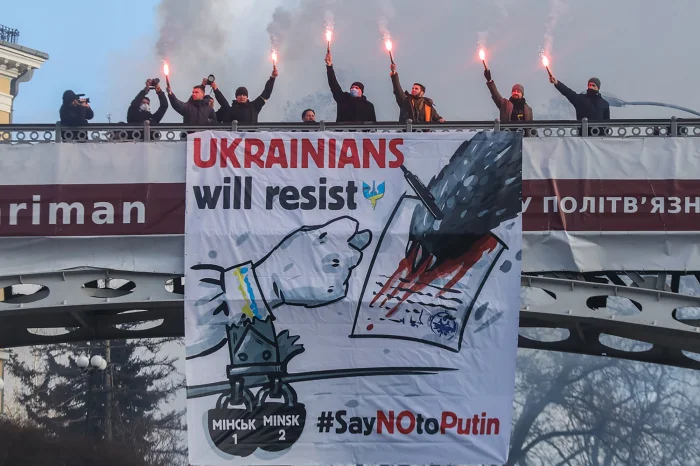
Ukrainian demonstrators rally in Kyiv on February 12, 2022 to show unity amid U.S. warnings of an imminent Russian invasion. Photo by Oleksandr Khomenko/UPI |
License Photo