adopted

Where is Coronation Street Tyrone’s adopted mum Jackie star now including working in pub

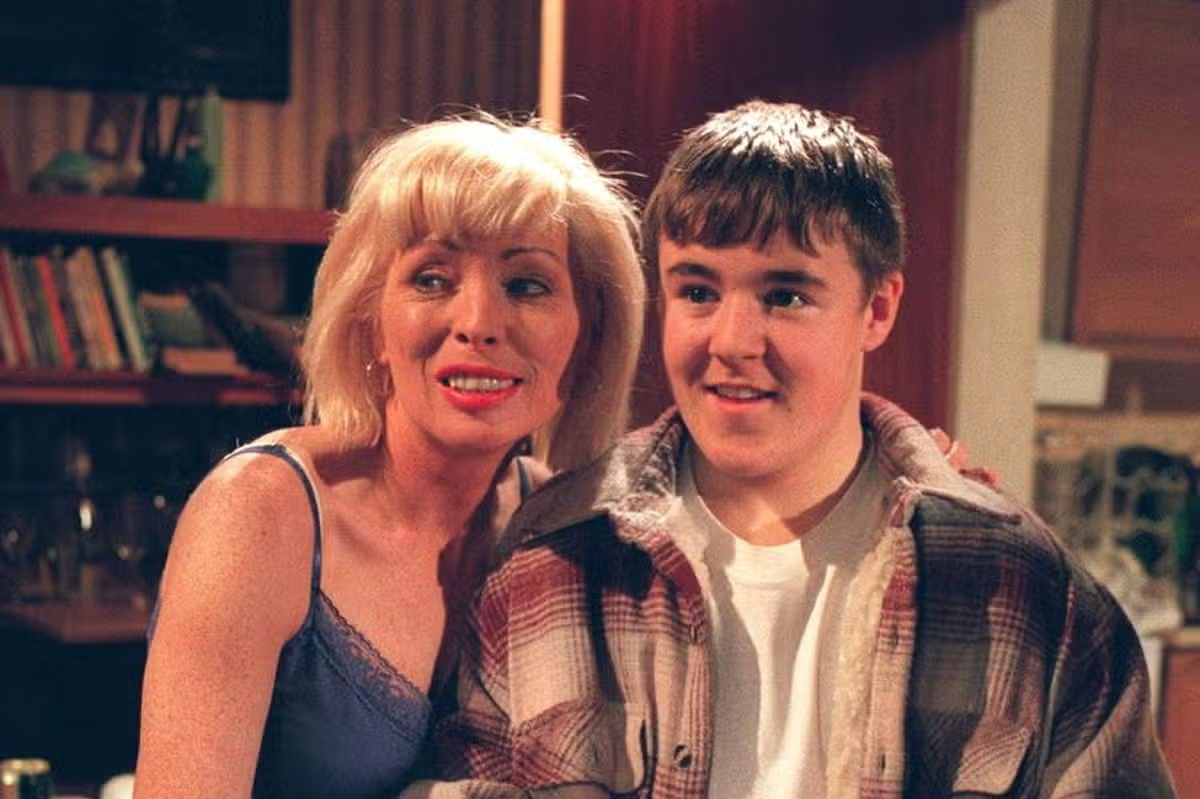
Jackie Dobbs was a firm favourite on Coronation Street as Tyrone’s jailbird mum who caused plenty of drama

Jackie Dobbs was last seen on Coronation Street in 2010 – but what has the actress Margi Clarke been up to since?

Jackie first turned up in Weatherfield back in 1998 after a stint in jail with Deidre Barlow (Anne Kirkbride), Jackie moved to the cobbles with son Tyrone (Alan Halsall) who had been a teenager at the time.

And during her stint, Jackie was involved in several big soap moments before heading back to Liverpool in 1999. Tyrone, meanwhile, was left in the care of Jack and Vera Duckworth.

Jackie later returned in 2008 with bright pink hair and caused problems for Tyrone and Molly Dobbs (Vicky Binns) in the run-up to their wedding. Jackie then left the soap for the final time in 2010.

However, fast forward to 2018 and it was revealed that Jackie had been killed off and she isn’t actually Tyrone’s biological mum, instead it is Cassie Plummer (Claire Sweeney). And this week, Tyrone’s biological father Ross Wilkes (Ian Burfield) rocks up.

So, with Tyrone set for another family bombshell, we’re taking a look inside the life of the actress who played his mum Jackie…

Margi Clarke’s acting roles

Before actress Margi joined Corrie in 1998, she was best known for her roles in Channel 4 soap Brookside, and the 1985 cult British film Letter To Brezhnev. Other TV appearances include Casualty, BBC’s Making Out and she even appeared in the Pet Shop Boys’ video for their 1987 single, Rent.

The bubbly star also turned her hand to presenting, fronting her own daytime show, Swank, in the ‘90s. Trying her hand at stand-up comedy, Margi also took her show, 21st Century Scutt, to the Edinburgh Festival in 1994.

After leaving Corrie in 1999, she joined the cast of Five soap Family Affairs for just under a year. She also appeared in the 2002 film Revengers Tragedy and 24 Hour Party People, the biopic of the Factory/Hacienda days in Manchester.

And in 2008, she returned to a prime-time starring role in the second series of the British sitcom Benidorm on ITV, playing Dorothy, mother of long-running character Gavin (Hugh Sachs).

Margi’s health setback

In the nineties, Margi took a three year sabbatical following the death of her beloved mum Frances Clarke, in 1995. Around the time of her mum’s death, Margi battled a drinking issue – which she successfully overcame – and it led to a shock health setback.

“My drinking began in 1996 and was triggered by my mother’s death from lung cancer, which left me devastated,” she told The Northern Echo in 2010.

Margi added: “The drinking had a real impact on my health. I ended up with a nasty yeast infection which left me feeling really sick with IBS (Irritable Bowel Syndrome) and covered in blisters on my skin and in my mouth, and with painful athlete’s foot.”

The actress previously told the Liverpool Echo she was still grieving for her mum when she took on the role of Tyrone’s mum Jackie in Corrie in 1998 and admitted she did not play the part to the best of her ability.

Margi worked in a pub

Unfortunately, Margi hasn’t graced our screens for several years. As IMBD reports, her last TV role was in 2014, playing Heaven Jones in the BBC comedy Puppy Love.

What’s more, in 2012, Margi revealed she was working as a barmaid at Ma Egerton’s pub in Liverpool. She told the Liverpool Confidential: “Every actor takes on other work when they are waiting for the next big job.”

Margi also revealed to Mirror: “With my strong accent getting roles in straight theatre has always been a bit difficult.

“But it’s become a whole lot harder now because the drama schools are packed full of so many talented kids. Everybody wants to be famous these days but there aren’t many roles for older Scouse women.”

Coronation Street airs Monday to Friday at 8:30pm on ITV1 and ITVX
Source link

Judge grants asylum to woman adopted by a U.S. veteran from Iran after deportation threats

A federal immigration judge has granted asylum to a woman orphaned in Iran in the 1970s and adopted by an American war veteran, whom immigration officials threatened this year with deportation to the country with which the U.S. is now at war.

Judge Andrew Fishkin’s ruling probably ends a months-long ordeal for the California woman, one of thousands adopted from abroad who were never granted citizenship because of bureaucratic loopholes between adoption and immigration law.

The woman has lived in the United States since she was adopted by American parents as a toddler and has no criminal record. The Associated Press is not naming her because she worries her legal situation remains tenuous as the administration has time to appeal. A federal judge has allowed her to use a pseudonym, “Ms. S,” in her challenge to the government’s determination of her immigration status.

The woman received a letter from the Department of Homeland Security in February that ordered her to appear for removal proceedings, saying she is subject to deportation because she overstayed her visa in March 1974 at 4 years old.

The woman, 56, described what came next as a terrifying and humiliating few months.

She grew up in a Christian, military family on a farm in Wisconsin and was taught to be patriotic. But the documents she received from the government described her as an “alien;” some said she did not understand English, which is the only language she speaks.

Immigration officials told her she was being arrested, but was released and tracked with an ankle monitor. She bought new pants to try to hide it and taught herself not to cross her legs in work meetings, terrified it would threaten the corporate job in healthcare she’s held for almost two decades.

They fingerprinted her and took her DNA. She said she was obviously weeping in the mug shot they snapped of her.

She prepared herself to be detained: She put her bills on autopay and gave her friends a key to her home.

Her lawyer, Emily Howe, said the government had the power to agree she is an American citizen.

“Instead they treated her like a terrorist, like she was the worst of the worst criminals,” Howe said. “It felt very Big Brother, very Orwellian.”

The Department of Homeland Security declined to comment on the record on an individual case.

The Associated Press profiled the woman in 2024 as part of a story about how many international adoptees were left without citizenship because their American adoptive parents failed to naturalize them.

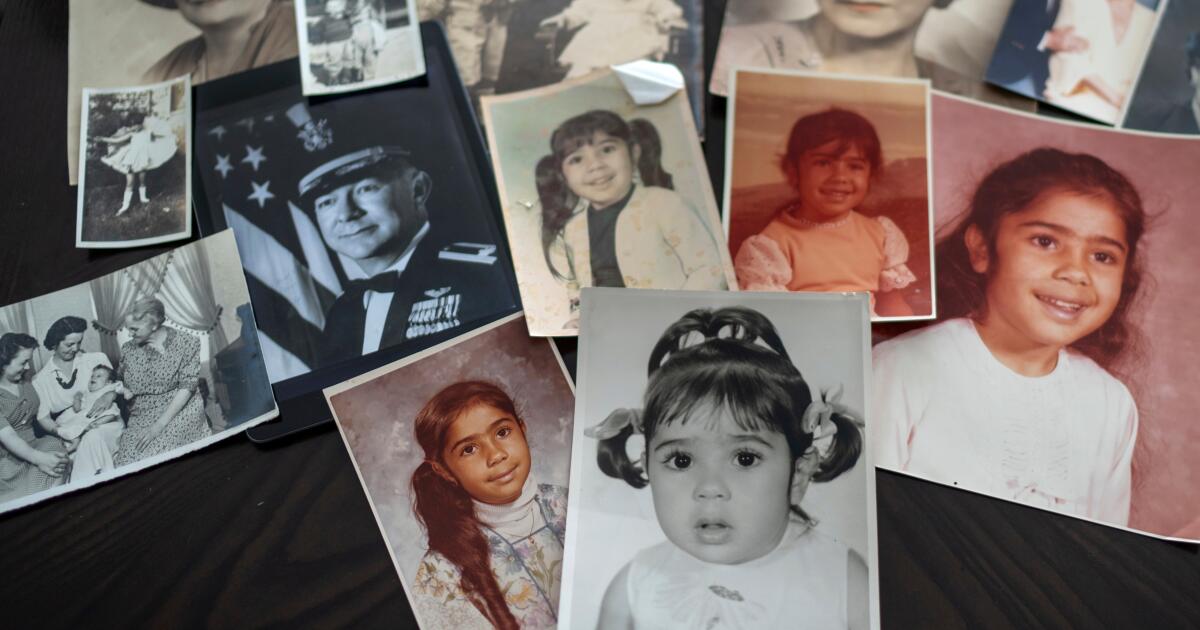
The woman’s parents were living in Iran, where her father was working for a U.S. government contractor, in the 1970s. He was retired from the Air Force as a lieutenant colonel. He’d been held for years a prisoner of war in Germany during World War II.

The couple found the toddler at an orphanage and returned to the U.S. with her in 1973 and soon completed the adoption. At that time, parents had to separately naturalize adopted children. The woman’s parents have since died.

She didn’t learn she hadn’t been naturalized until she applied for a passport at 38 years old. She still doesn’t know how the oversight happened. She searched her father’s papers and found a letter from a lawyer, dated 1975, that said he was working with immigration officials, “it appears this matter is concluded,” and billed her father for his services.

She filed a federal lawsuit this month trying to prohibit the government from removing her and forcing it to grant her citizenship.

She has long believed she should be considered a U.S. citizen: She has a Social Security card, and a driver’s license and has been legally allowed to work and pay taxes for decades. It’s only the immigration agency that denies she is a citizen. She suspects her paperwork was lost, probably when militants seized the U.S. Embassy in Tehran in 1979.

Fishkin seemed to agree: He wrote in his ruling that documents from that embassy are not available to her or to the U.S. government. He declared her a refugee, entitled to work in the U.S. His ruling puts the woman on a pathway to being recognized as a citizen.

She’d felt hopeful, she said, when she learned her court date before Fishkin was scheduled for her late father’s birthday. She always felt like she needed to protect not only herself but also her father’s legacy. He was a conscientious military official, she said, who would not have knowingly allowed such a glaring oversight that left his daughter in legal limbo.

Galofaro writes for the Associated Press.

Source link