address

Newsom overcomes unease, dyslexia to deliver a sterling State of the State address

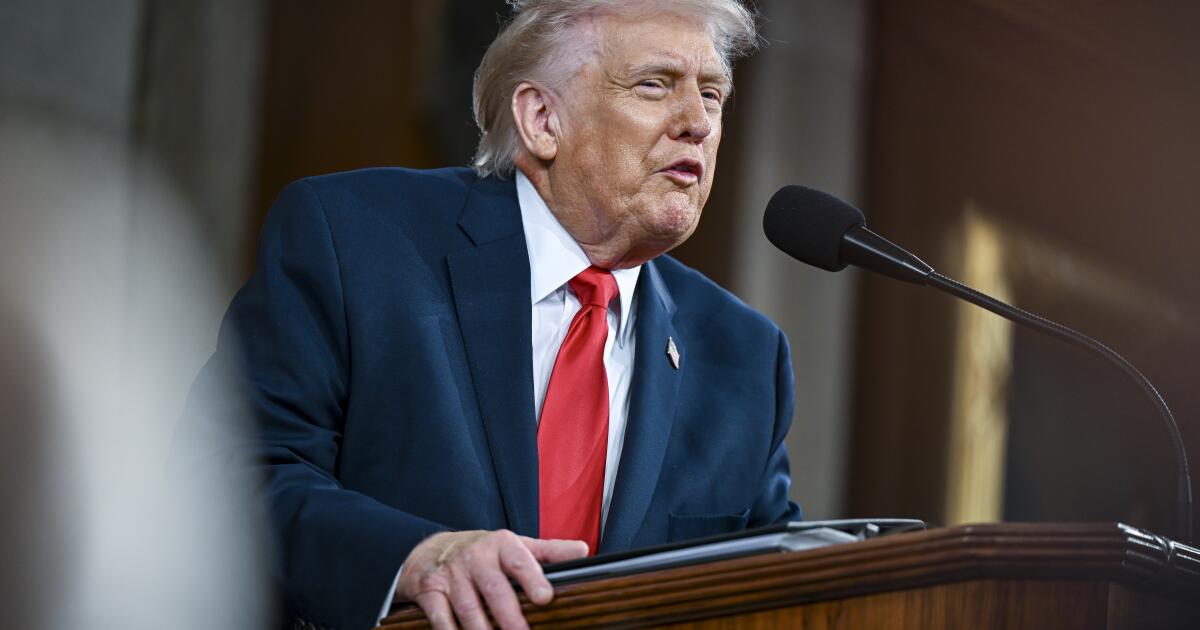
The most outstanding thing about Gov. Gavin Newsom’s final State of the State address last week was that he actually gave it.

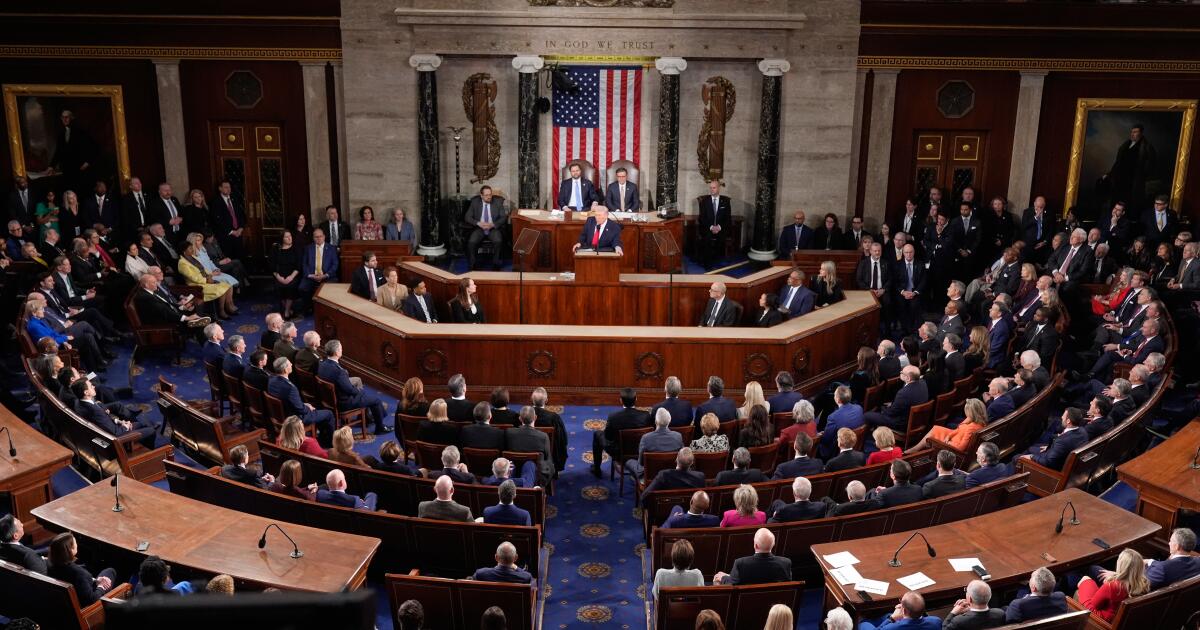
Every California governor since Earl Warren back in World War II had annually paraded into the ornate 1800s-decor Assembly chamber to address a joint session of the Legislature in what was always the most festive occasion of the year in the state Capitol.

You’re reading the L.A. Times Politics newsletter

George Skelton and Michael Wilner cover the insights, legislation, players and politics you need to know in 2024. In your inbox Monday and Thursday mornings.

By continuing, you agree to our Terms of Service and our Privacy Policy.

The house was packed with giddy lawmakers on their best behavior, state elected officials, Supreme Court justices, reporters, movers and shakers.

Newsom reluctantly followed custom his first two years as governor, but then brushed it all off for five — mainly because of a lifelong struggle with dyslexia, which makes it very difficult for him to read a speech off teleprompters.

“He hates giving speeches,” a top aide once told me. “It’s anxiety-producing for him.”

The governor had a good excuse in 2021: Tight seating in the crowded Assembly chamber would have risked spreading the COVID-19 virus. Instead, he strangely opted for center field in empty Dodger Stadium.

The next year, he delivered his speech before lawmakers in a sterile state auditorium, where he could practice his delivery for days beforehand in private. The year after that, he skipped the address entirely. In 2024, he went on a four-city road trip to promote his legislative agenda. And late last year, he merely sent a written message to the Legislature.

The question arose whether Newson was capable of delivering a traditional State of the Union address to a joint session of Congress if he ever did achieve his presidential ambition.

He answered that a few days ago by flawlessly delivering an hour-long State of the State speech, displaying some wit and plenty of charisma and rhetorical skill while expressing passion for California and repulsion against President Trump.

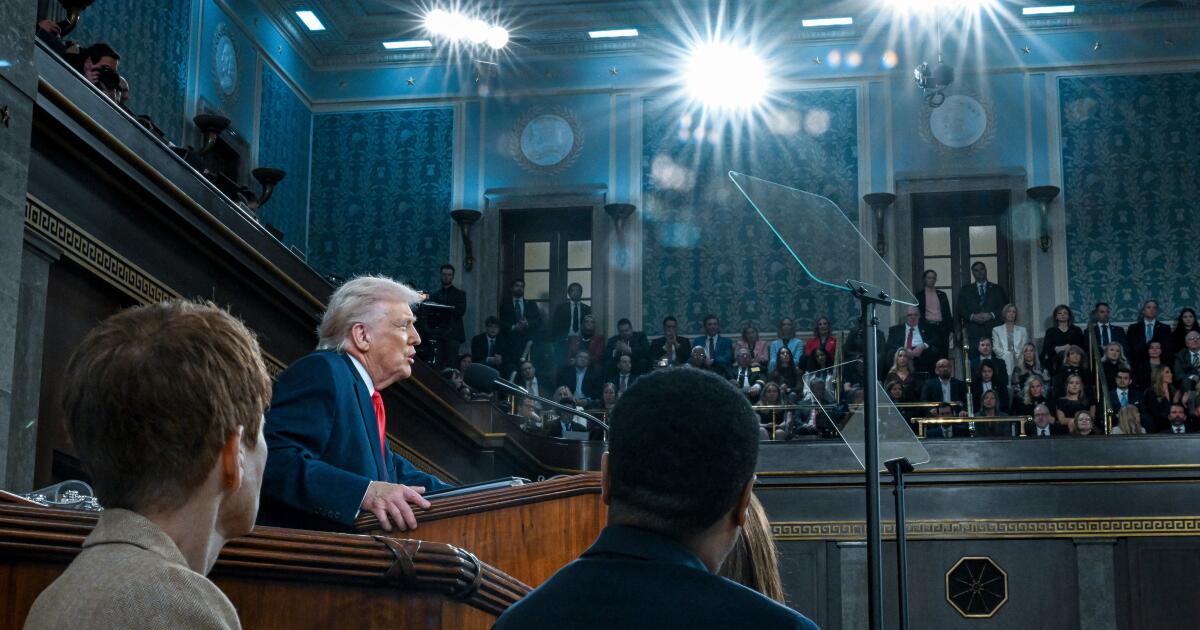
The ceremony resembled a mini-State of the Union as the beaming governor was escorted down the Assembly’s center aisle to the Speaker’s rostrum, shaking hands with delighted legislators crowding into camera range.

Newsom returned to the customary State of the State format because he realized this was his last opportunity as a lame-duck governor who’s termed out after this year. He wanted to show some farewell respect for the legislative institution, a gubernatorial insider told me.

Of course, it also was a relatively high-profile gift speaking slot that could catch some national attention.

And he wanted to do it in early January — as all previous governors had — because, he believed, it would attract more attention now than later. Soon the race to replace him will shift into high gear, he theorized, and he could be crowded out of public focus by the gubernatorial candidates.

That theory doesn’t add up.

This is not an attention-grabbing field of gubernatorial wannabes, to put it politely. Conversely, Newsom is an early front-runner for the 2028 Democratic presidential nomination. Regardless, it’s Trump who will continue to draw most of the political attention, not the scarcely known group running for governor.

Whatever his purpose, the speech paid off for Newsom. It got lots of news media coverage. And he continually was interrupted with loud applause by Democrats — what you’d expect when they dominate the Legislature with a supermajority.

But it required a lot of pre-speech work. Newsom spent more than a week in practice, reading his script off teleprompters, off and on, and devouring its content, the insider says.

As he began the live address, Newsom ad-libbed a reference to his long absence from the State of the State ritual and struggles with dyslexia.

“I’m not shy or, you know, embarrassed about my [below average] 960 SAT score,” the governor said, grinning, “but I am a little bit about my inability to read the written text. And so it’s always been something that I have to work through and I’m confronting.”

His performance — the delivery, at least — matched, if not exceeded, all previous governors I’ve watched give State of the States.

Newsom used the speech to continue the anti-Trump barrage that has boosted his national standing among Democratic activists.

“The president believes that might makes right, that the courts are simply speed bumps, not stop signs,” Newsom asserted. “Secret police, businesses raided, windows smashed, citizens detained, citizens being shot, masked men snatching people in broad daylight….

“In California, we are not silent. We are not hunkering down. We are not retreating. We are a beacon.”

Newsom defended California against Republican attacks — and common mindsets throughout much of America — that the Golden State is a socialist hellhole of high taxes, unaffordable living and rampant crime. It’s an albatross he’ll need to fight off running for president.

“The declinists — you know who you are — the pundits and critics suffering from ‘California derangement syndrome,’ look at this state and try to tear down our progress,” he said,

“It’s time to update your talking points. California remains the most blessed and often the most cursed place on Earth — profound natural beauty and prosperity, profound natural disasters, testing our spirits and resources.”

Afterward, Newsom was criticized by Republicans and chided in the news media for not mentioning that the nonpartisan Legislative Analyst Office had forecast an $18-billion state budget deficit for the fiscal year beginning July 1.

Newsom brushed that off with a stroke of the pen the next day. He submitted a significantly lower deficit projection — just $3 billion — in a $349-billion budget proposal he sent the Legislature. He credited a revenue surge based on stock market profits, fueled largely by artificial intelligence investments.

Gee, what could go wrong?

Breaking with gubernatorial tradition, Newsom did not show up to personally brief reporters on his budget proposal, a task he has mastered in the past.

This time, Newsom had been too busy practicing his State of the State address to bone up on a budget presentation.

That’s OK. The State of the State was a needed feel-good tonic for both the Legislature and Newsom.

What else you should be reading

The must-read: Deadly ICE shooting in Minnesota, affordability stir up California gubernatorial forums
CA vs. Trump: Federal judge blocks Trump administration’s freeze of $10 billion in child-care funds
The L.A. Times Special: Citizens are finally getting it: No one’s safe from Trump’s deportation ambitions

Until next week,
George Skelton


Was this newsletter forwarded to you? Sign up here to get it in your inbox.

Source link

Rep. Paul Ryan to deliver GOP response to Obama’s State of the Union address

WASHINGTON – Republicans have tapped Wisconsin Rep. Paul Ryan to deliver the party’s response to President Obama’s State of the Union address on Tuesday, party officials said Friday.

The choice of Ryan, chairman of the House Budget Committee, is meant to signal the party’s commitment to deficit reduction, the officials said. Ryan will deliver the GOP response from the Budget Committee’s hearing room.

“Paul Ryan is uniquely qualified to address the state of our economy and the fiscal challenges that face our country,” Speaker of the House John Boehner said in a statement. “We’re broke, and decisive action is needed to help our economy get back to creating jobs and end the spending binge in Washington that threatens our children’s future. I’m pleased that Paul will be outlining a common-sense vision for moving our country forward.”

For Obama’s first two addresses to a joint session of Congress, Republicans chose governors to deliver the response – first Louisiana’s Bobby Jindal, and in 2010, Virginia’s Bob McDonnell. The tradition of the opposition party delivering a formal response dates back to 1966.

Ryan, 40, has represented Wisconsin’s 1st Congressional District since 1999. He was a member of Obama’s bipartisan fiscal commission, but voted against the panel’s final recommendations.

Obama is scheduled to travel to Wisconsin on Wednesday in a post-speech barnstorming trip.

mmemoli@tribune.com

Source link

The pope in a major foreign policy address blasts how countries are using force to assert dominion

In his most substantial critique of U.S., Russian and other military incursions in sovereign countries, Pope Leo XIV on Friday denounced how nations were using force to assert their dominion worldwide, “completely undermining” peace and the post-World War II international legal order.

“War is back in vogue and a zeal for war is spreading,” Leo told ambassadors from around the world who represent their countries’ interests at the Holy See.

Leo didn’t name individual countries that have resorted to force in his lengthy speech, the bulk of which he delivered in English in a break from the Vatican’s traditional diplomatic protocol of Italian and French. But his speech came amid the backdrop of the recent U.S. military operation in Venezuela to remove Nicolás Maduro from power, Russia’s ongoing war in Ukraine and other conflicts.

The occasion was the pope’s annual audience with the Vatican diplomatic corps, which traditionally amounts to his yearly foreign policy address.

In his first such encounter, history’s first U.S.-born pope delivered much more than the traditional roundup of global hotspots. In a speech that touched on threats to religious freedom and the Catholic Church’s opposition to abortion and surrogacy, Leo lamented how the United Nations and multilateralism as a whole were increasingly under threat.

“A diplomacy that promotes dialogue and seeks consensus among all parties is being replaced by a diplomacy based on force, by either individuals or groups of allies,” he said. “The principle established after the Second World War, which prohibited nations from using force to violate the borders of others, has been completely undermined.”

“Instead, peace is sought through weapons as a condition for asserting one’s own dominion. This gravely threatens the rule of law, which is the foundation of all peaceful civil coexistence,” he said.

A geopolitical roundup of conflicts and suffering

Leo did refer explicitly to tensions in Venezuela, calling for a peaceful political solution that keeps in mind the “common good of the peoples and not the defense of partisan interests.”

The U.S. military seized Maduro, the Venezuelan leader, in a surprise nighttime raid. The Trump administration is now seeking to control Venezuela’s oil resources and its government. The U.S. government has insisted Maduro’s capture was legal, saying drug cartels operating from Venezuela amounted to unlawful combatants and that the U.S. is now in an “armed conflict” with them.

Analysts and some world leaders have condemned the Venezuela mission, warning that Maduro’s ouster could pave the way for more military interventions and a further erosion of the global legal order.

On Ukraine, Leo repeated his appeal for an immediate ceasefire and urgently called for the international community “not to waver in its commitment to pursuing just and lasting solutions that will protect the most vulnerable and restore hope to the afflicted peoples.”

On Gaza, Leo repeated the Holy See’s call for a two-state solution to the Israeli-Palestinian conflict and insisted on the Palestinians’ right to live in Gaza and the West Bank “in their own land.”

In other comments, Leo said the persecution of Christians around the world was “one of the most widespread human rights crises today,” affecting one in seven Christians globally. He cited religiously motivated violence in Bangladesh, Nigeria, the Sahel, Mozambique and Syria but said religious discrimination was also present in Europe and the Americas.

There, Christians “are sometimes restricted in their ability to proclaim the truths of the Gospel for political or ideological reasons, especially when they defend the dignity of the weakest, the unborn, refugees and migrants, or promote the family.”

Leo repeated the church’s opposition to abortion and euthanasia and expressed “deep concern” about projects to provide cross-border access to mothers seeking abortion.

He also described surrogacy as a threat to life and dignity. “By transforming gestation into a negotiable service, this violates the dignity both of the child, who is reduced to a product, and of the mother, exploiting her body and the generative process, and distorting the original relational calling of the family,” he said.

Winfield writes for the Associated Press.

Source link

‘We won, the president lost,’ Jimmy Kimmel says in Christmas message

Jimmy Kimmel swapped his suit and late-night desk for a cardigan and Christmas living room scene as he shared with British viewers an important holiday message: “Tyranny is booming over here.”

Kimmel appeared on public broadcaster Channel 4 Thursday to deliver an “alternative Christmas message,” counter programming to the British monarch’s annual televised address.

Kimmel’s message focused on his battle with President Trump, who reveled in his talk show’s September suspension. Kimmel was benched for roughly a week after backlash to his comments about Charlie Kirk — and an ominous threat by the Federal Communications Commission chair. Kimmel had criticized MAGA supporters for attempting to “score political points” after the conservative activist’s killing. He also poked fun at Trump boasting about White House ballroom renovations after being asked about Kirk’s death.

“You may have read in your colorful newspapers my country’s president would like to shut me up because I don’t adore him in the way he likes to be adored,” he said. He attributed the return of “Jimmy Kimmel Live!” to the “millions and millions of people” who fought to get him back on the air in the name of free speech.

“And because so many people spoke out, we came back. Our show came back stronger than ever. We won, the president lost, and now I’m back on the air every night giving the most powerful politician on Earth a right, and richly deserved, bollocking,” he said, referencing the British slang for scolding. Earlier this month, Kimmel signed a contract extension with ABC through May 2027.

Past hosts of the alternative Christmas message, which began in 1993, include Edward Snowden, Jesse Jackson and a deepfake of Queen Elizabeth II.

During his address, Kimmel called the president “King Donny the 8th.” “We don’t have a problem with your king, just the guy who thinks he’s our king,” he said, apologizing for the state of America and its democratic institutions.

“Don’t give up on us,” Kimmel said. “We’re going through a bit of a wobble right now, but we’ll come around.”

Source link

Pope Leo urges ‘courage’ to end Ukraine war in first Christmas address

Pope Leo has urged Ukraine and Russia to find the “courage” to hold direct talks to end the war during his first Christmas remarks to crowds in St Peter’s square.

He called for an end to conflicts around the world during his Urbi et Orbi address, which is traditionally delivered by the pontiff on Christmas Day to worshippers gathered in Vatican City.

Speaking about Ukraine, the Pope said: “May the clamour of weapons cease, and may the parties involved, with the support and commitment of the international community, find the courage to engage in sincere, direct and respectful dialogue.”

His plea comes as US-led negotiations on a deal to end the fighting continues.

The US has sought to put together an agreement acceptable to both sides, but direct talks between Russian and Ukraine have not taken place during this latest round of diplomatic efforts.

Pope Leo also decried turmoil and conflict plaguing other parts of the world, including Thailand and Cambodia where deadly border clashes have flared up despite a ceasefire in July.

He asked that the South East Asian nations’ “ancient friendship” be restored and “to work towards reconciliation and peace”.

During an earlier Christmas Day sermon in St Peter’s Basilica, Pope Leo lamented conditions for homeless people the world over, and the damage caused by conflicts.

“Fragile is the flesh of defenceless populations, tried by so many wars, ongoing or concluded, leaving behind rubble and open wounds,” he said.

He said the story of the birth of Jesus showed that God had “pitched his fragile tent” among the people of the world. “How, then,” he asked, turning his attention to the conditions of Palestinians, “can we not think of the tents in Gaza, exposed for weeks to rain, wind and cold?”

Gaza has been devastated by Israeli bombardment in a two-year war, triggered by Hamas’s attack on Israel on 7 October 2023.

Winter storms have compounded the plight of the territory’s 2.1m population, nearly all of whom have been displaced and their homes damaged or destroyed.

Aid agencies have called for Israel to allow more tents and urgently needed supplies into Gaza.

Cogat, the Israeli military body which controls Gaza’s border crossings, has dismissed claims of deliberate aid restrictions, saying almost 310,000 tents and tarpaulins had been delivered since the start of the ceasefire in October.

Source link

Putin says he’s ready to continue war with Ukraine in annual address

Russian President Vladimir Putin speaks during his annual live broadcast press conference with Russian federal, regional, and foreign media in Moscow. Photo by Sergei Ilnitsky/EPA

Dec. 19 (UPI) — Russian President Vladimir Putin said he was determined to continue the war in Ukraine until his conditions are met, which include taking Ukrainian territory.

Putin spoke at his annual press conference and touted Russia’s recent gains in the region.

“The strategic initiative is completely in the hands of the Russian forces,” Putin said. He added that Russia is “ready to end the conflict peacefully” if Ukraine cedes large areas of its eastern territories.

Ukrainian President Volodymyr Zelensky has said Ukraine won’t give up its land, which is set by the country’s constitution.

Russia has also demanded that Ukraine give up its bid to join NATO and said that if NATO members sent troops, Russia would view them as “legitimate targets.”

“The ball is entirely in the court of our Western opponents,” he said, adding that Russia had agreed to compromises proposed by the United States in its peace plan negotiated by the President Donald Trump administration.

Earlier this week, Zelensky was asked if Kyiv would give up its attempts to join NATO. He said Ukraine’s “position remains unchanged.”

“The United States don’t see us in NATO, for now,” he said. “Politicians change.”

European leaders have agreed to continue funding Ukraine in its fight against Russia with a two-year, $105 billion loan for munitions in the ongoing war.

European leaders couldn’t agree on their first choice to arm Ukraine using frozen Russian state assets to back the loan.

The plan to use frozen Russian assets fell apart in the final moments after Belgium pushed back, fearful that it would be at legal and financial risk. The bank holding the assets is in Belgium, and Russia has sued to block the plan.

European leaders announced Thursday that they will instead use money from the EU budget. The new plan could be more costly and difficult to mobilize.

Former President Joe Biden presents the Presidential Citizens Medal to Liz Cheney during a ceremony in the East Room of the White House in Washington, on January 2, 2025. The Presidential Citizens Medal is bestowed to individuals who have performed exemplary deeds or services. Photo by Will Oliver/UPI | License Photo

Source link

Trump touts successes, bashes Biden in address to nation

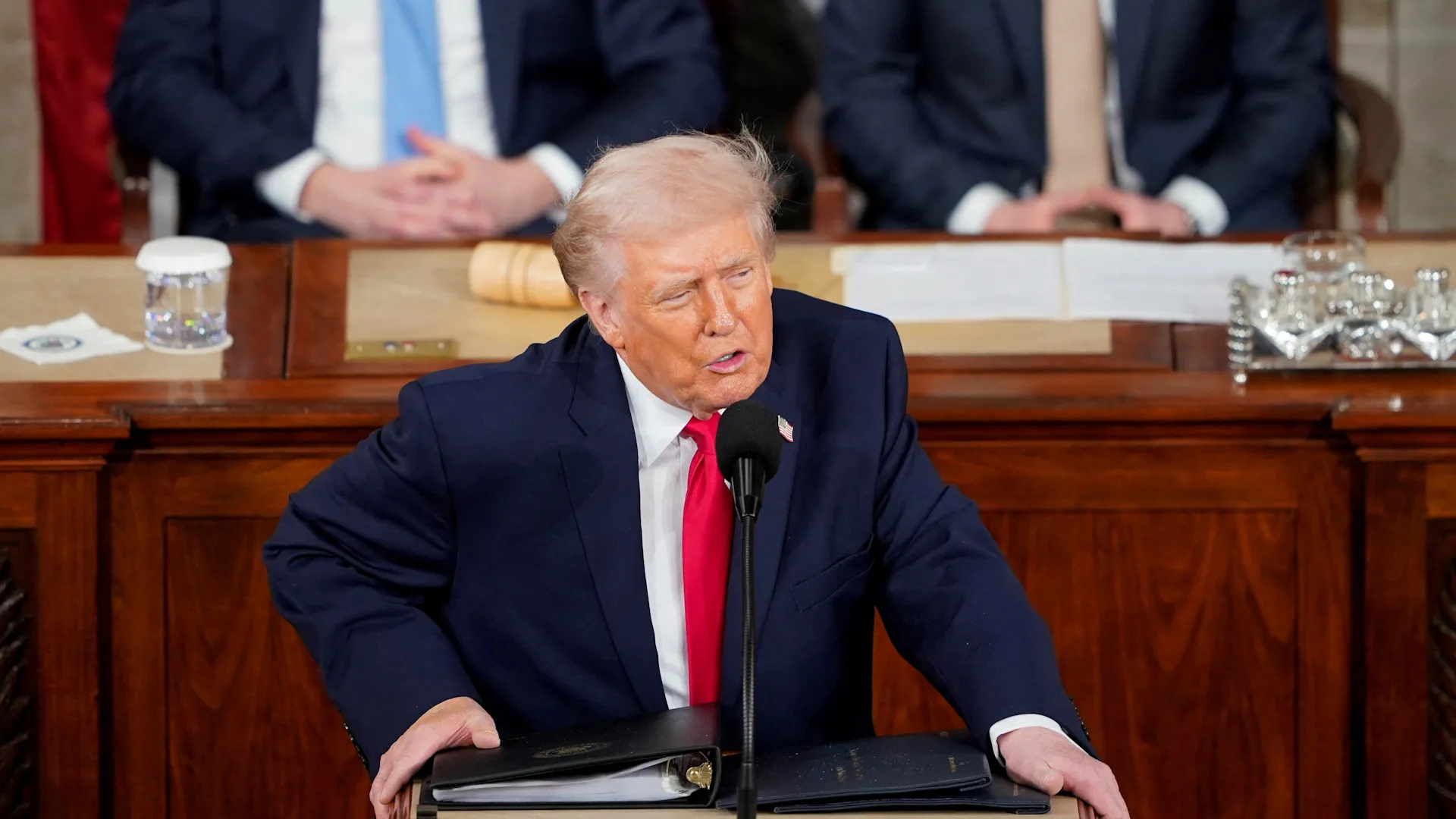
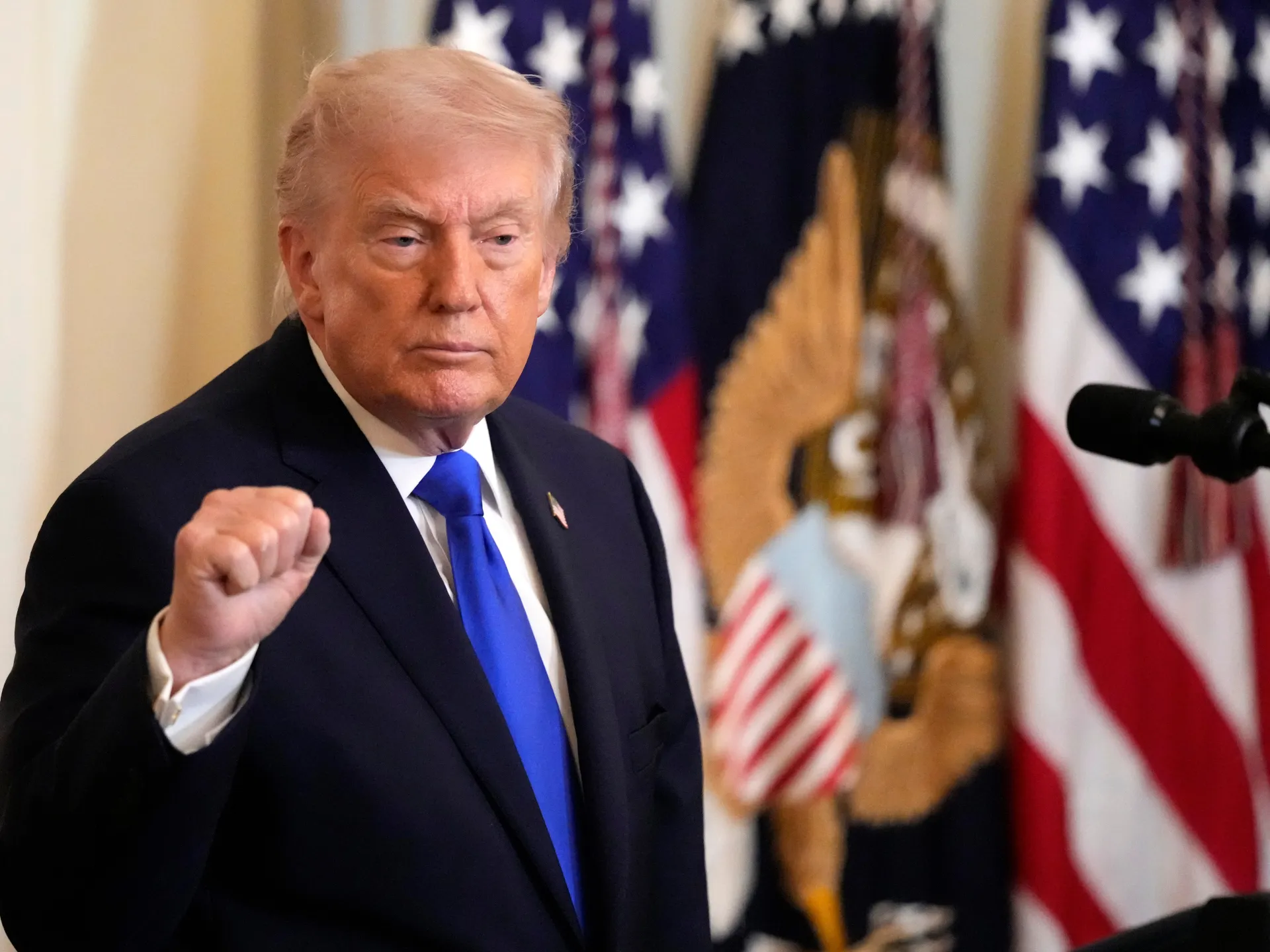
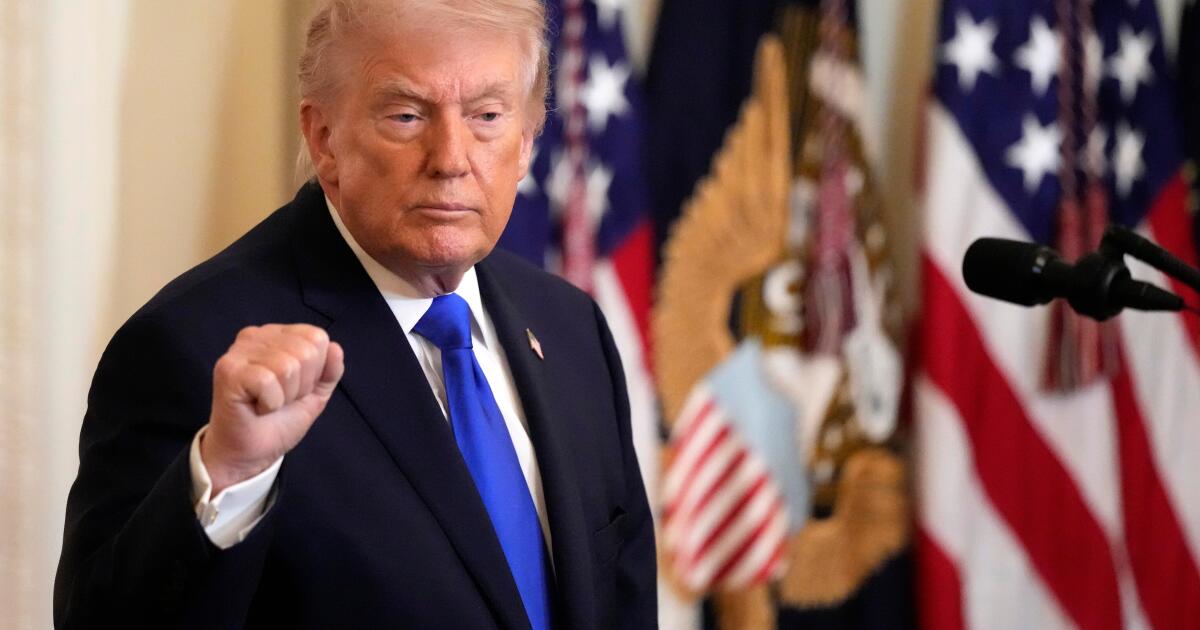
Dec. 17 (UPI) — In a relatively brief, campaign-style speech on Wednesday night, President Donald Trump touted what he described as successes achieved by his administration during his first year back in office, while bashing his predecessor, former President Joe Biden, and the Democrats.

Before Christmas trees and a Christmas laurel decorating the mantel of the Diplomatic Reception Room fireplace, the commander-in-chief said he has returned the United States from a place of destitution to a level of unparalleled success.

“Our country is back stronger than ever before. We’re poised for an economic boom the likes of which the world has never seen,” he said.

“We will celebrate the 250th anniversary of the Declaration of Independence. There could be no more fitting tribute to this epic milestone than to complete the comeback of America that began just one year ago.”

The speech comes amid economic concerns and fears of war in the United States, though Trump only touched on the former during the address. A day earlier, the Bureau of Labor Statistics reported unemployment had risen to its highest level since September 2021 during the pandemic. An ongoing U.S. military buildup in the Caribbean continues, and on Tuesday, Trump ordered a naval blockade of Venezuela oil tankers.

In the 18-minute speech, Trump described the country he inherited as a “mess” marked by inflation, high prices, rampant illegal immigration, unaffordability, transgender women playing women’s sports, “transgender for everybody,” censorship and crime.

“This is what the Biden administration allowed to happen to our country, and it can never be allowed to happen again,” he said.

“Our country was laughed at all over the world, but they are not laughing anymore.”

In the last 11 months, Trump said he has ushered more positive change into Washington “than any administration in American history.”

“There’s never been anything like it. And I think most would agree,” he said.

Trump also trumpeted his border policies, claiming they have resulted in “zero” undocumented migrants allowed to enter the United States. — an apparent reference to Customs and Border Protection data showing that, beginning in May, no migrants apprehended at the border were released into the U.S. interior.

“Do you remember when Joe Biden said he needed Congress to help with legislation to close the border?” he said. “As it turned out, we didn’t need legislation, we just needed a new president.”

This is a developing story.

Source link

Trump is previewing his 2026 agenda in an address to the nation as his popularity wanes

President Trump intends to preview his agenda for next year and beyond in a live speech from the White House on Wednesday night. His remarks are coming at a crucial time as he tries to rebuild his steadily eroding popularity.

The White House offered few details about what the Republican president intends to emphasize in the 6 p.m. PST speech. Public polling shows most U.S. adults are frustrated with his handling of the economy as inflation picked up after his tariffs raised prices and hiring slowed.

Trump’s mass deportations of immigrants have also proved unpopular even as he is viewed favorably for halting crossings along the U.S. border with Mexico. The public has generally been nonplussed by his income tax cuts and globe-trotting efforts to end conflicts, attack suspected drug boats near Venezuela and attract investment dollars into the United States.

In 2026, Trump and his party face a referendum on their leadership as the nation heads into the midterm elections that will decide control of the House and the Senate.

Trump has said that he thinks more Americans would back him if they simply heard him describe his track record. Administration officials say investment commitments for new factories will reverse the recent decline in manufacturing jobs and that consumer activity will improve dramatically as people receive increased tax refunds next year.

“It has been a great year for our Country, and THE BEST IS YET TO COME!” Trump said in a Tuesday social media post announcing the speech.

White House press secretary Karoline Leavitt said that Trump would discuss his achievements this year and his plans for the remainder of his second term.

Trump has been omnipresent on social media and television this year with his impromptu news conferences and speeches. But addresses to the nation often can be relatively sober affairs, as was Trump’s June address describing the U.S. bombing of nuclear facilities in Iran.

The president has eschewed the messaging discipline that’s common among most politicians, an authenticity that appeals to some voters and repels others.

In a speech in Pennsylvania last week, he said his tariffs might mean that American children should have fewer dolls and pencils, while confirming a previously denied story from his first term in 2018 that he did not want immigrants from “shithole” countries.

On Monday, Trump on his social media site blamed Rob Reiner’s vocal objections to the president for the killing of the actor-director and his wife, Michele Singer Reiner.

A report released on Tuesday showed a jobs market that looks increasingly fragile, even if the overall economy still appears to be stable.

Employers were adding on average 122,750 jobs a month during the first four months of this year. But since Trump announced his broad tariffs in April, monthly job gains have averaged a paltry 17,000 as the unemployment rate has climbed from 4% in January to 4.6%.

Trump’s team has blamed Democratic lawmakers for shutting down the government for the job losses reported Tuesday during October. The president continues to blame his predecessor, Democrat Joe Biden, for any challenges the nation might face over inflation or ending Russia’s war in Ukraine.

Boak writes for the Associated Press.

Source link