accused

If Einstein spoke out today, he would be accused of anti-Semitism – Middle East Monitor

In 1948, as the foundations of the Israeli state were being laid upon the ruins of hundreds of Palestinian villages, Albert Einstein wrote a letter to the American Friends of the Fighters for the Freedom of Israel (AFFFI), condemning the growing Zionist militancy within the settler Jewish community. “When a real and final catastrophe should befall us in Palestine the first responsible for it would be the British and the second responsible for it the terrorist organisations built up from our own ranks. I am not willing to see anybody associated with those misled and criminal people.”

Einstein — perhaps the most celebrated Jewish intellectual of the 20th century — refused to conflate his Jewish identity with the violence of Zionism. He turned down the offer to become Israel’s president, rejecting the notion that Jewish survival and self-determination should come at the cost of another people’s displacement and suffering. And yet, if Einstein were alive today, his words would likely be condemned under the current definitions of anti-Semitism adopted by many Western governments and institutions, including the controversial International Holocaust Remembrance Alliance (IHRA) definition, now endorsed by most Australian universities.

Under the IHRA definition, Einstein’s outspoken criticism of Israel — he called its founding actors “terrorists” and denounced their betrayal of Jewish ethics — would render him suspect. He would be accused not only of delegitimising Israel, but also of anti-Semitism. His moral clarity, once visionary, would today be vilified.

That is why we must untangle the threads of Zionism, colonialism and human rights.

Einstein’s resistance to Zionism was not about denying Jewish belonging or rights; it was about refusing to build those rights on ethno-nationalist violence. He understood what too many people fail to grasp today: that Zionism and Judaism are not synonymous.

Zionism is a political ideology rooted in European colonial logics, one that enforces Jewish supremacy in a land shared historically by Palestinian and other Levantine peoples. To criticise this ideology is not anti-Semitic; it is, rather, a necessary act of justice and a moral act of bearing witness. The religious symbolism that Israel uses is irrelevant in this respect. And yet, in today’s political climate, any critique of Israel — no matter how grounded it might be in international law, historical fact or humanitarian concern — is increasingly branded as anti-Semitism. This conflation shields from accountability a settler-colonial state, and it silences Palestinians and their allies from speaking out on the reality of their oppression. Billions in arms sales, stolen resources and apartheid infrastructure don’t just happen; they’re the reason that legitimate “criticism” gets rebranded as “hate”.

READ: Ex-Israel PM accuses Netanyahu of waging war on Israel

To understand Einstein’s critique, we must confront the truth about Zionism itself. While often framed as a movement for Jewish liberation, Zionism in practice has operated as a colonial project of erasure and domination. The Nakba was not a tragic consequence of war, it was a deliberate blueprint for dispossession and disappearance. Israeli historian Ilan Pappé has detailed how David Ben-Gurion, Israel’s first Prime Minister, approved “Plan Dalet” on 10 March, 1948. This included the mass expulsion and execution of Palestinians to create a Jewish-majority state. As Ben-Gurion himself declared chillingly: “Every attack has to end with occupation, destruction and expulsion.

This is the basis of the Zionist state that we are told not to critique.

Einstein saw this unfolding and recoiled. In another 1948 open letter to the New York Times, he and other Jewish intellectuals described Israel’s newly formed political parties — like Herut (the precursor to Likud) — as “closely akin in… organisation, methods, political philosophy and social appeal to the Nazi and Fascist parties.”

Einstein’s words were not hyperbole, they were a warning. Having fled Nazi Germany, he had direct experience with the defining traits of Nazi fascism. “From Israel’s past actions,” he wrote, “we can judge what it may be expected to do in the future.”

Today, we are living in the very future that Einstein feared, a reality marked by massacres in Gaza, the destruction of civilian infrastructure, and the denial of basic essentials such as water, electricity and medical aid. This is not about “self-defence”; it is the logic of colonial domination whereby the land theft continues and the violence escalates.

Einstein warned about what many still refuse to see: a state established on principles of ethnic supremacy and expulsion could never transcend its foundation ethos. Israel’s creation in occupied Palestine is Zionism in practice; it cannot endure without employing repression until resistance is erased entirely. Hence, the Nakba wasn’t a one-off event in 1948; it evolved, funded by Washington, armed by Berlin and enabled by every government that trades Palestinian blood for political favours.

Zionism cannot be separated from the broader history of European settler-colonialism. As Patrick Wolfe explains, the ideology hijacked the rhetoric of Jewish liberation to mask its colonial reality of re-nativism, with the settlers recasting themselves as “indigenous” while painting resistance as terrorism.

READ: Illegal Israeli settlers attack Palestinian school in occupied West Bank

The father of political Zionism, Theodor Herzl, stated in his manifesto-novel Altneuland, “To build anew, I must demolish before I construct.” To him, Palestine was not seen as a shared homeland, but as a house to be razed to the ground and rebuilt by and for Jews alone. His ideology was made possible by British imperial interests to divide and dominate post-Ottoman territories. Through ethnic partition and military alliances embellished under the 1917 Balfour Declaration to the ironic Zionist-Nazi 1933 Haavara Agreement, the Zionist project aligned perfectly with the West’s goal, as per the 1916 Sykes-Picot Agreement.

Israel is thus criticised because of its political ideology rooted in ethnonationalism and settler colonialism. Equating anti-Zionism to anti-Semitism is a disservice not only to Palestinians, but also to Jews, especially those who, like Einstein, refuse to have their identity weaponised in the service of war crimes. Zionism today includes Christian Zionists, military allies and Western politicians who benefit from Israel’s imperial reach through arms deals, surveillance technology and geostrategic partnerships.

Zionism is a global power structure, not a monolithic ethnic identity.

Many Jews around the world — rabbis, scholars, students and Holocaust survivors and their descendants — continue Einstein’s legacy by saying “Not in our name”. They reject the co-option of Holocaust memory to justify genocide in Gaza. They refuse to be complicit in what the Torah forbids: the theft of land and the murder of innocents. They are not “self-hating Jews”. They are the inheritors of a prophetic tradition of justice. And they are being silenced.

Perhaps the most dangerous development today is, therefore, Israel’s insistence on linking its crimes to Jewish identity. It frames civilian massacres, apartheid policies and violations of international law as acts done in the name of all Jews and Judaism. By tying the Jewish people to the crimes of a state, Israel risks exposing Jews around the world to collective blame and retaliation.

Einstein warned against this. And if Einstein’s vision teaches us anything, it is this: Justice cannot be compromised for comfort and profit. Truth must outlast repression. And freedom must belong to all. In the end, no amount of Israel’s militarisation of terminology, propaganda or geopolitical alliances can suppress a people’s resistance forever or outlast global condemnation. The only question left is: how much more blood will be spilled before justice prevails?

The struggle for clarity today is not just academic, it is existential. Without the ability to distinguish anti-Semitism from anti-Zionism, we cannot build a future where Jews and Palestinians all live in dignity, safety and peace. Reclaiming the term “Semite” in its full meaning, encompassing both Jews and Arabs, is critical. Further isolation of Arabs from their Semitic identity has enabled the dehumanisation of Palestinians and the erasure of shared Jewish-Arab histories, especially the centuries of coexistence, the Jewish-Muslim golden ages in places like Baghdad, Granada/Andalusia, Istanbul, Damascus and Cairo.

Einstein stood up for the future for us to reclaim it.

The way forward must be rooted in truth, justice and accountability. That means unequivocally opposing anti-Semitism in all its forms, but refusing to allow the term to be manipulated as a shield for apartheid, ethnic cleansing and colonial domination. It means affirming that Jewish safety must never come at the price of Palestinian freedom, and that Palestinian resistance is not hatred; it is survival.

And if Einstein would be silenced today, who will speak tomorrow?

OPINION: Palestinian voices are throttled by the promotion of foreign agendas

The views expressed in this article belong to the author and do not necessarily reflect the editorial policy of Middle East Monitor.

Source link

Accused D.C. pipe-bomber enters not guilty plea in federal court

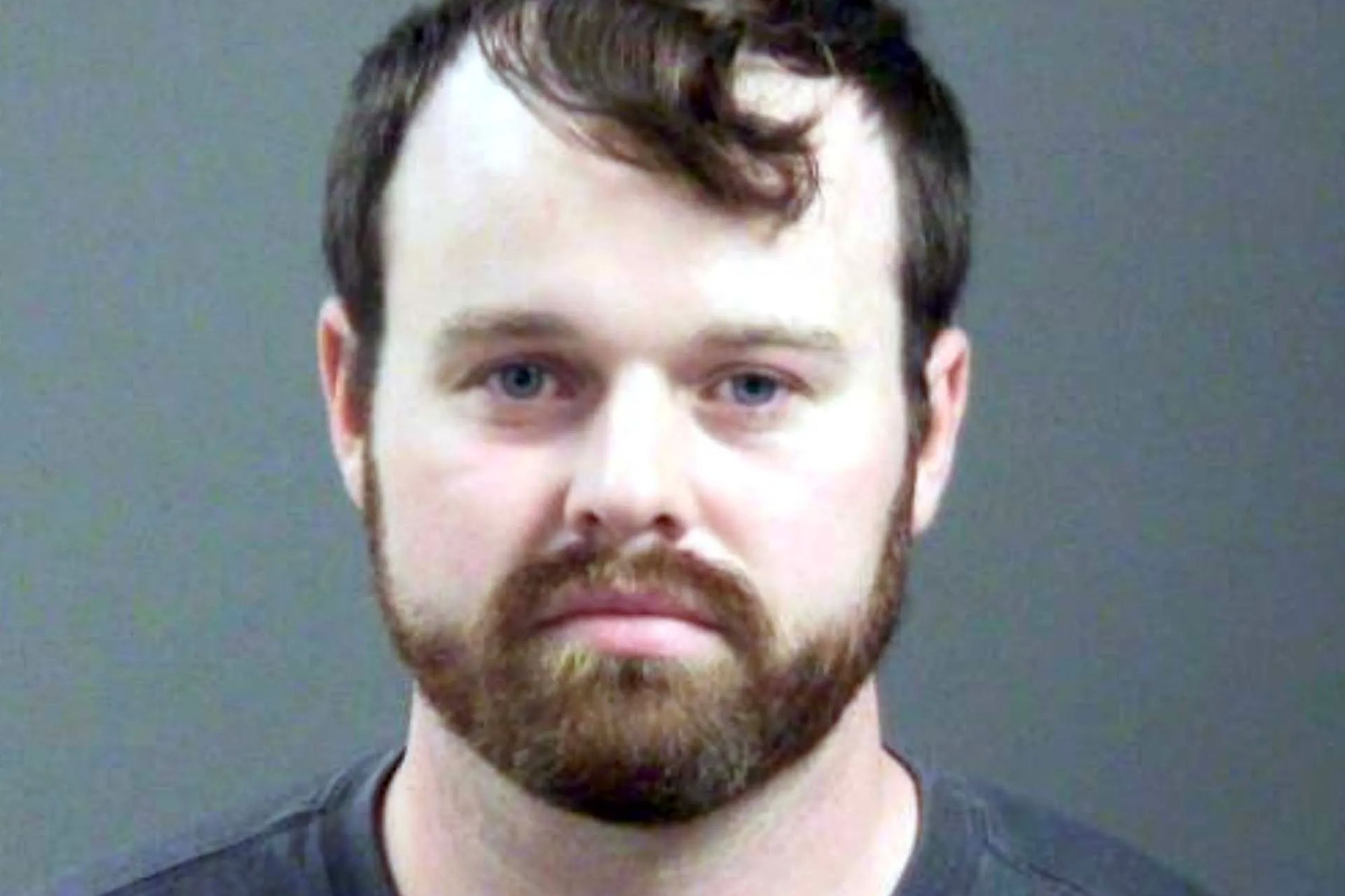
Accused Capitol riot pipe-bomber Brian Cole Jr. in federal court on Friday pleaded not guilty to charges accusing him of planting two pipe bombs outside of respective political party headquarters in Washington, D.C., on January 5, 2021. File Photo by Bonnie Cash/UPI | License Photo

Jan. 9 (UPI) — Brian Cole Jr. pleaded not guilty Friday to federal charges accusing him of placing pipe bombs outside political party headquarters ahead of the Jan. 6, 2021, Capitol protest.

Cole entered his plea during an arraignment hearing in the U.S. District Court for the District of Columbia. He faces charges of interstate transportation of explosives, malicious attempt to use explosives and related federal charges.

Cole, 30, allegedly placed a pipe bomb near the entrances of the Republican National Committee and Democratic National Committee headquarters in Washington, D.C., on the night of Jan. 5, 2021, but neither exploded.

Federal prosecutors said he admitted to placing the explosive devices and that he hoped they would explode and generate news coverage.

Cole said the 2020 election was stolen from voters and that he blamed both political parties because they are the ones in charge of the nation’s politics.

Prosecutors said Cole bought materials to make the bombs over several months ahead of the Capitol protest, and investigators used cellular tower data, credit card records and a license plate reader to identify him.

His attorney said Cole has been peaceful, was diagnosed with autism and the pipe bombs were incapable of exploding, CNN reported.

Cole is a resident of Woodbridge, Va., where he lives with other family members inside his mother’s house that is about 30 miles from the capital.

He was employed by a bail bond business and was arrested at his mother’s home on Dec. 4.

A federal grand jury indicted him on the charges for which he was arraigned on Friday.

He has another court hearing scheduled on Jan. 28 to determine if he should remain in detention or be allowed to post bail and be released from custody while the case is argued in court.

Source link

US authorities arrest 18-year-old accused of plotting ISIL-inspired attack | Crime News

Federal authorities in the United States have accused an 18-year-old of plotting to carry out a “potential terrorist attack” on New Year’s Eve in the suburban town of Mint Hill, North Carolina, outside Charlotte.

On Friday, officials from the US Attorney’s Office and the Federal Bureau of Investigation (FBI) identified the suspect as Mint Hill resident Christian Sturdivant, a US citizen. The targets of Sturdivant’s alleged plans were a grocery store and a fast-food restaurant in Mint Hill.

Recommended Stories

list of 3 itemsend of list

“ Countless lives were saved here,” US Attorney Russ Ferguson said at a news conference.

“On New Year’s Eve, everyone is at the grocery store. We’re all buying the things we need to celebrate. And we could have had a significant, significant loss of life, a significant injury here.”

Ferguson explained that Sturdivant was arrested on New Year’s Eve, the day of his planned attack. The 18-year-old has been charged with “attempting to provide material support to a foreign terrorist organisation”, and he made his first court appearance on Friday.

Sturdivant faces a maximum sentence of 20 years in prison, according to Ferguson.

But during his news conference, Ferguson, an appointee of President Donald Trump, appeared to voice frustration with the court system for failing to approve an earlier effort to detain Sturdivant on mental health grounds.

“ I think it is notable that, as part of their efforts, the FBI took Mr Sturdivant to a state magistrate judge to try to have him involuntarily committed,” Ferguson said.

“And that was because he had threatened not only other people’s lives, but in the process said that he planned to die by a policeman shooting him. So he had threatened other people’s lives and self-harm, but the state magistrate judge denied involuntary commitment.”

Authorities later specified that the hearing with the magistrate judge took place on Monday, days before his arrest. Sturdivant, they said, turned 18 last month.

Authorities detail arrest

During Friday’s news conference, officials said this week’s arrest was part of a multiyear effort to investigate Sturdivant, whom they described as a “prolific social media user”.

The suspect had previously been an employee at a local Burger King in North Carolina.

James Barnacle, the special agent in charge of the FBI’s North Carolina field office, said the suspect first came to the bureau’s attention in 2022, after he tried to contact the armed group ISIL (ISIS) through social media.

The US considers ISIL a foreign terrorist organisation and has conducted numerous military operations in the Middle East — and one recently in Nigeria — on the premise of combating the group.

Barnacle alleged that Sturdivant received instructions to knock on doors and attack people with hammers, but his initial attempts were thwarted by his family. He was about 14 years old at the time.

“ No charges were filed at that time,” Barnacle said. “He underwent psychological care, of which I don’t know the details.”

Then, in December, Barnacle said the FBI discovered that Sturdivant had returned to social media and posted threatening messages.

He had also allegedly made contact with two undercover officers: one from the New York Police Department and the second a covert agent with the FBI.

“Within just a few days, Sturdivant direct-messaged the online covert employee with a picture of two hammers and a knife,” Barnacle said. “The message was significant since in recent years an ISIS propaganda magazine promoted the use of knives to conduct terrorist attacks in Western countries.”

Barnacle added that later messages contained a loyalty oath to ISIL and a request for help obtaining firearms.

“The JTTF [Joint Terrorism Task Force] collected evidence showing he turned his back on his country and his fellow citizens by pledging allegiance to ISIS with the intent of becoming a martyr,” Barnacle said of the 18-year-old.

“We allege Sturdivant was willing to sacrifice himself by committing a terrorist attack, using knives and a hammer to support the murder, torture and extreme violence that ISIS represents.”

An FBI search of his home reportedly recovered hammers and knives hidden under Sturdivant’s bed, as well as notes allegedly detailing his attack plans.

“I could tell you the FBI had 24/7 surveillance on this subject, all hours of night, Christmas Day, Christmas Eve,” Barnacle said. He described the suspect’s targets as “Jews, Christians and LGBTQ individuals”.

FBI Director Kash Patel quickly promoted Sturdivant’s arrest on social media, praising his bureau and its partners for “undoubtedly saving lives”.

The arrest comes one year after a pickup truck driver intentionally rammed his vehicle down Bourbon Street, New Orleans’s famed entertainment district, in a deadly New Year’s Day attack.

Fourteen people were killed, and authorities recovered an ISIL flag in the truck.

But critics have questioned the use of undercover agents to make “terrorism-related” arrests with some defence lawyers arguing that agents have encouraged suspects to make incriminating statements or take actions they otherwise would not have.

Lawyers for the 18-year-old have yet to publicly comment.

Source link

Inside Stacey Solomon’s plan to claw back fans after she’s accused of ‘faking’ life

IT’S rare for an X Factor star to still be around 16 years after losing what was once the biggest show on TV but Stacey Solomon played the long game – going on to become one of the busiest women in entertainment.

This year in particular has been huge for Stacey – having launched her own reality show and landing a spot judging on BGT – but insiders tell us the 36-year-old is struggling behind the scenes as she wades against the vicious turning tide.

Stacey’s brand is in trouble after fans slammed her for being out of touchCredit: BBC
An ’embarrassing’ rant after losing out at the Baftas this year didn’t helpCredit: Getty Images for BAFTA
Stacey was accused of bragging when she flaunted her £30k a WEEK holidayCredit: Unknown

The Sun has been told that mum-of-five Stacey is in panic mode as the negativity increases, desperate to get people back on side. 

A source revealed: “The bottom line is Stacey is no longer relatable. 

“People think she flaunts her wealth and moans all the time – now Stacey’s being advised to rein it in and shut her mouth or risk ruining everything she’s worked so hard for.

“The plan is for Stacey to go back to basics and remember who her audience is. No more bragging about expensive holidays and keeping in mind not everybody is in her position”

Stace cashed in on her relatable ‘ditzy’ personality and – instead of chasing a record deal – turned her attention to social media and the fast cash that comes with being an influencer. 

A Loose Women gig ensured she was always in the headlines while online posts sharing her tips and tricks for keeping a house going soon turned into something much more lucrative, releasing books and launching prime time BBC show Sort Your Life Out

She also signed with the BBC for the fly-on-the-wall series Stacey & Joe, which gave viewers a regularly uncomfortable insight into the ups-and-downs of her marriage to Joe Swash.

It has all helped determined Stacey, 36, build up an estimated net worth of £7.3million and live a comfortable life in a £1.3million Essex mansion she calls Pickle Cottage with Joe and her children. 

But nobody likes a show-off and Stacey’s girl-next-door mask has been slowly slipping for some time now, with fans turning on her for “flaunting her wealth”. 

Earlier this year she was branded “smug” after bragging about her latest family holiday to Turkey, which set her back a staggering £30,000 a WEEK

Not exactly the kind of holiday that most of Stacey’s followers – who ironically helped pay for the OTT break – can aspire to. 

And even Stacey’s crafting is becoming increasingly out of budget for the average person. 

Stacey shares Rex, six, Rose, four, and two-year-old Belle with Joe, 43. 

She is also mum to Zachary, 17, and Leighton, 13, from previous relationships. 

Creative Stacey left fans’ noses out of joint when she showed off homemade decorations for Belle’s birthday, revealing an incredible display of pink and red roses. 

Someone wrote: “Looks amazing….effective and dreamy..however I think the cost of flowers would be quite high for a lot of people… x.”

And another added: “Very expensive for the lay folk x.”

In another move which drew criticism, viewers of on Stacey & Joe were quick to notice her enthusiasm for plugging her private side-hustles – including fashion, homeware and perfume brands.

The repeated appearances of Stacey’s products, some seemingly laid out for the cameras, drew accusations that the show was breaching strict BBC rules against ‘talent’ promoting products on-screen.

PANIC MODE 

Stacey is someone who’s undoubtedly used to a bit of backlash here and there – a thick skin is required to survive in her industry. 

In May the ‘loveable’ and ‘goofy’ Stacey bared her teeth when she had an almighty diva tantrum over not winning a Bafta

Sort Your Life Out was nominated in the Entertainment category but lost out to Rob and Rylan’s Grand Tour

Stacey was furious – and didn’t hold back when she took to Instagram to share her thoughts. 

She said: “We didn’t win a Bafta. And I know I’m supposed to take it gracefully like a champ but, I’ll be honest, I’m devastated!

Even Stacey’s crafting at home is becoming unattainable for most fansCredit: Instagram
The BBC show controversially featured some of Stacey’s lucrative side-hustles including a meeting with the people behind her perfume – with the products laid out for the cameras

“I’m not handling it very well, I’m not taking it very gracefully – I’m devastated! I’m devastated for our whole team, like I’m so gutted for our team.”

And just months later she launched a blistering attack on the National Television Awards when Sort Your Life Out and her fly-on-the-wall Stacey & Joe were nominated in the same category.  

She told Magic Radio: “They’ve put Sort Your Life Out and Stacey & Joe in the same blummin’ category for some reason – we’re up against each other which is absolutely ludicrous.”

Our insider said: “Stacey’s been made aware the public aren’t fans of whinging – the Baftas meltdown was embarrassing and she came off as entitled.

“And the only thing she should’ve been was grateful when both of her shows were given nods at the NTAs.”

CAUSING TENSION

Stacey and ex-EastEnders star Joe tied the knot at Pickle Cottage in 2022 and the couple don’t shy away from airing their dirty laundry on their reality show. 

One scene on the most recent series showed them clashing after Joe allowed their kids to eat dinner on the sofa while Stacey was working away. 

During a tense phone call, a furious Joe branded his wife “out of order” before hanging up on her. 

The backlash is causing tension at home between Stacey and JoeCredit: Unknown
He was seen branding his wife ‘out of order’ during one clash on their showCredit: BBC

Another episode saw Joe struggling with the chaotic school run while Stacey was on a luxury trip to Lake Como, Italy for a photoshoot

He didn’t hold back, confessing: “Stacey’s like the permanent teacher and I’m the substitute teacher that the kids just take advantage of.”

We’re told something else bubbling away is Stacey – who has six million Instagram followers to Joe’s two million – often left feeling like the backlash from the public is mainly aimed at her. 

A source said: “Things between her and Joe are tense at times because of the sudden unrelenting backlash.

“Stacey tells Joe she takes the brunt of the negativity and that he should be more understanding of the pressure she’s under.

“They love each other and their marriage is totally solid but when she wants to be Stacey can be cutting.

“On more than a few occasions a row has resulted in her telling him she’s sick of being the breadwinner – which is a real kick in the teeth for Joe.”

The couple now have the chance to take a break and reset over Christmas – although they are letting the cameras in to film a third series of their reality show.

And fans should expect a much more down-to-earth approach on the family show, with Stacey desperate to be seen as a relatable, hard-working mum once again.

Stacey’s desperate to be seen as a relatable, hard-working mum once againCredit: Unknown

Source link

Judge blocks deportation of British man Trump accused of ‘censorship’

Dec. 26 (UPI) — A federal judge has blocked the deportation of a British man targeted by President Donald Trump.

Imran Ahmed, founder and CEO of the Center for Countering Digital Hate, was one of five people placed on a visa ban after the government accused him of censorship.

Ahmed filed suit against Secretary of State Marco Rubio and Attorney General Pam Bondi to prevent “the imminent prospect of unconstitutional arrest.”

The suit said the case comes from “the federal government’s latest attempt to abuse the immigration system to punish and punitively detain noncitizens for protected speech and silence viewpoints with which it disagrees.”

Ahmed is a legal permanent resident of the United States, where he lives with his American wife and child. He praised the judge’s decision.

“I will not be bullied away from my life’s work of fighting to keep children safe from social media’s harm and stopping antisemitism online,” Ahmed said.

The speed of the judge’s decision was telling, said his lawyer Roberta Kaplan.

“The federal government can’t deport a green card holder like Imran Ahmed, with a wife and young child who are American, simply because it doesn’t like what he has to say,” the BBC reported she said.

Rubio said in a statement Tuesday that the five had “led organized efforts to coerce American platforms to censor, demonetize and suppress” the views of Americans with whom they disagreed.

“These radical activists and weaponized NGOs have advanced censorship crackdowns by foreign states — in each case targeting American speakers and American companies,” Rubio said. He described the five as “agents of the global censorship-industrial complex.”

The others included in the ban are former European Union technology commissioner Thierry Breton; Anna-Lena von Hodenberg and Josephine Ballon of Berlin-based non-profit HateAid; Clare Melford, co-founder of Global Disinformation Index.

Ahmed told The Guardian that it was another attempt to deflect accountability and transparency.

“This has never been about politics,” he said. “What it has been about is companies that simply do not want to be held accountable and, because of the influence of big money in Washington, are corrupting the system and trying to bend it to their will, and their will is to be unable to be held accountable. There is no other industry that acts with such arrogance, indifference and a lack of humility and sociopathic greed at the expense of people.”

Ahmed said he had not formally received any notification from the government.

“I’m very confident that our first amendment rights will be upheld by the court,” he told The Guardian.

He is expected to be in court Monday, when the protective order will be confirmed.

In 2023, Elon Musk‘s company X sued the CCDH after it reported on a rise in hate speech on the platform since Musk’s takeover. The case was dismissed but X appealed the decision.

Simon Cowell, the judge on the TV series “American Idol” strangles the show’s host Ryan Seacrest during the May 15, 2003 photo op for the 2003 Fox Upfront at New York’s Grand Central Station in New York City. Photo by Ezio Petersen/UPI | License Photo

Source link

EU warns of possible action after the U.S. bars 5 Europeans accused of censorship

The European Union’s executive arm on Wednesday warned that it would take action against any “unjustified measures” after the U.S. State Department barred five Europeans it accuses of pressuring U.S. technology firms to censor or suppress American viewpoints.

The Europeans were characterized by U.S. Secretary of State Marco Rubio as “radical” activists and “weaponized” nongovernmental organizations. They include the former EU commissioner responsible for supervising social media rules, Thierry Breton.

Breton, a businessman and former French finance minister, clashed last year on social media with tech billionaire Elon Musk over broadcasting an online interview with Donald Trump in the months leading up to the U.S. election.

The European Commission, the EU’s powerful executive branch and which supervises tech regulation in Europe, said that it “strongly condemns the U.S. decision to impose travel restrictions” and that it has requested clarification about the move. French President Emmanuel Macron also condemned it.

“If needed, we will respond swiftly and decisively to defend our regulatory autonomy against unjustified measures,” the commission said in a statement, without elaborating.

Rubio wrote in an X post on Tuesday that “for far too long, ideologues in Europe have led organized efforts to coerce American platforms to punish American viewpoints they oppose.”

“The Trump Administration will no longer tolerate these egregious acts of extraterritorial censorship,” he posted.

The European Commission countered that “the EU is an open, rules-based single market, with the sovereign right to regulate economic activity in line with our democratic values and international commitments.”

“Our digital rules ensure a safe, fair, and level playing field for all companies, applied fairly and without discrimination,” it said.

Macron said that the visa restrictions “amount to intimidation and coercion aimed at undermining European digital sovereignty,” he posted on X.

Macron said that the EU’s digital rules were adopted by “a democratic and sovereign process” involving all member countries and the European Parliament. He said that the rules “ensure fair competition among platforms, without targeting any third country.”

He underlined that “the rules governing the European Union’s digital space are not meant to be determined outside Europe.”

Breton and the group of Europeans fell afoul of a new visa policy announced in May to restrict the entry of foreigners deemed responsible for censorship of protected speech in the United States.

The four others are: Imran Ahmed, chief executive of the Centre for Countering Digital Hate; Josephine Ballon and Anna-Lena von Hodenberg, leaders of HateAid, a German organization; and Clare Melford, who runs the Global Disinformation Index.

Rubio said the five had advanced foreign government censorship campaigns against Americans and U.S. companies, which he said created “potentially serious adverse foreign policy consequences” for the United States.

The action to bar them from the U.S. is part of a Trump administration campaign against foreign influence over online speech, using immigration law rather than platform regulations or penalties.

In a post on X on Tuesday, Sarah Rogers, the U.S. under secretary of state for public diplomacy, called Breton the “mastermind” behind the EU’s Digital Services Act, which imposes a set of strict requirements designed to keep internet users safe online. This includes flagging harmful or illegal content like hate speech.

Breton responded on X by noting that all 27 EU member countries voted for the Digital Services Act in 2022. “To our American friends: ‘Censorship isn’t where you think it is,’” he wrote.

Cook writes for the Associated Press. AP journalist Angela Charlton contributed to this report from Paris.

Source link

Colorado woman accused of killing her children extradited from UK to US

A Colorado mother who is accused of murdering two of her children has been extradited from the UK to the US, authorities say.

Kimberlee Singler, 37, is alleged to have carried out the attack in Colorado before fleeing to London, where she was arrested in December 2023.

She challenged her extradition at Westminster Magistrates Court – reportedly on the basis that her sentence, if she was convicted, would break European human rights law. But she was unsuccessful.

A district attorney in Colorado confirmed on Tuesday that Ms Singler was back in the US and was in custody. She was being held without bond and was expected to appear in court “in the coming days”.

The district attorney, Michael Allen, said Ms Singler was facing charges of two counts of first-degree murder, one count of attempted murder, three counts of child abuse and one count of assault.

At the extradition hearing in London, the court heard that Ms Singler’s alleged crimes were “committed against the backdrop of acrimonious court proceedings” relating to the custody of her children with her ex-husband.

Prosecutor Joel Smith said police in Colorado Springs responded to a 911 call reporting a burglary at a Colorado residence at 00:29 local time (06:29 GMT) on 19 December 2023.

When officers arrived at the defendant’s address, they found her 9-year-old daughter and 7-year-old son dead and a “blood-stained handgun”, which was discovered on the floor of the bedroom.

Mr Smith said DNA tests were carried out on the gun and a knife which revealed the presence of mixed profiles matching the children and Ms Singler.

A third child, who has not been named, was found with a serious injury to her neck. She was taken to hospital and survived.

Mr Smith said Ms Singler blamed her husband for the attack, but it was found he had been driving a “GPS-tracked truck” in Denver, giving what the prosecutor described as a “complete and verifiable alibi”.

Speaking to reporters on Tuesday, Adrian Vasquez, the Colorado Springs police chief, said the extradition of Ms Singler was “a significant milestone” in the investigation.

Chief Vasquez added: “I know these acts have deeply impacted this community, and our hearts remain with the victims.”

Source link

California crypto firm accused of inflating Katy Perry NFTs and fraud

Four years ago, California startup Theta Labs’ cryptocurrency was soaring, and its future appeared bright when it landed a partnership with pop star Katy Perry.

The Bay Area company had built a marketplace for digital collectibles known as nonfungible tokens, or NFTs, and had teamed up with Perry to launch NFTs tied to her Las Vegas concert residency. Its THETA token jumped by more than 500% in early 2021, reaching a peak of more than $15, making it one of the world’s most valuable cryptocurrencies. Later in the year, the spotlight shone on the company when it announced the Perry partnership.

“I can’t wait to dive in with the Theta team on all the exciting and memorable creative pieces, so my fans can own a special moment of my residency,” Perry said in a June 2021 news release.

Today, like many cryptocurrencies, THETA is 95% off its 2021 peak. It took a hit this week after former executives accused it of manipulating markets to dupe consumers into buying its products. On Tuesday, it was trading at less than 30 cents.

Two former executives from Theta Labs sued the startup, alleging in separate lawsuits that the company and its chief executive, Mitch Liu, engaged in fraud and manipulated the cryptocurrency market for his benefit. Liu retaliated against them after the employees refused to engage in deceptive business practices and raised concerns, the lawsuits say.

Some of the alleged misconduct involved placing fake bids on Perry’s NFTs, engaging in token “pump and dump” schemes and using celebrity endorsements and “misleading” partnerships with high-profile companies such as Google to deceive the public, according to the December lawsuits filed in Los Angeles Superior Court.

Perry is not accused of any wrongdoing in the suit, and Theta denies the charges.

The lawsuits against Theta Labs are the latest controversy to rattle an industry beset by scandals.

Cryptocurrency exchange FTX collapsed, and its founder, Samuel Bankman-Fried, was sentenced to 25 years in prison in 2024 after being found guilty of multiple fraud charges. Binance founder and former Chief Executive Changpeng Zhao also got prison time after he pleaded guilty to violating money laundering laws, but President Trump pardoned him this year.

The U.S. Securities and Exchange Commission previously charged celebrities such as Kim Kardashian, Lindsay Lohan, Jake Paul and Ne-Yo for promoting crypto without disclosing they were paid to do so.

Theta Labs created a network that rewarded people with cryptocurrency for contributing spare bandwidth and computing power to enhance video streaming and lower content delivery costs. The company describes Theta Network as a “blockchain-powered decentralized cloud for AI, media and entertainment.” The network has two tokens: THETA, used to secure the network, and TFUEL, used to pay users for services and power operations.

The whistleblowers suing Theta Labs are Jerry Kowal, its former head of content, and Andrea Berry, previously the company’s head of business development.

“Liu used Theta Labs as his personal trading vehicle, perpetrating fraud, self-dealing, and market manipulation,” said Mark Mermelstein, Kowal’s attorney, in a statement. “His calculated ‘pump-and-dump’ schemes repeatedly wiped out employee and investor value. This suit is about demanding accountability and proving no one is above the law.”

Theta, Liu and its parent company, Sliver VR Technologies, deny the allegations and “intend to prove with evidence the fallacy of the stories being told in the lawsuits,” according to Kronenberger Rosenfeld, the law firm representing the defendants. The lawsuits are an attempt to paint the company in a negative light in hopes of securing a settlement, a lawyer for the firm said.

Kowal has sued his former employers before. In 2014, he accused Netflix of spreading false claims that he stole confidential information and Amazon of wrongful termination.

The latest lawsuits allege that Liu profited from buying and selling THETA tokens using insider knowledge about partnerships with celebrities, studios and others in the entertainment industry.

“Liu’s true motive in pursuing such partnerships was not to develop a sustainable content business but to generate publicity that could be used to artificially inflate token prices for Liu’s personal gain,” Kowal’s lawsuit says.

Kowal worked for Theta from 2020 to 2025.

In 2020, Liu traded and sold tokens knowing that the company would close a content licensing deal with MGM Studios, according to the lawsuit. After the deal’s announcement, THETA token’s market capitalization increased by more than $50 million in just 24 hours, the lawsuit says.

When NFTs started to take off in 2021, Kowal closed deals with high-profile partners such as Perry, Fremantle Media and Resorts World Las Vegas for the startup’s NFT marketplace.

As part of the deal with Perry, the singer received $8.5 million and additional warrants for the right to license her image and likeness for the NFTs.

To inflate the price and demand for these digital collectibles, Liu allegedly made bids on NFTs and directed employees to do the same. This led to people overpaying for the Perry NFTs.

Representatives for Perry didn’t immediately respond to a request for comment.

Multiple examples of alleged manipulation are outlined in the lawsuits. In one instance from 2022, the startup launched a new token called TDROP that employees also received as part of a bonus.

Liu gained control of 43% of the supply of the cryptocurrency, according to Kowal’s lawsuit. When the TDROP token reached a high, he then sold the token, and its price collapsed by more than 90% within months.

Berry’s lawsuit also alleges that Theta Labs announced “misleading” or fake partnerships with high-profile companies such as Google and entities including NASA to pump up the value of the THETA token. Theta paid for Google Cloud products but claimed it was a partner when it was a Google customer, according to the lawsuit.

Source link

Iran executes man accused of spying for Israel’s Mossad: State media | Israel-Iran conflict News

Aghil Keshavarz is the tenth person put to death for espionage since June conflict with Israel.

Iran has executed a man convicted of spying for Israel’s Mossad intelligence agency, judicial authorities announced, as Tehran continues a widening crackdown on alleged collaborators following the 12-day Israel-United States-Iran war earlier this year.

Aghil Keshavarz was put to death on Saturday morning after the Supreme Court upheld his conviction on espionage charges, according to Mizan, the judiciary’s official news agency.

Recommended Stories

list of 2 itemsend of list

The 27-year-old architecture student was arrested earlier this year in the northwestern city of Urmia after military patrols caught him photographing an army headquarters building.

The execution adds to a growing number of people put to death for espionage since the June conflict, with at least 10 executed by September alone.

In September, Iran executed a man it said was “one of the most important spies for Israel in Iran”.

In October, Tehran toughened legislation against alleged spies for Israel and the US, making espionage automatically punishable by death and asset confiscation.

According to the Mizan report, Keshavarz was accused of conducting more than 200 missions for Israeli intelligence services across Tehran, Isfahan, Urmia and Shahroud.

The missions allegedly included photographing target sites, conducting opinion polling, and monitoring traffic patterns at specific locations.

Authorities said he communicated with both Israel’s Mossad and military officials through encrypted messaging platforms, receiving payment in cryptocurrency after completing assignments.

The judiciary said Keshavarz had “knowingly cooperated” with Israeli services with the intention of harming Iran’s Islamic Republic.

The Oslo-based Iran Human Rights group has previously disputed similar espionage convictions, saying suspects are often tortured into false confessions.

Israel’s offensive in June involved 12 days of air attacks, including several against Iran’s top generals and nuclear scientists, as well as civilians in residential areas, for which Iran retaliated with barrages of missiles and drones. The US also carried out extensive strikes, on Israel’s behalf, on Iranian nuclear sites during the conflict. According to Amnesty International, Israeli attacks on Iran killed at least 1,100 people.

In response to the June war and protests in recent years over the state of the economy and women’s rights, as well as calls for regime change, Iran has sentenced more people to death.

Source link

Trial begins for Milwaukee judge accused of obstructing ICE agents

Dec. 15 (UPI) — The trial for Milwaukee County Circuit Court Judge Hannah Dugan began Monday, with prosecutors playing audio of the judge saying she’ll “get the heat” by showing an undocumented defendant how to leave her courtroom to avoid immigration officials.

Dugan pleaded not guilty earlier this year to federal charges including one count of obstructing and official proceeding and concealing a person from arrest and another of concealing an individual to prevent his discovery and arrest.

The case stems from an incident on April 18, when Immigration and Customs Enforcement officials came to her courtroom and notified her they planned to arrest undocumented immigrant Eduardo Flores-Ruiz. They said she sent the agents to the chief judge’s office before going back to her courtroom, pushing Flores-Ruiz’s case to the front of her docket, then helped him and his lawyer leave from a private jury door.

The ICE agents ultimately found and arrested Flores-Ruiz.

During Monday’s trial, Assistant U.S. Attorney Keith Alexander played audio from the day appearing to depict Dugan speaking with the court reporter, Joan Butz, who offers to show Flores-Ruiz the private door. Dugan says, “I’ll do it. I’ll get the heat.”

Alexander said Dugan’s actions were tantamount to formulating an escape plan for Flores-Ruiz, according to the Milwaukee Journal Sentinel.

“The judicial robe the defendant wore that morning did not put her above the law,” Alexander said in his opening statements.

Dugan’s lawyer, former U.S. Attorney Steven Biskupic, said the private jury door Dugan showed Flores-Ruiz wasn’t hidden and was less than 12 feet away from the public doors of the courtroom. He said she didn’t seek to thwart ICE agents.

“Not even as far as your jury box,” he said. “There was a federal agent to the left and to the right.”

Biskupic said that instead of arresting Flores-Ruiz, the federal agents chose to follow him outside and arrest him after a foot chase, NBC News reported.

“Now, after the fact, everyone wants to blame Judge Dugan,” he said.

Source link