abused

Michael Jackson abused boy at homes of Elton John, Elizabeth Taylor, lawsuit says

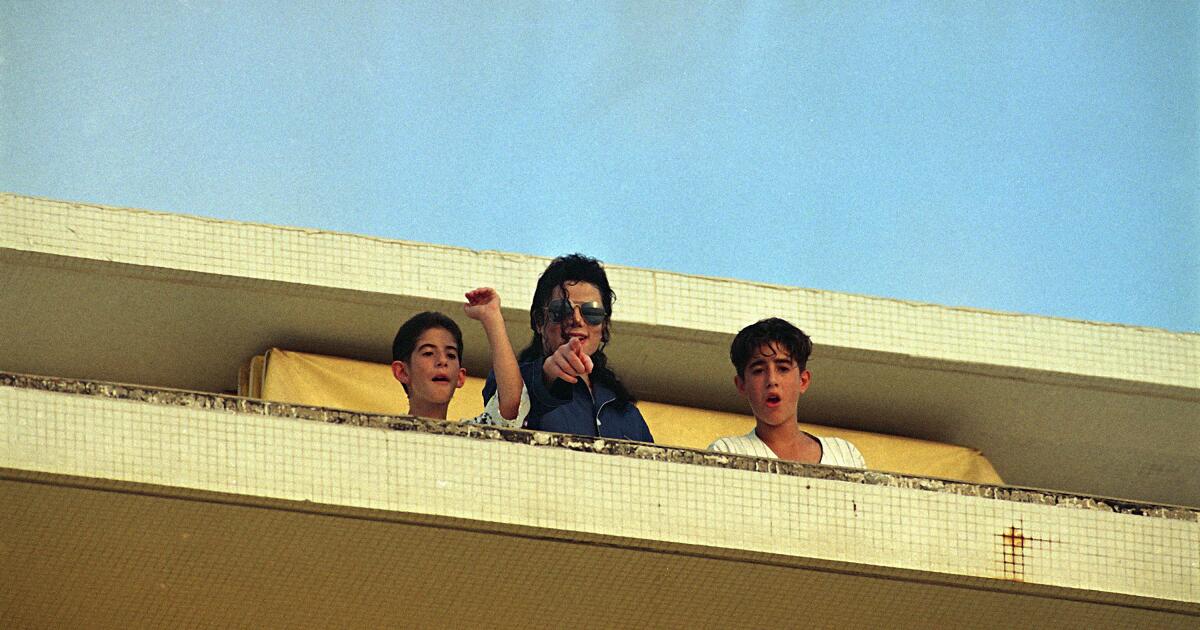
Four siblings who were part of Michael Jackson’s secret “second family” have filed a lawsuit revealing the depths of the alleged sexual abuse they suffered as children, including claims that the singer molested one of the boys at the homes of Elton John and Elizabeth Taylor.

The lawsuit, filed against Jackson’s estate in California’s Central District Court on Friday, accuses the late singer of grooming, drugging, raping and sexually assaulting four of the Cascio children — Edward, Dominic, Marie-Nicole and Aldo — over the course of more than a decade, beginning when some of them were as young as 7. A fifth sibling, Frank Cascio, is not a plaintiff in the lawsuit.

The pop icon used code phrases such as “Can I have a meeting,” “Yogi Tea,” “Neverland,” and “Go to Disneyland” to encourage the children to engage in “extreme sex acts” with him, the suit alleges. He plied them with wine — “Jesus Juice” — and hard liquor — “Disney Juice “ — and used drugs to make them more compliant, according to the lawsuit.

The “Thriller” singer’s connection to the Cascio family began in the 1980s when he met their father, Dominic Cascio Sr., at a luxury hotel in New York where the father worked.

The lawsuit accuses Jackson of “insinuating himself” into the Cascio family by using “obsessive attention, lavish gifts, access to his celebrity lifestyle, and declarations that he loved and needed each of them.” He invited them to travel around the world with him and celebrated Thanksgiving, Christmas and his own birthday with them. He often spent long periods of time at their New Jersey home, where he also brought his own children, according to the complaint.

The chart-topping artist is accused of raping and molesting Edward “Eddie” Cascio at Elizabeth Taylor’s house in Switzerland as well as at Elton John’s home in the United Kingdom. Representatives for Jackson’s estate, Taylor’s estate and John did not immediately respond to a request for comment.

The complaint alleges that the late singer abused the four siblings at international and national tour stops as well as at his Santa Barbara County estate, Neverland Ranch. That property became a central focus of the 2019 documentary “Leaving Neverland,” in which two of Jackson’s accusers, Wade Robson and James Safechuck, detail the abuse they suffered as children.

The complaint states that Jackson’s staff would help conceal and normalize his abuse of the Cascios; employees would deliberately book the parents hotel rooms away from their children, the suit says, so they could not tell how much time Jackson was spending with them.

The entertainer showed the siblings pornography and photos of naked children to desensitize them, the complaint alleges. He told them that his life, their lives and that of their family members would be destroyed if people knew what was going on.

“He told them to stay away from therapists and to avoid women, who he told them were ‘evil,’ ‘sneaky,’ ‘liars,’ and could ‘smell’ if something sexual had happened,” the complaint states.

For decades after the initial 1993 sexual assault claim against Jackson surfaced, the Cascio family did not speak up against the singer.

The performer convinced the parents to withdraw Aldo Cascio and Marie-Nicole Cascio from school on two occasions to “prevent disclosure of the abuse and gain more access to them,” the complaint alleges. The second time was shortly after authorities raided Neverland Ranch in 2003.

The Cascios’ longtime relationship with the superstar became known to the public when they appeared on Oprah in 2010.

During the appearance, they were billed as Jackson’s secret “second family” and said that they were reluctant to come forward but wanted to “show the world who Michael really was.” At the time, the family said that the siblings were never abused and that they didn’t believe the accusations against Jackson.

As the four siblings aged and exposés such as “Leaving Neverland” came out, their statements about their childhood relationship with the pop star shifted. In 2019, several members of the Cascio family entered a confidential settlement agreement with Jackson’s estate agreeing to remain silent about their relationship to the singer.

That agreement provided for Jackson’s estate to pay each sibling five annual payments of about $690,000 as compensation “for the many years that Jackson abused each of them and that the Jackson Organization enabled and covered up the abuse,” according to the complaint. The Cascios say that this amount is “wholly inadequate,” noting that the singer reportedly paid $25 million in 1994 to settle the abuse allegations made against him in 1993.

Now, the four siblings are challenging the agreement as part of their recently filed lawsuit, alleging that they were coerced into signing it without understanding their rights.

“Buried within the Document’s legalese was a purported release of the Estate from liability for Jackson’s crimes, and language that prohibited Plaintiffs from reporting Jackson’s crimes to law enforcement or anyone saying anything negative about Jackson, or holding the Estate accountable in court for its and Jackson’s wrongdoing,” the complaint alleges.

Marty Singer, an attorney for Jackson’s estate, decried the lawsuit as “a desperate money grab” in a statement to People. A representative for Singer did not immediately respond to The Times’ request for comment.

“The family staunchly defended Michael Jackson for more than 25 years, attesting to his innocence of inappropriate conduct,” Singer told People. “This new court filing is a transparent forum-shopping tactic in their scheme to obtain hundreds of millions of dollars from Michael’s estate and companies.”

The four Cascio siblings are asking a jury to award them financial damages — including some potentially tripled damages because they were abused as children — over their allegations of sexual abuse and cover-up. They are also asking the court to throw out the 2019 agreement they say was used to silence them and are also seeking a ruling that the estate cannot force their claims into private arbitration.
Source link

Mosques attacked, children racially abused as hard right rises in UK | Racism News

Names marked with an asterisk have been changed to protect identities.

London, United Kingdom – “People here are tired, scared and feel forgotten,” says Nabila*, a Muslim mother of two in Basildon, a town in the English county of Essex.

Recommended Stories

list of 4 itemsend of list

Sitting in her living room with a mug of tea, a Qur’an visible on the bookshelf and Japanese prints hanging to its right, she recalls a string of incidents in recent months: Glass thrown from a residential building at Muslim children, a racist attack on the local mosque where red crosses were daubed across its walls alongside the words “Christ is King” and “This is England”, and reports of drivers accelerating as Muslim women cross the road with their children.

Nabila
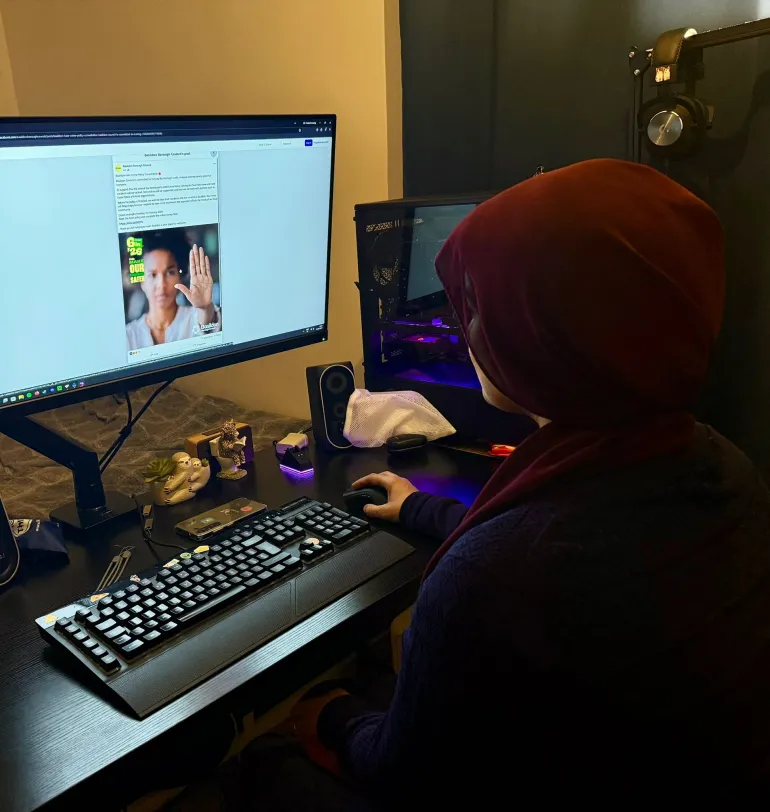
Nabila has been documenting incidents of racism in Essex, her home county [Courtesy of Nabila]

According to the 2021 census, Basildon is 93 percent white, and Muslims make up less than 2 percent of the population. Campaigners have warned that in areas where ethnic minority communities are smaller and more geographically isolated, they face heightened risks, as visibility increases vulnerability.

A single mother working full time, Nabila has been documenting incidents of racism, supporting victims and organising meetings with local authorities.

She said she no longer feels safe in the place she calls home.

After being racially abused while walking through her favourite park, she stopped going there altogether. Women, she said, are increasingly changing their daily routines, constantly watching over their shoulders. Racism now permeates every aspect of their lives, she added.

At a women’s listening circle organised by Nabila in collaboration with the local authority at the Wat Tyler Centre, another Muslim woman, Zarka*, spoke about her experiences as a young mother in Basildon who wears the hijab.

After being told to “take that rag off your head” during the school run by a passer-by, she stopped taking her children to school for two weeks. Beyond verbal abuse, she described the cumulative effect of everyday hostility, from cars failing to stop at zebra crossings and hostile looks from passersby.

‘I can’t do this any more, Mum.’

Hundreds of miles north, similar experiences are unfolding in Scottish classrooms.

Etka Marwaha’s daughter Anisa was seven when she first experienced racist taunting at her primary school in Glasgow.

Marwaha said Anisa became quiet and withdrawn. She was isolated on the playground and subjected to racial slurs. Months later, she broke down in tears in front of her mother, explaining the abuse she had suffered.

On multiple occasions, Marwaha contacted the school, urging them to take action, even offering her own support on understanding racism. But, she said, they failed in their duty of care, and the extent of the problem was kept hidden.

It went on for two years before Etka felt compelled to take her daughter out of the school.

“The plan was never to move her into a different school,” she told Al Jazeera. “But she was refusing to go to school; she would come home very, very upset. She was isolated.

“She was in tears, saying, “I can’t do this any more, Mum.’ So she made the decision, at that young age, that ‘I want to get out of here.’”

The girl’s new school is not in the catchment area, nor is there a direct bus to it, causing further inconvenience. But it has a zero-tolerance approach to racism, and Anisa is happier.

At her new school, Anisa can speak about her experiences of racism and how it made her feel.

The ordeal brought back painful memories for Marwaha’s own experiences at school.

“The racist bullying, for me, started at secondary school. You’d think times have changed, that people have been educated, but I think things have changed for the worse when a seven-year-old can openly make a racist comment and that’s accepted by society, and parents don’t address it.”

Sam*, a doctor in northwest Scotland with dual heritage children, said he has been surprised by the level of racism in local schools.

“There has been a clear normalising of racist jokes and name-calling. Every one of our kids has been affected,” he said. “Perhaps the biggest surprise is how few other students stand up against racism. When I was growing up, if someone was racist, they would be the person being socially excluded. Now, silence. It has forced us to look at moving out of the UK.”

‘Racism is out of control’

In the latest incident of alleged and potentially dangerous racism, a man walked into Manchester Central Mosque on Tuesday, reportedly with an axe and weapons. The man was arrested. There had been 2,000 worshippers in the mosque at the time, for the evening tarawih prayers during Ramadan.

Official figures underline the scale of the problem.

In October 2025, the UK Home Office revealed that the number of hate crimes recorded by police in England and Wales had risen for the first time in three years, including increases in racially and religiously motivated offences.

Religious hate crimes against Muslims rose by 19 percent, with a spike following the Southport murders and subsequent riots in mid-2025, the Home Office said.

The rise comes as hard-right politicians and activists, such as Reform leader Nigel Farage and the Islamophobic activist Tommy Robinson, rail against immigration. According to recent YouGov polling, if a general election were held tomorrow, Reform would lead with 24 percent.

Shabna Begum, head of Runnymede Trust, a race equality think tank, said, “Mainstream political and media actors have played in normalising and enabling racist narratives that have scapegoated migrants, people seeking asylum, Muslims and people of colour generally.”

In a report released last year, How Racism Affects Health, Runnymede highlighted the hypervigilance that people of colour have to operate with in order to guard their safety, and which causes long-term physiological damage, affecting life expectancy and mental health outcomes.

“For those that live in more disparate communities where they show up as minorities in a more visible way, that sense of threat is acute,” said Begum.

School suspensions for racist incidents have more than doubled in recent years, according to UK Department for Education data.

“Children as young as four are being sent home for racist behaviour,” Begum said. “This shows a society where racism is out of control, and that our school systems are failing to deal with the problem.

“They are making calculated decisions about where they will go, what travel routes they will take; withdrawing from regular social and community activities because they can no longer trust that those spaces will be safe for them.”

Source link

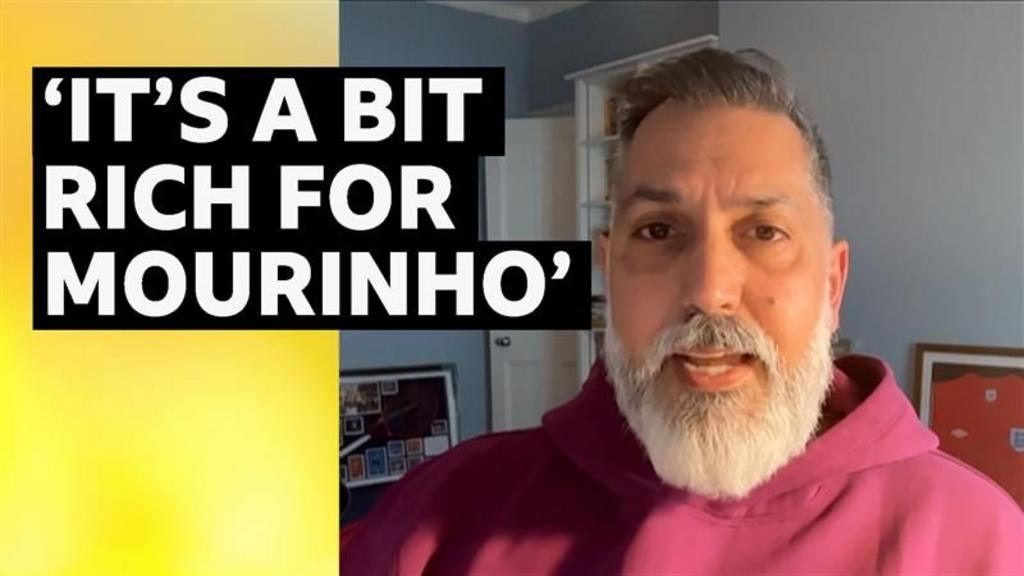
Champions League: Kick It Out chair Sanjay Bhandari criticises Jose Mourinho for response after Vinicius Junior alleges he was racially abused

The chair of Kick It Out, Sanjay Bhandari, says the lack of support from Benfica and the response of their manager Jose Mourinho has “set the tone” in the racism row between the Portuguese club and Real Madrid, after Vinicius Junior alleged he had been racially abused by midfielder Gianluca Prestianni.

READ MORE: Benfica claim ‘defamation campaign’ against Prestianni

Source link