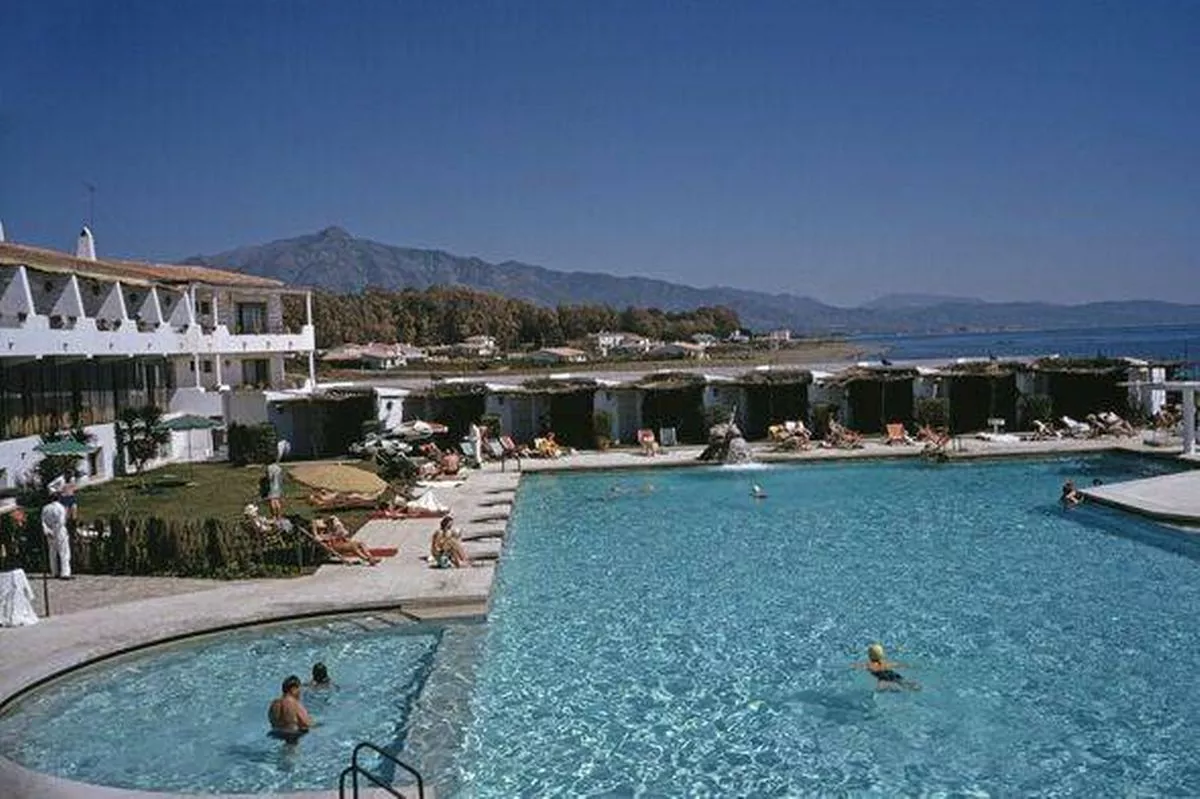
Package holidays have become the go-to option for many Brits, but the first package holiday in 1841 was worlds away from a sizzling trip to Spain – and passengers only travelled 11 miles from home

As the festive decorations are packed away and Brits brace themselves for a dreary, rain-soaked January, many will be planning their summer getaways. When it comes to chasing the sun, Brits have long loved the ease of a package holiday.
ABTA data reveals that 62% of people who ventured abroad last year opted for a package holiday, bundling together flights and accommodation with extras from coach travel to car hire and dining packages.
The surge in package holidays has gone hand in hand with the rising popularity of overseas destinations. So, you might assume that first package breaks involved jetting off to sunny Costa Blanca or the chic south of France.
However, the origins of the package holiday are far more modest, and there’s one man to thank next time you’re basking in an all-inclusive in Alicante or lounging in Lanzarote, reports the Express.
Thomas Cook and the birth of the package holiday
The first package holiday in 1841 was a rather tame event. A Baptist preacher named Thomas Cook chartered a train and organised a trip for his fellow temperance movement members, advocates of abstaining from alcohol.
For a mere shilling, passengers could journey the 11-miles from Leicester to a temperance rally in Loughborough, complete with a cup of tea and a ham sandwich to enjoy on the train.
It may have been a modest start, but spurred on by the sale of 485 tickets, Thomas established Thomas Cook & Son, which became a household name in package holidays for many years. The entrepreneur recognised that railway companies offered discounts for bulk bookings or charters, and the public appreciated the ease of booking a package with everything organised for them.
Following his whirlwind journey to Leicester, Thomas Cook expanded his offerings with further trips across the Midlands, before branching out to London for the Great Exhibition. In 1855, he ventured overseas, leading tour groups to Belgium, Germany, and France, and in 1863, he introduced the first tour of Switzerland.
Opening up the world
Given the popularity of his European excursions, Thomas Cook presented his most ambitious itinerary yet in 1872. For 200 guineas, roughly equivalent to £25,000 today, travellers could embark on a 222-day tour encompassing the USA, Japan, China, India, and Egypt.
Around this time, Thomas also pioneered the use of circular notes, later known as traveller’s cheques, making it easier for holidaymakers to spend money abroad.
By 1888, Thomas Cook & Sons had established a global presence with offices worldwide, including three in Australia and one in New Zealand. By 1890, they were selling tickets to over three million travellers annually.
Previously, travel was a luxury only the wealthy could afford, but many of Cook’s new clientele were from the burgeoning middle classes. France, Germany, and Switzerland were popular destinations, and packages often included cultural excursions to museums, theatre and opera visits, in addition to outdoor pursuits like mountain climbing.
Fast forward to 1949, when the first modern package holiday, as we know it today, was introduced. Vladimir Raitz, a Moscow-born businessman who had relocated to London, was holidaying in Corsica when a business associate challenged him to attract more Brits to the island.
Vladimir calculated that for £35 per person (equivalent to around £1,100 in today’s money), he could charter a plane and offer British holidaymakers two weeks of sun-soaked bliss on the French island.
Despite facing some hurdles, Vladimir’s offer of a flight, tent accommodation, and twice-daily meals with meat proved irresistible to those still grappling with post-war austerity. The first charter flights took off in May 1949.
Vladimir went on to found Horizon Holidays, the first in a long line of package holiday companies promising sun-drenched getaways.
By 1950, the post-war holiday surge saw a million Brits venturing abroad, and in 1957, the now-obsolete British European Airways capitalised on this trend by offering flights to Valencia, situated approximately two hours north of Alicante. To market this fresh destination, the nickname Costa Blanca was created, encompassing the towns and cities along the 120-mile coastline.
During this period, a quaint fishing village named Benidorm was witnessing a decline in its fishing industry and needed a new income source. The local council, seizing an opportunity, began approving new developments.
In 1956, the General Plan was initiated, which moulded the destination that Brits adore today. While the area had been a tourist hotspot for some time, this plan incorporated more high-rise buildings and large public spaces, completely changing the skyline of the Spanish city.
1950 also marked the debut of the first resort to offer a version of the modern all-inclusive. Club Med launched a resort in Alcúdia, Majorca, where holidaymakers could have all their meals included in the price.
Tourists, primarily from Belgium and France, stayed in tents or beach huts and meals were a communal event, yet it laid the groundwork for a popular style of holiday that persists to this day.
Golden age
In the 1960s, a mix of factors like improved flight accessibility, increased wages and more paid holidays led to Brits swapping their local getaways for foreign adventures. Many embarked on their first overseas journeys, basking in the sun-soaked climes of Spain, Greece, and Italy, immersing themselves in diverse cultures and sampling exotic cuisines.
READ MORE: Three cities where boozy stag dos are ‘more popular than ever’READ MORE: Ryanair passenger ‘flung out of our seats’ during horror turbulence at 35,000ft
Fast forward to today, and not much has changed with package holidays. A week or two under the sun remains the summer highlight for many Brits.
While new destinations have emerged, early favourites like Costa Blanca and Majorca continue to draw crowds. And even though the internet has opened up a world of travel opportunities, the continuing popularity of package holidays shows that sometimes all you need for a great holiday is a bit of sunshine and a comfy sunlounger.
Have a story you want to share? Email us at webtravel@reachplc.com