Venezuela’s Rodríguez Enacts Corporate-Friendly Oil Regulations as Crude Output Stagnates
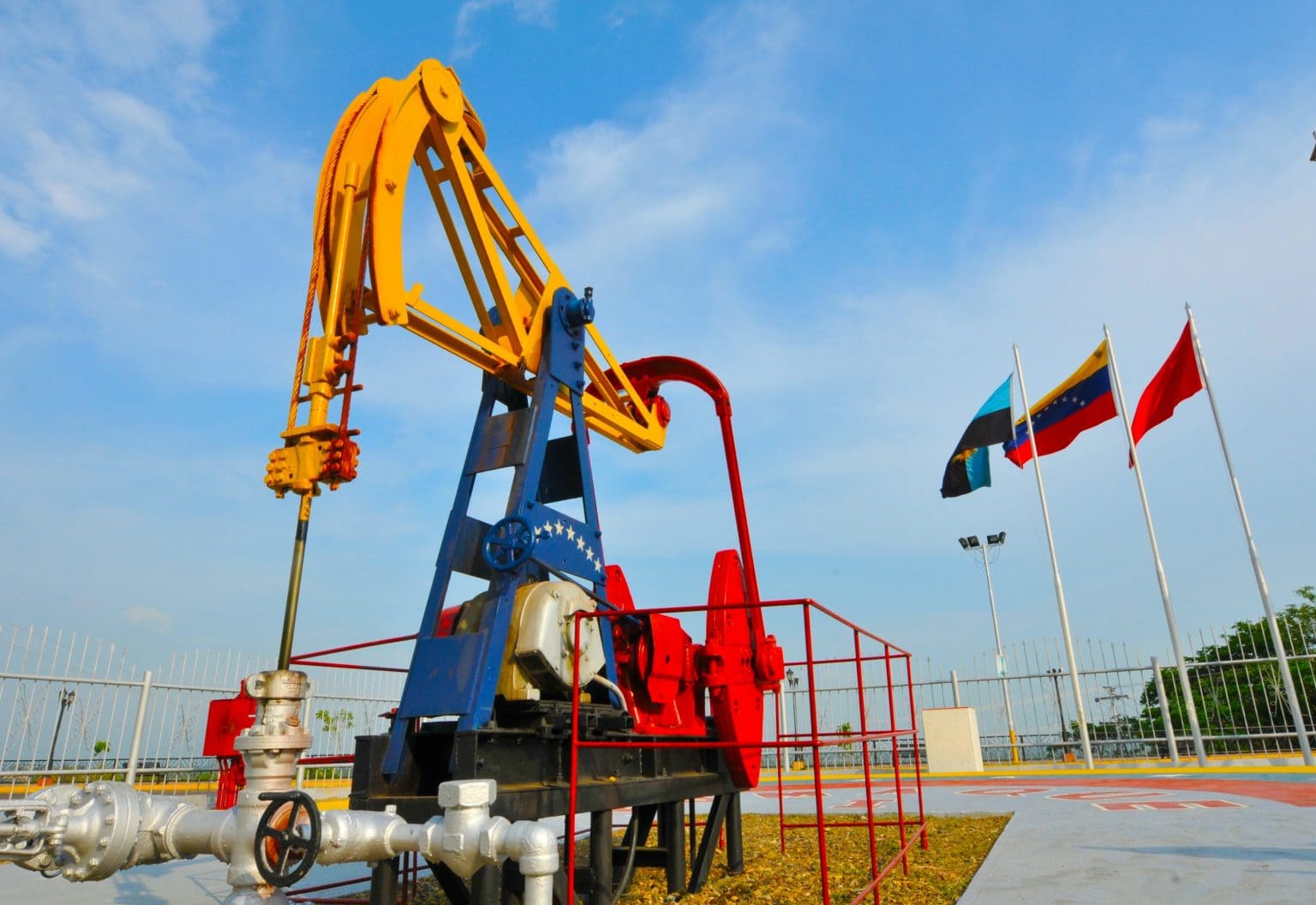
The acting Rodríguez administration has granted increased control and fiscal benefits to energy corporations. (Hydrocarbons Ministry)
Caracas, July 13, 2026 (venezuelanalysis.com) – The Venezuelan government has approved a new set of oil industry regulations that prioritize the “economic and financial viability” of private sector investment.
Acting President Delcy Rodríguez signed the statute on Wednesday, July 8, and it was published in the National Gazette. Rodríguez hailed the directive a “historic step” that will “transform our energy reserves into development.”
“These norms establish clear rules, greater legal certainty, and a favorable environment for the cooperation between the [Venezuelan] state and national and foreign capital,” the acting president said.
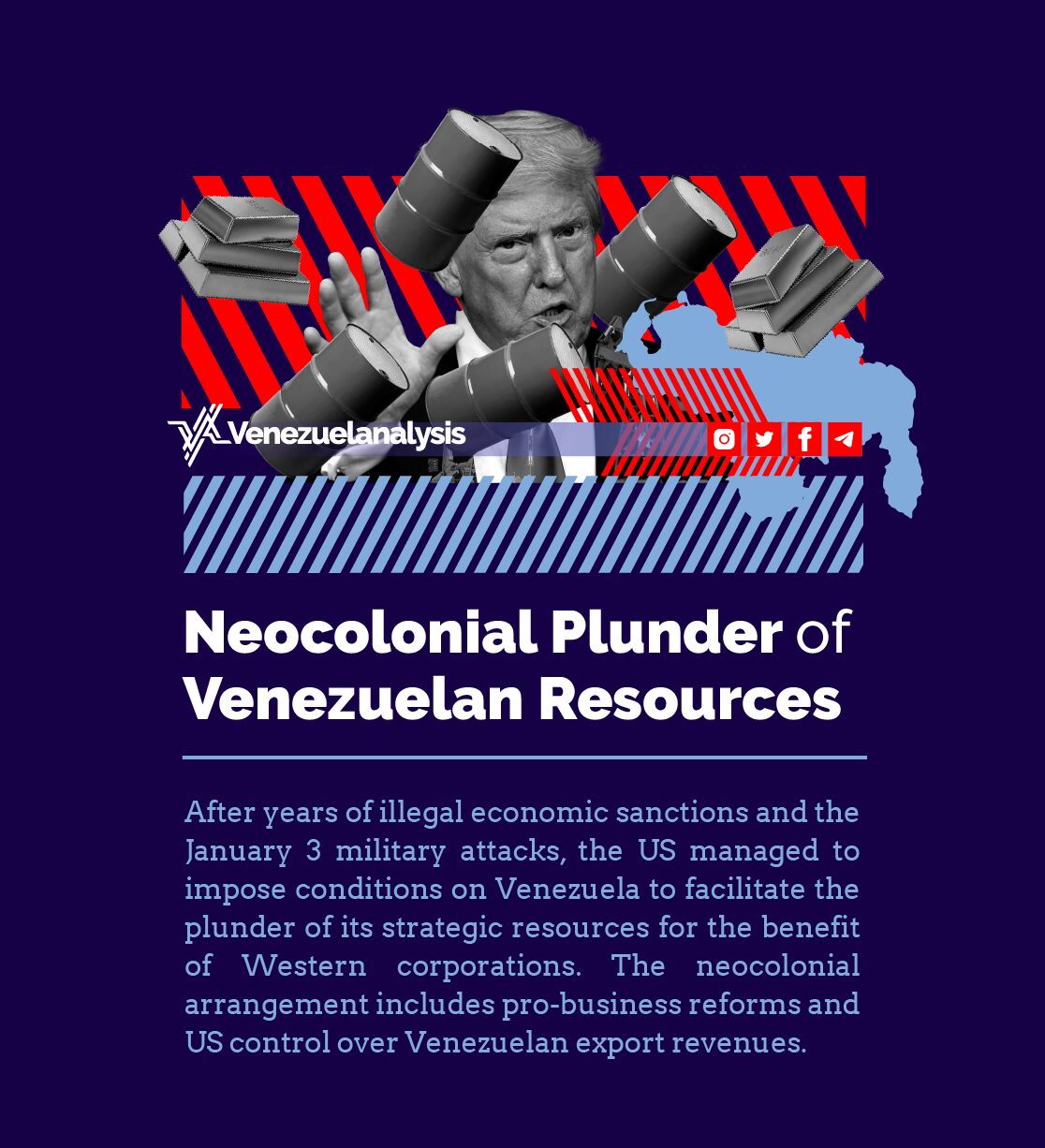
Western oil executives and Trump officials have aggressively lobbied to tailor the new rules to their interests after seeing preliminary drafts. White House energy advisor Jarrod Agen stated that he had contact with Rodríguez and her team “multiple times a day” to offer input on the regulations and contract models.
The 122-article text establishes the framework for the implementation of the reformed Hydrocarbon Law approved by the Venezuelan National Assembly in late January. The legislative overhaul replaced the 2001 Hydrocarbon Law approved by former President Hugo Chávez and subsequent decrees that established a leading role for the Venezuelan state in the energy sector.
Under the new law, private sector companies can take over oilfield operations and sales as minority joint venture partners, or via concession-type agreements.
The legislation also slashed royalties and fiscal contributions. The former was capped at 30 percent, and a former extraction tax was replaced by an “integrated hydrocarbon tax” with a 15 percent maximum.
However, the new statute defines a “combined contribution” of royalties and the integrated tax ranging from 20 percent for undeveloped greenfields to 35 percent for currently active brownfields, meaning an effective 10 percent further reduction from the 45 percent maximum defined under the law.
Companies are eligible for additional 5 percent discounts in their combined contribution if they run offshore operations or if their business plans include “building or amplifying crude transformation, upgrading, or refining plants.”
Income tax was lowered from 50 to 34 percent for greenfields under the 2026 legislation. But the regulations establish that companies can request further reductions to their royalty, integrated tax, and income tax contributions if necessary to attain “economic equilibrium.” The decisions will be taken by the Venezuelan executive on a case-by-case basis without any mandatory oversight from the National Assembly.
The reformed energy law allowed legal disputes to be settled by international arbitration bodies, with Venezuelan officials promising “legal certainty” to investors. The new norms permit arbitration re via “alternative mechanisms,” with analysts suggesting that the vague language aims to avoid any clashes with US sanctions.
The directive also set an obligation to capture “associated gas” in oil extraction operations, which can be used for reinjection or transformed into cooking gas. Historically, it has been mostly flared. Oilfield operators are likewise mandated to secure their electricity supply. The Venezuelan National Assembly is presently working on reforms to open electricity generation, transmission, distribution, and commercialization to the private sector.
The enacted framework goes on to establish environmental responsibilities, oversight mechanisms, and penalties for non-compliance. State oil company PDVSA is not mentioned at all in the text.
Venezuelan oil expert Blas Regnault told Venezuelanalysis that the new norms risk turning the oil sector into an “enclave.”
“The regulations organize oil activity but do not guarantee that it will be integrated into the national economy,” he explained. Regnault warned that empowering corporations to negotiate royalties on an individual case-by-case basis “turns a sovereign right into a flexible variable in a contractual regime” in what is an “unusual” practice for oil-producing nations.
“Royalties are not taxes. They represent the sovereign right of the owner of the resource, and thus should be universally established, not negotiated project by project,” he underscored.
The pro-business opening of Venezuela’s most important industry has seen major Western corporations, including Chevron, Shell, and BP, ink agreements or memoranda of understanding with the acting Rodríguez administration to develop new projects or establish more favorable conditions in existing ones.
For its part, the Trump administration has kept in place sanctions against the Venezuelan oil industry, though it has issued a number of licenses allowing US and Western enterprises to enter into agreements with Caracas. However, the waivers mandate that all royalty, tax, and dividend payments be deposited in a US Treasury-run account, while also blocking transactions with firms from China, Cuba, Iran, North Korea, and Russia.
The maintenance of US sanctions has slowed new investment, while the Trump administration has so far returned only a fraction of Venezuelan export revenues to Caracas.
The dire economic situation is indexed in persistent inflation and stagnating oil production. Venezuela’s crude output plateaued after four consecutive months of growth, with June’s 1.070 million barrel-per-day (bpd) output virtually unchanged from May, according to OPEC secondary sources. The figure remains the highest since early 2019.
For its part, PDVSA reported 1.187 million bpd in June, up from 1,179 million bpd in May. Direct and secondary measurements have historically differed over disagreements on the inclusion of condensates and natural gas liquids.
The South American country’s main crude extraction areas, in the eastern and western regions, were largely unaffected by June 24’s double earthquake, with no major disruptions to operations reported.
Edited by Lucas Koerner in Caracas.t issued a number of licenses allowing US and Western enterprises to enter into agreements with Caracas. However, the waivers mandate that all royalty, tax, and dividend payments be deposited in a US Treasury-run account, while also blocking transactions with firms from China, Cuba, Iran, North Korea, and Russia.
Venezuela’s oil production has stagnated after four consecutive months of growth, with June’s 1.070 million barrel-per-day (bpd) output virtually unchanged from May, according to OPEC secondary sources. The figure remains the highest since early 2019.
For its part, PDVSA reported 1.187 million bpd in June, up from 1,179 million bpd in May. Direct and secondary measurements have historically differed over disagreements on the inclusion of condensates and natural gas liquids.
The South American country’s main crude extraction areas, in the eastern and western regions, were largely unaffected by June 24’s double earthquake, with no major disruptions to operations reported.
Edited by Lucas Koerner in Caracas.