FCC asks court to reject ABC’s 1st Amendment claims
The Federal Communications Commission has asked a judge to toss out ABC’s 1st Amendment lawsuit, arguing that parent company Walt Disney Co. is wrongly attempting to short-circuit the agency’s review into whether the broadcaster has violated the law.
The commission, in court documents, maintains ABC’s lawsuit was premature because regulators simply were in the process of reviewing whether ABC has served the public interest in operating its eight television stations. No final determination has been reached, the FCC argued.
FCC Chairman Brendan Carr made the rare move last spring to call for an early review of ABC’s licenses as part of his yearlong look at whether Disney’s diversity and inclusion programs violate anti-discrimination laws.
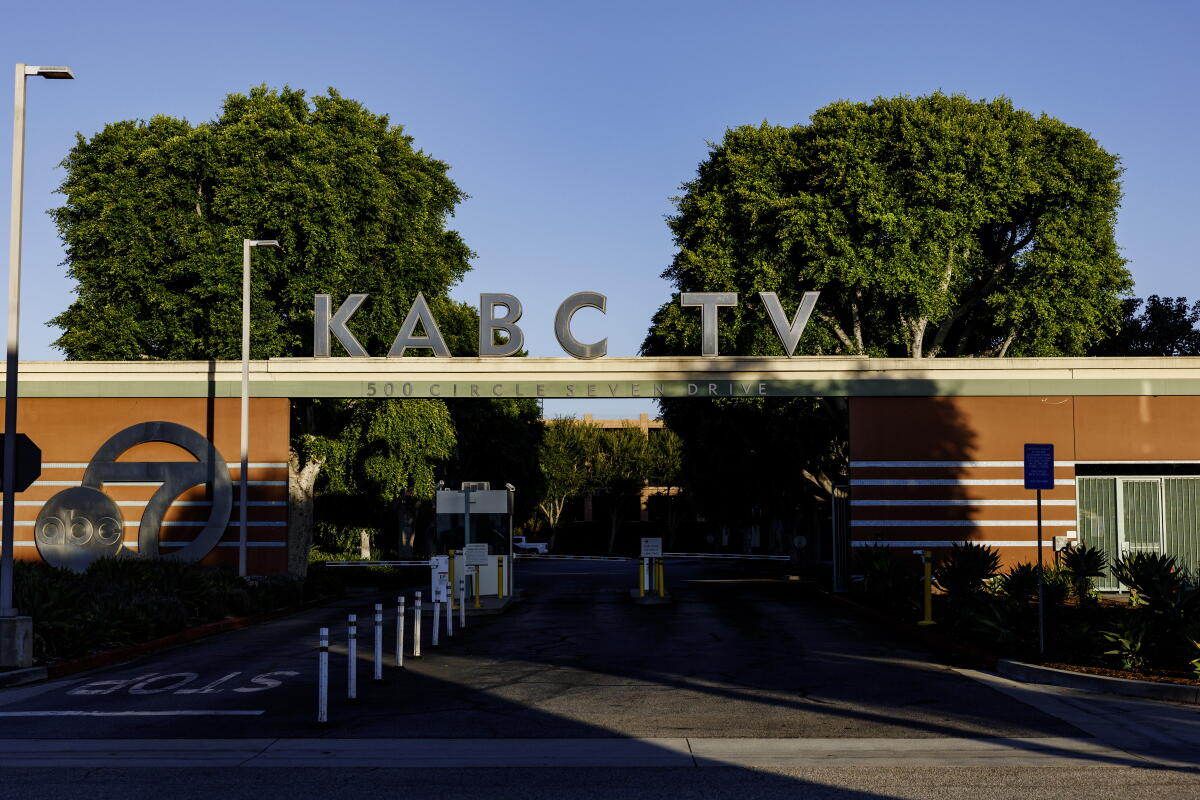
The Disney-owned station licenses were not set to expire for several years. For example, the license for KABC-TV Channel 7 in Los Angeles extends to 2030.
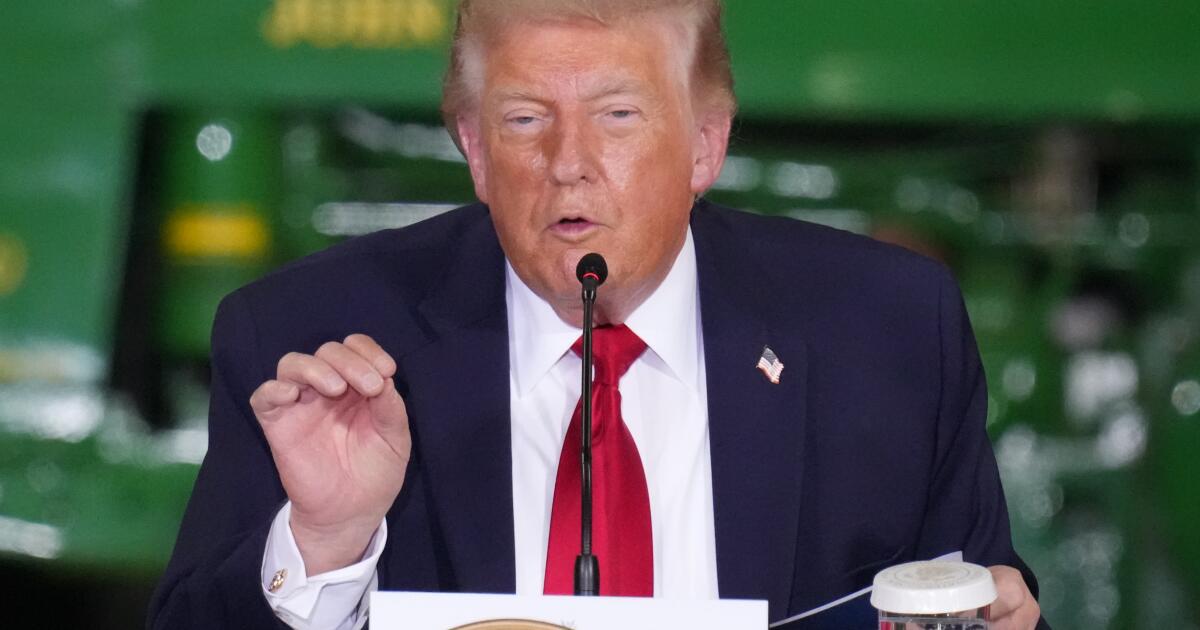
But the FCC launched the probe a day after President Trump complained about ABC late night comedian Jimmy Kimmel over a joke that upset First Lady Melania Trump.
ABC has taken an aggressive stance, arguing the FCC is wielding its enforcement powers to punish the network after Trump repeatedly agitated to have ABC’s licenses revoked. ABC maintains the FCC’s enforcement action is an attempt to quell the network’s free speech, in violation of the 1st Amendment. It asked a federal judge to issue a temporary restraining order and injunction to halt the FCC’s early station review.
ABC also is fighting an FCC review into whether its daytime talk show, “The View,” should be entitled to an exemption from the so-called equal-time rule for political candidates who appear as guests.
Disney’s lawsuit has enormous 1st Amendment implications.
ABC is the first major broadcaster to challenge the FCC’s enforcement actions since Trump returned to power, joining a small handful of news organizations, including the Associated Press and the Wall Street Journal, that have pushed back against the president’s efforts to bully outlets he dislikes.
In late December, Trump wrote on social media: “If Network NEWSCASTS, and their Late Night Shows are almost 100% negative to President Donald J. Trump, MAGA, and the Republican Party, shouldn’t their very valuable Broadcast Licenses be terminated? I say YES!”
ABC, which did not comment Friday, argued the FCC’s review is “extraordinarily early” and “that timing underscores the Commission’s true purpose: coercing and retaliating against a network that refuses to bow to the Administration’s demands.”
The FCC has scoffed at the broadcaster’s arguments.
“Disney filed a meritless lawsuit in an effort to stop the FCC’s ongoing investigation into allegations that Disney violated the law,” an FCC spokesperson said in a statement. “The FCC has developed a voluminous record, and it will continue to follow the facts and the law wherever they lead.”
The government filed its motion Thursday in Washington. The 46-page document was filed by U.S. Atty. Jeanine Pirro and signed by Assistant U.S. Atty. Dimitar P. Georgiev on behalf of the FCC.
Disney was “not content to let the Commission’s ordinary investigative processes (and, if needed, ordinary processes of judicial review) run their course. They instead ask this Court to halt the license renewal proceeding in its tracks by issuing a preliminary injunction,” the FCC said.
U.S. District Judge Loren L. AliKhan has scheduled an Oct. 6 hearing.
Disney has argued the FCC has gone well beyond an examination of its internal hiring practices — the original purpose of the agency’s review.
But, in its motion, the FCC faulted Disney’s handling of the matter, saying “Disney’s responses to Commission information requests were deficient and nonresponsive,” prompting the agency to escalate the dispute.
In late April, Carr directed the FCC Media Bureau to force ABC to apply for renewal of their licenses early.
“The Commission’s Chairman has repeatedly emphasized that, although the allegations against Disney are serious, he and the agency remain ‘open-minded,’ have ‘not made a decision,’ and are ‘going to follow the facts and the law wherever they [lead],’ ” according to the motion.
The FCC also argued Disney picked the wrong court because Congress stipulated that any review of commission orders should be heard by an appeals court.
If ABC lost its licenses, it would hobble the network by forcing its largest stations off the air. Other ABC stations at risk include those in San Francisco, Fresno, Houston, Philadelphia and New York.

KABC-TV Channel 7 is owned by Disney in Glendale.
(Gina Ferazzi/Los Angeles Times)
Trump on Sunday called for the FCC to “rebuke or punish” NBC’s “Meet the Press” anchor Kristen Welker after she pointed out that the president has had mixed success in endorsing political candidates in this election season.
The FCC also has an open investigation against NBC owner Comcast, also looking at the Philadelphia company’s diversity and hiring practices. The FCC has not ruled out calling NBC-owned station licenses in for an early review as well.