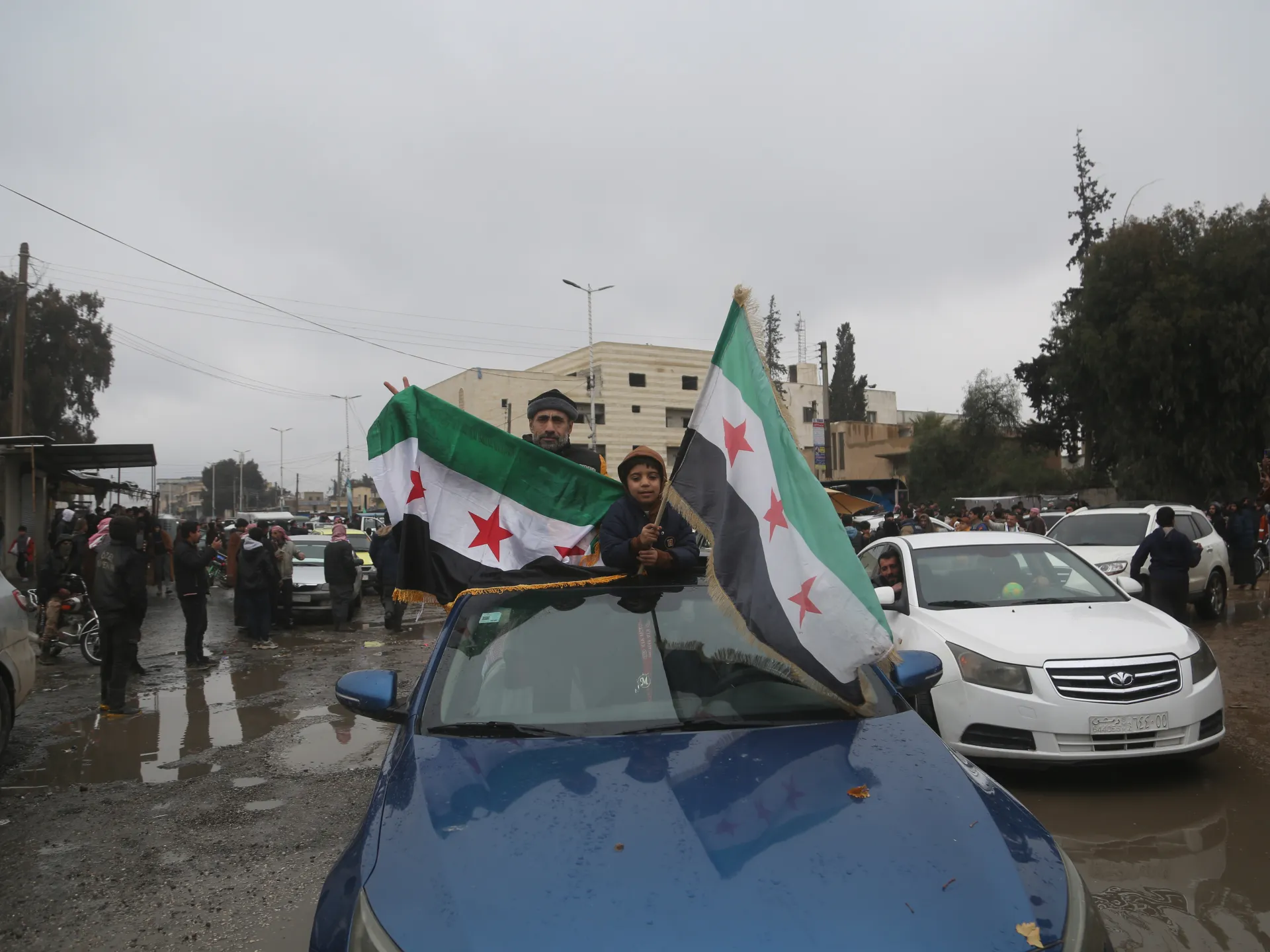
Agreement will see government takeover of SDF-controlled areas, and SDF integration into the Syrian military.
The Syrian government has announced a ceasefire has been agreed with the Kurdish-led Syrian Democratic Forces (SDF) that will involve the withdrawal of the latter’s forces from areas west of the Euphrates River, according to Syrian state media.
Sunday’s deal will also see SDF forces integrate into the Syrian military.
Recommended Stories
list of 3 itemsend of list
The agreement comes after days of fighting between the Syrian government and the SDF in northeastern Syria. The army and the SDF had been clashing over strategic posts and oilfields along the Euphrates River.
Speaking in Damascus, Syrian President Ahmed al-Sharaa said that the agreement will see Syrian state institutions move into three eastern and northern governorates – al-Hasakah, Deir Az Zor, and Raqqa – previously controlled by the SDF.
“We advise our Arab tribes to remain calm and allow for the implementation of the agreement’s terms,” al-Sharaa said.
The agreement stipulates that the SDF administration in charge of ISIL (ISIS) detainees and camps, and the forces guarding the facilities, will be integrated into the country’s state structure, now giving the government full legal and security responsibility.
Additionally, the SDF will propose a list of leaders to fill senior military, security, and civilian posts within the central government, ensuring national partnership.
Al-Sharaa made the announcement after he met United States Special Envoy to Syria Tom Barrack in Damascus. SDF chief Mazloum Abdi was supposed to be at the meeting, but al-Sharaa said that weather conditions meant that his trip would be postponed until Monday.
‘Victory’
Al Jazeera’s Ayman Oghanna, reporting from the Syrian capital, said that the agreement “can be seen as a victory” for the Syrian government.
Syrian state media says that the agreement will see the military handover of the SDF-controlled governorates and the takeover of civilian institutions.
The Syrian government will also take over “all border crossings and oil and gas fields”.
A previous agreement in March that included the integration of SDF forces into the Syrian military was not implemented, and fighting has periodically broken out between the two sides in recent months, increasing in ferocity this month.
But on Saturday, the Syrian army continued its advance into towns in the SDF-held territory.
According to state media, the army had taken the northern city of Tabqa and its adjacent dam, as well as the major Freedom dam, formerly known as the Baath, west of Raqqa.
Moreover, the army seized the Omar oilfield, the country’s largest, and the Conoco gas field in Deir Az Zor, in a major blow to the SDF. Last week, al-Sharaa said it was unacceptable for the SDF to control a quarter of the country and hold its main oil and other commodity resources.
According to Gamal Mansour, a lecturer in political science at the University of Toronto, the SDF had become isolated politically, explaining their rapid retreat.
“Sometimes you have arms, but your political situation, the lack of backing, the strategic and regional background in which you’re operating … therein lies the problem that SDF has,” he told Al Jazeera.
“Iraqi Kurdistan read the regional image and the strategic posture of the SDF in a way that had them go to the SDF and tell them ‘you need to … [cooperate] with the Americans so that you can have a peaceful relationship with the Syrian government’”, he said, adding that the US has also told the SDF as much.
Mansour explained that the success of the Syrian government’s rapid advance was also driven largely by Arab tribes in SDF-controlled areas, whose loyalty to the SDF was already fragile amid discontent with their rule, Kurdish nationalist dominance and a lack of economic investment.
The ceasefire agreement also outlined that the SDF had committed to the removal of all non-Syrian Kurdistan Workers’ Party (PKK) leaders and members from the territory to ensure sovereignty and regional stability.