Gov. Gavin Newsom on Thursday previewed a major education system overhaul that would give the next governor more authority over state school policies and redefine — and almost certainly diminish — the role of the elected state superintendent of public instruction.
The governor’s office indicated Thursday that major portions of the proposal, to be included in the state budget plan Friday, are based on a December 2025 report from Policy Analysis for California Education (PACE), a nonpartisan center that brings together researchers from Stanford, UC Berkeley, UCLA, UC Davis and USC.
The central aspect of the PACE plan calls for removing the state superintendent as the head of the California Department of Education. Instead, that department would be run by an appointee of the state Board of Education. Members of the state board are appointed by the governor to fixed four-year terms.
The PACE report envisions the “governor as the chief architect and steward responsible for aligning and advancing California’s education system.” According to the report, the “governor could develop long-term plans and use the budget as a strategic lever to advance them.”
A release from the governor’s office asserted that the state’s education system operates as “a fragmented set of entities with overlapping roles that sometimes operate in conflict with one another, to the detriment of educational services offered to students.”
This education initiative, if approved by the Legislature, could prove a defining element of Newsom’s education agenda for his last year in office. He would not get to exercise these new powers, which would fall to his successor.
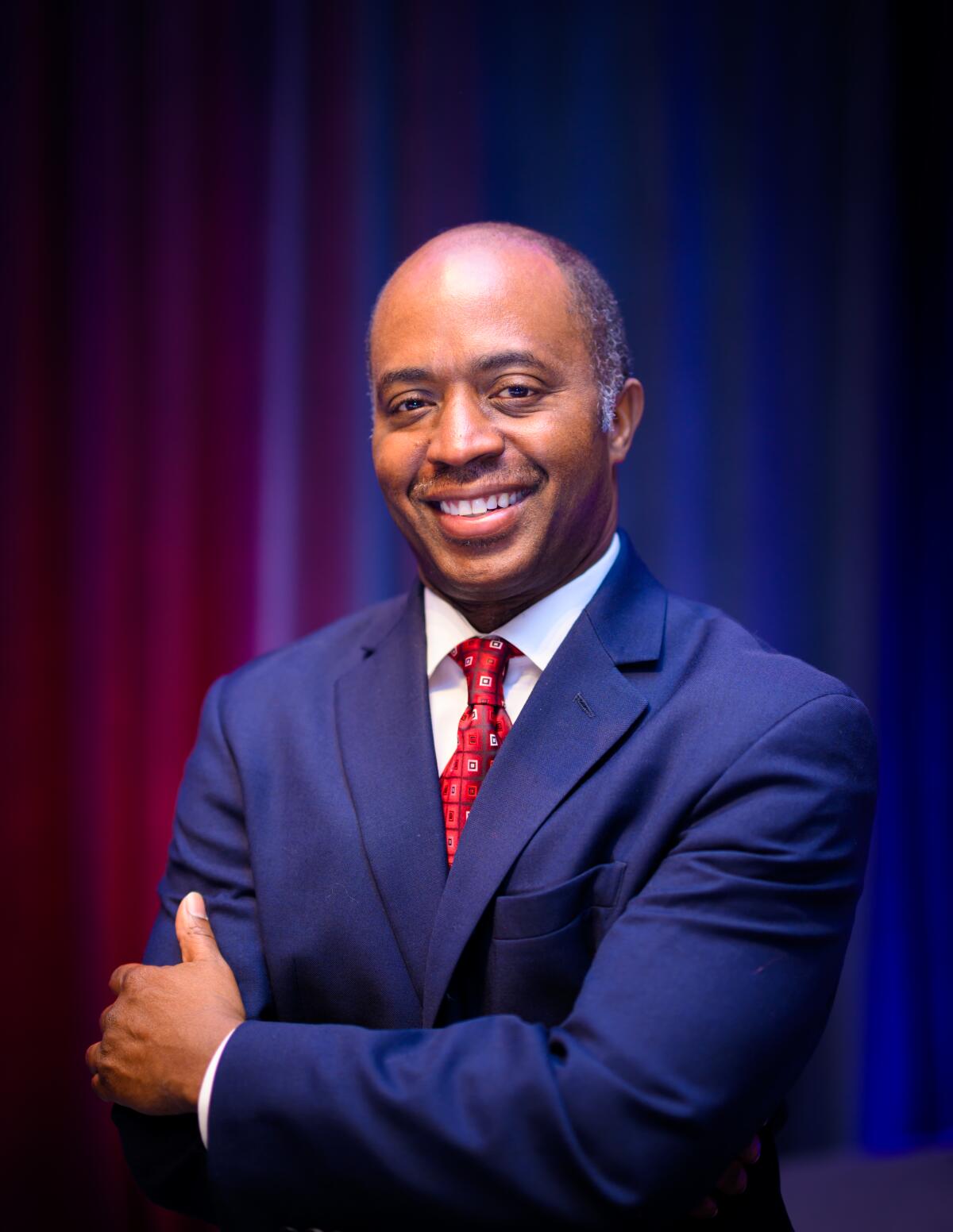
State Supt. of Public Instruction Tony Thurmond immediately raised concerns, while also praising Newsom’s record on education.
“Gov. Newsom has done an incredible job on education, one of the best governors we’ve had on education … and I think we have been more aligned than any state superintendent and governor in recent times,” said Thurmond, who is running to succeed Newsom as governor. “On this one issue, I don’t think we could be more misaligned.”
Here are the details and why Newsom wants to move forward with this plan.
Who controls what happens in California’s schools?
Authority over education is distributed among different officeholders.
The Legislature passes laws related to education. The governor chooses which to sign. The governor also proposes what to pay for in education through his budget plan. The Legislature can amend the plan and has the responsibility to approve it.
The elected state superintendent runs the state Department of Education and serves as the administrative lead for the state Board of Education. The superintendent does not have a vote on the board. In some areas, he answers to the authority of the state board; in others, he does not.
The governor appoints the state board, which approves the wording of state education policies. The board also approves curriculum and grants waivers to school districts seeking exemptions from state rules.
What is the problem Newsom says he is trying to fix?
The PACE report says the system is too complicated. It’s not clear who is in charge of what and who is accountable for results.
This has not stopped state officials from taking credit for positive developments or favored policies. Both Newsom and Thurmond take credit for creating the new grade of transitional kindergarten for 4-year-olds and for providing two meals at school each day for all students.
Both had a role in supporting and executing that policy, although neither would have happened without Newsom’s favor.
Some parts of the education system are not faring so well. Statewide student test scores and absenteeism rates — although improving — are worse than in 2018-19, before the COVID-19 pandemic. Fewer than half of California students meet state standards in English language arts and math.
As part of its work, the PACE research team conducted interviews with 16 former and current policymakers, researchers and education leaders. Collectively they rated the performance of the state’s education system somewhere between fair and poor when it comes to strategic thinking, accountability, capacity, knowledge governance, stakeholder involvement and systemwide perspective.
What would the state superintendent do under the Newsom plan?
A news release from the governor said his plan would “expand and strengthen the State Superintendent of Public Instruction’s ability to foster coordination and alignment of state education policies from early childhood through post-secondary education.”
Thurmond is not persuaded, based on his review of the PACE report, which would take the Department of Education away from the superintendent.
That report reimagines that state superintendent as a student “champion” who would analyze and report on the effectiveness of the state education system and also take on an advocacy role.
The PACE analysts noted that the Legislature would need to provide funding and staffing for the superintendent, in this new role, to be effective. Thurmond said that even under the current structure, underfunding of the state Education Department limits its effectiveness.
Thurmond said it would make more sense to give the elected state schools leader more authority over education spending and more resources, given that individual’s specific focus on education.
Why not just eliminate the elected state superintendent?
The state’s voters have rejected that option in the past. So have the powerful teachers unions, which have seen the office as a check on the governor’s power and an outpost in which they could campaign to install an ally.
How does this play out politically?
Newsom has taken credit for much in education, including career and mentoring programs, funding for teacher training and expanded community schools, which serve the broader needs of an entire family.
“Just this year, we’ve seen improved academic achievement in every subject area, in every grade level, in every student group,” Newsom said in his prepared State of the State remarks, “with greater gains in test scores for Black and Latino kids.”
He also took credit for state education spending per student at the highest level to date.
But he or his representatives have, at times, distanced himself from Department of Education guidelines that have expanded the rights of transgender students, including, for example, the right of transgender students to play on girls’ sports teams.

California Supt. of Public Instruction Tony Thurmond has concerns about Gov. Gavin Newsom’s proposal to change how the state’s schools are managed.
(Josh Edelson/For The Times)
Under the proposed system, a future governor would be more accountable for these and other policies.
Thurmond said that Newsom’s positive record proves that the governor already is the most powerful official in the state when it comes to education — and that more power does not need to be concentrated in that office.
What is the governance model in other states?
If California were to adopt a model in which the state board appoints the head of the Education Department, “it would align with the plurality of states that follow this governance approach,” the PACE report states.
In 20 states, including Massachusetts, New York, Florida and Mississippi, state boards of education directly appoint their chief state school officers. Twelve states, including California, select their chief state school officer through direct election.
Thurmond countered that even in some states with an appointed superintendent, the role has more authority than the elected superintendent in California.