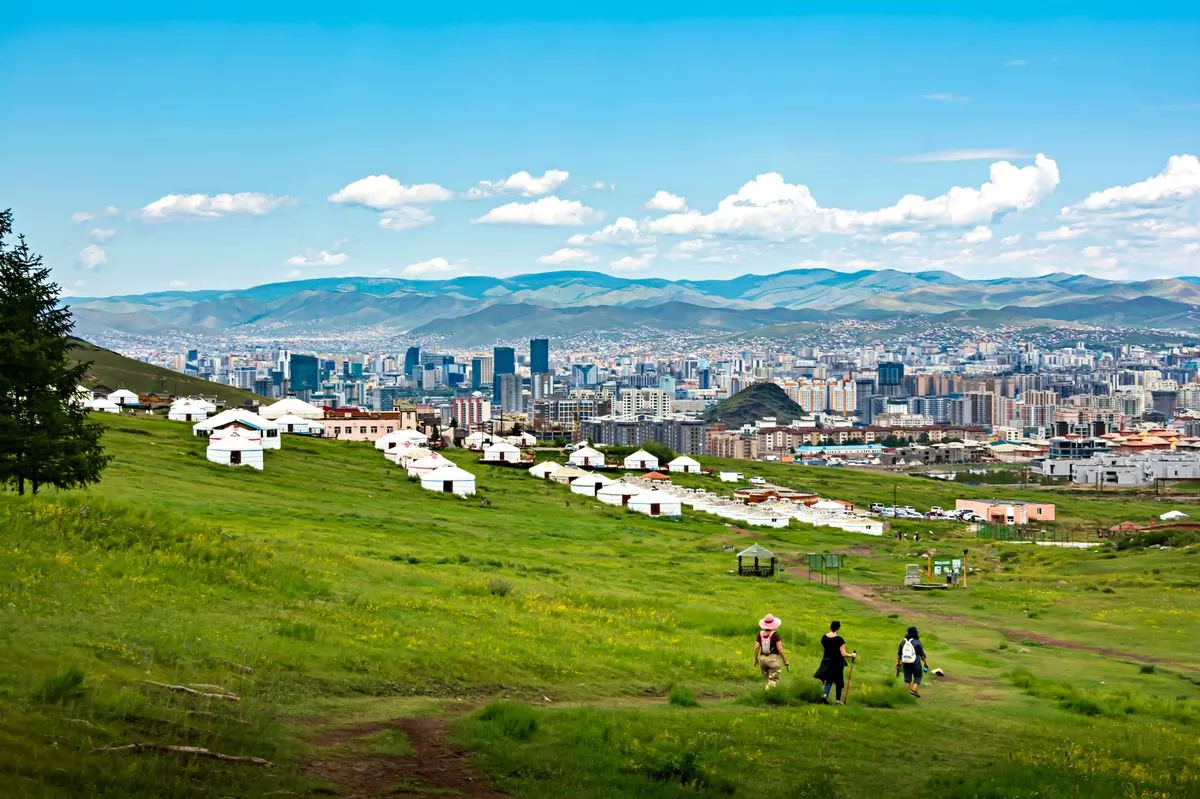
Nomin Chinbat’s job was to convince people to visit the world’s most barren country that 9/10 people had not even heard of in 2018

Mongolia is a starkly beautiful and barren place(Image: Getty Images)
How do you convince tourists to visit the world’s most barren country that 90% of people have never heard of?
That was the job of Nomin Chinbat, who just stepped down as the Mongolian Culture and Tourism Minister after five years in government. It’s fair to say that the challenge facing Nomin and Prime Minister Luvsannamsrain Oyun-Erdene was stark.
A 2018 global Edelman survey found only 10% of people knew Mongolia was a country, while 3/10 thought it was part of China. The question ‘what’s Mongolia?’ presented a major obstacle to the government’s plans to grow the tourism sector and to move away from the extractive mining industries that have formed the core of the economy for decades.
Trickier still, those who had heard of the country tended to associate it with less-than-flattering qualities. Ulaanbaatar is officially the world’s coldest capital city, known for its extremely harsh winters where temperatures regularly plummet below -20°C. To keep out the heat, most Mongolians burn coal fires, which has led to dangerously high levels of pollution.
READ MORE: New ‘stay alert’ warning signs for tourists appear in Tenerife


An estimated 7,000 citizens of the vast, thinly populated country of 3.48 million died last winter due to air pollution, indoors and out, while 881 people had lost their lives thanks to carbon monoxide poisoning in the country in the seven years up to February 2025.
If all of that wasn’t a difficult enough hand for a tourism and culture minister to deal with, then up trots arguably the world’s best-known warlord, Genghis Khan. Although all publicity is good publicity to an extent, the former Khagan’s reputation as bloodthirsty is a gross oversimplification, according to Nomin.
“Historically, we have Genghis Khan, one of the most famous men in the world. He was a peacemaker and diplomat, and he bridged the East and West. A big part of our policy is about reeducating people about who he was. For example, the passport was invited by Genghis. He wanted his envoys to travel across his land, so he gave them geregee passports that ensured their safe travel,” Nomin tells the Mirror during a visit to the South Korean capital Seoul.
Although the Mongolian government is shying away from Genghis’s notoriety, instead running a legacy-rewriting exhibition in France in 2024 and Switzerland today, Nomin would prefer visitors to engage with what the country has to offer today. Culturally, The Hu are Mongolia’s most famous sons, bringing a fusion of folk and metal that delivers old Mongolian war cries and traditional poetry to fans across Asia and the world.
But the real stars of the show, and a huge part of the reason why more and more people are coming to Mongolia every year, are the nomads.
Since at least the 3rd Century CE, residents of the Mongolian steppe have survived by herding livestock and living off the land. Today, roughly 40% of Mongolians are nomadic, and around one-third of the country’s population still lives in traditional dwellings called gers (yurts). These can be easily dismantled and moved to a new location, which nomads typically do four times a year.
At times, they join the 1.7million people who live in the rapidly growing Ulaanbaatar, before venturing out into the vast Mongolian wilderness. Dominated by the soaring Altai Mountains to the west and the harsh Gobi Desert to the south, the world’s second-largest landlocked nation is almost completely free of fences, meaning nomads can wander to their heart’s content. And they’re unlikely to be disturbed. Mongolia has a population of just 3.3million, which is less than the number of people living in Berlin, giving it a population density of just two people per kilometre. It is roughly a third emptier than the next less densely populated sovereign countries in the world – Australia and Namibia.
Perhaps all of these ingredients don’t add up to a typical holiday destination. However, in a post-lockdown decade in which travellers are increasingly answering the call of adventure, it’s catching a growing number of eyes.
“The UN Tourism Barometer found that Mongolia is one of the 20 fastest-growing tourism destinations, with a 16% increase in visitors from 2024 to 2025,” Nomin continues. The total number is not a lot compared to many countries, but it’s growing. There were 850,000 tourists in 2025, and around 500,000 before Covid. Our aim is 2 million by 2030.”
Whether the Go Mongolia campaign hits that target remains to be seen. So far, collaborations with Fulham as the club’s official kit and tourism partner, and “promotional piggy-backing” on international events such as the Paris Olympics, seem to be working. As does an “open sky policy” that has seen airlines including United, Air China and Turkish increase connections. Getting there from the UK remains pretty tough. Most flights from the UK stop in Istanbul and take around 15 hours to reach Ulaanbaatar. A return economy is likely to cost you around £1,000, so it’s far from cheap break material.
A recent Boston Consulting Group survey found that Mongolia had jumped 14 places in the global soft power rankings. Today, six out of the 10 people worldwide have heard of the country. Not a bad return, Nomin says.
“We’ve put in a lot of effort to make sure people know about us. I believe Mongolia has taken a very good policy to sustain tourism growth, which will really deliver for the Mongolian people. It will only grow. I think we’re on the verge of exploding.”