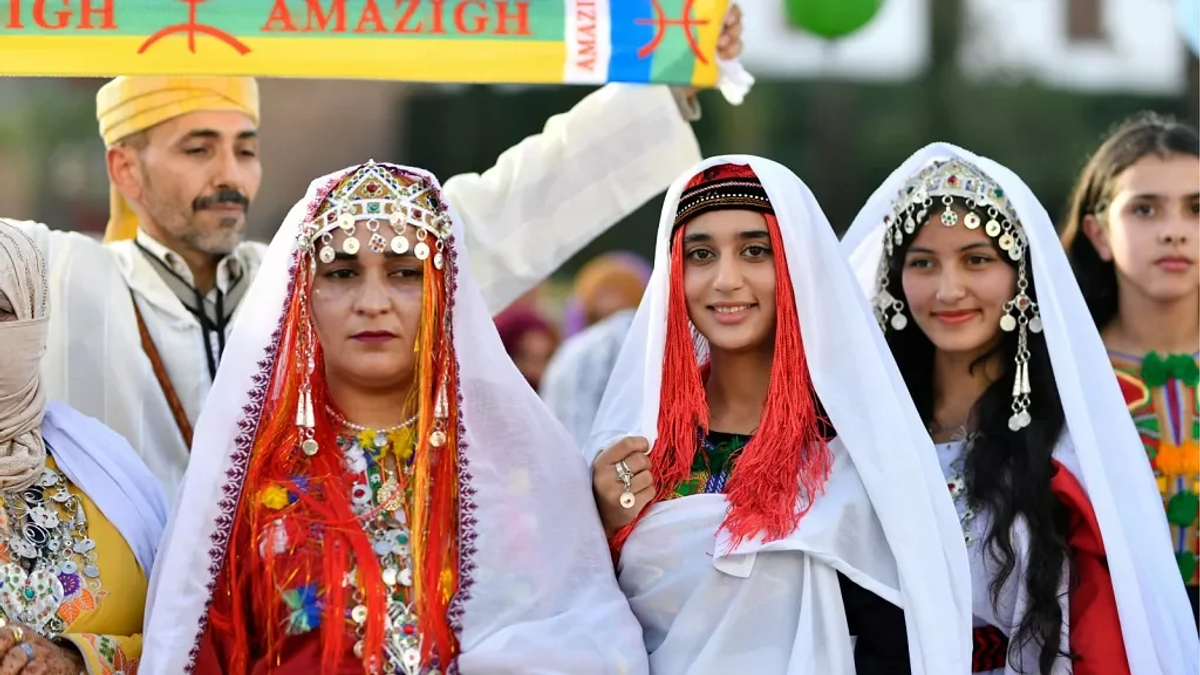
Amazigh New Year is filled with dance and songs of love, fertility, and prosperity welcoming the new agrarian year.
The Berber calendar has been in use for many centuries. Its origin is as an agrarian calendar, based around the seasons and agricultural tasks, inspired by the Julian solar calendar.
Yennayer is the Berber word for January. Under the change from Julian to the Gregorian calendar, 12 days were lost, which is why the Berber New Year begins on January 12th.
Some historians say that the calendar dates from the day that King Chachnaq defeated the Egyptian pharaoh Ramses III in 950 BC and established a monarchy that ruled from Libya to Egypt.
Yennayer is a day for the Berber community to showcase their rich cultural and artistic heritage. The New Year will be celebrated with communal feasts consisting of traditional meals of couscous and chicken, dancing, playing traditional games, and horse parades.
The Berbers, who refer to themselves as the Amazigh (‘free man’), are descendants of North Africa’s pre-Arab inhabitants. About a quarter of the population of Algeria are Berber.
The Amazigh language and culture and the celebration of Yennayer are not unique to Algeria as there are also significant Berber communities in Morocco, Tunisia, Libya, Mali and Niger. You will even find Berbers in the Canary Islands, in the Egyptian desert and in northern Burkina Faso.
The recognition of the Amazigh New Year with a public holiday is part of an ongoing process to recognise the Amazigh population in Algeria and has been a major claim of the civil rights movement in Algeria since the 1980s.
Home to North Africa’s biggest Amazigh population, Morocco long marginalised its language and culture in favour of Arabic and French, giving rise to an Amazigh identity movement which has steadily gained influence.