Multiple video clips offer strong evidence that kamikaze drones were among the capabilities the U.S. military brought to bear during the operation to capture Venezuelan dictator Nicolas Maduro over the weekend. This may have been the first real-world use of a new slate of U.S. long-range one-way attack drones and loitering munitions. After years of being outpaced by lower-end drone developments overseas, there is now a significant new push across America’s armed forces, and the special operations community in particular, to dramatically step up the acquisition and fielding of various tiers of uncrewed one-way strike aircraft.
Bystanders on the ground in Venezuela captured various videos of the U.S. assault on Saturday, which was officially dubbed Operation Absolute Resolve. In multiple clips, as seen in the social media post below, distinctly terrorizing high-pitched buzzing can be clearly heard, which are then followed immediately by explosions and/or other visual or auditory signs of munitions impacting the ground, all consistent with the use of one-way attack drones.
U.S. Special Operations Command (SOCOM) declined to offer any comment when asked for additional details about the use of drones, in general, during Operation Absolute Resolve. TWZ has reached out to U.S. Southern Command (SOUTHCOM) and the White House for more information.
Similar high-pitched buzzing sounds, which were followed by impacts and detonations, are featured in a mountain of existing confirmed videos of various types of kamikaze drones powered by small piston engines driving single pusher propellers hitting their targets. The distinctive acoustic signature, in particular, has been consistently present in footage of attacks involving these kinds of uncrewed aerial systems that have emerged from multiple conflict zones globally in the past five years or so. Ukrainian forces have even established a network of acoustic sensors to help spot incoming Russian drone attacks across their country to capitalize on this acoustic signature.
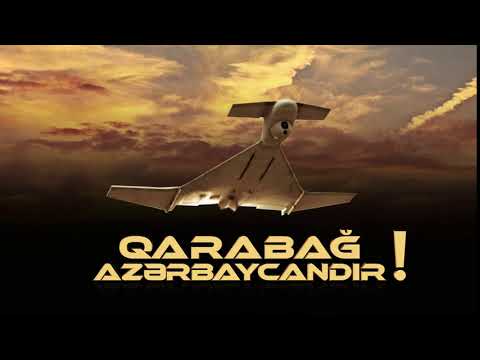
In 2021, Azerbaijan’s Border Guard even released a video, seen below, focused on the sounds produced by the Israeli-made Harop loitering munitions that it had actively employed in a conflict with Armenia the previous year. At that time, TWZ highlighted the knock-on psychological effect this would have. Direct comparisons have also been drawn to the iconic sound of World War II-era dive bombers, and Nazi Ju-87 Stukas, in particular, swooping down onto their targets.

Qarabağ Azərbaycandır!
As mentioned, the U.S. military finally launched a new, concerted effort to expand the use of various types of one-way attack drones last year. The special operations community, which was front and center in this weekend’s operation in Venezuela, has been heavily involved in executing this initiative and has already been at the forefront of fielding other kinds of kamikaze drones within America’s armed forces for years now.
Just last October, U.S. Central Command (CENTCOM) disclosed the first known operational fielding of long-range one-way attack drones by a task force in the Middle East led by special operations forces. That unit, officially named Task Force Scorpion Strike (TFSS), is equipped with multiple versions of the Low-Cost Uncrewed Combat Attack System (LUCAS), a design notably reverse-engineered from the Iranian-designed Shahed-136. However, LUCAS drones can operate collaboratively in a fully networked swarm and beyond-line-of-sight links that enable them to attack targets, including ones that might suddenly pop up, in real time and far from their operators. This makes them far more capable than Iran’s original design, as well as variants and derivatives that Russia is now actively using against Ukraine.

In December, TFSS, together with the U.S. Navy, also demonstrated the ability to launch LUCAS drones from ships. Other elements of the U.S. military have at least been experimenting with LUCAS, and those drones and/or other similar designs may already be in wider service within America’s armed forces.
The extent to which other relevant developments are ongoing in the classified realm is unknown, but this is certainly something that has been occurring in recent years. This includes the Phoenix Ghost kamikaze drones that emerged publicly after examples were delivered to Ukraine, but which trace back to a classified project under the Air Force’s Big Safari special projects office.

It is worth noting that the Shahed-136 was itself directly influenced by Israeli kamikaze drones like the Harop, which were originally designed with an explicit focus on targeting enemy air defenses. Iran has shown Shaheds being employed in this role in exercises, as seen in the video below, though the drones have now proven themselves in real-world attacks on a much wider array of targets on land and at sea.

Баражуючий іранський боєприпас «Shahed 136»
In Venezuela this past weekend, U.S. forces could well have used long-range one-way attack drones, launched from ships off the coast or forward locations on land in the region, as part of the broader suppression and destruction of enemy air defenses (SEAD/DEAD) mission, which we know was central to the operation.
“As the force began to approach Caracas, the Joint Air Component began dismantling and disabling the air defense systems in Venezuela, employing weapons to ensure the safe passage of the helicopters into the target area,” Chairman of the Joint Chiefs of Staff U.S. Air Force Gen. Dan “Razin” Caine said during a press conference on Saturday. “The goal of our air component is, was, and always will be to protect the helicopters and the ground force and get them to the target and get them home.”
Caine also said that “numerous remotely piloted drones” were among the U.S. assets employed during Operation Absolute Resolve.
Long-range kamikaze drones would have also offered a way to stimulate enemy air defenses, helping to expose their exact locations and provide emissions to hone in on, after which they could then be struck by other platforms or avoided entirely. The U.S. spent months cataloging Venezuela’s electronic order of battle from standoff distances, but road mobile systems are something of a wild card. If they radiate, they could be rapidly geolocated and destroyed. Similar drones could have been employed purely as decoys or for stand-in (close proximity) jamming of key radars and communications systems, depending on their exact configuration.
Strikes on other targets in Venezuela during the operation that were clearly intended to prevent or disrupt the country’s security forces from responding effectively could also have involved the use of long-range kamikaze drones. Light armored vehicles and other assets on the ground at the sprawling Fuerte Tiuna base in Caracas were destroyed in the course of the mission. This is reportedly where Maduro and his wife were captured. Key communications nodes in the country were also unsurprisingly targeted.
There is the additional possibility that what is seen and heard in the videos are smaller loitering munitions, which U.S. forces could have utilized more dynamically in response to threats as they approached their objectives. The U.S. military now commonly uses the term “launched effect” to refer to these munitions, as well as other uncrewed aerial systems configured for other tasks, all of which are designed to be fired from aircraft, as well as ground and maritime platforms.
The U.S. Army’s elite 160th Special Operations Aviation Regiment (SOAR), better known as the Night Stalkers, elements of which were at the very core of the operation to capture Maduro, have at least been experimenting with employing launched effects from their MH-60 Black Hawk helicopters for years now, though this is not an operational capability, at least that we know of at present. This is a capability also planned for the Army’s conventional Black Hawk fleet, but it would not be surprising for the Night Stalkers to receive it first. With launched effects, MH-60s, or other platforms the 160th operates, would have a new way to react to air defenses, either striking them if they pop up along the way or jamming them. They could also strike small mobile targets if need be.
The video below, which the Army released in 2021, includes footage at around the 0:34 mark in the runtime of one of 160th SOAR’s MH-60 Black Hawk helicopters carrying a tube for a ‘launched effect’ under its right stub wing.

The U.S. Army Futures Command’s Future Vertical Lift Cross-Functional Team (FVL-CFT)
At the Association of the U.S. Army’s (AUSA) main annual conference last October, the current head of the 160th SOAR, Col. Stephen Smith, also talked explicitly about the current and future use of uncrewed systems, including launched effects, to lead the way for crewed helicopters, especially in higher-threat environments.
Other elements of SOCOM have been touting the expected importance of air and surface-launched effects in future operations in recent years. These are capabilities that conventional forces across the U.S. military have been working to field, as well.

All this being said, the sounds and subsequent impacts heard and seen in the videos from Venezuela do seem to point more to the use of kamikaze drones that are larger than the ones that typically fall into the category of launched effects, especially air-launched types.
Regardless, the video clips do offer clear evidence of a possible first-of-its-kind use of U.S. kamikaze drones during Operation Absolute Resolve, and more details about their employment may emerge as more becomes known about the mission overall.
Contact the author: joe@twz.com