Russia hits Ukraine’s energy infrastructure hard, slams plans for post-ceasefire multinational force in the country.
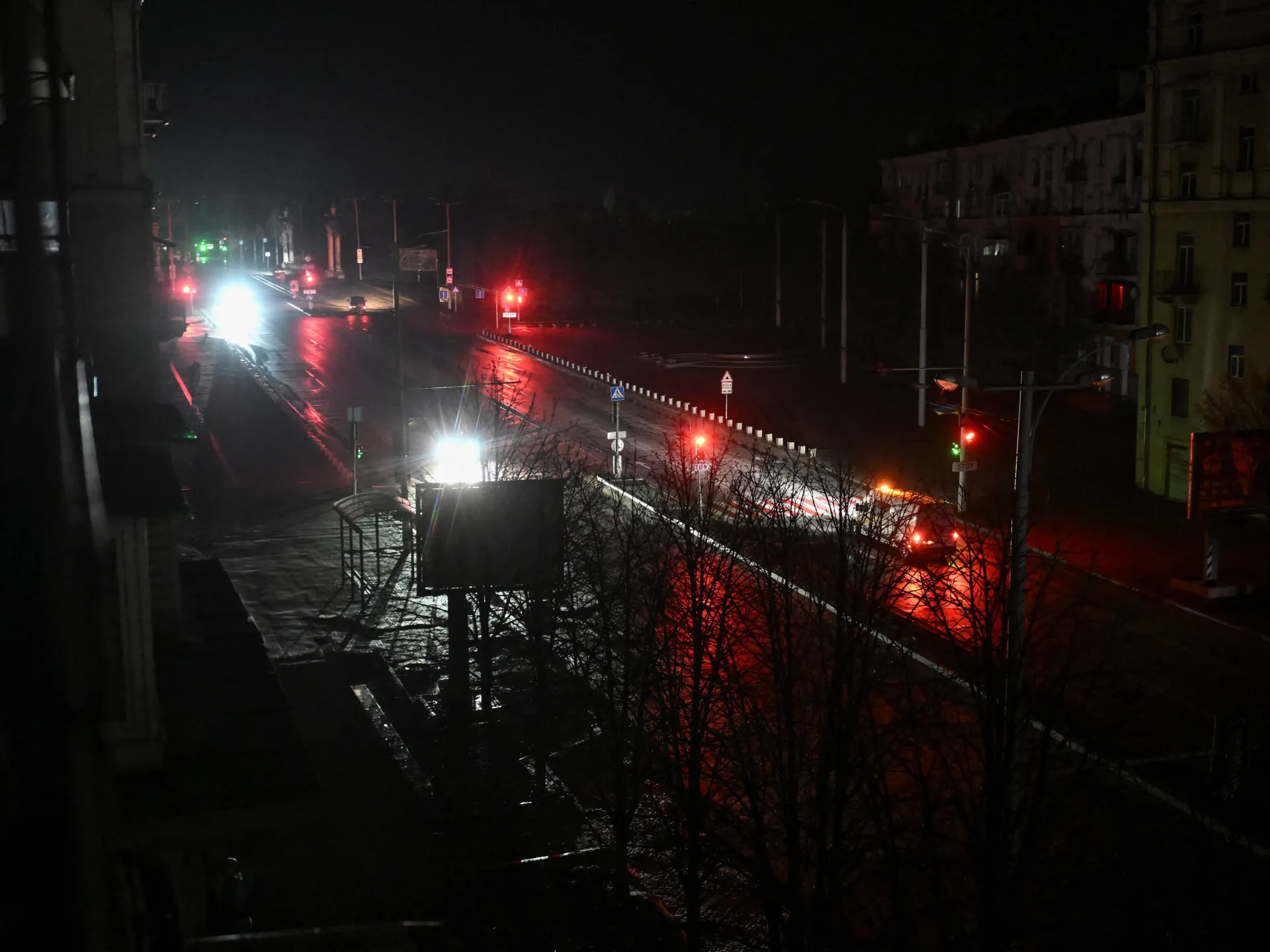
Ukrainian officials are racing to restore power in the southeast after major Russian strikes on critical infrastructure plunged hundreds of thousands into darkness in the depths of winter.
Ukrainian President Volodymyr Zelenskyy said on Thursday that the overnight strikes had aimed to “break” his country, cutting off “electricity, heating and water supplies” in Zaporizhzhia and Dnipropetrovsk, with repair crews still battling to restore services in the latter region.
Recommended Stories
list of 3 itemsend of list
He urged allies to respond to Russia’s “deliberate torment” of Ukraine.
“There is absolutely no military rationale in such strikes on the energy sector and infrastructure that leave people without electricity and heating in wintertime,” he said.
As in previous winters, Russia has intensified its strikes on Ukraine’s energy sites in what Kyiv and its allies call a deliberate strategy to wear down the civilian population, as the fourth anniversary of the Russian invasion looms.
More than 1 million people were affected in the industrialised region of Dnipropetrovsk, according to Ukrainian Deputy Prime Minister Oleksii Kuleba.
Military head Vladyslav Gaivanenko said Dnipropetrovsk’s critical energy infrastructure had been left damaged.
The Ministry of Energy said nearly 800,000 people in the region remained without electricity early on Thursday. Eight mines across the region had faced blackouts, but workers were evacuated.
Mykola Lukashuk, head of the Dnipropetrovsk regional council, said water supplies to the strategic city of Pavlohrad and nearby areas could take up to a day to repair.
Ivan Fedorov, governor of Zaporizhzhia, where power was restored Thursday, said it was the first time in “recent years” that his region had faced a total blackout, but that officials had been quick to respond.
“A difficult night for the region. But ‘light’ always wins,” he wrote on Telegram on Thursday.
Reporting from Kyiv, Al Jazeera’s Audrey MacAlpine said: “It’s not only power, but also the emergency air alarm system that has gone offline. This is an alert system that warns civilians of incoming bomb threats or drone threats.”
MacAlpine said mobile networks in the Zaporizhzhia region were also down. “The regional governor is warning people to limit their mobile phone use as a result of this,” she said.
The Ukrainian air force said on Thursday that Russia attacked with 97 drones, with 70 downed by its air defence system and 27 striking various locations.
‘Axis of war’
Kyiv has responded to the long-running targeting of its energy grid with strikes on Russian oil depots and refineries, seeking to cut off Moscow’s vital energy exports and trigger fuel shortages.
On Thursday, Russia’s Ministry of Foreign Affairs issued a statement that Moscow would consider the presence of any foreign troops in Ukraine “legitimate military targets for the Russian Armed Forces”.
The statement came after Ukraine’s allies said they had agreed on key security guarantees for Kyiv at a summit in Paris this week, with the United Kingdom and France pledging to deploy forces to Ukrainian territory if a ceasefire is reached with Russia.
However, the prospect of a ceasefire remains distant, with Ukraine saying this week that the key issues of territorial control of the eastern Donbas region and the fate of the Russian-occupied Zaporizhzhia nuclear power plant were still unresolved.
Russia said Thursday it had taken the village of Bratske in the Dnipropetrovsk region, where its troops have been advancing for several months, despite Moscow not officially claiming the region.
“The fresh militaristic declarations of the so-called coalition of the willing and the Kyiv regime constitute a veritable ‘axis of war’,” said the Foreign Ministry, labelling the plans for a multinational force in Ukraine as “increasingly dangerous and destructive”.