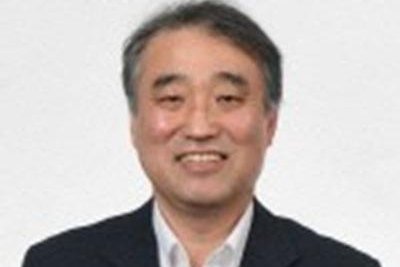

Kim Myung-ho, visiting professor at Konkuk University’s Graduate School of Journalism and Public Relations. Photo by Asia Today
Jan. 5 (Asia Today) — By 2026, understanding international relations and shaping national core-interest strategies should start from a geoeconomic perspective. Geoeconomics links geopolitics and economics. It describes the use of economic tools as weapons to achieve political and security goals and the study of how those tools work.
The term is not widely used, but the idea has been around for decades. In 1990, strategist Edward Luttwak argued in an essay, “From Geopolitics to Geoeconomics: The Logic of Conflict, the Grammar of Commerce,” that competition among nations was shifting from geopolitical rivalry to geoeconomic rivalry. In other words, economic instruments were becoming as consequential as military ones.
Traditional geopolitics explains international relations mainly through territory and military power. The reality today looks different. Tariffs, supply chains, exchange rates, finance and standards have become powerful tools aimed at rivals.
The start of President Donald Trump’s second term and the intensifying U.S.-China confrontation highlight what the author calls the arrival of the geoeconomic era. The erosion of free trade and de facto globalization, the “America First” approach and broad tariffs, and the cycle of retaliation and sanctions between Washington and Beijing are presented as signals of that shift.
In the past, globalization prioritized efficiency. That made strategies such as “security with America, economy with China” workable for South Korea. The author argues that economic interdependence itself is now a weapon. Globalization is no longer a stable order. Trump’s tariff policy, the author writes, should be understood not only as an economic move to improve the trade balance but as part of a broader security strategy intended to shrink rival industries, rebuild supply chains inside the United States and push China out of key nodes of the global supply chain.
China’s countermeasures, the author adds, reflect similar logic. The U.S.-China confrontation has expanded beyond military tensions into economic conflict. The author says the superpower rivalry will place increasing pressure on allies and neighboring states to choose sides, as each power blends hard and soft approaches. The author describes an emerging world of overlapping sanctions that could reshape international order.
The author argues such pressure is already visible in currency and tariff measures and in battles over standards tied to technological leadership in telecommunications, semiconductors and artificial intelligence. The author also cites energy security, the restructuring of battery and electric-vehicle supply chains and debates over the burden of security costs. Without a geostrategic plan, the author warns, South Korea could face a compound crisis spanning industrial diplomacy and security.
The column cites U.S. State Department criticism of South Korea’s proposed revision of the Information and Communications Network Act, a measure described as aimed at rooting out false and manipulated information. The author says the U.S. raised “serious concerns,” arguing it could harm the business of U.S.-based online platforms and impede freedom of expression. The author writes that the episode shows how Washington may intervene in other countries’ domestic law when it sees national interests at stake, including through potential trade disputes.
The author links that criticism to what is described as controversy involving Coupang, which is listed in the United States. While the author says Coupang deserves criticism over a personal data leak, the column argues that influential politicians in Washington have spoken up on the company’s behalf, while responses in South Korea have largely focused on calls for hearings and political pressure.
The author also points to a U.S. airstrike on Venezuela and the operation to arrest President Nicolás Maduro as an illustration of how economic interests and security strategy can converge. The author argues that while the stated rationale included counternarcotics, remarks cited in the column about “taking back the oil” reveal a geopolitical calculation tied to energy and supply chains.
The column concludes that no national interest can be protected without a tough geoeconomic strategy and that patriotism rooted in anger or emotion cannot substitute for strategy. The author argues that domestic-focused politics risks being pushed aside in a geoeconomic order and urges South Korea to rethink its national survival strategy rather than remain a passive object of great-power competition.
Editor’s note: The views expressed in this column are those of the author and do not necessarily reflect the views of this publication.
Kim Myung-ho is a visiting professor at Konkuk University’s Graduate School of Journalism and Public Relations.
— Reported by Asia Today; translated by UPI
© Asia Today. Unauthorized reproduction or redistribution prohibited.