Explore new cultures, find the best travel deals, and make informed decisions with our trusted travel news. Let your wanderlust thrive as you stay connected with the ever-changing world of travel.
One of Britain’s most renowned deserted medieval villages, with a church and manor house, attracts walkers and history enthusiasts despite its challenging terrain with a steep walk
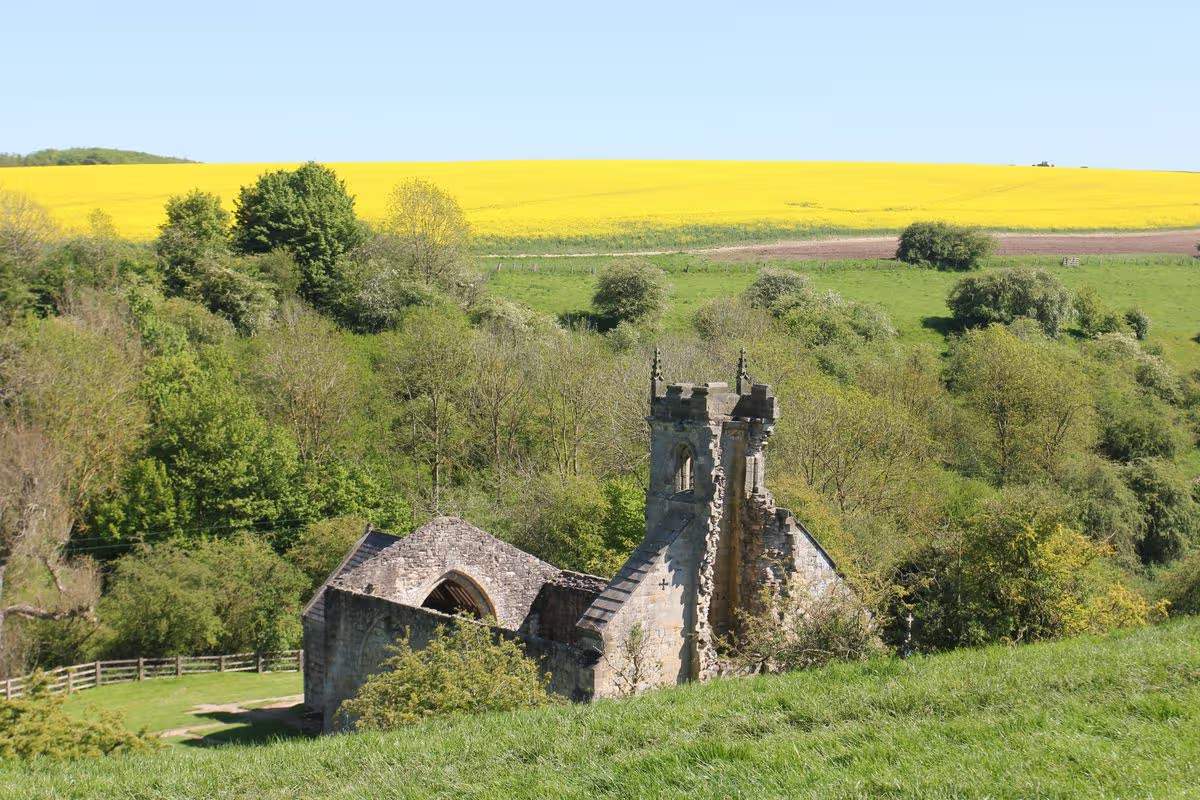
This medieval village lay deserted for centuries(Image: Getty Images)
Today, it’s considered the UK’s ‘best preserved’ medieval village, attracting visitors from far and wide who want to marvel at its history. Yet it remained deserted for hundreds of years after its residents vacated the settlement.
Wharram Percy in NorthYorkshire is one of Britain’s largest deserted medieval villages and certainly its most famous. Visitors can wander through the atmospheric site, exploring the ruins of ancient dwellings, a church, and a manor house that once formed a community.
Throughout an extensive 60-year period, archaeologists have steadily uncovered fascinating insights into Wharram Percy’s past. Their discoveries have revealed why the settlement was deserted initially and how people lived there centuries ago.
Nestled on the edge of a Yorkshire valley, this remarkable village was inhabited for as long as six centuries before being abandoned sometime after the 1500s. Experts believe that even now, the footprints of former houses remain visible in the earth, complementing the more prominent ruins that draw inquisitive tourists.
The history is complex, but experts believe the earliest settlement dates back to around 50 BC. This land was later converted into farmland, fell into disuse in the 5th century, and eventually evolved into a Middle Saxon settlement.
Steeped in history, the medieval village has become a popular attraction, whether that’s dog walkers in the local area or those passing by. Perfectly positioned between the tourist hotspots of Scarborough Castle and Clifford’s Tower in York, it’s an ideal midway stop when travelling between these two landmarks.
While admission to the village itself is free, visitors pay a modest £2 parking fee. It’s worth noting that getting to the settlement involves a roughly 3/4-mile trek from the car park to the main site, often steep and muddy. The site’s rugged terrain can pose a challenge for some visitors and is generally not suitable for wheelchairs or pushchairs.
One visitor described the parking on TripAdvisor as a “sharp gravelled decline” and a “daunting” journey unsuitable for those with limited mobility, as the path traverses fields. Another also warned: “Parking on the Heritage car park off the B1248 prepare for a trek to the village.”
Yet, it hasn’t put people off from making the journey, as one joyfully shared: “This lovely deserted mediaeval village is truly fascinating! The history is incredible, and it was wonderful to wander around and explore. We really lucked out and had beautiful weather, so we got to sit on the grass by the pond and soak it all in.”
Another lauded their experience and said: “Lovely walk from the car park to the site, but people with mobility issues may struggle. It’s a fascinating historical site that has been really well managed. Only a few visitors when we visited, which added to the peace and tranquillity of the place. Loved it!”
“Great walk with the dog. Parked in the free car park and walked downhill on the path to a cow field. Crossed over into the fields of Wharram Percy. Lovely walk around and interesting to imagine how it once was all those years ago. The walk back was uphill and quite a trek. We really enjoyed it. It’s a small historical site, sometimes people expect too much. We loved it. Nice walk out and then to the Stone Trough Inn for lunch,” another commented.
Do you have a travel story to share? Email webtravel@reachplc.com
Lanie van der Horst, from New York, and her now husband Mark spent years meeting up across the world after they met by chance on a trip thousands of miles from their homes
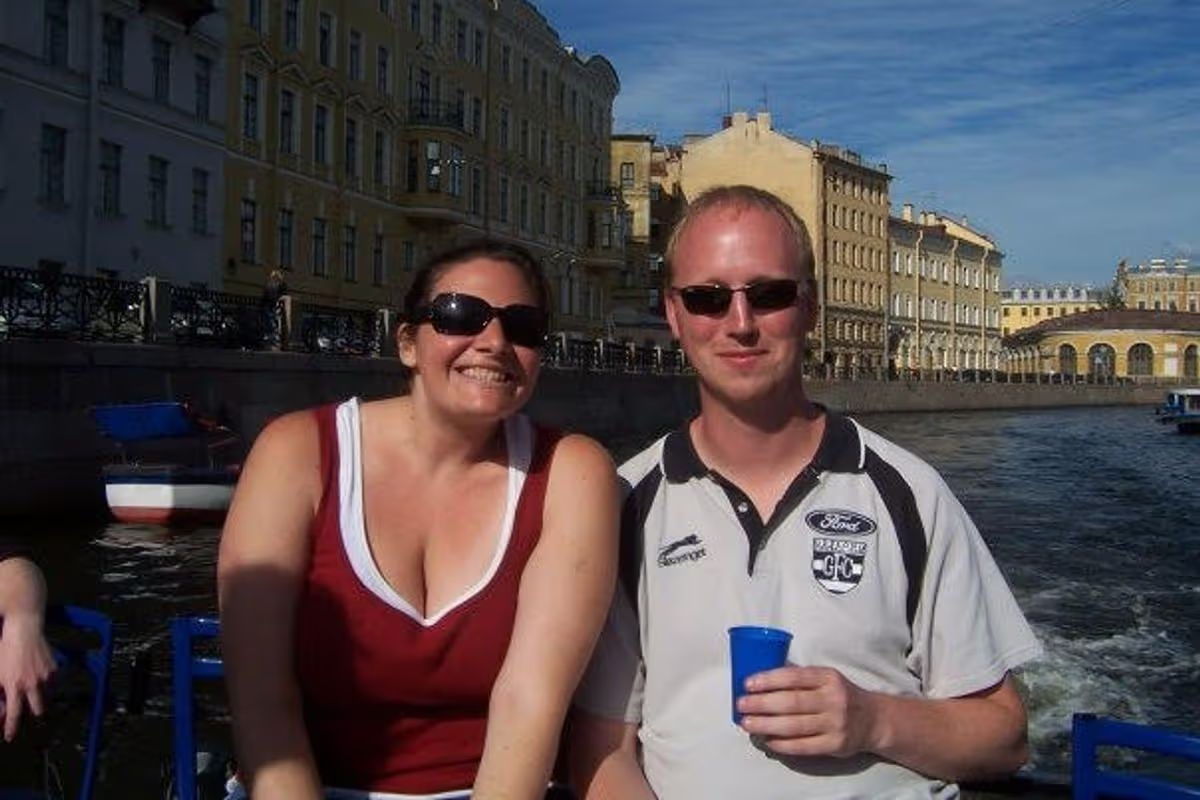
Lanie van der Horst met her now husband Mark while travelling
A woman moved across the world to be with the love of her life, after initially finding him annoying when their paths crossed on holiday.
Back in 2008, Lanie van der Horst, now 44, was on a Contiki tour that started in Riga, Latvia, before heading on to Russia and Scandinavia when her life changed. Living in New York City at the time, the teacher embarked on a 13-week European adventure with a pal.
“I arrived late because the flight was delayed, which meant I got to dinner late and got the last table. It was the table my now husband was sitting at.”
That Lanie and Mark’s paths would cross in such a way is pretty unlikely. Back then, there were around 6.5 billion people on the planet, which the couple lived on opposite ends of. Their homes were about 10,000 miles apart: almost as far away as any two people can live on the 24,901-mile circumference of Earth.
But meet they did. Unfortunately, Mark didn’t make a great first impression.
“I thought he was an absolute idiot. He was sitting with a roommate he didn’t know. They were both very excited. They were giggly, they were young. He was 26 at the time. I’m one year older. They were talking about shooting fireworks off, drinking. Things I wasn’t interested in. Dinner was fine. I thought, ‘Of all the people, I’m not going to hang out with him’.”
Despite having made a bad first impression, Mark, now a wastewater worker, had three weeks of travelling alongside Lanie (and 12 other young holidaymakers) to make a better second one.
“You’re together a lot, and we started having different conversations. I didn’t think I was going to marry him. He said to me that I talked about real things, like my family going camping, and everyone else was talking about what they did today. It became something more during those three weeks,” Lanie continued.
“Halfway through the trip, he asked me to travel with him afterwards. I went, much to my mother’s dismay. He rearranged his trip a bit and we went to Latvia, Russia, Finland, Estonia and Denmark.”
Clearly, the extended trip was a big success.
“The first whole day we spent just together was in Tallinn. It is now my son’s middle name. That’s how much I liked it. We then added two more weeks after. In Romania and Hungary. My family is from those countries. It was fun rearranging my tour, getting to know somebody. I thought we’d part ways.”
Back at home, Mark and Lanie continued talking online, emailing and messaging one another from their respective continents. At this point, neither had much hope of being reunited.
“I told him next time I travel, I’ll go to Asia, and he said, ‘Maybe I’ll see you there’. However, by December, we were planning a trip together. It wasn’t like we had to be together. I really liked him, but I didn’t think we’d end up together.”
The pair met up in Asia the following year and booked several group tours together, in case they ended up parting. “I wanted to make sure I wasn’t by myself,” Lanie explained.
“In China, Laos, Cambodia, Thailand, Vietnam, Singapore and Malaysia. We clearly really liked each other, but I told him we were on vacation, and he didn’t know me in real life. He was so nice, and we were working so well together. Partway through, I realised I didn’t want him to leave.”
In total, Mark and Lanie travelled together for nine weeks. At the end of their Asian adventure, the American was bereft. “I cried and cried and cried and told him he had to come see me. He had to get a new job and come visit. He did,” she explained.
Mark came to the US to meet Lanie’s family at her sister’s wedding, and fit in so well that he stayed for three months. This was followed by a trip around Europe and then Central America together. “We just met up around the world,” she said.
While jetting around the world to explore together was fun, the pair eventually decided to settle down after Mark proposed in the Fraser National Park in Tasmania. They married six weeks later and started life together in New York, then in Florida, after their daughter was born.
At the start of the coronavirus pandemic, Mark realised he wanted to move back home. “He said he wanted to go to Australia, but not forever, just until the vaccine was out. I told him I wasn’t moving, then he reminded me I’m adventurous. And so we moved. With everything going on in the US I’m not going back anytime soon. I think we’re there for good.”
Do you have a story to share? Email webtravel@reachplc.com
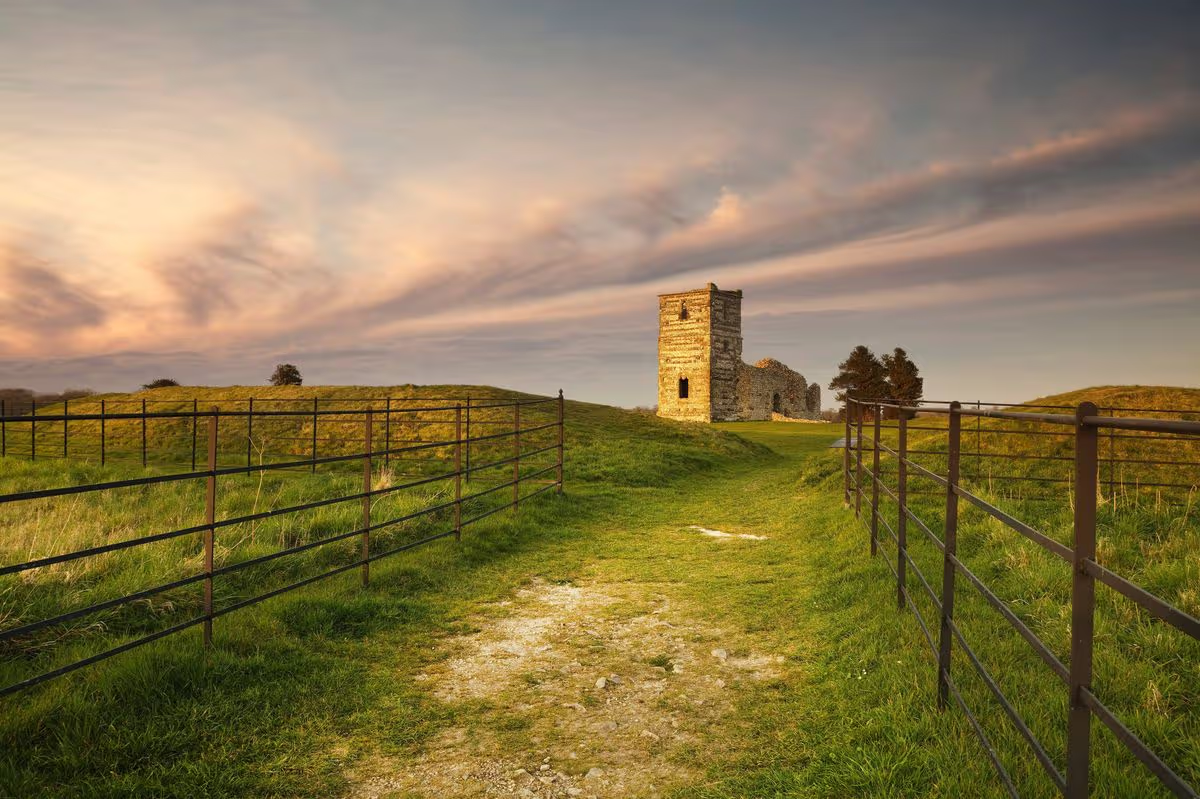
The parish church stands in the centre of earthworks(Image: Blackbeck via Getty Images)
As a child, I relocated to a secluded hamlet near Wimborne in Dorset. This hamlet was situated less than a mile from the now-deserted and dilapidated Knowlton Church, a medieval building that’s reputedly haunted. When I was younger, I seldom visited Knowlton Church, but my fascination with its history and purported ghostly inhabitants grew after we moved away.
The church itself is reputed to be among Dorset’s most haunted locations – and with good reason. This Norman place of worship, erected in the 12th century, stands at the heart of a Neolithic ritual henge, a site of pagan worship.
According to the English Heritage website, the church symbolises the region’s shift from pagan to Christian worship.
It’s thought that parts of the church were built using some of the ancient standing stones found on the site, reports the Express.
However, it’s not just the church that gives Knowlton its distinctive character. The parish church also stands in the centre of earthworks.
According to the English Heritage website, the Neolithic earthwork “is one of the great Neolithic and Bronze Age ceremonial complexes in southern England”.
The main earthwork, known as ‘Church Henge’, encircles the church and has been protected from plough damage, while the others are only discernible in aerial photographs.
The church and village’s history fascinates me, but during my teenage years, one aspect drew me back to Knowlton: the ghosts.
One evening, my mates and I decided to venture back to the church in hopes of catching a glimpse of the alleged ghosts.
The church is reportedly haunted by several spirits, including a phantom horse and rider who are seen galloping across the grounds at night, even passing through the church itself; a ghostly face that materialises in the top window of the tower; and, some claim, a sobbing woman kneeling outside the building.
I’ve always been a believer in ghosts and the supernatural, but I’d never had a personal encounter with the paranormal.
We parked the car near the church, its headlights illuminating the building, and waited for something eerie to occur. At first, nothing happened.
We nervously chatted and giggled, our eyes glued to the medieval structure.
Then, out of nowhere, the church vanished from sight, as if shrouded by a dark veil. We all screamed and jumped in our seats as the building disappeared, only to reappear moments later as if nothing had transpired.
My initial reaction was one of fear; what on earth had I just witnessed? Was this some sort of prank? Was someone watching us, trying to frighten us off?
My gut told me to bolt. Some of my friends felt the same way and wanted to leave, but one was keen to investigate further. We quickly agreed it was safer to head home.
While my encounter was certainly out of the ordinary, I’m not alone in experiencing supernatural phenomena at Knowlton Church. Cheryl, a local from Salisbury, told Bournemouth Echo in 2022 that she’s convinced she spotted a ghost there.
Upon reviewing her photographs of the church, she noticed something peculiar: a shadowy figure lurking in an archway.
Other adventurers and self-proclaimed ghost hunters also claim they’ve had similar eerie experiences.
Today, Knowlton is a quaint hamlet nestled in a secluded location, but centuries ago, it was a thriving village teeming with life. It’s thought that the bubonic plague, infamously known as the ‘Black Death’, decimated the population in the late 15th century.
The survivors abandoned their homes and relocated, leaving the dwellings to decay. Over time, the structures were ploughed into the ground, though their foundations are still visible in certain areas today.
Despite the village being deserted, it’s believed the church continued to serve its purpose until the 18th century, when the roof caved in. However, local lore suggests the church fell into disrepair after its bell was stolen and tossed into the river.
Depending on who you ask, the bell was either taken by the Devil himself or a band of thieves attempted to snatch it but were thwarted by a witch.
As for what I witnessed that night, I can’t say for certain. It could have been mere mist or a play of light, but the feeling it evoked will forever be etched in my memory.
Ensure our latest lifestyle and travel headlines always appear at the top of your Google Search by making us a Preferred Source. Click here to activate or add us as Preferred Source in your Google search settings
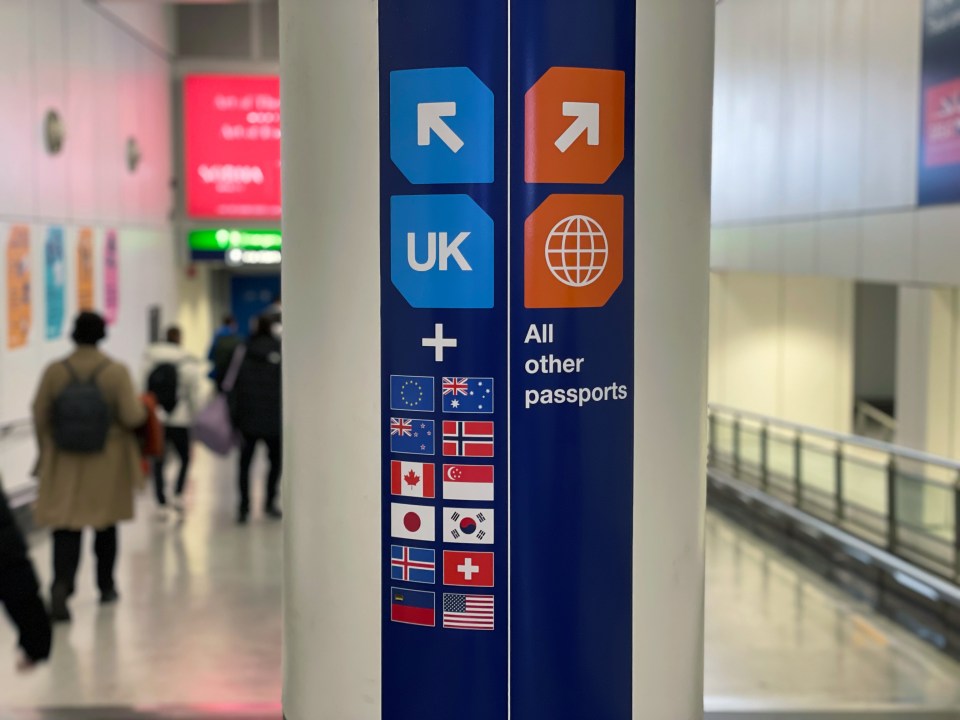
NEW passport rules are being rolled out by the UK government this week, and it affects anyone with two passports.
From February 25, dual British nationals will have to carry a valid British passport.
Sign up for the Travel newsletter
Thank you!
New passport rules will affect dual national citizensCredit: Getty
Anyone who tries to travel into the UK – via train, ferry or plane – could be banned from boarding if they are unable to show one.
The only alternative to having a British passport is instead paying for a £589 “certificate of entitlement,” the Guardian reports.
A Home Office spokesperson explains: “From February 25, 2026, all dual British citizens will need to present either a valid British passport or certificate of entitlement to avoid delays at the border.”
This will be attached to the non-British passport instead.
ONE popular city in Croatia is preparing to ban the sale of alcohol after 8PM this summer.
The reason for the ban is to stop rowdy tourists from disturbing locals after exhibiting bad, drunken behaviour.
Sign up for the Travel newsletter
Thank you!
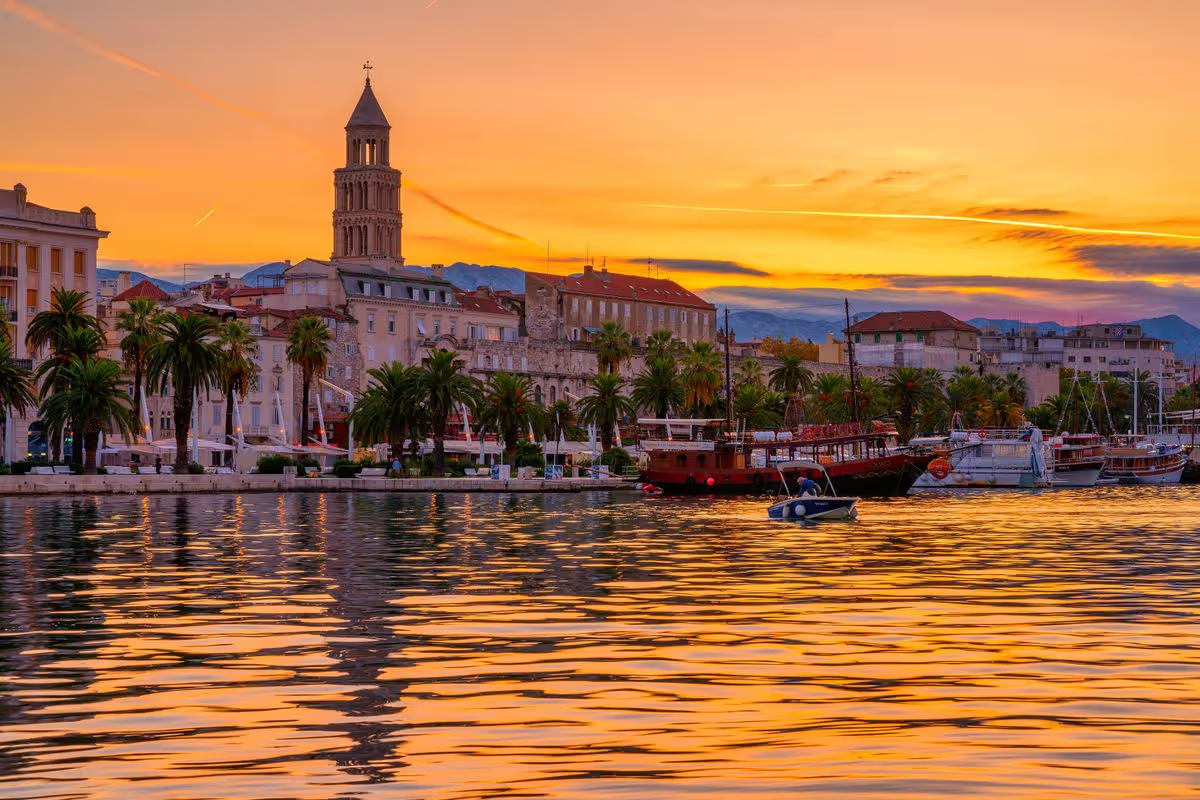
The mayor of Split in Croatia is hoping to implement an alcohol banCredit: AlamyThe sale of alcohol in grocery and liquor shops could be banned after 8PMCredit: Alamy
The mayor of Split, Tomislav Šuta, announced this week that a strict ban of the sale of alcohol at shops in the city centre could be put in place as soon as this summer.
A proposal has been submitted to the Trade and Hospitality Act, to regulate the working hours for the sale of alcohol at shops and liquor stores within the city.
The mayor said: “We are moving towards limiting nighttime work in accordance with the new law, with the aim of introducing order.
“The City of Split will participate in the discussion and public consultation so that we can reach a decision that is important for our residents by consensus.”
There’s a high concentration of clubs, bars, and shops that are open all night in the city centre.
According to the mayor, the late night openings result in “situations” that “impair the safety and quality of life of tenants”.
He continued to say that the that scenes of drunken tourists in the heart of the city are unacceptable.
The mayor then added that extending the rules to other parts of Split has not been “ruled out” either.
The restrictions will apply to grocery and liquor shops between the hours of 8PM and 6AM, but not to clubs and restaurants.
So visitors can still enjoy drinks in licensed venues after 8PM.
Split is popular with Brits and is known for its high concentration of bars and clubs – it’s even been said to have some of the most diverse nightlife in Croatia.
Some of the most popular spots for drinking are around the Diocletian’s Palace and the Riva seafront promenade.
There are already bans on tourists drinking in public spaces within 100 metres of schools, kindergartens, and in the historic city centre – which can result in a fine of up to €300 (£261).
Other bans in Split that affect tourists include the ban on walking shirtless or in swimwear in places other than the beach.
Tourists will still be able to drink at bars and restaurants after these hoursCredit: Alamy
If found sleeping in public places like parks and squares, there’s an on-the-spot fine between €150–€300 (£130 – £261).
There are other bans in Croatia in place. On Hvar, which is one of the country’s most famous “party islands”, there is a noise restriction.
During the summer, noise must be limited to 85 decibels – which is the equivalent of a food blender, a noisy restaurant or the cinema.
The hope is to make Hvar less of a party island and more attractive as a tourist destination for families.
I got a sneak peek at the luxurious Tower Suite on Disney Cruise Line’s Disney Wish, with Moana-themed décor, walk-in wardrobes and prices from £15,000 per cruise
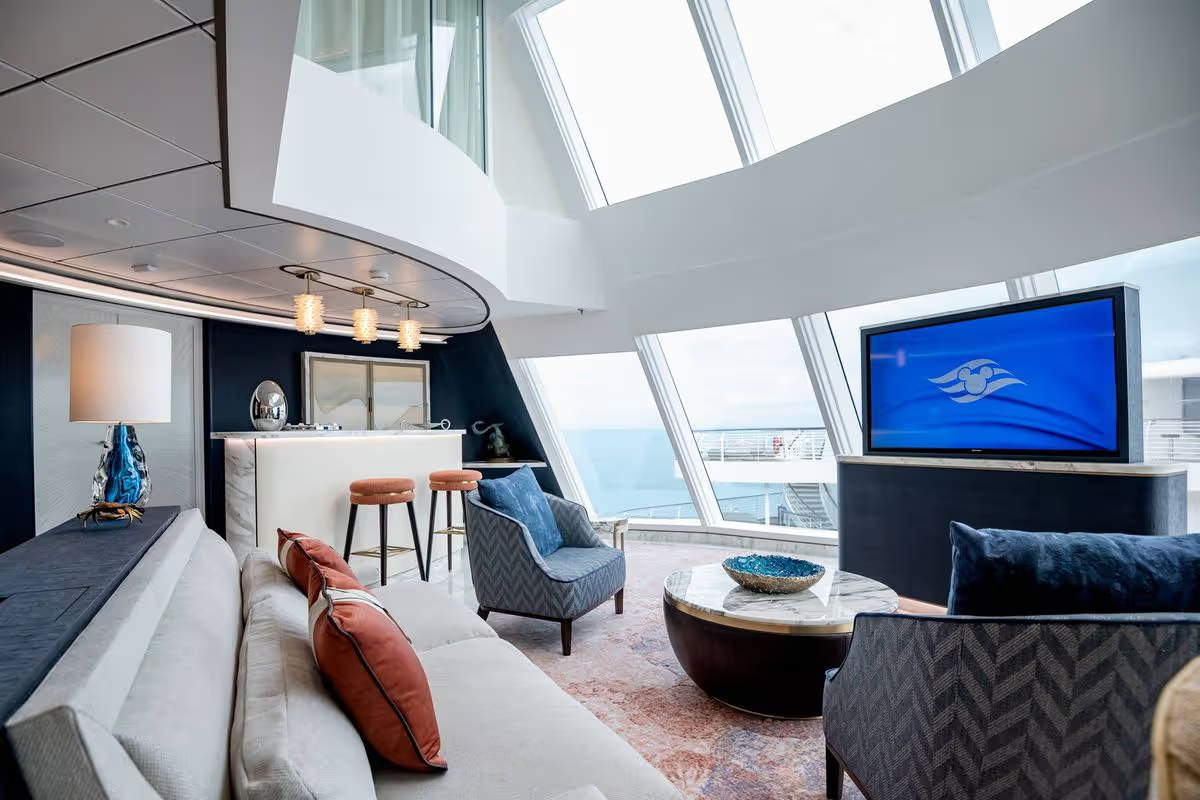
The suite has a huge living and dining area(Image: Disney Cruise Line)
A tour of a suite costing £30,000 per cruise is likely the closest I’ll come to actually seeing inside. So, when given the opportunity for a sneak peek at Disney Cruise Line’s stunning Tower Suite, tucked away in the funnel of the Disney Wish cruise ship, I jumped at the chance.
The cost varies depending on the itinerary and duration of the cruise, but prices for the suite reportedly start at £15,000. Despite the hefty price tag, it’s regularly booked out.
It’s easy to see why; the luxury begins before guests even set foot in the suite. There’s a dedicated check-in area, a private entrance to the suite, and a lift within the funnel itself for those who’d rather not take the stairs.
Upon entering, it’s immediately apparent that this isn’t your average cruise ship cabin. The suite draws inspiration from the much-loved animated film Moana, with stunning artwork and an eye-catching sculpture welcoming you as you step inside. The main space is a vast open-plan living and dining area, complete with sofas, sideboards, a coffee table, and a large dining table.
The entire room was practically larger than my own home, and the floor-to-ceiling windows (tinted for privacy) only added to the sense of grandeur. A central island conceals a retractable TV, ensuring unobstructed views of the ship when not in use.
There’s a compact kitchen complete with a well-stocked fridge, and a freezer drawer brimming with Mickey choc ice bars, a beloved treat amongst Disney enthusiasts on its cruises and Florida theme parks. On the subject of food, one of the suite’s greatest advantages is the array of in-room dining possibilities if you’d rather not venture out amongst your fellow passengers.
Those staying in the Tower Suite can request in-suite dinner from the main restaurants during their service hours, and if you fancy the all-inclusive Palo brunch, you can have everything brought to your room as well. (The brunch at Palo steakhouse is an all-you-can-eat affair that’s adults-only, and one I’d thoroughly recommend – just save room for the generously portioned servings!)
The Tower Suite sleeps up to eight guests, and spans two floors with two master bedrooms, a children’s room featuring bunk beds and an additional room that can serve as either another bedroom or a library. Given that cruise ship cabins and suites are notorious for requiring inventive space-saving solutions, visitors to this suite won’t face that challenge.
The bedrooms themselves offer ample space and exceed the size of some hotel rooms I’ve experienced, but the real showstopper was the walk-in wardrobes. Truthfully, I’m not convinced I could fill them even if I packed up my entire wardrobe and gave it my best shot!
The bathrooms were nothing short of spectacular, featuring plush robes, enormous freestanding tubs and generous showers. They resembled the sort of space you’d stumble upon in an upscale spa, complete with marble finishes, expansive mirrors and naturally, Disney toiletries.
Guests who book the Tower Suite gain access to the Concierge desk and its accompanying benefits; staff can assist with arranging shore excursions, securing restaurant bookings or activities on the ship, plus you’ll have access to exclusive Concierge areas such as a lounge and sun deck. For those who love cruising, one significant advantage of the concierge accommodation is the complimentary bottled water included – which can be rather precious on cruise ships!
Sadly for me, a sneak peek tour is likely as near as I’ll get to experiencing the Tower Suite, but thankfully the Disney Wish boasts a wide selection of other stunning staterooms with a gentler price point, yet still offering ample space. During my recent voyage on the vessel, I was in a Deluxe Oceanview Stateroom with a verandah, and it provided all the room we required – myself, my partner and our little one sharing the quarters.
Of course, whilst a lovely cabin is wonderful on a cruise, it’s equally about what’s on offer throughout the ship – and the Disney Wish certainly delivers on that front. You can read my full review of the Disney Wish here, but standout features included the action-packed schedule of performances, trivia competitions, deck celebrations, live entertainment, West End-calibre productions, and the AquaMouse water slide.
That’s before even mentioning the Star Wars -themed bar, pirates-inspired pub, and the fantastic dining venues including an interactive Frozen meal experience. You can discover more about the Disney Wish and next summer’s itineraries on disneycruiseline.com..
It was the home of a self-proclaimed “white witch”
Isobel Pankhurst Audience Writer
16:03, 13 Feb 2026
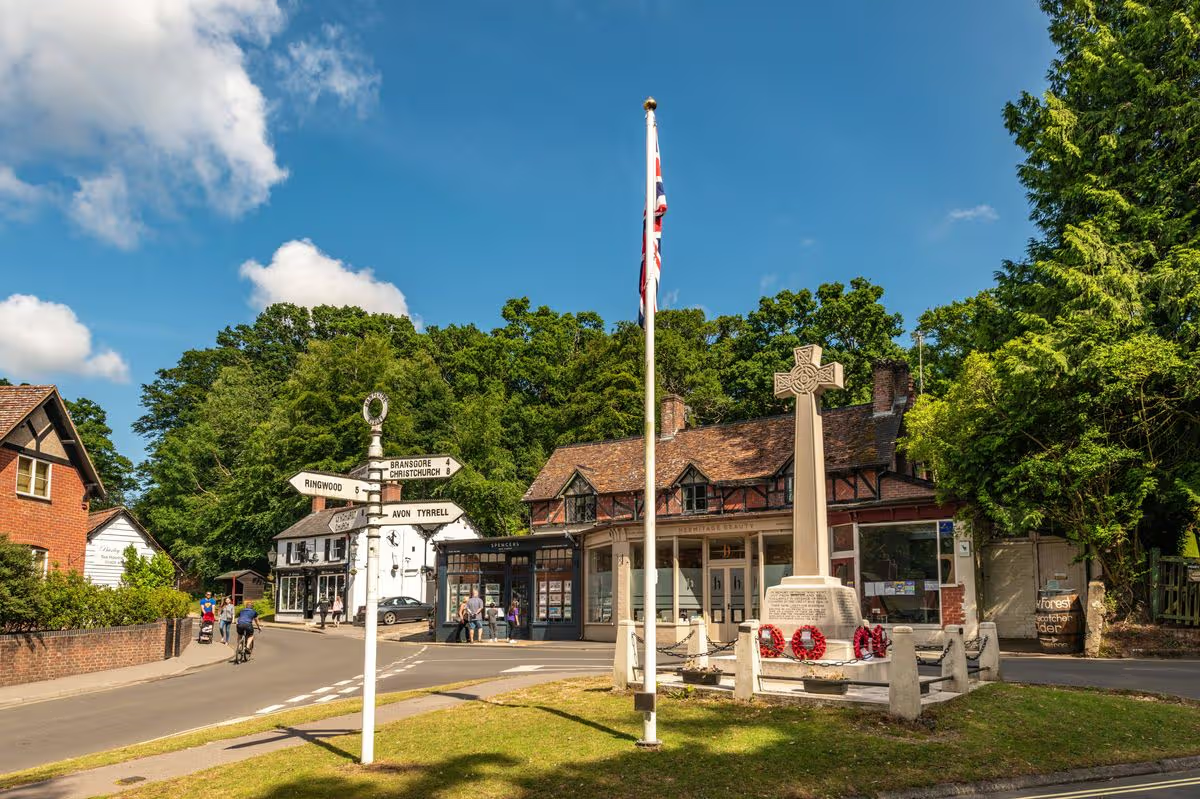
Charming village in ancient UK woodlands where Britain’s most famous witch lived(Image: Thomas Faull via Getty Images)
A picturesque Hampshire village has earned the title of the “witchiest village in the UK” from those who’ve visited. Nestled within the New Forest’s ancient woodlands, Burley boasts a history spanning centuries, and within living memory was home to a self-proclaimed “white witch”.
During the 1950s, Burley was inhabited by Sybil Leek, widely regarded as Britain’s “most famous witch”. She became a familiar sight wandering the village streets with her pet jackdaw perched on her shoulder, before eventually relocating to America.
Although nearly seven decades have passed since Sybil called Burley home, her legacy endures through numerous witch-themed gift shops that now populate the village.
The village’s connection to the paranormal extends beyond witchcraft, with local folklore claiming Burley Beacon once housed a dragon’s lair. According to legend, the creature would take flight each morning to Bisterne, a tiny hamlet merely three miles westward, where it would consume milk before returning home.
The tale concludes with the dragon being killed by Sir Maurice Berkeley, who served as lord of the manor of Bisterne during the 15th century. Whilst no actual dragon existed, some historians propose that elements of this legend may hold truth, with a wild boar or other sizeable creature substituting for the mythical beast.
Burley was formerly a popular hideout for smugglers, with renovation works at the Queens Head pub unearthing pistols, coins and other artefacts just a few years back. Local legend has it that the Queens Head served as the headquarters for Lovey Warne, the notorious 18th-century Smuggler Queen, where she orchestrated her illegal operations.
One recent visitor shared their enthusiasm on TripAdvisor: “If the weather is nice and you have some young people with you then I couldn’t think of a better place to stroll around than Burley. It [has a] fudge shop, tea rooms and an ice cream parlour (you must try the ice cream! A double scoop into a waffle cornet for £3.70 – my wife thought it should be £5 or more).”
Another reviewer commented: “I have been to Burley many times over the years with family who live in Dorset, and love checking out all the shops for a gift. Love to see the horses and donkeys roaming freely, and stopping when they see a picnic appearing in the field.”
The village offers an abundance of activities for visitors, from dining at the celebrated Queen’s Head to browsing the numerous mystical-themed boutiques, including Coven of Witches, Cobwebs and Crystal’s and Away With The Fairies.
Tourists can also take advantage of the encompassing woodland with deer safaris or cycling excursions on offer. For a more leisurely experience, horse-drawn wagon tours provide a charming way to explore the village.
The new measure, proposed by Mayor Tomislav Šuta, will restrict some late-night alcohol sales in problematic parts of the city from 8pm to 6am starting this summer
15:31, 13 Feb 2026Updated 15:46, 13 Feb 2026
The new measure, proposed by Mayor Tomislav Šuta, will restrict late-night alcohol sales in problematic parts of the city (Image: Getty Images)
A sun-soaked European city beloved by Brits is introducing a strict alcohol ban.
Split has become the first city in Croatia to ban the sale of alcohol in shops and liquor stores after 8pm, in a direct response to what the mayor describes as “unacceptable” scenes of intoxicated visitors in the historic centre.
The new measure, proposed by Mayor Tomislav Šuta, will restrict late-night alcohol sales in problematic parts of the city from 8pm to 6am starting this summer. The city centre, with its high concentration of clubs, bars, and all-night shops, has been singled out as a particular problem point.
“It is precisely here that situations arise that impair the safety and quality of life of tenants,” Šuta explained, adding that the possibility of extending the rules to other parts of Split has not been ruled out. The restrictions will apply to grocery stores and liquor shops, and not to clubs and restaurants, meaning visitors can still enjoy drinks in licensed venues after 8pm.
Darijo Šarić, CEO of luxury villa rental agency VIP Holiday Booker, welcomed the ban, seeing the move as part of a broader rebranding of Croatian tourism:
“In previous years, Split may have leaned into a ‘party destination’ image, sometimes encouraging partying among visitors. However, Croatian tourism is now actively rebranding to move away from that reputation, focusing instead on our rich cultural heritage, natural beauty, and family-friendly environment,” Šarić said.
“These measures are designed to encourage responsible drinking rather than to stop the fun.
“Ultimately, it’s all about balance. Everyone wants visitors to Split to have an unforgettable experience, but we also don’t want residents to feel like the city is a 24-hour party zone. By drinking responsibly and respecting local customs, you help us keep Croatia a cherished, safe, and welcoming destination for everyone.”
This isn’t the only recent attempt to curb the effects of overtourism and antisocial behaviour in Croatia.
Last year, Hvar – one of the country’s most famous “party islands” – voted to maintain strict summer noise restrictions, limiting noise to 85 decibels (the equivalent of a noisy restaurant), despite pushback from local businesses.
Split is not the only place in Croatia where locals are growing tired of tourists. Last year, the Mirror visited Dubrovnik, where work is currently underway to save the 1,400-year-old Old Town from becoming even more of an unbearable, sweaty mess than it was in the summer of 2017, when CNN condemned it as one of 12 global destinations to avoid.
Cruise ship numbers have been cut, and their arrivals have been staggered. Now, passengers must stay for eight hours, meaning the 600,000 who turned up last year spend more despite being 400,000 fewer than seven years ago.
Street vendor numbers in the Old Town are down 70%, while coach arrivals have been halved. Now a camera system counts visitors in and out of the Old Town. The “maximum comfortable limit” (according to a University of Dubrovnik study) of 11,297 a day is 800 higher than last year’s busiest day.
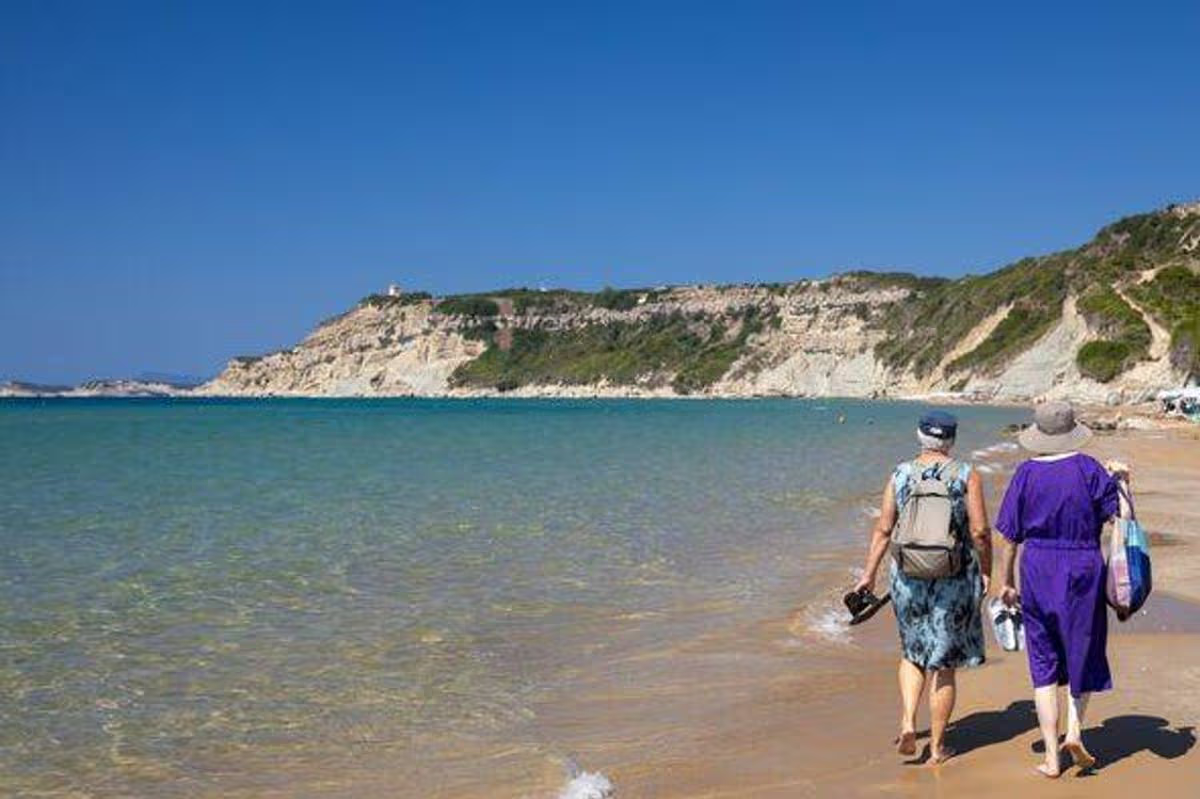
This island is proving popular with older Brits looking for accessible spring sunshine, with temperatures rarely dropping below 24C, sandy beaches and direct flights from the UK.
If you fancy a lovely stroll by the sea, this European destination could be the place for you(Image: Getty)
One of the delights of residing in the United Kingdom is the abundance of holiday spots right on our doorstep. Beyond our stunning domestic locations, countless destinations await just a brief flight away.
Greece stands out amongst these – and, lately, Greece has been attracting not only young globetrotters eager to explore, but also senior travellers seeking a peaceful retreat.
One important factor for older travellers is accessibility. Destinations offering direct flights are preferable, as journeys become more straightforward and quicker.
It’s equally important to assess accessibility – locations featuring numerous steep inclines or cobblestone streets might prove more challenging to navigate.
Additionally, consider the availability of vehicles and taxis; if driving isn’t an option for you, ensuring easy mobility is essential.
According to the Santorini Secrets blog, Corfu ticks all these boxes. Corfu benefits from daily direct flights from across Europe and the UK.
And it’s become a favourite destination for pensioners purchasing properties and visiting for relaxation. Corfu also boasts beautiful sandy beaches with straightforward access – ideal for senior visitors.
Santorini Secrets writes: “Corfu’s old town, with its Venetian architecture and alleys, is one of the cutest in Greece, with lots of excellent restaurants.
“There is no shortage of excellent sandy beaches with very easy access for older people, with lots of amenities and even hotels if you prefer to stay by the beach.”
Destinations such as Santorini and Mykonos, whilst undeniably stunning, aren’t particularly well-suited for older British visitors as they’re characterised by steep, cobblestoned and twisting pathways which can prove challenging for those with mobility concerns.
These spots are also regularly swamped with holidaymakers and can feel more chaotic than peaceful.
Additionally, both islands have earned reputations as “party destinations” – meaning they can get quite raucous.
If you’re keen on visiting Corfu for some spring rays, you’re fortunate. This Greek island boasts pleasant conditions throughout most of the year, with May temperatures seldom falling beneath 24C – ideally warm without being uncomfortably hot.
The first is to limit groups to 40 people in an attempt to control overcrowding.
Talking to The Times, Paolo Falco, the island’s mayor said: “They look like herds of sheep and it’s not nice to see. We need to save beauty; we don’t have any other choice.”
The rules also request that tour guides leading more than 20 tourists at a time use wireless earpieces rather than loudspeakers.
The guides have been asked to avoid using umbrellas to identify themselves and opt for identifiable clothing instead.
In an effort to not block the narrow streets, etiquette similar to travelling on the tube has been requested for large groups.
Paolo Falco added: “We’re saying to stay on the right on the way up, stand on the left on the way down and don’t loiter in the square.
“Sometimes they completely prevent locals from passing through.”
Busy spots like the Blue Grotto has wait times of two hours during summerCredit: Alamy
Other factors being considered to limit the number of tourists include controlling the boat traffic at Marina Grande port.
One long-standing rule for tourists and locals that was introduced in 2019 stopped people using single-use plastics.
The former Mayor of Capri, Gianni De Martino, approved the ban seven years ago – and anyone breaking the law could receive a €500 (£435) fine.
Capri is a short ferry ride away from Naples, usually taking around one hour making it a popular day trip destination.
The island draws tourists in thanks to its pretty natural surroundings like the Blue Grotto.
It’s a natural sea cave that glows a deep turquoise, often visited via small wooden boats.
During busy periods, sightseers can wait for up to two hours to get inside.
Other popular spots are the Faraglioni rock formations which visitors can see on the southern coast of Capri.
The central point of the island is the Piazzetta which is easily recognised thanks to its huge clock tower.
Surrounding it are lively cafés with outdoor seating and luxury boutiques.
Other highlights include theGardens of Augustus, theMonte Solaro chairlift, and the ruins ofVilla Jovis.
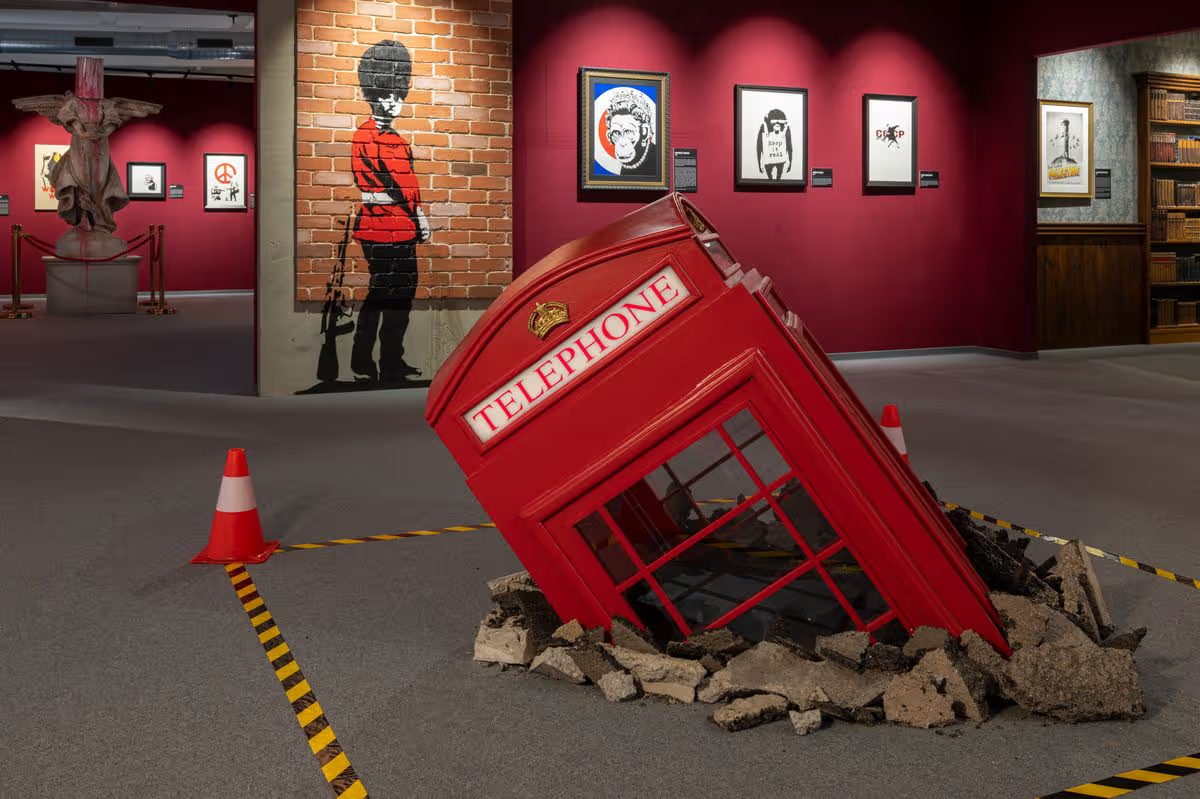
This amazing experience for two includes exclusive tickets to The Mystery of Banksy Exhibition at Depot Mayfield, plus overnight stay in the Banksy-themed room at Manchester Marriott Hotel Piccadilly
Fancy an unforgettable break in Manchester with art, culture and great food? We’ve teamed up with The Mystery of Banksy Exhibition at Depot Mayfield and Manchester Marriott Hotel Piccadilly to give one lucky reader the chance to win an amazing experience for two.
The lucky winner and friend will win exclusive tickets to The Mystery of Banksy Exhibition at Depot Mayfield, where they can explore the story behind the world’s most famous street artist.
They will stay overnight in a deluxe room in the stunning Banksy-themed rooms at Manchester Marriott Hotel Piccadilly, including breakfast. We’ll throw in £100 Freight Island vouchers to spend on food and drink and up to £250 to help cover your travel to Manchester.
This incredible prize combines culture, comfort and some of Manchester’s best food and drink, making it the perfect city break for art lovers or anyone curious about the mystery surrounding Banksy.
The prize must be redeemed between March 13 and June 30, 2026. Some blackout dates may apply. Terms and conditions apply.
Simply fill in your details on the entry form below for your chance to win. Closing date for entries is 23:45 March 1, 2026.
Terms and Conditions: This competition closes at 11:45pm on Sunday, March 1, 2026. Entries received after this date will not be accepted. One winner will be selected at random from all eligible submissions after the closing date and will be contacted by email within 7 days to arrange fulfilment. To enter the competition, you will need to submit your name and valid email address on the entry form. The winner has 48 hours/ 2 days from the date of the notification email to claim their prize, failure to respond within 72 hours will result in forfeiture of the prize / pick another winner. The prize is: one night’s stay for two in a deluxe king room in the stunning Banksy-themed rooms at Manchester Marriott Hotel Piccadilly, including breakfast the next morning. Tickets to The Mystery of Banksy Exhibition at Depot Mayfield, where you can explore the story behind the world’s most famous street artist. A £100 Freight Island voucher to spend on food and drinks (valid on selected dates). Travel costs covered up to £250 to help you get there and back. Travel expenses must be pre-approved and receipts may be required for reimbursement up to the stated limit. The prize must be redeemed between March 13 and June 30, 2026. Some blackout dates may apply. Prize cannot be exchanged, it is also non-transferable and no cashback alternative will be offered. Upon entering this competition there is an option to opt in to receive various newsletters sent via email. If you do opt in, you will receive these newsletters in accordance with their sending schedule. For those who do not opt in to receive any email newsletters, your data will be solely used for administration of this competition. The winners’ contact details will only be used to administer the competition and will be shared with the company’s prize fulfilment partner, We are Indigo – PR Agency to fulfil the prize. We are Indigo PR Agency will contact the winner to further liaise on the fulfilment of the prize (please make sure all entry details provided are correct). By entering this competition, you are permitting Reach plc to use your personal data to contact you to arrange prize fulfilment only. Entry to the competition is restricted to one entry per person. Multiple entries will be disqualified. Automated entries, bulk entries or third party entries will be disqualified. This competition is open to UK residents only. This competition is open to people over the age of 18. Employees of the promoter, their families, agents and anyone else connected with this promotion are not eligible to enter. By entering a competition, an entrant is indicating his/her agreement to be bound by these terms and conditions. Entry implies acceptance of these rules. These terms and conditions shall be governed by English law and the courts of England and Wales shall have exclusive jurisdiction to settle any disputes arising under these terms and conditions. Standard competition rules apply. For more go to www.mirror.co.uk/rules.
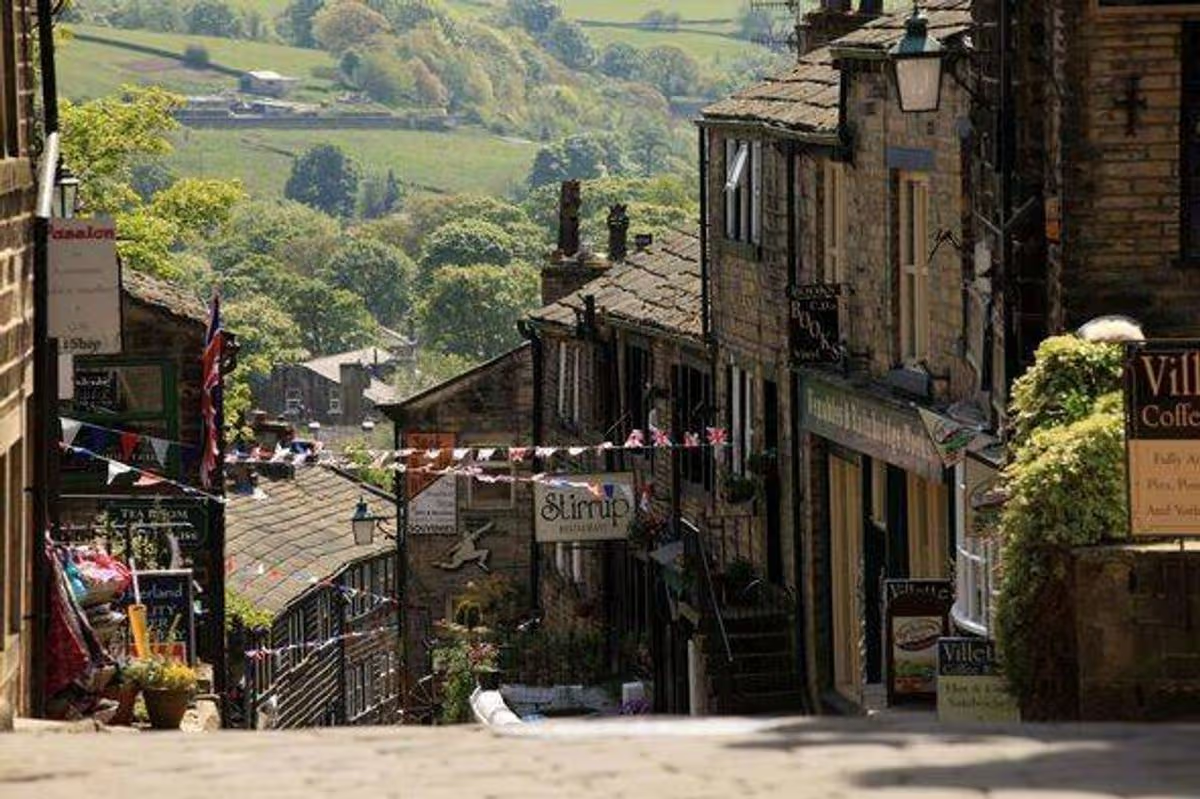
The gothic village of Haworth in West Yorkshire is home to the Brontë Parsonage Museum where Emily, Charlotte and Anne Brontë penned their classic novels including Wuthering Heights and Jane Eyre.
UK village with a mystical vibe has been an inspiration for many creative people(Image: Christopher Furlong / Getty Images)
A charming gothic British village, brimming with independent shops and a cosy atmosphere, is ‘well worth a visit’. This ‘mysterious’ spot was once home to the Brontë sisters, including Emily, the author of the classic novel Wuthering Heights.
Emily, Charlotte and Anne Brontë are among Britain’s most revered literary siblings. As the new film adaptation of Wuthering Heights premieres in UK cinemas tonight (February 13), the village of Haworth in West Yorkshire makes for an ideal weekend getaway.
With its unique brooding character, Haworth overlooks the moors where the new film was shot, transporting visitors back in time with its cobbled streets and historic alleyways. Some of these cobbled lanes even lead to an ancient church and cemetery where novelists Emily and Charlotte Brontë are laid to rest.
Anne Brontë, the youngest sibling, is also buried at St Michael & All Angels Church cemetery in Haworth. The three sisters wrote seven novels here, including Wuthering Heights, Jane Eyre and The Tenant of Wildfell Hall.
The village’s main street boasts ‘absolutely wonderful’ establishments, including shops with a mystical witchy vibe, a ‘heavenly’ sweet shop, and numerous unique gift and book stores to explore, reports the Express.
Food and shopping
The ‘magical’ establishments dotted throughout Haworth offer a gothic atmosphere, whilst the village is surrounded by stunning moorland and countryside, near to where the latest Wuthering Heights film was shot.
Spooks of Haworth functions as a ‘spiritual emporium’ in the village, selling crystals and gifts whilst offering tarot card readings. It first opened its doors in 1983 in Haworth, the heart of Brontë Country.
One visitor described the establishment as ‘magical, mysterious, and totally wonderful’ located in a ‘beautiful gothic village, well worth a visit’.
Another ‘fabulous little shop’ is The Cabinet Of Curiosities in the village, which one recent guest called a ‘little piece of heaven’, reviewing this treasure trove as ‘so interesting’.
“Every detail in the shop was very well presented, down to wrapping. It was like an adult sweet shop, of smelly stuff and other treasures”, they wrote.
The Haworth Artisan Market also features prominently amongst the village’s attractions on TripAdvisor. Despite only running one Sunday each month, it draws significant numbers of visitors and residents.
To capture the Wuthering Heights atmosphere, there are several must-see locations in the area:
Haworth Moors
Exploring the Haworth Moors, the setting for Wuthering Heights, can be done on foot or alternatively, aboard the historic Keighley & Worth Valley Railway. This heritage railway offers a journey on vintage steam locomotives.
One can even indulge in afternoon tea on board, as one reviewer who embarked on this rail journey three months ago with an all-day rover ticket attested. They described it as a ‘very enjoyable day and highly recommended’.
The same reviewer of the Keighley & Worth Valley Railway shared: “Just had the traditional afternoon tea experience, absolutely blown away. Fantastic food, excellent service, in short a really brilliant day, when I felt I got full value for my money.
“There is a nice selection of sandwiches, meringues/ macaroons and large scones with cream and jam.”
Holdsworth House – an ideal place to stay
This stunning four-star hotel is a “Jacobean manor built in 1633, set just outside Halifax in West Yorkshire”.
Situated a mere 20-minute drive from Haworth, the Holdsworth House website describes it as a “historic, quietly grand house” that provides a “calm, atmospheric base for visiting the Brontë Parsonage, Haworth itself and the wider landscape of Brontë country that shaped Wuthering Heights”.
Low Row, Richmondshire
Stone-built houses and sweeping countryside vistas served as the backdrop for the new film. The area is surrounded by countryside, offering the ideal setting for ramblers seeking a scenic route through the Dales, with the cosy Punch Bowl Inn waiting at the end – where you can savour a pint or a cup of Yorkshire Tea.
Top Withens, West Yorkshire
Devotees of the novel and films will want to include this location on their route, as the derelict farmhouse is believed to have inspired Wuthering Heights. Beginning from St Michael’s Church in Haworth, this walk leads you through Penistone Hill Country Park before reaching the Brontë waterfall and bridge – an ideal spot for photographs.
Swaledale
As one of the principal dales featured on screen, Swaledale’s limestone valley, stone barns and open moorland serve as the setting for numerous key exterior scenes. Today, it’s a sanctuary for slow travellers, providing tranquil riverside walks, historic mining remnants and picture-postcard villages such as Reeth (which acted as a production base and is anticipated to appear in or around multiple scenes).
Arkengarthdale
Also identified as a significant filming location, Arkengarthdale delivers rugged valley vistas and remote moorland backdrops that feature in various exterior sequences. Its quiet lanes, high moors and sense of remoteness make it perfect for visitors wanting to experience the raw, windswept landscapes that characterise Wuthering Heights.
Brontë Parsonage Museum Furthermore, on the edge of the countryside leading towards the moorland lies the Brontë Parsonage Museum – an absolute must for enthusiasts of the Brontë sisters’ literature, as this was the family home throughout the 1800s.
According to the museum’s website: “We have the largest collection of Brontë items in the world, offering fascinating insight into the life and times of Yorkshire’s famous literary family.”
Yorkshire’s historic towns
Byway’s has also developed a Historic Towns in Yorkshire trip, making it straightforward for visitors to discover these landscapes for themselves, journeying by rail through cities and market towns such as York and Skipton, with connections to the Yorkshire Dales and the broader Brontë Country.
Built around picturesque train routes and leisurely travel, the four-day programme offers a convenient entry point for devotees eager to discover the moors and locations associated with Wuthering Heights. Prices begin at £468 per person for an unforgettable four-day adventure.
A NEW Eden Project attraction is opening in a seaside town – although the latest plans show a much smaller one that previously announced.
Eden Project Morecambe in Lancaster is set to cost £100million and include two shell-shaped domes with gardens inspired by the coast.
Sign up for the Travel newsletter
Thank you!
Eden Project Morecambe plans have been updated to include two domes instead of fourCredit: Lancaster City CouncilIt comes after discussions and feedback from locals, residents and councillorsCredit: Lancashire County Council
In the most recent plans, the proposal for Eden Project Morecambe has been updated and submitted to Lancaster City Council.
The changes to the new attraction came after both residents and councilors raised concerns over the impact it would have on some of the nearby landmarks such as the Midland Hotel and Winter Gardens venue, as well as the rising costs.
Plans originally approved in 2022 included four domes, but now the plan includes only two domes which will be called Realm of the Sun and Realm of the Moon.
The Eden Project previously said that the Realm of the Sun will be “a bright, tropical landscape of the near future where humans have discovered how to heal and re-engage with the broken rhythms of the natural world around them”.
The Realm of the Sun is planned to adapt to both the hot and cold seasons too.
Plans also revealed that in the Realm of the Sun, there will be vertical plants, hanging mini gardens, a multi-sensory area, a cascading waterfall, a 20-metre Elder Tree sculpture and a ‘Town Square’, but it is unclear how much of this will now go ahead.
As for the Realm of the Moon – it will be a darker space, with a “hyper-real rock pool” that has sped-up cycles of tides.
The two domes will then be connected by an area called Metronome, where visitors will be able to purchase tickets from.
Changes to the plans also mean there will be more outside areas with coastal plants and links to animals and human life.
According to the BBC, the report states: “The proposal continues to be a major new mixed-use attraction in Morecambe.
“It will combine a range of indoor and outdoor experiences, all based on connecting people with Morecambe Bay.
“The applicant has also engaged with other organisations particularly in relation to ecology, cultural heritage and transport.”
Original plans feature four domes, now the site will have just two – The Realm of the Sun and The Realm of the MoonCredit: Eden Project International
The first phase that will be built is a community space spanning 1.5 acres and called Bring Me Sunshine.
The space will be inspired by the landscape and seaside.
In addition, there will be a 750-capacity Tidal Theatre, 300-capacity restaurant and a shop.
To prevent flood damage, the revised plans include a new landscaped garden and sea defence area, that will wrap around the attraction by the beach and feature raised walkways.
The full attraction is expected to open to the public in 2028, after being pushed back from 2026.
Once the attraction does open, visitors will be able to interact with different exhibits including living structures, participate in storytelling sessions and try out workshops.
Many elements remain the same though, including plans for the attraction to host eight concerts or events a yearCredit: Grimshaw Global
In total, eight concerts or events are planned for Eden Project Morecambe each summer, set to each attract 6,000 people.
The new attraction will be sat right by the beach on the former site of the Bubbles Leisure complex.
Original plans included three outdoor gardens, named All Seasons Garden, the Bring Me Sunshine Garden and the Rhythm Gardens.
And it isn’t the only new Eden Project site set to open in the UK – there are also plans to open an Eden Project in Dundee.
In the meantime, Morecambe itself is a pretty seaside town to explore and it is often overlooked.
It is known for having a five-mile bay with pretty sunsets over the Lakeland Fells.
If you visit on a Tuesday, Thursday, Saturday, and Sunday, make sure to check out Festival Market – it features over 70 stalls selling local goods, food and gifts.
In other attraction news, inside the new UK Pixar experience that’s the world’s biggest – it felt like being a kid stepping into Toy Story & Monsters Inc.
In an incredible offer, British Airways is offering flights for just £2 to two popular sun-soaked destinations, but only some holidaymakers will be able to take advatnage of the flights
14:09, 13 Feb 2026Updated 14:46, 13 Feb 2026
This article contains affiliate links, we will receive a commission on any sales we generate from it. Learn more
British Airways is offering £2 flights to two major sun-soaked destinations (Image: Getty Images)
To help beat the winter blues, British Airways is offering flights to two beautiful holiday hotspots for as little as £2.
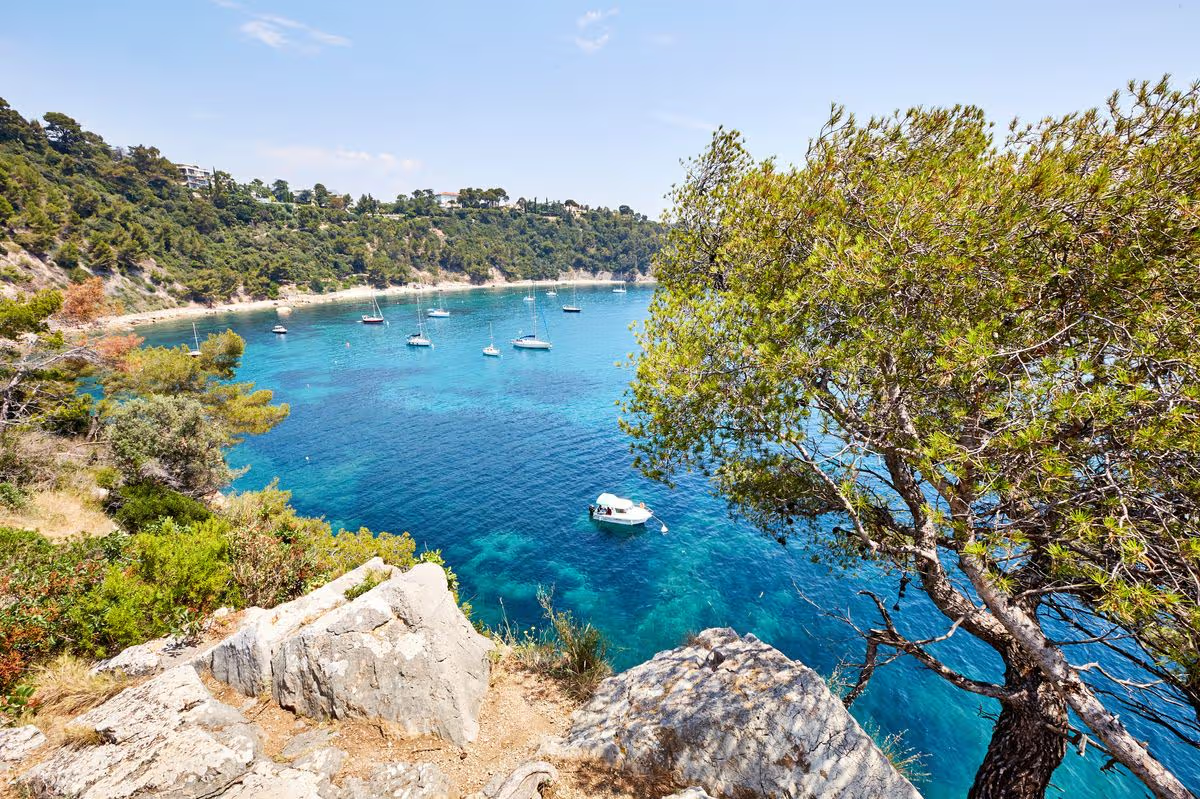
Holidaymakers could jet off to the sun-soaked city of Madrid, Spain, with its famed landmarks and beautiful parks, or to the coastal city of Toulon in France, home to one of the most spectacular harbours in Europe, for just £2. However, not everyone will be able to take advantage of the British Airways offer, as the £2 flights are Avios-only and available only to members of The British Airways Club.
Yet, for members, it’s a deal worth noting with flights departing from London City Airport to Madrid and Toulon. Plus, with the promise of blue skies, blistering sunshine and picturesque vistas at either of these popular destinations is more than appealing amid the gloomy British weather, especially when it could cost less than a cup of coffee.
Seats are now available to book, with prices starting from just £2 plus 21,500 Avios for Toulon, and £2 plus 28,000 Avios for Madrid. What’s more, 23kg of checked baggage is included, making it even more affordable.
Toulon is a new destination for the British Airways fleet arriving this summer, making it the ideal opportunity to explore the picturesque French city and discover its fascinating harbour. Meanwhile, Madrid has long been a route for the UK airline, yet it remains just as popular with its art hub, thriving food scene and gorgeous architecture.
British Airways launched Avios-Only flights in 2023 and has since operated 48 Avios-Only flights to 16 destinations across Europe, the Caribbean, Africa and the Middle East, including Cape Town, Barbados, Sharm El Sheikh, Málaga and Marrakesh. The return flight from Madrid to London will mark its 50th dedicated Avios-Only flight.
Colm Lacy, British Airways’ Chief Commercial Officer, said: “We’re excited to release these latest Avios-Only flights to two top leisure destinations for summer. These flights are always incredibly popular, and we’re delighted to give our loyal customers even more opportunities to enjoy the benefits of The British Airways Club.”
Adam Daniels, IAG Loyalty’s CEO, said: “While it’s not been too long since our last Avios-Only flight, we are excited to be starting the year by announcing another two flights on London City Airport’s hottest new routes to Toulon and Madrid. With all seats onboard only available to book with Avios, the initiative shows the continued power of loyalty and opens up greater redemption opportunities for customers during the peak summer months.”
British Airways confirmed that the flights for the Madrid Avios-Only flight are as follows:
22 May 2026, BA3272, Depart London City 09:50, Arrive Madrid 13:10
25 May 2026, BA3273, Depart Madrid 13:55, Arrive London City 15:15
Meanwhile, the Avios-Only flight to Toulon, which also offers the chance to explore St-Tropez, will take place on:
13 June 2026, BA8747, Depart London City 07:00, Arrive Toulon 10:00
20 June 2026, BA8748, Depart Toulon 10:45, Arrive London City 11:50
For more information or to book your seat, you can visit the British Airways website.
Do you have a travel story to share? Email webtravel@reachplc.com
TODAY is the day that Margot Robbie and Jacob Elordi’s Wuthering Heights is out in cinemas.
The adaptation of Emily Brontë‘s novel is set to wow movie fans – and viewers will be stunned by the beautiful backdrop which was filmed across the sprawling Yorkshire Dales.
Sign up for the Travel newsletter
Thank you!
Wuthering Heights starring Margot Robbie and Jacob Elordi is out in cinemas todayCredit: AlamyThe sweeping Yorkshire Moors were used as filming destinations in the new adaptationCredit: AP
It was reported that the two Hollywood stars were filming in the Yorkshire Dales National Park early in 2025.
The historic pub is 1,732 feet above sea level, and it dates back to the 17th century it has exposed beams, stone-flagged floor, and a cosy fire.
Dig into some hearty Yorkshire meals, or book a room from £119 per night.
Arkengarthdale is home to the highest pub in the country called the Tan Hill InnCredit: AlamySurrender Bridge a Grade II listed 19th-century stone bridge appears in the filmCredit: Alamy
Another backdrop from the film is Surrender Bridge – it’s a Grade II listed, 19th-century stone bridge just outside of Swaledale.
With 5.6 million Brits vaping, travellers are warned to check strict new overseas laws or risk fines, confiscation and legal trouble abroad
Avoid bringing this electrical device on holiday or risk huge fines and possible prosecution(Image: Getty Images)
British holidaymakers are being warned to double check vaping laws before booking trips abroad after a number of popular holiday destinations tightened restrictions. Online retailer HAYPP says they could risk fines or even legal trouble if local e-cigarette rules are ignored.
Vaping remains hugely popular in the UK with anti-smoking charity Action on Smoking and Health (ASH) reporting around 5.6 million adults currently use e-cigarettes — which amounts to roughly 11 per cent of the total adult population. ASH explained how vaping is particularly common among younger adults between the ages of 18 and 24.
Unsurprisingly, many travellers choose to pack their vapes when heading on holiday — but with international laws varying so widely, doing so could prove a costly mistake. HAYPP‘s Head of Legal & External Affairs, Markus Lindblad, says people must familiarise themselves with the rules as soon as possible to avoid expensive on-the-spot penalties or confiscation.
“Ignorance of your destination country’s laws could wreak havoc on your holiday plans,” he warned. But which countries are a no-go for vapers? The Mirror has a detailed breakdown of everything you need to know before jetting off.
Mexico
On January 16, 2026, Mexico introduced a nationwide ban on the importation, sale and distribution of e-cigarettes and vapes. Lindblad warns that custom officials in destinations like Cancun, Cabo San Lucas or Cozumel are strong enforcers of the ban, and bringing one with you could come with hefty fines of up to £360. “Brits are being warned to leave their vapes at home”, he said.
Vietnam
According to HAYPP, Vietnam is tightening its grip on vaping products in 2026 with increased enforcement of rules around sale, import and public use. Though Cambodia and Laos has already banned vapes entirely, the online retailer says visitors should expect stricter airport checks, and that they should consider leaving the device behind before heading to the airport.
Singapore
Singapore maintains some of the world’s strictest rules against vaping, HAYPP claims. Possession and use of e-cigarettes remain illegal with fines of up to 2,000 Singapore dollars (around £1,150), as well as possible prosecution.
Malaysia
Maldives has followed suit and also restricted vape imports this year, with custom officials now authorised to confiscate the products on arrival. Bans on possession and public use are expected to tighten, warns HAYPP, particularly in tourist hubs like Kuala Lampur and Penang.
Maldives
Last but not least, Lindblad explains how any vape-loving holidaymakers from the UK should probably cross the Maldives off their list. That’s because the country has outlawed vape imports with the devices confiscated upon arrival. If you arrive into the Maldives with your e-cigarette or similar electronic device, you may face fines or further legal action, even for personal use, particularly at Malé International Airport.
I HAD been shrunk down to the size of Woody, Jessie and Buzz in Andy’s room – suddenly I wasn’t visiting an experience, I was a part of it.
The new Mundo Pixar Experience – the biggest of it’s kind in the world – has landed in the UK for the very first time at Wembley Park in London, after success in Madrid, Barcelona and Brussels.
Sign up for the Travel newsletter
Thank you!
A new Pixar experience has opened in London, marking its first time in the UKCredit: Cyann FieldingInside, fans can explore 14 rooms with iconic Pixar charactersCredit: Mundo PixarThis includes Monsters Inc, Toy Story and UpCredit: Mundo Pixar
Spread across 14 rooms, visitors can step into their favourite Pixar stories and meet the characters of each film.
As a 25-year-old who still loves Pixar films, I felt like I could be a big kid again as I ventured into the Monsters Inc Factory and met Sully and Mike before opening the door to glimpse into the bedrooms to see where the ‘scarers’ go to work.
The experience features all the movies you would expect including Toy Story, Up, Cars and Inside Out.
However, there are still a few classics missing such as The Incredibles and Wall.E.
You can even step inside the diver’s goggles in Finding Nemo.
My only disappointment was to see that Anger in Inside Out was essentially a cardboard cutout and Bing Bong was nowhere to be seen.
All of the sets also have handy picture stickers on the floor too, to show you where the best photo moment is in the room.
There are lots of picture and video opportunities throughout the experience as wellCredit: Cyann FieldingAnd for adults they can have a walk down memory laneCredit: Mundo Pixar
And there is a crew member in each room to lend a hand in snapping the perfect shot.
A little bit of added fun for the kids and parents is to find Pixar’s iconic yellow and blue ball with a red star on it, in every room.
Trust me, it isn’t as easy as it seems…
The experience is open every day except Tuesday until June with sessions starting at 9am and 10am and running through until 7pm.
Each session approximately lasts 45 to 55 minutes, though if you can, I definitely would spend longer really exploring the sets.
And of course, taking lots of pictures and videos.
When you get to the end of the experience there is a large shop – which, be warned, you will want everything from.
More recent films such as Luca and Elemental feature as wellCredit: Cyann FieldingThe experience lasts around 45-55 minutesCredit: Cyann Fielding
Prices aren’t too bad either, with mugs costing £19.95 and t-shirts costing £29.95.
There are some really nice items as well such as the Adventure Book from Up and you can even own your own Pixar ball for £19.95.
Tickets are a little on the more expensive side considering the experience is mostly a picture and video opportunity, starting from around £20 per child and more for an adult.
Having said that though, it was heaps of fun and the more time you spend there, the more your imagination really immerses you in the sets.
Whilst obviously great for kids and families, as an adult I thoroughly enjoyed a walk down memory lane and allowing myself to be a child once again by running around Andy’s room and ‘swimming‘ with Nemo.
With half-term here and the rain not stopping, it is the perfect indoor escape to keep the kids (and big kids) entertained.
AS millions tune in to watch this year’s Winter Olympics in Milan, it is inspiring Brits to try out some of the sports for themselves.
Ski chalet specialist, Ski Beat, report a post-Games flurry with a spike in traffic during the global event.
Sign up for the Travel newsletter
Thank you!
Skiing holidays are seeing a boost thanks to the Winter OlympicsLaura Hazell shared some of her top tips
According to Ski Beat’s Laura Hazell: “100 years ago, the Chamonix Winter Olympics inspired Brits to try out skiing for the first time – in fact the origins of modern-day ski holidays can be traced back to those early days.
“The same effect is true today. Throughout the competition we see spikes in website traffic.
“There’s a real buzz, with many people who have never skied engaging in the sport, our phones are busier, and we this year we expect that what is already a good ski season will continue right into April.”
According to Inthesnow.com, the UK’s leading ski and snow sports website and magazine, spending in Europe’s winter sports destinations is up 14.3% year-on-year, with France, Italy and Austria among the strongest performers.
France remains the most popular destination for UK skiers, accounting for almost half of British ski trips.
Nearly seven in ten Brits say the Winter Olympics inspire them to try winter sports, and 45 per cent say their interest has increased over the past decade.
Around a third of UK adults booked a winter sports experience in the last year, with most choosing to travel abroad rather than stay in the UK.
The good news? There is no need to wait for next winter’s snow globe to settle as there’s still time to ski this season – and arguably the best weeks are just ahead.
Laura continued: “Spring skiing is the Alps’ best-kept secret. As the mercury softens, so do the prices, with late season deals on ski holidays making high-altitude getaways more attainable.
“The weather is kinder too: bluebird mornings, sunnier terraces, and longer daylight hours that stretch skiing well into the afternoon.
“With the half-term crowds gone, lifts hum more quietly and pistes feel wider, creating a relaxed rhythm that suits beginners finding their edges and families enjoying the snow together.
“Add in mountain restaurants serving lunch in shirtsleeves and you have a late season winter holiday that’s less about bracing for the cold and more about all about basking in the glow of it all.”
Skiing in February post the half term holidays means you can make the most of the tail end of the winter chill.
Wrap up well and go high altitude for the best snow where pistes and lifts are fully open.
April is still a great time for a last minute ski holiday
If you wan to go in March, days are lengthening, temperatures rising and layers and outerwear can be lighter.
Pistes will be busier over Easter, which is around March 28 , so don’t hang around if school holiday dates are important.
If not, plan in a week mid-month for optimum conditions and fewer crowds.
But skiing in April is just as fantastic. There is plenty of ski mileage to be had, aim high (above 2000m is ideal) and enjoy more daylight hours, long, lazy days, bluebird skiing, and lower ski holiday prices.
High factor sun cream and anti UV eye-protection are essential, pack a few t-shirts and lighter layers too, but be ready to layer up when the sun goes down.
Top tips for thrifty spring skiing:
For snow-sure spring skiing look for north facing slopes, and ski areas above 2000m
Beginners don’t need miles of skiing, well-groomed nursery slopes and blue runs will suffice, so save money and buy a local area lift pass.
Select accommodation that includes meals, dining out or shopping for self-catering can be expensive in the mountains.
Make sure the accommodation is close to the lifts, ski school, clomping around in ski boots, carrying skis, is an experience best limited.
Consider buying ski clothing from reseller sites like Vinted or Ebay.
There’s no need to buy skis or ski boots, hire in resort, most people do
Look out for late season offers, avoid the easter peak (28th March), and for the best prices all season consider a high altitude escape on 11th or 18th April.
Here are some of Ski Beat’s top last minute deals to sneak in one last ski holiday this year.
February 21: 7 nights La Plagne, £994pp (saving £304pp)
Includes a chalet host to prepare breakfast, afternoon tea and three course evening meals with wine, return Gatwick flights and transfers, based on two sharing a twin or double ensuite room at Ski Beat’s Chalet Sorbier.
February 28 : 7 nights skiing in French Alps, £1143pp (saving £136pp)
Includes return Gatwick flights, transfers and accommodation at high altitude Chalet Gentiane in Plan Peisey, with a chalet host to prepare breakfast, afternoon tea and three course evening meals with wine, based on two sharing a twin or double ensuite room.
March 21 : 7 nights in Three Valleys resort, £999pp (saving £98pp)
Incudes accommodation in Chalet Vallon Blanc in La Tania. Prices include a chalet host to prepare breakfast, afternoon tea and three course evening meals with wine, based on two sharing a twin or double ensuite room, return Gatwick flights and transfers.
Or fly on March 7 and March 14 for £1125pp, saving £100pp.
April 11: 7 nights in La Rosiere for £716pp (saving £307pp)
Ski Beat’s has 30 per cent off April 11 ski holiday departures.
Staying in Chalet Perdrix in high altitude La Rosiere on the French/Italian border, includes return Gatwick or Manchester flights, a chalet host to prepare breakfast, afternoon tea and three course evening meals with wine, based on two sharing a twin or double ensuite room.
However, be wary of booking any ski holidays that seem too good to be true for the price.
Laura warned: “With skiing it’s all about value, rather than price.
“Bargain ski holidays can result in an inferior lift infrastructure, a resort that’s in the valley and requires buses or lifts before the skiing even starts, or lower altitude skiing where the snow is less reliable, especially late season.”
Other top ski tips include:
Choose a high-altitude resort with reliable late-season cover
Look for resorts with north-facing pistes that retain the snow longer
Line up lessons in advance to build confidence from the first glide
Warm up before departure, with time in an indoor ski slope to acclimatise
Plan in a few visits to the gym, some power walks, or home exercise to get muscles in tone
Check out spring packages inclusive of flights, transfers, accommodation and meals.
Pack lighter layers and outerwear for sunnier slopes
Invest in UV-protective sunglasses and goggles to protect against sun and snow glare
Cover up with top-tier SPF defence to keep skin totally protected on bluebird days
Start early, linger late, make the most of firmer morning snow then ease into long lunches on sunny terraces once the slopes soften.
Book slopeside accommodation, a ski chalet close to ski schools, lifts and kindergartens is ideal, with a chalet host to point skiers in the right direction.
Weigh up the advantages of catered accommodation; save time, money and energy on shopping, and let someone else do the cooking, cleaning and catering.
Ski Beat’s Laura Hazell adds, “While the aspiration to fly like an Olympiad is still fresh in mind, make the medal-winning moments a cue, not just an inspiration.
“The mountains are still very much open for business right until the end of April, and there’s no better time to answer their call.”
Bargains can still be found – if you know where to look
A HUGE new holiday resort is set to open in the Cotswolds – and it will be the third of its kind in the UK.
It will have beautiful luxury cabins, a relaxing nature spa as well as indoor and outdoor swimming pools.
Sign up for the Travel newsletter
Thank you!
The new eco-friendly resort will have 51 cabins with up to three bedroomsCredit: CABÜThe new eco-friendly resort will have 51 cabins with up to three bedroomsCredit: CABÜ
Cabu, which designs eco-cabins, is set to open its third site in the Cotswolds after it secured a £24million loan to build the resort.
The site will have 51 self-catered cabins with either one, two or three bedrooms.
The new range of “ultra cool timber cabins” have been revealed in the renders to have wooden panels and green window detail.
On the map render, the 51 cabins surround the main building which will have additional amenities inside.
Guests will be able to use all of them, which include a nature spa, hot tubs, saunas and plunge bucket.
There will be an indoor swimmingpool too, which looks like a calming space surrounded by loungers and huge windows letting in plenty of natural light.
There will be an outdoor pool too as well as a shop, restaurant, two bars and a studio events space.
On its website Cabu said it “will offer their high quality short-term stays all year round. We are aiming to provide guests with 2, 3 or 4 night stays.”
It will also have “low adrenalin activities and provide an excellent base to discover all the Cotswolds have to offer.”
The resort will open in Langley on the site of a former Marconi radio site which is a short distance from popular villages like Bourton-on-the-Water, Stow-on-the-Wold and Burford.
Cabu already has two sites in operation – Cabu Sea in Kent and Cabu by the Lakes in County Cavan, Ireland.
Cabu by the Sea lies on a stretch of privately owned grassland next to the seafront between Romney Marsh and the English Channel.
The one in Kent is described as an intimate retreat with easy access to the coastline.
A variety of luxury accommodations are available, ranging from a Writers Studio cabin for couples to a three-bed Boat House perfect for families.
Inside the main building will be a swimming pool and spa areaCredit: CABÜ
The price for a cabin in Cabu by the Sea starts from £395 for two people (based on a two-night stay in March).
Meanwhile, Cabu by the Lakes is found deep within the woods of Killykeen Forest Park in Co. Cavan.
This unique hideaway has log cabins and lake houses – it also has a nature spa with a forest bathing area and a Japanese Bath.
The price for a cabin in Cabu by the Lakes starts from £544.18 for two people (based on a two-night stay in March).
Las Vegas is famed for its glamour and luxury, but there are remarkably affordable experiences and bucket-list encounters that don’t break the bank once you step into Sin City
09:44, 13 Feb 2026Updated 09:47, 13 Feb 2026
Vdara Hotel & Spa, and the second hotel is Resorts World
I lay down on the table, bashed my chosen intensity and music choice into a tablet, and two extendable metallic arms started to twitch. And then they swivelled and swooped down on me. Within minutes, my worries had melted away.
I was not involved in some strange AI torture chamber. I was, in fact, in Las Vegas. Putting a futuristic massage robot through its paces. Aescape Robotic Massage Experience at Qua Spa in Caesars Palace is the Strip’s first AI robotic massage ($44 for 15 minutes) and delivers impressively good back and shoulder massages.
Still, I watched beadily as my robot masseuse worked each touchpoint, not quite sure whether to fully trust the machine. Certainly, it was different from a typical massage and one I won’t forget in a hurry. But I wasn’t just in Sin City to be pummelled by an android in Caesars Palace. I was there to discover if it really was possible for the Entertainment Capital of the World to offer serious bang for your buck.
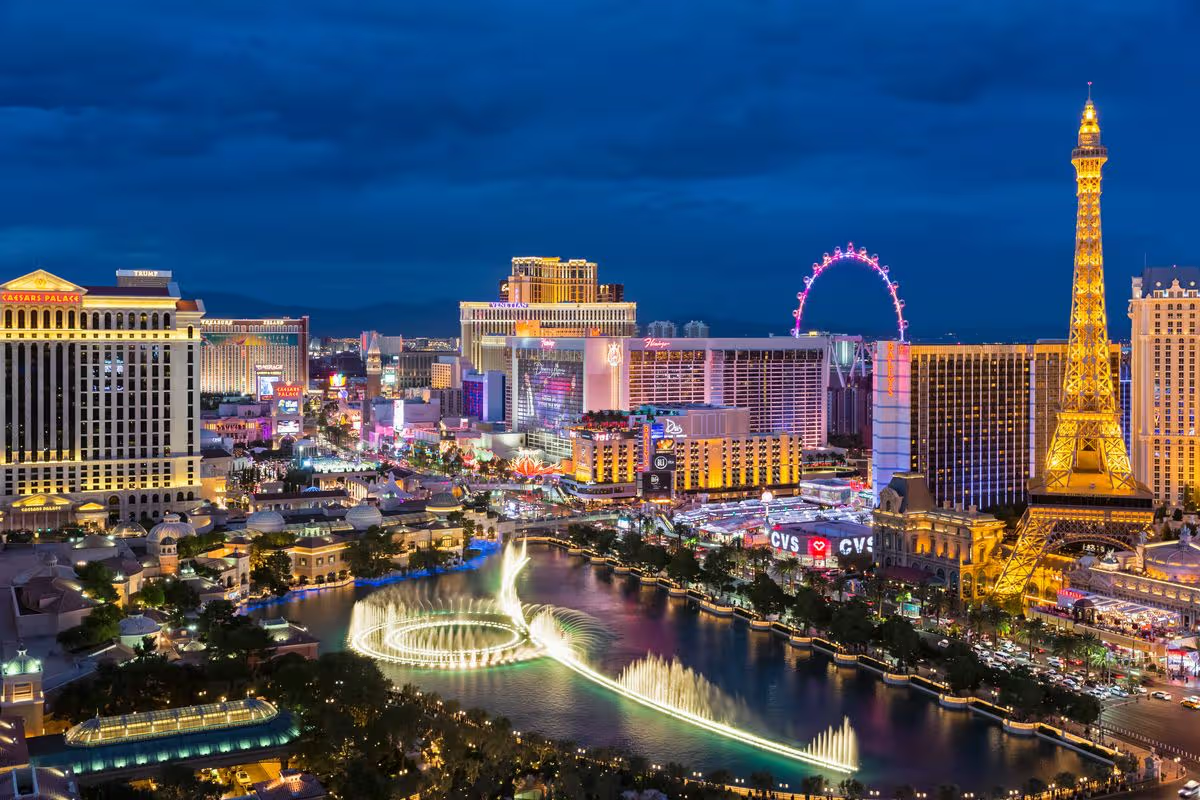
Las Vegas is notoriously expensive, with its iconic Strip serving as the backdrop, towering mega resorts lining the vibrant streets and the catalogue of luxury casinos that buzz with excitement. Not to mention all the extras of America’s playground, thanks to its around-the-clock nightlife, remarkable entertainment venues, famed attractions and celebrity restaurants.
Yet, among its dazzling scenes, there’s a lot more to Las Vegas than first meets the eye, with bucket-list encounters and remarkable experiences that don’t break the bank, and where you’d only ever appreciate in the Nevadan. My initial encounter with Las Vegas’ sheer magnitude came as I checked into the five-star Vdara Hotel & Spa, situated in the heart of the city and boasting 1,400 suites. My room ($131 per night + tax) was just as impressive as its towering scale, with a kitchenette, a generous living area, two TVs, and a stylish bathroom complete with a freestanding bath and a cosy cloud-like bed that helped keep jet lag at bay. Its panoramic windows, stretching across the width of the suite, were a highlight, allowing me to admire the iconic Strip, day or night, against its mountainous desert backdrop.
For two nights, I stayed at the luxurious Resorts World Las Vegas, comprising over 3,500 rooms across three of Hilton’s brands, Hilton, Crockfords, and Conrad. I checked into a sprawling room at the latter ($184 per night) with a sleek bathroom that had an enormous rainfall shower and carefully curated furnishings, including a king-sized bed, that felt like a home away from home. While it’s farther from the Strip, I was still able to marvel at the dazzling city skyline and enjoy a quieter night’s rest. It’s easy to spend time wandering the vibrant streets of the Vegas Strip, soaking up the lively ambience and themed establishments that transported me to Paris, New York, and Disneyland. But beyond the glitz, I explored the desert surrounding the city on a guided hiking tour through the Valley of Fire with Love Hikes ($129 per person).
I was instantly awestruck by the dramatic orange rock formations, miles of golden floor and towering valleys that made up this striking landscape. It felt as if I was walking through a Hollywood film set in the state park, a far cry from the casinos, but just a few hours’ drive away.
In Las Vegas, it’s not all casinos and Adele residencies. In the Arts District, you’ll find colourful graffiti adorning the streets, which are lined with antique shops, art galleries, coffee joints, and eateries, including the mouthwatering Good Pie, where I devoured a Detroit-style pepperoni pizza. For a reality-altering experience, head to Meow Wolf’s Omega Mart at Area15, a fun immersive gallery filled with quirky art installations, including a surreal supermarket. The store is stocked with unusual products, from butter-freshening spray and tattooed toy chickens to egg carton sliders. Open the right hidden fridge door and you’ll find yoursef led to otherworldly realms… Vegas is also brimming with history. At the Mob Museum (from $34.95pp), the rich stories of organised crime and law enforcement in the area are explored, while at The Neon Museum (from $25pp), you’ll have to squint to take in the splendour of old casino and business signs.
As expected, the nightlife was extraordinary. Music seeped from buzzing bars, including at Ole Red, where I listened to a live country band before admiring the Strip from their rooftop terrace.
On another night, I attended THE PARTY at Superfrico in The Cosmopolitan ($150), where I watched an intimate, immersive cabaret-style show featuring skilled circus performers from Spiegelworld and hosted by Laurie Hagen. It was a fun-packed evening like no other, where I was also treated to a three-course Italian-American meal and a welcome drink, all included in the price. It’s easy to find somewhere to grab an affordable cocktail, including during happy hour at House of Blues at Mandalay Bay, but Fremont Street in Downtown Las Vegas was by far my favourite spot. The pedestrian-only area blew me away as I gazed at the 1,500-foot LED ceiling screen, which displayed their renowned Viva Vision Light Show, and wandered around listening to free live music from three different stages.
It’s known as ‘Old Vegas’ for its high-energy party atmosphere and affordable drinks, which is loved by Brits and Aussies – and it’s easy to see why. Another highlight was taking a ride on the iconic High Roller at The LINQ during their happy half hour ($60), which offered breathtaking views across Vegas and its never-ending array of dazzling lights, along with unlimited drinks. But its nightlife doesn’t just revolve around partying into the early hours. One evening, I took to the sky during a Maverick Helicopter ride ($139pp), gliding over the glistening Vegas Strip with incredible views of the notable Sphere, Caesars Palace and The STRAT. It was unbelievable and definitely a bucket-list experience.
Another moment that left me speechless was witnessing the world-renowned Fountains of Bellagio. I was mesmerised by the free fountain show, set to music, that soared up to 460 feet and across the 8.5-acre lake in front of the Bellagio resort.
Inside the five-star Bellagio, which sits centre stage along the Strip, is the famous Conservatory & Botanical Gardens. This is a free attraction open to everyone, beautifully designed and decorated with a different theme five times a year.
I visited during its Lunar New Year, with hundreds of fresh flowers, trickling water features, various sculptures suspended in the air and colourful lanterns. The Bellagio resort is also home to one of the world’s biggest chocolate fountains. The food scene in Vegas was nothing short of perfection, as I was treated to an array of flavours from Japan and Mexico. One of the highlights was eating at celebrity chef Roy Choi’s Best Friend bar and restaurant. It was a shop-style bar with a main restaurant where I sampled sharing-style dishes of tacos, BBQ, shrimp, and Korean wings.
I also dined with locals at Tacos El Gordo, where I had pork, beef, and chicken folded tortillas (from $4 each) before devouring a mouthwatering tasting menu of Italian dishes at LAGO by Julian Serrano. Elsewhere, I sampled a selection of innovative Japanese dishes at Kusa Nori, from sushi, seafood, sashimi, nigiri and robata meats – it was nothing short of showstopping, with smoking plates and melting slices of tuna. On the last night, I sat down for a sensational meal at High Steaks, with oysters, crab, a melt-in-the-mouth filet mignon, and their signature Tomahawk.
After a thrilling five days and experiences I’ll never forget, I can only describe Las Vegas as wild! It blew me away with its atmosphere that captivates you the moment you touch down in the Nevada city.
I found that you can absolutely make it affordable, pop $20 in the slot machines without a win, and still have the most unbelievable time in Sin City. Take advantage of the happy hours, wander around the city of lights, watch a show with dinner, and explore the desert – there’s no need to miss out on experiences or its vibrant nightlife this city has to offer. The party really is wherever you want it to go.
Book it
Resorts World hotels has three hotels in Las Vegas:
A standard Studio King room in Vrada costs $131/night + tax. Return flights from London Heathrow to Las Vegas cost from £423 with Virgin Atlantic. Visit the Las Vegas website for more information.
Do you have a travel story to share? Email webtravel@reachplc.com
We had our wedding reception at the Grand Hotel Royal in Sorrento, south of Naples. We danced to two guitarists playing Justin Bieber’s Despacito with our 50 guests singing and dancing along with us. We watched as the sun began to melt into the Mediterranean Sea from this time-capsule hotel balancing on the edge of a cliff. I floated out of my body and felt a rush of euphoria – perhaps it was the limoncello spritzers. We’ve returned many times and I get the same rush – the gelato, the pizza, the people, it feels as if I’m in a Richard Curtis film. Charlotte Sahami
A cosy whisky bar amid the majesty of Skye
The cliffs and lighthouse at Neist Point. Photograph: Daniel Lange/Alamy
Skye’s dramatic landscape and stunning viewpoints make the perfect romantic getaway. It’s steeped in history and captivating walks, such as the otherworldly Fairy Pools and the isolated Neist Point. We stayed at the Cuillin Hills Hotel where there’s a cosy drawing room with a fireplace and a great whisky bar. The rooms are comfortable, stylish and each one has a super-king-sized bed. However, the highlight is the Michelin-recommended restaurant which offers exquisite food with expansive views out over Loch Portree and the pretty harbour. Nic
Profile
Readers’ tips: send a tip for a chance to win a £200 voucher for a Coolstays break
Show
Guardian Travel readers’ tips
Every week we ask our readers for recommendations from their travels. A selection of tips will be featured online and may appear in print. To enter the latest competition visit the readers’ tips homepage
–
The silence of Slovenia’s Lake Bled
The island in the middle of Lake Bled. Photograph: Bruce Alexander/Getty Images
My girlfriend rowed us across the glassy water of Lake Bled in a wooden pletna, the only sound the creak of oars and the occasional splash of a swan settling nearby. The place is famously picturesque, but the island in the middle of the lake itself felt like a secret; quieter, stiller. It felt like ours for the evening. We climbed up the 99 steps to the Church of the Assumption, then sat on the worn stone as the sun dropped behind the Julian Alps, turning the lake amber and rose. Neither of us spoke. We didn’t need to. Tom Cowie
A second honeymoon in San Sebastían
A view from Hotel Monte Igueldo. Photograph: James
San Sebastián always does it whatever your romantic life stage! Amazing food (of course); two iconic, beautiful, sweeping beaches; views to die for; hotels to fit all budgets. My partner and I went first in 2001, pre-kids and marriage. We enjoyed the cheap wine and clubbing till 4am. We went back in 2013 – a second honeymoon – Hotel Monte Igueldo on the cliff top (reached by funicular) still has the best view of any hotel we’ve ever been to. We went back in 2023, with our late-teens kids renting an apartment – they did their own thing (loved it), and we recreated those bar crawls and walks on the beach – wonderful. James
Chilling on the Seine in Paris
The Off Paris Seine hotel and bar. Photograph: Hemis/Alamy
The best place for a romantic weekend? Off Paris Seine is a floating hotel and bar, permanently docked on the Seine River near the Gare d’Austerlitz, with an infinity swimming pool. It does brilliant breakfasts that are worth every euro. Walk it off by heading out to stroll along the quays to Île Saint-Louis. Hopefully, you’ll work up an appetite in time for wonderful Bouillon de l’île, a vegetarian restaurant only open to 3pm. So delicious. Carry on strolling Le Marais and then chill with the Monet water lilies at Musée de l’Orangerie. The city centre is a lot more pedestrian and cycle-friendly these days. Paris has been transformed. Sarah Ackroyd
Fairytale gardens near Stuttgart
The Ludwigsburg Palace Gardens. Photograph: Alamy
The Ludwigsburg Palace Gardens close to Stuttgart has an area called the Fairytale Garden where fairytales have been recreated in beautiful surroundings. You can ask Rapunzel to let down her hair and see Hansel and Gretel’s house. This may sound childish, but it is actually a very nice outing, including for couples who can be childish together (and are perhaps inspired about future sons and daughters!). Asa
A roof terrace sunset in Venice
‘The clouds finally parted and there was a glorious sunset.’ Photograph: Aletheia97/Getty Images
Two bedraggled tourists; after hours spent tramping the streets of Venice in the rain, we had one mission remaining. Arriving at the Danieli Hotel in soaked kagouls but sporting our most charming smiles, we pleaded with the concierge to be allowed up to the hotel’s renowned roof terrace. Our reward? As the clouds finally parted, a glorious sunset and unrivalled panoramic views over tiny gondolas in San Marco basin, the Grand Canal, and the Venetian lagoon beyond. With a couple of gins, we celebrated 30 years of love, life, and the thrill of romance. Kate Harris
The love language of Seville
The Real Alcázar. Photograph: Alfredo Matus/Alamy
The gardens of the Real Alcázar in Seville are exquisite with their orange tree-lined avenues and pristinely kept paths – perfect for an afternoon walking hand-in-hand in the Seville sunshine. It’s easy to find a quiet corner of the enormous grounds to sit and contemplate life together or while away an afternoon at the easygoing cafe enjoying the warm air and each other’s company. The palace is also a maze of fabulous courtyards and if your love language involves visiting scenes from Game of Thrones together, then this also ticks the boxes (the Real Alcázar was the setting for the Martell family’s gardens and palace in Dorne). Layla Astley