Explore new cultures, find the best travel deals, and make informed decisions with our trusted travel news. Let your wanderlust thrive as you stay connected with the ever-changing world of travel.
Most UK visitors will need a key document to enter the UK, but this will depend on your nationality and reasons for travel
05:00, 15 Feb 2026Updated 09:37, 15 Feb 2026
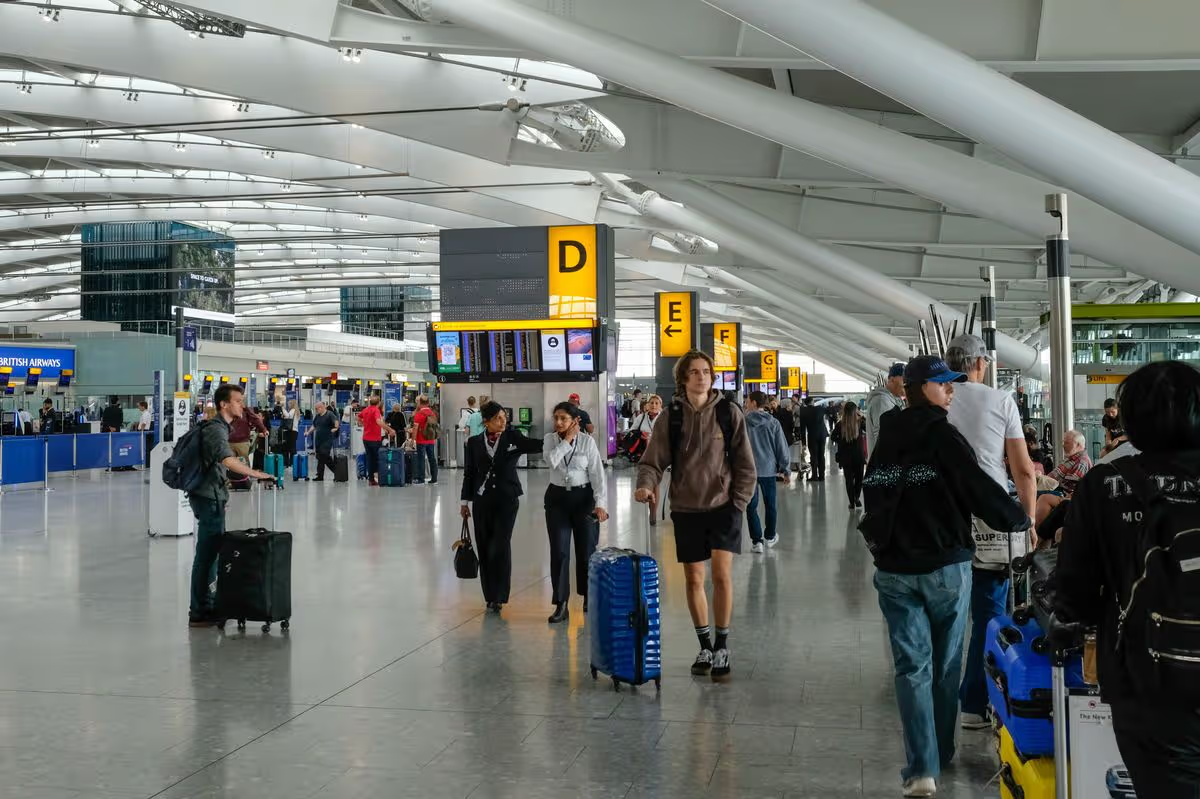
London Heathrow Airport issued a reminder about the upcoming change (stock image)(Image: Alexsl/Getty Images)
Travellers regularly encounter changes in regulations when navigating international borders. Now London Heathrow Airport has issued a reminder regarding new rules coming into force in days
On X, formerly Twitter, the major airport said this week: “Starting 25 February, whether your final destination is the UK or you are connecting via Heathrow, eligible visitors will need an ETA (Electronic Travel Authorisation). Find out more on http://GOV.UK.”
While most UK visitors will need an ETA or visa to enter the UK, this will depend on your nationality and reason for travel. For instance, an ETA is generally required if you’re coming from Europe, the USA, Australia, Canada and certain other countries.
Content cannot be displayed without consent
Each person travelling is required to have an ETA, including babies and children. So, for a family of four, you’ll likely need to pay £64 in total, while a family of six will typically pay £96. Visitors can apply for an ETA on behalf of other people.
Anyone who has a British or Irish passport, or has permission to work, live or study in the UK, will not need an ETA. According to official Government advice, other exemptions include:
It’s important to remember that having an ETA does not guarantee entry to the UK. Those with a criminal record or who have previously been denied entry should consider applying for a Standard Visitor visa instead.
Beyond this, the UK Government highlights exactly what can and can’t be done with an ETA. For instance, the ETA allows:
Meanwhile, these five things are not permitted with an ETA:
Staying in the UK for longer than six months
Doing paid or unpaid work for a UK company or as a self-employed person, unless you’re doing a permitted paid engagement or event or work on the Creative Worker visa concession
Claiming public funds (benefits)
Living in the UK through frequent or successive visits
Marrying or registering a civil partnership, or giving notice of marriage or civil partnership – a Marriage Visitor visa is needed
Visitors can apply for the £16 ETA online or via the UK ETA app. To do so, they must have a passport, an email address, and a payment method, including Apple Pay and Google Pay. The payment is non-refundable once an application has been made.
Tbut there are still some places where you can get a drink for less than £5.
Here’s where to find the cheapest pint(Image: Getty)
The cost of a pint continues to creep upwards. Tracking down a boozer flogging pints for under a fiver has become nearly impossible, yet certain spots still won’t leave your wallet crying.
A report from takepayments has uncovered which UK cities offer the most wallet-friendly drinking experience. The research examined 34 major UK cities against 16 affordability measures, encompassing housing, transport, wages, and discretionary spending (such as the cost of a pint).
Each location received a score out of 10 for overall affordability, identifying where Brits can enjoy the cheapest tipple.
Derby emerged as the nation’s most affordable city for a beverage, with pints priced at a mere £3.60. That’s a bargain when you fancy unwinding after a day discovering what the city has to offer – and there’s loads to see.
Situated in the East Midlands within Derbyshire and hugging the River Derwent, Derby serves as an ideal starting point for venturing into the picturesque British countryside, boasting numerous walking routes and cycling trails, reports the Express.
Among the finest is the Vicar Wood & Mackworth loop accessible from Markeaton Park. This 6.1km ramble takes roughly 90 minutes, beginning at the Mundy Playcentre car park.
Winding through farmland and parks, it’s ideal for families. There’s also Calke Abbey – a dilapidated stately home boasting sprawling gardens and a remarkable natural history collection.
Originally an Augustinian Priory, the property was acquired by Sir Henry Harpur in 1622. The estate remained in the family for generations, and from 1924 onwards, Calke was left largely untouched, though it underwent gradual modernisation.
Today, the National Trust has preserved the house much as it was, offering a fascinating glimpse into life from a bygone era.
After exploring the residence and grounds, visitors can stop by the on-site cafe and gift shop – ideal for picking up mementos.
Fiona Whitty soaked in the beauty of one of the UK’s most breathtaking spots and found a novel way to get away from the hubbub for a little while
This article contains affiliate links, we will receive a commission on any sales we generate from it. Learn more
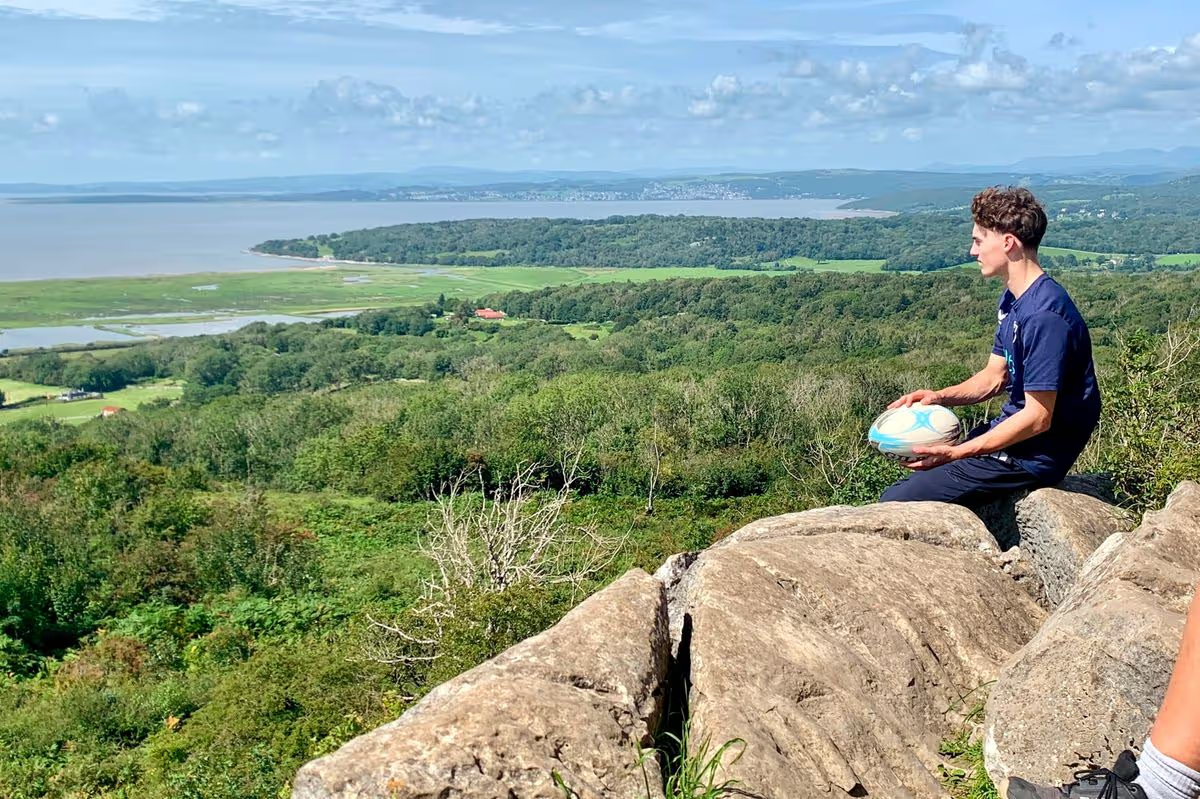
From Warton Crag you can look out over Morecambe Bay
With a speed limit on the lake of 10mph this was never going to be a fast and furious boat ride.
But our slow and steady jaunt across Windermere was the perfect escape from the frenetic Lake District crowds back on the shoreline. Sauntering along at just two miles an hour in our dainty self-drive electric motorboat, fish leaping from the water next to us and dragonflies buzzing overhead suited us down to the ground.
Being electric, the boat was quiet and environmentally friendly. And thanks to the 10mph speed limit we didn’t have to worry about dodging water skiers and jet bikes – just the large pleasure cruises which bizarrely seemed to approach out of nowhere.
Our most stressful decision was whether to roll back to soft top or wait until the grey clouds above had dispersed. We chose to throw caution to the wind and throw it back regardless.
Milo Boyd
I didn’t regret it one bit. The best way to avoid the tourist throng mooching around Windermere is definitely to get out on the water instead. Since lockdown, the iconic Lake District town has been struggling with visitor numbers. According to Visit Britain, the Lake Windermere cruises that leave from Bowness were the eighth most popular paid tourist attraction in England last year. In 2022, they attracted more visitors than Stonehenge, Windsor Castle, and St Paul’s Cathedral.
One of the best ways to slip the crowds, I discovered, is to jump behind the wheel and motor off yourself.
We’d picked up the boat from Windermere Lake Cruises’ Bowness Dock hire point and been advised that in our hour slot, we’d be able to motor around a mile up the water and back. The route took us past Windermere’s largest island Belle Isle, acres of woodland filled with oak, sycamore, beech and birch, grandiose fells with tops hidden in the clouds and beauty spots like Queen Adelaide’s Hill, famed for its views.
As backdrops go, it was as idyllic as they come. (£46 for two adults, each extra adult £8). Afterwards, we parked up in Windermere village and wandered through Elleray Wood – one of the forests we’d spotted from the boat – and up to Orrest Head, a 239 metre-high hill with a delightful outlook rippling out over the lake and the fells beyond.
Ardent walker and author Alfred Wainwright hiked up to this very spot as a young man and the views he took in sparked his obsession with the Lake District, leading to his famous Pictorial Guides to the Lakeland Fells series. It was easy to see why.
With a hefty fill of peace, quiet and serenity under our belts we later headed to the adventure mecca of Zip World Windermere further up the eastern shore of the lake.
After doing a pretty good job of introducing high-octane fun to Snowdonia Zip World have since expanded into other UK venues too, like this one. But the remit remains the same – to thrill, excite and terrify. There are several activities at The Windermere site but my partner Tim and I thoughtfully volunteered our son Freddie, 16, and family friend Rory to take part in the most hardcore – the full trek treetop adventure course.
The two-to-three-hour circuit involved a series of obstacles designed to challenge – and seemingly scare the pants off you.
Freddie and Rory navigated see-saw planks, tightrope-style shimmies, zip lines and wobbly bridges all at up to an eye-watering 15 metres off the ground.
The aerial skateboards, where they had to balance on a moving plank of wood and watch their feet skid a lot faster than the rest of their body (while being very high up of course), was certainly one of the most entertaining bits for us observers to see.
It was great fun – both for the doers and watchers. (from £39pp).
We were staying about 40 minutes from Windermere by car at another beautiful spot – Landal Twin Lakes, nestled discreetly in woods in Tewitfield near Carnforth, just over the Cumbria border in Lancashire.
One of Landal’s newest resorts, it was small, laid-back and smartly kept with a series of beautifully appointed lodges set around – you guessed it – a pair of twinkling lagoons.
Ours had three bedrooms, with a huge master one up on a cool mezzanine level. Two bedrooms had en-suites and there was a further family bathroom to boot. We certainly never needed to queue for the loo.
But it was the enormous double-height, open-plan living area that really stood out, with floor-to- ceiling windows and patio doors at the lake-end letting the outside in and providing us with a stunning vista.
The wine cooler and dishwasher in the smart fitted kitchen added to the touch of luxury. Decking at the front also allowed us to enjoy fresh air and sunshine by the calming water while a hot tub, carefully concealed from neighbours by a high hedge, gave us a warm respite during cooler moments.
I could imagine snuggling up in the bubbles during a winter stay, snowflakes fluttering overhead and a romantic smattering of white icing crowning the lake.
The fact there were no other facilities on site – no spa, restaurant, entertainment or communal areas – gave Landal Twin Lakes even more of a peaceful air.
All in all, the accommodation was top-notch – and the setting bliss. We felt a world away from all life’s hustle and bustle.
When we could drag ourselves out of the hot tub for long enough the wider area offered plenty of walks, pretty villages and wonderful views over hills and coast.
A hike up Warton Crag rewarded us with the opportunity to survey the vast Morecambe Bay, with its wide sweep of sandflats and stretches of salt marsh.
Keen to explore the landscape more, we later motored over to Arnside, a quaint seaside resort at the River Kent estuary. To take advantage of the sunshine, we bypassed inviting pubs and cafes and instead sat on the pier to tuck into fish and chips – while dodging hungry seagulls.
Then afterwards, we headed to the quiet village of Silverdale, where we ambled down the beach, clambering over rocks and skimming stones with the Lake District fells standing majestically in the background.
Away from the coast and just down the road from Landal Twin Lakes lies Greenlands Farm Village, which offered family fun from archery and quad biking to a very well-thought-out indoor crazy golf course.
The on-site shop sold lots of locally produced goodies like craft ale, cakes and spirits – plus fresh milk from a nearby farm that you pumped out yourself from a churn.
The Longlands Inn across the road was a comfy and friendly place for a much-needed breather and a very tasty pale ale called Fell Walker from the Bowness Bay Brewery. It was nearly as relaxing as a slow and steady jaunt on Windermere.
GET THERE
Landal Twin Lakes is just off junction 35 of the M6. You’ll need a car to get around.
BOOK IT
A three-night stay in a three-bedroom lodge at Landal Twin Lakes for up to six people costs from £719. See landal.co.uk
This small but mighty market town was put back on the map after it reopened its huge food market, and is now a bustling community attracting thousands of visitors
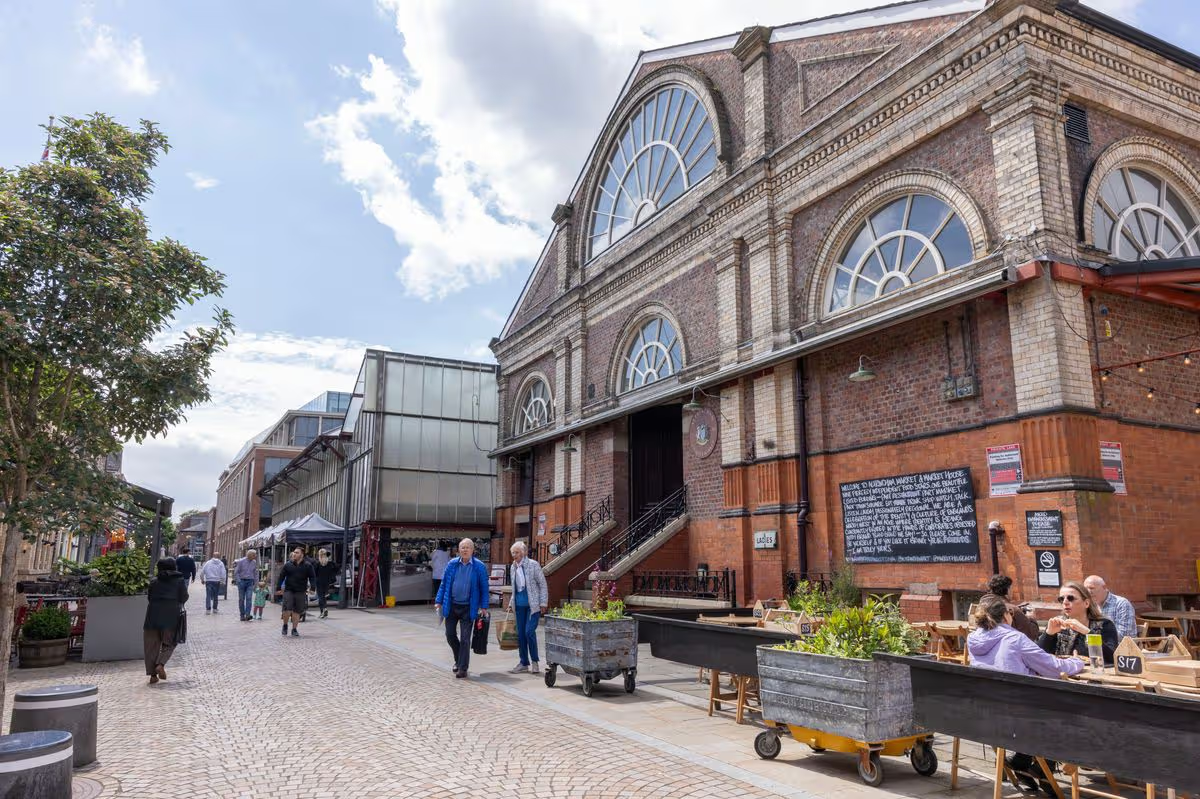
This market town has a thriving community and a fantastic food scene (Image: Manchester Evening News)
A small market town underwent a major transformation and is now a thriving hub for food, shopping and picture-postcard vistas.
The market town of Altrincham, just 30 minutes from Manchester, offers a serene escape from the bustling city. In a vibrant scene, Altrincham is brimming with independent shops, a booming food scene and family-friendly attractions, among its strong community feel and picturesque landscapes.
However, Altrincham wasn’t always a thriving hub that attracted visitors near and far. Just over a decade ago, it was a much quieter town, known simply as a rural area outside Manchester, with closed-down shops and a high street that lacked appeal to visitors.
But after the town reopened Altrincham Market in 2014 with a contemporary, trendy twist, it revamped the area. The Altrincham Market & Market House became “the catalyst for change” in the area and is said to have revived “the modern market town” by offering a huge culinary scene from independent eateries.
Altrincham has since welcomed thousands of visitors to its covered market, located in a stunning Grade II-listed building with steel beams and arched windows. Nestled in the heart of the town, the market has a spacious seating area where visitors can sample the delights from six kitchens and two bars while dining among friends.
Described as an “Independent foodie heaven”, there’s wood-fired pizza from Honest Crust, Tender Cow’s flat iron steak and chips, or delicious filling pies from Great North Pie Co. There’s also a selection of craft beers to enjoy at Jack in the Box, as well as beverages at Reserve Wines and Market House Coffee.
The food market is open Tuesday to Saturday, 9am to 10pm, and Sunday, 9am to 6pm. The market also offers a shopping area, with traders selling vintage fashion, homeware, artisan goods and crafts, which is open Friday 8am to 3pm, Saturday 8am to 4pm, and Sunday 10am to 4pm.
Offering an exceptional day out, one visitor shared on TripAdvisor: “Sitting down in the old market halls in Altrincham is an experience you don’t want to miss. Around the tables are several restaurants where you can order various types of food/drinks/desserts. Casual atmosphere, beautiful location, great food.”
“Absolutely fabulous. Such a choice of food, wine and the atmosphere is wonderful. Loved it. Definitely worth a visit. We will be back very soon,” a second shared. As a popular hotspot, one added: “Really like it here, loads of choice to eat, but sadly not many market stalls now. Mainly focused on food. Seating can be tough at peak times, but if you walk around the full site, there’s usually something available. There’s an app to order food, but it’s a bit rubbish, so I just go to the stall and order there.”
Among Altrincham’s landscapes are green spaces and parks, along with paths along the picturesque River Bollin. Just a short drive from the town centre, there’s also the National Trust Dunham Massey Hall & Gardens, set within sprawling grounds with a deer park and country manor that was temporarily used as the Stamford Military Hospital during World War I.
Elsewhere in Altrincham, there is a catalogue of high-street and independent shops, along with a number of eateries, from the Italian Damo’s, Papa Dutch for pancakes, tapas dishes from Porta and Nahm Prik for some delicious Thai. Plus, there are bars to catch up with friends, including Costello’s Bar and Cheshire Tap, with Kennedy’s Irish Bar proving popular for a night out.
For something a little cosier during a day out and to grab a hot drink, there’s Gran T’s Coffee House, Two Brothers Coffee, and Rise and Grind Cafe. Visitors certainly won’t go hungry during a trip to the charming town.
Altrincham is also home to a sprawling ice skating rink, Planet Ice, for a fun-packed day out, with public sessions available, and to the ice hockey team, Manchester Storm. The Altrincham Little Theatre and the Altrincham Garrick Theatre present stage productions, while Inch Arts offers workshops and various events, so there’s plenty to keep everyone entertained.
Do you have a travel story to share? Email webtravel@reachplc.com
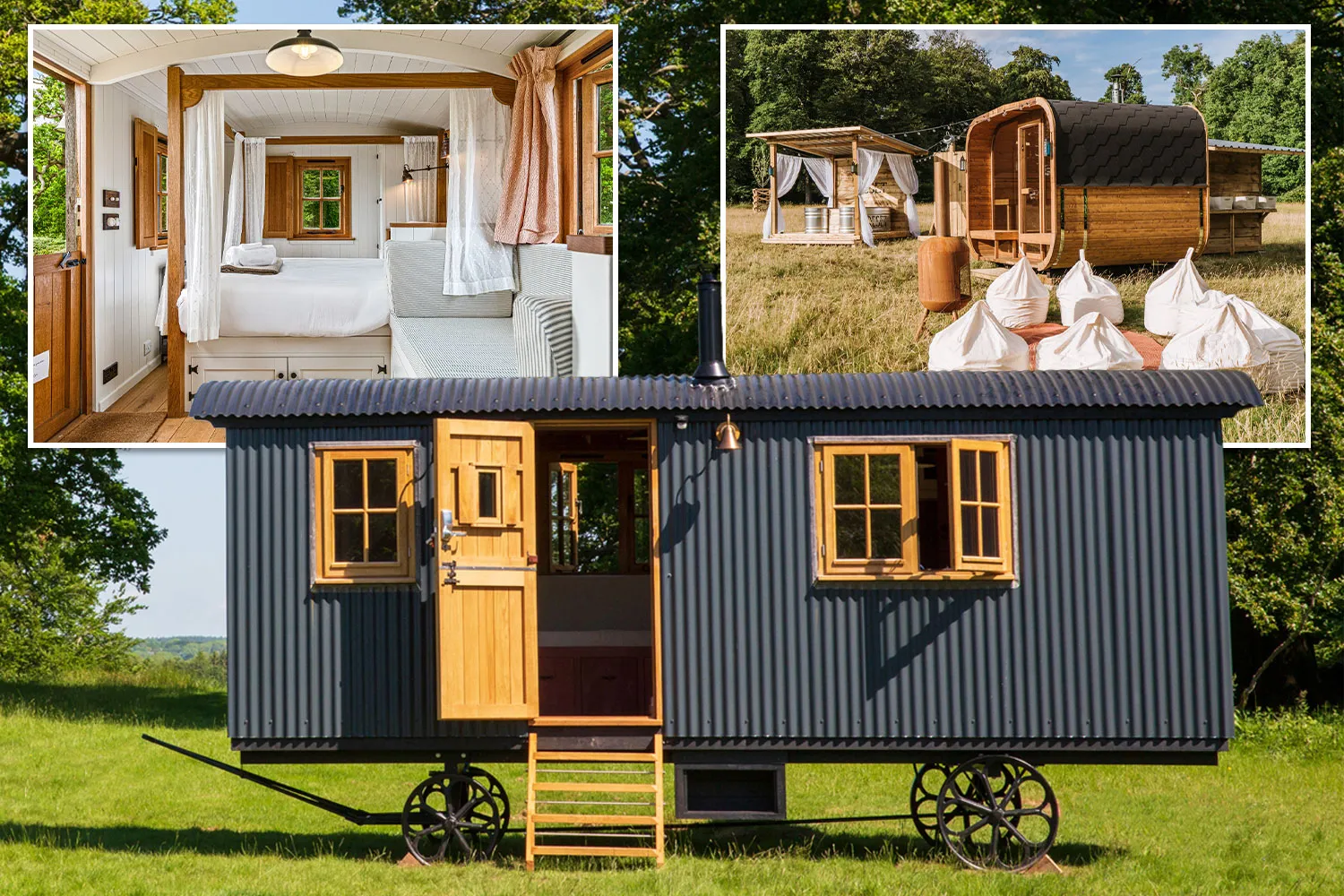
If sleeping in a hut doesn’t sound very luxe, how about one with a Dyson hairdryer, Le Creuset crockery and a dishwasher?
Nestled on the verdant slopes of Stonor Park Estate, Quercus is a whimsical en-suite hideaway – one of two on the Drovers’ Hill site – and is both cosy and elevated.
Sign up for the Travel newsletter
Thank you!
Quercus is a whimsical en-suite hideawayCredit: Mark Lord PhotographyInside is a log burner and a four-poster bedCredit: SuppliedThe Scandi-inspired Reset Wild Spa is just a short stroll away.Credit: Supplied
With shuttered windows, a log burner and four-poster bed, it’s perfect for the ultimate reset.
Wake up to misty views of elegant Stonor House and roaming herds of deer, before firing up the barbecue for an alfresco brekky.
Take the relaxation up a notch by booking the miniature, Scandi-inspired Reset Wild Spa, just a short stroll away.
Dashing between its scenic outdoor sauna and cold-plunge tubs takes willpower, but the endorphin rush is so worth it.
Exploring is thirsty work, so head to nearby Oaken Grove Vineyard, for a vine-growing masterclass.
You’ll learn everything from planting to harvesting grapes with super- knowledgeable owner, Phil, and there’s plenty of wine to wash it all down with, including a citrusy sparkling pinot noir rosé.
If gin’s more your thing, book a tour and tasting at Henley Distillery – another family affair – to sip on locally made classic, spiced, pink and fruit versions, while watching the stills gurgle and boil.
Picturesque Henley-on-Thames is just down the road – be sure to rummage in Duke Street’s Tudor House Antiques, an Aladdin’s cave stacked ceiling-high with quirky figurines, vases and road signs.
REFUEL
Beat the afternoon slump with velvety Milo & Malteser gelato, £4.45 a scoop, at Gelato Henley (Gelatohenley.co.uk), or tuck into a sticky, fluffy lardy cake, £4.95, at Warings Bakery (Waringsbakery.co.uk).
For the perfect lunch pitstop, head to The Cheese Shed at Nettlebed Creamery, 10 minutes’ drive from your hut.
Tuck into pie and gravy at The Bull and ButcherCredit: Supplied by Mia Lyndon
Order the legendary toastie with organic cheeses and butter made on-site, £6.95 – it has the perfect balance of ooze and crunch (Nettlebed creamery.com).
Nearby Turville, where The Vicar Of Dibley was filmed, is postcard-pretty with chocolate-box cottages and cosy village pub The Bull & Butcher.
Feast on crumbly shortcrust Welsh lamb and mint pie with creamy mash, £19.80, beside the crackling fire.
It pairs perfectly with a pint of local sweet but hoppy Brakspear Gravity ale, £4.90 (Thebullandbutcher.com).
WHEN people ask me about city breaks, the question they ask has changed over the years.
It used to be about nightlife, food scenes or ticking off landmarks.
Holiday expert Rob Brooks has plenty of experience travelling abroad with kidsCredit: Rob Brooks
Now, more often than not, it’s parents asking a much more practical version of the same thing. Where is a good place to go with kids?
I’m Rob. I work in travel, I look at holiday pricing and trends every day, and I’ve stayed in more hotels than I can count.
I’m also 32, with a two-year-old and an eight-month-old. That combination has completely reshaped how I think about city breaks.
For me, the right family city break is about timing as much as place.
Sensible weather. Walkable centres. Enough going on without it feeling overwhelming. Somewhere forgiving if the day doesn’t go to plan.
This is my month-by-month guide to where I’d go on a city break with kids, based on value, weather, popularity and what’s actually on.
They’re all places I’d genuinely feel comfortable taking my own family.
January – Budapest, Hungary
January is a month where calm matters. After Christmas, families tend to want somewhere affordable, predictable and easy to manage, and Budapest fits that bill perfectly.
It is cold, usually around 3 to 5C, but that brings real advantages.
The city is quiet, hotel prices drop significantly, and the city moves at a slower pace. That makes it far less stressful with buggies and tired legs.
Budapest is compact, flat and well-connected by trams, which makes getting around simple.
Indoor attractions like cafés and historic bathhouses give you plenty of warm places to dip into throughout the day.
The famous Szechenyi Baths in Budapest, HungaryCredit: AlamyVenice Carnival takes place in February, where the streets are filled with colourful masksCredit: AlamyWarm up in Budapest by dipping into family-friendly public bathhouses or indoor attractionsCredit: Getty Images
February – Venice, Italy
February works for families because it offers spectacle without the chaos you get later in the year.
Venice Carnival brings colour, parades and street performers, particularly during the daytime when it feels surprisingly family-friendly.
Children get the magic of masks and costumes, while parents avoid the summer (and summer prices).
Temperatures hover around 7 to 9C, which keeps days comfortable for walking.
Vaporetto boats also turn everyday transport into part of the experience, which is always a win with younger travellers.
March is one of the most reliable months for a family city break, and Amsterdam is one of the easiest cities to do with children.
The weather sits around 10 to 12C, the city starts to feel brighter, and peak tourism is still a few weeks away.
It is flat, organised and designed for everyday life, which makes navigating it with kids feel intuitive rather than stressful.
March is also when parks, canal walks and museums like NEMO Science Museum really come into their own, giving you options that work whether the day is high energy or low key.
Visiting Amsterdam in March means mild weather and brighter days, plus it’s only an hour awayCredit: Getty ImagesAthens sits between a comfortable 18 – 22°C in April, perfect for strolling the city’s streetsCredit: Getty ImagesExplore Stockholm by bike as a family, and stop off at attractions like Djurgården parkCredit: Getty Images
May – Istanbul, Turkey
May works brilliantly for families because Istanbul becomes warm and lively without tipping into intense heat.
Temperatures sit around 22C to 25C, which is comfortable for walking, ferry rides and outdoor meals.
The city naturally breaks days into short, varied experiences, which is ideal with children. A boat ride, a park stop, some street food, then a rest.
Public transport is efficient, parks like Gülhane provide breathing space, and the sheer variety of sights keeps everyone engaged without needing a rigid plan.
I’ve found May breaks from around £130pp for a family of four, making it one of the best-value big cities in Europe at that time of year.
June – Stockholm, Sweden
June is when Stockholm really makes sense for families.
Long daylight hours, mild temperatures around 18 to 22C, and a strong outdoor culture mean days feel relaxed rather than rushed.
Parks, islands and waterfront walks are everywhere, and ferries turn getting around into part of the fun.
The city feels calm, clean and safe, with lots of space to pause when needed. Museums are interactive, and many attractions are designed with families in mind.
I’ve found June breaks from around £147pp for a family of four, which is good value considering how expensive Stockholm can be later in the summer.
July – Krakow, Poland
July is peak summer, but Krakow works for families because it combines warmth with value and a very manageable city layout.
Temperatures can reach 25 to 30°C, but the city centre is compact and full of shaded squares where you can slow things down when needed.
Summer festivals and outdoor cafés give the city energy without it feeling overwhelming, and everything is close enough that you are never committing to long days out.
Food prices are low, accommodation is good value, and it is an easy city to dip in and out of at your own pace.
I’ve found July breaks from around £144pp for a family of four, which is strong value for a European city in the heart of the school holidays.
Rob recommends visiting Gülhane Park in Istanbul for a quiet space to explore with kidsCredit: Alamy Stock PhotoEdinburgh comes alive with street theatre and performances during the Fringe FestivalCredit: Getty Images
August – Edinburgh, UK
August is Edinburgh at full tilt, but it is one of the rare cities where busyness actually works for families.
The Fringe Festival fills the city with daytime street performers, pop-up shows and family-friendly entertainment that you can stumble across without planning ahead.
That makes it ideal if you want flexibility rather than rigid itineraries.
Temperatures usually sit between 18 and 21C, which is perfect for walking without fatigue, and green spaces are never far away if you need a break.
I’ve found August flight and hotel breaks from around £217pp for a family of four. You could do it cheaper with hotel-only and driving or getting the train, but flights are often so reasonably priced that it still makes sense to fly.
September – Munich, Germany
September is a great time to visit Munich with kids.
Early autumn brings warm but comfortable days around 18 to 22C, and the city feels open and easy to navigate.
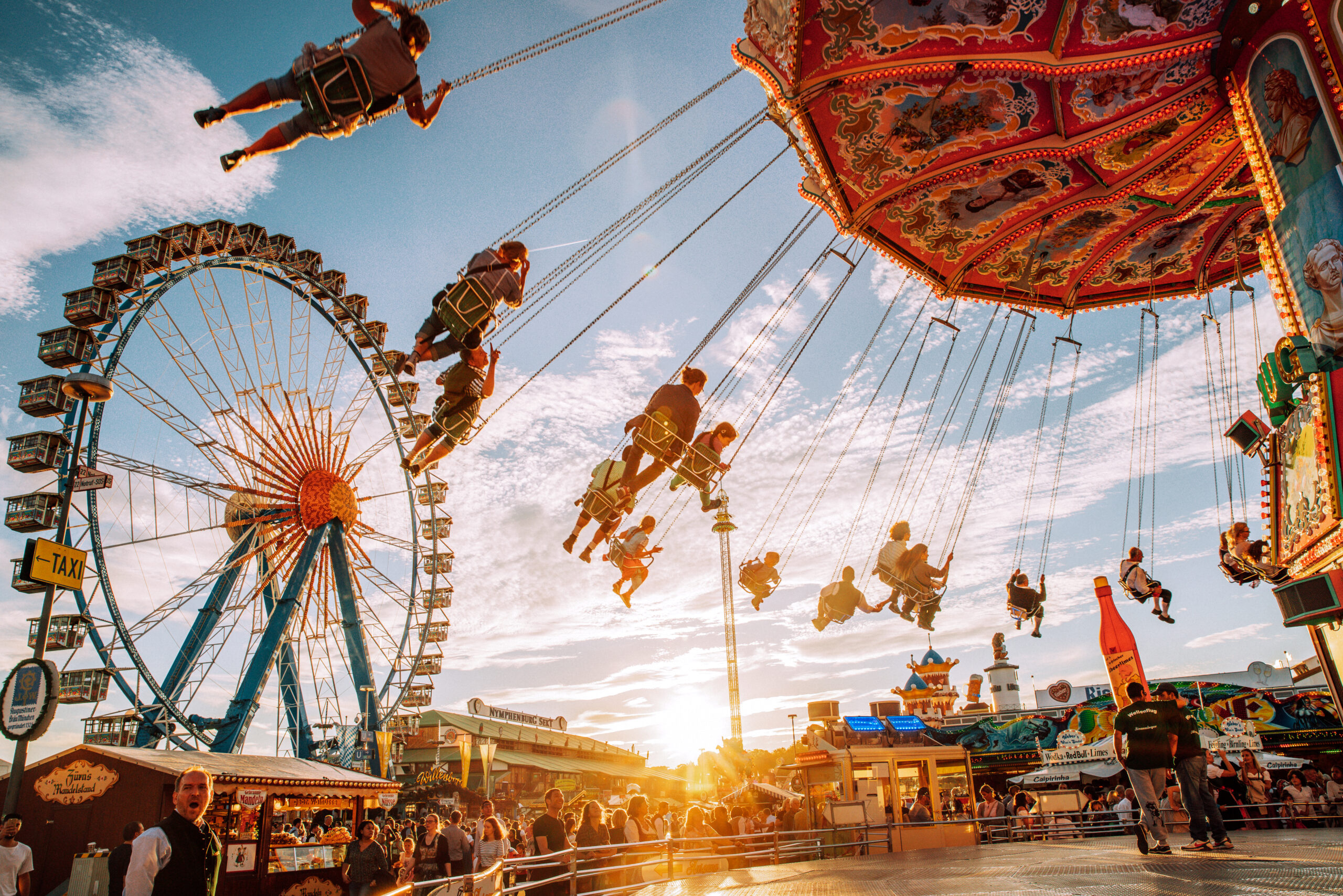
Oktoberfest adds colour and atmosphere during the day, with fairground rides and music that children enjoy, while the rest of the city remains calm and spacious.
It is easy to sample the buzz without being consumed by it, which is exactly what families need.
Munich’s Oktoberfest has plenty of fairground rides and games that kids will loveCredit: Getty ImagesKrakow is both affordable and packed with unique attractions, with breaks from £144ppCredit: Getty Images
November – Naples, Italy
November is ideal for families who want a more relaxed, authentic city break.
Temperatures stay mild, usually between 15 and 18C, and tourist numbers drop sharply. That brings better prices and a much more local feel, with everyday life taking centre stage.
Naples is lively and unapologetically real, which many children find fascinating.
Simple pleasures like waterfront walks and excellent, inexpensive food carry the experience.
The number of visitors is “overwhelming” the picture-perfect village
Ketsuda Phoutinane Spare Time Content Editor and Carmelo Garcia
15:21, 14 Feb 2026
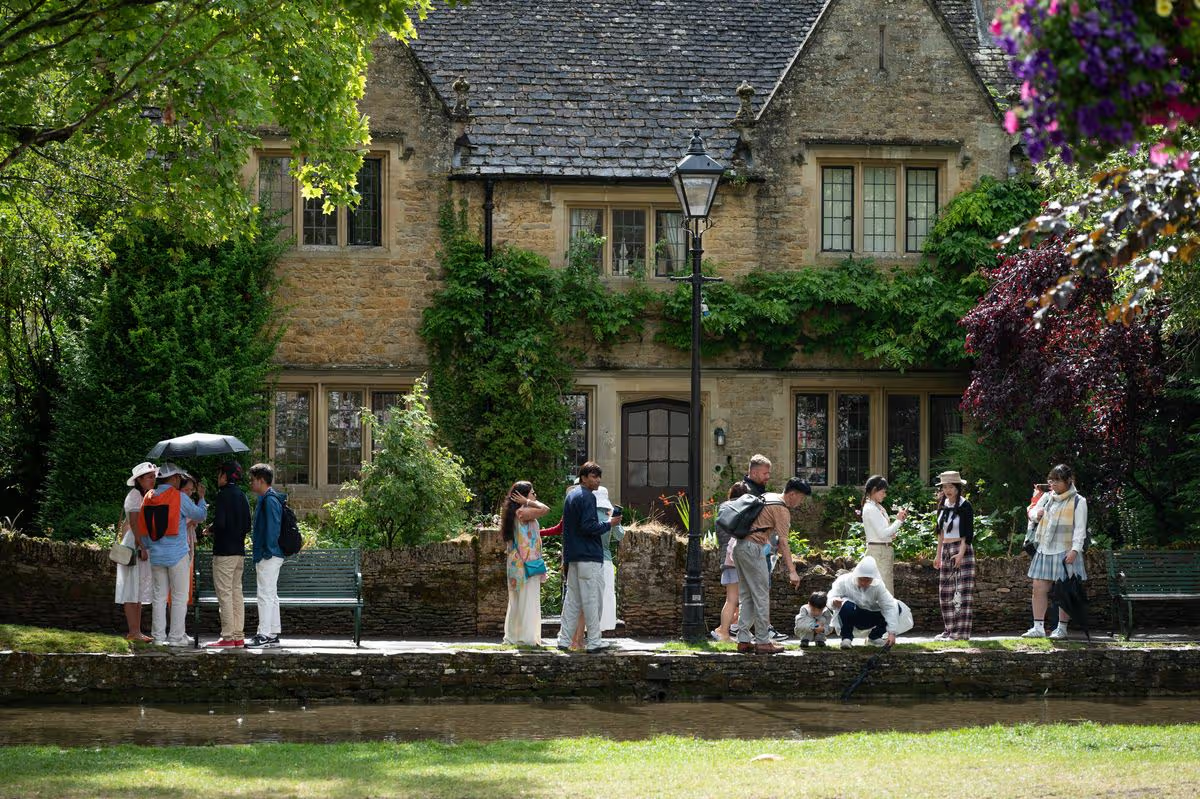
Bourton-on-the-Water Parish Council is calling for an order that would restrict coach access(Image: John Keeble, Getty Images)
The “Venice of the Cotswolds” is now pushing for coaches to be barred from the village centre as fears mount over “Disneyfication” and excessive tourism. Roughly 100 residents of Bourton-on-the-Water raised their worries about overtourism during a November gathering before Shire Hall and District officials.
This week, the Parish Council backed a motion requesting an experimental traffic regulation order (ETRO) to limit coach entry into Station Road from the Fosseway, Rissington Road and the Steeps. The move represents a major development in Bourton’s continuing battle to tackle longstanding local anxieties regarding the effect of substantial coach traffic volumes on principal routes cutting through the village.
District Councillor Jon Wareing (LD, Bourton Village), who has championed the cause in recent years, urged parish councillors to back the proposal asking Gloucestershire County Council for the ETRO, reports Gloucestershire Live.
“This is not a new position,” he stated. “The Parish Council previously supported similar measures in 2024, reflecting sustained public concern about congestion, safety and quality of life impacts linked to unrestricted coach access through the village centre.”
He noted that circumstances have shifted, with greater clarity that enforcement is now feasible, including via Automatic Number Plate Recognition technology.
This development is viewed as eliminating one of the traditional obstacles to implementing traffic restrictions. Cllr Wareing stated that all parties must begin collaborating to identify a sustainable long-term solution akin to those implemented in destinations including Clovelly, St Ives, York, Bath, Oxford and Cambridge.
He emphasised that the decision ought to be viewed as an initial step towards addressing the broader systemic problem of the substantial volume of visitors descending on Bourton in vehicles annually.
“It’s not just coaches – it’s cars as well,” he said. “People often refer to Bourton as the Venice of the Cotswolds.
“Venice is widely seen as unsustainable because visitor numbers overwhelm a small, fragile historic city – pushing out residents, damaging heritage and infrastructure, and putting pressure on the environment, retail and public services.
“The same risks exist here. We could become Venice in the Cotswolds in terms of the impact on our heritage village.
“We need to reverse the ‘Disneyfication’ of Bourton and develop a regenerative approach, where tourism is managed deliberately to support local life rather than displace it.”
County Councillor Paul Hodgkinson (LD, Bourton-on-the-Water and Northleach) revealed he understands residents’ exasperation with certain coaches failing to utilise the designated drop-off and collection point on Meadow Way.
He confirmed that Shire Hall is currently assessing the effectiveness of the interim measure, which was devised to divert coach traffic away from the village centre.
“We are reviewing the effectiveness of that this week and will do so again in May. It’s really important that all coaches use the point legally,” he said.
“I am committed to making sure residents are safe and that coaches cause the minimum disruption, whilst helping local businesses to be successful.
“At the County Council we will definitely take this request seriously and I’ll be talking to council officers about how it could work.”
HAVING travelled to 41 countries, as well as presented travel shows including A Place in the Sun, its safe to say I’ve learned a few money saving tricks along the way.
And as a mum trying to pinch the pennies on a family holiday, I realised two huge mistakes people make when it came to booking hotels – and it saved me hundreds.
Sign up for the Travel newsletter
Thank you!
I have a great way to save money when booking your hotels abroadCredit: Apple Photos Clean UpWe still had some fantastic stays by hotel hopping
A big way to save money is hotel hopping – and this isn’t just for the luxurytravellers and celebrities.
The money hack means you can save if instead of one hotel for a week, you try two.
This works by booking the more expensive place midweek, as this is when rates are lower.
You then move to the cheaper hotel when prices go up, which is usually at the weekend.
I realised this when travelling as a family of four, in Göcek, Turkey.
The small marina town is full of expensive boutique hotels, so prices can easily spiral when trying to find space for both parents and kids.
Instead, we split our Turkey trip between Dalaman and Göcek, as midweek, we spotted a suite in a five-star area for £105 a night, hundreds cheaper than a weekend stay.
But don’t just stop there as it isn’t the only way to get a bargain.
We saved even more by calling the hotel, rather than just clicking the book button.
When I call a hotel, I don’t haggle — I just ask one simple question: “What’s the best price you can do if we book direct?”
After chatting to them, not only did they drop the price from £105 to £80 a night, but they also threw in free breakfast for all four of us, which would cost £15 each per night.
Over five nights, that alone would have added up fast.
In the end we paid just £400 for five nights midweek, while the exact same suite at the weekend would have cost £200 a night alone.
Had we stayed on for the full week, the total would have jumped sharply — for the same room.
So instead, we packed up and moved on, and got a mini-adventure out of it.
Once you realise hotel prices change by the night, you stop booking holidays by the week and start booking them properly.
We used the same approach in Spain, where we booked a five-star hotel on the Costa del Sol midweek, then a smaller hotel in Cádiz at the weekend for £95 a night.
ONE EXTRA HACK: “five-star location” without five-star prices
We also save money by staying in an apartment or Airbnb in a five-star area, instead of an all-inclusive resort.
For a family of four, we found an apartment to fit us all for £110 a night, compared to a nearby resort suite which was £280 a night.
We travel as a family of four for 12 weeks of the year and It’s the one habit that’s saved our family the most money — and given us our best memories.
Its a great way to let kids have some fun resort time without the high costsCall hotels to get extra discounts too
IT was when my eight-year-old son Reggie returned to our table – holding a plate of 20 Turkish delights and grinning from ear to ear – that I caved in.
“OK, we are on holiday,” I said as he merrily dished them out to his twin brother Teddie and 12-year-old sister Frankie-Beau.
Sign up for the Travel newsletter
Thank you!
The 5-star Liberty Lykia family resort in Oludeniz, on the south-west coast of Turkey, is an all-inclusive foodies’ fantasylandCredit: SuppliedOn several evenings of our seven-day stay we opted to dine at one of the six sensational paid-for a la carte restaurantsCredit: Supplied
In fairness, my wife Kayleigh and I had hardly set an example, because the 5-star Liberty Lykia family resort in Oludeniz, on the south-west coast of Turkey, is an all- inclusive foodies’ fantasyland.
Its huge main restaurant offers more than 100 options at breakfast, lunch and dinner, and snacks throughout the day.
On several evenings of our seven-day stay we opted to dine at one of the six sensational paid-for a la carte restaurants, starting from just €5 per child, while watching the sun set across the Mediterranean Sea.
The star of the show was an interactive, flame-fuelled, theatrical dinner of lobster and steak at the open-grill Teppanyaki.
At the outdoor Pinara Turkish restaurant, you even get a side order of belly dancing.
And all that is just, well, for starters.
A selection of snack shacks, including a well-stocked patisserie, will tempt you throughout the day.
And there’s self-serve draft beer and wine beside the pools and the private beach.
The biggest of the many bars, Apollon, at the heart of the resort, serves more than 30 indulgent cocktails, 24/7.
Thankfully you can easily burn off the over-indulgence.
Within the 400-acre resort, which is set in a tranquil cove among pine forests and overlooked by the majestic Babadag Mountain, are tennis, padel and sandy volleyball courts, an archery area, mini-golf course, ping-pong tables, a climbing wall and two AstroTurf football pitches.
There’s also a gym and exercise classes, as well as all manner of watersports.
Look up in the sky at any time of day and you will be mesmerised by paragliders drifting down to the hotel’s landing strip.
But don’t worry, there’s no need to strap the kids in for the ride, as their every whim can be taken care of at the brilliantly welcoming and free Mini Club, which has endless activities for all age groups.
There’s even a free babysitting service.
With the young’uns entertained, we enjoyed a few hours at the more peaceful adults-only pool and bar.
The 400-acre resort is set in a tranquil cove among pine forests and overlooked by the majestic Babadag MountainCredit: SuppliedIt’s not quiet, so request a room a little further away if you have very young childrenCredit: Supplied
There you’ll find the luxurious Ocean Spa, where you can pamper yourself with a massage while you gaze out at the Turquoise Coast, so-called because of the striking clear-blue sea. W
hen we were then finally ready to reunite with the family, we headed to the beautiful beach area designed for youngsters, complete with a wave breaker made from rocks and stones.
But the jewel in Liberty Lykia’s crown is its very own waterpark — aptly called Children’s Paradise, with its numerous slides for kids and adults.
It’s a truly vast resort, set into the hilly mountainside.
Steps are steep but there are plenty of slopes and more than enough lifts.
And if little legs are tired after a long day of thrills, on-site shuttle buses taxi you around.
You can even call reception for a golf buggy to take you to and from your room day or night.
Bands and DJs
Our room was a modern sea-view Deluxe Family Suite with walk-in shower, air-conditioning, a superking-sized bed, two single beds and a sofa bed.
The free mini bar is restocked daily so you can enjoy a drink on the balcony.
We were just a two-minute walk from the resort’s main square — a beautiful Mediterranean plaza with a wine bar, shops selling clothes, trainers, sunglasses and souvenirs, an arcade, a craft coffee shop and a boutique for handbags and shoes.
After the sun sets, the main swimming pool hosts illuminated remote-controlled boats, and the stunning outdoor amphitheatre delivers an impressive variety of West End-like productions.
The main square is the lively entertainment venue for bands and DJs taking to the stage until midnight.
It’s not quiet, so do request a room a little farther away if you have very young children.
For anyone who wants to keep the party going, there’s an underground nightclub open until 2am.
And you can stagger out into the nearby snack bar that’s open until 7.30am if, somehow, you are still hungry.
After a week of family fun and feasting in the sun, none of our clothes fit — and the dentist will have some choice words for our kids.
But we left with the wonderful aftertaste of a holiday that was, in the words of my daughter, one big Turkish delight.
The jewel in Liberty Lykia’s crown is its very own waterpark, aptly called Children’s Paradise, with numerous slides for kids and adultsCredit: SuppliedHaving a blast with the water cannon at the lidoCredit: Supplied
GO: TURKEY
GETTING/STAYING THERE: Seven nights’ all-inclusive at 5H Liberty Lykia Oludeniz is from £669pp, including flights from Gatwick on April 11.
The flight covers 9,537 miles but doesn’t have economy cabin
10:24, 14 Feb 2026Updated 10:47, 14 Feb 2026
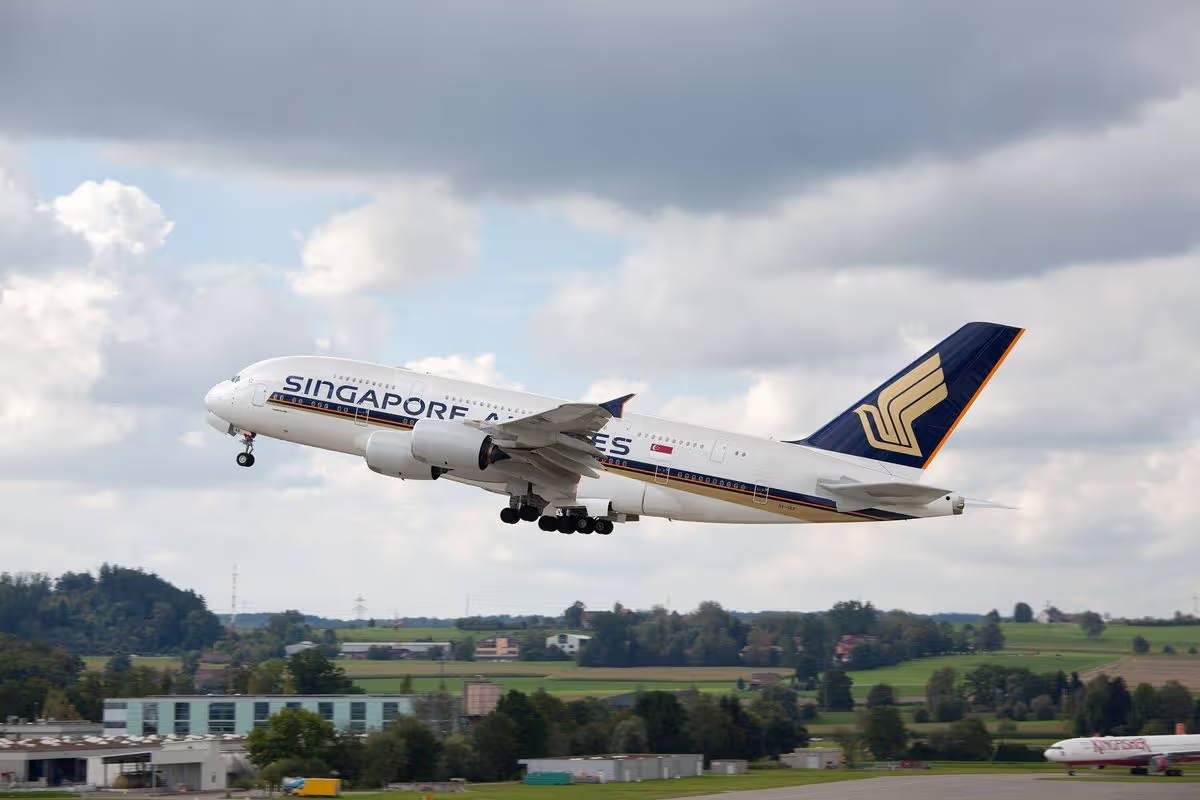
World’s longest flight where passengers are strapped in for 19 hours(Image: Singapore Airlines)
The world’s longest flight connects America to Asia, with travellers spending nearly 19 hours in the air. Singapore Airlines currently holds the record for the lengthiest long-haul journey, operating between New York’s JFK Airport and Singapore Changi.
Covering a staggering 9,537 miles, the marathon trip takes 18 hours and 50 minutes and has been running since the airline launched it in 2018. Singapore Airlines deploys its latest Airbus A350-900ULR on the route, an aircraft capable of remaining airborne for more than 20 hours without refuelling.
The plane achieves these extraordinary flight times thanks to an enhanced fuel system, which increases the aircraft’s total fuel capacity to a remarkable 24,000 litres.
That said, the journey isn’t available to everyone, as Singapore Airlines has ditched economy class on this particular route. Instead, the airline offers 67 Business Class seats and 94 Premium Economy Class seats.
Premium Economy travellers can enjoy the benefits of extra legroom, a footrest, and an adjustable headrest. They also have access to noise-cancelling headphones and WiFi for the duration of their flight, reports the Express.
Those in Business class get maximum privacy, with their seats converting into fully flat beds for a proper kip whilst travelling.
The aircraft features a host of luxury amenities including higher ceilings, larger windows and bespoke lighting engineered to reduce jetlag. The carrier claims that the plane’s cutting-edge carbon composite airframe also allows for superior air quality.
Anyone hoping to secure a seat will need deep pockets, with tickets routinely costing well into five figures. Singapore Airlines’ Chief Executive, Mr Goh Choon Phong, has previously described the new route as the “fastest way” to journey between the two metropolitan hubs.
He said: “Singapore Airlines has always taken pride in pushing the boundaries to provide the best possible travel convenience for our customers, and we are pleased to be leading the way with these new non-stop flights using the latest technology, ultra-long-range Airbus A350-900ULR.
“The flights will offer our customers the fastest way to travel between the two cities – in great comfort, together with Singapore Airlines’ legendary service – and will help boost connectivity to and through the Singapore hub.”
Ultra-modern cities drenched in neon lights? Steam rising from a bowl of soul-warming ramen?
Sign up for the Travel newsletter
Thank you!
Three moats once protected the path leading to Himeji Castle, designed to disorient attackersCredit: Jenna Stevens
Maybe it’s the stillness of a Zen garden, or the striking silhouette of a Japanese castle. Perhaps it’s Sashimi hand-crafted with the freshest of fish.
You may think that experiencing all of the above means spending weeks journeying across the country with a rail pass and a backpack.
Luckily, you can find them all in one underrated region: Hyōgo prefecture.
Next door to touristy Kyoto, Hyōgo offers Samurai castles, hot spring baths, thrilling theme parks and world-class Wagyu all in one place.
Hyōgo truly earns its nickname “Japan in Miniature”, as it packs some of Japan’s finest cultural and historical sights into one diverse region.
Plus, there’s never been a better time for Brits to visit Japan.
With the new JESTA travel authorisation system expected to arrive in 2028 – which will require Brits to pre-register before travelling – it’s worth ticking the trip off of your bucket list before the new program and its fees are introduced.
Plus, the yen remains weak against the British pound in 2026, so you can stretch your money further on food, shopping and hotels than ever before.
I enjoyed bowls of delicious ramen for just ¥700 (£3.28), and went shopping for high-quality clothing in UNIQLO for a fraction of UK prices.
So to see what this underrated region has to offer, I explored Hyōgo Prefecture from top to bottom – from the coastal hot spring town of Kinosaki Onsen, down to the glitz of Kobe.
Himeji – samurai era castles, Japanese gardens and traditional restaurants
You might recognise this castle as Tiger Tanaka’s ninja training school in the Bond film You Only Live Twice.
Himeji Castle has also appeared in many classic samurai films such as Ran and Kagemusha, but this is much more than a famous filming location.
Himeji Castle is Japan’s most-visited castle – and it’s widely considered the most beautiful, too.
It’s easy to see why, I thought, as I approached the strikingly white hilltop fortress.
I eventually made it to a vast courtyard with impressive views of the castle and Himeji cityCredit: Jenna StevensThere are a series of false entrances and misleading pathways on the approach to Himeji CastleCredit: Jenna Stevens
Himeji Castle is a listed UNESCO World Heritage site, renowned as the best-preserved feudal era samurai castle in Japan.
Although the hilltop fortification has existed since 1333, the castle as we see it today was built back in the early 17th century.
Since then, Himeji Castle remains remarkably intact, surviving events such as WWII bombing.
The bright white exterior and elegant tiered roofs are said to resemble a heron taking flight, earning it the nickname of the White Heron Castle.
Actually getting inside the castle, however, was quite the task.
Expertly designed to ward off intruders, you must get past multiple moats and a whopping 83 defensive features to make it inside.
These include false entrances, terrifying stone drops, plenty of gun ports and a disorienting, winding path up to the castle.
“Sama” are shaped holes in the walls designed for firearm use whilst staying protectedCredit: Jenna StevensInside, dark wooden beams slot together like an intricate architectural puzzleCredit: Jenna StevensAlthough many visit Japan in spring for its Sakura season, I preferred the autumn coloursCredit: Jenna StevensI enjoyed soba noodles, egg, chicken-covered rice and miso soup – all washed down with green teaCredit: Jenna Stevens
Even the plants beside the stone walls were a strategic part of the defence, with thorny, tangled overgrowth designed to stop attackers who tried to escape.
“Imagine you were an intruder trying to get in” said my Himeji Castle tour guide, as she pointed out endless stone drops, hidden gun ports and false entrances. “It would be near impossible!”
After admiring the architecture, I walked just five minutes to the peaceful grounds of the Kōko-en Garden.
Inside Kōko-en are nine Japanese gardens built upon the grounds of old samurai residences, with a large koi fish pond and traditional tea house.
These gardens are a must-see no matter which season you visit Japan.
Spring brings cherry blossoms, summer bursts with greenery and lotus flowers, whilst my winter visit still glowed with autumnal orange.
After wandering through bamboo, crossing stone bridges and hopping stepping stones over glossy waters, I settled down in the garden’s restaurant for a bite to eat.
Here you have your choice between lunch sets including grilled eel, crispy tempura and fluffy pancakes – all served with plenty of green tea and calming waterfall views.
Himeji felt like a snapshot of Japanese excellence, where expert craftsmanship and manicured gardens sit side by side in one unmissable city.
Kobe – world-famous Wagyu and glitzy nightlife
Just a 20-minute ride on the ultra-fast Shinkansen will take you from the historical marvels of Himeji straight to Hyōgo’s bustling capital: Kobe.
This glitzy city was made for wandering into jazz bars and soaking up neon lights, the lively promenade watched over by the glowing red Kobe Port Tower.
The hourglass-shaped Kobe Port Tower is the city’s most famous landmark, and is 354 feet tallCredit: Jenna StevensKobe wakes up at night with the bright lights of busy bars and restaurantsCredit: Jenna StevensThe streets surrounding Kobe’s chinatown are dotted with unique independent clothing shopsCredit: Jenna Stevens
I spent days drifting between independent streetwear shops and artsy cafes, as well as making sure to stock up on clothes from trendy UNIQLO – which costs a fraction of the price in Japan compared to the UK.
Down by the waterfront at night, Kobe Harborland is the city at its most lively.
This area is packed with shops, museums, restaurants and a giant Ferris wheel, coming alive after dark.
But Kobe is best-known for its world-famous delicacy: Kobe beef.
To see if it lived up to the hype, I took a counter seat at a Teppanyaki restaurant to watch the chef cook the world-famous steak before my eyes.
I started by trying some Kobe beef sushi, priced at ¥1,260 (£6) – a dish I was unsure of at first, bu the raw beef dissolved on the tongue, leaving a rich, sweet flavour long after eating the rice.
Next came a whole platter packed with thin slices of delicate roast Kobe beef, served cold with a sweet sauce, priced at ¥2,970 (£14).
Last up was the dish I’d been waiting for: a Kobe beef fillet steak, which was buttery soft, oozing with juices and packed with Umami flavour.
Kobe beef steaks can certainly be a splurge (steak with veggies starts at ¥6,600, or £31 at Plaisir) but you can enjoy excellent Japanese beef on a budget too.
The beef sushi in Teppanyaki restaurant Plaisir melted in the mouth in mere secondsCredit: Jenna StevensTeppanyaki restaurants offer counter style seating with a view of the chef preparing your mealCredit: Jenna Stevens
A premium Japanese beef burger, for example, costs just ¥1,300 (£6.16) at popular restaurant Brisk Stand.
In 2025, their signature Kittayatsu burger even won the Japan Burger Championship – not bad for a bite under £7.
Awaji Island – theme park paradise
Just a 30-minute bus hop from Kobe over the Akashi-Kaikyo suspension bridge, is Awaji Island – the home of jaw-dropping amusement parks.
Take your pick from three Hello Kitty attractions, fairy-tale and dinosaur worlds at Onokoro Theme Park, and anime fan heaven at a Naruto: Boruto themed land.
I chose to visit the Nijigen no Mori theme park – and whizz down a zip line into a giant Godzilla head.
The Godzilla themed world at Nijigen no Mori provides a surreal immersive experienceCredit: Jenna StevensEnter NIGOD, and be tasked with a mission to save Awaji from the giant monsterCredit: Jenna StevensEven the public transport on Awaji Island is on-theme, with Hello Kitty and Godzilla busesCredit: Jenna Stevens
The Godzilla Intercept Operation Awaji is the world’s largest Godzilla theme park land, made with the production company of the original movies.
The area includes a zip line, miniature movie, shooting game, museum, themed cafe and merchandise shop.
I opted for a light ticket, which grants access to the movie, zip line and shooting game for ¥2,800 (£13.25) per adult and ¥1,800 (£8.52) for children.
I shakily climbed several sets of stairs, and was asked if I’d prefer to zip past Godzilla’s body at 499 feet, or directly into his mouth at 531 feet.
I didn’t travel 13 hours to this Japanese island for nothing, so the choice to me was obvious.
The giant Godzilla head is super detailed, and even more terrifying up closeCredit: Jenna Stevens
The next and final task was to shoot at glowing targets on Godzilla’s body, whilst ducking down to avoid being seen by the creature.
I ended my visit by shopping for exclusive Godzilla gifts and eyeing up the unique meals on offer at the cafe – a Burning Godzilla Curry for ¥2,200 (£10.41) and Destroyah Hamburger Combo at ¥2,000 (£9.46).
You can book a ticket to the Godzilla Intercept Operation directly via the Nijigen no Mori website, or on apps such as Klook and GetYourGuide.
Kinosaki Onsen – a magical hot spring town
For something a little more relaxing, there’s the hot springs of Kinosaki Onsen Town.
An onsen is a traditional Japanese hot spring bath. These soothing geothermal pools are found all over Japan, thanks to the country’s volcanic landscape.
Onsens are said to have numerous health benefits due to their mineral-rich waters, and I was excited to check out their restorative reputation.
Kinosaki Onsen is a 1,300 year-old town where visitors can go onsen hopping, dipping in and out of seven public bathhouses lining its high street.
Visitors are encouraged to wear yukata (a lightweight Japanese robe), geta (traditional wooden sandals), as well as tabi (split-toe socks).
Kinosaki is a postcard-perfect town set along a quiet canal, lined by glowing stone lanterns and drooping willows. Dressed in traditional attire, I set out to explore its streets – and take part in the ritual of onsen.
Kinosaki Onsen is decorated with pretty stone bridges and traditional stone lanternsCredit: Jenna StevensIn classic seaside town fashion, ice cream shops were everywhere in Kinosaki OnsenCredit: Jenna StevensIchino-yu houses a cave bath surrounded by rocks and bouldersCredit: Jenna Stevens
The public bath experience is an unforgettable ritual, with a few customs to follow. Once shoes and belongings are stored away, you must bring only a small towel inside with you – which is often neatly folded upon your head when entering the water.
Once you’re in, it’s bliss, and I left with silky skin, and fully warmed through by the 40°C baths, ready to face the winter weather.
A Kinosaki day pass lets you dip in as many onsens as you please for just¥1,500 (£7.10).
They are available to buy at any of the seven bathhouses.
Glowing souvenir shops illuminate the streets of Kinosaki Onsen at nighttimeCredit: Jenna StevensKinosaki Onsen is also home to delicious snow crab – served as Sashimi at Sanpou NishimurayaCredit: Jenna Stevens
SOMETIMES it is easy to forget just how many stunning seaside destinations we have access to.
For gorgeous stretches of homegrown coastline, North Devon is one of the best places to go.
Sign up for the Travel newsletter
Thank you!
Once settled, why not hop in the car to feel the golden sand between your toes (or maybe under your trainers if it’s wet) a short drive away at Saunton Sands?Credit: AlamyMy base for a weekend was cosy two-bed Rose Cottage, in the welcoming village of High BickingtonCredit: SuppliedFor a more relaxing day out, RHS Rosemoor should be high on your ‘must see’ listCredit: Alamy
And, of course, the chance to indulge in the county’s famous cream tea (clotted cream first, followed by jam if you don’t want to be chased out of the region).
In fact, whatever the weather does, you’ll never be bored on a break in this corner of the South West.
My base for a weekend was cosy two-bed Rose Cottage, in the welcoming village of High Bickington.
From the outside, this 18th-century thatched house with its garden full of scented blooms looks like something from the front of a postcard.
And inside, the rural “cottagecore” vibe continues with an inglenook fireplace, stone walls, wooden beams and a stunning slate floor.
Thoughtfully, amid all the higgledy-piggledy charm, there is also an abundance of hi-tech modern luxuries.
You’ll have no issue streaming your devices, and the Sonos surround sound system in the living room takes movie nights up a notch.
Meanwhile, there’s a traditional copper bath in one of the bedrooms — and a decidedly 21st-century hot tub outside.
It’s lovely and romantic, so spot on for cuddling up if you’ve escaped with your significant other, or perfect for channelling Cameron Diaz in The Holiday if, like me, it’s a solo trip.
Once settled, why not hop in the car to feel the golden sand between your toes (or maybe under your trainers if it’s wet) a short drive away at Saunton Sands?
This three-mile stretch of water is a surfing hotspot and great for people-watching if you don’t plan on riding any waves. You can also hire a wetsuit if you are feeling brave.
For a more relaxing day out, RHS Rosemoor should be high on your “must see” list.
With 65 biodiverse acres of themed garden “rooms” to explore, you’ll leave bursting with ideas for your own flower beds — or, in my case, window boxes.
I’m not that green-fingered, but you’re guaranteed to feel your shoulders drop when strolling around this wonderfully perfumed site.
This part of the world is perfect for people who love a potter.
The quaint bedroom oozes rural charmCredit: SuppliedYou can even make friends with some local alpacasCredit: Alamy
So if your idea of bliss is, like mine, wandering around cute local towns and browsing shops, arty spaces and foodie stalls, you’ll soon find yourself losing track of time.
I spent a lovely few hours mooching around Bideford, which was packed with galleries, ceramics and other artisan treats.
South Molton is ideal for a grey day thanks to its indoor market.
Here, you will find lots of in- teresting crafts, including baskets called panniers, as well as snacks, gifts and other goodies.
Part of Rose Cottage’s appeal is how much you can access right on the doorstep.
A hike (or a gentle walk) across the grounds of the Millbrook Estate blew cobwebs away.
There are two private lakes for wild swimmers or those who fancy fishing. (Separately, of course!)
I’ll admit the alpacas I met slightly took me by surprise but, like all the locals, they seemed very friendly.
You’ll want to stay nearby when it comes to food, too.
Whether you want a traditional roast or a fancier “out-out” night of dining, the choice in North Devon is bountiful — and most restaurants come with a side order of amazing views.
The Pier House in Westward Ho! is perfect for sundowners and nibbles, and gave chic Costa Del Devon vibes on the sunny day I visited.
Or, for something a bit more traditional, The Globe in Beaford has incredible home-cooked pub grub.
You’ll find seafood that’s as fresh as it comes, so I’d suggest you try at least one dish containing the local crab meat, washed down with a glass of wine or two, then a long soak in that hot tub.
After all those country walks, you will be grateful for the bubbles.
The traditional copper bath is perfect for channelling Cameron Diaz in The HolidayCredit: Alamy
GO: DEVON
STAYING THERE: A three-night weekend or four-night midweek break at Rose Cottage is from £540 in total, based on four sharing.
Whether you join Captain Black’s motley crew for an exciting pirate adventure in Mutiny Bay and Towers Street, or venture into CBeebies Land, there’s something for everyong this half-term.
There will also be live entertainment, with pre-booked tickets starting from just £34, another 50 per cent saving.
Alton Towers will then re-open fully on March 14, with the brand new Bluey Ride in operation.
Legoland Windsor
Celebrating its 30th birthday, Legoland Windsor will welcome guests from February 14 to 23 before its official re-opening on March 14.
Advanced bookings start from £32, saving you half the price as on-the-day tickets.
With a variety of special events planned throughout the year for the park’s anniversary, fans can start with February’s Brick Days, which are “designed to unleash your imagination” and “immerse you in a world of creativity”.
Chessington World of Adventures
Chessington World of Adventures will be opening select rides this half-term ahead of its daily re-opening in springCredit: Alamy
While the Zoo and Sea Life section of Chessington World of Adventures is open year-round, visitors will have access to select rides and attractions this half-term.
Enjoy wild rides and up-close animal talks as part of the fun activities this February.
The full theme park will re-open on March 20, including its a brand new Paw Patrol-themed land.
Visitors can pre-book online for £34, offering a 48 per cent saving compared with on-the-gate prices.
Drayton Manor
Drayton Manor will be hosting a K-pop takeover this half-term, with live performances and themed entertainmentCredit: Alamy
Select rides at Drayton Manor will be open throughout half-term, including a K-pop takeover with live performances and themed entertainment.
The full park, including the soft play, train rides, and zoo, will be open on weekends from March 14 and then daily from April 1.
Online tickets start from £27.50, and £15 for those aged two to three, saving you nearly 40 per cent compared with on-the-door prices.
Paultons Park
Select rides at Paultons Park will be open this week to mark the February half-termCredit: Alamy
Already re-opened for weekends, Paultons Park will welcome visitors on select rides this half-term.
Peppa Pig World will be open all week, offering “nine oinktastic rides and a giant indoor playzone”, making it ideal for all kinds of weather.
It will them open daily for the full season from March 25, with access to its new themed land Valgard: Realm of the Vikings beginning in May.
Advanced bookings start from £46.75, saving you more than 30 per cent per person.
Gulliver’s Land Theme Park
Gulliver’s Land Theme Park will also open to customers this half-term breakCredit: Alamy
And Gulliver’s Land Theme Park will also host a half-term opening beginning on February 14.
Previously only indoor attractions have been open, but now select rides will also be available to customers.
Visitors can get a taste for the park’s Spring Specatular event, with early bird tickets starting from just £17 per person right now.
Other promotional offers are available for families during the off-season, with prices for a group of four starting from just £39.
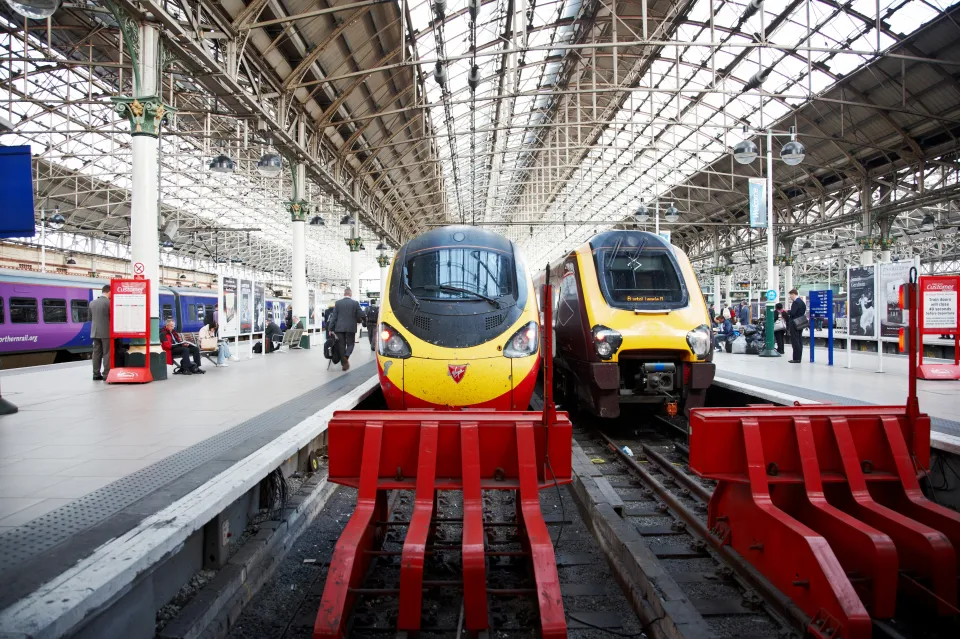
This amounts to around 400,000 trains into the station every year.
Manchester Piccadilly has advised passengers that no trains from the south and east of the city will run into the station over the half-term break.
Some trains from across the north will also be impacted as well as direct connections to Manchester Airport station, which were impacted by a signal failure earlier this week.
Services normally running to and from Manchester Piccadilly will terminate at other stations, including Stockport, over the next nine days.
Platforms 1-12 will be closed but the concourse will remain open to the public, while there will be a limited service westbound from platforms 13 and 14.
Julien Dehornoy, Network Rail’s North West & Central deputy regional managing director, said: “Once the job is done, we will have a better, more reliable railway.
“The major overhaul over six railway lines can only take place during a full railway closure and we are working closely with train operators, TfGM and Manchester City Council on alternative travel plans to keep people on the move.”
Thousands of Uber, Bolt and Addison Lee drivers will log off on Valentine’s Day, urging customers to boycott ride-hailing apps as unions accuse firms and TfL of failing to address falling pay, safety risks and unfair working conditions.
TfL says it operates one of the strictest regulatory frameworks globally.
Private hire drivers across the UK are urging customers to boycott major ride-hailing apps on Valentine’s Day as part of a protest over pay, working conditions and what they describe as regulatory failures.
Members of the Independent Workers of Great Britain (IWGB) Private Hire Drivers branch are asking consumers not to use Uber, Bolt or Addison Lee on Saturday 14 February, while drivers log off the platforms and join a motorcade in central London from 5pm to demand legislative reform.
Nader Awaad, chairman of the IWGB Private Hire Drivers branch, described drivers’ experiences as “systemic exploitation” caused by fare structures, rising operating costs and what he calls insufficient oversight from Transport for London (TfL).
Awaad, 59, from Walthamstow, began driving in 2019 after being made redundant from a senior management role. He told The Mirror: “The UK’s private hire industry is a wild west. With no protection from unfair dismissal, drivers see their livelihoods disappear in the blink of an eye.
“With no real safety measures, we are left unprotected from passenger violence, frequently resulting in serious injuries or, in the tragic case of our member Gabriel Bringye, death. And that’s before we even start talking about pay,” he said.
Gabriel Bringye, 37, was a much loved private hire driver from Tottemham, north London. In February 2021, he was fatally stabbed during a robbery by a group of teenagers who had booked his cab by chance. He died from blood loss despite attempting to defend himself.
The attack left a deep mark on the driving community, and following the trial, Bringye’s family established Gabriel’s Campaign for Driver Safety, calling for stronger protections for private hire drivers and measures to prevent future tragedies.
According to the IWGB, drivers can work 12 to 18-hour days just to break even, covering fuel, insurance, vehicle maintenance, traffic fines and platform commission. Awaad highlighted a case where a Heathrow-to-central London ride cost £111 for the passenger, but the driver was paid only £29. “After expenses, many drivers are earning less than the minimum wage,” he told us.
He also criticised “upfront” or “dynamic pricing,” which sets fares for passengers and pays drivers via algorithms. Research from Oxford University found that Uber driver pay has declined since the model’s introduction. Under this system, drivers have no say over fares and can bear the cost of delays or route changes.
The protest follows the Supreme Court ruling that Uber drivers are workers, entitled to minimum wage and holiday pay. Awaad argues operators responded by adjusting pay structures in ways that reduced earnings. Uber has said it complies with the ruling and provides worker protections, including holiday pay, pensions and minimum earnings guarantees.
Beyond pay, safety remains a concern. Drivers report risks of assault and abuse, along with sudden account deactivation by operators. Awaad insists TfL, as the licensing authority, should oversee any suspension decisions. The union also wants stricter passenger identity checks after incidents involving stolen or fraudulent accounts.
Awaad’s attempts to raise these concerns directly with TfL Commissioner Andy Lord, including offering detailed evidence, were reportedly declined.
When The Mirror reached out to TfL, a spokesperson said: “We take our responsibilities as the licensing authority seriously to ensure that everyone can travel safely and reliably. Operators must meet high standards in order to be licensed in London and we continually keep licensing requirements under review to ensure safe services for Londoners.”
The IWGB is lobbying Parliament for legislative changes addressing pay transparency, commission levels, safety protections, and due process in account suspensions.
Alex Marshall, IWGB president, urged public support: “If drivers and riders unite, we can push TfL and the government to implement protections similar to New York, France, Mexico and Barcelona. Drivers deserve fair pay, capped hours, holidays and safety measures. The time for change is now.”
Responding to concerns around pay and transparency, an Uber spokesperson said: “We regularly engage with drivers, especially through our industry-leading agreement with GMB Union, who are not taking part in this action. More and more people choose to earn with Uber because we offer flexibility over where and when they work, as well as offering the best benefits in the sector.
“Drivers have transparency over every trip they take – including the destination and their earnings – before they decide whether to accept it. All drivers receive a weekly summary of their earnings, which includes a clear breakdown of what Uber and the driver received from trips,” the statement concluded.
Similarly, a Bolt spokesperson said the company operates a different model outside London. “Through Bolt Flex, the first model of its kind in the UK, drivers outside London can set their own fares, negotiate directly with passengers, and operate on a transparent, flat commission with no hidden fees. Drivers are already earning up to 7% more per trip on average, while receiving 24% more orders per hour.”
In response to safety concerns, Bolt added: “The safety of drivers is our top priority. We have committed €100 million globally to strengthen safety across our platform, contributing to a 14% reduction in safety-related incidents year over year.
“Drivers are provided with passenger ratings and ride history before pickup, can share live trip details with trusted contacts, and have access to 24/7 in-app and phone support. Our Emergency Assist button connects directly to emergency services and alerts Bolt’s 24/7 safety team, and our trip monitoring technology flags unexpected or prolonged stops. We also offer one of the sector’s most affordable CCTV schemes for drivers.
“Drivers on the Bolt platform operate as independent partners, and access is conditional on compliance with our safety and community standards. Accounts are only ever deactivated following a full investigation, with a clear review process. We will continue working with drivers to raise standards across the sector.”
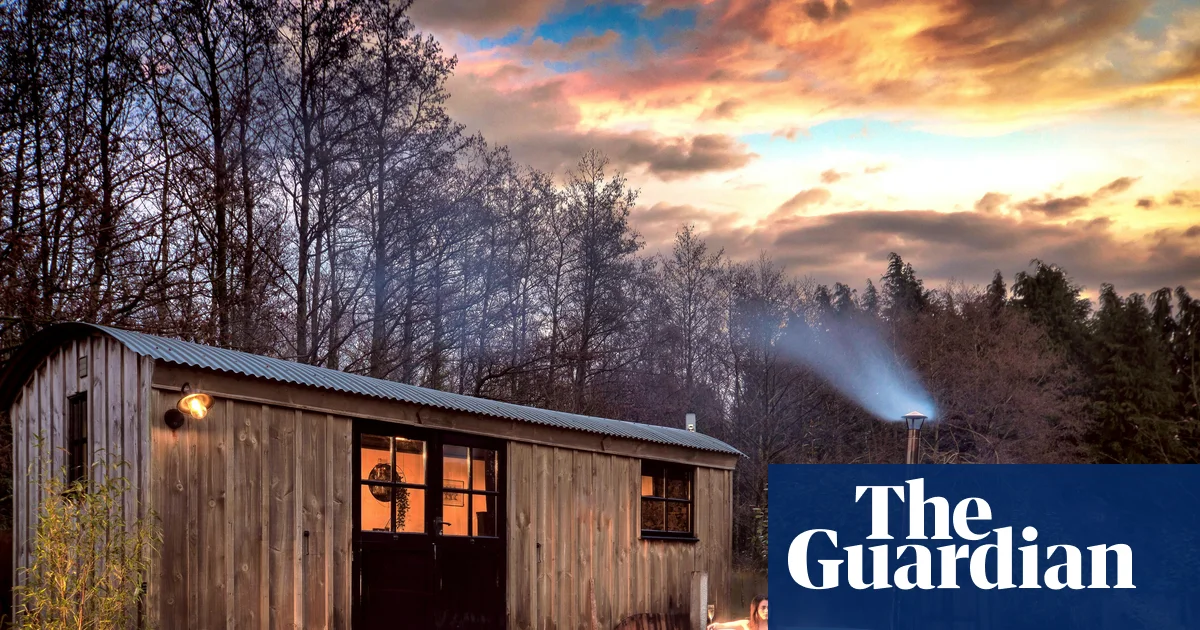
Six vintage-style “luxury huts” spaced out around a lake make up The Shepherds Hut Retreat in south Somerset. They have modern kitchens and bathrooms, private areas with hot tubs, and fancy features such as telescopes, gin bars, pizza ovens, fire pits and hammocks. There is also a woodland sauna on site. The newest hut, 1898, is the grandest, and is inspired by the Pig hotels. It is a mile’s walk to the Lord Poulett Arms, a thatched 17th-century pub in the village of Hinton St George, and half an hour’s drive to the beaches of the Jurassic Coast in east Devon and Dorset. From £169, coolstays.com
A Jacobean manor in Kent
Photograph: Russel West
Boys Hall, a gorgeous Jacobean manor house near Ashford, is now a restaurant with rooms. The pub area has comfy chairs and a wood burner; lounges with inglenook fireplaces, sofas and books; there’s more than a hectare (2½ acres) of grounds, including a rose garden. The restaurant is a light, oak-framed space serving breakfast, lunch and dinner, including a weekly changing set menu of Kentish produce (three courses for £30; perhaps venison terrine, braised beef cheek stew and winter berry trifle). The nine rooms feature original stone mullion windows, oak panels and beams, plus rolltop baths and four-poster beds. From £220B&B, boys-hall.com
A fairytale farm cottage in the Malvern Hills
Photograph: Mark Watts
Wishbone is a 16th-century, fairytale cottage hidden away on an ancient fruit farm. The stone and timber barn is half-covered by foliage on the outside, but the inside has been beautifully restored and converted. There is a vaulted ceiling above the open-plan kitchen, dining and living areas, a bedroom with a king-size bed and an en suite shower room. Original wattle and daub panels, brick floors and beams add to the charm, and barn doors open on to the patio. Beyond the orchard in front of the cottage are fields with oak trees and a lake. From £850 for two nights, uniquehomestays.com
A thatched pub in Bedfordshire
The Sun Inn is a 17th-century, recently refurbished thatched pub in the riverside village of Felmersham. It has open fires, guest ales and food sourced from its own farm. Its curried kid goat offal with fermented chilli might not be everyone’s idea of a date-night dinner, but there are steaks, pork chops and veggie options too. Upstairs are two rooms: a deluxe, dual-aspect double, or, for those really pushing the boat out, a two-storey suite. The latter has exposed stone walls, wooden beams and a freestanding copper bath. Couples can visit Felmersham’s 13th-century church, St Mary’s, and take strolls along the River Great Ouse. From £135 room-only, thesunfelmersham.com
An arty cottage in the Scottish Borders
Photograph: Tracey Bloxham
A single-storey stone lodge on a private track between parkland and a wood, Lilylaw was once home to the gamekeeper of the Minto Estate. It is not for shy couples, being largely open-plan, with a low wall separating the bedroom from the living area, and a clawfoot bath in the bedroom (there is a separate bathroom too). The decor is inspired by English country house hotels; there is a wood burner, large windows and lots of contemporary artworks; and a garden with a partially walled terrace. Perhaps best of all, guests can request a key to explore Fatlips Castle, a 16th-century reiver’s tower on top of Minto Crags. From £559 for two nights, crabtreeandcrabtree.com
Off-grid cabins in West Yorkshire
Photograph: Sean Knott
Three off-grid cabins have just opened at Denton Reserve, a 1,000-hectare rewilding estate near Ilkley in West Yorkshire. The decor is pared-back and calm, and cabins have floor-to-ceiling windows, large skylights, king-sized beds and rain showers. Couples can stargaze from their cabin or around the fire pit (blankets and astronomy books are provided), and look out for the resident tawny, little and barn owls. The cabins are powered by solar batteries and named after plants now sown on the estate: Cotton Grass, Peat Moss and Cross Leaved Heath. It is a 10-minute walk to the Penny Bun gastropub, which serves Denton produce. From £220, dentonreserve.co.uk
A Welsh Chateau
Photograph: Visit Wales
Lovers don’t need to cross the Channel to stay in a chateau – there is one on the south coast of Ynys Môn (Anglesey). Chateau Rhianfa was built by John Hay-Williams in the mid-19th century as a gift to his wife Sarah, inspired by her sketches of chateaux in the Loire Valley. The fairytale Grade II-listed property has a restaurant, wine cave, banqueting hall, drawing room and music room, and gardens with views over the Menai Strait to Eryri (Snowdonia). The 27 bedrooms are in the main chateau, lodge and cottages, and include a suite with a four-poster bed. From £145B&B, chateaurhianfa.co.uk
A treehouse in Powys
What could be more romantic than staying in a treehouse? Ty Coedwig (Forest House) is in a patch of ancient oaks, surrounded by farmland and four miles from Newtown in Powys. A wooden walkway leads to the open-plan kitchen and living room, which has a chesterfield sofa and French doors on to the decking. The bedroom has a vaulted ceiling and a kingsize bed, and the bathroom has a two-person shower and double sinks; both have huge windows. There is an outdoor bath and a slide down to the forest floor, where there is a fire pit and a swing. The nearest pub, the Dolau Inn, is 1½ miles away. From £346 for two nights, uniquehideaways.com
A Gloucestershire barn
The Lavendrye Barn is at the end of a tree-lined lane in the grounds of a Tudor manor house in Lydney, near the Severn estuary. The ivy-clad stone barn has a snug with a log fire, a vaulted kitchen, a mezzanine bedroom and a modern shower room. It has been recently renovated but is still full of original features, including exposed stone walls and oak beams. French doors lead out on to the walled garden, where there is a wood-fired hot tub with views over the Severn. The wildflower meadow beyond has recliners, hammocks, a fire pit, barbecue and pizza oven. Walking trails lead from the door through the surrounding ancient woodland. From £180, hostunusual.com
A country house hotel in Wiltshire
Photograph: Jake Eastham
The former rectory of All Saints’ church in the village of Crudwell, north Wiltshire, is now the Rectoryhotel. The early 18th-century, Grade II-listed building is made from pale Cotswold stone, and has a simple, relaxed country house vibe. There are 15 bedrooms in the main house, all with rolltop baths, and a three-bedroom cottage in the grounds. Couples can sip cocktails at the bar and dine at the restaurant where the new head chef, Damian Clisby, serves set lunches (£25 for three courses) and candlelit dinners (mains include roast partridge with cauliflower, chanterelles and madeira sauce, and Cornish sea bass with shellfish sauce). The hotel has a sister pub just over the road, with log fires and local ales. From £160B&B, therectoryhotel.com
The fashion retailer is selling a budget-friendly backpack that could be ideal for travel
Primark’s bag could be compared to a more expensive version (stock photo)(Image: Jason Alden/Bloomberg via Getty Images)
Primark is selling an attention-grabbing travel bag that looks similar to a pricier version. The fashion retailer is selling a £17 Roll Top Backpack that could be ideal for flights.
According to the product description, Primark has opted for a ‘roll-top backpack with zip-up sections.’ As such, airline passengers might choose to use the bag as cabin luggage, using the zipped sections to secure important documents and the roll-top design to keep the bag compact, given that many airlines impose size limits on luggage.
Fashion fans might also compare Primark’s yellow version of the backpack to a more expensive alternative. It arguably resembles the Eastpak Medium backpack with laptop sleeve in tarp yellow, which is currently on sale for £45.50 at London Luggage, marked down from £65.
Both designs include a roll-top backpack with a zip fastening, front pocket, and front zip, and the styles are offered in a near-identical colour. However, shoppers looking at the product images will quickly spot that there are some design differences, including the black base on the Primark bag that the pricier style lacks. There will, of course, also be differences in fabric and construction, as the backpacks come from different retailers.
Nonetheless, shoppers looking for a budget-friendly backpack could be impressed by the cheaper Primark option. Customers choosing between the styles will likely wish to compare the product images and descriptions offered by both brands.
While Primark does not offer a detailed product description for the backpack, which is made from polyester, there are several product images to browse on the brand’s website.
Shoppers interested in the backpack can purchase it for click and collect or use Primark’s website to check in-store availability at their nearest store. There are four different colour options, including navy, black, and a two-toned ecru design.
The product description for the Eastpak backpack states: “Get outdoor ready with our water-resistant top-loading backpack. This hard-wearing day pack is crafted from a durable top-coated fabric with statement black trims.
“Stash your laptop in the padded back compartment and store small valuables in the security pocket.” The description continues: “30 year warranty – Covered by our 30 year global warranty.
“Bottle Holder – Multifunctional side pocket which can be used as a bottle holder. 13″ Internal pocket to protect your 13″ device. Padded Back – Padded Back for extra comfort. Water Resistant – Made with a water resistant fabric.”
The product description states: “Ecodiver sets a new standard within Samsonite’s casual assortment. This collection combines practicality with a stylish design and was developed with special attention to security and comfort. The water-resistant coating makes this range the perfect choice for all your outdoor adventures and endless strolling in the city.”
This breathtaking abandoned village in North Cornwall is one of the most magical spots in the county, a real hidden gem with unmatched coastal views and a rich history.
It’s home to some of the best views in the county(Image: Western Morning News)
A blink-and-you’ll-miss-it fishing village in North Cornwall, now better described as a tiny hamlet, boasts some of the most spectacular vistas Cornwall can offer – and that’s quite the claim given a third of the county holds designated Area of Outstanding Natural Beauty (AONB) status.
Nestled comfortably between its better-known neighbours – Port Isaac and Polzeath – this diminutive hamlet now falls largely under National Trust ownership. A peaceful ambience, stunning coastal panoramas, and abundant natural splendour – that’s how you’d characterise this small Cornish settlement.
Despite its modest proportions, it possesses a remarkably colourful history encompassing fishing, smuggling, mining, a devastating maritime tragedy, a wealthy man’s architectural whim, and even a stint as a filming location for the television adaptation of Winston Graham’s celebrated Poldark novels.
The now-abandoned hamlet of Port Quin derives its name from the Cornish words ‘porth’ meaning cove, and ‘gwynn’ meaning white – literally White Cove.
Tucked between imposing headlands, this compact hamlet forms a protected inlet with a substantial fishing heritage. Indeed, the scale of the old fish cellars (which remain visible in Port Quin today) suggests it was once a flourishing and prosperous fishing community on the Cornish coastline, reports Cornwall Live.
Save on the best holiday cottages in Cornwall
This article contains affiliate links, we will receive a commission on any sales we generate from it. Learn more
Famous for its rugged coastline, golden beaches, picture-perfect villages and rich maritime heritage, Cornwall is one of the most-visited corner of the UK. Sykes Cottages has a large number of holiday homes to choose from, with prices from £36 per night.
Today, Port Quin boasts just a handful of holiday lets, all under the stewardship of the National Trust. The hamlet has seen virtually no modern construction over the centuries, remaining remarkably preserved from the march of time and urban sprawl.
Three local farms – Scarrabine, Trevigo, and Roscarrock – encircle Port Quin’s harbour, each managed by families from the area. The National Trust also maintains the fields surrounding this now-abandoned village.
Situated approximately two miles west of the busier Port Isaac, Port Quin is an enchanting, uninhabited cove blessed with untamed natural splendour and a dramatic, craggy coastline.
The village’s tragic legend
Port Quin has earned its reputation as the ‘village that died’, hiding a heartbreaking history.
Local folklore tells of a catastrophic Sunday night during the 19th century when, according to legend, all the village’s menfolk defied the Sabbath to go fishing, only to be caught in a ferocious storm that claimed every one of their lives.
Left without breadwinners, the village women found themselves unable to feed their families, compelling them to desert their homes and seek refuge with their children in nearby communities where they might find better opportunities.
This poignant story lives on in Frank Bramley’s 1888 painting ‘The Hopeless Dawn’, which is displayed at Tate Britain in London. A compact National Trust car park sits at Port Quin, typically visited by a mobile vintage café throughout the summer season.
Things to do in Port Quin
Port Quin’s protected inlet is celebrated as one of Cornwall’s finest locations for rock pooling, kayaking or angling, or simply taking a refreshing plunge in the Atlantic.
The cove is beloved by families, ideal for youngsters to safely paddle without the hassle of tourist hordes. Winter brings ferocious storms, however, making swimming at Port Quin inadvisable during those months.
Port Quin enjoys the advantage of being close to Port Isaac, Cornwall’s renowned fishing village, which brims with restaurants, welcoming pubs, and remarkably two Michelin-starred establishments within its compact confines – Outlaw’s New Road and Outlaw’s Fish Kitchen.
Run by chef Nathan Outlaw, the Outlaw venues are cherished by locals and tourists alike, all of whom rave about the delectable cuisine.
Nathan’s acclaimed flagship venue, Outlaw’s New Road, is nevertheless scheduled to close its doors on March 28 this year.
The shuttering will be swiftly followed by the launch of a fresh venture from the Michelin-starred chef – Outlaw’s Bistro, operating from the well-loved Outlaw’s Guest House located directly opposite.
The South West Coast Path runs straight through Port Quin and provides walkers with an enchanting stretch of pristine coastline, exceptional even by Cornwall’s remarkably elevated standards. A stunning three-and-a-half-mile coastal ramble stretches from Port Quin to Port Isaac, affectionately nicknamed ‘The Rollercoaster’ due to its challenging landscape.
With sections that are extremely steep, walkers are urged to take care and ensure they’re properly kitted out and ready for the trek.
Yet the vistas along this route are utterly spectacular, and those who venture along it will catch a splendid glimpse of Doyden Castle, a 19th-century folly that’s been transformed into a National Trust holiday let.
Doyden Castle is a compact but impressive fortress standing at the cliff’s edge on the isolated Port Quin headland, backed by sweeping ocean panoramas.
Built in 1830 by a local entrepreneur as a private getaway (essentially: a venue for gambling and revelry), today Doyden Castle operates as a delightful one-bedroom holiday cottage brimming with historical treasures.
Gothic arched windows, a welcoming open fireplace, and the original wine storage in the cellar all contribute to its irresistible appeal.
Famous connections
Port Quin and several neighbouring spots have featured in well-known films and television programmes.
During the 1970s, Quin House in the village served as a filming location for the inaugural series of the BBC’s Poldark, whilst Doyden Castle was employed to depict a gatehouse. Roscarrock and its magnificent surroundings also made appearances on the beloved series.
During the 1980s, Doyden Castle served as a filming location for an adaptation of the celebrated classic novel Jamaica Inn. The castle and Port Quin also appeared in the 1997 film Swept from the Sea.
In 2011, the iconic Doyden Castle was featured as Pentire Castle in ITV’s popular series Doc Martin.
Nestled in Derbyshire, this charming village of fewer than 200 people boasts a stunning Jacobean manor house dating from 1609, traditional tearoom and a 13-mile scenic trail
The village has been in the hands of the same family for 400 years (Image: clubfoto via Getty Images)
This picturesque village has less than than 200 residents and has been carefully preserved to maintain its quintessentially English character and heritage.
Tissington stands out as the perfect postcard destination – a serene Derbyshire village offering visitors an incredibly tranquil escape. Dotted with charming cottages constructed around a magnificent Hall, complete with a duck pond and traditional tea rooms, the location exudes old-world appeal.
Its remarkable conservation is credited to the FitzHerbert family, who’ve maintained ownership for more than four centuries whilst remaining active members of the community. The affluent family resides at the Hall, which forms Tissington’s beating heart.
Their ancestral connection runs so profoundly through the area that the local church, St Mary’s, features numerous tributes to departed family members.
Best Derbyshire holiday cottage deals
This article contains affiliate links, we will receive a commission on any sales we generate from it. Learn more
Derbyshire is known for its dramatic Peak District landscapes, historic market towns and stately country houses. Sykes Cottages has hundreds of places to stay, with prices from £32 per night.
Tissington Hall
Standing proud at the village centre is the stunning hall, originally constructed back in 1609 by Francis FitzHerbert as a Jacobean manor house. Sir Richard inherited the property in 1989 and currently lives there alongside his wife and their four children.
It holds distinction as one of merely 300 properties across Britain where direct descendants of the original builder still reside. Season after season, the family continues welcoming visitors to the estate, offering access to explore the magnificent interiors and spectacular flourishing gardens.
Entry currently costs £16 for adults, whilst children under five can access the grounds free of charge. The site welcomes visitors between 12pm and 3pm, with guided tours available every half hour by appointment.
Food and Drink
Tucked away in this charming village sits the beloved Herbert’s Tearoom, providing the perfect pit stop for ramblers and cyclists exploring the Peak District. The tearoom dishes up mouth-watering cakes alongside tea and coffee in a quintessentially British atmosphere, with seating available both inside and outdoors.
A satisfied visitor recently posted on TripAdvisor: “We love visiting this beautiful tea room for a light lunch, especially after a leisurely stroll around the peaceful and relaxing village. Excellent food, very pleasant and attentive staff, reasonable prices and consistently high standard of customer service.”
Though Tissington lacks a traditional countryside pub within its boundaries, several excellent spots can be found on the village outskirts. The Old Dog in nearby Thorpe prides itself on delivering ‘unfussy’ quality grub in a welcoming atmosphere, championing locally sourced produce.
Further along, guests can enjoy a meal at the Sycamore Inn in Parwich or pop in for a pint at the Coach and Horses in Ashbourne. Despite its tranquil, remote character, the village sits within easy reach of numerous superb Derbyshire dining spots.
Tissington Trail
Stretching 13 miles across the Peak District, the Tissington Trail has become a firm favourite with ramblers, following the path of a former railway line. The route is largely level, making it highly accessible, while still delivering breathtaking views and the chance to explore the charming village of Tissington.
Originally part of the London and North Western Railway connecting Buxton and Ashbourne from 1899, the line was eventually shut down. Nearly seven decades later, the Peak District National Park acquired the land and transformed it into the beloved trail, creating a vehicle-free haven for walkers and cyclists alike.
One visitor wrote: “We all went out as a family and had a brill day. The routes are well maintained and are fairly flat apart from the odd big hill. The scenery and views are stunning, and it’s not too busy.”
Another claimed: “We walked from Ashbourne to Tissington, and the route was lovely, with some great scenery. We particularly liked the old Tissington railway station, where we stopped for a picnic before wandering around the village and walking back again.”
A small village in the Yorkshire Dales is just as picturesque as it is welcoming, especially when it comes to good food and drink.
The village is most frequented by walkers (Image: AndyRoland via Getty Images)
Tucked away amidst the breathtaking greenery of the Yorkshire Dales lies a charming grey stone village that serves as an excellent launching pad for countryside expeditions.
Boasting numerous campsites, Kettlewell provides the perfect pit stop for keen ramblers and explorers seeking somewhere to put their feet up and enjoy quality food and refreshments.
The village features three historic inns – a testament to its previous role as a key transport centre – which continue to operate as pubs today.
One visitor described it as having “views beyond compare” in a TripAdvisor review. They said: “Driving around the dales was an absolute delight; we had to keep stopping to take piccies of stunning scenery. Any town or village is worth visiting.”
Save on the best holiday cottages in Yorkshire
This article contains affiliate links, we will receive a commission on any sales we generate from it. Learn more
Famous for its dramatic landscapes, historic cities, hearty food, and rich cultural heritage Yorkshire is just waiting to be explored. Sykes Cottages has a large number of properties to choose from with prices from £31 per night.
Another shared: “Beautiful village with 3 amazing pub restaurants and two tea rooms. The properties and scenery are amazing. We have stayed on 4 occasions over the years and plan on another visit soon.”
Dining Options
What secures Kettlewell’s special place in walkers’ affections is its array of dining and drinking establishments. The Blue Bell stands as the oldest, positioned at the village centre beside the water.
Complete with crackling log fires and exposed timber beams, this traditional pub offers travellers a perfectly pulled pint year-round. Their menu features classic pub fare including fish and chips and humble pies – ideal for recharging following an extensive day’s hiking.
Sitting alongside them are the village’s two other beloved watering holes, The Kings Head and Racehorses Hotel, an 18th-century establishment that has retained its character throughout the decades.
However, it’s actually the Kings Head that claims the top spot for dining on TripAdvisor, with patrons describing it as a “proper Dales pub”.
One review said: “We’ve been to this pub several times over the last few years. It’s compact and very cosy; it can get crowded with only 20 or 30 visitors, but that’s one of the things we love about it. The locals are friendly; they love this place and are very welcoming to everybody who supports it.”
The culinary delights don’t end there, as this peaceful village boasts two charming cafes as well, with the more traditional option being The Cottage Tea Room. A few streets away sits And Then – Tasting Deli, praised by guests for its “outrageously good coffee” and warm hospitality.
One customer said: “We visited a couple of times during our stay in Kettlewell and were impressed with the quality of the food and drink, and we found the service very friendly from the owner and all the staff.”
They added: “Prices were reasonable given how good everything was, and we enjoyed our visits sat in by the cosy log burner. Our takeout Wensleydale sandwiches were top-notch too!”.
Summit
Right on its doorstep lies an extensive selection of rambles through the stunning Dales, yet the most popular route from Kettlewell remains the trek to Great Whernside. This peak’s highest point looms majestically over the village and attracts keen walkers from across the nation.
It wasn’t until 1997 that public access to the summit was officially established, leading to the construction of two footpaths reaching the top. One route starts directly from Kettlewell, whilst the other follows along the summit ridge.
The challenging walk can take up to four hours, though the route is clearly marked with well-defined footpaths and signage throughout the ascent. Upon reaching the summit, you’ll find yourself at an elevation of approximately 1,800 feet.
Part of Yorkshire’s tourist attractions is the ‘Dales 30’ – a collection of 30 mountains with some exceeding 2,000 feet in height, and this happens to be amongst them. Though the climb shouldn’t be mistaken for Whernside, which forms one of Yorkshire’s three highest peaks, located on the Cumbrian border.
Sanne and Nick Gibson are two Wizz Air captains who first met at pilot school in Arizona and now fly for the same budget airline, managing to juggle life as parents with flying across Europe
Sanne and Nick Gibson have shared the same Wizz Air cockpit
This is your captain speaking. And this is your captain’s husband speaking.
Not the words you’d expect to hear as you buckle up ahead of a trip away, but ones that could crackle through the intercom of Sanne and Nick Gibson’s Wizz Air plane when they happen to be flying together.
The aviators are a vanishingly rare duo who don’t just work for the same company, but do exactly the same job. Sometimes in the same cockpit.
They are veteran captains for the Hungarian budget airline, both based at its UK base in Luton. They start work at the same time, jumping out of bed in the small hours, heading to the airport and skillfully flying a plane load of people to one of the 190 or so airports Wizz Air serves, before heading back to the UK again after a short 35-minute break.
Impressively, Sanne, 31, and her 33-year-old husband manage to make it back from Budapest, Corfu, Rome or wherever they happen to be going that day in time to pick up their 1.5-year-old daughter from nursery.
Having known each other for more than 10 years has its advantages when it comes to working together. When they first joined one another in the cockpit, the professional connection was instant.
“We didn’t have to understand each other first. I knew Sanne’s thought process before it came out of her mouth. I couldn’t have asked for a better co-pilot, because you know each other so well, you understand each other’s strengths and weaknesses,” Nick, from Leeds, explained.
It seems to be true what they (might) say: couples that fly together, stay together.
Sanne and Nick’s soaring romance began in 2015 when they met at pilot school in Arizona. “Away from the prying eyes of parents,” for the first time and beneath the scorching desert sun, the Yorkshire lad and Dutch woman hit it off one evening around a pool after a hard day’s flying.
They exchanged bucket lists, Nick impressing Sanne with boasts of a police ride-along he’d secured in a chance encounter with a cop.
Wings earned, what had remained a friendship in the US blossomed into a romance in the UK, where Nick took Sanne for her first Nando’s on their first date. From then, they may well have been inseparable – had the fast-paced, demanding life of a young pilot not got in the way.
He scored a job in Munich, and she in Strasbourg, meaning they were a two-hour drive apart. When Sanne later landed a gig in Toulouse, Nick managed to transfer to Bristol so he could do night layovers in the French city.
And then, when Sanne secured a job at Wizz Air in 2017 and Nick the year after, the couple had achieved their ambition of working from the same base for the first time. “I know other people in this job had been at it for ten years trying to get to the same place,” Nick explained.
On his very first flight as a captain, Sanne was there alongside Nick as his co-pilot.
“Sometimes I have to pinch myself that we live together. And we get home every night. I am so lucky,” Sanne said.
The couple’s rotas are aligned, meaning they both work five days on and then four days off. They have permanent, live-in childcare for five days when they’re at work – something they say is crucial to them getting enough sleep to be ready to fly.
“The mum guilt is a real thing, but I think it’s a really important thing to keep going. Flying is a perishable skill; if you don’t fly, you lose it. It’s not like riding a bike. I remember that first takeoff after maternity leave, I was halfway down the runway before I got my head in the game,” Sanne said.
While Nick and Sanne do fly together, they don’t do so all the time. In fact, it’s a chance when they do end up in the same cockpit. “We don’t push for it, but it is quite nice. It was just us, no daughter, no phones. We just sat there and had a chat,” Nick said.
Both are quick to note that they’ve never had a domestic while behind the controls, despite Sanne noticing that Nick does sometimes make a loud whistling sound into the microphone when he’s flying.
They also resist doing a ‘his and hers’ bit to the cabin over the intercom, for fear it’d freak out passengers concerned that they aren’t taking their jobs seriously enough.
Looking to the future, the husband and wife won’t be flying together anytime soon. Because Sanne is due to give birth just before Valentine’s Day.
But after six months of maternity leave, they’ll both be back in the cockpit, jetting off to somewhere sunny together.
Do you have a story to share? Email webtravel@reachplc.com
The tunnel will become the world’s longest underground railway connection at 64km long when it opens
Andrea Blazquez Lifestyle Editor and Ketsuda Phoutinane Spare Time Content Editor
05:16, 14 Feb 2026
(Image: bbt)
The Brenner Base Tunnel is presently being built to link Austria and Italy. This remarkable tunnel, destined to become the world’s longest, is due to open in 2032.
The railway tunnel will join the Austrian city of Innsbruck with Franzensfeste/Fortezza in Italy, connecting two nations across different time zones. Construction expenses are projected at 8.54billion euros (£7.4billion). The extraordinary BBT will stretch for 55km (34 miles) as a cutting-edge railway tunnel.
BBT explained: “In May 1994, a railway bypass was opened south of Innsbruck, known as the Inn valley tunnel. This 12.7 km tunnel links to the Brenner Base Tunnel.
“Passenger and freight trains along this stretch will therefore not only travel through the Brenner Base Tunnel, but for a few kilometres, through the Inn valley tunnel as well. This line, totalling 64 kilometres, will become the longest underground railway connection in the world.”
An unusual characteristic of the Brenner Base Tunnel is the “exploratory tunnel running from one end to the other”.
“This tunnel lies between the two main tunnels and about 12m below them and with a diameter of 5m is noticeably smaller than the main tubes.
“The excavations currently underway on the exploratory tunnel should provide information on the rock mass and thereby reduce construction costs and times to a minimum.
“The exploratory tunnel will be essential for drainage when the BBT becomes operational.”
Additional remarkable railway projects include the globe’s lengthiest train route, which links three nations spanning eight time zones.