From breaking news to significant developments in politics, business, technology, entertainment, and more, we deliver the stories that shape our global landscape.
Officials from the Korean Federation of Community Credit Cooperatives pose with representatives of welfare organizations during an event marking the donation of AI companion robots in South Korea on June 11. Photo by KFCC
June 15 (UPI) — The Korean Federation of Community Credit Cooperatives, or KFCC, said Monday that it will provide AI-powered companion robots to elderly residents as South Korea faces the social challenges posed by rapid population aging.
The nationwide cooperative federation noted that a total of 200 robots will be supplied to senior citizens living alone, with the aim of dealing with social isolation.
The robots are designed to offer various support functions, including interactive conversations, medication reminders, and motion-detection capabilities. When emergencies arise, they can alert authorities and connect users with relevant services, according to KFCC.
Information collected by the robots can be shared with caregivers and social welfare workers to help track their health status and identify potential signs of social isolation, the cooperative said.
“The problem of social isolation among elderly people living alone is becoming more severe amid population aging and the growing number of single-person households,” KFCC said in a statement.
“We will continue our social contribution activities to help build warm and inclusive communities where no neighbor is left behind,” it added.
South Korea is one of the fastest-aging societies in the world. Data from the Ministry of the Interior and Safety show that people aged 65 and older accounted for 21.21% of the population as of the end of last year. When the proportion surpasses the 20% mark, a country is classified as as uper-aged society.
Single-person households represented 36.1% of all households in the nation as of the end of 2024.
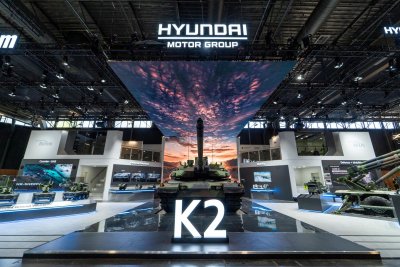
Hyundai Rotem showcases its K2 main battle tank and other defense technologies at Eurosatory 2026, which takes place in Paris this week. Photo by Hyundai Rotem
June 15 (UPI) — South Korea’s Hyundai Rotem said Monday that the company is showcasing its AI-powered anti-drone technologies at Eurosatory 2026, a defense fair that takes place in Paris this week.
The affiliate of Hyundai Motor Group noted that it has publicly unveiled the system designed to counter unmanned aircraft, including drones, for the first time.
The solution aims to protect troops and military assets from drone attacks by combining AI-driven threat detection and automated response functions, according to Hyundai Rotem.
The firm said that the platform can assess a wide range of battlefield scenarios in real time, analyzing various factors such as the type, distance and altitude of incoming threats to determine the most effective countermeasures.
Built around an unmanned turret platform, the multi-layered defense solution integrates both soft-kill and hard-kill capabilities, Hyundai Rotem said.
The growing importance of such technologies has been recognized by recent conflicts, including the wars in Ukraine and Iran.
Hyundai Rotem is also displaying an export-oriented version of its K2 main battle tank at the exhibition. It has emerged as one of South Korea’s most successful defense exports, as Poland purchased hundreds of the tanks over the past few years.
“By strengthening our capabilities in AI-based protection solutions, including multi-layered defense systems, we will further diversify our business portfolio and enhance our presence in the global market,” Hyundai Rotem said in a statement.
“We will continue to advance key protection and unmanned technologies geared toward preserving human lives, reinforcing our leadership and competitive edge in the defense industry,” it added.
The share price of Hyundai Rotem rose 2.16% on the Seoul bourse on Monday, while the benchmark KOSPI jumped 5.2%.
US stocks have rallied on hopes that the tentative deal to end the US-Israel war on Iran will restore stability to energy supply chains roiled by months of disruption in the Strait of Hormuz.
The S&P 500 rose 1.7 percent on Monday, taking the benchmark index within touching distance of its all-time high.
Recommended Stories
list of 4 itemsend of list
The tech-focused Nasdaq Composite jumped 3.1 percent, aided by a 19.6 percent gain by SpaceX, which on Friday made the biggest market debut in history and minted the world’s first trillionaire in Elon Musk.
The blue-chip Dow Jones Industrial Average climbed 0.9 percent, closing at a record high.
Brent crude futures, the primary benchmark for global oil prices, fell nearly 5 percent to just above $83 a barrel, the lowest price since the first week of the conflict.
Asian stock markets were largely flat on Monday morning, after surging the previous day on the back of US President Donald Trump’s announcement of his deal with Tehran.
As of 01:30 GMT, Japan’s benchmark Nikkei 225 was 0.01 percent lower, while South Korea’s Kospi, the best-performing major index this year, was down 0.06 percent.
In Taiwan, the TAIEX was up 0.2 percent.
Hong Kong’s Hang Seng Index was down 0.07 percent.
Jay Goldberg, a senior analyst for tech-related equities at the Chicago-based Seaport Research Partners, said the announcement of the US-Iran deal had tilted investors’ risk balancing act towards buying into the market.
“To oversimplify, the debate has been: AI spending is strong, but there’s a war going on,” Goldberg told Al Jazeera.
“The war is over, it seems, so that side of the argument falls away. Investors are now feeling better about taking on more risk,” Goldberg said.
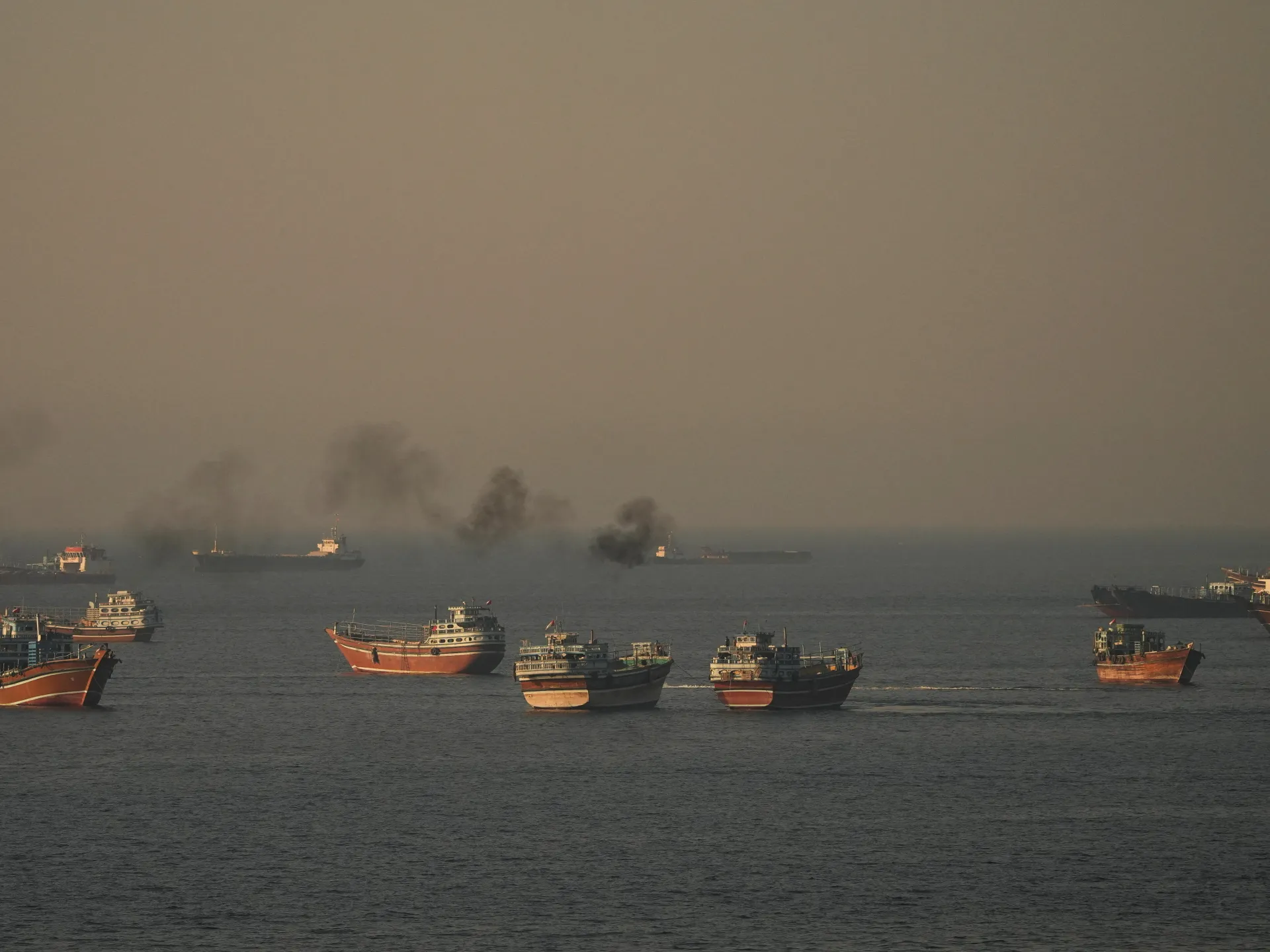
While Washington and Tehran’s framework has raised hopes for a return to stability in global energy markets, it is expected to take months before energy flows fully return to normal, due to the massive backlog of vessels around the Strait of Hormuz and the need to ensure the waterway is safe from Iranian naval mines.
According to the International Shipping Chamber, about 500 ships are still waiting to pass through the strait, which normally carries about one-fifth of global supplies of oil and liquefied natural gas.
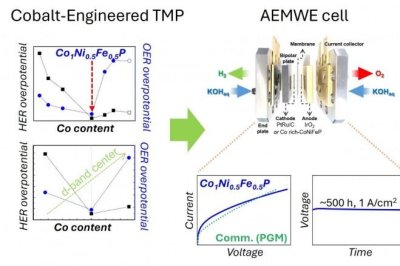
A graphic summarizes the performance of a cobalt-optimized, non-precious-metal catalyst used in an anion-exchange membrane water electrolysis system. Image courtesy of Chung-Ang University
June 15 (Asia Today) — South Korean researchers have developed a catalyst that could substantially reduce the cost of producing green hydrogen while delivering performance and durability comparable to catalysts made with expensive precious metals.
A research team led by Professor Don-Hyung Ha of Chung-Ang University developed multimetallic phosphide nanoparticles that do not require platinum, iridium or other costly precious metals, the university said Monday.
The research was conducted jointly with a team led by Professor Inho Nam of Chung-Ang University’s Department of Chemical Engineering and researchers led by Sung Jong Yoo of the Korea Institute of Science and Technology’s Center for Hydrogen and Fuel Cells.
The catalyst was used to build a high-performance anion-exchange membrane water electrolysis system, a technology considered a potential lower-cost option for producing clean hydrogen.
Water electrolysis uses electricity to split water into hydrogen and oxygen. When the electricity comes from renewable sources, the resulting fuel is commonly called green hydrogen because the production process does not directly emit carbon dioxide.
Many high-performance electrolyzers, however, rely on scarce and expensive catalysts containing platinum or iridium. Their cost and limited availability have been major obstacles to the large-scale commercialization of green hydrogen.
Anion-exchange membrane water electrolysis could reduce dependence on those metals because it can operate with less expensive materials. Existing non-precious-metal catalysts, however, often undergo changes to their surface structures during operation, resulting in lower efficiency and shorter operating lives.
The researchers sought to address the problem by designing nanoparticles made from cobalt, nickel, iron and phosphorus.
They used real-time spectroscopic analysis to examine changes in the catalyst’s oxidation state and surface structure while it was operating.
The team found that optimizing the amount of cobalt caused a stable, highly active structure to form on the catalyst’s surface during electrolysis. The researchers identified this surface reconstruction as a key factor in maintaining high catalytic activity and long-term durability.
In single-cell tests, a system using the catalyst at both the hydrogen-producing and oxygen-producing electrodes reached a current density of 5.73 amperes per square centimeter at 2 volts.
When the catalyst was used only at the oxygen-producing electrode, the system reached 11.43 amperes per square centimeter at the same voltage.
Higher current density generally indicates that an electrolyzer can produce more hydrogen from a given electrode area, although overall commercial performance also depends on factors including energy efficiency, system size, operating conditions and manufacturing cost.
The system also operated continuously for 500 hours at a commercially relevant current density of 1 ampere per square centimeter without a significant decline in performance, the researchers said.
The results indicate that non-precious-metal catalysts can deliver performance approaching that of systems using platinum-group metals.
The study combined control of the catalyst’s chemical composition, real-time analysis of its operating surface and performance testing in a complete electrolysis cell. The researchers said the integrated approach strengthens the catalyst’s potential for practical application.
“This study is academically significant because we precisely controlled the composition of a non-precious multimetallic phosphide catalyst and used real-time analysis to clarify how its surface changes during operation,” Ha said.
“It could serve as a milestone in developing low-cost water electrolysis electrodes that replace expensive precious-metal catalysts while providing both high performance and durability,” he said.
The research was supported by South Korea’s Ministry of Science and ICT through the H2GATHER program, the H2 NEXT ROUND program and a Korea Institute of Science and Technology clean hydrogen technology development program.
The study, titled “Cobalt-Engineered Multimetallic Phosphides with Switchable HER-OER Activity for Durable Anion Exchange Membrane Water Electrolysis,” was published online May 26 in Advanced Functional Materials.
Juba, South Sudan – In the days before Lankien was attacked, doctors at the local hospital rushed to evacuate patients. Some were women in labour. Others were being treated for gunshot wounds. By the evening of February 3, just hours after the last patients were carried out, a bomb struck the empty facility, ripping a crater through its warehouse.
Fighting was underway in surrounding areas as South Sudan’s military pressed forward with a counteroffensive aimed at retaking territory seized by opposition armed groups. As the army advanced eastward through Jonglei State, it captured town after town, pushing opposition fighters towards the Ethiopian border.
In the aftermath of the bombing, residents said they were forced to flee into surrounding marshland on the morning of February 7 as mortar fire struck the town. Some eventually returned and described extensive destruction.
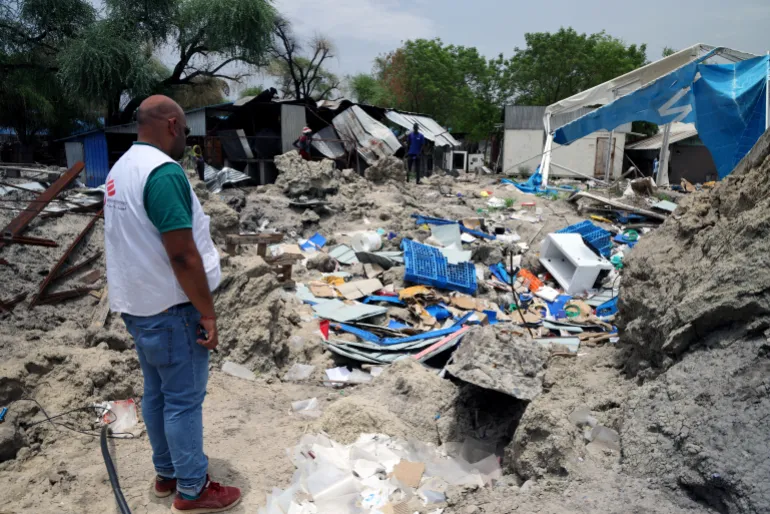
The hospital had been looted and burned. Its cold-chain storage unit, used to preserve vaccines, was set on fire. Vehicles were sprayed with bullets and stripped for parts. Solar-powered water systems had been dismantled. The local market was reduced to twisted metal sheets, while homes on the outskirts appeared to have been burned.
“Anything that can support the life of human beings was deliberately destroyed,” said Emmerson Gono, deputy head of mission for Doctors Without Borders, known by its French initials MSF, who visited Lankien in April, adding that this was his assessment based on what he observed.
A counteroffensive across Jonglei
Since the start of what authorities refer to as “Operation Enduring Peace,” satellite imagery analysed by the Centre for Information Resilience (CIR), combined with verified videos, images and witness accounts, indicates widespread destruction across a swathe of Jonglei that has long been a stronghold of opposition groups.
Both the military and opposition forces have been accused of razing villages and attacking civilians in recent months. In this area of Jonglei, which is home to a section of the Nuer ethnic group that officials often cast as hostile to the state, more than a dozen residents who spoke to Al Jazeera said they believed the military was responsible for targeted destruction that experts say has pushed tens of thousands of people towards the brink of famine.
Lankien hospital was evacuated, and patients were discharged hours before the attack, following increased tensions and after MSF received information about a possible attack against the city. [Courtesy of MSF]
In most of the 23 incidents CIR documented between late January and February, civilian structures, including homes, health facilities and markets, appear to have been burned and looted. CIR said the destruction was “likely to be more widespread and potentially part of what it described as a deliberate military strategy”.
“Using satellite imagery, we were able to map how troop movements from west to east followed a path of burning and looting,” said CIR researcher Kiria Borak, stressing that satellite imagery alone cannot determine intent or responsibility.
Some officials and humanitarian actors have attributed the destruction in Jonglei to clashes between government troops and opposition forces. However, residents told Al Jazeera that opposition fighters were not present when their villages were attacked. Those accounts could not be independently verified due to restricted access to the area.
Government officials did not respond to requests for comment on the specific allegations described in this report. In earlier statements, authorities have said military operations are conducted in self-defence and that civilians are not deliberately targeted.
Political backdrop
Violence has escalated since 2025, when opposition leader and first vice president Riek Machar was arrested on charges of subversion, allegations he denies. Machar and President Salva Kiir were once on opposing sides of the country’s 2013–2018 civil war, which killed hundreds of thousands of people before a peace agreement brought them into a fragile unity government.
The implementation of that agreement stalled amid delays in unifying armed forces into a national military and repeated postponements of national elections.
Following Machar’s arrest, the government undertook a campaign of aerial bombardments to beat back a simmering rebellion in rural areas. Machar’s political group declared the peace deal dead and began launching hit-and-run attacks on military positions.
Between December and January, opposition fighters, buoyed by support from local armed youth, seized several military garrisons in Jonglei, prompting the government to announce a counteroffensive on January 28.
Then-army chief Paul Nang ordered forces, drawn from the national army, intelligence units, police and allied militias, according to UN investigators, to retake territory held by opposition groups.
Analysts say the involvement of allied militias operating alongside formal units has complicated the determination of command responsibility.
‘Burning homes’
Five individuals who fled Lankien told Al Jazeera they witnessed events unfold on February 7.
They said government-aligned forces reached the outskirts of the town after fighting in a nearby village. Around late morning, mortar fire struck the town, followed by the arrival of ground forces in armoured vehicles.
Gai Ket, 32, said he had been cutting firewood when explosions began. He rushed back to town to look for his wife and children.
“The first thing I saw was smoke. SSPDF was burning homes,” he said, referring to the national army.
When he reached his house, he found his wife dead, with a severe wound to her chest. Bodies lay scattered across the neighbourhood. “Everything was gone,” he said.
The hospital’s main warehouse was destroyed during the attack, and we lost most of our critical supplies for providing medical care. [Courtesy of MSF]
Another resident, Puoch Duol, said he returned at night to search for his grandmother, who had been too weak to flee. He said he found her body among several others near the ruins of burned homes.
Satellite imagery reviewed by CIR indicates significant destruction in Lankien between February 7 and 9. On February 7, the army announced it was in control of the town.
MSF has said government forces were in control of Lankien in the days after the attack but has not assigned responsibility for the destruction. It said the government is the only party to the conflict with the capability to carry out aerial bombardments.
Government-appointed officials told Al Jazeera that opposition fighters looted the town during their withdrawal. Opposition representatives deny this, saying their forces were not present at the time. Neither account could be independently verified.
A pattern of destruction
Residents described a similar pattern of destruction across towns and villages stretching from the Nile River to the Ethiopian border. Armed men in military-style uniforms arrived in armoured vehicles, often after opposition forces were reported to have withdrawn, according to residents.
Homes and markets were burned, while health facilities and humanitarian compounds were looted. Civilians took refuge in swamps and forests, while those too weak to flee were killed or went missing.
CIR geolocated social media footage from Pathai showing fighters moving among burning structures towards a road leading into the town’s western entrance. The identities of those in the footage could not be independently verified.
Jany, an aid worker based in the town of Walgak, described an attack on February 5.
“We saw smoke everywhere. They were firing guns and burning houses,” he said.
Satellite imagery shows significant structural damage in Walgak between February 3 and 7, shortly after the town changed hands.
Humanitarian sources tracking developments in the area reported that multiple villages in the vicinity of Walgak were burned or destroyed during the same period. These accounts could not be independently verified due to restricted access and ongoing insecurity.
Remote sensing data shows clusters of fire activity across the region during the same period. However, satellite imagery alone cannot determine the cause or responsibility for the fires.
Command rhetoric and discipline
From the start of military operations, remarks by commanders raised concerns over civilian safety.
A video circulated on social media shows Johnson Olony, a deputy army chief who is also head of the Agwelek armed group, telling troops not to spare lives or property during operations. The government later said the remarks did not reflect official policy, and Olony apologised.
In another video, a commander identified as Wal Nyak appears to threaten violence against perceived opposition supporters. “Whether you are a woman or a girl, we will kill you all … We don’t want supporters of Riek Machar here,” he says.
Reports and satellite imagery point to burned villages and mass displacement across Jonglei. [Satellite imagery/Vantor]
The authenticity and full context of the footage could not be independently verified.
Humanitarian impact
Aid agencies say the consequences of the destruction reported in the area are severe and likely to last for months or longer.
At least 28 health facilities in Jonglei were damaged or looted this year, according to the UN. Seventy percent are no longer functioning.
The Integrated Phase Classification (IPC), a United Nations-backed analysis body, says there is a risk of famine in multiple counties, while more than 70,000 people are already facing the highest possible severity of hunger.
Nicholas Kerandi of the UN Food and Agriculture Organization said the impacts on food security and public health “are likely to persist through the remainder of the year and potentially beyond”.
Others say the alleged abuses in Jonglei have pushed South Sudan’s already fractured state to breaking point.
“The tribes don’t trust one another, the citizens don’t trust the government, and the government doesn’t trust its citizens,” Ter Manyang Gatwech, a human rights advocate from Jonglei, told Al Jazeera.
“Unless there is a miracle, South Sudan will disintegrate,” he said.
The preliminary deal to end US-Israel war on Iran has sent oil prices tumbling to a three-month low amid hopes that the Strait of Hormuz will reopen.
But it could be months before American consumers see major relief at the petrol pump.
Recommended Stories
list of 3 itemsend of list
The closure of the strategic chokepoint disrupted global energy markets for more than three months, cutting off a major shipping route through which roughly one-fifth of the world’s oil and liquefied natural gas normally passes.
On Sunday, US President Donald Trump said prices would “drop like a rock” once the strait reopens, a claim he has made multiple times in the past few weeks.
However, experts caution that a major decline in prices is unlikely to happen as quickly as Trump suggests.
While Asian markets rely more heavily on oil shipped through the Strait of Hormuz than North American markets, tighter supply and steady demand have pushed prices higher worldwide.
On Monday, petrol prices in the US remained above $4 per gallon (3.78 litres), averaging $4.06 nationwide, according to the American Automobile Association (AAA). This was a dip from a high in early May of $4.48 per gallon.
By comparison, prices stood at $2.98 per gallon on February 28, when the US and Israel first struck Iran, triggering a ripple effect across global energy markets.
Energy prices have risen sharply in the US in recent months, increasing 7.7 percent over the last two months alone, and are up 40 percent from a year ago, according to last week’s inflation report from the Labor Department’s Bureau of Labor Statistics,
However, prices are beginning to fall, a dip that began as Washington and Tehran entered negotiations.
“The potential deal that the US and Iran agreed to over the weekend certainly could pave the way for even lower prices… in the next two to three days by what we saw over the weekend,” Patrick De Haan, head of petroleum analysis at GasBuddy, which tracks petrol prices, told Al Jazeera.
But De Haan expects a plateau and says that consumers may not see gas prices at pre-war levels until 2027, even if the ceasefire holds.
“It may take many months, if not beyond a year, for global oil inventories to recover to pre-war levels,” De Haan said.
Amid strains on the supply chain, producers will also need time to ramp up output, while port bottlenecks and heightened demand during the busy summer travel season could delay any substantial relief for everyday consumers.
“There are some mitigating factors that are going to slow the decline in prices. There are a lot of organisations and companies that have to re-up their stockpiles [like the US’s strategic petroleum reserve] and fulfil contracts that have been on hold for the last few months,” John Deal, managing director of capital markets at the Post Oak Group investment bank, said.
Supply chain strains
Fixing kinks in the supply chain takes time.
Oil production slumped amid the war. More than 14 million barrels per day, or 14 percent of the world’s demand, has been shut, according to the International Energy Agency.
Deal said it would take time to get oil production back online.
“My sense is that there’s going to be sustained high demand through the summertime, and we probably won’t get back to pre-war levels [on petrol prices] until after the summer, maybe September or October,” Deal said.
Mark Jones, a professor of political science at Rice University, said that producers might be reluctant to bring full operations back online until they can see the ceasefire hold.
The agreement opening the blockade is for a 60-day negotiation period between the two countries.
“Many [producers] may be reluctant to restart production until they are convinced that the peace will hold, because the last thing they want to do is carry out the costly effort to restart production only to see the conflict revived and then have to shut it down once again,” Jones told Al Jazeera.
Getting production back online is also dependent on the impact individual producers have faced throughout the war.
Refineries that were shut as a precaution could reach as much as 95 percent capacity within 40-60 days, Vitol Bahrain’s head of research, Bader Nooruddin, told the Reuters news agency. Those damaged in the fighting could take much longer.
But bottlenecks at ports could be the biggest hurdle, according to Deal.
“There’s a lag time with shipping capacity. Shipping capacity is perhaps the most significant constraint,” Deal said.
This is because there are more than 500 ships still awaiting passage, according to shipping data from Kpler.
With the ships headed all over the world, it will take them weeks to reach their destinations, dock, and unload at the ports.
That also means a wave of empty ships is waiting in limbo for spots at ports to load cargo and ramp back up to normal operations.
Major shipping giants are in a holding pattern.
Norway’s Wallenius Wilhelmsen and Denmark’s Maersk both told Reuters that they have not changed their Middle East operations in the wake of the announcement.
During the war, there was limited passage through the Strait of Hormuz, with an average of 10 ships a day passing through, compared with 135 that normally transit the waterway, according to an analysis by Bloomberg.
“Tankers take months to reach their final destination and then come back again. So the ability to replenish the stocks is going to take until, I think, the early fall, just from a shipping perspective, to get back to the status quo that was in place before the conflict started,” Jones said, referring to the preferred term for the months of September through November in North America.
At the same time, US strategic reserves are running low, at their lowest levels since 1983. Reserves have tumbled by 18 percent since the war began.
“Demand might keep prices high through the summer as strategic reserves get refilled,” Deal added.
Jet fuel demand will also put pressure on consumers amid the normally busy JuneAugust travel season in the US.
“The war has really affected airlines and their ability to schedule and anticipate how the summer months are going to go,” Deal added.
In April, United Airlines CEO Scott Kirby said that airfares for the carrier may have to jump as much as 20 percent on higher fuel prices.
Grocery woes
The increase in prices is also hitting food budgets.
The most recent consumer price index report showed US inflation ticked up by 4.2 percent compared with this time last year. While inflationary pressures were mostly driven by fuel prices, the impact has still been felt at the grocery store.
Almost half of the world’s urea, which is used in fertiliser, is produced in the Gulf region and passes through the Strait of Hormuz. For American farmers, that means access to fertilisers for the next crop season is more expensive.
Tomato prices, already driven up by Trump’s tariffs on Mexico, have surged 40 percent in the last year amid rising transportation costs.
Lettuce prices rose by more than 16 percent in May, and the price of ground beef increased by about 12 percent compared with this time last year.
Jones warned that food prices may not go down.
“Many retailers, wholesalers, and producers will keep them where they are or only reduce them if forced to from a sales perspective. Unlike petrol, which tends to ebb and flow with the price of oil, prices for many other goods that have been adversely affected by all of this are much less likely to return to where they were prior to the start of the conflict,” Jones said.
“For groceries, for manufacturing goods, for anything that has gone up during the conflict, the price that is there now often becomes the new baseline from which prices move in the future.”
This can be compared with the COVID-19 pandemic period. When the pandemic stalled supply chains, producers increased prices. A 2024 investigation by the Federal Trade Commission found that retail grocers kept prices elevated after supply chain constraints brought on by the pandemic had eased.
“Some in the grocery retail industry seem to have used rising costs as an opportunity to further raise prices to increase their profits,” the report said.
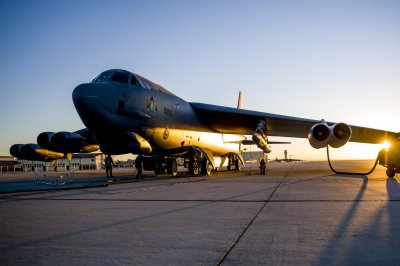
A B-52 Stratofortress assigned to the 419th Flight Test Squadron undergoes pre-flight procedures at Edwards Air Force Base in California in 2020. A B-52 Stratofortress crashed shortly after taking off from the base on Monday. Air Force File Photo by Giancarlo Casem
June 15 (UPI) — California’s Edwards Air Force Base said eight crew members are believed dead following the Monday crash of a B-52 Stratofortress.
The base confirmed the B-52 Stratofortress, which was carrying a crew of eight, crashed shortly after takeoff at 11:20 a.m. Monday morning.
“Initial indications are that the crash was not survivable,” the base said in a release posted to X.
Emergency response personnel were on scene working to account for all eight crew members.
“Our thoughts and prayers are with the families and unit members at this time,” the post said.
‼️ Official release regarding today’s B-52 crash at Edwards. Our thoughts and prayers are with the families and unit members at this time.
The airfield was closed following the crash and all incoming aircraft were diverted.
“All non-commercial visitor passes have been suspended until further notice to allow the installation to focus entirely on emergency response operations,” the base said in an earlier post.
Edwards Air Force Base, located about 100 miles north of Los Angeles, frequently hosts test flights for new and experimental Air Force and NASA aircraft.
The base said more information on the crash will be provided as it becomes available.
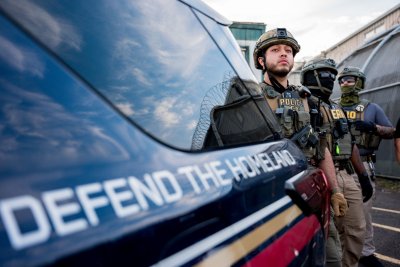
June 15 (UPI) — Police in New Jersey’s Stafford Township said an Immigration and Customs Enforcement agent fired his gun at a fleeing vehicle moments after being struck.
The Stafford Township Police Department said in a statement shared to social media that ICE was attempting to apprehend a suspect around 9:30 a.m. in Manahawkin when the person fled in a vehicle.
The suspect’s vehicle, which witnesses identified to News 12 New Jersey as a white van, struck an ICE officer, who then fired his gun at the vehicle.
Witnesses said the shot shattered the back window of the van, but the vehicle did not stop.
“The suspect fled the scene in the vehicle and has not been located at this time. The agent reportedly sustained unknown injuries and it is unknown if the suspect was injured at this time,” police wrote.
The department said police were not involved in the original ICE operation Monday morning. The department secured the crime scene and managed traffic while the Federal Bureau of Investigation was called in to investigate.
Police administered first aid to the injured ICE agent and “facilitated his transport for further treatment,” the statement said.
ICE provided a statement to NBC10 Philadelphia identifying the suspect as Friedrich Castillo-Ormeno, a Peru native who was ordered to leave the country by given an immigration judge on Jan. 30.
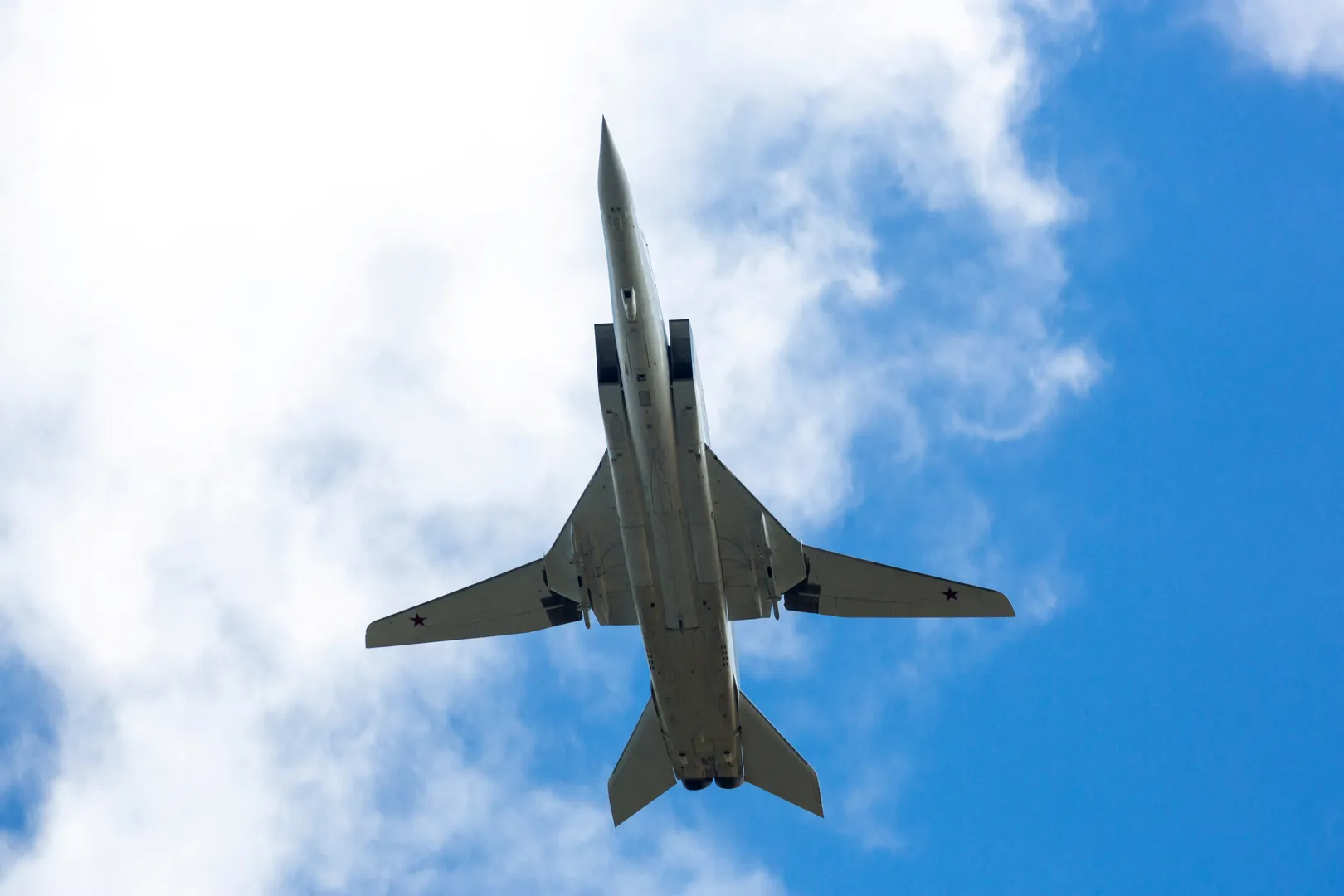
A Russian Tu-22M3 strategic bomber crashed in Siberia’s Irkutsk region during a training flight, but all four crew members had managed to safely eject. The Soviet-era supersonic bomber has been used by Russia in combat operations in Syria and Ukraine.
The lawsuit originally filed in September focused on broader alleged misappropriation of confidential information.
Published On 15 Jun 202615 Jun 2026
A United States federal judge has dismissed a lawsuit by Elon Musk’s artificial intelligence company xAI that accused rival Sam Altman’s OpenAI of stealing trade secrets for chatbots.
US District Judge Rita Lin in San Francisco said on Monday that xAI failed to show that OpenAI induced former xAI senior engineer Xuechen Li to divulge confidential information related to its Grok chatbot, or that OpenAI engineers knew Li might have disclosed any.
Recommended Stories
list of 4 itemsend of list
Lin dismissed the lawsuit with prejudice, saying it would be “futile” to continue. She dismissed an earlier version in February. The lawsuit originally filed last September focused on broader alleged misappropriation of confidential information, including source code, by xAI employees who left for jobs at OpenAI.
Monday’s decision is Musk’s second legal loss against OpenAI in four weeks.
On May 18, a federal jury ruled against Musk, the world’s richest person, in his $150bn lawsuit accusing OpenAI and Altman of “stealing a charity” by betraying the company’s original mission as a nonprofit to enrich themselves.
The xAI business is part of Musk’s rocket, satellite and AI company SpaceX.
Lawyers for xAI did not immediately respond to requests for comment. OpenAI and its lawyers did not immediately respond to similar requests.
Discussing past work
The amended complaint focused on a presentation that Li gave while OpenAI was recruiting him.
Musk’s company said OpenAI wanted secrets related to the July 2025 release of Grok 4, knowing its forthcoming update to ChatGPT “could not compete” on complex reasoning, and because OpenAI was “lagging” in reinforcement learning and post-training techniques that Li understood.
But the judge said asking job candidates to discuss their prior work was routine, and one could not infer that OpenAI pushed Li to leak anything confidential.
“To hold otherwise would potentially expose employers to liability any time they inquire about a candidate’s past work,” Lin wrote.
OpenAI has said Li never worked for the company and that it never acquired xAI secrets.
In seeking dismissal, lawyers for OpenAI wrote: “OpenAI does not need or want anyone’s trade secrets, especially not from xAI, which is failing in the marketplace and hemorrhaging talent.”
Li is being sued separately by xAI and has denied wrongdoing.
James Comey, former director of the Federal Bureau of Investigation, testifies via videoconference during a Senate Judiciary Committee hearing in Washington, D.C. on Sept. 30, 2020. The U.S. Supreme Court will not take up former Trump adviser Carter Page’s lawsuit against Comey, it decided Monday. File Pool Photo by Stefani Reynolds/UPI | License Photo
June 15 (UPI) — The U.S. Supreme Court will not take up former Trump adviser Carter Page’s lawsuit against former FBI director James Comey, it decided Monday.
Page sought to revive his lawsuit against Comey over errors and omissions made on warrant applications used to get permission to surveil him. The FBI wiretapped Page while it was investigating allegations against President Donald Trump‘s 2016 campaign colluding with Russia to interfere with the election.
Page’s lawsuit was dismissed by lower courts as they ruled he did not file his claims on time. Page alleges that the investigation into him harmed his reputation and cost him business opportunities.
The Trump administration paid Page $1.25 million in April to settle claims he made against the federal government.
The Justice Department said when announcing the agreement to settle with Page that the investigation into him was based on flawed information.
“No American should ever face covert and unlawful surveillance based on their political view,” a spokesperson for the Justice Department said in a statement.
Page has continued his attempts to sue Comey and seven others who served with the FBI during the investigation as individuals.
The Supreme Court released a list of cases it will and will not accept to its docket on Monday. The justices did not say why Page’s case has been denied.
June 15 (UPI) — The British Court of Appeals ruled Monday that the ban on the pro-Palestine organization Palestine Action is lawful and upheld its designation as a terrorist organization.
The five judges on the Court of Appeals ruled that the ban on the organization under the Terrorism Act is “justified and proportionate.” The proscription of Palestine Action as a terrorist organization makes supporting the group punishable by up to 14 years in prison.
More than 2,500 members of the group have been arrested.
Huda Ammori, the co-founder of Palestine Action who originally challenged the ban in court, said she plans to appeal the ruling in the British Supreme Court.
“We will fight this all the way,” Ammori said. “We will seek permission to appeal to the Supreme Court and, if need be, take this to the European Court of Human Rights.”
Palestine Action has remained banned since February, despite the High Court in London ruling that it is disproportionate and an unlawful violation of free speech rights.
“The future threats and risks posed to third-party individuals and property by Palestine Action are perhaps the most important factors to weigh in the balance,” Sue Carr, chief justice, read from the appeals court’s ruling. “In that connection, it is important to understand that the home secretary is in the best position to assess those future threats and risks. She is advised by experts on anti-terrorism.”
Carr acknowledged that the ruling may chill free speech and may deter people from lawfully assembling to protest Israel’s actions in Gaza or show support for Palestinians.
Non-government organizations, including Liberty, Human Rights Watch, Amnesty International UK and Greenpeace, said Monday’s ruling is a misuse of counter-terrorism authority.
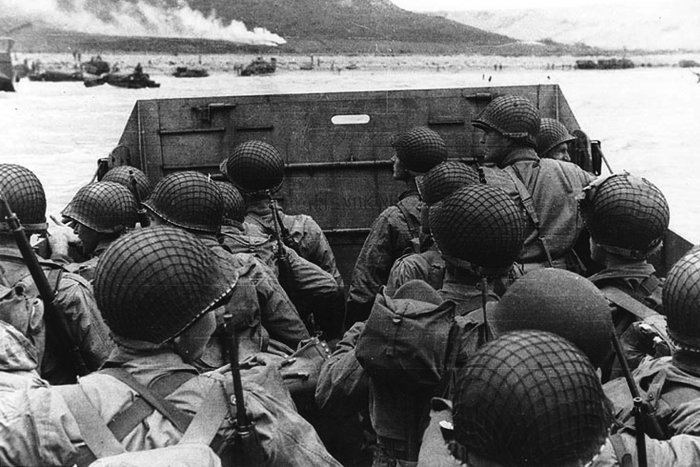
Troops in landing craft approach Omaha Beach on D-Day in Normandy, France, on June 6, 1944. D-Day was the largest seaborne invasion in history and turned the tide of World War II. Photo by UPI | License Photo
June 15 (UPI) — A judge who is turning 99 years old on Saturday is seeking to have her suspension lifted but the U.S. Supreme Court is passing on taking up her case.
The high court decided on Monday to decline Pauline Newman’s request for a hearing to lift her suspension. She is the oldest active federal judge but has been suspended for refusing to submit to mental fitness testing.
Newman argued that she is fit to serve, despite her age and the suggestion otherwise from her colleagues. She filed a lawsuit against her colleagues for suspending her with the U.S. Court of Appeals for the Federal Circuit, alleging that her suspension is unconstitutional.
“The petition presents questions concerning crucial constitutional and statutory aspects of lifetime tenure and judicial independence, especially the availability of judicial review for intra-branch infringements on judicial service,” Newman’s attorneys said in a filing to the Supreme Court.
Newman is indefinitely suspended from taking up new cases. She was suspended three years ago and told by the court’s chief judge, Kimberly Moore, that she may either retire or be given senior status, a type of semi-retirement for judges that reduces their caseload.
Newman has been on the bench for the U.S. Court of Appeals’ Federal Circuit since 1984. The Federal Circuit was established in 1982.
Newman has been called the “Great Dissenter” for writing more than 300 dissenting opinions throughout her career.
In her filing to the U.S. Court of Appeals for the Federal Circuit, Moore said Newman experienced health issues in 2021 that made her “unable to discharge the duties of an active circuit judge.” She adds that Newman fainted following an argument and was unable to walk in 2022. Newman then agreed to reduce her caseload.
After convening with a special committee of two Federal Circuit judges, Moore and the committee ordered Newman to undergo neurological and neuropsychological testing and for her to submit medical records.
Newman shared expert reports from two doctors but the committee recommended that she be barred from hearing any cases for one year, subject to renewal. In September 2023, the court approved the recommendation and she has remained under suspension since.
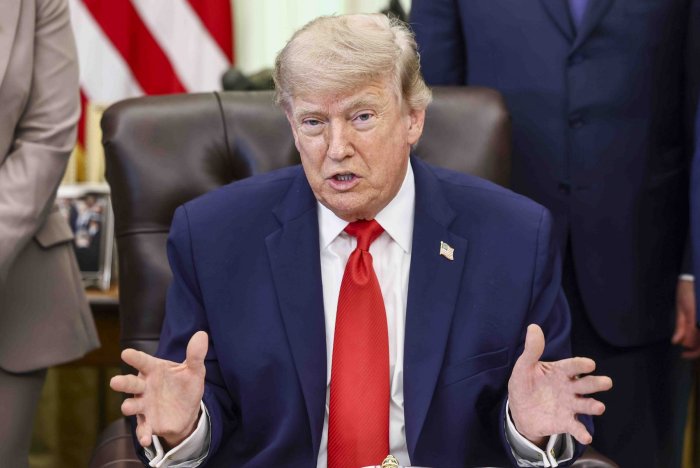
President Donald Trump speaks to reporters about restoring commercial fishing access to areas of the Pacific during a signing ceremony in the Oval Office of the White House on Thursday. Photo by Jim Lo Scalzo/UPI | License Photo
Marius Borg Hoiby has been found guilty of two counts of rape and other charges and sentenced to four years in prison. Hoiby is the son of Norway’s Crown Princess Mette-Marit but is not a member of the royal family. File Photo by Lise Aserud/EPA
June 15 (UPI) — Marius Borg Hoiby has been found guilty of two counts of rape and other charges and sentenced to four years in prison.
Hoiby, the son of Norway’s Crown Princess Mette-Marit, has also been convicted for domestic violence, violent threats and filming people without their consent. He pleaded guilty to assault, harassment and malicious damage to property but denied four counts of rape.
While Hoiby is the eldest son of the crown princess and stepson to Norway’s heir, he is not a member of the royal family.
Hoiby faced two more counts of rape but the three judges at the Oslo District Court acquitted him on those counts. However, he is ordered to pay damages to the four women who accused him of rape in the amount of nearly $61,000.
Hoiby’s attorneys have pleaded for his release from prison so he can be with his mother who has been diagnosed with pulmonary fibrosis and is seeking a lung transplant. The Oslo District Court granted his release last week but the decision was overturned on appeal.
Earlier this year, it was revealed in a tranche of files released by the U.S. Department of Justice that Mette-Mait had a three-year friendship with convicted sex offender Jeffrey Epstein.
Prosecutors in the case sought a sentence of seven years in prison for the 39 charges Hoiby faced. They also wanted Hoiby banned from communicating with one of the alleged victims and to have several of his devices confiscated, including three iPhones and a MacBook.
In the case of all four rape charges, the victims were either asleep or incapacitated.
The allegations against Hoiby involved six women. One of them testified that she was incapacitated or asleep when Hoiby raped her in March 2024.
Hoiby also admitted to transporting marijuana.
Troops in landing craft approach Omaha Beach on D-Day in Normandy, France, on June 6, 1944. D-Day was the largest seaborne invasion in history and turned the tide of World War II. Photo by UPI | License Photo
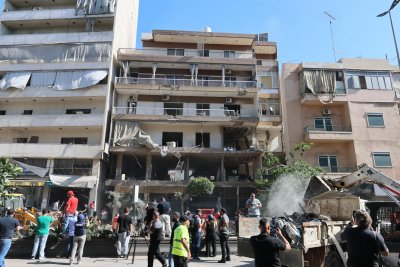
People stand near the site of an apartment targeted by an Israeli airstrike in Beirut’s southern suburbs on Sunday. Photo by Wael Hamzeh/EPA
June 14 (UPI) — The Israeli military launched an attack on Hezbollah targets in Beirut on Sunday, accusing the group of violating a cease-fire agreement earlier in the day and throwing an Iranian peace deal into question.
The Israeli strikes hit the southern suburbs of Beirut, specifically in Dahiyeh, a neighborhood where Hezbollah holds sway, The New York Times reported.
Lebanon‘s state-run news agency, NNA, reported that two people died and four others sustained injuries in the attack. A strike hit a residential building, the agency said, as reported by NBC News.
Lebanese security sources told NBC News that Israel fired two missiles in a targeted strike. Israel said it hit a Hezbollah command center used to “advance terrorist attacks against the citizens of the state of Israel and [Israel Defense Force] soldiers operating in southern Lebanon.”
Hours before the strike, the Israeli military accused Hezbollah of violating a cease-fire by firing toward Israel.
Israeli Prime Minister Benjamin Netanyahu and Defense Minister Israel Katz issued a joint statement confirming they ordered the strike.
“Israel will not tolerate fire into its territory,” they said.
Sunday’s violence between Israel and Lebanon could complicate U.S. and Iranian negotiations for a peace deal. The United States and Pakistan — which has acted as a mediator — said Saturday the agreement was ready to be signed Sunday in an additional round of talks, but Iranian Foreign Ministry spokesman Esmail Baghaei said there were no plans for Iran’s negotiators to be involved in any talks for the next few days.
Mohammad Bagher Ghalibaf, Iran’s speaker of parliament and chief negotiator with the United States, accused Washington of “giving the green light” to Israel for its attack on Dahiyeh.
“The game of bad cop and good cop is outdated,” he said in a post on X.
“If you lack the will and ability to fulfill your commitments, speaking of continuing the path is not possible.”
President Donald Trump was apparently incensed about Sunday’s attack and issued a rare rebuke against Netanyahu — saying he has “no [expletive] judgment” — in comments to Axios.
Trump called on Israel and Hezbollah to stand down in a post on Truth Social.
“This morning’s attack on Beirut should not have happened, particularly on a special day when we are so close to a Peace Deal with Iran,” he wrote. “Israel has the right to defend itself against threats, but the attack it was responding to was very small and meaningless, nobody was hurt, injured, or killed, and should not disrupt this important process.
“This could be the beginning of a long and beautiful peace — Let’s not blow it!”
Israeli journalist Gideon Levy says the US-Iran announcement represents a personal defeat for Prime Minister Benjamin Netanyahu and his ambitions against Iran and Lebanon. His relationship with US President Donald Trump could also be at risk if Israel jeopardises the deal.
The World Cup group stage continues on Monday, with four more matches taking place across the United States.
Spain begin their campaign against World Cup newcomers Cape Verde, Belgium face Egypt in what could be one of the day’s closest games, Saudi Arabia take on Uruguay in Miami, and Iran meet New Zealand in Los Angeles.
Recommended Stories
list of 4 itemsend of list
Away from the football, Uruguay’s disrupted travel plans, divisions within Los Angeles’s Iranian American community before Iran’s opener, and Haiti’s inspiring return to the World Cup are all drawing attention beyond the pitch.
Belgium face Egypt at Seattle Stadium in Seattle at the same time, with the Group G rivals also getting under way at 12pm local time (19:00 GMT).
Later, Saudi Arabia meet Uruguay at Miami Stadium in Miami Gardens, Florida. That match starts at 6pm local time (22:00 GMT).
The day’s final fixture sees Iran face New Zealand at Los Angeles Stadium in Inglewood, California. Kickoff is at 6pm local time (01:00 GMT on June 16).
What do the predictions say for Spain vs Cape Verde?
Spain are the clear favourites to win, but Cape Verde have already made history by reaching the World Cup for the first time.
The teams have never played each other. Spain’s last two World Cup matches against African opponents came against Morocco, drawing 2-2 in 2018 before losing on penalties after a 0-0 draw in the 2022 quarterfinals.
Opta’s predictions strongly favour Spain. After running 25,000 simulations, the statistics company gave Spain an 87.2 percent chance of winning the Group H opener. A draw was predicted in 8.1 percent of the outcomes, while Cape Verde were given a 4.8 percent chance of causing an upset.
Only one African team has ever beaten Spain at a World Cup: Nigeria, who won 3-2 in the group stage in 1998.
Spain vs Cape Verde
What do the predictions say for Belgium vs Egypt?
This one could be much closer than many people expect.
Opta’s predictions suggest there is very little separating the sides. In 25,000 match simulations, Belgium won 37.2 percent of the time, while Egypt came out on top in 35.5 percent. A draw happened in 27.3 percent of the simulations.
Belgium are slight favourites. It could end up being one of the closest games of the day, with a single goal potentially making the difference.
Belgium face pressure to avoid repeating their performance in 2022 in Qatar, when they did not advance beyond the group stage. The Belgians finished third in 2018 in Russia.
Belgium vs Egypt – World Cup
What do the predictions say for Saudi Arabia vs Uruguay?
Saudi Arabia and Uruguay have met only once before at a World Cup. Uruguay won that match 1-0 in 2018.
The teams have also faced each other in a friendly match. That game, played in Saudi Arabia in 2014, ended in a 1-1 draw.
The predictions favour Uruguay. In 25,000 simulations run by Opta, Uruguay won 64.7 percent of the time. Saudi Arabia won 13.9 percent of the simulations, while 21.4 percent ended in a draw.
Saudi Arabia vs Uruguay – World Cup
What do the predictions say for Iran vs New Zealand?
Iran and New Zealand have only played each other twice before, and this will be their first meeting in a competitive match.
Their first game ended in a 0-0 draw in New Zealand in 1973. Thirty years later, Iran won 3-0 in Tehran, with Ali Karimi scoring twice before Hossein Kaebi added a third goal.
The predictions give Iran the edge. In 25,000 simulations run by Opta, Iran won 53.8 percent of the time. New Zealand won 20.4 percent of the simulations, while 25.8 percent ended in a draw.
Iran vs New Zealand – World Cup
What else is shaping the World Cup?
Uruguay’s travel plans hit by delays before World Cup opener
Uruguay’s preparations for their World Cup opener have been disrupted after travel problems delayed the team’s arrival in the US.
The squad had been due to fly from Cancun, Mexico, before Monday’s Group D match against Saudi Arabia in Miami. However, reports in Uruguay said the charter flight was not cleared to enter the US, forcing the team to make alternative arrangements.
The Uruguayan Football Association (AUF) said the delay was outside its control. A replacement plane was eventually organised, with the team expected to reach South Florida only about a day before kickoff.
“Due to problems beyond the control of the AUF, the departure from Mexico has been delayed,” the association said in a statement. “The squad is resting at the hotel. The new departure time set by FIFA is 4:15pm [21:15 GMT].”
Japan fans continue World Cup cleanup tradition after Netherlands draw
The blue bags Japanese fans waved while celebrating their team’s goals, and then stayed behind for something else after the match ended.
Following Japan’s 2-2 draw with the Netherlands, supporters stayed behind to collect rubbish from the stands before leaving the stadium, continuing a tradition that has become a familiar part of the World Cup.
The cleanup effort first caught global attention at the 1998 tournament in France, and Japanese fans have kept it going at every World Cup since.
Iranian Americans divided over Team Melli
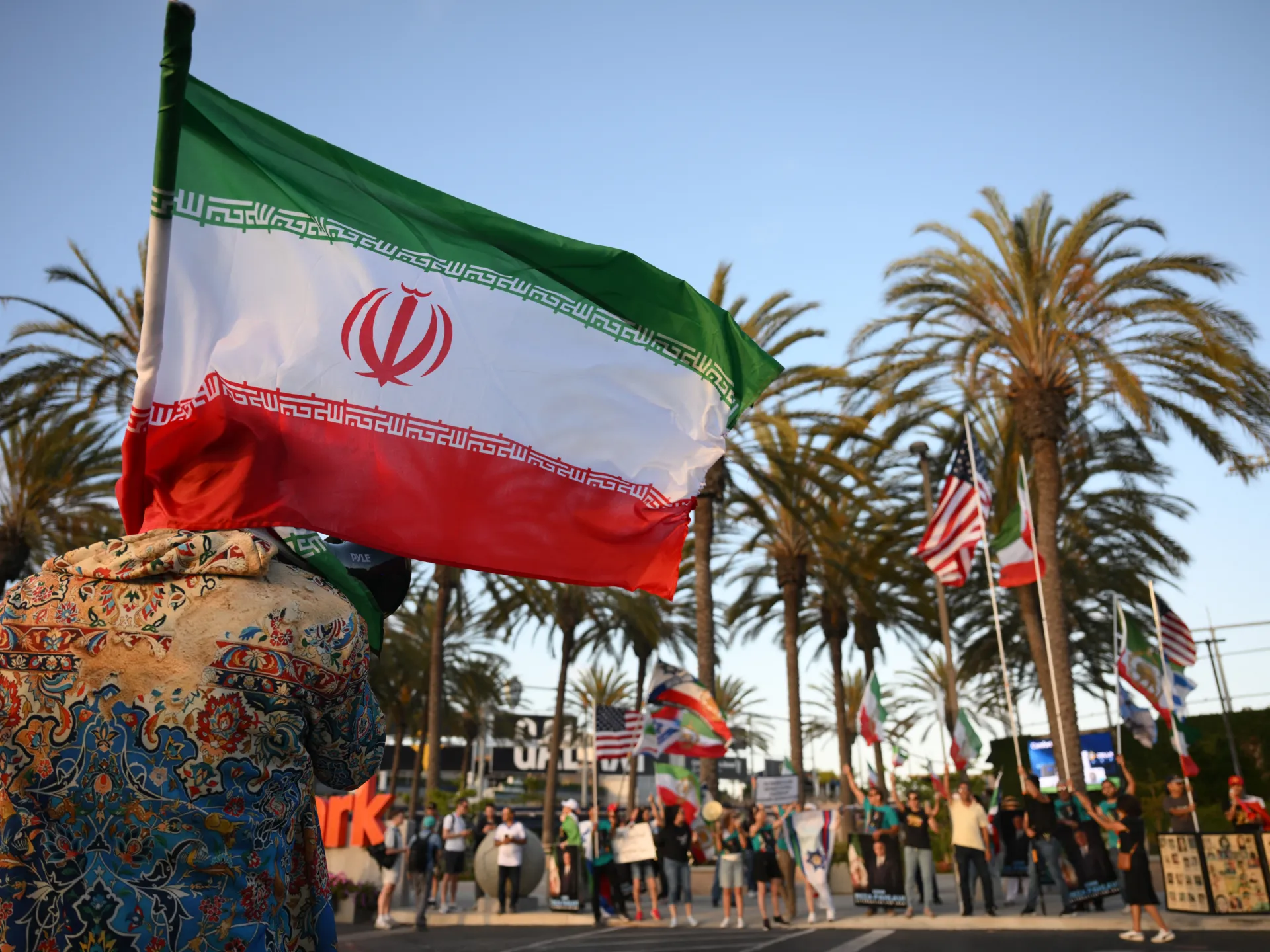
As Iran prepare to begin their World Cup campaign in Los Angeles, members of the Iranian American community in Westwood, or “Tehrangeles”, remain split over how to respond.
While some opposition activists plan protests against the team, others are setting politics aside to support the football. Business owner Roozbeh Farahanipour told Al Jazeera’s reporter Ali Harb that “the community is divided” and there is no consensus on whether to boo the national team or back the US-Israel war against Iran.
Trudeau defends attending US match instead of Canada’s opener
Former Canadian Prime Minister Justin Trudeau attended the US World Cup opener against Paraguay in California instead of Canada’s game against Bosnia and Herzegovina in Toronto.
Trudeau said he chose to be at the game in Inglewood because his girlfriend, singer Katy Perry, was performing in the pre-match show at SoFi Stadium.
“Sometimes supportive boyfriend duties call. But you know who I’m rooting for to take the Cup,” he wrote on X.
Canada’s opener in Toronto and the US match in Los Angeles were played just hours apart, prompting some fans to question why the former prime minister was not supporting the home team.
Trudeau served as Canada’s prime minister from 2015 to 2025.
After returning to the World Cup for the first time since 1974, Haiti’s campaign has given people a rare reason to celebrate.
For Olivier Woodensky Pierre, the World Cup is a dream come true. He is the only player in Haiti’s squad who still lives in the country. Born in Cite Soleil, one of the poorest areas in the capital, Port-au-Prince, Pierre hopes the team’s achievement will inspire young people back home.
“Every player always wishes to play in the World Cup. That was my dream. That’s why I’m fighting to be here. I got the chance to be selected to play in the World Cup. I am advising the youth not to be discouraged. Keep fighting, work, and be disciplined,” Pierre told Al Jazeera’s Teresa Bo.
Haiti’s qualification has brought a sense of hope to a country going through one of the most difficult periods in its recent history. Gangs control large parts of the capital, violence has displaced hundreds of thousands of people, and many Haitians have taken to the streets to demand peace while also celebrating the team’s return to football’s biggest stage.
The journey to the World Cup was far from straightforward. Because of the ongoing political crisis, Haiti had to play its home qualifiers abroad. There was also a lack of funding.
“It was really difficult before because there were no sponsors to finance the team. You know, since we qualified for the World Cup, FIFA provided money for preparation, and the government provided $4m that were crucial to help us prepare,” Thecieux Jeanty of the Haitian Football Federation told Al Jazeera.
Pastor Winston Noel also voiced disappointment over US visa restrictions affecting Haitians.
“FIFA must talk to the Trump administration to tell them that this cannot be the case because it is the World Cup. All countries that qualify must have their fans to come and support their teams,” he said.
“The World Cup is something special for us Haitians. Many children here in Haiti will participate in the World Cup, even though this generation doesn’t know the names of all the players. But we are very happy because it’s a great achievement for us,” Noel said.
Haiti eventually opened their World Cup campaign with a 2-0 defeat to Scotland, but for many supporters the tournament is about more than results. It remains a rare moment of pride, unity and hope for a country that has endured years of hardship.
British PM warns social media platforms are exposing children to content that is ‘dangerous’ and ‘designed to be addictive’.
Published On 15 Jun 202615 Jun 2026
British Prime Minister Keir Starmer has announced a ban on social media sites for under-16s as the United Kingdom plans to join a growing list of countries that place online restrictions on children.
The sweeping changes will reflect Britain’s values, help to protect children online and push back against the power of big technology companies, Starmer said at a news conference on Monday.
Recommended Stories
list of 3 itemsend of list
“It is clear to me a full ban is the right choice,” he told reporters.
“This will change the conversations that parents have and the expectations of children over time. It will make a huge difference. It will make our children safer. It will make our children happier. It will give them more time, more security, more freedom to grow up, more opportunity.”
As well as a ban on sites such as TikTok, Snapchat and Instagram, he said his government would take action against gaming and livestreaming services that allow children to talk to strangers.
“Is there a situation in the offline world where you would just let your child pair up with a stranger, an adult that you don’t know anything about? No, so we’re taking action on that,” Starmer said.
The prime minister warned that social media platforms are “exposing them to content that is dangerous” and “designed to be addictive”.
Timeline
Starmer said he hoped to pass the regulation by late December so the ban could come into force in the spring next year.
The government said in a statement it will also consider overnight curfews and breaks in infinite scrolling for under-18s and will announce more details in July.
Starmer said the upcoming ban was influenced by the experience of Australia, which in December became the first nation to ban people under 16 from social media.
Canada’s culture minister last week put forward a bill that would prohibit anyone under 16 from having social media accounts and oblige AI chatbot platforms to curb the creation of harmful content.
The UK announcement followed government-led consultations in which British teenagers trialled social media bans and time limits on apps.
A spokesperson for YouTube responded with a warning that such a blanket ban would push children towards “less safe services”.
US President Donald Trump and Iranian leaders say a deal has been agreed to end more than 100 days of war that killed thousands.
By Agence France Presse and Reuters
Published On 15 Jun 202615 Jun 2026
United States President Donald Trump and Iran’s Deputy Foreign Minister Kazem Gharibabadi said on Sunday that they had reached an initial deal to end the war and to resume traffic through the Strait of Hormuz.
Trump said the deal allows for toll-free shipping through the Strait of Hormuz, which has been largely closed since the US and Israel launched an assault on Iran on February 28.
“The Deal with the Islamic Republic of Iran is now complete,” Trump wrote on Truth Social on Sunday.
The US and Iran will sign a memorandum of understanding in Switzerland on Friday, said the prime minister of Pakistan, whose country has served as a mediator.
Monday marks 108 days since the war began, with the US and Israel’s attacks on Iran. Here is what’s happening:
What we know about the deal
The content of the agreement, which follows weeks of fraught negotiations and periodic threats from Trump of new hostilities unless Iran reaches a deal, remained unclear.
Strait of Hormuz to reopen: Iran’s semi-official Mehr news agency said the draft deal called for reopening the Strait of Hormuz within 30 days under Iranian arrangements. Trump, who turned 80 on Sunday, said the deal allows for toll-free shipping through the Strait of Hormuz, which has been largely closed since the US and Israel launched an assault on Iran on December 28.
Frozen assets to be released: Iran’s Mehr news agency reported that the US would release $12bn in frozen assets to Iran before the start of negotiations.
Iran’s enriched uranium: In an interview with The New York Times on Sunday, Trump said Washington was still negotiating whether Iran would suspend its enrichment for 20 years. Trump hinted that he might settle for a 15-year suspension, but said he did not want to negotiate via the press.
Israel has not commented: There has been no official comment from Israel about the peace agreement.
In Iran
The secretariat of Iran’s Supreme National Security Council said on Monday that the deal with the US includes the immediate suspension of hostilities on all fronts. “Based on the agreements reached, the war and military operations on all fronts, including Lebanon, will end immediately and permanently as of tonight, and in addition, the naval blockade against Iran will end immediately and completely,” it said in a statement.
In the US
Democrats slam Trump over war: While Democratic lawmakers welcomed the deal, they criticised the Trump administration’s decisions pertaining to the war. Senator Chris Coons of Delaware said that while the deal moves the situation in the “right direction”, several questions remain. He warned that competing interpretations of what was agreed upon could pose risks. Senator Chris Murphy, who serves on the Senate Foreign Relations Committee, said the deal is a “surrender to Iran” but that the US should be “glad about it because every day this insane, illegal war continues, we get weaker”.
In Lebanon
Trump rebukes Israeli attack on Beirut: On Sunday, shortly before the deal was announced by Trump, Israel launched an air attack on Beirut. Trump angrily blamed Israel for delaying the deal’s signing after launching this attack. In an expletive-laden phone interview with US news outlet Axios, Trump fumed about Israeli Prime Minister Benjamin Netanyahu, saying: “I was so pissed off. I let him know.”
Global response
Western leaders praise deal: UK Prime Minister Keir Starmer said he was ready to aid the further technical talks between the US and Iran, adding that he hopes the reopening of the Strait of Hormuz will stabilise energy markets.
French President Emmanuel Macron also praised the deal and said Paris would support the Lebanese government.
European Union chief Antonio Costa welcomed a deal between the US and Iran to end the Middle East war, adding that the bloc was ready to contribute to a strategy for “lasting peace”.
UN Secretary-General Antonio Guterres said it was a “critical step” towards resolving the war in the Middle East.
Global economy
Oil prices drop: Oil prices slipped to their lowest since March on Monday, with global benchmark Brent crude futures falling $4.08, or 4.7 percent, to $83.25 a barrel by 04:15 GMT. US West Texas Intermediate was at $80.53, down $4.35, or 5.1 percent. Both contracts fell to their lowest levels since March 10 on Monday after tumbling more than 3 percent on Friday.
Asian markets soar: Markets in Japan soared, more than 5 percent up; in South Korea, they were up 5.3 percent; in Taiwan, they were up 2.4 percent. In Shanghai, they were up 1.3 percent; and in Hong Kong, they were up half a percent; while in Indonesia, they were up 2.07 percent; and in the Philippines, they were up 5.2 percent.
South Korea’s Minister of National Defense Ahn Gyu-back walks to deliver his speech during a plenary session of the International Institute for Strategic Studies (IISS) Shangri-la Dialogue Defence Summit in Singapore, 30 May 2026. Photo by HOW HWEE YOUNG/ EPA
June 14 (Asia Today) — South Korean Defense Minister Ahn Gyu-back said Sunday that Seoul and Washington plan to recommend a target year for transferring wartime operational control of South Korean forces by the end of this year.
Ahn said during an appearance on KBS television that the allies would discuss verification of their full operational capability assessment at their annual Security Consultative Meeting in November.
“If we complete the full operational capability verification and make a recommendation to the presidents of both countries at the end of this year, we will be able to determine the target year for restoring wartime operational control,” Ahn said.
The United States has retained wartime operational control of South Korean forces since the 1950-53 Korean War. South Korea exercises control over its military during peacetime.
The allies have agreed that the transfer should be based on three conditions: South Korea’s military capabilities to lead the combined defense, the alliance’s ability to respond comprehensively to North Korean nuclear and missile threats and a regional security environment conducive to a stable transfer.
The first condition includes three stages of evaluating a future South Korea-led Combined Forces Command: initial operational capability, full operational capability and full mission capability.
Ahn said the full operational capability assessment has been completed. Verification expected by the end of the year would allow the allies to begin specifying a timetable for the transfer.
Responding to concerns that the transfer may be premature, Ahn said waiting for every condition to be perfectly satisfied could postpone the process indefinitely.
“New weapons emerge from one day to the next and the nature of the battlefield continues to change,” Ahn said. “If we keep treating the conditions this way, we could wait forever.”
Although warfare is shifting toward drones and other advanced systems, South Korea has sufficient capabilities to lead combined operations, he said.
Asked whether a future combined command led by a South Korean four-star general could impede coordinated operations or the deployment of U.S. strategic assets, Ahn said the issue had not been discussed.
Ahn acknowledged that Seoul and Washington may have different views on the timing of the transfer.
“Even children raised by the same parents can think differently,” he said. “How could two countries have identical views?”
Ahn also discussed the Jangbogo-N project, South Korea’s plan to acquire nuclear-powered submarines, describing it as part of the country’s transition from a tactical state to a strategic state.
“A tactical state operates within a framework designed by major powers,” he said. “A strategic state creates the framework and takes the lead in planning and designing its response during a war or another crisis.”
South Korea is preparing to build the first nuclear-powered submarine in the mid-2030s, Ahn said.
He said the country possesses the necessary conventional submarine construction capabilities, advanced nuclear technology and world-class shipyards but lacks access to nuclear fuel suitable for naval propulsion.
South Korea plans to seek U.S. cooperation in obtaining uranium enriched to less than 20%, he said.
Ahn said Seoul and Washington had not yet agreed on where the submarines would be built.
“Building nuclear-powered submarines in another country would be less efficient in terms of costs and technology,” he said. “The United States is also coming to understand that position.”
Ahn dismissed concerns in some U.S. circles that the project could contribute to nuclear proliferation.
“Low-enriched uranium below 20% cannot be converted easily for use in a nuclear weapon,” he said. “South Korea has been a model member of the Nuclear Non-Proliferation Treaty.”





![evacuated, and patients were discharged hours before the attack, following increased tensions and after MSF received information about a possible attack against the city. [Courtesy of MSF]](https://i0.wp.com/occasionaldigest.com/wp-content/uploads/2026/06/MSF366127High-1781523402.jpg?w=640&ssl=1)

![Reports and satellite imagery point to burned villages and mass displacement across Jonglei. [Satellite imagery © Vantor]](https://i0.wp.com/occasionaldigest.com/wp-content/uploads/2026/06/6970434469048635518-copy-1781418505.jpg?w=640&ssl=1)