TOP NEWS

From breaking news to significant developments in politics, business, technology, entertainment, and more, we deliver the stories that shape our global landscape.

Two injured after ICE agents fire at Maryland vehicle amid crackdown | News

An attempted ICE arrest outside Baltimore turned violent after a man allegedly drove into law enforcement vehicles.

Two people were injured in a suburb of Baltimore after Immigration and Customs Enforcement (ICE) agents fired shots at a moving vehicle whose driver was allegedly evading arrest, according to US authorities.

The Department of Homeland Security (DHS) said ICE agents had attempted to arrest two men from Portugal and El Salvador – who were allegedly living in the US illegally – as they were driving through Glen Burnie, Maryland, on Wednesday.

Recommended Stories

list of 4 itemsend of list

DHS said in a post on X that officers approached the vehicle and told the driver to turn off his engine, but the driver did not cooperate and instead drove into several ICE vehicles.

“Fearing for their lives and public safety, the ICE officers defensively fired their service weapons, striking the driver,” DHS said in a statement on X. The driver “then wrecked his van between two buildings, injuring the passenger”.

The two men later received medical attention, and no ICE agents were hurt during the incident, DHS said.

“Our brave officers are risking their lives every day to keep American communities safe by arresting and removing illegal aliens from our streets,” the DHS post also said. “Continued efforts to encourage illegal aliens and violent agitators to actively resist ICE will only lead to more violent incidents, the extremist rhetoric must stop.”

Local police confirmed to ABC News that ICE agents had approached a “white van” during an arrest on Wednesday and reported that the driver “attempted to run the agents over”.

The ICE agents then fired at the vehicle, which accelerated before coming to a rest in a wooded area of residential Glen Burnie, Maryland, ABC said.

Maryland Governor Wes Moore wrote on X that he was “aware of the ICE-involved shooting”,  and his office would continue to share more information as the investigation unfolded.

The shooting follows a similar incident in Minnesota on Sunday, when ICE agents fired shots at a Cuban man who also resisted arrest and attempted to ram ICE vehicles, according to ABC News.

The man, who had entered the US on a discontinued asylum programme, was approached by ICE agents in the city of St Paul while in an SUV.

The agents threatened to break his windows if he did not speak with them, prompting the man to drive away, ABC reported, citing Assistant Homeland Security Secretary Tricia McLaughlin. During the incident, the man hit an ICE agent with his vehicle.

The situation escalated when ICE agents pursued the man to his apartment building, where he later rammed an ICE vehicle with his SUV and hit a second agent, ABC said. ICE agents fired several shots before arresting the man, the report said.

Source link

1M more possible Epstein files found, to be released, DOJ says

Dec. 24 (UPI) — A million more files that might pertain to the former Jeffrey Epstein case have been found and will be released in weeks, federal officials announced on Wednesday.

Officials with the office of the U.S. attorney for Southern New York said they found more than a million more records and will review and redact those subject to the Epstein Files Transparency Act and release them.

“We have lawyers working around the clock to review and make the legally required redactions to protect victims, and we will release the documents as soon as possible,” the Justice Department said in a post on X.

“Due to the mass volume of material, this process may take a few more weeks,” the Justice Department said. “The department will continue to fully comply with federal law and President [Donald] Trump’s direction to release the files.”

The files were located in the Southern District of New York, which is based in New York City, and by the FBI, both of which forwarded them to the Justice Department for processing and eventual release as required by law.

The recently enacted Epstein Files Transparency Act required the Justice Department to release all Epstein-related files after reviewing them and redacting certain types of information, including the identities of victims, child abuse materials and others.

All files were to be released no later than Dec. 19, which is the date that the Justice Department released hundreds of thousands of files, some of which were completely redacted and blacked out.

The Justice Department posted them on its Epstein Library webpage, where all released documents are to be deposited and made available to the general public via a dedicated search engine.

Despite posting hundreds of thousands of files, the department earlier said hundreds of thousands more files also will be released after undergoing review and redactions.

Some lawmakers have accused the Justice Department of violating the Epstein Files Transparency Act by not posting all available files by the deadline.

Officials said they have a large team of attorneys reviewing each file and redacting information as required and will post all additional documents as soon as possible.

The new batch of more than a million files that might be related to the Epstein case will greatly complicate and slow that process.

Epstein was a financier and convicted sex offender who hung himself while jailed in Manhattan in 2019 amid federal charges accusing him of sex trafficking of minors and related offenses.

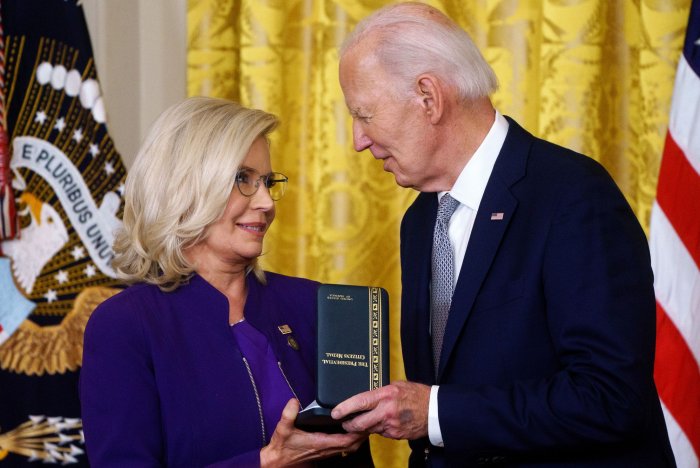
Former President Joe Biden presents the Presidential Citizens Medal to Liz Cheney during a ceremony in the East Room of the White House in Washington, on January 2, 2025. The Presidential Citizens Medal is bestowed to individuals who have performed exemplary deeds or services. Photo by Will Oliver/UPI | License Photo

Source link

Sean ‘Diddy’ Combs seeks to overturn conviction in expedited appeal

Dec. 24 (UPI) — Sean “Diddy” Combs’ attorney filed an expedited federal appeal in seeking his immediate appeal from federal prison on the hip-hop mogul’s two counts of transportation to engage in prostitution.

The appeal was filed Tuesday with the 2nd U.S. Circuit Court of Appeals in New York City, seeking an acquittal or vacating his conviction and remand for resentencing.

In the 84-page appeal, attorney Alexandra A.E. Shapiro argued U.S. District Judge Arun Subramanian “acted as the 13th juror” and found that Combs “coerced,” “exploited” and “forced” his girlfriends to have sex and led a criminal conspiracy, which “trumped the verdict.

The speedy appeal process was granted last month. The federal governor’s brief is due by Feb. 20 and Comb’s reply is due by March 13.

Combs, 56, is serving a 50-month prison sentence. He is now in a low-security prison in Fort Dix, N.J. He was moved there after being detained in the Metropolitan Detention Center in Brooklyn, N.Y., since his arrest on Sept. 16, 2024.

On July 2, a jury in Manhattan convicted Combs after two days of deliberations and a six-week trial. He was found not guilty of one count of racketeering conspiracy and two counts of sex trafficking by force, fraud or coercion.

Later that day, Subramanian denied his bail request because he said it would be impossible for him to prove he does not pose a danger.

The defense proposed travel restrictions, regular drug testing and a $1 million bond co-signed by himself, his mother, his sister and the mother of his oldest daughter.

Prosecutor Maurene Comey also opposed the request.

“There is serious, serious conduct here that will mandate a lengthy period of incarceration,” Comey said.

He was sentenced on Oct. 5, along with five years of supervised release after his prison term and a maximum fine of $500,000. Comb has an estimated $400 million net worth.

“There is a light at the end of the tunnel,” the judge said. “These letters, all those letters that I saw, show that you have a universe of people who love you. Let them lift you up now, just like you’ve lifted them up for so many years.”

His expected release date is May 25, 2028, according to the Federal Bureau of Prisons.

Shapiro wrote prosecutors failed to provide their case and noted girlfriends and third parties were adults who “willingly and enthusiastically” participated in so-called freak-offs, which are days-long, drug-fueled sexual encounters.

And the sentence was illegal because it was “draconian.”

She said the enhanced sentence violates his constitutional rights.

Shapiro also noted her client had already served 16 months of his sentence, which is the average one for what he was convicted of.

“If the court does not overturn Combs’ conviction, it should release him immediately and instruct the district court to resentence him only for the conduct of which he was convicted,” the filing reads.

This case isn’t Combs’ only legal situation with more than 70 civil lawsuits filed. In October, Texas-based attorney Tony Buzbee announced he would represent 120 accusers.

The alleged victims include children, teens and adults. There are short-term and long-term romantic partners.

He has denied all of the allegations and claimed that security footage in which Combs is seen beating ex-R&B star Casandra “Cassie” Ventura Fin was altered. His ex-girlfriend testified during the trial.

During sentencing, he addressed the court after he submitted a four-page letter to the judge that included an apology to the victims.

Combs apologized to Fin and another ex-girlfriend, identified as “Jane.”

“I want to personally apologize again to Cassie Ventura for any harm or hurt that I caused to her, emotionally or physically. My actions were disgusting, shameful and sick,” Combs said.


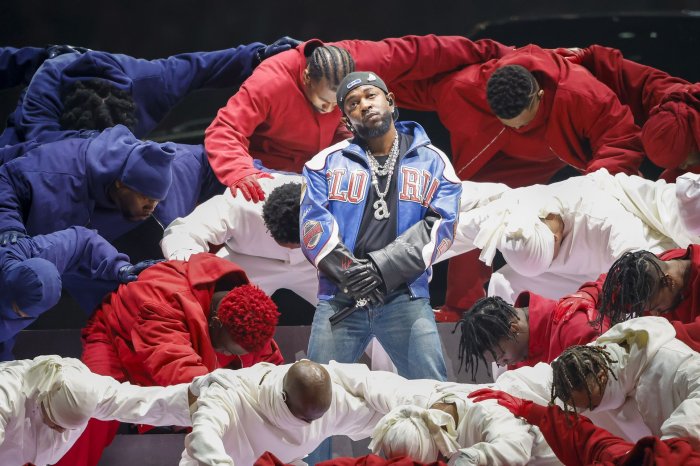
Kendrick Lamar headlines the Super Bowl LIX Halftime Show at Caesars Superdome in New Orleans on February 9, 2025. Photo by John Angelillo/UPI | License Photo

Source link

Honduras declares Trum-backed Asfura winner of presidential election

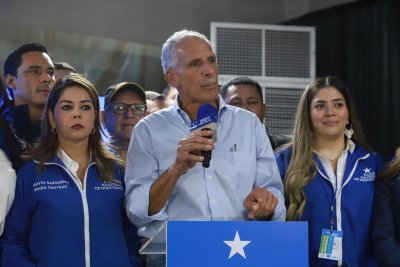
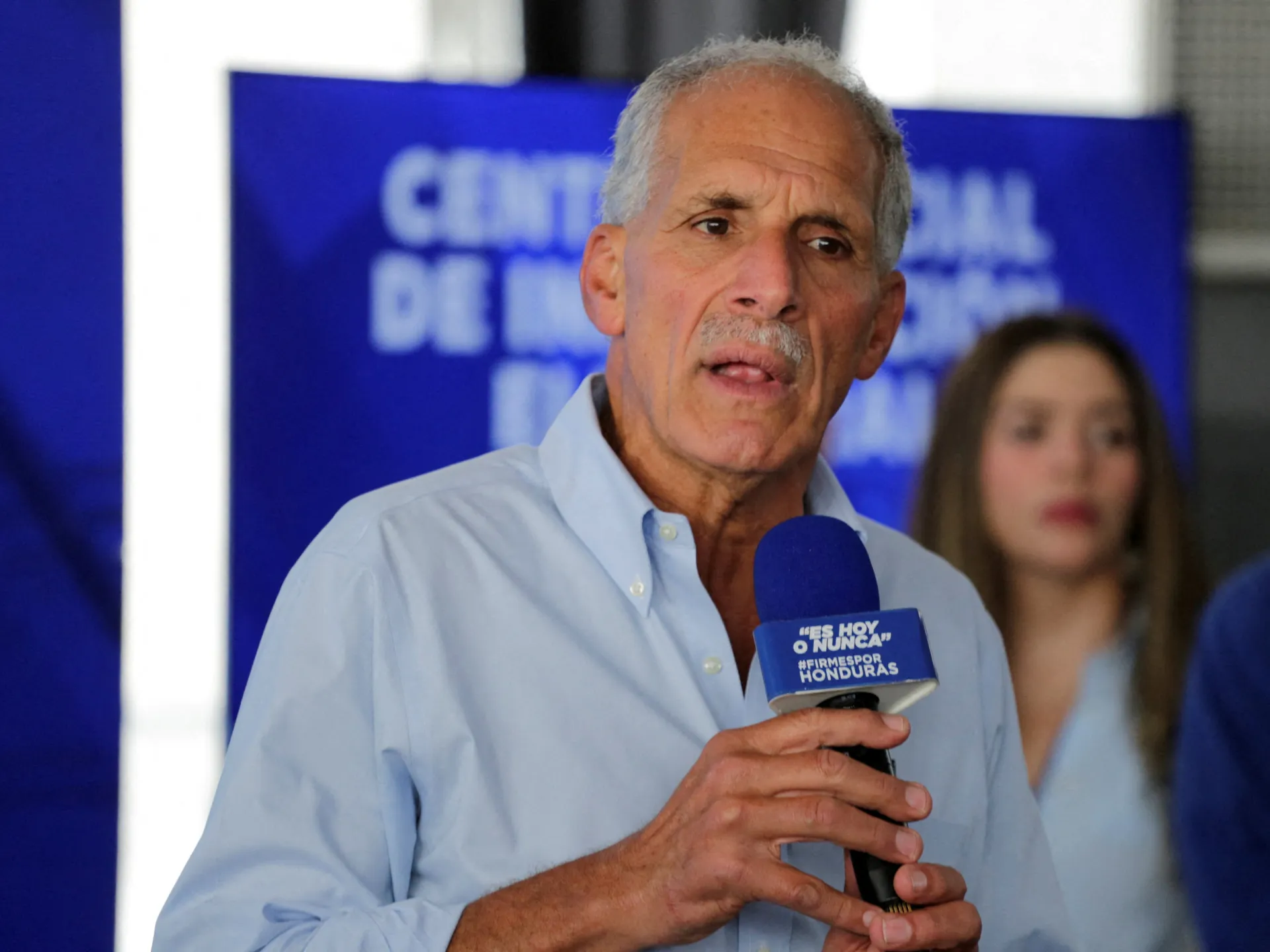
Honduran presidential candidate Nasry Asfura speaks during an election day event in Tegucigalpa on Nov. 30. He was declared the winner on Wednesday. Photo by EPA

Dec. 24 (UPI) — Nasry Asfura, with backing by U.S. President Donald Trump, on Wednesday was declared the winner of Honduras’ presidential election that took place one month ago and included fraud allegations.

The 67-year-old right-wing candidate received 40.27% of the vote, with center-right Salvador Nasralla getting 39.53%. The margin was 28,000 votes out of 3.7 million for the election on Nov. 30.

Naralla, 72, served as vice president in the current Liberty and Refoundation, or Libre, but joined the right-wing Liberal Party in his fourth bid for president. Nasralla is a sportscaster and host of the long-running game show on television.

Asfura, nicknamed Tito and Papi, is a construction magnate and former mayor of Tegucigalpa, the capital, from 2014 to 2022.

“Honduras, we now have the official declaration from the CNE [electoral council],” he posted on X. “I recognise the great work carried out by the councillors and the entire team that ran the election. Honduras: I am ready to govern. I will not let you down. God bless Honduras.

His four-year term will begin Jan. 27.

The electoral council declared him the winner before finishing an audit.

There was a review of all tally sheets under “special scrutiny” last week to recount ballots flagged as Inconsistent.”

The electoral council comprised three councillors: one aligned with Asfura’s party, one with Nasralla’s and one with the party of the leftist president, Xiomara Castro, whose candidate finished third, Rixi Moncada, with 19.2%.

Only two councillors declared him the winner. The representative linked to the president’s party alleged that an “electoral coup” was underway and filed a complaint with the public prosecutor’s office.

Nasralla, refusing to concede, alleged fraud in the counting process, including “forgery of public documents,” claiming “the data from the original tally sheets were altered.” He made the allegations in a series of posts on X.

The results could be challenged in court.

“I have not found proof of widespread or large-scale fraud,” Hector Corrales, the director of the Honduran research institute NODO, who worked for the European Union’s electoral observer mission, said Tuesday.

But there already were doubts about the election integrity, he said.

“That will have an impact on the government’s credibility,” Corrales said. “And that is going to ruin his administration if he doesn’t know how to handle it.”

The top two candidates were different politically than the leftist Libre party, focusing on concerns about crime and corruption.

U.S. Secretary of State Marco Rubio posted on X: The people of Honduras have spoken: Nasry Asfura is Honduras’ next president. The United States congratulates president-elect Asfura and looks forward to working with his administration to advance prosperity and security in our hemisphere.”

Like Asfura, Nasralla also tried to appeal to Trump. His wife was seen wearing a MAGA hat.

A few days before the election, Trump publicly backed Asfura, and the United States would only support the next government if he won. He called the other leading candidates communists or allies of Venezuela’s dictator, Nicolas Maduro.

On the day before the election, Trump pardoned former Honduran President Juan Orlando Hernandez, who was sentenced to 45 years in U.S. prison for allegedly creating a “cocaine superhighway to the United States.”

He was president for eight years until Jan. 27, 2022.

Source link

Pope Leo XIV resurrects Christmas Mass in St. Peter’s Basilica

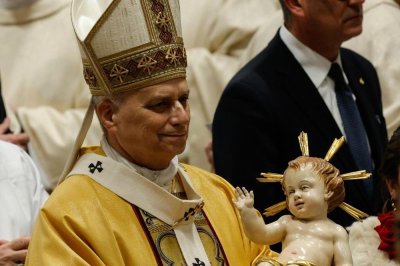
Pope Leo XIV presides over a Christmas Mass at St. Peter’s Basilica, Vatican City, late Wednesday night, which is the first held there in 31 years. Photo by Giuseppe Lami/EPA

Dec. 24 (UPI) — Pope Leo XIV brought back the Christmas Mass at St. Peter’s Basilica in Vatican City on Wednesday night, which is the first held there since 1994.

About 11,000 attended the mass, inside and out, despite rainy conditions, the Catholic News Agency reported.

Regarding the birth of Jesus, Pope Leo described it as, “God gives us nothing less than his very self, in order to ‘redeem us from all iniquity and purify for himself a people of his own.'”

To find the savior, he said, “We must look below to find God among us in the manger.”

A baby’s need for care “becomes divine since the son of the father shares in history with all his brothers and sisters,” he continued.

“The omnipotence of God shines forth in the powerlessness of a newborn; the eloquence of the eternal word resounds in an infant’s first cry; the holiness of the Spirit gleams in that small body, freshly washed and wrapped in swaddling clothes.”

Pope Leo also discussed the “infinite dignity of every person” and contrasted that with a world in which humanity often tries become god-like while dominating others, according to Vatican News.

“In the heart of Christ beats the bond of love that unites heaven and Earth, creator and creatures,” the Pope said, adding that the key to changing history is to recognize such realities.

“As long as the night of error obscures this providential truth, then ‘there is no room for others either, for children, for the poor, for the stranger,'” he added, quoting Pope Benedict XIV’s homily at Christmas Mass on Dec. 24, 2012.

“These words of Pope Benedict XVI remain a timely reminder that on Earth, there is no room for God if there is no room for the human person,” the pontiff said.

The pope afterward greeted those standing in the rain in St. Peter’s Square and told them that, while St. Peter’s Basilica is large, it is not large enough to hold all of them.

He thanked those who attended the mass while outside, wished them a merry Christmas and gave them his blessings.

About 6,000 attended the mass that started at 10 p.m. local time in the basilica, while another 5,000 watched on large video screens placed outside in St. Peter’s Square.

Source link

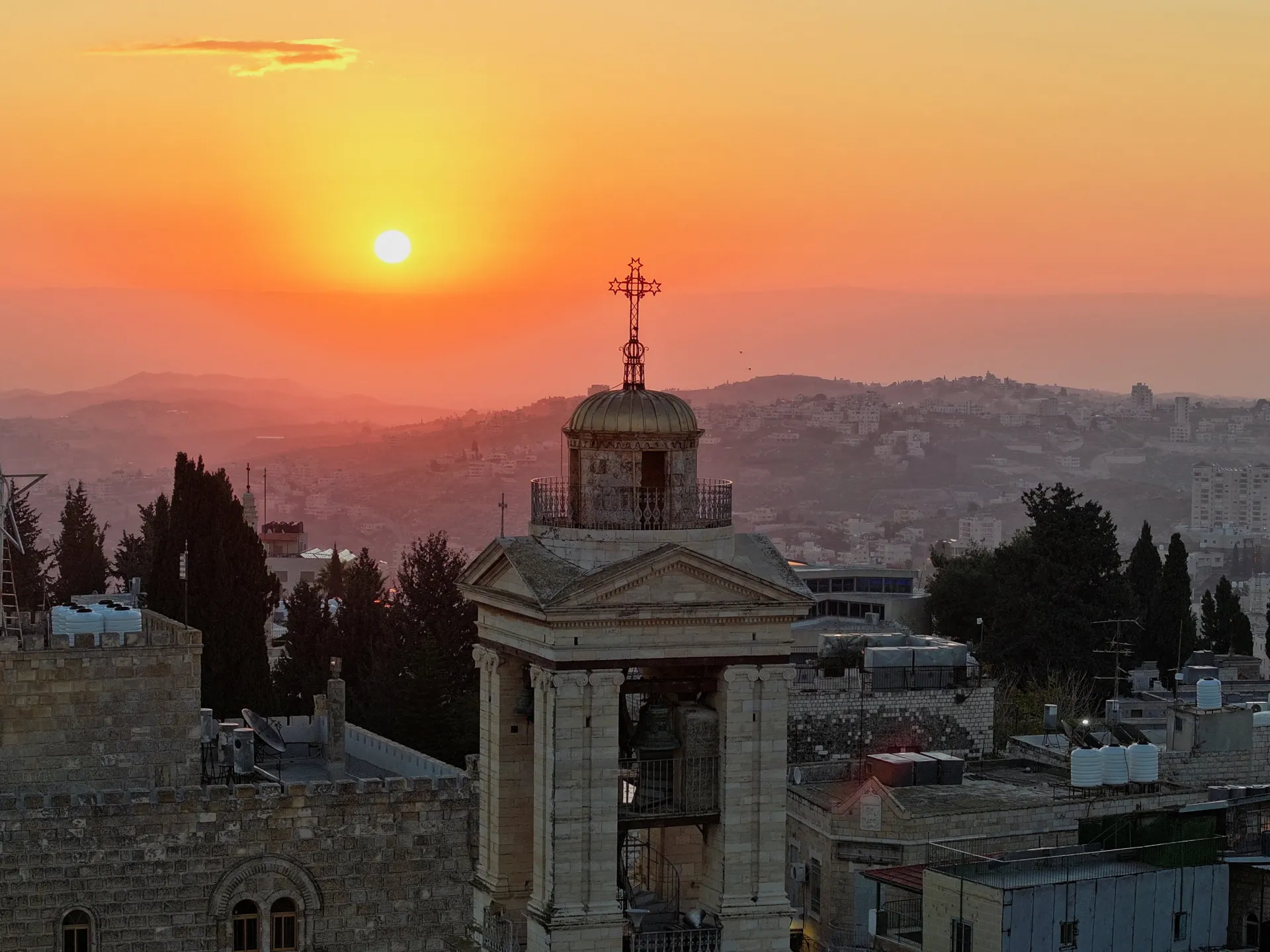
Christmas joy returns to Bethlehem amid Israeli raids across West Bank | Occupied West Bank News

Christmas celebrations return to Bethlehem as thousands gather in Manger Square for the first time since 2022.

Thousands of people have gathered in Bethlehem on Christmas Eve for the first public celebrations since 2022 after the city cancelled or muted festivities for two years out of respect for the thousands killed during Israel’s genocidal war on Gaza.

Families filled Manger Square in the occupied West Bank city as a giant Christmas tree returned to the plaza, replacing a nativity display used during the war that showed baby Jesus amid rubble and barbed wire, symbolising the devastation in Gaza.

Recommended Stories

list of 3 itemsend of list

The celebrations were led by Cardinal Pierbattista Pizzaballa, the top Catholic leader in the Holy Land, who arrived in Bethlehem from Jerusalem in the traditional Christmas procession and called for “a Christmas full of light”.

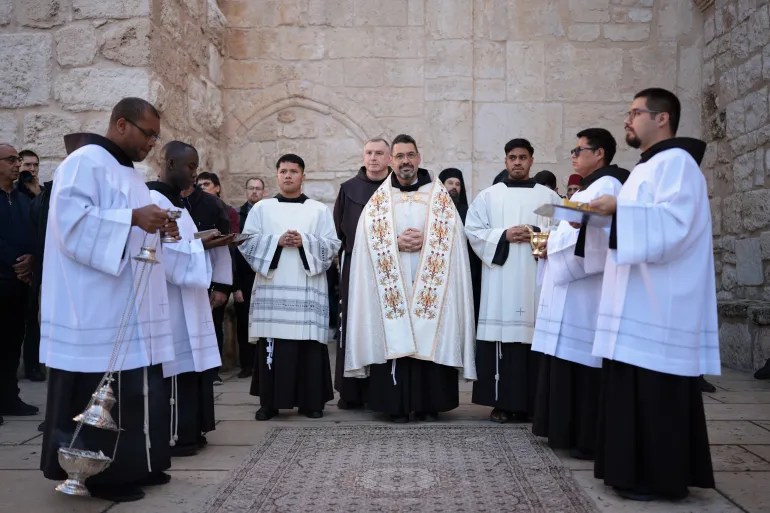
Clergymen and alter boys wait before Christmas service in the Manger Square outside the Church of the Nativity in Bethlehem
Clergymen and alter boys wait ahead of Christmas service in the Manger Square outside the Church of the Nativity (R) in the biblical city of Bethlehem in the occupied West Bank on Christmas eve on December 24, 2025. (AFP)

Scout bands from towns across the West Bank marched through Bethlehem’s streets, their bagpipes draped with tartan and Palestinian flags.

Since the start of Israel’s genocidal war on Gaza, its forces have carried out near-daily raids across the West Bank, arresting thousands of Palestinians and sharply restricting movement between cities.

Palestinians say the intensified military presence, road closures and checkpoint delays have deterred visitors, paralysing the tourism sector on which Bethlehem’s economy depends.

The vast majority of those celebrating were local residents, with only a small number of foreign visitors.

Unemployment in Bethlehem surged from 14 percent to 65 percent during the genocidal war on Gaza, Mayor Maher Nicola Canawati said earlier this month. As economic conditions deteriorated, about 4,000 residents left the city in search of work, he added.

Israeli raids and settler attacks

The return of Christmas celebrations comes despite continued raids and large-scale military incursions across the occupied West Bank, even after a fragile ceasefire in Gaza, which has been repeatedly violated by Israeli forces, took hold in October.

The raids often entail mass arrests of Palestinians, home searches and demolitions, as well as physical assaults that sometimes lead to deaths.

Attacks by Israeli settlers against Palestinians have reached their highest level since the United Nations humanitarian office began recording data in 2006. The attacks have involved killings, beatings and the destruction of property, often under the protection of the Israeli military.

Earlier on Wednesday, more than 570 Israeli settlers entered the Al-Aqsa Mosque compound in occupied East Jerusalem under police protection, the Palestinian news agency Wafa reported.

Palestinians say such incursions violate the longstanding status quo governing Islam’s third-holiest site.

Israel’s security cabinet has also signed off on plans to formalise 19 illegal settlements across the West Bank, in a move Palestinian officials say deepens a decades-long project of land theft and demographic engineering.

The United Kingdom, Canada, Germany and other countries condemned the move on Wednesday.

“We call ‍on ⁠Israel to reverse this decision, as well as the expansion of settlements,” said a joint statement released by the UK, Belgium, Denmark, France, Italy, Iceland, Ireland, Japan, Malta, the Netherlands, Norway and Spain.

“We ‌recall that such unilateral actions, ‌as part ⁠of a wider intensification of the settlement policies in the West Bank, ‌not only violate international law but also risk fuelling instability.”

Source link

Amad Diallo scores goal as Ivory Coast win against Mozambique at AFCON | Africa Cup of Nations News

A lone goal by the Manchester United forward is enough for Ivory Coast to successfully begin their AFCON title defence.

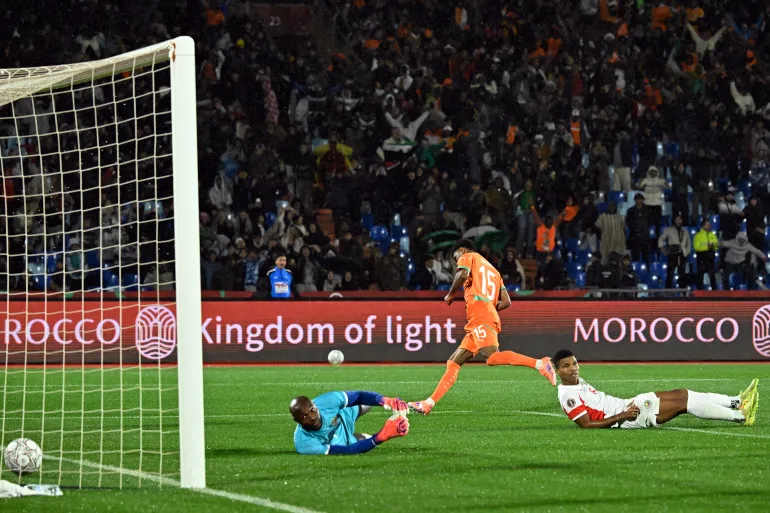
Holders Ivory Coast squandered a number of chances, but Amad Diallo’s goal early in the second half was enough to beat Mozambique 1-0 and give them a winning ⁠start to their Africa Cup of Nations (AFCON) title defence.

In the opening Group F ​game on Wednesday in Morocco, the Ivorians battled to break down their ‍opponents in a competitive first half but took firm control after the break without converting the many chances they created.

Recommended Stories

list of 4 itemsend of list

Diallo side-footed the ball into the net in the ‍49th minute ⁠to ensure the three-point haul in rainy conditions, but the scoreline would have been a lot more emphatic had the Ivorians been sharper in front of goal.

Wilfried Zaha, playing his first international in more than two years after his surprise recall for the Cup of Nations finals, wasted several chances, and Franck Kessie had two point-blank ​efforts saved by Mozambique goalkeeper Ernan.

Ivorian substitute Vakoun Bayo ‌also had an opportunity with an easy header in front of goal but somehow put it wide, and in the 89th minute, Bayo had an effort cleared off the line ‌with Ernan caught well out of his goal.

Mozambique brought on winger Dominguez as a second-half substitute ‌at the age of 42 years, one month ⁠and six days, making him the oldest outfield player in tournament history behind only former Egypt goalkeeper Essam El Hadary, who was 44 when he played in the 2017 final.

Mozambique are ‌still to win a match at the finals, stretching back to their tournament debut in 1986. This is their sixth appearance with a record of ‍four draws and 12 losses.

Amad Diallo in action.
Diallo, centre, scores the only goal of the contest in the 49th minute [Khaled Desouki/AFP]

Source link

Trump-backed conservative Nasry Asfura wins Honduras election: Authorities | Elections News

Asfura says he is ready to govern after narrow vote as the US urges ‘all parties to respect the confirmed results’.

Nasry Asfura, a conservative candidate backed by United States President Donald Trump, has won the closely contested presidential elections in Honduras, the country’s election council has said.

The final results, announced on Wednesday – more than 20 days after the vote took place – are likely to lead to challenges in the Central American nation.

Recommended Stories

list of 3 itemsend of list

According to the electoral authority, known as the CNE, Asfura won 40.3 percent of the vote, edging out centre-right Liberal Party candidate Salvador Nasralla, who received 39.5 percent.

In a brief social media post, Asfura thanked the CNE on Wednesday. “Honduras: I am prepared to govern. I will not fail you,” he wrote.

Trump had come out strongly in support of Asfura, attacking Nasralla and left-wing candidate Rixi Moncada, who ended up garnering less than 20 percent of the votes.

US Secretary of State Marco Rubio was quick to congratulate Asfura on Wednesday, saying that Washington looks forward to working with him.

“The people of Honduras have spoken: Nasry Asfura is Honduras’ next president,” Rubio wrote in a social media post.

In a separate statement, Rubio urged “all parties to respect the confirmed results” of the elections.

Earlier this month, Trump pardoned former Honduran President Juan Orlando Hernandez – a member of Asfura’s National Party – who was serving a lengthy prison sentence in the US for drug trafficking.

Asfura, the former mayor of Honduras’s capital, Tegucigalpa, is of Palestinian descent. But his National Party is staunchly pro-Israel.

Under Hernandez in 2021, Honduras became only the fourth country to move its embassy in Israel to Jerusalem in breach of international law. Asfura has also aligned himself with Trump and other right-wing leaders in the Americas, including Argentina’s Javier Milei.

The Argentinian president hailed Honduras’s election results on Wednesday, calling it a victory against “narcosocialism”, although the National Party’s Hernandez is a convicted drug trafficker.

“The Honduran people expressed themselves with courage at the ballot boxes and chose to end years of authoritarianism and decay,” Milei wrote in a social media post.

“From Argentina, we celebrate the triumph of freedom and reaffirm our commitment to democracy, the popular will, and the unrestricted respect for institutions in the region.”

Asfura’s victory marks another win for right-wing candidates in Latin America over the past year. Chile and Bolivia have also elected ultraconservative presidents in 2025, and last year, El Salvador’s right-wing leader Nayib Bukele comfortably won re-election.

The results appear to reverse the “Pink Tide” – the wave of left-wing leaders who rose to power in the region in the early 2020s.

The rise of right-wing governments in the region coincides with a US pressure campaign against Venezuela’s left-wing President Nicolas Maduro.

Trump has imposed an oil blockade on Venezuela and amassed US troops and military assets near the country.

Source link

Jack Smith: Release House committee deposition video to the public

Dec. 24 (UPI) — Special counsel Jack Smith is requesting that the full video of his deposition before the House Judiciary Committee on his investigations into President Donald Trump be released to the public.

Smith’s attorneys sent a letter to committee Chairman Jim Jordan, R-Ohio, on Thursday asking that his closed-door deposition be released. During the deposition, Smith defended his decision to file charges against Trump for allegedly trying to overturn the 2020 election.

“Mr. Smith respectfully requests the prompt public release of the full videotape of his deposition. Doing so will ensure that the American people can hear the facts directly from Mr. Smith, rather than through second-hand accounts,” wrote Lanny A. Breuer and Peter Koski, Smith’s lawyers, in the letter.

“We also reiterate our request for an open and public hearing. During the investigation of President Trump, Mr. Smith steadfastly followed Justice Department policies, observed all legal requirements, and took actions based on the facts and the law. He stands by his decisions,” the letter said.

“I was there. There is no reason not to release the video and transcript,” Rep. Dan Goldman, D-N.Y., said in reply to a CBS News reporter’s post about the letter on X, The Hill reported. “If @Jim_Jordan refused Jack Smith’s request for a public hearing – like every other Special Counsel – because he allegedly wanted to avoid the 5-minute rule, he got that.”

Jordan has said he had not ruled out public testimony.

Smith’s opening remarks were published by The Hill.

“Our investigation developed proof beyond a reasonable doubt that President Trump engaged in a criminal scheme to overturn the results of the 2020 presidential election and to prevent the lawful transfer of power,” Smith said.

“Our investigation also developed powerful evidence that showed President Trump willfully retained highly classified documents after he left office in January 2021, storing them at his social club, including in a bathroom and a ballroom where events and gatherings took place.

“He then repeatedly tried to obstruct justice to conceal his continued retention of those documents,” he said.

Smith said during his testimony that he’d do it again with the same facts.

Rep. Kevin Kiley, R-Calif., told The Hill on the day of Smith’s testimony that he wouldn’t be against public testimony.

“I do think that we’re dealing with unprecedented events here, so it’s entirely appropriate. And I think people on both sides, maybe for different reasons, think that what happened here bears scrutiny,” Kiley said.

Clouds turn shades of red and orange when the sun sets behind One World Trade Center and the Manhattan skyline in New York City on November 5, 2025. Photo by John Angelillo/UPI | License Photo

Source link

NHTSA investigating Model 3 Teslas’ emergency door release

Dec. 24 (UPI) — The National Highway Traffic Safety Administration opened an investigation into Tesla Model 3 sedans, which might have a deadly flaw in the emergency door release mechanism.

The NHTSA investigation covers about 180,000 Model 3 sedans and is in reaction to recent media reports and a defect petition that suggest the occupants of the Tesla sedans and first responders had trouble using the emergency door release mechanisms after a crash, Electrek reported.

The NHTSA Office of Defects Investigation’s probe into the matter applies to the 2022 model year Tesla Model 3 sedans and their electronic door handles.

“The petition cites that the mechanical door release is hidden, unlabeled and not intuitive to locate during an emergency,” the ODI said.

The problem might have contributed to several deaths in fatal crashes, according to media reports.

The front manual emergency door release latch is located ahead of the window switches, which many passengers accidentally pull instead of using the door-opening button, which could damage the door window.

The rear doors are more complicated to open, which makes it important for Model 3 owners to learn how to use the emergency door mechanisms and to explain how to their passengers.

Instructions are included in the owner’s manual. A Tesla dealership can show owners how to use the mechanisms and afterward show their passengers how to use them in an emergency and to prevent damaging windows via accidental deployments.

Those who are unsure of whether their Tesla Model 3 sedan is subject to the investigation can do a search on the NHTSA recall page by entering their respective state and license plate number or the vehicle identification number or year, make and model.

The results will reveal if the vehicle is subject to a recall in this matter or any other.

Former President Joe Biden presents the Presidential Citizens Medal to Liz Cheney during a ceremony in the East Room of the White House in Washington, on January 2, 2025. The Presidential Citizens Medal is bestowed to individuals who have performed exemplary deeds or services. Photo by Will Oliver/UPI | License Photo

Source link

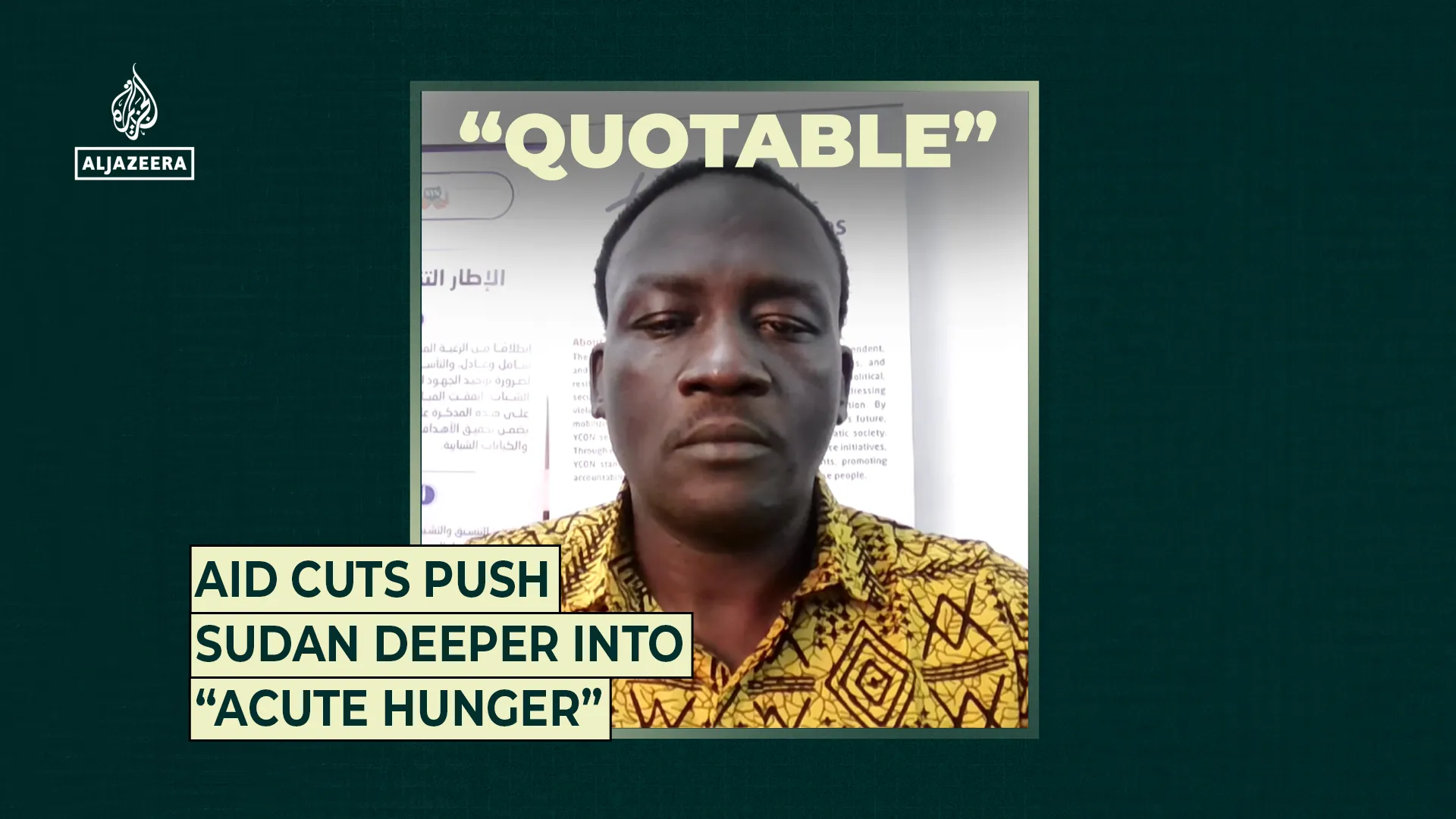
Is peace in Sudan possible? | TV Shows

Khartoum proposes plan to end the conflict, but the UN warns violence is worsening.

As 2025 comes to an end, there is still no sign of peace in Sudan.

The conflict between the army and paramilitary Rapid Support Forces (RSF) began more than two and a half years ago and has killed tens of thousands of people and displaced millions.

Recommended Stories

list of 3 itemsend of list

This week, the prime minister presented a peace plan to the United Nations Security Council. It would see the RSF give up its weapons and the territory it controls.

The RSF says the plan is “closer to fantasy than to politics”.

Where does this leave Sudan’s future?

Presenter: Sami Zeidan

Guests:

Ahmad Ibrahim – independent Sudan analyst

Cameron Hudson – former director of African affairs at the United States National Security Council

Khalid Medani – chairperson of the African studies programme at Canada’s McGill University

Source link

San Francisco blackout spurs Waymo driverless car fleet updates

Waymo displays a self-driving Jaguar taxi in October in New York City, N.Y. Three days following a massive San Francisco blackout that disrupted its driverless operations, Waymo said it will upgrade its fleet to better handle future power outages. File Photo by John Angelillo/UPI | License Photo

Dec. 24 (UPI) — Three days following a massive San Francisco blackout that disrupted its driverless operations, Waymo said it will upgrade its fleet to better handle future power outages.

Saturday’s outage, which was sparked by a substation fire that damaged local infrastructure, left about 130,000 customers without power at its peak and 21,000 still offline by Sunday, according to Pacific Gas and Electric.

“We’ve always focused on developing the Waymo Driver for the world as it is, including when infrastructure fails,” the company said Tuesday.

Traffic gridlock followed as lights went dark with videos showing Waymo cars stalled across the city.

“We directed our fleet to pull over and park appropriately so we could return vehicles to our depots in waves,” Waymo wrote. “This ensured we did not further add to the congestion or obstruct emergency vehicles during the peak of the recovery effort.”

The Alphabet-owned company said it will take three immediate steps.

According to Waymo, it will update its vehicles to recognize regional outages, strengthen emergency response protocol and expand training and coordination with local first responders and city officials.

“Backed by 100M+ miles of fully autonomous driving experience and a record of improving road safety, we are undaunted by the opportunity to challenge the status quo of our roads, and we’re proud to continue serving San Franciscan residents and visitors,” Waymo officials continued in Tuesday’s blog.

Waymo operates ride-hailing services in San Francisco, Phoenix, Austin, Atlanta and Los Angeles.

It recently surpassed 450,000 weekly rides and expects to exceed 20 million total trips by year’s end.

“In San Francisco, we’ll continue to coordinate with Mayor [Daniel] Lurie’s team to identify areas of greater collaboration in our existing emergency preparedness plans,” the company stated.

President Donald Trump holds a signed executive order reclassifying marijuana from a schedule I to a schedule III controlled substance in the Oval Office of the White House on Thursday. Photo by Aaron Schwartz/UPI | License Photo

Source link

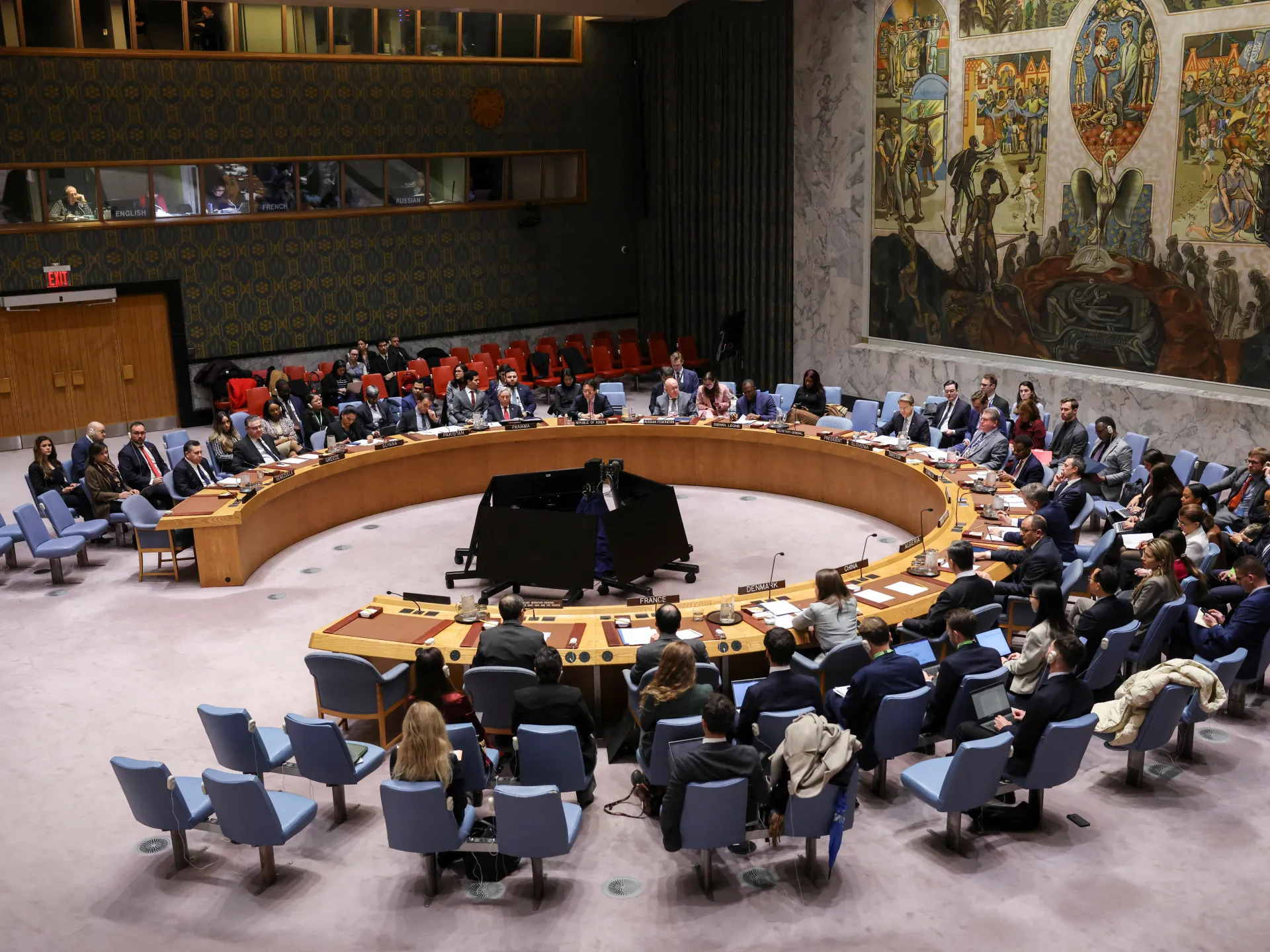
New Greenland envoy Jeff Landry says U.S. isn’t ‘trying to conquer’ island

Dec. 24 (UPI) — President Donald Trump’s newly tapped special envoy to Greenland, Louisiana Gov. Jeff Landry, has denied suggestions the United States is “trying to conquer” the island, which belongs to Denmark.

Landry made the remarks Tuesday during an appearance on Fox News’ The Will Cain Show.

He said the United States wants an open dialogue with the people of Greenland, which is self-governing, to understand what they want.

“What are they looking for?” Landry said. “What opportunities have they not gotten? Why haven’t they gotten the protection that they actually deserve.”

He added that the United States “has always been a welcoming party.”

“We don’t go in there trying to conquer anybody and trying to … take over anybody’s country,” Landry added. “We say, ‘Listen, we represent liberty, we represent economic strength, we represent protection.'”

Trump named Landry his special envoy to Greenland on Monday, sparking concern from the Danish foreign minister, Lars Løkke Rasmussen, who summoned the U.S. ambassador in response. Rasmussen said the appointment showed that the United States has not given up on Trump’s idea of trying to buy Greenland from Denmark.

“We insist that everyone, including the U.S., must show respect for the territorial integrity of the Kingdom of Denmark,” Rasmussen said.

Greenland is a territory of Denmark, but controls its own government. Trump has discussed the possibility of annexing the island nation, saying the United States needs it for national and world security.

“I think we’re going to get it, one way or another,” Trump said in a televised speech in March.

Trump announced his appointment of Landry as special envoy in a post on Truth Social on Monday.

“Jeff understands how essential Greenland is to our national security and will strongly advance our country’s interests for the safety, security and survival of our allies and, indeed, the world. Congratulations Jeff!” Trump posted.

Clouds turn shades of red and orange when the sun sets behind One World Trade Center and the Manhattan skyline in New York City on November 5, 2025. Photo by John Angelillo/UPI | License Photo

Source link

UN experts condemn US naval blockade of Venezuela as illegal aggression | Donald Trump News

UN experts criticise US blockade for endangering human rights and call for an investigation into alleged violations.

Four United Nations human rights experts have condemned the partial naval blockade of Venezuela by the United States, finding it an illegal armed aggression and calling on the US Congress to intervene.

“There is no right to enforce unilateral sanctions through an armed blockade,” the UN experts said in a joint statement on Wednesday.

Recommended Stories

list of 3 itemsend of list

The US has deployed a major military force in the Caribbean and intercepted oil tankers as part of a naval blockade against Venezuelan vessels it considers to be under sanctions.

A blockade is a prohibited use of military force against another country under the UN Charter, they added.

“It is such a serious use of force that it is also expressly recognised as illegal armed aggression under the General Assembly’s 1974 Definition of Aggression,” the experts said. “The illegal use of force, and threats to use further force at sea and on land, gravely endanger the human right to life and other rights in Venezuela and the region.”

US President Donald Trump accuses Venezuela of using oil, the South American country’s main resource, to finance “narcoterrorism, human trafficking, murders and kidnappings”.

Caracas denies any involvement in drug trafficking. It says Washington is seeking to overthrow its president, Nicolas Maduro, to seize Venezuela’s oil reserves, the largest in the world.

Since September, US forces have launched dozens of air strikes on boats that Washington alleges were transporting drugs. It has yet to provide evidence for those accusations. More than 100 people have been killed.

‘US Congress should intervene’

“These killings amount to violations of the right to life. They must be investigated and those responsible held accountable,” the experts said.

“Meanwhile, the US Congress should intervene to prevent further attacks and lift the blockade,” they added.

They called on countries to take measures to stop the blockade and illegal killings and bring the perpetrators to justice.

The four who signed the joint statement are: Ben Saul, special rapporteur on protecting human rights while countering “terrorism”; George Katrougalos, an expert on promoting a democratic and equitable international order; development expert Surya Deva; and Gina Romero, special rapporteur on the right to freedom of peaceful assembly and association.

Source link

U.S. bars former EU commissioner, 4 others from entering country

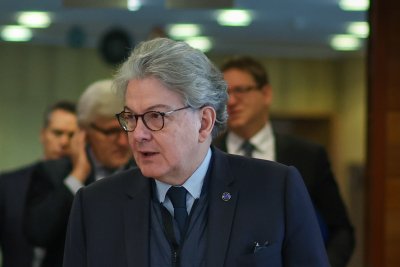
Former EU Commissioner for the Internal Marker Thierry Breton was the chief target of a U.S. travel ban imposed by Washington on European activists campaigning for online safety. File photo by Olivier Hoslet/EPA-EFE

Dec. 24 (UPI) — The United States imposed travel bans on former European Union technology commissioner Thierry Breton and four other campaigners against online hate and disinformation, alleging they had forced U.S. social media platforms to limit Americans’ first amendment rights.

U.S. Secretary of State Marco Rubio said in a statement Tuesday that the five had “led organized efforts to coerce American platforms to censor, demonetize and suppress” the views of Americans with whom they disagreed.

“These radical activists and weaponized NGOs have advanced censorship crackdowns by foreign states — in each case targeting American speakers and American companies,” added Rubio who described the five as “agents of the global censorship-industrial complex.”

Beton was singled out by U.S. Under Secretary of State Sarah Rogers as the “mastermind” of European laws that require social media that operate in the 27-country bloc to adhere to content moderation and other standards to protect users, and children in particular, from harm.

That affects the big U.S. tech players, including Google and Meta, by requiring stricter monitoring of content or face fines up to 1% of global annual turnover.

Rogers named the others banned from entering the United States as Anna-Lena von Hodenberg and Josephine Ballon of Berlin-based non-profit HateAid, Clare Melford, co-founder of the London-headquartered Global Disinformation Index, and Briton, Imran Ahmed, chief executive of the Center for Countering Digital Hate.

Breton, who served as the commissioner for the EU’s internal market from 2019 to 2024, likened the move to McCarthyism in the late 1940s and early 1950s and pointed out that the Digital Services Act was voted into law by 90% of MEPs.

“To our American friends: ‘Censorship isn’t where you think it is,” he said.

Brussels condemned the visa bans, saying Wednesday that freedom of expression was a core value that Europe shared in common with United States, but that the EU had sovereignty in regulating economic activity and that its digital laws were fairly applied without prejudice.

The visa bans also came under strong criticism from French Foreign Minister Jean-Noël Barrot, who said that safeguards on Europe’s digital space, which had been adopted by democratic means in Europe, could not be dictated from the outside.

He insisted the legislation contained no extraterritorial provisions and therefore had no impact on the United States.

The dispute dates back to an August 2024 warning Breton issued to Elon Musk that an interview with then presidential candidate Donald Trump that he planned to stream on his X platform must not breach the Digital Services Act.

According to Rogers, Breton’s letter contained a sinister recap of X’s legal duties under the DSA and referenced ‘formal proceedings’ for alleged ‘illegal content’ and ‘disinformation.'”

Source link

S. Korea moves to rename North Korean defectors as migrants

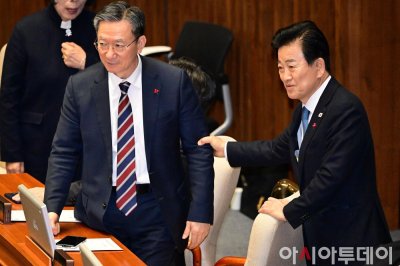
Justice Minister Chung Sung-ho and Unification Minister Chung Dong-young exchange greetings during a plenary session at the National Assembly on the 23rd. Photo by Asia Today

Dec. 23 (Asia Today) — South Korea’s Unification Ministry said Tuesday it will move quickly to decide and implement a change to the official term used for North Korean defectors, replacing it with “North Korean migrants.”

A Unification Ministry official told reporters the ministry plans to reach a conclusion and proceed “as soon as possible” on the terminology change.

The ministry previously said in a work briefing for President Lee Jae-myung on Friday that it would pursue revising the designation. During that briefing, Lee, Prime Minister Kim Min-seok and Unification Minister Chung Dong-young used the term “North Korean migrants” instead of “North Korean defectors,” according to the report.

Chung said at the meeting that defectors broadly reject the current term “defector,” but the report said a significant number are also voicing opposition to “North Korean migrants.”

The Unification Ministry publicly raised the idea of changing the designation in September and conducted opinion polling, but the results have not been released, the report said.

– Reported by Asia Today; translated by UPI

© Asia Today. Unauthorized reproduction or redistribution prohibited.

Source link

Zelensky says ‘significant progress’ made in finalizing peace plan

Ukrainian President Volodymyr Zelensky countenanced giving up territory in exchange for peace for the first time, via a free economic zone mechanism, as he laid out the detail of a plan fleshed out in talks in Florida at the weekend. File photo by Nadja Wohlleben/EPA

Dec. 24 (UPI) — Ukrainian President Volodymyr Zelensky unveiled a 20-point peace plan hammered out in negotiations in Miami over the weekend that provides strong NATO-style security guarantees in exchange for land concessions. He said the plan was now being reviewed by Moscow.

Detailing the plan on Tuesday, Zelensky said “the main framework” included affirmation of Kyiv’s sovereignty, a non-aggression pact, a means to monitor the final border, Ukraine‘s non-nuclear status and limits on its military to 800,000 troops, The Kyiv Independent and RBC-Ukraine reported.

The plan also contains Ukraine-U.S.-Europe security guarantees, U.S.-Ukraine security guarantees, and a 15-year plan for Ukraine’s recovery and economic development involving raising as much as $800 billion.

European Union membership for Ukraine will form part of the security guarantees.

The document, which emerged from a 28-point-plan drafted by the White House and the Kremlin and first floated by President Donald Trump in mid-November, was expected to be delivered to the Kremlin by U.S. officials later Wednesday.

An immediate cease-fire comes into force as soon as Ukraine, the United States, Europe, and Russia sign — with Ukraine commiting to hold elections as soon as possible afterward. Who would sign on behalf of Europe was yet to be decided.

“We have made significant progress toward finalizing the documents,” Zelensky said.

However, Kyiv wants to put the plan to the people of Ukraine in a referendum which would take at least two months.

The main sticking point of territory remains with the plan calling for the frontlines in Donetsk, Luhansk, Zaporizhzhia and Kherson regions to form the de facto border, while Russia will pull out of Ukraine’s Dnipropetrovsk, Mykolaiv, Sumy, and Kharkiv regions.

The United States has proposed a compromise acceptable to both sides under which Ukrainian forces pull out of areas of its Donetsk region that Kyiv still controls in favor of a demilitarized “free economic zone” that Russian forces would not advance into.

“We are in a situation where the Russians want us to withdraw from Donetsk Oblast, while the Americans are trying to find a way for us not to withdraw because we are against withdrawal,” Zelensky said.

“We consider a free economic zone a potential option for a sovereign state to choose such a path. We fought for a single word — ‘potential.’ We believe that such potential economic zones can exist,” he added.

“If all regions are included and if we remain where we are, then we will reach an agreement. That is why it says ‘potential zones’ here. But if we do not agree to ‘remain where we are,’ there are two options: either the war continues, or something will have to be decided regarding all potential economic zones.”

Zelensky’s mention of other potential economic zones refers to his preferred solution to the other big outstanding issue of the Zaporizhzhia Nuclear Power Plant, which has been occupied by Russian forces since shortly after their full-scale invasion in 2022.

Ukraine opposes a U.S. plan under which Ukraine, Russia and the United States share equal control with Washington having overall jurisdiction, with Kyiv instead pushing for a U.S.-Ukraine partnership under which they would split the electricity generated 50-50.

Clouds turn shades of red and orange when the sun sets behind One World Trade Center and the Manhattan skyline in New York City on November 5, 2025. Photo by John Angelillo/UPI | License Photo

Source link

Stokes concerned for England’s mental wellbeing on Ashes tour of Australia | Cricket News

Captain Ben Stokes said protecting England players’ welfare was his top concern amid claims of excessive drinking on a mid-Ashes beach break, without directly addressing the allegations.

Stokes was peppered with questions on Wednesday ahead of the Boxing Day Test in Melbourne about the team’s behaviour at Noosa between the second and third Tests after British media reports compared it with a “stag-do”.

Recommended Stories

list of 4 itemsend of list

Unverified social media footage appeared to show opener Ben Duckett drunk and disoriented.

Their disastrous five-Test tour, which has seen Australia take an unassailable 3-0 lead, took another hit on Wednesday when pace spearhead Jofra Archer was ruled out of the rest of the series with a side strain.

England cricket chief Rob Key on Tuesday pledged to investigate the drinking claims, while the England and Wales Cricket Board said in a statement it was intent on establishing the facts.

Stokes, whose team have already lost the Ashes, said his main concern was the players’ mental welfare and to ensure they were ready for the Melbourne Test starting Friday.

“I’m obviously aware of the reports and everything circulating around right now,” Stokes said.

“My main concern is my players, and how I handle this moment is the most important thing to me.

“The welfare of everyone in there, and probably some certain individuals as well, is the most important thing to me right now as England captain.

“It’s never a nice place to be in when not only the media world, but also the social media world, is piling on top of you,” he added.

“It’s a very tough place to be in as an individual. As an individual, when you know you’ve got the support of the people who are sort of leaders, in a sense, it’s very good to know that you’ve got that support.”

Asked directly whether his teammates had “done anything wrong in Noosa”, Stokes replied: “I’ve just answered everything there.”

Stokes calls for focus as spotlight increases on England

England went to Queensland tourist resort Noosa after losing the first two Tests in Perth and Brisbane heavily.

They spent several days on the sand and around restaurants and bars before travelling to Adelaide, where they lost the third Test as Australia retained the Ashes.

Britain’s Daily Telegraph reported that “after drowning their sorrows after the Brisbane Test, it is no exaggeration to say some, certainly not all, players drank for five or six days”.

It added that players “did nothing outrageous in Noosa” but there was concern over the level of drinking, with England’s professionalism already under the microscope after their limited preparations.

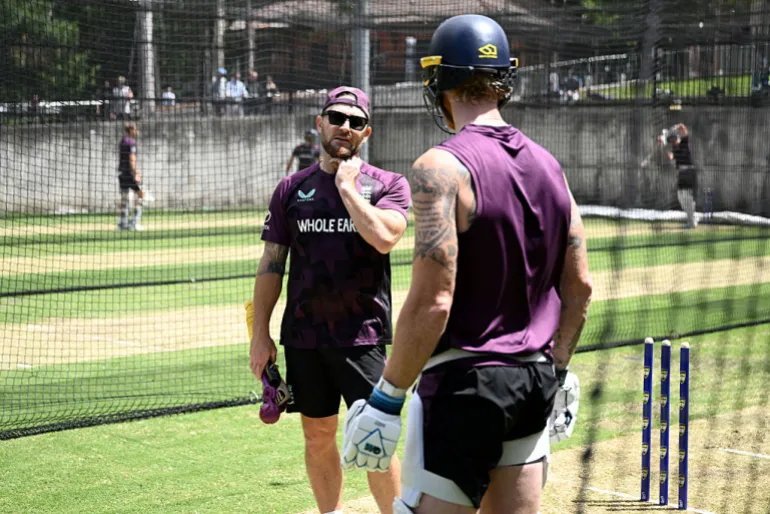
England captain Ben Stokes speaks with Brendon McCullum during an England nets session at Melbourne Cricket Ground
England captain Ben Stokes, right, and coach Brendon McCullum are both under pressure following the side’s failures in Australia [Gareth Copley/Getty Images]

Stokes conceded that when a side was losing, there would be scrutiny, and “rightly so”.

“When you are 3-0 down you don’t really have a leg to stand on but we’ve got two games of cricket to play. That’s what we have to focus on,” he said.

“We haven’t won a game in Australia for a long, long time.”

England have gone 18 Tests since winning a match in Australia, dating back to their last series victory there in 2010-11.

Their capitulation in this series in 11 days of play is the joint second quickest in more than a century, since the 1921 Ashes was completed in eight days.

Making matters worse, Archer will take no further part in the tour, with Gus Atkinson replacing him in Melbourne.

The under-performing Ollie Pope paid for his poor form at number three, with Jacob Bethell taking over in the only other change.

England’s Test woes in contrast to Australia’s Ashes high

Bowling with the ‌wicketkeeper standing up to the stumps can bruise a fast bowler’s ego, ‍but Australia paceman ‍Scott Boland said Alex Carey’s stellar glovework in the ongoing Ashes series has helped him grow comfortable with it.

Carey’s wicketkeeping masterclass has been a key factor in Australia’s unassailable lead in the five-match series, and the ⁠34-year-old was particularly impressive in the second Test at the Gabba, where he stood ​up to Boland and Michael Neser.

With the wicketkeeper breathing down their ‍necks, English batters were pretty much confined to the crease, which meant the home bowlers did not really need to vary their length.

“I’ve just never really bowled to the keeper up to the ‍stumps before,” Boland ⁠told reporters ahead of the fourth Test.

“Everyone wants to be a fast bowler, and you don’t really like the keeper up to the stumps.

“But I’ve seen over the last month how effective it is and how still I can keep their batters by Alex being up to the stumps.”

Wicketkeepers typically stand farther back from the stumps when facing fast bowlers to give ​themselves more time to react to the high speed ‌and bounce of the ball, reducing the risk of missed catches.

Even from close range, Carey showed tremendous reflexes to pouch a thick edge from Ben Stokes after the England captain had nicked a Neser delivery ‌in the second innings.

Dismissals like that gave confidence to Boland that he could continue bowling his edge-inducing length balls regardless ‌of where Carey stood.

“I just need to trust that ⁠the length balls I bowl to try and nick guys off is the same length I bowl when he’s up to the stumps or back,” the 36-year-old said.

“The Gabba was pretty bouncy and he ‌was up to the stumps for a bit of it and catching balls above waist-high and I bowled a bouncer and he caught that, so I have full trust ‍in him up there.”

Former Australia wicketkeeper Ian Healy called Carey “clearly the best in the world”, while teammate Steve Smith termed him a “freak”.

Source link

Analysis: Is Lebanon controlled by ‘mini deep states’?

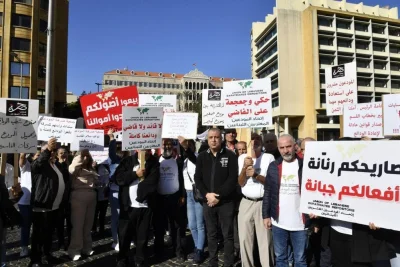
Bank customers and Depositors Association members hold placards during a protest organized by the ‘Depositors’ Outcry’, a group campaigning for the rights of depositors, in Beirut, Lebanon, on Thursday Customers are angry over the continued restrictions that local banks have imposed on withdrawals and transfers since 2019. Photo by Wael Hamzeh/EPA

BEIRUT, Lebanon, Dec. 24 (UPI) — Once hailed as the “Switzerland of the Middle East,” Lebanon has undergone an infernal descent into deeply rooted corruption, financial collapse and state failure, suggesting that the country is governed by a unique model of “mini deep states” that have flourished under its sectarian and clientelist system, political and financial analysts said.

Endemic corruption, misgovernance, sectarianism, wars and political disputes have long fueled Lebanon’s multiple crises.

The 2019 financial collapse — described by the World Bank as a “deliberate depression” and the worst globally since 1850 — was the tipping point that revealed the country’s situation to be far worse than anyone had realized.

Six years later, the situation remains almost unchanged. No one has been charged or put on trial and no official has acknowledged responsibility for the crisis or the estimated $110 billion in bank deposits squandered under state mismanagement.

The first serious attempt to address the financial crisis came Friday, when Prime Minister Nawaf Salam’s government presented a draft law aimed at tackling the financial system’s huge funding gap and enable depositors to gradually regain access to their frozen savings — though probably not in full.

The draft law, yet to be debated and expected to be amended, was quickly met with opposition from the banks and depositors, arguing that its provisions are insufficient or unfair. Crucially, it fails to address corruption as the root cause of the crisis and provides no mechanism for accountability.

However, Lebanon’s problems extend far beyond the recent financial crisis, stemming from a corrupt and inept political elite whose sectarian and clientelist networks consistently put personal gain above the nation’s survival, analysts say.

One of the most striking examples of deliberate systemic failure is the chronic power shortages, which have forced most citizens to rely on private or neighborhood generators — run by what many describe as a “mafia” protected by influential political leaders — since the end of the 15-year civil war in 1990. This has created cumulative deficits of about $43 billion.

The same pattern applies to nearly every other sector and extends to the country’s political system, reflecting the reality that all major political forces have blocked meaningful change and prevented reforms for decades.

Despite their political divisions, these forces share common interests, effectively acting as a deep state rather than merely an elite sectarian cartel.

To Mohammad Fheili, a risk strategist and monetary economist, Lebanon is better understood as a system of “multiple, competing and at times cooperating mini-deep states operating within a consociational (power-sharing) confessional framework.”

Rather than a single hidden chain of command, power, Fheili notes, is distributed across overlapping circuits involving security services, the banking and financial sector, senior judges and prosecutors, and top public officials. These networks outlast governments and are bound together by mutual protection.

“Sectarianism is the main channel of organization and veto, but it is not the only engine,” he told UPI. “It provides quotas, patronage pipelines and narratives of legitimacy. However, the driving incentives are often clientelism, rent extraction, protection from prosecution and control of state resources.”

As a result, the same political establishment came to dominate legislation, government and the economy, with decisive influence over appointments, contracts and financial regulation.

Such a “deep state” is not a new phenomenon. Its roots can be traced back to Lebanon’s founding in 1943, when it developed alongside a “rentier economic model,” according to Makram Rabah, a political activist and history professor at the American University of Beirut.

While the civil war saw the rise of militia leaders who later became powerful political figures in peacetime, Rabah said that Syria’s military presence in Lebanon after 1990 introduced “a kind of dual system, in which local actors were allowed to benefit economically as long as Syria controlled foreign policy and security.”

“This is what gave the system its longevity,” he told UPI.

The civil war also normalized militia power, wartime political economy and impunity, Fheili noted, adding that the post-war order “recycled many wartime actors into peacetime governance through a spoils-and-veto arrangement rather than institutional reconstruction.”

A sectarian cartel, he said, then emerged, dividing ministries, contracts and regulatory favors –and transforming political competition into a struggle over access to the state.

The withdrawal of Syrian troops from Lebanon in 2005 — just a few months after the assassination of Prime Minister Rafik Hariri in Beirut — paved the way for Iran-backed Hezbollah to consolidate its control over the country.

Although the militant group has consistently denied involvement in Lebanon’s entrenched corruption — arguing that its funding from Iran is sufficient — experts contend that it nonetheless benefits from the country’s clientelist system, even operating a shadow parallel economy.

Lebanon’s financial collapse, Rabah argued, revealed Hezbollah as both a beneficiary of and a participant in the system, as many of its institutions faltered during the meltdown. Moreover, the perception that it relied solely on Iranian funding and was free from corruption has proven to be “a fallacy.”

With each sect — Muslims and Christians alike — protecting its own corrupt members, it became impossible to hold anyone accountable or bring them to justice. A few exceptions were recorded, but only because those arrested had lost the political protection of their patrons.

“There are many ministers and officials who are extremely corrupt, but no one dares to act against them, as they are protected by their sect and political leaders,” said Mohammad Chamseddine, policy research specialist at the Information International research and consultancy firm.

Although the Lebanese government adopted a new, anti-corruption law in 2020 and began work on a national anti-corruption strategy, he said these efforts failed to yield any results due to the prevailing sectarianism.

“Such an interaction of religion, politics and money is everywhere and consolidates corruption,” Chamseddine told UPI. “Only a real revolution — when people storm the houses and palaces of the corrupt and put them in jail — can change this.”

Lebanon’s losses from corruption and the deep state, accumulating since the 1990s, are difficult to estimate, exceeding tens of billions of U.S. dollars, according to Chamseddine.

However, dismantling the country’s “mini deep states” and eliminating corruption is possible –even if only partially — but it would require a long process of gradual, progressive steps, starting with an independent judiciary, the analysts said.

Would the disarming of Hezbollah, which was significantly weakened by Israel during last year’s war, be the starting point?

“It may open tactical space, but only if reforms target the entire ecosystem, not just Hezbollah or the banks,” Fheili said.

Source link

Christmas is not a Western story – it is a Palestinian one | Opinions

Every December, much of the Christian world enters a familiar cycle of celebration: carols, lights, decorated trees, consumer frenzy and the warm imagery of a snowy night. In the United States and Europe, public discourse often speaks of “Western Christian values”, or even the vague notion of “Judeo-Christian civilisation”. These phrases have become so common that many assume, almost automatically, that Christianity is inherently a Western religion — an expression of European culture, history and identity.

It is not.

Christianity is, and has always been, a West Asian / Middle Eastern religion. Its geography, culture, worldview and founding stories are rooted in this land — among peoples, languages and social structures that look far more like those in today’s Palestine, Syria, Lebanon, Iraq, and Jordan than anything imagined in Europe. Even Judaism, invoked in the term “Judeo-Christian values”, is itself a thoroughly Middle Eastern phenomenon. The West received Christianity — it certainly did not give birth to it.

And perhaps nothing reveals the distance between Christianity’s origins and its contemporary Western expression more starkly than Christmas — the birth story of a Palestinian Jew, a child of this land who was born long before modern borders and identities emerged.

What the West made of Christmas

In the West, Christmas is a cultural marketplace. It is commercialised, romanticised and wrapped in layers of sentimentality. Lavish gift-giving overshadows any concern for the poor. The season has become a performance of abundance, nostalgia, and consumerism — a holiday stripped of its theological and moral core.

Even the familiar lines of the Christmas song Silent Night obscure the true nature of the story: Jesus was not born into serenity but into upheaval.

He was born under military occupation, to a family displaced by an imperial decree, in a region living under the shadow of violence. The holy family were forced to flee as refugees because the infants of Bethlehem, according to the Gospel narrative, were massacred by a fearful tyrant determined to preserve his reign. Sound familiar?

Indeed, Christmas is a story of empire, injustice and the vulnerability of ordinary people caught in its path.

Bethlehem: Imagination vs reality

For many in the West, Bethlehem – the birthplace of Jesus – is a place of imagination — a postcard from antiquity, frozen in time. The “little town” is remembered as a quaint village from scripture rather than a living, breathing city with actual people, with a distinct history and culture.

Bethlehem today is surrounded by walls and checkpoints built by an occupier. Its residents live under a system of apartheid and fragmentation. Many feel cut off, not only from Jerusalem – which the occupier does not allow them to visit – but also from the global Christian imagination that venerates Bethlehem’s past while often ignoring its present.

This sentiment also explains why so many in the West, while celebrating Christmas, care little about the Christians of Bethlehem. Even worse, many embrace theologies and political attitudes that erase or dismiss our presence entirely in order to support Israel, the empire of today.

In these frameworks, ancient Bethlehem is cherished as a sacred idea, but modern Bethlehem — with its Palestinian Christians suffering and struggling to survive — is an inconvenient reality that needs to be ignored.

This disconnect matters. When Western Christians forget that Bethlehem is real, they disconnect from their spiritual roots. And when they forget that Bethlehem is real, they also forget that the story of Christmas is real.

They forget that it unfolded among a people who lived under empire, who faced displacement, who longed for justice, and who believed that God was not distant but among them.

What Christmas means for Bethlehem

So what does Christmas look like when told from the perspective of the people who still live where it all began — the Palestinian Christians? What meaning does it hold for a tiny community that has preserved its faith for two millennia?

At its heart, Christmas is the story of the solidarity of God.

It is the story of God who does not rule from afar, but is present among the people and takes the side of those on the margins. The incarnation — the belief that God took on flesh — is not a metaphysical abstraction. It is a radical statement about where God chooses to dwell: in vulnerability, in poverty, among the occupied, among those with no power except the power of hope.

In the Bethlehem story, God identifies not with emperors but with those suffering under empire — its victims. God comes not as a warrior but as an infant. God is present not in a palace but in a manger. This is divine solidarity in its most striking form: God joins the most vulnerable part of humanity.

Christmas, then, is the proclamation of a God who confronts the logic of empire.

For Palestinians today, this is not merely theology — it is lived experience. When we read the Christmas story, we recognise our own world: the census that forced Mary and Joseph to travel resembles the permits, checkpoints and bureaucratic controls that shape our daily lives today. The holy family’s flight resonates with the millions of refugees who have fled wars across our region. Herod’s violence echoes in the violence we see around us.

Christmas is a Palestinian story par excellence.

A message to the world

Bethlehem celebrates Christmas for the first time after two years without public festivities. It was painful yet necessary for us to cancel our celebrations; we had no choice.

A genocide was unfolding in Gaza, and as people who still live in the homeland of Christmas, we could not pretend otherwise. We could not celebrate the birth of Jesus while children his age were being pulled dead from the rubble.

Celebrating this season does not mean the war, the genocide, or the structures of apartheid have ended. People are still being killed. We are still besieged.

Instead, our celebration is an act of resilience — a declaration that we are still here, that Bethlehem remains the capital of Christmas, and that the story this town tells must continue.

At a time when Western political discourse increasingly weaponises Christianity as a marker of cultural identity — often excluding the very people among whom Christianity was born — it is vital to return to the roots of this story.

This Christmas, our invitation to the global church — and to Western Christians in particular — is to remember where the story began. To remember that Bethlehem is not a myth but a place where people still live. If the Christian world is to honour the meaning of Christmas, it must turn its gaze to Bethlehem — not the imagined one, but the real one, a town whose people today still cry out for justice, dignity and peace.

To remember Bethlehem is to remember that God stands with the oppressed — and that the followers of Jesus are called to do the same.

The views expressed in this article are the author’s own and do not necessarily reflect Al Jazeera’s editorial stance.

Source link