TOP NEWS

From breaking news to significant developments in politics, business, technology, entertainment, and more, we deliver the stories that shape our global landscape.

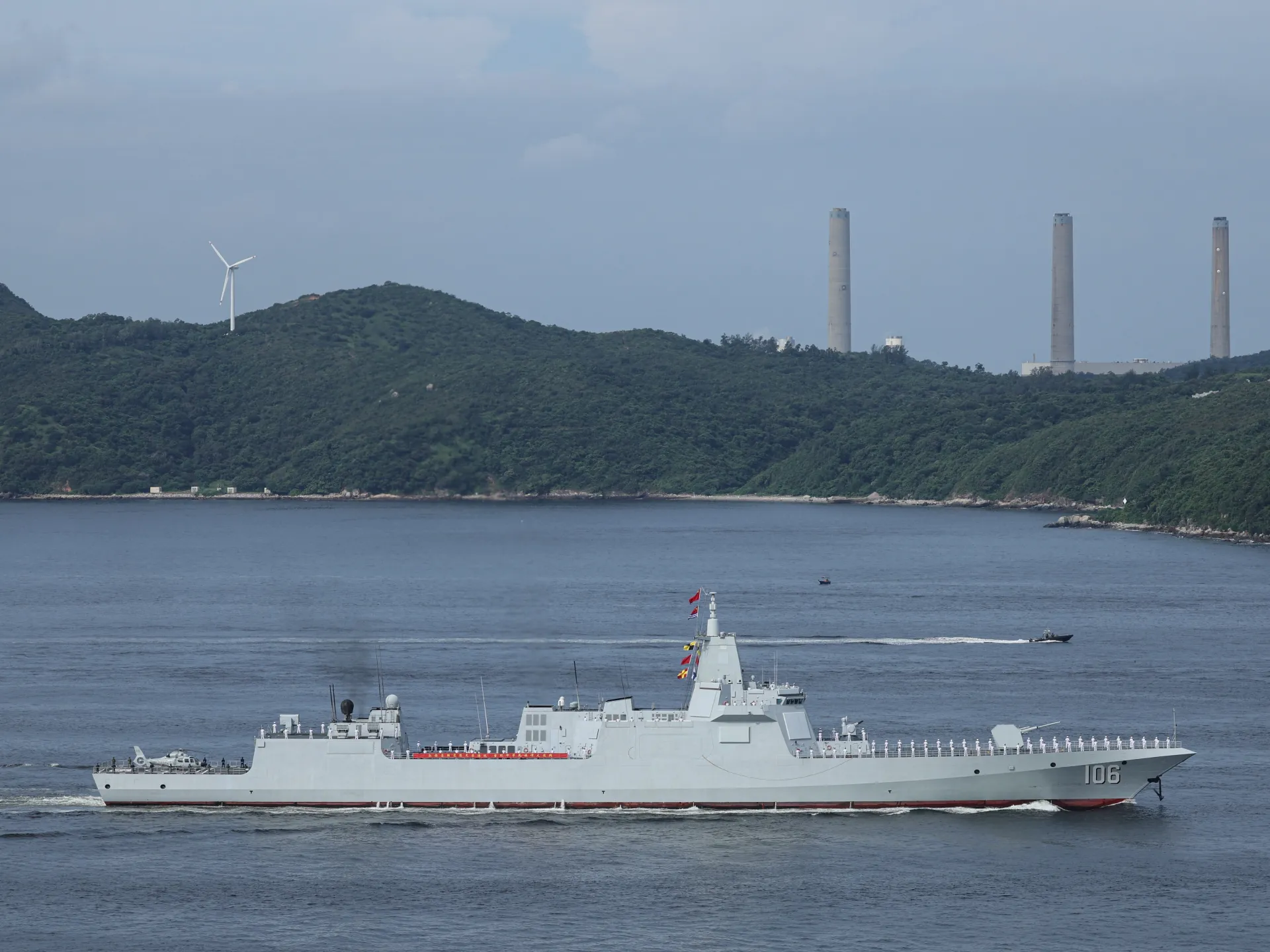
Pentagon report projects China could field nine carriers by 2035

Royal Navy aircraft carrier HMS Prince of Wales(R09) arrives at Tokyo International Cruise Terminal in Tokyo, Japan on Thursday, August 28, 2025. File Photo by Keizo Mori/UPI | License Photo

Dec. 27 (Asia Today) — China’s push to become a major aircraft carrier power, which gained momentum after it commissioned its first carrier in 2012, could expand into a fleet of nine carriers by 2035, according to a new U.S. Defense Department report.

China had no aircraft carriers before it commissioned the Liaoning in September 2012 after purchasing the unfinished former Soviet carrier Varyag from Ukraine in 1998 and refitting it for 14 years, according to Beijing-based sources familiar with military developments.

China later commissioned the Shandong in December 2019, its first domestically built carrier, and recently added a third carrier, the Fujian, which U.S. officials described as China’s first indigenously designed flat-deck carrier.

Foreign media reports have said China plans to operate six aircraft carriers by 2035, including two nuclear-powered ships, a target that some analysts consider plausible given the pace of its buildup since 2012.

However, the U.S. Defense Department’s annual report on China’s military power, released Tuesday, said “the PLAN aims to produce six aircraft carriers by 2035 for a total of nine,” raising the possibility that China’s carrier force could approach U.S. levels within a decade.

Chinese media have reported that China’s fourth aircraft carrier could enter service in 2027 and may be nuclear-powered with a displacement of about 120,000 tons, as Beijing continues to expand its blue-water capabilities.

— Reported by Asia Today; translated by UPI

© Asia Today. Unauthorized reproduction or redistribution prohibited.

Source link

China to stage drills around Taiwan in ‘stern warning’ to external forces | Military News

DEVELOPING STORY,

Beijing to impose sea, air restrictions for 10 hours, starting at 00:00 GMT on Tuesday, in five zones around Taiwan.

China has deployed air, navy and rocket troops to the waters around Taiwan for drills that its military said were aimed at testing combat readiness and delivering a “stern warning” against “separatist” and “external interference” forces.

The announcement on Monday came amid anger in Beijing over an $11.1bn weapons sale to Taiwan by the United States, as well as a statement by Japanese Prime Minister Sanae Takaichi, who suggested that the Japanese military could get involved if China were to attack the self-governed island.

Recommended Stories

list of 3 itemsend of list

Beijing considers Taiwan as part of its territory and has pledged to take control of the island by force if necessary.

In a statement, the Chinese military’s Eastern Theatre Command said it was dispatching army, navy, air force and rocket force troops to five zones around Taiwan for its “Just Mission 2025”, beginning on Monday.

The live-fire exercises will begin on Tuesday in the Taiwan Strait and areas to the north, southwest, southeast and east of the island, it said.

Shi Yi, a spokesperson for the Eastern Theatre Command, said the activities will focus “on ​training for maritime and aerial combat readiness patrols, gaining ‌integrated control, sealing off key ports and areas and conducting multi-dimensional deterrence”. The drills serve “as a serious warning to ‘Taiwan Independence’ separatist forces and external interference forces”, he added.

A separate statement with a map showed five large zones surrounding the island where “live firing activities will be organised” from 8am to 6pm (00:00-10:00 GMT) on Tuesday. “For the sake of safety, any irrelevant vessel or aircraft is advised not to enter the afore-mentioned waters and airspace,” the statement said.

The planned drills mark China’s sixth major round of war games since 2022 – after then-US House of Representatives Speaker Nancy Pelosi visited Taiwan – and were described by the state-owned Xinhua news agency as “a legitimate and necessary action to safeguard China’s sovereignty and national unity”.

During the drills, Shi said Chinese vessels and aircraft will approach Taiwan “in close proximity from different directions” and troops of multiple services will “engage in joint assaults to test their joint operations capabilities”, according to Xinhua.

While the Chinese military has practised port blockades around Taiwan during war games last year, this marks the first time it has publicly stated that drills around the island are aimed at deterring foreign military intervention.

Taiwan’s government condemned the drills.

A presidential office spokesperson urged China not to misjudge the situation and undermine regional peace, and called on Beijing to immediately halt what they described as irresponsible provocations.

“In response to the Chinese authorities’ disregard for international norms and the use of military intimidation to threaten neighbouring countries, Taiwan expresses its strong condemnation,” said Karen Kuo, the spokesman for the presidential office.

The island’s defence ministry said two Chinese military aircraft and 11 ships had been operating around the island over the last 24 hours, and that Taiwan’s military was on high alert and poised to carry out “rapid response exercises”.

That particular drill is designed to move troops swiftly in case China suddenly turns one ​of its frequent drills around the island into an attack.

“All members of our armed forces will remain highly vigilant and fully on ‌guard, taking concrete action to defend the values of democracy and freedom,” it said in a statement.

The exercises come after the US announced earlier this month that it had approved $11.1bn in arms sales to Taiwan in the largest ever weapons package for the island. The move drew a protest from China’s Ministry of National Defence and warnings that the military would “take forceful measures” in response.

Beijing last week also imposed sanctions against 20 US defense-related companies and 10 executives over the move.

In an interview aired on Sunday, Taiwanese President William Lai Ching-te told Sanli E-Television that the island must continue to raise the cost of aggression and strengthen its indigenous defence capabilities to deter China, stressing that peace can only be secured through strength.

“If China sets 2027 as the year to be ready for an invasion of Taiwan, then we have only one choice: to keep raising the difficulty so that China can never meet that standard. Taiwan will naturally remain safe,” Lai said.

Source link

Russia-Ukraine war: List of key events, day 1,404 | Russia-Ukraine war News

These are the key developments from day 1,404 of Russia’s war on Ukraine.

Here is where things stand on Monday, December 29:

Diplomacy

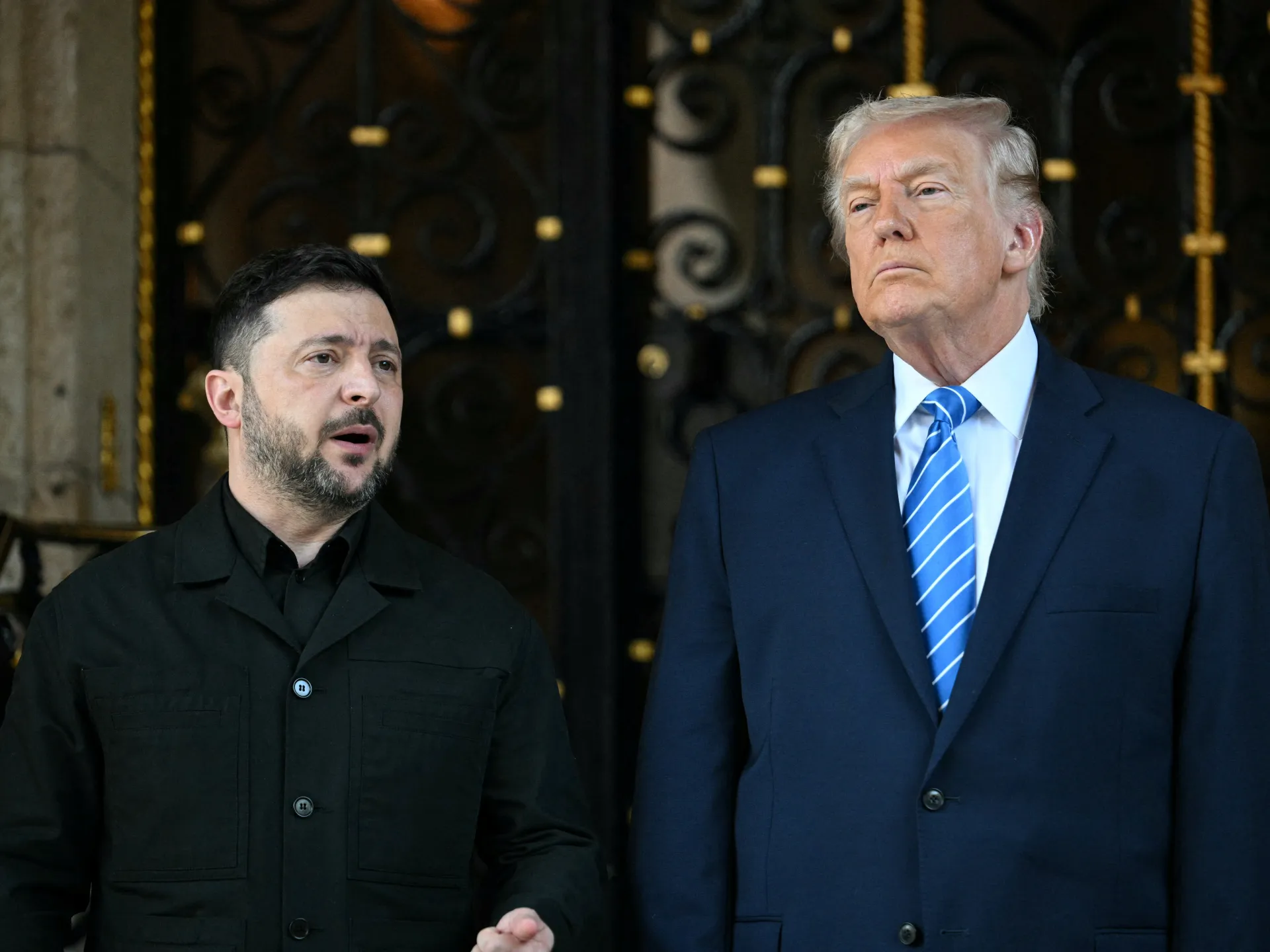
  • United States President Donald Trump hosted Ukrainian President Volodymyr Zelenskyy for talks at his Mar-a-Lago resort in Florida and said the two leaders were “getting a lot closer, maybe very close” to a deal to end the war in Ukraine.
  • Trump and Zelenskyy reported progress on two of the most contentious issues in the peace talks: security guarantees for Ukraine and the division of eastern Ukraine’s Donbas region that Russia has sought to capture.
  • On security guarantees, Zelenskyy said that a deal had been reached, while Trump said they were 95 percent of the way to such an agreement.
  • Both Trump and Zelenskyy said that the future of the mostly Russian-occupied Donbas had not been settled, though the US president said discussions were “moving in the right direction”. “It’s unresolved, but it’s getting a lot closer. That’s a very tough issue,” Trump said.
  • The two leaders did not offer further details or a deadline for completing the deal, but Zelenskyy said any peace agreement would have to be approved by Ukraine’s parliament or by a referendum.
  • Shortly after the Trump-Zelenskyy meeting, Russian President Vladimir Putin’s special envoy, Kirill Dmitriev, wrote on X that the “whole world appreciates” Trump and his team’s peace efforts.
  • Ahead of the meeting with Zelenskyy, Trump and Putin spoke for more than two hours on the telephone. The US president described the call as “excellent” and “productive”.
  • Trump said he would call Putin again after the meeting with Zelenskyy.
  • Kremlin foreign policy aide Yury Ushakov said the initial call was “friendly” and that Putin had told Trump that a 60-day ceasefire, proposed by the European Union and Ukraine, would simply prolong the war.
  • Ushakov said that a “bold, responsible, political decision is needed from Kyiv” on the Donbas region and other disputed matters for there to be a “complete cessation” of hostilities.
  • European leaders, including those from Finland, France, Germany, Poland and the United Kingdom, joined at least part of the Trump-Zelenskyy meeting by phone.
  • European Commission President Ursula von der Leyen said in a statement that Europe was ready to keep working with Ukraine and the US, and that having ironclad security guarantees would be of “paramount” importance.
  • French President Emmanuel Macron said that progress had been made on security guarantees at the meeting. Macron said that countries in the so-called “Coalition of the Willing” would meet in Paris in early January to finalise their “concrete contributions”.
  • Zelenskyy said that Trump had agreed to host European leaders again, possibly at the White House, sometime in January. Trump said the meeting could be in Washington, DC, or “someplace”.
  • Earlier on Sunday, Russian Minister of Foreign Affairs Sergey Lavrov warned that any European troop contingents deployed to Ukraine would become legitimate targets for Russia’s forces. Lavrov also accused European politicians of being driven by “ambitions” in their relations with Kyiv, and disregarding the people of Ukraine and of their own nations.

Fighting

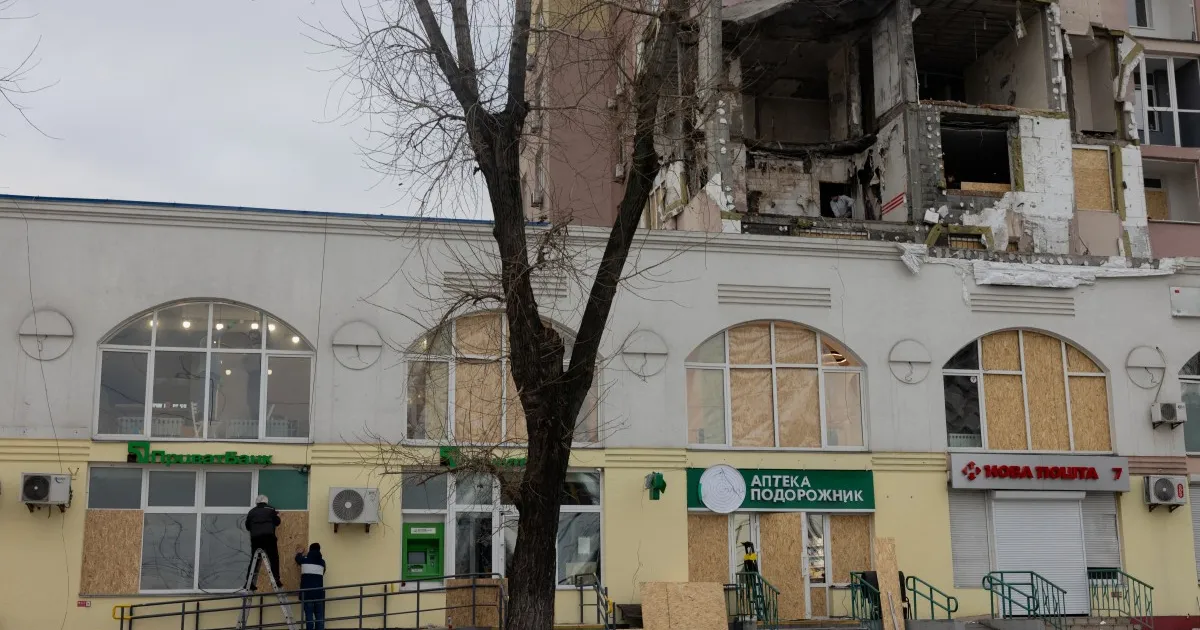
  • Russian forces attacked a heating plant in the southern Ukrainian city of Kherson, wounding one person and causing “significant damage” to the facility, state oil and gas firm Naftogaz said.
  • Ukraine’s leading private energy provider, DTEK, said it had restored power to more than a million households in and around Kyiv a day after a massive Russian air attack had forced emergency outages.
  • Ukraine’s military said it had struck the Syzran oil refinery in Russia’s Samara region in a drone attack. The strike caused a fire, and damages were still being assessed, the army said in a statement.
  • The military also said that only part of the southeastern town of Huliaipole was under Russian control, contradicting an earlier claim by Moscow that it had been captured. It added that fighting was also still under way for Stepnohirsk, another town in the southeastern Zaporizhia region that Russia claimed it had captured.
  • Meanwhile, Russia’s Ministry of Defence said in a statement that its troops had taken control of four other settlements in the Donetsk region. It identified them as Myrnohrad, Artemivka, Rodynske and Vilne.

Source link

Any Israeli presence in Somaliland will be a ‘target’: Houthi leader | Houthis News

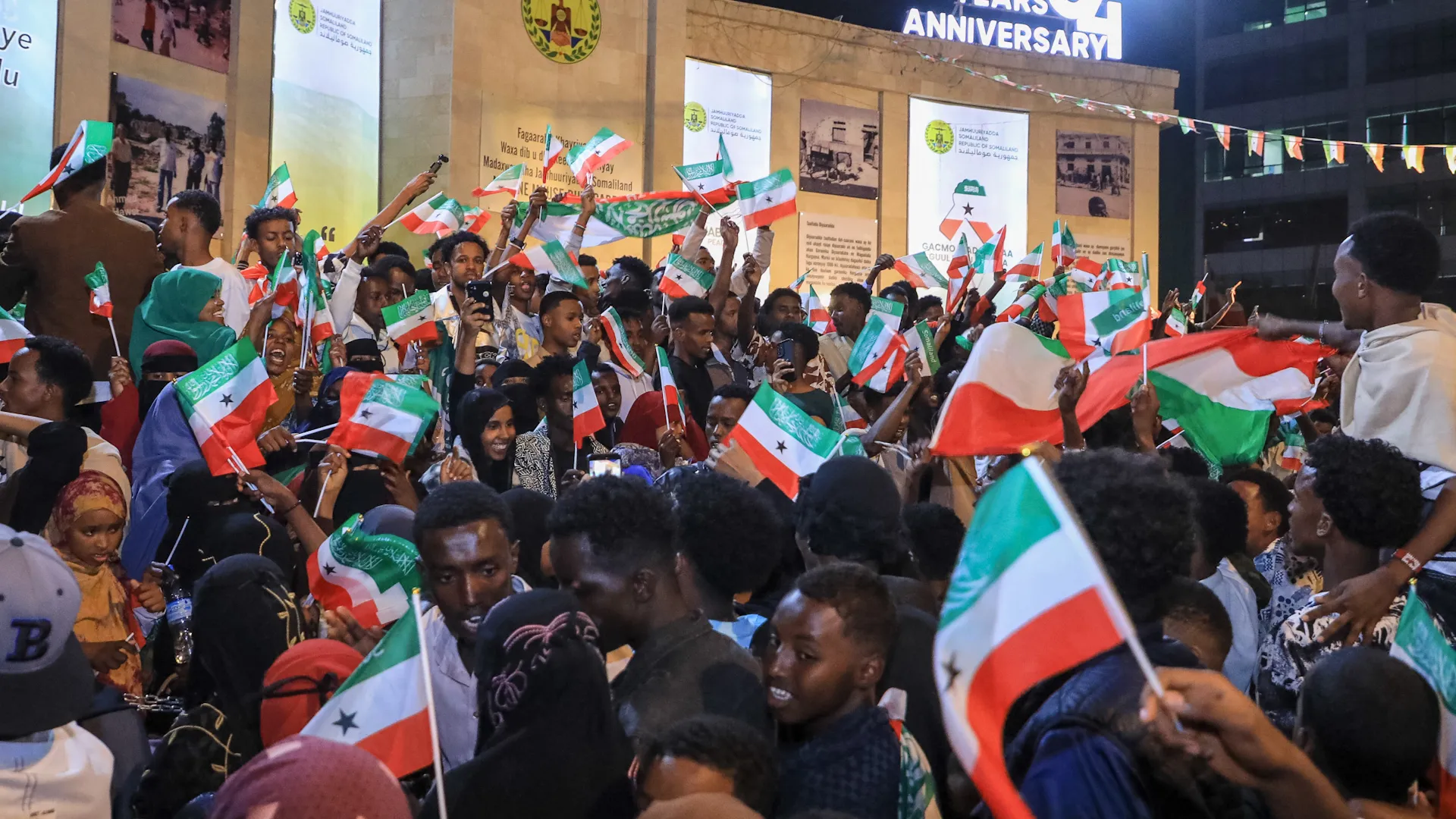
Israel on Friday announced it is officially recognising Somaliland, a first for the self-proclaimed republic since 1991.

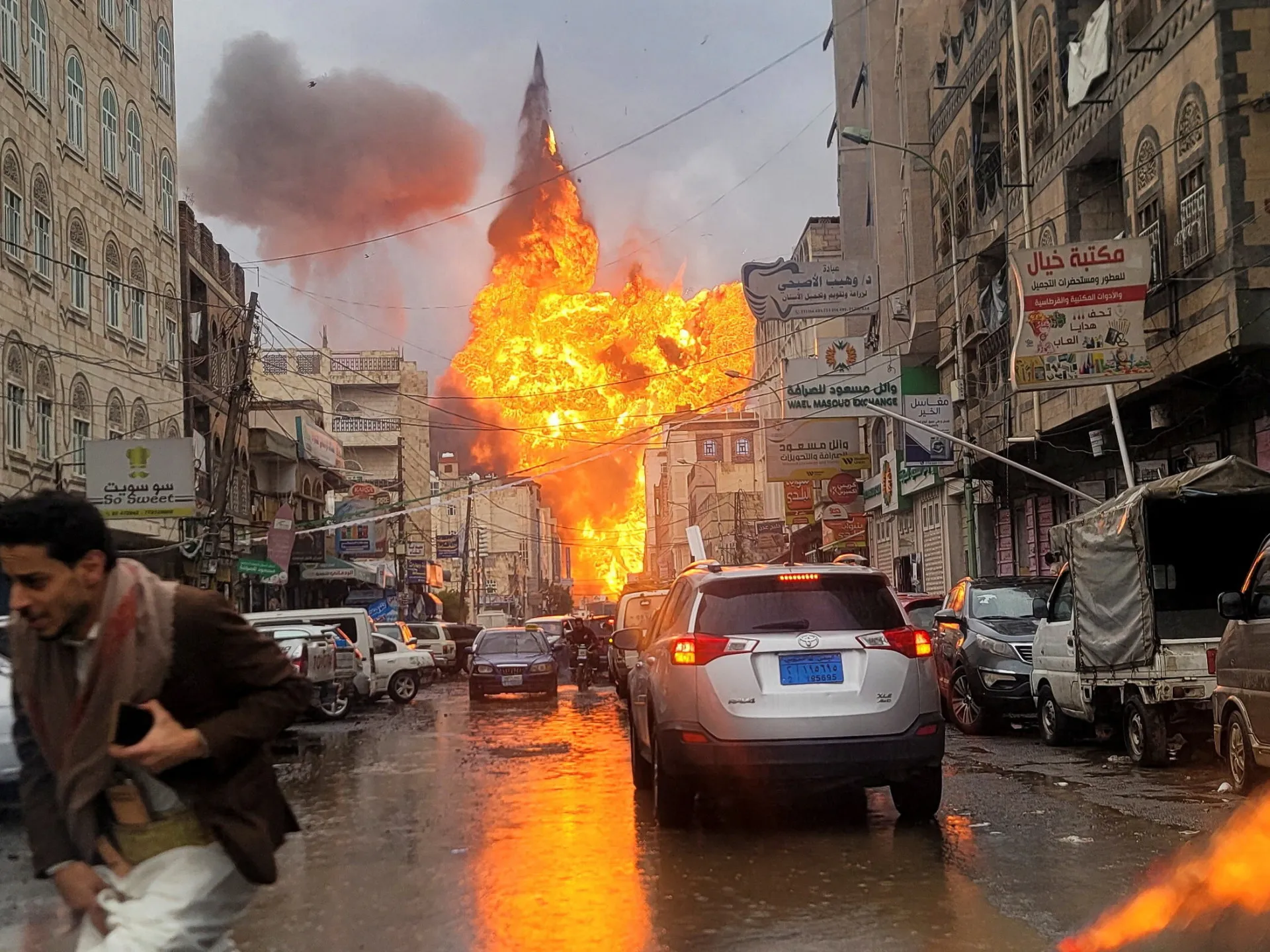
The leader of Yemen’s Houthi rebels has warned any Israeli presence in Somaliland would be considered a “military target”, in the latest condemnation of Israel’s move to recognise the breakaway region.

“We consider any Israeli presence in Somaliland a military target for our armed forces, as it constitutes aggression against Somalia and Yemen, and a threat to the security of the region,” said the group’s chief, Abdel-Malik al-Houthi, according to a statement published by rebel media online.

Recommended Stories

list of 4 itemsend of list

Israel announced on Friday that it is officially recognising Somaliland, a first for the self-proclaimed republic that in 1991 declared it unilaterally separated from Somalia.

The Houthi chief warned that the move carried grave consequences, saying that recognition is “a hostile stance targeting Somalia and its African surroundings, as well as Yemen, the Red Sea, and the countries along both shores of the Red Sea”.

Somaliland, which has for decades pushed for international recognition, enjoys a strategic position on the Gulf of Aden and has its own money, passport and army.

Regional analysts say a rapprochement with Somaliland would provide Israel with better access to the Red Sea, enabling it to hit Houthi rebels in Yemen.

After launching its genocidal war on Gaza in October 2023, Israel repeatedly struck targets in Yemen in response to Houthi attacks on Israel, which the Yemeni rebels said were in solidarity with Palestinians in Gaza.

The Houthis have halted their attacks since a fragile truce began in Gaza in October.

Somaliland has been diplomatically isolated since its unilateral declaration of independence, even if it has generally experienced greater stability than Somalia, where al-Shabab fighters periodically mount attacks in the capital, Mogadishu.

Israel’s recognition of Somaliland was criticised by the African Union, Egypt, Turkiye, the six-nation Gulf Cooperation Council, and the Saudi-based Organisation of Islamic Cooperation.

The European Union insisted that Somalia’s sovereignty should be respected.

Source link

China industrial profits post steepest drop in 14 months

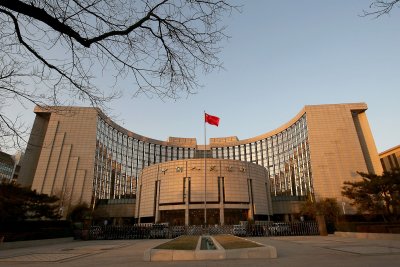
China’s national flag flies in front of the People’s Bank of China, the country’s central bank, in Beijing on Monday, January 18, 2021. The world’s second largest economy grew 2.3% in 2020, the slowest in decades but showing slow recovery even as the rest of the world was upended by the coronavirus pandemic. File Photo by Stephen Shaver/UPI | License Photo

Dec. 27 (Asia Today) — China’s industrial profits in November posted their sharpest year-on-year decline in 14 months amid weak domestic demand and deflation concerns, according to data released Friday.

Reuters and other outlets reported that China’s National Bureau of Statistics said industrial profits in November fell 13.1% from a year earlier. The decline followed an October drop of 5.5%, marking the second consecutive monthly fall and the weakest reading since September last year, when profits fell 27.1%.

Cumulative industrial profits for January through November rose 0.1% from a year earlier, slowing from 1.9% growth in the January-October period, the bureau said.

By sector, mining profits fell 27.2% in the January-November period, while profits rose in manufacturing (+5.0%) and utilities such as electricity and water (+8.4%).

Coal mining and ore processing profits fell 47.3% over the first 11 months of the year, the data showed. Profits rose in computer, communications and other electronic equipment manufacturing (+15.0%) and automobile manufacturing (+7.5%).

Reuters said industrial profits remain sluggish despite strong exports, reflecting weak domestic demand and fueling calls for additional stimulus measures.

The report said Beijing has not announced new stimulus as the government’s “around 5%” growth target for this year is seen as within reach, though expectations for further support persist as authorities have repeatedly pledged to boost domestic demand and promote employment next year.

China’s industrial profits are calculated based on enterprises with annual main business revenue exceeding 20 million yuan, about 4.1 billion won ($3.1 million).

— Reported by Asia Today; translated by UPI

© Asia Today. Unauthorized reproduction or redistribution prohibited.

Source link

Ukraine’s Zelensky meets with Trump at Mar-a-Lago

Ukrainian President Volodymyr Zelensky, pictured during a meeting at the White House with U.S. President Donald Trump in August, arrived at Mar-a-Lago on Sunday morning to work on a proposed 20-point peace plan between Russia and Ukraine. File Photo by Aaron Schwartz/UPI | License Photo

Dec. 28 (UPI) — Ukrainian President Volodymyr Zelensky on Sunday arrived at Mar-a-Lago in Palm Beach, Florida, to meet with U.S. President Donald Trump about a proposal for a cease-fire and end to Russia’s war in Ukraine.

Zelensky and his entourage arrived Sunday to discuss a 20-point plan — that may include conceding territory and shared operation of a nuclear power plant — to potentially end the war that started more than three years ago with Russia’s invasion of Ukraine.

Ahead of the meeting, Trump spoke with Russian President Vladimir Putin by phone for more than an hour, during which reportedly agreed that a long-term peace deal is preferable to a cease-fire, with Putin calling for Zelensky to make a “courageous, responsible political decision,” The New York Times reported.

Zelensky arrives for the meeting as Russia has amped up its attacks on Kyiv and other parts of Ukraine in recent days, which some have called a tactic on Russia’s part to force the Ukrainians hand in making a peace deal.

“Given the situation on the front lines, Kyiv must not delay making that decision,” Yuri Ushakov, one of Putin’s foreign policy aides, said during a press briefing on Sunday.

Trump told reporters when he welcomed Zelensky to Mar-a-Lago that he believes “we have the makings of a deal,” and that both Putin and Zelensky are both serious about making a peace deal, CNN reported.

Zelensky, Trump and representatives from both of their administrations are negotiating the 20-point peace plan that Zelensky reworked from a U.S.-proposed 28-point plan earlier this year.

Plans have also been drawn up for a three-party security guarantee between Ukraine, the U.S. and Europe, as well as a bilateral deal with the United States, in addition to economic cooperation to rebuild Ukraine, which has been brutally battered by Russia for the last three years, the Kyiv Independent reported.

According to the BBC, Putin and Trump are likely to speak later on Sunday after the meeting at Mar-a-Lago.

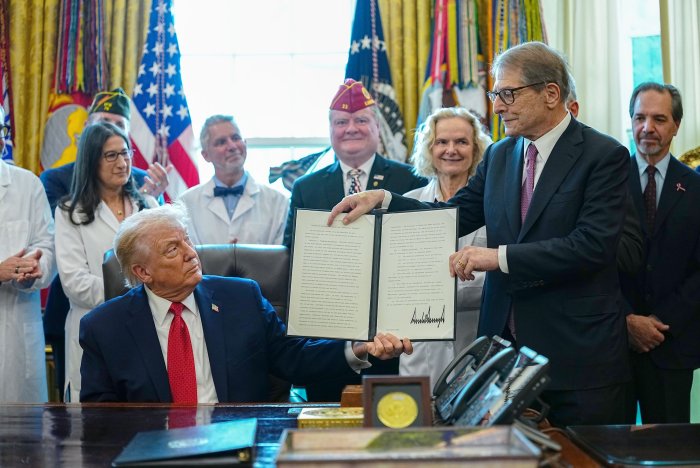
President Donald Trump holds a signed executive order reclassifying marijuana from a schedule I to a schedule III controlled substance in the Oval Office of the White House on Thursday. Photo by Aaron Schwartz/UPI | License Photo

Source link

US President Trump says Russia-Ukraine truce talks in ‘final stages’ | Russia-Ukraine war News

Diplomacy over the Russia-Ukraine war is in its “final stages”, said US President Donald Trump as he welcomed Ukraine’s leader Volodymyr Zelenskyy to his Florida estate.

The two leaders stood outside the Mar-a-Lago resort on Sunday and addressed reporters as they prepared to discuss a new proposal to end the bloody conflict.

Recommended Stories

list of 4 itemsend of list

The US president has been working hard to end the nearly four-year war in Ukraine for much of his first year back in office, showing irritation with both Zelenskyy and Russian President Vladimir Putin while publicly acknowledging the difficulty of ending the fighting.

“I think we’re … in final stages of talking and we’re going to see. Otherwise, it’s going to go on for a long time, and millions of additional people will be killed,” said Trump, adding he did not have a deadline for the process.

“I do believe that we have the makings of a deal that’s good for Ukraine, good for everybody.”

He added there would be “a strong agreement” to guarantee Ukraine’s security, one that would involve European countries.

“We have two willing parties. We have two willing countries … The people of Ukraine want [the war] to end, and the people of Russia want it to end, and the two leaders want it to end,” Trump said.

Russia intensified its attacks on Ukraine’s capital in the days before the Florida meeting.

Zelenskyy, by Trump’s side, said he and the US president would discuss issues of territorial concessions, which have so far been a red line for his country. He said his negotiators and Trump’s advisers “have discussed how to move step by step and bring peace closer” and would continue to do so in Sunday’s meeting.

During recent talks, the US agreed to offer certain security guarantees to Ukraine similar to those offered to other members of NATO.

The proposal came as Zelenskyy said he was prepared to drop his country’s bid to join the security alliance if Ukraine received NATO-like protection designed to safeguard it against future Russian attacks.

Oleksandr Kraiev, an analyst with the think-tank Ukrainian Prism, said the people of Ukraine are “quite cynical” about the talks brokered by the United States.

“We tried this in 2015, 2016, 2017, and unfortunately each time the Russians broke even the ceasefire regime, not even talking about the peace process,” he told Al Jazeera.

“So we have little faith that a proper peace process will take place. As of now we’re striving for a ceasefire as a precondition for any kind of talks… We cannot trust the Russians with a peace deal, but a ceasefire is something we’re working on.”

‘Blindsided yet again’

Trump’s upbeat tone comes despite widespread scepticism in Europe about Putin’s intentions after Russia carried out another massive bombardment of the Ukrainian capital just as Zelenskyy headed to Florida.

Before Zelenskyy arrived, Trump spoke with Putin by phone for more than an hour and said he planned to speak again after the Zelenskyy meeting – catching Ukrainian leaders off guard, reported Al Jazeera’s Shihab Rattansi.

“From what we’re hearing, the Zelenskyy delegation here have been blindsided yet again by Donald Trump. And according to the Russians, it was at the Americans’ insistence there should be a call with Vladimir Putin the hour before Zelenskyy arrived,” said Rattansi, speaking from Palm Beach, Florida.

Meanwhile, while there is talk about land concessions from Ukraine’s side, they are outside the framework Zelenskyy is hoping for.

The Kremlin gave a more pointed readout of Trump’s talks with Putin, saying the US leader agreed a mere ceasefire “would only prolong the conflict” as it demanded Ukraine compromise on territory.

Zelenskyy said last week that he would be willing to withdraw troops from Ukraine’s eastern industrial heartland as part of a plan to end the war, if Russia also pulls back and the area becomes a demilitarised zone monitored by international forces.

Putin has publicly said he wants all the areas in four key regions captured by his forces, as well as the Crimean Peninsula, illegally annexed in 2014, to be recognised as Russian territory. He also insisted that Ukraine withdraw from some areas in eastern Ukraine that Moscow’s forces have not captured.

Kyiv has publicly rejected all those demands.

Trump has been somewhat receptive to Putin’s conditions, making the case that the Russian president can be persuaded to end the war if Kyiv agrees to cede Ukrainian land in the Donbas region, and if Western powers offer economic incentives to bring Russia back into the global economy.

Source link

New York City to phase out MetroCard for public transit after 30 years

Dec. 28 (UPI) — More than 30 years after New York City switched from tokens to the magnetic swipe of a MetroCard to ride its subways and buses, the card’s era is about to end.

Starting on Jan. 1, 2026, transiting residents and tourists alike will be required to move into the 21st century by using a contactless form of paying fares by tapping a phone, credit card or other device as they enter stations and buses.

Although the contactless system was introduced in 2019, 94% of subway and bus trips in the city already use the OMNY system for their travel payments, ABC News reported.

“New Yorkers have embraced tap and ride and we’re proud to see that as more and more people return to the city, they are choosing mass transit,” Shanifah Rieara, chief customer officer for New York City’s Metropolitan Transit Authority (MTA), said in a press release.

“As the end of MetroCard sales nears, we are focusing on reaching the remaining 6% to make the switch and unlock the benefits and convenience of tap and ride technology,” Rieara said.

According to the MTA, the last day to purchase or reload a MetroCard will be Dec. 31, while the last day to use one of the magnetic swipe cards will be some time in mid-2026.

The OMNY system offers three ways for riders to pay: with their phone using a digital wallet or contactless bank card, as well as a physical OMNY card that works with the digital system.

MTA said that by eliminating MetroCards and move to a single method of fare collection, the agency expects to save at least $20 million, as well as gain the ability to offer customer promotions and fare discounts more easily.

From 1953 until 1994, the New York City subway system’s main method for paying were dime-sized tokens with a hole in the middle shaped like a “Y,” which the MTA at the time said made it easier to increase fares without having to accept a variety of coinage, CNN reported.

In 1983, as other large cities had started using magnetic swipe technology for their public transportation systems’ payments, the MTA started moving toward the reloadable cards that have been an essential part of life for New Yorkers for more than three decades.

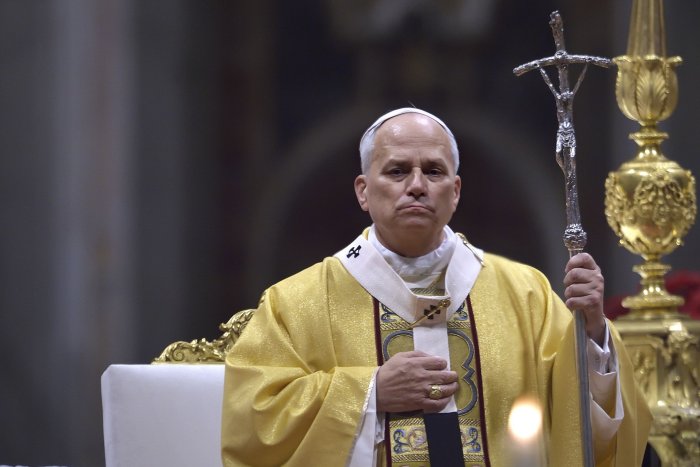
Pope Leo XIV celebrates the Christmas vigil Mass on Christmas eve on Wednesday in St. Peter’s Basilica in Vatican City, Vatican. Photo by Stefano Spaziani/UPI | License Photo

Source link

Kyrgios beats Sabalenka 6-3 6-3 in ‘Battle of the Sexes’ tennis showdown | Tennis News

Kyrgios, who is currently 671st in men’s rankings, beat the four-time Grand Slam singles champion in straight sets.

Nick Kyrgios beat women’s world number one Aryna Sabalenka in the “Battle of the Sexes”, in a highly-publicised showdown with modified rules that divided tennis fans.

Former Wimbledon finalist Kyrgios won 6-3, 6-3 in an exhibition match in Dubai on Sunday that bore little resemblance to the era-defining 1973 encounter between Billie Jean King and Bobby Riggs.

Recommended Stories

list of 4 itemsend of list

Back then, there was more at stake with the nascent women’s professional tour, set up by King, fighting for its legitimacy and prize money for female players still far lower than for the men.

King, one of the all-time greats of the women’s game who was at the peak of her powers, saw off the 55-year-old Riggs, a top player in his day, 6-4, 6-3, 6-3 in Houston.

On Sunday, each player received only one serve and the dimensions of Sabalenka’s side of the court were nine percent smaller, in an attempt to restrict Kyrgios’ power and speed advantage.

Kyrgios has dropped to 671 in the rankings after playing just six ATP matches over the past three seasons, but the 30-year-old Australian still had enough to see off four-time Grand Slam singles champion Sabalenka.

The maverick Australian was drenched in sweat and appeared out of breath in the second set ‌after going 1-3 down, while his opponent danced to the music ‌during a strategic timeout, but he ⁠persevered to make it 3-3 after Belarusian Sabalenka sent a shot long.

Kyrgios, who shortened the points with cheeky drop shots ‌and used variations on his serve to good effect, pulled away to seal the win on serve ‍before sharing a warm hug with Sabalenka at the net.

“Honestly, it was a really tough match. She’s a hell of a competitor,” said Kyrgios.

“I had to strap in because she was putting the pressure on and ultimately it was a really hard-fought battle.”

Sabalenka said she would “love” a rematch.

“I felt great. I put on a great fight. He was struggling. He was getting tired. I was happy to see that,” she said.

“It was a great level [of tennis]. I made a lot of great shots. I really enjoyed the show. I feel like next time when I play him I know all his tactics and strengths.”

Source link

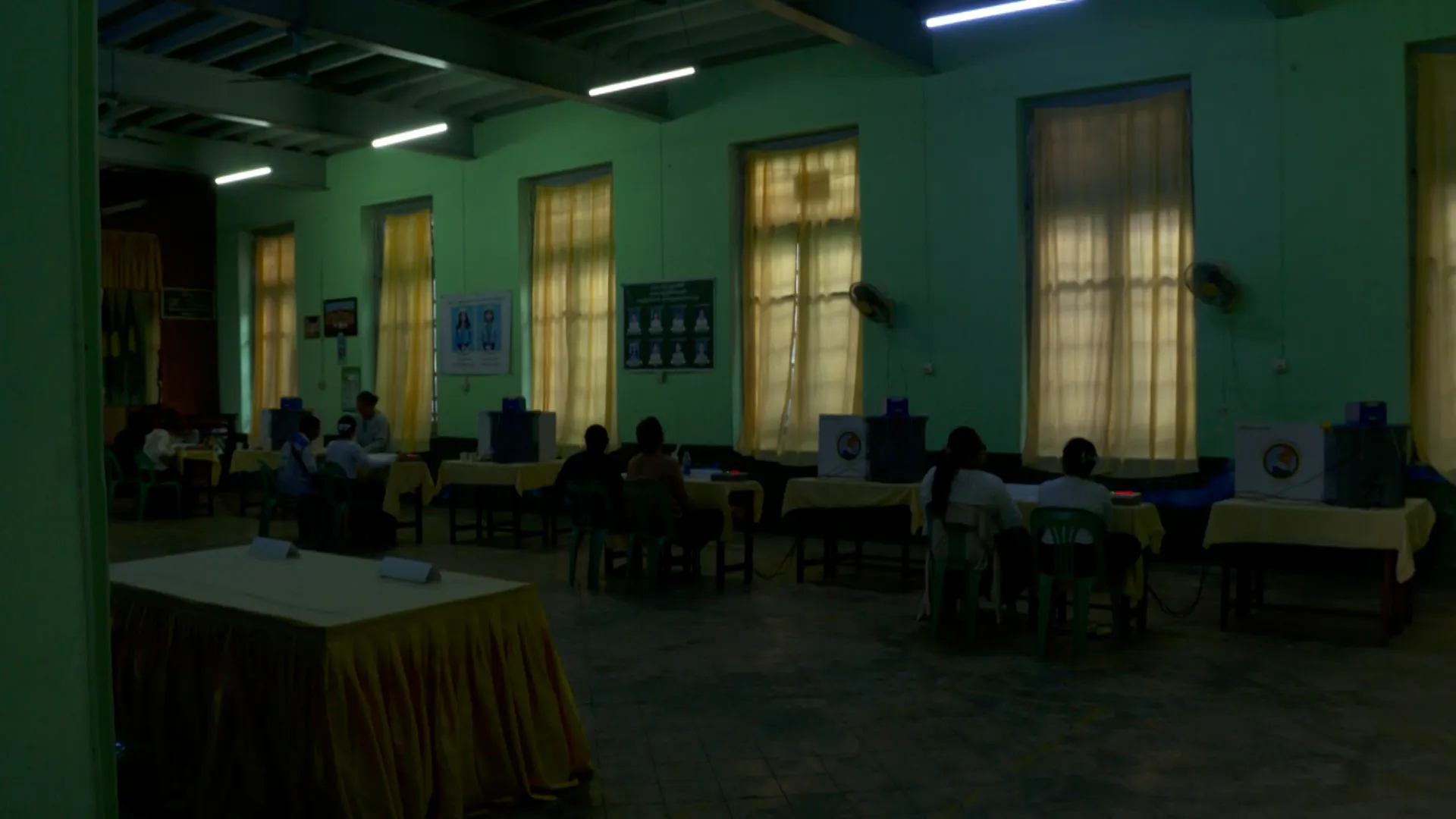
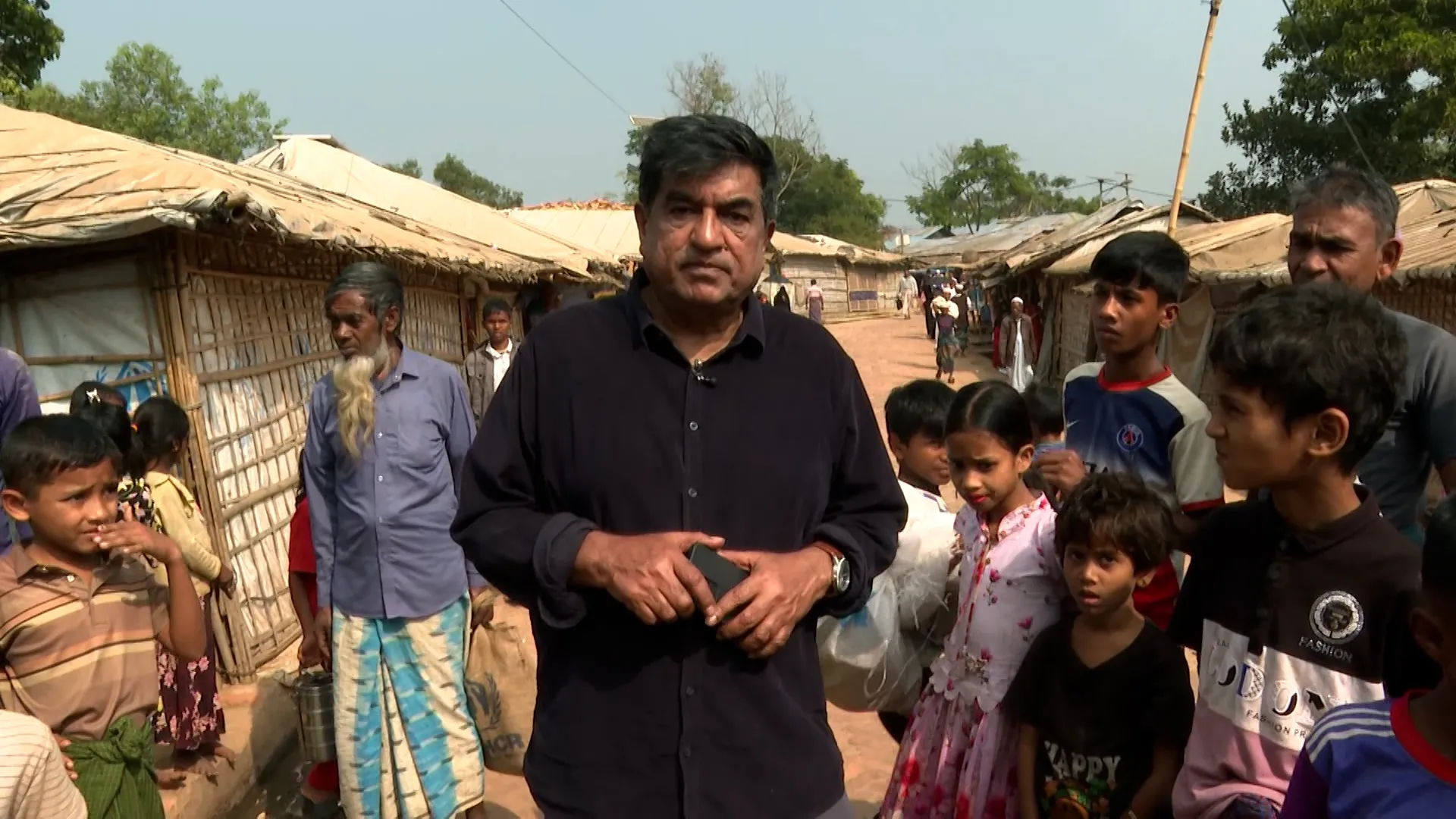
Video: What do Rohingya refugees think about Myanmar’s election? | Elections

NewsFeed

Myanmar’s election is unlikely to change the reality for more than 1M Rohingya refugees in Bangladesh who fled what the UN called ‘genocidal violence’ in Myanmar. Efforts to repatriate the Muslim minority have stalled since the junta seized power in 2021. Al Jazeera’s Tanvir Chowdhury reports from Cox’s Bazar.

Source link

Niger’s military rulers order ‘general mobilisation’ against armed groups | Armed Groups News

The military rulers expand emergency powers, warning that people, property, and services may be requisitioned.

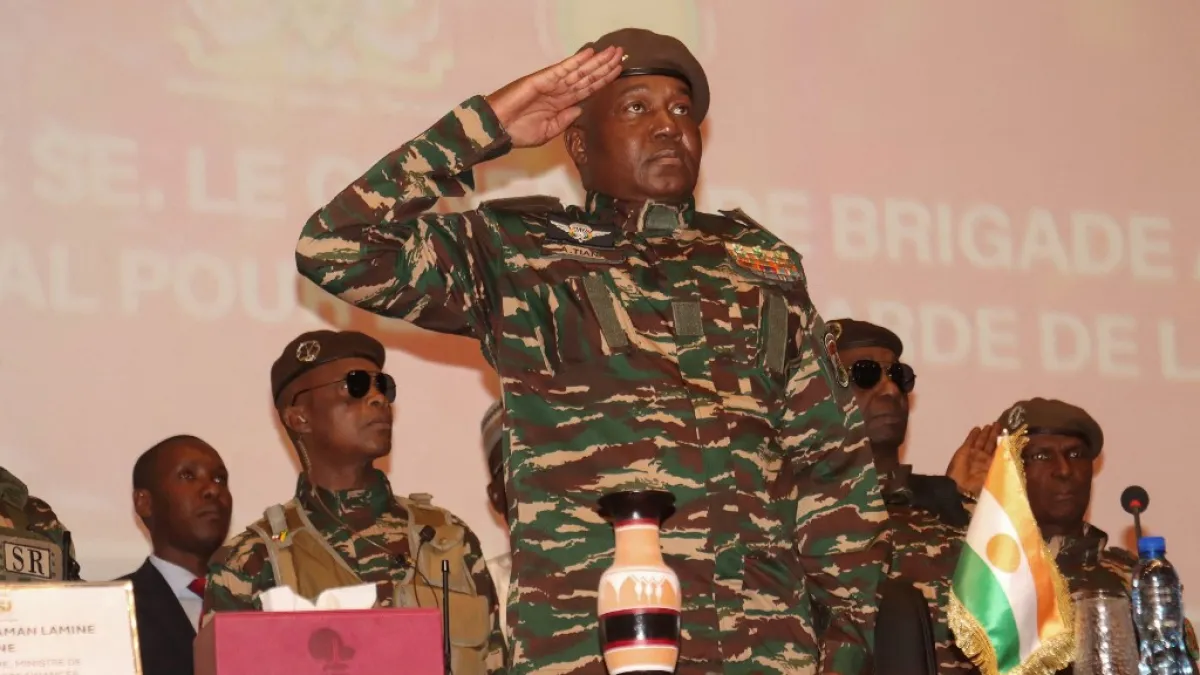
Niger’s military rulers have approved a general mobilisation and authorised the requisition of people and goods as they intensify the fight against armed groups across the country, according to a government statement.

The decision followed a cabinet meeting on Friday and marks a major escalation by the military government, which seized power in a July 2023 coup that toppled the country’s democratically elected president, Mohamed Bazoum.

Recommended Stories

list of 4 itemsend of list

“People, property, and services may be requisitioned during general mobilisation to contribute to the defence of the homeland, in compliance with the legislation and regulations in force,” the government said in a statement issued late on Saturday.

“Every citizen is required to respond immediately to any call-up or recall order, to comply without delay with the implementation of measures for the defence of the homeland, and to submit to requisition,” it added.

The authorities said the measures aim to “preserve the integrity of the national territory” and “protect the population” as Niger continues to face attacks by armed groups operating across several regions.

Niger has been embroiled in deadly armed conflict for more than a decade, with violence linked to fighters affiliated with al-Qaeda and the ISIL (ISIS) group. Nearly 2,000 people have been killed, according to the Armed Conflict Location and Event Data Project (ACLED), which tracks political violence.

The southeast of the country has also suffered repeated attacks by Boko Haram and its splinter group, the ISIL affiliate in West Africa Province (ISWAP), further stretching Niger’s security forces.

The mobilisation order comes five years after Niger expanded its armed forces to around 50,000 troops and raised the retirement age for senior officers from 47 to 52. Since taking power, the military government has also urged citizens to make “voluntary” financial contributions to a fund launched in 2023 to support military spending and agricultural projects.

Soon after the coup, Niger’s rulers ordered French and United States troops, who had supported operations to combat rebel fighters, to withdraw from the country.

Niger has since deepened security cooperation with neighbouring Mali and Burkina Faso, also ruled by a military government. The three Sahel states have formed a joint force of 5,000 troops, presenting it as a regional response to armed groups while further distancing themselves from Western partners.

Source link

Javad Zarif: Main threat to the Middle East is Israel, not Iran | Israel-Iran conflict

Iran’s former foreign minister argues Israel, backed by the US, has killed every opportunity for peace.

Months after being attacked by the United States and Israel, Iran finds itself in the crosshairs again, with Israeli officials lobbying US President Donald Trump to address Tehran’s ballistic missiles.

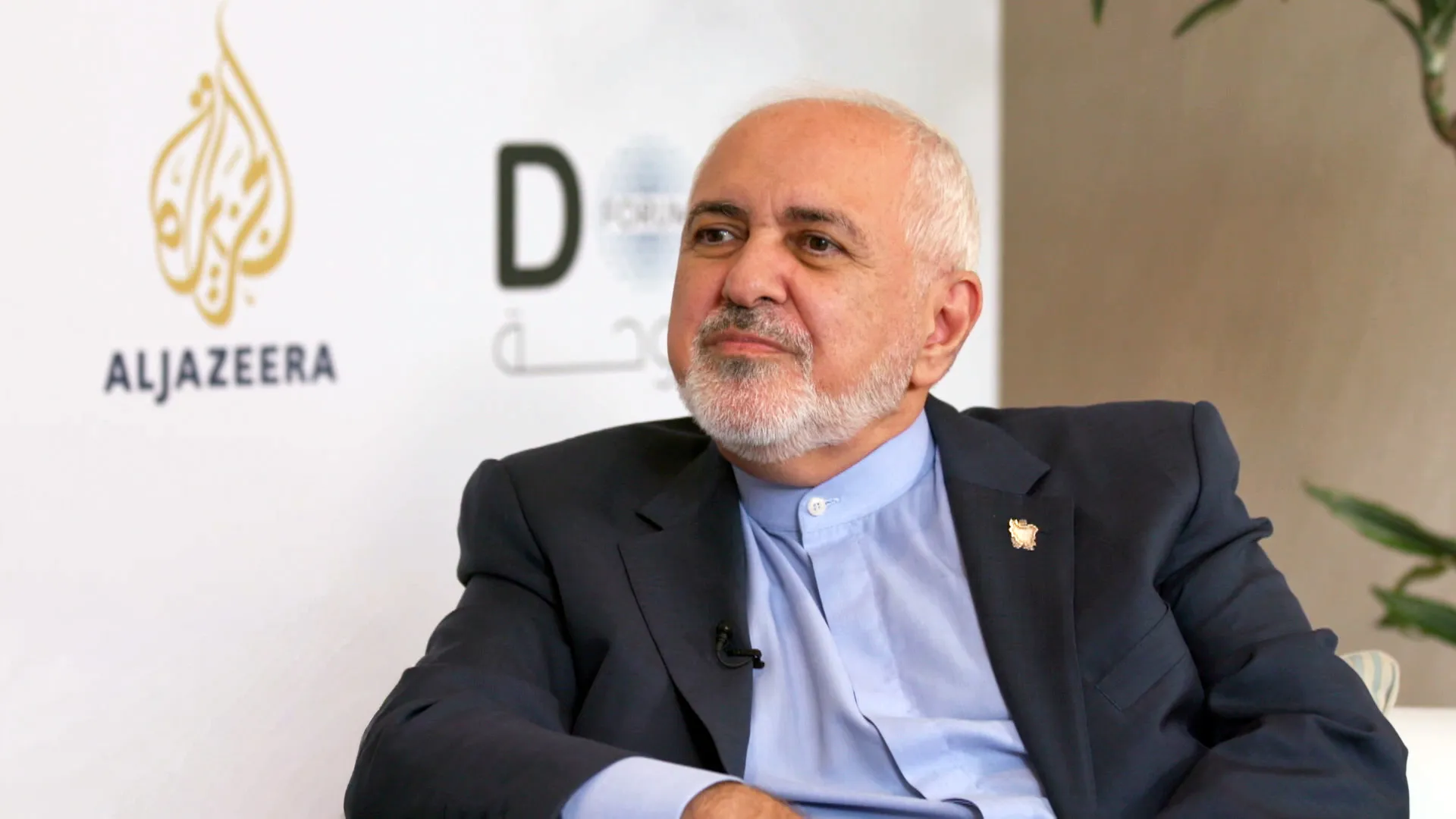
Veteran Iranian diplomat Javad Zarif tells host Steve Clemons that “everybody lost any faith in diplomacy” after Israel and the US attacked Iran following five rounds of reconciliation talks between Washington and Tehran.

Zarif added that Israel has historically thwarted every opportunity for reconciliation between Iran and the US, and that Trump’s style of diplomacy is disastrous, as it creates “negotiations that end up in war”.

Source link

Somalia condemns Israel’s recognition of Somaliland as ‘naked invasion’ | Benjamin Netanyahu News

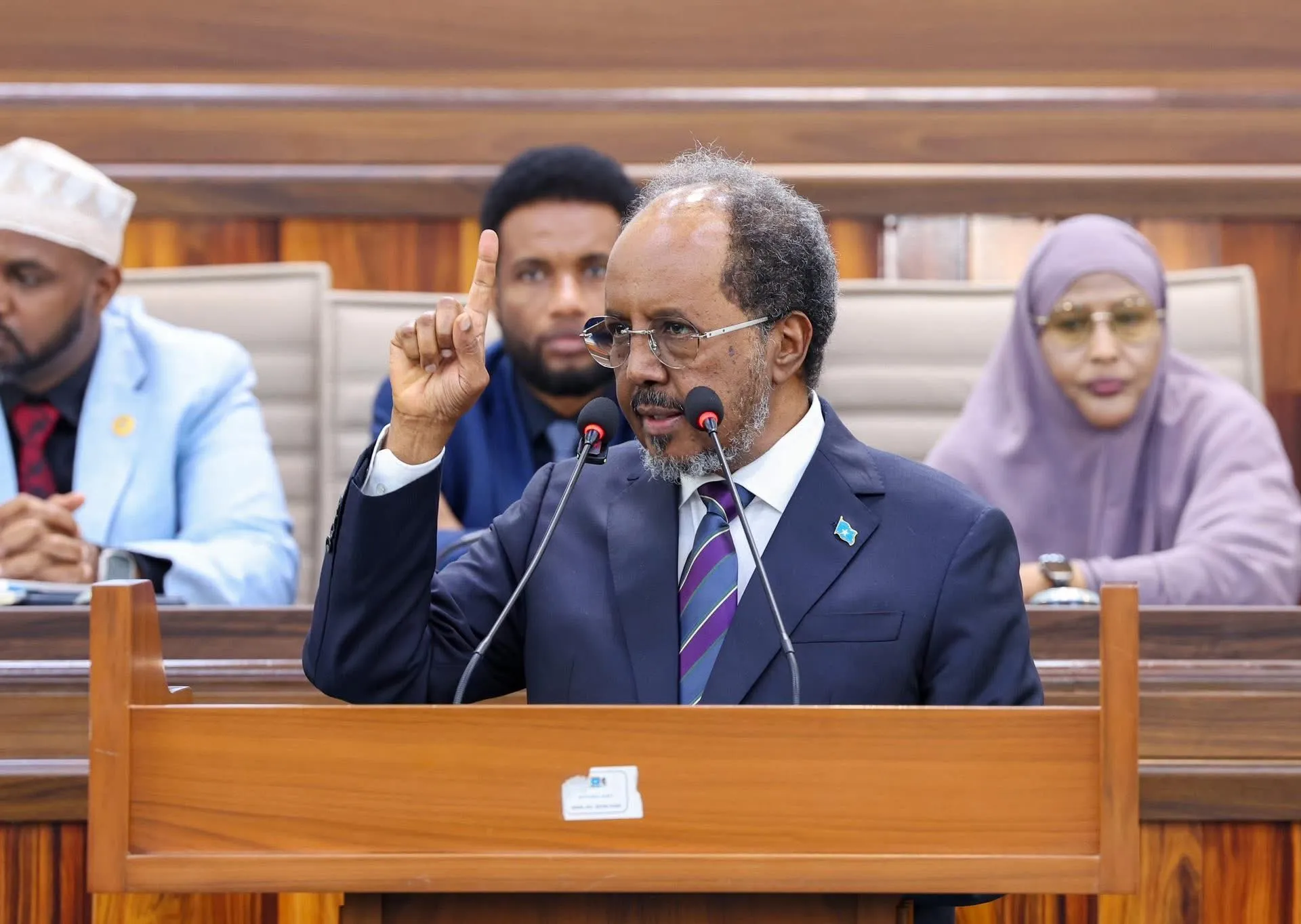
Somalia’s president calls for unity at an emergency joint session of parliament, which declares the Israeli move ‘null and void’.

Somalia’s president has condemned Israel’s recognition of the breakaway region of Somaliland as a “naked invasion”, warning that the move threatens to ignite separatist movements elsewhere.

Addressing an emergency joint session of parliament on Sunday, President Hassan Sheikh Mohamud said Israeli Prime Minister Benjamin Netanyahu has committed the “greatest abuse” of Somalia’s sovereignty in the nation’s history and referred to Israel as an “enemy”.

Recommended Stories

list of 4 itemsend of list

“I am encouraging the Somali people to be calm and to defend the unity and the independence of our country, which is facing this naked invasion,” he said.

Lawmakers unanimously passed a resolution declaring Israel’s recognition as “null and void” although the measure is largely symbolic given that Somalia has not controlled Somaliland since it declared independence in 1991, which Somalia has never accepted.

The resolution warns that individuals or institutions violating Somalia’s sovereignty will face legal consequences under the country’s penal code and international law. It directed the government to take up the matter with the United Nations, African Union, Arab League and other regional bodies.

‘Existential threat’

Netanyahu on Friday announced that Israel had established full diplomatic relations with Somaliland, describing the move as being in the spirit of the United States-brokered Abraham Accords, which normalised ties between Israel and several Arab countries.

The announcement made Israel the first UN member state to formally recognise the self-declared state, which has sought international acceptance for more than three decades without success.

Mohamud accused Netanyahu of trying to import Middle Eastern conflicts into Somalia and promised his country would not allow its territory to be used as a military base to attack other nations.

He urged Somalis to set aside “tribal and regional rivalries” to confront what he described as an “existential threat” to the country’s unity.

“We need to combine our wisdom and strengths to defend our existence and sovereignty,” the president said, calling on Somaliland’s leaders to enter meaningful negotiations to preserve Somalia’s territorial integrity.

Somali Prime Minister Hamza Barre told Al Jazeera Arabic that Israel was “searching for a foothold in the Horn of Africa” and called on it to recognise and accept a Palestinian state instead.

Defending the Israeli move, Somaliland President Abdirahman Mohamed Abdullahi, known locally as Cirro, said on Friday that Somaliland’s recognition “is not a threat, not an act of hostility” to neighbouring countries.

He said his nation is “deeply rooted in Islamic values of moderation, justice and coexistence” and does not represent an alignment against any Islamic nation or community.

Meanwhile, the Israeli decision sparked immediate international backlash

A joint statement issued on Saturday by 21 Arab and African countries and the Organisation of Islamic Cooperation condemned the recognition as a grave violation of international law and the UN Charter.

In a statement, the Palestinian Ministry of Foreign Affairs expressed support for Somalia.

Regional leaders – including the presidents of Kenya, Uganda, Tanzania and Djibouti – held phone calls with Mohamud to reaffirm support for Somalia’s territorial integrity. Eritrea separately called on China to take action at the UN Security Council, drawing parallels to the Taiwan issue.

The European Union issued a statement calling for respect for Somalia’s sovereignty but stopped short of condemning the move. It urged authorities in Mogadishu and Hargeisa to engage in dialogue.

Israel’s move to recognise Somaliland came during a more than two-year genocidal war in Gaza, in which more than 70,000 Palestinians have been killed.

Israel is currently being investigated by the International Court of Justice over allegations of genocide, and Netanyahu is the subject of an arrest warrant issued by the International Criminal Court on accusations of war crimes and crimes against humanity.

Somaliland broke away from Somalia in 1991 after a civil war under military ruler Siad Barre. The self-declared republic controls part of northwestern Somalia and has its own constitution, currency and flag. It claims the territory of the former British Somaliland protectorate, but its eastern regions remain under the control of rival administrations loyal to Somalia.

Asked by the New York Post on Friday if he would recognise Somaliland, US President Donald Trump replied “no” although he added that the matter remained under study. “Does anyone know what Somaliland is, really?” Trump asked.

The UN Security Council is expected to discuss Israel’s recognition of Somaliland on Monday.

Source link

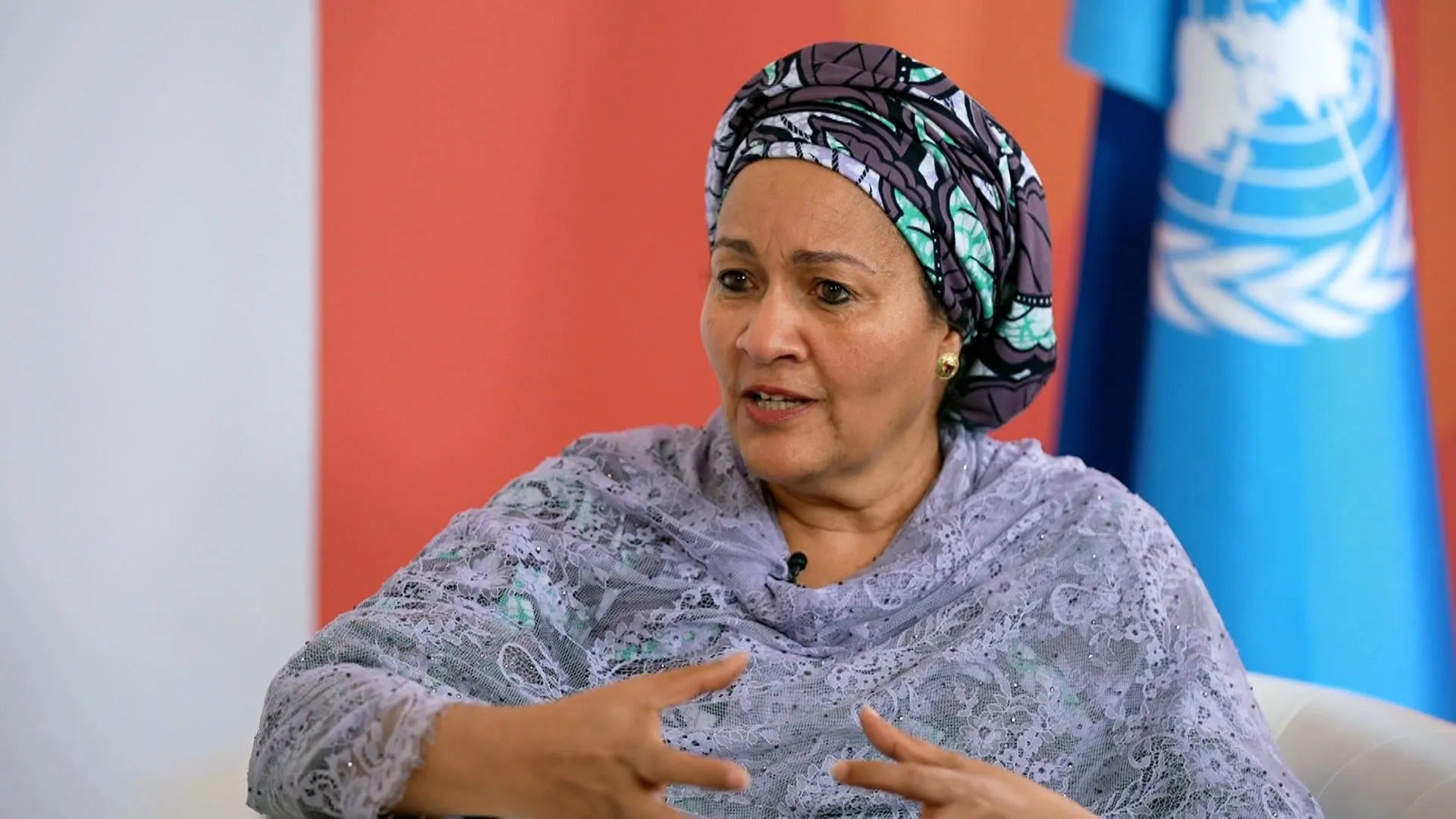
UN’s Amina Mohammed: Why women pay the highest price in war | United Nations

From Sudan to Gaza, impunity for violence against women is fuelling conflict worldwide, the UN’s deputy chief warns.

In today’s conflicts, women and girls are facing escalating violence with near-total impunity. From mass rapes in Sudan to attacks on schools and shelters in Gaza and Syria, and the segregation of women in Afghanistan, protection is collapsing as wars intensify. Speaking to Talk to Al Jazeera, UN Deputy Secretary-General Amina Mohammed warns that violence against women is not a side issue but a front-line threat to peace and development. With funding shrinking and the political will faltering, she confronts hard questions about the world’s failure to protect those most at risk.

Source link

Thousands in Kabul attend Afghanistan’s national buzkashi championship | Arts and Culture News

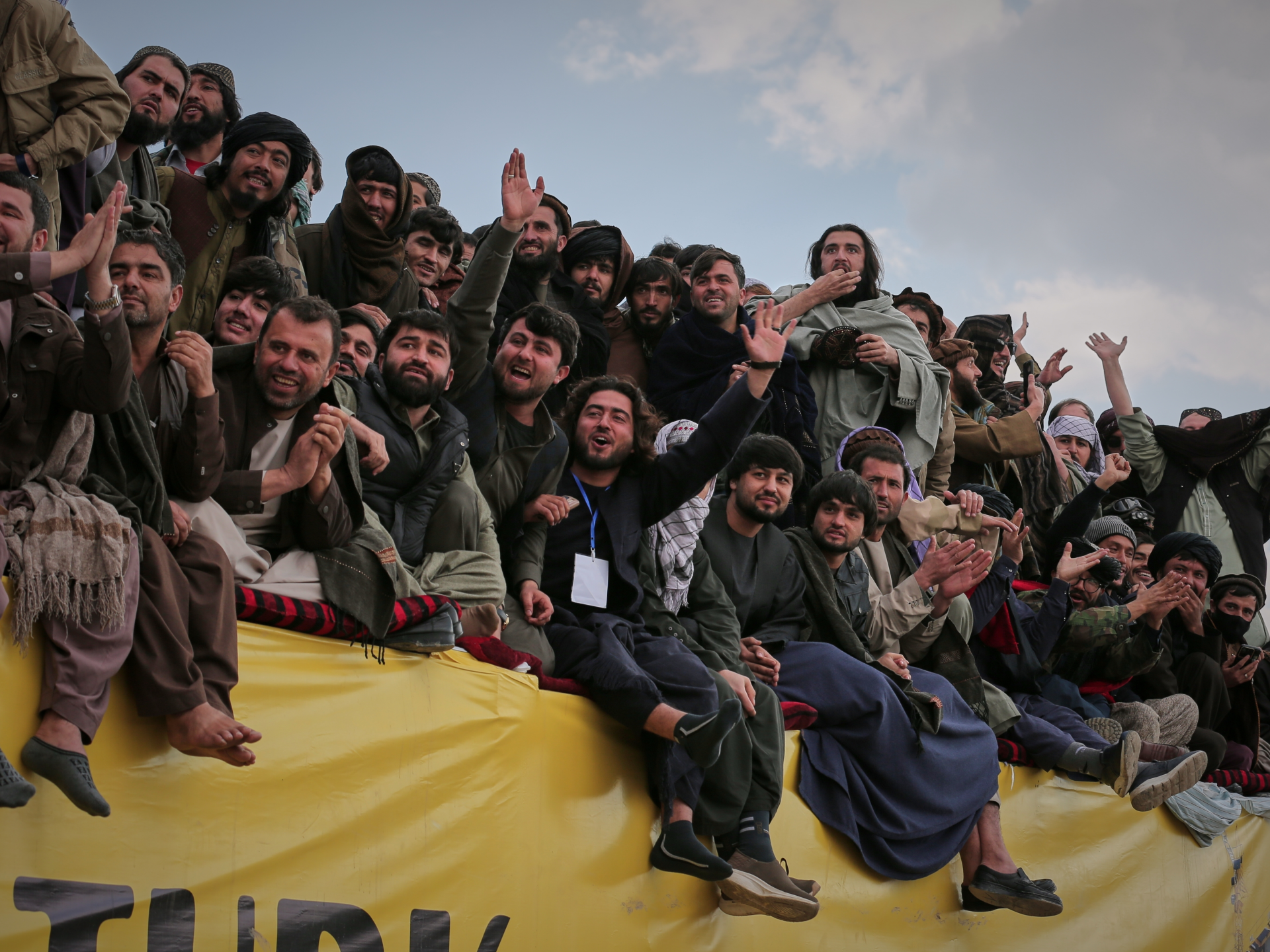
Horsemen from across Afghanistan converged for the dramatic final match of the nation’s prestigious annual buzkashi tournament on Kabul’s outskirts, attracting crowds that included high-ranking Taliban officials witnessing this centuries-old sporting tradition.

Buzkashi, Afghanistan’s national equestrian competition, showcases elite riders who must carry a leather-wrapped bundle – historically a goat carcass but now a weighted facsimile – across a designated goal line to earn points.

Amid swirling dust clouds kicked up by galloping horses, a victor ultimately prevailed. The winning team took a celebratory circuit around the field, proudly displaying their flag in triumph.

Afghanistan’s cherished buzkashi tournament maintains its status as a traditional sport characterised by limited formal rules and fierce physical competition.

In its classic format, two teams compete to score using what was traditionally a goat carcass, though contemporary matches utilise a leather-and-rope substitute filled with straw to replicate the weight of an animal.

Competitors – with 12 riders on each side – demonstrate extraordinary horsemanship, stretching dangerously from their mounts to retrieve the bundle from the ground before racing towards the goal while pursued by opposing riders.

Though prohibited during the Taliban’s earlier governance in the 1990s, buzkashi experienced a revival following their removal and has continued since their return to power in 2021, with government officials now attending competitions.

In this week’s championship, northern Sar-e-Pul province overwhelmed northeastern Badakhshan with a commanding 7-0 victory, concluding the 11-day national tournament. Baghlan claimed third place, while Kunduz finished fourth among the 11 provincial teams competing.

The competition featured eight international participants from Tajikistan and Kyrgyzstan, according to Atal Mashwani, spokesman for Afghanistan’s General Directorate of Physical Education and Sports.

Corporate sponsorship from a petrol company funded the tournament, providing automobiles as prizes for the top four teams, alongside trophies, medals, and certificates.

Thousands of male spectators filled the stands at the central Kabul venue, with enthusiastic fans even climbing nearby trees and electricity pylons to gain better vantage points of the action.

Source link

Guinea votes in first polls since 2021 coup, military leader likely to win | Elections News

Mamady Doumbouya may win amid accusations of restrictions on the media and the opposition parties.

Guinea is holding a presidential election in which incumbent military leader General Mamady Doumbouya, who took power in a 2021 coup, is widely anticipated to secure victory.

Some 6.7 million registered voters will go to the polls, which opened at 07:00 GMT on Sunday and will close at 18:00 GMT.

Recommended Stories

list of 4 itemsend of list

The former special forces commander, aged 41, faces eight other candidates in the election, as ousted President Alpha Conde and longtime opposition leader Cellou Dalein Diallo remain in exile.

The opposition has called for a boycott of the vote in the mineral-rich country where 52 percent of the population lives in poverty, according to World Bank figures.

While long blighted by coups, Guinea experienced a democratic transition with the November 2010 election of Alpha Conde, the country’s first freely elected president. Doumbouya overthrew him in September 2021.

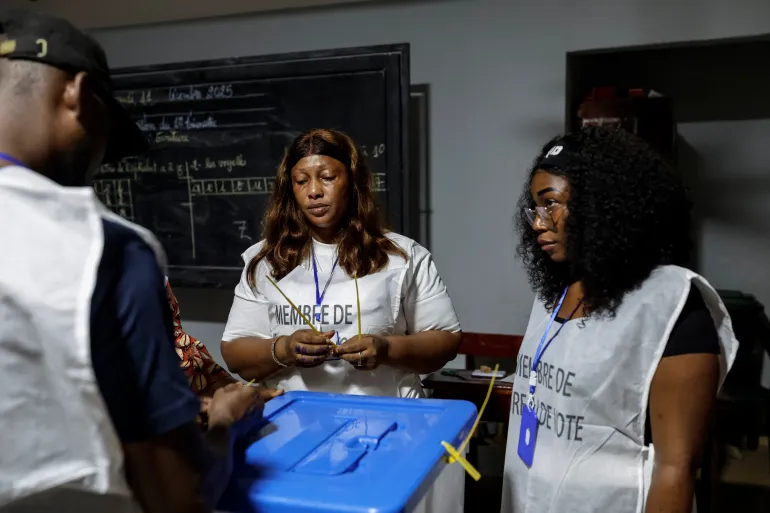
Officials of the General Directorate of Elections (DGE) set up a ballot box at a polling station in Conakry on December 28, 2025 before polls open during Guinea's presidential election. (Photo by Patrick MEINHARDT / AFP)
Officials set up a ballot box at a polling station in Conakry [Patrick Meinhardt/AFP]

Under Doumbouya, Guinea effectively “reverted to what it has essentially known since independence in 1958: authoritarian regimes, whether civilian or military”, Gilles Yabi, founder of the West African think tank Wathi, told the AFP news agency.

Provisional results could be announced within two days, according to Djenabou Toure, head of the General Directorate of Elections.

Restrictions on opposition

Political debate has been muted under Doumbouya. Civil society groups accuse his government of banning protests, curbing press freedom and restricting opposition activity.

The campaign period “has been severely restricted, marked by intimidation of opposition actors, apparently politically motivated enforced disappearances, and constraints on media freedom”, United Nations rights chief Volker Turk said on Friday.

These conditions “risk undermining the credibility of the electoral process”, he added.

Opposition leader Diallo has condemned the vote as “an electoral charade” aimed at giving legitimacy to “the planned confiscation of power”.

In September, Guinea approved a new constitution in a referendum, which the opposition called on voters to boycott.

The new document allowed military leaders to stand for election, paving the way for Doumbouya’s candidacy.

It also lengthened presidential terms from five to seven years, renewable once.

‘Hope things will be sorted’

Guinea holds the world’s largest bauxite reserves and the richest untapped iron ore deposit at Simandou, officially launched last month after years of delay.

Doumbouya has claimed credit for pushing the project forward and ensuring Guinea benefits from its output. His government this year also revoked EGA subsidiary Guinea Alumina Corporation’s licence after a refinery dispute, transferring its assets to a state-owned firm.

The turn towards resource nationalism – echoed in Mali, Burkina Faso and Niger – has boosted his popularity, as has his youth in a country where the median age is about 19.

“For us young people, Doumbouya represents the opportunity to send the old political class into retirement,” Mohamed Kaba, a mechanic in Conakry, told the Reuters news agency.

“There is a lot of corruption right now, but I hope these things will be sorted out.”

Source link

Lee Jun-seok slams Democrats over special prosecutor

Lee Jun-seok (C), leader of the minor New Reform Party, speaks during a meeting of its Supreme Council at the National Assembly in Seoul, South Korea, 24 December 2025. Photo by YONHAP/EPA

Dec. 26 (Asia Today) — Lee Jun-seok, leader of the Reform Party, on Tuesday accused the Democratic Party of Korea of twisting itself “in every possible way” to avoid a special prosecutor investigation, pledging to step up talks with the People Power Party on joint action after Christmas.

Speaking to reporters after a Supreme Council meeting at the National Assembly, Lee said discussions on coordinated resistance would intensify once Christmas had passed, citing the physical toll of a near 24-hour filibuster carried out by People Power Party lawmaker Jang Dong-hyuk.

“There may be talk of hard-line measures such as hunger strikes or head-shaving protests,” Lee said. “But for now, the priority is to pressure the Democratic Party to give a clear answer.”

Lee noted that he himself had engaged in a prolonged hunger strike nearly nine years ago, adding that he was neither afraid of political confrontation nor short of ideas.

He branded the Democratic Party’s stance as “classic double standards,” arguing that while aggressive investigations had already been pursued against one political camp, similar scrutiny was being blocked when directed at the party itself. “That does not meet any reasonable standard of fairness,” he said.

Lee also pointed to the case of Kwon Seong-dong, a former People Power Party floor leader, who has been standing trial in detention for months based on testimony from the same individual. “If that measure was justified, then the special prosecutor into the Unification Church should be handled just as swiftly,” Lee argued, warning that delays could be seen as allowing time for evidence destruction or coordination of statements.

On prospects for passing the special prosecutor bill before the end of the year, Lee again pressed the Democratic Party, criticizing it for claiming time constraints while continuing to push through other legislation. He questioned whether efforts to revise laws aimed at removing National Assembly Vice Speaker Joo Ho-young should take precedence over the special prosecutor issue.

Lee dismissed suggestions from within the People Power Party to pursue the bill through a fast-track procedure, calling the idea unrealistic. “Rather than scattering the debate, this issue demands a serious and weighty response, as the public is watching closely,” he said.

–Copyright by Asiatoday

Source link

Japan okays $58B defense budget amid tensions with China

Dec. 26 (UPI) — The Japanese government on Friday approved a record $58 billion defense budget for the 2026 fiscal year amid worsening diplomatic tensions with China.

The allocation is 9.4% more than budgeted for defense in 2025 and is a new record for defense spending when the new fiscal year starts in April.

The funds will help pay for cruise missiles and unmanned defense systems as Japan enters the fourth year of its five-year plan to bolster its military, Newsweek reported.

During that time span, Japan is investing about 2% of its annual gross domestic product to modernize its military with state-of-the-art equipment, including drones.

It also demonstrates a significant shift in Japan’s defensive priorities after spending relatively little on national defense for several decades.

The new spending will bolster Japan’s land, sea and air coastal defenses with unmanned assets and a greater ability to attack enemies from beyond their respective ranges, according to The Japan Times.

Japan is building up its Synchronized, Hybrid, Integrated and Enhanced Littoral Defense drone system that commonly is referred to as SHIELD.

“This system will enable Japan to adopt new warfare methods, firmly protect the lives of personnel and halt enemy invasions of islands at the coastline,” Japanese Defense Minister Shinjiro Koizumi told media.

The system is slated to go into service in 2027 and will provide Japan with an ample supply of “inexpensive unmanned aerial, surface and underwater vehicles” that can be used to attack enemy targets and conduct reconnaissance.

A large quantity of relatively affordable drones is available from the United States, Australia, Turkey and other nations.

Japan also is improving its counterstrike capabilities with better anti-ship missiles and intends to acquire hypersonic missiles that can fly five or more times faster than the speed of sound.

Such improvements would improve Japan’s ability to strike enemy targets from a long distance and more effectively deter potential aggression against the island nation.

Source link