From breaking news to significant developments in politics, business, technology, entertainment, and more, we deliver the stories that shape our global landscape.
Centre-left socialist president is elected, but far-right rival secures record share of the vote.
After decades of being largely immune to political upheaval, Portugal is witnessing what many consider an accelerated shift to the right.
This week’s presidential election is seen as a wake-up call.
It brought to power a centre-left politician – with a big win.
But the strong showing of his rival, the far-right candidate, signals that Portugal could be on a path to joining other European countries in a political move to the right.
The president of this European country is largely a figurehead, but he still wields considerable power.
So, how will this vote shape Portugal’s political future? And how has it been watched across Europe?
Presenter: James Bays
Guests:
Miguel Poiares Maduro – Director of the School of Transnational Governance at the European University Institute
Karel Lannoo – CEO of the Centre for European Policy Studies
Rui Gomes da Silva – Lawyer and former Portuguese parliamentary affairs minister
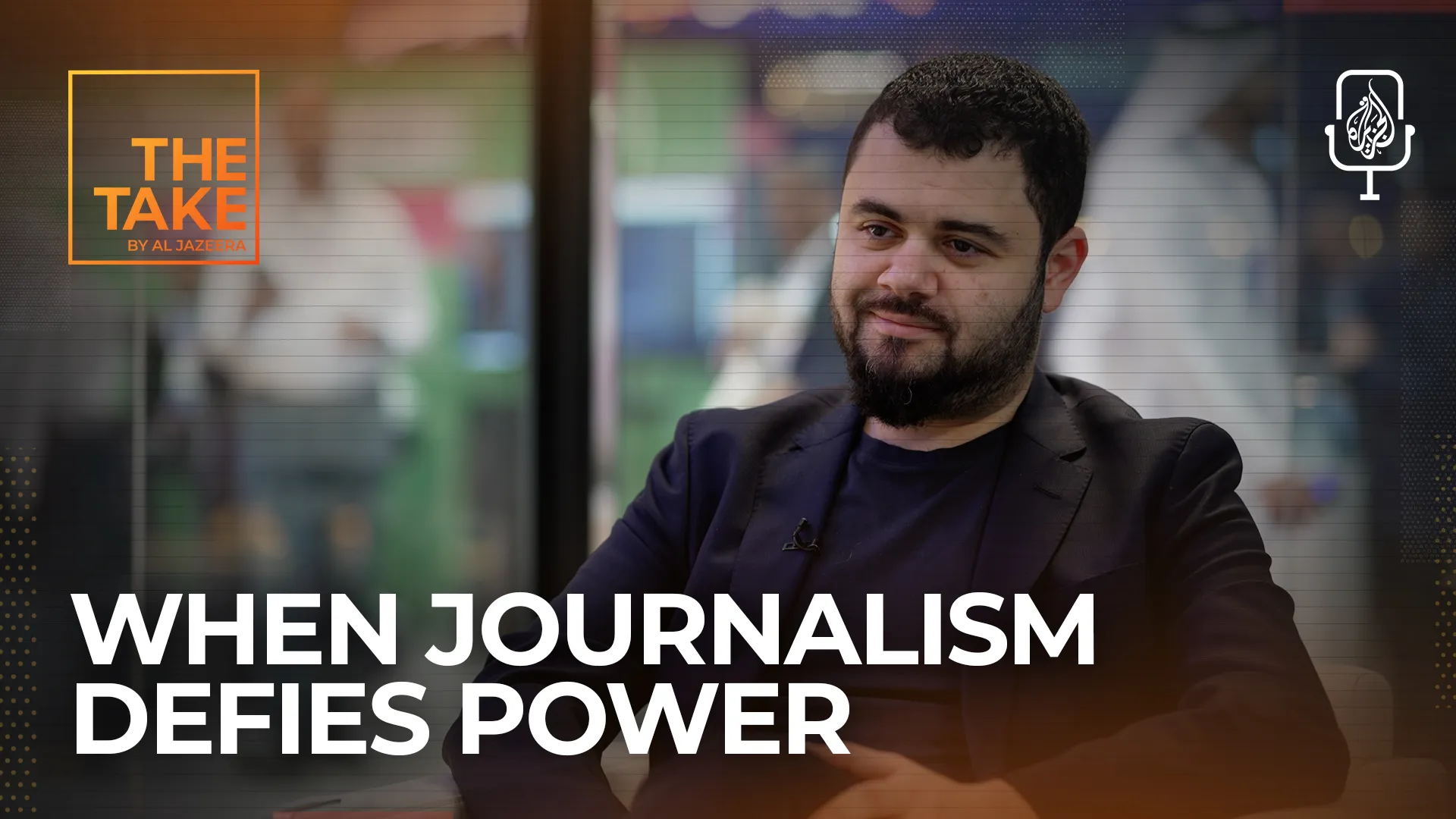
Director of Al Jazeera Digital News Jamal Elshayyal speaks to The Take on leading Al Jazeera’s next era of journalism.
At Web Summit Qatar, we hear from Jamal Elshayyal, Al Jazeera’s new Director of Digital News Content, on forging his own path at the network – and how those lessons will guide Al Jazeera through the AI age.
In this episode:
Jamal Elshayyal (@jamalelshayyal), Director, Al Jazeera Digital News Content Global
Episode credits:
This episode was produced by Chloe K. Li with Noor Wazwaz, Tuleen Barakat, Maya Hamadeh, Melanie Marich, Tamara Khandaker, Sarí el-Khalili, and our host, Malika Bilal. It was edited by Alexandra Locke. Special thanks to Kawthar Abu Sadeh.
The Take production team is Marcos Bartolomé, Sonia Bhagat, Spencer Cline, Sarí el-Khalili, Tamara Khandaker, Kylene Kiang, Phillip Lanos, Chloe K. Li, Melanie Marich, Maya Hamadeh, Tuleen Barakat, and Noor Wazwaz. Our host is Malika Bilal.
Our engagement producers are Adam Abou-Gad and Vienna Maglio. Andrew Greiner is lead of audience engagement.
Our sound designer is Alex Roldan. Our video editors are Hisham Abu Salah and Mohannad al-Melhemm. Alexandra Locke is The Take’s executive producer. Ney Alvarez is Al Jazeera’s head of audio.
Two lawsuits accusing the world’s largest social media companies of harming children begin this week, marking the first legal efforts to hold companies like Meta responsible for the effects their products have on young users.
Opening arguments began today in a case brought by New Mexico’s attorney general’s office, which alleges that Meta failed to protect children from sexually explicit material. A separate case in Los Angeles, which accuses Meta and the Google-owned YouTube of deliberately designing their platforms to be addictive for children, is set to begin later this week.
Recommended Stories
list of 4 itemsend of list
TikTok and Snap were also named in the original California lawsuit but later settled under undisclosed terms.
The New Mexico and California lawsuits are the first of a wave of 40 lawsuits filed by state attorneys general around the US against Meta, specifically, that allege that the social media giant is harming the mental health of young Americans.
New Mexico case
In the opening argument in the New Mexico case, which was first filed in 2023, prosecutors told jurors on Monday that Meta – Facebook and Instagram’s parent company – had failed to disclose its platforms’ harmful effects on kids.
“The theme throughout this trial is going to be that Meta put profits over safety,” said lawyer Donald Migliori, who is representing the state of New Mexico against Meta.
“Meta clearly knew that youth safety was not its corporate priority… that youth safety was less important than growth and engagement.”
Prosecutors say they will provide evidence and testimony that Meta’s algorithms and account features not only enticed young people and made them addicted to social media, but also fostered a “breeding ground” for predators who target children for sexual exploitation.
Late last month, in the process of discovery, the New Mexico attorney general’s office said the company did not put in safeguards to protect children from accessing sexualised chatbots on Facebook and Instagram.
In emails obtained by the court, some of Meta’s safety staff had expressed objections that the company was building chatbots geared for companionship, including sexual and romantic interactions with users, according to the Reuters news agency.
The artificial intelligence chatbots were released in early 2024. The documents cited in the state’s filing do not include messages or memos authored by Meta CEO Mark Zuckerberg. In October 2025, Meta added parental controls to the chatbots.
California case
The California case is more wide-reaching and alleges that Meta and YouTube, which is a unit of Alphabet-owned Google, used deliberate design choices that sought to make their platforms more addictive to children to boost profits.
The case centres around a 19-year-old identified only by the initials KGM. The case could determine how thousands of other, similar lawsuits against social media companies will play out.
KGM claims that her use of social media from an early age made her addicted to the technology and exacerbated her depression and suicidal thoughts.
“Borrowing heavily from the behavioral and neurobiological techniques used by slot machines and exploited by the cigarette industry, Defendants deliberately embedded in their products an array of design features aimed at maximizing youth engagement to drive advertising revenue,” the lawsuit says.
Executives, including Zuckerberg, are expected to testify at the trial, which will last six to eight weeks. It is unclear if they will attend the New Mexico case.
The tech companies dispute the claims that their products deliberately harm children, citing a bevvy of safeguards they have added over the years and arguing that they are not liable for content posted on their sites by third parties.
“Recently, a number of lawsuits have attempted to place the blame for teen mental health struggles squarely on social media companies,” Meta said in a recent blog post. “But this oversimplifies a serious issue. Clinicians and researchers find that mental health is a deeply complex and multifaceted issue, and trends regarding teens’ well-being aren’t clear-cut or universal.
Narrowing the challenges faced by teens to a single factor ignores the scientific research and the many stressors impacting young people today, like academic pressure, school safety, socio-economic challenges and substance abuse.”
A Meta spokesperson said in a recent statement that the company strongly disagrees with the allegations outlined in the lawsuit and that it is “confident the evidence will show our longstanding commitment to supporting young people”.
Jose Castaneda, a Google spokesperson, said the allegations against YouTube are “simply not true”.
“Providing young people with a safer, healthier experience has always been core to our work,” he said in a statement.
High stakes
The outcome of the cases could shape the future of social media.
“In my mind, an existential question for social media services is whether they’re liable for harm suffered by users from using the services. If so, the damages could be more money than the defendants have, Eric Goldman, a professor at the Santa Clara University School of Law, told Al Jazeera.
“We’re talking about massive financial stakes, and we’re also talking about the ability of the plaintiffs to veto or potentially override editorial decisions by the services about what’s in the best interests of their audiences,” he said.
“It’s essentially taking away power from the services to decide and handing it to plaintiffs’ lawyers. So, not only could there be existential damages, but there could also be a massive loss of editorial control over their services. The stakes could not be higher for social media services or the internet.”
Goldman said this was because the same argument could be used to shape claims against video game makers and generative AI, which refers to AI that can create original content, including text and video.
“If these theories work against social media, they might also work against video games, against generative AI, and who knows what else. That’s why I said the stakes are so high for the internet,” he added.
There are already lawsuits that claim that interactions with OpenAI’s ChatGPT led to instances of suicide and murder-suicide.
On Wall Street, Meta stock is trending up by more than 3 percent in midday trading.
Feb. 9 (UPI) — A rubber boat capsized in the Mediterranean Sea last week after taking on water, leaving 53 people migrating from North Africa presumed dead, a United Nations-affiliated migration organization said Monday.
The boat capsized off the coast of Libya, north of the city Zuwara, on Friday while traveling along a migration route through the Central Mediterranean that has potentially claimed the lives of nearly 500 people since Jan. 1.
In coordination with Libyan authorities, the International Organization for Migration (IOM) said it provided emergency medical care to two Nigerian women who were the only survivors of the when the vessel flipped — one who reported losing her husband and the other losing her two babies.
“In January alone, at least 375 migrants were reported or missing following multiple ‘invisible’ shipwrecks in the Central Mediterranean amid extreme weather, with hundreds more deaths believed to be unrecorded,” IOM said in a press release.
“These repeated incidents underscore the persistent and deadly risks faced by migrants and refugees attempting the dangerous crossing,” the organization said.
The boat that capsized Friday left Al-Zawiya, Libya, around 11 p.m. local time on Jan. 5 heading north but started to take on water and, six hours into the journey, the rubber craft capsized, the survivors told IOM officials.
Libya has over the past decade and a half been used as a stopgap for migrants to leave African nations for Europe, though the United Nations has reported torture, forced labor and extortion, among other abuses, by trafficking and smuggling networks offering opportunities to travel.
From Libya, migrants can reach Italy, which is less than 200 miles away across the Mediterranean. Other paths through the sea, which have been no less deadly, include those between Turkey and Greece and Morocco and Spain.
IOM’s director general, Amy Pope, met with leaders in Libya in December to discuss efforts to combat trafficking through the Central Mediterranean, as well as to enhance safe and voluntary return and migration methods.
“Every life lost on this route is a tragedy — one that we can prevent,” she said after the mid-December visit. “Saving lives requires shared responsibility and real cooperation.”
Since 2014, IOM reports that nearly 34,000 people are believed to be dead or missing while attempting to migrate to Europe from the northern coast of Africa.
The Netherlands’ gold medalist Jutta Keerdam (C) takes a selfie with teammate Femke Kok (L) and Miho Takagi of Japan after winning the women’s speed skating 1000 meter final during the 2026 Winter Olympics on February 9, 2026. Kok took silver while Takagi took Bronze. Photo by Aaron Josefczyk/UPI | License Photo
Feb. 9 (UPI) — The deadline on a purported ransom note neared Monday as the search for Nancy Guthrie, the 84-year-old mother of ‘Today’ show host Savannah Guthrie, entered its ninth day.
Nancy Guthrie’s children released a third video Saturday asking for the return of their mother. Police have a vehicle of interest that was towed from near the Guthrie home.
“We beg you now to return our mother to us — so that we can celebrate with her. This is the only way we will have peace,” Savannah Guthrie said. “We will pay.”
Digital billboards in Texas, New Mexico and California have been erected in the hunt for information that might lead to Guthrie’s return.
The suspected abductors are believed to have sent ransom notes threatening Nancy Guthrie’s life if they don’t get $6 million by 5 p.m. Monday, KGUN reported.
Police were guarding Guthrie’s Arizona home and carried out the investigation in multiple locations, CNN reported.
Friday Morning, Former Today co-host Hoda Kotb filled in for Savannah Guthrie and said the Guthrie family is “our top priority.”
“Our Today family continues to navigate uncharted territory, balancing the updates on the search for Savannah’s mom with all the other stories of the day, like we normally do,” co-host Craig Melvin said. “But we know things are far from normal right now, so folks, we are asking for your grace as we continue to do this.”
FBI Director Kash Patel planned to travel to Tuscon, Ariz., as he gets updates from his team, the FBI Phoenix office said.
The FBI said it has deployed more personnel from its Phoenix office and other FBI field offices to help with the investigation. It also staffed a 24-hour command post with agents to investigate leads and tips.
“The FBI has agents, analysts, and professional staff working day and night with our partners at the sheriff’s department,” the agency said in a statement.
Police believe Nancy Guthrie was abducted from her home in Tucson early on Jan. 31. There have been several ransom notes, but there is one that’s believed to be authentic.
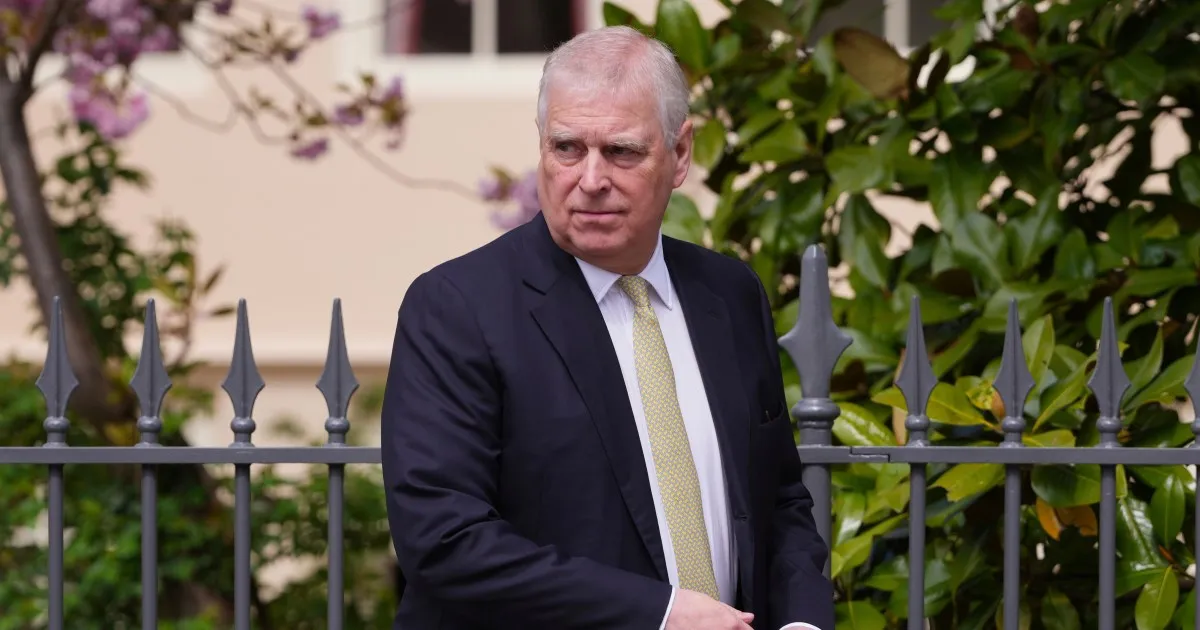
British police are assessing a complaint that the former prince sent confidential trade reports to convicted US sex offender Jeffrey Epstein.
Buckingham Palace says King Charles III will “support” UK police assessing reports that the former Prince Andrew gave confidential information to convicted sex offender Jeffrey Epstein.
The statement on Monday came after police said they were examining reports that the former prince, now known as Andrew Mountbatten-Windsor, sent trade reports to Epstein in 2010.
Recommended Stories
list of 3 itemsend of list
Thames Valley Police, which serves areas west of London, including the ex-royal’s former home in Windsor, launched the inquiry after news organisations reported on emails that suggest the then-prince sent Epstein reports from a 2010 tour of Southeast Asia he took as Britain’s envoy for international trade.
“The King has made clear, in words and through unprecedented actions, his profound concern at allegations which continue to come to light in respect of Mr. Mountbatten-Windsor’s conduct,” the palace said in a statement.
“While the specific claims in question are for Mr Mountbatten-Windsor to address, if we are approached by Thames Valley Police we stand ready to support them as you would expect.”
Thames Valley Police confirmed earlier on Monday that it has launched an inquiry following a complaint from an anti-monarchy campaigner.
“We can confirm receipt of this report and are assessing the information in line with our established procedures,” the police force said in a statement.
Correspondence unearthed in recent days appears to show that Mountbatten-Windsor forwarded copies of his reports from a 2010 tour of Southeast Asia to Epstein soon after he returned to Britain.
An earlier email appears to show the ex-prince sharing his itinerary for the two-week trip to Hanoi, Saigon, Singapore, Kuala Lumpur and Hong Kong with Epstein.
Thames Valley Police began its inquiry after Graham Smith, chief executive of the anti-monarchy group Republic, reported Mountbatten-Windsor for suspected abuse of public office and violations of Britain’s Official Secrets Act.
The former prince, 65, has faced years of scrutiny over his friendship with Epstein, a relationship that has cost him his role in the royal family, titles and home. Andrew has always denied any wrongdoing, and has not responded to requests for comment since the latest release of Epstein files.
Reporting from London, Al Jazeera’s Milena Veselinovic said Mountbatten-Windsor was acting as the United Kingdom’s international trade envoy when the claims were made that he sent sensitive information to Epstein.
“This [allegedly] includes a confidential memo about investment in the Helmand province in Afghanistan, which was being financed at that time by the UK taxpayer,” she explained.
Royal family faces jeopardy
The British royal family continued its effort to insulate itself from the scandal on Monday, as Prince William and Princess Catherine issued their first statement about the latest batch of Epstein files.
“I can confirm that the Prince and Princess of Wales have been deeply concerned by the continued revelations,’’ a spokesperson said as William travelled to Saudi Arabia for an official visit. “Their thoughts remain focused on the victims.”
The jeopardy faced by the royal family could be seen on Monday when King Charles visited Lancashire, in northwest England. While most of the public clapped, cheered and waved British flags, one person shouted, “How long have you known about Andrew?”
Last week, King Charles forced Mountbatten-Windsor to leave his longtime home at Royal Lodge near Windsor Castle, accelerating a move that was first announced in October but was not expected to be completed until later this year.
The former royal is now living temporarily at Wood Farm Cottage on the king’s Sandringham Estate in eastern England. He is then expected to move into a more permanent home, which is currently undergoing renovations.
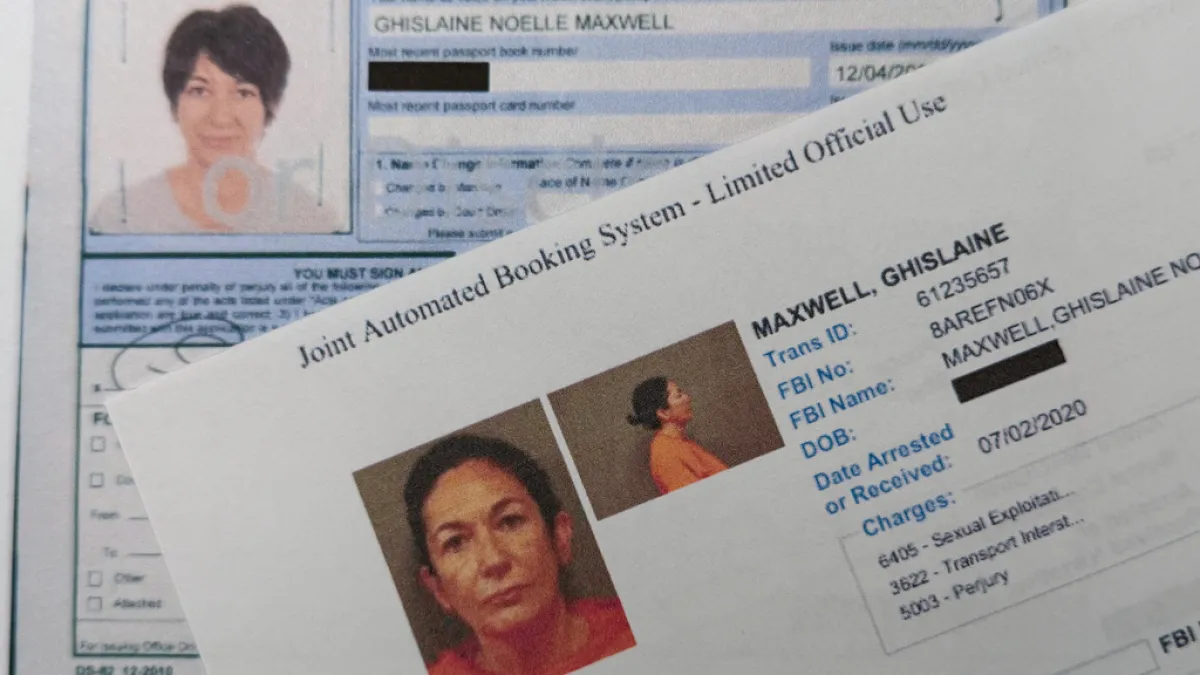
Ghislaine Maxwell avoids answering questions on alleged co-conspirators in case of convicted sex offender Jeffrey Epstein.
Published On 9 Feb 20269 Feb 2026
Share
The associate and former girlfriend of convicted late sex offender Jeffrey Epstein has declined to answer questions during a deposition before the United States Congress.
Lawmakers expressed frustration after Ghislaine Maxwell, currently serving a 20-year prison sentence for her role in helping Epstein abuse teenage girls, invoked her Fifth Amendment right against self-incrimination.
Recommended Stories
list of 3 itemsend of list
“As expected, Ghislaine Maxwell took the Fifth and refused to answer any questions,” Representative James Comer, Republican chairman of the House Oversight Committee, told reporters. “This is obviously very disappointing.”
“We had many questions to ask about the crimes she and Epstein committed as well as questions about potential co-conspirators,” he added.
Maxwell was subpoenaed to appear before the committee to discuss her relations with Epstein, but her lawyers stated that she would only testify if US President Donald Trump granted her clemency. Lawmakers had declined a previous request to grant Maxwell legal immunity before testifying.
“She [Maxwell] pleaded the Fifth, which under the US Constitution gives you the right not to answer questions on the grounds that you might incriminate yourself,” said Al Jazeera correspondent Alan Fisher.
“People were waiting to hear answers to important questions, but we got nothing from Ghislaine Maxwell,” he added. “What she did say, very briefly, was that she never saw any evidence of Donald Trump or [former US President] Bill Clinton involved in anything that was illegal. Many people suggest that was a deliberate ploy on her part to say, ‘Look, you buy my silence, but I want clemency.’ She’s appealing to both parties here to say, ‘I will clear the people that you care most about.’”
In a letter released on Sunday by Representative Ro Khanna expressing frustration with Maxwell’s refusal to testify, Khanna noted that Maxwell had spoken with Deputy Attorney General Todd Blanche, who previously worked as Trump’s personal lawyer, without invoking the Fifth Amendment.
“This position appears inconsistent with Ms Maxwell’s prior conduct, as she did not invoke the Fifth Amendment when she previously met with Deputy Attorney General Todd Blanche to discuss substantially similar subject matter,” he said.
Maxwell was moved to a minimum-security prison in Texas after meeting twice with Blanche last year.
Lawmakers such as Democratic Senator Sheldon Whitehouse have called the decision “highly unusual” and questioned whether Maxwell had “been given special treatment in exchange for political favours” as President Trump’s own relationship with Epstein comes under growing scrutiny. Trump has strongly denied any wrongdoing and called the Epstein scandal a “hoax”.
Blanche has said that Maxwell was moved due to “numerous threats against her life”, without providing details. Maxwell has asked Trump to commute her sentence, which she was given in 2022 after being convicted on charges of sex trafficking minors.
She is the only person convicted of crimes related to Epstein, whose connections to a wide array of individuals at the height of political and economic power in the US and around the world have been revealed in the Epstein files.
An operational notice from the international NOTAM system Sunday confirmed that Havana’s José Martí international airport will not have Jet A-1 fuel, the standard for commercial aviation, for one month between Tuesday and March 11. File Photo by Ernesto Mastrascusa/EPA
Feb. 9 (UPI) — The fuel shortage in Cuba began to simultaneously impact air transportation and tourism after an international aviation alert reported that Havana’s José Martí airport will not have fuel for one month.
The government also began to close hotels and relocate tourists as part of an emergency plan in the face of one of the worst energy crises in the island’s history, worsened by the end of oil shipments from Venezuela and pressure from the government of Donald Trump on crude oil supplies.
An operational notice from the international NOTAM system Sunday confirmed that Havana’s José Martí international airport will not have Jet A-1 fuel, the standard for commercial aviation, for one month between Tuesday and March 11, digital outlet CiberCuba reported.
The notification not only warns of the fuel shortage, but also of temporary limitations in landing aid systems, in addition to the inoperability of the runway visual range system, which is used to measure visibility when weather conditions are unfavorable.
The restriction is not limited to the capital. Similar notifications indicate fuel shortages at the country’s nine other airports.
Aviation authorities warned airlines that reserves could run out within a short period if supplies are not restored.
The measure compromises commercial, charter, cargo and executive aviation flights, and forces companies to arrive with extra fuel, make refueling stopovers in other countries or reschedule operations, reported Cuba Noticias 360.
This situation contrasts with recent statements by Transport Minister Eduardo Rodríguez Dávila, who had said operations at ports and airports remain guaranteed.
So far, international airlines have not communicated how they will deal with the contingency.
The impact is projected directly on tourism, the island’s main source of foreign currency.
Cancellations, delays and reduced air connectivity threaten the arrival of visitors from key markets such as Canada, Russia and Europe, in a context in which traveler confidence already shows signs of deterioration.
According to official figures, the arrival of international tourists to Cuba fell to 1.8 million in 2025, 17.8% less than in 2024. The result fell well short of the government target of 2.6 million visitors and marked one of the lowest records in more than two decades.
The energy crisis has as its backdrop the interruption of oil supplies from Venezuela, the island’s main supplier, following the capture of Nicolas Maduro.
This was compounded by the recent decision of the United States to declare a national emergency regarding Cuba and warn that it could impose tariffs on countries that supply oil to the Caribbean nation, in an escalation of pressure that has further complicated Havana’s access to fuel.
In parallel with the airport problem, the government has begun to close hotels in key tourist destinations and relocating foreign guests. The measure is part of an emergency plan to reduce energy consumption and reorganize facilities.
At least eight hotels closed in Cuba’s main tourist destinations and their clients are being relocated to other resorts amid the worsening national crisis and the shortage of fuel and supplies, Diario de Cuba confirmed from the island.
The hotel closures are occurring in the middle of the high season but amid travel advisories over the deterioration of internal conditions. The reduction of flights, energy uncertainty and hotel reorganization add pressure to an industry that is strategic for the Cuban economy.
Vice Prime Minister and Minister of Foreign Trade and Foreign Investment Oscar Pérez-Oliva Fraga said on state television that the executive branch “has designed a plan in tourism to reduce energy consumption, compact tourist facilities and take advantage of the high season,” digital outlet Cuba LLama reported.
Sources from the sector indicated that destinations such as Varadero and the northern cays concentrate much of these measures, where international chains operate.
Authorities are maintaining an emergency plan that includes broader energy restrictions, a reduction of state activities and measures to manage available fuel.
Cuban President Miguel Díaz-Canel said Thursday he was willing to initiate a negotiation process “without pressure” with the United States to help economic difficulties facing the island.
He acknowledged that the lack of Venezuelan oil has placed the country in a “complex” energy situation, affecting not only electricity generation, but also the population’s basic economic activities.
While the United States has sent more than $5.95 million in humanitarian aid managed by the Catholic Church, a measure criticized by Havana because of its “grossly opportunistic political purposes,” it has insisted on the blockade regarding hydrocarbons.
Meanwhile, countries have sent assistance. China was behind a financial package of about $81 million and a food shipment of 60,000 tons of rice in January. Mexico, sent two Navy vessels Sunday loaded with 800 tons of humanitarian aid.
Iran’s atomic energy chief says Tehran is open to diluting its highly enriched uranium if the United States ends sanctions, signalling flexibility on a key demand by the US.
Mohammad Eslami made the comments to reporters on Monday, saying the prospects of Iran diluting its 60-percent-enriched uranium, a threshold close to weapons grade, would hinge on “whether all sanctions would be lifted in return”, according to Iran’s state-run IRNA news agency.
Eslami did not specify whether Iran expected the removal of all sanctions or specifically those imposed by the US.
Diluting uranium means mixing it with blend material to reduce its enrichment level. According to the United Nations nuclear watchdog, Iran is the only state without nuclear weapons enriching uranium to 60 percent.
US President Donald Trump has repeatedly called for Iran to be subject to a total ban on enrichment, a condition unacceptable to Tehran and far less favourable than a now-defunct nuclear agreement reached with world powers in 2015.
Iran maintains it has a right to a civilian nuclear programme under the provisions of the nuclear Non-Proliferation Treaty, to which it and 190 other countries are signatories.
Eslami made his comments on uranium enrichment as the head of Iran’s Supreme National Security Council, Ali Larijani, prepares to head on Tuesday to Oman, which has been hosting mediated negotiations between the US and Iran.
Al Jazeera’s Ali Hashem, reporting from Tehran, said Larijani, one of the most senior officials in Iran’s government, is likely to convey messages related to the ongoing talks.
Trump said talks with Iran would continue this week.
Negotiations ‘very serious’
Both the US and Iran have given mixed signals about their progress in the negotiations. Iranian Foreign Minister Abbas Araghchi said Iran is “very serious in negotiations” and is eager to “achieve results”. However, he said, “There is a wall of mistrust towards the United States, which stems from America’s own behaviour.”
Iranian President Masoud Pezeshkian said the ongoing negotiations are an “important opportunity to reach a fair and balanced solution”, IRNA reported. He stressed that “Iran seeks guarantees for its nuclear rights” and the lifting of “unjust sanctions”, the agency added.
Trump, for his part, praised the latest round of talks on Friday as “very good” but continued to warn of “steep consequences” for Iran if it does not strike a deal.
“They want to make a deal as they should want to make a deal,” the US president said. “They know the consequences if they don’t.”
Before the two sides agreed to talks, Trump had repeatedly threatened Iran with a “far worse” attack than the US strikes on three Iranian nuclear facilities during June’s 12-day Israel-Iran war. He has escalated the pressure by deploying an aircraft carrier and accompanying warships to the Middle East.
Trump is expected on Wednesday to meet with visiting Israeli Prime Minister Benjamin Netanyahu, who is pushing the US to take a hardline stance in its negotiations with Iran, demanding not just concessions on its nuclear programme but also on its ballistic missiles and regional alliances.
Andreas Krieg, an associate professor in security studies at King’s College London, said the US and Iran appear to be “pivoting closer to a deal” than they were several weeks ago, even though there’s still a high risk of conflict.
“The [US] ‘armada’, as Trump calls it, is still in the area, so we still have that coercion going against the [Iranian] regime by the Americans,” Krieg told Al Jazeera. “But it seems to be fruitful in the way that the pressure works, and the Iranians have to make concessions.”
He added: “All the messaging from the Gulf countries – from Qatar, from Oman – from everyone involved, including from the Americans, has been very positive. And the Iranians’ feedback themselves was very positive.
“I think the problem that we have right now is how do we translate this momentum that we have right now on a strategic framework into the nitty-gritty of the details.”
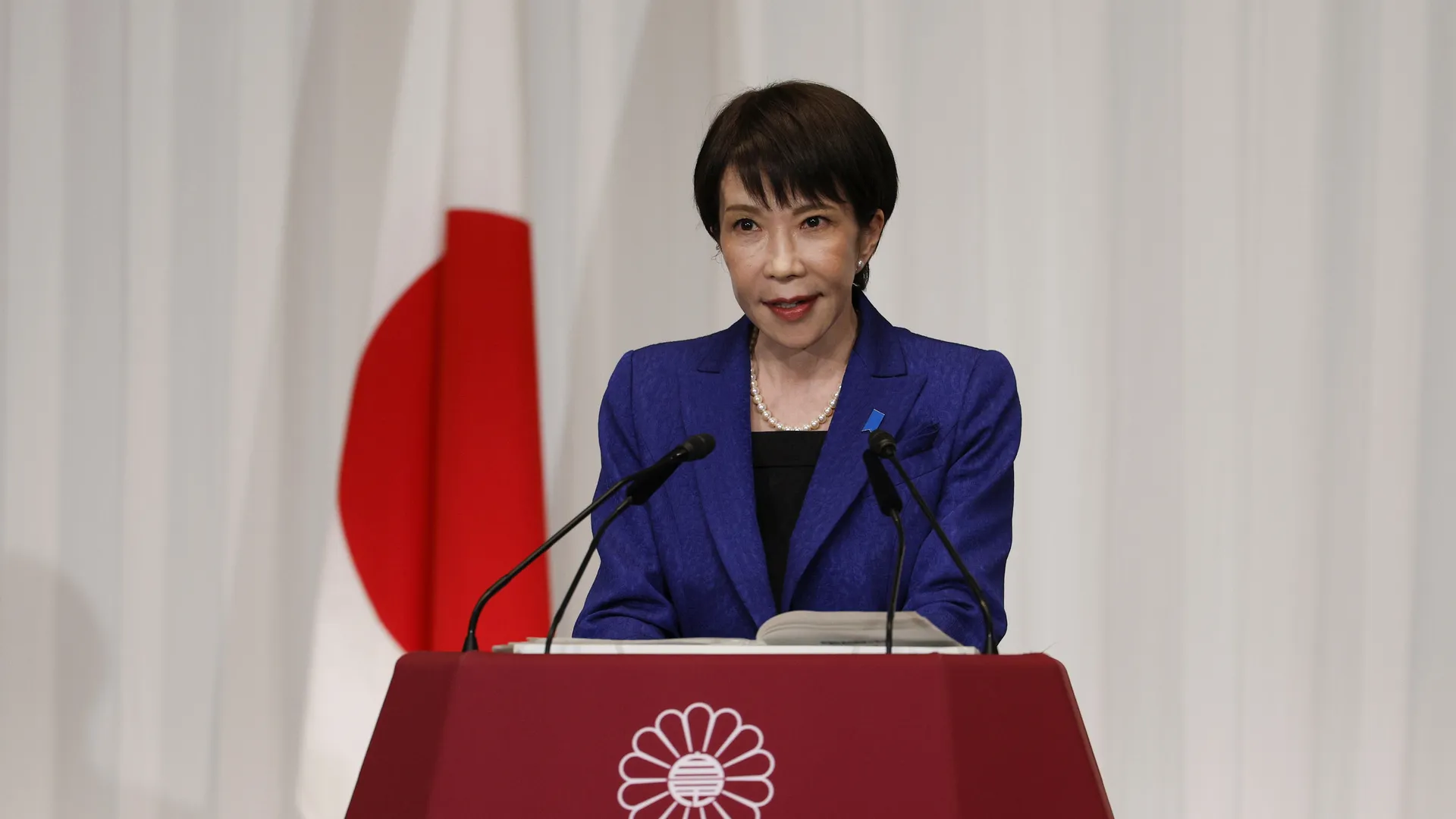
Japanese Prime Minister Sanae Takaichi’s coalition won 352 of the 465 seats in the lower house of Parliament, its best result ever at the polls. Experts say the decisive victory will pave the way for a defence expansion that China has condemned as a return to militarism.
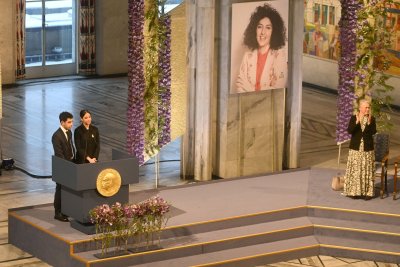
1 of 2 | Ali Rahmani, Kiana Rahmani and Nobel Committee chairwoman Berit Reiss-Andersen attend The Nobel Peace Prize ceremony for Iranian activist Narges Mohammadi at the Nobel Institute in Oslo, Norway in December 2023. File Photo by Paul Treadway/ UPI | License Photo
Feb. 9 (UPI) — Iranian Nobel Peace Prize Laureate Narges Mohammadi has been sentenced to a second prison sentence by the Iranian courts while still serving her first sentence.
Mohammadi, who accepted the Nobel Peace Prize in 2023 while in prison, was sentenced to more than seven years in prison for “gathering and collusion,” and “propaganda activities” against the Islamic Republic Regime, her attorney announced Sunday.
Mohammadi was detained on Dec. 12 for making “provocative remarks.” Her family said that during her arrest, she was beaten by Iranian authorities and had to be hospitalized.
Nili said in a statement that Mohammadi was sentenced at Branch 1 of the Mashhad Revolutionary Court. It was the first time she had spoken to her attorney since Dec. 14.
Mohammadi, 53, was on the sixth day of a hunger strike but ended it on Sunday.
“Given Narges Mohammadi’s critical history, including heart attacks, chest pain, high blood pressure, as well as spinal disc issues and other illnesses, her continued detention is life threatening and a violation of human rights laws,” a statement from the Narges Mohammadi Foundation said.
Nili added that Mohammadi was hospitalized last week due to her “poor physical condition.”
Mohammadi faces more than 17 years in prison. In total, she has been sentenced to 44 years in prison. She has also been banned from leaving Iran for two years and is ordered to live in “internal exile” for two years.
The Human Rights Activists News Agency reported last month that more than 5,000 people have been executed by Iranian authorities amid widespread protests.
In joint statement, countries urge international community to ‘compel Israel to halt its dangerous escalation’.
Eight Muslim-majority countries have denounced Israel for trying to impose “unlawful Israeli sovereignty” in the occupied West Bank, after it approved controversial new measures expanding its control and making it easier for Israeli settlers to buy land.
Egypt, Indonesia, Jordan, Pakistan, Qatar, Saudi Arabia, Turkiye and the United Arab Emirates condemned Israel’s move “in the strongest terms” on Monday, according to a Saudi Foreign Ministry statement.
Israel’s new measures, greenlighted Sunday by its security cabinet, have major implications on property rights and Israeli security procedures in the occupied Palestinian territory.
The Times of Israel, citing a joint statement by Israel’s far-right Finance Minister Bezalel Smotrich and Defence Minister Israel Katz, said the new rules would allow Jewish Israelis to buy private real estate in the territory and open up previously confidential land registries to the public.
The measures will also allow Israeli authorities to take charge of managing some religious sites and increase Israeli supervision and enforcement in areas run by the Palestinian Authority (PA), according to Israeli media reports.
Smotrich said the move was aimed at “deepening our roots in all regions of the Land of Israel and burying the idea of a Palestinian state”.
‘Dangerous annexation push’
Palestinian President Mahmoud Abbas said the decision amounted to de facto annexation, and called on US President Donald Trump and the United Nations Security Council to intervene.
Al Jazeera’s Nida Ibrahim, reporting from the town of Birzeit in the West Bank, said Palestinians view the development “as the most dangerous push towards annexation and the most critical decision since Israel occupied the West Bank in 1967”.
She noted that under the new rules, there was nothing that would prevent Israeli settlers from owning land and “coming to Palestinian city centres”.
In the joint statement, the eight Muslim-majority countries said Israel is trying to put in place “a new legal and administrative reality” that accelerates its “illegal annexation and the displacement of the Palestinian people”.
The countries affirmed Palestinians’ right to “self-determination and statehood” and urged the international community to “compel Israel to halt its dangerous escalation”.
The European Union also condemned the Israeli move, calling it “another step in the wrong direction”.
(Al Jazeera)
The West Bank is among the areas that Palestinians seek for a future independent state, along with the Gaza Strip and occupied East Jerusalem. Currently, much of the West Bank is under direct Israeli military control, with extremely limited Palestinian self-rule in some areas, governed by the Western-backed PA.
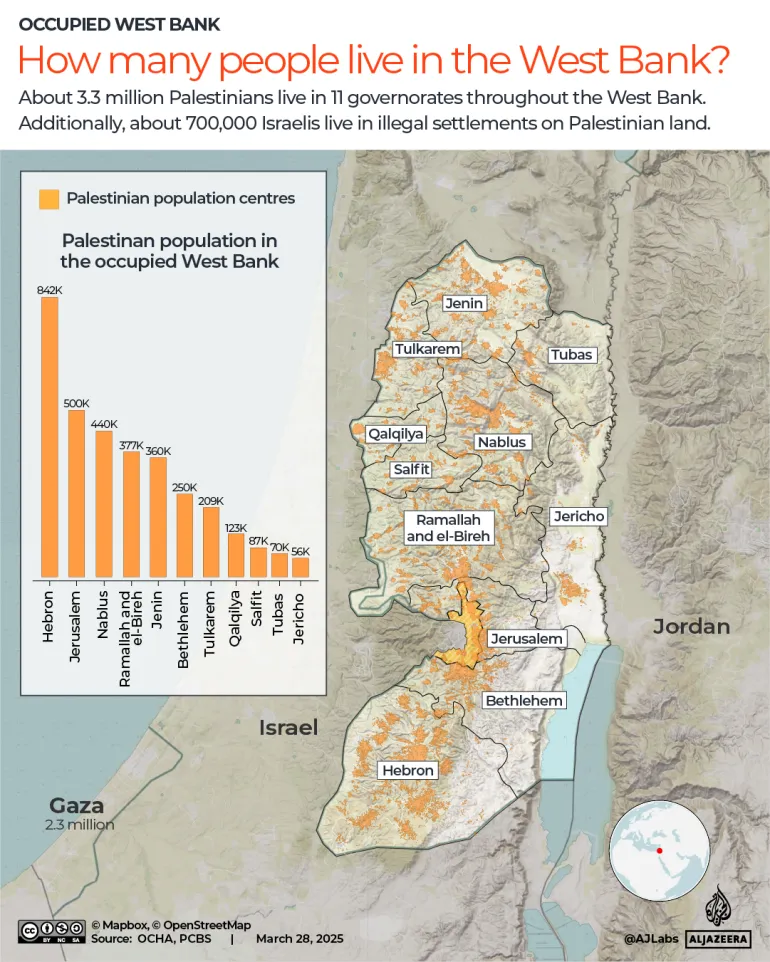
More than 700,000 Israelis live in settlements and outposts in the occupied West Bank, which are illegal under international law, while some 3.3 million Palestinians live in the territory.
Israeli forces regularly carry out violent raids, conduct arrests, and impose restrictions in the occupied West Bank, where attacks by Israeli settlers against Palestinians have also intensified, often under the protection of Israeli soldiers.
In January alone, at least 694 Palestinians were driven from their homes in the West Bank due to Israeli settler violence and harassment, the highest number since Israel’s genocidal war against Palestinians in Gaza erupted in October 2023, according to the UN.
Russian authorities on Sunday announced the arrest of a suspect in Friday’s failed assassination attempt of Lt. Gen. Vladimir Alexeyev. File Photo by Russian Defense Ministry/EPA
Feb. 9 (UPI) — Two detained Russian nationals have confessed to their roles in the failed assassination attempt of a senior military general, Russia’s Federal Security Service said Monday, as Moscow sought to bolster its claim that Ukraine was behind the attack.
Lt. Gen. Vladimir Alekseyev was seriously wounded Friday when he was shot by an assailant in Moscow. Authorities said Alekseyev was inside a residential building on Moscow’s Volokolamskoye Highway when the attack occurred.
Lyubomyr Korba, born in 1960 in what was then the Ukrainian Soviet Socialist Republic, was arrested over the weekend in Dubai and extradited to Russia. Viktor Vasin, born in 1959, was arrested by Russian authorities in Moscow.
Russia’s intelligence agency FSB said in a statement Monday that both men “confessed their guilt” and described the attempt on Alekseyev’s life.
According to the intelligence agents, Korba was the alleged shooter and Vasin an alleged accomplice.
The FSB accused Korba of entering Alekseyev’s apartment building and waiting for the general to appear in the lobby. Four shots were fired. The pistol, previously identified as a Makarov-type firearm fitted with a suppressor, was discarded at the scene, after which the suspect fled.
Within hours of the shooting, Korba had allegedly boarded a plane for the UAE and was detained in Dubai by local authorities at the request of Russia.
The Investigative Committee of the Russian Federation on Sunday said in a statement that Korba arrived in Moscow late last year “on assignment from the Ukrainian special services to carry out a terrorist attack.”
On Monday, the FSB accused Korba of being recruited by the Security Service of Ukraine in August. He is alleged to have conducted surveillance on senior Russian military officials in Moscow at Kyiv’s instruction.
Russian intelligence said Korba allegedly retrieved the gun and an electronic key for the apartment building from a drop location in Moscow.
Vasin is alleged by Russian agents to be a supporter of the Anti-Corruption Foundation, an organization designated by the Kremlin as a terrorist organization and founded by the late opposition leader Alexei Navalny who died in a Russian penal colony on Feb. 16, 2024.
The FSB accuses Vasin of having rented a “covert residence” for the operation as well as having provided Korba with public transportation tickets.
A third suspect, Zinaida Serebritskaya, born in 1971, is alleged to have lived in the same apartment building as Alekseyev and to have supplied the electronic key used for the alleged shooter to gain access to the target.
The three were identified as suspects in the attempted assassination on Sunday, when the FSB said in a statement that Korba had been handed over to Russia by the UAE.
Neither UAE nor Dubai authorities have confirmed the arrest nor offered details on the operation.
State-run Russian news has published FSB-released video showing the suspect Korba handcuffed and blindfolded being escorted off a plane by masked men and seemingly onto the tarmac of a Russian airport.
Korba has been charged with attempted murder of a service member and illegal possession of firearms, according to the investigative committee.
Russian authorities said Vasin was detained in the Moscow region and is facing the same charges as Korba.
Russia’s Investigative committee said Serebritskaya has left Russia for Ukraine.
Alekseyev, 64, is a senior official in the General Staff and is accused of leading intelligence supporting Russia’s February 2022 invasion of Ukraine.
The advertisement featuring multiple survivors urges US Attorney General Pam Bondi to disclose all remaining files related to the late sex offender.
Published On 9 Feb 20269 Feb 2026
Share
Survivors of the convicted late sex offender Jeffrey Epstein’s abuse have renewed calls for the full release of government records tied to the disgraced financier’s sex-trafficking network, putting up an advertisement during the Super Bowl.
The advertisement, released by multiple survivors working with the group World Without Exploitationduring the National Football League’s (NFL) Super Bowl on Sunday, demanded that US authorities disclose all remaining files related to Epstein and his associates.
Recommended Stories
list of 3 itemsend of list
“After years of being kept apart, we’re standing together,” one female survivor said in the advertisement. “Because she deserves the truth,” says another, holding a photograph from her childhood.
The scene cut to a graphic reading “three million files still have not been released”, shown with black redactions. “Tell Attorney [General] Pam Bondi it’s time to tell the truth,” it added.
The advertisement was reshared by a number of US politicians and public figures, including Senate Democratic Leader Chuck Schumer.
The appeal from survivors comes after the US Department of Justice released three million pages last month related to Epstein, casting a spotlight on some of the world’s most prominent people and their relations with him.
The largest tranche yet of legal documents relating to the prosecution of Epstein for sex offences includes documents, as well as 2,000 videos and 180,000 photographs, and was released a week ago.
They have implicated many famous people, from princes to industry leaders, believed to have been part of Epstein’s vast network, including Andrew Mountbatten-Windsor, formerly Prince Andrew, billionaire Elon Musk, Microsoft founder Bill Gates and British politician Peter Mandelson.
Despite this latest disclosure, a group of survivors said some of their alleged abusers “remain hidden and protected”.
The documents were published under the Epstein Files Transparency Act, which President Donald Trump signed into law in November following pressure to make the files public.
Epstein died from apparent suicide in a New York jail cell in August 2019, a month after he was indicted on federal sex-trafficking charges.
Visits by Canadians to Florida dropped by 15% in the third quarter of 2025 as political tensions triggered by U.S. President Donald Trump’s imposition of tariffs and other economic factors extended a chill for “snowbird” travelers. File Photo by Graham Hughes/EPA
Feb. 9 (UPI) — As strained relations between Canada and the Trump administration enter a second year, the latest statistics and anecdotal evidence indicate the flight of Canadian “snowbirds” from Florida is still negatively affecting its vital tourism economy.
Angry Canadians have been engaged in an unofficial boycott of U.S. travel since early early last year, when a newly re-elected President Donald Trump began to repeatedly voice his desire to annex Canada as the “51st state” and slapped tariffs on broad sectors of the Canadian economy.
And rather than losing steam, the slowdown of Canadian visitors to Florida and elsewhere in United States appears to be holding steady if not picking up speed as the 2025-26 winter tourism season progresses.
Travel statistics recently released by Canadian and Florida officials are continuing to show the effects of the slowdown, which has been blamed not only on political tensions, but also on a weak Canadian dollar and other economic factors.
In November, the number of Canadian-resident return trips from the United States was down 23.6% year-over-year, Statistics Canada reported Jan. 23.
Meanwhile, Visit Florida reported that while overall tourism was up 3.2% year-over-year during the third quarter of 2025, visits by Canadians were down 15% and have plunged 28% when compared to 2019’s pre-pandemic levels.
The third-quarter total of 507,000 Canadian visitors was the lowest for any single quarter since the COVID-19-affected fourth quarter of 2021, when the state logged just 275,000 Canadians visitors.
After Florida Gov. Ron DeSantis initially dismissed reports of the sharp dropoff in Canadian visitors, state tourism officials now say they are planning to reach out to their North American neighbors in hopes of attracting more visitors.
Visit Florida President and CEO Bryan Griffin told members of the agency’s executive committee Jan. 26 he is setting up a meeting with Canadian officials to “see what we can do” to boost the flow of tourists, the News Service of Florida reported last week.
His task may be a big one, however, as the numbers continue their negative trends and seem likely to stay depressed, or perhaps even worsen, as the year progresses, according to a noted Canadian travel expert.
Frédéric Dimanche, a professor and former director of the Ted Rogers School of Hospitality and Tourism Management at Toronto Metropolitan University, said he’s not seeing any signs of the situation improving.
“I don’t think things have changed, and if you look at the recent Statistics Canada data for car returns and employment and this type of thing, it’s down,” he told UPI. “We’re still down, and what must be kept in mind is that last year was just the beginning of a trend that has since deepened or expanded.”
Dimanche predicted that as more tourism figures are released in the coming months, they will continue to show huge declines in Canadian tourist visits across the United States when compared to 2024.
“You really see how much of a gap there still is when you look back to two years ago,” he said, dubbing the phenomenon a “Trump slump” in which international tourism fell by 5.4% in the United States last year even while jumping by 4% around the rest of the world.
While cautioning that he “has no crystal ball,” Dimanche predicted last year’s trend, with its month-after-month declines, will continue into this year.
“It’s not going to stop because it’s 2026,” he said, noting that it’s not only Trump’s threats to Canadian sovereignty and his tariff policies, but also the strong U.S. dollar, aggressive immigration enforcement activities, perceived safety issues and the potential for social media screening at the border that are combining to “make people are feel very uncomfortable about going to the U.S.”
Gulf Coast tourism hard-hit
The effects of the Canadian tourism slowdown appear to be hitting Florida’s Gulf Coast the hardest, especially in the southwestern part of state in and around Lee and Collier counties, where snowbirds from north of the border have long-established ties with vacation rentals and homes and condos they own.
The issue remains a sensitive and politically fraught one in the region, and questions posed by UPI to local tourism officials and real estate agents who have Canadian customers, as well as to Canadian snowbird organizations, were met with “no comment” or were not responded to.
However, there is statistical and anecdotal evidence to suggest that southwestern Florida is feeling a keen economic impact during this winter tourism season.
Media interviews and online comments by Canadian travelers indicate the backlash to Trump’s policies is continuing unabated, with traffic at tourism-dependent Gulf Coast businesses down and Canadian homeowners rushing to sell their vacation properties.
Among the firsthand evidence of the plight faced by Gulf Coast businesses comes from Collier County, which includes such favorite Canadian tourism destinations as Naples and Marco Island. Tourism is the county’s largest industry, supporting nearly 30,000 jobs and generating more than $2.8 billion in direct economic impact annually.
County officials reported last month that November’s overall international tourism traffic fell by 10.8% compared with the year-earlier figure, including a 14.8% decline in Canadian visitors, who numbered just 12,000. Their share of the county’s overall tourism pie dropped from 5.9% from 6.7%.
Those numbers come on top of a “choppy” and “soft” local tourism economy since 2024, due not only to the decline in visits from Canada, but also broader economic trends such as stubborn inflation and lack of consumer confidence.
Sharon Lockwood, area general manager of the JW Marriott Marco Island Beach Resort, told the Collier County Board of Commissioners in September the slowdown is making a dent in the industry.
“I can tell you firsthand, I have lost some significant group business from Canada over the last two years, year and a-half, but most importantly in 2025 for future business,” she said. “So I’m going to be out looking for new business.”
The hotelier said she couldn’t justify hiring new workers.
“I don’t have enough hours for the individuals that I’m currently employing,” Lockwood said, adding, “Restaurants [on Marco Island] are closing down one or two days a week because they cannot afford the payroll to stay open full-time. It has not been that way since I’ve been down here.”
Meanwhile, there is unmistakable evidence that significant numbers of Canadian homeowners in Florida and elsewhere in the United States are seeking to put their homes on the market as they look to exit what they feel has become politically hostile territory.
More than half (54%) of Canadians who currently own residential property in the United States said last summer they were planning to sell within the next year, with most of them (62%) citing the actions of the Trump administration as the main reason, according to a survey conducted by real estate firm Royal LePage.
“Places like Florida, Arizona and California stand to lose millions in economic activity each year — and thousands of neighbors — if Canadian owners pull their capital from U.S. housing markets,” Royal LePage president and CEO Phil Soper said in a release.
Along the Gulf Coast, those Canadians are selling into a oversaturated market that is expected to take hard price hits during 2026, with likely declines of 10.2% in Cape Coral, 8.9% in North Port and 3.6% in Tampa, according to projections from Realtor.com.
In April, Budge Huskey, CEO of Premier Sotheby’s International Realty in Naples, Fla., called Canadians “integral to our housing market, especially along the Gulf Coast, contributing to community vibrancy, tourism, and property tax revenue,” noting in an opinion piece published in the Sarasota Herald-Tribune that they account for 11% of all foreign homebuyers in the United States, with Florida consistently ranked as their top destination.
“Yet, recent trade tensions have chipped away at that relationship,” he wrote. “Beyond the economic impact, rhetoric and policy decisions perceived as antagonistic have left many Canadians feeling unwelcome.
“In neighborhoods across our markets, including likely your own, it’s not uncommon to see ‘for sale’ signs on properties owned by Canadians who have decided they’ve had enough.”
Huskey implored all Floridians “to remind our northern neighbors just how much they are respected and appreciated.”
Dimanche said the trend toward Canadians selling their Florida homes is not only related to Trump, but also to economic concerns.
“One of the factors is that the Canadian dollar is still weak compared to the U.S. dollar, even though the U.S. dollar has gone down slightly the past couple of weeks,” he said.
“The Canadian dollar is very low, so that makes things a lot more expensive for the Canadians.
“The second thing is the price of home insurance has gone up and keeps going up in Florida,” he added. “This is related to global warming, which triggers hurricanes and rising sea levels. A lot of people may not be concerned about climate change in the U.S., but the insurers are paying attention to this and they make you pay for it.”
Politics, hostility determining factors
Some Canadian snowbirds are telling reporters and posting online that they are looking to move on from Florida due to politics and being made to feel unwelcome.
The Canadian Snowbird Association, a nonprofit group advocating for the interests of Canadians who live part of the year in the United States, declined to comment to UPI on how their members are viewing the political and economic tensions as the winter season continues.
But one member who posted about it in the organization’s “Bird Talk” forum in December summed up the feelings of many others who have made comments on social media.
“We believe in democracy and are leery of the current situation as snowbirds to Florida,” they wrote. “We are seriously considering not going south this winter. As we own a home there, we have also thought of selling. We are very sad as in the past 12 years, we have loved our winters south.
“Almost all our neighbors, family and friends have mentioned to us that we should not go; they won’t be going or visiting us. If we didn’t own, we absolutely would not go. And are close to being positive in not going even though we own a home there. We feel we must take a stand for democracy!”
The forum moderator responded that “hundreds of thousands of Canadians are going south for the winter. We suspect that many of them are doing it quietly,” while blaming the media “for negative stories and gets lots of attention when they amplify the rhetoric.
“Do what is right for you, your family and your conscience. Enjoy your winter and travel well!”
One Canadian couple, Gwen and Paul Edmond of Dartmouth, Nova Scotia, told CTV News last month they are selling their home at a seniors’ complex in Largo, Fla., after spending five months a year in Florida since 2011.
“We are not happy with the change in government, as many aren’t. We will just leave it at that, I guess. It feels very unsettled there,” Gwen Edmond said.
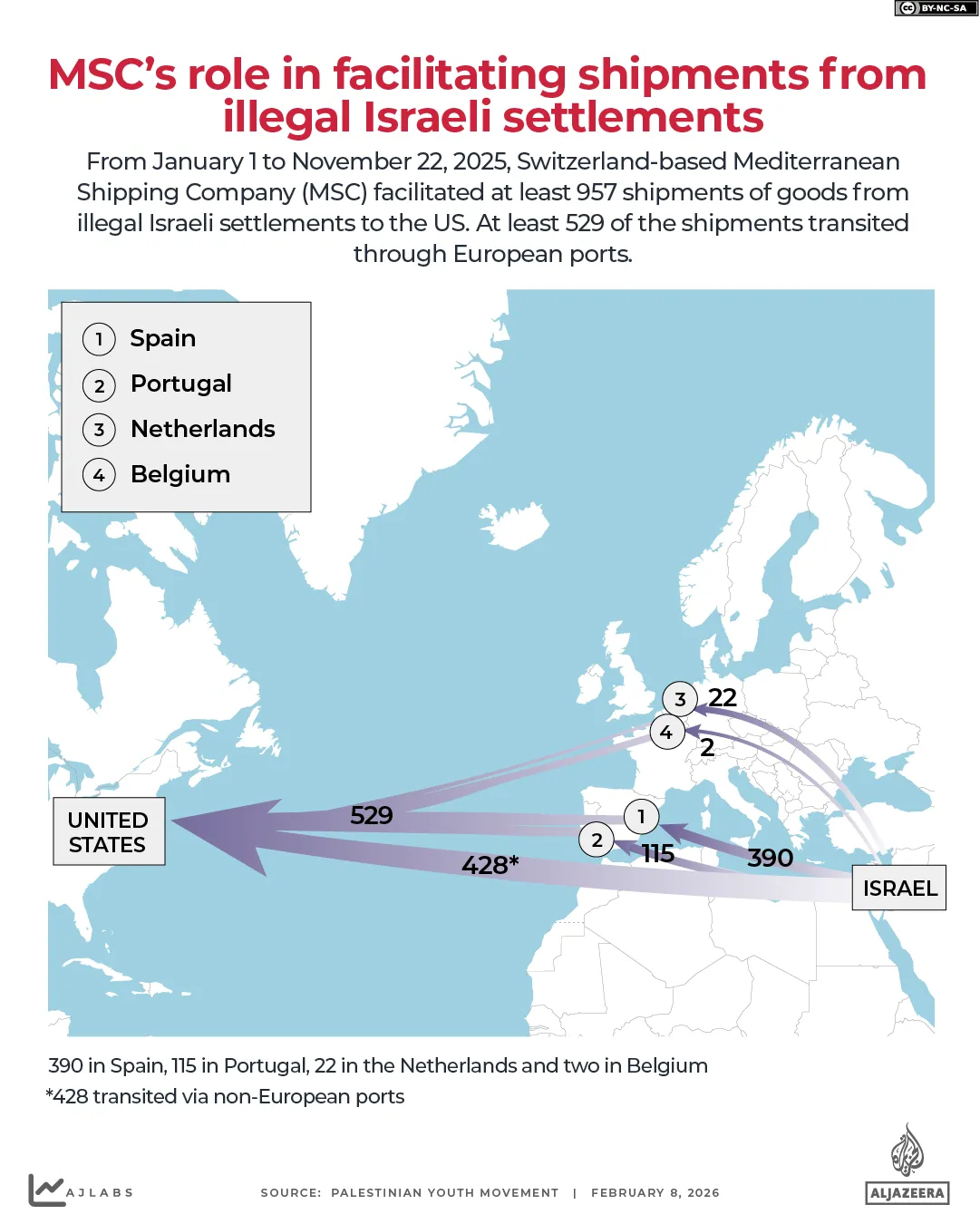
Milan, Italy – The world’s largest shipping line has been enabling the transport of goods to and from illegal Israeli settlements in the occupied West Bank, as the United States and Europe continue to promote trade despite clear responsibilities under international law, a joint investigation by Al Jazeera and the Palestinian Youth Movement (PYM) reveals.
The Switzerland-based Mediterranean Shipping Company (MSC) has regularly shipped cargo from companies based in Israeli settlements in the occupied Palestinian territory, according to commercial documents obtained through US import databases.
Recommended Stories
list of 3 itemsend of list
Between January 1 and November 22, 2025, lading bills show that MSC facilitated at least 957 shipments of goods from Israeli outposts to the US. Of these shipments, 529 transited through European ports, including 390 in Spain, 115 in Portugal, 22 in the Netherlands, and two in Belgium.
MSC is privately owned by Italian billionaire Gianluigi Aponte and his wife, Rafaela Aponte-Diamant, who was born in the Israeli city of Haifa in 1945, then under British rule as Mandatory Palestine.
“Israeli settlements are widely considered illegal under international law, because they are built on occupied territory, in violation of the Fourth Geneva Convention,” Nicola Perugini, senior lecturer in international relations at the University of Edinburgh, told Al Jazeera. “Commercialising products from these settlements effectively supports the illegal settlements.”
The findings capture a limited portion of the settlement trade, since import and export data from Israel and most European countries is not publicly available. They reveal a reliance on cargo shipping companies and European maritime ports for the transport of a vast range of settlement products, from food items and textiles to skin care and natural stones.
Perugini said states should ban trade with illegal settlements entirely, as it contributes to ongoing violations of international law.
“You cannot normalise the profits of an illegal occupation,” he said.
(Al Jazeera)
US, EU positions on illegal settlements
Under President Donald Trump, the US adopted a permissive stance towards Israeli settlements, reversing decades of policy in 2019. Washington declared them as not inherently illegal under international law and continued this approach upon Trump’s re-election in 2025.
While the EU does not recognise Israel’s sovereignty over West Bank settlements and regards them as an “obstacle to peace”, the findings show that goods were delivered directly from European ports to illegal settlements.
In 2025, MSC facilitated at least 14 shipments from Italy, according to Italian export data. In each case, the cargo originated from the port of Ravenna, which stretches along the Adriatic Sea in central Italy, and openly listed the names and zip codes of Israeli settlements as recipients.
The trade stands in contrast with a landmark 2024 opinion by the International Court of Justice (ICJ) advising that third states are obliged to “prevent trade or investment relations that assist in the maintenance of the illegal situation created by Israel in the Occupied Palestinian Territory”.
The ICJ opinion does not directly address the responsibility of private corporations like MSC.
In April, the UN Human Rights Council urged individual corporate actors to “cease contributing to the establishment, maintenance, development or consolidation of Israeli settlements or the exploitation of the natural resources of the Occupied Palestinian Territory”.
Additionally, a 2024 EU directive on corporate sustainability mandates that large companies working in the bloc identify and address adverse human rights and environmental impacts in their operations.
Israeli Finance Minister Bezalel Smotrich and a woman hold up a map that shows the long-frozen E1 settlement scheme, which would split Israeli-occupied East Jerusalem from the occupied West Bank, on the day of a news conference, near the illegal Israeli settlement of Maale Adumim, in the Israeli-occupied West Bank, on August 14, 2025 [Ronen Zvulun/Reuters]
PYM, a grassroots, international pro-Palestinian movement, last year found that Maersk, Denmark’s publicly owned shipping company, facilitated trade from Israeli settlements.
The world’s biggest container group before being overtaken by MSC in 2022, Maersk is now reviewing its screening process to align with the UN Global Compact, which urges companies to adopt sustainable, socially responsible policies, and guidelines from the Organization for Economic Co-operation and Development (OECD) to the same effect.
MSC told Al Jazeera in a statement that it “respects global legal frameworks and regulations wherever it operates” and applies this “to all shipments to and from Israel”.
Despite insurance companies raising premiums due to security risk as Israel launched its genocidal war on Gaza in October 2023, MSC announced that it would absorb the extra costs rather than impose war surcharges.
It also holds cooperation and vessel-sharing agreements with Israel’s publicly held cargo shipping company, ZIM.
The Spanish and Italian interior ministries were also contacted by Al Jazeera, but did not respond to requests for comment on the shipments.
The Israeli ministry did not respond to requests for comment.
Sustaining settlement economy
According to UN estimates, settlements in Area C – comprising more than 60 percent of the occupied West Bank that Israel controls – and occupied East Jerusalem contribute about $30bn to the Israeli economy each year.
As Israel enforces administrative and physical barriers that severely limit Palestinian businesses, the West Bank’s economy is understood to have suffered a cumulative loss of $170bn between 2000 and 2024.
Israel has recently accelerated efforts to build illegal settlements in the heart of the occupied West Bank, pressing a controversial project known as E1 that could effectively sever Palestinian land and further cut off East Jerusalem.
The plan includes about 3,500 apartments that would be situated next to the existing settlement of Maale Adumim.
Israel’s far-right finance minister, Bezalel Smotrich, said the project would effectively “bury” the idea of a sovereign Palestinian state.
In August, 21 countries, including Italy and Spain, condemned the plan as a “violation of international law” that risked “undermining security”.
Bills of lading obtained by Al Jazeera and PYM show that MSC delivered shipments on behalf of at least two companies, listing their address in Maale Adumim and the nearby Mishor Adumim industrial zone.
Maya, a wholesale supplier for supplement and candy companies, lists Mishor Adumim in the shipper address in 13 out of 14 shipments. Extal, a private company that develops aluminium solutions and holds partnerships with Israeli weapons manufacturers – including Israel Aerospace Industries (IAI) and Rafael Advanced Defense Systems – listed the Mishor Adumim industrial zone in all 38 bills of lading.
Extal is among 158 companies listed by the UN Human Rights Office (OHCHR) in its database of entities officially known to be operating from illegal Israeli settlements.
In at least three other cases, MSC delivered shipments on behalf of settlement-based companies listed in the OHCHR database.
This includes 17 shipments from Ahava Dead Sea Laboratories, an Israeli world-renowned cosmetic brand that has come under intense scrutiny for reportedly pillaging Palestinian natural resources.
A substantial portion of the settlement-based companies listed in the bills of lading were based in the Barkan Industrial Zone, one of the largest in the occupied West Bank. The area was established on confiscated private Palestinian agricultural land and, over the past 20 years, its expansion has led to the fragmentation and isolation of nearby Palestinian villages.
Obligation to uphold human rights
European member states are aware of a gap between the business-as-usual reality on the ground and the mandates of international law.
In June, nine EU countries called on the European Commission to come up with proposals on how to discontinue EU trade with Israeli settlements.
“This is about ensuring that EU policies do not contribute, directly or indirectly, to the perpetuation of an illegal situation,” the letter addressed to EU foreign policy chief Kaja Kallas said. It was signed by foreign ministers from Belgium, Finland, Ireland, Luxembourg, Poland, Portugal, Slovenia, Spain and Sweden.
The European Commission has not fulfilled the request. Currently, products originating from the settlements can be imported into Europe, but do not benefit from the preferential tariffs of the EU-Israel Association Agreement. Since an EU court ruling in 2019, they must be labelled as originating from Israeli settlements.
Hugh Lovatt, senior policy fellow with the Middle East and North Africa programme at the European Council on Foreign Relations (ECFR), said the EU theoretically has an obligation to align its policies with international law.
Whether that happens “comes down to a political decision”.
“Human rights abuses should be a core criterion for deciding what to buy and what to invest in,” he said. “But in the current global attitude, that approach has been increasingly undermined.”
In 2022, restrictions on trade and investment were imposed on Russian-controlled areas of Ukraine following Moscow’s full-scale invasion, but no similar measures were taken towards illegal Israeli settlements.
A few member states have opted to take independent action. Spain and Slovenia last year banned the imports of goods produced in Israeli settlements, while Ireland, Belgium and the Netherlands are working on legislation.
As of January 2026, Spain banned importing goods produced in Israeli settlements, but its measures do not make explicit mention of transshipments through its ports.
Bills of lading obtained as part of this investigation show that the port of Valencia plays a key role, receiving 358 out of a total of 390 shipments transiting through Spain.
Several bills of lading directly reference illegal settlements in the Syrian Golan Heights.
Aquestia Ltd, a company that specialises in hydraulic systems, list Kfar Haruv and Ramat HaGolan in the shipper address. Miriam Shoham, which exports fresh fruit, also lists Ramot HaGolan, while polypropylene manufacturer Mapal Cooperative Society lists Mevo Hama.
PYM said, “MSC’s transfers to and from Israeli settlements are systemic and in violation of both international and domestic Spanish laws.
“MSC provides the infrastructure connecting illegal settlements to global markets, thus encouraging further occupation of Palestinian and Syrian land.”
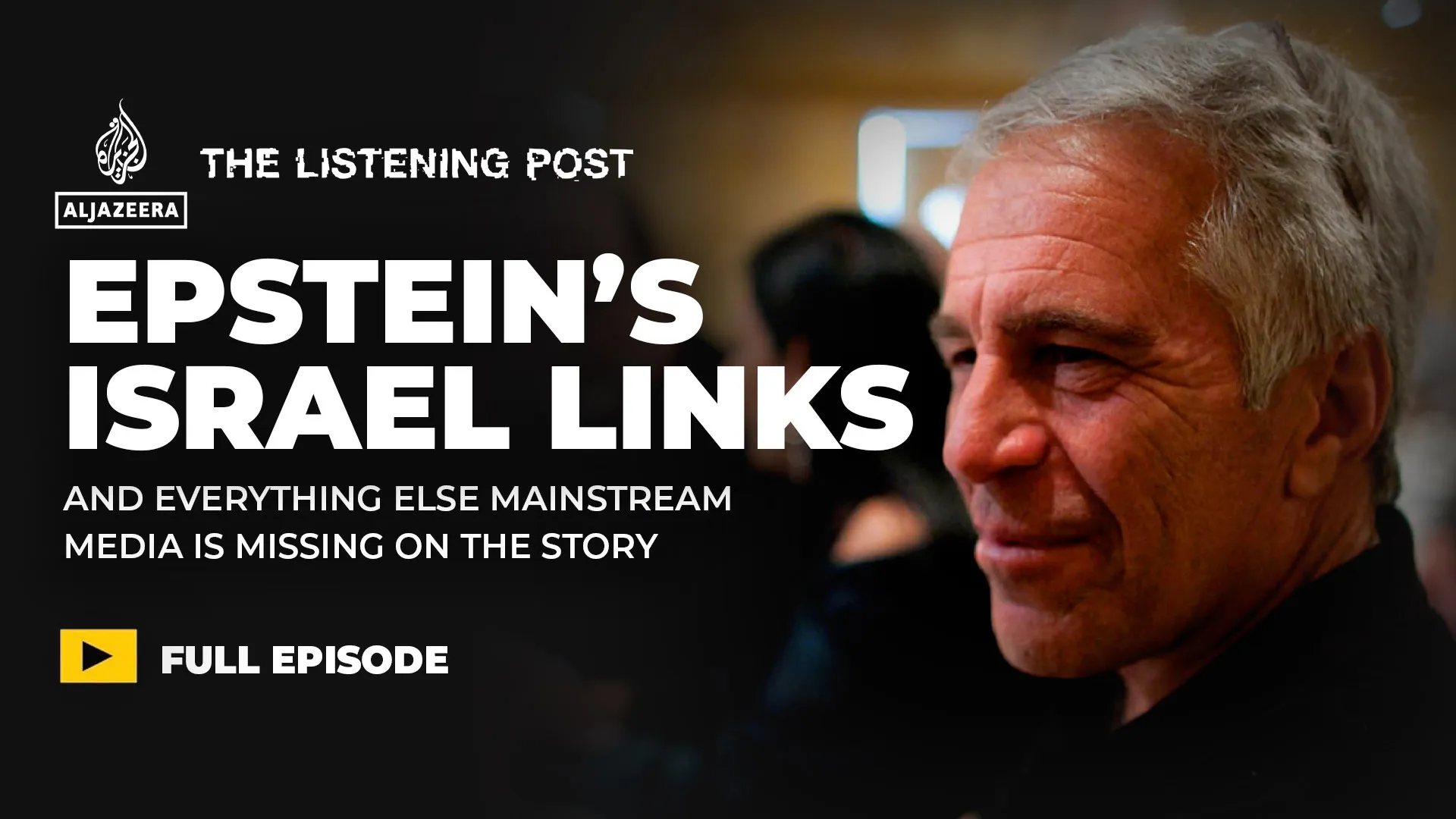
The Epstein files dump has led to days of intense media coverage, revealing how powerful elites around the world engaged in either illegal or morally reprehensible behaviour. But even as journalists sift through millions of documents, one of the most significant stories remains largely missing from the mainstream narrative.
Contributor: Murtaza Hussain – National security and foreign affairs reporter, Drop Site News
The farce of the ‘ceasefire’ coverage in Gaza
More than 500 Palestinians have been killed since a US-brokered “ceasefire” was signed, which begs the question: Should journalists, in contextualising the story, really be calling this a “ceasefire”? As Israel signals it’s preparing to resume full-scale war, we examine how media silence, selective framing and restricted access help keep Gaza off the world’s screens.
Featuring:
Shaiel Ben-Ephraim – Senior analyst, Atlas Global Strategies Diana Buttu – Palestinian lawyer Muhammad Shehada – Visiting fellow, European Council on Foreign Relations Daniel Levy – President, U.S./Middle East Project
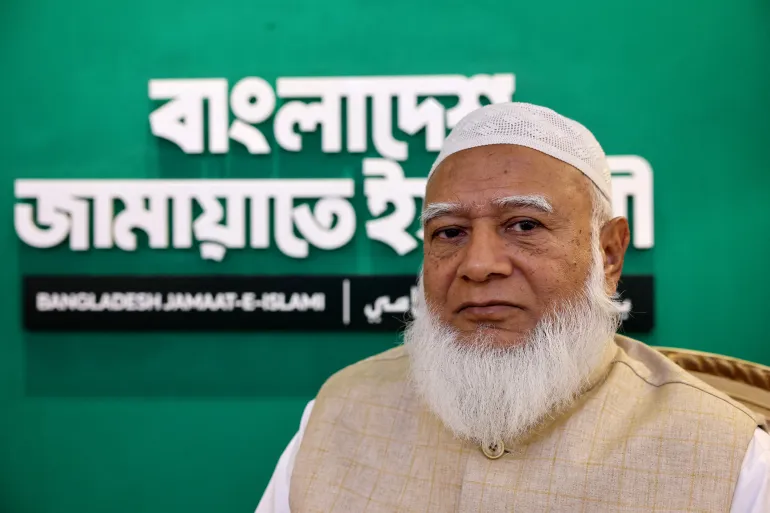
Dhaka, Bangladesh – On Wednesday evening in Dhaka, Shafiqur Rahman, the emir (chief) of the Bangladesh Jamaat-e-Islami, unveiled an ambitious election manifesto. A key promise: If his party wins the country’s February 12 election, it would lay the ground for Bangladesh to quadruple its gross domestic product (GDP) to $2 trillion by 2040.
Addressing politicians and diplomats, the 67-year-old Rahman pledged investment in technology-driven agriculture, manufacturing, information technology, education and healthcare, alongside higher foreign investment and increased public spending.
Recommended Stories
list of 4 itemsend of list
Economists in Dhaka have cast doubt on whether sweeping promises can be financed, describing the manifesto as heavy on slogans but short on detail. But for Jamaat’s leadership, the manifesto is less about fiscal arithmetic than signalling intent, say analysts.
For years, critics have tried to portray Jamaat, Bangladesh’s largest Islamist party, as driven too much by religious doctrine to be able to govern a young, diverse, forward-looking population. The manifesto, by contrast, presents a party long excluded from power as a credible alternative – and as a force that sees no contradiction between its religious foundations and the modern future that Bangladeshis aspire to.
His audience was telling too.
Until recently, Bangladesh’s business elites and foreign diplomats either kept their distance from Jamaat or engaged with it discreetly. Now, they are doing so openly.
Over the past few months, European, Western, and even Indian diplomats have sought meetings with Rahman, a figure who, until not long ago, was seen by many internationally as almost politically untouchable.
For a leader whose party has been banned twice, including by ousted Prime Minister Sheikh Hasina’s administration, the coming election is raising a question few would have dared to ask even a year ago: Could Shafiqur Rahman become Bangladesh’s next prime minister?
Rahman poses for a photograph after an interview with Reuters news agency in Dhaka, on December 31, 2025 [Kazi Salahuddin/Reuters]
‘I will fight for the people’
The shift in how Jamaat and its leader are being viewed is at least partly to do with a political vacuum that has opened up in Bangladesh.
The July 2024 uprising that ousted Sheikh Hasina did more than end her long rule. It upended the country’s political order, hollowing out the familiar duopoly that for decades defined Bangladeshi politics – the rivalry between Hasina’s Awami League and the Bangladesh Nationalist Party (BNP).
With the Awami League effectively barred from the political field and the BNP the only big party left standing, a vacuum emerged. Many initially assumed it would be filled by the student-led National Citizen Party (NCP). Instead, Jamaat – long pushed to the margins – moved to occupy the space.
As Bangladesh heads towards a high-stakes election in less than two weeks, Jamaat has now emerged as one of the country’s two most prominent political forces. Some pre-election polls now place it in direct competition with the BNP.
At the centre of that transformation is Rahman, according to Ahsanul Mahboob Zubair, Jamaat’s assistant secretary-general and a longtime associate of the party chief.
Zubair, who worked closely with Rahman when he led Jamaat in the country’s Sylhet region, said the resurgence is the result of years of grassroots social work and political survival under repression.
Rahman, a soft-spoken former government doctor, took over as Jamaat’s chief in 2019, at a time when the party was banned under Hasina. In December 2022, he was arrested in the middle of the night on charges of supporting militancy and was released only after 15 months when he secured bail.
In March 2025, months after the student-led protest had overthrown Hasina and an interim government under Nobel laureate Muhammad Yunus had taken office, Rahman’s name was dropped from the list of accused in the case.
Since then, his carefully calibrated, emotional public appearances have drawn wide attention.
At a massive rally in Dhaka last July, Rahman collapsed twice on stage due to heat-related illness but returned to finish his speech, defying doctors’ advice.
“As long as Allah grants me life, I will fight for the people,” he told the crowd, barely sitting on the stage, supported by the doctors. “If Jamaat is elected, we will be servants, not owners. No minister will take plots or tax-free cars. There will be no extortion, no corruption. I want to tell the youth clearly – we are with you.”
Rahman waves his party flag during an election campaign in Dhaka, January 22, 2026 [Mahmud Hossain Opu/AP Photo]
Reinventing Jamaat’s image
Supporters describe Shafiqur Rahman as approachable and morally grounded – a leader who prefers disaster zones to drawing rooms, and projects calm in a country exhausted by confrontation.
Now in his third term as chief, Rahman commands firm authority inside the party.
“He is a good and pious man. Everyone in the party trusts him,” said Lokman Hossain, a Jamaat supporter in Dhaka. He said that over the past year and a half, the party has reached far more people than before, with Rahman’s appeal beyond Jamaat’s traditional base playing a central role.
Rahman’s challenge, however, is no longer purely electoral – it is reputational.
As new supporters drift towards Jamaat, he is attempting to reframe how the party is seen: less as an Islamic force defined by doctrine and history, and more as a vehicle for clean governance, discipline and change.
Whether this reinvention is substantive or merely cosmetic will define both Rahman’s leadership and Jamaat’s future, say analysts.
Any attempt to recast Jamaat’s public image, however, runs up against the unresolved legacy of 1971. For decades, the party’s role during Bangladesh’s war of independence – when it sided with Pakistan – and the subsequent trials and executions of several senior leaders have shaped perceptions of Jamaat at home and abroad.
Rahman has approached that history with caution. He has avoided detailed admissions but has recently acknowledged what he calls Jamaat’s “past mistakes”, asking forgiveness if the party caused harm.
The language marks a subtle shift from outright denial, while stopping short of naming specific actions or responsibilities. Supporters say this reflects political realism rather than evasion – an attempt to move the party beyond its dark chapter. Critics, by contrast, see the ambiguity as deliberate, arguing it softens Jamaat’s image without confronting the substance of its past.
“He knows what those mistakes were,” said Saleh Uddin Ahmed, a United States-based Bangladeshi academic and political analyst. “But stating them explicitly would destabilise his leadership inside the party.”
Ahmed nonetheless considers Rahman more moderate than Jamaat’s previous leaders, noting his relative willingness to discuss unresolved historical questions and address issues such as women’s rights – topics the party long avoided. “This opening up is also happening because of increased public and media scrutiny,” Ahmed said. “People are asking questions now, and Jamaat has to respond.”
Jamaat’s effort to reach voters beyond its traditional base and reassure foreign audiences, while retaining the loyalty of its conservative supporters, has created a persistent tension – one that has often resulted in dual messaging.
That balancing act has been evident in public statements by senior leaders. Abdullah Md Taher, one of Rahman’s closest aides, in an interview with Al Jazeera, said Jamaat is a moderate party, adding that it would not impose or strictly adhere to Islamic law.
Yet when addressing conservative supporters, the party continues to emphasise its Islamic identity, with some backers encouraging votes for Jamaat as an act of religious merit – a practice the rival BNP has criticised as the misuse of religious sentiment.
The strategy appears to have helped Jamaat re-enter political conversations that were once closed to it. At the same time, it has sharpened doubts about how far Rahman is willing – or able – to go in reinterpreting the party’s past and ideology as he courts a broader electorate.
Those limits are most visible in Jamaat’s stance on women and leadership. They came into sharp focus during his Al Jazeera interview in which Shafiqur Rahman said it was not possible for a woman to hold the party’s top position – a remark that reignited longstanding criticism of Jamaat’s gender politics, despite its attempts to project a more inclusive image.
“Allah has made everyone with a distinct nature. A man cannot bear a child or breastfeed,” Rahman said. “There are physical limitations that cannot be denied. When a mother gives birth, how will she carry out these responsibilities? It is not possible.”
Critics argue that the stance exposes the limits of Jamaat’s claims of moderation.
Mubashar Hasan, an adjunct researcher at the Humanitarian and Development Research Initiative at Western Sydney University in Australia and author of Narratives of Bangladesh, also questioned Jamaat’s internal culture, noting that even female leaders who publicly endorse such views operate within a male-dominated hierarchy. He was referring to the party’s large number of female supporters and members, including women within its Majlis-e-Shura, the highest decision-making body. “It reflects a structure where women follow what men say in that party,” he said.
The criticism carries particular weight given the movement that helped reopen political space for Jamaat itself. The July 2024 uprising against Hasina, analysts note, saw extensive participation by women, often at the front lines of protest. “Women were part of that movement as much as men, if not more,” Hasan said. “Undermining them now gives Jamaat a deeply problematic outlook.”
Political historians argue this is not a new contradiction but a longstanding one. Since contesting elections under its own symbol in 1986, Jamaat has never fielded a woman candidate for a general parliamentary seat, relying instead on reserved quotas.
“This isn’t a temporary position or a tactical lapse,” said political historian and author Mohiuddin Ahmad.“It reflects the party’s ideological structure, and that structure has not fundamentally changed.”
Rahman (left) with the head of Bangladesh’s interim government, Muhammad Yunus, at the inauguration of a museum to commemorate the student uprising that overthrew Hasina, on January 20, 2026 [Mahmud Hossain Opu/AP Photo]
The ‘grandfather’ expanding Jamaat’s reach
Yet among Jamaat supporters – particularly younger ones – the issue is often filtered through loyalty to Rahman himself rather than doctrine.
During his recent nationwide campaign, young supporters can frequently be heard calling Shafiqur Rahman “dadu” – grandfather. White-bearded, soft-spoken and visibly attentive to supporters, Rahman fits the image.
“He connects with young people through his words,” said Abdullah Al Maruf, a Gen Z law student from Chattogram and a Jamaat supporter. “There is something about his recent work that feels like the relationship between a grandfather and his grandchildren. Where BNP leaders often belittle young people, Shafiqur speaks to them with respect.”
Maruf added that Rahman’s appeal extends beyond Jamaat’s traditional base. “Outside the usual Jamaat circle, he is more popular than previous Jamaat leaders,” he said.
Zubair, Jamaat’s assistant secretary-general, described the party’s outreach beyond traditional voters – such as the decision to nominate a Hindu candidate – not as a tactical move but one rooted in Jamaat’s constitutional framework rather than political expediency.
“Our constitution allows any Bangladeshi, regardless of religion, to be part of the party if they support our political, economic and social policies,” he said. “Supporting our religious doctrine is not a requirement for political participation.”
Jamaat leaders argue the move reflects a broader effort to shift the party’s public image – from one defined primarily by theology to one centred on governance and accountability. “We are emphasising corruption-free politics, discipline and public service,” Zubair said. “People have seen our leaders stand with them during floods, during COVID, and during the July uprising. That is why support is growing.”
Krishna Nandi, the party’s Hindu candidate from the city of Khulna, agrees. “When families fall into poverty, Jamaat-linked welfare networks step in without asking about religion or political loyalty. This culture of service explains why many citizens see Jamaat not as a party of slogans but as a party of discipline, structure and responsibility,” Nandi wrote for Al Jazeera.
The Jamaat’s outreach has also extended well beyond domestic audiences. Zubair said the party’s leadership has held meetings with Indian diplomats in Dhaka who paid a courtesy visit to Shafiqur when he was ill. Jamaat figures were invited to India’s 77th Republic Day reception at the Indian High Commission last month – an unprecedented step.
European and Western diplomats, he added, have also sought engagements with Rahman in recent months. That shift has been mirrored in Washington. In a leaked audio recording reported by The Washington Post, a US diplomat was quoted as saying American officials wanted to “be friends” with the Jamaat, asking journalists whether members of the party’s influential student wing might be willing to appear in their programmes.
As Jamaat’s international engagement expands – and as it emerges as a serious electoral force alongside frontrunner BNP – many general supporters express confidence in Rahman’s leadership.
“He is a patriot,” said Abul Kalam, a voter in Rahman’s Dhaka constituency. “Whether as prime minister or opposition leader, he will lead us well.”
What lies next for the party is unclear. But analysts say that irrespective of the outcome of the elections, Rahman’s stature within Jamaat – and beyond, in Bangladesh – appears resolute.
“Shafiqur Rahman is an experienced politician and is frequently in the headlines,” Ahmad, the political historian, said. “His political thinking is not yet fully clear, but his grip over the party is evident.”
1 of 2 | Seo In-taek, co-standing chair, delivers a vision at the launch ceremony of the Citizens’ Solidarity for One Korea on Feb. 4. Photo by the Citizens’ Solidarity for One Korea
Feb. 8 (Asia Today) — Leaders of a newly launched civic group advocating Korean unification said they plan to support private broadcasts to North Korea that emphasize what they call a “unification vision,” arguing that entertainment alone will not change attitudes in the North.
The Citizens’ Solidarity for One Korea, inaugurated Feb. 4, is promoting “Korea Link,” a global fundraising campaign to support broadcasting and related content distribution. Organizers said participants pledged about 80 million won (about $60,000) at the launch ceremony.
Co-representatives Seo In-taek and Kenneth Bae spoke with Asia Today about why they are pushing the initiative and how they plan to deliver content to North Korean residents.
Q: Why launch a private broadcasting push now?
Seo In-taek: “The government has halted broadcasts to North Korea, and the United States has also stopped funding Voice of America and Radio Free Asia. With balloon launches and maritime information activities also suspended, private broadcasts are effectively the only remaining way to deliver information to North Koreans.”
Kenneth Bae: “The immediate priority is to revitalize existing private broadcasts to North Korea. We need to strengthen what is already operating and broaden its reach.”
Q: What is ‘Korea Link’ and what is the core goal?
Seo: “‘Korea Link’ is not about simply sending outside information or South Korean dramas. The goal is to deliver a ‘unification vision’ – to present alternatives so North Korean residents can have choices.”
Bae: “The fund should first be used to support existing broadcasts, then to develop better content and expand the base so broadcasting becomes sustainable.”
Q: What format will the broadcasts take?
Bae: “I plan to appear on Far East Broadcasting to take part in broadcasts aimed at the North. We will start with shortwave radio, but we want to expand to medium-wave and internet-based broadcasting over time.”
Seo: “Shortwave is a start, but we should also look at practical ways to deliver content more widely, including digital storage methods.”
Q: How would you deliver content if internet access is restricted?
Seo: “There are several ways. Digital storage devices can be effective for information inflow, and we want to use such tools not only to deliver information but also to convey a unification vision. To do this consistently, we need a nationwide fundraising campaign.”
Q: How will raised funds be managed?
Seo: “If funds are secured, we plan to establish an operating committee to ensure the money is used transparently and effectively.”
Bae: “Funding should be tied to measurable improvements – stronger broadcasts, better content and broader distribution.”
Q: What kind of content do you want to send?
Seo: “Simply providing outside information is not enough. A unification vision is needed. South Korean dramas are mostly ‘chaebol stories.’ That kind of content alone will not change North Korea.”
Bae: “We need content that can stimulate interest in unification and keep that message consistent. If we keep producing and sending it, it can help widen support for unification.”
Q: Beyond broadcasting, what else do you plan to do?
Bae: “We will also advocate internationally for North Koreans’ right to know and right to access information.”
Hong Kong sentences pro-democracy figure Jimmy Lai to 20 years in prison
Feb. 8 (UPI) — A Hong Kong court on Monday sentenced Jimmy Lai, a prominent pro-democracy figure and the founder of the now-defunct progressive Apple Daily, to 20 years in prison.
Feb. 8 (Asia Today) — A few years ago, I visited Washington for work related to South Korea’s advisory council on democratic and peaceful unification. A former senior official offered a simple suggestion: if you come to Washington, there are two places you should see. One was the U.S. Holocaust Memorial Museum. The other was the Victims of Communism Museum.
At the time, I only had enough time to rush through the Holocaust museum. The other stayed on my mental list as unfinished business.
On this trip, I finally went.
The museum sits not far from the White House in a modest building downtown. The moment I stepped inside, the mood shifted. The exhibition design is not flashy, but it is not bare either. Everything, however, points toward a single question: what happens when an era believes ideology can “save” humanity, then turns human beings into expendable tools.
I left feeling a kind of melancholy. It was not only sadness. It was sharper than that, like a demand that you keep hold of your own judgment and values until the end.
The museum is run by a private nonprofit, not the government. Admission is free, and it operates on donations. The exhibition is organized as a narrative: the rise of communism, rule by terror, resistance and freedom. It begins with the Russian Revolution and the formation of the Soviet Union, then moves quickly into the machinery that crushed individual lives. It ends by tracing how communist rule spread beyond borders and how resistance emerged, linking that history to places where repression continues today.
As you follow the exhibition, a map of country names unfolds: the Soviet Union and Eastern Europe, China, Cambodia, Cuba, Vietnam. Then comes a name Koreans know all too well: North Korea.
Any system can look clean on paper as theory. But once it becomes a state, power and organization, it often reveals a different face. Revolutions promise liberation. But when the power that enforces liberation refuses to tolerate criticism, promises become orders. At that point, people are no longer the goal. They become the means.
What stayed with me most was not the statistics, but the human faces. The museum foregrounds a sweeping claim that more than 100 million people died under communist regimes. Numbers are powerful, but they cannot fully convey the texture of tragedy. A diary entry, a photograph, an arrest record can linger longer than any total.
The exhibition shows how hunger arrives under the name of “policy,” how suspicion hardens into the label of “enemy,” how silence is demanded as “loyalty.” That is when visitors confront another lesson: violence does not always begin with guns. It can begin with language. Words like “people,” “justice,” “history” and “enemy” can become knives that divide and judge.
Another section that shifts the tone is testimony from those who fled and rebuilt their lives elsewhere. Leaving a regime is not the end of struggle. It can mean crossing borders at risk, living with guilt over family left behind, surviving in a new society. Their stories make one point unmistakable: freedom is not a destination. It is a starting line.
That is also why the North Korea-related exhibits feel especially immediate. “Human rights” stops being an abstract phrase and becomes a concrete voice. For someone living under severe control, freedom is not a debate. It can be the question of whether you make it through the night.
Still, this is not a national museum. It is a memory space built by a private organization with a clear viewpoint. When complex histories are grouped under a single label, there is always a risk of simplification. Visitors should read not only what is presented, but also the frame that shapes what is emphasized.
Yet even with that caution, the voices of victims demand priority. Before any schematic, a human being comes first.
Of course, capitalism has its own failures: inequality, exclusion, greed and recurring crises. Blind faith in the market can also be dangerous. But criticizing capitalism’s defects is not the same as arguing that communism is a better alternative. Communism often presents itself as the promise of a fairer society. But where power concentrates and dissent becomes a crime, the system is driven not by fairness but by fear.
Walking through the museum, one sentence kept returning to my mind: capitalism’s imperfections do not make abandoning freedom the answer. The real question is whether a society still has living channels to correct itself.
Washington is filled with places that confront the world’s darkest chapters. If the Holocaust museum shows what happens when hatred becomes institutionalized, the Victims of Communism Museum asks how far human dignity can be pushed when ideology becomes the language of power.
Neither place is comfortable. But that discomfort may be the minimum price we pay to avoid crossing the same threshold again.
So I would recommend this museum to visitors. It is not a cheerful stop. But if you can spare 45 minutes to an hour, it can be a meaningful way to repay a debt of thought.
Ideology often leads with beautiful words. The harder question is what happens when those words become reality: whose voices are silenced, whose lives are erased.
Leaving the building, I found myself returning to what matters most. Not a “perfect system,” but the freedom and institutions to criticize and reform any system, and the dignity of each person.
Song Won-seo is a professor at Shumei University in Japan. This column reflects the writer’s views, which may differ from those of Asia Today.
Media mogul Jimmy Lai (C), seen here in February 2021, was sentenced to 20 years in prison on Monday. File Photo by Jerome Favre/EPA-EFE
Feb. 8 (UPI) — A Hong Kong court on Monday sentenced Jimmy Lai, a prominent pro-democracy figure and the founder of the now-defunct progressive Apple Daily, to 20 years in prison on charges stemming from protests that brought the Chinese territory to a standstill in 2019 and 2020.
Lai, 78, has been in police custody since the summer of 2020 and was convicted in mid-December following a 156-day trial that tested three charges that alleged he and his publication produced articles that encouraged foreign countries to sanction the city.
“Having stepped back and taking a global view of the total sentence for Lai’s serious and grave criminal conduct, applying the totality principle, we are satisfied that the total sentence for Lai in the present case should be 20 years’ imprisonment,” the High Court of the Hong Kong Special Administrative Region said in its order.
The sentencing is expected to draw staunch criticism from human rights and pro-democracy advocates and condemnation from Western nations who have denounced his December conviction, trial and the National Security Law he was charged under.
“Today is a very dark day — for Jimmy Lai and his family, for his friends, supporters and advocates worldwide, and for all who cherished the rights and freedoms that were once enjoyed by Hong Kongers, but are now dismantled by the draconian National Security Law imposed on the city by Beijing,” Benedict Rogers, co-founder and chair of the Trustees of Hong Kong Watch, a Britain-registered charity, said in a statement.
“This outcome was predetermined. The trial of Mr. Lai was never fair or just, and never in line with the common-law protections central to Hong Kong’s judicial system prior to 2020.”