TOP NEWS

From breaking news to significant developments in politics, business, technology, entertainment, and more, we deliver the stories that shape our global landscape.

USS Ford arrives in Caribbean, Trump hints at action in Venezuela

Nov. 16 (UPI) — The USS Gerald R. Ford Carrier Strike Group entered the Caribbean Sea on Sunday, adding to a military build-up in the region, as President Donald Trump signaled that he may have decided on a possible U.S. show of force in Venezuela.

The Ford, the largest aircraft carrier in the world, leads a strike group assigned to dismantle international narcotics trafficking organizations.

President Donald Trump said on Friday that he is getting closer to deciding on a course of action in Venezuela after a series of high-level meetings with officials amid mounting tensions in the region.

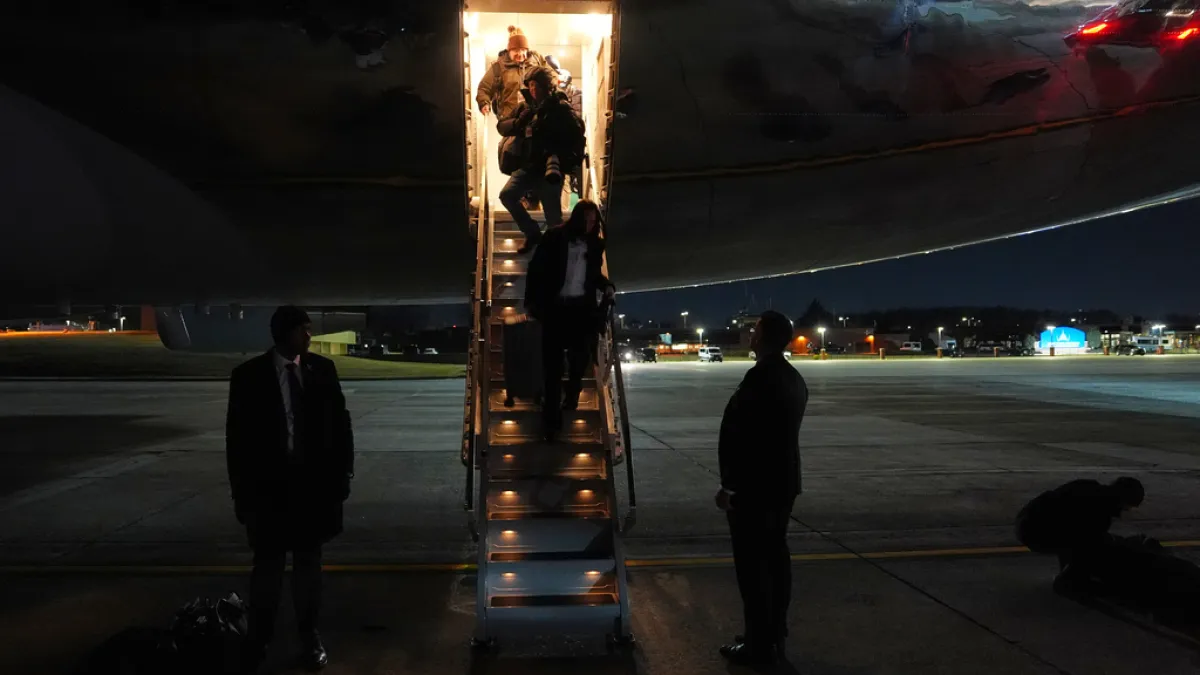
“I sort of have made up my mind – yeah,” Trump told reporters about Air Force One when asked about the meetings and the situation in Venezuela. “I can’t tell you what it would be, but I sort of have.”

Trump was briefed last week on options for military action in Venezuela, one of which could potentially include outing President Nicolas Maduro, several officials told CNN.

The U.S. military has dispatched more than a dozen warships and 15,000 troops in the area, part of what the Pentagon is calling “Operation Southern Spear.”

Last week, Trump was briefed by Defense Secretary Pete Hegseth, Secretary of State Marco Rubio, Joint Chiefs of Staff Gen. Dan Kaine and a larger group of national security officials about U.S. options in Venezuela.

They discussed a wide range of options, including air strikes on military and government facilities, drug-trafficking routes and a potential attempt to remove Maduro directly.

Trump has previously considered targeting cocaine production facilities and trafficking routes inside the country, CNN reported. The president last month authorized the CIA to operate in Venezuela, but administration officials later told lawmakers that there is no justification that would support military action against any land targets in the country. Trump recently said on CBS News’ 60 Minutes that he is not considering that option.

Source link

Israel kills at least three in Gaza, as thousands endure heavy flooding | Gaza News

The Israeli military has killed at least three Palestinians in Gaza, as the coastal enclave reeled from heavy rains flooding shoddy makeshift tents housing thousands who have been denied adequate shelter owing to Israel’s continued throttling of aid supplies.

A source at Nasser Medical Complex told Al Jazeera on Sunday that three people had been killed after Israel bombed east of Khan Younis in southern Gaza. That same day, Israel also struck Gaza City’s Zeitoun neighbourhood and areas close to the southern city of Rafah.

Recommended Stories

list of 3 itemsend of list

Reporting from Gaza City, Al Jazeera’s Ibrahim al-Khalili said the Israeli army was still targeting locations inside the so-called yellow line, which demarcates where troops have withdrawn as part of the ceasefire.

Al-Khalili said the situation was “going from bad to worse” for families living near the yellow line, as the military continued to “demolish residential buildings” and “spread panic” while they contended with heavy rains flooding makeshift shelters.

The United Nations agency for Palestinian refugees (UNRWA) said that 13,000 families in Gaza whose homes were destroyed during two years of indiscriminate Israeli bombardment are now exposed to freezing temperatures and flooding in woefully inadequate shelters.

UN data shows that more than 80 percent of all buildings and housing units in Gaza have been damaged or destroyed since the start of the war. But Israel continues to block the entry of tents and mobile homes into the enclave despite the ceasefire, which was meant to unleash a flow of aid to stricken residents.

Tamara Alrifai, UNRWA’s director of communications, said Israel had placed limitations on what could enter the enclave, banning certain items deemed to be of dual use that could potentially be used for military purposes. “Israel … would take out many items that are extremely needed, especially in this winter situation,” she said.

“UNRWA is under double the amount of scrutiny and restrictions than other agencies despite being the largest agency there,” Alrifai said, adding that the UN agency has enough supplies to fill 6,000 aid trucks from its warehouses in Egypt and Jordan.

‘Submerged’

Reporting from Gaza City, Al Jazeera’s Hani Mahmoud said: “It’s been raining for two days and people are telling us that everything has started to leak. Many of these displacement camps are at a different elevation to surrounding areas, allowing water to run in from all sides. Some areas are completely submerged.”

“For people sheltering inside bombed-out buildings, everything is leaking, and there is a risk that with the heavy rains, the buildings could collapse. People who set up tents near the coast are at risk of strong tides washing away their tents,” he said.

Abdulrahman Asaliyah, a displaced Palestinian in the city, told Al Jazeera: “All the tents have been flooded, people’s mattresses, their food, their water, their clothes. Everything has been soaked. We are calling for help for new tents that can at least protect people from the winter cold.”

Caroline Seguin, Gaza emergency coordinator at Doctors Without Borders (known by its French acronym, MSF), said that many people were awakened by the floods and were afraid to go back to sleep. “In Gaza, it is a luxury to spend the night in a dry place,” she told Al Jazeera.

Seguin said Israel was still putting up barriers to much-needed aid entering the enclave. Bringing in supplies, including tents and medication, was still “very complicated”, she said, requiring “even more administrative processes” from the Israeli side.

Netanyahu unsure about truce duration

Since the start of the ceasefire agreement last month, at least 266 people have been killed and 635 wounded by Israeli attacks, adding to a grim toll now approaching 70,000 deaths.

Prime Minister Benjamin Netanyahu told his cabinet on Sunday that he did not know how long the Gaza ceasefire would hold, adding that Israel was still expecting the remains of three captives to be returned by Hamas.

Hamas’s military wing, the Qassam Brigades, has been undertaking efforts with the Red Cross to locate the remains of captives under mountains of rubble left behind by Israeli bombardment.

Netanyahu also said that his opposition to a Palestinian state had “not changed one bit”, one day before the UN Security Council votes on a United States-drafted resolution mentioning a “credible pathway” to Palestinian statehood that would mandate an international stabilisation force in Gaza.

Meanwhile, Israeli violence in the occupied West Bank continued unabated, with raids on two camps that left two young Palestinians dead.

Soldiers shot Jadallah Jihad Jumaa Jadallah, a 15-year-old ninth-grade student, as they raided the Far’a camp, located south of the city of Tubas in the West Bank, preventing paramedics from assisting him, according to Palestinian news agency Wafa.

Separately, the military also killed Hassan Sharkasi during a raid on the Askar refugee camp east of Nablus, according to the Palestinian Red Crescent.


Source link

Jets cornerback Kris Boyd critically wounded in Manhattan shooting

Minnesota Vikings defensive back Kris Boyd (29), pictured celebrating an interception against the Chicago Bears in 2021, was shot early Sunday morning in midtown Manhattan after getting into a fight, police said. File photo by Mark Black/UPI | License Photo

Nov. 16 (UPI) — New York Jets cornerback Kris Boyd is in critical condition with a bullet lodged in his lung after being shot early Sunday in midtown Manhattan, NYPD said.

Police responded to the Sei Less restaurant at on W. 38th St. near 7th Ave. at 2:09 a.m. EST to find Boyd, 29, with a gunshot to his abdomen. He was taken to a local hospital where he remains in critical condition.

Boyd was engaged in a fight when the shooting happened, police said.

A spokesperson for the Jets said in a statement that the team is aware of the shooting but “and will have no further comment at this time.”

The gunman fled the scene in a BMW X8 SUV, the New York Post reported.

A Mercedes-Benz Maybach also left the scene of the shooting, the paper said.

No arrests have been made in connection with the shooting and police continue to investigate, the said.

Boyd was selected by the Minnesota Vikings in the seventh round of the 2019 NFL Draft and, a native Texan, played his college football at the University of Texas in Austin.

He spent four seasons with the Vikings before being signed by the Arizona Cardinals in 2023, but was released later that season. He then spent two seasons with the Houston Texans practice squad after that.

In March, he signed a one-year deal with the Jets, but has been inactive since the summer due to an injury.

Source link

Israel pushes US to close door on Palestinian statehood before UNSC vote | Israel-Palestine conflict News

Israel is engaged in a last-ditch bid to change the wording of a United Nations Security Council (UNSC) resolution on the next phase of United States President Donald Trump’s Gaza peace plan that was recently amended to mention a “credible pathway” to Palestinian statehood.

Israeli Prime Minister Benjamin Netanyahu told his cabinet on Sunday that his opposition to a Palestinian state had “not changed one bit”, one day before the UNSC votes on the US-drafted resolution, which would mandate a transitional administration and an international stabilisation force (ISF) in Gaza.

Recommended Stories

list of 3 itemsend of list

Israeli public broadcaster Kan reported on Sunday that Netanyahu’s government was engaged in a last-minute diplomatic push to alter the draft resolution, which the US had changed to include more defined language about Palestinian self-determination under pressure from Arab and Muslim countries expected to contribute troops to the ISF.

The draft now says that “conditions may be in place for a credible pathway to Palestinian self-determination and statehood” after reforms to the Palestinian Authority are “faithfully carried out and Gaza redevelopment has advanced”.

There has been criticism that Palestinian voices and aspirations have been sidelined in the whole spectacle of Trump’s Gaza plan from its launch, which came with the US president’s customary fanfare.

Later on Sunday, Hamas and other Palestinian resistance factions called on Algeria – a non-permanent member of the UNSC – to reject the plan for stabilisation forces to be deployed in Gaza.

In a statement, the resistance factions called the efforts “a new attempt to impose another form of occupation on our land and people, and to legitimise foreign trusteeship”.

“We direct a sincere and fraternal appeal to the Algerian Republic, government and people, to continue adhering to its principled positions supporting Palestine, and its steadfast rejection of any projects targeting Gaza’s identity and our people’s right to self-determination,” the statement added.

On Friday, a joint statement with eight countries – Qatar, Egypt, United Arab Emirates, Saudi Arabia, Indonesia, Pakistan, Jordan and Turkiye – urged “swift adoption” of the draft resolution by the 15-member UNSC. Potential contributors to the force have indicated that a UN mandate is essential for their participation.

Israel has already said it will not accept Turkiye, a key Gaza ceasefire mediator, having any role on the ground.

Turkiye has maintained staunch criticism of Israeli actions in Gaza over the past two years and recently issued arrest warrants for genocide against Netanyahu and other senior officials.

Ahead of Monday’s crucial vote, which is expected to garner the nine votes needed to pass, with the likely abstention of Russia and China, Netanyahu confidants and officials from the Foreign Ministry were said to be engaged in intensive talks with their US counterparts, according to the Israeli Public Broadcasting Corporation (Kan).

Netanyahu under pressure

A far-right walkout over the ceasefire plan, in which Trump has heavily invested his own prestige, could bring down Netanyahu’s right-wing government well before the next election, which must be held by October 2026.

On Sunday, Israeli government officials lined up to express their opposition to any proposals backing a Palestinian state.

“Israel’s policy is clear: no Palestinian state will be established,” Defence Minister Israel Katz wrote on X.

He was followed by Foreign Minister Gideon Saar, who said on X that his country would “not agree to the establishment of a Palestinian terror state in the heart of the Land of Israel”.

Far-right firebrand and National Security Minister Itamar Ben-Gvir called the Palestinian identity an “invention”.

Hardline Finance Minister Bezalel Smotrich, a major backer of Israel’s settler movement who has been sanctioned by a number of countries for “incitement of violence” against Palestinians, urged Netanyahu to take action.

“Formulate immediately an appropriate and decisive response that will make it clear to the entire world – no Palestinian state will ever arise on the lands of our homeland,” he said on X.

Russia’s rival resolution

The UNSC resolution would give the UN’s blessing to the second phase of Trump’s 20-point plan, which brought about a ceasefire after two years of genocidal war that has killed nearly 70,000 Palestinians.

The ceasefire came into effect on October 10, although it has been repeatedly breached by Israel with near-daily attacks that have killed hundreds of people.

There has been plenty of jockeying ahead of the vote.

Meanwhile, Russia is circulating its own resolution to rival the US version, offering stronger language on Palestinian statehood and stressing that the occupied West Bank and Gaza must be joined as a contiguous state under the Palestinian Authority.

In a statement, Russia’s UN mission said that its objective was to “to amend the US concept and bring it into conformity” with previous UNSC decisions.

“We would like to stress that our document does not contradict the American initiative,” said the statement. “On the contrary, it notes the tireless efforts by the mediators – the United States, Qatar, Egypt, and Turkiye – without which the long-awaited ceasefire and the release of hostages and detainees would have been impossible.”

Source link

Sen. John Fetterman leaves hospital after being treated for a fall

1 of 2 | U.S. Sen. John Fetterman, D-Pa., shared a selfie on social media on Saturday after taking a fall during a morning walk, which turned out to be the result of a ventricular fibrillation flare-up. Photo by John Fetterman/X

Nov. 16 (UPI) — Sen. John Fetterman, D-Pa., has returned home from a Pittsburgh hospital after being treated for a fall last week during a morning walk.

“20 stitches later and a full recovery, I’m back home with @giselefetterman and the kids,” he wrote on X, tagging his wife in the post. The photo in the post shows a jagged cut that stretches from above the senator’s right eye, across his forehead and down onto his nose.

“I’m overwhelmed + profoundly grateful for all the well-wishes, ” he continued, and thanked medical professionals at the University of Pittsburgh Medical Center.

A spokesman said Thursday that Fettermen fell during a walk near his Braddock, Pa., home and was transported to the hospital “out of an abundance of caution.”

“Upon evaluation, it was established he had a ventricular fibrillation flare-up that led to Senator Fetterman feeling light-headed, falling to the ground and hitting his face with minor injuries,” according to a spokesperson’s statement.

The spokesperson said doctors kept Fetterman in the hospital overnight to address his medication.

The fall is the latest in a series of medical incidents for Fetterman, who suffered a near-fatal stroke during the 2022 Senate campaign. He was fitted with a defibrillator-equipped pacemaker.

Fetterman’s speech on the campaign trail was noticeably slower and more deliberate, and during a senate with his opponent, Mehmet Oz, he stopped short during his answers to several questions.

The senator later said that he became depressed and acknowledged the toll the campaign took on his physical and mental health.

In 2023, Fetterman checked himself in to Walter Reed National Military Center to be treated for clinical depression and acknowledged how hard the 2022 campaign had been on his mental health.

Earlier this year, staff members said Fetterman had been acting recklessly and displayed volatile behavior, while some also questioned his fitness to serve in the Senate.


Source link

Border Patrol rounds up 81 ‘illegal aliens’ in Charlotte raids

Nov. 16 (UPI) — A senior Border Patrol official said Sunday that 81 “illegal aliens” have been rounded up in raids in Charlotte, N.C., in an operation dubbed “Charlotte’s Web.”

Federal agents arrived in the city Saturday to launch the operation, with businesses closing in the city as people began to be arrested and detained in local neighborhoods.

“Illegal aliens with criminal histories and warrants don’t hang out in front of big box hardware stores? Well, then how did we find this illegal alien from Honduras there?” Greg Bovino, commander-at-large of the agency, said on social media in a post that included a photo of a crying woman he detained in Charlotte.

Bovino said another person he arrested, from Honduras, had been ordered to leave by an immigration judge in April.

“Guess he didn’t get the word, so we let him know…that he’s gotta go,” Bovino wrote.

Overall, he said that his team had arrested 81 people since arriving in Charlotte on Saturday, and that “many” — but not all — of them had significant criminal and immigration history.

“This was done in about five hours!” Bovino said. “Stay tuned to social media to take a look at who we apprehended.”

Charlotte is the latest in a string of cities across the country, including Los Angeles, New York and Chicago, where federal agencies have staged similar raids as part of immigration enforcement.

The raids have been criticized for their scope and nature, with the U.S. Conference of Catholic Bishops this week issuing a statement that it opposes “the indiscriminate mass deportation of people.”

“Human dignity and national security are not in conflict,” the group said. “Both are possible if people of good will work together.”

White House Border Czar Tom Homan, who has championed the city-by-city immigration raids and round-ups, called the bishops “wrong” in comments at the White House on Friday, noting that he is a lifelong Catholic.

“A secure border saves lives,” Homan told reporters outside the West Wing. “We’re going to enforce the law and by doing that we save a lot of lives.”

Bovino himself also has faced criticism for his confrontational manner of arresting people for deportation.

The Project on Government Oversight last week issued a report analyzing four years of federal data that said Bovino has presided over a “disproportionate” amount of use-of-force incidents compared to the amount of assaults they’ve faced.

Meanwhile, Bovino has emerged as a central figure in President Donald Trump‘s crackdown on immigration.

Bovino’s trip to Charlotte comes after raids in Chicago’s Little Village neighborhood in recent weeks, in which he ordered his agents to tear-gas civilians.

After the raids in Chicago, he and his team took selfies at Anish Kapoor‘s Cloud Gate, the sculpture by artist Anish Kapoor colloquially known as the “bean.”

In comments to Urgent Matter, Kapoor likened Bovino and his team to “Nazis” for “intimidating the people they seem to be immigrants.”

“I am deeply horrified and saddened that U.S. Border Patrol has chosen to rally in front of Cloud Gate for their self-congratulatory photo-opp,” Kapoor said.


Source link

Israel can’t fly us all out to South Africa | Israel-Palestine conflict

Earlier this week, a flight carrying 153 Palestinians from Gaza landed in South Africa without documentation. The passengers were stuck on the plane for 12 hours before the South African authorities, who claimed they had not been informed by Israelis about the deportation flight, allowed them to disembark on humanitarian grounds.

The Palestinians on board had paid between $1,500 and $5,000 to a company called Al-Majd Europe to leave Gaza. The operation is run by a few Palestinians on the ground in coordination with the Israeli occupation authorities. At least two other such flights had already been made since June this year.

This is the latest scheme Israel is deploying to depopulate Gaza – a longstanding goal of its apartheid regime that goes back to the early 20th century.

Since the beginning of the Zionist movement, Palestinians have been perceived as a demographic obstacle to establishing a Jewish state. In the late 19th century, Theodor Herzl, one of the founding fathers of Zionism, wrote that the displacement of Arabs from Palestine must be part of the Zionist plan, suggesting that poor populations could be moved across borders and deprived of employment opportunities in a quiet and cautious manner.

In 1938, David Ben-Gurion, a key Zionist leader who would later become Israel’s first prime minister, made clear he supported forced “relocation” and saw nothing “immoral” in it. Part of this vision was carried out 10 years later during the Nakba of 1948, when more than 700,000 Palestinians were forced out of their homes in what Israeli historian Benny Morris has called “necessary” ethnic cleansing.

After 1948, Israel continued efforts to displace Palestinians. In the 1950s, tens of thousands of Palestinians and Palestinian Bedouins were forcibly transferred from the Naqab (Negev) desert to the Sinai Peninsula or Gaza, which was under Egyptian administration at that time.

After the June 1967 war, when Israel occupied Gaza, the West Bank and East Jerusalem, it adopted a strategy of what it called “voluntary migration”. The idea was to create harsh living conditions to pressure residents to leave, including demolishing homes and reducing employment opportunities.

In parallel, “emigration offices” were established in the refugee camps of Gaza to encourage people who have lost any hope of return to their homes to leave in exchange for money and travel arrangements. Israel also encouraged Palestinians to go work abroad, especially in the Gulf.  The price Palestinians had to pay for leaving was never being allowed to come back.

After October 7, 2023, Israel saw another chance to carry out its plan of ethnically cleansing Gaza – this time through genocide and forced expulsion. It thought it had the necessary international sympathy and diplomatic capital to carry out such an atrocity, as statements by various Israeli officials, such as ministers Itamar Ben-Gvir and Bezalel Smotrich, show. They even came up with the so-called “General’s Plan” to fully depopulate northern Gaza.

The new scheme for forcing Palestinians out of Gaza fits well into this historical pattern. What distinguishes it, however, is that Palestinians are made to pay for their own forced displacement and their desperation is exploited by Palestinian collaborators who seek to make easy profit. This, of course, is meant to further the financial depletion of the Palestinian population and create more internal fissures and tensions.

This scheme, like previous ones, also has the central feature of denying Palestinians return. None of the passengers on the plane received Israeli exit stamps on their passports, which was the reason the South African authorities struggled with the admission process. Having no legal record of leaving the Israeli-occupied territory of Gaza means these people are automatically classified as illegal migrants and have no possibility of returning.

It is important here to clarify why Israel is allowing these flights to take place while impeding the evacuation of ill and injured Palestinians and students accepted in foreign universities. These exits of patients and students would be legal, and they imply the right to return – something Israel does not want to allow.

That there are Palestinians willing to fall for this flight scheme is unsurprising. Two years of genocide have driven the people of Gaza to unimaginable desperation. There are that many Gaza residents who would willingly board those planes. And yet, Israel cannot fly us all to South Africa.

Through decades of Zionist occupation, Palestinians have persevered. Palestinian steadfastness in the face of wars, sieges, home raids, demolitions, land theft, and economic subjugation confirms that the Palestinian land is not merely a place to live, but a symbol of identity and history that people are not willing to give up.

In the past two years, Israel has destroyed the lives and homes of two million Palestinians. And even that has failed to kill the Palestinian spirit and drive to hold onto the Palestinian land. The Palestinians are not flying out; we are here to stay.

The views expressed in this article are the author’s own and do not necessarily reflect Al Jazeera’s editorial policy.

Source link

National Guard troops sent to Portland, Chicago to leave, reports say

Nov. 16 (UPI) — Hundreds of troops from the Texas National Guard and California National Guard will return to their home states after their deployment to Chicago and Portland, Ore., reports said Sunday.

President Donald Trump federalized 200 members of the Texas National Guard who were deployed to Chicago on Oct. 6, while another 200 from the California National Guard were deployed to Portland.

Around 300 Illinois National Guard troops were also activated in Chicago, and 200 Oregon National Guard troops were activated in Portland.

The Trump administration has justified the federalization of National Guard troops as a means to protect federal authorities and buildings amid widespread protests over raids by Immigration and Customs Enforcement and other agencies.

Anonymous sources told CBS News and CNN that troops from California and Texas would soon return home, while the Trump administration would reduce the number of federalized Oregon National Guard members from 200 to 100, keeping all 300 Illinois National Guard members in place.

To activate the troops, Trump had invoked Title 10 of the federal code, which allows the president to call up National Guard members from any state if another is “in danger of invasion by a foreign nation” or if there is a “danger of rebellion against the authority of the government.”

The activations prompted immediate lawsuits in Illinois and Oregon, which contested Trump’s justification for federalizing and sending National Guard troops.

U.S. District Court Judge April Perry in her ruling had found that there was “no credible evidence that there is a danger of rebellion in the state of Illinois.”

Her ruling was then upheld by a circuit court panel that wrote “political opposition is not rebellion,” blocking the National Guard members from actually deploying on Chicago streets.

The Trump administration then appealed to the U.S. Supreme Court, which has issued an order for a supplemental briefing and has not yet granted a full review of the case.

Concurrently, U.S. District Court Judge Karin Immergut granted a temporary restraining order to block the federalization of Oregon National Guard troops in early October, also preventing them from deploying on Chicago streets.

A circuit court panel then stayed her order, permitting their deployment as the case continued through the lower court.

Immergut then issued a ruling on Nov. 7 that found Trump’s federalization order to be unlawful, exceeding his statutory authority under Title 10 and violating the Tenth Amendment of the U.S. Constitution on state sovereignty, again blocking their deployment. The Trump administration has appealed that case to Ninth Circuit Court of Appeals.

Meanwhile, U.S. Northern Command issued a statement Friday that said the U.S. Defense Department would “be shifting” its Title 10 footprint in Portland, Chicago and Los Angeles, which saw troop deployments earlier this year. It indicated that the U.S. would be establishing a “long-term presence” of troops in each city.

“Our work to protect federal functions, personnel, and property remains a top priority — each and every day. We are prepared to commit as many troops as needed, for as long as needed, to support our law enforcement partners in cities across the country,” the statement reads.

“Our troops in each city (and others) are trained and ready, and will be employed whenever needed to support law enforcement and keep our citizens safe.”

Source link

Zelenskyy says Ukraine working on new prisoner exchange with Russia | Russia-Ukraine war News

The exchanges have been the only progress of any note in negotiations between the two countries as the war rages on in its fourth year.

Ukraine is working to resume prisoner exchanges with Russia that could bring 1,200 Ukrainians home, President Volodymyr Zelenskyy says, a day after his national security chief announced progress in negotiations.

“We are … counting on the resumption of POW exchanges,” Zelenskyy wrote on X on Sunday. “Many meetings, negotiations and calls are currently taking place to ensure this.”

Recommended Stories

list of 4 itemsend of list

Rustem Umerov, secretary of Ukraine’s National Security and Defence Council, said on Saturday that he held consultations mediated by Turkiye and the United Arab Emirates on resuming prisoner of war exchanges, which the two sides have carried out successfully multiple times.

He said the parties agreed to activate prisoner exchange agreements brokered in Istanbul to release 1,200 Ukrainians.

The Istanbul agreements refer to prisoner exchange protocols established with Turkish mediation in 2022 that set rules for large, coordinated swaps. Since then, Russia and Ukraine have traded thousands of prisoners although the exchanges have been sporadic.

But the swaps have been the only progress of any note in talks between the two sides as the war rages on and another punishing winter approaches with oil and energy sites being targeted by both Moscow and Kyiv.

Authorities in Moscow did not immediately comment on the issue.

Umerov said technical consultations would be held soon to finalise procedural and organisational details, expressing hope that returning Ukrainians could “celebrate the New Year and Christmas holidays at home – at the family table and next to their relatives”.

Finland says ‘sisu’ needed

Meanwhile, Finnish President Alexander Stubb told The Associated Press news agency that a ceasefire in Ukraine is unlikely before the spring and European allies need to keep up support despite a corruption scandal that has engulfed Kyiv.

Europe, meanwhile, will require “sisu”, a Finnish word meaning endurance, resilience and grit, to get through the winter, he said, as Russia continues its hybrid attacks and information war across the continent.

“I’m not very optimistic about achieving a ceasefire or the beginning of peace negotiations, at least this year,” Stubb said, commenting that it would be good to “get something going” by March.

In other developments, energy infrastructure was damaged by Russian drone strikes overnight into Sunday in Ukraine’s Odesa region, the State Emergency Service said. A solar power plant was among the damaged sites.

Ukraine is desperately trying to fend off relentless Russian aerial attacks that have brought rolling blackouts across Ukraine on the brink of winter.

Combined missile and drone strikes on the power grid have coincided with Ukraine’s efforts to hold back a Russian battlefield push aimed at capturing the eastern stronghold of Pokrovsk in the Donetsk region.

Russia launched 176 drones and fired one missile overnight, Ukraine’s air force said on Sunday, adding that Ukrainian forces shot down or neutralised 139 drones.

Ukrainian forces struck a major oil refinery in Russia’s Samara region along with a warehouse storing drones for the elite Rubicon drone unit in partially Russian-occupied Donetsk, Ukraine’s general staff said on Sunday. Russian officials did not immediately confirm the attacks.

Months of long-range Ukrainian drone strikes on Russian refineries are aimed at depriving Moscow of the oil export revenue it needs to pursue the war.

Russia’s Ministry of Defence said on Sunday that its forces shot down 57 Ukrainian drones overnight.

It also said its troops had captured the settlements of Mala Tokmachka and Rivnopillya in eastern Ukraine’s Zaporizhia region.

Source link

50,000 fans cheer for Palestine at friendly football match in Spain | Gaza

NewsFeed

The Palestinian national football team played their first match in Europe in a generation against Basque Country at a sold-out stadium in Bilbao, Spain. Players walked onto the pitch with roses instead of children to remember those killed in Israel’s genocide. Despite a 3–0 loss, the game was seen as a symbolic victory for solidarity, with proceeds donated to Doctors Without Borders.

Source link

Chile votes for new president in communist vs far-right contest | Elections News

The elections pit the governing leftist coalition against a conservative challenger, and will also redefine the country’s legislature.

Chileans are voting to pick a new president and Congress as more than 15 million registered voters will decide whether the country stays on its current centre-left course or, like its neighbour Argentina, makes a sharp turn to the right.

Polls opened at 8am (11:00 GMT) on Sunday and are expected to close at 6pm (21:00 GMT) as one of the Latin American country’s most divisive elections in recent times got under way.

Recommended Stories

list of 4 itemsend of list

A change from the previous elections is mandatory voting for registered voters.

The starkly divided frontrunners are Jeannette Jara, the 51-year-old governing coalition candidate from the Communist Party, and Jose Antonio Kast, 59, of the Republican Party who promises “drastic measures” to fight rising gang violence and deport undocumented immigrants.

Polls suggest that none of the eight candidates on the ballot will secure the majority of votes needed to avoid a run-off on December 14.

Left-wing President Gabriel Boric is constitutionally barred from seeking a second consecutive term.

Security high on agenda

The election campaign was dominated by rising crime and immigration, leading to calls for an “iron fist” and United States President Donald Trump-style threats of mass deportations.

A sharp increase in murders, kidnappings and extortion over the past decade has awakened large security concerns in one of Latin America’s safest nations, a far cry from the wave of left-wing optimism and hopes of drafting a new constitution that brought Boric to power.

Boric has made some strides in fighting crime. Under his watch, the homicide rate has fallen 10 percent since 2022 to six per 100,000 people, slightly above that of the US.

But Chileans remain transfixed by the growing violence of criminals, which they blame on the arrival of gangs from Venezuela and other Latin American countries.

Kast, called “Chile’s Trump”, has promised to end undocumented immigration by building walls, fences and trenches along Chile’s desert border with Bolivia, the main crossing point for arrivals from poorer countries.

Before the elections, he issued 337,000 undocumented immigrants with an ultimatum to sell up and self-deport or be thrown out and lose everything if he wins power.

The previous elections saw an abstention rate of 53 percent in the first-round voting, and the large amount of apathetic or undecided residents set to cast ballots this time adds a wild card to the race.

Most of Congress is up for grabs with the entirety of the 155-member Chamber of Deputies and 23 of the country’s 50 Senate seats up for grabs.

The governing leftist coalition currently has a minority in both chambers. If the right wing wins majorities in both, it could set the stage for Congress and the presidency to be controlled by the right for the first time since the end of the Augusto Pinochet dictatorship in 1990.

Source link

Man says shadowy group sending Palestinians out of Gaza has Israeli support | Israel-Palestine conflict News

Entity called Al-Majd Europe taking families on buses out of Gaza to Israel’s Ramon Airport – and then to unknown destinations.

A Palestinian man who says he left Gaza through a shadowy organisation that has landed 153 people in South Africa without documentation describes the process set up to encourage more Palestinians to leave the devastated enclave.

The man, whose identity remains anonymous due to security concerns, told Al Jazeera there was “strong coordination” between the Al-Majd Europe group and the Israeli army on such displacements.

Recommended Stories

list of 4 itemsend of list

He said the process seemed “routine” and included a thorough search of personal belongings before he was put on a bus that moved through southern Gaza’s Israeli-controlled Karem Abu Salem crossing (which Israelis call Kerem Shalom) into southern Israel and the Ramon Airport.

At Ramon, “since there is no recognition by [Israel] of a Palestinian state, they did not stamp our passports,” the Palestinian man said.

A Romanian aircraft took the group to Kenya, a transit country. He said there appeared to be some coordination between Al-Majd Europe and the Kenyan authorities.

None of the passengers knew which country they would end up in, he said, adding that there were at least three people coordinating from inside Gaza while several Palestinian citizens of Israel carried out the rest of the network communication from outside the enclave.

Initially, there was an online registration, followed by a screening process. The man said he paid $6,000 to get himself and two family members out of Gaza.

“The payments are made through bank applications to the accounts of individual persons, not to an institution,” he said.

The first group he knew about left Gaza for Indonesia in June while the transfer of a second group to an unknown location was delayed before it received a call to leave in August.

The Palestinians on board Friday’s flight to South Africa were made to pay $1,500 to $5,000 per person to leave Gaza. They were allowed to bring only a phone, some money and a backpack.

Mysterious operation

Al-Majd Europe has been moving people using unofficial channels facilitated by the Israeli military. It has been demanding payments from Palestinians to leave Gaza. But it is unclear who is behind its operations.

The group claims it was founded in 2010 in Germany, but its website was registered only this year. The website shows images generated by artificial intelligence of its executives with no credible contact details. The website provides no office location, which is in the Sheikh Jarrah neighbourhood of occupied East Jerusalem.

Al Jazeera spoke to another Palestinian man who identified himself only as Omar in WhatsApp text messages. He said an Al-Majd Europe representative told him a passport and a birth certificate would be required to be accepted for a flight and there would be an initial charge of $2,500 per person as a down payment.

Omar, however, said his request for a transfer out of Gaza was rejected by the representative because the group did not accept solo travellers.

Speaking from az-Zawayda in central Gaza, Al Jazeera’s Hind Khoudary said Palestinians in Gaza have been hearing more about the operation and some are driven to consider it due to the “unbearable living situation” after two years of Israeli bombardments and ground operations.

“The education system in Gaza has also collapsed, so some Palestinians feel there is no future for them and their children,” she said.

The Israeli military acknowledged “facilitating” transfers of Palestinians out of Gaza, which is part of the “voluntary departure” policy for Palestinians that is backed by Israel and the United States.

The Israeli army established a unit in March to further encourage and facilitate this policy after obtaining approval from Prime Minister Benjamin Netanyahu’s security cabinet.

Source link

‘Enormous evil’: Thousands rally in the Philippines over corruption scandal | Protests News

Protests come amid widespread anger over billions of pesos spent on substandard or non-existent flood control infrastructure.

Tens of thousands of people are gathering in the Philippines’ capital, Manila, demanding accountability over a corruption scandal linked to flood-control projects and top government officials, including allies of President Ferdinand Marcos Jr.

The three-day rally, which begins on Sunday, is the latest display of outrage over the discovery that thousands of flood defence projects across the typhoon-prone country were made from substandard materials or simply did not exist.

Recommended Stories

list of 3 itemsend of list

Police estimated that 27,000 members of the Iglesia Ni Cristo, or Church of Christ, gathered in Manila’s Rizal Park before noon, many wearing white and carrying anticorruption placards, for the afternoon demonstration.

Brother Edwin Zabala, spokesman for the church, said the three-day rally is aimed at expressing “our sentiment and lend the voice of the Iglesia ni Cristo to the calls of many of our countrymen condemning the enormous evil involving many government officials”.

Other groups were scheduled to hold a separate anticorruption protest later on Sunday at the People Power Monument in suburban Quezon city.

The country’s military reaffirmed support for the government before the planned demonstrations in Manila, where the Philippine National Police say they will deploy 15,000 police as security.

The protests follow allegations that numerous well-connected figures, including Marcos’s cousin and former House of Representatives Speaker Martin Romualdez, pocketed large sums for anti-flooding projects that were low in quality or never completed at all.

Public outrage has flared again after recent storms hammered large swaths of the country earlier this month and left at least 259 people dead, and Marcos has promised that those implicated in the scandal would be in jail before the Christmas holiday.

The Department of Finance has estimated that the country lost up to 118.5 billion pesos ($2bn) to corruption in flood-control projects between 2023 and 2025, some of them referred to as “ghost infrastructure projects”.

A fact-finding commission has filed criminal complaints for corruption against 37 people, including senators, members of Congress, and wealthy businesspeople. Criminal complaints have also been filed against 86 construction company executives and nine government officials for allegedly evading nearly 9 billion pesos ($153m) in taxes.

Among those accused are lawmakers opposed to and allied with Marcos. In addition to Romualdez, these include Senate President Chiz Escudero, as well as Senator Bong Go, a key ally of former President Rodrigo Duterte.

All three have denied wrongdoing.

Marcos has said his cousin will not face criminal charges “as yet” due to a lack of evidence, but added that “no one is exempt” from the investigation.

“We don’t file cases for optics,” he said. “We file cases to put people in jail.”

Protesters with an effigy of the President of the Philippines
Protesters wearing rat masks walk beside an effigy of Philippine President Ferdinand Marcos Jr during a farmer-led anticorruption rally on Tuesday, October 21, 2025, near the Malacanang presidential palace in Manila, Philippines [Aaron Favila/AP Photo]

Duterte, a harsh Marcos critic, was detained by the International Criminal Court in the Netherlands in March for alleged crimes against humanity over his brutal anti-drug crackdowns.

His daughter, the current vice president, said Marcos should also be held accountable and jailed for approving the 2025 national budget, which appropriated billions for flood control projects.

There have been isolated calls, including by some pro-Duterte supporters, for the military to withdraw support from Marcos, but Armed Forces of the Philippines chief of staff, General Romeo Brawner Jr, has repeatedly rejected those calls.

“With full conviction, I assure the public that the armed forces will not engage in any action that violates the Constitution. Not today, not tomorrow and certainly not under my watch,” Brawner said.

The military “remains steadfast in preserving peace, supporting lawful civic expression and protecting the stability and democratic institutions of the republic”, he added.

Source link

Pope returns 62 Canadian Indigenous people’s artifacts after 100 years

Nov. 15 (UPI) — Pope Leo XIV on Saturday returned 62 Indigenous people’s artifacts held for more than 100 years by the Vatican to leaders of the Canadian Conference of Catholic Bishops.

The pope, meeting with the high clergy members in the Vatican, fulfilled a promise made by his predecessor, Pope Francis, who died on April 21.

The original inhabitants of Canada are the First Nations, Inuit and Metis, who comprise 1.8 million people, or 5% of the total population.

The CCCB said in a joint statement with the Vatican that it is “committed to ensuring that these artifacts are properly safeguarded, respected and preserved.”

In early December, after being packaged, they will be taken to the Canadian Museum of History in Gatineau, Quebec, where the museum curators will examine and catalog them before they are delivered to Indigenous groups across the country.

They will be returned to the National Indigenous Organizations, who “will then ensure that the artifacts are reunited with their communities of origin,” CCCB said in a news release

Leo XIV met with three members of the Canadian clergy — Bishop Pierre Goudreault, the CCCB president; Archbishop Richard Smith; and Father Jean Vezina, general secretary of the Canadian Conference of Catholic Bishops — according to the Vatican.

“The Holy Father’s gift is a tangible sign of his desire to help Canada’s Bishops walk alongside Indigenous Peoples in a spirit of reconciliation during the Jubilee Year of Hope and beyond,” Goudreault said.

“As CCCB President, I would like to thank the National Indigenous Organizations for their openness and collaboration in this work. I assure them of the Church’s unwavering commitment to reconciliation,” he added.

In the joint CCCB-Vatican statement, Holy See officials said that “His Holiness Pope Leo XIV desires that this gift represent a concrete sign of dialogue, respect and fraternity.”

“This is an act of ecclesial sharing, with which the Successor of Peter entrusts to the Church in Canada these artifacts, which bear witness to the history of the encounter between faith and the cultures of the indigenous peoples,” the Vatican said.

The artifacts were part of the Vatican Missionary Exhibition of 1925, encouraged by Pope Pius XI during the Holy Year “to bear witness to the faith and cultural richness of peoples,” according to the Vatican.

The artifacts were subsequently combined with those of the Church’s Lateran Ethnological Missionary Museum.

According to the Vatican, returning the artifacts “takes place amid the Jubilee of 2025, which celebrates hope, and the centenary of the Vatican Missionary Exhibition.”

Indigenous communities for years have been asking to have the items returned.

In spring 2022, community representatives visited the Vatican for meetings with Pope Francis before his trip to Canada in 2023, which included visiting the Vatican Museums and receiving a private tour of the collection.

“This is the Seventh Commandment: If you have stolen something, you must give it back,” Francis said at the time.

In 2024, then-Prime Minister Justin Trudeau met with Francis during the G-7 meeting in Italy and urged him to make good on returning the artifacts, which include an Inuvialuit kayak once used for beluga and whale hunts, according to Canada’s embassy.

“This is historic, something Indigenous communities have been asking for,” said Joyce Napier, Canadian ambassador to the Holy See.

“A big part of the mandate of the Canadian embassy to the Holy See, when I took on this job, was to advance reconciliation with Indigenous peoples. It was a priority for the government. Today’s announcement is a significant step towards reconciliation.”

Source link

Former UN rapporteur who investigated Israeli abuses interrogated in Canada | Israel-Palestine conflict News

Montreal, Canada – A former United Nations special rapporteur who investigated Israeli abuses against Palestinians says he was interrogated by Canadian authorities on “national security” grounds as he travelled to Canada this week to attend a Gaza-related event.

Richard Falk, an international law expert from the United States, told Al Jazeera that he was questioned at Toronto Pearson international airport on Thursday alongside his wife, fellow legal scholar Hilal Elver.

Recommended Stories

list of 3 itemsend of list

“A security person came and said, ‘We’ve detained you both because we’re concerned that you pose a national security threat to Canada,’” Falk, 95, said on Saturday in an interview from Ottawa, the Canadian capital. “It was my first experience of this sort – ever – in my life.”

Falk and Elver – both US citizens – were travelling to Ottawa to take part in the Palestine Tribunal on Canadian Responsibility when they were held for questioning.

The tribunal brought together international human rights and legal experts on Friday and Saturday to examine the Canadian government’s role in Israel’s two-year bombardment of the Gaza Strip, which a UN inquiry and numerous rights groups have described as a genocide.

Falk said he and his wife were held for questioning for more than four hours and asked about their work on Israel and Gaza, and on issues of genocide in general. “[There was] nothing particularly aggressive about his questioning,” he said. “It felt sort of random and disorganised.”

But Falk said he believes the interrogation is part of a global push to “punish those who endeavour to tell the truth about what is happening” in the world, including in Gaza.

“It suggests a climate of governmental insecurity, I think, to try to clamp down on dissident voices,” he added.

Canadian senator ‘appalled’

Asked about Falk’s experience, the Canada Border Services Agency (CBSA), which manages the country’s border crossings, told Al Jazeera that it cannot comment on specific cases due to privacy regulations.

The CBSA’s role “is to assess the security risk and admissibility of persons coming to Canada”, spokesperson Rebecca Purdy said in an email. “This process may include primary interviews and secondary examinations,” she said.

“This means that all travellers, foreign nationals and those who enter Canada by right, may be referred for secondary inspection – this is a normal part of the cross-border process and should not be viewed as any indication of wrongdoing.”

Global Affairs Canada, the Canadian foreign ministry, did not immediately respond to Al Jazeera’s request for comment on Falk’s allegation that his interrogation is part of a broader, global crackdown on opposition to Israel’s Gaza war.

Canadian Senator Yuen Pau Woo, a supporter of the Palestine Tribunal, said he was “appalled” that two international law and human rights experts were questioned in Canada “on the grounds that they might pose a national security threat”.

“We know they were here to attend the Palestine Tribunal. We know they have been outspoken in documenting and publicising the horrors inflicted on Gaza by Israel, and advocating for justice,” Woo told Al Jazeera in an interview on Saturday afternoon.

“If those are the factums for their detention, then it suggests that the Canadian government considers these acts of seeking justice for Palestine to be national security threats – and I’d like to know why.”

Enabling Israel’s war

Like other Western countries, Canada has been under growing pressure to cut off its longstanding support for Israel as the Israeli military assault on Gaza killed tens of thousands of Palestinians and plunged the coastal territory into a humanitarian crisis.

Ottawa announced in 2024 that it was suspending weapons permits to its ally as pressure mounted over the war.

But researchers and human rights advocates say loopholes in Canada’s arms export system have allowed Canadian-made weapons to continue to reach Israel, often via the United States.

Rights groups have also called on the Canadian government to do more to support efforts to ensure that Israel is held accountable for abuses against Palestinians in Gaza, including war crimes.

“This violence is not in the past tense; the bombs have not stopped falling,” Rachel Small, the Canada organiser for the antiwar group World Beyond War, said during the Palestine Tribunal’s closing day on Saturday.

“And none of that violence, none of Israel’s genocide … [would be] possible without the flow of weapons from the United States, from Europe, and yes, from Canada,” Small said.

At least 260 Palestinians have been killed in Israeli attacks on Gaza since a ceasefire deal between Israel and Hamas came into effect last month, according to health authorities in the besieged coastal enclave.

Palestinians also continue to reel from a lack of adequate food, water, medicine and shelter supplies as Israel maintains strict curbs on humanitarian aid deliveries.

Against that backdrop, Falk told Al Jazeera on Saturday that “it’s more important than ever … to expose the reality of what’s happening” on the ground in Gaza.

“There’s this whole false sense that the genocide is over,” he said. “[But Israel] is carrying out the genocidal project in a less aggressive way, or a less intense way. It’s what some have called the incremental genocide.”

Source link

Iran confirms seizure of Marshall Islands-flagged tanker

A vessel sails the Strait of Hormuz, where Iran on Friday seized the Marshall Islands-flagged tanker Talara on Friday morning. File Photo by Ali Haider/EPA-EFE

Nov. 15 (UPI) — Iran’s Islamic Revolutionary Guard Corps confirmed Saturday that it has seized a fuel tanker bound for Singapore from the United Arab Emirates.

The IRGC Navy said in a statement the Talara was carrying 30,000 tons of petrochemicals and had been monitoring it after a court ordered the ship’s seizure on Friday morning, according to IRNA, Iran’s official government news agency.

The “unauthorized cargo” — high-sulphur gas oil, which is used to fuel ships and other marine vessels — led three small surface vessels to intercept the Talara has it sailed south through the Strait of Hormuz, Al Jazeera and the BBC reported.

“This operation was carried out successfully in accordance with legal duties and for the purpose of safeguarding the national interests and resources of the Islamic Republic of Iran and under the orders of judicial authorities,” the IRGC Navy said.

Talara’s Cyprus-based owner, Columbia Shipmanagement Ltd. operates the tanker, and its cargo and that it has lost contact with the vessel, according to Al Jazeera.

U.S. Central Command officials on Friday said they are aware of the ship’s seizure and are “actively monitoring” the matter, the New York Times reported.

“Commercial vessels are entitled to largely unimpeded rights of navigation,” the Central Command officials added.

Iran has seized other tankers while often accusing them of carrying illicit cargo, intruding in Iranian waters or in retaliation for the seizure of an Iranian vessel.

Iranian officials have threatened to close shipping in the Strait of Hormuz, which is a narrow strait extending for 90 miles and connecting the Gulf of Oman and the Persian Gulf.

A fourth of the world’s oil and a fifth of its liquefied natural gas are shipped through the waterway.

The U.S. Navy’s Fifth Fleet patrols the area to help protect commercial shipping.


Source link