All of the England squad except for Wood took part in England’s first training session under lights at the Gabba on Monday.
Whereas Australia are experienced in day-night Tests – 14 of the 24 previous floodlit matches worldwide have involved Australia – England have played only seven, losing five.
England’s training session on Tuesday is in the afternoon, with a further stint under lights coming on Wednesday.
Ben Stokes’ side are looking to level the series at a ground where England have an awful record. They have not won here since 1986.
Carse, 30, said England will be ready for a “hostile” atmosphere at the Gabba and will feel no extra pressure because of the 1-0 deficit.
England have not won any of their past 16 Tests in Australia, a run going back to 2011. With thousands of supporters due to travel over the Christmas period, Carse acknowledged the responsibility of keeping the series alive.
“The English support at Perth was fantastic,” said the Durham man. “Someone was mentioning to me the other day the number of fans that are travelling throughout the Ashes series.
“We’re very fortunate with the following and the support we get. Of course, every single player in that dressing room wants to win, as do the fans, as does everyone who follows English cricket. We’ll be looking to put smiles on our faces and theirs.”
Australia have yet to confirm who will open the batting after Usman Khawaja struggled with back spasms in Perth and his replacement in the second innings, Travis Head, crashed a match-winning hundred.
Khawaja went through some fitness exercises and batted in the nets on Monday.
“Usman’s a high-quality player, you look at his record and what he’s done for Australian cricket,” said batter Marnus Labuschagne. “He’s been super consistent and he’s been the rock at the top there.
“I don’t think he needs advice. He’s 38, he’s been around the block a long time. He is an amazing player.”
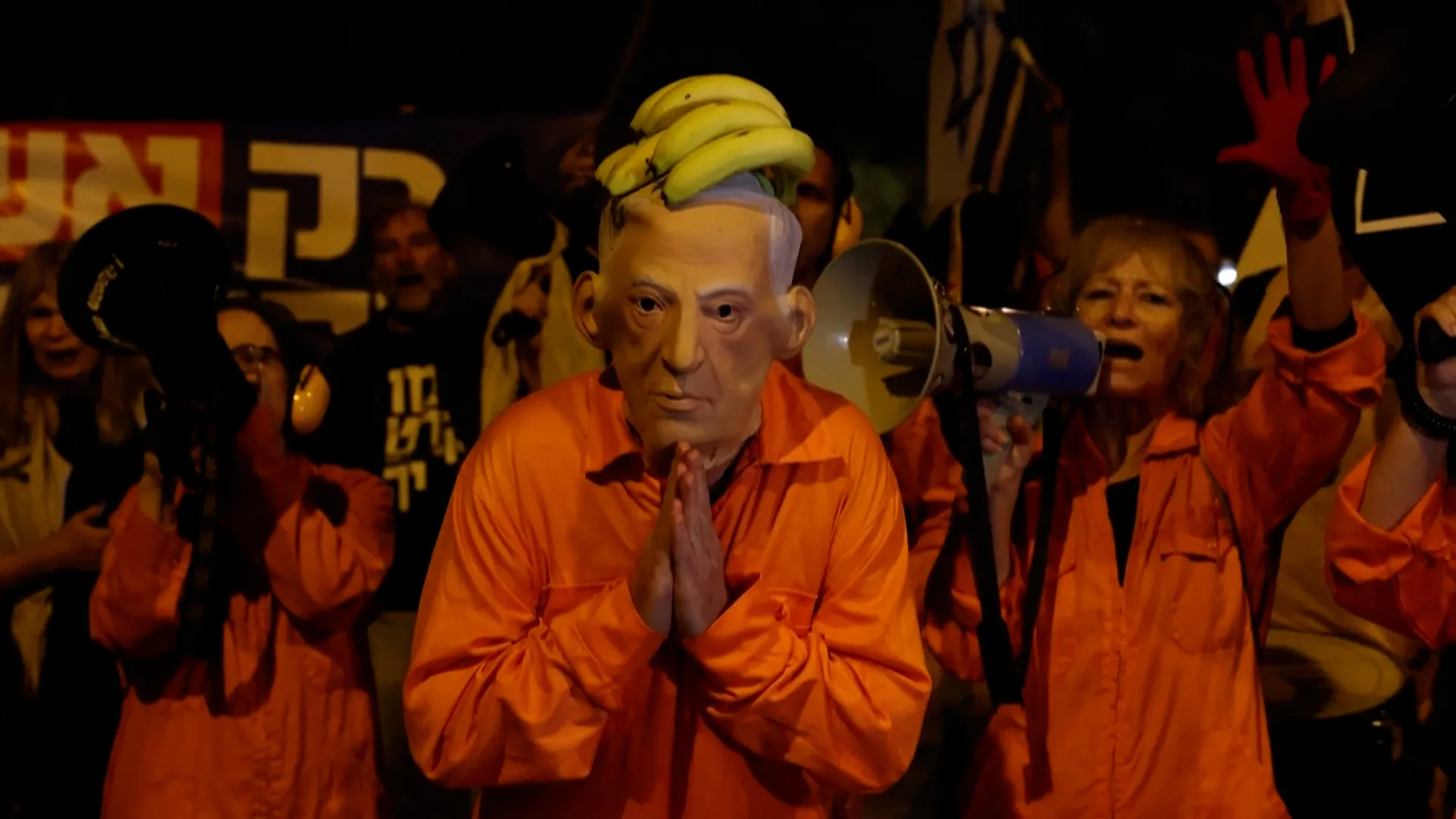
Hundreds of Israelis protested outside President Isaac Herzog’s house in Tel Aviv after Prime Minister Benjamin Netanyahu announced he had requested a pardon in his long-running corruption trial. Demonstrators demanded that Herzog rejects the request.
One Strictly Come Dancing star has issued a heartfelt statement as they leave the hit BBC One show
One Strictly Come Dancing star has issued a heartfelt statement as they leave the hit BBC One show(Image: PA)
One Strictly Come Dancing star has been flooded with support as they issued a heartfelt statement over leaving the show.
On Sunday night, Alex Kingston become the eighth celebrity to be eliminated from Strictly Come Dancing along with her professional dance partner Johannes Radebe.
The duo found themselves in a dance-off with EastEnders actress Balvinder Sopal and professional Julian Caillon, where they had to perform their routines from Saturday night again.
Following the performances, the judges cast their vote, with Anton Du Beke choosing to save Alex and Johannes while Craig Revel Horwood and Motsi Mabuse saved Balvinder and Julian.
Head judge Shirley Ballas, who had the casting vote this week, decided to also save Balvinder and Julian, securing their place in Strictly’s musicals week.
Taking to Instagram following her exit from the show, Doctor Who star, Alex, 62, penned an emotional and heartfelt statement, where she was supported by fans.
Alongside a series of snaps from her time on the show, Alex penned: “Hello sweeties, Where to even begin… Strictly had been the journey of a lifetime and such a dream come true. If you had told me a year ago while in the midst of radiotherapy that a year later I’d be on strictly come dancing I wouldn’t have believed you!
“I’m so proud of everything Johannes and I have accomplished, and so grateful to my body for getting me this far. It was always my dream to get to dance with Jo Jo and dance we did! To everyone who supported us, Thank you endlessly. To be able to do this at my age is such a privilege, and I feel so lucky. Your belief in us has got me through even the toughest of days.
“If I’ve learned anything from this it’s that it’s never too late to try, and fall in love with something new. Whether taking a local dance class or picking up a new hobby, keep exploring and living life to the full. And most importantly… keep dancing!!!
“To the cast and the professionals, It’s been so wonderful getting to spend time with you all. Thank you for all the words of encouragement and cheers from the sidelines.
“It’s been such a pleasure watching you all grow on your journeys, and I can’t wait to keep watching. And a big thank you to all the crew keeping things running behind the scenes, and making sure we all look fab!!!
“Johannes, Every day I have been blown away by your kindness, your elegance, and your ability to bring calm to every storm. You light up every room you walk into my darling man !I cannot thank you enough for helping me find my steel balls and ‘exquisite’ legs! May your bag always be filled with mints, and your heart filled with joy and happiness. Love you so much.”
Responding in the comments, one fan put: “You and Jojo lit up our screens with your grace and elegance, and your never-ending determination. You will always be the rumba Queen!”, a different account put: “You have been phenomenal, classy and a true professional. Thanks for being on this show- first time I’ve watched it in a decade or so just to see you on screen and it’s been so fun” while another added: “You were brilliant!”
Meanwhile, a different account wrote: “Alex, you are just incredible. I am so unbelievably proud of you and Johannes and for going as far as you did. It has been such a pleasure watching you shine every week, you little star. You will always be my winner!! Lots of love” while another added: “Alex you have been an absolute joy to watch! Absolute dancing queen.”
Strictly Come Dancing continues on BBC One and BBC iPlayer.
SHORT term holiday rentals like Airbnb are to be banned in a popular tourist area in Europe next year.
Budapest has confirmed that the holiday rentals will be axed across the 6th district.
Sign up for the Travel newsletter
Thank you!
Budapest is banning short term rentals in a popular areaCredit: AlamyThe street is popular with tourists thanks to its restaurants and barsCredit: Alamy
The district, Terézváros, is called Budapest’s Broadway, being home to a number of theatres as well as the Hungarian State Opera.
It is also home to Andrássy Avenue, a huge boulevard visited by tourists that is popular shopping street with restaurants and cafes.
The new rules will be introduced from January 1, 2026.
It could also be eventually rolled out to other districts.
Some have slammed the new rules, with one telling local media that “no-one will win with this ban” while others expressed fears it will only make hotel prices go up.
Despite opposition, the government ruled that the ban could go ahead.
In a statement, the mayor of Terézváros Tamás Soproni said: “The Supreme Court ruled today that Terézváros’s Airbnb regulation is not illegal.
“The court rejected the Government Office’s motion, meaning that the ban on short-term rentals is lawful and the regulation can come into force on January 1, 2026.”
The mayor of the 6th district added: “There are buildings where 50 per cent of all the apartments are listed as Airbnb.
“Local citizens are being driven out of the downtown area and replaced by tourists – this is not the way forward.
“If we go on like this, all downtown areas will look like a kind of Disneyland, having the same chains, attractions, restaurants – and with no local residents left.”
Tourism rentals have grown by 80 per cent since 2020, meaning there are now more Airbnbs than hotel rooms.
On average, around 40 per cent of tourists stay in a holiday rental in Budapest – higher than the average in Europe of 28 per cent.
While holiday rentals will be banned, hotels and B&Bs will not be affected.
Budapest is one of the more popular cities with Brits, who often visit for its spas and cheap holidays.
The country saw record tourism last year, with 18million visiting Hungary, a third of which visited Budapest.
The road is nicknamed Budapest’s Broadway for its many cinemasCredit: AlamyIn the summer, holidaymakers flock to the busy boulevardCredit: Alamy
This was up 24 per cent compared to 2023, meaning a faster growth than places like Barcelona.
Brits are one of the most popular tourist markets, along with Germany, Italy and the US.
And lots of cities struggling with overtourism are introducing similar holiday rental rules.
Interest in the CIF Open Division state championship football game has diminished during an eight-game Northern California losing streak dominated by Mater Dei and St. John Bosco. Every time De La Salle or San Mateo Serra has shown up via bus or plane, the result has been the same.
Not since 2015 has a Southern California team lost in the top division. Now that Northern California teams know how Southern California teams felt when losing from 2007 through 2012, is it time for Northern California to end its losing streak?
De La Salle (12-0) was chosen Sunday to face Southern Section Division 1 champion Santa Margarita (10-3) in the Open Division final on Dec. 13 at 8 p.m. at Saddleback College. Coach Justin Alumbaugh insists there are signs his program is capable of ending the streak.
“I thought we had a chance last year,” he said, referring to a 37-15 loss to Mater Dei. “Mater Dei was incredible. But if we played a near-perfect game . . . we closed the gap. I liked our team last year and I like our team this year.”
In Southern California, change has happened. Neither Mater Dei nor St. John Bosco will be in the Open Division final for the first time since 2015. But that hardly means a drop in ability for the state championship. Everyone agrees the Southern Section Division 1 playoffs might be the best in the country, and Santa Margarita won the title by getting better each week, ending with a 42-7 rout of Corona Centennial on Friday night.
“Wow,” Alumbaugh said after watching the game at the Rose Bowl. “To hold Corona Centennial to seven points is one of the more impressive things.”
Alumbaugh brought along his 8-year-old son, and while Trent Mosley was catching 10 passes for 292 yards, his son asked, “Why don’t they stop No. 4?”
Now it’s going to be Alumbaugh’s problem.
De La Salle has a 22-day layoff before facing Santa Margarita, and Alumbaugh has “destroyed” plans from last season‘s game against Mater Dei trying to get his team to start better.
“Santa Margarita is really, really good,” Alumbaugh said. “The names might be different since 2015, but it doesn’t mean the caliber of team isn’t good.”
What gives De La Salle hope is its speed and balance on offense. The Spartans have three players who can run 100 meters in 10.5 seconds or faster, including the state’s fastest athlete, record holder Jaden Jefferson. Quarterback Brayden Knight is capable of completing clutch passes. And the defense has been particularly impressive with three shutouts.
“We’re showing up to compete,” Alumbaugh said. “That’s our mindset and in our blood. There were a couple years we knew we were overmatched. We have a good team. We can compete with any team in the country.”
That’s good news for fans bored with a running clock in the fourth quarter of championship games, such as when Serra lost 35-0 in 2023, 45-0 in 2022 and 44-7 in 2021.
But Santa Margarita coach Carson Palmer warned after his team’s win over Centennial, “We’re playing real good right now.”
Every section champion earned a state playoff berth, with regional action starting next weekend. The state finals are Dec. 12 and 13 at Saddleback College, Fullerton High and Buena Park High.
Los Alamitos and San Diego Cathedral Catholic will meet in the 1-AA regional final on Friday at Long Beach Veterans Stadiums, testing the Southern Section Division 2 champion against the San Diego Section Open Division winner. City Section Open Division champion Carson is in 3-A and will take Delano Kennedy at 6 p.m. on Saturday at home.
One of the best matchups is the only battle of the unbeaten teams, Rio Hondo Prep (14-0) taking on Solano Beach Santa Fe Christian (13-0) on Saturday at Carlsbad in 2-A.
Drone video shows widespread destruction in part of Sumatra in Indonesia, where more than 440 people have died in flooding and landslides across the country. Hundreds of others are still missing.
WHEN The Wanted reunited shortly before the tragic death of bandmate Tom Parker, it was hoped the band’s long-running feud had finally come to an end.
But instead of bringing them closer together, the brief reconciliation in 2021 did nothing to mend the secret divide – and now Nathan Sykes has spoken for the first time about the breakdown of the group’s friendships.
The late Tom Parker his The Wanted bandmates Siva Kaneswaran, Max George, Nathan Sykes and Jay McGuinessCredit: GettyMax and Nathan no longer speakCredit: AlamyThe singer performed at BBC’s Children in Need last weekCredit: PA
The Wanted – made up of Nathan, Tom, Max George, Siva Kaneswaran and Jay McGuiness – catapulted to fame in 2009 and became a platinum-selling group with hit songs including Glad You Came and All Time Low.
They split five years later, claiming at the time they were pausing to pursue solo careers. However, Max later confirmed simmering tension behind the scenes drove them apart – and they were no longer on speaking terms.
Speaking to The Sun, Nathan now says he’s in therapy to process his time in the band, admitting: “Looking back can be really happy, but it can be challenging as well.”
Opening up about the struggles in the band, Nathan told us: “I think being content in where you are at in life and accepting things because they’ve happened and then navigating through them, that’s part of growing up and acknowledging things.
“Look, everyone goes through difficult times and everyone has challenging experiences.
“I feel very lucky, very fortunate that I got to do the most amazing things with the band and I have the most amazing memories.
“If there were difficulties within that, then that’s something that I need to kind of process.”
With any job, you form some relationships that are better than others
Nathan Sykes
Nathan still maintains a close friendship with Jay after the pair formed a bond in the band – something that he admits he didn’t have with the older members.
Nathan, who was just 16 when he joined The Wanted, was five years younger than Max and Tom. Siva was 20, while Jay was closest in age at 19.
He says being a teenager who was home-schooled while the others partied was part of the problem in how their relationship played out.
“I’ve got an amazing relationship with Jay,” he says.
“He was at my wedding a few weeks back. There’s a lot of love there.
“But with any job, you form some relationships that are better than others.
“I think with being the youngest, I naturally gravitated towards the person that was closest in age, which was Jay, who is three years older than me.
“With the older guys, especially when we started, I was 16 and the other three were 21, so there was always a difficulty in forming those bonds.”
Siva and Max have united for The Wanted 2.0Credit: Splash
Nathan added: “Bless them. Looking back, I really feel for them because they were like, ‘What are we meant to do with this child?’
“They could all go out, socialise, get to know each other, go sit in the pub, have a pint and find out about each other’s lives.
“I was back at the hotel where we were staying doing homework, so that’s always going to be difficult to figure out relationships.
“Then by the time the band ended, I was the same age that they were when it started. They were so far ahead of me in terms of life experience.”
However, Nathan insists that there’s no bad blood from his side and even claimed to be unaware of the social media snub.
An olive branch
In fact, the 32-year-old denied any fallout between him, Max and Siva – despite admitting they don’t talk.
“As far as I’m aware, there’s no problems at all. Genuinely, it’d be news to me.
“I can confirm that I haven’t unfollowed anyone. So I don’t know if there’s been a mistake somewhere, but I definitely haven’t unfollowed anyone.
“If I’m honest, I’m so bad with technology, I wouldn’t know how to.”
Offering an olive branch to his former bandmates, Nathan insisted: “If anyone rang me tomorrow and said, ‘I need a favour’, I think all of us would just be on the end of the phone.”
Strictly star Max has been through health struggles latelyCredit: Getty
Before Tom’s death, The Wanted reunited for a greatest hits album and one-off show in 2021, followed by a tour in early 2022.
Reflecting on that time, Nathan added: “The reunion tour that we did, and the celebration of everything we achieved, was really important because we all got to see each other as adults for the first time.
“It was a really healing experience.
“And especially having that time with Tom. I wouldn’t swap that time for anything.”
He’s set to reunite with Siva for Mighty Hoopla in May 2026 after wrapping up their American tour last month.
Meanwhile Nathan, who was recently diagnosed withautism, is now focusing on his solo career, having released new album Ultraviolet last month.
It is his second solo album and follows his 2016 debut, Unfinished Business.
Nathan said: “I formed a really safe space within the writing group for my new album and I think that allowed me to be vulnerable with my writing and in my music.
“I’ve prioritised my safe space and my happy place, shall we say, and I think it’s really, really important to get to that place.
“Therapy definitely helps. I think it’s a really healthy thing.”
Nathan married his long-term girlfriend Charlotte Burke last monthCredit: GettyNathan and Charlotte with their Dalmatian WillowCredit: Instagram
When he’s not in the studio or performing on stage, Nathan is happiest at home with his new wife Charlotte and their dog, Willow.
The animal lover became an ambassador for Dogs Trust, inspired by his 13-year-old Dalmatian.
Nathan said: “I get overwhelmed in social situations so having a best friend in Willow means the world to me.
“She’s at an age now where she’s definitely qualified for a bus pass, she’s a little old lady and she’s absolutely precious. She brings us so much joy and is the centre of our world.
“Willow even helped us to unwrap our wedding presents because she gets so much joy out of unwrapping presents. That’s her happy place.”
Despite Nathan’s assurances there’s not a problem between him, Max and Siva, it’s clear there is friendship is non-existent, and with any chance of a reunion ruled out, the possibility of them being involved in each other’s lives seems over.
However, as Nathan says: “I’m always at the other end of the phone.” Let’s hope the boys have a change of heart and choose to make that call.
A travel expert has shown how a perfectly legal train booking method called ticket splitting helped her save significant money on a journey from London to Manchester
If soaring rail fares have driven you towards lengthy car journeys and packed coaches, one travel expert claims there’s a completely legal method to pay significantly less for both short and long trips across Britain.
Amy Doherty, a travel expert at Travel by Luxe who frequently shares money-saving tips for British travellers, says she has discovered a technique that can “beat the system” without breaking any rules. She explains the secret lies in something known as train splitting.
“You’re essentially buying two or more tickets that cover your whole trip, and bizarrely, this often works out cheaper than buying one straightforward ticket from A to B,” said Amy.
Amy insists the process is far simpler than most people think. “A few years ago, you had to manually check every stop the train passed through to find savings. Now, most major booking platforms do it for you. They scan thousands of fare combinations and bring up the cheapest. It’s honestly one of the simplest ways to save money on train travel.”
To demonstrate its effectiveness, she recently tested it using an actual journey from London Euston to Manchester Piccadilly, one of Britain’s busiest long-distance routes.
Amy explained: “A direct ticket from London to Manchester can easily cost around £90 for a standard single if you book late. But by splitting the journey at Milton Keynes Central, the price dropped dramatically.
“I booked a standard ticket from London to Milton Keynes, and then another from Milton Keynes to Manchester. The total came in at £65 instead of £90. Exact same journey, same day, same destination… but £25 cheaper.”
Whilst some passengers simply use split tickets to cut the basic fare, Amy revealed an even cleverer approach: dividing your journey between standard and first class.
“What the booking apps don’t always highlight is when you could upgrade part of your trip to first class, and still save money overall. That’s the real magic of this hack. Sometimes the first-class fare for a shorter section of the route is incredibly cheap. If you combine that with a standard ticket for the first leg, you can travel in serious comfort without paying a premium.”
Using the Manchester example, she explains: “I went through every stop the train passed. On this route, Milton Keynes offered the perfect balance. A standard fare into Milton Keynes can be reasonable, and first-class advance fares from Milton Keynes up to Manchester can be surprisingly low if you book ahead. It meant I could upgrade to first class for the second half of the trip without blowing the budget.”
In Amy’s situation, the direct first-class ticket from London to Manchester on the same day was over £150. However, by splitting the fare, she managed to secure the standard-plus-first-class combination for around £80, saving roughly £70 overall, whilst still enjoying the benefits.
She adds: “This isn’t always the case, but it happens more often than people think. British rail pricing is unpredictable at the best of times, and that inconsistency actually creates opportunities.”
Amy also revealed that occasionally this method means hanging around briefly at the changeover station. “For the Manchester trip, we ended up waiting about 40 minutes at Milton Keynes because the earlier train into the station was cheaper and quicker. That little pause saved enough money to feel well worth it, and Milton Keynes has plenty of places to grab a coffee while you wait.”
How to save money with train splitting
First, check how much the full first-class ticket would cost. That gives you your baseline.
Next, examine every potential stopping point along the route. On certain lines there are two distinct train services, an express service and a stopping service, so you’ll need to review both.
After that, start searching individual single fares between your starting point and each of those stops, checking the standard price and the first-class price for each section.” Amy says she frequently uses booking platforms that display standard and first-class prices together, because “it becomes so obvious where the sweet spot is.”
When you identify that “cheap first-class leg”, she says, the choice is straightforward. “If the numbers work out, book it. You can often treat yourself to a proper comfy ride for less than the cost of a single standard ticket for the whole journey.”
At 38 years of age, Darren Hughes has done a lot in his football career, but the Scotstown veteran is thrilled to have another opportunity to win an Ulster club title following Sunday’s epic semi-final win over Newbridge.
Hughes stroked home the winning penalty in the shootout after the game finished 2-20 apiece after extra-time, joking “I wanted to hit the first one and get it out of the road”, but was simply relieved to have come out on the right side.
Leading by 10 early in the second half and then by nine with 15 to go, it seemed Scotstown were well on their way to a return to the final for the first time since 2023, but Newbridge forced extra-time and then penalties with Conor McAteer twice finding equalisers.
However, they held their nerve, converting all four of their spot-kicks with Newbridge missing their final two as Scotstown emerged 4-2 winners.
“A couple of times we could have lost it, but we’ve been around the block this year, going to extra-time in our club championship and have been here before in the Ulster Club against Trillick a couple of years ago,” Hughes told BBC Sport NI.
“We just tried to call on those experiences, reset and go again. It took penalties but thankfully we got over it.
“We probably let them back into it, but credit to them, they could maybe have pinched it if there was another minute or two at the end, but thankfully we will be back here in two weeks.”
Scotstown will now face Kilcoo in the final on Saturday, 13 December, whom they lost heavily to in last year’s semi-final after edging the Magpies in 2023.
A first Ulster title since 1989 is on offer for the Monaghan club, but Hughes is aware of the challenge they will face.
“We’ve had plenty of good days and plenty of bad days, so it’s great to be able to look forward to the final against Kilcoo,” he added.
“We didn’t feel as though we did ourselves justice last year when they steamrolled us.
“The year before we won by a point but the biggest difference between us and them is they know how to win an Ulster club, so there’s a lot of work to do over the next two weeks.”
Police in Australia on Monday announced the arrest of four Sydney men accused of being involved in a online child sex abuse material ring. Photo courtesy of New South Wales Police Force
Dec. 1 (UPI) — Authorities in Australia on Monday said they have arrested and charged four Sydney men for their alleged role in what they called “an international satanic child sex abuse material ring.”
The suspects were detained Thursday when police executed six search warrants in the Sydney regions of Waterloo, Ultimo and Malabar, the New South Wales Police said Monday in a statement.
At the Waterloo residence, a 26-year-old man was arrested. Police allege he played a leading role in the illicit group. The three other suspects, aged 39, 42, and 49, were arrested at a unit block in Malabar.
The suspects were arrested by officers of Strike Force Constantine, which investigates the online distribution of child sexual abuse material involving ritualistic or satanic themes.
Officers with the task force uncovered what the NSW Police Force said was “a Sydney-based pedophile network” involved in facilitating, possessing and distributing such illegal material via an internationally administered website.
All four men were denied bail Friday.
Video of the arrest at the Waterloo location was shared with reporters showing masked officers in tactical gear storm an apartment. The 26-year-old suspect, seen dressed in a zebra print shirt and pants, is escorted from the residence in handcuffs by police. The suspect hides his face with the brim of a baseball cap pulled down.
An excerpt of the video was published on social media by the NSW Police Force.
Sex Crimes Squad detectives have charged four men following an investigation into an international satanic child sex abuse material ring under Strike Force Constantine.
Strike Force Constantine was established by the State Crime Command’s Child Exploitation Internet Unit to… pic.twitter.com/pwDDnm3R0y— NSW Police Force (@nswpolice) December 1, 2025
Dept. Supt. Jayne Doherty told reporters during a press conference Monday that the suspects had shared “abhorrent” content online involving children as young as infants, as well as animals.
Thousands of videos were discovered on electronic devices seized during the execution of the search warrants last week, she said.
“Police will allege in court that this international group were engaging in conversations and the sharing of material which depicted child abuse and the torture of children involving symbols and rituals linked to Satanism and the occult,” she said.
The abuse captured was “particularly devastating in that they used symbols and rituals around it in the discussions that they were having about abusing children,” she said, adding, “it had. a very ritualistic overview.”
The four men have been charged with various counts related to the possession and online distribution of child sex abuse and bestiality material.
As if these psychological and digital pressures were not complex enough, the broader geopolitical landscape intensifies them.
The need for a new leadership model is even more urgent in today’s geopolitical landscape. The intensifying U.S – China rivalry is pressuring many Southern nations into binary alignments they do not want. Leaders who maintain strategic autonomy engaging both sides without becoming proxies are essential.
Simultaneously, the global AI transition is outpacing regulation. Without emotionally grounded leadership, uncertainty becomes fertile ground for disinformation, techno-populism, and governance paralysis.
Climate instability adds further stress. Extreme weather, food inflation, and migration erode public trust. The lack of a stable, equitable global climate solution creates opportunities for authoritarian populists who promise simple answers to complex crises.
In this environment, the Global South does not need leaders who merely perform globality, nor those who retreat into defensive nationalism. It needs leaders who can navigate complexity with calmness, legitimacy, and clarity.
Many regions now operate within overlapping spheres of influence, making geopolitical navigation an exercise in diplomacy as much as national strategy. Leaders must balance economic interdependence with political independence, crafting relationships that protect national interests without submitting to global pressures. This balancing requirement aligns with the emerging profile of a Third Space Leader.At the same time, climate shocks and technological disruptions strain public trust, increasing susceptibility to simplistic narratives and divisive populism. Leaders who can interpret these cross-cutting crises without amplifying anxiety become critical stabilizers in the global system. Their value lies not in charisma alone but in emotional and strategic maturity.
The Third Space Leader
A Third Space Leader is neither a technocratic elite nor a populist strongman. They represent a new equilibrium, global enough to command respect, local enough to earn trust. They move confidently in international forums yet remain grounded in local memory and moral vocabulary. They understand both algorithmic behavior and human psychology. Above all, they operate without the emotional weight of inherited insecurity or resentment.
A new conceptual area that lies outside the two conventional poles of human and technological capacities is referred to as “Third Space.” Human intuition, empathy, morality, and ideals are on one side. Artificial intelligence, algorithms, and data are examples of technical competence. Operating at the nexus of these two worlds, a Third Space Leader neither fully submits to data-driven reasoning devoid of ethical perspective nor exclusively relies on unproven utopian aspirations.
Such a leader is neither the “old-style leader” who relies solely on intuition and experience nor the “new technocratic leader” who blindly adores automation and efficiency. Rather, this leader creates a more advanced, integrated, and comprehensive leadership paradigm by combining human depth with technology expertise.
This synthesis reflects the demands of modern diplomacy, which increasingly requires leaders to operate across institutional, cultural, digital, and psychological domains simultaneously. Leaders must understand technological systems while retaining the human intuition needed to interpret emotion-driven publics. The Third Space Leader embodies this hybrid competence.Their greatest strength lies in coherence: the ability to harmonize global fluency with local grounding, digital alignment with ethical clarity, and emotional intelligence with strategic foresight. This makes them uniquely suited to guide societies through a landscape where identity, technology, and geopolitics intertwine.
Why the North Should Support Third Space Leaders
Though rarely said aloud, a Third Space Leader is not only beneficial for the South, they are also the most stabilizing and predictable partners for the North.
They provide clarity without submissiveness, autonomy without antagonism, and steadiness without theatrics. They are less likely to swing into populist volatility or harden into isolationist authoritarianism.
For the North, the greatest challenge in the South is instability not poverty or lack of capacity. Volatility disrupts investment, supply chains, and cooperation. Hyper-nationalist regimes, on the other hand, threaten markets, assets, and diplomatic channels.
A Third Space Leader sits at the midpoint global stability increasingly requires. Research from Chatham House, UNDP, and CSIS converges on this: the future of global cooperation depends on emerging leadership models in the Global South.
For the North, stability is strategic. For the South, dignity is essential. For both, the Third Space Leader is the bridge.
Many analyses of global cooperation highlight that predictability is the most valuable trait in international partnerships. States seek leaders who can negotiate firmly yet constructively, uphold agreements without political whiplash, and maintain ethical consistency even in turbulent environments. Third Space Leaders meet these criteria by balancing autonomy with dialogic openness.
For societies in the South, dignity is equally essential. A leader who is respected globally yet rooted locally gives citizens a sense of pride without sacrificing sovereignty. For the North, such leaders ensure regional stability. Thus, a Third Space Leader becomes not only a domestic necessity but a global asset.
Closing
The evolution of leadership in this direction marks a shift from externally derived validation toward internally cultivated legitimacy. When societies recognize the worth of their own cultural identity, they reshape their place in the global landscape not through imitation, but through confidence. This is the foundation from which the next generation of diplomatic leadership must rise.
Reimagining leadership in the Global South is not about mimicking Western templates or assembling algorithm-friendly personas. It is a slow act of psychological restoration until citizens can say, not “They look like them,” but:
Since its launch in November 2022, hundreds of millions of people have used ChatGPT to write wedding toasts, college essays, apology texts, bad jokes and even worse poetry. Billy Ray — Oscar-nominated screenwriter and unapologetic human being — is not one of them.
Ray, whose writing credits include “Shattered Glass,” “Captain Phillips” and “The Hunger Games” (that now-iconic Nicole Kidman AMC ad with “Somehow heartbreak feels good in a place like this” is also his), has never even opened the ChatGPT site. Not to fix a clunky line. Not to win a bar trivia argument. Not to figure out what to do with the leftovers in his fridge.
A series on how the AI revolution is reshaping the creative foundations of Hollywood — from storytelling and performance to production, labor and power.
To Ray, generative AI — already creeping into every corner of Hollywood, from script development and previsualization to casting and marketing — isn’t just another tool for creatives, like Final Draft or a Steadicam. It’s an existential threat, “a cancer masquerading as a profit center,” he says, eroding not just storytelling but the storyteller.
“My level of impostor syndrome, neuroticism and guilt is high enough while I’m working my ass off,” Ray says by phone, his voice equal parts weariness and outrage. “There’s no way I’d make myself feel worse by letting a machine do my writing for me. Zero interest.”
When AI hype and fear first swept through the entertainment industry, screenwriters quickly found themselves on the front lines — and the picket lines. During the 2023 strike, the Writers Guild won precedent-setting contract language: Studios can’t require writers to use AI, and anything generated by it can’t be considered “literary” or “source” material. Writers are free to use AI if they choose — but only with the studio’s approval, and under rules that protect credit, authorship and intellectual property.
The agreement was hailed as a landmark: the first real attempt to set limits on a fast-moving, poorly understood technology. But for Ray, those protections don’t go far enough. The tools are getting exponentially more powerful, he says, and adoption is already happening quietly, behind closed doors. “What I’m hearing anecdotally is that studios and streamers are putting more and more time and energy into exploring what AI can do for them,” he says. “The result will inevitably be chaos, bad movies, bad TV shows and a lot of people out of work.”
A longtime WGA member and former co-chair of the guild’s negotiating committee, Ray says his level of alarm is greater now than it was during the strike. That alarm is shared by many in a business where thousands of writers already hustle from project to project and where the prospect of studios using AI to shrink writers’ rooms, eliminate junior positions or even generate first drafts has added new urgency to the debate. The anxiety is not theoretical: According to the Writers Guild’s 2024 financial report, the number of members reporting earnings fell by nearly 10% from the prior year — and by more than 24% compared with 2022.
Signs decrying AI were ubiquitous on the picket lines when the Writers Guild of America went on strike in 2023.
(Jay L. Clendenin / Los Angeles Times)
With AI technology leaping ahead at algorithmic speed, Ray is urging the union to move faster. “We need to put firewalls in place before the next round of negotiations,” he says. “That’s going to be necessary.” Though he still refuses to touch AI himself, he isn’t trying to police his peers. “I’m not telling writers they can’t use it,” he says. “But the public has a right to know when they’re watching something written by a human being. And I think they want to know.”
As he speaks about the potentially apocalyptic implications — for Hollywood and for humanity at large — Ray sounds both incredulous and downright scared. “We as a species have a limited window to get control of AI and put guardrails around it, but we as writers have an even more limited window,” he says, his frustration rising. “It makes no sense. If all Hollywood has to offer is a bunch of warmed-over AI bulls—, why would someone turn away from TikTok or YouTube?”
Across the film industry, AI has begun to permeate nearly every stage of the production pipeline: helping directors visualize scenes before they’re shot, cloning actors’ voices for foreign dubs and assisting editors in assembling early rough cuts. But of all the creative roles AI is taking on, writing may be the most controversial — and at risk. Actors can fight to protect their likeness. Directors still need a crew to execute their vision. Writers often work in solitude, in front of a blinking cursor, the very place AI is now starting to intrude.
Unlike a human writer, a “large language model” — the technical term for AI systems like ChatGPT that are trained on massive amounts of text — doesn’t grasp plot, motivation or theme in any true sense. It can stitch together scenes that feel plausible on the surface — a couple arguing in the rain, a soldier saying goodbye before heading off to war — and can sometimes even surprise you with a turn of phrase or an unexpected twist. What it can’t do is understand what those moments mean or shape them to make an audience feel something lasting.
To be fair, that might also describe more than a few human-written screenplays. And Hollywood has long flirted with the idea of turning writing into a system. In the 1970s and ’80s, a cottage industry blossomed around screenwriting formulas — from Syd Field’s three-act paradigm to Robert McKee’s guru lectures and the ever-resilient “Save the Cat” beat sheet. Storytelling became something you could learn, teach and sell, often quite successfully. (See: “Adaptation,” which turned the whole idea into a punch line.)
The difference now is that the machine isn’t just applying the formula — it’s trying to do the writing itself.
The late critic Roger Ebert famously called cinema a “machine that generates empathy.” But as generative AI takes on more of the creative process, a deeper question emerges: What does it mean when stories are shaped by a system that, for now at least, can’t feel — and whose users may not need it to?
“I’m scared of it,” says writer-director Todd Haynes, whose films, including “Safe,” “Far From Heaven” and “May December” (scripted by Samy Burch and Oscar-nominated for its screenplay), explore all-too-human themes of identity, sexuality and social constraint. “Creativity is born out of mistakes, obfuscation, fumblings, desire — things that computer technology can never replace.”
Who’s holding the pen now?
In the spring of 2023, two weeks after the writers’ strike began — and with the actors soon to join them on the picket lines — Hollywood’s first “AI on the Lot” conference opened its doors in Hollywood, a bold show of tech optimism in the midst of labor upheaval.
“We thought we were going to have picketers out front,” says organizer Todd Terrazas, who founded the nonprofit AI LA and co-founded FBRC.ai, an AI-driven venture studio launched in 2023 to bridge creativity and technology. “But sure enough, there was none of that. Six hundred people showed up and really leaned into how this technology could expand the industry and support everyone.”
Todd Terrazas, founder of AI LA and FBRC.ai., photographed outside his office in Venice, CA.
(Carlin Stiehl / Los Angeles Times)
Two years later, by this spring’s edition, the event had expanded and moved to the Culver Theater, drawing nearly twice the crowd with 1,100 attendees, a mix of indie filmmakers, startup founders and tech execs from Google, Amazon, Nvidia and OpenAI. The vibe was more techno-optimism than hand-wringing. But the stage was still missing something: writers.
“AI is a very touchy subject, especially for writers, because it’s so personal,” says Terrazas, who has emerged as a key connector between Hollywood creatives and the fast-expanding AI tech world. “Even though they’re experimenting with large language models to help organize thoughts or explore new characters or ideas, at the end of the day they want to be known as the one who actually wrote everything, like, ‘This was 95% me.’”
In a legal gray zone where authorship is murky and copyright law hasn’t caught up with technology, what’s at stake isn’t just credit or ego but ownership. “Writers are walking a tight line,” Terrazas adds. “They want to be very careful that they’re showing their work, documenting their process, so they can obtain copyright and stay in bounds with the studios and the guilds.”
While many writers worry about AI encroaching on authorship, a wave of startups sees opportunity — not to replace writers, they say, but to streamline the clutter around them. Amit Gupta, who co-founded the AI writing tool Sudowrite in 2020, began development by interviewing screenwriters about what they actually needed. The complaints he heard were often surprisingly mundane. “They’d say they dreaded writing the logline, the one-page treatment, the three-page treatment, once the screenplay was done,” he says. These were exactly the kind of mundane tasks his AI platform could automate.
Some studio executives may already be imagining a future with fewer writers, a field that’s historically one of the most developmentally expensive and unpredictable parts of making a movie. Since the spec script boom of the 1990s, when writers like Shane Black (“Lethal Weapon”) commanded multimillion-dollar paydays, screenwriting has carried a uniquely speculative price structure for work that’s often unproven. Robert Altman’s 1992 film “The Player” famously centered on a murder of a screenwriter, satirizing the industry’s long love-hate relationship with the written word.
But Gupta pushes back on that vision. He says AI is far from being able to write a good movie on its own — at least not yet. “You could watch it,” he says. “But you’re not going to like watching it.” What excites him more is the potential for co-creation, humans still driving the process with machines supporting rather than replacing them.
“I think that’s where the skill of the writer really comes in,” Gupta says. “If I go to ChatGPT and say, ‘Write me a short story about someone in L.A., reading an article on the film industry and hanging out with their dog,’ it will give me something generic, because that’s what the model is. But the prompt actually matters a lot. The people who are really good with this stuff are kind of mind-blowing.”
What exactly qualifies as a mind-blowing prompt is not entirely clear, but Gupta believes developing that kind of conjuring ability will become as essential as programming or writing itself. “Once you get adept at handling it with precision, it feels like a tool — not something doing the work for you. That’s going to be a very real skill set in the future.”
A fault line in the craft
If Gupta sees AI as a tireless, ego-free assistant for the grunt work of writing, others have leaned in further, treating it more like a virtual writers’ room — riffing on scenes, dialogue and structure — or even an uncredited auteur behind the curtain.
In January, Paul Schrader, the writer of “Taxi Driver” and his Oscar-nominated “First Reformed,” known for his psychologically intense, deeply human portraits of guilt and faith, caused a stir by praising ChatGPT online as a kind of creative oracle. After asking the AI chatbot to generate movie ideas in the style of various auteurs — Paul Thomas Anderson, Ingmar Bergman, Martin Scorsese, Quentin Tarantino, David Lynch — he was floored.
“I’M STUNNED,” Schrader wrote on Facebook. “Every idea ChatGPT came up with (in a few seconds) was good. And original. And fleshed out. Why should writers sit around for months searching for a good idea when AI can provide one in seconds?”
Writer-director Paul Schrader, photographed by The Times in 2018.
(Los Angeles Times)
In another post, Schrader said the model instantly gave feedback on an old script he had written years earlier “as good or better than I’ve ever received from a film executive.” The experience, he said, left him certain that AI was the superior writer: “This is an existential moment, akin to what Kasparov felt in 1997 when he realized Deep Blue was going to beat him at chess.”
The backlash came fast. “Paul, is everything OK?” one commenter wrote. Ever the provocateur, Schrader showed no sign of backing down, gleefully sharing AI-generated images, including one in which he is seen conjuring characters with a magic pen.
Asked about Schrader’s AI enthusiasm, Billy Ray offered a pointed retort: “I have enormous regard for his career and for the work he’s done — he wrote ‘Taxi Driver,’ for God’s sake. But I don’t see how that’s helpful.”
Filmmaker Bong Joon Ho takes a more humanist tack. The writer and director of genre-scrambling films like “Snowpiercer,” “Parasite” and “Mickey 17” — a mix of original stories and literary adaptations — acknowledges AI’s value as a subject for sci-fi but doubts its capacity to tell stories with real depth or irony.
“We’ve seen from films like ‘The Terminator’ that AI can be a great source of drama, and we can create a lot of stories around it,” he told The Times earlier this year. “But I honestly don’t think AI programs will write a fun story about themselves and how s— AI can be. I feel like I am a better writer for those stories.”
Others worry that as AI becomes embedded in Hollywood, even human-written work will start to sound like the data it was trained on: smoother, safer, harder to tell apart. Roma Murphy, a young writer and story artist who serves as co-chair of the Animation Guild’s AI Committee — one of several new working groups formed in the wake of the 2023 strikes — describes herself as “a bit of a purist.” Like many, she is concerned about the exploitation of unlicensed material — the countless film and TV scripts that may have been scraped to train AI now being pitched back to the industry.
“I’m certainly not going to type my own ideas into the platform and just give them to it to train with,” Murphy says.
“Look, it’s much better than it was in 2022 — it can at least generate a document,” she says. “But I have yet to meet someone who was still thinking about their AI screenplay more than 12 hours later. People engage with art because they want to see some truth about humanity reflected back to them, and AI is never going to reflect a new truth. Nothing I’ve seen generated feels like anything more than a cheap party trick.”
Striking Writers Guild of America workers picket outside the Sunset Bronson Studios on Tuesday, May 2, 2023.
(Luis Sinco / Los Angeles Times)
At film schools, where many future screenwriters get their start, the question of when and how to introduce AI has become its own point of debate. USC’s School of Cinematic Arts, one of the nation’s most influential film programs and alma mater to filmmakers like George Lucas and Ryan Coogler, now offers courses like “Art in Post-Reality: Critical and Creative Approaches to AI” and “AI Magic: Revolutionizing Media and Workplace Creativity.”
According to Holly Willis, chair of the Media Arts and Practice Division and co-director of USC’s new AI for Media & Storytelling initiative, student attitudes toward the technology vary widely.
Willis points to the first AI-focused class USC offered in 2023, launched during the height of the strikes. “The students came in very wary,” she recalls. “They weren’t even telling their friends they were in the class — out of fear of reprisal. Some were saying, ‘Why am I paying for this education when you could just prompt and make a film?’”
But even as the school has integrated AI across a range of filmmaking disciplines, one area remains off-limits: screenwriting. “We’ve been very intentional about protecting that early phase when students are still figuring out who they are as writers,” Willis says. “They need space to develop their own voice and stories before turning to tools like this. Understanding how the technology works is important, but so is safeguarding that vulnerable creative moment.”
Writing in the gray zone
Oscar Sharp arrived in the future a little earlier than most in Hollywood. Nearly a decade ago, the British filmmaker set out to see what would happen if a computer tried to reverse engineer a science-fiction screenplay using nothing but genre tropes. “My writer friends joked with me, quite reasonably, ‘You hate writing so much that you’d build a machine to do it for you, even if it’s really bad,’ ” Sharp says dryly. “There’s some truth to that.” But his real aim, he says, was to see what the genre’s average story looked like when processed by an early AI model.
The result was 2016’s “Sunspring,” a nine-minute short scripted by a custom-built neural net —dubbed Benjamin — trained on dozens of sci-fi films, mostly from the ‘80s and ‘90s. Created with AI researcher Ross Goodwin, the film stitched together a surreal, dystopian mashup of familiar — if often nonsensical — beats, delivered by Thomas Middleditch and the cast with deadpan sincerity. A year later, Sharp followed with “It’s No Game,” a short set during a fictional AI-inspired writers’ strike, featuring David Hasselhoff performing AI-generated dialogue distilled from his past work in shows like “Knight Rider” and “Baywatch.”
Screenwriter Billy Ray calls AI a “cancer masquerading as a profit center.”
(Marcus Ubungen / For The Times)
In truth, Sharp’s AI experimentation was less about replacing writing than exposing the underlying code of storytelling itself. “It’s looking for statistical patterns — like, what similar things have happened before,” Sharp, a discursive and reflective speaker, says on a video call. “But those patterns were themselves created by feedback loops. So if you train something on them, you’re just deepening those same loops.”
Today, Sharp is still experimenting with AI but only very occasionally and never to outsource the work. He’s more cautious about how publicly he engages. “I’ve kept a pretty low profile about this sort of stuff,” he says, aware of how charged the debate has become within the industry. He suspects he’s not alone. “Far more people are probably using it than are comfortable saying they are,” he says. “It’s widely available and extremely effective for those who employ it in particular ways. It would be very weird if that wasn’t happening.”
Sometimes he uses it not as a collaborator but as a kind of negative muse, a foil to push against.
“I’ve asked it to write a really bad scene — just let it go kind of mad,” he says. “Then I rewrite every damn word, often doing the opposite of what it gave me. It’s actually pretty adaptive for a writing process. Writers have always looked for ways to get the ball rolling. Whether they’re Hemingway and they get drunk to get the ball to roll is up to them. But in terms of a process, it’s not that different.”
What worries him more is what happens if, over time, that ball keeps rolling in the same direction. “Set it to make money and AI will produce feedback loops, loops that make things less good,” Sharp says. “That gets you McDonald’s. But humans still want mother’s home cooking too.”
During the 2023 strike, Sharp marched with fellow writers, many holding signs aimed squarely at the moment’s anxieties. Some read: “Alexa will not replace us.” Or “AI came up with 10 suggestions for this sign: THEY ALL SUCKED.”
One afternoon, as he marched in a circle in the summer heat, a delivery robot — one of dozens now trundling through L.A. neighborhoods — rolled past.
A dark, unmistakably human thought crossed Sharp’s mind. “There I am, walking round and round with these folks,” he says, “and I remember thinking, ‘They should send a fleet of those robots down here with AI protest signs on their backs to walk the circle for us.’ Because it’s really hot out here and nobody wants to be doing this.”
For now, Sharp plans to keep experimenting quietly, pushing back against the technology he once treated as a curiosity — and wondering how long that will still feel like a choice.
Up on Langley Common the wind is rising. The tussocks under my boots cover the Maiden Way, perhaps the highest Roman road in Britain, but the sense of being close to the sky – today a simmering grey – remains as palpable as it would have been 2,000 years ago. Looking north, a rainbow arcs across the horizon, the full reach of it clearly visible from this high ground. Buffeted by the squall with every step, it feels as though I’m striding across the top of the world, which is apt, since I’m following the new Roof of England Walk.
This 188-mile, multi-day trail was developed by the North Pennines national landscape team, and launched in September. Taking in lofty footpaths and some of the best-loved elements of the North Pennines – among them High Force, Cross Fell, High Cup Nick, the Nine Standards and England’s highest pub, the Tan Hill Inn – the aim is to showcase this sometimes overlooked corner of the country.
“It’s a blank on the map for a lot of people, a huge area between Hadrian’s Wall and the Yorkshire Dales that they don’t really know,” says Shane Harris, the project’s lead, when I meet him after my walk for a bowl of cauliflower soup at Stanhope’s Root and Branch community cafe. “The North Pennines is a historic, vibrant landscape and a Unesco Global Geopark. This walk is about introducing more people to it.”
Starting and ending in Appleby-in-Westmorland, the walk loops through the moors, meadows and riverbanks of County Durham, Cumbria and Northumberland – the three counties of the North Pennines national landscape – plus a corner of the Yorkshire Dales national park. Its 14 legs have been designed to work as day walks or as a longer trail, and to link up with public transport. And most run between a town or village, so there’s somewhere to stay at the end of a day’s fairly remote walking.
Walkers cross high moorland in the North Pennines. Photograph: Carl Joyce
I’m hiking a 50-mile section in just over three days, from Alston, in Cumbria, to Edmundbyers, in County Durham, via Haltwhistle, Allendale and Blanchland, all in Northumberland. Alston, touted as England’s highest market town, is also one of its prettiest, bustling with independent shops, cafes and (as of this month) a pint-size wine bar, Walter’s. It’s also home to the recently spruced-up Alston Hostel (dorm beds from £30, private rooms from £40pp), where I’m staying. Taken over two years ago by Mat Austin and his partner Claire, they aim to provide a homely experience, hence home-cooked meals and a welcome from Poppy the puppy.
The Pennine Way passes right behind the building – one of several long-distance paths the Roof of England Walk merges with along its course – and it’s this I follow the next morning. I leave the shelter of Alston’s coppery, tousle-headed trees and head up onto Langley Common. A bank of rain blows in, muting the landscape to monochrome, and I scurry on to Gilderdale Burn, crossing from Cumbria into Northumberland.
A little further on the embankments of Epiacum, a former Roman fort, loom out of the drizzle. I detour hurriedly to nearby Nook Farm Shop for a hot coffee. The rain ebbs as I leave and soon I’m into my stride, following drystone walls and burns down to Slaggyford via a long, broad sweep of whisky-coloured river.
Alston in Cumbria is said to be Britain’s highest market town. Photograph: Carl Joyce
The Kirkstyle Inn gastropub is nearby, but my route leads in the other direction, over hay meadows and moorland down to the banks of the South Tyne, where Featherstone Castle’s gothic bulk sits draped in mist. Following the river into Haltwhistle, I’m so soaked when I arrive that I look like I’ve been swimming in it.
“Ooh, bedraggled!” declares the owner of the Old School House B&B (twins from £120 B&B), whisking my waterproofs to the drying room and my sodden boots to the boot dryer. “As well as this new walk, we’re on the Pennine Way, Hadrian’s Wall Path and Land’s End to John o’Groats, so we’re used to walkers,” Kate says.
The following morning, at a breakfast table laid with bone china and his own-recipe granola, her husband Ian serves me a winning shakshuka. Outside it’s bright and most of the morning’s route is on country lanes. Beyond Haltwhistle, I pass elegant stone farmhouses, cottage gardens brimming with flowers and glimpses of rickety Unthank Hall. On a ridge beyond it, I open my flask of tea and watch rabbits bounding through the dew. I realise I’m completely alone, and relish it.
Past Willimoteswick Castle, I arrive at pretty Beltingham. Following one of the walk’s purple lapwing signposts, I dip down into Allen Banks. Cared for by the National Trust since 1942, this woodland is spectacular in autumn, its river gorge shimmering with bronze, copper and gold.
The River Allen. Photograph: Clearview/Alamy
Climbing out of the woods, I’m met with a huge upland meadow, its peachy grasses rippling in the wind. It’s another few miles to Allendale. This former lead mining settlement switched to tourism in Edwardian times, after the last mines closed. I’m staying at the Lion House, a pub in the market square with two newly renovated guest rooms (en suites from £120 room-only). Each New Year, local guisers parade through the square carrying flaming tar barrels on their heads, but it’s quiet this evening. Landlord Dave welcomes me in, and his partner Maureen brings me a bowl of warming vegetable soup.
The following morning I open the shutters on to a sweeping view of the square … and more dark clouds. A storm is forecast and I need to be quick if I’m going to beat it. Scrambling on to moorland above the town, I startle grouse after grouse, their bark-quacks echoing in my ears as I drop down into the hamlet of Whitley Mill and on into Slaley Forest. It’s a long climb here, past thick tracts of Scots pine and blue spruce that are home to red squirrels. At the top the trail spits me out into the wind-scrubbed heather of Blanchland Moor. The view reaches all the way to Derwent reservoir but the sky is glowering, heavy and low, so I press on.
The clouds don’t burst and I’m still dry as I walk into Blanchland, a huddle of dainty stone buildings in the crook of a small valley. The village was created in the 18th century from the remains of a medieval abbey, and with smoke curling from chimneys and doors painted a regulation plum, it feels like a mirage. What was once the guesthouse for the abbey is now a hotel, the Lord Crewe Arms (doubles from £205 B&B), and as I click the latch on its ancient door, there’s a sense of entering another world.
The Lord Crewe Arms occupies a former abbey guesthouse
In my room, there’s homemade shortbread in a jar and fresh milk by the kettle; downstairs is a vast open fire. After dinner in the restaurant – meltingly soft roast venison with homegrown kale – I peek out at the storm-cleared skies and am rewarded with a swathe of bright stars: there are no street lights in Blanchland, and it has some of the darkest skies in the country.
From here, it’s just over five miles to Edmundbyers. There’s a savage wind as I follow the trail up Buckshott Fell, but the sunrise has flushed the colour back into the land. From a ridge on the moor I look out over 360 degrees of purple, gorse and slate, and realise I’ve been approaching the North Pennines all wrong. There may be history and wild beauty along its path, but this is a walk for looking up, rather than down – to the ever-changing skyscape of rainbows, storm clouds, sunrises and stars on the roof of England.
That proved to be the case yet again Sunday night at Crypto.com Arena as the Lakers rolled over the injury-depleted New Orleans Pelicans 133-121 with James out managing a left foot injury.
The Lakers (15-4) won their seventh straight game behind Doncic’s 34 points, 12 rebounds and seven assists and Reaves’ 33 points and eight assists.
The Lakers have a game Monday against the visiting Phoenix Suns, but it’s unclear if James will play.
James missed the first 14 games of this season with sciatica and has played in just four games. Left foot injury management also kept him out of some games last season.
“It’s something we’ve had to manage,” Lakers coach JJ Redick said. “Given the back-to-back and the fact that he’s basically just coming off his training camp — this has been his training camp over the last 10 days or so — [we’re] just being cautious.”
With James in his 23rd NBA campaign at age 40, it remains to be seen how many back-to-back games he will play this season. The Lakers have 10 sets left after Monday.
“No, we’re going to build him up, hopefully, to be able to play in back-to-backs,” Redick said. “That’s the goal. But you are correct. Every back-to-back is a case-by-case. That’s just the reality of the NBA right now. But we want him to be able to play in back-to-backs. So does he. So, we’re going to work toward that.”
The 15-4 Lakers have 63 regular-season games left, meaning that James can miss only two more if he wants to reach the NBA minimum of 65 games that players need to appear in to earn postseason awards. James has made a league-record 21 straight All-NBA teams.
Redick said individual postseason awards have “never come up as something that’s important” in his discussions with James.
“I want all my guys to get whatever award they deserve,” Redick said. “Of course, I want, you know, Austin, Luka, LeBron, like whoever, I want them to get awards. That’s great for them, but … the list of things that you have to worry about and think about as a player and coach, it’s so far down the list.”
The Lakers scored 77 points in the first half against New Orleans, tying the most points they have scored in any half this season, and they scored 46 points in the first quarter, the most they have scored in any frame this season.
It figured to be an easy night for the Lakers, who also got 22 points and 12 rebounds from Deandre Ayton, with the Pelicans (3-18) missing starters and key role players, including Zion Williamson, who was managing a left hamstring injury.
Lakers guard Marcus Smart missed his second straight game with back spasms.
Nov. 30 (UPI) — Three children and one adult were killed Saturday evening in a shooting that erupted at a Stockton, Calif., banquet hall, authorities said Sunday.
The shooting occurred shortly before 6 p.m. PST at a child’s birthday party near the 1900 block of Lucile Avenue, in Stockton, a city of roughly 322,000 people located about 83 miles northeast of San Francisco.
Fifteen people were confirmed shot, including the four deceased, identified only by age: an 8-year-old, a 9-year-old, a 14-year-old and a 21-year-old. As least one of the other 11 victims was in critical condition, according to authorities.
“We’ve had our team on the scene processing it for the past 21 hours, and while that was going on, we were actively following all the leads that we have, looking for witness statements, asking anyone to give us any video that they might have of this incident and following every lead that we have at this time,” San Joaquin County Sheriff Patrick Withrow told reporters Sunday afternoon at a press conference.
“We will find these animals that did this and bring them to justice.”
Withrow said authorities believe multiple shooters entered the banquet hall and opened fire, though they are still investigating if there was more than one shooter involved.
He said while the shooting began inside the hall, it continued outside.
As of Sunday evening, no arrests have been made in the shooting.
On Saturday, Stockton Mayor Christina Fugazi suggested it was gang-related.
In the Sunday press conference, Withrow explained that while Fugazi’s comments were “well intentioned” they were premature.
“At this time, our investigation, as you know, is very early on, so we are not going to say one thing or specifically another thing until we’ve gone through all our evidence,” he said.
“We’re confident this is not a random act. They walked into this area and was probably looking for somebody in particular. Why they did that, what they’re part of, who they are, we don’t know,” he said.
Crime Stoppers is offering a $10,000 reward for information leading to the arrest and conviction of those involved.
Fugazi said she is matching the reward with another $10,000 and Councilwoman Mariela Ponce contributed $5,000, for a total reward of $25,000.
“Let me be very clear to anyone who hides, shields or harbors these terrorists: you are putting yourself at risk of having your door kicked in, your home raided and being arrested for aiding and abetting,” she said in a Sunday statement. “If you protect them, you become part of this. And you will face the consequences.”
According to The Gun Violence Archive, there have been 380 mass shootings involving four or more gunshot victims so far this year.
I’m A Celebrity is back for another episode tonight after it was revealed that contraband was found in camp – with the consequences disastrous for the stars
At one end of the room, a man wearing a gray business suit argued politics with a bearded compatriot in blue jeans and red flannel work shirt. Nearby, a woman wearing a purple thrift-store headband mingled with another draped in an expensive fur coat. And cruising wide-eyed through the crowd, a teen-age girl with bright orange hair sported earrings shaped like peace symbols and skeletons.
“I thought of joining Kiwanis,” said Bobbi Kay Burgess, 15, who described herself as a “death rocker” and Garden Grove high school student. “But I think I like this better.”
“This” was the birthday celebration of the Peace and Freedom Party, an avowedly left-wing group that began in the 1960s and is still around today.
Young and less young, affluent and otherwise, about 200 politicos from all over Southern California descended on the Unitarian Universalist Church of Long Beach last weekend to participate in the anniversary event, billed as “radical 1960s nostalgia” and “rebellious 1990s visions.”
It was 20 year ago this month that the Peace and Freedom Party first qualified for the California ballot and, despite the dwindling of its radical following, has remained on the ballot ever since. Feelings among those who helped that happen range from pride of accomplishment to disappointment at the failures to a passionate belief that the best for the party is yet to come.
“The mere fact that we’ve been on the ballot for 20 years is an accomplishment in itself,” said Maureen Smith, 45, who works for the Santa Clara County Transportation Agency and is the party’s state chairwoman.
Said John Donohue, a 62-year-old retired Long Beach shoe salesman who has run for Congress seven times under the Peace and Freedom banner: “We are magnificent failures. We’re like David and Goliath, only our stone missed.”
In fact, that proverbial stone was first aimed at a time when it seemed to have some chance of hitting. That was in 1967 when, despite the rising tide of grass-roots opposition to the Vietnam War, President Lyndon B. Johnson appeared to have the 1968 Democratic presidential nomination sewn up. So, electorally inclined members of the anti-war movement, many of them longhaired hippies who drove multicolored vans and wore paisley pants, started a voter registration drive that they believed would radically alter the American political landscape forever by creating a major national third party dedicated to peace and racial equality.
For almost a year, it seemed that they might succeed. Surprising political pundits by collecting nearly 90,000 registrations in California alone, the new Peace and Freedom Party easily qualified for ballot status here and in 19 other states.
Candidates Overwhelmed
But then came the actual election, and the party’s hopes were dashed. Its two candidates–Black Panther Eldridge Cleaver in California and comedian Dick Gregory in several other states–polled a combined total of only about 344,000 votes. That was far below the 9.7 million received by Alabama Gov. George Wallace’s American Independent Party (which also is still on the California ballot) and not enough to make Peace and Freedom a major factor in the election, which Richard Nixon narrowly won.
Four years later, the party did even worse with pediatrician Benjamin Spock as its standard bearer. That year Peace and Freedom registrations dipped to a low of 14,000 and the party lost ballot status in most other states. But in 1976, members say, the party’s California registration began rising once again until today it stands at about 41,000, or 0.34% of registered voters. And by consistently garnering at least 2% of the vote in statewide elections and maintaining a minimum of 9,000 registrants, the party has been able to retain its California ballot status all these years.
Today the Peace and Freedom Party, which has an estimated 150 to 200 active members statewide, consistently runs candidates for most state and national offices. Except for a handful of nonpartisan City Council and school board seats in Northern California, the party has never won an election. Yet members point proudly to what they consider two major accomplishments: a successful 1974 lawsuit that resulted in the right of candidates in California to submit signatures in lieu of filing fees, and a ballot initiative drive that they believe helped influence the Legislature to give 18-year-olds the vote.
Takes New Positions
Although the party still emphasizes peace and equality as its major themes, it has taken a battery of new positions in recent years, including support for feminism, national health care, mass transit, AIDS education, homosexual rights, full employment and government aid to the homeless. Conversely, the party has adamantly opposed U.S. aid to the Contra rebels fighting in Nicaragua.
In general, Smith said, the Peace and Freedom Party believes that the country’s military budget should be slashed to accommodate the domestic needs of its citizens. “It’s kind of a shame,” she said, “that we are one of the few so-called developed countries that doesn’t take care of its people who can’t take care of themselves.”
Party regulars say they are encouraged by the current mood of the country, which they read as increasing disillusion with the two-party system in the wake of Republican stumbling over the Iran/Contra scandal and the recent revelations suggesting character flaws in major Democratic candidates. At the recent anniversary party, in fact, about $1,300 was raised toward running a full slate of candidates this year to be selected at the party’s convention in August. Although several presidential candidates have announced their intentions to seek the party’s nomination, no front-runners have emerged.
But the Peace and Freedom Party has changed in ways that have caused some longtime members to question its effectiveness even as a minor third party aimed primarily at raising issues. In 1974, for instance, the group officially declared itself to be feminist and socialist. “People used to always call us socialists,” explained Mike Noonan, 47, a founding member who now works as a hospital pharmacist in Claremont and has run for Congress on the Peace and Freedom ticket. “For years we denied it until finally it occurred to us that it was true.”
Women Leaders
Most party members, he said, are proud of the fact that most of the party’s state and local leaders are women. Each of the group’s last three presidential candidates, he said, has been a woman and the last two have also had female running mates.
Yet there have been other developments that have not been universally applauded by the party’s older, traditionally independent, activists. Because the Peace and Freedom Party has ballot status in California, these members say, it has functioned in recent years as an umbrella for many other left-wing groups. Unable to get candidates on the ballot in their own names, they say, such groups as the Communist Party, Socialist Party and Trotskyist International Workers Party have joined Peace and Freedom seeking to run their own candidates under the PFP label.
“The party has settled into some kind of sectarian niche,” said Donohue, who describes himself as a “soft-core” anarchist. “We’re spending a lot of energy hassling within.”
Kate McClatchy, the party’s Southern California chairwoman, sees a major danger in this. “All those little groups isolate themselves from the mainstream of American consciousness,” she said. “It alienates people. The factionalism is so divisive that it’s making it difficult for us to work effectively.”
Independent Peace and Freedom activists have also changed their tune somewhat since the 1960s, according to Noonan. “There was kind of a youthful arrogance then that’s gone now,” he said. “Back then there was a lot of striking poses and taking positions that nobody had any ability to execute. It was all just mouth music; now we’re older and more mature.”
Party Gathering
That seemed evident at the recent Long Beach gathering as party members of all stripes, some accompanied by their children, ate tostadas and rice, browsed through leftist periodicals and danced to the sounds of a self-described “progressive” band called the Dialeclectics. Among the speakers were Charles Morgan, a political commentator on radio station KPFK; Betty Brooks, founder of the Women’s Studies Center at California State University, Long Beach, and Richard Rose, a blind political activist and party member who announced his candidacy for the congressional seat held now by Dan Lungren (R-Long Beach).
“There is a fusion of the Republican and Democratic parties,” said Rose, 34, repeating an oft-used Peace and Freedom line. “They are becoming one party. It’s like going into a restaurant, ordering half a chicken and telling the waitress that you want the left half.”
Said the ever-optimistic Noonan: “If nothing else, we’ve kept alive the idea that in electoral work you don’t have to play the cards you’re dealt. The truth of the matter is that our time has not yet arrived.”