From breaking news to significant developments in politics, business, technology, entertainment, and more, we deliver the stories that shape our global landscape.
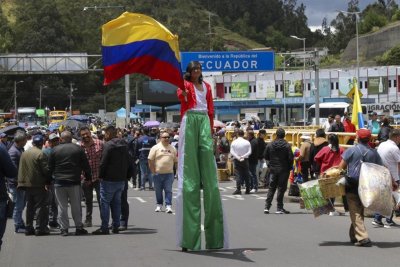
Transport workers from Ecuador and Colombia participate in a rally at the border bridge in Rumichaca, Ecuador, in early February. The workers demanded that Presidents Daniel Noboa and Gustavo Petro eliminate the 30% tariffs imposed on each other at that point. Photo by Xavier Montalvo/EPA
Feb. 26 (UPI) — Ecuador’s government said Thursday it will raise tariffs on imports from Colombia to 50% from 30%, effective Sunday, as tensions escalate over border security, trade and anti-narcotics cooperation between the neighboring Andean countries.
Ecuador’s Ministry of Production, Foreign Trade, Investments and Fisheries said in a statement the tariff increase follows what it described as Colombia’s “lack of implementation of concrete and effective measures” to improve security along their shared border and combat drug trafficking.
“This decision responds to national security criteria, to strengthen shared responsibility in a task that must be joint: confronting the presence of drug trafficking at the border,” the ministry said, according to Ecuadorian outlet Primicias.
Authorities have focused on sensitive border crossings, such as Rumichaca, a major commercial transit point where officials cite heightened risks of smuggling and organized crime.
The announcement came one day after Ecuadorian Foreign Minister Gabriela Sommerfeld said the government “maintains dialogue” with Colombia through diplomatic channels, including embassies and direct contacts between officials.
Analysts cited by Ecuadorian newspaper La Prensa said the tariff hike may serve as diplomatic pressure to advance a bilateral security agreement aimed at addressing cross-border crime while stabilizing trade relations.
Trade tensions began early earlier this year when President Daniel Noboa’s administration imposed a 30% tariff on Colombian goods. Officials framed the move as necessary to protect Ecuador’s trade balance and economic security.
Colombia responded with reciprocal measures. Authorities in Bogotá this week began to apply a 30% tariff to 23 categories of Ecuadorian agricultural, food and industrial goods, according to Colombian newspaper El Colombiano.
The dispute has expanded beyond tariffs. Colombia has suspended electricity exports to Ecuador, while Quito has increased fees for transporting Colombian crude oil through its pipeline system — moves that signal broader strain in bilateral economic ties.
Colombian President Gustavo Petro’s government also filed complaints with the Andean Community, a regional trade bloc, arguing Ecuador’s tariffs violate existing free trade commitments.
Economic impacts already are emerging in sectors such as border commerce, energy and oil production in Colombia’s Putumayo region. Colombia’s National Association of Financial Institutions warned costs for both economies could become significant if the dispute persists.
According to Ecuador’s Federation of Exporters, about $273 million a year in exports could be at risk if Colombia maintains its reciprocal 30% tariff. The group said roughly 580 Ecuadorian companies export to Colombia.
For some firms, up to half of their revenue depends on that market, raising concerns about potential economic fallout if tensions continue.
The United Kingdom’s government is investing in spyware developed and tested on Palestinians in Gaza and the occupied West Bank despite its public criticism of Israeli action there.
In addition to the Corsight facial recognition technology used to track, trace and detain thousands of Palestinian civilians passing through checkpoints in Gaza and the West Bank, the UK government has disregarded its own public concerns over Israel’s war on Gaza and de facto annexation of the West Bank and has purchased spyware from at least two other Israeli-linked manufacturers: Cellebrite and BriefCam.
Recommended Stories
list of 4 itemsend of list
Cellebrite
Cellebrite is an Israeli company closely linked to that country’s military. It has developed software that can bypass passwords and security protocols on smartphones and computers and access data from them.
That software has been used extensively by the Israeli military on Palestinians across Gaza and the West Bank, including to harvest data from the phones of thousands of detained Palestinians, many of whom have been subjected to systematic torture, a report by the American Friends Service Committee said.
Cellebrite is also reported to have received support from the United States Department of Defense to work on technology designed to map underground tunnels in the Gaza Strip.
Despite its stated public concerns over Israeli action in Gaza and the West Bank, records show the UK has entered into several agreements to take advantage of the technology used by Israel in Palestinian territory.
According to public records, a number of UK police forces have purchased access to Cellebrite software, including the City of London Police, which renewed its one-year contract with the Israeli company for more than 95,000 pounds ($128,600) in June. Leicestershire Police also renewed its contract with the Israeli spyware company in March for 328,688 pounds ($445,300). The British Transport Police, the UK’s Serious Fraud Office, Kent and Essex police, and Northumbria Police have also entered into contracts with Cellebrite.
Inquiries from Al Jazeera to the UK Home Office, Home Secretary Shabana Mahmood and the UK Police’s commercial agent, Blue Light Services, have all gone unanswered.
However, while declining to comment on “specific customer relationships or contracts”, Victor Cooper, Cellebrite’s senior director of corporate communication, rejected the characterisation of the company’s activities as “hacking”, instead saying, “Cellebrite’s solutions are forensic tools used in legally sanctioned investigations and require physical possession of the device. They do not enable remote access.”
Rights groups have raised concerns over Cellebrite exporting its technology to hardline states worldwide, including Myanmar, Serbia and Belarus, where it has been used to extract information from the phones of opposition figures, journalists and activists.
BriefCam
The Israeli-founded company BriefCam, which was acquired by Canon in 2018 and then by the Danish company Milestone Systems last year, has been providing the UK’s Cumbria Police with surveillance software since at least 2022.
A further disclosure by Police Scotland in June confirms that Scotland’s police service is also considering using the service.
BriefCam was founded in 2007 by Shmuel Peleg, Gideon Ben-Zvi and Yaron Caspi based on technology developed at Israel’s Hebrew University.
The company provides video synopsis programmes to law enforcement agencies, governments and companies. Police forces and private firms can use BriefCam’s Protect & Insights platform to sift through and condense hours of CCTV and home-surveillance footage, making it easily searchable.
The system includes facial-recognition and licence-plate search tools and allows police to build “watch lists” of specific faces or vehicle plates.
The technology has been used in East Jerusalem, Palestinian territory illegally occupied by Israel.
According to undated files accessed by the research centre Who Profits, a tender document published by the Israeli Ministry of Housing and Construction inviting companies to bid for maintenance contracts for 98 security systems within East Jerusalem specified that the successful bidder must be able to maintain BriefCam’s software. Israeli public records also show that in 2021, Israeli police committed to a contract valued at $1m for BriefCam’s video analysis systems.
A May 2023 report by the rights group Amnesty International documented how surveillance technology, such as that provided by BriefCam, was instrumental in maintaining Israel’s subjugation of Palestinians.
According to the report, the use of surveillance software is critical in maintaining the “continued domination and oppression of Palestinians … [w]ith a record of discriminatory and inhuman acts that maintain a system of apartheid”.
While not mentioning BriefCam by name, the report continued: “The Israeli authorities are able to use facial recognition software – in particular at checkpoints – to consolidate existing practices of discriminatory policing, segregation, and curbing freedom of movement, violating Palestinians’ basic rights.”
According to the company, the software can also filter footage by a wide range of characteristics, including gender, age group, clothing, movement patterns and time spent in a given location.
And that, despite the technology’s links to the oppression of Palestinians, is what makes it attractive to UK police forces.
Cumbria Police has said it does not currently use the facial recognition capabilities of BriefCam’s technology.
A spokesperson for Cumbria Police also clarified that the force has been using BriefCam for “several years” and, before introducing the technology, it had “consulted Cumbria’s independent Ethics and Integrity Panel and Strategic Independent Advisory Group”.
A request for a copy of those findings went unanswered.
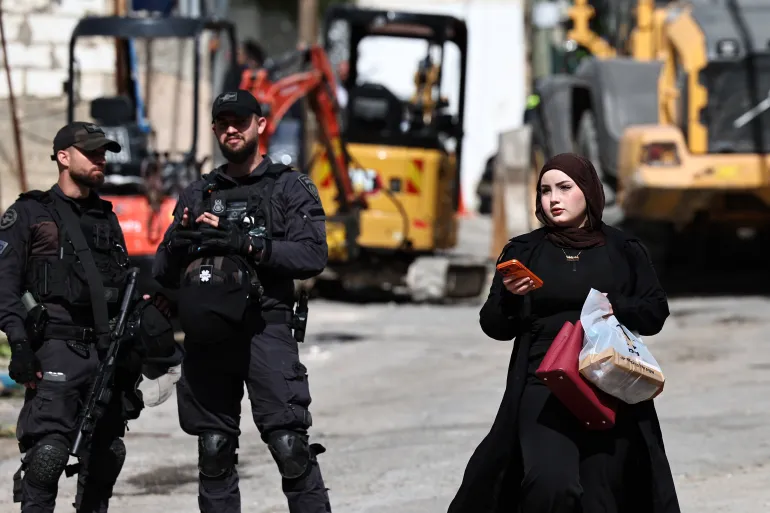
Police officers are deployed in occupied East Jerusalem, where, records show, technology supplied to the UK has been used extensively [File: Atef Safadi/EPA]
Corsight
As previously reported by Al Jazeera, the Israeli company Corsight, through a subcontract with UK company Digital Barriers, has also been selected by the UK Home Office to play a key role in its expansion of facial recognition vans.
In March 2024, long before the UK government chose to include Corsight within its rollout of facial recognition technology, The New York Times revealed that misgivings over Corsight’s facial-recognition technology in Gaza had led to various members of the Israeli military voicing objections to its use by Unit 8200, Israel’s cyberintelligence branch.
The expansion of systems such as those marketed by Corsight, Cellebrite and BriefCam is part of a global trade in Israeli spyware, developed and refined through prolonged surveillance of Palestinians, that is now being exported worldwide.
Rights groups warned that techniques pioneered in Israel are being used by governments to target activists, journalists and political opponents as concerns deepen over the spread of unregulated cyberwarfare tools.
“The government and police should not be awarding contracts to Israeli spyware firms under any circumstances,” Palestine Solidarity Campaign Deputy Director Ryvka Barnard told Al Jazeera. “These companies develop and test their products through Israel’s regime of military occupation and apartheid against Palestinians. It is unacceptable for public money to be given to these companies, allowing them to profit from and develop new products used to surveil and harm Palestinians.”
A loaded oil tanker tanker enters Matanzas Bay off Havana, Cuba, on February 16 and docks near the city’s energy logistics port amid ongoing U.S. energy sanctions on the island. Russia has been sending fuel considered to be aid. Photo By EPA
Feb. 26 (UPI) — The U.S. Office of Foreign Assets Control said it will allow certain operations to resell Venezuelan-origin oil destined for Cuba, provided the fuel is used by citizens and private companies on the island.
The island nation relied for years on Venezuela for fuel, but shipments stopped after the United States captured Nicolás Maduro on Jan. 3 and took control of Caracas’ energy industry.
After the operation, President Donald Trump repeatedly warned that Cuba was on the brink of economic collapse, and he threatened to impose further economic pressure on the country to reach an agreement with the United States. Trump has not publicly defined what kind of agreement he seeks.
The trade measure, published Wednesday, says that the transactions must comply with the conditions of General License 46A for Venezuela. This license is an authorization issued by foreign assets office that allows companies to conduct operations involving Venezuelan oil under specific terms, despite the sanctions in place against that country’s energy sector.
Companies that seek authorization will not need to have an entity established in the United States, and the usual Cuba-related restrictions set out in that license will not apply.
The Treasury Department specified that the policy will cover only exports for commercial or humanitarian purposes that benefit Cuba’s private sector.
Operations involving the Cuban armed forces, intelligence services or other government entities will not be permitted, including those listed on the U.S. Department of State’s Cuba Restricted List.
The Treasury Department recalled that the Commerce Department primarily regulates the export or re-export of U.S.-origin oil to Cuba.
Under the Support for the Cuban People License Exception, certain exports of gas and other petroleum products intended to improve living conditions and support independent economic activity in Cuba do not require separate authorization from foreign assets office provided the applicable terms are met.
The agency referred to its Frequently Asked Question 1226 for the definition of “Venezuelan-origin oil,” which includes petroleum products.
Preliminary data from the Energy Information Administration show that Venezuela exported 339,000 barrels per day of crude to the United States in the third week of February.
At the same time, regional fuel supply to Cuba has been limited. On Jan. 29, the Trump administration declared a national emergency with respect to Cuba, creating a new mechanism to impose tariffs on imports from any country that provides oil to Havana.
On Feb. 17, Mexican President Claudia Sheinbaum said her government would not send fuel to Cuba “for now” amid the current situation and potential U.S. trade measures.
Cuba faces fuel shortages that have affected electricity supply, transportation and other basic services, and it relies heavily on oil imports.
Separately, the Russian Embassy in Havana confirmed two weeks ago that Russia will send crude oil and refined products to Cuba as humanitarian assistance.
Russia is sending the oil directly, not through intermediaries, and the shipments are considered to be aid, not commercial sales.
Recent comments by United States and Israeli officials supporting the concept of a “Greater Israel” have raised alarm bells across the region and shed light on a vision once only rarely publicly spoken about.
An interview aired last week by the American right-wing podcaster Tucker Carlson with US ambassador to Israel Mike Huckabee started the current furore. Carlson, an influential figure who has been vocally critical of Israel over the past year, repeatedly asked Huckabee whether he supported Israel controlling all the land between the Nile River in Egypt and the Euphrates River in Iraq.
Recommended Stories
list of 3 itemsend of list
Huckabee, a Christian Zionist, would not disavow the belief that the Bible promised that land to Israel – even though it now encompasses all or part of Egypt, Iraq, Jordan, Lebanon, Saudi Arabia and Syria.
“It would be fine if they took it all,” Huckabee said, leading to anger from those countries and others in the region, many of which are close US allies.
Then, speaking on Monday, Israeli opposition leader Yair Lapid said that he would support “anything that will allow the Jews a large, broad, strong land and a safe haven for us”.
“Zionism is based on the Bible. Our mandate over the land of Israel is biblical, [and] the biblical borders of the land of Israel are clear … Therefore, the borders are the borders of the Bible,” the apparently secular Israeli politician said.
So what is Greater Israel exactly? And is it really an ultimate goal for some Israeli politicians?
Defining Greater Israel
The most expansionist claim for a Greater Israel is based on a biblical verse (Genesis 15:18-21), which narrates God making a covenant with Abraham that promises his descendants the land between the Nile and the Euphrates.
That would include the Jewish people, with the tribes of Israel believed to be descended through Abraham’s son, Isaac. But it would also include the children of another of Abraham’s sons, Ishmael (Ismail), regarded as the forefather of the Arabs.
Other definitions based on different biblical verses are narrower in their territorial scope and specify that the land of Israel would be promised to the tribes of Israel descended from Isaac.
How has Israel worked to achieve expansion?
The current state of Israel emerged from the British Mandate for Palestine in 1948. The mandate, created by the League of Nations in the wake of World War I and the occupation of Palestine by the British, geographically limited Israel upon its creation.
The 1948 war that followed the end of the mandate led to Israel taking control of all of Mandatory Palestine, with the exception of the West Bank and the Gaza Strip.
But Israel soon expanded by force – in 1967 it defeated Arab forces and took control of the West Bank and Gaza, as well as Egypt’s Sinai Peninsula, and Syria’s occupied Golan Heights. Israel continues to occupy all of those regions, with the exception of the Sinai, which it returned to Egypt in 1982.
Since then, Israel has ignored international law and continued occupying Palestinian and Syrian land, and has shown little respect for its neighbours’ sovereignty, occupying more land in Syria, as well as in Lebanon.
How popular is the idea of Greater Israel?
This needs to be broken down into two separate concepts – the expansion of Israel into the territory that immediately borders it, and the most extreme definition of Greater Israel: between the Nile and the Euphrates.
In terms of expansion into its immediate surroundings, Israeli Jews by and large support the annexation of East Jerusalem, which is occupied Palestinian territory, and the Golan Heights.
The Israeli government continues to move towards the de facto annexation of the occupied West Bank. Israeli politicians vary in how open they are in their support for the formal annexation of the West Bank, but most mainstream Israeli politicians are supportive of the illegal Israeli settlements in the territory.
An expansion of Israeli settlements into Gaza is not as popular, but is supported by far-right Israeli parties.
A Greater Israel, including parts of Jordan, or the most irredentist definition between the Euphrates and the Nile, is more controversial. Pre-1948, many Zionists sought not just Palestine but also Jordan for their future state – one of the most important Zionist armed groups at the time, the Irgun, even included the map of both Palestine and Jordan in its emblem.
But after the foundation of Israel this took a back seat, and open calls for a vastly expanded Israel were largely restricted to the fringes. But those fringes – far-right figures like Bezalel Smotrich and Itamar Ben-Gvir – are now in government, reflecting a wider radicalisation within Israeli society itself.
That means the Israeli ‘mainstream’, politicians such as Prime Minister Benjamin Netanyahu and centrists like Lapid, are either more open in their support for some form of Greater Israel beyond the West Bank, or less willing to publicly oppose it.
How threatened do regional countries feel?
Regional states have said that the annexation of the West Bank would be a red line, but have been unable to reverse Israel’s occupation.
Hints at a wider expansion have led to an angry reaction from Arab countries. This goes further back than Huckabee’s recent comments. For example, Jordan condemned Smotrich – Israel’s finance minister – when he gave a speech in 2023 at a podium that displayed a map that showed Jordan as part of Israel.
And Huckabee’s support for Greater Israel was roundly condemned by more than a dozen states, including Saudi Arabia, Egypt and Turkiye.
For Arab and Muslim states, the anger at the comments partially emanates from the sense of a lack of respect towards the sovereignty of regional states by a US official. But it also highlights fears that the balance of power in the region is weighted towards an Israel that is increasingly willing to attack across the Middle East, and has little interest in peace.
Even if the takeover of the land between the Nile and the Euphrates is not feasible, a region where Israel is the primary hegemon will likely lead to more attacks, more wars, and, if Israel determines it necessary, more occupation of land.
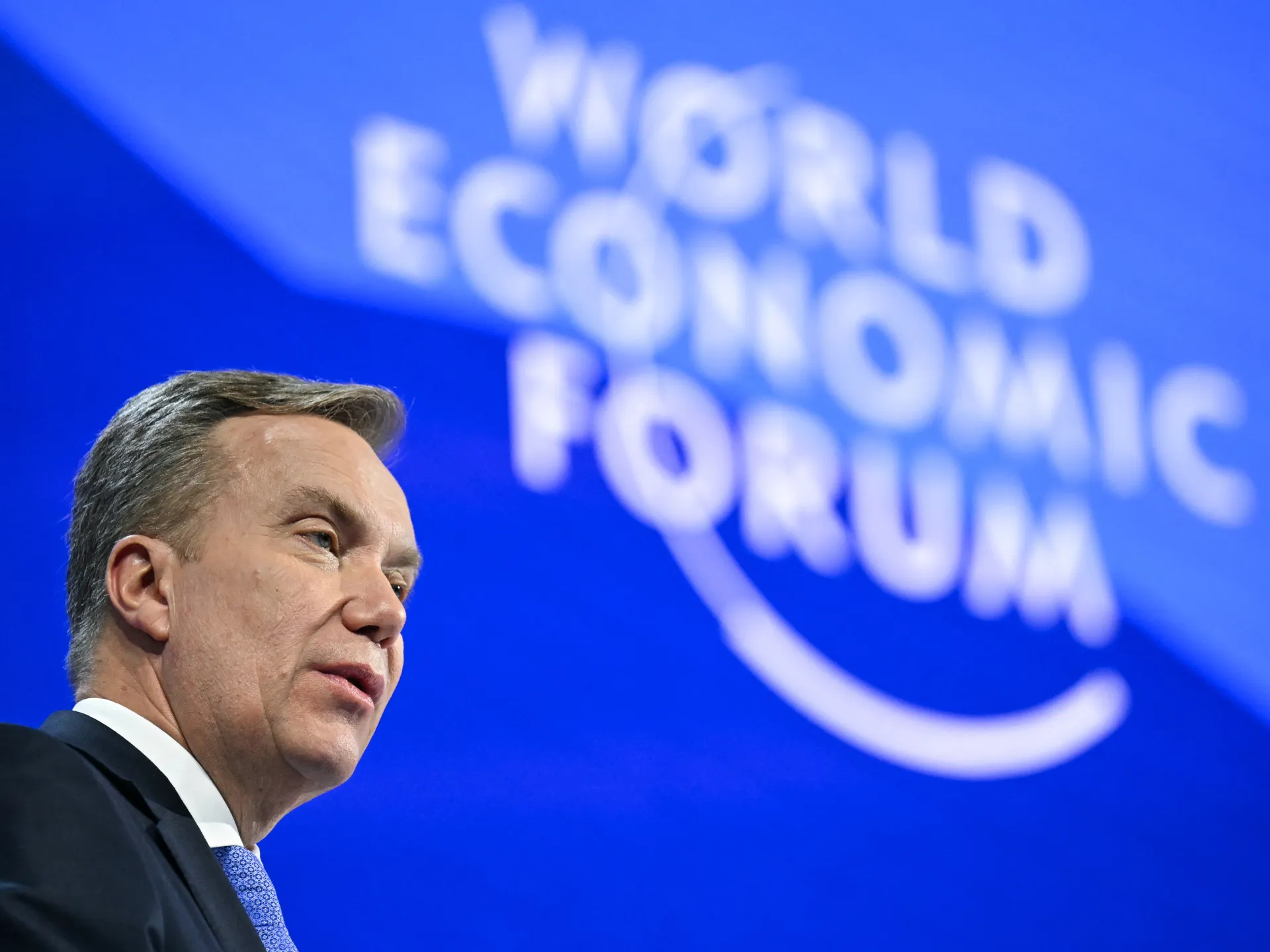
Borge Brende has resigned from his roles as the president and CEO of the World Economic Forum (WEF), following revelations of his links with the late financier and convicted sex offender Jeffrey Epstein.
Brende, a former Norwegian foreign minister who became president of the WEF in 2017, announced his departure on Thursday, joining the ranks of prominent figures to have left their jobs or faced criminal investigations after their contacts with Epstein were revealed in files released by the US Department of Justice last month.
Recommended Stories
list of 4 itemsend of list
“After careful consideration, I have decided to step down as President and CEO of the World Economic Forum. My time here, spanning 8-1/2 years, has been profoundly rewarding,” Brende said in a statement, which made no mention of Epstein.
“I am grateful for the incredible collaboration with my colleagues, partners, and constituents, and I believe now is the right moment for the Forum to continue its important work without distractions.”
Brende’s departure came several weeks after the WEF, organiser of the annual Davos summit, launched an independent investigation into his relationship with Epstein, following revelations in the files that the Norwegian had three business dinners with the financier and had also communicated with him via email and text message.
Epstein was convicted of procuring a minor for prostitution in 2008, spending about a year in prison before his release.
His contacts with a network of wealthy and influential figures continued in the wake of his conviction until an investigation into the wealthy financier was reopened in 2019. Epstein died by suicide in prison that year while facing charges of sex trafficking underage girls.
Dinners, emails
Brende said in a statement earlier this month that during a visit to New York in 2018, he received an invitation from former Norwegian politician Terje Rod-Larsen to join him for dinner with several other leaders, plus “someone who was presented to me as an American investor, Jeffrey Epstein”.
“The following year, I attended two similar dinners with Epstein, alongside other diplomats and business leaders. These dinners, and a few emails and SMS messages, were the extent of my interactions with him,” he said.
“I was completely unaware of Epstein’s past and criminal activities.”
He said that had he known about Epstein’s background, he would have declined any contact with the convicted sex offender, adding that he regretted not having conducted a more thorough investigation into his past.
Investigation concluded
In a separate statement, Andre Hoffmann and Larry Fink, co-chairs of the WEF, said the independent review conducted by outside counsel into Brende’s ties with Epstein had concluded.
The findings stated there were no additional concerns beyond what had been previously disclosed, it added.
The co-chairs said the WEF’s Alois Zwinggi will serve as interim president and CEO, and that the forum’s board of trustees would oversee the leadership transition, including a plan to identify a permanent replacement.
Arrests and resignations
Epstein had ties to a long list of business and political leaders, whose links to the disgraced figure have now come under close scrutiny, resulting in arrests and resignations.
In Norway, Thorbjorn Jagland, former prime minister and former secretary-general of the Council of Europe, has been charged with “aggravated corruption” amid an investigation into his connections to Epstein, while Rod-Larsen and his wife Mona Juul, both diplomats, have also been charged.
Crown Princess Mette-Marit, the wife of Crown Prince Haakon, heir to Norway’s throne, has also come under heavy scrutiny following the revelation of her close friendship with Epstein, issuing a public apology for her long association with him.
In the UK, prominent figures including Andrew Mountbatten-Windsor – formerly Prince Andrew – and Peter Mandelson, the former diplomat, minister, and adviser to multiple Labour Party prime ministers, have been arrested over alleged crimes linked to their relationships with Epstein.
In France, financial crimes prosecutors have opened an investigation into former Culture Minister Jack Lang, while in Slovakia, Miroslav Lajcak, former president of the UN General Assembly, resigned as security adviser to the country’s prime minister amid growing criticism over his correspondence with Epstein, uncovered in the files.
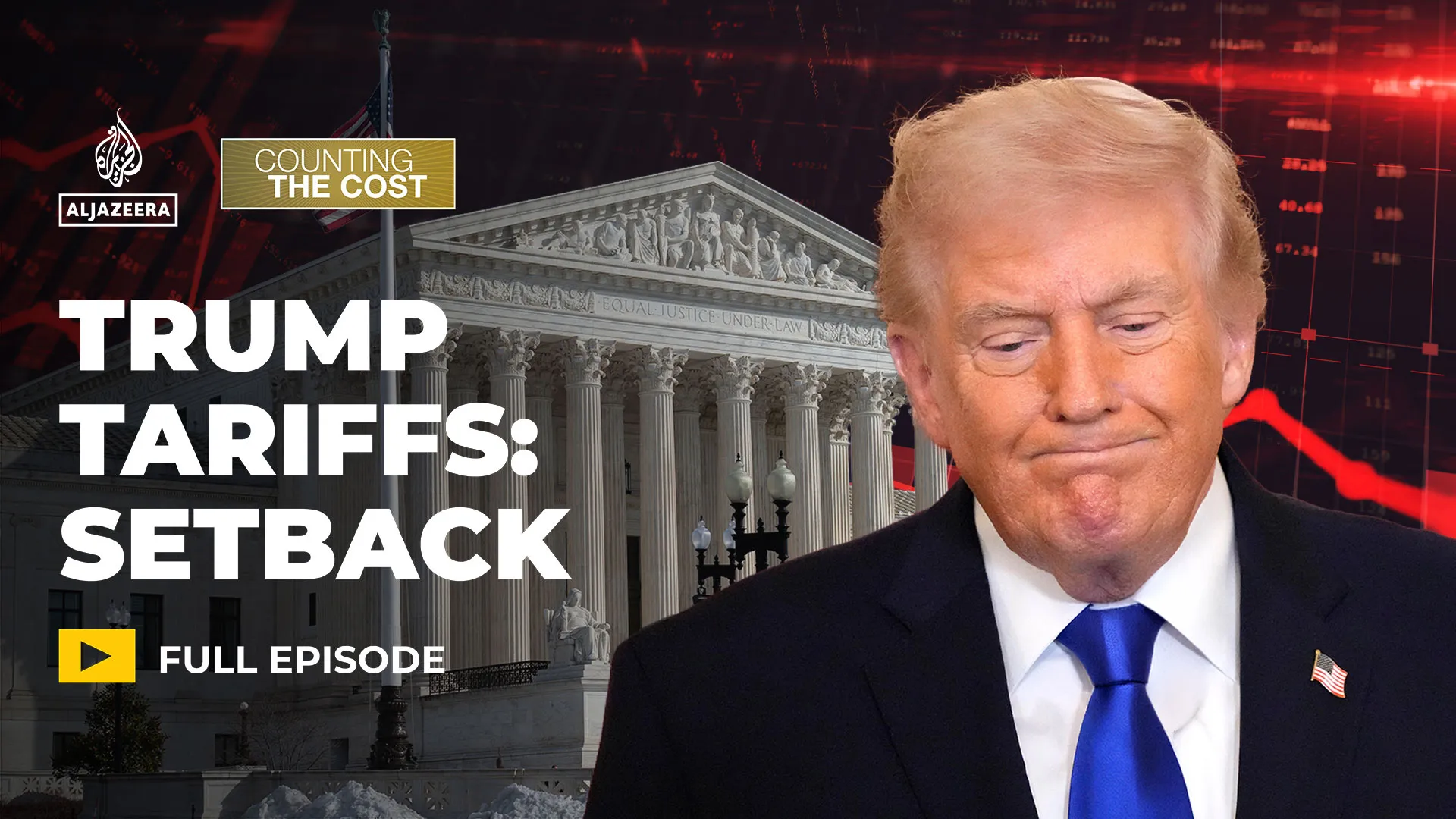
A Supreme Court setback on tariffs challenges Trump’s protectionist trade strategy.
Tariffs: The most beautiful word in the dictionary, as Donald Trump says, or unlawful? The Supreme Court has ruled that the president cannot use emergency powers to impose them. It’s a significant check on his power and a major setback to his second-term agenda. But despite the ruling, Trump has already found new ways to keep his trade barriers in place. Tariffs remain central to his economic policy, both to boost US manufacturing and generate revenue. The court may have disarmed one of Trump’s trade weapons, but the turn towards protectionism is far from over.
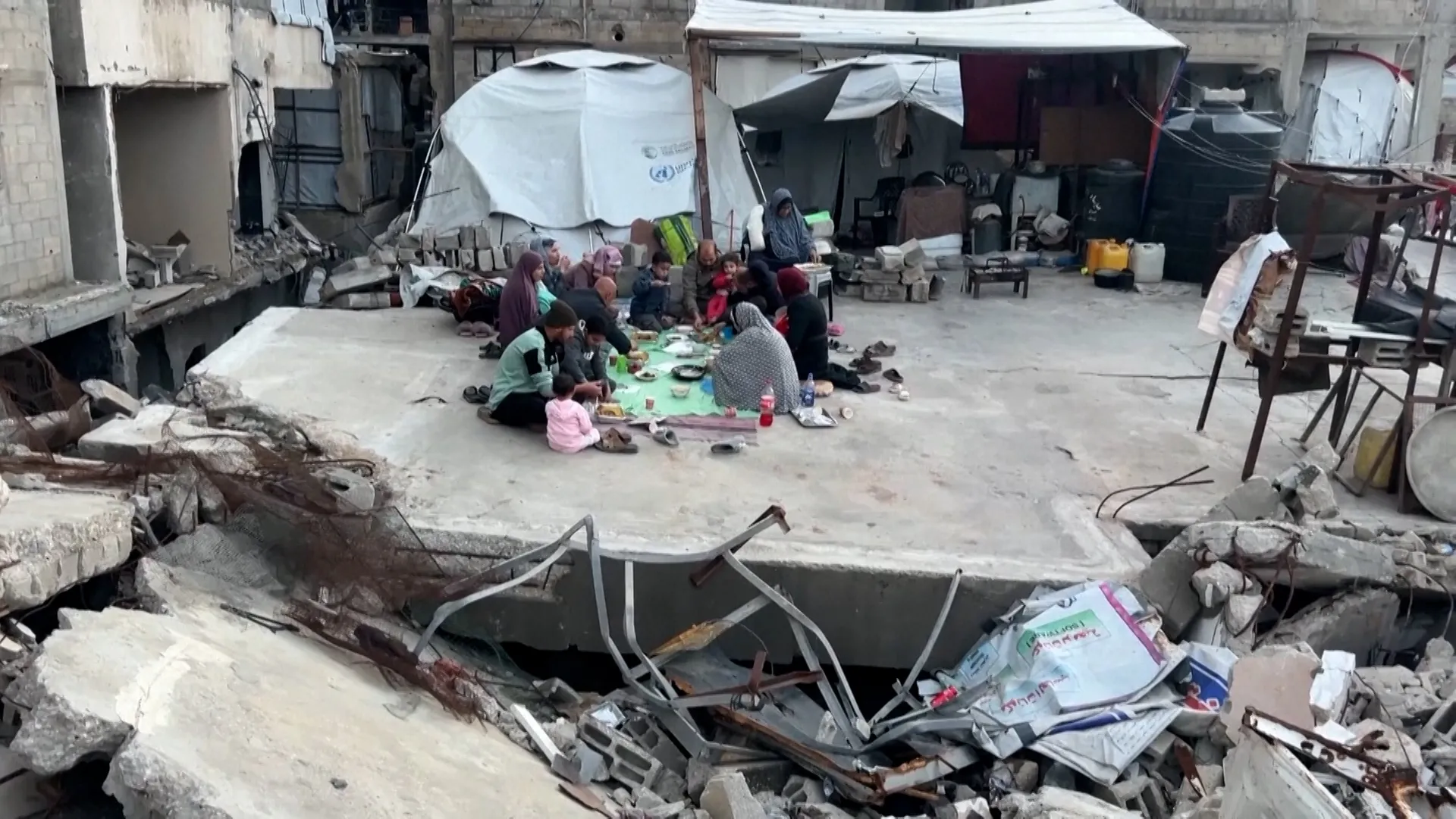
Ahmed Abu Naji is one of millions of Palestinians in Gaza who are clinging onto the traditions of Ramadan, despite the destruction from Israel’s war. Many are breaking their fast amid the rubble of their homes – and some have their iftar meals in graveyards as they mourn loved ones.
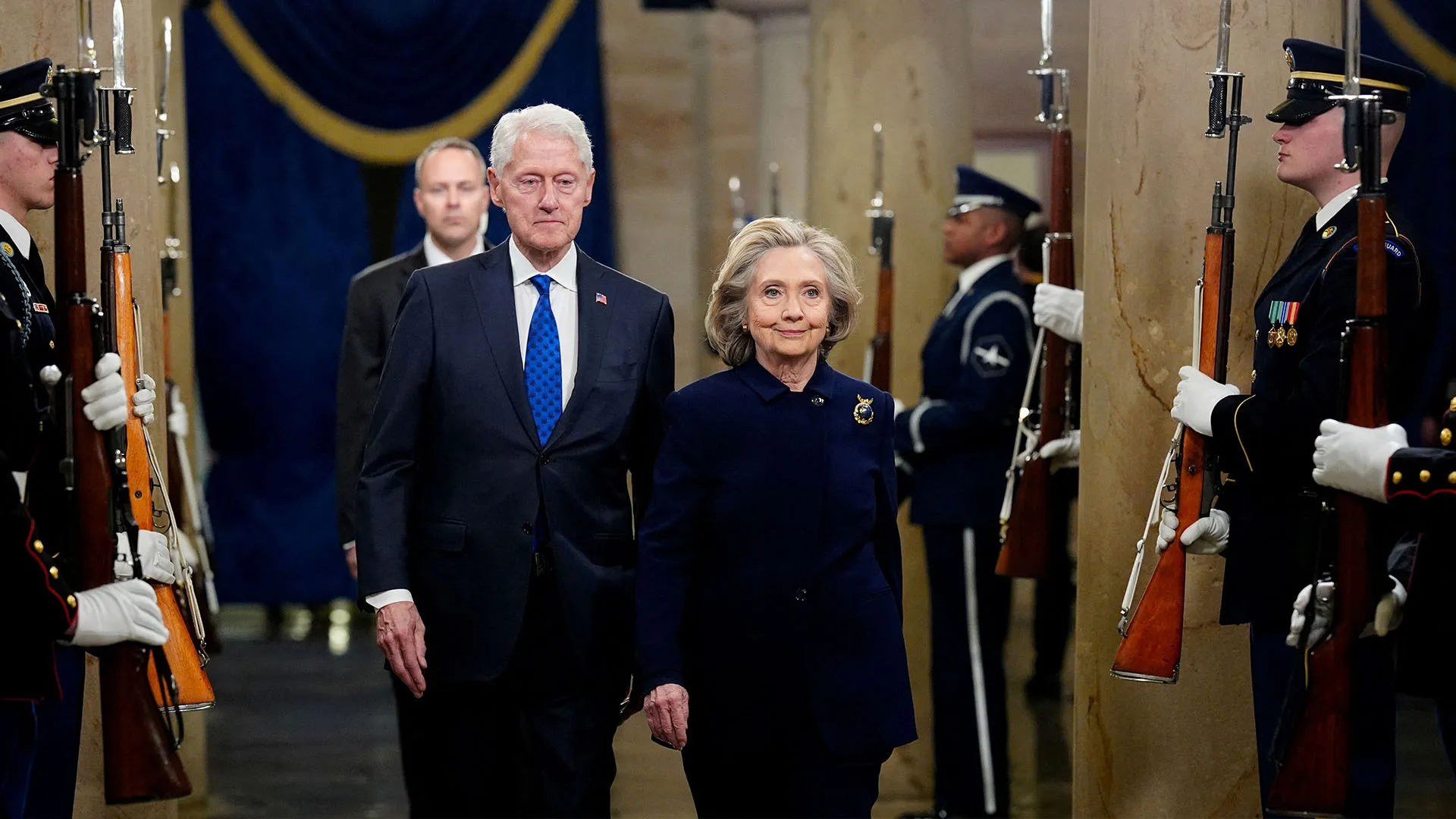
Former US Secretary of State Hillary Clinton and former President Bill Clinton are set to testify in front of a congressional committee investigating the late sex offender Jeffrey Epstein.
Alan Fisher looks at what to expect.
Names marked with an asterisk have been changed to protect identities.
London, United Kingdom – “People here are tired, scared and feel forgotten,” says Nabila*, a Muslim mother of two in Basildon, a town in the English county of Essex.
Recommended Stories
list of 4 itemsend of list
Sitting in her living room with a mug of tea, a Qur’an visible on the bookshelf and Japanese prints hanging to its right, she recalls a string of incidents in recent months: Glass thrown from a residential building at Muslim children, a racist attack on the local mosque where red crosses were daubed across its walls alongside the words “Christ is King” and “This is England”, and reports of drivers accelerating as Muslim women cross the road with their children.
Nabila has been documenting incidents of racism in Essex, her home county [Courtesy of Nabila]
According to the 2021 census, Basildon is 93 percent white, and Muslims make up less than 2 percent of the population. Campaigners have warned that in areas where ethnic minority communities are smaller and more geographically isolated, they face heightened risks, as visibility increases vulnerability.
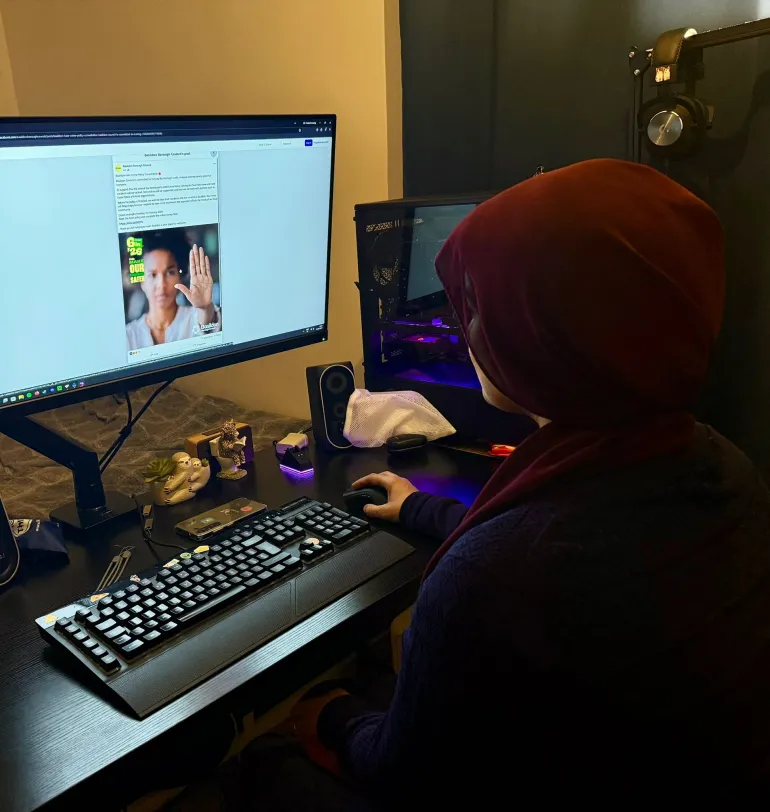
A single mother working full time, Nabila has been documenting incidents of racism, supporting victims and organising meetings with local authorities.
She said she no longer feels safe in the place she calls home.
After being racially abused while walking through her favourite park, she stopped going there altogether. Women, she said, are increasingly changing their daily routines, constantly watching over their shoulders. Racism now permeates every aspect of their lives, she added.
At a women’s listening circle organised by Nabila in collaboration with the local authority at the Wat Tyler Centre, another Muslim woman, Zarka*, spoke about her experiences as a young mother in Basildon who wears the hijab.
After being told to “take that rag off your head” during the school run by a passer-by, she stopped taking her children to school for two weeks. Beyond verbal abuse, she described the cumulative effect of everyday hostility, from cars failing to stop at zebra crossings and hostile looks from passersby.
‘I can’t do this any more, Mum.’
Hundreds of miles north, similar experiences are unfolding in Scottish classrooms.
Etka Marwaha’s daughter Anisa was seven when she first experienced racist taunting at her primary school in Glasgow.
Marwaha said Anisa became quiet and withdrawn. She was isolated on the playground and subjected to racial slurs. Months later, she broke down in tears in front of her mother, explaining the abuse she had suffered.
On multiple occasions, Marwaha contacted the school, urging them to take action, even offering her own support on understanding racism. But, she said, they failed in their duty of care, and the extent of the problem was kept hidden.
It went on for two years before Etka felt compelled to take her daughter out of the school.
“The plan was never to move her into a different school,” she told Al Jazeera. “But she was refusing to go to school; she would come home very, very upset. She was isolated.
“She was in tears, saying, “I can’t do this any more, Mum.’ So she made the decision, at that young age, that ‘I want to get out of here.’”
The girl’s new school is not in the catchment area, nor is there a direct bus to it, causing further inconvenience. But it has a zero-tolerance approach to racism, and Anisa is happier.
At her new school, Anisa can speak about her experiences of racism and how it made her feel.
The ordeal brought back painful memories for Marwaha’s own experiences at school.
“The racist bullying, for me, started at secondary school. You’d think times have changed, that people have been educated, but I think things have changed for the worse when a seven-year-old can openly make a racist comment and that’s accepted by society, and parents don’t address it.”
Sam*, a doctor in northwest Scotland with dual heritage children, said he has been surprised by the level of racism in local schools.
“There has been a clear normalising of racist jokes and name-calling. Every one of our kids has been affected,” he said. “Perhaps the biggest surprise is how few other students stand up against racism. When I was growing up, if someone was racist, they would be the person being socially excluded. Now, silence. It has forced us to look at moving out of the UK.”
‘Racism is out of control’
In the latest incident of alleged and potentially dangerous racism, a man walked into Manchester Central Mosque on Tuesday, reportedly with an axe and weapons. The man was arrested. There had been 2,000 worshippers in the mosque at the time, for the evening tarawih prayers during Ramadan.
Official figures underline the scale of the problem.
In October 2025, the UK Home Office revealed that the number of hate crimes recorded by police in England and Wales had risen for the first time in three years, including increases in racially and religiously motivated offences.
Religious hate crimes against Muslims rose by 19 percent, with a spike following the Southport murders and subsequent riots in mid-2025, the Home Office said.
The rise comes as hard-right politicians and activists, such as Reform leader Nigel Farage and the Islamophobic activist Tommy Robinson, rail against immigration. According to recent YouGov polling, if a general election were held tomorrow, Reform would lead with 24 percent.
Shabna Begum, head of Runnymede Trust, a race equality think tank, said, “Mainstream political and media actors have played in normalising and enabling racist narratives that have scapegoated migrants, people seeking asylum, Muslims and people of colour generally.”
In a report released last year, How Racism Affects Health, Runnymede highlighted the hypervigilance that people of colour have to operate with in order to guard their safety, and which causes long-term physiological damage, affecting life expectancy and mental health outcomes.
“For those that live in more disparate communities where they show up as minorities in a more visible way, that sense of threat is acute,” said Begum.
School suspensions for racist incidents have more than doubled in recent years, according to UK Department for Education data.
“Children as young as four are being sent home for racist behaviour,” Begum said. “This shows a society where racism is out of control, and that our school systems are failing to deal with the problem.
“They are making calculated decisions about where they will go, what travel routes they will take; withdrawing from regular social and community activities because they can no longer trust that those spaces will be safe for them.”
The 2025/26 Champions League playoff round has now concluded, with the likes of Real Madrid, defending champions Paris Saint-Germain (PSG), and Atletico Madrid booking their places in the last 16.
The remaining teams will discover their opponents and potential route to the final on Friday when UEFA holds the last 16 draw.
Recommended Stories
list of 4 itemsend of list
Here is everything you need to know about the timing, format and seeding of the draw, as well as the teams still vying for glory in European football’s largest club competition.
When will UEFA hold the draw?
The draw is set to take place at 11:00 GMT on Friday, February 27, 2026, in Nyon, Switzerland.
It will determine which teams play each other in the last 16, quarterfinals and semifinals.
How does the draw work?
The eight winners of the playoffs will face the teams that finished in the top eight of the league phase in a knockout format.
The draw will determine the potential path to the final, as every team will know their possible quarterfinal and semifinal opponents.
The last 16, quarterfinal, and semifinal fixtures will be played over two legs, while the final will be a single match.
Which teams have made it through to the last 16?
Arsenal, Barcelona, Bayern Munich, Chelsea, Liverpool, Manchester City, Sporting Lisbon, and Tottenham Hotspur had already made it through to the last 16 as top-eight league stage finishers.
Atalanta, Atletico Madrid, Bayer Leverkusen, Bodo/Glimt, Galatasaray, Newcastle United, Paris Saint-Germain, and Real Madrid made it through the playoffs.
Goals from Vinicius Junior helped Real Madrid overcome Benfica in the playoff stage [Violeta Santos Moura/Reuters]
When will the last-16 ties be played?
The first legs of the last 16 ties will take place on March 10-11, with the second legs scheduled for March 17-18.
When are the quarterfinals, semifinals and final?
The quarterfinals will take place on April 7-8 and April 14-15.
The semifinals will be held on April 28-29 and May 5-6.
The Puskas Arena in Budapest, Hungary, will host the final on May 30.
Who could the biggest teams play in the last 16?
Real Madrid will face either Manchester City or Sporting Lisbon. If Man City are not drawn against Madrid, they will face Bodo/Glimt.
Paris Saint-Germain will face either Barcelona or Chelsea. Barcelona could also end up facing Newcastle United.
Liverpool will face either Atletico Madrid or Galatasaray.
Arsenal or Bayern Munich will play Atalanta or Bayer Leverkusen.
Lamine Yamal’s Barcelona will face either PSG or Newcastle United in the last 16 [Josep Lago/AFP]
Who are the surprise packages?
Norway’s Bodo/Glimt, a tiny club based in the Arctic Circle, made it through to the last 16 after beating Inter Milan in the playoffs and humbling Manchester City and Atletico Madrid in the league stage.
Turkish champions Galatasaray also reached the last 16 following thrilling playoff games against Juventus. The Istanbul club beat Juve 5-2 at home, before falling to a 3-0 deficit in the second leg – only to win the tie with two extra-time goals.
How does seeding affect the draw?
Seeded teams – those that finished in the top eight of the league stage – will have the supposed advantage of playing their second last 16 legs at home.
Where teams are placed in the league stage will also affect the seeding for subsequent rounds.
The teams that finished in the top four of the league stage – Arsenal, Bayern Munich, Liverpool, and Tottenham – would be given home advantage for the second legs of their quarterfinals, should they reach that stage.
As number one and two finishers in the league stage, Arsenal and Bayern would get the advantage of playing their semifinal second legs at home, should they get that far in the tournament.
If a seeded team does not reach the quarterfinal or semifinal stages, the team that knocks them out will gain their seeding.
Can teams from the same country play each other?
Yes, teams from the same country can play each other in the knockout rounds.
Clubs can also face sides they have already played against during the league phase.
German Chancellor visits eastern city, home to AI firm DeepSeek and e-commerce giant Alibaba, with business leaders.
Published On 26 Feb 202626 Feb 2026
Share
German Chancellor Friedrich Merz has arrived in the tech hub of Hangzhou on the second day of his first official trip to China, flanked by a delegation of business leaders seeking contracts in the eastern city.
Merz travelled from Beijing to the city of some 12 million people on Thursday, where he was due to tour some leading companies, including Germany’s Siemens Energy and Unitree, a Chinese firm producing humanoid robots.
Recommended Stories
list of 4 itemsend of list
Hangzhou is a major hub in China’s tech sector, home to giants, including artificial intelligence company DeepSeek and e-commerce platform Alibaba.
Before leaving Beijing, Merz, who is being accompanied by a delegation, including executives of German car giants Volkswagen, BMW and Mercedes, visited a Mercedes plant in the Chinese capital where he tested a self-driving vehicle.
‘Improved’ trade relationship sought
Merz’s trip to China, which became Germany’s largest trading partner last year, seeks to deepen decades-old economic ties with the world’s second-largest economy in the wake of tariffs imposed by the United States last year.
But he has also sought to address “challenges” in the relationship, most notably tackling the massive imbalance which saw Germany’s trade deficit with China hit a record 89 billion euros ($105bn) last year, fuelling complaints from German businesses that Chinese competitors are flooding the market with cheaper goods.
In a meeting with Chinese Premier Li Qiang in Beijing on Wednesday, before he met Chinese President Xi Jinping, Merz said he wanted “to improve and make fair” the cooperation between the countries.
Following the talks with Xi and top Chinese leaders, Merz said China had agreed to buy up to 120 Airbus aircraft, and said other contracts were in the pipeline.
The two leaders stressed their commitment to developing closer strategic relations, with Xi telling Merz he was willing to take relations to “new levels”.
Ukraine, Taiwan discussed
The talks between Xi and Merz also touched on geopolitical issues, with the German leader saying any “reunification” with Taiwan, the self-ruled island China claims as its territory, must be done peacefully.
Merz also told reporters that he asked the Chinese government to use its influence with Russia to help end the war in Ukraine, amid frustrations among European leaders that Beijing was not doing enough to bring the war to an end.
“We know that signals from Beijing are taken very seriously in Moscow,” Merz said.
Following the meeting, the two countries released a joint statement saying they supported efforts to achieve a ceasefire and lasting peace in Ukraine, emphasising the importance of fair competition and mutual market access, and committing to resolving any concerns through dialogue, Chinese state media reported.
Merz is the latest in a string of Western leaders to visit Beijing in recent months, including the United Kingdom Prime Minister Keir Starmer, French President Emmanuel Macron and Canadian PM Mark Carney, amid the fallout from the Trump administration’s tariffs on long-established trade partners.
Kyiv hopes progress in talks in Geneva will pave the way for a direct meeting between Russian and Ukrainian leaders.
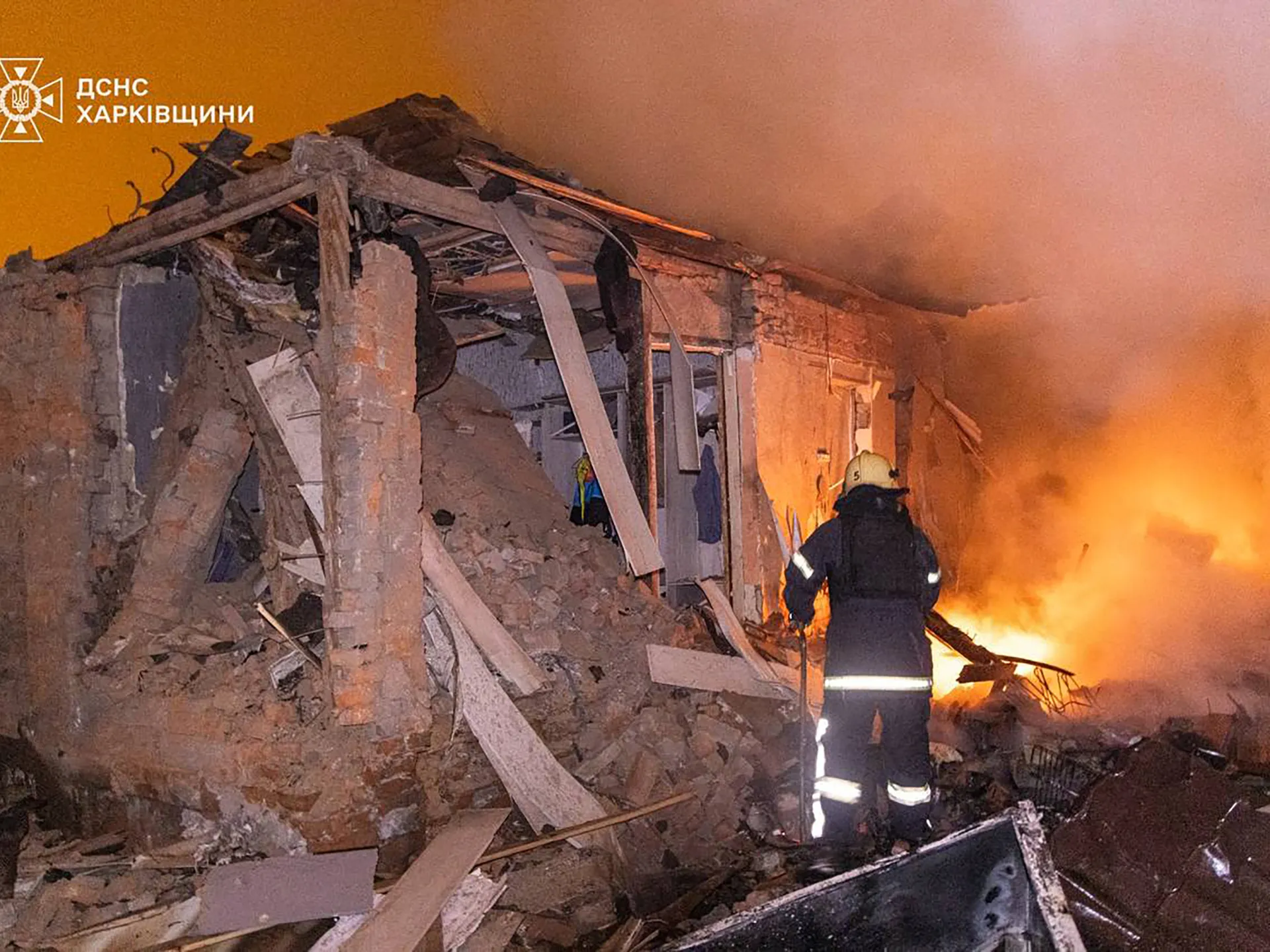
Russia pounded Ukraine with a barrage of missile and drone attacks across the country overnight, wounding at least eight people, in advance of the latest high-level meeting between Kyiv and Washington aimed at ending the war, now in its fifth year.
Kyiv Mayor Vitali Klitschko said the latest attacks on the capital in the early hours of Wednesday caused damage to a nine-storey residential building in the Darnytskyi district, and resulted in fires in a home and garages elsewhere in the city.
Recommended Stories
list of 4 itemsend of list
The strikes on the capital prompted the activation of air defence systems to counter the attack, Tymur Tkachenko, head of the city’s military administration, said, advising residents to remain in shelters until the assault was over. No casualties were reported in the capital.
Ukraine has faced regular overnight barrages as Russia targets cities with missiles and drones in harsh winter conditions in recent months, also targeting civilian energy infrastructure, even amid an ongoing push by Washington to try to negotiate an end to Europe’s deadliest conflict since World War II.
Attacks also took place in the regions of Kharkiv, Zaporizhia and Dnipropetrovsk, with officials reporting seven wounded in Kharkiv and another in Kryvyi Rih in Dnipropetrovsk, the AFP news agency reported.
US, Ukrainian delegations to meet
The strikes came before a scheduled meeting in the Swiss city of Geneva between Ukraine’s lead negotiator Rustem Umerov and US envoys Steve Witkoff and Jared Kushner, being held in advance of a full session of talks involving Moscow, Kyiv and Washington expected in early March.
Ukrainian President Volodymyr Zelenskyy said on Wednesday he had spoken with US President Donald Trump before the talks, with Witkoff and Kushner part of the 30-minute call, to discuss the issues that their representatives would cover in Geneva, “as well as preparations for the next meeting of the full negotiating teams in a trilateral format at the very beginning of March”.
Zelenskyy, who has repeatedly sought face-to-face meetings with his Russian counterpart, Vladimir Putin, to resolve the most challenging issues, said he expected the meeting in Geneva would “create an opportunity to move talks to the leaders’ level”.
“President Trump supports this sequence of steps,” he said. “This is the only way to resolve all the complex and sensitive issues and finally end the war.”
Putin has dismissed such a meeting repeatedly in the past, calling into question Zelenskyy’s legitimacy as Ukraine’s leader.
Meanwhile, Russian state news agency TASS reported the Kremlin’s economic affairs envoy, Kirill Dmitriev, was also due to be in Geneva on Thursday, where he would “pursue negotiations with the Americans on economic issues”.
Negotiations stalled
Despite Trump’s desire to bring an end to the conflict, one he claimed he could end in 24 hours after he retook office, the talks so far have failed to bear fruit.
Negotiations, based on a US plan unveiled late last year, have hit a roadblock over the thorniest territorial issues, such as control of the eastern Donbas, an industrial region in eastern Ukraine that has been at the heart of the fiercest fighting.
Russia is pushing for full control of Ukraine’s eastern Donetsk region, in the Donbas, and has threatened to take it by force if Kyiv does not cave in at the negotiating table.
But Ukraine has rejected the demand and signalled it would not sign a deal without security guarantees that deter Russia from invading again. The Ukrainian constitution also forbids the ceding of territory.
Hundreds of thousands of people on both sides are believed to have been killed in Russia’s war in Ukraine.
Robinson is notorious in the UK where he has been accused of promoting hatred against Muslims and organising mass anti-migrant protests.
Published On 26 Feb 202626 Feb 2026
Share
British far-right activist Tommy Robinson says he visited the United States Department of State as part of a recent trip to Washington, DC, where he was welcomed by government officials and supporters of the Make America Great Again (MAGA) movement.
“In America making alliances & friendships, today I had the privilege of an invite to the @StateDept,” Robinson posted on X on Wednesday, alongside a photo of himself next to a US flag.
Recommended Stories
list of 4 itemsend of list
Robinson is a household name in the UK, notorious for his anti-Muslim rhetoric and multiple prison terms. He was also a cofounder of the now-defunct far-right English Defence League – a street protest movement.
US State Department official Joe Rittenhouse, who is a senior adviser for the department’s Consular Affairs bureau, said he met with Robinson, calling him a “free speech warrior”.
“Honored to have free speech warrior @TRobinsonNewEra at Department of State today. The World and the West is a better place when we fight for freedom of speech and no one has been on the front lines more than Tommy. Good to see you my friend!” Rittenhouse said in an X post.
Rittenhouse posted photos of what appeared to be Robinson touring the State Department.
The State Department did not answer questions from the Reuters news agency on who else Robinson met, what was discussed and what the objective of his visit was.
A representative for the United Kingdom’s embassy in Washington did not immediately respond to a request for comment from Reuters.
Robinson, whose real name is Stephen Yaxley-Lennon, has become an icon for British nationalists and one of the UK’s most high-profile anti-migration campaigners, organising a large rally last September in London attended by about 150,000 people.
Social media posts show that during his trip to Washington, Robinson also met far-right US influencer Jack Posobiec and filmed a video with Congressman Randy Fine, a Republican from Florida, who has a history of anti-Muslim rhetoric. Robinson said on X that he will next travel to Florida.
Robinson’s visit to the US State Department follows a surge in support from the administration of President Donald Trump for far-right activists in the UK and Europe under the pretext of protecting “free speech”.
In December, the Trump administration accused Europe of engaging in “civilisational erasure” due to demographic and cultural changes from what Washington has described as weak immigration policies.
US Vice President JD Vance took aim at European countries during his first international trip last year, accusing the region’s leaders of stifling free speech – particularly voices from the far right – and being lax on migration to the detriment of their societies.
“No voter on this continent went to the ballot box to open the floodgates to millions of unvetted immigrants,” Vance said in remarks that shocked European leaders.
The UK and European countries have stronger rules on hate speech than the US, and the European Union has taken a proactive stance on regulating social media and internet content – positions that have angered the White House.
Robinson was banned from Twitter in 2018, but his account was restored in 2022 following its acquisition by Elon Musk, CEO of Tesla and SpaceX.
Surprise ruling comes weeks after the media mogul was convicted and jailed for 20 years on national security charges.
Published On 26 Feb 202626 Feb 2026
Share
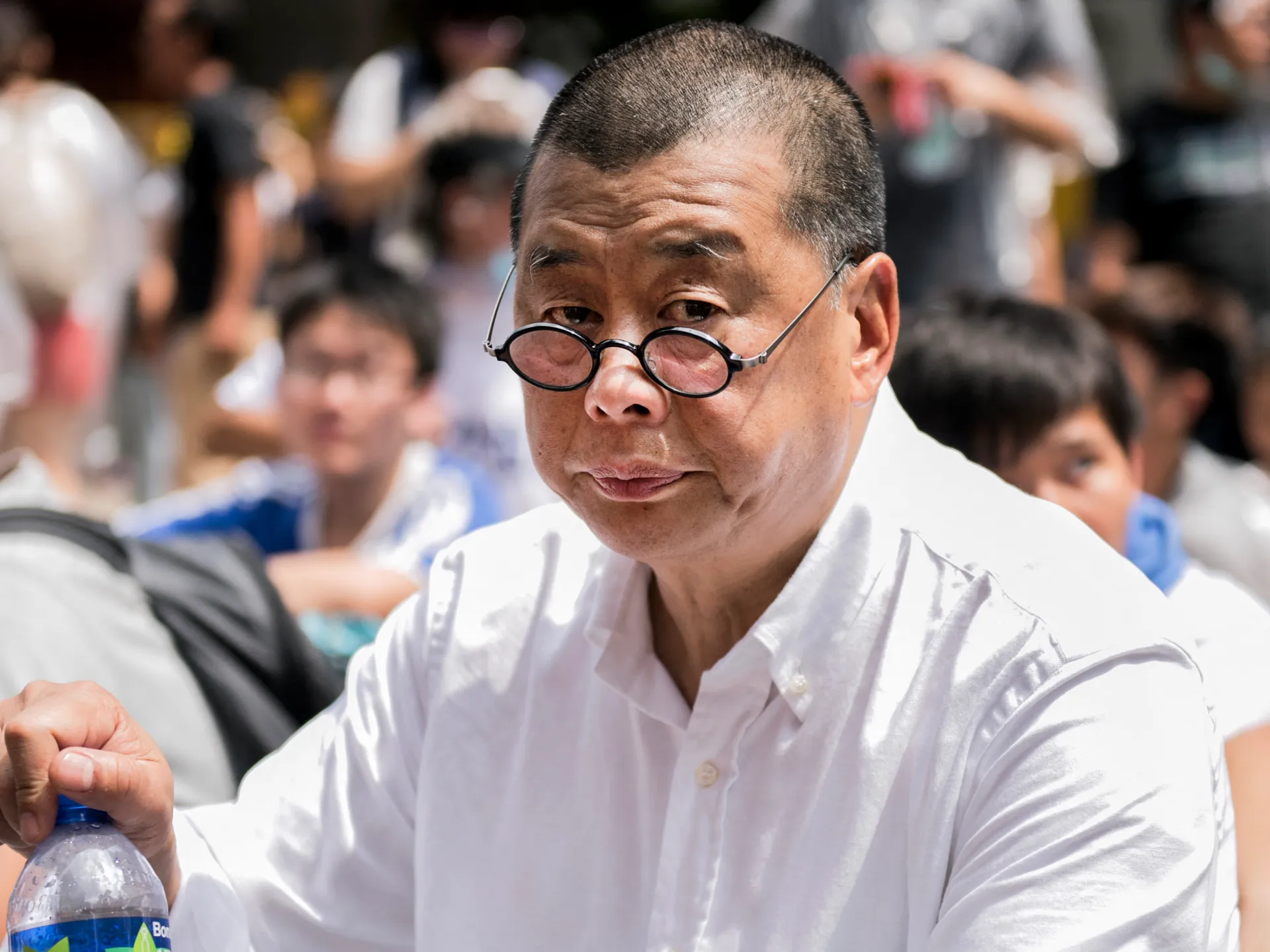
A Hong Kong appellate court has overturned a fraud conviction against pro-democracy media tycoon Jimmy Lai in a surprise ruling weeks after his jailing for 20 years on a separate national security charge.
The ruling by the Court of First Instance on Thursday said that it allowed the appeal from Lai and another defendant in the case to proceed as a lower court judge had “erred”.
Recommended Stories
list of 4 itemsend of list
“[We] allow the appeals, quash the convictions and set aside the sentences,” the judges wrote.
The conviction that was overturned was from an earlier fraud case in which prosecutors alleged that a consultancy firm operated by Lai, 78, for his personal use had taken up office space that his now defunct media business – Apple Daily – rented for publication and printing purposes.
This was in breach of the terms of the lease Apple Daily signed with a government company and amounted to fraud, prosecutors said.
Lai had been sentenced to five years and nine months in prison in 2022 on the two fraud charges.
Former Apple Daily executive Wong Wai-keung was also charged in the same case and jailed for 21 months.
Judges at the Court of Appeal wrote in their judgement that while Apple Daily Printing had breached the lease terms by allowing the firm to use part of the space, it didn’t owe a duty to disclose its breach. They said even if it had owed and breached that duty, the same could not be attributed to Lai and Wong as a matter of law.
The trial judges’ “reasoning in concluding that the applicants were liable for the concealment as the prosecution contended is unsupportable”, they said.
Neither defendant appeared in court.
The ruling would slightly reduce Lai’s total prison time. The judges handling Lai’s national security case allowed the two sentences to be served concurrently for only two years, with the other 18 years to be added after the fraud sentence.
The lengthy sentence – over two counts of conspiracy to collude with foreign forces and one for publishing seditious materials – has raised concerns that he could spend the rest of his life in prison.
Lai’s children have expressed hopes that a visit by United States President Donald Trump to Beijing could help secure the release of their father, a British citizen. The White House has confirmed that Trump will travel to China on March 31 through April 2 to meet Chinese leader Xi Jinping.
United Kingdom Foreign Secretary Yvette Cooper has said Lai was sentenced for exercising his right to freedom of expression and called on the Hong Kong authorities to release him on humanitarian grounds.
Chinese and Hong Kong authorities have defended Lai’s sentencing in the national security case, saying it reflected the spirit of the rule of law. They also insisted the security law is necessary for the city’s stability.
In a separate ruling on Thursday, a Hong Kong court sentenced the father of a wanted pro-democracy activist to eight months in prison under the city’s national security law for attempting to withdraw funds belonging to an “absconder”.
Kwok Yin-sang, 69, was found guilty on February 11 for “attempting to deal with, directly or indirectly, any funds or other financial assets or economic resources” after he tried to terminate his daughter Anna Kwok’s insurance policy and withdraw the funds.
He is the first person in the city to be charged and convicted of the offence.
He had pleaded not guilty and did not testify at the trial.
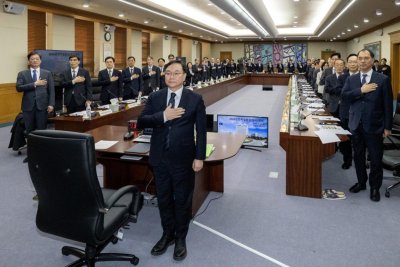
Park Young-jae (C), head of the National Court Administration, and justices salute the national flag during a meeting with chiefs of district and appellate courts nationwide at the top court in Seoul, South Korea, 25 February 2026. Park said that the opinions of the judiciary should be reflected in deliberations for controversial judicial reform bills pushed by the ruling Democratic Party (DP), after three DP-led bills were met by strong opposition from the judiciary. Photo by YONHAP / EPA
Feb. 25 (Asia Today) — Senior judges from courts across South Korea expressed “serious regret” Tuesday over a package of judicial reform bills advanced by the ruling party, warning of potential side effects and calling for broader consultation.
At an extraordinary meeting held at the Supreme Court in Seoul, court presidents reviewed the so-called three judicial reform bills – which include creating a new offense of “distortion of law,” introducing a constitutional complaint system against court rulings and expanding the number of Supreme Court justices.
The meeting was led by Court Administration Chief Park Young-jae and attended by chief judges from courts nationwide.
In a joint statement, the judges said fundamental changes to the judicial system could produce irreversible and significant consequences and should be subject to in-depth discussion through a consultative body that includes multiple institutions and experts.
Regarding the proposed “distortion of law” offense, the judges said the elements of the crime remain abstract even under a revised draft and warned that the scope of punishment could be overly broad. They cautioned that the measure could lead to a surge in complaints and accusations against judges, potentially undermining the swift administration of justice and the protection of citizens’ fundamental rights.
On the proposed constitutional complaint system against court rulings, the court presidents said it could delay the finality of judgments and subject litigants to repeated proceedings.
While acknowledging the need to increase the number of justices at the Supreme Court of Korea, the judges said adding a large number in a short period could weaken trial quality. They suggested first expanding the bench by four justices and reviewing the impact before considering further increases.
In opening remarks, Park said the bills would significantly affect the judiciary’s core role in safeguarding constitutional order and citizens’ rights and stressed that the courts’ views should be reflected in the legislative process.
US Justice Department accuses former Air Force officer Gerald Brown of training Chinese military pilots.
A former United States Air Force officer and “elite fighter pilot” has been arrested and accused of betraying his country for illegally providing training to Chinese military pilots.
The US Department of Justice said ex-Air Force Major Gerald Brown, once known by his pilot’s call sign “Runner”, was arrested on Wednesday in Indiana and charged with a criminal complaint for providing and conspiring to provide defence services to Chinese pilots without authorisation.
Recommended Stories
list of 4 itemsend of list
Brown, 65, a former F-35 Lightning II instructor pilot with decades of experience in the Air Force, “allegedly betrayed his country by training Chinese pilots to fight against those he swore to protect”, Roman Rozhavsky, assistant director at the FBI’s Counterintelligence and Espionage Division, said in a statement.
“The Chinese government continues to exploit the expertise of current and former members of the US armed forces to modernise China’s military capabilities. This arrest serves as a warning,” Rozhavsky said.
US Attorney Jeanine Ferris Pirro for the District of Columbia said Brown “and anyone conspiring against our Nation” will be held accountable for their actions.
According to the Justice Department, Brown served in the US Air Force for 24 years, had led combat missions and was responsible for commanding “sensitive units”, including those involved in nuclear weapons delivery systems.
After leaving the US military in 1996, Brown worked as a commercial cargo pilot before working as a defence contractor training US pilots to fly F-35 and A-10 warplanes.
Brown is alleged to have travelled to China in December 2023 to begin his work training Chinese pilots, and he remained in the country until returning to the US in early February 2026.
His contract to train Chinese pilots was negotiated by Stephen Su Bin, a Chinese national who in 2016 pleaded guilty and was sentenced to four years in prison for conspiring to hack a defence contractor in the US to steal military secrets for China, according to the Justice Department.
The department said Brown faces charges similar to those levelled against former US Marine Corps pilot Daniel Duggan, who was arrested in Australia in 2022 and is currently fighting his extradition back to the US, where he faces prosecution for violating the US Arms Export Control Act for providing pilot training to the Chinese armed forces.
Duggan appeared in an Australian court in October 2025 to appeal against his extradition, which was approved in December 2024 by Australia’s then Attorney General Mark Dreyfus.
Duggan, 57, a naturalised Australian citizen, was arrested by Australian police in 2022 shortly after returning from China, where he had lived since 2014.
According to the Reuters news agency. Duggan’s lawyer, Christopher Parkin, told the court that his client’s extradition to the US was “uncharted territory” for Australia.
He argued that his client’s conduct was not an offence in Australia at the time or when the US requested extradition, and so did not meet the requirement for dual criminality in Australia’s extradition treaty with the US.
The governments of Australia, Canada, New Zealand, the United Kingdom and the US published a notice in 2024 warning current and former members of their armed forces that China was seeking to recruit them and other NATO military personnel in order to harness Western military expertise and bolster its own capabilities.
“The insight the PLA [People’s Liberation Army] gains from Western military talent threatens the safety of the targeted recruits, their fellow service members, and US and allied security,” the notice stated.
“Those providing unauthorized training or expertise services to a foreign military can face civil and criminal penalties,” it added.
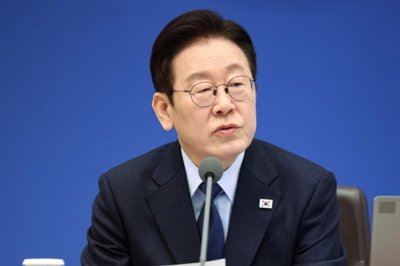
South Korean President Lee Jae Myung speaks during a Cabinet meeting at the presidential office Cheong Wa Dae in Seoul, South Korea, 10 February 2026. File. Photo by YONHAP / EPA
Feb. 25 (Asia Today) — President Lee Jae-myung on Tuesday promoted expanded financial rewards for whistleblowers who report stock price manipulation, saying payouts could reach tens or even hundreds of billions of won.
“Now, reporting stock manipulation can earn you tens of billions or even hundreds of billions of won in rewards,” Lee wrote on social media. “It is certainly easier than winning the lottery to change your life.”
Lee urged individuals to refrain from engaging in stock manipulation, warning that such conduct would lead to severe consequences. He added that even participants in manipulation schemes could receive reduced punishment and financial rewards if they come forward.
The president shared a post by Financial Services Commission Chair Lee Won-eun outlining plans to raise whistleblower rewards to as much as 30% of illicit gains recovered.
A day earlier at a Cabinet meeting, Lee made similar remarks about rewards for reporting collusion, telling Fair Trade Commission Chair Joo Byung-ki that generous payouts could serve as a deterrent.
The administration has said it aims to strengthen enforcement against unfair market practices by increasing incentives for insiders to report wrongdoing.
South Korean President Lee Jae-myung speaks during the National Startup Era Strategy Meeting to discuss strategies to nurture startups at the main building of the Cheong Wa Dae presidential office in Seoul, South Korea, 30 January 2026. File. Photo by YONHAP / EPA
Feb. 25 (Asia Today) — President Lee Jae-myung on Tuesday defended his directive to review a comprehensive survey and possible sale orders for uncultivated farmland, rejecting criticism that the move amounts to communist-style policy.
Lee said on social media that some critics “misunderstand the constitutional principle of land to the tiller and talk about the Communist Party” in response to his order.
He clarified that the review does not target inherited farmland or land left uncultivated due to age or unavoidable circumstances. Instead, he said it focuses on cases in which individuals submit farming plans for speculative purposes, acquire farmland and then fail to cultivate it themselves.
Under South Korea’s Constitution and the Farmland Act, only those who intend to farm the land directly may acquire farmland. Prospective buyers must submit a farming plan detailing how they will cultivate it. If they fail to do so, authorities may issue a sale order through legal procedures.
Lee emphasized that the “land to the tiller” principle was enshrined in the Constitution under former President Syngman Rhee, who also led postwar land redistribution by acquiring land from non-farming landlords and distributing it to farmers.
“The government’s land reform based on this principle became the foundation of South Korea’s economic development,” Lee said, adding that even critics of Rhee acknowledge his achievements in land reform. “Syngman Rhee was not a communist,” he said.
At a Cabinet meeting Monday, Lee said high farmland prices are making it difficult for people seeking to return to farming or rural life.
“We need to lower the cost of returning to farming, and fundamentally that requires bringing down land prices,” he said, calling for a full-scale investigation and possible sale orders if illegal activity is found.
Lee added that soaring real estate prices are at the root of many social and economic problems in the country.
LAUSD Superintendent Alberto Carvalho interacts with students in a classroom at Marlton School on August 15 2022. On Wednesday, the FBI raided two homes linked to the superintendent. File Photo by Etienne Laurent/EPA-EFE
Feb. 25 (UPI) — FBI agents executed search warrants at the home of Los Angeles Unified School District Superintendent Alberto Carvalho and the district’s headquarters Wednesday, the LAUSD said.
A statement from the district provided no details about the raids. Law enforcement officials also declined to confirm the reason, Politico reported.
“The district is cooperating with the investigation, and we do not have further information at this time,” the statement read.
The FBI and Justice Department confirmed the searches to KTTV-TV in Los Angeles, adding that a third location, a Southwest Ranches residence connected to Carvalho, was also searched. They said they evacuated LAUSD employees from headquarters during the the search there.
The news outlet said its helicopter spotted agents carrying boxes out of Carvalho’s San Pedro home.
Prior to heading up the LAUSD in 2022, Carvalho was superintendent of Miami-Dade County Public Schools for nearly 14 years.
Manila, Philippines – “Bongbong is our principal worry. He is too carefree and lazy,” then-President of the Philippines Ferdinand Marcos Sr wrote in 1972.
Marcos Sr was referring to his only son and namesake by the child’s moniker, Bongbong.
Recommended Stories
list of 4 itemsend of list
He was concerned about what the future would hold for the young Marcos.
“The boy must realise his weakness – the carefree wayward ways that may have been bred in him,” his father further warned in his diary.
The rise of Marcos Jr to the presidency marked his family’s dramatic rehabilitation after the mass street protests that forced Marcos Sr from power and the family into exile in 1986.
In his inaugural speech, Marcos Jr invoked memories of his late father’s presidency – though he skipped the years of brutal dictatorship and reported plunder of state resources – to project hope for “a better future” for 110 million Filipinos.
“You will get no excuses from me,” Marcos Jr said as he took his oath of office.
“You will not be disappointed.”
But three years into his term in office, Marcos Jr’s popularity has withered.
His political alliance with Vice President Sara Duterte has shattered, and his administration is ensnared in a multibillion-dollar corruption scandal that has plunged the country into a period of uncertainty.
The president who ran on a platform of unity is now struggling to lead a divided nation that is deeply disappointed over his lacklustre performance.
On the 40th anniversary of the People Power Revolution that ousted his father, Marcos Jr seems unable to escape history as some political factions in the opposition are calling for his removal – an ending that befell his father on the fateful date of February 25, 1986.
President Ferdinand Marcos Jr, right, with Vice President Sara Duterte, left, before their alliance completely collapsed after his administration paved the way for the International Criminal Court’s arrest of the vice president’s father, former Philippine President Rodrigo Duterte, in 2025 [File: Rolex dela Pena/EPA]
‘No plan’
Political analyst and economist Andrew Masigan pulls no punches. Masigan said what is happening in the Philippines is a consequence of an electorate choosing the “entitled son of a dictator” over a more competent candidate.
“[Marcos Jr] campaigned under the slogan and promise of unity. Economists and political pundits all assumed that there was a plan behind it. We’ve been waiting, and it has been three years. No such thing exists,” he said.
“His plan was to be president. It was a self-serving plan. It’s a presidency about Bongbong Marcos for Bongbong Marcos,” he added.
As president, Marcos Jr has “squandered” the demographic advantage of the Philippines, Masigan continued, pointing to the country’s youth, who make up almost half of the population. Given such a youthful and dynamic society, the country’s economy should have been growing 7 to 8 percent annually by now, Masigan said.
Instead, the economy posted a sluggish 4.4 percent growth in 2025, well below the government target of 5.5-6.5 percent, he added.
Susan Kurdli, an assistant professor at De La Salle University in Manila, said the first three years of Marcos Jr’s six-year term were “indeed a period of missed opportunities”.
Kurdli said the “vague direction” the Philippines is heading was only to be expected, “as Marcos Jr never ran on a clear policy ticket”.
“He won the election largely by relying on the tried and tested tactics of tribalism, name recognition and alliance building,” she said.
Foreign investment has also declined by half from $9.42bn in 2024 to $4.7bn in 2025, its sharpest fall in five years, according to the Philippine Statistics Authority (PSA).
Unemployment rose at the same time from 3.8 percent in 2024 to 4.2 percent in 2025, PSA data showed. In 2025, only 172,000 jobs were added to the overall labour market, making it the fifth-worst year in job creation in 25 years, according to the think tank IBON Foundation.
A lack of economic opportunity and unemployment are the top risks for the Philippines in the next two years, the World Economic Forum (WEF) 2026 Global Risks Report notes.
If the weak economic figures have left Filipinos disgruntled, allegations of corruption have left them seething with anger.
“The scandal allegations surrounding him and his family have particularly hit a nerve with voters,” Kurdli of De La Salle University told Al Jazeera.
“They have definitely impacted the perceived legitimacy of Marcos Jr as a national leader.”
The latest corruption perceptions index conducted by Transparency International (TI) reflects that assessment.
According to the anticorruption body’s latest report, the Philippines has slipped six notches lower, ranking 120th out of 182 territories covered.
In response to the TI report, presidential spokesperson Claire Castro said Marcos Jr “has not lost interest” in fighting corruption, and is working to strengthen government institutions.
Philippine President Ferdinand Marcos Jr delivers his 2025 State of the Nation Address at the House of Representatives in front of Senate President Chiz Escudero, back left, and House Speaker Martin Romualdez, right, both of whom have since been ousted amid allegations of corruption [File: Ted Aljibe/AFP]
‘Ghost projects’
It was in the middle of last year when allegations first emerged that Marcos Jr had abused his authority by approving three consecutive national budgets riddled with questionable infrastructure projects amounting to billions of dollars.
Among those implicated in the alleged scheme was Ferdinand Martin Romualdez, the once-powerful speaker of the House of Representatives and a first cousin of Marcos Jr, who oversaw the drafting of the national budget.
He was accused by opposition congresspeople of manipulating the budget. An investigation by a Philippine news website also linked him to multimillion-dollar homes in the Philippines and the United States that are allegedly not listed in his government disclosure forms. He has since relinquished his post but has not been called to account despite massive protests and political pressure.
Also accused of cornering millions of dollars in public funds for pet projects were the president’s sister, Senator Maria Imelda Marcos, and his son, Ferdinand Alexander Marcos, a congressman.
Combined, the three Marcos relatives secured government projects worth at least $560m in the last three years, according to public works department data and the National Expenditure Program listed in the budget. They have all denied wrongdoing related to the awarding of the lucrative projects.
Private contractors and government bureaucrats were also linked to the scandal.
Some were reported by the news media to have spent their newfound wealth on Bentley and Rolls-Royce vehicles and gambling sprees. One mid-ranking official, whose monthly salary was the equivalent of $1,250, admitted during a congressional inquiry that he owned a GMC Denali SUV worth $200,000, a Lamborghini Urus worth between $500,000 and $700,000 and a Ferrari estimated at $1m.
Further investigations revealed several nonexistent government infrastructure initiatives, described as “ghost projects”, worth millions of dollars. Marcos Jr himself discovered an abandoned flood control project estimated to be about $1m in Baliwag, a city just north of Metro Manila.
In Quezon City in Metro Manila, the local government reported that 35 flood control projects were missing out of the 331 listed, with a total budget of almost $300m.
According to estimates by the Department of Finance, alleged corruption in flood control projects cost taxpayers approximately $2bn between 2023 and 2025.
The scale of the corruption allegations has reminded some Filipinos of the time when Marcos Sr and his wife, Imelda, ruled the country in what historians have described as a “conjugal dictatorship”.
During their two decades in power, the Marcos couple were accused of emptying the Philippine treasury of up to $10bn.
Masigan, the political analyst and economist, said despite all efforts to distance himself from the ongoing scandal, it is difficult for the current president to do so.
“The three budgets were authored, presided over and approved by the president himself. He signed it,” Masigan said.
“Everything leads to him.”
‘Give Marcos some credit’
Jan Credo, political science professor at Silliman University in Dumaguete City, Philippines, said despite the fierce criticism of the president, Marcos Jr should still get some credit for his role in highlighting the massive corruption scandal during his annual State of the Nation Address last year.
“President Marcos, in fact, started the expose when he chastised members of Congress and told them, ‘Shame on you’, for their involvement in the alleged massive bribery,” Credo told Al Jazeera.
“What this has generated is the consciousness among the public about the issue that led to the crystallisation of the social movement against corruption,” he said.
“If you ask me, Marcos Jr does not have anything to do” with the corruption, Credo said, blaming his close allies instead.
Credo also did not believe that the ongoing scandal would cost Marcos Jr the support of one of the country’s most powerful institutions, the military. Over the last four decades, two Philippine presidents, including Marcos Sr, were forced out of office in popular revolts backed by the military. Two other presidents faced coup attempts.
“Marcos Jr may be in survival mode now. But he is also fortunate to have a military that is highly professionalised and no longer politicised,” Credo said.
“The recent calls by retired military officers to withdraw support from Marcos Jr have not gained traction, because we have learned their lesson,” he explained.
Political analyst Masigan agreed, saying a move by the military was “out of the question”, noting that while there were some whispers for Marcos Jr’s removal, “nothing is being seriously considered”.
“As far as the military is concerned, they are loyal to the constitution; there is no movement to oust the president and have a caretaker government,” he added.
Marcos Jr stands with his mother, seated, as they visit the tomb of former President Marcos Sr at the Heroes Cemetery in Manila in 2024 [File: Ted Aljibe/AFP]
Securing a legacy
With just about two more years left in office, Marcos Jr still wields enough power to change the narrative of his administration, restore the Marcos name and implement policies that help Filipinos, political observers who spoke to Al Jazeera said.
But the president must act fast before the narrowing window of opportunity closes on him, and he becomes a “lame duck” leader, they added.
Major legislation that needs to be addressed includes government transparency, education, energy and investment reforms, as well as an overhaul of the transport and manufacturing industries, said Kurdli of De La Salle University.
But the most urgent policy reform that Marcos Jr has to address is the passage of a law banning political dynasties, which is the main culprit of corruption in the country, Masigan and Credo said.
“If he really wants to have an impact, he must get the antipolitical dynasty law passed,” Masigan said of the president.
In the Philippines, political dynasties have dominated about 80 percent of seats in the Senate and the House, according to a 2025 analysis by the Anti-Dynasty Network.
At the Philippine Senate, for instance, there are four sets of siblings occupying a third of the 24-seat chamber. At least eight other senators have close family members in the House.
President Marcos Jr comes from a dynasty himself. He has one sibling in the Senate, a son and two cousins in the House, and several relatives elected as town and provincial executives.
Vice President Duterte, who is the daughter of former President Rodrigo Duterte, is no different. Her brother, nephew and a cousin are serving in Congress. Another brother serves as the mayor of the Duterte stronghold, Davao City, while a nephew serves as the vice mayor.
While political dynasties are prohibited under the 1987 Philippine Constitution, Congress has failed to pass a supplementary law that spells out what a ban should look like.
For Credo, getting the antipolitical dynasty law passed is “a tall order” for Marcos Jr, given that a vast majority of legislators come from dynasties, guaranteeing fierce resistance.
“But if he can get it done, that would be a major achievement on his part. He will be able to secure his place in the history books,” Credo added.
Masigan said, given the Marcos family history, it is really up to the Filipino citizenry to keep the pressure on and demand real reforms from the government.
“I’ve seen how the Marcoses operate since the 1970s. They are fond of creating a semblance of reforms and giving people hope. But it will never come to fruition,” Masigan said.
“I hope this time it’s different. But I am not holding my breath.”
The Cuban flag is raised during a ceremony to reopen the Cuban embassy to the United States in Washington, D.C., on July 20, 2015. Officials at the Embassy said Wednesday that a shootout between Cuban border guards and people aboard a U.S.-registered boat near the Cuban coast left four people dead. File Photo by Kevin Dietsch/UPI | License Photo
Feb. 25 (UPI) — Cuban border guards shot and killed four people on a U.S.-flagged speedboat that approached to about a nautical mile off the island nation’s coast Wednesday, the Cuban Embassy in the United States said.
The Embassy said the speedboat, registered in Florida, opened fire on the Cuban vessel, injuring its commander. The Cuban border guard boat with five service members had approached the speedboat to identify those aboard.
The incident took place near Cayo Falcones in the Villa Clara province.
“As a consequence of the confrontation, as of the time of this report, four aggressors on the foreign vessel were killed and six were injured,” the statement from the Embassy said. “The injured individuals were evacuated and received medical assistance.
“In the face of current challenges, Cuba reaffirms its determination to protect its territorial waters, based on the principle that national defense is a fundamental pillar of the Cuban State in safeguarding its sovereignty and ensuring stability in the region.”
Cuban officials didn’t identify those aboard the Florida-registered speedboat.
The Embassy said authorities were investigating the incident to “fully clarify the events.”
1 of 5 | Members of the Syrian security forces stand in front of the gate of the al-Hol camp, which houses families of suspected ISIS fighters, after the Syrian government took control of the area, in Hasakeh province, Syria, on Jan. 21. The Syrian government said Wednesday that there was a “mass escape” last month at the camp. It has since been closed. Photo by Mohammed Al-Rifai/EPA
Feb. 25 (UPI) — Syrian officials announced Wednesday that there was a “mass escape” last month from the country’s Kurdish-controlled al-Hol camp, which held ISIS-linked families.
It’s believed that thousands may have escaped, CNN reported.
The Wall Street Journal reported that about 15,000 to 20,000 people, including ISIS affiliates, were at large following the escape from al-Hol, citing U.S. intelligence agencies, CNN reported. The United Nations said al-Hol camp held more than 30,000 people.
“When our forces arrived, they found cases of collective escapes due to the camp having been opened up in a haphazard manner,” Syrian Interior Ministry spokesperson Noureddine al-Baba said at a press conference Wednesday.
The Kurdish Syrian Democratic Forces were in charge of the camp and were an ally to U.S. forces fighting ISIS in Syria. But the U.S. drawdown from the country in 2019 left the SDF struggling, especially after the Assad regime fell in 2024. Syrian President Ahmad al-Sharaa joined the U.S.-led anti-ISIS coalition in November, and his forces continue to hunt for ISIS fighters
In January, the SDF said it abandoned the al-Hol camp because of “international indifference” to ISIS and “the failure of the international community to assume its responsibilities in addressing this serious matter,” CNN reported.
The two main camps — al-Hol and al-Roj — detained ISIS fighters and their family members, but were mostly populated with women and children.
Until mid-January, the camps together housed about 28,000 people. About 12,500 were foreign nationals from more than 60 countries, including about 4,000 Iraqis, according to Human Rights Watch.
The al-Roj camp, which holds around 2,300 foreign women and children, is still under SDF control but it is expected to close.
In 2014, ISIS declared a caliphate in a swath of land across parts of Syria and Iraq, calling Raqqa, Syria, its capital. The caliphate was led by Iraqi-born Abu Bakr al-Baghdadi. Muslims from around the world who identified with ISIS moved there to be a part of it. A U.S.-led coalition mostly destroyed the enclave in 2019, and the SDF managed the camps. Baghdadi died by suicide just before he could be captured by U.S. forces.
Countries around the world have been facing pressure to repatriate their citizens who have been stuck in the camps since the fall of the caliphate. Most of them are women and children. But most countries cite national security as a reason not to allow them back in.
Last week, Australian Prime Minister Anthony Albanese said he would not allow Australian ISIS detainees from al-Roj to repatriate.
A naturalized American citizen pleaded guilty in June to fighting against U.S. forces for ISIS in the region and was sentenced to 10 years.
The al-Roj camp also houses Shamina Begum, a British woman who left London at age 15 to marry an ISIS fighter. In 2015, she lost her British citizenship.