TOP NEWS

From breaking news to significant developments in politics, business, technology, entertainment, and more, we deliver the stories that shape our global landscape.

Christmas is not a Western story – it is a Palestinian one | Opinions

Every December, much of the Christian world enters a familiar cycle of celebration: carols, lights, decorated trees, consumer frenzy and the warm imagery of a snowy night. In the United States and Europe, public discourse often speaks of “Western Christian values”, or even the vague notion of “Judeo-Christian civilisation”. These phrases have become so common that many assume, almost automatically, that Christianity is inherently a Western religion — an expression of European culture, history and identity.

It is not.

Christianity is, and has always been, a West Asian / Middle Eastern religion. Its geography, culture, worldview and founding stories are rooted in this land — among peoples, languages and social structures that look far more like those in today’s Palestine, Syria, Lebanon, Iraq, and Jordan than anything imagined in Europe. Even Judaism, invoked in the term “Judeo-Christian values”, is itself a thoroughly Middle Eastern phenomenon. The West received Christianity — it certainly did not give birth to it.

And perhaps nothing reveals the distance between Christianity’s origins and its contemporary Western expression more starkly than Christmas — the birth story of a Palestinian Jew, a child of this land who was born long before modern borders and identities emerged.

What the West made of Christmas

In the West, Christmas is a cultural marketplace. It is commercialised, romanticised and wrapped in layers of sentimentality. Lavish gift-giving overshadows any concern for the poor. The season has become a performance of abundance, nostalgia, and consumerism — a holiday stripped of its theological and moral core.

Even the familiar lines of the Christmas song Silent Night obscure the true nature of the story: Jesus was not born into serenity but into upheaval.

He was born under military occupation, to a family displaced by an imperial decree, in a region living under the shadow of violence. The holy family were forced to flee as refugees because the infants of Bethlehem, according to the Gospel narrative, were massacred by a fearful tyrant determined to preserve his reign. Sound familiar?

Indeed, Christmas is a story of empire, injustice and the vulnerability of ordinary people caught in its path.

Bethlehem: Imagination vs reality

For many in the West, Bethlehem – the birthplace of Jesus – is a place of imagination — a postcard from antiquity, frozen in time. The “little town” is remembered as a quaint village from scripture rather than a living, breathing city with actual people, with a distinct history and culture.

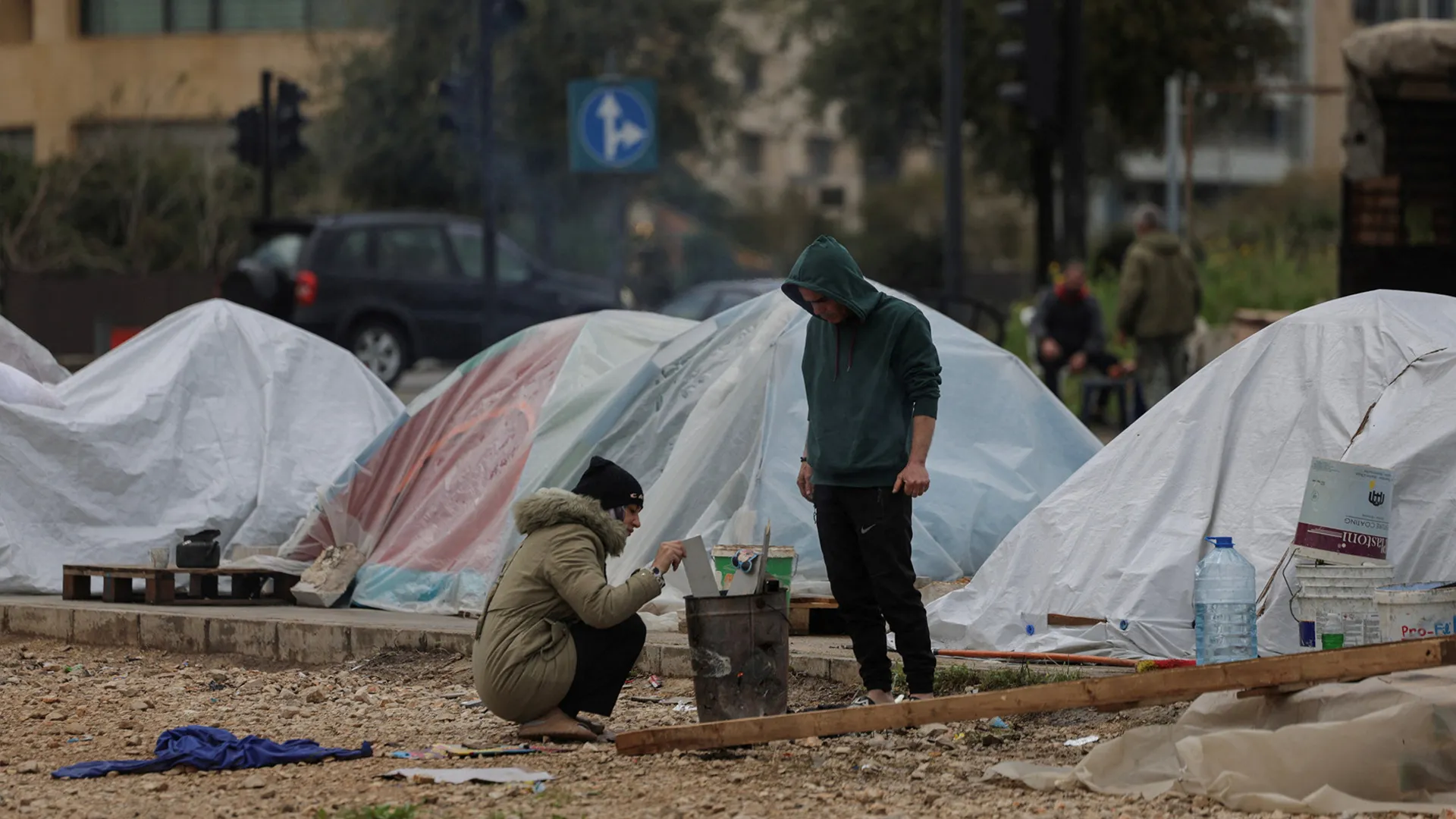
Bethlehem today is surrounded by walls and checkpoints built by an occupier. Its residents live under a system of apartheid and fragmentation. Many feel cut off, not only from Jerusalem – which the occupier does not allow them to visit – but also from the global Christian imagination that venerates Bethlehem’s past while often ignoring its present.

This sentiment also explains why so many in the West, while celebrating Christmas, care little about the Christians of Bethlehem. Even worse, many embrace theologies and political attitudes that erase or dismiss our presence entirely in order to support Israel, the empire of today.

In these frameworks, ancient Bethlehem is cherished as a sacred idea, but modern Bethlehem — with its Palestinian Christians suffering and struggling to survive — is an inconvenient reality that needs to be ignored.

This disconnect matters. When Western Christians forget that Bethlehem is real, they disconnect from their spiritual roots. And when they forget that Bethlehem is real, they also forget that the story of Christmas is real.

They forget that it unfolded among a people who lived under empire, who faced displacement, who longed for justice, and who believed that God was not distant but among them.

What Christmas means for Bethlehem

So what does Christmas look like when told from the perspective of the people who still live where it all began — the Palestinian Christians? What meaning does it hold for a tiny community that has preserved its faith for two millennia?

At its heart, Christmas is the story of the solidarity of God.

It is the story of God who does not rule from afar, but is present among the people and takes the side of those on the margins. The incarnation — the belief that God took on flesh — is not a metaphysical abstraction. It is a radical statement about where God chooses to dwell: in vulnerability, in poverty, among the occupied, among those with no power except the power of hope.

In the Bethlehem story, God identifies not with emperors but with those suffering under empire — its victims. God comes not as a warrior but as an infant. God is present not in a palace but in a manger. This is divine solidarity in its most striking form: God joins the most vulnerable part of humanity.

Christmas, then, is the proclamation of a God who confronts the logic of empire.

For Palestinians today, this is not merely theology — it is lived experience. When we read the Christmas story, we recognise our own world: the census that forced Mary and Joseph to travel resembles the permits, checkpoints and bureaucratic controls that shape our daily lives today. The holy family’s flight resonates with the millions of refugees who have fled wars across our region. Herod’s violence echoes in the violence we see around us.

Christmas is a Palestinian story par excellence.

A message to the world

Bethlehem celebrates Christmas for the first time after two years without public festivities. It was painful yet necessary for us to cancel our celebrations; we had no choice.

A genocide was unfolding in Gaza, and as people who still live in the homeland of Christmas, we could not pretend otherwise. We could not celebrate the birth of Jesus while children his age were being pulled dead from the rubble.

Celebrating this season does not mean the war, the genocide, or the structures of apartheid have ended. People are still being killed. We are still besieged.

Instead, our celebration is an act of resilience — a declaration that we are still here, that Bethlehem remains the capital of Christmas, and that the story this town tells must continue.

At a time when Western political discourse increasingly weaponises Christianity as a marker of cultural identity — often excluding the very people among whom Christianity was born — it is vital to return to the roots of this story.

This Christmas, our invitation to the global church — and to Western Christians in particular — is to remember where the story began. To remember that Bethlehem is not a myth but a place where people still live. If the Christian world is to honour the meaning of Christmas, it must turn its gaze to Bethlehem — not the imagined one, but the real one, a town whose people today still cry out for justice, dignity and peace.

To remember Bethlehem is to remember that God stands with the oppressed — and that the followers of Jesus are called to do the same.

The views expressed in this article are the author’s own and do not necessarily reflect Al Jazeera’s editorial stance.

Source link

Judge halts FEMA rule tying disaster funds to deportation data

Dec. 23 (UPI) — A judge in Oregon ruled Tuesday that the Trump administration cannot require states to account for how deportations have affected their populations in order to receive emergency or disaster preparedness funds.

U.S. Magistrate Judge Amy Potter’s ruling came in response to a lawsuit from 11 states challenging new requirements from the Federal Emergency Management Agency, which they argued created undue burdens on access to hundreds of millions of dollars that could be used to prepare for floods, storms, acts of terrorism and other potential catastrophes.

The ruling is a setback for President Donald Trump as he has sought to remake the federal agency that is central to responding to disasters after earlier calling for it to be dissolved.

The ruling concerned a new FEMA policy that shortened the duration of grants to states from three years to one. The agency argued that the shorter period would allow it to better gauge the effectiveness of how states were using the money.

FEMA also required states to provide updated figures on their populations to reflect the Trump administration’s aggressive deportation efforts. Population counts have traditionally been the responsibility of the U.S. Census Bureau.

A group of 11 states – including Michigan, Oregon, Arizona, Colorado, Hawaii, Maine, Maryland, Nevada, New Mexico, Wisconsin and Kentucky – sued in response to the new requirements.

They argued that the requirements violated the Administrative Procedures Act and imperiled funding used for outreach programs in Hawaii, the deployment of emergency management personnel in North Carolina during tropical storms and staff to respond to flash floods in Maryland.

“This abrupt change in policy is particularly harmful to local emergency management,” wrote Potter.

In Oregon, affected funds were used to help cover the expenses of local emergency managers across the state, she wrote.

Source link

Venezuela warns US ‘aggression’ is first stage amid ‘continental ambitions’ | US-Venezuela Tensions News

Venezuela’s UN ambassador denounces US military strikes and naval blockade at a meeting of the UN Security Council.

Venezuela has told the United Nations Security Council (UNSC) that the United States has “continental ambitions” over much of Latin America as it wages an unofficial war to remove the government of Venezuelan President Nicolas Maduro.

“It’s not just about Venezuela. The ambition is continental,” Venezuela’s UN ambassador, Samuel Moncada, told a meeting of the 15-member UNSC on Tuesday.

Recommended Stories

list of 4 itemsend of list

“The US government has expressed this in its National Security Strategy, which states that the future of the continent belongs to them,” Moncada said.

“We want to alert the world that Venezuela is only the first target of a larger plan. The US government wants us to be divided so it can conquer us piece by piece,” he said.

Venezuela, earlier this month, requested that the UNSC meet to address the “ongoing US aggression”, which began in September when the White House launched air strikes against vessels in the Caribbean Sea and eastern Pacific Ocean. The White House claimed, without providing any evidence, that the vessels were trafficking drugs to the US.

At least 105 people have been killed so far in the attacks by US forces, which legal experts and Latin American leaders have branded “extrajudicial killings”, but which Washington claims are necessary to stem the flow of drugs to US shores.

At the UNSC meeting, Moncada also accused the administration of US President Donald Trump of violating both international and US domestic law, since the White House has been acting without the approval of the US Congress, whose authority is required to formally declare war on another country.

Moncada said that Trump’s imposition last week of a naval blockade on all Venezuelan oil tankers sanctioned by the US was a “military act aimed at laying siege to the Venezuelan nation”.

“Today, the masks have come off,” Moncada said. “It is not drugs, it is not security, it is not freedom. It is oil, it is mines and it is land.”

US envoy denounces ‘Maduro and his illegitimate regime’

US forces have seized at least two Venezuelan oil tankers and confiscated at least 4 million barrels of Venezuelan oil, according to Moncada, in a move he described as “a robbery carried out by military force”.

The US has defended its naval blockade of Venezuela as a “law enforcement” action to be carried out by the US coastguard, which has the authority to board ships under US sanctions. A naval blockade, by contrast, would be considered an act of war under international law.

The US ambassador to the UN, Mike Waltz, told the UNSC that Latin American drug cartels remain the “single most serious threat” and that Trump would continue to use the full power of the US to eradicate them. Waltz also said that Venezuelan oil is a critical component in funding the cartels in Venezuela.

“The reality of the situation is that sanctioned oil tankers operate as the primary economic lifeline for Maduro and his illegitimate regime,” he said.

The White House earlier this year designated several international drug cartels, including Venezuela’s Tren de Aragua, as terrorist organisations. Washington also added the “Cartel de los Soles,” which it claims is headed by Maduro, to the list in November.

The Venezuelan leader has denied the US allegations and accused the Trump administration of using the drug trafficking claims as a cover to carry out “regime change” in his country.

Russia’s ambassador to the UN separately warned that US “intervention” in Venezuela could “become a template for future acts of force against Latin American states”.

China’s ambassador told the UNSC that the US actions “seriously infringe” on the “sovereignty, security and legitimate rights” of Venezuela.

Source link

US bars five Europeans over alleged efforts to ‘censor American viewpoints’ | European Union News

The United States has imposed visa bans on five Europeans, including a former European Union commissioner, accusing them of pressuring tech firms to censor and suppress “American viewpoints they oppose”.

In a statement on Tuesday, US Secretary of State Marco Rubio characterised the individuals as “radical activists” who had “advanced censorship crackdowns” by foreign states against “American speakers and American companies”.

Recommended Stories

list of 4 itemsend of list

“For far too long, ideologues in Europe have led organized efforts to coerce American platforms to punish American viewpoints they oppose,” he said on X.

“The Trump Administration will no longer tolerate these egregious acts of extraterritorial censorship,” he added.

The most prominent target was Thierry Breton, who served as the European commissioner for the internal market from 2019-2024.

Sarah Rogers, the undersecretary for public diplomacy, described the French businessman as the “mastermind” of the EU’s Digital Services Act (DSA), a landmark law intended to combat ​hateful speech, misinformation and disinformation on online platforms.

Rogers also accused Breton of using the DSA to threaten Elon Musk, the owner of X and a close ally of US President Donald Trump, ahead of an interview Musk conducted with Trump during last year’s presidential campaign.

‘Witch hunt’

Breton responded to the visa ban in a post on X, slamming it as a “witch hunt” and comparing the situation with the US’s McCarthy era, when officials were chased out of government for alleged ties to communism.

“To our American friends: Censorship isn’t where you think it is,” he added.

The others named by Rogers are: Imran Ahmed, chief executive of the Centre for Countering Digital Hate; Josephine Ballon and Anna-Lena von Hodenberg, leaders of HateAid, a German organisation, and Clare Melford, who runs the Global Disinformation Index (GDI).

French Minister for Europe and Foreign Affairs Jean-Noel Barrot “strongly” condemned the visa restrictions, stating that the EU “cannot let the rules governing their digital space be imposed by others upon them”. He stressed that the DSA was “democratically adopted in Europe” and that “it has absolutely no extraterritorial reach and in no way affects the United States”.

Ballon and von Holdenberg of HateAid described the visa bans as an attempt to obstruct the enforcement of European law on US corporations operating in Europe.

“We will not be ‌intimidated by a government that uses accusations of censorship to silence those who stand ⁠up for human rights and freedom of expression,” they said in a statement.

A spokesperson for the GDI also called the US action “immoral, unlawful, and un-American”, as well as “an authoritarian attack on free speech and an egregious act of government censorship”.

The punitive measures follow the Trump administration’s publishing of a National Security Strategy, which accused European leaders of censoring free speech and suppressing opposition to immigration policies that it said risk “civilisational erasure” for the continent.

The DSA in particular has emerged as a flashpoint in US-EU relations, with US conservatives decrying it as a weapon of censorship against right-wing thought in Europe and beyond, an accusation Brussels denies.

The legislation requires major platforms to explain content-moderation decisions, provide transparency for users and grant researchers access to study issues such as children’s exposure to dangerous content.

Tensions escalated further this month after the EU fined Musk’s X for violating DSA rules on transparency in advertising and its methods for ensuring users were verified and actual people.

Washington last week signalled that key European businesses – including Accenture, DHL, Mistral, Siemens and Spotify – could be targeted in response.

The US has also attacked the United Kingdom’s Online Safety Act, which imposes similar content moderation requirements on major social media platforms.

The White House last week suspended the implementation of a tech cooperation deal with the UK, saying it was in opposition to the UK’s tech rules.

Source link

Syria ministers discuss military cooperation with Putin in Russia: Report | Vladimir Putin News

Talks held between Foreign Minister Asaad Hassan Al-Shaibani, Defence Minister Murhaf Abu Qasra and the Russian president.

Syria’s foreign and defence ministers met Russian President Vladimir Putin in Moscow and held discussions on expanding “strategic cooperation in the military industries sector”, Syrian state media has reported.

The Syrian Arab News Agency (SANA) ⁠said that Putin’s meeting on Tuesday with Syrian Minister of Foreign Affairs Asaad Hassan Al-Shaibani and Minister of Defence Murhaf Abu Qasra ‌focused on political, economic and military issues of “mutual interest”, but that “particular emphasis” was on defence.

Recommended Stories

list of 4 itemsend of list

According to SANA, Putin and the Syrian ministers discussed a range of defence-related matters, including developing military cooperation to strengthen the Syrian army’s capabilities and ‌modernising its equipment, transferring expertise and cooperation in research and development.

“During the meeting, both sides reviewed ways to advance military and technical partnership in a manner that strengthens the defensive capabilities of the Syrian Arab Army and keeps pace with modern developments in military industries,” SANA reported.

The two sides also discussed political and economic issues, including the “importance of continued political and diplomatic coordination between Damascus and Moscow in international forums”, according to the news agency.

On the economic front, the talks addressed expanding Syrian-Russian cooperation, including in reconstruction projects, infrastructure development and investment in Syria.

Putin also reaffirmed Russian “steadfast support” for Syria and its territorial integrity, while renewing “Moscow’s condemnation of repeated Israeli violations of Syrian territory, describing them as a direct threat to regional security and stability”.

The ministers’ visit to Moscow is the latest by Syria’s new authorities since the removal from power last December of the country’s longtime ruler and Moscow’s former ally in Damascus, Bashar al-Assad.

Russia was a key supporter of al-Assad during Syria’s nearly 14-year civil war, providing vital military aid that kept the Assad regime in power, including Russian air support that rained air strikes on rebel-held areas.

Despite al-Assad and his family fleeing to Russia after the toppling of his regime, Moscow is eager to build good relations with the new government in Damascus.

Moscow, in particular, is hoping to secure agreements to continue operating the Khmeimim airbase and the Tartous naval base on Syria’s Mediterranean coast, where Russian forces continue to be present.

In October, Syria’s new president, Ahmed al-Sharaa, visited Russia, where he said his government ‍would honour all the past deals struck between Damascus and Moscow, a pledge that suggested that the two Russian military bases were secure in the post-Assad period.

Putin said ‍at the time of al-Sharaa’s visit ⁠that Moscow was ready to do all it could to act on what he called the “many interesting and useful beginnings” discussed by the two sides on renewing relations.

Russian ‌state media on Tuesday quoted the country’s Ministry of Foreign Affairs spokeswoman, Maria Zakharova, as saying that Russian Foreign Minister Sergey Lavrov would also hold talks with ‍his Syrian counterpart, Al-Shaibani, during the Syrian delegation’s visit.

During a visit to Moscow in July, Al-Shaibani said his country wanted Russia “by our side”.

“The current period is full of various challenges and threats, but it is also an opportunity to build a united and strong Syria. And, of course, we are interested in having Russia by our side on this path,” Al-Shaibani told Lavrov at the time.

Russia's President Vladimir Putin and Syria's President Ahmed al-Sharaa speak during a meeting at the Kremlin in Moscow, Russia, October 15, 2025. Alexander Zemlianichenko/Pool via REUTERS
Syrian President Ahmed al-Sharaa speaks during a meeting with Russian President Vladimir Putin at the Kremlin in Moscow, Russia, on October 15, 2025 [Pool: Alexander Zemlianichenko via Reuters]

Source link

At least 2 dead, many injured injured in Bristol, Pa., nursing home explosion

Dec. 23 (UPI) — An explosion Tuesday afternoon at a nursing home in eastern Pennsylvania killed at least two and left many injured and missing, local officials said.

The explosion took place at 2:15 p.m. EST at the Silver Lake Nursing Home in the borough of Bristol. It originated in the nursing home’s basement and caused a fire and part of the building to collapse, a Bucks County spokesperson told NBC News.

Pennsylvania Gov. Josh Shapiro traveled to the nursing home’s location and told media a gas leak is suspected of causing the deadly explosion and fire.

Shapiro commended the actions of police, firefighters and other first-responders to help others and minimize potential casualties.

The nursing home has 174 beds, most of which were occupied, and a worker told WCAU that about 50 people usually are inside the building.

The nursing home is located about 20 miles south of Philadelphia, and most of its residents are between ages 50 and 95.

The explosion shook nearby buildings and caused a response from fire departments and first responders in Pennsylvania’s Montgomery, Bucks and Philadelphia Counties, plus another from Burlington County in New Jersey.

This is a developing story.

Former President Joe Biden presents the Presidential Citizens Medal to Liz Cheney during a ceremony in the East Room of the White House in Washington, on January 2, 2025. The Presidential Citizens Medal is bestowed to individuals who have performed exemplary deeds or services. Photo by Will Oliver/UPI | License Photo
Source link

Hindutva protest at Bangladesh High Commission over lynching of Hindu man | Protests

NewsFeed

Hindutva activists tried to storm the Bangladesh High Commission in New Delhi, India as they rallied against the neighbouring nation for failing to protect its Hindu minorities. The demonstration comes after a 25-year-old Hindu man was lynched and burned publicly following allegations of blasphemy.

Source link

Wage garnishment for defaulted student loans set to resume next year

Dec. 23 (UPI) — The U.S. Department of Education has signaled that next year it will resume garnishing wages of people who’ve defaulted on their student loans.

The change, reported by multiple news outlets, comes after a years-long respite on garnishment that began as a pandemic-era economic relief measure. The resumption follows other Trump administration efforts to recoup past-due student loan debt.

The department intends to notify about 1,000 borrowers who have defaulted on their debt that it will begin seizing parts of their paychecks, The Washington Post reported Monday. The initial notices will go out the week of Jan. 7, with more going out to borrowers each month, according to the paper.

Roughly 5.3 million borrowers have not made student loan payments, with many having fallen behind before the federal government stopped collecting on defaulted loans nearly six years ago, the Post reported.

A borrower is considered to be in default on their loan when they have not made a payment for more than 270 days. Up to 15% of their pay can be garnished as a result.

After returning to power earlier this year, the Trump administration has sought to undo Biden-era policies meant to ease the burden of student loans on borrowers. The department announced in April that it would again require defaulted borrowers to make payments on their loans and has sought to tighten rules for the Public Service Loan Forgiveness program.

The Trump administration has defended its approach, saying it’s holding irresponsible borrowers accountable for loans that have cost taxpayers billions.

However, the Student Borrower Protection Center criticized the department for resuming garnishments, saying the measure is used without oversight and has been used to unjustifiably seize wages from hundreds of millions during the pandemic.

“At a time when families across the country are struggling with stagnant wages and an affordability crisis, this administration’s decision to garnish wages from defaulted student loan borrowers is cruel, unnecessary, and irresponsible,” Persis Yu, the group’s deputy executive director and managing counsel, said in a statement. “As millions of borrowers sit on the precipice of default, this administration is using its self-inflicted limited resources to seize borrowers’ wages instead of defending borrowers’ right to affordable payments.”

Clouds turn shades of red and orange when the sun sets behind One World Trade Center and the Manhattan skyline in New York City on November 5, 2025. Photo by John Angelillo/UPI | License Photo
Source link

Delaware trooper, assailant both dead after DMV shooting

Dec. 23 (UPI) — A Delaware state trooper and a shooting suspect are dead after an incident occurred before 2 p.m. EST at a Division of Motor Vehicles office in New Castle, Del.

Neither the deceased officer’s name nor the suspect’s name were released as law enforcement investigated the matter, USA Today reported.

No information has been provided about potential injuries to others, but local police are assessing them.

Delaware Gov. Matt Meyer confirmed the shooting and said there was no active threat against the public in a post on X.

“Law enforcement acted swiftly to secure the scene, and the shooter has been confirmed deceased,” Meyer said. “State and local law enforcement are on the scene and coordinating response efforts.”

He asked the public to avoid the area and said updates would be released when available.

Delaware Attorney General Kathy Jennings sent “senior prosecutors” to the scene to help with the investigation, WDEL reported.

No information was initially provided regarding the shooting’s circumstances, and all Delaware DMV offices were closed for the day as of 3 p.m.

Hessler Boulevard and Route 13 were closed in the area near the New Castle DMV location.

New Castle is about 6 miles south of Wilmington, Del.

Former President Joe Biden presents the Presidential Citizens Medal to Liz Cheney during a ceremony in the East Room of the White House in Washington, on January 2, 2025. The Presidential Citizens Medal is bestowed to individuals who have performed exemplary deeds or services. Photo by Will Oliver/UPI | License Photo

Source link

How will Syria deal with its growing security challenges? | Syria’s War

Renewed fighting between army and SDF highlights volatility.

As the year comes to an end, a deal between the Syrian government and the Kurdish-led Syrian Democratic Forces was expected to come into force.

Instead, fighting has erupted between the two sides in the northern city of Aleppo.

They later agreed to stop the fighting, while blaming each other for the violence.

That deal was supposed to lead to the SDF integrating with the army, but it is stalling on how that should be implemented.

This renewed tension comes as Damascus faces other threats, ranging from ISIL (ISIS) to recurrent conflicts with the Druze community and continuing attacks by Israel.

So what does this complex security situation mean for Syria, a year after the fall of Bashar al-Assad?

Presenter: Dareen Abughaida

Guests

Haid Haid – Researcher at Chatham House

Steven Heydemann – Professor and Middle East Studies programme director at Smith College

Omer Ozkizilcik – Nonresident fellow for the Syria project in the Atlantic Council’s Middle East programme

Source link

Protests over fuel subsidy cut leave police injured in Bolivia

Members of the Bolivian Workers’ Union clash with police during a protest demanding the repeal of a law that removes fuel subsidies in La Paz, Bolivia, on Tuesday. Photo by Luis Gandarillas/EPA

Dec. 23 (UPI) — At least four law officers were injured Tuesday in La Paz during clashes between marchers from the Central Obrera Boliviana, the country’s largest labor federation, and police as protests intensified over the government’s decision to end fuel subsidies.

President Rodrigo Paz issued a decree Dec. 18 eliminating fuel subsidies that had been in place for nearly 20 years. He also declared an “economic, financial and social emergency” to justify the reform and paired the measure with a 20% increase in the minimum wage to cushion its impact.

As a result of the decision, gasoline and diesel stopped being sold at state-controlled prices of about 53 cents per liter and shifted to prices reflecting the real cost of imports, leading to increases of nearly 200% for consumers.

According to reports by the Bolivian newspaper El Deber, the incidents that left police officers injured occurred near Plaza Murillo, close to the government palace, when miners and transport workers attempted to approach areas secured by law offivers.

The Ministry of Government said the injured officers were attacked with stones and blunt objects while carrying out public order duties.

Police said a miner was detained for allegedly throwing fireworks and dynamite. Labor leaders, meanwhile, criticized using tear gas to disperse demonstrators.

Union leaders warned that protests will continue unless their main demand is met — the repeal of the decree that eliminated fuel subsidies.

Bolivia’s Human Rights Ombudsman’s Office said that after the fuel price changes, fares for interdepartmental, interprovincial and urban transportation rose by as much as nearly 200% in several regions, according to La Razón.

After inspections at transport terminals and hubs in La Paz, Cochabamba and Santa Cruz, the ombudsman’s office documented widespread and unilateral fare hikes that in many cases doubled or even tripled prices, directly affecting the cost of living for Bolivian families.

El Deber reported that similar protests were recorded in Santa Cruz, including temporary road blockades and clashes with police, amid growing public anger over the impact of higher fuel prices on transportation and household expenses.

Authorities reiterated calls for dialogue and warned they will not tolerate violence, while unions said they will maintain mobilizations until the government reviews the measure.

Source link

Is Israel’s government waging war on Al Jazeera and the media? | Israel-Palestine conflict News

The Israeli government is cracking down on critical media outlets, giving it unprecedented control over how its actions are presented to its citizens.

Among the moves is the so-called Al Jazeera Law, which allows the government to shut down foreign media outlets on national security grounds. On Tuesday, the Israeli parliament approved the extension of the law for two years after it was introduced during Israel’s genocidal war on Gaza to essentially stop Al Jazeera’s operations in Israel.

Recommended Stories

list of 4 itemsend of list

Separately, the government is also moving to shut down the popular Army Radio network, one of two publicly funded Israeli news outlets. The radio station is often criticised by the Israeli right wing, which views Army Radio as being biased against it.

Israelis are still reliant on receiving their news from traditional outlets with about half relying on broadcast news for information on current affairs and about a third similarly relying upon radio stations.

The tone of the media that is allowed to publish and broadcast is important. According to analysts inside Israel, the selective broadcasting of Palestinian suffering during Israel’s war on Gaza has helped sustain the carnage and reinforced a sense of grievance that allows for Israel’s continued assaults on Gaza as well as regional countries, such as Syria, Yemen and Lebanon.

Despite what observers characterise as a media environment firmly rigged in its favour, the far-right government of Prime Minister Benjamin Netanyahu, which contains ministers convicted of “terrorism” offences and others who have repeatedly called for the illegal annexation of the occupied West Bank, is looking nevertheless to bypass legal checks on its control of the media and bring more of Israel’s information feed under its control.

Let’s take a closer look.

Because the government believes it is too critical.

Israeli politicians have long complained about how the war in Gaza has been covered in both the international and domestic media.

But the government added a new accusation in November, partly blaming the media for the Hamas-led attacks on southern Israel on October 7, 2023.

“If there hadn’t been a media entirely mobilised to encourage refusal [to volunteer to reserve duty] and reckless opposition to the judicial reform, there wouldn’t have been such a rift in the nation that led the enemy to seize the opportunity,” Communications Minister Shlomo Karhi said as he introduced a bill to increase government control of the news environment, referring to attempts by the Israeli government to reduce the independence of the judiciary.

Israel's Prime Minister Benjamin Netanyahu, right, speaks to Minister of Communications Shlomo Karhi at the Knesset, Israel's parliament
Israeli Prime Minister Benjamin Netanyahu, right, speaks to Minister of Communications Shlomo Karhi in the Knesset in West Jerusalem [File: Maya Alleruzzo/AP Photo]

In addition to the ‘Al Jazeera Law’, there are three items of legislation under way: a plan to privatise Israel’s public broadcaster, Kan, the move to abolish Army Radio, and an initiative to bring the media regulator under government control.

Both Army Radio and Kan, the other state-funded outlet with editorial independence, have carried numerous reports critical of the government.

This week, Kan aired an interview with Netanyahu’s former spokesperson Eli Feldstein, who told the broadcaster that the prime minister had instructed him to develop a strategy to help evade responsibility for the October 7 attacks.

Meanwhile, Israeli Defence Minister Israel Katz, justifying the move to shut down Army Radio, said on Monday that the outlet had become a platform to attack the Israeli military and its soldiers.

Israel is also potentially changing the way it regulates its media. In November, the Israeli parliament pressed ahead with a bill that would abolish existing media regulators and replace them with a new authority appointed by the government, potentially allowing for even greater state interference.

Israel's Attorney General Gali Baharav-Miara listens on as she attends a cabinet meeting at the Bible Lands Museum in Jerusalem on June 5, 2024. GIL COHEN-MAGEN/Pool via REUTERS
Israeli Attorney General Gali Baharav-Miara attends a cabinet meeting at the Bible Lands Museum in Jerusalem [Gil Cohen-Magen/Pool via Reuters]

Lastly, Israel has also codified into law the emergency legislation banning foreign media outlets whose output it disagrees with. It was first enacted as emergency legislation in May 2024 when Israel used it to ban Al Jazeera from its territory, and it was then used in the same month to halt the activity of The Associated Press after the government accused the United States-based news agency of sharing footage with Al Jazeera.

Under the new law, the communications minister – with the prime minister’s sign-off and the backing of a ministerial committee – may halt a foreign broadcaster’s transmissions if the prime minister accepts a professional assessment that the outlet poses a security threat. The minister can also shut the broadcaster’s offices, confiscate equipment used to produce its content and block access to its website.

Have the moves been criticised?

The International Federation of Journalists (IFJ) and the United Kingdom’s National Union of Journalists have criticised Israel’s decision to legislate against foreign media platforms it deems a security threat.

In a statement, IFJ General Secretary Anthony Bellanger said: “Israel is openly waging a battle against media outlets, both local and foreign, that criticise the government’s narrative: that is typical behavior of authoritarian regimes. We are deeply concerned about the Israeli parliament passing this controversial bill, as it would be a serious blow to free speech and media freedom, and a direct attack on the public’s right to know.”

The attempt to shutter Army Radio has also been heavily criticised with Israeli Attorney General Gali Baharav-Miara declaring the move unlawful and accusing Netanyahu’s coalition of making public broadcasting “weakened, threatened and institutionally silenced and its future shrouded in mist”.

Baharav-Miara has also criticised the move to place media regulation under government control, saying the bill “endangers the very principle of press freedom”.

Not very.

The Israeli media have overwhelmingly been a consistent cheerleader of the Israeli government’s actions in Gaza, where more than 70,000 Palestinians have been killed by Israel, and in the occupied West Bank.

The suffering of Palestinians is rarely shown, and when it is, it is often justified.

Even as Israel has killed more than 270 journalists and media workers in Gaza, the Israeli media have provided cover for the actions of its government and military.

That means Israelis often don’t recogise the hypocrisy of their government’s statements.

An example came in June after Iran struck an evacuated hospital during the 12-day war between Israel and Iran. The Israeli government called the incident a war crime, and the Israeli media reflected that outrage.

But the attack came after Israel had been accused by a variety of organisations, including the United Nations, of systematically destroying Gaza’s healthcare system with medical workers targeted for arrest and frequently tortured despite their protection under international law.

“The Israeli media … sees its job as not to educate – it’s to shape and mould a public that is ready to support war and aggression,” journalist Orly Noy told Al Jazeera from West Jerusalem in the wake of the strike on the Israeli medical centre. “It genuinely sees itself as having a special role in this.”

Source link

Visa: E-commerce, electronics drive holiday spending up 4%

Dec. 23 (UPI) — U.S. consumers showed steady confidence this holiday season, with retail spending up 4.2% from last year, according to preliminary data via Visa released Tuesday.

Despite ongoing economic challenges, shoppers continued to buy especially tech and personal items. The analysis — based on Visa payments data from Nov. 1 over a seven‑week period — excluded auto, gas and restaurant categories and wasn’t adjusted for inflation.

Michael Brown, principal U.S. economist at Visa, said the “underlying surprise” was that U.S. consumer spending “is holding up reasonably well in light of softer consumer confidence than we had this time last year and a number of headwinds and concerns about inflation.”

In-store purchases made up 73% of total spending, though online sales rose by 7.8% and were the main source of growth fueled by convenience and early holiday deals.

Brown said the 2025 holiday season signaled a clear change in shopping habits, driven in part by artificial intelligence reshaping how consumers discover products and compare prices.

“We are seeing consumers use AI in a big way in comparison shopping and then helping to narrow down that perfect gift,” Brown told CNBC.

Electronics saw the strongest gains, with sales up 5.8%, driven by demand for newer, high-powered devices linked to the AI boom.

Apparel and other accessories rose 5.3% and general merchandise retailers offering one-stop shopping recorded a 3.7% increase.

But home-focused categories lagged. Spending on building materials and garden supplies slipped 1% and furniture and home furnishings were nearly flat edging up just 0.8%.

Although overall retail growth appears solid, the figures are not adjusted for inflation, meaning actual inflation‑adjusted gains were likely smaller once Consumer Price Index data was fully factored in.

Meanwhile, a recent survey found that 41% of Americans intended to cut back on holiday spending this year, which was up six points from 2024.

“This is the first holiday shopping season where roughly half of the consumers in that survey responded that they are going to leverage AI for one of those two tasks,” Brown added.

New Yorkers gather for near Times Square at SantaCon NYC on Saturday as part of the annual worldwide event where thousands dress as Santa or other festive characters for a day of drinking, parading through city streets and celebrating the holidays. Photo by John Angelillo/UPI | License Photo

Source link

DOJ releases third batch of Epstein files; shows Trump flights

Dec. 23 (UPI) — The Department of Justice Tuesday released a third cache of files from the Jeffrey Epstein case, including flight logs that show President Donald Trump flew on Epstein’s plane more than has been reported.

The logs show Trump flew on Epstein’s plane at least eight times in the 1990s. One of those flights included an unnamed 20-year old woman.

The documents are released to comply with the Epstein Files Transparency Act, which became law on Nov. 19, though the Justice Department didn’t release all the files on time.

Epstein was an American billionaire financier who was a convicted sex offender. He died by suicide in jail while awaiting trial.

The information about the flights comes from an email sent in January 2020 from a New York federal prosecutor to an unnamed person. The email doesn’t accuse Trump of any wrongdoing.

“For your situational awareness, wanted to let you know that the flight records we received yesterday reflect that Donald Trump traveled on Epstein’s private jet many more times than previously has been reported (or that we were aware), including during the period we would expect to charge in a [Ghislaine] Maxwell case,” the email said.

Ghislaine Maxwell, Epstein’s accomplice, is serving time for sex trafficking.

It said Trump “is listed as a passenger on at least eight flights between 1993 and 1996, including at least four flights on which Maxwell was also present. He is listed as having traveled with, among others and at various times, Marla Maples, his daughter Tiffany, and his son Eric,” it said.

“On one flight in 1993, he and Epstein are the only two listed passengers; on another, the only three passengers are Epstein, Trump, and then-20-year-old [redacted]. On two other flights, two of the passengers, respectively, were women who would be possible witnesses in a Maxwell case.”

The Justice Department said there were multiple references to Trump in the latest release. It called some of the mentions “untrue and sensationalist claims.”

“The Department of Justice has officially released nearly 30,000 more pages of documents related to Jeffrey Epstein. Some of these documents contain untrue and sensationalist claims made against President Trump that were submitted to the FBI right before the 2020 election. To be clear: the claims are unfounded and false, and if they had a shred of credibility, they certainly would have been weaponized against President Trump already,” the department said on X.

“Nevertheless, out of our commitment to the law and transparency, the DOJ is releasing these documents with the legally required protections for Epstein’s victims.”

Source link

Feds file suit to overturn Washington, D.C., gun control laws

Dec. 23 (UPI) — The federal government is suing Washington, D.C., to ease its gun-ownership laws, which are the strictest in the nation.

The U.S. Department of Justice filed the suit Monday in federal court seeking to declare the laws unconstitutional and prevent the District from enforcing them. The laws ban most semiautomatic rifles and other firearms from being registered with the police department. This makes any possession of those guns illegal. AK-47s and AR-15s are among those that are illegal. Those owning those guns can face misdemeanor charges and fines.

The action “underscores our ironclad commitment to protecting the Second Amendment rights of law-abiding Americans,” Attorney General Pam Bondi said in a statement. “Washington, D.C.’s ban on some of America’s most popular firearms is an unconstitutional infringement on the Second Amendment — living in our nation’s capital should not preclude law-abiding citizens from exercising their fundamental constitutional right to keep and bear arms.”

The suit cites District of Columbia v. Heller, which was decided by the Supreme Court in 2008. Before Heller, the District made it illegal to carry unregistered firearms but it also banned the registration of handguns. The Heller decision said that people can have guns in their homes for self-defense.

After Heller, the District updated its gun laws and included a registry and training requirements. But it still makes assault rifles impossible to register.

The suit filed by the Justice Department argues the merit of the law.

“D.C.’s current semi-automatic firearms prohibition that bans many commonly used pistols, rifles or shotguns is based on little more than cosmetics, appearance, or the ability to attach accessories, and fails to take into account whether the prohibited weapon is ‘in common use today’ or that law-abiding citizens may use these weapons for lawful purposes protected by the Second Amendment. Therefore, the District’s restrictions lack legal basis,” the filing said.

D.C. Mayor Muriel E. Bowser, a Democrat, said in a statement Monday, reported by the Washington Post, that the District would “vigorously defend our right to make decisions that keep our city safe.”

“Gun violence destroys families, upends communities, and threatens our collective sense of safety. MPD has saved lives by taking illegal guns off our streets — efforts that have been praised by our federal partners,” Bowser said. “It is irresponsible to take any steps that would lead to more, and deadlier, guns in our communities, especially semi-automatic rifles like AR-15s.”

Lawyers from Everytown Law, a gun safety organization, said the city’s gun bans are legal.

“The legal consensus is clear: assault weapon bans are constitutional. Since the Supreme Court’s rulings in Bruen and Rahimi, federal courts have repeatedly affirmed that these laws are consistent with the Second Amendment,” Bill Taylor, deputy director of Second Amendment litigation at Everytown Law, said in a statement. “Assault weapons are designed for mass devastation, and we look forward to supporting D.C. as it defends this critical common-sense safety measure.”

District of Columbia U.S. Attorney Jeanine Pirro told prosecutors in August not to enforce felony charges for the city’s ban on openly carrying rifles and shotguns in public or the city’s ban on magazines that hold more than 10 bullets.

Source link

Why is Russia escalating attacks on Ukraine’s Odesa? | Russia-Ukraine war News

Russian forces have struck Ukraine’s southern Black Sea port of Odesa, damaging port facilities and a ship, the region’s governor says.

The attack late on Monday followed another at the weekend when Moscow carried out a sustained barrage of drones and missile attacks on the wider area around Odesa, which is home to ports crucial to Ukraine’s overseas trade and fuel imports. They followed Russian threats to cut “Ukraine off from the sea”.

Recommended Stories

list of 4 itemsend of list

The escalation in Russia’s assault on Odesa, Ukraine’s biggest port city, has unfolded as Washington steps up diplomatic efforts to bring an end to the war. Ukrainian officials met members of a US delegation on Friday in Florida while US envoys held talks with Russian representatives on Saturday.

“The situation in the Odesa region is harsh due to Russian strikes on port infrastructure and logistics,” Ukrainian President Volodymyr Zelenskyy told reporters in Kyiv on Monday. “Russia is once again trying to restrict Ukraine’s access to the sea and block our coastal regions.”

What happened in the latest Russian attack on Odesa?

On Tuesday, the head of the Odesa Regional Military Administration, Oleh Kiper, said Russian strikes overnight had damaged a civilian cargo vessel and a warehouse in a district of Odesa while the roof of a two-storey residential building had caught fire.

Meanwhile, strikes on Saturday on the port of Pivdennyi near Odesa damaged storage reservoirs, Ukrainian Deputy Prime Minister Oleksii Kuleba said. Those came just one day after a ballistic missile strike, also in Pivdennyi, had killed eight people and wounded at least 30.

These are just the latest strikes in an escalation of hostilities in the area over the past few weeks.

Last week, Russia launched one of its largest aerial assaults of the war on the Black Sea region, damaging energy infrastructure and causing a power outage in Odesa, leaving hundreds of thousands of residents without electricity for several days.

Russia’s Ministry of Defence did not immediately comment on the strikes, but the Kremlin has previously described Ukraine’s economic infrastructure as a “legitimate military objective” during the nearly four-year war.

On the Telegram messaging app, Kuleba said on Friday that Russian forces were targeting power infrastructure and a bridge over the Dniester River near the village of Mayaky, southwest of Pivdennyi, which was struck five times in 24 hours.

That bridge links parts of the region separated by waterways and serves as the primary westbound route to border crossings with Moldova. It is currently out of operation. Kuleba said the route normally carries about 40 percent of Ukraine’s fuel supplies.

INTERACTIVE-WHO CONTROLS WHAT IN UKRAINE-1765877913
(Al Jazeera)

Why is Russia targeting Odesa?

“The focus of the war may have shifted towards Odesa,” Kuleba said, warning that the “crazy” attacks could intensify as Russia tries to weaken Ukraine’s economy.

Russian President Vladimir Putin has previously said Moscow wants to restrict Ukraine’s Black Sea access in retaliation for Kyiv’s recent drone attacks on Russia’s sanctions-evading “shadow fleet” of vessels, which carry a variety of commodities.

Ukraine said those vessels are used to illegally export sanctioned oil, which provides Russia with its main source of revenue for financing its full-scale invasion of its neighbour.

How important is the port of Odesa to Ukraine?

Odesa’s port has long been central to Ukraine’s economy. Called a “pearl by the sea”, Odesa is Ukraine’s third most populous city after Kyiv and Kharkiv.

Black Sea ports – including Odesa and two others close by, Pivdennyi and Chornomorsk – and Mykolaiv to the east handled more than 70 percent of Ukraine’s exports before the war.

But Odesa’s role as a trading hub has grown in recent years as ports in the Zaporizhia, Kherson and Mykolaiv regions have been occupied by Russia.

Since the war began in February 2022, Ukraine has continued to rank among the world’s top five exporters of wheat and corn – largely through Odesa.

By targeting Odesa’s shipping facilities with missiles and drones, Ukrainian officials said, Putin aims to destroy Ukrainian trade and business infrastructure.

Zelenskyy, who has previously accused Russia of “sowing chaos” on the people of Odesa, said: “Everyone must see that without pressure on Russia, they have no intention of genuinely ending their aggression.”

What would it mean for Ukraine if Odesa were destroyed?

If the port of Odesa were badly damaged, the economic impact for Ukraine would be severe. The city and its surrounding areas would suffer major job losses in the shipping and logistics industries, seriously squeezing local incomes. Meanwhile, port-dependent businesses would falter and investment would fall away.

Nationally, Ukraine’s export capacity would be hit hard. As a key gateway for grain and other commodities, disruptions there would raise transport costs, slow shipments and reduce export volumes, choking foreign currency earnings and piling pressure on the hryvnia, Ukraine’s currency.

Elsewhere, farmers would suffer from lower prices for their produce as well as storage bottlenecks with knock-on effects across rural economies. The government would also lose customs revenue just as reconstruction costs would rise, weakening the country’s overall economic resilience.

What other acts of maritime warfare have Ukraine and Russia engaged in during the war?

Over the past six months, maritime warfare between Ukraine and Russia has intensified. Both sides have targeted naval and commercial assets across the Black Sea and beyond.

Ukrainian forces have increasingly used underwater drones and unmanned surface vessels to strike ships tied to Russia’s shadow fleet.

Several shadow fleet tankers, including the Kairos and Virat, were hit by Ukrainian naval drones in the Black Sea near Turkish waters in late November.

Kyiv has expanded its reach elsewhere, claiming drone strikes in the Mediterranean on December 19 on the Qendil, a Russian-linked tanker, marking an expansion in Kyiv’s maritime operations.

At the same time, Russian forces have ramped up attacks on commercial targets, including a Turkish-flagged ship carrying trucks and other freight near Odesa with drone attacks on December 13.

These actions reflect a shift towards what is referred to as “asymmetric naval warfare”, in which drones and improvised systems play a growing role in disrupting each side’s economic and military support networks at sea, experts said.

Source link