From breaking news to significant developments in politics, business, technology, entertainment, and more, we deliver the stories that shape our global landscape.
May 1 (Asia Today) — Japan considered deploying its Self-Defense Forces to the Strait of Hormuz ahead of a summit with U.S. President Donald Trump but ultimately held back due to constitutional and legal constraints, reports said Friday.
Prime Minister Sanae Takaichi reviewed options in March to send naval assets to the region amid heightened tensions in the Middle East, according to Japanese media.
Two proposals were examined: dispatching minesweepers under Japan’s Self-Defense Forces law or sending destroyers and patrol aircraft for “survey and research” purposes under a separate legal framework. Both options were shelved due to concerns they could violate Japan’s pacifist constitution.
Article 9 of Japan’s constitution renounces war and prohibits the use of force to settle international disputes, placing strict limits on overseas military operations.
The discussions were prompted in part by U.S. requests for allied support in securing maritime routes. Trump warned in March that Iran could disrupt shipping in the Strait of Hormuz using drones, mines and short-range missiles, and called on countries including Japan, South Korea and European allies to contribute naval forces.
The Strait of Hormuz is a critical energy corridor for Japan, which depends heavily on Middle Eastern oil imports. Any prolonged disruption could affect supplies of crude oil, naphtha and petrochemical products.
Japanese officials acknowledged the urgency of ensuring maritime security but stressed legal limits. Defense Minister Shinjiro Koizumi said Japan must act within the bounds of its laws, while Takaichi told parliament she had explained constitutional constraints during talks with Trump.
Legal concerns centered on whether minesweeping operations in a conflict zone could be considered part of combat activities, potentially violating Article 9. Similarly, deploying naval vessels under the guise of research could be viewed as de facto joint operations with U.S. forces in a high-risk area.
Despite the decision, debate continues within Japan. Lawmakers from the ruling Liberal Democratic Party have suggested revisiting deployment options if maritime disruptions persist, emphasizing the importance of securing sea lanes.
The episode highlights Japan’s evolving security posture. While Tokyo has expanded defense spending and strengthened alliances, its ability to deploy forces abroad remains constrained by constitutional interpretation.
The issue also carries implications for South Korea, which relies on the same energy routes. If the United States increases pressure on allies to contribute to maritime security, both Seoul and Tokyo may face similar dilemmas balancing energy security with military involvement.
May 2 (UPI) — Spirit Airlines closed Saturday morning, with no options for those already booked on the airline.
“Unfortunately, despite the company’s efforts, the recent material increase in oil prices and other pressures on the business have significantly impacted Spirit’s financial outlook,” the airline said in a statement. “With no additional funding available to the company, Spirit had no choice but to begin this wind-down.”
All flights are canceled, and passengers shouldn’t go to the airport, Spirit said. Those who booked directly with the company will get refunds, but others should reach out to their travel agent or booking site, the company said.
The company reported around 17,000 employees as of the shutdown.
“We’ve activated our airline partners to ensure passengers are not stranded, communities maintain route access, fares do not skyrocket, and Spirit’s workforce is connected to new job opportunities,” Secretary of Transportation Sean Duffy said in a statement.
United, Delta, JetBlue and Southwest are all capping ticket prices for Spirit customers who now need to rebook cancelled flights, Duffy’s statement said. But those prices will only be available for 72 hours.
Last week, President Donald Trump said the government could buy the airline, and it has been working on a $500 million rescue plan that would give the government a large ownership stake. But the company couldn’t get support between bondholders and the government for the deal.
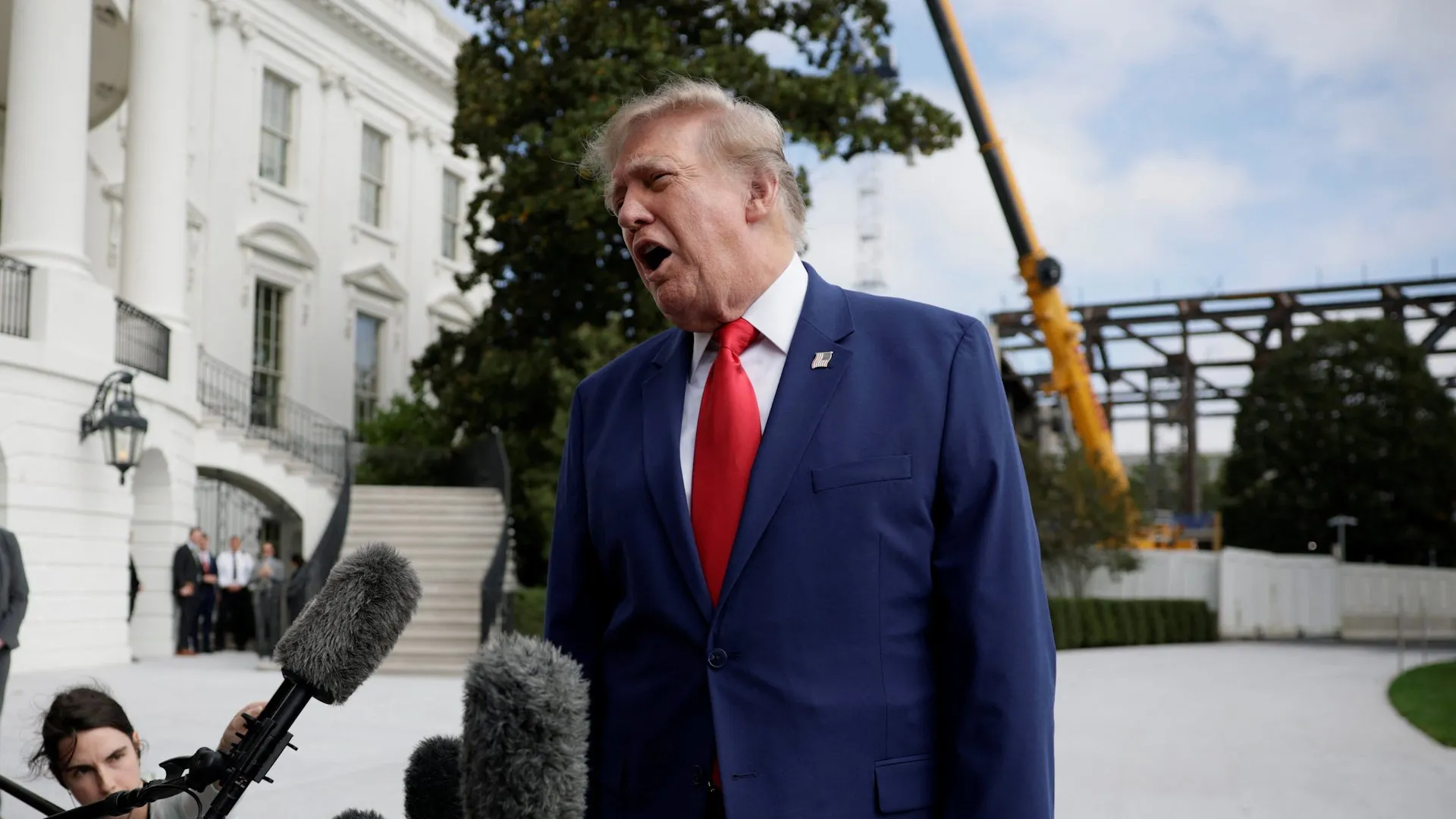
Trump told reporters at the White House Friday that an announcement about Spirit was coming within the next couple of days.
“I guess we’re looking at it. If we could do it, we’d do it, but only if it’s a good deal,” Trump said about a bailout plan. “But if we can’t make a good deal – no institution’s been able to do it. I said I’d like to save the jobs. … I would say we’re driving a tough deal, but it’s one of those things. We will do it or we won’t.”
Spirit CEO Dave Davis explained the shutdown.
“The sudden and sustained rise in fuel prices in recent weeks ultimately has left us with no alternative but to pursue an orderly wind-down of the company,” Davis said in a statement. “Sustaining the business required hundreds of millions of additional dollars of liquidity that Spirit simply does not have and could not procure. This is tremendously disappointing and not the outcome any of us wanted.”
Spirit customer Angela Moreno told NBC News that she was planning to fly from Fort Lauderdale to Nashville for a wedding Saturday.
“The whole family is going there from different states, so it’s very shocking,” she said. “There’s many people who cannot attend the wedding as of now.”
She said she’s struggling to find replacement tickets.
“They’re refunding the tickets, but the only tickets right now are $600,” she said. “I hope the best for those people who really needed that flight.”
Henry Hartevelt, airline industry analyst at Atmosphere Research Group, told The Washington Post that Spirit was struggling long before the war. Bad business decisions, overexpansion and loss of focus caused its internal issues, and increased competition from other budget airlines added to its woes.
Spirit’s core demographic earns less than $80,000 per year, and those customers took the brunt of the inflation hit during the COVID-19 pandemic, he added.
“So [there’s] no single cause of Spirit’s demise, but Spirit has been teeter-tottering on the verge of shutting down for a long time,” Harteveldt told The Post. “It’s very unfortunate. More than [17,000] people may lose their jobs if it does shut down, and we lose an airline and a source of price competition.”
US president says he is considering the 14-point peace plan, but warns strikes could resume if Tehran ‘misbehaves’.
Published On 3 May 20263 May 2026
United States President Donald Trump has said he is reviewing Iran’s 14-point proposal to end his war on the country, while warning that Washington could restart air strikes if Tehran “misbehaves”.
Speaking to reporters in Florida before boarding Air Force One on Saturday, Trump confirmed that he had been briefed on the “concept of the deal”.
Recommended Stories
list of 3 itemsend of list
Despite the diplomatic opening, the US president struck a characteristically blunt tone regarding the possibility of renewed hostilities, which have been paused since the announcement of a ceasefire between the sides on April 7.
“If they do something bad, there is a possibility it could happen,” Trump said when asked if strikes would resume.
Trump added that the US was “doing very well” and claimed that Iran was desperate for a settlement because the country had been “decimated” by months of conflict and a naval blockade.
In a post on Truth Social later, Trump said it was difficult to imagine that the Iranian proposal would be acceptable as Tehran had “not yet paid a big enough price for what they have done to Humanity, and the World, over the last 47 years.”
Tehran’s 14-point plan reportedly calls for the lifting of the US naval blockade, war reparations, and the release of all frozen assets.
It also seeks a 30-day window to finalise the terms of their peace, a timeline at odds with Washington’s preference for a longer transition.
The diplomatic push comes amid a fragile three-week truce that has put a pause on the US-Israel war on Iran, which began in late February.
Despite the ceasefire, the Islamic Revolutionary Guard Corps (IRGC) said on Saturday that it remains on “full standby” for a return to hostilities, citing the US’s lack of commitment to previous treaties.
Tensions have been further stoked by Trump’s recent characterisation of the US naval blockade as a “very profitable business”.
Tehran’s Ministry of Foreign Affairs seized on the remarks, labelling them a “damning admission of piracy”.
The impasse is further complicated by technical obstacles to reopening the Strait of Hormuz, including the presence of Iranian sea mines, and a growing rift with NATO allies following Trump’s decision to withdraw 5,000 US troops from Germany.
A Texas judge extended a temporary injunction on the state health department’s ban on smokable hemp, which went into effect this year after Texas Gov. Greg Abbot vetoed a ban passed last year by the state legislature. File Photo by Paul Brinkmann/UPI
May 2 (UPI) — A Texas judge on Friday temporarily paused the state’s ban on smokable hemp products, such as flower and joints, after three industry groups and multiple companies based in the state sued over it.
The state in March expanded its limit on THC in hemp products from 0.3% levels of Delta-9 THC to cover any form of THC beyond the state’s previous limit of 0.3% total THC in dry weight of the intoxicating group of chemicals.
This variety of chemicals includes Delta-8, various forms of Delta-9, and all other cannabinoids, with the exception of CBD and CBG.
The rule adopted by the state’s health department effectively banned all smokable forms of hemp because vapes and e-cigarettes that contain any form of cannabinoid were banned in Texas last September, the Texas State Law Library reported.
Since the federal government fully legalized hemp with low levels of Delta-9 THC, companies have produced hemp with boosted levels of other cannabinoids, including THCA, a non-psychoactive chemical that converts to Delta-9 THC when heated.
The groups that used the state contend that the health department overstepped their constitutional authority and that the new rules have done irreparable harm to the Texas hemp industry, CBS Austin reported.
“We are obviously excited about this ruling,” said Jason Snell, one of the attorneys that represents the industry groups and companies, KUT News reported.
“[The judge] issued a statewide injunction which prohibits what we believe are illegal rules from going into effect, which would cripple the hemp industry statewide and deprive consumers and every day Texans from access to legal products,” Snell said.
The Texas legislature last May passed a bill that would have effectively banned all of the products, but Texas Gov. Greg Abbot vetoed, which led the health department attempting to ban the products itself.
A previous temporary restraining order on the rule was set to expire Friday afternoon at 5 p.m., but the ruling — which covers all consumable hemp products — will now allow the industry to keep doing business.
President Donald Trump signs a series of executive orders in the Oval Office of the White House on Thursday. Trump signed an order to expand workers’ access to retirement accounts. Trump also signed legislation ending a 75-day partial shutdown of the Department of Homeland Security after the House voted in favor of funding. Photo by Aaron Schwartz/UPI | License Photo
Studies show extreme rain has become more frequent in country, as Pernambuco and Paraiba states again battered.
Published On 2 May 20262 May 2026
At least six people have died in heavy rains in northeastern Brazil, with thousands more displaced, according to authorities.
The deaths were reported in the Pernambuco and Paraiba states on Saturday, following two days of rain.
Recommended Stories
list of 3 itemsend of list
In Pernambuco, flooding and landslides were reported in Recife, the state capital. At least two people were confirmed killed in the city. Two others were killed in nearby Olinda.
About 1,500 were displaced by the storms.
In Paraiba, the state capital, Joao Pessoa and the city of Campina Grande were among the hardest hit. At least two people were confirmed killed in the state, with 1,500 displaced.
The National Center for Risk and Disaster Management said it issued 22 emergency alerts during the rain.
“Due to the impacts in Pernambuco and Paraiba and the weather forecast for the region, the operational level was raised to maximum alert,” it said.
The ministry reported that rain had eased on Saturday, but urged continued vigilance.
President Luiz Inacio Lula da Silva said on X that he had spoken with local authorities to offer support.
“The government continues to monitor the situation to provide all necessary assistance,” he added.
A study released last year by the Brazilian Alliance for Ocean Culture found that rain disasters, including flooding and landslides, tripled in Brazil from 1991 to 2023.
In February, at least 64 people were killed in floods and landslides in Minas Gerais state.
In 2024, at least 183 people were killed in flooding in the state of Rio Grande do Sul.
In 2022, 233 people were killed in flooding in the city of Petropolis in southeastern Brazil.
Three months later, at least 130 people were killed in heavy rains in Recife.
The Mayon Volcano has erupted, spewing a cloud of ash and debris across Bicol, in the Philippines. Emergency services have issued alerts to nearby towns. The 2,462-metre (8,007-foot) volcano is the country’s most active.
May 2 (UPI) — A company that makes the abortion drug mifepristone on Saturday asked the U.S. Supreme Court to immediately pause a ruling that prevents doctors from prescribing it during telehealth visits.
Late Friday, a three judge panel on the 5th Circuit Court of Appeals unanimously ruled in favor of the state of Louisiana in a case asking the court to block doctors from prescribing the drug in telehealth visits.
Louisiana in the last four years has moved to prevent women in the state from obtaining abortion care legislators there were among the first to ban abortion after the repeal of Roe v. Wade, and later blocked doctors from prescribing the medical abortion pill in virtual telehealth visits.
The company, which is not the only drugmaker planning to file an appeal, said that patients will be stuck in limbo because of the lack of clarity it leaves for legal use of the drug, NBC News and Politico reported.
Roughly half of all abortions in the United States are performed using medications.
“Danco has been free to rely on procedures set by the FDA to distribute its product,” lawyers for the company said in a filing with the court.
“The Fifth Circuit’s decision immediately ends that,” the lawyers said. “A stay should issue to prevent the disruption and confusion that will result if the decision below were to remain operative.”
In addition to Danco, Politico reported that GenBioPro, which also manufactures the drug, has indicated that it will also file an appeal with the court.
Mifepristone was approved by the U.S. Food and Drug Administration in 2000 for medical termination of pregnancy and, until the COVID-19 pandemic, could only be prescribed during in-person appointments.
Early in the pandemic and the country locked down in an effort to stem the spread of the virus, doctors sued the FDA to allow them to prescribe mifepristone during telehealth visits.
The FDA temporarily changed the rule, but in 2023 adopted it permanently as some states started to restrict access to abortion and abortion services after the Supreme Court struck down Roe v. Wade.
Pharmaceutical companies and patient advocates warned that the restriction circumvents the FDA’s regulatory authority, which is based on evidence and data, and that it may offer a path for people to challenge other medications based on personal interest or opinion.
In the case of Danco, it also immediately filed the appeal because it is the only product it makes and “without a valid legal framework for distributing that product, Danco will lose its only source of revenue and may be unable to continue operating.”
President Donald Trump signs a series of executive orders in the Oval Office of the White House on Thursday. Trump signed an order to expand workers’ access to retirement accounts. Trump also signed legislation ending a 75-day partial shutdown of the Department of Homeland Security after the House voted in favor of funding. Photo by Aaron Schwartz/UPI | License Photo
May 2 (UPI) — An Iranian general said more fighting with the United States is “possible” after President Donald Trump rejected the most recent peace plan offered by Iran.
“Evidence has shown that the United States is not committed to any promises or agreements,” said Iranian Brig. Gen. Mohammad Jafar Asadi, spokesman for Iran’s military headquarters, Iranian news agencies reported.
“Surprise measures are planned for the enemy, beyond their imagination,” Asadi said.
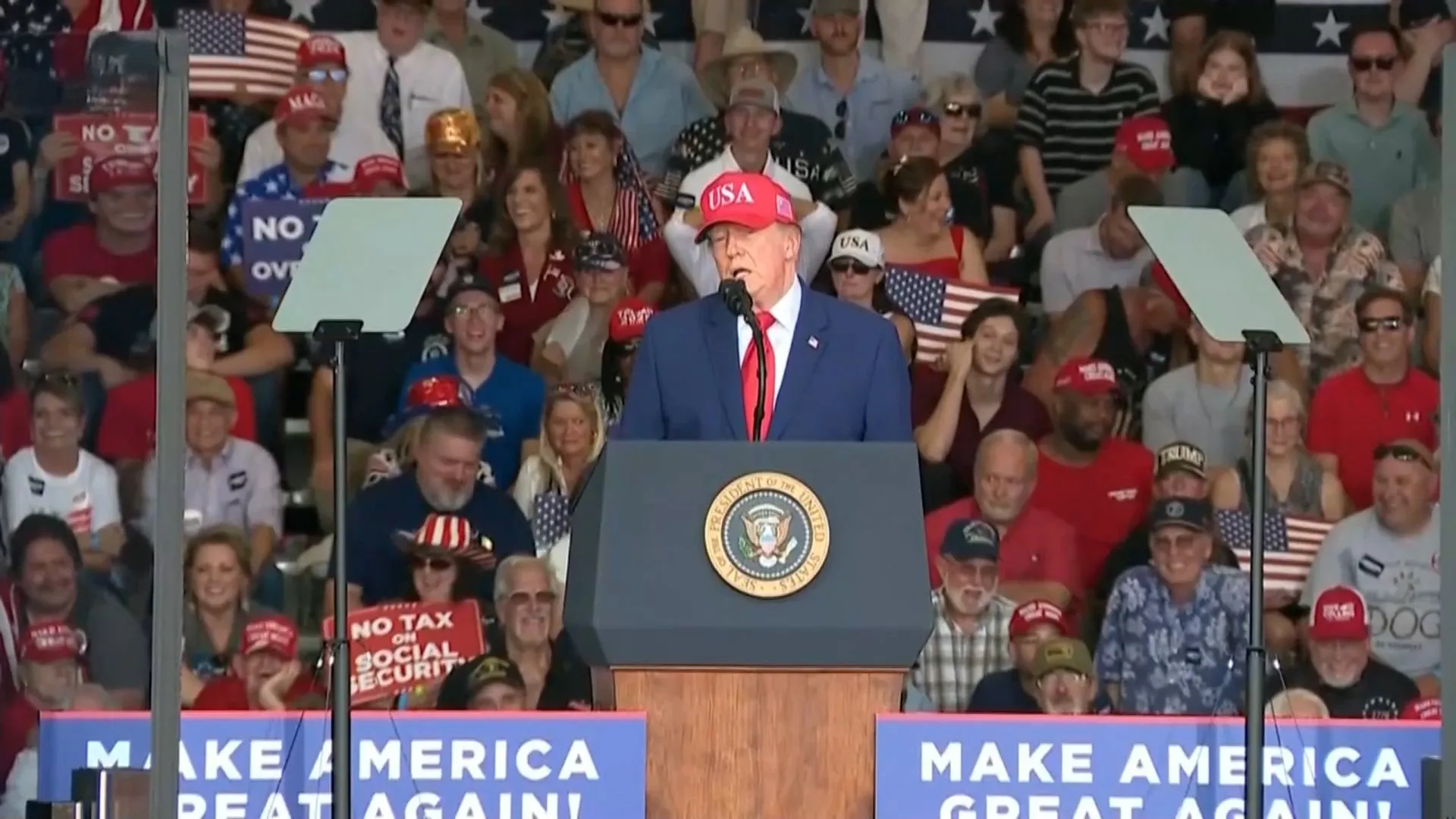
President Donald Trump, speaking at an event in West Palm Beach, Fla., said Friday that the United States is “better off” without making a peace agreement.
“Frankly, maybe we’re better off not making a deal at all. Do you want to know the truth? Because we can’t let this thing go on,” CNN reported he said. “Been going on too long.”
Trump had told CNN before leaving for Florida that he wasn’t satisfied with Iran’s latest peace offer.
Trump said he doesn’t think Iran can make a deal, saying, “They’ve made strides, but I’m not sure if they ever get there,” saying there is “tremendous discord” among Iranian leaders.
The president also said Friday that his options, as it relates to Iran, are making a deal or to “blast the hell out of them and finish them forever,” CNN reported.
Iran is holding to its plan to continue to control the Strait of Hormuz.
“With its dominance and control over nearly [1,300 miles] of Iran’s coastline in the Persian Gulf and the Strait of Hormuz, the IRGC [Revolutionary Guards] Navy will make this water area a source of livelihood and power for the dear Iranian people and a source of security and prosperity for the region,” the Iranian Tasnim news agency reported Saturday.
Trump has repeatedly demanded the strait be fully open.
Iranian Deputy Foreign Minister Kazem Gharibabadi said Iran believes in interest-based diplomacy, Al Jazeera reported.
“Iran has presented its plan to Pakistan as a mediator with the aim of permanently ending the imposed war, and now the ball is in America’s court to choose the path of diplomacy or to continue the confrontational approach,” Al Jazeera reported that Gharibabadi said. “Iran is ready for both paths in order to ensure its national interests and security, and in any case, it will always maintain its pessimism and distrust of America and its honesty in the path of diplomacy,” he added.
President Donald Trump signs a series of executive orders in the Oval Office of the White House on Thursday. Trump signed an order to expand workers’ access to retirement accounts. Trump also signed legislation ending a 75-day partial shutdown of the Department of Homeland Security after the House voted in favor of funding. Photo by Aaron Schwartz/UPI | License Photo
May 2 (UPI) — The United States has started warning allies that delivery of weapons systems are likely to be delayed because stockpiles have been drained during the war in Iran.
The Department of Defense has warned several allies in Europe — including the United Kingdom, Poland, Norway and Estonia — that there will be delivery delays for several missile systems, Breaking Defense and The Financial Times reported.
The delays, which may also spread to deliveries to Asian allies, have been linked to growing concerns about the numbers of U.S. weapons used since the war in Iran started.
Concerns have also come up as to whether lower stockpiles could affect the United States’ ability to defend itself and its allies.
The Department of Defense already has been relocating weapons from bases in other parts of the world both to the U.S. stockpile and for use in the Iran war, which President Donald Trump noted on Friday.
“All over the world, we have inventory,” he said. “And we can take that if we need it.”
Among the weapons systems that could be affected are the HIMARS and NASAMS missile systems, shortages of which were reported in Estonia and Norway in April.
The president of Finland also said in recent days that some U.S. weapons stockpiles normally stored in the country have been rerouted, which lines up with Trump’s comments yesterday.
In Asia, Japan and South Korea are reportedly bracing for delays beyond the ones it already has not received, including Patriot missile interceptors and Tomahawk cruise missiles.
Delays that have already happened, and the potential for more, could affect foreign nations’ reliance on weapons manufactured by the United States, experts have said.
“Japan already was deeply frustrated with delivery delays for systems they have paid for,” former Pentagon official Christopher Johnstone told the Financial Times.
“This reality will drive Japan, South Korea and other allies to focus more heavily on indigenous and non-American options, even in areas where U.S. equipment is clearly superior,” he said.
The reports of delays come after Defense Secretary Pete Hegseth on Thursday told members of the Senate Arms Services Committee that he is aware of concerns about the stockpile after two months of an intense campaign in Iran.
In response to questions about the Pentagon’s request for a nearly 50% increase in its budget, Hegseth noted that some of the increase is because of weapons used during the war, and that it could take “months and years” to fully replenish the stockpile.
Trump has asked defense companies to “quadruple” their manufacturing pace, but there are limits to how much production can be sped up, according to industry experts.
President Donald Trump signs a series of executive orders in the Oval Office of the White House on Thursday. Trump signed an order to expand workers’ access to retirement accounts. Trump also signed legislation ending a 75-day partial shutdown of the Department of Homeland Security after the House voted in favor of funding. Photo by Aaron Schwartz/UPI | License Photo
May 2 (UPI) — The Pentagon announced Friday that the United States would draw down 5,000 troops from Germany, and Germany responded Saturday that the move was anticipated.
The decision came after Chancellor Friederick Merz made comments criticizing the war with Iran, saying the United States has been “humiliated” by the war.
“The Secretary of War has ordered the withdrawal of approximately 5,000 troops from Germany,” Pentagon spokesperson Sean Parnell said in a statement. “This decision follows a thorough review of the Department’s force posture in Europe and is in recognition of theater requirements and conditions on the ground. We expect the withdrawal to be completed over the next six to 12 months.”
“The Chancellor of Germany should spend more time on ending the war with Russia/Ukraine (Where he has been totally ineffective!), and fixing his broken Country, especially Immigration and Energy, and less time on interfering with those that are getting rid of the Iran Nuclear threat, thereby making the World, including Germany, a safer place!” the president said.
At a visit to a school in Germany on Monday, Merz said U.S. officials had entered a war without a clear strategy, saying the “whole affair is ill-considered to say the least.”
“The Iranians are obviously very skilled at negotiating, or rather, very skillful at not negotiating, letting the Americans travel to Islamabad and then leave again without any result,” CNN reported Merz said. “An entire nation is being humiliated by the Iranian leadership, especially by these so-called Revolutionary Guards. And so I hope that this ends as quickly as possible.”
On Tuesday, Trump said that Merz “doesn’t know what he’s talking about.”
In response to the announcement of the drawdown, German Defense Minister Boris Pistorius downplayed the news and called it “foreseeable.”
He said it illustrated the need for Germany to take more responsibility for its own security and said the country is “on the right track.”
As of December 2025, there were 36,436 active-duty U.S. military personnel permanently stationed in Germany, according to the U.S. Defense Manpower Data Center.
After the removal of 5,000 troops, Germany will still host more than 30,000 U.S. personnel.
On Friday, Trump told reporters in the White House that Italy had “not been of any help to us,” and accused Spain of being “absolutely horrible.” He said he may remove troops from those countries, too. Italy and Spain have denied any U.S. military planes that are used in the war against Iran from using their bases.
Germany has allowed limited use of its military infrastructure, though it hasn’t allowed its use as staging grounds for strikes.
Merz has said Germany will help if the war moves to a post-war stage, such as a stabilization mission, CNN reported. Berlin recently announced it was sending a naval minesweeper to the Strait of Hormuz once a lasting cease-fire deal is in place.
Lawmakers of both parties have opposed the decision to remove personnel from Europe.
Sen. Roger Wicker, R-Miss., and Rep. Mike D. Rogers, R-Ala., chairs of the Senate and House Armed Services committees, issued a joint statement Saturday against the decision and telling the Department of Defense to work with the oversight committees. They said they were “very concerned” about the move.
“Rather than withdrawing forces from the continent altogether, it is in America’s interest to maintain a strong deterrent in Europe by moving these 5,000 U.S. forces to the east,” the statement said. “Allies there have made substantial investments to host U.S. troops, reducing costs for the U.S. taxpayer while strengthening NATO’s front line to help deter a far more costly conflict from ever beginning.
“Any significant change to the U.S. force posture in Europe warrants a deliberate review process and close coordination with Congress and our allies. We expect the Department to engage with its oversight committees in the days and weeks ahead on this decision.”
House Armed Services Committee member Rep. Adam Smith, D-Wash., said that pulling the troops isn’t “grounded in any coherent U.S. national security policy, strategy, or even analysis.”
“It is counter to what is needed and will embolden Russia,” Smith said in a statement Friday. “It doesn’t matter that our presence in Germany is essential to our national security. … It doesn’t matter that withdrawing a brigade combat team from Europe runs counter to the intent of the law that Congress passed overwhelmingly last year. All that matters are the hurt feelings of a president who is seeking political vengeance.”
Sen. Jack Reed, D-Rhode Island, the ranking Democrat on the Senate Armed Services Committee, asked Trump to reverse the decision.
“Weakening our military footprint in Europe at a time when Russian forces continue to mercilessly attack Ukraine and harass our NATO allies is a priceless gift to [Russian President] Vladimir Putin and suggests American commitments to our allies are dependent on the president’s mood,” Reed said in a statement Friday.
President Donald Trump signs a series of executive orders in the Oval Office of the White House on Thursday. Trump signed an order to expand workers’ access to retirement accounts. Trump also signed legislation ending a 75-day partial shutdown of the Department of Homeland Security after the House voted in favor of funding. Photo by Aaron Schwartz/UPI | License Photo
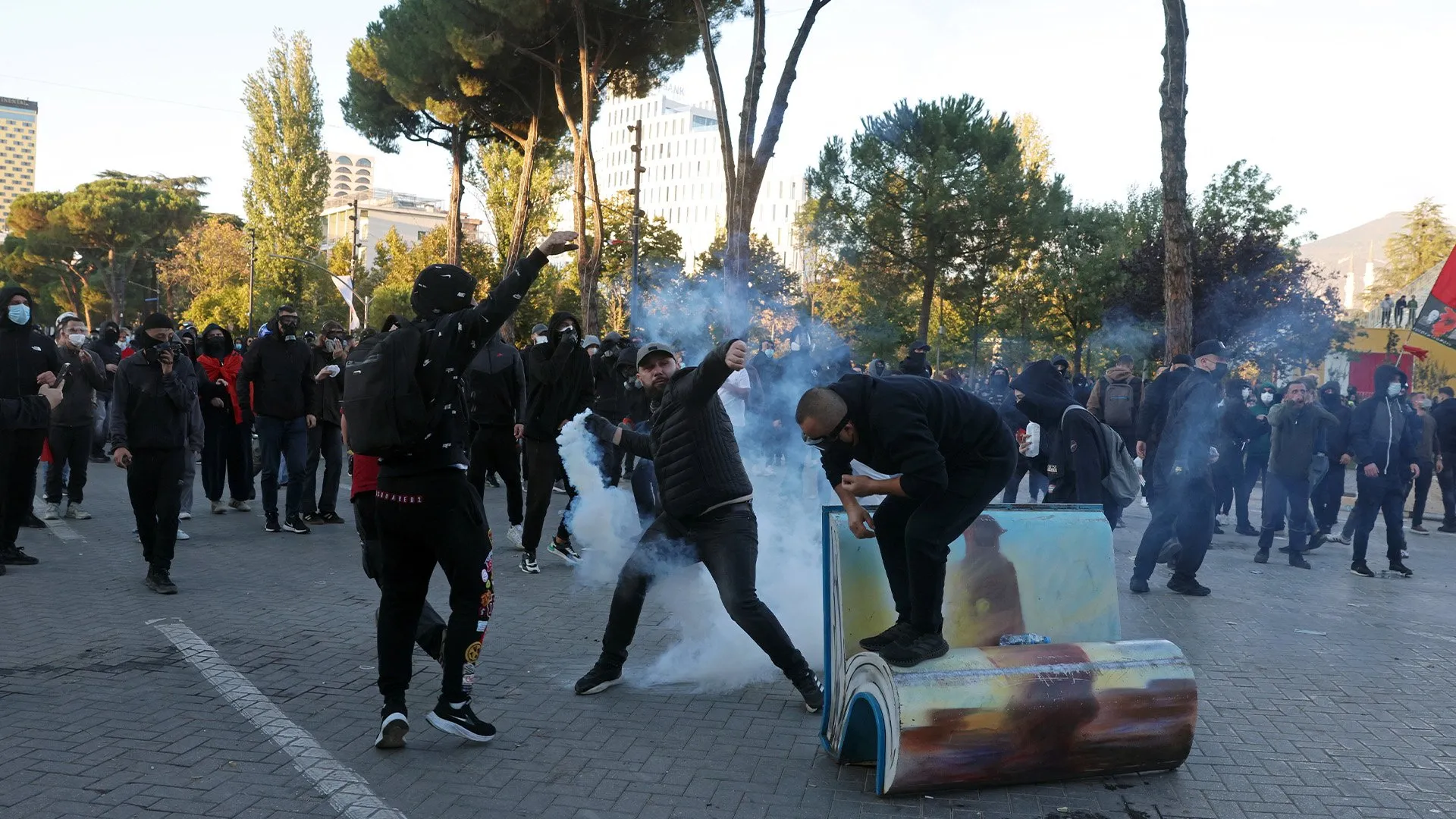
May 1 (UPI) — May Day demonstrations are expected Friday, as organizers call for boycotts of school, work and shopping in protest of the Trump administration’s policies.
The May Day Strong protests are to mark International Labor Day. While Labor Day in the United States is in September and is a celebration of the achievements of organized labor, May Day — May 1 — is traditionally a day of protest.
The message this year is that the United States should be “focusing on workers over billionaires,” National Education Association President Becky Pringle told NPR.
“We know there are bus drivers in New York and teachers in Idaho and nurses in Louisiana who are feeling the impact of a system that has decided … to put billionaires ahead of everyone else,” she said.
More than 500 labor unions, student groups and community organizations are expected to participate, organizers said.
A student group, Sunrise Movement, said on X that more than 100,000 students were expected to miss school in the one-day strike. The organization said it is made of “young people fighting fascism to win a Green New Deal.”
This year, rising prices and stagnant wages make this year’s protest especially important, Terrence Wise, an organizer with Missouri Workers Center in Kansas City, Mo., told USA Today.
“If you want to see real change, you’ve got to be a part of the solution. Because if you’re not out organizing and you’re not out in the streets and you’re not talking to your neighbors, you’re part of the problem,” Wise said.
May Day began in Chicago in 1886 as a protest demanding an eight-hour workday and is celebrated around the world.
“People have figured out who’s rigging the game and are taking action,” People’s Action Executive Director Sulma Arias told USA Today. “What we expect is people to come out and deliver a clear message. … They understand that they’re seeing broken promises by an administration that promised to make things more affordable. And yet none of that has happened for everyday people who are still struggling.”
White House spokesperson Kush Desai said the administration of President Donald Trump supports workers.
“The Trump administration has never wavered from standing up for American workers, from renegotiating broken trade deals to securing trillions in manufacturing investments to slashing taxes on overtime to securing our border. President Trump will always have the backs of American workers,” Desai said.
Groups arrive to participate in a May Day protest to voice concerns on issues ranging from actions of the Trump Administration, immigration, social issues, the Iran war, among others in Chicago, on May 1, 2026. May first is also known at International Workers Day. Photo by Tannen Maury/UPI | License Photo
Ruben Rocha Moya again denies allegations he shielded cartel, says taking ‘temporary leave’ to defend self.
The governor of Mexico’s Sinaloa state has temporarily resigned days after being charged by United States authorities in a sweeping drug trafficking indictment that has further strained relations between the two countries.
In a brief video statement posted late Friday, Ruben Rocha Moya again denied any wrongdoing, but said he was taking “temporary leave” to defend himself against the US allegations.
Recommended Stories
list of 3 itemsend of list
The indictment unsealed by US prosecutors earlier this week claimed that Rocha Moya and nine other officials directly aided the Sinaloa drug cartel in its smuggling operations in exchange for political support and bribes.
That support included members of the powerful cartel kidnapping and threatening opposition candidates in the 2021 election and stealing paper ballots cast for those running against Rocha Moya, the indictment charged.
Rocha Moya is a member of President Claudia Sheinbaum’s progressive Morena party.
“My conscience is clear,” Rocha Moya said in the video message. “To my people and to my family, I can look you in the eye because I have never betrayed you, and I never will.”
Juan de Dios Gamez Mendivil, the mayor of the Sinaloa state capital Culiacan who was among the other officials charged by the US, also announced he would step down on Saturday. He has denied the allegations.
Sheinbaum has also pushed back on charges, which come at a time when she has sought to navigate tense relations with the administration of US President Donald Trump.
On Thursday, she said her government had not been provided with any concrete evidence to back up the claims, suggesting the information laid out in the indictment was insufficient.
“My position on these events is as follows: truth, justice and the defence of sovereignty,” Sheinbaum said.
She added that if “clear and irrefutable evidence” is presented, the US still must proceed “in accordance with the law under our jurisdiction”.
Sheinbaum maintained her government will not “shield anyone who has committed a crime”.
“However, if there is no clear evidence,” she added, “it is evident that the aim of these charges by the [US] Department of Justice is political.”
Tense US-Mexico relations
Since taking office in January of last year, the Trump administration has heaped pressure on Mexico to do more to address migration and drug smuggling.
The approach has included Washington imposing a host of tariffs as leverage against Mexico’s government.
The US State Department has also labelled several Latin American drug cartels as “Foreign Terrorist Organisations”, an unorthodox move in line with the administration’s more militaristic approach to Latin America.
The administration has broadly argued that the criminal groups are driven, in part, by efforts to destabilise the US, a claim rejected by many longtime experts.
Sheinbaum has walked a careful line with Trump, increasing cooperation in countering cartels while pledging to protect Mexico’s sovereignty. Notably, she has staunchly opposed the prospect of any US military action on Mexican soil.
But experts have said charging elected officials in Mexico represents a major escalation in the Trump administration’s strategy.
Speaking to Al Jazeera this week, Vanda Felbab-Brown, an expert on non-state armed groups at the Brookings Institution think tank in Washington, DC, said the approach had “long been considered a very big step, almost a ‘nuclear option’”.
She predicted more US indictments were likely to come.
Social media is full of posts showing off photos and videos of fancy-looking cafes and restaurants in Gaza. Pro-Israeli accounts often use these images to claim that life is back to normal in Gaza, that people are not suffering and that no genocide ever took place.
These cafes and restaurants do exist. I have seen them myself.
In late March, I went on my first visit to Gaza City since the war started. I was shocked to see the destruction wrought on the city. There were piles of rubble at every corner. Unable to recognise the streets, I felt as if I were strolling through a maze. I soon arrived at an area nearby that shocked me even more. It was full of new cafes that did not exist before the war.
These were not makeshift or temporary places as one might expect; they were built with expensive materials, carefully painted, furnished with tables, sofas, and elegant chairs, with glass facades and shining lights. A luxury feel emanated from them. They looked so out of place amid the rubble and the half-collapsed buildings that it felt almost surreal to see them.
These new establishments do not prove that normality is coming back to Gaza. They are a testament to its continuing genocidal abnormality.
The war made some people in Gaza rich, especially those who engaged in illicit activities like smuggling, looting, and hoarding during acute shortages. This wealth is now coming out in various forms, including luxury cafes and restaurants.
In parallel, the vast majority of Gaza’s population has been thrown into abject poverty. While before the war, the average person was able to afford to sit at a cafe and have a drink and a bite to eat, today this is no longer the case.
Most people cannot even look at these new places, let alone enter them and order something. The vast majority of Gaza’s population lives in tents, has no electricity or potable water, and suffers from the loss of livelihoods. They are surviving on what little aid Israel is allowing through.
I am one of them. My family and I live in a tent pitched near the rubble of our home in the Nuseirat camp. We have lost our family livelihood. The comfortable life we used to have is now just a distant memory.
The expensive new establishments reflect the deeply unjust social order that has emerged in Gaza – one where war profiteering has elevated a new privileged class and collapsed the vast majority into misery with no access to proper education, healthcare and even food. The genocide did not just kill and maim people and destroy homes and schools; it eliminated the prospect of a normal life for most people in Gaza.
I could not afford the fancy cafes, so I continued down the street till I reached a more modest restaurant, which used to go to with friends before the war. Entering it felt like stepping back in time to the days before the war; the place was the same, with the same chairs and tables, and the familiar smells that filled the space.
I sat and observed, dwelling on fond memories of spending time there after university lectures. I ordered what I used to order: a chicken wrap, a soda and a small salad plate. The bill was 60 shekels ($20) – more than three times what I would pay before the war, when my family actually had a normal income.
The restaurant bill, together with the fare I paid for a shared ride to get to Gaza City (15 shekels or $5 one way), cost me a fortune. I felt guilty spending all this money to enjoy a glimpse of normalcy.
The few who are fortunate enough to be able to afford going to cafes and restaurants in Gaza may enjoy short moments of relief, a temporary escape from the horrors of reality. Yet these moments are limited, often accompanied by anxiety about returning to the destroyed streets, the bombed-out landscape and the trauma.
As I sat at Al-Taboon, I thought of the friends with whom I used to spend time: Rama, who was martyred and Ranan, who escaped to Belgium. I sat there alone, holding on to these memories amid the greyness of Gaza’s rubble and the lights of the generator-powered cafés.
The genocide has devasted everyone – even those who have profiteered from it. No amount of time spent in shiny cafes and restaurants will ever erase this reality.
The views expressed in this article are the author’s own and do not necessarily reflect Al Jazeera’s editorial stance.
Another assassination attempt on Donald Trump reveals mistrust in the media and conspiracy theories fill the gap.
An assassination attempt at the White House correspondents’ dinner underscored the spectacle, chaos and violence that have defined Donald Trump’s second presidency.
As journalists rushed to report what had happened, a parallel narrative of conspiracy was already taking shape online. Conspiracy theories get far more currency than they merit – and they are a by-product of an information landscape that has been muddied by Trump.
Contributors: John Nichols – Executive editor, The Nation Niall Stanage – White House columnist, The Hill Amber Duke – Editor-in-chief, Daily Caller Suzanne Kianpour – Cohost, Global Power Shifts podcast
On our radar
Russia’s effort to tighten internet restrictions and throttle Telegram has caused a furious public backlash. The uproar has forced President Vladimir Putin to admit the measures went too far. Ryan Kohls reports.
Israel’s information war on Lebanon
Throughout two years of war, Israeli forces have used drones, AI-powered targeting and the infiltration of Lebanese communications devices and the networks they rely on – to control the population, spread terror and kill people. And it has escalated its information war, using all kinds of propaganda to deepen fear and divisions within Lebanese society. We speak to Justin Salhani about the tactics Israel is using in Lebanon.
Featuring: Justin Salhani – Senior producer, Al Jazeera Digital
Former U.S. Rep. David Rivera, R-Fla., was convicted on Friday of lobbying on behalf of the Venezuelan government without declaring himself to be a foreign agent. Photo by U.S. House of Representatives
May 1 (UPI) — Former U.S. Rep. David Rivera, R-Fla., was found guilty on Friday of being paid to secretly lobby elected U.S. officials to ease sanctions against Venezuela.
Rivera and a co-conspirator were each found guilty of taking payment from Nicholas Maduro to try to repair ties between the South American nation and the United States but never registering as an agent of a foreign country, The Miami Herald and NBC News reported.
A 12-person jury found the former Miami-Dade congressman and consultant Esther Nuhfer guilty of lobbying Secretary of State Marco Rubio and Rep. Pete Sessions, R-Texas, and attempting to set meetings up for Delcy Rodriguez, Venezuela’s then-foreign minister and current acting president.
Rivera was also found guilty of conspiring to commit money laundering and tax evasion.
Rivera had long been friends with his former roommate Rubio and became friends with Sessions when he was in Congress, and after Maduro gave him a $50 million contract he attempted to leverage those relationships.
Both Rivera and Nuhfer were caught having not registered themselves of lobbying for the federal government on behalf of another nation.
The convictions come after a 5-week trial that saw Rubio, who was in the Senate in 2017, when he met with Rivera and was told a plan to convince Maduro to step down was afoot.
Rivera denied that he was working on behalf of Maduro and the Venezuelan government, insisting that he was working to overthrow the now-deposed ruler rather than to promote his interests.
Nuhfur was released on bond ahead of her sentencing, while Rivera was judged to be a flight risk and will remain in jail until he is sentenced.
Rivera also still faces charges in another foreign lobbying case, as well.
A federal appeals court on Friday night blocked the nationwide sale of mifepristone, also known as the abortion pill, after the state of Louisiana sued the federal government for allowing it to be sold during telehealth appointments and mailed to patients. File Photo by Bill Greenblatt/UPI | License Photo
May 1 (UPI) — A federal appeals court on Friday night issued a ruling that enacts a nationwide block on the prescription of the abortion pills in telehealth appointments and mailing them to patients.
A three-judge panel on the 5th Circuit Court of Appeals ruled in favor of the state of Louisiana, which had used to end a Food and Drug Administration rule that allows doctors to prescribe mifepristone without having an in-person visit, ABC News, Politico and The New York Times reported.
Mifepristone was first approved by the FDA in 2000 for medical termination of pregnancy, and until the COVID-19 global pandemic required that the drug be prescribed to patients during in-person doctor’s appointments.
After enacting a strict abortion ban in 2022, Louisiana then moved to reclassify mifepristone as a controlled substance and criminalized its possession, effectively making it illegal in the state.
Although Louisiana had made it illegal to prescribe or possess in the state, people could obtain prescriptions from out-of-state doctors have virtual telehealth visits, with the mails mailed to people’s homes.
As the COVID-19 pandemic spread across the country in spring 2020 and forced much of in-person life to stop, doctors sued the FDA for an exception to the in-person requirement to prescribe mifepristone.
The agency in 2021 announced that it would exercise “enforcement discretion” because of the COVID-19 public health emergency.
After Roe v. Wade was struck down by the U.S. Supreme Court, several states across the country moved to outlaw most abortions, but mifepristone continued to be available through telehealth appointments and the mail.
Louisiana told the court that it needed relief because of an alleged influx of abortion pills to the state, making the argument that mail-delivered abortion pills endanger the safety of women there.
“We are alarmed by this Court’s decision to ignore the FDA’s rigorous science and decades of safe use of mifepristone in a case pursued by extremist abortion opponents,” Evan Masingill, CEO of GenBioPort, which manufacturers the drug, told Politico in a statement.
“We remain committed to taking any actions necessary to make mifepristone available and remain accessible to as many people as possible,” Masingill said.
The UNIFIL has faced a growing number of casualties as Israel continues air raids despite a ceasefire and Hezbollah has responded with rockets and drones.
Published On 2 May 20262 May 2026
China’s ambassador to the United Nations, Fu Cong, has said there is a need to re-examine the UN Security Council’s decision to terminate the mandate of the longstanding peacekeeping mission in Lebanon, which is due to end later this year.
Speaking to reporters on Friday at the UN headquarters in New York, Ambassador Fu expressed China’s deep concern about the situation in Lebanon as Beijing assumed the council’s rotating presidency for May.
Recommended Stories
list of 3 itemsend of list
He observed that a genuine ceasefire did not exist in Lebanon, describing the current state of conflict as merely a “lesser fire”.
“We do believe that we should revisit the decision, actually, to withdraw the UNIFIL,” Fu said, using the acronym for the UN Interim Force in Lebanon.
“I think at least the view of the overwhelming majority of the Security Council is that this is not the time to really, to withdraw the UNIFIL out of that part of the country,” Fu said.
China is waiting for a report from the UN secretariat, expected in June, “before we take our position”, he added.
Fu also said, “It is incumbent on Israel to stop this bombardment of Lebanon.”
China’s UN Ambassador Fu Cong addresses a UNSC meeting in 2025 [File: Richard Drew/AP]
Created to oversee the withdrawal of Israeli troops after the 1978 invasion, UNIFIL saw its mandate expanded after the 2006 war between Israel and the Lebanese group Hezbollah and was responsible for a demilitarised buffer between the opposing sides.
However, the UNSC unanimously resolved last year to begin withdrawing the UNIFIL mission’s 10,800 international peacekeepers by December 2026.
According to Lebanese authorities, Israeli attacks on Lebanon since March 2 have killed 2,618 people and forced more than one million to flee their homes.
The UNIFIL mission has also faced a growing number of casualties. According to UN officials, at least six peacekeepers have been killed and many others injured since Israel began its attack on March 2.
The deaths include soldiers from various contributing nations, including Indonesia and France, who have been caught in shelling incidents and roadside attacks.
UN Secretary-General Antonio Guterres has condemned these incidents, noting that the UN’s “blue helmets” have come under fire while performing essential duties, such as clearing explosive ordnance and escorting logistics convoys.
UNIFIL head Major-General Diodato Abagnara pays tribute to French soldier Florian Montorio, who was killed while clearing a road in south Lebanon [File: Handout/UNIFIL via Reuters]
China’s UN Ambassador Fu Cong says maintaining the ceasefire and reopening the Strait of Hormuz are “urgent” priorities, warning the issue will be high on the agenda if it remains closed during President Donald Trump’s upcoming visit to Beijing.
PM Keir Starmer says the phrase ‘globalise the Intifada’ should be ‘completely off limits’.
Published On 2 May 20262 May 2026
British Prime Minister Keir Starmer says some pro-Palestine marches could be banned and people who use the phrase “globalise the Intifada” could be prosecuted.
In an interview broadcast by the BBC on Saturday, Starmer advocated for tighter language restrictions at pro-Palestine marches, adding that in some cases, rallies could be prohibited altogether.
Recommended Stories
list of 4 itemsend of list
“I’m a big defender of freedom of expression, peaceful protests,” he told the BBC. “But when there are chants like ‘globalise the Intifada’, that’s completely off limits.”
“Clearly, there should be tougher action in relation to that,” he added.
Discussions had been taking place with the police for some time about what further action could be taken, he added. Asked whether he sought to completely bar some rallies, Starmer said he thought that would be appropriate in some cases.
‘Likely to be arrested’
Starmer’s comments come after he earlier this week called the chant “globalise the Intifada” a case of “extreme racism” and said those who use it “should be prosecuted”.
Metropolitan Police Commissioner Sir Mark Rowley also told the BBC that people who use the phrase are “likely to be arrested”.
Supporters of the slogan say it reflects a call to expand the pro-Palestine movement into a global campaign.
Starmer has come under pressure after a spate of anti-Semitic incidents, including this week, when two men were stabbed in the north London suburb of Golders Green, which is home to a large Jewish community.
A 45-year-old British national who was born in Somalia was remanded in custody when he made his first appearance in court on Friday, accused of attempted murder.
Starmer visited the scene of the attacks and a Jewish volunteer ambulance service on Thursday and was booed by some locals, who accused him of not doing enough to protect them. They also denounced pro-Palestinian activists holding marches in British cities.
On Thursday, the UK increased its security alert level to “severe” – the second highest – in part because of the attack in Golders Green.
British authorities have repeatedly faced criticism for cracking down on pro-Palestine activism during Israel’s genocidal war on Gaza.
Last month, British police arrested more than 500 people during a mass vigil in central London to oppose the ban on campaign group Palestine Action.
“I think Britain has now descended into a non-democratic situation and I think that is very dangerous [for] free speech,” one demonstrator taking part in the vigil told Al Jazeera.
Who: Manchester United vs Liverpool What: Premier League Where: Old Trafford, Manchester When: Sunday, May 3 at 3:30pm (14:30 GMT) How to follow: We’ll have all the build-up on Al Jazeera Sport from 11:30 GMT in advance of our live text commentary stream.
Manchester United host old rivals Liverpool for a game that could prove crucial in the battle for Champions League qualification.
Recommended Stories
list of 4 itemsend of list
United have improved considerably under caretaker boss Michael Carrick, who took charge following Ruben Amorim’s dismissal.
They sit third in the table, three points ahead of Liverpool, and need two more points to secure a top-five finish and a spot among Europe’s elite next season.
Liverpool come into the match on the back of three successive Premier League wins.
United boss Carrick relishes ‘special’ Liverpool rivalry
Carrick believes Manchester United against Liverpool is always a “standout” fixture even though neither of the clubs are challenging for the Premier League title this season.
“Certainly one of my favourite games, without doubt it’s a standout game,” the United boss said. “There’s big games and big rivalries that we have with other teams, but certainly this one is right up there.
“The history, the ups and downs the past has produced in these types of games and the excitement and entertainment, and the emotion, which is a huge part of it. It makes it a really special game.”
The former United midfielder said the club had made great strides since last season, when they finished a miserable 15th in the table, 42 points behind champions Liverpool.
“I just think this probably shows the improvements of the group, really, and getting stronger,” he said.
“And to be coming into this game in such a good position, on the back of good results, and trying to achieve and moving forward.
“So, fully aware of the situation in the league and how close it is between us. But that’s not something, really, we’ve focused on going into this game. I think it’s a one-off game.”
Fernandes and the art of the assist as record beckons
Manchester United captain Bruno Fernandes is one assist away from the single-season record of 20 shared by Thierry Henry and Kevin De Bruyne.
Carrick believes Fernandes should be rewarded with the league’s Player of the Year award for his performances this season.
“Hopefully he does [win it],” Carrick said after Monday’s 2-1 win over Brentford.
“He deserves it for the impact he has had and the moments he’s created, whether it’s creating or scoring or having other influence within the group. He’s had a big season.”
Fernandes in action with Brentford’s Sepp van den Berg [Jason Cairnduff/Action Images via Reuters]
Salah ruled out of United game but will return before end of season
Liverpool forward Mohamed Salah will miss Sunday’s game due to a muscle injury, but manager Arne Slot confirmed on Friday that he was expected to return before the end of the season.
Salah was forced off during Liverpool’s 3-1 win over Crystal Palace last week with a hamstring concern, prompting fears it could end his campaign and potentially his Anfield career, with the Egyptian set to leave at the end of the campaign.
Liverpool said on Wednesday the injury was not as serious as initially feared and that Salah should feature again before the campaign concludes.
“As we know from Mo [Salah], he is always working incredibly hard when he is fit but also when he is injured to be back as soon as possible,” Slot told reporters.
“We expect him to be back for the final part of the season but not for Sunday [against Man Utd].
“In all ways, it is a big relief that his injury is minor, so he is able to play for us and at the World Cup. If ever there was a player that deserves a big send-off, it is definitely Mo.”
Salah celebrates scoring against Everton on April 19 [Jason Cairnduff/Action Images via Reuters]
‘I have seen how good they are’
Slot praised Carrick for improving United and stressed the importance of the game.
“We are aware of the fact that it is a very big game, not only because we play United but also to qualify for Champions League and to get the highest possible position in the league table,” Slot said.
“We always know that they are really good but now they are showing it in the league table. It might be a bit of an advantage that they only play once a week.
“When we have played them every time, I have seen how good they are and now they have, especially under Michael Carrick, become more consistent in their results.”
Head-to-head
The two clubs have met on 243 occasions, with Manchester United winning 92 games to Liverpool’s 82, while 71 of the matches ended as draws.
Last five encounters:
October 19, 2025: Liverpool 1-2 Man Utd (Premier League)
January 05, 2025: Liverpool 2-2 Man Utd (Premier League)
September 01, 2024: Man Utd 0-3 Liverpool (Premier League)
April 07, 2024: Man Utd 2-2 Liverpool (Premier League)
March 17, 2024: Man Utd 4-3 Liverpool (FA Cup quarterfinal)
What happened in the last game between the two sides?
Harry Maguire scored a late winner as United beat Liverpool 2-1 at Anfield in October to inflict a then fourth straight defeat on the champions.
Bryan Mbeumo put United in front after two minutes and although Cody Gakpo equalised in the 78th minute, Maguire grabbed his club’s first win at Anfield since 2016 with an 84th-minute header.
Maguire scores the winner at Anfield on October 19, 2025 [Carl Recine/Getty Images]
United’s team news
Carrick said forward Matheus Cunha had returned to training after a recent injury setback and should feature and he also said he was hopeful that Luke Shaw would be fit enough to play.
Matthijs de Ligt is still working his way back to full fitness and will not be involved against Liverpool.
Goalkeeper Alisson Becker is still out with an injury, but Slot said he is “very close” to being able to train with the squad again.
Deputy keeper Giorgi Mamardashvili is also sidelined for several weeks after sustaining a knee wound in the Merseyside derby win over Everton in April, so third-choice stopper Freddie Woodman is set to continue in goal after impressing in the 3-1 win over Crystal Palace last weekend.
Along with Salah, Conor Bradley, Giovanni Leoni and Hugo Ekitike are also unavailable due to injury – with the latter set to miss the World Cup with a ruptured Achilles tendon.
Left-back Milos Kerkez is a doubt as he has been nursing a knock.
Predicted starting XI:
Woodman (goalkeeper); Jones, Konate, Van Dijk, Robertson; Gravenberch, Mac Allister; Szoboszlai, Wirtz, Gakpo; Isak
Containers for export are stacked at a port in Pyeongtaek, around sixty kilometers south of Seoul, South Korea, 22 February 2026. Photo by YONHAP /EPA
May 1 (Asia Today) — South Korea’s exports rose 48% from a year earlier in April, staying above $80 billion for the second consecutive month, government data showed Friday.
Exports totaled $85.89 billion, the second-highest monthly figure on record after $86.6 billion in March, according to the Ministry of Trade, Industry and Energy.
The increase was driven by strong semiconductor shipments, which surged 173.5% to $31.9 billion on rising demand tied to artificial intelligence. Chip exports exceeded $30 billion for the second straight month and set an April record.
Daily average exports, adjusted for working days, rose 48% to $3.58 billion, staying above $3 billion for a third consecutive month.
Auto exports fell 5.5% to $6.17 billion due to logistics disruptions from the Middle East, U.S. tariff effects and expanded overseas production. Exports of electric and hybrid vehicles continued to grow.
Petroleum product exports rose 39.9% to $5.11 billion by value due to higher oil prices, though shipment volume dropped 36% because of export controls on gasoline, diesel and kerosene.
Petrochemical exports increased 7.8% to $4.09 billion, while shipment volume fell 20.9% as companies expanded domestic supply.
Computer exports jumped 515.8% to $4.08 billion, and wireless communication device exports rose 11.6% to $1.62 billion.
By destination, exports to China rose 62.5% to $17.7 billion, marking six straight months of gains. Shipments to the United States increased 54% to $16.33 billion, while exports to the Association of Southeast Asian Nations rose 64% to $15.41 billion.
Exports to the European Union increased 8.5% to $7.19 billion. Shipments to the Middle East fell 25.1% to $1.27 billion due to logistics disruptions.
Imports rose 16.7% to $62.11 billion. Energy imports increased 7.5% to $10.61 billion, while non-energy imports rose 18.8% to $51.51 billion.
South Korea posted a trade surplus of $23.77 billion in April, extending its surplus streak to 15 months.