Discover the latest happenings and stay in the know with our up-to-date today news coverage. From breaking stories and current events to trending topics and insightful analysis, we bring you the most relevant and captivating news of the day.
Fishermen in Gaza are using dinghies made of reclaimed fiberglass, wood, and doorframes salvaged from rubble left by Israeli airstrikes to help revive the territory’s struggling fishing industry amid material shortages.
Accra, Ghana – Ghana has recorded 14 arrests linked to false news and offensive speech in less than 16 months, nearly double the number documented during the previous administration’s entire eight-year tenure, according to the Media Foundation for West Africa (MFWA).
The rise has triggered a sharp debate in one of West Africa’s most stable democracies over whether authorities are simply enforcing long-standing laws in a new digital environment, or edging into a more restrictive approach to public speech.
The controversy carries added political weight because President John Mahama, while in opposition in 2022, warned that using state power to intimidate dissent was a “dangerous blueprint” for democracy.
Government: enforcement not repression
A senior ruling party official dismissed allegations that the arrests amount to a crackdown.
“The opposition intentionally sponsors people to insult the President,” he told Al Jazeera. “When the law catches up with them, they cry persecution to score cheap political points.”
He pointed to the case of TikToker Prince Ofori, known as “Fante Comedy”, who was arrested last August over alleged threats to President Mahama.
Days after his arrest, Ofori appeared at a political rally alongside opposition figures, a development the official said showed how quickly such cases become politicised.
“They paraded him at an opposition rally,” he said.
Opposition: a warning sign for democracy
Opposition leaders see something more troubling taking shape.
Minority leader Alexander Afenyo-Markin has been among the most outspoken critics.
“The state-sponsored persecution must stop,” he told Al Jazeera. “Arresting citizens for words that do not constitute genuine threats is not justice. It is intimidation.”
Police officers on security patrol in front of the Ghana black star symbol [Frank Kporfor/Epa]
He said free speech has limits, but argued that the state is increasingly crossing a line.
“Excessive use of state power risks undoing Ghana’s hard-won democratic gains,” he said.
Where is the line?
At the centre of the debate are long-standing provisions in Ghana’s Criminal Code and Electronic Communications Act, which authorities say are now being applied to a fast-moving digital landscape.
Government supporters argue the increase in arrests reflects the explosion of anonymous and unregulated online content.
Critics say the problem is not the laws themselves, but how they are being used.
A legal consultant who reviewed recent cases said he counted at least 16 alleged misapplications of Section 208 in the past 18 months, compared with roughly a dozen in the previous eight years.
“The law has been abused beyond repair,” he said. “Repeal is the only remedy.”
Veteran journalist Ben Ephson said Ghana needs clearer guidance on where free expression ends and harm begins.
“The government must properly explain the arrests so people can draw the line between press freedom and responsible journalism,” he said.
He added that both journalists and state institutions risk overstepping if the rules remain unclear.
“When you compare the freedom of the media and the rights of the individual, we need to be careful that the media, in trying to do their work, don’t trample on people’s rights,” he said.
A wider global debate
Others say Ghana’s debate mirrors tensions playing out in other democracies.
Tegha King of the Universal Peace Federation Ghana said concerns about shrinking civic space are not unique to Ghana.
“The global civic space must cultivate more free speech, not less,” he told Al Jazeera.
He said stronger institutions, not more arrests, are needed to manage the pressures of the digital age.
“There must be independent courts, transparent enforcement, media self-regulation and digital literacy,” he said.
Civic awareness and external concern
Some analysts point to gaps in public understanding of constitutional rights.
“There is a lack of constitutional education among many Ghanaians,” said David Adofo of the African Chamber of Content Producers. “People must know the consequences of their actions before they act, not after.”
Concerns are also being voiced outside the country.
“We have had many concerns from diasporans about perceived erosion of press and political freedoms, especially news of blogger arrests,” said Nana Kofi Opoku-Agyemang of the NuGhana Expat Center. “Negative news sells fast. The government must be cautious so it does not project a negative image of Ghana in the diasporan community.”
Government stance
Officials insist there is no coordinated effort to silence dissent.
An NDC communicator said the legal framework in question predates the current administration and defended the approach.
“Ghana’s laws, Section 208 of the Criminal Code and Section 76 of the Electronic Communications Act, have been on the books for decades,” he said. “What has changed is the sheer volume of reckless, anonymous and sometimes dangerous content on social media. There is no systematic crackdown. There is simply enforcement of existing law.”
Police stand guard during a Show of Force Exercise in Accra last December [Francis Kokoroko/Reuters]
A political irony at the centre of it all
Ghana remains one of West Africa’s more open democracies, with a competitive political system and active media landscape.
But the rise in speech-related arrests has sharpened scrutiny of how far the state can go in policing online expression without undermining the democratic culture that helped define its reputation.
The debate is also politically charged because of Mahama’s own past warnings.
As opposition leader, he described the use of state power against dissent as a “dangerous blueprint.” Today, critics say his government faces accusations it once condemned.
For Alexander Afenyo-Markin, the moment calls for restraint — and reflection.
“We should not continue to say that because it happened yesterday, it should happen today and tomorrow. That cycle must end,” he said. “President Mahama has an opportunity to leave a legacy of tolerance and free speech. I hope he takes it.”
Washington has extracted major concessions from Caracas since the Jan.3 strikes and kidnapping of President Maduro. (Archive)
Between the mid-1980s and the early 1990s, amid the terminal crisis and collapse of the so-called European socialist bloc, the era of struggle that had begun following the triumph of the Cuban Revolution came to a close in Latin America. A new phase began, during which the leftist and progressive social and political organizations and movements of the subcontinent went through phases of accumulation and de-accumulation of forces.
Phases of accumulation
From 1985 to 1998, these movements accumulated enough social power to topple neoliberal governments and enough political power to secure seats in local governments and national legislatures, but not enough to take control of the national government.
From 1998 to 2009, they accumulated enough social and political power to elect—and in some countries, to re-elect several times—leftist or progressive governments.
Phases of de-accumulation
From 2009 to 2012, there were no electoral defeats for leftist or progressive governments, but there were coups d’état of a “new type” in the “weakest links in the chain”: Honduras and Paraguay.
In 2013 and 2014, there were no electoral defeats, but the margin by which the left retained power in Venezuela and El Salvador was reduced to a bare minimum.
From 2015 to 2019, electoral defeats in Argentina, El Salvador, and Uruguay, coups of a “new type” in Brazil and Bolivia, along with Lenín Moreno’s betrayal in Ecuador, broke six of the “strongest links in the chain,” and the siege against Venezuela, Nicaragua, and Cuba intensified.
Phase of partial recovery and subsequent acute loss of strength
Following the election of Andrés Manuel López Obrador as President of Mexico in 2018 and Alberto Fernández in Argentina in 2019 at the end of the phase of decline, between 2020 and 2024, the left and/or progressive movements regained power in Bolivia, Honduras, Brazil, and Uruguay, held power in Chile, Colombia, and Guatemala, and lost it again in Chile and Honduras in November and December 2025, respectively. In January 2026, President Nicolás Maduro and his wife Cilia Flores were kidnapped by the US military and are currently being held illegally in that country.
Predominant factors in the phases of accumulation (1985–1998 and 1998–2009)
The legacy of the historical accumulation of popular struggles, particularly during the period ushered in by the Cuban Revolution in which other revolutionary or reformist processes did not succeed or survive, contributed to opening up spaces for legal struggle.
The rejection of the genocidal repression traditionally employed against the peoples of the region forced the United States and its Latin American allies to seek less brutal forms of domination.
The momentum of popular movements in full swing brings into the political and electoral struggle social sectors that previously lacked the consciousness, motivation, or conditions to participate in it.
The protest vote against neoliberal governments by broad sectors of the population that were not politically conscious could nonetheless be turned against leftist and progressive forces if they failed to meet their expectations, whether fair or unfair, rational or irrational.
Predominant factors in the de-accumulation phases from 2009 onward
Historical accumulation depreciates. As time passes, with the superseding of recent realities, the emergence of new social expectations and demands – in some cases due to the fulfillment and in others due to the unfulfillment of previous ones – and the shortcomings and errors of the left and progressivism, there is a relativization or devaluation of the historical legacy.
The brutal repression of the past was replaced by “full-spectrum destabilization” against progressive and left-wing governments.
Due to their dissatisfaction with left-wing or progressive governments over the failure to fulfill their economic and social promises – due to the “constraints” of the system, pressure from the powers that be, and shifts toward the “center” to broaden their electoral base – a large part of the popular social movements that had provided decisive support in earlier phases began to exercise punitive abstention against them.
Social sectors without political ties or preferences, which in an earlier phase cast their protest votes against neoliberal parties, began to cast them against the left and progressivism.
With the exception of Uruguay, the overthrow, defeat, or betrayal of left governments was followed by the criminalization, prosecution, and, in many cases, imprisonment of their leaders, most notably Lula in Brazil.
The transformative processes with the greatest capacity to remain in power have been those in Venezuela and Nicaragua, which set out to and succeeded in establishing control over all the institutions of state. It is this concentration of power that has guaranteed the survival of the Cuban Revolution over six and a half decades. However, in Venezuela and Nicaragua there is a contradiction between the formally prevailing liberal/bourgeois system and the actually prevailing institutional system, with characteristics of state socialism, in which a political party – not the only one, but certainly the dominant one – monopolizes control of the four branches of government, the armed forces, and the security services.
The incompatibility between the formally existing institutional system and the institutional system actually in place in Venezuela and Nicaragua remained latent as long as the leaders of their respective transformative processes enjoyed widespread popularity and maintained high levels of approval, or raised expectations regarding the fulfillment of social needs and interests. However, this concentration of power has both a positive and a negative aspect:
The positive aspect is that it has been decisive in resisting the policy of encroachment, economic blockade, and political isolation that has affected Cuba since the triumph of its Revolution (1959), Nicaragua during the two periods of FSLN rule (1979–1990) and (2006 to the present), and Venezuela since the first term of Hugo Chávez’s government (beginning in 1999).
The negative aspect is that it distorts the relationship between the end and the means. The end was to develop a national project that would satisfy society’s material and spiritual needs and aspirations, and the means was to establish a power capable of guaranteeing that national project. The distortion consists in continuing to exercise power when one no longer has the capacity to satisfy society’s needs and aspirations, either because one failed to develop that capacity or because it was lost.
Given that external and/or internal forces are attempting to undermine or overthrow the established institutional systems in these countries, and given that neither of them has managed to make progress in building a new society – with this project becoming unattainable in the form and substance originally envisioned – the defense of power becomes an end in itself.
When evaluating any process of progressive social reform or revolutionary social transformation, it is necessary to consider the extent to which it has met or failed to meet its historical goals. In cases of failure to meet these goals, one must take into account the adverse and external factors that have influenced this outcome. However, it cannot be ignored that, even if resulting from such factors, the failure to meet historical goals erodes these processes. In essence, every transformative process is compelled to achieve its historical goals within a timeframe no longer than the moment society perceives it as an “eternal uphill battle.”
The Venezuela Case: Between Reality and Utopia
The kidnapping of President Nicolás Maduro and his wife Cilia Flores by the US military – along with the questions of how such an operation could have been carried out (no less than inside the headquarters of the Bolivarian National Armed Forces!), how the kidnappers knew where they would be sleeping that night, and that they were indeed there, why there was no response, which had been assured would occur in the event of any aggression against Venezuela, and, on top of all that, that the outcome is a “normalization of relations” with the aggressor power agreed upon by the very government that Maduro headed – reveals the fragility of revolutionary processes that claim to have a solid base of popular power, but events like this reveal that, in reality, they lack it.
Twenty-seven years and five months after the start of the Bolivarian Revolution – the first link in a chain of elections and re-elections of leftist and progressive governments that has become increasingly fragmented since 2009–2019 and is now practically extinct – it is time to face reality and assess to what extent the parties, movements, fronts, or coalitions that have held and/or currently hold power in their respective countries are aware of the true relationship between their rhetorical utopias and their political realities.
Between every emancipatory utopia and its corresponding reality lies a “missing link.” The “missing link” between utopia and reality creates a “gap” between the project of revolutionary social transformation or progressive social reform and the transformative or reformist process intended to bring it about. The danger lies in failing to recognize the cumulative widening of the “gap” between utopia and reality and clinging to a utopia as the foundation of a process of revolutionary social transformation or progressive social reform that is increasingly deviating from and becoming disconnected from it.
The disconnect between utopia and reality has consequences, including most notably: the conversion of utopia into dogma; the social alienation that every reformist or revolutionary process is meant to eradicate; the divergence of interests and direction between “leaders” and “followers”; the drift of the process toward disillusionment and failure; and, in well-known historical experiences, such as that of the USSR (to mention only the most prominent), the absolute empowerment of a caste that creates and defends its own political and economic interests, leading to the negation of utopia: from the very pinnacle of “power” itself!
Utopia must be systematically grounded in reality through the active, genuine, and effective participation of society, and never reaffirmed or reformed from “above.” This reevaluation and renewal led by society is the only way to ensure that utopia not only serves as a guide, as Galeano says, but also serves to walk the path that turns it into a political, economic, and social reality that is as close as possible to the vision itself.
Based on experiences and studies conducted in previous decades, since the beginning of the chain of elections and re-elections of leftist and progressive governments in Latin America, attention has focused on denouncing media warfare, cognitive warfare, cultural warfare, and fourth- and fifth-generation warfare. In recent years, Caracas has been the main venue for events and the most active platform for denouncing this form of counterrevolutionary action. These analyses and denunciations must continue “at full speed,” but we must also recognize and accept that this is not the only threat facing leftist and progressive governments and political forces.
All forms of external and internal counterrevolutionary activity must be analyzed and combated, but with the knowledge and understanding that this is not the only battlefront. Another front, just as important or even more so, is the recognition and eradication of our own weaknesses and errors, which make transformative and/or revolutionary processes vulnerable to enemy strategies and tactics. What has happened in Venezuela is proof of this omission: plenty of denunciation of the enemy and little to no self-reflection.
The moral of the story is that yes, we must denounce and unmask the enemy. But no, we cannot focus attention on denouncing the enemy at the expense of recognizing and eradicating our own weaknesses and mistakes.
Roberto Regalado is a Cuban political scientist and PhD in Philosophy. He is a professor at the Center for Hemispheric and U.S. Studies at the University of Havana (CEHSEU) and a member of the Historical and Social Literature Section of the National Union of Cuban Writers and Artists.
He is the author of, among other essays, Latin America Between Centuries: Domination, Crisis, Social Struggle, and Political Alternatives of the Left (2006), Encounters and Disagreements of the Latin American Left: A View from the São Paulo Forum (2008), The Latin American Left in Government: Alternative or Recycling? (2012), and numerous articles in specialized journals.
The views expressed in this article are the author’s own and do not necessarily reflect those of the Venezuelanalysis editorial staff.
The Korean War began on June 25th 1950, when troops from Communist-ruled North Korea invaded South Korea.
There was a boycott of the United Nations by the Soviet Union at the time, and therefore, no veto, which allowed the UN to intervene when it became apparent that the superior North Korean forces would easily take over the entire country.
The Soviets and the Chinese backed North Korea, with the participation of millions of Chinese troops. After large advances on both sides, the war eventually reached a stalemate.
The 1953 armistice, never signed by South Korea, split the peninsula along the demilitarized zone near the original demarcation line.
No peace treaty has ever been signed and technically, the two countries are still at war.
The Korean War was the first war in which a world organization, the United Nations (UN), played a military role and a major challenge for the United Nations, which had come into existence only five years earlier.
Across South Korea, officials and citizens will pray and lay flowers at the graves of the war dead. It is common practice to display the flag of South Korea on the front doors of homes to commemorate the civilians and soldiers who died in war.
In 1956, South Korea held its first memorial ceremony for soldiers who died in the Korean War. Memorial Day was declared a public holiday on April 19th 1956, just three years after the war ended.
US President Donald Trump hailed stronger-than-expected jobs growth before pivoting to Iran, saying negotiations with Tehran “seem to be going quite well”. Trump offered no further details on the talks as he arrived in Wisconsin for an agriculture event.
An acclaimed biopic about Israeli lawyer Lea Tsemel, who has dedicated her life to representing Palestinian defendants charged by Israeli authorities, has been shortlisted for an Oscar.
“Advocate” is one of 15 films shortlisted in the Documentary Feature category, out of an original 159 submissions. The final five contenders will be announced next month.
The award-winning documentary, co-directed by Rachel Leah Jones and Philippe Bellaiche, has been vociferously attacked by right-wing Israeli groups and Israel’s Culture Minister Miri Regev.
When “Advocate” won Best Picture at the DocAviv festival in Tel Aviv, Regev condemned “the choice to make a movie focusing on a lawyer who represents, supports and speaks in the name of many who undermine the State of Israel’s existence, [and] use terrorism against its soldiers and people”.
In awarding the film, DocAviv judges wrote that “Advocate” is “a thought-provoking project that addresses an important subject and demonstrates impressive cinematic skills, especially the innovative and intelligent use of animation… [It] sketches out a complex portrait of a strong and inspiring woman who believes in the justness of her path with all her heart.”
The award was greeted with outrage, and following an organised campaign, Israel’s state lottery company subsequently announced “it would be pulling its funding for future grants given to best picture winners at Tel Aviv’s documentary film festival”.
Weekly insights and analysis on the latest developments in military technology, strategy, and foreign policy.
Yesterday, TWZ published an analysis of a thermal image purportedly showing a previously unseen advanced aircraft design, which appears to be a precursor to the U.S. Air Force’s forthcoming F-47 fighter from Boeing. The image, which went viral online and is from a video that has now been released, is said to have been captured near the U.S. military’s secretive Groom Lake test base, better known as Area 51. It turns out, as a number of our readers have pointed out, there may be some interesting similarities between this secret aircraft and a “Christmas tree” fighter design concept crafted decades ago by Darold Cummings, one of the top minds behind Northrop’s YF-23 Black Widow.
You can find our full initial assessment of what we may be seeing in the viral image, first posted online by the Project Fear YouTube channel earlier this week, here. What we saw initially, as shown below, appeared to feature what could be described as a “double arrowhead” profile to its forward fuselage. This is a very distinct design cue, but it could also be a result of the low quality of the image and the artifacts that come with consumer-grade thermal imagers, which was what the aircraft was recorded with.
A close-up look at what is visible in the viral thermal image. Capture via Project Fear
Project Fear has now released the full video it says it captured near Area 51, seen below, and it underscores the aforementioned points about image quality. So, it is possible the aircraft has a more traditional low-observable ‘shovel nose,’ instead. Nonetheless, the Christmas tree fighter is an interesting trip down lesser-known fighter development memory lane that is worth examining, in particular what such a unique nose configuration would provide an advanced fighter aircraft.
The full clip of the mysterious aircraft passing by starts at around 49:34 in the runtime of the video below if it does not automatically start playing at that point.
We Filmed a Top Secret Craft Flying at Area 51
People are asking why it would be running a very bright light. Multiple reasons, could have had an emergency for all we know. But most likely, would be to keep its silhouette from being seen from certain aspects from the ground. Bright lights are established practice for… https://t.co/mxEvG2EUkz
“I was hired by Bob Sandusky in 1982 to be the Chief Configurator for the Northrop ATF [Advanced Tactical Fighter] program (YF-23). In early 1983 Bob said that Northrop had tried to develop a ‘4-spike’ (like the B-2) fighter, but it couldn’t be done, since a flying wing fighter was not possible,” Cummings wrote in his post on LinkedIn. “I told him I could design one, and he said to give it a try. The only way to accomplish this was with a series of highly swept (55 degree) surfaces over the entire length of the aircraft. The result was the DP-21, created in June of 1983.”
“4-spike” here essentially refers to the total number of radar cross-section hot-spots and where they are located, each pointing in a different direction in azimuth. The fewer ‘spikes’ a low-observable (stealthy) aircraft has, the easier it is to manage its radar signature, and to make it harder to detect and lock onto, but it’s also where those spikes are located that matter.
The blueprint of the DP-21 “Christmas Tree” fighter concept. Darold Cummings
A four-spike design like the B-2 critically has nothing from the head-on aspect, as well as from the rear, which helps immensely with survivability. These are the most critical signature areas, especially the front as the aircraft is heading into hostile territory. Also, because these are located along the path of flight, these spikes can stay consistent on a threat radar as the aircraft moves directly toward or away from the sensor, and are not fleeting in nature like those from the side. So a four spike aircraft would be very attractive for a tactical fighter meant to persist in contested territory.
“I never considered this to be a serious contender for the ATF program, as the aircraft was unstable beyond 10 degrees angle of attack!” he also noted.
“Back in 1983, the ‘Christmas Tree’ DP-21 would have been difficult to fly. However, with modern flight control systems, this design could be controlled, even at high angle of attack,” Cummings told TWZ directly today after we reached out for more information. “Low observability is always better served with long edges on the design, so the small arrow-shaped foreplane is not ideal, but it still has low RCS characteristics, just not the optimum.”
“Wing shaping is always a trade-off for maximizing LO. Most of the trades have to do with the leading edge contour, which is a large contributor to signature,” he continued. “The canard has to be designed to be ‘ported’ during penetration, as this minimizes the signature. On the YF-23, the V-Tail was ‘ported’ in penetration for the same reason. This is certainly possible with modern flight control systems.”
“Ported” in this instance refers to keeping the control surface locked in the same geometric plane as the wing while cruising.
A top-down look at the YF-23 during a flight test. USAF
We also asked Cummings directly whether it was possible his DP-21 concept had an influence on what is seen in the viral thermal image, assuming it is authentic. And we asked for his take on what impacts Boeing’s experimental X-36 and Bird of Prey designs may have had on the F-47, as well.
“My DP-21 aircraft image has been available publicly for quite some time, so it is possible it had some influence, but that is only speculation on my part,” he told us. “I believe the X-36 and Bird of Prey have both influenced the F-47 design. I have always been impressed by the X-36, as it seemed to be ahead of its time.”
Boeing’s X-36 demonstrator. NASA/Carla Thomas Boeing’s Bird of Prey. USAF
“The Groom Lake images are truly intriguing,” he also noted. “It is a viable concept.”
“I think the main thing to remember is that NO ONE thought a 4-spike design (like the B-2) was possible, and my DP-21 was an example of how it was possible,” he added. “A 4-spike design for the F-47 would truly be impressive!”
“The image shows an exotic design by any interpretation. The aft-set lambda-type wings appear to have a camber and wingtip droop, as on the Boeing Bird of Prey demonstrator. There are very large canard foreplanes — a feature that appears prominently on F-47 renderings and which we have written in detail about in the past. The broad nose, too, is something that has been included in depictions of the F-47, although we have really no idea to what degree these are based in reality. It’s worth noting that in this new thermal image, it has a distinctive double-arrowhead shape, tapering in again in front of the canards. Even the canards themselves may have more than one plane, with the outer tips being drooped, matching similar architecture as the wing. The fuselage then tapers down in the center before the wing roots begin.”
“The aircraft is very likely to be tailless, a feature common to most sixth-generation concepts seen so far. However, since it’s seen from below, we cannot be sure about this aspect of its configuration.”
“As for the powerplant, it is most likely a twin-engine design, like the F-47, a theory reinforced by the sawtooth-type trailing edge. There is no obvious suggestion of any exhaust plumes, which seems odd, but that could be the result of the sensor being used in combination with the aircraft’s power setting at the time of recording, as well as general thermal signature reduction capabilities that are part of the design.”
Beyond the nose end, there are still some very broad similarities in the shaping of the wing and main body of the aircraft seen in the footage and Cummings’ DP-21 concept.
As we noted yesterday, what is seen in the viral thermal image could be unrelated entirely to the F-47. The Navy has also been pursuing a carrier-based sixth-generation fighter, commonly referred to as F/A-XX, in recent years. There has been at least some crossover between F/A-XX and the Air Force’s NGAD effort. A rendering Boeing has shared of its proposed F/A-XX design looks very much in line with what has been shown of F-47 to date. Northrop Grumman is the other company currently competing to build the Navy’s sixth-generation carrier fighter, and has released its own renderings.
Boeing’s F/A-XX render. Boeing
In addition, it should be said that official F-47 and F/A-XX renderings released to date will have been carefully manipulated to maximize security of the programs, both of which remain highly classified, and to provide disinformation to adversaries.
As an aside, Darold Cummings also shared his take on a prospective navalized version of the F-47 in a separate post on LinkedIn last year. At that time he wrote:
“I received a DM asking if I had envisioned a Navy version of my recent F-47 fighter concept, such as the F-35A to F-35C approach. I recently completed my F-47 Navy version, which I call the F-47N. However, the approach I took was somewhat different: The F-35C used a larger wing for low speed lift, whereas I used my original F-47 wing planform, and added a canard for more low speed lift and control. The canard design (inspired by the X-36), coupled with the Multi-Axis Thrust Vectoring (inspired by the X-44), provided a very reasonable first cut at a Navy version. In general, a canard layout has been treated as adding more radar signature to a fighter. However, on the YF-23 we found that if the all-moving surface (it was a V-tail on the YF-23) was kept “ported”, in this case aligned with the wing plane during cruise, the impact on LO was not a large impediment to signature reduction. The ability to keep the canard ported is achievable using thrust vectoring for trim in cruise and penetration modes.”
Cummings’ interpretation of the F-47 design at that time notably did not reflect his previous DP-21 concept. The X-44 design he mentioned is also known as the Multi-Axis No-Tail Aircraft (MANTA), and was derived from F-22. At least to our knowledge, the MANTA never came to be. The designation was recycled for an entirely unrelated flying wing-type drone, the existence of which was first reported by TWZ.
Darold Cummings’ drawing of his notional “F-47N.” Darold CummingsRenderings of the X-44A MANTA. Lockheed Martin/NASA
It’s also worth noting that the design in the newly emerged thermal video could be tied to one of many other programs, including uncrewed ones. Still, it is very much in line with what we would expect to see from a design related to the F-47 and it seems very likely this is the Boeing NGAD demonstrator, if the video is indeed authentic, which it appears to be.
It would be nice to say that we will have to wait and see whether this aircraft turns out to have a more traditional shovel-shaped nose, or even a mild Christmas tree-like design, but we may never see it again. Hopefully that is not the case, especially after the F-47 goes public, but the final design will have significant differences from its technology demonstrator forebears.
Special thanks to @ElectroFluidSys on X for bringing Darold Cummings’ posts on LinkedIn to our attention.
“Life was good back then. We had everything in abundance.”
When Jummai Usman says this, she is anchoring herself to a version of Geriyo, a community in Yola, Adamawa State, in northeastern Nigeria, that younger generations in the area may never know.
Born and raised on the shores of Lake Geriyo, she considers this place her ancestral home. Her parents were fish traders, and she married a fisherman. Her husband would catch the fish and bring them to her to roast and sell to traders, and for decades, this trade sustained them and their children.
Jummai, then married, was 16 years old when the Federal Government of Nigeria established the Lake Geriyo Irrigation Project in 1976. The 24-hectare initiative was managed by the Upper Benue River Basin Development Authority (Upper Benue RBDA) in Yola, under the Federal Ministry of Water Resources.
It began with 52 registered local farmers, offering them irrigation water and modern agricultural extension services, with water pumped directly from the River Benue. Residents were excited about the project at the time, Jummai recalled, and considered it a means of advancement. Farmlands were carved out and assigned to registered farmers, and an office was established to oversee these activities.
“We paid a fine back then, but I don’t remember how much. My husband paid for it. We called it the water and land levy,” Jummai, who is now 66 years old, said.
Over time, more people flocked to the area, and the lakeside settlement gradually expanded. The site has since grown to cover 429 hectares and now accommodates more than 2,000 farmers.
Among them are people like Ali Usman*, who built his life around Geriyo Lake. He moved to the area at the age of 15 and has lived there for about 25 years, farming and fishing along the lake. “I rent three hectares of land annually. I used it to harvest 100 to 120 bags of rice combined,” he said.
Now a father of seven, Ali fears he may no longer be able to provide for his family, as farming and fishing around Geriyo are becoming harder for thousands who depend on the lake for survival.
Long credited with improving livelihoods in the area, the Lake Geriyo Irrigation Project is now at the centre of a slow-moving crisis: a shrinking lake, years of institutional neglect despite millions of naira in rehabilitation funds, and a community that has lost its home. HumAngle spoke to several of the residents, who described losing their livelihoods to years of neglect that have left the lake overwhelmed.
‘Geriyo Lake is dying’
The ecological collapse of Geriyo Lake did not happen overnight. Residents have watched it shrink steadily over the years, especially over the past five years, as its waters have receded, its fish have become scarce, and its capacity to sustain farming and fishing has diminished season by season.
Jummai, who has seen the lake in its glory, says it is dying. She believes the shrinking is responsible for the decline in fishing in the area. “Even when we were living by the riverbank decades ago, the place barely got flooded,” she said, adding that the lake had depth back then.
The heavy rainfall on May 18 in Yola brought much-needed relief to farmers in the area, marking the start of the farming season. However, it also stirred fear and concern among the residents of the Geriyo community. Residents say that if the rain continues at this intensity, their homes and farms may be submerged, and farming will come to a standstill.
Since farmland is usually flooded during the rainy season, some residents told HumAngle they had stopped farming in the area. Others, however, still take the risk, even though the results are often catastrophic.
While this fear lingers in the hearts of farmers who are yet to harvest the crops they planted during the dry season, some fishermen seized the opportunity to cast their nets, as they haven’t done so in a while due to the shrinking lake.
“Fish are scarce. We don’t get it like before, so we take advantage of every water channel across the lake to cast our net,” a fisherman in the area told HumAngle, adding that the shrinking lake has affected his trade in the area, making what was once a regular activity only an occasional one.
A fisherman casting his net around a water channel in the Geriyo region. Photo: Saduwo Banyawa/HumAngle.
Bala Abubakar*, another fisherman in the area, said that overfishing, the shrinking of Lake Geriyo, and poor regulatory practices all contribute to the challenges faced by fishermen. Even though regulations stipulate that only registered fishermen are allowed to fish in the lake, and guards have been stationed to secure the lake at night, Bala said some fishermen still bypass these rules by paying a token fee to the guards.
To control fishing in the area, HumAngle learned, the Geriyo Lake is often declared closed by the Upper Benue RBDA and then reopened for a limited period – typically during the dry season when the lake dries up.
“At the time the lake will be opened, there will be a leader for each group, and the leader will present the list of his group members, and they might say the group will pay a hundred or ₦200,000 as a passage fee. It depends. And when the lake opens, the group members will go and catch fish for specific months,” Bala explained.
An environmental assessment by researchers at the Federal College of Education, Yola, in 2024 found that fish populations in Lake Geriyo are declining due to largely unregulated fishing practices. The researchers stated that severe pollution of the lake, caused by urban waste and agricultural runoff, has also displaced the fish. The effects are visible in the market.
Get our in-depth, creative coverage of conflict and development delivered to you every weekend.
Subscribe now to our newsletter!
A dumpsite at the Geriyo Lake area. Photo: International Journal of Chemistry and Chemical Processes.
Rukaiyatu Sani, a resident of Geriyo and a fish seller, says her business has suffered over the past few months. She noted that when the fishermen make a catch, they sell the fish at a higher price because they have other water levies to pay. “For instance, we used to buy a basket of fish for ₦20,000, but now we buy at either ₦40,000 or ₦45,000,” she said.
Bashir Abubakar, a professor of environmental resource management at Modibbo Adama University, Yola, corroborated the researchers’ findings. He attributed the shrinking to “a lot of things”, including siltation. “There are encroachment and unsustainable land uses, overfarming, overfishing, tree cutting, and sediment erosion from urban expansion activities around the lake. So all these are inimical to the survival of the lake itself,” he said.
Bashir explained further that the recurring floods in the Geriyo area stem from its close hydrological relationship with the Benue River — itself under severe stress.
“When the River Benue becomes full as a result of heavy rainfall, Lake Geriyo also becomes full. When there is a reduction in the size or volume of water in the River Benue, naturally, Lake Geriyo too becomes relatively dry,” he said, adding that siltation, climate change, population explosion and pollution are the basic issues affecting Geriyo.
“More than 70 per cent of what used to be the river Benue is now land with evidence of permanent vegetation, which shows water has not been reaching those places. So this one affects Lake Geriyo, too,” the professor said.
We used a combination of planetary mapping tools in Google Earth Engine to track the lake’s footprint over more than two decades. We pulled historical data from NASA and the USGS’s Landsat 9 satellite to map Lake Geriyo as it was in 2000, and contrasted it with high-resolution imagery captured by the European Space Agency’s Sentinel-2 satellite in 2026.
From high above, satellite images of Lake Geriyo reveal a vital ecosystem being choked to death from the bottom up. As the lake loses depth, it accumulates soil over the decades through soil erosion, causing loose soils to progressively fill the lake’s deep basin with mud.
The satellite imagery shows that the visible water area actually climbed from 1.28 sq km to 1.91 sq km. Meanwhile, the terrain satellite explains why: the average slope of the entire lake basin is a mere 1.35 degrees, a gradient so low that the choked water has nowhere to go but out, creating a shallow basin detrimental to both aquatic and life near the banks.
Satellite image analysis of Lake Geriyo between 2000 and 2026. Illustration: Mansir Muhammed/HumAngle
While fishermen in the area are grappling with a changing environmental landscape, farmers are also bearing the brunt of Geriyo’s degradation, which leads to annual flooding and loss of soil fertility.
For instance, Ali, who used to harvest over 100 bags of rice from his combined three hectares, now barely makes half that amount. “If I get 50 bags, that means I am lucky,” he said.
The Lake Geriyo Irrigation Project, established primarily to provide irrigation and agricultural extension services to local farmers in the region, appears to be falling short of its mandate to supply water. While some locals attribute this to the lake’s shrinking, others believe the rise in fuel prices is to blame.
Farmers say they pay a standard levy, but not all of them have access to the same level of service. The higher the service fee paid, the higher the quality of service one can expect from the Upper Benue RBDA office at Geriyo, according to local sources.
“I pay ₦4000 per bed, which only covers the rent fee for land. Those who pay higher enjoy access to irrigation services from the office. Their farms are supplied with enough water, and their harvests are always bountiful compared to ours,” he said.
The complaints about unequal access to irrigation come despite significant public spending on the project in recent years.
Records on GovSpend, a civil society-run platform that tracks and analyses federal government spending, show that ₦32,827,212 was paid to Dect Engineering Limited for “refurbishing, services, lubricating, and installations of M&W pumps at Lake Geriyo Project” on Nov. 18, 2024. Another ₦56,365,196 was paid to South Belgride Oil on Sept. 5, 2024, for the supply of “45,000 litres of diesel” to the site. Both payments were made under the supervision of Upper Benue RBDA.
Despite these investments, farmers say the benefits are not evenly distributed. In Geriyo, the irrigation plant operates mainly between December and May annually, the area’s peak irrigation season, with water pumped two to three times a week. While this suggests that the system is functional, access to the pumped water remains unequal. Consistent with earlier complaints, farmers who pay higher levies receive water directly from the irrigation network, while lower-paying farmers often have to fetch water from the lake themselves.
A screenshot of the payment details on GovSpend.ng.
The disparities extend beyond water access. HumAngle learned that land allocation is also linked to rental costs, with more expensive plots generally regarded as more fertile. Ali said he pays between ₦70,000 and ₦100,000 per year in land rent, while others pay more. Since all fingers are not equal, low-income farmers suffer most from environmental degradation.
The sudden notice to vacate
The ecological crisis, devastating as it is, has been compounded by a series of state decisions that have left the community with nowhere to turn.
In 2023, locals living along Geriyo Lake received a notice from the local office ordering them to leave the area. While some residents left within weeks of the notice being issued, others remained. For Jummai, Geriyo is the only place she has ever known, so she had nowhere else to go.
“We were told that the place belonged to the Adamawa Emirate Council, so the government came to take over,” Ali said. “When they noticed that we were not willing to leave our homes, they gave us a total sum of ₦5 million, which was shared among every household that was yet to vacate the area back then. Each household got ₦57,000, and since people were hungry, we took the money, packed the items we could carry and left our homes.” Jummai’s family also received the money.
A few days after the locals left, houses at the Geriyo Lake were destroyed. The site was declared a government property, and a wall was erected. During a visit to the area in May, HumAngle observed that the fence area is yet to be developed.
Ali told HumAngle that since the sum each household received was insufficient to pay rent for large households or to secure new homes, the affected group went to an open field behind the lake, erected makeshift homes, and settled there so they could continue farming and fishing.
For Jummai, being dislodged from Geriyo Lake meant being stripped not just of her ancestral home but also of her access to a good life. “Before the government came with vehicles and levelled our houses, I lived with my husband and children in a decent home,” she said. Jummai now lives in a makeshift tent with her family. They still fish, but occasionally.
Locals erected makeshift homes behind the Geriyo Lake so they could continue farming and fishing in the area. Photo: Saduwo Banyawa/HumAngle.
Bashir believes that humans are stewards of the environment, and that displacing them undermines the very interventions meant to save it.
“Whatever policy that the government or any agency is making in those areas towards curtailing or reversing what has already happened there, the human perspective should be taken much more seriously within the context of sustainability,” he said, adding that dislodging the dwellers strips every intervention of the human element needed to maintain the environment and sustain livelihoods.
₦500 million, and not so much to show
Another damning dimension of Geriyo’s crisis is not ecological, but administrative.
According to EYEMARK, a government-run digital platform that tracks federal infrastructure projects, more than ₦500 million was allocated for the rehabilitation of Lake Geriyo, which was made by the Federal Ministry of Water Resources to the Upper Benue RBDA from 2019 to 2024, with the project listed as the Yola Reclamation (Lake Geriyo) Project. EYEMARK indicates that the project is ongoing and only 1 per cent complete.
When HumAngle visited the site in May, there were no visible construction activities.
HumAngle filed a Freedom of Information (FOI) request with the Upper Benue RBDA in Yola, seeking information and documents related to dredging, ecological restoration, irrigation, and other related development projects in line with the Lake Geriyo project. We also sought information on the funds appropriated by the Federal Ministry of Water Resources for the Lake Geriyo project from 2019 to 2024.
The Authority had not responded to the FOI request at the time of publication.
Residents around Geriyo, however, said the river has never been dredged.
“One time, we got frustrated over the services and reported to the local office, but nothing was done. We even went to the local radio station to voice our grievances, but nothing has changed,” Ali said.
According to Bashir, effective management of the Geriyo area would require collaboration between the governments of Nigeria and Cameroon, since the Ladgo Dam flows into the Benue River, meaning that what happens upstream has direct consequences for Geriyo’s downstream.
“There is no strong commitment on the part of our government in terms of having a bilateral agreement with Cameroon as to the management of the river itself. So that is why we are always at the receiving end,” he said.
Anxiety heightens
The rainy season has just begun, and Geriyo residents are already on edge, particularly farmers who are yet to complete their harvest from the dry-season farming.
Bashir, the environmental expert, warns of long-term risks if Geriyo Lake is not dredged and rehabilitation measures are not implemented. “The river is becoming shallower and shallower. So whenever we have a lot of water, the river will not contain the water. So you find that the entire floodplain is submerged, with losses of agricultural land, houses, and so on. So these are, of course, things that are increasing year in year out,” he said.
The land where Jummai and her community members erected makeshift tents has been bought, and construction has begun. Photo: Saduwo Banyawa/HumAngle.
Bashir added that since the government has not taken technocentric measures such as dredging the river, residents can settle for local measures to protect the land and the river.
“People should be encouraged to plant trees. If there will be massive afforestation within those areas, I’m very much sure it will go a long way in addressing the issue and reversing it to some level,” he said, adding that planting trees at the riverbanks and areas within the floodplain will help attenuate and reduce the effect of the rainfall.
Two years on, households like Jummai’s continue to live in makeshift shelters behind Geriyo Lake. When the area floods, they gather their belongings and relocate to higher ground. Since the farmlands also flood, the men resort to fishing alone, but even that becomes highly competitive at times. “During the rainy season, when the sites get flooded, the area is left unregulated, and everyone can fish there,” Bala said.
Despite the degradation of the once-thriving Geriyo community, fishermen and local farmers still arrive in their hundreds every day at the lake, hoping to make a catch or bring in a bountiful harvest.
But a far greater problem looms. A private individual and a construction company have bought the land where Jummai and her community members have erected makeshift tents. One day, they might be asked to leave.
*Names with asterisks were used to protect some of the sources.
Satellite analysis and illustration by Mansir Muhammed.
The Allied Democratic Forces, a militant armed group operating in the volatile borderlands of the eastern Democratic Republic of the Congo (DRC), have sacked 12 villages in the Bambodi sector of Tshopo province, displacing hundreds of people.
Tryphen Mabikinyambey, a member of the provincial parliament representing Bafwasende, said the ADF militants are presently only two hours away on foot from these villages in Tshopo. For months, the ADF terrorists have been based in villages dominated by the Badumbisa people in Mambasa, close to the now-abandoned villages in Tshopo. Tryphen added that many civilians in Bambodi have sought refuge in Nia-Nia, Bafwasende Centre, and Kisangani.
“The ADF rebels feel at home there. They are at ease. We have already reported their presence, yet there has still been no appropriate response from the authorities. The population is being emptied from the tribal group. There is no response from the national, provincial or local authorities,” the parliamentarian said.
He noted that all schools have been closed and that no hospitals are operational in the deserted area. “Even individuals in mining camps have left. Life is becoming increasingly challenging for everyone who is living under constant threats,” he remarked.
The representative is urging the Congolese government to launch a comprehensive operation to protect the local populations. He stated that the ADF rebels are relocating from the Bapere tribal group in North Kivu, where they are being chased by a coalition of Congolese and Ugandan armed forces as part of the joint Operation Shujaa. Unfortunately, as the ADF is chased from one area, it seeks refuge in quieter zones, such as those in Mambasa and Bafwasende, which now pose significant risks to residents.
“When they are tracked down, they search for calm areas. And these places are in the Mambasa territory and Bafwasende,” he said, noting that the ADF terrorists have been sending tracts. “They send those they have ‘rescued’ with letters of threats against Bafwasende territory and Tshopo province.”
The terrorists have also recently killed scores in North Kivu, triggering a fresh trove of armed violence in the eastern DRC. On June 4, for instance, local civil society sources said four bodies were found in the Kingeste area and a fifth one near Ngite.
“As it stands, 21 people are dead. We’ve found four bodies around Kingeste and one near Ngite. We want to see the military pursue the assailants to their hideout, as we will face extermination if no action is taken,” said Louis Kisaki, the president of the Batangi-Mbau civil society organisation in DRC.
The recent violent waves have instilled fear and panic in Mbau and its surroundings, as the population is anxious about a potential return of the attackers to cause chaos again. Since the ADF’s assault on Mbau, many families have avoided spending nights at home, with numerous households relocating to areas deemed safer, including Oicha, the chief town of Beni territory. Economic activities have also come to a standstill across Mbau and neighbouring areas.
In just three days, the ADF terrorists have killed 40 individuals in attacks on the town and territory of Beni. The attackers have also kidnapped several civilians, who remain in captivity with hopes of their release dwindling each day.
The Allied Democratic Forces (ADF), operating in the eastern Democratic Republic of the Congo (DRC), have forcibly displaced hundreds by destroying 12 villages in Tshopo province.
The militants are currently located near these villages, and the local population, including displaced persons, remains without government aid, with schools and hospitals shut down. Tryphen Mabikinyambey, a provincial parliament member, has urged the Congolese government for intervention.
The ADF is being pursued by a coalition of Congolese and Ugandan forces but has sought refuge in less volatile regions. Recent violence attributed to the ADF, including the deaths of 21 individuals and mass kidnappings, has caused widespread fear and halted economic activities in Beni territory, where 40 people have been killed in three days.
The militants continue to threaten local populations, intensifying the region’s instability.
NASA ordered astronauts on the International Space Station to enter their spacecraft and prepare for possible evacuation due to a worsening air leak in the Russian section of the station. This notice was given to the four astronauts of the Crew-12 mission at 9:04 a.m. ET. They include two U. S. astronauts, a French astronaut, and a Russian cosmonaut, who were instructed to wear their spacesuits.
NASA and Russia’s space agency, Roscosmos, have been discussing the air leaks in the Zvezda service module, which is an important part of the station. While the leaks had been minor recently, the situation escalated on Monday, with the air loss increasing from one pound per day to two pounds, according to a senior NASA official.
In the previous episode of Vestiges of Violence, we told the story of Bintu Suleiman, whose daughters and grandchildren were abducted during the attack on Ngoshe, northeastern Nigeria, on March 3, 2026. She was still waiting for news, still hoping for their return.
Now, we have some updates.
In this episode, her 16-year-old daughter, Aisha Muhammad Shuaibu, has escaped captivity after spending a period of two months and two weeks with the terrorists. She returned home carrying her four-year-old nephew on her back.
She shared with HumAngle what happened to her in captivity and how she escaped.
Reported by Sabiqah Bello
Voice acting by Rukayya Saeed and Khadijat Isah Baka
Multimedia editor is Anthony Asemota
Executive producer is Ahmad Salkida
In a recent update on the Vestiges of Violence series, Aisha Muhammad Shuaibu, aged 16, managed to escape after being held captive for over two months during a terrorist attack in Ngoshe, northeastern Nigeria. Aisha returned with her young nephew, offering insights into her experiences and escape strategy. The episode is reported by Sabiqah Bello, with voice acting by Rukayya Saeed and Khadijat Isah Baka, multimedia editing by Anthony Asemota, and executive production by Ahmad Salkida.
Irish Taoiseach Martin says the far-right ministers have shown ‘a desire to see the elimination of Palestinians from Palestine’.
Published On 5 Jun 20265 Jun 2026
Ireland has barred Israel’s National Security Minister, Itamar Ben-Gvir and Finance Minister, Bezalel Smotrich, from visiting the country, citing their conduct towards pro-Palestinian activists and support for policies that would displace Palestinians from their homeland.
Ireland’s Prime Minister Micheal Martin – known as the Taoiseach – confirmed the move on Friday, saying the two far-right ministers had advocated positions that amounted to “a desire to see the elimination of Palestinians from Palestine”.
Martin also referenced the treatment of pro-Palestinian activists who were part of a Gaza-bound aid flotilla last month.
Ben-Gvir provoked widespread condemnation when he shared video of himself mocking the detained activists as they knelt on the floor, blindfolded, with their hands bound.
In a statement, Ireland’s justice ministry said Justice Minister Jim O’Callaghan had instructed immigration officers to refuse entry to Ben-Gvir and Smotrich should they seek to enter the state.
Ben-Gvir became a minister in 2022, after an alliance with Smotrich’s far-right Religious Zionist party came third in legislative elections.
Smotrich, who himself lives on an illegal Israeli settlement, has been a vocal advocate of Israel annexing the occupied West Bank, saying he hopes to “kill the idea” of a Palestinian state.
Together, Ben-Gvir and Smotrich form a cornerstone of Israeli Prime Minister Benjamin Netanyahu’s right-wing coalition.
‘Justifies EU sanctions’
Addressing Ireland’s travel ban at a summit in Montenegro, Martin said the two Israeli ministers should also be subject to EU sanctions.
“In my view, their behaviour justifies sanctions at EU level as well, and that’s something that we will raise, whether we can get sufficient support across the European Union is a different matter,” Martin was quoted by Irish broadcaster RTE.
Since Israel’s genocidal attacks on Gaza, Ireland has been among the most outspoken critics of Israel.
Ben-Gvir and Smotrich have faced bans from other European countries over their conduct, including Britain, Spain and Slovenia. Last month, France banned Ben-Gvir from entry.
Israel’s balancing act that allowed it to reap America’s unconditional and, often, blind support, while slowly benefiting from China’s growing economic influence and political prestige, is already floundering.
Thanks to the heated cold war between the US and Chinese economic superpowers, the Israeli strategy of playing both sides is unlikely to pay dividends in the long run.
Soon enough, Tel Aviv might find itself having to make a stark choice between Washington and Beijing. When US Secretary of State, Mike Pompeo, visited Israel on May 13, two items topped his agenda: Israel’s imminent illegal annexation of Palestinian land and the growing Israeli-Chinese economic ties.
Pompeo communicated his country’s stand on both issues, reflecting Washington’s long-standing policies regarding Palestine and China. In the case of Palestine, as with the rest of the Middle East, Washington seems to adhere to Tel Aviv’s agenda, often to the letter. China is a different story.
Two significant historical examples come to mind: one, is Israel’s attempt to sell China Israeli-made Phalcon airborne radar system, which relied heavily on American technology in the 1990s; a similar event transpired in 2005, this time concerning Israel’s Harpy anti-radar missile. On both occasions, Israel succumbed to American pressure and canceled both deals.
For the Chinese, Israel matters for two different reasons. One, Israel is a strategic stop in China’s Belt and Road initiative, China’s most significant economic project to date, ultimately aimed at turning Beijing into a center of global trade and financial activities. Two, China is hoping to fight the US on its own political turf in the Middle East – partly in response to the American ‘pivot to Asia’ strategy, which was initiated by the Barack Obama administration.
But the world – in terms of political and economic balances of power – after the coronavirus pandemic is likely to prove a different one when compared with previous years. China’s rise has been in the making for many years and the US political retreat and declining global outreach has been quite evident for some time. The isolationist policies of the Donald Trump Administration, coupled with Washington’s many China-related tantrums in recent years, are all indicators of the vastly changing political realities of a once-unipolar world.
“I will not miss the opportunity to annex the West Bank”- Cartoon [Sabaaneh/MiddleEastMonitor]
A few years ago, Beijing had the time, patience, and resources to play a long-drawn geopolitical game in order for it to challenge the US’s global influence, whether in South America, Africa, or Israel.
The visit by China’s Vice President, Wang Qishan, to Israel in 2018, to “boost business ties”, was part of this Chinese strategy. That visit followed the signing, one year earlier, of the China-Israel Innovative Comprehensive Partnership. As of 2018, China-Israel trade has jumped to $14 billion and has grown exponentially ever since.
China would have been happy to carry on with that strategy for many years to come. Israel, too, would have played along, considering the lucrative financial returns from its China partnership.
Indeed, despite Washington’s warnings against and, at times, explicit demands on Israel to refrain from giving Chinese companies access to fifth-generation infrastructure (5G) projects in the country, Israel labored to make China feel welcomed.
However, the global response to the coronavirus pandemic is likely to change this, as it has already accelerated the cold war between the US and China, pushing the latter to adopt a more aggressive form of diplomacy and pour massive sums into other countries’ economies to help them in their desperate fight against the COVID-19 disease.
The Chinese strategy is predicated on two main pillars: fortifying existing ties and solidarity with China’s allies or potential allies anywhere in the world, while pushing back against China’s foes, especially those who are participating in Washington’s anti-Beijing campaign.
The latter phenomenon is known as ‘wolf warrior diplomacy’. The ‘wolf warriors’ are Chinese diplomats who have, for months, pushed back with unprecedented ferocity against what they perceive to be US and Western propaganda.
“We never pick a fight or bully others,” China’s Foreign Minister, Wang Yi, told reporters in Beijing on May 24, while explaining China’s novel approach to diplomacy. “We will push back against any deliberate insult, resolutely defend our national honor and dignity, and we will refute all groundless slander with facts,” the top Chinese official said firmly.
China’s new aggressive diplomacy, especially if it continues to define the country’s approach to foreign policy in the coming years, is unlikely to permit Israel to maintain its balancing act for much longer.
China’s ambassador to Israel, Du Wei, who was entrusted with implementing Beijing’s soft-diplomacy with Tel Aviv, died in his home only a few days following Pompeo’s visit to the country. Although Wei’s death was not – at least publicly – perceived to be the result of foul play, his absence, especially in the age of coronavirus and ‘wolf warriors’, might signal a shift in China’s approach to its economic and political interests in Israel.
On May 26, under American pressure, the Israeli Finance Ministry denied China a massive $1.5 billion desalination plant contract, awarding it to an Israeli company, instead.
This is the first time that the US has used its political and economic sway over Israel to curb Chinese influence in the country. China must be anxiously watching events unfold, to see if US pressure on Israel will continue to undermine Beijing’s long-term strategy.
Deal of the century, embassy relocation, and the Golan Heights – Israel surely can’t believe their luck? – Cartoon [Sabaaneh/MiddleEastMonitor]
The world’s quickly shifting balance of power and the US-Chinese unmistakable fight for dominance is likely to, eventually, force countries like Israel to make a choice, of wholly joining the American or the Chinese sphere of influence. It is all reminiscent of the American-Soviet Cold War, where much of the globe was divided into zones of influence operated by proxy from Washington or Moscow.
Balancing acts in politics only work if all parties are willing to play or, at least, tolerate the game. While this form of politics suited Israel’s interests in the past and was played, quite successfully for years by Israeli Prime Minister, Benjamin Netanyahu, the country’s balancing act is, possibly, over.
Between Washington’s precise demands to Israel to keep Beijing at bay, and the latter’s aggressive ‘wolf warrior’ diplomacy, Israel is facing a stark choice: remaining loyal to a fading superpower or diving into the uncharted waters of an emerging one.
The views expressed in this article belong to the author and do not necessarily reflect the editorial policy of Middle East Monitor.
On Wednesday, Israel and Lebanon announced yet another ceasefire – after they had seemingly already agreed to a truce on April 16.
Iran and the United States have formally had a ceasefire in place since April 8. And Israel and Hamas, the Palestinian group, have had a ceasefire in Gaza since October 10, 2025.
Yet Israel’s attacks on Lebanon continue unchecked, with strikes on the Naqoura and Nabatieh districts of southern Lebanon on Friday, resulting in at least one death. Iran and the US have continued to trade periodic attacks that have picked up in intensity in recent days. The Iranian military has also fired missiles and drones at Gulf nations such as the United Arab Emirates, Kuwait and Bahrain, which it accuses of enabling US attacks on Iran during the ceasefire.
And in Gaza, Israel continues to carry out bombings, including one that killed nine people in a residential building this week, despite a supposed truce aimed at ending its genocidal war on the Palestinian territory.
So what does it mean for a ceasefire to be in place when fighting continues? What does international law say? And why do violations so rarely lead to consequences?
We speak to legal experts to understand:
What is a ceasefire?
Simply put, it’s a pause in fighting designed to create space for negotiations, explained Mark Kersten, assistant professor of criminal justice and criminology at the University of the Fraser Valley.
“A ceasefire is effectively a cessation of hostilities, but typically not understood to be a permanent one,” he told Al Jazeera.
It is also often fundamentally a political agreement rather than a strongly enforceable legal instrument, said Michael Lynk, an emeritus professor at Western University in Canada.
Unlike peace treaties, which often have guarantors responsible for oversight and enforcement, ceasefires can be breached with few immediate legal consequences, Lynk told Al Jazeera.
This is especially true in Gaza and Lebanon, where the United States has acted as the principal broker and overseer. While some countries have criticised Israeli strikes in Lebanon, Lynk says there has been little pressure on Washington for allowing repeated violations.
“A number of Global North countries have criticised the continuing Israeli attacks on Lebanon despite the ceasefire, but they have not called out the US for allowing Israel to repeatedly breach the ceasefires in Gaza and Lebanon.”
So are ceasefires legally binding – or not?
Yes, they are, argues Toby Cadman, a British international human rights lawyer and cofounder of Guernica 37 Chambers.
But, like Kersten and Lynk, Cadman said that ceasefires – which he described as the “temporary, military and diplomatic suspension of military operations” – are inherently fragile. Unlike peace treaties, ceasefires do not resolve the underlying conflict or end the legal state of war.
“It suspends the fighting; it does not end the state of armed conflict,” he said.
Where there is a broader peace agreement, such as in Gaza, the ceasefire too stands – at least in theory – on a stronger footing, said Lynk. The Gaza peace plan that accompanied the ceasefire was endorsed by the UN Security Council through Resolution 2803, which calls for the agreement to be implemented “in its entirety, in good faith and without delay”.
In theory, states could ask the Security Council to sanction parties violating the Gaza agreement. In practice, Lynk explained, the US veto on the body means that neither Israel, nor the US itself, can realistically be censured.
“This is why ceasefires and peace treaties are ultimately political documents because it requires political will to enforce them,” Lynk said.
Who decides when a ceasefire has been violated?
Palestinians have repeatedly pointed to the violation of the Gaza ceasefire by Israel. The US and Iran routinely accuse each other of breaching their truce. And Israel and Lebanon do the same when it comes to their ceasefire.
So who decides whether a ceasefire has been violated – and by whom?
The answer, according to Cadman, is that “there is no neutral arbiter empowered to determine, with binding effect, who has breached.”
Monitoring mechanisms do exist, but they are largely political bodies overseen by the same states that brokered and guaranteed the agreements. In the case of Gaza and Lebanon, that is the United States. But Washington occupies the unusual position of mediator, guarantor and Israel’s closest military and diplomatic ally.
That means allegations of violations are often filtered through political calculations rather than assessed by an independent legal authority, say experts.
What about international law?
For Kersten, Gaza and Lebanon expose a fundamental contradiction within the international legal system. On paper, international law has succeeded in establishing a broad consensus about the legality of what is taking place.
“The vast majority of the world recognises that what is happening in both contexts is not just wrong, but illegal – thanks to international law.”
Yet recognition has done little to halt the violence. “Little is being done to save lives and stop the carnage,” he said.
The result is a widening gap between legal findings and political action. Courts can investigate, collect evidence and issue rulings as the International Criminal Court and the International Court of Justice have both done against Israel, but that does not stop bombs from falling or guarantee compliance on the ground.
For Kersten and Lynk, the problem is not a lack of legal standards; it is the persistent failure of states to enforce them, particularly when powerful actors are involved.
“The lack of effective accountability is the hole in the heart of international law and our modern international political system,” Lynk said.
But Kersten said what was clear was that international humanitarian law, human rights law and international criminal law remain fully applicable during a ceasefire.
“Ceasefire provides no legal cover to commit atrocities against civilians.”
That means allegations of war crimes can still be investigated and prosecuted even while a ceasefire is in effect.
Is ‘self-defence’ a justification for attacks during a ceasefire?
Cadman highlights the legal argument most frequently used to justify continued strikes by Israel on Gaza and Lebanon, and by the US against Iran: self-defence.
These arguments rest on Article 51 of the UN Charter, which carves out the right for states to launch unilateral military action against other nations if they are acting in self-defence.
But Cadman said the interpretation of that clause is heavily contested.
“Article 51 answers an armed attack that has happened or is genuinely imminent; it is not a standing licence for preventive strikes.”
So why do countries feel they can get away with attacks during a ceasefire?
Asked by reporters on Wednesday how he defined a ceasefire, given the continuing – though sporadic – attacks that the US and Iran have exchanged in recent weeks, US President Donald Trump said: “It’s a different part of the world, you know. I’d say in that part of a ceasefire is when you’re shooting in a more moderate manner.”
Trump’s comments underscore what legal experts say is at the heart of the persisting violence in Gaza, Lebanon and the Gulf: The lack of any meaningful enforcement mechanism.
The Security Council is constrained by veto powers. The ICJ can issue binding orders but cannot enforce them. The ICC can issue arrest warrants, but depends on states to carry them out.
“The unifying theme is an enforcement deficit,” Cadman said.
Cadman argued that the problem is not that international law lacks rules. Rather, those rules are often applied selectively. “The law is not formally different for Israel or the US; its application is selective.”
China’s state-linked media system is preparing a major investment in artificial intelligence aimed at advancing and disseminating President Xi Jinping’s political ideology. According to Shanghai Stock Exchange filings, Xinhuanet, owned by the official Xinhua News Agency, plans to invest over 1.1 billion yuan (about $162 million) in an AI system called “Xinhua Yudian,” or “Xinhua lexicon.”
The AI agent is designed as an “authoritative” tool for learning, researching, and distributing Xi Jinping Thought on Socialism with Chinese Characteristics for a New Era. It will draw on a curated state-controlled database and is intended to deliver official narratives, current affairs, and political content in a structured format.
The project builds on China’s broader national strategy to integrate artificial intelligence across governance, industry, and society under the “AI+” initiative launched in 2025, which encourages widespread adoption of AI technologies in both public and private sectors.
Why It Matters
This development highlights how artificial intelligence is increasingly being used not only as a technological tool but also as an instrument of political communication and ideological reinforcement. Unlike commercial AI systems designed for open-ended information retrieval, this platform is explicitly structured to promote state-approved interpretations of policy and leadership thinking.
The initiative reflects Beijing’s growing emphasis on controlling information ecosystems in an era of information overload and competing narratives. By positioning AI as a “trust layer” for political and policy information, China is attempting to address concerns about misinformation while simultaneously strengthening ideological consistency across digital platforms.
The project also signals a broader convergence between state power and emerging technologies. As AI systems become more integrated into education, media, and governance, they are increasingly shaping not only what information is accessed but how it is interpreted. This raises important questions about transparency, bias, and the role of algorithmic systems in political messaging.
Chinese Government and Communist Party Seeking to strengthen ideological cohesion and ensure consistent dissemination of Xi Jinping’s political doctrine.
Xinhuanet and Xinhua News Agency Acting as the implementing body, responsible for building and deploying the AI system using state-approved datasets.
Technology Sector in China Participating in the broader “AI+” initiative, which encourages integration of artificial intelligence across industries.
Chinese Citizens and Digital Users Target users of the system, particularly students, officials, and professionals seeking policy-related information and official references.
Global Technology Community Observing China’s use of AI in state communication as part of a wider debate on governance, censorship, and AI ethics.
Future Outlook
The rollout of “Xinhua Yudian” is likely to deepen the integration of artificial intelligence into China’s political and information architecture. If successful, it could serve as a model for other state-backed AI systems designed to standardize ideological communication and policy interpretation.
In the near term, the platform is expected to function as both an information retrieval system and a citation verification tool for official discourse. This may reduce ambiguity in policy communication but also further centralize control over authoritative narratives.
Longer term, the project raises questions about how AI will shape political legitimacy and information control in authoritarian systems. As AI becomes more capable of generating and filtering content at scale, its role may shift from a neutral tool to an active participant in shaping public perception and ideological alignment.
The initiative underscores a broader global trend in which artificial intelligence is not only transforming economies and industries but also becoming a strategic instrument in statecraft and governance.
I WAS born in 1994, at the tail end of the shoegaze era. Am I especially unfortunate to be part of the whiniest generation in history?
I missed out on student grants. I missed out on cheap house prices. I missed out on lead poisoning from exhausts, corporal punishment in schools and mass unemployment as well, but I’m not interested in those because they didn’t happen to me.
Meanwhile my generation has suffered endless inequitable treatment. We missed Britpop, due to being children, so the first record I bought was Big Brovaz’sNu Flow.You see how we’re cursed?
We couldn’t go to university. I mean loads of us could and did, unlike all those boomers who worked down the pit and got their pet hawks killed for daring to dream, but it wasn’t free and that’s a terrible injustice.
Our chances of buying an Instagrammable property in Notting Hill are basically zero, unlike in the 60s where you could rent a subdivided slum and get dogs set on you if you didn’t pay on time or they evicted you regardless.
And we’ve had the terrible misfortune of the internet meaning we get bullied on social media, instead of in real life, and we have non-stop 24-7 internet filth traumatising us instead of having to get what erotic charge we could from shop mannequins.
Finally, there’s pensions. Anyone older than us has an incredible pension, financed by most men dying of massive smoking-induced heart attacks aged 64 after which their wives moved in with their children to sit in the corner frowning for 20 incontinent years.
Yes, we truly are the unluckiest, and consequently the whiniest, generation in history. Though I bet another generation will come along and claim to be even whinier. It’s so unfair.
Hamas says it will not hand over its weapons right now, resisting ongoing disarmament demands and stating that the ultimate fate of its military arsenal will be decided following comprehensive discussions with other Palestinian factions.
Husam Badran, a member of the Hamas political bureau, spoke exclusively to Al Jazeera about the group’s vision for a long-term ceasefire in Gaza [Mohammad Mansour/Al Jazeera]
In an exclusive interview with Al Jazeera, Husam Badran, a member of the Hamas political bureau, offered an inside look into the group’s proposed solutions to the stalled negotiations, introducing the concept of a long-term hudna (truce).
“When this Palestinian committee [the National Committee for the Administration of Gaza (NCAG)] comes to take over the Gaza Strip, there will be no visible weapons in the streets and alleys of Gaza except the official weapons belonging to this committee, which is the official Palestinian police, ” Badran told Al Jazeera. “There will be no armed manifestations like the ones we were accustomed to in the Gaza Strip.”
But he clarified that this did not mean a formal surrender of arms.
“We are not talking about handing them over; we are talking about, at least, weapons not being visible except for the official weapons of the Palestinian police,” he said. “The details of this matter will be discussed within a national framework.”
The Hamas stance comes as an informed source told Al Jazeera that the group is preparing to send its delegation to Cairo for renewed talks, which are set to begin this weekend. Hamas had briefly delayed its participation to demand a halt to ongoing Israeli assassinations—such as the recent killings of military commanders Izz al-Din al-Haddad and Mohammed Odeh—to ensure a more favourable negotiating environment.
The disarmament of Hamas and the withdrawal of Israeli troops from Gaza remain the biggest sticking points in the United States-brokered October 2025 ceasefire plan.
Factional consensus in Cairo
The upcoming Cairo meetings will gather eight key Palestinian factions to form a unified national stance. Badran confirmed the attendance of representatives from Hamas, Palestinian Islamic Jihad (PIJ), the Popular Front for the Liberation of Palestine (PFLP), the Democratic Front for the Liberation of Palestine (DFLP), the PFLP-GC, the National Initiative, the Popular Resistance Committees (PRC), and the Democratic Reform Current affiliated with the Fatah movement.
These talks aim to salvage the ceasefire originally proposed by United States President Donald Trump. However, Badran noted that Israel has failed to implement even 30 percent of its phase one obligations, making any transition to subsequent phases impossible.
“We are talking about humanitarian aid … the Rafah crossing mechanism, the infrastructure, and the assassinations,” Badran explained. “The idea was a comprehensive ceasefire, but around 1,000 people have been killed. Saying Israel implemented even 30 percent is an overstatement.”
Only 150 to 250 aid trucks are entering the Gaza Strip daily instead of the agreed-upon 600, while the critical infrastructure for electricity, hospitals and fuel remains completely decimated.
The ‘disarmament’ deadlock
While Palestinian factions demand the fulfilment of these phase one survival metrics, Israeli officials and Nickolay Mladenov, the high representative for Gaza on Trump’s “Board of Peace”, are conditioning the transition to phase two on the disarmament of armed groups.
To break the deadlock, Mladenov recently presented a 15-point “roadmap” built by the ceasefire guarantors. In a May 2026 briefing to the United Nations Security Council, Mladenov defended the plan, emphasising that its architecture rests on a strict principle of reciprocity and verification. Addressing Palestinian concerns, Mladenov clarified that the roadmap explicitly dictates that “no Palestinian armed group will be required to transfer its weapons to Israel”. Instead, the decommissioning of weapons would be gradual, sequenced, and Palestinian-led, with all arms transferred to the NCAG.
Mladenov outlined that this disarmament process is tied directly to an Israeli military pullback. The plan commits Israel to a phased withdrawal of its forces to Gaza’s perimeter on an agreed timetable, conditional upon verified progress on decommissioning and the deployment of an International Stabilization Force (ISF) to act as a buffer.
Mladenov warned the UNSC of the severe consequences of rejecting the roadmap. With 85 percent of Gaza’s buildings damaged or destroyed, he stressed that “reconstruction financing will not follow where weapons have not been laid down”. Without an agreement, he cautioned, Gaza will remain divided, with Hamas holding administrative control over less than half the territory.
‘Negotiation time’ and Israeli expansion
However, Palestinians view this 15-point framework as a stalling tactic designed to extract concessions while Israel deepens its occupation. Palestinian political analyst Wissam Afifa told Al Jazeera that Israel is exploiting “negotiation time” to exhaust the population through continuous escalation.
“They shifted from Trump’s 20 points to a new square, the 15-point square, which revolves entirely around one single clause: disarmament,” Afifa explained. He noted that the Palestinian resistance has been cornered and asked to make major concessions without real guarantees, while the Israeli government uses the talks to advance its territorial goals.
According to Afifa, Prime Minister Benjamin Netanyahu is weaponising the negotiations for domestic electoral gains, expanding Israel’s control from 60 percent of Gaza to 70 percent or more. This expansion is happening while oversight mechanisms, such as the Civil-Military Coordination Center (CMCC), have completely failed and paralysed the monitoring process.
“We are facing a scenario where the occupation has reshaped the ceasefire on its own terms,” Afifa said, adding that Mladenov has in effect adopted the Israeli and American vision by demanding disarmament without offering a clear political horizon for “the day after”.
The National Committee hurdle
This ongoing expansion complicates the transition of power. Amid accusations that Hamas is clinging to power, the group’s spokesperson, Hazem Qassem, reiterated that Hamas is fully prepared to hand over all governance and security responsibilities to the Cairo-based National Committee. Badran confirmed that Hamas has prepared all necessary administrative and security files for the transfer.
However, the NCAG itself faces massive operational barriers and has become, as Afifa described, a “hostage” to Israeli pressure.
A member of the committee, speaking to Al Jazeera on condition of anonymity, firmly denied reports that the body would enter Gaza soon, outlining strict conditions for assuming power. The committee categorically refuses to operate behind the Israeli-controlled “Yellow Line” or to cooperate with Israeli-backed armed militias currently operating in the Strip, the source said.
Furthermore, the source stressed that the committee will not enter Gaza until the International Stabilization Force is deployed in the buffer zones separating Israeli forces from Palestinian areas.
While the political deadlock continues, the human toll mounts. Mladenov acknowledged in his UN briefing that ceasefire violations continue to kill civilians and obstruct humanitarian access.
Since the ceasefire took effect, ongoing Israeli military actions have killed 933 Palestinians and injured 2,868, raising the total death toll since October 2023 to 72,942, with 172,967 people injured.
Palestinian journalist and mother Aya Shamaa wrote about how an Israeli strike killed her children, newborn Ryan and seven-year-old Yaman. Like countless mothers in Gaza, she saw her children as gleams of hope amid a fragile ceasefire. Narrated by Al Jazeera’s Al Anoud Al Aqeedi.
Following his run topping display at the IPL, Vaibhav Sooryavanshi is being lined up as India’s youngest player.
Published On 5 Jun 20265 Jun 2026
The 15-year-old batting sensation Vaibhav Sooryavanshi is likely to be named in India’s T20 squad, while skipper Suryakumar Yadav could get the axe when selectors meet on Saturday.
Sooryavanshi had a stellar Indian Premier League (IPL) for Rajasthan Royals, finishing top of the batting charts with 776 runs, including a hundred and five half-centuries.
Recommended Stories
list of 4 itemsend of list
It is understood that the left-handed opener is in line to be picked for two T20 matches in Ireland, followed by five games in England.
He would be the youngest debutant for India in history.
Batting great Sachin Tendulkar played his first Test for India at 16 years and 205 days in 1989.
Sooryavanshi has also been included in a 30-member of probables for the Asian Games in September-October in Japan, Indian media says.
He was named most valuable player in the IPL, despite his team narrowly failing to reach the final.
He also scooped the Orange Cap for leading the batting charts, and was named emerging player of the season, among other prizes.
The India T20 team is expecting a leadership change, with Suryakumar likely to be removed from the captaincy nearly three months after he led the country to World Cup glory at home.
Suryakumar has struggled with the bat, scoring just 242 runs in nine World Cup innings, with his unbeaten 84 against the United States the only significant knock.
Playing for Mumbai Indians in the IPL, the 35-year-old managed only 270 runs in 13 innings at an average of 20.76. His team ended ninth in the 10-team table.
Indian media have predicted Suryakumar will lose his place in the T20 squad, with insiders calling it a “tough call”.
Suryakumar is likely to be replaced by Shreyas Iyer, who last played a T20 for India in December 2023 but has been an IPL-winning captain.
He led Kolkata Knight Riders to the title in 2024 and then captained Punjab Kings to a runners-up finish in 2025 and into the playoffs this year.
Ishan Kishan and Tilak Varma are also in contention for the captaincy, with selectors set to name the squad over the weekend in Mumbai.
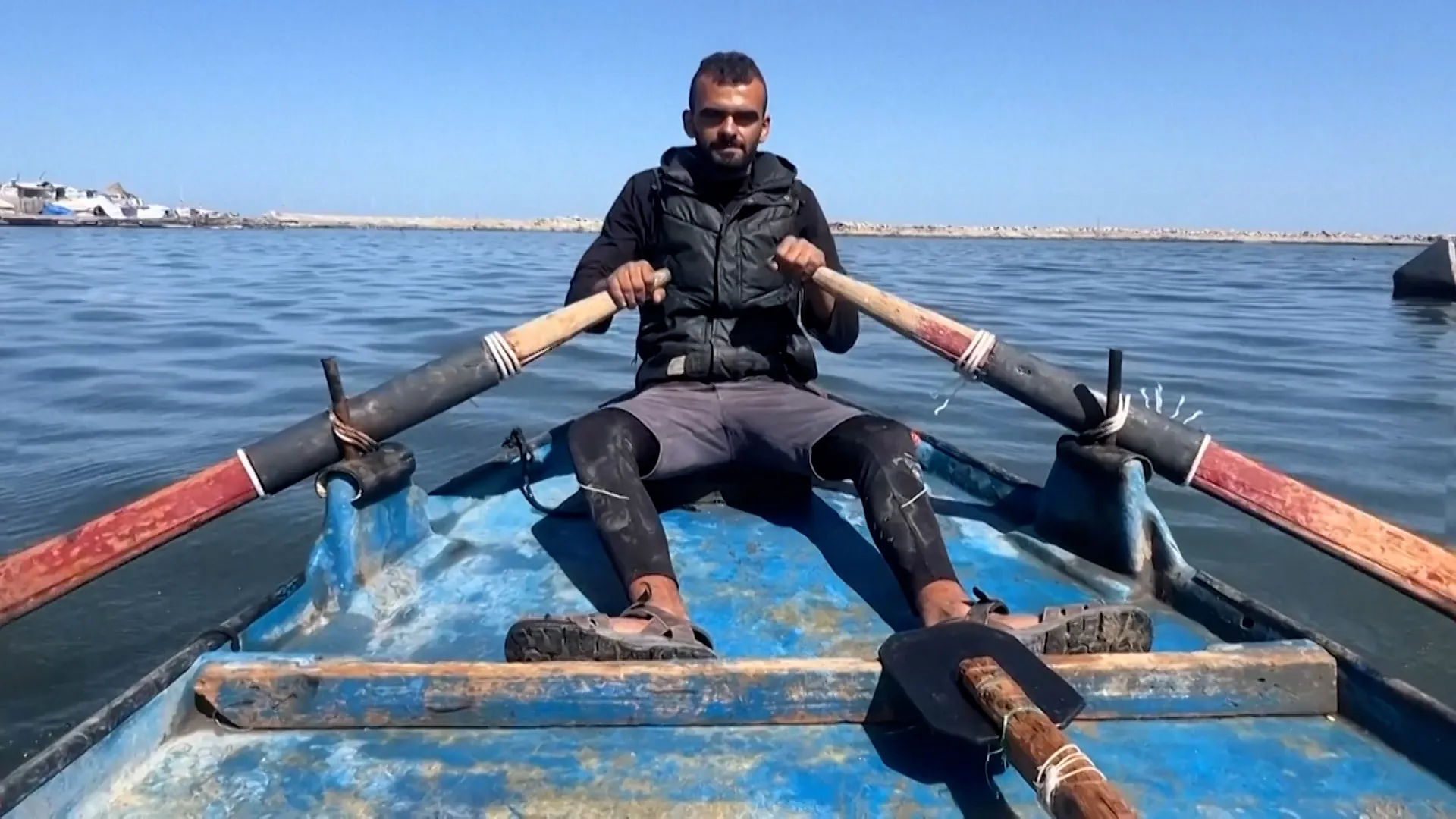
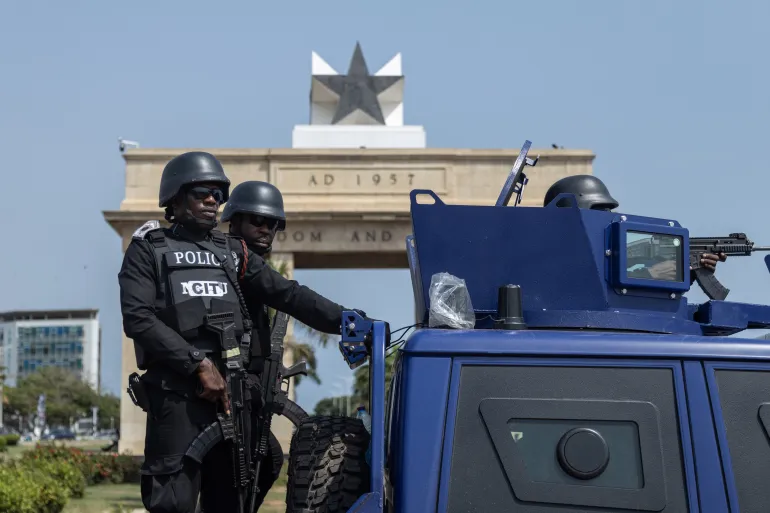
![Members of Ghana security forces take part in a joint Show of Force Exercise in Accra, Ghana, 11 December 2025. The exercise featured the Ghana Police Service, Ghana Prisons Service, Ghana National Fire Service, the Customs Division of the Ghana Revenue Authority and the Immigration Service in collaboration with the Ghana Armed Forces, aimed at Police officers on security detail near a police vehicle, with the Ghana Black Star atop a building behind them. [FRANK KPORFOR/Epa]](https://i0.wp.com/www.aljazeera.com/wp-content/uploads/2026/06/13574211-1780497934.jpg?w=640&ssl=1)
![Personnel of Ghana's Police Service stands guard during a Show of Force Exercise in Accra, Ghana, December 11, 2025. [Francis Kokoroko/Reuters]](https://i0.wp.com/www.aljazeera.com/wp-content/uploads/2026/06/2025-12-12T002056Z_86881175_RC2DEIA7WL6K_RTRMADP_3_GHANA-SECURITY-1780497947.jpg?w=640&ssl=1)
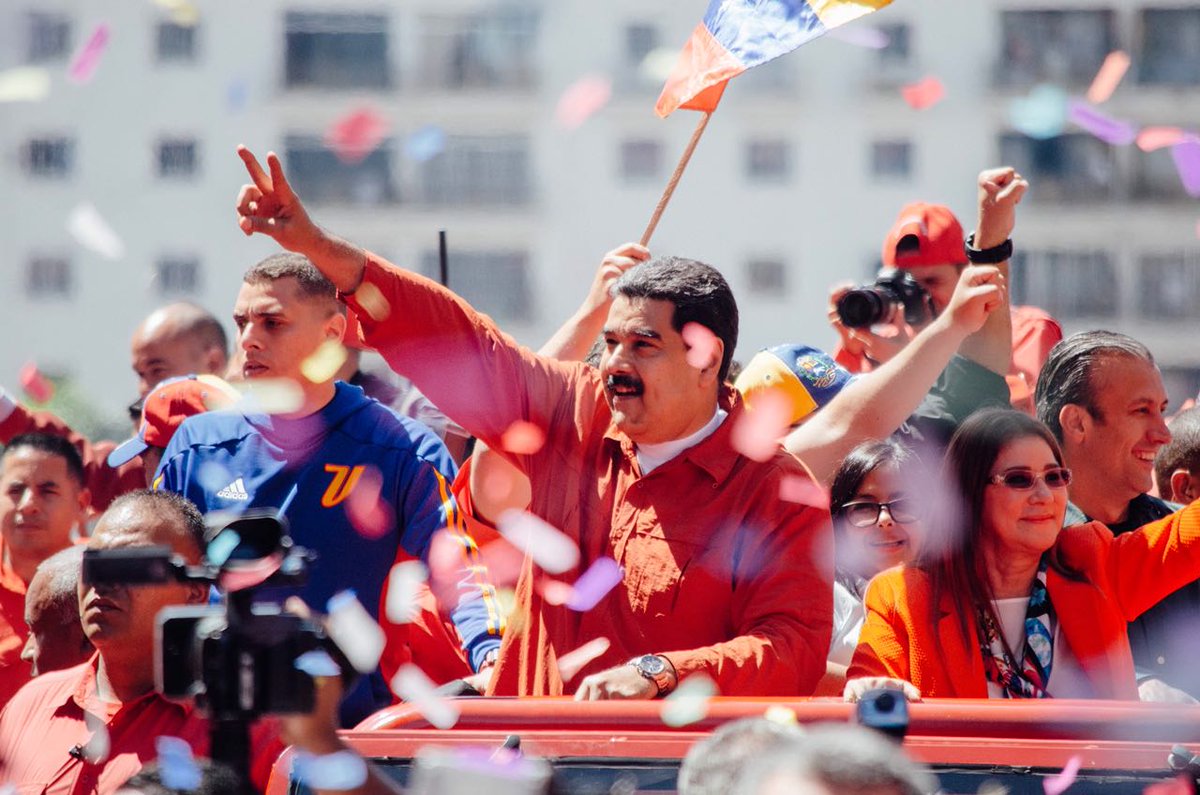
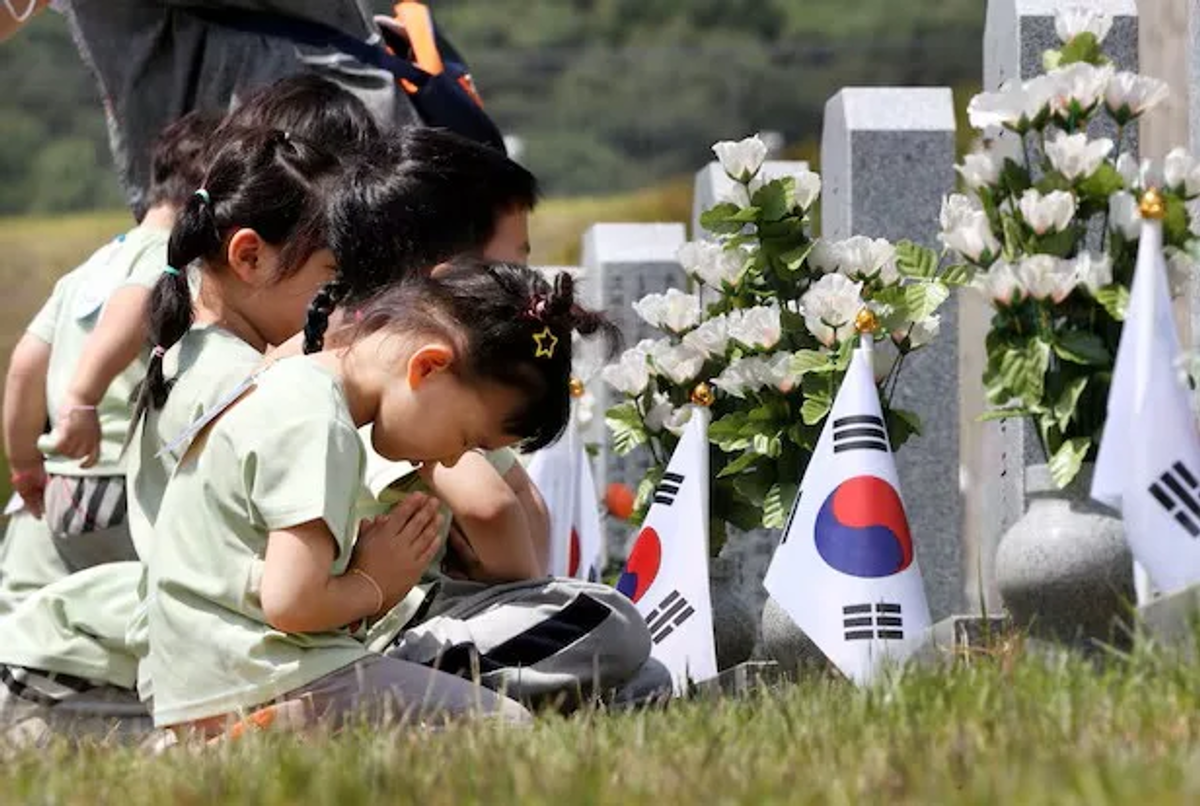
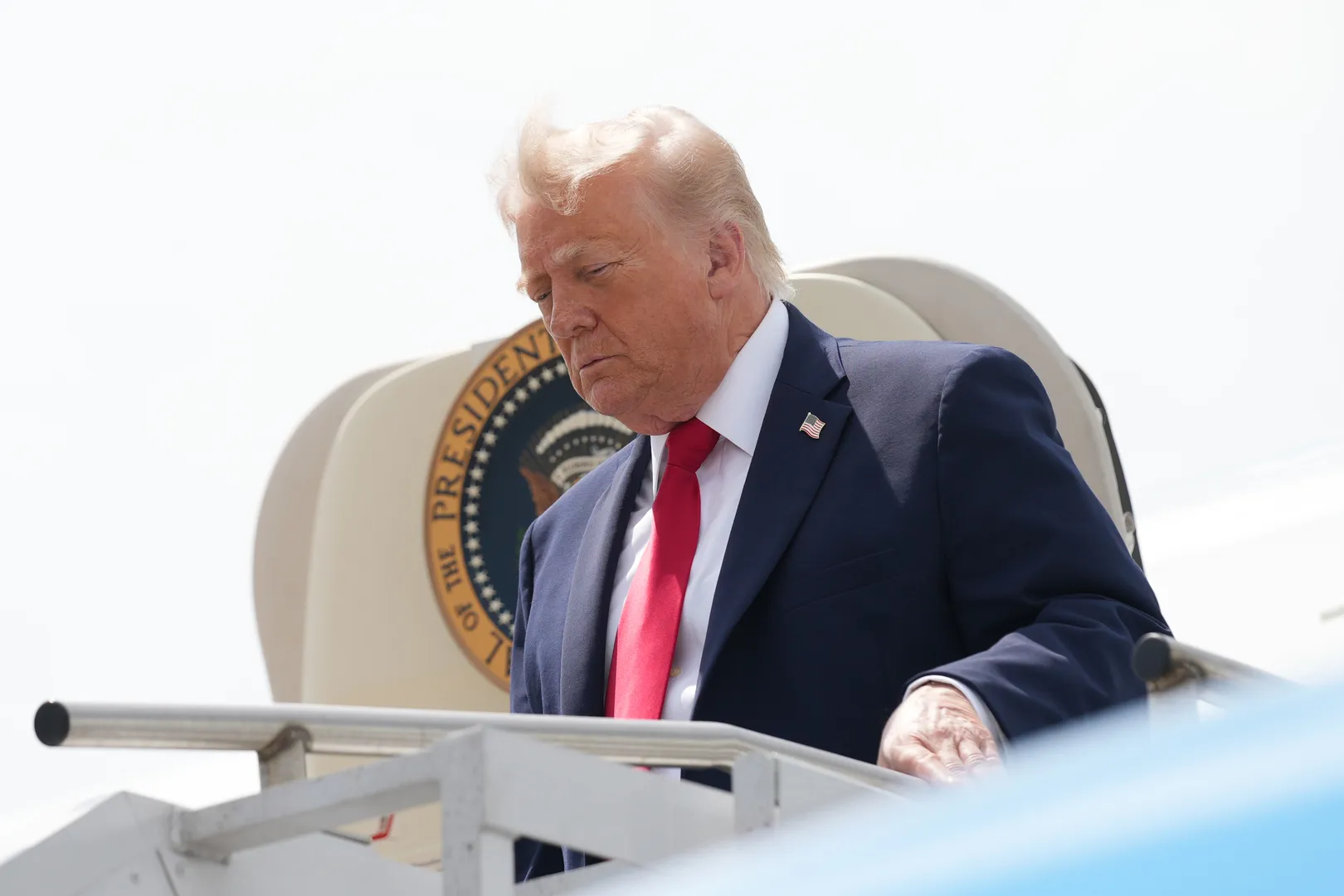

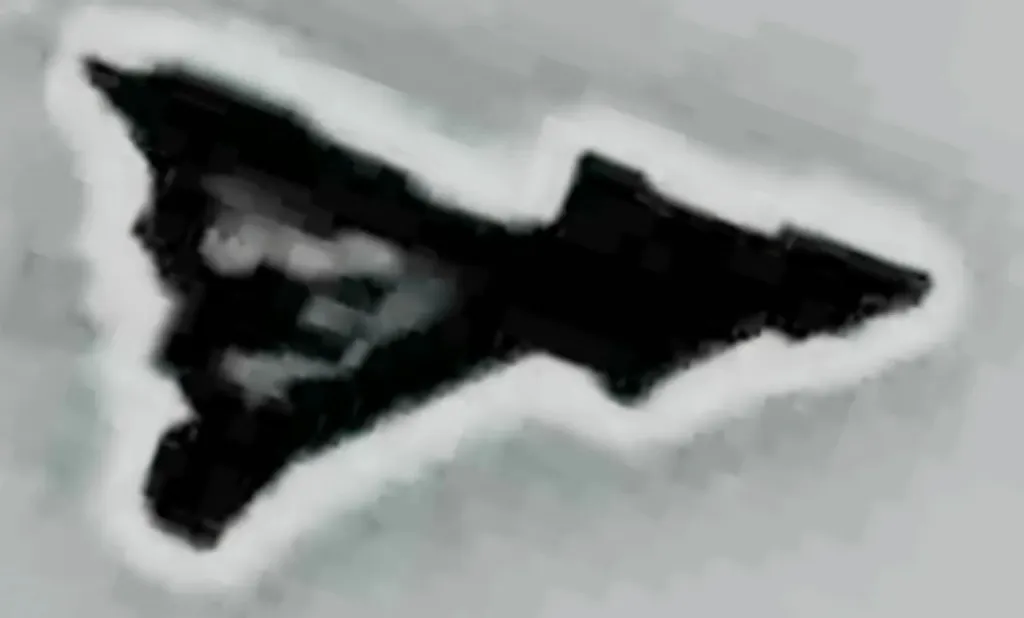


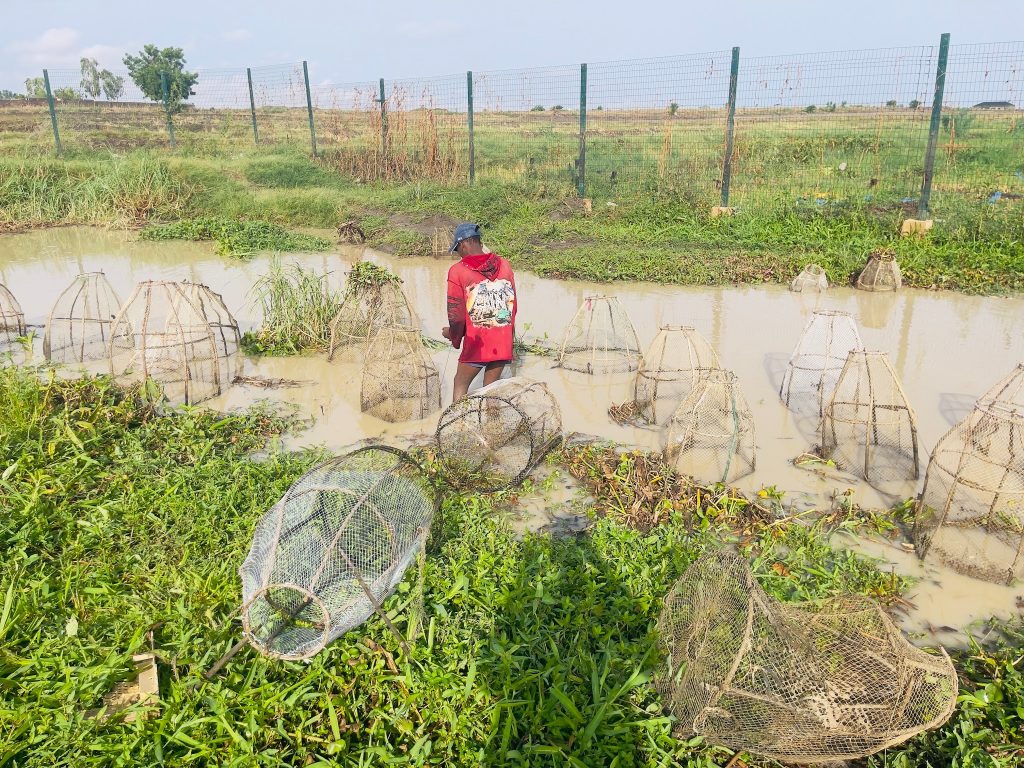






!["I will not miss the opportunity to annex the West Bank"- Cartoon [Sabaaneh/MiddleEastMonitor]](https://i0.wp.com/www.middleeastmonitor.com/wp-content/uploads/2020/05/IMG_0893-scaled.jpg?resize=2048%2C1280&ssl=1)
![Deal of the century, embassy relocation, and the Golan Heights - Israel surely can't believe their luck? - Cartoon [Sabaaneh/MiddleEastMonitor]](https://i0.wp.com/www.middleeastmonitor.com/wp-content/uploads/2020/01/IMG_0201-scaled.jpg?resize=2048%2C1280&ssl=1)
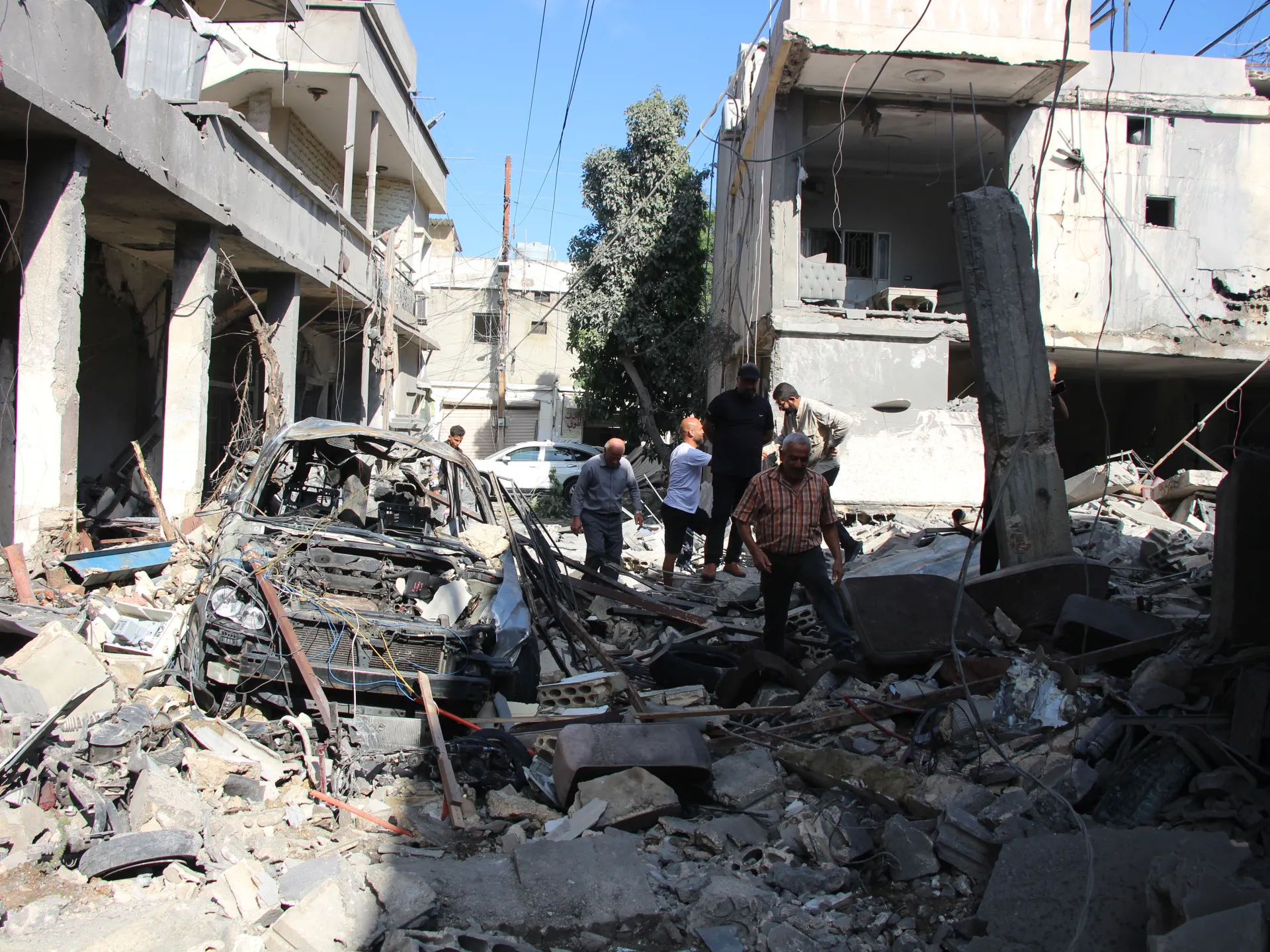
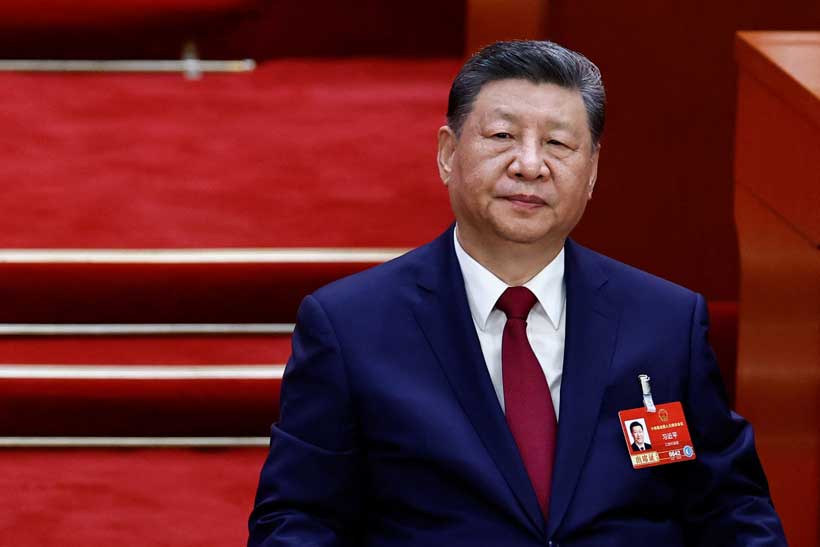

![Hossam Badran, a member of the Hamas Political Bureau, spoke exclusively to Al Jazeera about the group's vision for a long-term Hudna in Gaza. [Mohammad Mansour/Al Jazeera]](https://i0.wp.com/www.aljazeera.com/wp-content/uploads/2026/06/IMG_7408-1780572254.jpg?w=640&ssl=1)