
Reform names Robert Jenrick as pick for chancellor
Leader Nigel Farage says Reform is “the voice of opposition” to Labour, as he unveils his new top team.
Source link
Discover the latest happenings and stay in the know with our up-to-date today news coverage. From breaking stories and current events to trending topics and insightful analysis, we bring you the most relevant and captivating news of the day.
Leader Nigel Farage says Reform is “the voice of opposition” to Labour, as he unveils his new top team.
Source link
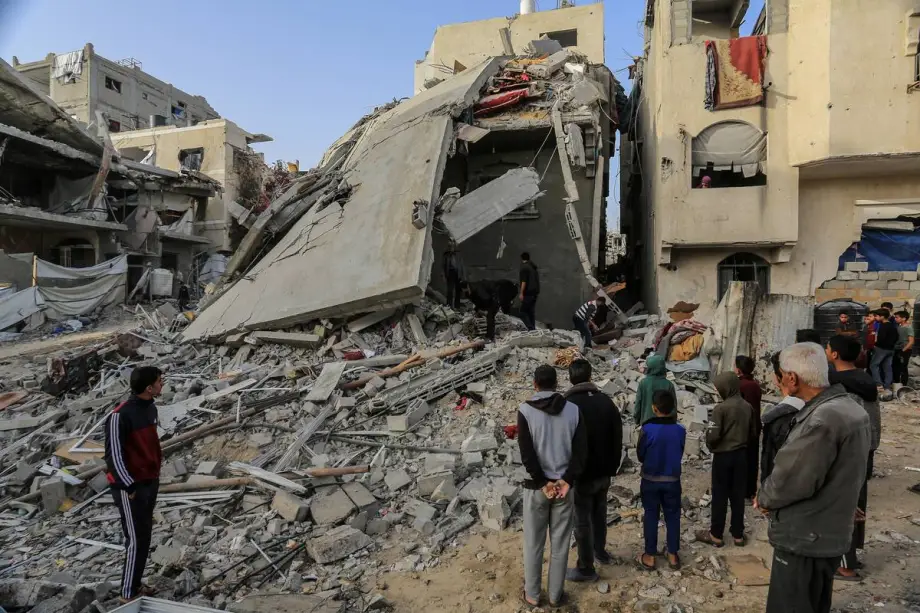
A general view of the completely collapsed building belonging to the Abdulhadi family after an airstrike carried out by the Israeli military as residents examine the rubble of the building and search for usable items in the southern Gaza Strip city of Khan Yunis, on April 06, 2025 [Abed Rahim Khatib – Anadolu Agency]
This week, the Israeli government approved a plan to designate large areas of the occupied West Bank as “state property”, shifting the burden of proof to Palestinians to establish ownership of their land.
The decision, which undermines the Palestinian people’s right to self-determination, has prompted regional condemnation, with many describing it as a de facto annexation which is illegal under international law.
In recent years, Israel has intensified its military incursions, expanded illegal settlements, and demolished Palestinian homes, all as part of a series of aggressive actions to steal more Palestinian land.
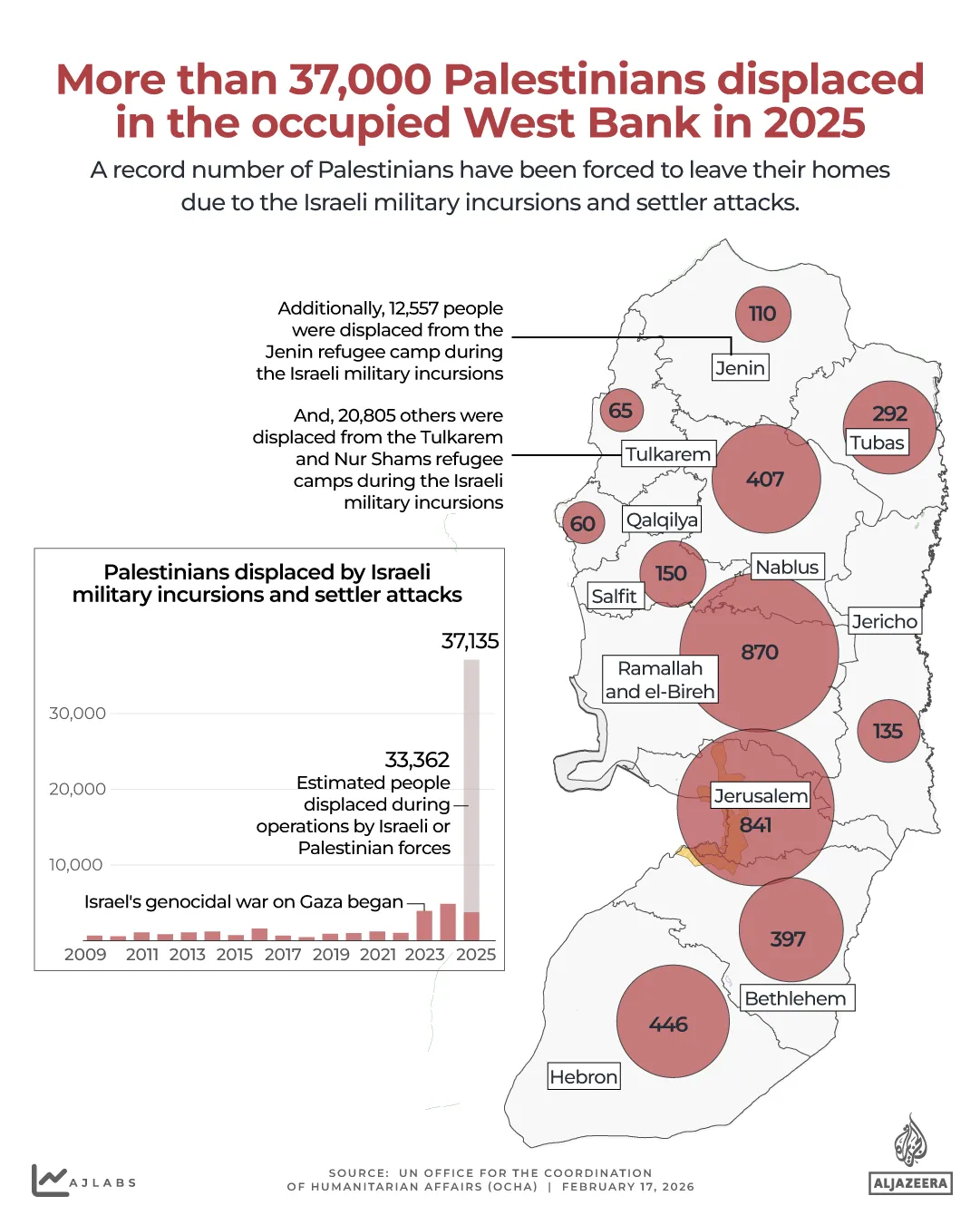
In total, at least 37,135 Palestinians were displaced across the occupied West Bank in 2025, a record high amid Israeli military incursions and settler attacks, according to figures compiled by the United Nations Office for the Coordination of Humanitarian Affairs (OCHA).

According to UNRWA, Israeli military incursions have forcibly displaced at least 33,362 Palestinians from three northern refugee camps: Jenin (12,557), Tulkarem(11,862) and Nur Shams (8,943).
In addition to those displaced during Israeli operations, at least 3,773 have been forced from their homes due to Israeli home demolitions, settler violence, and access restrictions.
The West Bank governorates with the largest number of forced displacements include:
As part of the 1993 Oslo Accords, signed by the Palestine Liberation Organization (PLO) and Israel, the occupied West Bank was divided into three areas – A, B and C.
This led to the formation of the Palestinian Authority (PA) – an administrative body that would govern Palestinian internal security, administration and civilian affairs in areas of self-rule, for a five-year interim period.
Area A initially comprised 3 percent of the West Bank and grew to 18 percent by 1999. In Area A, the PA controls most affairs.
Area B represents about 22 percent of the West Bank. In both areas, while the PA is in charge of education, health and the economy, the Israelis have full control of external security, meaning they retain the right to enter at any time.
Area C represents 60 percent of the West Bank. Under the Oslo Accords, control of this area was supposed to be handed over to the PA. Instead, Israel retains total control over all matters, including security, planning and construction. The transfer of control to the PA never happened.
Although Area C is the least populated part of the West Bank, with about 300,000 Palestinians compared with about 3 million in Areas A and B, the vast majority of home demolitions and settler attacks occur there, due to it being under full Israeli military and administrative control.
The Israeli Civil Administration rarely grants building permits to Palestinians in this area, so nearly all construction is considered illegal and subject to demolition.

Since Israel’s genocidal war on Gaza began in October 2023, violence by Israeli settlers in the occupied West Bank has steadily risen.
According to data from OCHA, settlers have attacked Palestinians more than 3,700 times in the occupied West Bank over the past 28 months.
The number of settler attacks has risen sharply since 2016, with 852 recorded in 2022, 1,291 in 2023, 1,449 in 2024 and 1,828 in 2025 – an average of five attacks per day, according to data from OCHA.
Every West Bank governorate has faced settler attacks over the past year.
Data from OCHA shows that between January 1, 2025 and December 31, 2025, the Ramallah and el-Bireh governorate recorded the highest number of settler attacks with 523 incidents, followed by Nablus with 349 and Hebron with 309.

Settlers are Israeli citizens living in illegal, Jewish-only communities, known as Israeli settlements, built on Palestinian-owned land that Israel occupied in 1967.
Benjamin Netanyahu – Israel’s longest-serving prime minister – has bolstered settlement expansions since he first came to power in 1996, undermining the 1993 Oslo Accords, which called for the freezing of settlements and a mutually negotiated two-state solution.
Today, roughly 10 percent of Israel’s Jewish population, totalling between 600,000 and 750,000 people, live in about 250 settlements and outposts dispersed throughout the occupied West Bank and East Jerusalem.
Many of these settlements are located near Palestinian population centres, often leading to increased tensions and restrictions on movement for Palestinians.


The ‘truth commission’ will interview victims who say they were abused at the sprawling property south of Santa Fe.
Lawmakers in the US state of New Mexico have approved the first fully-fledged investigation into Zorro Ranch, a sprawling property where the late sex offender Jeffrey Epstein is alleged to have trafficked and sexually assaulted girls and women.
The legislation, which passed New Mexico’s House of Representatives by a unanimous vote on Monday, forms a bipartisan “truth commission”.
list of 4 itemsend of list
Its four members will seek testimony from victims and local residents about the ranch, located about 55km (34 miles) south of the state capital, Santa Fe.
Members are slated to begin work on Tuesday, with an initial update to be delivered in July and a full report by the end of this year.
The move comes in the wake of the release of more than three million previously unpublicised files related to the disgraced financier, who died by suicide in a New York jail cell in 2019 while awaiting trial on federal sex trafficking charges.
State Representative Melanie Stansbury said in a video posted after the vote that the commission will “help to bring forward a full picture of what happened here in New Mexico”.
“The crimes that were reported to federal and state authorities were never fully investigated,” Stansbury said. The probe seeks to “ensure we have safeguards in place not only to hold those individuals accountable, who were complicit, but to ensure that this can never happen again”.
Epstein bought the 7,600-acre (3075-hectare) property, which included a hilltop mansion and private runway, from former New Mexico Democrat Governor Bruce King in 1993.
Victim advocates say Epstein trafficked and sexually abused girls at the so-called “playboy ranch” as early as 1996, including Virginia Giuffre, the prominent victim who accused Epstein and the disgraced British royal Andrew Mountbatten-Windsor of abuse.
Multiple civil lawsuits specify the ranch as a site of abuse. Epstein’s habit of flying “masseuses” to the property – as well as hiring local massage therapists – was also revealed in the Epstein files as part of a ranch manager’s 2007 testimony to the Federal Bureau of Investigation.
Epstein was never charged with crimes related to the site.
“Many of the survivors had experiences in New Mexico, and as we’ve learned, you know, there were local politicians and other people that were aware of what was happening in New Mexico,” said Sigrid McCawley, a lawyer whose law firm has represented hundreds of Epstein survivors.
Yet federal investigators never cast their eye on the property, according to Andrea Romero, a New Mexico state representative who co-sponsored the legislation.
And while New Mexico Attorney General Hector Balderas attempted to kick off a probe in 2019, federal prosecutors asked for it to be put on hold to avoid a “parallel investigation”, he said in a statement.
Epstein “was basically doing anything he wanted in this estate without any accountability whatsoever”, Romero said.
The committee – which will have subpoena power – aims to close that gap by gathering testimony that could be used in future litigation, Romero said. New Mexico’s state attorney general has also allocated a special agent to look into any allegations that arise.
The ranch was sold at a 2023 auction to the family of Don Huffines, a former Republican Texas senator who is now running for Texas state comptroller, the Santa Fe New Mexican media outlet reported. A family spokesperson said they would give investigators “full and complete cooperation”.

Venezuela’s Navegantes del Magallanes were crowned champions of the 2026 Americas Series. (John Requena)
Caracas, February 17, 2026 (venezuelanalysis.com) – Venezuela’s Navegantes del Magallanes claimed the 2026 Serie de las Américas baseball tournament after defeating Colombia’s Caimanes de Barranquilla 10–9 on Friday, February 13, at the Estadio Monumental Simón Bolívar in Caracas.
The Colombian squad stunned fans with a commanding 5–0 lead in the opening inning and maintained a five-run advantage for much of the game. However, Magallanes engineered a dramatic comeback that will become one of Venezuela’s most celebrated baseball victories, scoring seven unanswered runs in the eighth inning to overturn the deficit.
The Venezuelan team, representing the host nation for the tournament held from February 5 to 13 in Caracas and La Guaira, stumbled in its opening match against Panama before rallying and stringing together consecutive wins. This included a decisive 9–1 semifinal victory over Cuba to book a place in the final.
The 2026 Serie de las Américas—the second edition of this regional international baseball competition organized by continental baseball league associations—brought together national teams from Cuba and Curaçao, and the winter league champions from Venezuela, Panama, Nicaragua, Colombia, and Argentina. The tournament featured a round-robin phase followed by semifinals and a championship game.
Navegantes del Magallanes secured its place in the tournament after winning the Venezuelan league in early February.
Venezuela’s participation in the Serie de las Américas became possible after the country opted out of the February 1–7 Serie del Caribe, following decisions by that event’s organizers to relocate the tournament amid claims of “political conflicts” linked to the January 3 US military strikes and kidnapping of President Nicolás Maduro.
The Venezuelan professional league initially suspended its Round Robin phase following the attacks, though play resumed on January 7 and continued through the Serie de las Américas.
On Saturday, the champion Magallanes were welcomed at Miraflores Palace by acting President Delcy Rodríguez, who praised the team’s achievement.
“When they achieved victory, I felt the joy of seeing a country rise up and demonstrate its winning spirit. The most important jersey we Venezuelans wear is that of Venezuela; you wore it and showed that there is no adversity we cannot overcome,” Rodríguez said.
The Venezuelan leader also formally expressed Venezuela’s desire to once again host the regional tournament in 2027.

Eight years later, the latest UK Sport funding allocation of just under £2m has been presented as a total for short track, figure and long track speed skating.
So short track is caught in the situation which befalls many Olympic sports in Britain – they need to perform at the Games to get more funding, but without the funding they struggle to achieve success.
Asked what work is being done to fix short track, British Olympic Association (BOA) chair Dame Katherine Grainger told BBC Sport: “As much potential as we have in that team, there is more untapped.
“It is not a sport we have a legacy in, so that opens the door – we need to learn from other countries where we can.”
Add in the fact that there are few sports in the world more chaotic and unpredictable than short track.
Christie was Britain’s most recognisable speed skater a decade ago when she won three gold medals at the 2017 World Championships, but a series of crashes and disqualifications ruined her Olympic dreams in 2014 and 2018.
And this year, Treacy’s luck was also out. Take his 1,000m final – usually this event would have six racers, but in Milan had nine because three athletes were advanced to the medal race after being illegally hindered in their semi-finals.
Would Treacy, who was running in third when he tangled with Liu, have won a medal if there were fewer men on the track? Ultimately, hypotheticals do not put cash in the bank.
Treacy could not hide his funding frustrations when speaking to the BBC following that final.
“If we only had a bit more support going through the Olympic cycle,” he said. “In the UK we don’t even have an ice centre which is safe enough for competitions.
“In the UK we have to look at ourselves and see we need a facility where we can train at the top level, instead of having to go to other countries.”
Treacy is correct that there is no venue in Britain that could host an international short track event, because there are no rinks with the soft boards needed around the border to protect racers when there are crashes.

Royal Mail has been accused of prioritising delivery of parcels and packages over letters, but it has denied this.
Source link
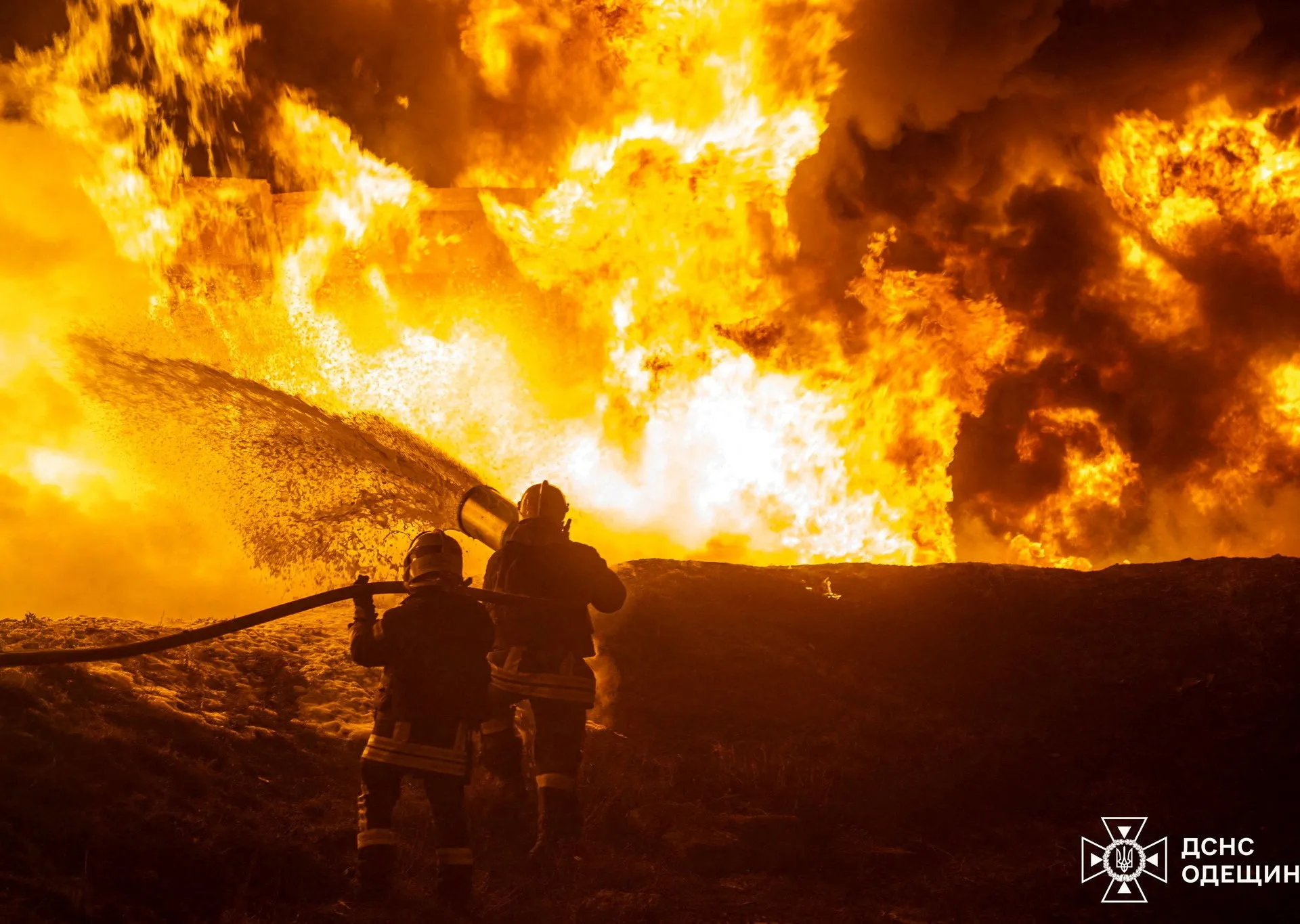
Delegations from Russia and Ukraine are set to meet for another round of peace talks in Geneva, as United States President Donald Trump pushes for an end to Europe’s biggest conflict since World War II.
The two-day talks, which begin on Tuesday, are likely to focus on the issue of territory and come just days before the fourth anniversary, on February 24, of Russia’s full-scale invasion of Ukraine.
list of 4 itemsend of list
Trump is pressing Moscow and Kyiv to reach a deal soon, though Ukrainian President Volodymyr Zelenskyy has complained that his country is facing the greatest pressure from Washington to make concessions.
Russia is demanding that Kyiv cede the remaining 20 percent of the eastern region of Donetsk that Moscow has failed to capture – something Kyiv refuses to do.
Trump again increased the pressure on Ukraine late on Monday.
When asked about the talks on board Air Force One, he described the negotiations as “big” and said, “Ukraine better come to the table, fast.” He did not elaborate further, saying, “That’s all I am telling you.”
The talks, which the Kremlin said will be held behind closed doors and with no media present, come after two earlier rounds held this year in Abu Dhabi. Those talks did not yield a breakthrough.
“This time, the idea is to discuss a broader range of issues, including, in fact, the main ones,” Kremlin spokesman Dmitry Peskov told reporters on Monday. “The main issues concern both the territories and everything else related to the demands we have put forward,” he said.
Ukraine, meanwhile, said Russia was unwilling to compromise and wants to keep fighting.
“Even on the eve of the trilateral meetings in Geneva, the Russian army has no orders other than to continue striking Ukraine. This speaks volumes about how Russia regards the partners’ diplomatic efforts,” Zelenskyy said in a social media post on Monday.
“Only with sufficient pressure on Russia and clear security guarantees for Ukraine can this war realistically be brought to an end,” he added.
The Russia-Ukraine war has spiralled into Europe’s deadliest conflict since 1945, with tens of thousands killed, millions forced to flee their homes and many Ukrainian cities, towns and villages devastated by the fighting.
Russia occupies about one-fifth of Ukraine, including Crimea and parts of the eastern Donbas region seized before the 2022 invasion. It wants Ukrainian troops to withdraw from swaths of heavily fortified and strategic territory as part of any peace deal. Kyiv has rejected the demand, which would be politically and militarily fraught, and has instead demanded robust security guarantees from the West.
The Kremlin said the Russian delegation would be led by Vladimir Medinsky, an aide to President Vladimir Putin.
However, the fact that Ukrainian negotiators have accused Medinsky in the past of lecturing them about history as an excuse for Russia’s invasion has further lowered expectations for any significant breakthrough in Geneva.
Military intelligence chief Igor Kostyukov will also take part in the talks, while Putin’s special envoy Kirill Dmitriev will be part of a separate working group on economic issues.
Vladmir Sotnikov, a political scientist based in Moscow, said the Russian team will consist of about 20 people, many more than delegations in previous rounds of talks.
“I think the Russian intentions are serious. Because you know, the situation here in Russia is that ordinary people are just tired of this war,” he told Al Jazeera.
Kyiv’s delegation will be led by Rustem Umerov, the secretary of Ukraine’s national security and defence council, and Zelenskyy’s chief of staff, Kyrylo Budanov. Senior presidential aide Serhiy Kyslytsya will also be present.
Before the delegation left for Geneva, Umerov said Ukraine’s goal of “a sustainable and lasting peace” remained unchanged.
As well as land, Russia and Ukraine also remain far apart on issues such as who should control the Zaporizhzhia nuclear power plant and the possible role of Western troops in post-war Ukraine.
US envoys Steve Witkoff and Jared Kushner will represent the Trump administration at the talks, according to the Reuters news agency. They are also attending talks in Geneva this week with Iran.
The TWZ Newsletter
Weekly insights and analysis on the latest developments in military technology, strategy, and foreign policy.
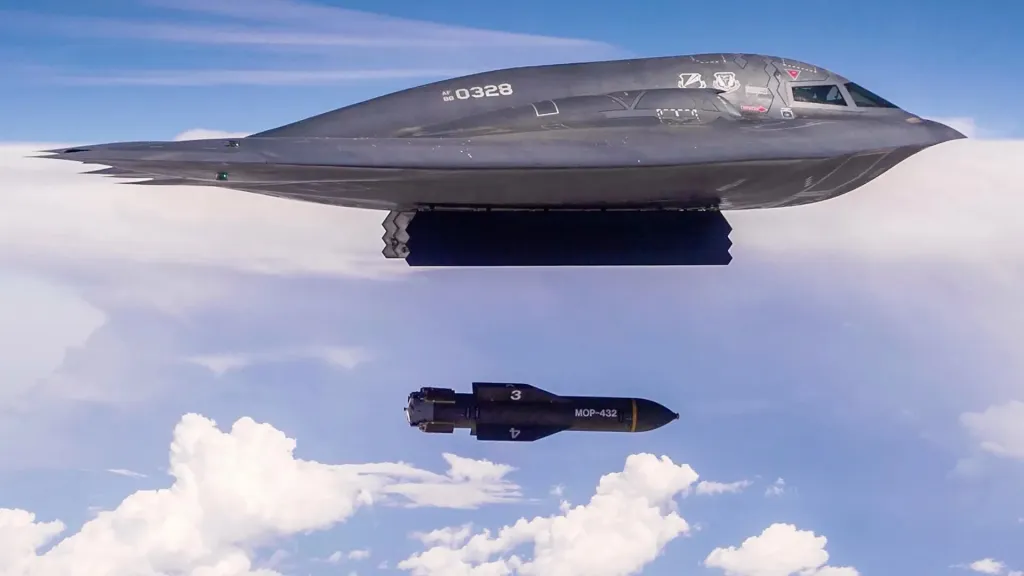
Last year, the U.S. government was able to reverse engineer a critical subcomponent for the 30,000-pound GBU-57/B Massive Ordnance Penetrator (MOP) bunker buster bomb. Leveraging technology from the Army Tactical Missile System (ATACMS) short-range ballistic missile saved years of work that would have otherwise been necessary to “eliminate obsolescence issues and meet operational demands.” The reverse-engineering effort also highlights the impacts of being locked into a single vendor, and underscores why the Pentagon is now pushing to make changes to, if not end this practice.
Details about the reverse-engineered component and other aspects of the MOP program were contained in a recent U.S. Air Force contracting announcement regarding efforts to replenish stocks of those bombs following Operation Midnight Hammer. During that operation, B-2 Spirit stealth bombers dropped 14 GBU-57/Bs on Iranian nuclear facilities. The Air Force Life Cycle Management Center (AFLCMC) had to produce a detailed justification for awarding a sole-source contract to Boeing for the production of new MOPs and the sustainment of the existing inventory. Boeing is the bomb’s current prime contractor. A redacted copy of that document is available online.

“The Government has a follow-on need for additional production of [redacted] MOP Tail Kits with projected delivery starting 10 January 2028 to replace expended units and reach the United States Air Force’s [redacted],” the so-called Justification & Approval (J&A) document explains. “The Government has a need for replenishment production of GBU-57 MOP weapon system components.”
It is unclear what the total size of the GBU-57/B inventory was before or after Operation Midnight Hammer. As of 2015, prime contractor Boeing had delivered at least 20 of the bombs, according to the Air Force. However, additional orders have been reported over the years. In 2024, a story from Bloomberg had also said that a facility in Oklahoma was being expanded to help triple or even quadruple the annual output of these bombs.
The MOP’s tail kit, also designated KMU-612/B, contains the bomb’s GPS-assisted inertial navigation system (INS) guidance package and other systems. It is combined with a BLU-127/B penetrating “warhead” and other components, including advanced fuzes designed to help produce the maximum destructive effect on a target after burrowing deep down into the ground, to create a complete GBU-57/B bomb, or all-up-round (AUR).

GBU-57 MOP test
“In August of 2025, the Government successfully reverse engineered a critical subcomponent of the MOP weapon system saving 4-years of design work and enabling the utilization of existing Army ATACMS technology to eliminate obsolescence issues and meet operational demands,” according to the J&A document. “However, the time to reverse engineer all MOP components would result in unacceptable delays in meeting mission requirements.”
The MOP J&A does not elaborate on the ATACMS technology in question, or what company or companies may now be in line to produce the resulting subcomponent for the bombs. Lockheed Martin is the current prime contractor for ATACMS, a family of short-range ballistic missiles that you can read more about here. It should also be noted that the U.S. military’s reverse-engineering parts of key weapon systems is not entirely uncommon, especially if the original source of the components in question has gone out of business or otherwise no longer exists.

The J&A document says it would take an estimated 60 months, or five years, to create an entirely new MOP tail kit design and then go through the required processes to certify it for operational use. It also explains why the KMU-612/B tail kit, specifically, is so central to the need to award a new sole-source contract to Boeing.
“With regards to IP [intellectual property] rights, The [Redacted] Company is the Original Equipment Manufacturer (OEM) of the MOP weapon system and retains ownership of the intellectual property data associated with the munition’s tail kit,” it explains. “In particular, [redacted] owns the technical data package and manufacturing process methodologies of the tailkit unit entirely. [Redacted] has uniquely acquired expertise over a period of ~18 years of adapting this specialized weapon to meet evolving mission needs as MOP transitioned from proof-of-concept to full operational capability. This expertise pertains, but is not limited to, knowledge of the guidance algorithms, navigation systems, hardware components, specialized test equipment, and software critical to producing and sustaining the MOP weapon system.”
“The other components and sub-components, as noted above, have been proprietary to [redacted] from the inception of this weapon system. The USG [U.S. government] does not own or control, via license or by other IP rights, any computer software, methodologies, or technical drawings,” the document adds. “[Redacted] was queried in August 2025 as to the potential of selling IP rights to the USG for the MOP weapon system and the USG was denied.”
That being said, “over the course of the ~18 years of MOP development to the AURs acquired today the USG has, at certain junctures, been able to separate from the sole-source environment for this weapon with Boeing,” the J&A notes. “The USG was able to break away the Warhead Cases for the MOP under a weapon design agent effort, thereby giving the USG complete IP control over the Warhead TDP. Based on the IP ownership of this TDP the USG awards contracts competitively.”

The prospect now of new U.S. strikes against targets in Iran, including deeply buried nuclear sites and other facilities, highlights the continued importance of the depth and readiness of the GBU-57/B inventory. There is clear evidence that Iranian authorities have taken new steps to try to shield key elements of the country’s nuclear program from future attacks, either from the air or on the ground. MOP has been and continues to be the only conventional munition capable of prosecuting many of these targets, and was specifically designed from the outset with sites in Iran top of mind. A conflict with Iran is not the only scenario where the bombs would be relevant. North Korea and China, among others, have also invested heavily in underground and other hardened facilities.
The huge bunker busters are otherwise the definition of high-value, low-density munitions. At present, they can only be employed operationally by B-2 bombers. Each B-2 can also only carry two of the bombs at once. MOP is expected to be an important part of the arsenal of the future B-21 Raider, which is smaller than the B-2 and is expected to be able to carry a single one of these bunker busters.
The details in the MOP J&A document also underscore broader issues surrounding IP rights and ‘vendor lock’ in the U.S. defense contracting space that have increasingly been coming to the forefront in recent years. Competition inherently creates opportunities to lower costs and diversify supply chains. A broader supplier base also offers benefits when it comes to scaling up production of key subcomponents and complete systems.
The continued extent of Lockheed Martin’s control over the F-35 Joint Strike Fighter program is perhaps the most widely known example of the negative impacts of vendor lock. U.S. officials have been outspoken about the maintenance and sustenance challenges this has created, especially when it comes to the timely sourcing of spare parts, and the operational risks this creates. TWZ previously explored the particular issues surrounding the F-35 in an in-depth feature.
Foreign F-35 operators, especially in Europe, are now also facing regular questions about what could happen to the jets if the U.S. were to cut off access to various sustainment pipelines in light of new diplomatic strains with Washington. Just this past weekend, Dutch State Secretary for Defense Gijs Tuinman caused a stir when he asserted it would be possible to “jailbreak an F-35 just like an iPhone” if necessary, as you can read more about here.
BIG: Dutch Defence Minister Gijs Tuinman hints that software independence is possible for F-35 jets.
He literally said you can “jailbreak” an F-35.
When asked if Europe can modify it without US approval:
“That’s not the point… we’ll see whether the Americans will show… pic.twitter.com/f11cGvtYsO
— Clash Report (@clashreport) February 15, 2026
In recent years, successive U.S. administrations have made securing greater IP rights and ensuring opportunities for competition key elements in negotiating new defense contractors. As an example, the Air Force previously made clear that avoiding the F-35 program’s vendor lock was a top priority for the acquisition of the F-47 sixth-generation stealth fighter. President Donald Trump’s administration is now pursuing a host of new contracting reforms, in part to further break up the locks that private companies have on programs like the Joint Strike Fighter.
“We will enable third-party integration without prime contractor bottlenecks. Success will be measured by the ability of qualified vendors to independently develop, test and integrate replaceable — excuse me, replacement modules at the component level throughout the system life cycle,” War Secretary Pete Hegseth said in a speech last November. “There’s no more complacency and no more monopolies.”
At that time, Hegseth had also acknowledged Byzantine processes and other contracting hurdles that the U.S. military had created for itself over the years.
How “the sole-source environment” surrounding the GBU-57/B continues to evolve now remains to be seen. A successor to that bomb, called the Next Generation Penetrator (NGP), is also now in development, and Boeing is involved in that effort, too. The Pentagon’s experiences with MOP, together with the new contracting reform push, are likely to inform how the replacement weapons are acquired.
In the meantime, U.S. authorities continue to try to free elements of the MOP program from vendor lock, including now by repurposing technology originally designed for the ATACMS short-range ballistic missile.
Contact the author: joe@twz.com

Thirty councils across England now have to organise local elections after the government abandoned plans to delay.
Source link
The TWZ Newsletter
Weekly insights and analysis on the latest developments in military technology, strategy, and foreign policy.
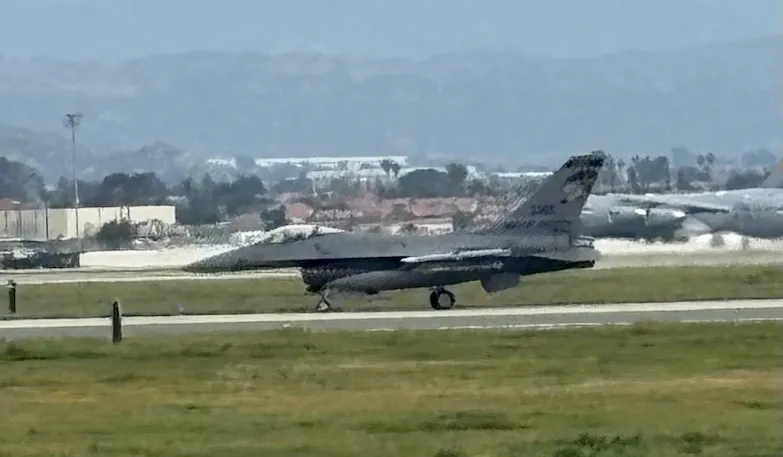
A pair of F-16s sitting alert at March Air Reserve Base in Riverside, California, were scrambled early Sunday morning after unidentified flying objects were reported over Nevada and, later, California. One of the objects proved puzzling enough to controllers at Oakland Center, the FAA’s regional air traffic hub, that it reached out to aircraft flying over the northern California area for visual confirmation about what was being observed.
Eventually, it was determined that the objects were weather balloons, officials from the North American Aerospace Defense Command (NORAD) told The War Zone Sunday night. As we have frequently reported, UFOs, now known as unidentified aerial phenomena (UAP), are often confused with drones and balloons, although that doesn’t mean there still aren’t some odd, if not unexplainable, cases. Still, many in the UFO community roll their eyes at these claims as from Roswell on, balloons became a regular explanation for strange things in the sky.
We must note that information remains limited as to what exactly occurred, so details could change as we find out more.
The incident began at about 4:30 a.m. Sunday local time, according to flight tracking data and Air Traffic Control (ATC) audio. The F-16s, call signs SURF 31 and SURF 32, were scrambled after an object was tracked over the Reno, Nevada area. It was later seen over northern California and then a second object was observed.
USAF F-16s SURF31 & 32 scrambled from March ARB, CA, early this morning (Pacific Time) to identify and intercept an “unidentified object” heading northeast in the upper flight levels over Northern California. A civilian cargo aircraft was able to visually confirm the object… pic.twitter.com/rAoMzVImP9
— Aircraft Spots (@AircraftSpots) February 15, 2026
Much of what happened during these encounters is unclear. At some point, however, Oakland Center was informed about an object flying near Sacramento, but did not know what it was. So an air traffic controller asked aircraft in the vicinity if they saw anything in its direction. A 747-8, UPS flight 32 (UPS32), responded, reporting a “glowing and dimming” object somewhere over the Sacramento area. Additional aircraft saw it too, so the F-16s, refueled by a KC-135 Stratotanker from March Air Reserve Base, callsign GASMAN, were vectored toward the area.


The following is a transcript of ATC recordings obtained by The War Zone from aviation enthusiast Josh Cox that offer snippets from the conversation between Oakland Center and the UPS flight, as well as between Oakland Center and SURF 31.
Oakland Center to UPS 32: UPS Three-Two, if you could do me a favor, One to two o’clock in about 60 miles, F level, 2-5-0, I guess we’re looking for something out there that we don’t have any information on. So if you just keep an eye on that direction, again, one to two o’clock, 60 miles currently, I’ll call it out as you get closer, and if you see anything.
UPS 32: Something we’ve been kind of looking at in that direction, that sort of right, giving we kind of figured it was just something along the horizon near the dawn. Sometimes you get kind of weird stuff like that, but it’s not really moving. Is your object staying in one place?
Oakland Center: Yeah, we’re being told it’s in that area. And you said…it’s dimming and glowing a little bit. We’ll keep that in mind, but thanks. I appreciate it. If it changes at all, just let me know… I’m not showing anything on my radar, but we’re being told something’s out there that they’re looking for. And UPS Three-Two. Do you know about what altitude it looks like?
UPS 32: (Indecipherable).
Oakland Center: UPS Three-Two, appreciate all the help. We’ll share more information for you, but you can contact Oakland Center at 1.34.15. You have a good one, yeah, it’s about 60 miles…that’s about where we were showing it too. Like I said, thank you.
The recording we obtained then segues to a conversation between AORTC and SURF31.
SURF 31: SURF Three-One, approved as requested…
Oakland Center: SURF Three-One, it would now be a two-six-zero heading. Just let me know if you want to proceed.
SURF 31: SURF Three-One, flying two-six-zero.
Oakland Center: SURF Three-One affirmative…it would be about 20 miles from your current position…probably about your nine o’clock. If you could keep an eye out for anything that’s unusual…When we last saw it, it had some orange glowing and dimming lights. But if you see anything unusual out there, just let me know.
You can listen to the audio yourself in the video below:

Oakland Center Asks UPS Flight 32 To Spot Unidentified Object Over Sacremento
After about two hours, the F-16s were ordered to return to base, but then were again tasked toward northern California due to reports of a second unidentified target. The pilot of one of the F-16s was heard on air traffic control audio describing the object seen in the second intercept as a balloon.
“There were no solar panels that I could see, like a balloon with a line hanging down,” the pilot stated. It was unclear which of the two F-16s he was flying. “There was something about halfway down the line. There was another, like tiny object. I can’t tell what it was. Then the line hung down further than that. There were no solar panels. There was no payload. The only distinctive color was the balloon itself was semi reflective. The line itself looked a whitish gray, but it’s hard to tell no other determinately of objects that could be identified.”
The F-16s were tasked twice this morning.
They first arrived on station ~1330Z then started their RTB ~1600Z. While on final approach at March ARB, the F-16s and KC-135 were once again tasked towards NorCal due to further reports of an unidentified object. They arrived on… pic.twitter.com/7PXH9mjWie
— Aircraft Spots (@AircraftSpots) February 15, 2026
While unconfirmed, there seems to have been an E-3 Sentry AWACS involved in this operation. We have seen them scramble to support fighter intercept operations during the Chinese balloon incident and following it when it came to scrambles on mysterious objects. It appears this was one of those cases. The E-3 could provide persistent high-fidelity radar tracking of the target and help support the fighters in their investigation.
While not identifying what type of aircraft was used to track down the balloons, NORAD confirmed the F-16 pilot’s observation.
“On February 15, 2026, the North American Aerospace Defense Command (NORAD) detected and tracked two Unidentified Balloons (UIBs) over the north central coast of California,” NORAD told us. “The balloons were observed moving northeast, and NORAD assets, including fighter aircraft, were deployed to assess the objects.”
“NORAD’s assessment determined that both objects exhibited characteristics consistent with typical weather balloons,” the command added. “The balloons do not pose a military threat, present no risk to civil aviation, and have no means of maneuver. Based on this evaluation, NORAD has assessed that the UIBs pose no threat to North America.”
While NORAD said that both objects were balloons, we have no independent confirmation, such as radio traffic, regarding the first one.
Balloons are the objects most frequently identified as UAPs by the Pentagon’s All-domain Anomaly Resolution Office (AARO). The office was established in 2022 as a centralized organization for managing U.S. military-wide policies and procedures for tracking, reporting, and analyzing UAP incidents, as well as a repository for relevant intelligence assessments and other data.
According to the most recent AARO data from a 30-year period up to January 15, 2026, balloons were named as the source of 52.1% of all UAP reports where an identification could ultimately be made. Satellites were the next most commonly identified objects. Sightings of SpaceX Starlink constellations in particular have often been reported as UAP. This is especially true for pilots seeing ‘flares’ from the Starlink satellites, which can look like aircraft making circles on the horizon.

While NORAD explained that the balloons on Sunday posed no threat, not all have proven to be benign. It was almost exactly three years ago that an object identified as a Chinese spy balloon traversed the U.S. before being shot down by an F-22 Raptor off the coast of South Carolina. That incident sparked concerns that sensitive installations were being surveilled by Beijing and questions about why it took so long to bring it down.

The next week, U.S. fighters shot down a trio of UAPs in the course of three days in separate incidents over Alaska, Canada’s Yukon Territory, and Lake Huron.
Last month, the commander of 1 Canadian Air Division, operational commander for the Canadian North American Aerospace Defense Command (NORAD) Region (CANR), confirmed to us that the object shot down over the Yukon was a balloon.
“I’m tracking one object that was shot down near White Horse using an F-22 under the NORAD agreement, obviously authorized by the Canadian government,” Royal Canadian Air Force Maj. Gen. Chris McKenna explained during an exclusive interview. “I don’t believe they have found the wreckage of that thing yet. It’s a white balloon in the middle of a white expanse of snow, so it is actually hard to find. We had Canadian military folks searching for it for weeks. As far as I know, we did not recover it. It was a balloon, either research or a state actor. It’s not known which. I can’t really give you that detail.”
The object over Lake Huron, brought down by an F-16, was determined to most likely have been a weather balloon launched from a U.S. National Weather Service radar station in Michigan. Audio we obtained of that event also more or less confirms that it was a balloon.

Radio Audio From F-16 Shoot Down Of Object Over Lake Huron
While the F-16s weren’t scrambled Sunday specifically to intercept balloons, the shootdowns in 2023 showed serious gaps in how these objects are tracked. There have been major challenges digesting the massive amounts of sensor data that is available, as the Chinese spy balloon incident clearly showed. Data from sensors that might have picked up the Chinese spy balloon, in particular, was previously filtered out so as not to overwhelm radar controllers and their analysis process. That presented a dilemma, because balloons pose a variety of very real potential national security threats, something The War Zone regularly highlights.
Changing the sensor filters to allow more data to be collected has resulted in more targets being seen, which in turn has resulted in more scrambles. NORAD is clearly taking these objects more seriously, as we saw repeatedly in the aftermath of the Chinese spy balloon.
Once again, right now we still only have information based on radio chatter, flight tracking and what NORAD told us. As we noted earlier, this story could evolve if we find out more on exactly how this chain of events all started and how the first object was identified. It certainly isn’t the first time we have seen a strange occurrence in the air over this region.
Contact the author: howard@thewarzone.com

A group of children gather on a Saturday morning in front of a three-block classroom at the Ekklesiyar Yan’uwa a Nigeria (EYN) displacement camp in Wurro-Jabbe, a community in Yola, Adamawa State, northeastern Nigeria. They run across the dusty fields, playing and chatting, but when a chessboard is laid in front of the closed classroom, the children fall silent and move closer to the scene. Their sudden silence and concentration do not come as a surprise because on the chessboard before them, new possibilities begin to unfold.
Seventeen-year-old Partsi David, one of the oldest players in the group, sets up the chessboard and gives instructions before the teachers arrive. She randomly selects the first team to play and urges the next group to be patient as each player is eager to demonstrate their moves first.
It has been a decade since EYN established the camp to accommodate displaced persons from Mubi, Michika, Madagali, and other communities attacked by Boko Haram. While most residents from Mubi have returned home following the restoration of peace in their communities, those from Madagali and other parts of Michika remain in the camp. Apart from relying on donations from EYN and other humanitarian organisations over the past decade, the displaced persons have also taken up farming and menial work to survive.
Survival became a priority over the years, pushing education down the list, and many children relied on the camp’s only primary school, run by older displaced persons who taught the younger ones basic English and numeracy. With barely enough chairs and tables inside the three-block classroom, the pupils bring mats from home to sit on.
According to the United Nations International Organisation for Migration, Boko Haram has displaced over 200,000 people in Adamawa State so far, with residents of Michika and Madagali being among the most affected populations. As of 2025, 69 per cent of children living in internally displaced persons (IDP) camps across Adamawa, Borno, and Yobe were said to lack access to education services.
However, through the Chess in IDP Camp Initiative, displaced children at the EYN camp are now being relocated to formal schools in Yola, where they have been receiving structured education over the past few years. The change came after a young woman, Vivian Ibrahim, introduced chess to the displaced children in 2023.
After establishing the initiative in the EYN camp, Vivian replicated it in Malkohi, another Yola community where a displacement camp is situated. It was in this environment that chess began to take root.

The displaced persons in Malkhohi are from Askira Uba, Gwoza, Damboa, and other parts of Borno State. Having developed a passion for chess during her junior secondary school years, Vivian’s experience enabled her to teach the game to the children.
She recounted that barely a few minutes after she introduced the game to them, the children began to catch up. “The kind of moves and the thinking ahead that I saw some of them doing left me amazed, and I was like, these kids are very intelligent,” Vivian said.
On social media, she showcased how the children had embraced chess and how well they played.
People began reaching out with tokens of support for the initiative, and soon, more chessboards were acquired. As monetary donations kept flowing, Vivian conceived the idea to direct every penny donated to the campaign toward the educational development of children from the various camps. The initiative’s goal is to use chess as a tool to help displaced children access opportunities in life.
That same year, the initiative secured secondary school admission for five children at the Malkhohi IDP camp, and after she shared the success story on Facebook, the President of the Gift of Chess, an international chess club, reached out to her.
“He donated $500, so I used it to get more of them back to school. And we got books, school uniforms, sandals, school bags, and all of those things,” she said.
From the Malkhohi camp, Vivian began expanding her work to displacement camps in Yola alongside her younger brother, who was also skilled at the game and her only volunteer at the time. They held weekly chess lessons for the children after establishing chess clubs at Malkhohi and EYN camps. “We recently enrolled three-year-olds,” Vivian said with a smile.
As the years rolled by, the children’s skills steadily improved. She noticed a shift in their mindset, particularly in their career aspirations. She explained that many of them believed their future was limited to manual labour since they were displaced children, but after several chess lessons, many of them felt they were really good at something. Vivian believed that participating in tournaments outside the camp would help the children realise not only that they were capable, but also that they were deserving and worthy of every opportunity.

As the children’s confidence grew, the initiative organised a tournament between the two camps and later expanded it across the state, so the young players could showcase their skills. They competed in the state chess tournaments and emerged as champions. The children said their confidence was boosted, and their learning efforts doubled.
For twelve-year-old Timothy Hassan, it was an opportunity to shine.
“I love to calculate. I love mathematics,” he stated.
However, he never thought his dreams could come true, since he didn’t have access to secondary education; education at the EYN camp stops at the primary level. So when the game was introduced to his camp in 2024, Timothy was among the first group to show interest.
“I’ve participated in local tournaments within Adamawa and even travelled to Lagos and Delta states to compete,” he told HumAngle with a bright smile.
Get our in-depth, creative coverage of conflict and development delivered to you every weekend.
Subscribe now to our newsletter!
Timothy says the feeling he gets anytime he’s set to travel for a competition is indescribable because he never thought it would be possible for him to leave the camp or even travel outside the state. Now, he gets to compete with other chess players, and the initiative has enrolled him in a secondary school where he is continuing his education.
“The game has made me a more focused person. It has reduced the rate at which I play around the camp unnecessarily as I spend my free time practising with the chessboard,” Timothy said. “I want to be an engineer,” he added.

When preparations were underway for the National Sports Festival in 2025, the Chess in IDP Camp initiative seized the opportunity, as there was no group to represent Adamawa State in the chess section.
“I made contact with the Adamawa State Sports Council, and I presented the kids to them. They played a match. The people at the sports council were impressed,” Vivian told HumAngle.
The children were then selected to represent the state during the chess tournaments in Delta State. They competed against teams from other states in Nigeria and finished fourth.
Partsi, one of the chess players who represented the state at the National Sports Festival, says she’s getting better at the game with each passing day. She also participated in a secondary school tournament in Adamawa, where she emerged as the female winner.
While she wants to become a doctor, Partsi aspires to be a famous chess player.
“I want to be seen on TV, and I also want to be the winner in every competition. I want to win for Nigeria,” she said.
In 2024, Vivian noted that the Commander of the 105 Composite Group, Nigerian Air Force (NAF), who is a patron of the NAF Chess Club in Maiduguri, Borno State, reached out to the Chess in IDP Camp Initiative in Yola, requesting that the programme be introduced to some displaced camps in Borno. Led by Vivian and Tunde Onakoya, a Nigerian chess master and founder of Chess in Slums Africa, the initiative reached Maiduguri, with Tunde directly engaging players at the Muna and Shuwari IDP camps.
Tunde’s visit was said to have brought further media and public attention to the role that chess can play in healing, learning, and reimagining futures for children affected by conflict.
“This game makes me calm whenever I’m playing because chess doesn’t want your attention to be divided. It wants your full attention,” Partsi said.
After Tunde became affiliated with the initiative, Vivian explained that several chess players in the state, mostly young people, volunteered to teach the children. This increase in human resources helped the initiative to reach more children in the camps.
Vivian highlighted that the initiative teaches chess to over 200 IDP children from both camps, ranging from ages four to 18. The chess clubs operate on Saturdays for two hours during the school term, but during the holidays, volunteers visit two to three times a week to tutor the children.
Fifteen-year-old Emmanuel Paul, one of the players who joined the club in 2024, said he needed no persuasion to join.
“The game itself impresses me. The game requires a lot of calculation,” he told HumAngle.
The boy explained that the game makes him feel confident, and anytime there is a forthcoming tournament, he feels ready to play. Emmanuel said the hardest part of the game is the endgame when a tournament is drawing to a close.
“If you don’t strategise well during the endgame, your opponent will win,” he said.
Like many other chess players in the camp, Emmanuel has been enrolled in a secondary school by the Chess in IDP Camp Initiative.
Mary Zira, a renowned chess player from the EYN IDP camp, secured a scholarship for secondary education at a private school in Yola. This came shortly after she returned from an international competition in Georgia in 2025. There, she competed in the Chess Community Games, won a silver medal, and earned a chance to speak at the United Nations.
Impressed by her performance, an individual reached out to the initiative and offered to sponsor her secondary education. While Mary is currently in a private boarding school, her mother, Hannatu Victor, spoke to HumAngle about the achievement.

“I am a very proud mother,” Mary’s mother stated.
She explained that she had never imagined her daughter’s life would change overnight because of a game. “This game is helping us, especially our kids, in furthering their education. It also exposes them because they go out to meet other children when they play in different places,” she said.
Following several tournament victories by the displaced children, the Chess in IDP Camp Initiative has gained widespread recognition. Although the initiative has not yet partnered with any local or international humanitarian organisation, Vivian remains grateful to individuals who have given the children the opportunity for a better life.
According to Vivian, about 70 young chess players from both the Malkhohi and EYN IDP camps have been enrolled in various private and public secondary schools in Yola, with the initiative covering their fees. The oldest student has recently completed secondary school and is now ready to pursue a university education. Scholarships have also been secured for some of the children.
Apart from chess, a group of young volunteers from the Modibbo Adama University, Yola, who recently joined the initiative, are incorporating AI and tech sessions into several chess classes. Their goal is to equip the children for a rapidly changing world.
Elisha Samson, one of the volunteers at the camp, told HumAngle that the children have shown noticeable improvement in STEM subjects integrated into their sessions. The volunteers have been teaching the children how to use Arduino, an open-source platform used for building electronics projects.

“I feel that, going further in the future, maybe we could have a lot of them build very cool tech on their own without us guiding them to do it,” Elisha said.
Elisha noted that the major challenges they face as volunteers are the lack of electricity in the camp, as some of the tech and AI concepts they are introducing to the children require electricity.
“Sometimes we have to come with a backup power supply from home, and then we use it for them. We also need more Arduino kits to be able to handle more students or show more students what we’re talking about and have lots of practicals because our practicals are limited, as the kits we have are very limited,” he added.
Jerry Sunday, another volunteer with the initiative, explained that sessions are more interaction-based.
“When we notice that a student is trying to lose interest or is not doing well, we break the concepts down into basic everyday examples, and they quickly understand and relate to it,” he said, adding that students who don’t do very well are often paired with better-performing colleagues who serve as their tutors.
Despite these efforts, sessions are sometimes disrupted.
“There is no consistency in attendance, especially during the rainy season, because most of them go to help their parents on the farm,” the volunteer said.
A 2024 fact sheet on Nigeria’s education, developed by the United Nations Children’s Fund (UNICEF), shows that rural and poor children across all levels have lower school completion rates than urban and wealthier children, whose completion rates are above average. The report further states that while 90 per cent of children from the wealthiest quintile complete senior secondary education, less than 16 per cent of children from the poorest quintile do so.
Against all odds, the children continue to excel.
Rebecca David, a displaced woman from Madagali whose daughters participate in the chess programme, noted that their confidence has improved since they enrolled.
“They are now smarter and more critical in doing regular things at home,” she said.
With a focus on long-term sustainability, the initiative aims to partner with local and international organisations to enrol more children in school, expand opportunities for the children, and ensure that displaced children have the chance to dream beyond the confines of their camps.

The origin of the Chinese New Year is itself ancient and obscured by the amount of time. It is popularly recognised as the Spring Festival and celebrations last 15 days. The public holidays last about a week and stores and places of business usually reopen on the fifth day of the first lunar month.
It may seem strange that the celebration is known as “Spring Festival” in China, even though it falls in January or February, which are classed as winter months. This is because the ancient solar calendar, which depicts 24 periods through the year, classifies the start of Spring as the period from February 4th to 18th.
Preparations begin a month before (similar to a Western Christmas) when people start buying presents, decoration materials, food and clothing. A huge clean-up gets underway days before the New Year when Chinese houses are cleaned from top to bottom, to sweep away any traces of bad luck, and doors and windowpanes are given a new coat of paint, usually red.

Drone-fired missiles have hit a market in central Sudan’s Kordofan region, killing at least 28 people and wounding dozens of others, a rights group says.
Emergency Lawyers, a group tracking violence against civilians, said in a statement on Monday that drones bombed the al-Safiya market in the town of Sodari in North Kordofan state.
list of 4 itemsend of list
The bombing on Sunday occurred when the market was packed with people, “exacerbating the humanitarian tragedy”, it said, adding that the number of casualties is likely to rise.
“The attack occurred when the market was bustling with civilians, including women, children and the elderly,” the group said.
“The repeated use of drones to target populated areas shows a grave disregard for civilian lives and signals an escalation that threatens what remains of daily life in the province. Therefore, we demand an immediate halt to drone attacks by both sides of the conflict,” the statement said.
The area is currently the fiercest front line in the three-year-old war between the Sudanese army and the paramilitary Rapid Support Forces (RSF).
Sodari, a remote town where desert trade routes cross, is 230km (132 miles) northwest of el-Obeid, the capital of North Kordofan, which the RSF has been trying to encircle for months.
The Kordofan region has seen a surge in deadly drone attacks as both sides fight over the country’s vital east-west axis, which links the western RSF-held Darfur region, through el-Obeid, to the army-controlled capital, Khartoum, and the rest of Sudan.
After consolidating its hold on Darfur last year, the RSF has pushed east through the oil- and gold-rich Kordofan in an attempt to seize Sudan’s central corridor.
Emergency Lawyers said on X that the drones targeting the market on Sunday belonged to the army.
Two military officials, who spoke on condition of anonymity as they were not authorised to brief the media, told The Associated Press news agency that the army does not target civilian infrastructure and denied the attack.
A week ago, a drone close to the city of Rahad in North Kordofan hit a vehicle carrying displaced families, killing at least 24 people, including eight children. A day before the attack, a World Food Programme aid convoy was also hit by drones.
Fighting between the RSF and the Sudanese military erupted into a full-blown war across the country in April 2023. So far, at least 40,000 people have been killed and 12 million displaced, according to the World Health Organization.
Aid groups say the true death toll could be many times higher, as the fighting in vast and remote areas impedes access.
The United Nations human rights chief recently said that the Kordofan region remains “volatile and a focus of hostilities” as the warring parties vie for control of strategic areas.
Both sides have been accused of atrocities.
The UN Human Rights Office issued a report on Friday saying that more than 6,000 people were killed over three days when the RSF unleashed “a wave of intense violence… shocking in its scale and brutality” in Darfur in late October.
The RSF’s offensive to capture the city of el-Fasher, which used to be a military stronghold, in late October included widespread atrocities that amounted to war crimes and possible crimes against humanity, according to the UN.
The war has created the world’s largest hunger and displacement crisis. It has also effectively split the country in two, with the army holding the centre, north and east, while the RSF controls the west and, with its allies, parts of the south.

The US soldiers will not have a combat role and are to operate under the full command authority of Nigeria’s military.
Published On 16 Feb 202616 Feb 2026
Share
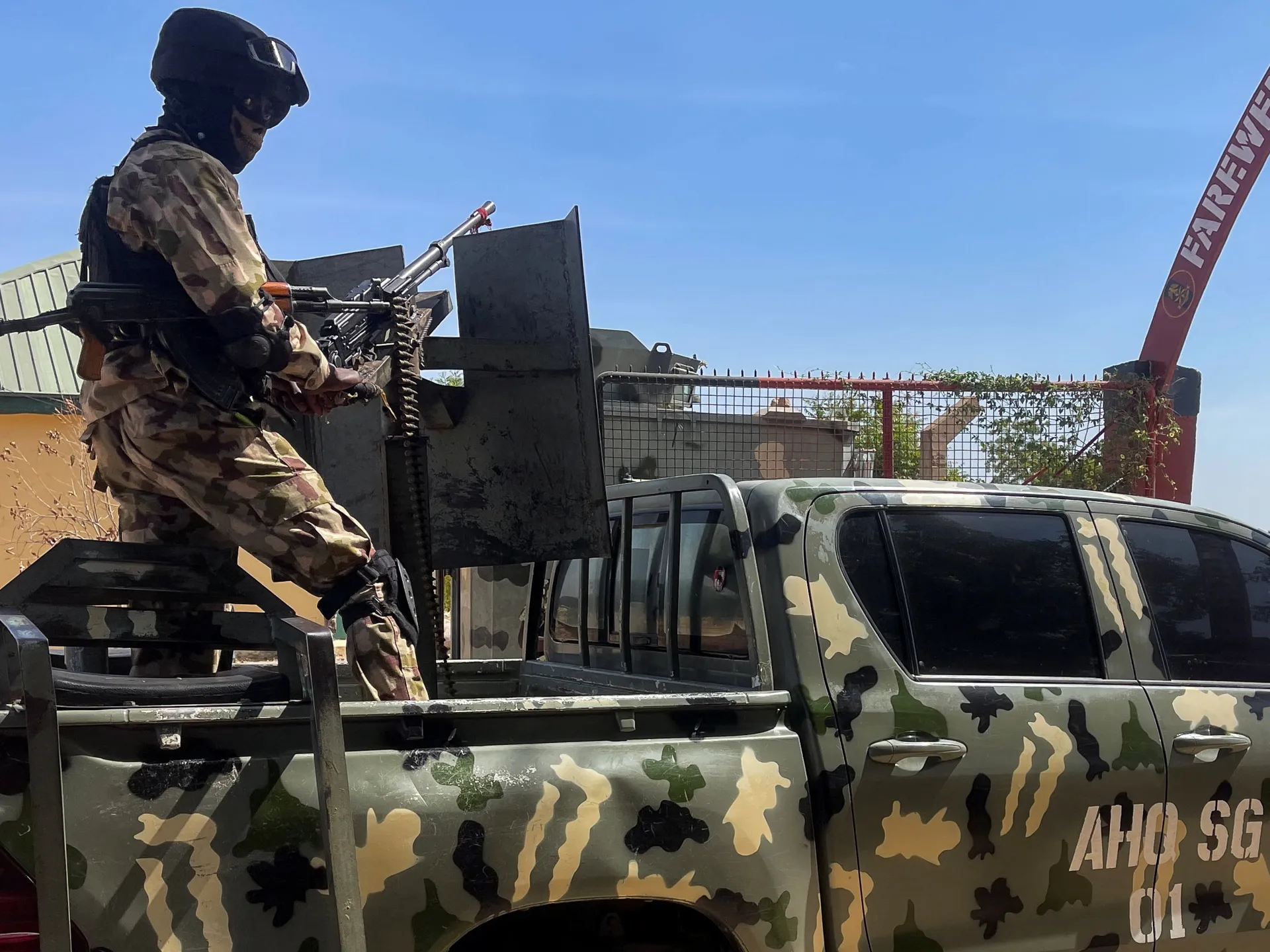
The United States has sent 100 military personnel to northern Nigeria to train and advise local forces, as deadly threats rise from armed groups such as Boko Haram and ISIL (ISIS)-linked factions.
Samaila Uba, Nigeria’s Defence Headquarters spokesman, confirmed the US troops’ arrival in the northeastern area of Bauchi on Monday.
list of 4 itemsend of list
He said they will provide “technical support” and “intelligence sharing” to help target and defeat “terrorist organisations”. The US also sent “associated equipment” to support the mission.
Uba stressed that the US soldiers will not play a direct combat role, but will share technical expertise under the full command authority of Nigerian forces.
“The armed forces of Nigeria remain fully committed to degrading and defeating terrorist organisations that threaten the country’s sovereignty, national security, and the safety of its citizens,” said the military spokesman in comments carried by Nigeria’s Premium Times newspaper.
Last weekend, gunmen on motorcycles rampaged through three villages in northern Nigeria, killing at least 46 people and abducting many others. The bloodiest attack happened in the village of Konkoso, in Niger State, where at least 38 people were shot dead or had their throats slit.
The US deployment follows an easing of tensions that flared between Washington and Nigeria late last year, when US President Donald Trump accused the country of failing to stop killings against Christians and threatened to intervene militarily.
The Nigerian government has rejected Trump’s accusation, and analysts say people across all faiths, not just Christians, are victims of armed groups’ violence
In December, US forces launched air strikes on ISIL-affiliated fighters in the country’s northwest. Last month, following discussions with Nigerian authorities in Abuja, the head of US Africa Command confirmed that a small team of US military officers were in Nigeria, focused on intelligence support.
Nigeria is facing a protracted fight with dozens of local armed groups increasingly battling for turf, including the homegrown Boko Haram and its breakaway faction, the ISIL affiliate in West Africa Province (ISWAP).
There is also the ISIL-linked Lakurawa, as well as other “bandit” groups that specialise in kidnapping for ransom and illegal mining.
Recently, the crisis worsened to include other fighters from the neighbouring Sahel region, including the Jama’at Nusrat al-Islam wal-Muslimin, which claimed its first attack on Nigerian soil last year.
Several thousand people in Nigeria have been killed, according to data from the United Nations.
While Christians have been among those targeted, analysts and residents say the majority of victims of the armed groups are Muslims in the Muslim-dominated north, where most attacks occur.
Nigeria’s 240 million people are evenly split between Christians, mainly in the south, and Muslims, mostly in the north.
Democrats have called for a ban on immigration agents wearing masks and are pushing for increased oversight of their operations.

Published On 16 Feb 202616 Feb 2026
Share
The United States Department of Homeland Security (DHS) ran out of funding over the weekend, leading to the third partial government shutdown of President Donald Trump’s second term, as negotiations between Republicans and Democrats remain stalled while Congress is in recess until February 23.
Democrats are calling for changes to the DHS’s immigration operations after two fatal shootings of US citizens in the city of Minneapolis last month. Alex Pretti and Renee Good were shot dead by federal officers from Immigration and Customs Enforcement (ICE) and Border Patrol during such operations.
list of 4 itemsend of list
On Monday, state officials in Minnesota said that the FBI has refused to share evidence with state law enforcement following Pretti’s killing on January 24.
“This lack of cooperation is concerning and unprecedented,” Minnesota’s Bureau of Criminal Apprehension superintendent, Drew Evans, said in a statement.
DHS entered a shutdown on Saturday, but will continue operations deemed essential. Cuts affect agencies under the DHS, including the Transportation Security Administration (TSA), the Federal Emergency Management Agency (FEMA), Customs and Border Protection (CBP) – which runs Border Patrol – ICE, and the US coastguard.
At US airports, 2,933 of the TSA’s 64,130 employees have been furloughed for the duration of the shutdown. The remaining 95 percent of staff will remain on duty but will work without pay until the DHS is funded.
Earlier this month, Democrats sent Republicans a list of 10 demands to rein in immigration enforcement. In a letter, authored by House of Representatives Minority Leader Hakeem Jeffries, the politicians called for increased oversight of the DHS.
The letter called for DHS officers not to enter private property without a judicial warrant and to require verification that someone is not a US citizen before placing them in immigration detention. It also called for DHS to mandate that its officers do not wear masks, have visible identification, and wear clear uniforms.
Democrats are also seeking to prohibit immigration enforcement actions near courts, medical facilities, houses of worship, schools, and polling places.
They further called for increased coordination with local and state agencies after the federal government blocked state and local law enforcement from participating in investigations related to the deaths in Minneapolis.
“Federal immigration agents cannot continue to cause chaos in our cities while using taxpayer money that should be used to make life more affordable for working families,” Jeffries said in the letter.
“The American people rightfully expect their elected representatives to take action to rein in ICE and ensure no more lives are lost. It is critical that we come together to impose common sense reforms and accountability measures that the American people are demanding.”
Tom Homan, Trump’s border chief, dismissed the calls from Democrats on CBS’s Face the Nation, referring to the requests as “unreasonable”.
Republican Senator Markwayne Mullin of Oklahoma, meanwhile, echoed Homan’s stance. On CNN’s current affairs programme, State of the Union, he claimed that Democrats are engaging in “political theatre”.

The final had been delayed by more than an hour after a heavy blizzard set in at Livigno Snow Park, while Mathilde Gremaud, a heavy favourite for a medal, was one of two Swiss skiers to withdraw last-minute through injury.
That looked to have opened up the field for Muir, who had qualified in fourth for the final.
But in an astonishing first round, four skiers posted scores of 90.00 points or more, with Muir languishing in seventh and knowing she needed to go big.
She did just that, posting 93.00 with a 1620 trick, featuring four and a half rotations, the highest score of the second run and one that catapulted her up the standings into silver medal position.
At that point Gu, already a silver medallist in the slopestyle at these Games, was way off the pace having struggled with her second attempt, but she made amends on her final jump to bump Muir down into third.
The Chinese skier celebrated like her medal was confirmed at that point, despite plenty of skiers waiting in the wings to nudge her off the podium.
As it proved, they couldn’t do that, though Tabanelli’s final jump of 94.25 points – the biggest score of the night – came just 0.75 points shy of silver medal position.
That piled the pressure on Muir’s third and final jump.
She took her time at the top of the big air structure, talking through her options with her coach and decided to go for another 1620 trick with a different grab, but ultimately could not land her effort, leaving her lost in her thoughts of what might have been as she sat on the snow.
“When the scores came in for the other girls, I knew I had to give it something really, really good to try and get on that podium, so I’m stoked that I did try that,” she said.

The TWZ Newsletter
Weekly insights and analysis on the latest developments in military technology, strategy, and foreign policy.
The AH-64 Apache attack helicopter has evolved into a counter-drone platform in recent years — something we have been following closely. While the Israeli Air Force had pioneered this role for the AH-64 for years, the U.S. Army has now formally codified it and added new capabilities in the process. Now, as we had suggested some time ago, the Apache is getting proximity-fuzed 30mm cannon shells for its chin-mounted M230 cannon that will add to its drone-killing arsenal, giving it a cheaper and more plentiful engagement option than some of the alternatives.
CRAZY footage of an IAF Apache helicopter chasing down a Hezbollah drone over northern Israel and downing it with cannon fire from its chaingun👇 pic.twitter.com/8vdks0PYL4
— Raylan Givens (@JewishWarrior13) November 2, 2024
Apaches live-fire tested the 30x113mm XM1225 Aviation Proximity Explosive (APEX) ammo last December, according to a recent Army release. The trials occurred at the service’s sprawling Yuma Proving Ground (YPG) in southern Arizona. Multiple test engagements occurred against various types of drone targets.

The specialized APEX ammunition works by detonating only when it is close to an object, then it explodes in a spray of shrapnel. This is critical to shooting down drones as they are small, independently moving targets, and the Apache’s monocle-targeted chin gun isn’t exactly a sniper rifle in terms of precision. At the same time, the rounds could also be used against targets on the surface — including personnel, soft-skinned vehicles, and small boats, for instance — offering unique area effects compared to the Apache’s standard impact-detonating, high-explosive ammunition.

(Short video) M230 chain gun follows the head movement of AH-64 Apache gunner

AH-64 Apache attack helicopter taking out Iraqi trucks and artillery with its 30mm cannon
Variants of the M230 cannon, the prime contractor for which is now Northrop Grumman, have already become an increasingly popular choice for dealing with lower-end drone threats from the ground. The light-weight M230LF version, designated the M914 in Army service, has found its way onto counter-drone vehicles. This includes the Sgt. Stout Maneuver Short-Range Air Defense (M-SHORAD) system based on the 8×8 Stryker light armored vehicle. The Army has been separately pursuing self-destructing and other kinds of proximity-fuzed 30mm ammunition for use with the M914. The new APEX ammo offers improved performance that can plug-and-play with the Apache/M230 combo. The other rounds for use in ground-based systems have never been cleared for use on the Apache to our knowledge.


The M230LF Bushmaster Chain Gun | XM914
An official Army release on the XM1225’s successful testing reads, in part:
“Developed and managed by Product Manager Medium Caliber Ammunition (PdM MCA) from Picatinny Arsenal, NJ, the XM1225 APEX cartridge is designed to counter modern threats, including UAS, exposed personnel, and small boats, without requiring modifications to the Apache’s M230 Area Weapon System or fire control system. The XM1225 has undergone extensive safety testing to ensure reliable performance, making it a safe and effective addition to the Apache’s arsenal. This innovative design ensures seamless integration into existing platforms while delivering enhanced lethality and operational flexibility.
…The primary objective was to evaluate the XM1225 cartridge’s accuracy and compare its performance to the legacy M789 High Explosive Dual Purpose (HEDP) cartridge under identical conditions. A secondary objective was to collect data on mixed loads of XM1225 and M789 rounds against both ground and UAS targets.
Initial results were highly successful, with the XM1225 meeting all accuracy requirements and demonstrating exceptional effectiveness against both ground and UAS targets. The proximity-fuzed capability of the XM1225 allows it to detonate near the target, creating a larger lethal radius and significantly improving its ability to neutralize airborne and dispersed threats. This capability positions the Apache to dominate the battlefield in both air-to-ground and air-to-air engagements, providing warfighters with a critical edge in modern combat scenarios.”

A key feature of the APEX ammunition is that it requires little additional training for Apache crews to successfully employ it as it acts very similarly, ballistically, to the M789 high-explosive dual-purpose (HEDP) rounds already fielded. Those shells use an impact/grazing fuze to command detonation.
A major issue with using any gun for counter-drone work from the air is that standard high-explosive or incendiary cannon rounds simply keep traveling until they hit something, then they explode. This makes any horizontal or upward aspect shots very problematic, as the rounds can fly many miles before hitting the ground. Anyone or anything in that unpredictable zone would not fare well. Even high-deflection shots are risky, especially considering the size of the drones. Not only will most rounds miss and still hit somewhere below, but the aircraft can easily fly into the drone itself, as judging its distance and keeping track of it in the air is problematic. So, having self-destructing rounds, and even better, proximity fuzed ones that do the same, is key.

U.S Soldiers reload the 30mm rounds in an Apache
As it sits now, the AH-64 has modified AGM-114 missiles that use the Longbow Radar to prosecute aerial targets. Laser-guided Hellfires are potentially another option. Regardless, any Hellfire costs well into the six-digit realm. Advanced Precision Kill Weapon System II (APKWS II) laser-guided rockets are a lower-cost option, having a low-to-mid five-digit price tag. It isn’t clear if the AH-64 has been cleared to use air-to-air optimized Fixed Wing, Air Launched, Counter-Unmanned Aircraft Systems Ordnance (FALCO) versions of the APKWS II, which also use a proximity fuze for going after aerial targets, yet.
So, giving AH-64s the gun option, and in a far more reliable and safer manner via a proximity fuzed round, would be a huge boon for crews tasked with the counter-drone mission. Apaches can carry a whopping 1,200 rounds of 30mm ammunition, and they can be reloaded with more very quickly at forward austere locales on the ground.
So as it sits now, it likely won’t be too long before the AH-64 has a new arrow in its anti-drone quiver.
Contact the author: Tyler@twz.com

Buenos Aires, Argentina: Diego Nacasio, 43, works full time as a salesman at a large hardware store in Florencio Varela, a city in the greater Buenos Aires area. He says he doesn’t need a calendar to know what day of the month it is. By the time his salary and that of his wife, who also works full time in a shop, run out, it is around the 15th.
From then on, they look for extra jobs, find things to sell, use their credit cards, and get small loans to pay for basics, including food, until the next paycheques arrive.
“I have never experienced anything like this,” Nacasio told Al Jazeera. “Over the past 25 years, we have worked hard, and our jobs allowed us to build a house from scratch, buy a car and give our 17-year-old son a decent life. Now, we have better jobs than we did then, and still cannot even afford food for the whole month.”
“Living on credit puts you in a very dangerous cycle. It’s very easy to fall behind with payments, and then it is a matter of chasing your own tail. Most people I know are in the same situation. We are living in a constant state of stress and anxiety, and it feels like there’s no way out.”
Nacasio’s story has become increasingly common in Argentina, where nearly half of the people say they are using savings, selling belongings or borrowing money from banks or relatives to cover basics, according to a report by Argentina Grande based on the latest official figures available. Another report, from Fundacion Pensar, found that 63 percent of Argentines have cut down on activities or services to make ends meet.
“The current situation in Argentina is extremely concerning. It is particularly worrying to see that even people who have one or several jobs are getting loans not to buy a house, a car or white goods [appliances], but to buy food,” Violeta Carrera Pereyra, sociologist and researcher at the Argentina Grande Institute and one of the authors of the report, told Al Jazeera.
Argentina’s President Javier Milei, who took office in December 2023, says his austerity economic plan, based on achieving fiscal balance while building up reserves of United States currency through drastic cuts to public spending, has revitalised the economy and lifted millions of people out of poverty. He is backed by the International Monetary Fund, which, despite Argentina’s record levels of foreign loans, projects an economic growth of four percent in 2026 and 2027.

But a closer look at the figures shows a different, more sombre, picture.
While economic activity in Argentina has increased overall, growth has been uneven. In November 2025, the most recent month for which data is available, sectors such as banking and agriculture saw growth, but manufacturing and commerce experienced sharp declines, with many factories and shops closing due to falling demand. Consumption, particularly of food, has been falling, with a 12.5 percent drop reported by independent food retailers.
Then there’s inflation, a key variable that in Argentina needs to be kept at bay in order to access essential foreign credit.
While Milei’s shock economic plan managed to significantly reduce inflation from record-high figures when he first took office in late 2023, experts say his administration has taken some controversial measures to keep it low. This includes forcing salaries to remain stagnant and under the rate of inflation, and opening the country up to cheaper imports. These policies have left many without money to spend and forced thousands of factories and small businesses to close.
Critics also say inflation figures are not representative of real price fluctuations. The tool used to measure inflation in Argentina, a sample basket of goods people consume, was developed in 2004 and does not reflect current consumption patterns, including the percentage that items like electricity and fuel – two areas that have seen price hikes considerably higher than inflation – represent in people’s real spending habits.
Carrera Pereyra says that figures also show that the rapid changes in Argentina’s economy have widened inequalities.
“On the one hand, we see that some sectors are able to consume more, so we see a rise in the sales of properties, cars, motorbikes, some as a result of the opening of imports,” she said. “But on the other hand, items like food and medicines are decreasing. So, some people can buy more things than before, while others are struggling to put food on the table.”
Many Argentines who spoke with Al Jazeera said that making ends meet has become nothing short of an obstacle course. Juggling multiple demanding jobs, selling used items such as clothing, borrowing from relatives, seeking shark loans and bargain hunting have become a regular part of daily life.
“Shopping for food has become a job in itself,” said Veronica Malfitano, 43, a teacher and trade unionist, whose salary was cut by a quarter when Milei slashed public spending. “I team up with relatives or people I work with, and we buy in bulk. I use my credit card or get small loans. This month, for the first time, I have only paid the credit card’s minimum, something I had never done before. It’s all very stressful. Everybody I know is in the same situation.”
Research confirms Malfitano is not alone. Nearly half of supermarket purchases in Argentina are paid with credit cards, a record, according to recent official data.

Both borrowing and default rates have increased. It is estimated that around 11 percent of personal loans are unpaid, the highest rate since the Central Bank of Argentina began keeping records in 2010, according to Central Bank data.
Griselda Quipildor, 49, who lives with her husband, two daughters and two grandchildren, says that even though several people in her family work, money usually runs out by the 18th of every month and they have to start taking loans.
“At the start of the month, we pay debts, the bills and then the money runs out and we have to start borrowing again. It’s an endless vicious circle, one that is very difficult to get away from. We borrow from people we know and people we don’t know. It wasn’t like this before.”
Lucia Cavallero, an analyst, economics expert, and member of Movida Ciudad, told Al Jazeera that even though Argentina’s economic problems are longstanding, their impact on people’s homes is worsening.
“Debt has long been a serious problem in Argentina, and it has now become a crisis,” she said. “The proliferation of informal lenders has created a dangerous situation, leaving many people with no other options.”
In response, a political party has proposed a bill that would help people in lower-income sectors unify their loans and apply for a long-term payment plan at lower rates.
Cavallero says there are some positive aspects to the initiative, but that it largely misses the central point.
“It is good to see the political class recognising that debts are a serious problem for people,” she said. “However, this approach follows the logic of borrowing to pay off debt. While it may provide temporary relief, deeper structural changes are needed.
“Just as banks are bailed out, we are calling for families to be supported. A more sustainable solution is for wages to keep pace with the cost of the basic basket, so that people do not have to go into debt just to afford food,” Cavallero told Al Jazeera.
Despite all the challenges he and his family face, Nacasio says many people like himself still count themselves lucky.
“At least we own our house,” he said. “If we didn’t and we had to pay rent, I don’t know what we would do. I just need things to change, for us and for everybody. Things cannot continue like this.”

‘Let the practice of democracy continue,’ said Yunus, who has overseen the country’s post-uprising transition since 2024.
Bangladesh’s interim leader Muhammad Yunus has announced he is resigning to pave way for a new government elected several days ago.
Speaking in a farewell broadcast to the nation on Monday, Yunus said the interim government he oversees “is stepping down”.
list of 3 itemsend of list
“But let the practice of democracy, freedom of speech, and fundamental rights that has begun not be halted,” he said.
An 85-year-old Nobel Peace Prize winner, Yunus returned from self-imposed exile in August 2024 to serve as Bangladesh’s chief adviser after a student-led uprising toppled the government of Prime Minister Sheikh Hasina.
Bangladesh held its first general elections since that uprising on February 12, and the Bangladesh Nationalist Party (BNP), led by Tarique Rahman, won a landslide victory.
Rahman, a scion of one of the country’s most powerful political dynasties, is set to serve as prime minister of the incoming government when it is sworn in on Tuesday, according to Bangladeshi media.
Yunus praised the recent elections, which European Union observers called “credible and competently managed” as a “benchmark for future elections”.
“The people, voters, political parties, and stakeholder institutions linked to the election have set a commendable example,” Yunus said.
Rahman’s BNP-led alliance won at least 212 seats in the 300-seat parliament, giving it a strong mandate to lead. In second place was the Jamaat-e-Islami party, which won 77 seats, positioning it as the main opposition party. Hasina’s Awami League party was barred from participating.
Rahman appealed for unity in the wake of his party’s victory, saying “our paths and opinions may differ, but in the interest of the country, we must remain united”.
In addition to electing their new representatives, Bangladeshi voters also endorsed sweeping democratic reforms in a national referendum.
The lengthy document of reforms, known as the “July Charter” after the month when the uprising that toppled Hasina began, proposes term limits for prime ministers, the creation of an upper house of parliament, stronger presidential powers and greater judicial independence. It enshrines a key pillar of Yunus’s post-uprising transition agenda.
The referendum noted that approval would make the charter “binding on the parties that win” the election, obliging them to endorse it.
“Sweeping away the ruins, we rebuilt institutions and set the course for reforms,” said Yunus, praising the reforms.
However, several parties raised questions before the vote, and the reforms will still require ratification by the new parliament.
“The challenge now is to ensure good governance, law and order, and public safety, and to establish a rights-based state, which was at the heart of the aspirations of the 2024 mass uprising,” Rezaul Karim Rony, a Dhaka-based political analyst, told Al Jazeera.

Alexander Cashford was chased and hit with rocks and a bottle before he died.
Source link

All English elections will now go ahead as originally planned after Reform UK brought a legal challenge over the decision to delay some polls.
Source link