POLITICS

Stay informed about the latest developments in politics with our comprehensive political news coverage. Get updates on elections, government policies, international relations, and the voices shaping the political landscape.

Trump says Iran wants to ‘make a deal’ as it continues to strike Israel and gulf nations

President Trump said Tuesday that Iran wants to “make a deal” with the United States to end the war in the Middle East, saying that negotiations are ongoing with the conflict in its fourth week.

Iran has publicly denied that talks are happening. But Trump told reporters during an Oval Office event that negotiations are underway and being led by Vice President JD Vance and Secretary of State Marco Rubio.

“I’d like to think we are in a good bargaining position,” Trump said.

Trump said he remains skeptical of Tehran’s intentions, saying he doesn’t necessarily “trust them,” but indicated that he is encouraged to continue talks after receiving what he described as a “very big present worth a tremendous amount of money” from Iran.

“I am not going to tell you what the present is,” Trump told reporters. But he said it was a “significant prize” related to “oil and gas” that signaled to him that he was “dealing with the right people.”

Conflicting messages over the diplomatic efforts between Washington and Tehran come as Pakistan has offered to host peace talks in Islamabad aimed at ending the hostilities, which have killed more than 2,400 people, further destabilized the Middle East and disrupted global oil markets.

“Pakistan welcomes and fully supports ongoing efforts to pursue dialogue to end the WAR in Middle East, in the interest of peace and stability in region and beyond,” Prime Minister Shehbaz Sharif wrote on X.

Any potential talks between the United States and Iran would face significant challenges. Key U.S. demands — particularly related to Iran’s ballistic missile and nuclear programs — remain difficult to resolve, even though Trump claims Iran has already agreed to concessions related to its ability to have nuclear weapons.

It is also unclear who within Iran’s leadership would be willing to negotiate, especially as Israel has vowed to keep targeting Iranian leaders after killing several already.

Trump has not publicly responded to Pakistan’s offer to act as an in-between for the United States and Iran. He also sidestepped a question about a New York Times report that said the Saudi crown prince, Mohammed bin Salman, has been pushing him to continue the war against Iran.

The president instead expressed confidence in his senior advisors handling the negotiations with Iran. He did not specify who U.S. officials are engaging with, but insisted they are “talking to the right people.”

When asked by a reporter why he had agreed to a cease-fire with the Iranians, Trump said: “They are talking to us, and they’re making sense.”

As the talks continue, Trump said that the United States is “way ahead of schedule” in its war with Iran, a nation that he said was so battered that it had no choice but to come to the negotiating table. Iran, however, showed on Tuesday that it still has firepower as it fired a new wave of missiles at Israel, Iraq and other gulf nations.

Iran fired at least 10 waves of missiles at Israel. In Tel Aviv, a missile with a 220-pound warhead slammed into a street in the city center, blowing out windows of an apartment building and sending smoke billowing. Four people suffered minor wounds, rescue worker Yoel Moshe said.

In Kuwait, power lines were hit by air defense shrapnel, causing partial electricity outages for several hours. Bahrain said it was attacked with missiles and drones, and that an Emirati soldier serving with its forces had been killed. The United Arab Emirates said air defense systems responded to similar attacks, and Saudi Arabia said it destroyed Iranian drones targeting its oil-rich Eastern Province.

Israel pounded Beirut’s southern suburbs, saying that it was targeting infrastructure used by the Iran-linked Hezbollah militant group, and carried out an extensive series of strikes on Iranian “production sites,” without providing more information.

On Tuesday, Defense Minister Israel Katz said Israel intended to seize Lebanon’s south Lebanon to a create a “security zone.”

Speaking at an assessment meeting with the Israeli military’s chief of staff, Katz said the military would control up to the Litani River, a waterway that runs through south Lebanon, meeting the Mediterranean some 20 miles north of the border with Israel.

“Hundreds of thousands of residents of southern Lebanon who evacuated northward will not return south of the Litani River until security for the residents of the north [of Israel] is ensured,” he said.

His words were the clearest articulation yet of Israel’s plans in Lebanon, going far beyond the “limited and targeted ground operations” announced by the Israeli military earlier this month.

Lebanon, meanwhile, took steps to undercut Tehran’s influence in the country and its support for Hezbollah. In a statement released on X on Tuesday, Lebanese Foreign Minister Youssef Raggi said the government was expelling Iranian Ambassador Mohammad Reza Shibani and declared him persona non grata. He gave Shibani until Sunday to leave the country.

Hezbollah condemned the move and called it a “grave national and strategic mistake.” Political figures aligned with the group also issued public statements urging the Iranian ambassador to ignore the decision.

In Washington, Trump said he would like to find a resolution that would avoid further casualties and damage to critical infrastructure in the region.

“If we can end this without more lives being down, without knocking out $10-billion electric plants that are brand new and the apple of their eye, I’d like to be able to do that,” he said. “But they can’t have certain things.”

Defense Secretary Pete Hegseth, meanwhile, told reporters that he would rather “negotiate with bombs.”

“The president has made it clear that you will not have a nuclear weapon. The War Department agrees,” Hegseth said. “Our job is to ensure that, and so we’re keeping our hand on that throttle, as long and as hard as is necessary to ensure the interests of the United States of America are achieved on that battlefield.”

His comments came as thousands of U.S. Marines were on their way to the region, raising speculation that the U.S. may try to seize Kharg Island, which is vital to Iran’s oil network. The U.S. bombed the Persian Gulf island more than a week ago, hitting its defenses but saying it had left oil infrastructure intact.

The Pentagon declined to comment on the deployment.

Ceballos and Quinton reported from Washington. Times staff writer Nabih Bulos in Beirut contributed to this report.

Source link

Plans for forum to replace scrapped USC governor’s debate fall apart

A proposed gubernatorial forum hastily cobbled together in the hours after USC canceled its Tuesday debate fell apart because the candidates of color who were excluded from the previously planned event were unable to show up in person at KNBC-TV’s studio in Universal City, according to multiple sources.

Facing mounting pressure that its debate selection criteria excluded every candidate of color, the university canceled its debate late Monday. On Tuesday morning, billionaire Tom Steyer — a Democrat — proposed holding an alternative face-off, with KNBC moderating. But the candidates who had not been invited to the USC debate had already made other commitments.

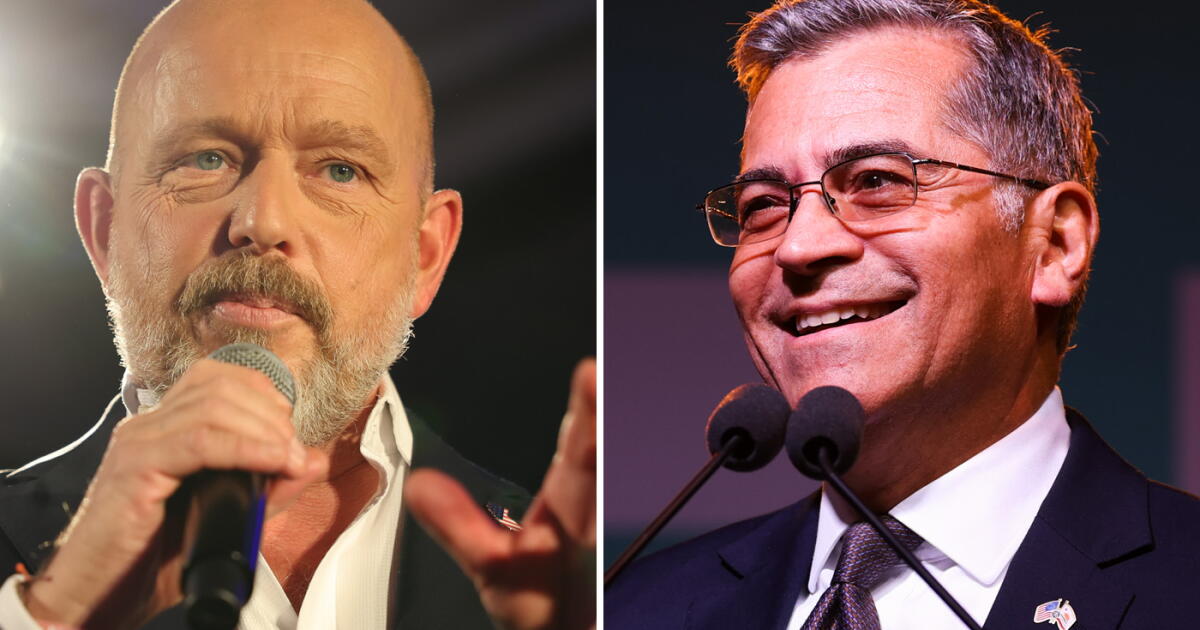
“A lot of this came out of nowhere — there’s a debate and you’re not invited, followed by there’s no debate, and then maybe we should all hang out and have a conversation,” said Kyle Layman, a strategist advising former U.S. Health and Human Services Secretary Xavier Becerra.

USC officials declined to comment on Tuesday’s developments — as did KABC-TV, one of the broadcast partners of the canceled debate. KNBC did not respond to a request for comment, but someone involved with planning a potential debate there said pulling together such an event in just a few hours was impossible, and also unfair to the candidates who had made other plans after initially being excluded from the USC debate.

“We looked into the possibility of doing something. It just wasn’t possible because of the last-minute logistics. It was not feasible,” said the person, who asked for anonymity to speak candidly. “We couldn’t get everybody here.”

The fact that the candidates excluded from the USC debate couldn’t find a way to participate in Tuesday evening’s alternative forum irritated some people involved in the planning, however. Becerra, state Supt. of Public Instruction Tony Thurmond, former Los Angeles Mayor Antonio Villaraigosa and former state Controller Betty Yee had loudly protested not being invited to the USC event.

“This is like probably one of the last opportunities they have to be with other leading contenders of the race, so why not take this opportunity?” said someone who took part in conversations about the proposed last-minute debate, who asked for anonymity to speak openly. “If the whole thing is about bringing your message to the voters, making sure voters have as much information as possible, talking about the issues that matter, wouldn’t you want to take every opportunity to do that?

“If you’re going to talk a big game about taking your message to voters, the importance of debates, why not do it?” this person said.

Becerra, Thurmond, Villaraigosa and Yee have reportedly formed an informal pact not to participate in any debate that does not include all of them, which Yee referenced in a Tuesday afternoon news conference.

“The idea that none of the candidates of color are going to be joining a debate is just inappropriate for a state like California,” Yee said. “We also need to have a commitment from all of the debate sponsors that they will include all of us going forward.”

Yee and Thurmond were not invited to the next major televised debate, which will take place April 1 at Fresno State University. Becerra and Villaraigosa had previously confirmed their attendance, according to a news release from the Western Growers Assn., one of the event’s sponsors.

And all four candidates of color, along with San José Mayor Matt Mahan, were not invited to a debate on April 22 in San Francisco that will be hosted by KRON-TV and broadcast on Nexstar Media Group stations throughout California.

“We don’t need gatekeepers,” Mahan said in a statement Tuesday evening. “I’m calling on my fellow candidates to work together to organize our own debates — so we can take our ideas for a better California to every corner of California. Let’s let the voters truly decide.”

The scrapped USC debate was going to be hosted by the institution’s Dornsife Center for the Political Future and co-sponsored by KABC and Univision. Six candidates had been invited to participate: Democrats Rep. Eric Swalwell (D-Dublin), former Orange County Rep. Katie Porter, Mahan and Steyer; along with the leading Republicans, conservative commentator Steve Hilton and Riverside County Sheriff Chad Bianco.

Candidates and elected officials called the criteria used to determine participation in the debate biased because it included Mahan, a white candidate who is polling near the bottom of the pack but is supported by notable names in the USC community. Hours after the debate was canceled, Steyer’s campaign sought to create an alternate event that would include all of the candidates.

“We were trying to do the right thing upon learning that the debate was canceled at USC,” said a member of Steyer’s campaign who asked for anonymity to speak candidly. “Tom immediately was like, ‘We can do something alternative.’ People want to hear from the gubernatorial candidates. It was on the table. It was offered.

“NBC couldn’t get all the candidates here, but we tried,” this person said. “Given the short amount of time we were trying to put this together, it ultimately could not happen because not all the candidates could get to the studio.”

Thurmond, who was in Sacramento and Richmond on Tuesday, joined a political influencer on YouTube Tuesday evening, while Yee attended previously scheduled events with the East Area Progressive Democrats and a women’s group in the L.A. area. Villaraigosa had lined up other interviews at his Wilshire campaign office, Becerra was traveling, and Porter was scheduled to host a livestream on her Instagram account Tuesday evening.

Source link

Rubio testifies he didn’t know of allegations an ex-lawmaker was lobbying for Venezuela’s Maduro

Secretary of State Marco Rubio testified in court that he had no knowledge that former Florida congressman David Rivera was lobbying on behalf of Venezuela’s government — as prosecutors later alleged — when he met with his longtime friend to discuss U.S. policy toward the South American country several times at the start of the first Trump administration.

“I would’ve been shocked” had I known, Rubio said in almost three hours of testimony Tuesday at Rivera’s federal trial in Miami.

Rivera and an associate were charged in 2022 with money laundering and failing to register as a foreign agent after being awarded a $50-million lobbying contract by Nicolás Maduro’s government.

Prosecutors allege that the goal of the lobbying effort was to persuade the White House to normalize relations with Venezuela, while Rivera’s attorneys argue that the three-month contract, which ended before Rivera met with Rubio, was focused exclusively on luring Exxon Mobil back to Venezuela — commercial work that is generally exempt from the Foreign Agents Registration Act.

As part of his work, Rivera and his co-defendant are accused of trying to arrange meetings for then-Foreign Minister Delcy Rodríguez — now Venezuela’s acting president — in Dallas, New York, Washington and Caracas, Venezuela, with White House officials, members of Congress and the chief executive of Exxon.

Rubio testifies, an unusual move

In sometimes deeply personal testimony Tuesday, Rubio discussed at length friendships that date back to the start of his political career as an aide to Bob Dole’s 1996 presidential campaign and a West Miami council member.

Testifying in a packed courtroom with heightened security, Rubio said he and Rivera became “very close” when they overlapped as members of the Florida Legislature. The two Cuban American Republicans co-owned a house in Tallahassee, celebrated family events together and ardently opposed Venezuela’s socialist government when both went to Washington at the same time — Rubio elected to the Senate, Rivera to the House.

So when Rivera texted Rubio in July 2017 that he needed to see him urgently to discuss Venezuela, they agreed to meet the next day, a Sunday, at a friend’s home in Washington where the then-senator was staying with his family, Rubio said.

At the meeting, Rivera informed Rubio that he was working with Raul Gorrín, a media magnate in Venezuela, on what he described as a plan for Maduro to step aside.

“I was skeptical,” said Rubio, adding that the Maduro government was full of “double dealers” constantly pitching unrealistic plans to unseat Maduro. “But if there was a 1% chance it was real, and I had a role to play alerting the White House, I was open to doing that.”

Rubio said he had no knowledge Rivera was himself working for Maduro, as prosecutors would later allege. Rubio said he doubted Gorrín would betray Maduro even when the former congressman opened his laptop and showed millions of dollars in a Chase bank account that he was told were payments from the businessman to Venezuela’s opposition.

“It was an impressive amount,” Rubio said. “He didn’t tell me whose account it was. He said it was to support the opposition.”
Two days later, borrowing talking points provided by Rivera, Rubio wrote and delivered a speech on the Senate floor signaling the U.S. would not retaliate against Venezuelan insiders who worked to push Maduro from power.

“He provided me with insight into some of the key phrases that regime insiders would’ve wanted to hear to know this was serious,” Rubio testified. “No vengeance, no retribution.”
Rubio also spoke to Trump, alerting the president in his first term that there may be something “brewing” with Venezuela.

‘A total waste of my time’

But the peacemaking effort collapsed almost immediately. At a second meeting at a Washington hotel, Gorrín failed to produce a promised letter from Maduro to Trump that he wanted Rubio to hand-deliver to the president.

“It was a total waste of my time,” Rubio testified.

Shortly afterward, Trump imposed heavy sanctions on Maduro and members of his inner circle for their decision to go forward with what Rubio called a “fake election” to empower a constituent assembly that undercut the opposition-controlled legislature.

By that time, the senator hewed closely to the Trump administration’s hard line. He taped a rare 10-minute address to the Venezuelan people in July 2017, a day after the divisive election, that was broadcast exclusively on Gorrín’s Globovision network.

“For Nicolás Maduro, who I am sure is watching, the current path you are on will not end well for you,” Rubio said in the televised address.

On the stand, Rubio said that had he known Rivera was working with Gorrín on behalf of Maduro, he never would have agreed to deliver the address on the network.

But Rivera said Rubio’s testimony backed his defense that as a lifelong opponent of communism he never worked to strengthen Maduro’s grip on power.

“Marco Rubio made it abundantly clear today that everything we worked on together in 2017 was meant to remove Maduro from power in Venezuela,” he said in a statement.

Throughout his testimony Rubio, a lawyer, spoke calmly and in command of granular details of U.S. policy toward Venezuela over the past decade, even as he struggled to recall the specifics of his text exchanges with Rivera on Venezuela matters.

His testimony was highly unusual. Not since Labor Secretary Raymond Donovan testified at a Mafia trial in 1983 has a sitting member of the president’s Cabinet taken the stand in a criminal trial.

As if to underscore the uniqueness of his appearance in federal court, Rivera’s attorney, Ed Shohat, asked Rubio to sign a copy of his 2012 autobiography, “An American Son,” at the conclusion of his testimony.

Rivera and his co-defendant, political consultant Esther Nuhfer, are among a small number of friends and family Rubio thanks in the acknowledgment section of his memoir.

Goodman writes for the Associated Press.

Source link

Melania Trump hosts world counterparts and tech reps to discuss children, education and technology

Melania Trump on Tuesday called on nations to work together to improve access to education and technology for children around the world, delivering her plea as she addressed a gathering of her counterparts from more than 40 countries.

The first lady’s Fostering the Future Together initiative, which she announced last year, and an inaugural two-day summit that she opened Tuesday are examples of how Melania Trump has expanded her portfolio to embrace global issues.

“As people we dream. As leaders we progress. As nations we will build,” she said in opening remarks. “Beginning today, let’s accelerate our new global alliance, this bond, to positively impact the progress of our children.”

She called on participants to host regional meetings, conduct research studies, begin new partnerships and collaborate with another member country “to cultivate the skills young people need to be successful in this rapidly evolving world.”

She said the goal of empowering children will be achieved by creating innovative programs, advocating for supportive education policies, sponsoring tech-focused legislation and building strong public-private partnerships.

“This room is filled with extraordinary human capital,” the first lady said. She urged the leaders seated around a large U-shaped table in a State Department auditorium to “harness it to elevate your children, to empower your people and to accelerate your economies.”

The gathering included technology companies such as Microsoft, Google and OpenAI.

Among those participating were Olena Zelenska, the spouse of Ukrainian President Volodymyr Zelensky, and Sara Netanyahu, the wife of Israeli Prime Minister Benjamin Netanyahu.

The first lady announced the Fostering the Future Together initiative during the U.N. General Assembly session last fall.

Superville writes for the Associated Press.

Source link

Democrats call for review of Paramount’s Middle Eastern financial backers

Democratic lawmakers are demanding scrutiny into Paramount Skydance’s financial backers amid rising concerns about potential foreign influence of U.S. media properties.

In a letter this week to Federal Communications Commission Chairman Brendan Carr, seven U.S. senators criticized Carr’s suggestion that Paramount’s $111-billion bid for Warner Bros. Discovery, backed by billionaire Larry Ellison and his family, was on a fast track to receive FCC approval with scant oversight.

Such complicated mergers typically receive an intense government review. The proposed merger would combine two legendary film studios, dozens of cable channels, HBO, CBS and two major news organizations, CNN and CBS News.

Ellison and his son, David, who chairs Paramount, are friendly with President Trump, who has long agitated for changes at CNN, which is slated to be absorbed by Paramount.

The company has said it expects to complete the deal by the end of September.

The Democrats expressed concerns that the fix may be in. Trump’s Justice Department has been reviewing whether the merger would violate U.S. antitrust laws, but a key deadline passed last month without comment from the department’s antitrust regulators.

Also at issue is the Middle Eastern money the Ellison family has been expecting to pull off Paramount’s leveraged buyout of its larger entertainment company rival. The acquisition would leave the combined company with nearly $80 billion in debt.

Late last year, Paramount disclosed that it had lined up $24 billion from wealth funds representing the royal families of Saudi Arabia, Qatar and Abu Dhabi, who would then become equity partners in the combined company.

Paramount has described the funds as largely passive investors, saying the royal families would not have input into corporate decision-making. They also would not control seats on the Paramount-Warner board.

Congressional Democrats previously have warned about potential national security concerns. The senators, led by Cory Booker (D-N.J.) and Chuck Schumer (D-N.Y.), remain concerned, particularly because the transaction will help shape the future of Hollywood production and the direction of key news outlets, including CNN, which maintains a strong presence around the world.

Members of the party have called on Carr to conduct “a full and independent” analysis of the foreign ownership interests before signing off on the merger. The FCC could play an important role, they said, because the tie-up includes Paramount-owned CBS, which holds FCC broadcast station licenses.

Paramount declined to comment. FCC officials did not respond to a request for comment.

Booker and Schumer pointed to Carr’s comments at an industry conference in Spain earlier this month. During an appearance at the Mobile World Congress, Carr suggested the Paramount-Warner deal could be swiftly approved because the foreign investment would warrant only a “very quick, almost pro forma review,” Carr reportedly said.

The FCC has a duty to examine foreign ownership, the lawmakers said, referencing the U.S. Communications Act, which forbids owners from outside the U.S. from holding more than 25% of the equity or voting interests in an entity that maintains an FCC license.

The lawmakers mentioned the FCC’s move earlier this year to tighten its foreign ownership framework to bolster transparency.

Paramount has not yet disclosed its final list of equity partners.

The company previously disclosed its proposed partners in Securities & Exchange Commission filings. However, last month, the composition of the Paramount-Warner deal changed when Larry Ellison agreed to fully guarantee the $45.7-billion in equity needed to finance the $31-a-share buyout of Warner investors.

Before Ellison stepped up, Warner board members had expressed concerns about Paramount’s financing. The tech billionaire’s increased involvement helped carry the Paramount deal over the finish line. Netflix bowed out Feb. 26, ceding the prize to Paramount.

Still, Paramount is expected to line up billions of dollars from outside investors.

It would be significant if Saudi Arabia’s Public Investment Fund, the Qatar Investment Authority and Abu Dhabi’s L’imad Holding Co., contributed $24 billion to the deal, the Democrats wrote.

“This is not incidental capital, it represents roughly one-fifth of the total transaction value,” Booker and the others wrote. “And it is not clear that this will be the only foreign investment.”

Initially, Paramount included Chinese technology company Tencent Holdings as a minority investor, but Paramount later removed Tencent from the investor pool due to concerns about its problematic status — it has been blacklisted by the U.S. Department of Defense.

Bloomberg News reported earlier this month that Tencent might return to the fold.

“This constellation of foreign investment from China and from Gulf States, with complex and sometimes competing relationships with the United States, demands rigorous, not perfunctory review,” Booker and the others wrote.

The letter also was signed by Sens. Dick Durbin (D-Ill.), Elizabeth Warren (D-Mass.), Richard Blumenthal (D-Conn.), Sheldon Whitehouse (D-R.I.) and Mazie K. Hirono (D-Hawaii).

They keyed in on the role of Saudi Arabia’s sovereign wealth fund, saying it was controlled by Crown Prince Mohammed bin Salman “whom the U.S. intelligence community concluded ordered the murder of Washington Post journalist Jamal Khashoggi in 2018.”

The proposed $24-billion investment would give “these governments a significant financial stake in the future content, licensing, and strategic decisions of a combined entity that includes some of the most-watched news and entertainment networks in America.”

It is also unclear whether the current tensions in the Middle East over the Iran war will have an impact on Paramount’s investor syndicate.

Trump’s son-in-law Jared Kushner, a proposed Paramount investor, also withdrew late last year.

Paramount shares held steady at $9.17. The company’s stock is down 31% since Feb. 27, when the company prevailed in the Warner auction.

Source link

CA AG moves to block Republican sheriff’s investigation of seized ballots

The feud between California Atty. Gen. Rob Bonta and Riverside County Sheriff Chad Bianco has escalated after Bonta asked a court to stop Bianco’s investigation into alleged election fraud.

In a 70-page petition filed with the Fourth Appellate District Monday, Bonta wrote that “the Sheriff’s misguided investigation threatens to sow distrust and jeopardize public confidence” in upcoming elections. The investigation, which he also called “sweeping and unprecedented,” is an abuse of the criminal process, he wrote.

Bianco, who is a leading Republican candidate for governor, last month seized more than 650,000 ballots cast in Riverside County in the November election for Proposition 50, which temporarily redrew the state’s congressional districts to favor Democrats.

The sheriff has said that his investigators are looking into allegations by a local citizens group that “did their own audit” and found that the county’s tally was falsely inflated by more than 45,000 votes — a claim that local election officials have emphatically rejected.

Bianco has described his probe as a “fact-finding mission” to determine if votes were fraudulently counted. He has accused the attorney general, a Democrat, of improperly interfering with what he says is a lawful criminal investigation.

In Riverside County, the proposition passed by more than 82,000 votes. Statewide, it passed with about 64% of the vote and a margin of more than 3.3 million ballots.

“Well, well, well, the political corruption in California just gets bigger and bigger,” Bianco said in a social media video Monday night in response to Bonta’s petition.

“Why in the world would Rob Bonta want that count stopped unless he was afraid of what that count would uncover?” he added. “We have an extremely politically biased appeals court, so this is going to be interesting.”

Political observers have said that Bianco, an outspoken supporter of President Trump, appears to be vying for attention from Trump, who has called on the federal government to “nationalize” state-run elections, remains fixated on his 2020 election loss and has falsely claimed widespread fraud.

Kim Nalder, a political science professor and director of the Project for an Informed Electorate at Sacramento State, said that Bianco’s investigation appears to be “an electoral ploy.”

“At this stage in the election, most voters haven’t really tuned into the gubernatorial race, and there are a ton of candidates,” she said. “People who don’t know his background will know now. This is clear signaling.”

The sheriff has denied the probe has anything to do with his campaign.

A poll released last week by UC Berkeley’s Institute of Governmental Studies and co-sponsored by The Times showed Bianco and conservative commentator Steve Hilton leading the crowded field of gubernatorial candidates by slim margins, with the Democratic vote split among multiple candidates in a left-leaning state.

Bonta’s office said in a statement Monday evening that it was asking the court to pause the investigation “while we work to understand its basis.”

Bonta’s petition revealed that — in addition to warrants issued on Feb. 9 and 23 — the sheriff obtained a third warrant from the Riverside County Superior Court on March 19 to restart a paused recount of the ballots. The warrants now are under seal.

Bonta’s office called the warrants and the affidavits supporting them legally deficient because “the Sheriff has not identified any particular crime that may have been committed by anyone — a necessary predicate to obtain a criminal search warrant.”
Bonta had earlier questioned whether Bianco had concealed important information from the magistrate judge who approved the warrants.

In his petition, Bonta wrote that the sheriff’s department had planned to assign “12 employees working four days a week, five to seven hours each day” to count the votes.

David Becker, executive director of the Center for Election Innovation & Research and a former senior trial attorney overseeing voting enforcement for the Department of Justice’s Civil Rights Division, agreed with Bonta’s assessment that the sheriff’s probe is a legally deficient “fishing expedition.” He questioned how Bianco got a judge to sign off on three warrants.

“You can’t use a warrant as a PR tool, as something to help your political campaign,” Becker said. “You have to meet certain standards in order to obtain a warrant, because a warrant is extraordinary. A warrant is saying we believe there is probable cause to seize evidence, and we need it now.”

Bianco said in a news conference Friday that a Riverside County Superior Court judge had ordered the appointment of a special master to oversee the count. His investigators had already begun counting, but the tally would start over under the court’s guidance, Bianco said.

“This isn’t about counting yes and no votes,” Bianco said in his social media video Monday. “This is simply counting the total ballots and comparing that total with the number of votes. … Plain and simple. Common sense.”

Source link

The Rise of Delcy’s Chief Enforcer

Commander of the Presidential Guard, head of Military Counterintelligence (DGCIM), and now Minister of Defense. The meteoric rise of General-in-Chief Gustavo Enrique González López in the 75 days since January 3 is only comparable to Delcy Rodríguez’s own improbable ascent to Venezuela’s presidency.

In less than three months, González López went from leading the Bolivarian Intelligence Service to commanding the Armed Forces and becoming one of the most powerful figures in the Venezuelan government. His appointment points in several directions: counterbalancing Diosdado Cabello’s power (no longer an ally) in the monopoly of force; shielding the acting president from enemies within chavismo itself; and building a loyal enforcement structure for the new ruling clan.

Amid celebrations of Venezuela’s victory in the World Baseball Classic on March 18, Rodríguez seized the moment to overhaul her cabinet. One of the most radical moves was the dismissal of Vladimir Padrino López, the longest-serving minister in the chavista cabinet. After 12 years at the helm of the Defense Ministry, he will hardly be remembered for defending the nation.

Although rumors had long suggested that Padrino López would soon step down, the selection of his successor caught observers off guard.

There were strong reasons to replace Vladimir Padrino López.

Replacing Padrino with González López raises several questions:

What role will he play in a power structure divided among four family-based factions, consisting of Diosdado Cabello, the Rodríguez siblings, the Chávez family, and the Maduro-Flores clan?

If this marks a new political moment, why recycle officials from the Chávez and Maduro governments?

What is the point of US sanctions if the acting president rewards sanctioned officials with key posts?

Does his appointment guarantee impunity for human rights abuses committed under his command?

And, since it came after official visits from the CIA director and the head of US Southern Command, does it have Donald Trump’s backing?

Neither hero nor martyr

Before examining why González López was chosen, it is clear there were several reasons to replace Padrino López.

On January 3, 2026, when US forces bombed key military infrastructure and captured Nicolás Maduro, the Venezuelan Armed Forces offered no resistance. The attack left 83 dead among those guarding Maduro, including 32 Cubans, while US forces only reported minor injuries. There was no troop mobilization afterward to restore order or deter further attacks.

Padrino appeared only hours later in a solitary video, declaring: “The Bolivarian National Armed Forces inform the world that the Venezuelan people have been the victims of a criminal military aggression by the United States.”

Days later, he justified his inaction bluntly: “It would have been a massacre if we had confronted the Americans.”

When Delcy became the acting minister of petroleum, she appointed González López to a tailor-made role at PDVSA overseeing strategic affairs and production control.

This was not his only failure. In 2021, the FANB lost the so-called Apure war, an operation aimed at expelling FARC dissidents from Venezuelan territory.

The Colombian guerrillas killed 17 Venezuelan soldiers and kidnapped eight more to force negotiations that allowed them to remain in the country. By January 2022, the ELN had finished the job the FANB could not, pushing FARC factions out of the border region.

Nor did the Defense Ministry respond to US attacks on more than 20 Venezuelan vessels in the Caribbean. US tactical teams seized at least eight oil tankers without any naval reaction from Venezuela. Padrino also failed to deploy troops to prevent Maduro’s blatant presidential election fraud on July 28, 2024.

Beyond his rank and decorations, Padrino leaves behind another legacy: signing Resolution 008610, which authorizes the use of “firearms or potentially lethal weapons” for public order control.

Why González López?

González López was the first official appointed after Delcy Rodríguez herself. On January 6, 2026, he was named Commander of the Presidential Guard and head of Military Counterintelligence. These roles are clearly designed to protect the new head of state.

Since then, he has been inseparable from Rodríguez: her shadow, her watchdog, the strongman of the Rodríguez clan. His appointment is key to consolidating this new ruling faction. Previous chavista groups had their own enforcers. These are figures with intelligence expertise, coercive power, and influence over security forces and armed groups. González López fills that role for the Rodríguez siblings.

Their Achilles’ heel had been precisely a lack of support from armed elements within the Venezuelan State. For this reason, the Rodríguez siblings could not operate independently from other chavista factions. They had secured economic power and built extensive business ties, including in the oil sector. Rodríguez’s tenure as foreign minister also gave her a broad international network.

The rise of González López could even foreshadow a purge to both consolidate Delcy’s power and polish the image of a criminalized State.

González López has been close to her since at least 2018, when as vice president she oversaw SEBIN, then led by him.

In 2024, when Rodríguez became the acting minister of petroleum, she appointed him to a tailor-made role at PDVSA overseeing strategic affairs and production control. Such position combined security and operational authority.

González López has therefore become Delcy’s trusted operator, the man that can enforce her orders.

At the same time, chavismo has spent 26 years building a system of power rooted in complicity, which explains the constant recycling of officials. Even if the Rodríguez faction wanted to break away, it cannot fully detach from that structure without risking collapse. It still lacks independent foundations.

Blessed and lucky

After overseeing more than 2,000 arbitrary detentions in 2024 as head of SEBIN, being identified as one of Maduro’s torture chiefs, and linked to the deaths of political prisoners, González López has not been punished. He has been promoted.

His appointment disregards warnings from human rights groups and signals that the regime’s institutional chain remains intact—one of chavismo’s enduring strengths. If prosecutions ever come, they will likely follow the familiar script: a few scapegoats.

His rise could even foreshadow a purge to both consolidate Rodríguez’s power and polish the image of a criminalized State.

As the architect of the Operation for the Liberation and Protection of the People (OLP), González López has already demonstrated a zero-tolerance approach to crime. In practice, that policy led to the killing of young men in poor neighborhoods under the banner of law enforcement.

Could Rodríguez appoint a defense minister of this magnitude without a green light from Washington?

His profile aligns with hardline anti-crime and anti-migrant approaches promoted by US policy in recent years, which could appeal to sectors in Washington.

This may help explain why he appears to have received approval from Donald Trump’s team. Could Rodríguez appoint a defense minister of this magnitude without a green light from Washington? Perhaps not. While not every minister requires it, Defense almost certainly does.

Other signs point in that direction: González López appeared as host during John Ratcliffe’s visit (Trump’s CIA director) and was part of the delegation that met US Southern Command chief General Francis L. Donovan. There have also long been rumors of his role as a US intelligence informant. Which is unsurprising, given that intelligence and repression are his specialties.

For now, sanctions imposed under Barack Obama and accusations of crimes against humanity are not part of Venezuela’s new political moment, as Delcy Rodríguez has labelled it.

After two months, the new era seems to prioritize “stabilization, economic recovery, and political transition.” Not human rights, not justice.

Source link

Divided Supreme Court weighs the right to seek asylum at the southern border

The Trump administration urged the Supreme Court on Tuesday to rule that it may block migrants from applying for asylum at ports of entry along the southern border.

The administration’s lawyers argued that the right to asylum, which arose in response to Nazi Germany and the Holocaust, does not extend to those who are stopped just short of a border post in California, Arizona or Texas.

They pointed to part of the immigration law that says a non-citizen who “arrives in the United States … may apply for asylum.”

“You can’t arrive in the United States while you’re still standing in Mexico. That should be the end of this case,” Vivek Suri, a Justice Department attorney, told the court.

Immigration rights advocates called this claim “perverse” and illogical. They said such a rule would encourage migrants to cross the border illegally rather than present themselves legally at a border post.

The justices sounded divided and a bit uncertain over how to proceed. But the conservative majority is nonetheless likely to uphold the administration’s broad power over immigration enforcement.

Several of the justices noted, however, the Trump administration is not currently enforcing a “remain in Mexico” policy.

Liberal Justices Sonia Sotomayor and Ketanji Brown Jackson questioned why the court would make a major decision on immigration and asylum with no immediate, practical impact.

The case posed a fundamental clash between the government’s need to manage surges at the border and the moral and historic right to offer asylum to those fleeing persecution.

In 1939, more than 900 Jewish refugees who were fleeing Nazi Germany aboard the MS St. Louis were turned away by Cuba and the United States. They were forced to return to Europe and more than 250 of them died in the Holocaust.

The worldwide moral reckoning spurred many nations, including the United States, to adopt new laws which offer protection to those fleeing persecution.

In the Refugee Act of 1980, Congress said that non-citizens either “physically present in the United States” or “at a land border or port of entry” may apply for asylum.

To be eligible for asylum, a non-citizen had to demonstrate a well-founded fear of persecution in their home country due to their race, religion, nationality, membership in a particular social group, or political opinion.

Only a small percentage of applicants win their asylum claims, and only after years of litigation.

But faced with overwhelming surge of migrants, the Obama administration in 2016 adopted a “metering” policy that required people to wait on the Mexican side of the border.

The Trump and Biden administrations maintained such policies for a time.

Immigrant rights advocates sued, contending the metering policy was illegal. They won before a federal judge in San Diego who ruled the migrants had a right to claim asylum.

In a 2-1 decision, the 9th Circuit Court of Appeals agreed in 2024.

“To ‘arrive’ means ‘to reach a destination,’” Judge Michelle Friedland wrote for the appeals court. “A person who presents herself to an official at the border has ‘arrived.’”

The Trump administration appealed.

Solicitor Gen. D. John Sauer said the “ordinary meaning of ‘arrives in’ refers to entering a specific place, not just coming close to it. An alien who is stopped in Mexico does not arrive in the United States.”

On Tuesday, the Justice Department attorney said the court should reverse the 9th Circuit and uphold the government’s broad power to block migrants approaching the border.

“I can’t predict the next border surge,” Suri said.

“For more than 45 years, Congress has guaranteed people arriving at our borders the right to seek asylum, consistent with our international treaty obligations,” said Kelsi Corkran, Supreme Court director of the Institute for Constitutional Advocacy and Protection, who argued the case. “Yet this administration believes that Congress gave it discretion to completely ignore those requirements, and turn back those who are seeking refuge from persecution at its whim.”

“The people turned away at our border are fleeing rape, torture, kidnapping, and death threats. You cannot tell families running for their lives to go back and wait in danger because their suffering is inconvenient,” said Nicole Elizabeth Ramos, border rights project directo at Al Otro Lado which was the plaintiff in the case. “We brought this case because the United States made a legal and moral commitment to protect people fleeing persecution.”

Source link

Minnesota sues Trump administration over shootings, including deaths of Alex Pretti and Renee Good

Minnesota officials sued the Trump administration on Tuesday for access to evidence they say they need to independently investigate three shootings by federal officers, including the killings of Renee Good and Alex Pretti.

The lawsuit claims that the federal government reneged on its promise to cooperate with state investigations after the surge of federal law enforcement in Minneapolis, and are seeking a court order demanding that the Trump administration comply.

“We are prepared to fight for transparency and accountability that the federal government is desperate to avoid,” Hennepin County Atty. Mary Moriarty told reporters.

The lawsuit marks an escalation in the clash between Minnesota leaders and the Trump administration over the investigations into the high-profile shootings by federal officers that sparked public outcry and protests. The Trump administration has suggested that Minnesota officials don’t have jurisdiction to investigate, but state officials insist they need to conduct their own probes because they don’t trust the federal government to investigate itself.

“There has to be an investigation any time a federal agent or a state agent takes the life of a person in our community,” Moriarty said.

The administration sent thousands of officers to the Minneapolis and St. Paul area for the immigration crackdown as part of President Trump’s national deportation campaign. The Department of Homeland Security considered its largest immigration enforcement operation ever a success but was staunchly criticized by Minnesota’s leaders who raised questions over officers’ conduct.

There continues to be fallout from Operation Metro Surge in the form of a Homeland Security shutdown, as Democrats in Congress hold up funding in an effort to secure restraints on Trump’s immigration agenda.

Minnesota’s lawsuit said the federal government is not permitted to “withhold investigative evidence for the purpose of shielding law enforcement officers from scrutiny where a State is investigating serious potential violations of its criminal laws, targeting its citizens, within its borders.”

Moriarty said Tuesday that the federal government “has adopted a policy of categorically withholding evidence,” calling the practice unprecedented and alarming. She said the lawsuit followed formal demands for evidence after the federal government blocked Minnesota investigators from accessing evidence related to the shootings.

In addition to the Pretti and Good cases, the lawsuit demands access to evidence in the case of Julio Cesar Sosa-Celis, who was shot and wounded in his right thigh by a federal agent in January.

Federal officials initially accused Sosa-Celis and another man of beating an Immigration and Customs Enforcement officer with a broom handle and a snow shovel. But federal prosecutors later dropped all charges against the men and authorities opened a criminal investigation into whether two immigration officers lied under oath about the shooting.

Emails seeking comment were sent to DHS and the Justice Department.

The Justice Department in January said it was opening a federal civil rights investigation into Pretti’s killing but has said a similar federal probe was not warranted in the killing of Good. The decision in Good’s case marked a sharp departure from past administrations, which moved quickly to investigate shootings of civilians by law enforcement officials for potential civil rights offenses.

Deputy Atty. Gen. Todd Blanche has said that the department’s Civil Rights Division does not investigate every law enforcement shooting and that there have to be circumstances and facts that “warrant an investigation.”

Moriarty has said a lack of confidence in the federal government’s review of these incidents makes the state’s independent investigations into the shootings, as well as officers’ actions during the immigration enforcement operation altogether, especially important. The county office received over 1,000 tips from the public on the shootings of Good and Pretti via an online portal they opened to collect evidence. Earlier this month, Moriarty initiated a second portal and said her office was investigating a number of incidents of potentially unlawful action by officers over the course of the immigration enforcement operation.

Fingerhut and Richer write for the Associated Press. Fingerhut reported from Des Moines, Iowa.

Source link

Senators consider deal to fund Homeland Security but not ICE enforcement

Senators raced Tuesday to clinch an emerging proposal to end the Homeland Security shutdown by funding much of the department, including the Transportation Security Administration airport workers going without pay, but excluding ICE enforcement operations that have been core to the dispute.

The sudden sense of urgency comes as U.S. airports are snarled by long security lines, with travelers being told to arrive hours before their flights in Houston, Atlanta and Baltimore Washington International. Routine Homeland Security funding was halted in mid-February ahead of the busy spring travel season. Nearly 11% of TSA workers — more than 3,200 — missed work Monday, and at least 458 have have quit altogether since the shutdown began, according to Homeland Security.

Democrats are refusing to fund the department without restraints on Trump’s immigration and deportation agenda after agents killed two citizens in Minneapolis.

A potential breakthrough came late Monday, after a group of Republican senators met at the White House with President Trump after his decision to deploy federal immigration officers at some airport security checkpoints — a move some lawmakers warned could lead to heightened tensions.

“All I can say is that the discussions have been very positive and productive, and hopefully headed in the right direction,” said Senate Majority Leader John Thune (R-S.D.) late Monday evening.

Senate Democratic Leader Chuck Schumer sounded a similarly hopeful tone: “Both sides are working in a serious way.”

Hopes high for a quick deal

Next steps in Congress could move quickly, if lawmakers can reach a deal, or sputter out just as fast.

The contours of the deal under consideration would fund most of Homeland Security, but not one main part of ICE — the enforcement and removal operations that are core to Trump’s deportation agenda.

Under the proposal being floated, ICE’s Homeland Security Investigations would be funded as well as Customs and Border Protection. But that would come with guardrails — keeping officers from those divisions in their traditional roles, rather than deploying them in urban immigration roundups.

The plan would also include a number of changes in immigration operations that Democrats have demanded, including mandating that officers wear body cameras and identification. The ICE officers manning airports are already going without face-covering masks, another key demand Democrats want as part of any deal.

Since so much of ICE is already funded through Trump’s big tax breaks bill, and immigration officers are still receiving paychecks despite the shutdown, senators said the new restraints would also be imposed on operations that rely on that funding source, as well.

Republican Sen. Katie Britt of Alabama, a chief negotiator, returned from the White House meeting hopeful they had a solution to “land this plane.”

Both chambers of Congress are controlled by the Republican president’s party, and any deal reached in the Senate would also have to be approved by the House.

Political standoff, long airport lines

Key to the standoff appears to have been the senators’ ability to shift the president’s attention off his plan to link any department funding to his push to pass the so-called SAVE America Act, a strict proof-of-citizenship and voter ID bill that has stalled in the Senate ahead of the midterm elections.

Over the weekend Trump injected his demand for the voting bill as a condition for ending the funding standoff. Some GOP senators have pitched the idea of tackling it in the months ahead as part of a broader legislative package the party could pass on its own, similar to last year’s big tax cuts bill.

Sen. Chris Coons (D-Del.) who was not part of the group at the White House, said his understanding was that there was a “sense of urgency” coming from the talks as the airport disruptions worsen.

Senators are expected to discuss the proposals during their private caucus lunches Tuesday afternoon. “First step is to get the proposal in writing,” said Sen. Angus King, an Independent from Maine. “I want to see exactly what that means.”

Changes at Homeland Security

The deal could provide a political exit from the standoff over the embattled Homeland Security department, which was stood up in the aftermath of the Sept. 11, 2001, attacks but has come to symbolize Trump’s aggressive mass deportation agenda, with its goal of removing 1 million immigrants this year.

Under mounting political pressure, Trump ousted Homeland Security Secretary Kristi Noem amid the public outcry over the immigration operations, and senators late Monday confirmed one of their own, Markwayne Mullin, as the president’s handpicked replacement.

Mullin, an Oklahoma senator who aligns with Trump’s agenda, provides a potentially new face for the department. During his confirmation hearing, Mullin touched on another key demand of Democrats — ensuring a judge has signed off on warrants that immigration officers use to search people’s homes, rather than simply relying on administrative warrants issued by the department.

“This is significant,” Sen. Peter Welch (D-Vt.) said about the progress toward changes. “Noem is gone. That’s a big deal.”

ICE’s budget nearly tripled under last year’s bill, to $75 billion, which has been untouched by the shutdown. Rather its routine annual funding, some $10 billion, would be cut almost in half under the proposal.

After weeks of missed paychecks, many TSA agents have called in sick or even quit their jobs as financial strains pile up. Union leaders representing the workers have pushed Congress to reach a deal.

Mascaro and Cappelletti write for the Associated Press. AP writers Rio Yamat, Wyatte Grantham-Philips, Kevin Freking and Seung Min Kim contributed to this report.

Source link

Federal judge orders return of California DACA recipient deported to Mexico

A federal judge on Monday ordered the government to return to the U.S. a California DACA recipient who was deported last month to Mexico.

U.S. District Judge Dena Coggins in Sacramento gave the government seven days to return Maria de Jesus Estrada Juarez, 42, and restore her protections under the Obama-era program Deferred Action for Childhood Arrivals, “as if her Feb. 19, 2026 removal never occurred.”

A lawyer for Estrada Juarez argued that she was unlawfully deported within a day of appearing at a scheduled immigration appointment in Sacramento.

Lawyers for the government, meanwhile, argued that the court lacked jurisdiction over Estrada Juarez’s case because her petition was filed after she was deported and because her removal was a discretionary decision the government is entitled to.

Coggins said she found the government’s argument “unavailing,” writing in her ruling that Estrada Juarez “was removed in flagrant violation of the regulatory protections afforded to her under DACA, and in violation of the Constitutional protections afforded to her under the Due Process Clause of the Fifth Amendment to the U.S. Constitution.”

In a statement, Estrada Juarez said she was “overwhelmed with relief and hope” after learning the court’s decision.

The Department of Homeland Security said it had reinstated an expedited removal order for Estrada Juarez from 1998, when she was 15. But her lawyer, Stacy Tolchin, said the record showed that the order lacked supervisory approval and was never finalized, so there was no valid removal order to reinstate.

Homeland Security previously told The Times that an immigration judge had ordered Estrada Juarez’s deportation in 1998 “and she was removed from the United States shortly after.” Tolchin said Estrada Juarez never saw an immigration judge.

Estrada Juarez, who worked as a regional manager for Motel 6, has had protection from deportation under DACA since 2013. She applied for legal permanent residency, or a green card, through her daughter, Damaris Bello, 22, who is a U.S. citizen.

Her deportation after the green card interview garnered public attention and outrage from members of Congress, including Sen. Alex Padilla (D-Calif.).

Tolchin filed the lawsuit seeking her return on March 10.

DACA was created to protect undocumented people who were brought to the U.S. as children.

As of June 2025, there were more than 515,000 DACA recipients, known as “Dreamers,” in the U.S. California has 144,000 DACA recipients, the most of any state, according to federal data.

Source link

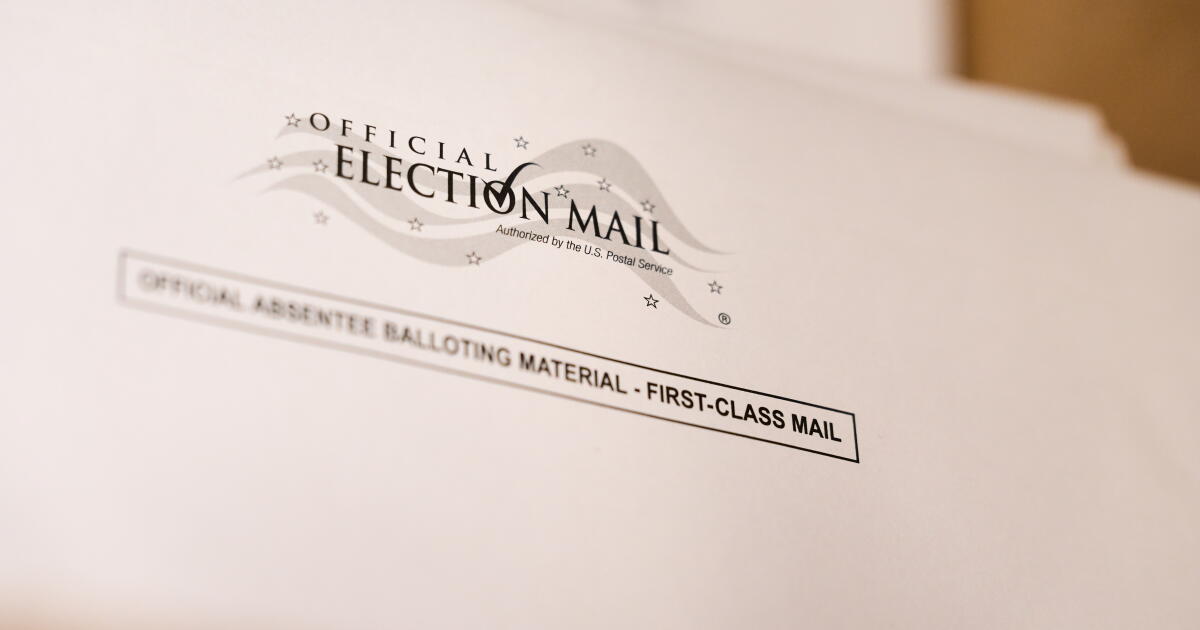
Trump casts Florida mail ballot as he pushes Congress to severely limit that voting option

President Trump has cast another mail ballot in Florida as he continues to publicly bash the voting method as a source of fraud and push Congress to curtail the practice.

Palm Beach County voter records show the president voted by mail in a Tuesday special election for state legislative seats and that his ballot has been counted. Early in-person voting in the contest ran through Sunday, when Trump was still at his south Florida estate.

The White House said Tuesday that Trump’s ire is at states using universal mail-in voting, not individual instances of voters needing accommodations to vote by mail. A spokeswoman pushed back specifically at the idea that his voting practice contradicts his push for new federal voting rules.

“As President Trump has said, the SAVE America Act has commonsense exceptions for Americans to use mail-in ballots for illness, disability, military, or travel — but universal mail-in voting should not be allowed because it’s highly susceptible to fraud,” said White House spokeswoman Olivia Wales in a statement.

A report by the Brookings Institution published in 2025 found that cases of mail voting fraud occurred in only 0.000043% of total mail ballots cast, or about four cases out of every 10 million mail votes.

Wales added: “As everyone knows, the President is a resident of Palm Beach and participates in Florida elections, but he obviously primarily lives at the White House in Washington, D.C. This is a non-story.”

Nonetheless, Trump has in the last week called mail-in voting “cheating” and “corrupt as hell.” He is urging Congress to pass the SAVE Act. The sweeping bill would bar universal mail ballots and, as Wales noted, limit the options to a select few voters such as those with disabilities, military commitments or who are traveling on Election Day. The measure faces steep odds in the closely divided Senate even with the president’s pressure.

Trump has fixated on mail ballots since he began falsely claiming that his 2020 presidential election loss to Democrat Joe Biden was the result of fraud. Multiple U.S. courts and Trump’s own attorney general have found no evidence of fraud that affected the outcome, despite the COVID-19 pandemic increasing the share of the electorate that cast mail ballots that year.

“We’re the only country in the world that does it that way. Corrupt as hell,” Trump said last week at the White House when hosting Irish Prime Minister Micheál Martin.

Dozens of countries, including European democracies that are traditional U.S. allies, use some form of mail-in voting.

Trump said last week that the SAVE Act was the “biggest thing” pending in Washington, even as Congress and administration grapple with the Iran war and a partial shutdown of the Department of Homeland Security.

Last August, Trump used a White House meeting with Ukrainian President Volodymyr Zelensky to blast mail voting.

“We’re going to start with an executive order that’s being written right now by the best lawyers in the country to end mail-in ballots because they’re corrupt,” Trump said. “And it’s time that the Republicans get tough and stop it because the Democrats want it. It’s the only way they can get elected.”

The president, who changed his official personal residence and voter registration from New York to Florida during his first term, does not have a standing vote-by-mail request for all elections, according to the county records. That means he has to request a mail ballot for any individual election.

The ballot today includes Florida state House District 87 and Senate District 14.

Trump offered an endorsement late Monday in the House contest via his Truth Social platform.

“There is a very important Special Election tomorrow, Tuesday, March 24th, for Florida State House District 87 in beautiful Palm Beach County. … TO ALL GREAT PATRIOTS IN FLORIDA STATE HOUSE DISTRICT 87: GET OUT AND VOTE FOR JON MAPLES! Polls are open from 7:00 A.M. to 7:00 P.M.” Trump wrote, without mentioning that he had voted by mail or at all.

The Florida election comes one day after the Supreme Court heard oral arguments in a Mississippi case questioning whether states can count mail-in ballots that are postmarked by Election Day but not received until later. Trump has criticized those allowances in 14 states and the District of Columbia.

Barrow writes for the Associated Press.

Source link

California governor candidate Matt Mahan unveils government reform plan

When he entered the race for California governor, San José Mayor Matt Mahan pitched himself as a pragmatic Democrat who would prioritize improving residents’ quality of life and government efficiency.

He unveiled a key part of that promise on Tuesday with an expansive plan to reform state government, including tying pay raises for elected officials and other top leaders to improvements on key issues, and pledging not to approve any tax increase until the state proves “that we can deliver better outcomes with the dollars we already have.”

Mahan also delivered a blistering rebuke of ballooning state spending — which, as he often points out on the campaign trail, has increased nearly 75% over the last six years. In 2020, amid the COVID-19 pandemic and accompanying economic uncertainty, California lawmakers approved a no-frills state budget that came in at $202 billion. Gov. Gavin Newsom’s latest spending proposal is nearly $349 billion.

“We have fallen into this lazy, reflexive mindset of always going back to voters and telling them that the only solution to every problem is a tax increase or a new bond or a new rule coming down from Sacramento,” Mahan said in an interview. “We need to step back and take a really hard look at our existing spending and increase the level of transparency and accountability in government.”

His eight-page plan includes ways to measure and track accountability, some of which are drawn from policies in other states. They include lobbying reforms, following up on audit recommendations and overhauling the state’s digital infrastructure and its procurement process — services Mahan described as “clunky and cumbersome.”

He also proposed a “California Performance Review,” inspired by a similar effort in Texas throughout the 1990s, that would review state agencies and solicit input from employees to eliminate waste and inefficiencies.

But near the top of the list is a proposal to tie pay raises for state officials including the governor, lawmakers and thousands of gubernatorial appointees to “measurable outcomes” in areas such as reducing homelessness and unemployment.

“People in the real world don’t get raises if they don’t do a good job,” Mahan said, “and I think it should be the same for the politicians and senior administrators who are allocating budgets, leading projects, making the big decisions on behalf of the people of California.”

Though the benchmarks would be created with input from the state Legislature, Mahan floated one example: reducing unsheltered homelessness by 5% to 10% within one year, something he said he’s accomplished three years in a row in San José.

It’s a solution one might expect from a former entrepreneur and mayor of a city in the heart of Silicon Valley. Mahan made a similar proposal at the local level last year, but it was rejected by the City Council.

“Tying pay to performance is nothing short of revolutionary in government. It’s a private-sector model that is overdue,” said former state Sen. Steve Glazer (D-Orinda), a Mahan supporter who sponsored several bills aiming to increase transparency in government.

Dozens of tech company executives are backing Mahan in the race for governor and have collectively donated millions to his campaign, as well as two independent expenditure committees supporting him.

That has raised concerns from some voters, and criticism from some of Mahan’s opponents, that he would be beholden to their interests and veto future regulations on tech or artificial intelligence companies.

Mahan has sought to dispel those concerns, arguing that he believes AI and social media platforms should be regulated. Of his plan to overhaul state information technology systems and infrastructure, he said that “whenever we spend public dollars, we have to run open, transparent and competitive procurement processes that ensure best value for the taxpayers.”

Though Mahan did not specify how he would link government outcomes to pay raises, state lawmakers have largely panned his campaign and are unlikely to get on board. The change probably would also require voter approval.

Currently, annual raises for elected officials are determined by a citizen commission that was added to the California Constitution in 1990. Changing how that panel works or imposing limits on when it can approve raises would require a constitutional amendment, which requires voter sign-off.

But Mahan contended it would be one of the fastest ways to fix a system that he says works for special interests at the expense of working people.

“I’m under no illusion that this will be easy, but I think it’s a necessary realignment of incentives,” he said. “We have to make ourselves as accountable to the people as we possibly can be.”

Source link

De Gaulle vs. María Corina: Resisting Great-Power Tutelage

There is a familiar critique of María Corina Machado. That she is too rigid, not particularly interested in adjusting to the diplomatic realities surrounding Venezuela’s political crisis, and not especially inclined toward compromise.

The argument is straightforward. Moments like this are supposed to require flexibility, negotiation, and a willingness to adapt. From that perspective, her style can seem poorly suited to the situation.

But that reading is at best incomplete. It assumes a level of intransigence that is not always reflected in how she has actually operated, particularly in her dealings with international actors. More importantly, it assumes that Venezuela is going through a conventional political transition, one where the main challenge is to manage an orderly redistribution of power.

That is not quite what is happening.

Because in deeper national crises, the issue is not only how power changes hands, but whether the country still sees itself as a functioning political community. And in those moments, the tension is not simply between rigidity and pragmatism, but between adaptation and the risk of political dilution.

This is not a new tension. During World War II, Charles de Gaulle was widely seen by his allies as arrogant, inflexible, and almost impossible to work with. Franklin D. Roosevelt dismissed him as a prima donna who “thinks he is France.” Winston Churchill, more begrudgingly, called him “the heaviest cross I have to bear,” and both struggled with what they saw as his refusal to behave like the leader of a defeated country.

Preserving the idea of France as a nation, even in defeat, required a certain political stubbornness, one that inevitably generated friction with allies focused on managing the war.

Between them, Churchill and FDR sketched a portrait of a man too rigid, too proud, too self-appointed to be useful, and yet too symbolically indispensable to ignore.

De Gaulle, after all, had no real army at the outset, no territory, and no state apparatus behind him. Yet he insisted on speaking, and acting, as if France still existed as a sovereign political force.

From the outside, that posture often looked unreasonable, even counterproductive. From the French perspective, it was something else. De Gaulle understood that if the leader who claimed to represent France began to behave primarily as a dependent actor, the country itself risked being seen that way. Preserving the idea of France as a nation, even in defeat, required a certain political stubbornness, one that inevitably generated friction with allies focused on managing the war. At the same time, De Gaulle was careful to express gratitude for the support France depended on, even as he resisted being defined by it. The challenge was not to reject alliances, but to avoid being politically reduced by them. It was precisely that balance, difficult and often uncomfortable, that later allowed him to reappear not just as a political figure, but as the embodiment of France’s return.

There is a long tradition in political history of what the French call l’homme providentiel, the idea that, in moments of acute national crisis, certain figures come to embody more than a political program. They are read, sometimes reluctantly, as necessary to the resolution of the crisis itself. Charles de Gaulle was often described in those terms, not because he sought to cultivate that image, but because the collapse of the French state created a vacuum that only a figure with that kind of symbolic authority could fill.

In a very different context, María Corina Machado’s role in this most recent chapter of Venezuela’s history has taken on a similar tone. Not as a conventional political leader, but as a figure onto whom broader expectations about national recovery have been projected. That does not resolve the practical challenges of the moment, but it does complicate the assumption that she can simply be treated as another actor within the process.

More recently, Volodymyr Zelenskyy has faced a similar tension. Ukraine’s survival depends heavily on Western support, particularly from the United States, yet his relationship with Washington, especially under Donald Trump, has often been marked by visible strain. At times, Zelensky has had to absorb public criticism, adjust his tone, and even appear deferential in ways that, from the outside, can look uncomfortable. But that is only part of the picture. He has also been careful to consistently express gratitude for American support, acknowledging that it has been essential in sustaining Ukraine’s defense, even as he continues to press for more assistance and assert Ukraine’s strategic value. The result is not a simple posture of defiance or submission, but something more complex. A constant negotiation between dependence and dignity.

Machado is operating within that same tension. Venezuela’s political crisis is often framed as a negotiation problem, one that can be managed through calibrated concessions, international mediation, and gradual normalization. But that framing misses something more fundamental. For a large part of the country, the issue is not simply how power is redistributed, but whether the outcome reflects the democratic mandate that has already been expressed. In that context, a leadership style that appears inflexible from the outside may in fact be responding to a different constraint altogether, the need to sustain the idea that Venezuela has not accepted its political condition as final.

Political processes can be negotiated, structured, and even externally supported, but they cannot fully stabilize without a sense that they reflect the will of the society they claim to reorder.

If there is a lesson in De Gaulle’s trajectory, it is not simply that difficult leaders can prove indispensable, but that political arrangements built around figures who lack legitimacy tend to remain fragile. Over time, systems that attempt to bypass the actors who embody a country’s political mandate often find themselves circling back to them, not out of preference, but out of necessity.

Something of that dynamic is beginning to surface in Venezuela. The events of early January created a sense, however fleeting, that a political opening might finally take shape. That expectation has not materialized in a way that is broadly felt, and the gap between anticipation and outcome is beginning to generate visible frustration. What is emerging instead is a more ambiguous configuration, a transition that gestures toward change without fully convincing that it has arrived.

In that context, the question is not whether María Corina Machado is a comfortable actor within the process, but whether a process that unfolds without her can secure broad social buy-in. The instinct to view her primarily as a destabilizing force risks missing a more basic point. In moments like this, the leaders who carry political legitimacy are often the ones systems struggle to accommodate, even as they become increasingly difficult to exclude. Winston Churchill, who had once found De Gaulle exasperating, would later acknowledge as much: “Here was a man who, though not elected, though not even accepted by all Frenchmen, nevertheless represented France… He was the spirit of France.”

That may be the uncomfortable reality of moments like this. Political processes can be negotiated, structured, and even externally supported, but they cannot fully stabilize without a sense that they reflect the will of the society they claim to reorder. The difficulty is that the figures who embody that will are rarely the easiest to incorporate.

They are, more often than not, the ones who insist on speaking as if the country they represent has not yet accepted its condition as final.

Source link

Why I’m not taking down my César Chávez photo

The framed photo of César Chávez and Dolores Huerta sits in my personal office on a bookshelf crammed with volumes about California and the American West.

The two are at a 1973 United Farm Workers convention, presiding over the union they co-founded. After years of victories in the name of campesinos, the group and its charismatic leaders seem ready for what’s next.

A UFW banner emblazoned with the group’s famous black Aztec eagle logo hangs in the center of the picture, making Chávez and Huerta look like equals.

But they’re not.

He’s speaking from a podium, looking down and appearing cast in darkness due to Chávez blue vest melding into his black hair and brown skin. She’s by his side clasping her hands, wearing a colorful blouse that pales in radiance to Huerta’s hopeful face as she looks at the crowd before them.

It’s the only picture of historical figures that I display at home, and it’s in a place where I’m guaranteed to look at it. It has long served as my secular version of a prayer card, a daily reminder to fight for the good in the world and a reminder that giants before me faced challenges far more daunting than mine. It was also a testament to teamwork — when I acquired the photo a few years ago, it called to me in a way a solo Chávez never would have because I always knew el movimento was more than just one man.

Their portrait can never mean just those things ever again after the New York Times reported last week Chávez sexually assaulted two teenage girls in the 1970s and Huerta in the 1960s.

Places left and right — colleges, cities, classrooms, even states that mark Chávez’s birthday as a holiday — are now deleting his name and image from the public sphere. It’s not going to be a quick, easy task even if the cancellation is starting to take place with startling speed: Chávez’s presence is as ubiquitous in Mexican American life as the Virgin of Guadalupe.

Just this weekend, a friend acknowledged that he and his wife had just started reading a book about him to their 5-year-old daughter, a book they now plan to trash.

I thought of doing the same to my photo of Chávez and Huerta. But I’ve decided not to.

I don’t fault folks for wanting to scrub any hint of Chávez from their daily lives and neither does the Cesar Chavez Foundation, the nonprofit headed by his descendants that recently announced in a statement, “We support and respect whatever decision[s]” may come in the weeks and months to come. Communities are entitled to decide whom they should and shouldn’t publicly honor.

But to eradicate Chávez’s civic presence so fast — to tear down his statues, relabel streets and parks named in his honor, paint over his image on old and new murals, to throw away artwork that has adorned homes and offices for decades — doesn’t remove the fact that millions largely saw him as a champion of the downtrodden until last week. It can’t rescind the positive influence Chávez had on generations of Latinos and non-Latinos who saw in him the hopes of a people and now must reconcile their memories with his horrible deeds.

Historians, educators, activists and politicians for far too long elevated Chávez above Huerta in the name of a simplistic narrative that should’ve never been constructed. The public at large bought into those efforts with little skepticism in the understandable desire to have Latinos star in the American story. It’s a culpability we should all interrogate, not immediately purge.

That’s why not only am I keeping up my photo of Chávez and Huerta, I’m going to put it in a more prominent place from where I can’t look away.

The statue at Cesar E. Chavez Memorial Park in San Fernando is being covered.

Workers for the city of San Fernando cover the statue at Cesar E. Chavez Memorial Park on Thursday.

(Kayla Bartkowski / Los Angeles Times)

It will serve as a memory of a tragic, tremendous moment in the history of Latinos in the United States, where we should be focusing our attention on a presidential administration that wants most of us gone but instead must deal with the fallout from the downfall of one of our own. It will challenge me anew to look past the big names of the past and highlight those whose stories aren’t nearly as known by the mainstream.

Seeing Huerta next to her abuser will forever remind me about how the now-95-year-old sacrificed her own mental health and safety in the name of something bigger than the two of them — a choice no one should ever have to make but one that she nevertheless did.

The photo will stand as the manifestation of the old newspaper adage that if your mom tells you she loves you, go check it out. No one should ever be above skepticism no matter how sanctified and righteous they may seem — that’s why the New York Times investigation crashed into the Chicano collective sense of self like a meteor. No one could’ve imagined that Chávez could’ve possibly done things so monstrous, but maybe we shouldn’t have built him up so much while he was alive and after his death in the first place.

My framed Chávez-Huerta memento will make me think of how the stories of sexual abuse survivors are still not heard enough or even believed. Even now, some Chávez defenders are casting doubt on the claims of Huerta and the three other women named in the New York Times story, questioning their motivations to come forward after decades of silence and decrying how their decision to do so has permanently tarnished the reputation of one the few nationally known Chicano heroes. In Huerta’s case, critics just don’t buy how someone who carried Chávez’s torch decades after his death could all of a sudden supposedly turn on him.

But as a Catholic who has long covered the Catholic Church sex abuse scandal, I know that every sexual assault survivor has their own journey of recovery. I also know that we must always seek the truth instead of living a lie.

And turning Chávez into a historical footnote is a lie. He long served as a moral exemplar; he should now serve as a cautionary tale known to all.

Erasing historic figures from the public sphere is an exercise in power going back to the pharaohs, a way rulers ensured future generations couldn’t learn about their enemies. The push to nix Chávez comes from the trend in recent years by progressive activists to remove monuments that hail problematic figures under the pretense that someone’s sins trump any good they might have done no matter how influential they were.

Again, all communities have that right to reexamine the past. But we can’t and shouldn’t disappear the full story of Chávez, as painful as it is. It’s the easy way out — and remedying wrongs is never easy.

If the photo in my book shelf was only of Chávez, I’d still keep it up. The good he did was really good — the bad he committed was as terrible as it gets.

Somewhere in between stands the story of us.

Source link

Contributor: Kamala Harris is polling well, which signifies nothing

When I read all the hype being heaped on Kamala Harris’ lead in early polls for the 2028 Democratic nomination, I have to chuckle to myself.

The release of a Rasmussen Reports poll in February was titled, “Kamala Harris Still Leads 2028 Field for Democrats.” One headline in the Hill predicted, “Kamala Harris may yet be the Democratic nominee in 2028.” A Washington Examiner piece about polling warned, “Democrats won’t get rid of Kamala Harris that easily for 2028.”

I chuckle not because I don’t believe the numbers, but because I don’t believe any poll this far out in an open contest is meaningful, let alone determinative. I’ve seen this movie before, and it didn’t end well.

In 2003, after managing the successful 2002 reelection campaign of California Gov. Gray Davis, I signed on as an advisor to the presidential campaign of Connecticut Sen. Joseph Lieberman — who, I needn’t remind anyone, had been the Democratic nominee for vice president in the 2000 election, which he and Al Gore lost in a nail-biter to George W. Bush.

Based simply on his high name identification from that hellzapoppin’ race, and the fact his name had been on the ballot in all 50 states just two years before, Lieberman initially led the Democratic field quite handily in almost every national poll.

An ABC News/Washington Post survey in January 2003 found Lieberman leading the Democratic field with 27%. A Gallup poll from that same month also placed him first, ahead of both John Kerry and Richard Gephardt.

A Pew poll in the summer of 2003 also found Lieberman atop the field, as the best-known candidate at 85% name recognition, and 58% support, ahead of Kerry, Gephardt and Howard Dean.

Boy, did we brag about Lieberman’s lead at every stop and in every press release. But in the end, the promising early numbers meant nothing. When actual votes were cast, Lieberman totally flamed out, receiving a measly 8.9% of the vote in the critical first primary in New Hampshire, finishing dead last, and dropping out of the race in February 2004, having lost every primary and caucus up to that point.

Why? A lot of reasons, including mistakes made by the candidate and campaign. But fundamentally because, when Democrats started to take a close look at and assess the full field, they relegated Lieberman to the status of a loser, and they wanted to move on. We heard a lot of, “He had his chance and lost.” Does Harris come to mind?

The fact is, we Democrats tend to put defeated presidential nominees in the rear-view mirror pretty quickly. Think of Michael Dukakis, Gore and Kerry. And let’s not forget, Harris obtaining the nomination in 2024 was a fluke; she didn’t compete in one primary or receive one primary vote. The first time she ran for president, in the 2020 cycle, she also didn’t win one primary or receive a single primary vote, because she ran a bad campaign and hightailed it out of the race before a single vote was cast. Two strikes and you’re out?

We Democrats just don’t renominate losers. The last time we did it was exactly 70 — yes, 70 — years ago, with Adlai Stevenson in 1956 after he had lost the 1952 presidential race to Dwight Eisenhower. Stevenson rewarded Democrats for this recycling effort by losing to Eisenhower a second time — by an even worse margin. Democrats learned their lesson: Reheating doesn’t work with failed candidates.

And, come on, Harris not only lost to Trump, not only lost all seven swing states, but was the first Democratic presidential nominee in 20 years to lose the popular vote. And her weak showing also helped Republicans wrest control of the Senate from Democrats. We’re supposed to imagine that’s a credible record on which to run again for the nomination?

All of these breathless stories about Harris leading the field nationally also never mention her perilous standing in her own home state of California. A Berkeley IGS survey in August revealed that by a margin of 18 percentage points, even her fellow Democrats in California did not want her to run again. A Politico poll this month showed Gov. Gavin Newsom with a 2-to-1 lead in California among voters leaning toward voting in the 2028 Democratic primary.

So have fun, Kamala Harris, enjoying your name-ID high while it lasts (although maybe a mite longer than your 107-day presidential effort).

Garry South is a Democratic strategist who has managed four campaigns for governor of California and played significant roles in three presidential campaigns, including that of Al Gore.

Source link

California leaders call to boycott debate if other candidates not included

Democratic legislative leaders on Monday called on voters to boycott USC’s upcoming gubernatorial debate if the university does not invite candidates who were excluded from participating.

The unsparing letter adds another layer of controversy to Tuesday’s forum, which as a result of the university’s selection criteria would not include any of the leading candidates of color.

“We are writing to demand you open the March 24 gubernatorial debate to all leading candidates,” said the letter sent Monday evening to USC President Beong-Soo Kim by Assembly Speaker Robert Rivas (D-Hollister), Senate President Pro Tem Monique Limón (D-Goleta) and the leaders of the legislative Latino, Black, Asian and Pacific Islander, Native American, LGBTQ, Jewish and women’s caucuses. “The outcry over this debate is deafening and includes legal demands from the excluded candidates’ attorneys, public calls by elected leaders across the state, concerns from the included candidates’ own campaigns, and growing alarm from California voters. Instead of responding to these valid concerns by expanding the debate, USC has doubled down.”

USC officials did not immediately respond to a request for comment Monday. Tuesday’s debate is scheduled less than two months before ballots begin arriving in voters’ mailboxes.

The university has been embroiled in controversy over the criteria it used to select the candidates it invited to participate in Tuesday’s debate, which is co-sponsored by KABC-TV Los Angeles and Univision.

Specifically, critics have pointed out the methodology allowed San José Mayor Matt Mahan — a white candidate who recently entered the race and is polling poorly — to vault above former U.S. Health and Human Services Secretary Xavier Becerra, former Los Angeles Mayor Antonio Villaraigosa, state Supt. of Public Instruction Tony Thurmond and former state Controller Betty Yee.

“The university’s selection process — built on a formula never before used for a debate of this scale, has delivered a result that is biased,” the letter says. “When a methodology produces this outcome — one that elevates a candidate with notable ties to USC’s donor community and the co-director of the Dornsife Center for the Political Future — the burden falls on USC to explain itself, not on everyone else to accept it. If USC does not do the right thing, we call on California voters to boycott this debate.”

Mike Murphy, a co-director of the USC center hosting the debate, has been voluntarily advising an independent expenditure committee backing Mahan. The veteran GOP strategist previously said he had nothing to do with organizing the debate and that he has asked for unpaid leave at the university through the June 2 primary if he takes a paid role in the campaign.

USC has also received tens of millions of dollars in donations from billionaire real estate developer Rick Caruso and his wife. Caruso, a USC alumnus who served as a trustee for years, is also a Mahan supporter.

“I had no conversations with the debate hosts or organizers,” Caruso said in a statement to The Times on Monday. “This is the most important election for California in a generation, and I encourage everyone to be engaged, learn as much as possible about each candidate, then form an opinion who can move California forward in the most positive of ways. Watching debates is a part of that process. That is why I believe debates should include all the credible candidates.”

The debate sponsors released a joint statement on Friday defending their decision.

“We want to be clear that we categorically, unequivocally deny any allegations that the debate criteria was in any way biased in favor or against any candidate and want to clarify the facts,” said the statement by the USC Dornsife Center for the Political Future and its broadcast partners. “The methodology was based on well-established metrics consistent with formulas widely used to set debate participation nationwide — a combination of polling and fundraising — and developed without regard to any particular candidate.”

Hours later, the four prominent Democrats who were excluded from the debate called on their rivals to boycott the event, reiterating their concerns that the criteria used to determine who was invited to participate resulted in every prominent candidate of color being excluded from the forum.

The four Democrats who are participating in the debate — Rep. Eric Swalwell of Dublin, former Orange County Rep. Katie Porter, billionaire climate activist Tom Steyer and Mahan — all issued statements criticizing USC’s selection criteria, but did not pull out of the debate.

“It is a shame that USC has decided to elevate one candidate at the expense of others,” Swalwell wrote on X on Sunday. “USC, and every host of a gubernatorial debate, should employ fair, objective, and honest criteria for all candidates. I remain hopeful they will do so Tuesday night.”

Porter expressed similar thoughts.

“Criteria used to determine which candidates qualify to participate in a debate must be transparent, fair, and objective,” she wrote on X. “I’m disappointed by how USC handled the process for Tuesday’s debate. Candidates and Californians deserve answers.”

Source link

Another court backs Bush on secrets

In rejecting a key element of a legal challenge to the government’s warrantless wiretapping program, federal appellate judges on Friday demonstrated once again the willingness of U.S. courts to give the Bush administration considerable latitude in handling the war on terror.

The U.S. 9th Circuit Court of Appeals in San Francisco, by a 3-0 vote, barred an Islamic charity from using a confidential government document to prove that it had been illegally spied upon, agreeing with the administration that disclosure would reveal “state secrets.”

The lawsuit, filed by Al-Haramain Islamic Foundation and two of its attorneys, challenged the National Security Agency’s spying endeavor, the Terrorist Surveillance Program, launched after the Sept. 11, 2001, terrorist attacks. The U.N. Security Council has declared that Al-Haramain, which operates in more than 50 countries, belongs to or is associated with Al Qaeda.

The suit was one of 50 legal challenges brought across the country after the program’s existence was revealed in the New York Times.

Other courts have shown similar deference to the Bush administration on the state secrets privilege, which permits the government to bar disclosure in court of information if “there is a reasonable danger” it would affect national security.

But the ruling in this case was particularly striking because it came from a panel of three liberal jurists, all appointed by Democratic presidents.

Moreover, the charity, unlike other plaintiffs, says it has evidence of surveillance — a call log from the National Security Agency that the government inadvertently turned over in another proceeding.

In the ruling, Judge M. Margaret McKeown wrote that the judges accepted “the need to defer to the executive on matters of foreign and national security and surely cannot legitimately find ourselves second-guessing the executive in this arena.”

Erwin Chemerinsky, a liberal constitutional law professor at Duke University law school, said the court showed “how much deference even a liberal panel of judges is willing to give the executive branch in situations like this, and I find that very troubling.”

Doug Kmiec, a conservative constitutional law professor at Pepperdine law school, said “the opinion is consistent with” a ruling by the federal appeals court in Cincinnati earlier this year striking down a challenge to the surveillance filed by the American Civil Liberties Union.

He said the dual rulings indicated that “federal courts recognize that the essential aspects of the Terrorist Surveillance Program both remain secret and are important to preserve as such.”

The court’s ruling was not an absolute victory for the government. McKeown rejected the Justice Department’s argument that “the very subject matter of the litigation is a state secret.”

That finding could prove important in numerous other cases in which the government contends that even considering legal challenges to warrantless wiretapping would endanger national security.

In addition, the 9th Circuit panel sent the case back to a lower court to consider another issue: whether the Foreign Intelligence Surveillance Act, which requires approval by a special court for domestic surveillance, preempts the state secrets privilege. McKeown said that issue “remains central to Al-Haramain’s ability to proceed with this lawsuit.”

Georgetown University constitutional law professor David Cole said he thought Friday’s ruling showed partial victories for both sides.

Indeed, lawyers for the government and for the charity said they were happy with the outcome.

“The 9th Circuit upheld the government’s position that release of this information would undermine the government’s intelligence capabilities and compromise national security,” the Justice Department said.

Oakland attorney Jon Eisenberg, who argued for Al-Haramain before the 9th Circuit, said: “The government wants this case dead and gone. It is not. We are alive and kicking.”

Eisenberg expressed optimism that his client would prevail under the Foreign Intelligence Surveillance Act, a statute enacted in the aftermath of revelations of illegal spying on civil rights and antiwar activists in the 1960s and ‘70s.

“That provision would be meaningless if the government could evade any such lawsuit merely by evoking the state secrets privilege,” Eisenberg said.

In support of her opinion, McKeown detailed statements by government officials — including President Bush, then-Atty. Gen. Alberto Gonzales and Gen. General Michael V. Hayden, principal deputy director for national intelligence — acknowledging the existence of the Terrorist Surveillance Program and extolling its importance.

“In light of extensive government disclosures about the TSP, the government is hard-pressed to sustain its claim that the very subject matter of this litigation is a state secret,” wrote McKeown, an appointee of President Clinton. “Unlike a truly secret or ‘black box’ program that remains in the shadows of public knowledge, the government has moved affirmatively to engage in public discourse about the TSP.”

Nonetheless, after privately reviewing the secret document, McKeown said she and her colleagues Michael Daly Hawkins, another Clinton appointee, and Harry Pregerson, a Carter appointee, agreed it was protected by the state secrets privilege.

“Detailed statements underscore that disclosure of information concerning the Sealed Document and the means, sources and methods of intelligence gathering in this context of this case would undermine the government’s intelligence capabilities and compromise national security,” she said.

The state secrets privilege was first utilized successfully by the government in a case shortly after the Civil War.

The leading case in the area, U.S. vs. Reynolds, was issued by the Supreme Court in 1953 to block a lawsuit after the crash of a B-29 bomber.

Three widows of crewmen sued and sought the official accident reports. The Air Force said the reports could not be revealed because the bomber was on a secret test mission.

(When the reports were declassified in 2000, they revealed that the aircraft was in poor condition, evidence that might have helped the widows’ suit.)

The Bush administration has evoked the state secrets privilege numerous times in recent years. In most instances, courts have accepted the word of government lawyers, often with a fairly cursory review, according to George Washington University law professor Jonathan Turley, who, like Cole, has challenged the privilege in court.

McKeown took pains to say that the 9th Circuit had carefully scrutinized the government’s assertions.

She said the judges had taken “very seriously our obligation to review the documents with a very careful, indeed a skeptical eye, and not to accept at face value the government’s claim or justification of privilege.”

But she said the panel could go no further than what already has been publicly disclosed that “the Sealed Document has something to do with intelligence activities.”

When the court heard the Al-Haramain case in August, it also entertained arguments in a related case, Hepting vs. AT&T; Corp. In that case, lawyers representing millions of AT&T; customers are seeking damages from the telecommunications giant for allegedly sharing their private records with the National Security Agency as part of the surveillance program.

On Friday, the 9th Circuit panel issued a brief order saying that the AT&T; case had been severed from the Al-Haramain matter. A decision is expected in the next several months, although there is no deadline.

henry.weinstein@latimes.com

Source link

In the Matter of Justice Thomas : Silent, Aloof and Frequently Dogmatic, Clarence Thomas’ Judicial Persona Emerges

David G. Savage, a Times staff writer, covers the Supreme Court

Exactly at 10 o’clock on a Monday morning, the strike of a gavel echoes through the courtroom, and the nine black-robed justices of the Supreme Court emerge from behind a red velvet curtain. As those assembled in the ornate hall take their seats, the lead lawyer rises, and the arguments begin.

Soon, most of the justices are up on their elbows, hurling questions at the attorneys. Justices Sandra Day O’Connor and Ruth Bader Ginsburg take turns poking holes in the advocate’s argument. Justice Antonin Scalia, sympathetic to his case, leaps in to prop up his contention. “Aren’t you really arguing that . . . ,” Scalia offers helpfully.

For the record:

12:00 a.m. Oct. 30, 1994 For the Record
Los Angeles Times Sunday October 30, 1994 Home Edition Los Angeles Times Magazine Page 6 Times Magazine Desk 2 inches; 43 words Type of Material: Correction
Because of an editing error, Lani Guinier was incorrectly identified in “Lone Justice” (Oct. 9), about Supreme Court Justice Clarence Thomas, as a Clinton nominee for attorney general. She had been nominated for assistant attorney general to head the civil-rights division of the Justice Department.

Anthony M. Kennedy, looking pensive, asks a philosophical question. Troubled by the answer, Justices David Souter and John Paul Stevens want to know how far the advocate seeks to push his claim. All the while, Chief Justice William H. Rehnquist leafs through the briefs, trying to find a disputed passage of the law in question.

But one justice looks out of place. At the far end of the bench, Justice Clarence Thomas rocks back in his leather chair and gazes at the ceiling. He rubs his eyes and stares off into the distance. Sometimes, Thomas has a brooding look, as if he is pondering deeply. More often, he just looks bored.

“I don’t understand it. He is engaged,” says a former Thomas clerk, who like most of those who have worked for him, expresses great admiration for the justice. “He likes to argue out the issues in chambers” and displays a special interest in bankruptcy law and state tax disputes, he says. But Thomas’ interest is not apparent in the courtroom. While Scalia and Ginsburg may ask five or six questions during a one-hour argument, Thomas asked not a single question during the last term of the court.

Lawyers in Washington and visitors to the courtroom never fail to comment on how removed he seems. “What’s wrong with Clarence Thomas?” one lawyer new to the high court commented. “He just sits there.”

That’s a marked contrast from his 18 months on the U.S. Court of Appeals in Washington, says a judge who observed him then. “He’s like two different people,” says the judge. “He was talkative, gregarious on our court, a real participant. Now he seems to be in a shell.”

This eerie courtroom silence has marked Thomas’ career for all of the three years since he inadvertently became the best-known member of the Supreme Court. At first it seemed that he was simply trying to retreat, somehow, from the stinging visibility of the “he said, she said” confrontation with Prof. Anita Hill that made him the ostensible villain in a TV drama about sexual harassment. It was, perhaps, the worst imaginable fate for a fiercely proud and intensely dignified man.

For a time he was the most carefully watched, most reviled man in town. On the November day he took the oath of office at the court, his ceremonial walk down the marble steps was cut short when a small group of protesters began to boo and shout, “Down with the Male Supremacist Court.” Not surprisingly, rather than beam for assembled photographers, Thomas turned away and walked back into the basement of the court. A few months later, the new justice accepted an invitation to judge a moot court competition at Seton Hall University Law School but canceled when word came that a women’s student group was planning a candlelight vigil.

Wounded, Thomas retreated into the silence that protects a judge who is even more rigid and dogmatic than his opponents feared. As the hoopla over the man has died down, his judicial record has become clearer. He has compiled the most conservative voting record on a conservative court and lambasted his colleagues for refusing to go further in changing the law. He has voted to revoke the right to abortion and return some prayer to the public schools. He cast a key vote to cut off further hearings in a death penalty case, even when newly revealed evidence might have proven the defendant’s innocence. He cast the deciding votes to make it harder for minorities to prove they were victims of job discrimination, harder for victims of stock fraud to sue lawyers and harder for environmentalists to be heard in court.

“He has shown himself to be exactly what his opponents said he would be: a knee-jerk right-winger,” says University of Virginia law professor Pamela Karlan. “He was always going to be tainted somewhat for how he got to the court, but I think he is going to be more tainted by how he is acting now. He’s shown no capacity for growth.”

Georgetown University Law Center Associate Dean Mark Tushnet concurs. “So far, it’s been the least impressive performance of any justice since Whittaker,” he says, referring to justly forgotten Charles Whittaker, who resigned from the court in 1962 after having a nervous breakdown in his fifth year.

But friends and admirers say Thomas is unfairly treated because he is a conservative. “He is not the justice that the NAACP would like,” says Stephen McAllister, a former Thomas clerk who teaches law at the University of Kansas. “He brings his own perspective to the law, but he certainly knows what it was like to grow up poor and black.”

Fueling the debate are Thomas’ activities outside the court. The confirmation fight separated Thomas’ allies from his enemies, and it deepened an already strong commitment to conservative values. While other justices avoid any appearance of partisanship, he boasts of his friendship with conservative commentator Rush Limbaugh, speaks mostly to gatherings of conservatives, brags about not reading the papers and indulges a “not politically correct” fondness for smoking cigars and driving a black Corvette.

Both his demeanor and his record have renewed questions about his qualifications for the high court. No one, not even Thomas himself, had rushed to defend President George Bush’s assessment that he was “the best man for the job.” After all, he had had no significant legal experience as a prosecutor, defense attorney, trial lawyer, law professor or judge and had spent only a year as Bush’s appointee to the influential U.S. Court of Appeals in Washington when he was nominated to the Supreme Court. But at the very least, Thomas promised, he would be impartial. “My personal views have no place in adjudication,” he said. “I can assure you, I have no agenda.”

Many of those who believed him, such as Sen. Arlen Specter, a moderate Pennsylvania Republican who cast a key vote for him, now admit they are dismayed by Thomas’ record. “Frankly, I have been very disappointed with his first three years,” Specter says. “I had thought his roots would show. But he came out of those hearings a changed man, an embittered man.”

*

Each day when the court is in session, Thomas and his wife, Virginia, leave their new home in suburban Virginia and drive into town before most Washingtonians have hit the road. “We travel everywhere together, like a pair of nuns,” Thomas tells friends. His wife, a senior policy coordinator for the House Republican Conference, was said by friends to have been deeply hurt by her husband’s confirmation ordeal. She said they survived by praying together. It “was not a normal political battle. It was spiritual warfare. Good versus evil,” she told a People magazine interviewer a few days after his confirmation.

Theirs is a strange sort of celebrity: They are instantly recognized but seldom seen outside carefully chosen venues. While none of the justices sits for TV interviews on Sunday morning, most make the rounds of bar groups, civic organizations and law schools, giving speeches and answering questions about the work of the court. As members of the nation’s highest court, they can count on a warm reception and instant respect.

Not so with the youngest justice. “It’s like he’s in the federal witness protection program,” says one prominent Washington lawyer.

Thomas has told friends he quit watching most television–for a time, he was a regular punch line on some sitcoms–and stopped reading most newspapers and magazines, with the exception of reliably conservative publications such the Washington Times. (He also refused requests to be interviewed for this story.) “They can say absolutely anything they want about me. I will never read them again to see it,” he told one friendly interviewer last year.

But the confirmation struggle sealed his loyalty to those who stood with him. Each morning as he lifts weights in the Supreme Court’s gym before his workday begins, he says he likes to listen to tapes of Rush Limbaugh poking fun at feminists, environmentalists and all manner of liberal crusaders.

The men are more than passing acquaintances. On May 27, when the rotund entertainer married for the third time in a ceremony at the home of Virginia and Clarence Thomas, the justice performed the official duties. After a sit-down dinner, the assembled guests gathered for “cigars and adult beverages on the deck,” according to Limbaugh’s office.

Among friends, Thomas hardly appears to be a bitter man hidden in his shell. “He is not brooding or angry at all,” says McAllister, his former clerk. “I found him to be warm, supportive and friendly. He has a positive outlook.” He has a big handshake and a hearty laugh, although his eyes have a wary look. As a speaker, he has an endearingly personal style. Far from being the polished high official whose comments drift above the audience, Thomas speaks slowly, emotionally, as if measuring each word to describe his joys and pain. Almost invariably he speaks of his childhood and recounts stories about his grandfather. Even if the tales are a bit familiar now, he comes across as warm, genuine and personal.

From the start, conservatives pointed to Thomas life story as his main qualification for the high office. Here was a man, the vaunted story went, who was born to a teen-age mother in a dirt-floor shanty near the marshes of Pinpoint, Ga., and grew up poor in the segregated South. When his mother could no longer care for him, young Thomas was rescued first by his grandparents and then by the Catholic schools, working his way through Holy Cross College and then Yale Law School, where he graduated a year behind Bill Clinton. “I was drunk with anger,” he told students at Holy Cross, describing himself in the late 1960s, “out of control with hostility toward what I saw as the oppression around me.”

But his up-from-poverty experience brought him to far different conclusions than did the middle-class upbringing of Thurgood Marshall, his black liberal predecessor on the court. Success depends on hard work and individual effort, says Thomas, espousing the lessons that conservatives champion, and government welfare checks or official “affirmative action” preferences serve only to hurt blacks by dampening their drive and cheapening their accomplishments.

Thomas was denouncing his sister back home in Pinpoint for being dependent on her monthly welfare check when he came to the attention of leaders of the incoming Ronald Reagan Administration at a 1980 conference of young conservatives in San Francisco. (The sister, Emma Mae Martin, was receiving welfare assistance while raising her children and caring for an aunt but soon after worked her way off welfare.)

Offers of government positions followed, and despite Thomas’ having announced that he would not work on “black issues,” he became assistant secretary for civil rights in the Education Department in 1981. A year later, he was named chairman of the U.S. Equal Employment Opportunity Commission, the agency charged with enforcing the laws against job discrimination, though he often seemed skeptical of its mandate. He had no patience with the civil rights activists who urged him to enforce the law more vigorously. All they do, he said, is “bitch, bitch, bitch, moan and whine and whine.”

In a steady round of provocative speeches, he denounced the conventionally liberal positions on race and civil rights, criticized environmentalists, called for strengthening property rights and praised as “splendid” an article calling for the reversal of the Roe vs. Wade ruling that legalized abortion.

His star rose quickly in the Reagan Administration, and Bush’s Court of Appeals appointment signaled what came next: He’d be the designated Republican successor to the aging Justice Thurgood Marshall.

In five days of Senate testimony–largely obscured by Anita Hill’s later accusations–Thomas publicly backed away from many of his earlier statements. “A judge must be fair and impartial,” Thomas said in his opening statement to the committee. “A judge must not bring to his job, to the court, the baggage of preconceived notions, of ideology, and certainly not an agenda.”

When asked about his previous comments on affirmative action or the right to abortion, about his criticisms of liberal decisions and his long track record of deriding the civil rights establishment, Thomas reverted to the same theme. He denied he had any such strong views, and regardless, none of it would affect his judicial role. A justice has a nearly sacred duty “to strip down like a runner, to eliminate agendas, to eliminate ideologies,” he said. When interpreting the law, “it is the will of the legislature that counts,” he added reassuringly.

Thomas raised eyebrows when he testified that he had never discussed or debated Roe vs. Wade, even during his law school days when the case was decided. Asked about the separation of church and state and the so-called “Lemon test” often criticized by conservatives, Thomas replied that he had “no quarrel” with it. (The term refers to the court’s 1971 ruling in Lemon vs. Kurtzman that it will strike down any law or government program that has religious purpose, advances religion or creates “an entanglement” between church and state.) “I think the wall of separation is an appropriate metaphor,” Thomas commented, sounding more like a Jeffersonian liberal than a Reagan-era conservative.

He also praised the doctrine of stare decisis , Latin for letting the matter stay as decided. Many senators were skeptical, but the nominee sought to reassure them. “I understand your concern that people come here and they might tell you A and then do B,” he told one senator who had pressed him on the abortion issue. “But I can assure you . . . I have no agenda.”

This was not the Clarence Thomas whose provocatively conservative speeches, articles and statements the committee Democrats had reviewed for weeks prior to the hearing. And it was not the Clarence Thomas whose true views became clear soon after he took his seat.

*

Thomas’ first opportunity to weigh in on abortion came in January of 1992, two months into his tenure, when the court agreed to hear a case from Pennsylvania challenging that state’s new abortion regulations. The law didn’t prohibit abortion but required pregnant teen-agers to obtain parental consent, wait 24 hours before undergoing the procedure and, if they were married, to inform their husbands in advance.

Though the case of Planned Parenthood vs. Casey did not require the court to decide the fate of Roe vs. Wade and the right to abortion, and Pennsylvania’s lawyers urged the court to uphold the regulations as consistent with Roe, it looked like a suitable vehicle for the court’s conservatives, who were determined to overturn the abortion right. Three years earlier, in Webster vs. Reproductive Health Services, four members of the court–Rehnquist, Scalia, Kennedy and Byron White–had indicated a willingness to reverse Roe vs. Wade. Clarence Thomas could provide the fifth vote.

But that majority didn’t coalesce in the Casey case. Kennedy, citing the importance of precedent and stare decisis , joined an opinion affirming women’s basic right to choose abortion, and Roe was upheld. As expected, however, Thomas took the other side, signing on to one dissent by Rehnquist that called for Roe to be overturned and to a second, more fiery one from Scalia that compared the abortion ruling to the Dred Scott decision, the pre-Civil War era ruling that sanctioned slavery. Pretty strong stuff for someone who had had no views on the matter just a few months earlier. Since neither side in the case had argued that Roe vs. Wade should be flatly overturned, Thomas could have filed an opinion upholding the Pennsylvania regulations, but deferring a ruling on the broader question of Roe vs. Wade. According to the scuttlebutt from the court’s clerks that year, however, no such half-step was even considered in Thomas’ chambers. The justice’s mind was made up.

“He clearly lied to them (his confirmation committee) about legal issues, “ says Karlan, the University of Virginia professor. “I think he perjured himself about Roe.”

That same term, the issue of prayer in the public schools returned to the docket. For a decade, lawyers for the Reagan and Bush administrations had pressed the court to permit more religion in the schools and to stop insisting on such a strict separation of church and state. They had made little progress, but pressed ahead in a case from Rhode Island that arose when a middle-school principal invited a cleric to deliver a prayer at a graduation ceremony. After a Jewish parent complained, a federal judge ruled that the graduation prayer was unconstitutional and could not be repeated.

The case of Lee vs. Weisman was appealed to the high court when again there was a surprising setback for the conservatives. Thomas did join them once again, but Kennedy switched to the liberal side, and a 5-4 majority upheld the judge’s ruling, saying that officially sponsored religious invocations have no place in the public schools. An angry Scalia slammed the decision as as “jurisprudential disaster” and demanded the scrapping of the Lemon test for judging religion cases. Thomas, who had said he had “no quarrel” with the standard a few months before, signed Scalia’s dissent.

In his first three years on the court, Justice Thomas has rarely had a chance to write a major opinion. Having staked out a position on the far right, he rarely affects the outcome in key cases, except to supply the fifth vote for a conservative majority. He seems less interested in being an influential coalition builder than in forcefully stating his position. So far, his voice has been heard more loudly in political circles than within the confines of the court. So repeatedly, the chief justice has assigned him to write mundane decisions involving federal jurisdiction or bankruptcy disputes. However, Thomas has strongly asserted himself in two areas of law: prisoners’ rights and voting rights. Parting company even from conservatives such as Chief Justice Rehnquist, Thomas has called for reversing precedents that have benefited inmates and Southern blacks.

Thomas had been on the bench just two weeks when the court heard a case involving Keith Hudson, an inmate in a Louisiana prison. Late one night, Hudson, locked in his cell, got into an argument with a nearby guard, Jack McMillian. Assisted by two other guards, McMillian handcuffed and shackled the prisoner and took him into a hallway. As the others held Hudson, McMillian punched him in the face and jaw and kicked him in the stomach. A supervisor on duty watched but merely told the guards “not to have too much fun.” Hudson emerged with a badly swollen face, loosened teeth and a cracked dental plate.

Hudson sued the officers in federal court, alleging he had suffered cruel and unusual punishment in violation of the Eighth Amendment. A magistrate concluded that the beating was unrelated to any disciplinary purpose and awarded Hudson $800 in damages.

On a 7-2 vote, the court upheld the magistrate’s decision in Hudson vs. McMillian. Justice O’Connor said prison guards have broad authority to use all necessary force to enforce discipline or put down disturbances, but “the unnecessary and wanton infliction of pain” violates the Eighth Amendment. Thomas, however, argued that the prisoner’s injuries were at most “minor” and accused his colleagues of creating “a National Code of Prison Regulation.”

His written dissent attracted attention, and not just for its strident conclusion. During his confirmation hearings, Thomas had displayed a minimal knowledge of constitutional law. He drew a blank, for example, when Sen. Patrick Leahy (D-Vt.) asked him to name some of the most important high-court rulings of the past 20 years. But his dissent in the Hudson case delved into early English law and quoted a series of precedents from the 19th Century.

Around the court, that was seen as a sign that Thomas had turned over his writing duties to his young clerks. Most justices employ their clerks to do research or write preliminary drafts, but their final opinions tend to reflect their own personal styles. Not so with Thomas. “I don’t see any distinctive touches, what you might call ‘Thomasisms’ in his opinions,” says a veteran attorney who appears regularly before the high court.

The dissent in the prisoner’s case argued that in the 18th Century, “cruel and unusual punishments” referred to the punishment imposed by a judge. Therefore, the court should limit the Eighth Amendment only to officially imposed punishments and not to “a deprivation suffered in prison.” Of course, if Thomas’ view became the law, prison guards could use electric shocks, cattle prods and other means of torture without violating the ban on cruel and unusual punishments.

More than a few observers remembered how Thomas had, during his confirmation hearings, told the senators that he could identify with the plight of prisoners. From his courthouse window, he said, he saw “busload after busload” of young men going into the jailhouse. Leaning forward intently, he’d concluded, “I say to myself almost every day, but for the grace of God, there go I.”

Scalia, the court’s liveliest intellect, its most energetic questioner and its best writer, signed Thomas’ dissent, but he later confided to a friend that he did not fully agree with it. Rather, he wanted to protect his embattled new colleague from being “out there all alone.”

Twice since then, the court has revisited the issue of prisoners’ rights, and in both instances, Thomas has slammed the majority for adhering to the view that the Constitution forbids cruel and unusual punishment in prison. “Judges or juries, but not jailers, impose punishment,” he wrote in a dissent issued in June. This time, however, Thomas spoke only for himself. Scalia had joined with the majority.

*

Thomas has stepped boldly into the mine field of voting-rights law, the controversial area that was the undoing of C. Lani Guinier in her bid to become Clinton’s attorney general. Unquestionably, the Voting Rights Act of 1965 has had an enormous impact in the South. Under penalty of that law, Southern officials could no longer use techniques “subtle as well as obvious” to nullify the votes of blacks, and finally, a century after the Civil War, black citizens have gained a voice in government. The reach of the law, however, is uncertain, and Thomas has taken an active role in trying to define it. Some had expected him to show a special sensitivity because of his background, but instead he urged the court to overturn past rulings favoring blacks.

One case testing the act’s limits came before the court in his first month on the bench. In 1986, Lawrence Presley became the first black man in this century to be elected a county commissioner in Etowah County, Ala., after a judge ordered the county to select its commissioners by district, rather than county-wide. Presley won a seat in a new black-majority district, and the post was a powerful one, since each commissioner also controlled the budget for road maintenance in his section of the county. Soon after Presley was elected, however, the new county council voted to put all road decisions in the hands of the whole commission. With one stroke, the white majority had regained all power.

Presley sued, contending that this move to strip him of power violated the Voting Rights Act. But on a 6-3 vote, the Supreme Court rejected the claim in Presley vs. Etowah County. “This is a case where a few pages of history are far more illuminating than volumes of logic,” John Paul Stevens wrote for the three dissenters. Congress wanted to end schemes used to deprive blacks of political power, so the court should enforce the will of Congress, not thwart it, he said.

But writing for a conservative majority, Justice Kennedy said the 1965 law applies only “with respect to voting,” not to “routine actions of state and local governments.” Thomas joined his opinion.

Alice Presley told Emerge magazine that her husband had, in the tumultuous days of Thomas’ confirmation, believed that because of his background, “we ought to give the guy a chance.” But after the 1992 ruling, Presley, who died in January, 1993, realized he had made a mistake. “That really hurt him more than the decision. He would walk around saying, ‘I can’t believe Thomas voted against me,’ ” Alice Presley said.

Last year, Thomas cast the deciding fifth vote to rule that drawing congressional boundaries solely to create black-majority districts violated the constitutional rights of whites. And this year, Thomas went even further and disputed the entire 25-year history of using the Voting Rights Act to help elect more blacks in the South.

The issue arose in an unusual case from rural Bleckley County, Ga., where all power is exercised by a single county commissioner who acts as both executive and legislature. Blacks, who make up 20% of the population, said they were excluded from power and filed a suit under the Voting Rights Act. The U.S. Court of Appeals, relying on Congress’ 1982 amendments to the voting rights law, agreed with the black voters and ordered the county to switch to a five-member commission.

Those amendments underlined that any “standard, practice or procedure” used in the electoral process would violate the law if it denied racial and ethnic minorities the right “to elect representatives of their choice.” If a large black or Latino population is denied representation because of the way district boundaries are drawn, those lines are illegal, even if they were not intended to discriminate. Minorities are not guaranteed proportional representation, but the law tells judges they must examine “the extent to which members of a protected class have been elected to office in the state or political subdivision.”

On the high court, the justices voted 5 to 4 to overturn the appeals court and uphold Bleckley County’s single commissioner system. Why? Three members of the majority–Kennedy, Rehnquist and O’Connor–said the courts can’t decide the size of a governing body because there is no “benchmark” for deciding what is fair. If Bleckley would need five commissioners to give blacks a voice, should the next county have 20 commissioners so it could serve a group with 5% of the population? they asked.

But Thomas, in a 59-page separate opinion, took the view that the Voting Rights Act does not cover the make-up of governing boards and the drawing of electoral boundaries, no matter what their effect on minorities. He said he would reject 25 years of court precedent on the issue and ignore what Congress has said on the subject.

His broad arguments, though familiar, have a certain power. The law as currently interpreted “encourages federal courts to segregate voters into racially designated districts . . . . In doing so, we have collaborated in what may aptly be termed the racial Balkanization of the nation,” he wrote.

Wall Street Journal columnist Paul Gigot called his opinion, which Scalia joined, an “intellectual bombshell” and a “tour de force.” This is Thomas at his best, arguing that there is a price to pay for elevating race as the all-important factor in politics and the law.

But Thomas’ view of the law has one obvious drawback: Congress does not agree with him. As Justice Stevens pointed out in an opinion joined by Souter, Ginsburg and Blackmun, it is “crystal clear” that Congress wrote the law to apply to voting districts that denied minorities the right “to elect representatives of their choice.”

Sen. Specter, who had closely questioned Thomas to seek assurance that the nominee would abide by long-standing interpretations of federal civil rights law, heard Thomas give the desired assurances. “If there is a longstanding interpretation and Congress does not act . . . that certainly would be, at least from my way of looking at a statute, evidence that cannot be ignored in revisiting that particular statute,” he told Specter. But that was just the kind of longstanding interpretation of the voting-rights law that Thomas ignored in June.

*

While no one has proved whether Thomas told the truth when he “categorically denied” all of Anita Hill’s accusations, there is ample reason to believe that he did not honestly describe his legal views in his testimony before the Judiciary Committee.

That’s not a problem in the eyes of those who strongly supported Thomas from the beginning. “I think he is proving to be an excellent justice,” says Charles Cooper, the former Reagan Administration lawyer. C. Boyden Gray, White House counsel under George Bush, praises Thomas’ opinions on voting rights and the prisoners’ cases as “gutsy, not politically correct. I think he’s doing a great job. He’s been just what I had hoped for,” Gray says. Danforth says he has paid little attention to his performance on the court. “I stood by him as a friend,” he replies. “I’m not a critic.”

But disappointment and anger are strong in other circles. Ralph Neas, the executive director of the Leadership Conference on Civil Rights, concludes that Thomas has been exactly what he feared. “We opposed him because we thought he would be a right-wing ideologue, and that’s what he’s been,” Neas says. Before, Scalia had been generally seen as the court’s most conservative justice, and Thomas has voted with him in 86% of the cases. It is the closest pairing of justices since the liberal tandem of William J. Brennan and Thurgood Marshall retired.

Harsh criticism has come from blacks. Last November, Emerge magazine, which appeals to black professionals, published a scathing attack on Thomas titled “Betrayed” in which several black Republicans who supported Thomas three years ago said they now regret having done so. Film director Spike Lee commented that “Malcolm X, if he were alive today, would call Thomas a handkerchief head, a chicken-and-biscuit-eating Uncle Tom.” The magazine’s cover featured a photo of Thomas with his head wrapped in a handkerchief.

Reactions to Thomas differ so sharply in part because his friends indeed see a different person. Consider these two stories:

Sen. Danforth calls Thomas “warm, pleasant, funny, inspiring, just a delightful person to be with.” To illustrate, he cites his summer interns, who expressed an interest in seeing the Supreme Court. “I called Clarence, and he had them come over the next day. He took time with every one of them. The personal warmth just comes through. That’s the real Clarence Thomas,” the senator says.

William L. Robinson, dean of the District of Columbia School of Law, also wanted to bring some young students by the Supreme Court. A black civil rights lawyer who knew Thomas from his EEOC days, Robinson considered the justice a friend, even if they disagreed on the law.

“It would really mean a lot to these kids if they could see someone like him (Thomas) who made it. I just hoped he would duck his head in the room and maybe say ‘hello’ while we were there,” Robinson says. He called Thomas’s chambers repeatedly, explained why he was calling and left messages. “He wouldn’t even call me back. And I guess I’m pissed about it now,” Robinson says. That’s the real Clarence Thomas, too.

A more confident Thomas was on display this spring as the justice showed a new willingness to get outside the court. He gave talks at his high school and college alma maters, discussed crime before the Federalist Society, spoke to judges in New York and Baltimore, dropped by uninvited to chat with the disc jockeys at a local “oldies” radio station and even donned a football jersey and visited the practice field of his favorite team, the Dallas Cowboys. Why the Cowboys? Because the local Redskins are hugely popular in Washington and their arch-rival, the Cowboys, are generally hated, he explains. He also says he likes the Los Angeles Raiders “because everybody hates them.”

His Federalist Society speech on crime was powerful and provocative, sounding like the Thomas of old. He blamed the “rights revolution,” promoted by 1960s-era liberals, for much of the crime and mayhem that besets America’s cities today. It’s a view gaining increasing currency in Republican circles.

One thing seems certain. Justice Thomas and the controversy that follows him figure to be with us for many years to come. This fall, two new books on his confirmation fight are due to be published. Jane Mayer and Jill Abramson of the Wall Street Journal take a critical look in “Strange Justice: The Selling of Clarence Thomas.” The authors are not promising a “smoking gun” about sexual harassment, but they do say that the Bush White House deliberately painted a misleading picture of Thomas.

Meanwhile, Danforth gives an insider’s account of the 10-day fight to save his friend’s nomination in a book entitled, “Resurrection: The Confirmation of Clarence Thomas.” Danforth, according to an account in Washingtonian magazine, describes how Thomas’ nomination was saved by a quick prayer session in the moments before Thomas presented his final defense. Thomas, his wife, Virginia, and Danforth, along with Danforth’s wife, Sally, met in the restroom of Danforth’s office, the story goes, praying and listening to a recording of “Onward Christian Soldiers.” “We reached out to each other and held hands as we listened: ‘Onward Christian soldiers, marching as to war.’ I looked at Clarence. His eyes were closed, his head bowed; his foot beat time to the music.”

“An effective criminal justice system–one that holds people accountable for harmful conduct–simply cannot be sustained under conditions where there are boundless excuses for violent behavior and no moral authority for the state to punish,” Thomas said. He ticked off the modern-day explanations for crime–”poverty, substandard education, faltering families, unemployment, systemic racism”–but none of them can excuse an individual’s wrongdoing, he said. While he offered no precise recommendations for what can be done, his message about crime and personal responsibility seems sure to win broad approval.

As for the 46-year-old Thomas, he tells almost every audience that he is “getting comfortable” being a justice and is settling in for a long stay. “It’s a joy to work at the court,” he told a meeting of federal judges in New York. “And in good health, I hope to be there for another four decades or more.”

Source link

Senate ready to confirm Mullin to Homeland Security as TSA standoff deepens

The Senate is on track to confirm Markwayne Mullin as Department of Homeland Security secretary, President Trump’s nominee to take over the embattled department after firing Kristi Noem amid a public backlash over the administration’s immigration enforcement and mass deportation operations.

Mullin, a Republican senator from Oklahoma known for his close friendship with Trump, has tried to present himself as a steady hand, saying that his goal as secretary would be to get the department off the front page of the news. But Mullin tangled with Republican Sen. Rand Paul of Kentucky, the chairman of the Homeland Security Committee, who questioned Mullin’s character and temperament during last week’s combative confirmation hearing.

Senators advanced Mullin’s nomination on Sunday during a rare weekend session on a largely party-line vote, and confirmation is expected late Monday.

He would take the helm of the department at a difficult time. The department’s routine funding has been shut down, leading to long waits at U.S. airports during the busy spring break travel season, as Democrats demand changes in immigration enforcement operations after the deaths of two U.S. citizens during protests this year in Minneapolis.

Trump announced over the weekend he’s ordering immigration officers to help Transportation Security Administration agents, which lawmakers and others warned could escalate tensions at crowded airports.
Although the senator comes to the position after more than a dozen years in Congress, and with the management experience of running an expanding family plumbing business in Oklahoma, he has not been seen as a key force in immigration issues.

A former mixed martial arts fighter and collegiate wrestler who has led early-morning workout sessions in the members-only House gym, he became close with members of both parties and is often seen as a negotiator in partisan Washington.

It is his loyalty to Trump that landed him the job, and he’s not expected to sway from the president’s approach. Mullin was a strong supporter of Trump’s immigration agenda and ICE officers before being tapped for the Homeland Security job.

“I can have different opinions with everybody in this room, but as secretary of homeland I’ll be protecting everybody,” Mullin said during his confirmation hearing.

Santana writes for the Associated Press.

Source link

The Riverside County sheriff has seized 650,000 ballots. Here’s what we know

Chad Bianco, the Riverside County sheriff and a leading Republican candidate for governor, has seized more than 650,000 ballots from last November’s election as part of an investigation that he called a “fact-finding mission” to determine if they were fraudulently counted.

Atty. Gen. Rob Bonta, the state’s top law enforcement official, has sharply criticized the probe, which he called “unprecedented in both scope and scale.”

In a March 4 letter to the sheriff, Bonta said the seizure of the ballots “sets a dangerous precedent and will only sow distrust in our elections.” He threatened to seek legal recourse if Bianco does not halt his investigation.

Bianco said Friday that his investigators are looking into allegations by a local citizens group that “did their own audit” and found that the county’s tally was falsely inflated by more than 45,000 votes — a claim that local election officials have emphatically rejected.

Here is what we know.

Why were ballots taken?

According to Bonta’s office, Bianco’s department on Feb. 26 took about 1,000 boxes of ballot materials in Riverside County related to the November election for Proposition 50, which temporarily redrew the state’s congressional districts to favor Democrats in response to partisan redistricting in Republican states, including Texas.

Bianco said that it’s his “constitutional duty” to investigate a potential crime and that he is not trying to change the election results.

The investigation includes all of the ballots cast in the county, where Proposition 50 passed with 56% of the vote, a margin of more than 82,000 ballots. Statewide, it passed with 64% of the vote, a margin of more than 3.3 million ballots.

Bianco said he had been contacted by “a group of citizen volunteers” that said it performed an audit finding that 45,896 more ballots were counted than were cast. He did not name the group, but the allegations match those made by a group called the Riverside Election Integrity Team.

In a February presentation to the Riverside County Board of Supervisors, Registrar of Voters Art Tinoco disputed the group’s allegations and said they were based on a misunderstanding of raw data that had not been fully processed.

The actual discrepancy, Tinoco said, was 103 votes — a variance of 0.016%.

How did the sheriff get the ballots?

Bianco said his department served the registrar with a warrant “approved and signed by a judge” on Feb. 9.

According to Bonta’s office, an additional warrant was issued on Feb. 23. Bianco said the warrants are now sealed.

In the March 4 letter to Bianco, the attorney general said he had “serious concerns” about whether the sheriff had probable cause to seize the election materials.

Bonta questioned whether Bianco had concealed information from the magistrate judge who approved the warrants, including details from the registrar’s analysis of the citizen group’s allegations.

An official from Bonta’s office told The Times that the attorney general “found out in the middle of the week that [Bianco] was going to execute the warrants on a Friday.” Bonta’s office asked the sheriff to slow down and share information about the investigation, but “instead of waiting, he actually moved it up” and seized the ballots sooner than planned, said the official, who would only speak on background.

Bianco said a Riverside County Superior Court judge ordered the appointment of a special master to oversee the ballot count. His investigators had already begun counting, but the tally would start over under the court’s guidance, Bianco said.

The ballots would have soon been destroyed

California law requires county officials to keep election materials — including ballots and voter identification envelopes — for 22 months for elections involving a federal office and for six months for all other contests.

The materials must be sealed and then destroyed at the end of the retention period.

The Proposition 50 election took place on Nov. 4, so the ballots are scheduled to be destroyed in May.

Why investigate now?

Political observers say that Bianco — a leading gubernatorial candidate — appears to be vying for attention from President Trump and his supporters.

Kim Nalder, a political science professor and director of the Project for an Informed Electorate at Sacramento State, said the investigation appears to be “an electoral ploy.”

“At this stage in the election, most voters haven’t really tuned into the gubernatorial race, and there are a ton of candidates,” she said. “People who don’t know his background will know now. This is clear signaling.”

Trump has repeatedly called on the federal government to “nationalize” state-run elections. He remains fixated on his 2020 election loss and has falsely claimed widespread fraud.

In January, the FBI raided the elections office in Fulton County, Ga., seizing 2020 presidential election records. And this month, the Republican leader of Arizona’s state Senate said he had handed over 2020 election records to the FBI, complying with a federal grand jury subpoena for records related to a controversial audit of the election in Maricopa County.

Bianco is an outspoken Trump supporter.

A poll released last week by UC Berkeley’s Institute of Governmental Studies and co-sponsored by The Times showed Bianco and conservative commentator Steve Hilton leading the crowded field of gubernatorial candidates by slim margins, with the Democratic vote split among multiple candidates in a left-leaning state.

The top two vote getters, regardless of party, will advance to the November election.

Bianco said the investigation was “not a recount” for Proposition 50 and had nothing to do with his campaign for governor.

Source link

New York Gov. Hochul moves to weaken aggressive state climate law

Citing concerns about affordability, New York Gov. Kathy Hochul is proposing revising the state’s 2019 climate law, asking to delay implementation by several years and to adopt a different greenhouse-gas accounting method.

The changes would effectively water down a law viewed as one of the most ambitious state climate policies in the U.S.

Hochul called the law’s current targets “costly and unattainable” in a statement released Friday. “This is solely out of necessity — to protect New Yorkers’ pocketbooks and economy,” she said.

The Climate Leadership and Community Protection Act targets a 40% reduction in greenhouse gas emissions from 1990 levels by 2030 and an 85% cut by 2050. As of 2023, the state had lowered its emissions by about 14%.

Meeting the 2030 deadline would drastically drive up energy bills for New Yorkers, Hochul, a Democrat, has said. Regulations to implement the law are already delayed; Hochul wants to push them back to 2030 and create a new emissions target for 2040.

Energy bills have surged around the U.S., partly as a result of AI-driven demand. As of November, the average residential electricity price in New York was 26.5 cents per kilowatt-hour, ranking eighth highest in the country, according to Empire Center, a nonprofit think tank in Albany. The Iran war has sent oil and gas prices surging.

The proposed weakening of the law comes amid the Trump administration’s dismantling of federal climate regulations and clean energy incentives, which environmentalists have looked to Democrat-led states and cities to counter.

“Lots of people around the country — really around the world — have been looking to see how New York does in implementing this strong climate law,” said Michael Gerrard, a Columbia University law professor who directs the Sabin Center for Climate Change Law.

“If a very blue state like New York moves backwards on climate change as well, that’s a negative sign for the country,” he said. “If you can’t do it here, can you do it anywhere?”

Hochul, who is running for reelection this year, is seeking to advance changes through the state’s budget, which is due April 1. The proposal is expected to meet resistance from some Democratic lawmakers.

“We will negotiate with the governor,” said State Sen. Pete Harckham, who chairs the body’s environmental conservation committee. “We’ll be able to get to, I think, a resolution of this.”

Policymakers including Harckham and State Sen. Liz Krueger, who chairs the finance committee, penned a letter to Hochul earlier this month urging her not to back a delay.

Given Washington’s war on climate policy, they wrote, “it is incumbent on states like New York to reject this new wave of climate denial and put forward bold policies that will save New Yorkers money, reduce pollution and protect a livable climate.”

Krueger said Friday the proposed changes would increase the likelihood that the climate law will never be fully enacted.

“This is a serious problem,” she said. “We need to be spending the money for the infrastructure to help meet the targets.”

Business groups and Republicans in Albany have argued that implementing the law as it stands would drive up costs and worsen the affordability crisis. State Sen. Tom O’Mara has urged changes. “It is time [to] amend the CLCPA to account for economic realities,” he said in a statement. The Business Council, representing New York companies, last month said the deadlines stipulated “are proving unachievable.”

Even some Democrats have advocated for amendments. State Assemblymembers Carrie Woerner and John T. McDonald said last week that “the reality is difficult to ignore: New York is not on track to meet the CLCPA’s targets on the timeline written into law.”

“The real question is whether New York can remain committed to deep decarbonization while adapting its strategy to today’s conditions,” they added. “The goal should not be abandoning ambition. It should be pursuing it intelligently.”

In 2025, environmental groups sued Hochul’s administration after the state failed to set up a regulatory program for the climate law.

“The main effect of these proposed changes is to allow the Hochul administration to do nothing for at least the next four years,” said Rachel Spector, deputy managing attorney at Earthjustice, an environmental law organization that represents the groups. “These proposals will do nothing to benefit New Yorkers. The only beneficiaries would be Hochul along with gas utilities and corporate polluters.”

Hochul also wants to align New York’s emissions-counting standards with other U.S. states and the international community. That might mean switching from a 20-year emissions-counting methodology to a 100-year one. The shorter timeframe highlights the pollution impact of methane, a short-lived but potent greenhouse gas and the main component of natural gas. The 100-year metric essentially balances out short- with longer-lived gases like carbon dioxide.

“It’s ultimately a way to cheat on a test,” said Liz Moran, New York policy advocate at Earthjustice.

In October, a judge ruled in favor of the environmental groups, putting pressure on Hochul to enact a so-called cap-and-invest program that would help generate revenue for the state to transition to renewable energy.

However, a memo released in February by the New York State Energy Research and Development Authority concluded that implementing the policy would result in rocketing energy bills for New Yorkers.

It modeled a scenario in which the law were “implemented with regulations to meet the 2030 targets” and found that upstate New York households relying on oil and natural gas “would see costs in excess of $4,000 a year.”

Many Democrats and environmental advocates have pushed back on the narrative that climate policy is spiking costs. Harckham said the solution to improving affordability and lowering emissions is clear: “It’s renewable energy.”

“We set a law for ourselves,” he added. “We should be held accountable to it.”

Raimonde writes for Bloomberg.

Source link