Stay informed about the latest developments in politics with our comprehensive political news coverage. Get updates on elections, government policies, international relations, and the voices shaping the political landscape.
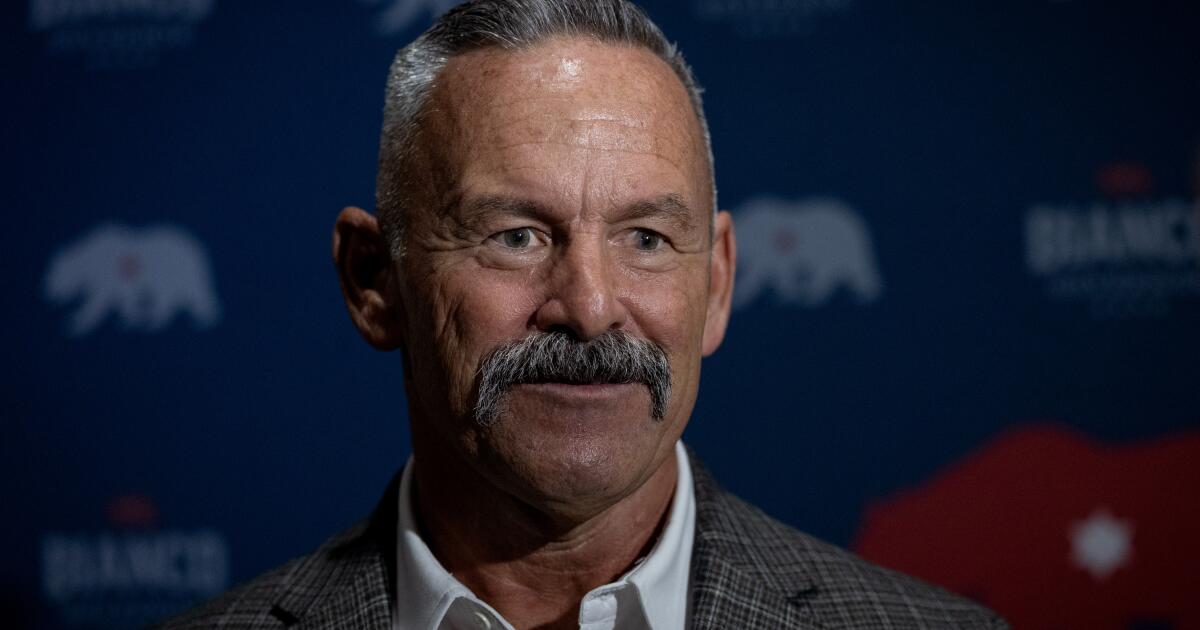
Undaunted by reality, and likely law, Bianco announced he was going to have his deputies recount the votes, even though this kind of interference in the chain of custody of ballots never had occurred anywhere in the United States.
This unprecedented seizure of ballots — something election-denier-in-chief President Trump has been hinting at trying himself for years — quickly became a national news story, and a national concern.
With midterms looming and more than one MAGA sheriff out there, what would stop another conspiracy-minded, badge-wearing maverick from doing something similar this November, potentially throwing our national election into turmoil?
The specter of Bianco setting a precedent for like-minded conspiracists to follow prompted two significant lawsuits — one led by the election experts at the UCLA Voting Rights Project and the other from state Atty. Gen. Rob Bonta.
The state Supreme Court heard arguments in those cases Monday, and while we’ll have to wait for the official rulings, things did not seem to go well for the sheriff.
What surprised me most, or maybe just relieved me, was how thin Bianco’s arguments were to support his actions. In the end, his legal team came with little more than contortions and cartwheels, trying to twist Bianco’s overreach into existing law.
His lawyer, Bradley Hertz, attempted to argue that legislators, when crafting laws protecting ballots, meant different rules to apply to investigations of elections preceding formal prosecutions. If that sounds confusing, it’s because it is.
Hertz seemingly was trying to convince the court that Bianco legally could pull his shenanigans as long as he didn’t actually find criminal wrongdoing, which would trigger a different set of rules.
“That seems bizarre,” Justice Goodwin H. Liu said during a back-and-forth with Hertz.
Indeed.
But it was Justice Joshua Groban who hit at the national implications of what Bianco had done — and what it could mean for the midterms if this court ruled in his favor.
“It seems like under your broad view of the warrant power … the sheriff could could seize ballots even before election day, right?” Groban asked. “Even before they were counted.”
It’s terrible to have ballots seized after they’re counted. It’s devastating if they were to be taken before there was an official tally, because how would anyone trust that there hadn’t been tampering? Simply seizing uncounted ballots, no matter what happens next, would create such paranoia and uncertainty that the election results almost certainly would be called into question — something that could play into the favor of, say, a wannabe authoritarian who fears he’s likely to lose a fair vote count.
Even Hertz seemed to acknowledge such a scenario was bad.
“If search warrants were allowed during the election or preelection, that would obviously wreak havoc,” he said. “There would be, kind of, a cat out of the bag, so to speak. You can’t count ballots if they’re not in the possession of the registrar.”
But then Hertz tried to come up with logic that what Bianco was arguing wouldn’t mean that ballots could be seized anytime, anyhow, and that instead courts could find a way to allow seizing only after the official count. The court did not seem convinced that this was a good idea, or that that is what the law should or did allow.
If that case didn’t go well for Bianco, it was the second case brought by Bonta that really might end up being a hard loss.
For years, decades really, in California and across the country, there has been a group of sheriffs who have argued they are a law onto themselves because they are elected, not hired or appointed. Some of these sheriffs argue that they are literally above federal law.
In California, there has at times been momentum to rein in this line of thinking by creating clear boundaries in law, but the state Legislature always has backed down in the face of opposition from law enforcement.
One potential curb on sheriffs’ power comes from a single line in our state Constitution that seems to say the state attorney general has supervisory power over them. But the meaning and power of this particular clause has long been debated and seldom invoked.
Bonta, however, invoked it against Bianco, claiming the the sheriff had to back off the ballot-seizing because Bonta had authority to order him to stop. Bianco did stop, to his credit. But the standoff was heard by the court Monday and likely will force clarity on an issue that has long lacked it.
Here again, the justices seemed amenable to Bonta’s argument that sheriffs, at least to some extent, answer to him as the state’s chief law enforcement officer. But the justices seemed far more cautious on this issue, and even the state’s attorney conceded that “it’s actually pretty remarkable how little our Constitution says about county sheriffs.”
If Bianco loses on this issue, it would be huge. It would mean that Bianco not only overstepped his power by seizing the ballots, but that he also had forever lessened the power of California sheriffs by clarifying they do answer to the attorney general. I’m sure that will be very popular with other sheriffs.
We’ll see what the justices say, but at least it seems likely that this embarrassing chapter of California election history will end in favor of the law, and democracy.
Maybe Bianco really does believe his conspiracy theories. After all, “there are some people who believe they had breakfast with Elvis on Sunday,” pointed out Chad Dunn, who argued the case for the Voting Rights Project.
“We can’t satisfy them,” Dunn warned.
More importantly, we shouldn’t — even when they wear a badge. Our laws already have robust protections for elections, and rogue sheriffs aren’t one of them.
WASHINGTON — The Trump administration is preparing to revoke the business and tourism visas of up to 200,000 foreigners who have applied for or are currently seeking asylum status in the United States. If it happens, the move would be the largest single mass revocation of visas in U.S. history and would likely face legal challenges.
Unless challenged or revised, the State Department is expected to announce in the coming weeks the revocation of so-called B1 and B2 visas issued between 2016 and 2026 whose holders have sought asylum or are now seeking asylum, according to State Department documents obtained by The Associated Press and two U.S. officials. The action will be taken in coordination with the Department of Homeland Security.
“We are coordinating with DHS to identify and revoke the nonimmigrant visas of foreigners who have come to the United States claiming to be short-term visitors, but then file for asylum to stay here permanently,” said State Department spokesman Tommy Pigott.
He declined to comment on the number of visas that might be revoked, saying “as the process will be ongoing, the number of revocations remains dynamic and will be done on a rolling basis.”
The revocations would not necessarily result in their immediate deportation, the officials said. Most of those with asylum cases currently pending would be recategorized but would lose their status as business or tourism travelers, according to the officials, who spoke on condition of anonymity because the revocations are not final yet.
Since President Donald Trump took office for his second term last year, his administration has steadily ramped up restrictions on visa applicants — demanding more information about their social media histories, requiring the posting of expensive bonds for the processing of visas, and outright banning the issuance of visas to citizens of certain countries.
In a social media post on Monday, Deputy Secretary of State Christopher Landau called out people who he said try to use tourist and business visas to get into the United States and then apply for asylum.
“People in the US and all over the world are fed up with bogus asylum claims,” Landau wrote on X. “Asylum isn’t supposed to be a loophole to circumvent immigration law.” Landau cited the case of a Colombian citizen who came to the U.S. in 2015 on a tourist visa and then applied for asylum.
B1 visas are generally issued for business trips and B2 visas are generally issued for tourism, family visits or medical care. It was not immediately clear from the documents or the officials how many of these visa holders are seeking or have sought asylum in the United States and would be affected by the revocations.
Current applicants for B1 and B2 visas are asked to affirm that they will not apply for asylum in the United States and prove that they intend to return to their home countries.
In the past 18 months, the State Department has revoked about 175,000 visas for people who have been convicted or accused of crimes ranging from drunken driving to rape and robbery, as well as for people who have spoken out publicly against U.S. policies, particularly in the Middle East.
The administration has also moved to crack down on so-called birth tourism, a practice the administration claims is used by foreign pregnant women to come to the United States to give birth so that their child will benefit from birthright citizenship. Trump has tried several times to end birthright citizenship, but those challenges have been rejected by courts, including the Supreme Court.
The State Department documents obtained by the AP suggest screening of current B1 and B2 visa holders began after the State Department received information about asylum requests from the Citizen and Immigration Service.
A prominent Latino group is raising fresh concerns about Paramount Skydance’s proposed acquisition of Warner Bros. Discovery, saying the blockbuster deal would crush Latino workers and small businesses that support Hollywood.
In an open letter to California Atty. Gen. Rob Bonta, the League of United Latin American Citizens urged the state’s top prosecutor to continue his legal fight to block Paramount’s proposed $111-billion takeover of the media company that owns HBO, CNN, HGTV and the Warner Bros. film and television studios.
“No state has more to lose from this disastrous merger … than California,” LULAC National President Roman Palomares and Chief Executive Juan Proaño wrote in the six-page letter sent to Bonta late Sunday.
Thousands of jobs would be lost, and Latino voices could be squelched should the deal go through as it is drawn, the LULAC leaders said.
“The current form of the consolidation would have a devastating and unacceptable impact on Latinos, including those who reside in the Los Angeles community,” they wrote, noting Latinos make up 40% of the state’s population and nearly half of Los Angeles County, where HBO and the Paramount and Warner Bros. studios are based.
Paramount’s proposed merger has carved deep divisions and become increasingly contentious.
In recent days, Gov. Gavin Newsom, Los Angeles Mayor Karen Bass and Democratic gubernatorial nominee Xavier Becerra publicly pressured Bonta to settle the lawsuit to avoid a drawn-out court fight.
Politicians have been reacting to Paramount’s threat to move its studio, and potentially Warner Bros., from Hollywood to Tennessee or Texas unless Bonta backs down.
Theater owners and two major Hollywood unions — the Directors Guild of America and the International Alliance of Theatrical Stage Employees — have joined the parade pleading for a settlement. But the Writers Guild of America and Teamsters have steadfastly opposed the merger, warning about its potential impact on working writers and film crews.
Paramount Chief Executive David Ellison was set Monday to meet Bonta and others representing the 12 states that sued to block the transaction. But Bonta abruptly canceled the mediation session, accusing Paramount of “playing games,” leaking details and making misrepresentations about the talks despite agreeing to keep them confidential.
Paramount later denied that it was the source of the leaks.
Paramount didn’t immediately comment on the LULAC letter, but previously has touted the merger as a way to build a stronger competitor amid a pullback in local production. The company said it would “invest $30 billion annually in production and release at least 30 films a year,” a commitment that would lead to “more jobs over time, and ultimately, a stronger, more durable entertainment industry for generations to come.”
“To have it thrown in your face that Paramount will leave Los Angeles if they don’t get what they want is really just tantamount to a threat … one that will be devastating to Latinos,” Proaño said in an interview with The Times.
“There is a significant number of small businesses — Latino small businesses — and Latino residents, employees and workers that support this industry,” Proaño said. “We’ve been invisible, we’ve been silent — but we wanted to make sure that LULAC is not silent in this moment.”
In its letter, LULAC pointed to Hollywood’s most recent mergers, including Discovery’s 2022 acquisition of WarnerMedia from AT&T, saying such tie-ups underscore how media consolidation tramples over Latino voices, particularly when companies resort to job eliminations and other cost cuts to balance the expense of a corporate takeover.
After Warner Bros. Discovery Chief Executive David Zaslav took the helm, his company plodded through years of turmoil and massive layoffs. The movie “Batgirl,” which was set to feature a young Afro-Latina as lead actor, was shelved to gain tax benefits. Warner also canceled “Gordita Chronicles,” a TV show about an immigrant Dominican family, despite solid viewership.
Latino families make up “a significant portion of the film and television industry audience,” the letter said, adding that Motion Picture Assn. data show Latinos annually attend more movies per person in theaters than any other demographic group.
“Hollywood returns almost nothing for that loyalty,” the letter said. “Latino characters filled only 5 percent of speaking roles across 1,300 top-grossing films.”
“These and other harms are not collateral to the antitrust case,” LULAC’s letter said. “They are consequences of the diminished competition that will result. Every studio absorbed by a rival is one fewer buyer for a script, one fewer employer for a crew and one fewer distributor willing to bet on a story its franchise slate does not need.”
Warner Bros. Discovery nearly drowned in debt that it took on to finance its $43-billion buyout from AT&T in 2022. Ellison’s proposed Warner Bros. takeover also will be heavily leveraged with nearly twice the debt that resulted from Zaslav’s previous deal.
David Ellison has lined up nearly $80 billion in debt financing to buy out Warner investors. The tech scion is relying on a guarantee from his billionaire father, Oracle co-founder Larry Ellison, and $24 billion in equity financing from three Middle Eastern sovereign wealth funds, representing the royal families of Saudi Arabia, Qatar and Abu Dhabi.
The deal comes one year after the Ellison family bought Paramount, which had been on the ropes because of significant under-investment over the years.
“Paramount followed the same script: within months of closing its Skydance merger in August 2025, it laid off roughly 2,000 employees, about ten percent of its workforce, just after dismantling its diversity programs earlier that year,” the LULAC letter reads.
“This time, Zaslav’s going to walk away with a billion-dollar parachute and Paramount may end up with these crown jewels assets when it comes to movie-making and television programming,” Proaño said.
California Supreme Court justices hammered Riverside County Sheriff Chad Bianco over his seizure of hundreds of thousands of Proposition 50 ballots in a pair of back-to-back hearings on Monday, appearing poised to order the ballots returned and sharply limit the sheriff’s power to snatch similar election materials in the future.
Bianco, a Republican who came in fourth in this spring’s crowded California gubernatorial primary, carted off truckloads of ballots from the Riverside County Registrar of Voters in February, after securing a warrant based on claims that the office allowed fraudulent votes in the special election to redraw California’s congressional districts last fall.
According to a sworn declaration by one of Bianco’s sergeants, armed deputies from Riverside County’s Special Investigations Bureau, Emergency Response Team and SWAT unit were sent to sweep up pallets of sealed votes and bring them to the Moreno Valley Sheriff’s Station on Feb. 26 — a day after California Atty. Gen. Rob Bonta and Secretary of State Shirley Weber ordered Bianco to stand down.
In the days that followed, deputies began their own ad hoc recount — an activity they’d never been trained for, and which state officials and civil liberties groups say flies in the face of the plain language of the state’s election law that says “in no event shall ballots be moved.”
Voters sued. So did Bonta. In oral arguments on both cases Monday morning, California‘s seven Supreme Court justices appeared at times flabbergasted by claims that the move was not only permitted but blessed under state law — and that California’s top cop had no power to block it.
“I’m just wondering … why didn’t the sheriff’s office contemplate the available routes under the elections code for resolving the alleged disparity?” asked Associate Justice Goodwin H. Liu. “Isn’t there a procedure for resolving this?”
“Certainly there are other paths,” said Bianco’s attorney, Bradley W. Hertz.
Hertz, who argued the sheriff’s case after Riverside’s county counsel largely sided with the plaintiffs, said Bianco simply exercised his legal discretion.
“This wasn’t come in with guns blaring and take the documents,” Hertz said.
The dispute began over handwritten notes made as part of an experimental program to increase voter confidence in the county’s election procedures. That informal tally fell about 46,000 votes short of the official count, prompting accusations of fraud.
Officials contend the discrepancy between the computer count and the paper tally is “a good deed that went punished” — the result of exhausted officials being handed an extra-credit project they couldn’t quite execute.
“It was a pilot program that the registrar implemented at the request of the public, on top of all their other duties, to do these handwritten logs to try to track 350,000 pieces of mail that come in,” said Dale Larson, who represented Riverside County Registrar of Voters Art Tinoco at the hearing.
Both times it was attempted, the hand tally produced a significant undercount, prompting officials to cancel the pilot, Larson said.
Bianco and his allies insist the difference is evidence of maleficence, and that criminal law authorizes the sheriff to sidestep the state’s detailed election code and the attorney general’s sweeping authority to get to the bottom of it.
The justices repeatedly pressed on Hertz to explain how the general authority conferred to the sheriff under criminal law could trump the specificity of the state’s election rules — a position that would seem to upend foundational rules of American law.
They also cast doubt on Bianco’s “counterintuitive” claim that Bonta’s “supervisory” role over the state’s elected sheriffs was merely advisory and did not carry the authority of law.
“It’s not just counterintiitive — again, we’ve said a million times, we’ve got to just look at the plain language,” said Associate Justice Joshua P. Groban. “Nobody would think that’s what ‘supervised’ means, so why should we think that here?”
For the record:
4:55 p.m. Aug. 24, 2026An earlier version of this story said a lawsuit against Bianco was brought by the ACLU. It was brought by the UCLA Voting Rights Project.
The court battle has played out with the UCLA Voting Rights Project bringing the suit on behalf of voters, and the Riverside County district attorney’s Office and the California State Sheriffs’ Assn. backing many of Bianco’s claims. But it has also pitted the sheriff against the registrar, who was named as a co-defendent in the UCLA suit despite siding with plaintiffs in all but a narrow subset of its claims.
In court filings, Riverside County Counsel Minh C. Tran co-signed claims that Bonta and the voters had it right, carving out a narrow disagreement over whether Tinoco should have ignored the sealed warrant and faced arrest rather than allow ballots to be taken. They also questioned whether he was obligated to go to court himself to stop the seizure.
UCLA hit back at that claim, saying it was “the responsibility of the registrar to go to jail rather than hand over the ballots.”
“I know that’s strong medicine,” said Chad W. Dunn of the UCLA Voting Rights Project. “The registrar has a duty to announce publicly and get into court immediately, or at least allow the public to get into court immediately to contest the movement of ballots before it occurs.”
The decision looms as the Trump administration has moved to restrict mail-in voting and signaled it could contest results of the upcoming midterms — partisan flash points UCLA urged the court to address.
“This is bound to be repeated again,” Dunn said. “These are the public’s ballots, that’s why the election code is crafted the way it is, so that the public have a right to weigh in.”
Gov. Gavin Newsom’s sprawling Sacramento-area mansion is up for sale.
The 12,700-square-foot mansion in Fair Oaks — an unincorporated community in Sacramento County bordering the American River — has been listed for $7.5 million.
News of the listing, which is being handled by Sotheby’s International Realty, was first reported by the Sacramento Bee on Monday.
The listing describes the seven-bedroom home at 7640 Tobia Way as a “showcase of Santa Barbara-inspired architecture” that is “privately positioned along the bluffs on 8.2 acres.” It boasts of amenities including a resort-style pool, hot tub, cold plunge, tennis court and 5,000-bottle wine cellar.
The Newsoms purchased the mansion in December 2018 for $3.7 million shortly before Newsom took office as the 40th governor of California in January 2019, The Times reported. The state’s first family had quickly ditched the historic governor’s mansion.
In 2024, the family bought in Marin County, where they previously lived. They purchased a $9.1-million estate, which is where they now primarily live and their four children attend school. Newsom and his wife also spend time in the Fair Oaks home while working at the state Capitol.
Newsom was raised in San Francisco and was the city’s mayor from 2004 to 2011.
Newsom was California’s lieutenant governor — a mostly ceremonial role that includes positions on several higher-education boards — from 2011 to 2019. During a 2012 interview, he famously described Sacramento as “just so dull.”
Newsom has been eyeing a 2028 presidential run. In June, he accused the Department of Justice of launching a baseless investigation of him and his wife at Trump’s direction. Siebel Newsom is a documentary filmmaker and in 2011 founded a nonprofit advocating for more women in leadership roles.
In July, the Newsoms allowed reporters to view, but not copy, their tax returns from 2019 through their most recent filings for 2024. The returns showed they had earned at least $11 million since he took office.
WASHINGTON — The Supreme Court cleared the way Monday for President Trump to seek new limits on the use of mail ballots, but they are not likely to take effect this year.
Acting by a 6-3 vote, the court’s conservatives granted an emergency appeal from Trump’s lawyers and set aside a judge’s order that blocked new federal regulations on states and their use of mail ballots.
It’s not clear, however, what happens now, since the midterm elections are less than three months away.
About 30% of the nation’s voters — and 80% of Californians — cast their ballots by mail in 2024. Trump, however, has long maintained the voting by mail leads to fraud, including voting by noncitizens.
The court’s order stressed the new regulations do not put new requirements on the states this year.
Trump’s executive order “is internal directive from the President to his subordinates mandating that certain agencies pursue certain policies. It neither requires nor forbids anything of anyone outside the Executive Branch,” the court said.
The Department of Homeland Security will compile state-by-state lists of citizens who are over 18 and eligible to vote.
“States are not required to use the Lists,” the court said, although they could lead to future prosecutions.
The most disputed provision could have authorized the Postal Service to restrict mail ballots to those who are on the Homeland Security lists, but that is a future proposal, not a rule that will take effect this year.
The unsigned order spoke for the six Republican appointees. The three liberals, all Democratic appointees, dissented into two separate opinions.
Justice Ketanji Brown Jackson said Trump’s order was unlawful and should have been struck down. “It needlessly injects chaos and uncertainty into the upcoming midterm elections,” she said.
“Today’s decision does not address whether the President’s attempts to interfere with States’ administration of the November 2026 elections are lawful,” Justice Sonia Sotomayor wrote in a dissent joined by Justice Elena Kagan. “Nor does it suggest that the Executive Branch has any constitutional or statutory authority to implement the President’s directives. Instead, today’s decision merely postpones adjudication of those challenges.”
Trump issued his executive order on March 31 with the aim of “ensuring citizenship verification” in federal elections. California and 22 other Democratic-led states sued a few days later and said Trump sought to use the Postal Service to impose new restrictions on voting by mail. They also argued the Constitution gives states and Congress the power to regulate elections, not the president.
A federal judge in Boston and 1st Circuit Court agreed with the challengers and blocked Trump’s executive order from taking effect for the November elections.
The case on appeal was Trump vs. California because California Atty. Gen. Rob Bonta was a leader of the Democratic state attorneys who sued.
WASHINGTON — The United States unveiled plans Monday for new sanctions against Iran that Trump administration officials said are designed to sever Tehran from the global financial system as the nearly six-month conflict between the two countries drags on.
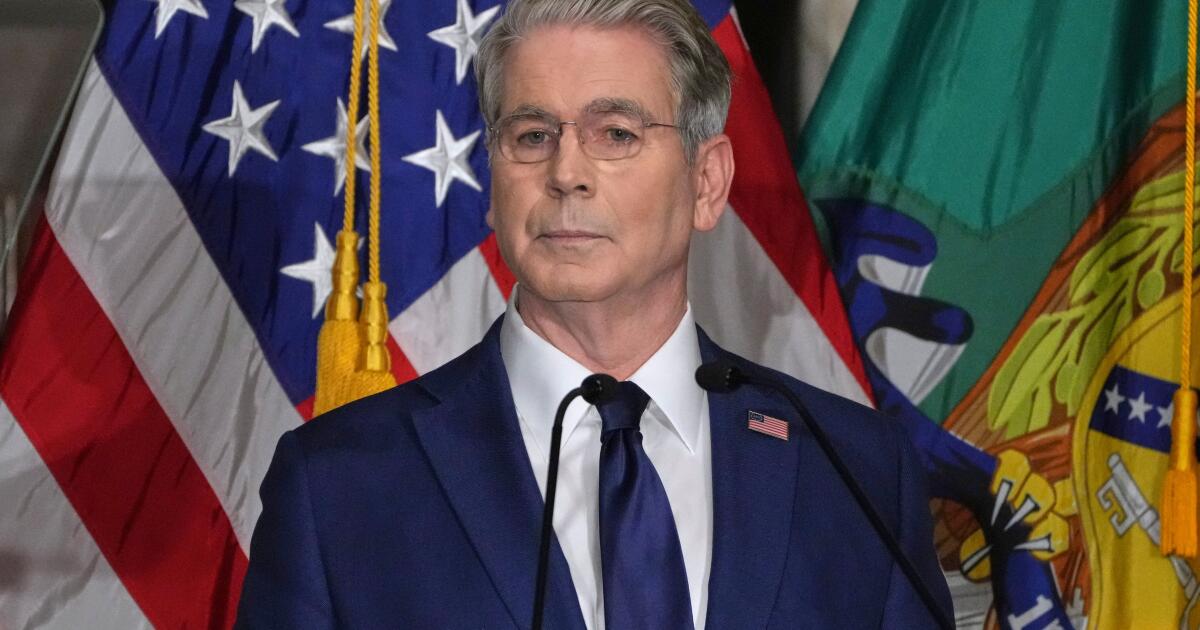
Treasury Secretary Scott Bessent, who previewed the announcement last week as “economic D-Day,” described the measures as the opening of an all-out financial assault on the Iranian government and its trade partners — a group that includes China, India, Turkey and the United Arab Emirates.
“To those who enable Tehran, do not discount the cost of testing Washington’s resolve,” Bessent said at a news conference. “No nation should expect to enjoy the rewards of our system while helping those who seek to destroy it.”
Bessent said it was time for world leaders to “make a decision” between “America and Iran,” adding that President Trump has already been calling foreign leaders to make specific requests ahead of the new sanctions.
But when asked whom the president had been talking to, Bessent said he would not “name names.” He also said the secondary measure would not take effect immediately, arguing that the administration is trying to give “everyone the opportunity to remedy bad behavior.”
“Why would I want to blow up the global financial system?” Bessent said when a reporter pressed him on why the sanctions weren’t immediate. “We believe that it is important to level set and give people a cure period, but they should know that that will move very quickly and that we are serious.”
The pressure campaign will build on a naval blockade and other sanctions the Trump administration has already imposed in its effort to force Tehran into a deal that ends the war on U.S. terms.
Trump’s latest economic push against Iran revives a familiar strategy from presidents of both parties, using financial leverage to pressure Tehran toward more serious negotiations over its nuclear program. Sanctions helped bring Iran to the table before a 2015 nuclear deal brokered by President Obama, but the agreement was widely criticized as weak by Republicans. After Trump withdrew from the agreement in his first term, a new “maximum pressure” campaign failed to secure a new deal.
Trump’s decision to return to a strategy of economic coercion has signaled to Iran that the fighting phase of the war is probably over, for now, with the U.S. administration choosing a path “neither of war nor of peace,” Masoud Pezeshkian, Iran’s president, said this week.
Iranian officials, who had been anticipating the move, pushed back on Washington’s strategy even before Bessent began speaking Monday.
Foreign Minister Abbas Araghchi told Iranian state media over the weekend that the sanctions amounted to a repackaged version of decades-old American pressure tactics that Tehran has already learned to withstand. Esmail Baghaei, Iran’s foreign ministry spokesman, warned of “grave consequences” for any countries cooperating with what he said was “illegal behavior” by the United States. And Mohsen Rezaei, the secretary of Iran’s Supreme Security Council, suggested that the economic pressure could shut down oil exports through the Strait of Hormuz, a threat that would ripple through global energy markets.
That defiance underscores the central gamble of Washington’s strategy. Rather than aiming sanctions at Iran alone, Bessent’s plan to potentially squeeze major economies like China and India over their ties to Tehran could pose a diplomatic risk to the U.S.
The fallout could also reach beyond foreign diplomacy as a hit to global markets also risks compounding Trump’s troubles at home ahead of the midterm elections, as Americans grow unhappy with the economy and their support for the conflict in the Middle East plummets. The Iran sanctions also land as the administration wages a separate trade fight with Canada, adding uncertainty to global and domestic markets.
Whether Washington will be able to apply pressure on Iran’s trade partners remains an open question.
China alone shares nearly $10 billion in bilateral trade with Iran, and paid roughly $31.2 billion for unreported Iranian crude oil imports in 2025, according to the U.S.-China Economic and Security Review Commission. That makes China the largest buyer of Iranian crude oil by a wide margin, accounting for more than 90% of Iran’s oil exports, according to the commission.
It is unclear whether Trump has spoken to China’s leader, Xi Jinping, about the sanctions. But the two leaders are set to meet in Washington next month, adding to the diplomatic dynamics of the moment.
Other trading partners have already made some moves.
Afra Al Hameli, a spokesperson for the Emirati Ministry of Foreign Affairs, said in a post on Aug. 18 on X that all trade, commercial exchanges and financial transactions with Iran have been halted until further notice. She added that the Emirates was “firmly committed to safeguarding the integrity of the international financial system.”
Bessent said Monday that he expects other countries will “take similar actions as we continue our engagement.”
In an opinion article written for the Financial Times last week, Bessent has cast the new measures as the “single greatest financial offensive ever marshalled against an adversary.”
Bessent wrote that countries that “sever Iran’s remaining financial and commercial connectivity” will see their economies reinvigorated, and those who don’t will experience the end of their “lasting prosperity.”
“Any nation that serves as a financial artery of a withering regime should expect to share in its isolation,” he wrote. “To become a sanctuary for terror is to become, in the eyes of the United States, a global pariah.”
Ahead of the announcement Monday, Trump posted on Truth Social that Iran was “completely collapsing.”
Meanwhile, Iran’s central bank governor, Abdolnaser Hemmati, said the U.S. had already done all that it can against Iran and that the central bank had been shoring up its foreign currency reserves for months. Last week, he said Iran’s crude exports had “virtually stopped.”
“[The Americans] have done everything, so what else can they do?” he said in an interview with Tasnim News.
Despite his assurances that the central bank was working on preventing a devaluation of the Iranian rial, the currency has struggled to remain above a black market exchange rate of 2 million per dollar — a record low. The Central Bank rate stands at roughly 1.5 million rial to the dollar.
Though experts question the effectiveness of additional economic pressure on Tehran, Bessent’s threat to target Iran’s trading partners — especially the UAE, China and Turkey, who together comprise almost three-quarters of Iran’s foreign imports — will undoubtedly be painful for Iranians.
For example, Iran uses the UAE as a reexport hub and buffer, and receives vehicle spare parts from China, according to the Observatory for Economic Complexity. Iranian economic experts say both the agricultural and pharmaceutical sectors also rely on imports from countries such as Brazil and Turkey.
Ceballos reported from Washington and Bulos from Beirut.
OMAHA, Neb. — “Do they still like Trump in Nebraska? I think so,” the president said during a recent event in Washington.
Given that the state easily backed Republican Donald Trump three times and hasn’t supported a Democrat for the White House since Lyndon B. Johnson in 1964, the answer may seem obvious.
But in Nebraska’s largest city, it’s an open question and could decide one of the country’s most-watched congressional races. Retiring Rep. Don Bacon ’s open seat pits fellow Republican and Omaha City Councilmember Brinker Harding against Democratic activist Denise Powell.
The district encompasses an increasingly Democratic-leaning Omaha metro area of 1 million-plus and its more conservative suburbs — famous for steaks and the Reuben sandwich’s birthplace, though New York disputes that.
It’s one of just eight districts nationwide that elected Republicans in House races while supporting Democratic presidential nominee Kamala Harris over Trump two years ago.
Harding and Powell have been making the rounds at parades and festivals where meat raffles offer oversized sausages as prizes. However, those on-the-ground appeals could be drowned out by Trump who, like most things in politics, has moved to shape November’s midterm elections in his own image.
The president is organizing a Republican midterm convention in Dallas next month that will serve as much a two-day rally for him as a boon to party candidates nationwide. Trump is also frequently visiting tightly contested districts, despite his low approval ratings and the unpopular war in Iran.
While Trump centers himself, Democrats are happy to oblige.
When Powell knocks on doors to talk to voters, she asks, “What’s keeping you up at night?” On a sweaty Saturday afternoon, John Rosseter responded without hesitation. “Well, Trump.”
“I want to see the history books written years from now,” said Rosseter, 67, who owns a carpentry business. “They won’t be pretty.”
The ‘Blue Dot’ hasn’t helped Democratic House candidates
Nebraska splits its presidential electoral votes, and the 2nd Congressional District’s delegate has gone to Democrats three out of five times since 2008, making it a “ blue dot ” in an otherwise Republican red state. But a Democrat has won the House seat just once since 1994.
Harding plays up Trump’s primary endorsement, and House Speaker Mike Johnson and Majority Leader Steve Scalise campaigned for him. Harding said he has “the full confidence of, not only the White House, but leadership in the Congress.”
He has also tried to appeal to swing voters and says he knows the district better than does Powell, co-founder of Women Who Run Nebraska, which supports female candidates.
Two possible Democratic 2028 presidential candidates — ex-Transportation Secretary Pete Buttigieg and Rahm Emanuel, an ex-Chicago mayor who was President Barack Obama’s first White House chief of staff — have campaigned with Powell.
She talks about how Medicare cuts have increased anxiety about affordability. Powell also points to Trump and his family’s business dealings as an example of “the choices that they have made while people on the ground are struggling” and she says that resonates with Republicans.
“Even the ones who aren’t necessarily anti-Trump,” Powell said, “understand the need for checks and balances.”
Some Democrats want a ‘Blue Dot Wave’
Jason Brown and his wife, Ruth Huebner-Brown, caused a sensation in 2024 by spray painting about 50 reused lawn signs with blue dots and distributing them around Omaha’s Dundee neighborhood. The couple has since expanded to professionally produce signs promoting a “Blue Dot Wave.”
Brown said the Republican-controlled Congress has capitulated on “every Trump nominee, every Trump policy, all the way down to putting gilding gold on statues.”
Supporters of Harding have countered with red “Brinker Dot” signs.
“We need to make sure that we keep this country on the track to being even better,” Harding said.
Jack Hosking, the 90-year-old retired former head of a title insurance company, organizes a weekly coffee to discuss political and community issues. He estimated that about 70% of attendees are Trump voters and “maybe even more so lately, because of the crap that the New York mayor started,” referring to Zohran Mamdani’s efforts at pushing the Democratic Party to the left.
Both Powell and Harding have addressed Hosking’s group, though, and he predicted that as much as half will support the Democrat.
“She spoke well enough that, my sense is, a lot of them will cross over,” Hosking said, noting that when it came to campaigning, “Brinker’s not doing much.”
The president seen as a base motivator
The Republican National Committee views Trump as a national asset, betting he can prevent complacency in a year without a presidential race, when enthusiasm for the party in power typically wanes.
The committee rebranded its “Young Guns” program for key candidates to “MAGA Majority” in deference to Trump’s “Make America Great Again” movement, and many congressional candidates will be at the Dallas convention with Trump.
Others aren’t waiting that long.
Republican Reps. Mike Lawler of New York and Tom Barrett of Michigan, whom Democrats are aiming to unseat, both appeared with Trump during his rallies in their districts. When the president visited Macungie, Pennsylvania, in June, he joined Republican Rep. Ryan Mackenzie, saying, “I’m here for him.”
Trump also traveled to the Wisconsin district of Republican Rep. Derreck Van Orden, as have Cabinet members.
Rep. Juan Ciscomani, facing a reelection fight, appeared with Trump during an April event in Arizona. Two Iowa Republicans in what could be toss-up reelection contests, Reps Zach Nunn and Mariannette Miller-Meeks, both were by Trump’s side when he kicked off his midterm campaign outside Des Moines.
Bacon sometimes defied the White House in his final term. He criticized Defense Secretary Pete Hegseth and tried to curb Trump’s ability to impose tariffs and was the only House Republican who opposed renaming the Gulf of Mexico as the Gulf of America.
Mary Jane Truemper, who heads the Nebraska Republican Party, said Powell and the state’s Democrats have moved too far to the left. She called Harding “a steady force” and said the nominee is not as fond of picking high-profile fights the way Bacon sometimes was.
“I think he speaks to the moderate Democrats as well as the Republicans,” said Truemper, who managed Bacon’s reelection campaign in 2018 and also worked for an unsuccessful primary challenger to him.
Even Powell said, “Don Bacon was a good representative of this district, and I think that there are a lot of people drawn to a pragmatic style of leadership in a state like ours.” But that may not be enough this year.
“People are worse off than they were before,” Powell said.
A local race may expose a wider party divide among neighbors
In the Elmwood Park neighborhood, Andy Maxwell, a 58-year-old pediatrician, said he likes to find the middle ground in politics and his community. But he recalled that, after putting up a Biden sign in his yard in 2020, his neighbors erected a Trump one.
“We don’t like all the turmoil part of it,” Maxwell said of politics nationally.
Nearby, 80-year-old Jerard Pearson called Democrats “feckless,” but said of Trump’s base supporters, “I’ve always been curious about this one-third level of crazy out there, a third of the population.” He is also no fan of a neighbor’s large “Harding for Congress” sign.
Truemper said Harding appreciates Trump’s endorsement but Nebraskans like to be wooed “person-to-person, rather than a national entity coming in.”
“Is that going to be the deciding factor?” she asked of Trump. “I don’t know.”
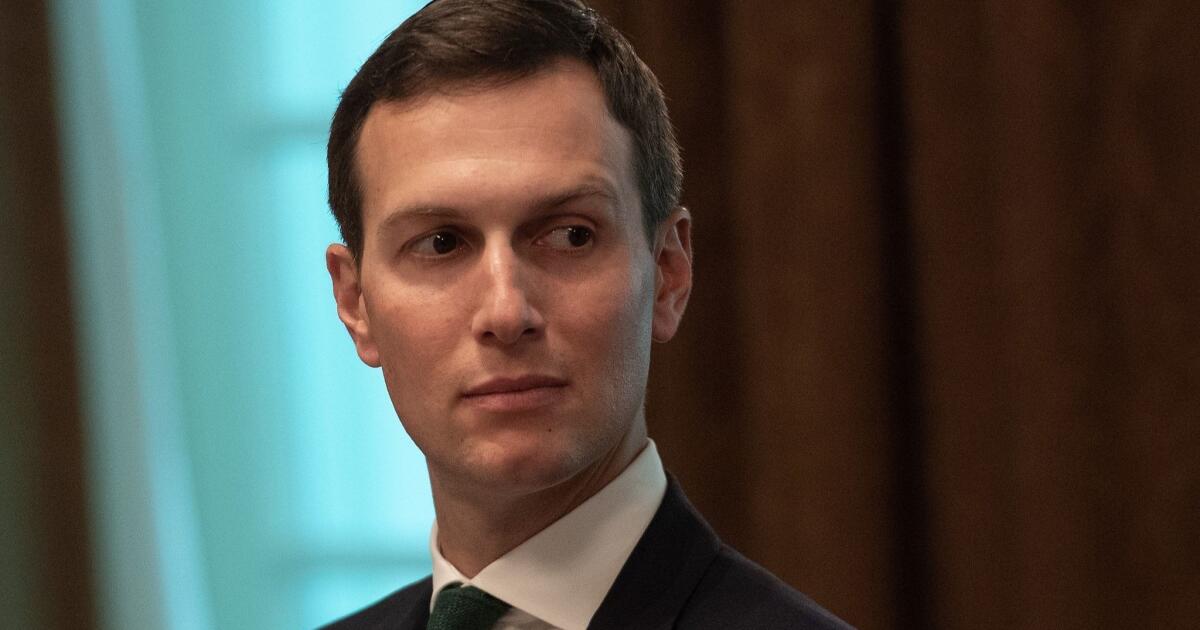
Reporting from Washington — Jared Kushner may finally get a win.
President Trump’s son-in-law has been a drag on the administration for his friendship with Saudi Crown Prince Mohammed bin Salman since the Oct. 2 killing of a U.S.-based dissident Saudi journalist. His family business continues to raise questions of conflicts of interest, he repeatedly has amended financial disclosure reports to remedy omissions, and he endured an embarrassing yearlong delay in obtaining a security clearance. Meanwhile, his chief assignment, a Mideast peace plan, is as elusive as ever.
Lately, however, Kushner has been instrumental in helping his father-in-law secure a rare bipartisan victory: a long-sought overhaul of the criminal justice system.
Both Republicans and Democrats who’ve worked on the bill in Congress credit Kushner as a key architect. He helped convince the two most powerful Republicans in Washington — his father-in-law and Senate Majority Leader Mitch McConnell, both of whom embrace the traditionally Republican tough-on-crime stance — to make the criminal justice system less punitive.
The bill cleared a procedural hurdle in the Senate on Monday evening, 82 to 12, a vote margin that belies the arduous effort to overcome initial opposition from conservatives. Final Senate passage is expected later this week and the legislation is expected to easily get through the House and to the White House for Trump’s signature.
Called the First Step Act, the legislation would undo some of the sentencing crackdowns of the 1990s and create programs to reduce prisoner recidivism.
It would allow low- and minimum-risk prisoners to earn time credits for early release to either reentry centers or home confinement; reduce some mandatory minimum sentences, including those imposed by so-called three-strikes laws that automatically result in life imprisonment; and allow reviews of sentences that reflect significant disparities between harsh punishments for crack cocaine use, which disproportionately involve minorities, and lesser penalties for powder cocaine.
Kushner, driven by the experience of his father’s 14-month prison sentence for tax evasion and other crimes, has made prison and sentencing changes a priority since the beginning of the Trump administration. But unlike loftier goals Kushner has embraced, such as peace between Israel and Palestinians, criminal justice reform is likely to be signed by the president.
Kushner helped work on policy details and knew where the political fault lines would be, according to lawmakers. He was on the phone repeatedly with other advocates to discuss strategy and next steps. He personally lobbied senators, including McConnell, who openly was not eager to make time for a Senate vote. And he served as a bridge to conservative media, which could have blown up the effort with even a whiff of opposition.
“There would be some very outspoken right-wing [opponent] and [Kushner] would tell me, ‘I called him this morning. I straightened him out and now he’s going to be OK,’” said Democratic supporter Sen. Richard J. Durbin of Illinois, declining to name the commentator. “I’m thinking, ‘Who would have dreamed that a bill I’m cosponsoring would be OK with this person?’”
Advocates of the criminal justice overhaul tried to pass a similar bill at the end of the Obama administration, only to be stymied by congressional Republicans. They had little hope of getting it through during the Trump administration given the president’s campaign rhetoric on crime, including a call to execute drug dealers, and because of the fierce opposition of his first attorney general, Jeff Sessions.
“This is a president that ran on American ‘carnage,’” said Jessica Jackson, a Mill Valley, Calif., City Council member who started the advocacy group #cut50 with liberal CNN host and commentator Van Jones. “I thought everything was over.”
“I’m a Democrat,” Jackson said, but “Jared is politically brilliant and he’s relentless and he’s also extremely loyal. If he tells you he’s going to do something, he does it.”
Kushner started early. He made his support for criminal justice changes known to the leaders of the bipartisan congressional effort — including Durbin, the Senate’s second-ranking Democrat, and Republican Sen. Charles E. Grassley of Iowa, chairman of the Senate Judiciary Committee — within weeks of Trump’s inauguration.
Sen. Mike Lee (R-Utah), another architect of the plan, knew Kushner was taking the issue seriously when Kushner started dropping “the very precise nomenclature thrown around by criminal justice reform geeks” — for example, citing the relevant U.S. criminal code lines by their numbers.
While Kushner’s initial goal was prison reform, which is an easier sell with conservatives, it quickly became clear that had to be paired with sentencing reform to get the backing of Grassley and Durbin.
Perhaps the biggest obstacle was McConnell’s reluctance to bring up a bill that would unify Democrats and divide Republicans, handing the opposition a potential political cudgel in the 2020 campaign. He told a group of Republican advocates in September that he would bring the bill to the Senate floor only if it was endorsed by Trump and they secured 65 votes — five more than the minimum number needed to overcome procedural roadblocks.
Given the goal, Kushner relentlessly lobbied reluctant Republican senators to get on board, according to sources familiar with the discussions.
He called “everybody — and often,” said Sen. John Cornyn of Texas, the No. 2 Senate Republican, whose late endorsement was part of a groundswell that made clear that enough Republicans would support the legislation. “He was dogged.”
On numerous occasions he lobbied McConnell directly, even trying to figure out the Republican leader’s dinner companions so that he could lobby them before their meal.
Advocates of the First Step Act also rallied high-profile celebrity supporters, such as Kim Kardashian West, which demonstrated to the media-obsessed Trump the positive publicity he could get. Kushner worked with Jones, and eventually got support from celebrities including Alyssa Milano and former Fox News host Eric Bolling.
“Jared Kushner absolutely was one of the main conduits,” Bolling said.
The dam broke this month when Trump tweeted “go for it, Mitch” and several noteworthy conservatives backed the bill, including Sens. Cornyn, Thom Tillis of North Carolina and Ted Cruz of Texas.
Lee, the Republican senator allied with Kushner, said: “One of the things I’ve appreciated about him is he doesn’t cut corners with this. I haven’t seen him abuse the position of trust as the president’s son-in-law. He doesn’t throw that around.”
Everyone in Washington knows Kushner’s trusted place in the Trump orbit; members of Congress return his phone calls and know he speaks for the president, at least as much as anyone can. Yet when Vice President Mike Pence came to a meeting of Senate Republicans to lobby on the bill last month, Kushner was deferential; attendees said he sat in the room but barely said a word.
The bill does have significant critics. Sens. Tom Cotton (R-Ark.) and John Kennedy (R-La.) argue that it could allow dangerous criminals to get early release, and have proposed a series of amendments that could get votes this week. Still, passage is considered all but certain.
California Atty. Gen. Rob Bonta abruptly pulled out of a planned mediation session Monday to seek a resolution to the antitrust lawsuit that has stalled Paramount’s blockbuster $111 billion merger with Warner Bros. Discovery.
Bonta, in a statement, cited Paramount’s alleged leaking and misrepresenting information the two sides discussed during a preliminary session Friday.
Representatives of Bonta and Paramount Skydance came together late last week to set ground rules for Monday’s meeting, which was to involve Paramount Skydance Chief Executive David Ellison.
One of the rules had been confidentiality of the mediation process.
“I have pulled down this meeting,” Bonta said in a statement. “As I have said before, generally for all cases, I prefer to resolve disputes in the boardroom, not the courtroom. As I’ve also said, if the opposing party in litigation wants to meet in good faith to make a sincere effort to resolve the case.”
Bonta went on to say “Not only did Paramount leak the alleged substance of the settlement discussions, but they misrepresented these discussions, demonstrating a lack of good faith.
“As soon as Paramount stops playing games and engages sincerely, my office is happy to meet again.”
SACRAMENTO — Memo to Democrats and independents: Just because an idea emanates from a Republican, doesn’t mean it necessarily stinks. Here are two examples.
Legislators wearing red jerseys have proposed to:
Make the California secretary of state officially nonpartisan. Rip off the seemingly inevitable blue jersey and replace it with a neutral referee’s garb.
Similarly, seize the job of writing official ballot proposition titles and summaries from the partisan attorney general and hand it to the nonpartisan, universally trusted Legislative Analyst‘s Office.
Both ideas, of course, were dead on arrival when introduced in the Democratic-dominated state Legislature, which is about to wrap up a two-year session.
The secretary of state is the chief overseer of California elections. That office holder, regardless of party, has never favored one side over the other in balloting, although many GOP politicians have been parroting Pied Piper Trump’s nonsense about election rigging.
California Republicans pushing to neutralize the office argue that Democratic incumbent Shirley Weber has taken public policy positions that echo her party’s stands. Shock! This is America. She has a right — a democratic duty — to take any position vocally that she desires.
But it’s logical for the secretary of state to officially operate as a political nonpartisan — as does the state superintendent of public instruction and all county voter registrars, who actually administer the elections and count votes.
“The secretary should be calling balls and strikes as opposed to being on the red team or a blue team.”
Realistically, no red team member is likely to win any statewide office in California for the foreseeable future, given that Democratic voters outnumber Republicans by nearly 2 to 1 and Trump is widely detested in this state.
“Sometimes Trump does make it harder in California for Republicans,” Wagner acknowledges.
Sign up for the L.A. Times California Politics newsletter
Deeply reported insights into legislation, politics and policy from Sacramento, Washington and beyond. In your inbox twice per week.
By continuing, you agree to our Terms of Service, which include arbitration and a class action waiver. You agree that we and our third-party vendors may collect and use your information, including through cookies, pixels and similar technologies, for the purposes set forth in our Privacy Policy such as personalizing your experience and ads.
The legislation to make the secretary of state nonpartisan was a proposed California constitutional amendment, introduced by Republican Assemblymembers Natasha Johnson of Lake Elsinore and Josh Hoover of Folsom.
But it was submitted so late in the legislative session that there was no chance of it ever receiving a committee hearing. It didn’t really matter anyway. Even if it had been introduced on Jan. 1, Democrats would have instinctively tossed it in the trash.
They’re never going to make it remotely possible for a Republican to win this office any time soon.
The measure’s authors say their proposal would help “restore Californians’ trust in the electoral system.”
Actually, the only Californians who largely distrust the electoral system are Republicans. And the best way to fix that is for Trump to shut up and stop telling lies about stolen elections and hordes of undocumented immigrants voting illegally.
Of the two Republican proposals, the most significant is the one stripping the attorney general of the power to write titles and summaries of ballot measures.
Often, the only thing many voters know about a proposition is what they’re told in the title. They aren’t inclined to wade through neutral details in the official state Voter Information Guide.
The legislative analyst is a political noncombatant appointed by the Legislature and basically agreed to by both sides. The highly respected policy wonk already writes the proposition analyses included in the voter guide. Why not also the measures’ titles?
Increasingly in recent years under Democrats, including projected next governor Xavier Becerra, the attorney general has been dishing out party propaganda in official proposition titles.
State law requires the attorney general to provide an “impartial statement of the purpose of the measure” in language unlikely “to create prejudice for or against” the proposal.
But often on hotly contested measures, the language reads like talking points for the blue side.
The latest example is Proposition 39, a Republican proposal requiring Californians to show identification when voting. Election officials also would have to verify that registered voters are U.S. citizens.
I’m no fan of that measure. It overreaches, is unnecessary, could suppress voting and is merely a tool to drive up the GOP vote. Democratic legislative leaders and the party are fiercely opposed.
But Proposition 39’s title is unfairly negative and loaded against the measure. It reads: “Prohibits citizens from voting unless they present government-issued identification.” All some voters will focus on are the first four words.
Proponents sued, but judges are historically reluctant to interfere in election campaigns. A Sacramento judge OKd Democratic Atty. Gen. Rob Bonta’s biased wording.
The legislation for nonpartisan labeling of propositions cleared the Senate Elections Committee but later was quietly killed behind closed doors in the Senate Appropriations Committee, a notorious graveyard for measures sentenced to execution by legislative leaders.
“The Democratic leadership doesn’t want it passed,” notes the author, Sen. Roger Niello of Sacramento County, who recently was elected the next Senate minority leader. “If they kill it [in appropriations] nobody has to vote on it and it dies without fingerprints.”
That’s common legislative games-playing: Keep potentially popular but politically undesirable bills off chamber floors so majority party members can avoid shamefully voting “no.”
But these are still excellent Republican ideas.
There are times when politics should be taken out of elections.
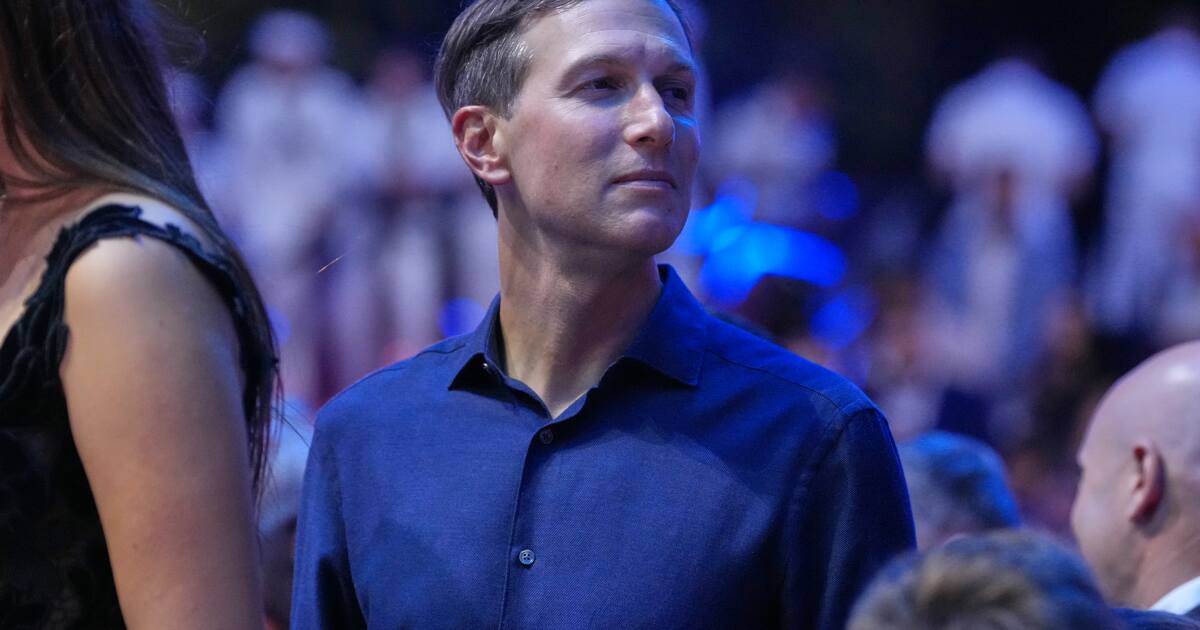
WASHINGTON — House Democratic leader Hakeem Jeffries and President Trump’s son-in-law and advisor Jared Kushner met privately recently in New York, a signal that the White House is seeking ways to work with Democrats if they wrest majority control from Republicans in the midterm elections.
The meeting, first reported Sunday by the New York Times, touched on issues including housing, immigration and the high cost of living. People in the United States are struggling under inflationary prices, which Democrats blame on Trump and congressional Republicans, saying they have failed to rein in the crisis.
Kushner suggested that Jeffries, who is in line to become House speaker if Democrats regain power in November, meet with White House Chief of Staff Susie Wiles as a follow-up.
Jeffries, in a statement Sunday, did not mention the private conversation but said the Trump administration needed to drop the GOP’s “my-way-or-the-highway” approach that “has failed the American people.”
“To stop the madness, we have repeatedly made clear that an extremist approach will not work and will be met with forceful opposition,” the New York congressman said. “The question is whether Republicans will join us.”
The meeting shows the depth of Republican Party concern over losing their congressional majority, particularly the House, and the need to make inroads with the opposing party as the White House seeks to stem any potential political fallout.
If Democrats retake power, the White House can expect an aggressive oversight agenda into what Jeffries has called the “crooks” in the administration, with the threat of impeachment among the many tools at the party’s disposal.
House Speaker Mike Johnson (R-La.), a close ally of Trump, bristled Sunday when asked about the meeting. He minimized the role that Kushner, who he said “hedges his bets,” plays in the White House.
“I’m telling you what, you better not bet against the House Republicans,” Johnson told Fox News Channel’s “The Sunday Briefing.”
“I don’t know what that’s about,” Johnson said. “I know Jared has interests in lots of other things going on. He’s not really directly involved in the admin, at least in the day-to-day in the White House.”
The White House did not respond to a request for comment. A representative for Kushner also did not respond.
A familiar Trump emissary to Democrats
Jeffries and Kushner are not strangers.
The New Yorkers allied during the first Trump administration on landmark legislation to allow sentencing flexibility for certain drug offenses as a way to curtail lengthy terms in the federal prison system.
Though not necessarily close, the two have maintained a relationship despite the repeated attacks Trump has leveled against Jeffries and the Democratic leader’s responses. In Trump’s second term, Kushner has an oversized role despite having no formal position in the White House. He serves as an outside advisor and envoy, particularly shuttling to foreign diplomatic missions as the U.S. war against Iran nears its six-month mark.
Trump has met with Jeffries only once since the president returned to the White House, taunting the House leader and Senate Democratic leader Chuck Schumer of New York with red “Make America Great Again” 2028 caps on the desk in front of them in the Oval Office — a nod to Trump’s toying with an unconstitutional third term in office.
After that fall meeting, Trump posted a fake image of Schumer with Jeffries wearing a sombrero with a handlebar mustache in what was widely viewed as a racist trope as he mocked the Democrats before what became the longest federal government shutdown in U.S. history.
Trump has been able to largely ignore Congress as he relies on executive power to implement his priorities or to pressure the Republicans in the House and Senate, when needed, to fall in line behind the White House, particularly to confirm controversial Cabinet nominees.
All that is likely to change if Democrats control either chamber, with lawmakers eager for Congress to flex its own power as a coequal branch of government more willing to hold the White House in check.
Midterm stakes
House Republicans are counting on Trump’s popularity among their core voters as they struggle to hold onto majority control, with Johnson believing the GOP will defy history that tends to reward the challengers in midterms and punish the party in power.
The House GOP has a slim majority. Control will probably be won or lost in a few battleground districts as Democrats put forward candidates in what they hope will be something of a repeat of 2018, when they swept to power riding a wave of voter unrest during Trump’s first term.
While the House is most at risk for Republicans this year, the narrowly split Senate is also in play. GOP strategists worry about an enthusiasm gap on their side as Democratic voters appear more eager to head to the polls.
At the same time, Democrats and independents are nominating outsider candidates, some aligned with democratic socialist agendas over establishment candidates, in a sign of voter backlash against the status quo.
Mascaro writes for the Associated Press. AP writer Michelle L. Price contributed to this report.
As political pressure builds to resolve the standoff between California Atty. Gen. Rob Bonta and Paramount Skydance Chief Executive David Ellison over his company’s proposed Warner Bros. merger, the two sides are set to face off in a court-ordered mediation session this week.
It’s not clear whether Monday’s meeting will lead to an immediate breakthrough because the parties remain far apart on business concessions that Bonta has said are necessary to settle the antitrust lawsuit that has stalled Ellison’s proposed $111-billion takeover.
In addition, the fight has grown increasingly ugly after Paramount threatened to leave California. Then, on Friday, the company accused actor Mark Ruffalo — a prominent deal critic — of injecting “antisemitic tropes” into the campaign to thwart the industry-reshaping deal.
Leaders of prominent Jewish organizations, including the Simon Wiesenthal Center and the Anti-Defamation League, quickly came to Paramount’s defense, scolding the Emmy-winning actor best known for playing the Hulk and in numerous productions for HBO, the premium channel that Paramount is hoping to buy. Ruffalo is also known for being an outspoken political progressive.
“We are, as always, troubled when antisemitic tropes are invoked,” Paramount said in a statement. “Words like ‘genocide’ and ‘apartheid,’ applied to a corporate transaction, aren’t just wrong — they’re a bridge too far.”
The fracas began last week when Ruffalo highlighted support for Israel by Ellison’s father, Larry Ellison, and his software company, Oracle Corp., which has worked with the Israeli military amid the Israel-Gaza war.
Ruffalo recirculated a two-year-old video clip of Safra Catz, Oracle’s former CEO and a current Paramount board member. During an Israeli-American Council National Summit conference, she said she couldn’t discuss Oracle’s work with Israel’s military, but “we have some profoundly scary technology at Oracle and we wanted to make sure that it was available” to Israel after the Oct. 7, 2023, terror attacks by Hamas.
Ruffalo, in his post, described the war in Gaza as a “genocide” that “was built on an apartheid system of oppression powered by Oracle.”
In a subsequent post, Ruffalo defended his right to speak out against Oracle and the war in Gaza.
Mark Ruffalo stars in HBO’s drama “Task.”
(Peter Kramer / HBO)
“The accusation that I am antisemitic is appalling and fundamentally dishonest,” Ruffalo wrote on X. “Criticizing the actions of the Israeli prime minister, a military technology contract, or the executives who supply it is not the same as criticizing Jewish people.”
The fight intensified Sunday when Mark Goldfeder, head of the National Jewish Advocacy Center, lashed out at Bonta and suggested California’s top law enforcement official was doing Ruffalo’s bidding by filing the antitrust lawsuit.
“Your friend @MarkRuffalo said the quiet part out loud. His campaign against the Jewish Ellisons is about Israel, ‘genocide’, and ‘apartheid’,” Goldfeder wrote in a message on X directed at Bonta.
“Did you hear that too before you sued?” Goldfeder asked — a reference to a Feb. 27 message by Bonta, who at the time was responding to Ruffalo’s dismay after Paramount won the bidding war for Warner Bros., which also owns CNN.
Bonta and 11 other state attorney generals, all Democrats, from states including Colorado, Washington, Nevada and New York, filed the antitrust suit last month.
Paramount declined to comment on the latest developments.
Ruffalo has long been an outspoken critic of Israel’s involvement in Gaza. He’s also been a major irritant to David Ellison and other top Paramount executives as the actor took a starring role, drumming up opposition in Hollywood to Paramount’s proposed takeover of Warner Bros.
Gov. Gavin Newsom has been privately advocating for a truce, in part, to avoid seeing another pillar of industry — the Paramount film studio — leave the state. Newsom reportedly said that he took Paramount’s threat “seriously.”
A Los Angeles County report estimated that 4,500 jobs would be lost in Los Angeles if the merger goes through.
In recent weeks, key movie theater owners have scaled back their opposition, calling for talks to find a truce.
Bonta, in several interviews, has stressed the deal is about competition and antitrust law — not politics.
Paramount would have to sell businesses, what he calls “robust structural remedies,” to make the deal work, Bonta said last week on CNBC. He views Ellison’s pledge to make 30 movies a year post-merger as insufficient and unenforceable once the transaction closes.
Paramount last week demanded that Bonta and the other states post a $1.88-billion bond if the case stretches to March, which is when the judge has scheduled the trial. Paramount must increase its payout to Warner shareholders through “ticking fees” every quarter until the deal is complete.
The mediation talks are part of the judicial process.
“We do prefer to resolve cases in the boardroom instead of the courtroom,” Bonta told CNBC, a response to Democratic nominee for governor Xavier Becerra, who earlier this month said he, too, would like to see a settlement.
“For now we’re bringing our case,” Bonta said. “I hope they can focus on the actual allegations we make in our complaint.”
The high desert is not typically a place you look for a wave. But in the vast expanse between the Sierra Nevada and Utah border, a not-exactly-wide-open race for Congress is testing whether a blue wave, should one come November, is ankle-high or something more akin to a political tsunami.
Nevada’s 2nd District has been represented by just four lawmakers since its creation more than 40 years ago. All those representatives have been Republicans.
November’s contest should be another shoo-in for the GOP and its nominee, David Flippo. The district, which takes in northern Nevada, is overwhelmingly white and rural, which makes it solidly conservative. In 2024, Donald Trump beat Kamala Harris by a decisive 56% to 42%; only Washoe County, home to Reno, kept things that close. Trump won other portions of the district by 50 percentage points or more.
“It will be an interesting summer and fall,” Mark Amodei, who has represented the district for 15 years, wrote on social media after the June primary. “But I believe it’s fair to say that CD-2, for the first time in its history, isn’t a Republican guarantee.”
That’s just about the kindest thing the congressman has had to say about his would-be successor.
All of which make the sprawling district in Nevada’s rough and rocky Great Basin an improbable political bellwether. A win on such forbidding terrain would almost certainly mean a nationwide Democratic gain of 30 or more seats in November; they need to flip just three to take control of the House.
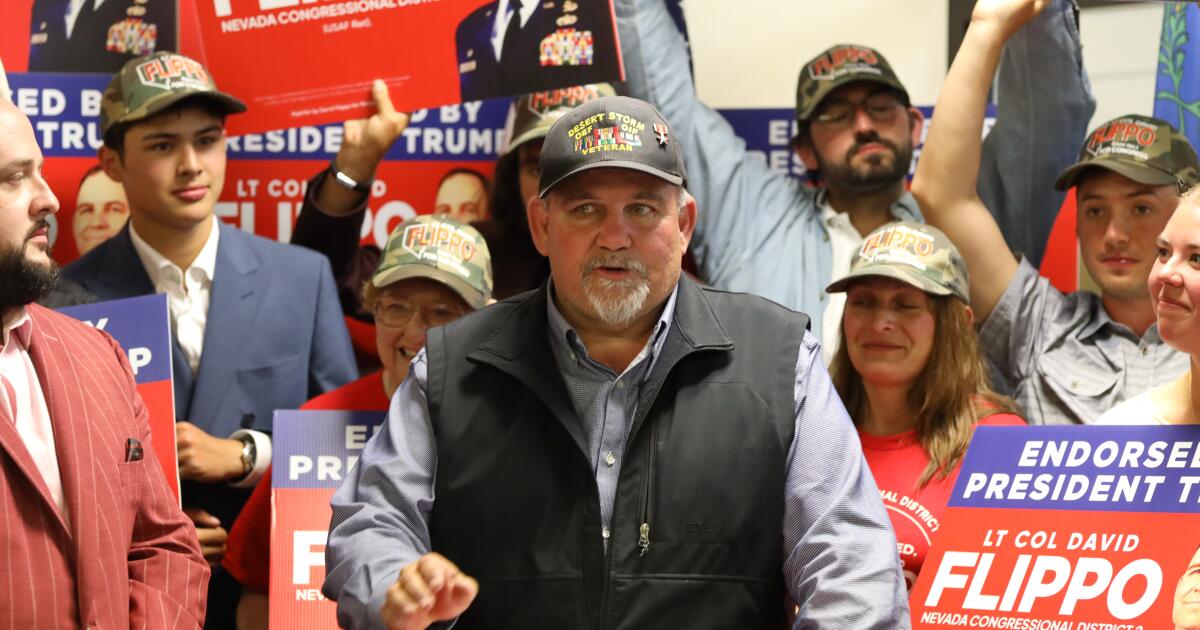
Flippo, 63, a 25-year Air Force veteran and Trump stalwart, arrived in the district from Las Vegas. He ran for Congress there in 2024, losing in the Republican primary. He was preparing for a second try in the Democratic-leaning 4th District when Amodei unexpectedly announced his retirement in February. So Flippo hightailed it north to run in the far more hospitable 2nd District.
He took on the favored candidate of Amodei and others in the GOP establishment, James Settelmeyer, a former minority leader of the state Senate. Backed by a constellation of MAGA celebrities, Flippo waged a fiercely negative campaign, accusing “Tampon Jim” of voting to put menstrual products in boys’ bathrooms and coddling undocumented immigrants, among other distortions. With Trump’s endorsement, Flippo handily defeated Settelmeyer and 11 other primary opponents.
“”Absolutely scurrilous campaign against … one of the nicest guys around,” Amodei said afterward, on the program “Nevada Newsmakers.” “The voters are never wrong. But guess what? Mark Amodei’s not endorsing [Flippo.] I wish him all the best. No way. No, thank you.”
Apart from his exceedingly short-term residency in the district, questions have also been raised about Flippo’s opaque finances. He has lent his campaign more than $1.6 million and failed to provide the personal disclosure information required of federal candidates. There is also no record of Flippo filing the required statement during his 2024 campaign, according to the Washington news outlet NOTUS.
In addition, it reported that Flippo was fired from a job in the financial services industry after his company accused him of violating policies and regulations.
So, a carpetbagger with a sketchy history.
Flippo’s main opponent is Teresa Benitez-Thompson, 48, a longtime Reno resident, former member of the state Assembly and a relatively moderate Democrat. Those credentials also buoy Democratic hopes. The party’s congressional campaign committee has, for the first time in decades, added Nevada’s 2nd District to its target list, though it remains to be seen how much time and money national Democrats commit to the race.
To prevail, Benitez-Thompson would have to defy political gravity, which is to say overcome the reflexive partisanship that has typified politics in this age of deep voter polarization.
In the last two midterm elections, according to the Pew Research Center, more than 90% of Republican and Republican-leaning voters supported GOP candidates for the House. In other words, the kind of crossover voters that Benitez-Thompson needs to win have become rare indeed.
““Trump is a huge liability for Republicans; there is no question that the GOP is going to have huge turnout problems, meaning that in a lot of races, Democrats are going to greatly exceed expectations,” the veteran election handicapper Charlie Cook wrote in a recent midterm analysis. “But converting Republican voters to actually back a Democrat — even for a day — is so much harder now.”
“Some of those rural Nevada voters would rather commit hara-kiri than vote for a Democrat,” Ralston said. (No, Japan’s ancient suicide ritual is not particularly associated with honor or custom in the cow counties, as Nevada’s lightly populated stretches are known. But you get the point.)
“I don’t think it’s impossible,” Ralston, founder and chief executive of the Nevada Independent news site, said of a Democratic upset. “But I remain skeptical.”
Here’s the thing, though, about wave elections — and, to be clear, your friendly political columnist is offering no predictions ahead of November. Like a massive ocean swell, which can bear all kinds of flotsam and jetsam ashore, a political wave that is big enough, broad enough and strong enough can carry all manner of unlikely candidates to victory.
Nithya Raman has made Los Angeles’ struggle to combat homelessness a key plank in her mayoral campaign, yet her own record on the matter has itself become an issue with her ouster as head of the City Council committee seeking solutions to the crisis.
Mayor Karen Bass is at the helm of the city’s battle against homelessness, but since 2023 Raman has been the second-most powerful official as chair of the City Council’s Housing and Homelessness Committee. That changed this month, when council President Marqueece Harris-Dawson, a key Bass ally, split the committee in two and removed Raman as its chair, effective Sept. 1.
Raman claims that politics were at play, casting her removal as a hit job for her decision to challenge Bass. Harris-Dawson disputes that, saying Raman failed to lead the committee with the urgency needed to combat L.A.’s enduring homelessness crisis.
“The committee is behind in excess of more than 100 issues,” said Harris-Dawson in an interview. “There are very serious decisions to make over what happens with homelessness. We needed someone who could focus on that and get it done and get it done quickly and show ability to build consensus.”
Beyond the dispute over Raman’s leadership of the committee, there are clear policy disagreements between the mayor and the council member over the best way to combat the crisis.
A Metro bus passes by a man sleeping on the sidewalk on North Spring Street in downtown Friday.
(Christina House / Los Angeles Times)
Raman contends that Bass’ signature program Inside Safe, which dismantles encampments and moves people living there into motels, hotels and interim housing, is overly expensive and unsustainable. On average, the cost of housing these individuals runs about $82,000 a year, according to city reports.
Raman has repeatedly signed off on funding for the program, but has become more critical of it in the last year.
Despite the city’s efforts, L.A.’s unsheltered homeless population — those living outdoors or in their vehicles — went up by 7.9% after two consecutive years of decreases, the Los Angeles Homeless Services Authority reported last month.
“The approach to homelessness that Mayor Bass has led and defended has brought us here,” Raman said after LAHSA’s report was released.
Raman has called for the use of time-limited subsidies, or rental vouchers, to house homeless Angelenos in private residences — at a city-estimated cost of $30,000, less than half the price of an average Inside Safe bed. Raman says she would “significantly expand” the city’s investment in the vouchers if she became mayor.
“For the same amount of money, we could rent three apartments using a short-term rental voucher and provide intensive services — housing more people in a program that has delivered much better outcomes,” Raman says in her mayoral policy platform on homelessness.
Even so, the more than $60-million voucher program Raman has already pushed through her committee has so far struggled to get off the ground under a tight timeline, and Raman’s critics have seized on the delay as evidence of the council member’s ineffectiveness.
Pedestrians pass by a homeless encampment along the 101 northbound offramp, at right, near City Hall Friday.
(Christina House / Los Angeles Times)
A city consultant on the program set a goal of having 600 households moved into leases by July 1 of this year, and 2,000 households moved in by next April. But as of that July 1 date, only three households had moved into homes via the vouchers, housing officials said in a report.
By Aug. 13, however, the number had jumped to 54 households, “with new move ins happening nearly every day,” the housing department said in a report.
Bass’ campaign spokesperson, Alex Stack, cited the sluggish start to the program and said subsidies are only a small part of the fight against homelessness.
“It’s not the silver bullet Raman’s selling,” Stack said.
In an interview, Raman said that the contracting process slowed the start of the program, but that time-limited subsidies are a great way to free up space in city shelters by moving those people into private housing.
“This is a cost-effective program that has very good outcomes in the past in terms of percentage of people moving on to permanent housing,” she said.
Nithya Rama listens to a question at the mayoral debate hosted by the Sherman Oaks Homeowners Assn.
(David Butow / For The Times)
Raman added that the council will continue to monitor data from the program and make fixes as needed if it doesn’t move fast enough.
Homeless services providers working with the city on the program said part of the challenge has been getting a completely new program off the ground.
“It’s definitely been slower than I think most people anticipated,” said Sasha Morozov, the regional director of supportive services for PATH, a nonprofit contracting with the city for the program.
But Morozov said the program is speeding up now and she believed the 2,000 slots will be filled on time.
A key plank in Raman’s platform
Raman said she ran for council largely to take on the homelessness crisis in Los Angeles. She says she is running for mayor for the same reason.
She’s cited a 49% drop in street homelessness in her district over the past year as a clear sign that she is equipped to bring down homelessness citywide. Bass counters it was her efforts through Inside Safe that brought homelessness down in Raman’s district.
People living on the street in downtown L.A. gather cardboard for shelter during a heat wave last month.
(Gina Ferazzi / Los Angeles Times)
While chair of the Housing and Homelessness Committee, Raman established monitoring of all the city’s spending on homelessness and tracking of 35 key performance metrics to see how effective the city’s investments are. She also stewarded the creation of a Bureau of Homelessness Oversight within the city’s Housing Department that is responsible for coordinating and overseeing the city’s homelessness system.
Her critics say that Raman’s tenure atop the committee hasn’t adequately met the moment facing the city of Los Angeles — with the Trump administration and county both moving to cut funding from LAHSA, the joint city-county authority responsible for homeless services. Meanwhile, the city is still managing a landmark federal lawsuit settlement, which requires it to invest in thousands of new shelter beds in its response to homelessness.
“She’s been in this building … longer than Karen Bass,” said Councilmember Monica Rodriguez, who served on the committee under Raman. “It’s convenient now for her to saddle all blame on the mayor when she rubber-stamped Inside Safe and stood in lockstep with the mayor.”
Mayor Karen Bass, left, and City Council member Monica Rodriguez at City Hall.
(Genaro Molina / Los Angeles Times)
Rodriguez has specifically accused Raman — as chair of the committee — of slow-walking Rodriguez’s proposal from 2024 for the city to study a plan to separate itself from LAHSA and form its own department that would directly contract with homeless services providers.
Rodriguez said it took Raman months to schedule her motion in committee and that, while it was pending, the county removed most of its funding from LAHSA.
“The city has been left flatfooted because she wouldn’t lead our conversation. She wouldn’t schedule our items. She set us up for failure,” Rodriguez said.
While Rodriguez’s motion was waiting on a report, Raman made her own proposal to create a Bureau of Homelessness Oversight within the Los Angeles Housing Department to keep track of the city’s more than $1-billion annual investment in homelessness response.
The council moved that bureau forward last year, and a spokesperson for the Housing Department said that seven positions have been hired within the bureau handling contracts and data oversight.
Harris-Dawson said a seven-person bureau isn’t adequate.
Raman said the bureau was a starting point that could one day lead to a department, which she said would be expensive and take a long time to stand up.
“This was not precluding [the creation of a department],” Raman told The Times. “This was trying to speed up that staffing faster than the departmental process normally takes in this city.”
Raman said she talked to Bass about creating a department for homelessness in late 2023 or early 2024, but the mayor told her to move ahead with the bureau instead. Bass representatives didn’t immediately respond to a request for comment.
Paige Sterling, a spokesperson for the mayor, said that Bass and Raman discussed the bureau in 2025, during the budget process. The mayor opposed a standalone department at the time because it “would add to the bureaucracy,” and the bureau was a compromise, Sterling said.
“The mayor signed a budget with funding and positions for the bureau, which begins to give the city the capacity it needs to start overseeing homelessness as we evaluate what the future governance of this issue looks like,” Sterling said.
Raman has touted the bureau as a success that provides clear oversight of how the city spends its money, but has also claimed that the mayor’s office has moved too slowly to staff the bureau. The Housing Department still hasn’t hired an assistant general manager to oversee it.
The rotunda at L.A. City Hall.
(Genaro Molina / Los Angeles Times)
Canceled meetings and frustrated colleagues
Raman hasn’t been endorsed for mayor by any of her colleagues on the council, and some of those who served on her homelessness and housing panel say she did a shoddy job as its chair. They complain that she frequently canceled meetings and allowed hundreds of motions to pile up without getting moved through council.
“It had started to feel less like a policymaking body and more like a scholastic seminar — a lot of philosophizing, a lot of talk about feelings, but not enough substantive questions or direction on policy to present to staff,” Councilmember Imelda Padilla said in a statement to The Times.
In response, Raman said her committee focused on data to make sure the city’s investment in fighting homelessness is paying off.
“That doesn’t feel scholarly to me, that feels like oversight and accountability — exactly what the public is asking for for one of our largest investments as a city,” she said.
The full council, meanwhile, has agreed to review its relationship with LAHSA and the county, and to study creating a new department to centralize homelessness oversight.
“This conversation that we’re having about this … is long overdue,” said Councilmember John Lee.
Raman will have a seat on the new homelessness committee, but it will be chaired by Councilmember Ysabel Jurado. Padilla was named chair of the new Housing Committee.
Raman’s final meeting as committee chair was supposed to be Wednesday.
Big-city mayors are giving poll workers panic buttons in case election skeptics question their work. County and state officials are gaming out responses to immigration raids near voting centers.
Lawyers for Democratic states and civic groups are pre-writing legal challenges to ballot seizures. And Democratic aides in Washington are preparing members of Congress to push back in the court of public opinion against any baseless claims of voter fraud in competitive districts.
Across California and the nation, civic organizations, voting rights advocates and Democratic leaders are preparing for a raft of potential actions by the Trump administration to interfere in, subvert or deny November’s midterm vote.
President Trump, an election denier for years, has without evidence described the U.S. election system as badly corrupted by fraud and dangerously vulnerable to both domestic and foreign interference.
He has said he would do “anything necessary” to have “honest elections,” and has tried since returning to office to unilaterally rewrite the rules for voting nationwide and wrest control of elections from the states through executive orders and other administrative measures.
Now, he has declined to rule out additional and unprecedented steps to force his will on the November election, including through emergency declarations and military deployments, and in February suggested Republicans should simply take over voting in blue states.
Election experts say there is no evidence of widespread voter fraud in American elections, despite Trump’s allies searching for years.
A worker looks through ballots at a Los Angeles County Ballot Processing Center on Monday, June 8, 2026 in City of Industry, CA. Counting continues on ballots cast for the state’s primary election held June 2.
(Eric Thayer/Los Angeles Times)
Much of the work to resist any Trump interference or power grab is being done quietly to avoid revealing too much of the strategy to the Trump administration or stoking unnecessary fear among voters.
It is designed to match what Trump’s opponents see as his three-part “interference playbook” — to “deceive” voters before the election, “disrupt” the vote itself and “deny” any unfavorable results after, said Justin Vail of Protect Democracy, a prominent litigant against the administration.
“The threats are real,” Vail said, “but the preparation is larger and more coordinated than ever before.”
The scenarios being planned for include the president deploying troops or immigration agents to polling sites to intimidate voters, fomenting unrest as a pretext to declare a national emergency, claiming fraud in the ballot counts of key congressional races or commanding the U.S. Postal Service to intervene in mail ballot delivery.
All told, the efforts amount to an unprecedented exercise to ensure the nation’s elections are safe from its own federal government.
They also reflect a deterioration in trust between states and counties overseeing elections, voting rights and pro-democracy advocates and a federal administration that has denigrated their work and tried to take control of voting away from states.
As public frustration with the economy mounts and Trump’s approval rating sinks, Democrats have become hopeful their party will retake power in Congress. Trump, meanwhile, has suggested that alleged election integrity problems will be the culprit if Republicans lose.
In California, 61% of voters recently identified federal inference in November as a “major concern,” according to a UC Berkeley Institute of Governmental Studies poll co-sponsored by The Times.
“We are taking this threat really seriously,” said Sen. Adam Schiff (D-Calif.), who helped form a Senate task force to prepare. “Politically, I’m very optimistic about the midterms. But I’m also deeply concerned with the president’s willingness to interfere with them — and the fact that, unlike even in 2020, where there were at least some people around him to try to constrain what he was doing, all those people are gone.”
President Donald Trump is seen on a screen as his supporters cheer during a rally on the National Mall on January 6, 2021 in Washington, DC. Trump supporters gathered in the nation’s capital today to protest the ratification of President-elect Joe Biden’s Electoral College victory over President Trump in the 2020 election.
(Samuel Corum / Getty Images)
Much of the work is legal preparation among Democratic state attorneys general and lawyers with leading civic organizations. Nothing is being ruled out after Trump’s supporters, at his goading, violently attacked the U.S. Capitol on Jan. 6, 2021, following his 2020 election loss to Joe Biden.
Other preparation is political, as members of Congress, mayors and other elected officials position themselves to use their bully pulpits and legislative powers to punch back. And grassroots campaigns are also unfolding, as community leaders recruit voters to defend their local elections, including online.
“This is an all-hands-on-deck task,” said Skye Perryman, president of the nonpartisan legal organization Democracy Forward. “We’re anticipating scenarios we haven’t seen before in the United States.”
Trump, who has never accepted his 2020 loss to Biden despite scores of reviews and audits confirming the result, has consistently sought to undermine Americans’ trust in elections, telling the nation in a prime-time speech last month that the voting system was “broken” and claiming that the SAVE America Act, a strict Republican-proposed voter ID and citizenship measure, is necessary to fix it.
The White House said it wouldn’t respond to hypothetical questions about the midterm election, but said anyone who breaks voting laws will be held accountable. Lauren Bis, a White House spokesperson, blamed “extreme liberal Democrats” for undermining U.S. confidence in elections by blocking the SAVE America Act, which Trump has failed to push through Congress.
Bis claimed voters support such changes, and said “President Trump is absolutely right: We fix this now, or we lose our country.”
Causes for concern
The fears of interference are driven by Trump’s long record of election denial; his recent insistence that the midterms are vulnerable to both domestic fraud and foreign interference; his success installing loyalists and fellow election deniers in powerful positions throughout his government; and his current administration’s many attempts to usurp control over state voting processes, including through executive orders, lawsuits and legislation.
Sen. Majority Leader John Thune (R-SD) (C) departs after a meeting with U.S. President Donald Trump and Republican senators at the U.S. Capitol on June 24, 2026 in Washington, DC. President Trump is visiting Capitol Hill to attend a closed-door luncheon with the Republican Senate Steering Committee to push his SAVE America Act, which would impose strict voter ID and proof-of-citizenship requirements in federal elections.
(Kevin Dietsch / Getty Images)
Some analysts saw Trump’s speech last month as laying the groundwork for greater intervention in November, and he raised further alarm this month by entertaining a suggestion from conservative radio host and election conspiracy theorist Wayne Allyn Root that the president has “the right to declare a national security emergency” to unilaterally enforce new voting restrictions.
“Stranger things have happened,” Trump responded.
The White House has previously downplayed the likelihood of immigration agents being deployed to polling locations, but Trump has refused to rule it out. Legal experts say such a move would probably be swiftly blocked by courts, as would any unlawful deployment of military troops to polls.
Some voting experts said Trump’s efforts shouldn’t be blown out of proportion, particularly given federal courts’ dim view of them to date.
David Becker, executive director of the nonpartisan Center for Election Innovation & Research, noted Trump’s executive orders on elections were blocked, the Justice Department is 0 for 23 in cases demanding state voter rolls, and the primaries have run smoothly with high turnout — showing the president is “having very little effect.”
Kim Alexander, president of the California Voter Foundation, said it is “important that people be aware that there are threats, but to not let those threats be debilitating” or prevent them from voting.
Civic experts are urging regular voters to help debunk misinformation about voting within their communities. Democracy Forward has asked people to take one civic-minded action per day leading up to the election, while Indivisible, a progressive grassroots organization, is training volunteers nationwide to mount public push-back to any interference.
Coordination in Congress
A Senate aide who spoke with The Times on condition of anonymity said members of the Senate task force meet regularly to plan for as many potential forms of interference as possible — and that there is “no bottom” to what they’re considering.
Task force members are studying nuanced local election laws to understand how Congress members should respond to any federal interference in their home states, and working on “coordinated messaging” that all members can use in response to immigration raids or other broad interference, the aide said.
National Guard troops stand in the shade at The Park at LeDroit in Northwest on August 12, 2026 in Washington, DC. U.S. President Donald Trump is claiming credit for Washington’s dramatic crime decline a year after Trump sent thousands of National Guard troops to the nation’s Capitol, but the evidence shows crime was already falling before his federal intervention and the extent to which his policies accelerated that decline remains disputed.
(Andrew Harnik / Getty Images)
They are also reading “line by line” through recent legal decisions limiting National Guard deployments and other federal actions to identify any “loopholes” the administration might exploit.
They are paying particular attention to districts with competitive congressional races and where past problems have arisen. In California, they’ve studied the recent seizure of ballots by Riverside County Sheriff Chad Bianco and the criticism of slow ballot counting statewide, the aide said.
Schiff said the scenario he is “most concerned” about is one in which the president or his allies “seed” unrest in big cities to “give the president a pretext, Reichstag fire-like, to call out the military or invoke the Insurrection Act or call out ICE or Border Patrol.”
The Reichstag fire erupted in the German parliament four weeks after Adolf Hitler was sworn in as chancellor in 1933, and was used to justify a sweeping crackdown on political opponents and the suspension of civil liberties — ushering in Nazi rule.
Schiff said lawsuits will be a necessary but “very imperfect remedy” in such a scenario, and Democrats will need to develop a more robust response combining “litigation with mobilization” and legislative oversight.
Sen. Alex Padilla (D-Calif.), the ranking Democrat on the Senate Committee on Rules and Administration, which has election oversight, is helping to create an election observer program for hotly contested races, and has warned his colleagues that he will call a vote on any election-related emergency Trump declares, so that they must co-sign or resist it.
Separately in the House, staffers have been building their own “road map” for how to deal with a laundry list of “terrible things that bad-faith actors who seek to subvert the election could do,” with a principal focus on any ways they might disrupt the Jan. 3 swearing in of new Congress members, said a House aide involved in the preparations there, who spoke with The Times on the condition of anonymity.
The U.S. Capitol, on July 20, 2026 in Washington, DC.
(Tom Brenner / Getty Images)
House staffers are also looking at how court imposed limits on Trump’s emergency powers might be “exploited, weaponized [or] ignored” by the administration, including the Justice Department.
A Justice Department spokesperson said the department is “working diligently” to fulfill the demands of Trump’s election-related executive order purporting to “strengthen the integrity of our elections,” which courts have blocked, and has “statutory authority to enforce our nation’s election laws, including through requesting state voter rolls,” which courts have also blocked.
Assistant Atty. Gen. Harmeet Dhillon, who heads the department’s civil rights division and has threatened local elections officials with legal consequences if they don’t comply with her voter roll demands, said her division “has a statutory mandate to enforce our federal voting rights laws, and ensuring the voting public’s confidence in the integrity of our elections is a top priority of this administration.”
State and local preparations
California Atty. Gen. Rob Bonta said attorneys from his office and similar Democratic ones across the country are “hard at work planning, preparing, strategizing, researching, getting ready for all the different ways the Trump administration can break the law.”
California Attorney General Rob Bonta, right, holds a press conference at the Ronald Reagan State Building in downtown Los Angeles on Thursday, May 14, 2026.
(Christina House/Los Angeles Times)
That includes any attempts to seize ballots, deploy federal law enforcement or the military, or command the U.S. Postal Service to interfere with mail ballots, he said. “The right to vote is the right from which all other rights flow. It’s fundamental. We need to protect it.”
Dean Logan, registrar-recorder and county clerk for Los Angeles County, said he has a responsibility to ensure that “election operations remain secure and uninterrupted” no matter the threat, and is taking steps to do so, though he declined to address potential acts by Trump. Long Beach Mayor Rex Richardson said big cities are also preparing, including to prevent harassment of voters or election workers.
“Cities are where we host vote centers. It’s where the volunteers come from, where people go with their questions,” Richardson said. “We have to pay attention to national rhetoric. We have to be aware of anxiety that might — tensions that may — arise.”
A federal judge in New York has vacated a Trump administration policy that suspended the processing of visas from 75 countries, including Afghanistan, Iran, Russia and Somalia, whose nationals the Trump administration deemed likely to require public assistance in the United States.
U.S. District Judge Jeannette Vargas, an appointee of President Biden, described the policy Friday as “contrary to law and in excess of statutory authority.”
Secretary of State Marco Rubio exceeded his authority by issuing the policy, which “runs afoul” of the Immigration and Nationality Act by mandating “the refusal of visas to eligible applicants without any basis in law,” the judge ruled.
Power lies with consular officers, judge says
Vargas said the policy also undermines the congressional requirement that puts consular officers at the forefront of any visa decision.
“Congress imbued these officers with exclusive authority and discretion to determine if an immigrant is eligible for a visa based upon review of specific and detailed criteria set forth in the statute,” she wrote. “The Policy, which categorically prohibits the issuance of immigrant visas based upon the nationality of the applicant, represents a direct abrogation of this statutory scheme.”
The policy was challenged by two nonprofit organizations along with 11 individuals, including six whose family members had been refused visas. The remaining five are outside the country and had filed “employment-based petitions” to come to the United States.
‘This case is about keeping families together,’ advocate says
“We welcome this ruling because, at its heart, this case is about keeping families together,” said Anna Gallagher, the executive director of CLINIC, a national nonprofit that provides training, resources and support to a network of immigration legal service providers and was one of the plaintiffs.
“Catholic social teaching calls us to uphold the dignity of every person and recognize the family as the foundation of society,” she said in a statement. “This decision affirms both those values and the rule of law, allowing families to once again move forward toward reunification.”
Another plaintiff is African Communities Together, a Harlem-based nonprofit. One of its leaders called the ruling “a tremendous victory for the rule of law.”
“This unlawful and racist ban caused immeasurable harm, cruelly keeping families and loved ones apart,” Diana Konate, deputy executive director for policy and advocacy, said in a statement. “Today, we are elated to tell our community members: this ban is no more.”
Trump expands anti-immigration agenda
President Trump has imposed a growing list of immigration and travel bans mostly for people from Africa, Asia and Latin America. The State Department said Saturday that the Trump administration is “protecting the American people by upholding the highest standards of screening and vetting of visa applicants,” and that it would not comment on pending litigation.
At the time the policy was issued, the State Department said it had instructed consular officers to halt immigrant visa applications from the 75 countries in accordance with a broader order in November that tightened rules around potential immigrants who might become “public charges.”
Relying on Council of Economic Advisors data, the State Department said that more than 30% of households with immigrants from these countries received some form of public assistance.
A separate notice sent to all U.S. embassies and consulates said that non-immigrant visa applicants also should be “fully vetted and screened” for the possibility that they might seek public benefits in the United States.
The cable, a copy of which was obtained by the Associated Press, noted several times that the applicant must prove they won’t apply for public benefits while in the U.S., and that consular officers who suspect the applicant might apply should require them to fill out a form proving their financial bona fides.
The ruling is the latest example of the courts upending Trump’s immigration agenda.
In June, a federal judge struck down a Trump administration policy that made it harder for immigrants from dozens of countries to enter and stay in the United States — affecting elements including asylum, work permits, green cards and citizenship applications. That judge said the policy threw countless immigrants’ lives “into indeterminate legal limbo,” and accused the U.S. Citizenship and Immigration Services of ignoring the law.
Reporting from Washington — During a testy White House briefing Thursday, a reporter challenged Press Secretary Sarah Huckabee Sanders to counter President Trump’s claim that the American press is the “enemy of the people.” She wouldn’t.
The heated exchange between Sanders and CNN’s chief White House correspondent, Jim Acosta, came near the end of a briefing on Russia’s attempted interference in the midterm elections, and just hours after Ivanka Trump unhesitatingly broke with her father in a public interview, telling her questioner that she does not believe that the media is the enemy.
Acosta told Sanders, “I think it would be a good thing if you were to say right here, at this briefing, that the press — the people who are gathered in this room right now, doing their jobs every day, asking questions of officials like the ones you brought forward earlier — are not the enemy of the people.”
“I think we deserve that,” he added.
“I think the president has made his position known,” Sanders replied, proceeding to express her own disdain at length. She told Acosta that it was “ironic” that “you and the media attack the president for his rhetoric when they frequently lower the level of conversation in this country.”
Sanders claimed that media outlets “incite anger” and have “personally” attacked her, adding that she was unfairly ridiculed at the White House Correspondents’ Assn. dinner in April by the comedian that the organization hired to headline the event.
“As far as I know, I’m the first press secretary in the history of the United States that’s required Secret Service protection,” she said.
“Tell that to the five dead people in Annapolis!” another reporter shouted, referring to the employees of the Capital newspaper who were shot dead in their Annapolis, Md., office in June.
Acosta followed up, giving Sanders another chance to disavow Trump’s claim.
“For the sake of this room, the people who are in this room, this democracy, this country, all the people around the world are watching what you’re saying, Sarah,” he told her. “The president of the United States should not refer to us as the enemy of the people.”
Sanders didn’t yield. She said she appreciated Acosta’s “passion,” but reiterated that Trump had made his position on the matter clear. Then she moved on to the next question. And, as the briefing ended, Acosta walked out.
A much different exchange played out earlier in the day, when Ivanka Trump was interviewed before an audience in Washington by Mike Allen, the executive editor of Axios, a news website.
“Do you think that we’re the enemy of the people?” Allen asked her.
The president’s daughter, who is also his senior White House advisor but — unlike Sanders — doesn’t have to be fearful of her job security, responded, “No, I do not.”
“That’s not a view that’s shared in your family,” Allen pressed, as the audience laughed.
“I have some sensitivity around why people have concerns and gripe, especially when they feel targeted. But, no, I do not feel that the media is the enemy of the people,” Trump said.
In a tweet later Wednesday, President Trump sought to suggest that he and his daughter were in complete agreement, and said that she had given the right response.
But then he repeated the accusation: “It is the FAKE NEWS, which is a large percentage of the media, that is the enemy of the people!”
TOPEKA, Kan. — Nancy Kassebaum Baker, a Kansas governor’s daughter who became the first woman elected to the U.S. Senate without following a spouse into office, has died. She was 94.
Kassebaum Baker died Friday of natural causes, according to her son, Bill Kassebaum.
“She loved Kansas. She loved people from Kansas and representing Kansas for 18 years in the U.S. Senate,” he told the Associated Press. “She was an independent-minded Republican who was willing to stand up for what she thought was right, even if that meant going against the party.”
She was elected to the Senate in 1978 and served three terms. Her modest demeanor endeared her to voters of all political stripes, though she shared the moderate, progressive Republican politics of her father, Gov. Alf Landon, the unsuccessful 1936 GOP nominee for president. Even after leaving the Senate early in 1997, she continued taking on public service roles.
She married former Sen. Howard Baker, a Tennessee Republican, in 1996. He died in 2014.
Kassebaum Baker was widely admired among Kansans generally. She could work with Senate colleagues of all political philosophies, and a 1996 health insurance law bore her name, along with that of liberal Massachusetts Sen. Edward M. “Ted” Kennedy.
Part of a dwindling GOP bloc
Her election to the Senate brought her immediate national attention. When she announced her retirement, she was among eight women senators and the only one to chair a Senate committee, the Labor and Human Resources panel.
She was also in a dwindling bloc of moderate to liberal Republicans, having supported, for example, a ban on assault weapons championed by President Clinton.
Yet she never polarized Kansas conservatives as some GOP moderates did. She connected with voters because she never seemed caught up in the trappings of power, and when she retired, she acknowledged, “I’d rather cuddle up and do needlepoint all day.”
She was born on July 29, 1932, as her father, an oilman from Independence, was running for the first of his two terms as Kansas governor. She earned a political science degree from the University of Kansas and a master’s degree in diplomatic history from the University of Michigan in the mid-1950s.
She was a radio station executive, spent a year in the 1970s on the staff of Sen. James Pearson (R-Kan.) and served on the school board in the Wichita suburb of Maize. She had four children with her first husband, Phil Kassebaum, including Bill, who served a term in the Kansas House of Representatives. The marriage ended in divorce in 1979.
A moderate who sought sensible solutions
When Kassebaum Baker decided to run for the Senate, she figured that “a woman with a background different from a man might be appealing” to people growing weary of politics. Pundits at the time estimated a Senate race would require the then-huge-for-Kansas sum of $1 million. In the first quarter of 1978, she spent less than $12,000 on her campaign, and saw herself “at the bottom of the totem pole.”
But nine candidates crowded the primary field, including three state senators and a prominent Wichita businessman. Kassebaum Baker won the GOP nomination with less than 31% of the vote.
Running as Nancy Landon Kassebaum, she won almost 54% of the vote that November against former two-term Democratic congressman Bill Roy.
Her moderate politics quickly came to the fore, when only months later, she refused to endorse an amendment to the U.S. Constitution to require a balanced budget.
“We should be wary of the seemingly simple solution,” she said.
Her father, who would die at age 100 in 1987, still cast a long political shadow during her first years in office. Though Landon overwhelmingly lost the 1936 presidential race to Democratic incumbent Franklin D. Roosevelt, he later became an elder statesman for the Republican Party. A lecture series named for him at Kansas State University attracted presidents and foreign leaders.
Kassebaum Baker became even more popular in her time. She won reelection in 1984 with 76% of the vote and in 1990 with 74%.
But she frustrated conservative activists, despite her popularity. She said her vote in favor of the assault weapons ban inspired the angriest mail of her career.
A public servant to the end
She’d contemplated not seeking a third term, but Republican leaders had prevailed upon her to run one more time. In 1996, when she decided not to seek reelection, she said she would return to a ranch and 90-year-old farmhouse in Kansas’ scenic Flint Hills and babysit her grandchildren — she had seven, as well as two great-grandchildren.
When there briefly was talk of naming a new highway in Topeka after her, she said, “Oh, goodness. Absolutely not — no.”
She and Baker kept their romance low-key, and speculation about a possible marriage didn’t emerge until mid-1996, in a Washington Post story. They married that December.
It was the first time a man and a woman who had both served in the Senate had wed. Baker was elected to three terms, serving from 1967 to 1985 before becoming President Reagan’s chief of staff. His first wife, Joy, had died in 1993 after a long battle with cancer.
After the marriage, public service still beckoned, including as a member of a bipartisan commission on campaign finance reform under Clinton and on a British commission in Africa in 2004-05.
President George W. Bush named her husband ambassador to Japan in 2001, and she went with him for the four-year posting. Baker said she became an important figure in the Asian nation.
Before she left for Tokyo, she told a reporter she saw her stint in Japan as an adventure, but added, “All I can say is, I will miss the Kansas prairie.”
Not a fan of Trump
Later in life, Kassebaum Baker broke with the Republican Party as it became more conservative, endorsing Democratic candidates for Kansas governor and U.S. senator, including Democratic Gov. Laura Kelly both times — even though Kelly’s 2022 GOP opponent, then-state Atty. Gen. Derek Schmidt, had worked on her Senate staff.
In 2021, she supported the impeachment of President Trump for incitement of insurrection for his role in the Jan. 6 riot at the U.S. Capitol that sought to keep him in power after he lost the 2020 election to Democrat Joe Biden.
She was “an assassin,” a “very skilled politician” who “made mincemeat of Nithya throughout the debate, both stylistically and substantively.”
If you think that assessment came from a Bass supporter, think again.
The words come from none other than Spencer Pratt, the erstwhile mayoral candidate, a Republican who routinely referred to Bass as Basura (that’s trash in Spanish) during the primary campaign.
There was no mention of Basura in Pratt’s Substack recap of Wednesday night’s debate before the Sherman Oaks Homeowners Assn. To be sure, his post was titled “Surviving the Dumb and Dumber Debate,” but even so Pratt praised the mayor’s performance against Councilmember Nithya Raman.
Not that he was thrilled by the prospect of four more years with Mayor Bass, however.
“A Karen Bass Mayorship is depressing,” he wrote. “A Nithya Raman Mayorship is terrifying.”
Pratt suggested Bass was borrowing from his own playbook, citing her comments saying street vendors shouldn’t be on the sidewalk outside restaurants and her call for the long-term involuntary hospitalization of people on the street who pose a threat to themselves. Bass herself said that backing involuntary hospitalization was a “controversial thing to say.”
Pratt didn’t respond to a text from The Times about whether he was considering endorsing the mayor in the runoff.
Bass is likely to welcome conservative voters during the Nov. 3 general election as she faces off with Raman, who is a member of the Democratic Socialists of America.
And it’s not just Pratt who seems to be leaning toward Bass from the right.
Rick Caruso, who ran against Bass in 2022, referred to her as a “very good partner” when he recently celebrated the reopening of his Palisades Village shopping center. He didn’t respond to a request for comment.
In The Heights
Raman traveled to Boyle Heights Monday to join activists calling for Lineage to leave the neighborhood after the devastating fire at the company’s warehouse in June.
It wasn’t Raman’s first visit to Boyle Heights since the blaze, but it was her first public appearance and news conference.
“Lineage shouldn’t be permitted to open this warehouse again,” Raman said to cheers from the crowd.
Bass followed suit Thursday, after Lineage blew past its own self-imposed deadline for cleanup.
They “do not deserve to rebuild,” Bass said in a statement, while also calling on city lawyers to pursue litigation, a lien and other legal options for cost recovery against Lineage. Bass had already ordered the company’s building permits delayed at the end of July.
Raman was joined at the news conference by Eastside Padres Contra la Privatización and the Alliance of Californians for Community Empowerment — a group that has endorsed her — to call for the closure of the facility.
Raman also called for Lineage to pay for Boyle Heights residents’ healthcare, for environmental testing, cleaning and relocation assistance, lost wages and more.
“Families and taxpayers should not be left with the bill when a corporation runs up the tab,” she said.
Raman’s news conference appeared to draw the ire of at least one council colleague, Ysabel Jurado — who represents Boyle Heights.
Jurado didn’t mention Raman by name, but after winning council support for a motion Wednesday continuing the state of emergency in Boyle Heights, she thanked her colleagues who called and texted before they “did a press conference about the issue.”
Jurado spokesperson Mason Santa Maria declined to say whether the remark was directed at Raman. Raman spokesperson Liz Garcia said Raman was invited to the presser.
Jurado, who has endorsed Bass, did not attend.
No shows at H&H
Raman has been outspoken about her removal from the chairmanship of the council’s housing and homelessness committee, suggesting she is being punished by Council President Marqueece Harris-Dawson for challenging Bass.
Harris-Dawson rejects that narrative, saying the committee needed a chair who can focus undivided attention on the crisis.
Raman doesn’t officially lose that post until the end of the month. So on Wednesday, she was still listed as chair of the committee’s 2 p.m. meeting. But she wasn’t there, and neither were two of her colleagues.
Councilmember Bob Blumenfield took the gavel instead, delaying the session until 3 p.m. in the hope that a third member would show up to join him and Councilmember Tim McOsker, giving the committee a quorum.
An hour later, Blumenfield came back.
“This meeting is going to have to be canceled for today,” he told the audience. “So I apologize for making you wait.”
Raman spokesperson Stella Stahl, in an email, said her boss already had other plans, with the Sherman Oaks Homeowners Assn. debate happening later that same day.
“At the time, Nithya was near Sherman Oaks and had pre-planned campaign activities in advance of the mayoral debate,” Stahl said.
Stahl said the committee had a “last-minute cancellation from a council member who was expected to attend,” but didn’t provide a name.
Jurado, who takes over as chair of the newly renamed homelessness and health committee next month, also wasn’t there. Her spokesperson said Raman’s team was told the previous week that Jurado had a personal matter and couldn’t attend.
Devyn Bakewell, a spokesperson for Councilmember Heather Hutt, said her boss let Raman know Wednesday morning that she would not make it to committee due to a family issue.
The committee won’t meet again until next month. Raman will remain on the panel.
You’re reading the L.A. on the Record newsletter
Sign up to make sense of the often unexplained world of L.A. politics.
By continuing, you agree to our Terms of Service, which include arbitration and a class action waiver. You agree that we and our third-party vendors may collect and use your information, including through cookies, pixels and similar technologies, for the purposes set forth in our Privacy Policy such as personalizing your experience and ads.
State of play
— SHAM SURVEY: The Times broke the story of the faked poll in the Los Angeles mayor’s race that purported to show Bass leading Raman by around 12 percentage points. The poll was faked as a “social experiment,” according to Median Strategies Polling, the group behind the fake survey. The creator of the fake poll revealed himself to the Guardian on Thursday as 21-year-old Rahil Prakash.
— FLIP IT AND REVERSE IT: The Los Angeles City Council has rescinded camping bans on a dozen locations in Hollywood, Echo Park and Silver Lake at the urging of the area’s council member, Hugo Soto-Martínez, who called the bans ineffective in addressing homelessness.
— THE RUMBLE IN THE VALLEY: Los Angeles Mayor Karen Bass and City Councilmember Nithya Raman slammed each other Wednesday over their handling of homelessness, public safety and many other issues during the first face-to-face debate of the Nov. 3 election campaign.
— THE BEST LANE PLANS: A long-running dispute between cemeteries and bike-lane and safe streets advocates in the San Fernando Valley has escalated to become a campaign issue in the Los Angeles mayoral race.
— LIGHTS, CAMERA, INACTION: Despite improvements to the state’s tax incentive program, Los Angeles and California continue to struggle to keep movies, television series and even game shows from fleeing elsewhere. Production levels have failed to bounce back since the pandemic and the labor strikes by writers and actors, and they remain at historic lows.
— HEALTH WOES: Hundreds of Boyle Heights residents suffered health problems after a fire at a cold storage facility burned stubbornly for days, including respiratory infections, eye disorders and persistent cough, according to a new study.
QUICK HITS
Where is Inside Safe? This week the mayor’s signature program was in Eunisses Hernandez’s district in Westlake, where it moved 37 people indoors from Ocean View Avenue and Lake Street.
On the docket next week: After a Saturday meeting, the Democratic Socialists of America will vote next week on whether to endorse Raman for mayor.
Stay in touch
That’s it for this week! Send your questions, comments and gossip to LAontheRecord@latimes.com. Did a friend forward you this email? Sign up here to get it in your inbox every Saturday morning.
WASHINGTON — Immigration and Customs Enforcement is taking more and more steps to avoid oversight by local and state authorities of immigration detention centers amid growing complaints alleging unsanitary and unsafe conditions at the facilities.
The efforts to sidestep laws in California and elsewhere take many forms. In some instances, contracts have been changed to declare that the centers are simply not subject to certain local or state laws.
In other instances, ICE has purchased facilities owned and operated by private companies. Though the companies continue to run the centers holding thousands of detainees, federal ownership could aid their defense in the event of legal action.
George Zoley, the chief executive of GEO Group, which contracts with ICE to run detention centers in California and across the country, said as much to company shareholders this year. In an earnings call in May, he said that ownership bolsters the facilities’ protection from “unwarranted litigation” around medical care and other detention conditions.
The federal ownership strategy has become particularly crucial, he said, “as some blue states are considering more active involvement in oversight of facilities.”
Local oversight has taken on greater significance since the Trump administration hollowed out federal offices that were charged with investigating civil rights and safety issues at detention centers and began restricting visits by members of Congress. A recent analysis by the Project on Government Oversight found detention center inspections under the second Trump administration have increasingly resulted in “superior” grades.
Eunice Cho, a former American Civil Liberties Union attorney and an expert in immigration detention, called ICE’s efforts a “naked strategy” to evade local scrutiny of detention centers.
“This is a huge sea change in the way that immigration detention is expanding and hardening in the United States,” she said, adding that “this was every advocate’s nightmare scenario.”
In California, state leaders once attempted to shut down privately run detention centers and, after losing, resorted instead to proposing other oversight measures. California is home to eight ICE detention centers with a combined capacity of nearly 9,000 people.
State laws allow monitoring and investigation of the facilities by the California Department of Justice and local health authorities.
A 2021 law allows people to sue for damages when private detention center operators fail to follow the care standards laid out in their contracts. Starting in January, another law will require independent medical investigations into deaths in law enforcement custody, including in immigrant detention facilities.
Several bills are being considered by the California Legislature that would further regulate detention centers. Among them are bills that would authorize the California attorney general to bring civil action and impose fines to protect detainees’ constitutional rights and require the disclosure of public records, such as 911 calls from the facilities.
Recent attempts to limit California’s oversight actions haven’t been successful. CoreCivic turned San Diego health inspectors away from the Otay Mesa Detention Center in February, but after legal action the visit took place in June.
Another oversight battle concerns the rights of detainees who work at a facility, perhaps as a janitor, for $1 per day.
GEO Group recently settled with California regulators after a years-long fight over workplace health and safety violations. The settlement affirmed that immigrants who perform work while detained are considered employees.
Weeks earlier, ICE released new detention standards in June declaring that detainees who participate in the voluntary work program aren’t employees “and are not entitled to wages or benefits under applicable wage laws or labor regulations.”
Because the new standards will take effect as contracts are established or modified, the rules don’t yet apply to existing facilities in California, though they were implemented at a new facility in Minnesota.
An ICE spokesperson did not respond to questions but said the agency consulted with a variety of stakeholders, including facility operators, while revising its standards. The spokesperson, who did not provide their name in an emailed statement, said the agency consistently looks for ways to improve detention facilities to ensure they provide detainees the best care.
“ICE is regularly audited and inspected by external agencies to ensure that all ICE facilities comply with performance-based national detention standards,” the spokesperson wrote, adding that “ICE has higher detention standards than most U.S. prisons that hold actual U.S. citizens.”
An oversight battle involving changes to contracts is also playing out in other states.
For the last three years, GEO Group has blocked Washington health officials from inspecting the Northwest ICE Processing Center near Seattle despite 3,500 complaints from detainees about black mold, unsafe drinking water and substandard medical care.
A previous contract for the facility stated that services must comply with “federal, state and local laws and standards. Should a conflict exist between any of these standards, the most stringent shall apply.”
But in March, ICE and GEO Group established a new contract that says the opposite — that “applicable or more stringent state or local laws or regulations shall not apply.”
A federal district judge, rejecting that contract provision, ruled last month that GEO Group must let health inspectors in, writing that “GEO’s new contract cannot preempt state law, even if it purports to.” That decision is now paused under appeal.
But this week, GEO Group had a court victory in Colorado, where a federal judge prevented the state from enforcing a law that requires unannounced public health inspections of detention facilities and stiff penalties for refusal. Colorado health officials wanted to investigate a tuberculosis case at the Aurora ICE Processing Center near Denver, but have been refused entry and records.
The judge wrote that GEO Group’s contract with ICE “plausibly” requires the company to follow only state laws that existed when the contract was signed. At GEO Group’s suggestion, the judge’s order remains in effect until Oct. 15, when the contract expires.
Meanwhile, ICE appears to be trying a different route to apply the same restrictive contract language to the facilities near Seattle and Denver, among others.
Last month, the agency posted a solicitation with draft contract terms seeking 5,500 detention beds in Colorado, Florida, Pennsylvania and Washington. The locations and requirements match four existing GEO-owned facilities where operating contracts are set to expire in the coming months. During a shareholder call earlier this month, Zoley, the GEO Group CEO, indicated that the four facilities could also be sold off to the federal government while the company would continue to operate them.
The facilities would be governed by the new 2026 detention standards and include terms that mirror those from the Northwest facility’s contract, that stricter state or local laws “shall not apply.”
Zoley said ICE is contemplating buying more than 10 facilities, and that number “could continue to grow.”
GEO Group’s main competitor, CoreCivic, recently sold four detention centers to ICE — two of them in California — for a combined $2.2 billion. Spokesman Ryan Gustin said the facilities were valuated using independent appraisers and federal acquisition standards “to determine objective fair market value.”
ICE paid for them using $45 billion approved by Congress for ICE detention last year, enough for the agency to meet the administration’s goal of 100,000 detention beds. ICE is about 30,000 beds shy of meeting that goal.
Among more than 200 facilities ICE now relies on nationwide (most being local jails) are 36 privately owned detention centers. Those facilities hold the vast majority of detainees.
A Homeland Security spokesperson previously told The Times that it’s crucial for ICE to own detention centers on the West Coast so the agency can maintain the detention capacity it needs.
“Unlike in states like Florida and Oklahoma, ICE can not rely on local state and county partners for detention space in California,” the spokesperson said last month. “The state’s sanctuary politicians continue to push legislation to outlaw or make private prisons financially [unfeasible].”
GEO Group didn’t respond to a request for comment. Gustin, of CoreCivic, said its facilities operate under substantial government oversight, including “on-site government personnel, regular audits and inspections, detention-standard reviews, independent accreditation processes, and routine visits by government officials, attorneys, families and community representatives.”
How much power the federal government would be required to grant states is an open question if more facilities become federally owned, even if private companies continue to run the day-to-day operations.
Claire Trickler-McNulty, a former Homeland Security official who led efforts to reform detention standards, said federal ownership of detention facilities isn’t, on its face, a bad idea. If the goal was to own facilities that would be needed long term, she said, the agency could slowly transition to staffing those facilities with its own employees and cut out the need for private contractors.
Trickler-McNulty said federal ownership of detention centers could make state oversight “slightly more complicated.” But that doesn’t mean the centers can be operated without any review.
“I don’t think it shields the government from liability in total,” she said. “If the government owns a facility whose negligence causes harm or death in the government’s custody, I don’t think you can just buy away liability.”