The consumer experts shared a money-saving hack for holidaymakers this summer
11:45, 29 Jun 2026Updated 12:45, 29 Jun 2026
Martin Lewis founded MoneySavingExpert (stock photo)(Image: ITV)
MoneySavingExpert (MSE) has issued an alert for holidaymakers who still need to book their hotel or rental car. The consumer advice website, founded by journalist and broadcaster Martin Lewis, regularly shares tips for Brits.
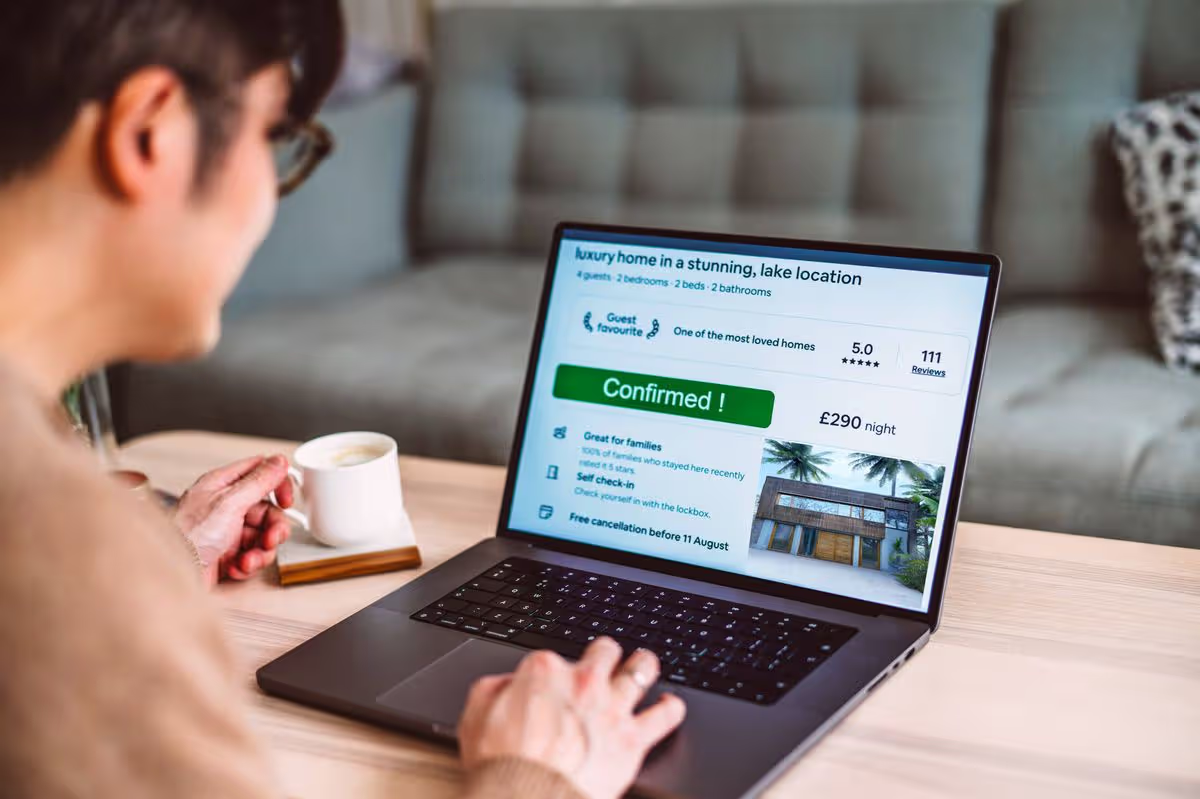
In a recent social media post, the experts shared advice for people making travel bookings. Posting on X, MSE advised consumers to choose bookings that offer free cancellation if possible. The experts explained that travellers can use this tactic to get the best deal on their booking, as they can simply cancel and rebook if prices go down.
MSE wrote: “Top travel tip: Try to book a hotel or car hire with free cancellation. Why? Because if the price drops, you can simply cancel and rebook at this cheaper rate!” The post asked social media user to share their experiences in the comments.
The post asked: “Have you ever done this successfully? How much did you save?” In response, several MSE fans shared their own success stories.
For example, a commenter named Kathryn replied: “I’ve done this with a hotel. Got a much better grade room and saved about £50 on the price the original room would have cost! I usually try to do this now. I book the new room first though before cancelling the existing one… Just in case!”
Another social media user said: “I’ve done this for a hotel booking. Made a great saving on original booking price but found my room was at the furthest point away from the reception / dining areas. A good trade off in that situation.”
Someone else said they managed to find their £160 car hire reduced to just £80 using a similar tactic when they visited Portugal last year. Similarly, a commenter with another car story said they had booked their rental car three times, starting with an initial price of almost £300 and getting it down to £121, despite using the same rental company to book the same car.
They explained: “Pre-Christmas price over £300. 1st booking March £285. 2nd booking £185 early May. 3rd time mid-May £121.” Praising the method, the social media user added: “Refunded each time within four days. Result!”
Content cannot be displayed without consent
Sharing another success story, a holidaymaker claimed to save £400 on a trip to New York. The comment read: “£400 saved on a trip to NYC. Free cancellation costs more but the flexibility makes it worth it.”
Woman in tears after ‘lucky’ item banned from flight as ‘dangerous weapon’
A woman was left ‘in tears’ when her ‘lucky’ padel racket was confiscated before her flight home due to one simple error. Henrietta Jones-Chapman brought the racket ‘worth more than £100’ to Bali so she could play the sport during a work trip.
But the 27-year-old says that before her flight home, security staff at Bali Denpasar Airport, Indonesia, confiscated the orange racket. ‘Heartbroken’ Henrietta says she was left in tears and could only think workers were worried she’d start ‘hitting someone round the head’ with it’.
She filmed a TikTok video moments after the incident and captioned it ‘don’t bring your padel racket in your hand luggage coming home from Bali’. The clip, which now has more than 230,000 views, includes footage of Henrietta admitting ‘I’m actually crying, it’s so pathetic’.
She explains she brought the racket into the country in the same handbag so is confused why it’s been taken from her. Henrietta says she had to ‘kick up a fuss’ to convince staff to put the racket in the hold for free so she could keep it.
In Indonesian law padel rackets are not allowed in the cabin because they are classified as ‘dangerous devices’ so she should have checked it into the hold. UK Government guidelines allow tennis rackets to be taken as hand luggage but prohibit ‘heavy bats and sticks’ including ‘baseball, softball and cricket bats’.
The list doesn’t appear to contain a rule on padel rackets, which take a tennis shape but are stringless and more solid. However passengers should check with specific airlines regarding equipment restrictions as some allow them on board and others don’t.
Padel is booming in the UK, with an estimated 1,000,000 people now playing the sport. Player participation has surged by over 2,500% making it the fastest growing sport in the country.
Henrietta, from Harlow, Essex, said: “I was heartbroken. I know it’s a bit dramatic but it’s an item that was important to me. I was gutted. It was not just your average racket, it was more than £100 and personalised by my brother so it was sentimental.
“I took it there [Bali] and it was fine to take there so it was still in my hand luggage on the way out like normal and I had no issues at all. It was in my handbag and I didn’t even take it out at security or put it in the tray, I just left it in the bag.
“Then a lady came over with a sign with a padel racket saying it’s a new law that they’re not allowed to bring it in your hand luggage essentially. The lady said ‘no you can’t bring it through’ and I cried. I don’t know if it was because I was leaving Bali as well. I was panicked.
“She took it off me but she was apologetic because she could see I was crying. It was my lucky racket. I don’t see what the danger is unless I start hitting someone round the head with it on the plane but that could be anything, your laptop.
“Because I wasn’t expecting this I was kicking off a bit of a fuss and getting upset and saying ‘I think there should’ve been a warning before we got to that point’. If I hadn’t kicked off it would’ve just been in the bin and gone. I was really relieved.”
Airlines have their own rules on sports rackets such as Ryanair who prohibit them as ‘blunt instruments capable of causing serious injury’. However, British Airways allows passengers to pack padel rackets as long as they’re in a slim protective case.
Henrietta, who had been working in Bali as a girls-only holiday host, says staff told her about the Indonesian law surrounding rackets being banned from hand luggage. They reportedly added that in future they wouldn’t let her go back to check the racket into the hold.
She’s now warning holidaymakers the should always put their rackets in hold luggage to avoid making the same mistake she did. Henrietta said: “Make sure rackets are in your check-in bag if you’re traveling to Bali. Maybe if you’re worried about it getting broken get a proper case or padel bag.
“Make sure it’s checked in with all your rest of your stuff and not have it in your hand luggage because if I was any later my bag might’ve already gone through. There could’ve been extra costs but I was lucky they didn’t charge me but there would’ve been going forwards.
“Now you know it’s one of those things you can easily do. At least now people know it can be safely kept in the hold. I do think there’ll be a lot of people that travel back from Bali with their racket because it’s cheaper to get one over there and it’s played a lot.”
Bali Denpasar Airport has been contacted for comment.
Visit Medellín, and everyone will tell you to try one dish: bandeja paisa.
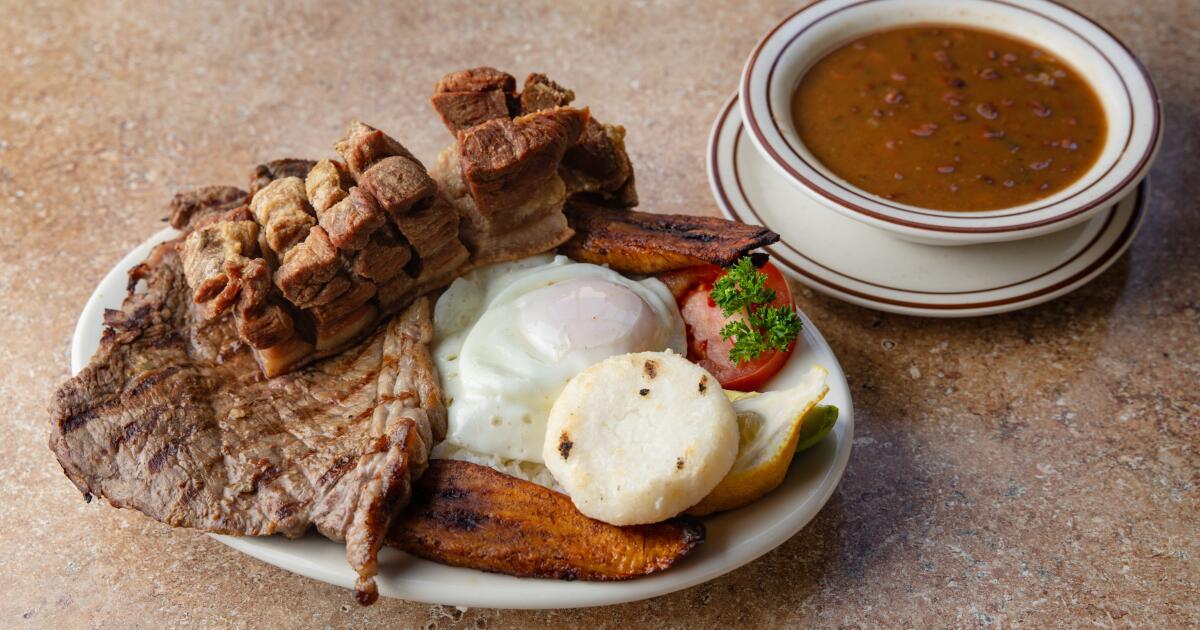
Translated as a “countryside tray,” you’ll find the loaded meat platter at any restaurant in Colombia’s second-largest city. The spread is loaded with savory red beans; white rice; ground beef or grilled steak; a long, curved strip of crispy chicharrón; chorizo; morcilla (blood sausage); a fried egg; golden lobes of sweet plantain; a mini arepa; and a slice of avocado.
Though its origins lie in the mountainous, coffee-growing region of Antioquia, known as the home of the paisas (derived from the Spanish word for countryman), the dish is widely celebrated and eaten across the country. It’s a hearty lunch meal meant for one person, a combination of flavors and textures that transport you straight to Medellín, known for its rich coffee landscape, blooming flowers and eternal spring weather.
“The bandeja paisa is the seal of the Colombians,” said Gloria Hernandez, owner of Nene’s Colombian Food in Lawndale.
The dish is believed to have started as a filling, nourishing meal for campesinos (field workers), providing strength to get through a day working in the fields. “There’s a gathering of various dishes to make a bandeja paisa,” said Cesar Gutierrez, owner of Arepa’s Colombianas in Redondo Beach.
Over 40,000 Colombians live in L.A., according to the Los Angeles Almanac. Three-thousand miles from home, the city is host to several Colombian restaurants, food trucks and even a rooftop night market in downtown L.A.
From a longstanding restaurant in Larchmont to a favorite for modern Colombian cuisine in Long Beach, here are seven places where you can devour a bandeja paisa.
As holiday prices go up, it’s always helpful to take on any advice you can to make it that little bit cheaper and as it turns out, that includes which day of the week you fly
This simple booking step could save your family £100s (Image: Getty)
Ahead of your last-minute summer trips or 2027 getaways, it’s best to be smart about your bookings, and a travel expert is here to tell you exactly why.
Flights are one of the most expensive aspects of any holiday, especially if you’re traveling further afield. If you’re not following these simple steps, you could be doing it all wrong.
To help holidaymakers navigate their bookings abroad with confidence, travel expert and head of aviation at Loveholidays, Gavin Brewer, has shared his expert advice for a stress-free getaway.
With three decades of experience in the aviation industry, he offers practical advice on securing cheap, last-minute deals and ensuring your trip is protected.
Something many people overlook when booking a holiday is the day they fly. While they often make sure to consider key dates, outside of school holidays for cheaper packages or outside of peak summer times altogether, they don’t stop to think about the difference flying on a Monday could have to flying on a Sunday, for example.
As it turns out, that difference could be quite a lot, especially if you’re booking for a family, where all those saved pounds soon add up.
Gavin suggests being super strategic with your departure date to ensure you’re saving money and getting the best flights for the best price. He explains that the start of the week is always the cheapest to depart, according to recent analysis of flights, meaning Sundays, Mondays and Tuesdays are the best days to begin your holiday.
“If you’re on a budget, be flexible with your departure date and look at holidays departing on either a Sunday, Monday or Tuesday. Our research shows you could save up to £24 per person on the flight element of your package holiday, and every little bit helps,” he said.
To ensure you have the safest, stress-free holiday, the expert advises booking your travel insurance at the same moment in time you book your holiday and avoiding putting it off. This means it protects you from the moment the trip is secured, making it “one of the smartest moves you can make”.
Getting to grips with your cover is just as important as picking your destination, because when the unexpected happens, the right policy can be the difference between spending big bucks and flying away without a care in the world.
If you want a little extra protection, package holidays are ideal. In the UK you get built-in protections you don’t get when booking separately. In the event of any disruption ahead of your travels, such as a cancelled flight with no suitable alternative, as a traveller you are fully protected, thanks to a set of consumer laws called the Package Travel Regulations. As a result of this, you are entitled to a full refund on your package holiday.
A UK travel company has entered administration with future trips cancelled.
Groupia Ltd, which used to create group-based trips within the UK and Europe including hen and stag dos, weekend adventures, spa days and ski trips, has shut down.
Sign up for the Travel newsletter
Thank you!
Groupia Ltd, which used to sell adventure holidays as well as trips to Barcelona and Prague, has entered administrationCredit: PA
More than 750,000 people have travelled with the company since it opened in 2002, with destinations including Prague and Barcelona.
The company also traded under other names including Groupia Golf, GoHen, StagWeb, Groupia School Trips and Company Away Days.
According to the company’s website, Groupia Ltd entered administration on June 16.
The website states: “Nigel Fox and Christopher Marsden of S&W Partners LLP appointed as Joint Administrators.
“The Company has now ceased taking new bookings, and arrangements are in place with ABTOT (a UK government-approved travel protection scheme) to support customers with existing bookings.”
For anyone who had an upcoming event or holiday on or before August 31, “ABTOT have arrangements in place”with events “expected to go ahead as planned”.
Travellers can use the company’s existing VIP booking system to manage their bookings.
On the other hand, if you had something booked from September 1 onwards, the website states: “Your event will unfortunately be cancelled and is subject to a refund claim.”
You can claim back in different ways – either by requesting a credit card refund or a debit card back-charge, with different letters for each available on the company’s website for customers can send to their banks.
There is also an option for anyone who paid a different way to either credit or debit cards.
The website also warns that refunds might take up to six weeks.
There’s more than meets the eye with this picture-perfect market town, jam packed with independent shops and an idyllic river meandering through, as rowing boats pass by
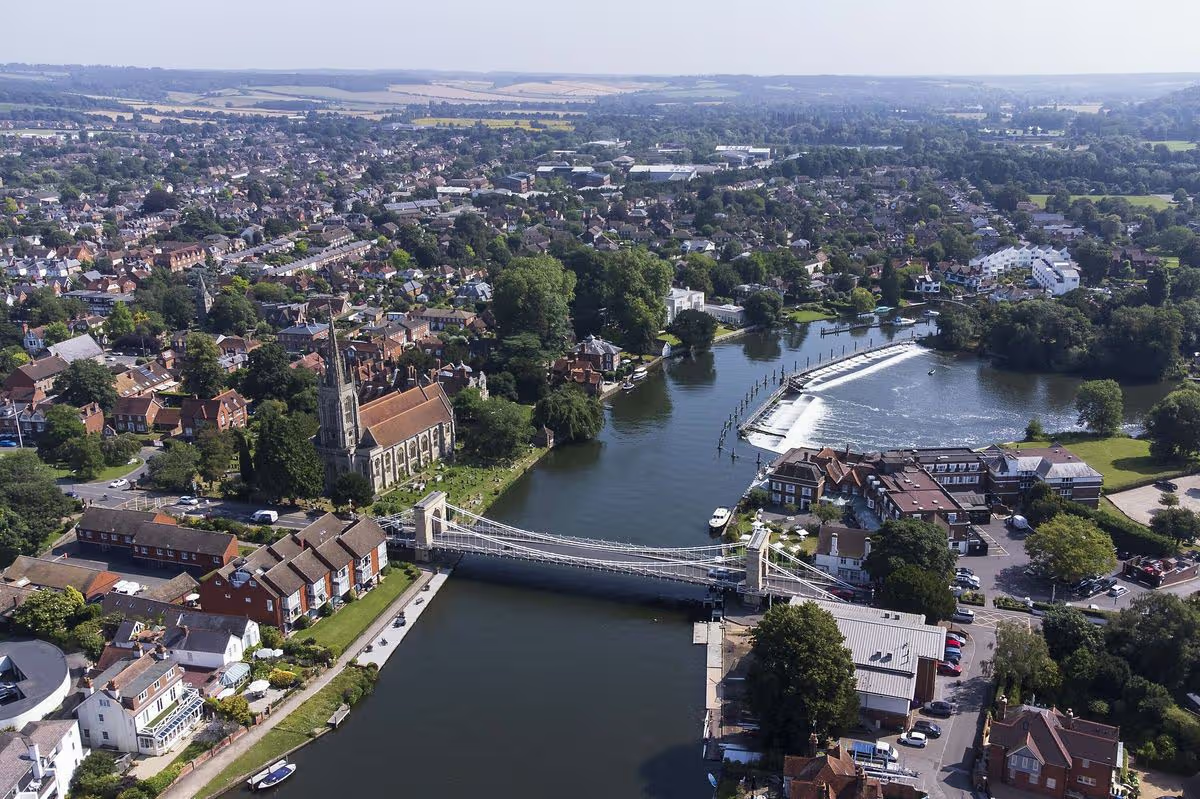
Many are opting to move out of the city to this picture-perfect town (Image: Getty)
Away from the hustle and bustle of London life, just a little further down the Thames, is a much quieter tow where people are flocking for an escape into independent shops and riverside walks.
With a real sense of vibrancy about it, this Buckinghamshire town is being put on the map as it continues to evolve into a cool and quirky hotspot for the capital’s commuters. Not just that, but for people wanting a day trip that feels a lot more wholesome and doesn’t cost quite as much.
Marlow is one to watch, especially for those looking to relocate out of the city. Its location along the River Thames makes for a peaceful spot, which could compare to the likes of Richmond or Cambridge, where people can hire both rowing boats and self-driving boats to explore the town from the water.
What makes it most recognisable to passers-by or those travelling through is its eye-catching suspension bridge which spans the River Thames, joining Buckinghamshire with Berkshire. It first opened in 1832 and has been somewhat of a landmark for the area ever since, as a distinctive feature that helped the town to grow as an inland port.
High Street
The charming town is made up of historic streets with listed buildings and an abundance of independent boutiques, cafes and bistros, adding to the atmosphere of the place. But above all, it’s Marlow’s High Street that has received the most considerable amount of attention. Recently, when it was dubbed the best in the UK.
Estate agent Knight Frank named the UK’s best high streets after the property experts took a look at some of the streets that offer the most charm, and this was their favourite. Their focus was on the areas that home buyers were flocking to, and Marlow came out as a seriously desirable spot that they described as both “charming and lively”.
Matt Davies, partner at Knight Frank, said: “We tend to see a slightly younger buyer base in Marlow, driven in large part by its outstanding educational institutions, including grammar schools such as Sir William Borlase’s.”
There’s an endless amount of unique little shops selling clothing, gifts, homeware, stationery and more. Some of the standout stalls include the gift shop Twenty Three Living, The Marlow Bookshop, URU Home and Saddle Safari, all joined by an array of local pubs, cafes, galleries and salons.
Marlow has also made a name for itself in the realm of food, with high-end chefs operating out of the area and it being home to Michelin-star cuisine. Celeb chef Tom Kerridge runs a pub in the heart of the town named The Hand of Flowers, a short walk off of the high street, which stands as the only UK pub to hold an impressive two Michelin stars.
A customer described their experience at the highly acclaimed pub on TripAdvisor. They said: “Service was excellent from the minute we arrived, and the atmosphere in the restaurant was great. We’d highly recommend!”
And of course, like any higher-end high street, it’s home to The Ivy and other high street chains such as Zizi, as well as having smaller bistros and traditional pubs to choose from.
Holidaymakers have been advised to carry out amateur detective work to ensure they do not book into fake accommodation this summer, as research showed a third of travellers had seen an increase in potential travel scams on social media.
Consumer experts have urged holidaymakers to do a reverse image search on photographs of holiday homes and check their locations on an online map to verify they are real.
People may be booking in a hurry this year as many have left it later than usual because of uncertainty around the impact of the Iran war, increasing the risk of falling victim to an online or telephone scam.
George Ralchev, head of risk at payment service provider emerchantpay, which commissioned the research, said holidaymakers were being targeted by social media scammers “looking to take advantage of the peak travel season”.
Seven in 10 people said they were wary of promotional emails related to holidays because of potential scams, according to the survey carried out by Opinium in May among 2,000 people in the UK.
Two-fifths of holidaymakers said they changed their behaviour while on holiday because of financial safety concerns.
Half now prefer to book holidays with online or high street travel businesses if they clearly explain how they are protecting consumers from fraud.
One woman scammed out of £6,500 while trying to book a Greek holiday villa previously told the Guardian that she had begged her bank to halt the money transfer, only to be told by staff that there was nothing they could do.
To help avoid scams, people could do research to check that a destination actually exists, look for independent reviews and check website links, emerchantpay said.
Holidaymakers may also want to check whether the company involved is a member of Abta, a trade association for UK travel agents, tour operators and the wider travel industry.
People booking package deals with a flight could also check if they are covered under the Air Travel Organisers’ Licensing (Atol) financial protection scheme.
Lisa Webb, consumer law expert at the consumer group Which?, said the findings were “sadly unsurprising” and reflected its own research that social media firms were “failing to take meaningful action to tackle the flood of scams on their platforms”.
Webb said: “The onus should not fall on consumers, but there are ways to help you spot fake holiday listings – such as using a reverse image search to check for stolen images or checking the property’s location on an online map to see that it exists.”
She advised travellers to book through trusted channels and avoid paying by bank transfer for anything advertised on social media. Anyone who thinks they have lost money to a holiday booking scam should contact their bank immediately and report it to Report Fraud or Police Scotland.
According to separate research from Which? undertaken in the summer of 2024 and spring 2025 on Booking.com reviews, hundreds of people complained that they had paid for accommodation that did not exist. Booking.com provided a detailed response at the time and said cybersecurity was a top priority. Expedia customers were also targeted in 2024.
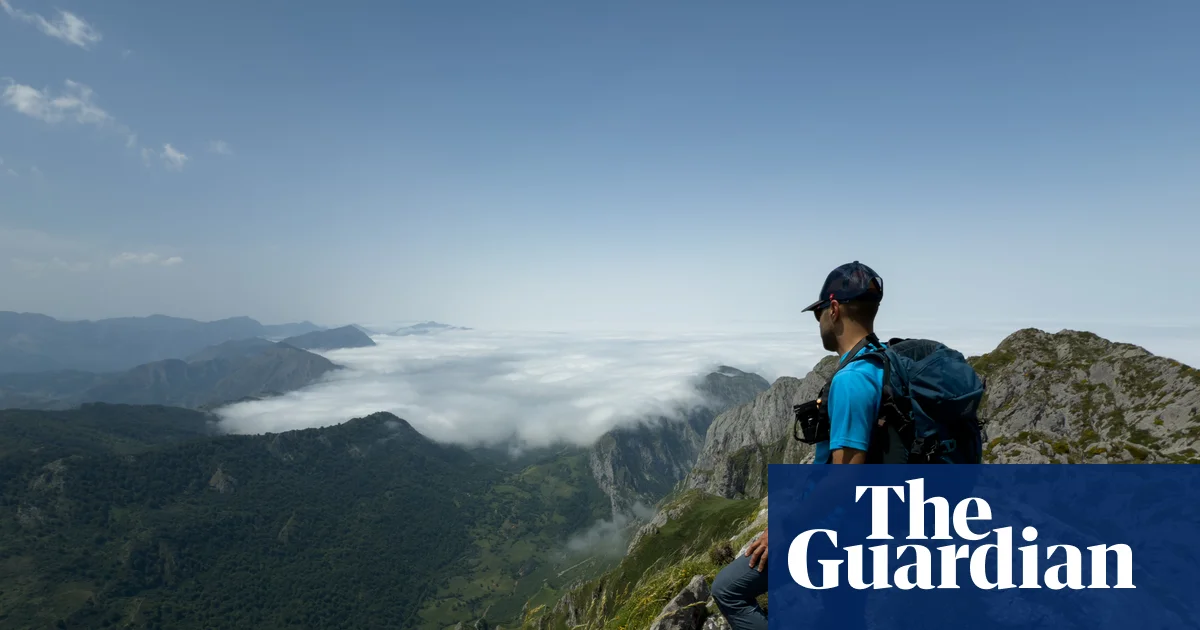
Halfway across the first glacial depression, I leave the footpath to stand on a snow patch, disturbing a spider that runs off across the frozen crystals. A few yards farther along, the mountainside is awash with colour: tiny Alpine flowers alive with bees and crickets in a world surrounded by jagged peaks. A pair of chamois watch from a crag, then clatter off up an almost vertical face. Having stopped walking, I’m cooling down fast and put on a jacket. I am in Spain, I tell myself, during a European heatwave.
When I tear myself away from the wildlife, my hiking group are distant dots on a path that is snaking up a wall of rock. This is the Picos de Europa mountain range in northern Spain, a cluster of peaks rising to more than 2,500m and famed for the steepness of its slopes. I set off in pursuit, catching up with the group as they scramble over a ridge to find an unexpected view: a gun turret from a second world war aircraft carrier that is now a mountain refuge hut. (Cabin Verónica was cut from the USS Pulau in 1961 at a Bilbao breakers’ yard and dragged up here by mule.)
Illustration: Guardian Graphics
The custodian, Jorge, took it on as a project eight years ago and has since made it his summer home, adding solar power and water tanks to the gleaming aluminium dome. “I love it,” he says, grinning while he makes coffee in the tiny kitchen. “Why would I need cities and crowds when I have this?” The panoramas are spectacular. Far below, down the valley, a bearded vulture is soaring, one of a small number successfully reintroduced in 2005. The hut sleeps a maximum of six, too small for our group, but it’s popular with climbers and solo walkers.
This trip seems determined to throw up contradictions and improbabilities. For a start, on the Portsmouth to Bilbao ferry, I was alone on deck at 5am, surrounded by a cold fog so dense that I couldn’t see the waves below the rail. We were motionless, it seemed, in the outer reaches of the cosmos. As I stared down, the intergalactic mist lifted a fraction and three dolphins burst from the swell, reminding me that I was on planet Earth and not a spaceship. This ferry route, and its sister route to Santander, crosses an oceanic canyon 4,000m deep and cetacean sightings are common. The on-board expert, André, tells me he has seen orcas and several whale species, including the rare Cuvier’s beaked whale.
Cabin Verónica is made from the gun turret of a second world war aircraft carrier
The Picos mountains that stand to the west of Bilbao have always had a reputation for the unexpected. In Spanish history, they were a centre for resistance to Roman rule and later the Moors. They have flowers and butterflies not found elsewhere; the chamois is a unique subspecies, and there are bears and wolves too. Beneath the soaring peaks lies another surprise: an underworld network of rivers and giant caverns almost a mile deep.
Our hike across the range started to the north, walking first up to the mountain hut Vegarredonda at 1,410m. There’s a sprinkling of these huts across the Picos, most off-grid and supplied by mule. Expect good conversation, generous food portions and a plastic-covered mattress in what some might call “a snoremitory”. I am saved by the generosity of Arten, one of our group, who hands me silica gel earplugs. They work well, and in the morning I wake to find everybody already gone to breakfast.
Food is a major element of the Picos experience. That morning we hike to a few stone cabins by a lake, Ercina, and come across a handwritten sign advertising homemade cheese. Bruno and Cristina, our guides, get very excited. In a little stone-walled workshop, an old lady is sitting on a rustic milking stool, dressed in a nylon housecoat, waiting for customers.
“My grandfather built this cabin in 1944 when I was three years old,” says Maria. “Everyone would come up here for summer, bringing their animals with them. Now there’s only me.”
The pastures of the Picos mountains
Hung on the walls are her ancestors’ drinking horns and wooden platters; on the shelves are wheels of cheese. The Picos technique is to blend milk from sheep, cows and goats. The results are delicious. “I feared this tradition might die,” Maria says. “But my son is interested, so there is hope it will continue.”
Leaving Maria, and still eating the cheese, we turn up a side valley and ascend steadily, passing boulders that harbour tiny gardens of saxifrage and stonecrop in their hollows. A wallcreeper flits away, one of the rarer birds that live here. Chamois pose on distant ridges, never far from the snow patches. Their world is shrinking, however, as Spain’s heatwaves encroach higher and higher. (I was glad to have travelled by ferry; as a foot passenger I produced less than 10% as much CO2 as flying, according to the Direct Ferries carbon calculator.)
The night is spent in the Refugio Vega de Ario, a hut with the best cooking, and also hosting the Oxford University caving team. After more than 60 years of exploration and several generations of speleologists mapping some of the most extensive cave systems in the world, they tell me they are on the brink of connecting two huge cave networks. I promise to come back and see it – when the stairs are installed.
The next day, we cross one of the few places where you will see a car in the Picos, the village of Poncebos, which is on a fine gorge walk alongside the Rio Cares. From there, we ascend again through flower-strewn meadows and abandoned farmhouses into the clouds. Then, with perfect dramatic timing, the mists part to reveal the climactic wonder of these mountains: the Picu Urriellu, a soaring 2,529m pinnacle of rock under which is one of Europe’s most spectacular mountain huts, the Vega de Urriellu.
This is one of the most popular huts and sleeps 96, with many more camped nearby, but the place remains friendly and sociable. We stand outside with Bruno and Cristina as they point out their favourite climbing routes. Around us are small huddles of climbing groups discussing their plans. The south face is popular with guided groups; the west is a 750m monster.
The Picos are awash with colourful flowers
The glacial depressions, with their spiders and flowers, lie ahead, but this is where I would choose to linger. You would not catch me down a cave, but I’m tempted by what Bruno describes as excellent climbing routes. As the sun goes down, the rock turns orange, giving Urriellu its Spanish name, Naranjo de Bulnes – the Bulnes orange.
Dusk falls, and I stroll up a mountain track for more panoramas, but find the world below the hut all smothered in cloud. I perch on a boulder and, after some time, become aware that I am being watched. A chamois is standing poised on a ledge above, its delicate curving horns silhouetted against the twilight like twin question marks. I watch the last orange glow fade on Urriellu’s summit, then glance back to that ledge, but the chamois has gone.
The trip was provided by KE Adventure Travel; the eight-daytraverse of the Picos starts at £1,295, including all meals, accommodation and guides. Brittany Ferries sails up to twice weekly from Portsmouth to Bilbao and Santander, and from Plymouth to Santander, from £128 for foot passengers in August
This historical overview from the Occasional Digest examines the multifaceted significance of St. Vitus’ Day, which is observed on June 28. The text details the life of Saint Vitus, a third-century Christian martyr executed under Roman rule. It further explains how medieval German celebrations involving dancing eventually led to a specific neurological disorder being named in the saint’s honor. Additionally, the source highlights the day’s military importance, specifically citing the Battle of Kosovo in 1389. This pivotal conflict between Serbian forces and the Ottoman Empire resulted in centuries of imperial dominance in the region. Combined wit …
However on Sunday, in a post on X, formerly Twitter, Spain’s Ministerio del Interior has issued a warning to visitors. The Ministry of the Interior of Spain (Ministerio del Interior) is the executive government department responsible for public safety, law enforcement, national security, civil protection, and the country’s prison system and overseas domestic policy.
It is keen to raise awareness that crime is an issue when on holiday just as it is back in the UK. In its post it said: “You’re away for a few days, but your safety doesn’t go on vacation. Before leaving the car parked:
Remove valuables
Don’t leave documents visible
Choose well-lit and busy areas
Save the vehicle’s location
It added: “Prevention is the best protection.” The warning came as Spain, along with much of the rest of Europe, basks in a heatwave.
Content cannot be displayed without consent
The Ministry, in a separate post, had other advice for people to help them stay safe. It said: “In the forest, every gesture counts.
“Don’t throw away cigarette butts or matches. Don’t make fire outside of authorised areas. Don’t abandon flammable waste.” It added: “With heat and wind, the risk increases. A small oversight can turn into a big fire.”
The Foreign Office in the UK (FO) also has advice for holidaymakers and other visitors to the country. It warned of a number of different types of crime in the country including street and vehicle crime to drink spiking and sexual assaults.
Street crime
The Foreign Office warned: “Be alert to the risk of street crime. Thieves use distraction techniques and often work in teams. Take care of your passports, money and personal belongings, particularly when collecting or checking in luggage at the airport, and while arranging car hire.
“Do not carry all your valuables in one place. Keep a copy of the photo page of your passport somewhere safe.
“Make sure your accommodation has adequate security. Keep all doors and windows locked. If you’re concerned about the security of your accommodation, speak to your travel operator or the property owner.
“The Spanish Police and Civil Guard have a mobile app which offers a number of services, including simple and discreet communication with police forces if you experience or witness a crime – more information can be found on the ALERT COPS webpage.”
Vehicle crime
‘Highway pirates’ target foreign-registered and hire cars, especially those towing caravans, warns the FO. “They may flag you down, claiming there is something wrong with your car or that you have damaged theirs. If you decide to stop to check the condition of a vehicle, stop in a public area with lights, such as a service station. Be wary of anyone offering help.
“When driving, be wary of approaches from people posing as plainclothes police in unmarked cars. In all traffic-related matters, police officers will usually be in uniform. Unmarked police vehicles have a flashing electronic sign on the rear window saying ‘Policía’ or ‘Guardia Civil’. Genuine police will only ask you to show vehicle documents – not to hand over your bag or wallet.”
Attacks and sexual assault
Attacks, including sexual assaults, are rare but do occur, avised the FO. “In an emergency call 112. Avoid splitting up from your friends, do not leave drinks unattended and do not go off with people you do not know. Save the location of your accommodation on your maps app, so it’s easy to find.”
Drink spiking and alcohol
The FO said: “Be alert to the possible use of ‘date rape’ and other drugs including GHB and liquid ecstasy. Buy your own drinks and always keep them in sight to avoid them being spiked.
“Alcohol and drugs can reduce your vigilance, making you less in control. If you drink, know your limit. Drinks served in bars in Spain are often stronger than those in the UK.”
Scams
“Thieves posing as police officers may ask to see your wallet, claiming they need to see it for identification.” it warned. “Genuine police officers will ask to see ID but will not ask for wallets or purses. All police officers, including those in plain clothes, carry official ID.”
Timeshares and holiday clubs
The FO said: “Be cautious if you are planning to buy or sell a timeshare. There are companies who offer false incentives.”
The warning comes as the country has faced hazardous conditions this week
The alert includes a warning for cigarette smokers (stock image)(Image: Getty)
Spain’s Ministerio del Interior has issued a warning to anyone in the country, including visiting tourists, as hot weather bakes the country. This week, the European nation faced unprecedented, record-setting heat.
The country was caught in a severe and hazardous heatwave caused by hot air travelling north from the Sahara Desert. These extreme temperatures broke long-standing weather records and led to widespread red alerts, especially in the northern and central parts of the country. Temperatures soared past 45C in some areas of northern Spain at the beginning of the week.
The northern region of Cantabria broke its previous heat record, hitting an incredible 43.7C in Tama. Bilbao Airport recorded temperatures over 40C on three different days (Sunday, Tuesday, and Wednesday). This is a historic first for the region: reaching this level three times in one year.
On Thursday, June 25, temperatures began to drop, and there was some rain and thunderstorms in parts of the northern and central plains, including Madrid. However, high temperatures are still sticking around.
Places like Andalusia and cities such as Seville and Córdoba are experiencing usual summer highs. Temperatures are rising back up to 37C to 38C as the weekend comes to a close.
Content cannot be displayed without consent
The Ministerio del Interior translates as the Ministry of the Interior (also known as the Home Office or the Ministry of Internal Affairs). This government cabinet department handles domestic policy, public safety, law enforcement, immigration, and civil protection.
Taking to X on Sunday, June 28, the ministry urged people to avoid doing three things for safety reasons. It said: “In the forest, every gesture counts.
“Don’t throw away cigarette butts or matches. Don’t make fire outside of authorised areas. Don’t abandon flammable waste.” It added: “With heat and wind, the risk increases. A small oversight can turn into a big fire.”
Has Spain experienced wildfires this week?
This week, Spain has been hit hard by a serious wave of wildfires after experiencing its first big summer heatwave. The temperatures soared above 45C in the south and reached up to 43C in the north.
These extreme heat levels, along with dry weather and lightning strikes, have led to several devastating fires. One major wildfire erupted between Tamarite de Litera and Alcampell, consuming more than 4,000 hectares of land. It is thought that a harvesting machine started the fire, which resulted in the evacuation of around 240 people from three nearby villages.
Is Spain prone to wildfires?
Spain faces a significant risk of severe wildfires during hot weather, ranking it among the most fire-prone countries in Europe. The mix of intense summer heatwaves, extended periods of drought, and powerful winds results in “tinderbox” conditions that enable fires to start and spread rapidly.
Data from the Ministry for Ecological Transition in Spain reveals that human activity is responsible for the majority of wildfires. More than half of the annual fires in Spain are deliberately set, and a significant portion is due to accidents or negligence, such as mismanaged agricultural burning, cigarette butts that are carelessly thrown away, or barbecues.
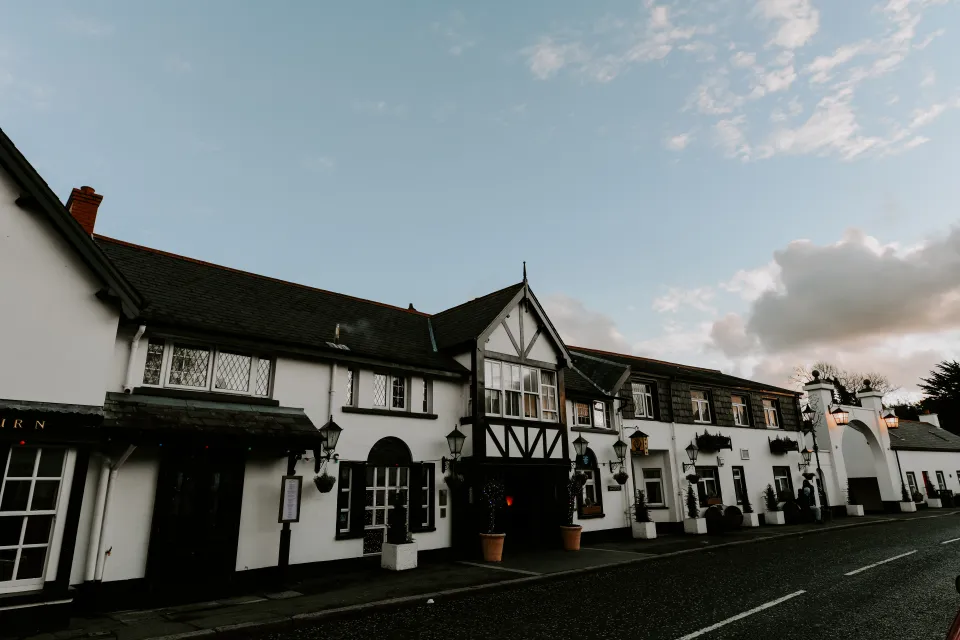
WITH its pretty timber-framed walls and stained-glass windows, even from the outside you can instantly tell The Old Inn is something special.
It’s been welcoming guests since 1614, but that doesn’t mean the hotel in the village of Crawfords-burn, Co Down, is stuck in a time warp.
Sign up for the Travel newsletter
Thank you!
The Old Inn was a pick of Narnia author CS LewisCredit: UnknownThe rooms are as comfy as the pub is historicCredit: Unknown
Inside, it has been transformed into an oasis of modern luxury, and it has proved such a hit since it was bought by the Galgorm hotel group in 2021 that it was recently crowned the AA’s Hotel of the Year for Northern Ireland.
Now, with its stunning Treetop spa, it promises the ultimate romantic retreat – apt, because Narnia author CS Lewis chose it for his honeymoon in July 1958.
We stayed in one of the spacious junior suites, with a super-king bed and a stand-alone copper bath by the ornate bay window.
Antique furnishings maintain the 17th-century character, while the bathrooms are new and luxurious, with a marble sink and a vast rainfall shower.
The attention to detail really makes it stand out from other 4* hotels, with lavish toiletries, fluffy robes and slippers, a GHD hairdryer, and free soft drinks in the fridge as well as a Nespresso coffee machine and minibar.
We spent most of our stay unwinding in the Treetop spa, which is without doubt the star of the show.
Hotel guests get access from noon on the day of check-in until check-out.
Overlooking the Crawfordsburn Country Park and surrounded by greenery, this outdoor haven features a heated hydrotherapy pool, Jacuzzi, sauna and steam room.
Or you can also relax by a wood-fire stove in the cosy conservatory, taking in the forest views below, or indulge in a treatment such as a facial or massage.
But the best part is that you can order cocktails straight to the pool or your lounger.
On a Sunday morning, I was able to sweat out my multiple cocktails in the hotel’s new gym, which also offers various classes, including yoga.
As for food, the hotel’s charming 1614 Bar offers pub grub such as fish and chips and burgers.
For dinner, we headed into The Restaurant to try the a-la-carte menu.
It’s not cheap, but is excellent if you fancy splashing out.
To start, I had the white asparagus with shaved mushrooms, Irish coppa and truffled honey (£15), and for my main I had the monkfish with spring brassicas, mussels and buttermilk (£33) with a great bottle of white wine.
After dinner, we returned to the 1614 Bar for a nightcap or two with live music.
Breakfast is a continental buffet spread and guests can also order a la carte.
The hotel prides itself on its fresh food, so everything from fish to yoghurt at breakfast was local.
We then strolled through the park to Crawfordsburn beach.
A winding path takes you through woods, then the trees clear and you are on to the sweeping, sandy beach looking out over Belfast Lough.
You can see why CS Lewis chose this spot for his honeymoon – with stunning scenery on your doorstep and a warm welcome, it’s couples heaven.
GO: NORTHERN IRELAND
STAYING THERE: Rooms at The Old Inn start from £175 per night.
The wonderful Amalfi coast is like heavenCredit: Getty – ContributorThe elegant town of Ravello with its cobbled streets lined with pottery and linen shops leading off the main squareCredit: Getty
They adorn tea towels, shirts, skirts, dresses, trousers, and bags galore.
Our base on Travelsphere’s eight-day tour of the Amalfi Coast, Pompeii and Capri was the charming, laid-back seaside village of Minori, at the excellent family-run 4* Hotel Villa Romana.
Just three miles and a glorious 15- minute boat ride from Amalfi itself, Minori is quieter and classier, with stylish and affordable restaurants and bars.
Surprisingly for a village of its size, Minori has an 18th-century neoclassical domed cathedral. Surrounded by lemon groves, of course.
One of my highlights was walking the Path of Lemons, which connects Minori to the larger neighbouring village of Maiori.
The trek takes around 90 minutes, with an initial climb up several hundred steps and a similar descent.
But the view of the village and sea is spectacular and worth every straining leg sinew.
The beauty of our schedule is that there is still plenty of free time for you to pursue your own holiday agenda.
You’ll get the chance to indulge at Minori’s sumptuous Sal De Riso patisserie or watch the famed limoncello being made at the Liquorificio Mansi Carlo.
Alternatively, stop by at one of Minori’s beachside bars and watch the tide roll in.
But the best place to see the Amalfi Coast is from the sea and the area is served by efficient, reasonably-priced ferry operators.
It is only from the clear blue waters that you fully appreciate the stunning coastline and its tumble-down towns with pastel-coloured houses perched precariously atop majestic cliffs.
Our first trip was to the historic town of Amalfi itself, dramatically set below those same cliffs.
On arrival at Amalfi, we had the freedom to see the town for ourselves.
The main square and its streets were packed with sightseers.
But climb a few steps up one of the alleyways and you will find peace and quiet and cheaper restaurants.
Amalfi Town and beachCredit: GettyThe undoubted gem of the tour was our visit to Pompeii, destroyed when Mount Vesuvius erupted in 79AD
A lunch of cured meats and seafood, in cool stone surroundings behind a church, cost £21.50 a head with drinks.
By the time we had finished, the crowds had thinned out at Amalfi’s magnificent medieval cathedral, which holds the remains of St Andrew.
But there was no escaping the crowds at Capri, a gorgeous 90-minute boat trip from Minori.
The island has been home to the international jet set for decades and it’s not difficult to see why.
A walk down to the gardens of Capri Town was followed by a look, from outside anyway, at the amazing designer boutique shops.
A glass of fresh orange and lemon juice from a stall was a cheaper alternative to buying a designer Patek Philippe watch — and then it was time to get our minibus to Anacapri.
This village, with views of the Bay of Naples, is much quieter and more affordable than Capri Town.
We got the chairlift up to the highest point of the island, almost 1,800ft above sea level with a view to die for.
There are optional tour trips to the lively lemon-filled town of Sorrento and the gorgeous cliffside village of Positano.
Or you could take the 45-minute ferry from Minori to Salerno, a bustling coastal city where we had a superb fish lunch at Mama Rosa.
The undoubted gem of the tour was our visit to Pompeii, destroyed when Mount Vesuvius erupted in 79AD.
The last agonies of victims frozen in time when they suffocated from poison gases are captured in plaster moulds created from their remains.
Sun man Mike Sullivan with a cool lemonadeCredit: SuppliedWalking through stunning lemon orchardsCredit: Getty
It is a powerful experience.
And yet the humanity of this once prosperous and thriving coastal Roman city, discovered in 1748, shines through from the haunting remains.
The municipal buildings, public baths, grand villas, lead pipe water system and amphitheatres paint a picture of an advanced society on which much of our own world today is based.
Our last scheduled trip was to the gorgeous medieval mountainside village of Ravello, with its cobbled streets lined with pottery and linen shops leading off the main square and 11th-century cathedral.
The journey up to the 1,200ft-high village involves navigating hairpin bends with sheer drops below.
It was not a drive I would have relished but in the expert hands of our driver I felt safer than being on the M25.
A delicious lunch followed at the Il Rifugio family-run restaurant in Tramonti, a 15-minute drive from Ravello up into the Lattari “Milk” Mountains — so-named because of the goats which graze there.
After taking in the spectacular view of the sea, and sampling local wines, we were then driven to a small local vineyard to see how it was produced.
All too soon it was time for the journey home from Naples Airport, with its abundance of lemon gifts and souvenirs.
Fortunately, you don’t get a hangover from vitamin C.
GO: AMALFI COAST
GETTING / STAYING THERE: Travelsphere’s eight-day escorted tour of the Amalfi Coast, Pompeii and Capri starts in Naples and visits Amalfi, Capri, Minori, Sorrento, Pompeii, Positano, Ravello and the Amalfi Hills.
Seven nights is from £1,699pp, including return flights from London, overseas transfers, seven nights’ half-board in a 4* hotel, select meals and a welcome drink as well as Travelsphere holiday director and specialist local guide.
DREAMING of a luxurious 5-star all-inclusive holiday, but not wanting to break the bank?
It turns out you don’t need to fork out on Ibiza, Mykonos or Saint Tropez to lounge at a glamorous beach club or enjoy a five-star stay this year.
You can bag a week-long all-inclusive stay at the Carine Hotel Kumbor for £439ppCredit: Trip AdvisorRooms at the adults-only Caves Beach Resort in Hurghada are themed with a luxurious feelCredit: Trip Advisor
Luckily, there are some lesser-known European spots where you can live the high life on holiday for much less.
We’re talking glittering marinas, trendy rooftop bars, boat trips on clear water bays and beaches that look like the world’s most expensive hotspots – but for a fraction of the price.
With cocktails under £3 and shockingly affordable five-star stays, here are the holiday spots where your money goes the furthest.
Durres, Albania
You can book an all-inclusive stay at the Royal G Max hotel in Durres, Albania for £429ppCredit: Trip Advisor
If you want a holiday that feels like five-star luxury without the price tags of Ibiza or Mykonos, Durres feels like the ultimate cheat code.
This stunning stretch of the Adriatic coast has quickly transformed into a high-end hotspot packed with glam beachfront clubs and bars.
Head to Sunset Bar for an outdoor drinking spot that lets the views do all the talking – and where cocktails cost as little as 300 lek (£2.75).
Here, comfy striped sofas look out to a stretch of glimmering sea on Albania‘s Adriatic coast that has fantastic sunsets.
Another affordable but luxurious spot is Illyrian Garden, a 360° rooftop bar with a secret garden-themed terrace.
Cocktails here start at 500 lek, which works out to roughly £4.60.
It’s also worth visiting this spot in the daytime to sip a strong local coffee and soak up the rays.
Plus, the hotels in Durres offer a luxurious, five-star feel for a fraction of the price. We found a deal for an all-inclusive week away that works out to £62pp per night.
The deal
If you click on a link in this box, we will earn affiliate revenue
The 5-star Royal G Max hotel has a private stretch of soft sand beach, a large spa with a sauna and hot tub, plus several swimming pools.
If you like a sun lounger holiday where you can lazily drift between the pool and the sea in a glamorous setting, this is it.
Book a seven-night, all-inclusive stay at the five-star Royal G Max from £429pp
Bag a seven-night all-inclusive stay at the 5* Solivia Hotel in Antalya for £490ppCredit: Trip Advisor
For a taste of the high life that won’t drain your savings, Turkey’s sun-drenched Turquoise Coast offers spectacular value.
There are plenty of holiday spots to pick from along the Turkish coast, but there are two particularly affordable areas.
Antalya is the king of the mega resort – here, ultra all-inclusive packages mean round-the-clock pampering, top-tier dining, and huge pool complexes for low prices.
It’s a fantastic area for families, with the Land of Legends theme park resort on your doorstep in Belek, as well as unique attractions like the Antalya Toy Museum and shallow water beaches like Lara Beach.
If you prefer a chic escape with glitzy bars and a vibrant marina, head to the Aegean side to Bodrum.
Bodrum delivers a Saint Tropez feel on a budget, with a waterfront lined with glamorous bars and lounges facing yachts.
It’s hard to go wrong whichever spot you choose on the Turquoise Coast. A budget-friendly meal out averages at £5.88 in Bodrum and £6.20 in Antalya, according to Wise.
The deal
If you click on a link in this box, we will earn affiliate revenue
The Solivia Hotel is a sprawling five-star property in Antalya, with a Blue Flag private beach, action-packed entertainment and four swimming pools (including a dedicated kids pool and splash zone).
The food and drink is all inclusive done right. There’s an extensive buffet in the main restaurant, plus a beach snack bar, pool bar, unlimited ice cream hour and Turkish coffee on tap.
Book a seven-night, all-inclusive stay at the five-star Solivia Hotel from £490pp
The adults-only Caves Beach Resort in Hurghada has unique themed rooms and is steps from the beachCredit: Trip Advisor
Red Sea hotspot Hurghada is a great-value alternative to further flung destinations, offering year-round sunshine and affordable all-inclusive hotels.
Away from the resorts, you can snorkel world-famous pristine reefs, or set sail to the sandy Giftun Islands and go dolphin watching on a boat trip that can cost as little as £20.
Considering you have endless soft sand beaches and exciting water activities on your doorstep, prices here are surprisingly cheap.
According to Wise, a meal out at an inexpensive restaurant averages at £2.82, and a beer can cost you as little as 83p.
Plus there’s plenty of attractions here for families, including waterparks like Jungle Aqua Park and Makadi Water World, as well as activities like parasailing and dune buggies on sites such as GetYourGuide.
The deal
If you click on a link in this box, we will earn affiliate revenue
The adults-only, five-star Caves Beach Resort is a truly unique place to stay in sunny Hurghada.
Cave-themed rooms will keep you cool, with textured stone walls and leopard print bedding. Outside, take a dip in one of three pools and watch the waterfalls rush and palms sway.
You’re also just steps from the beach, where there’s water sports and snorkelling available in the clear, sparkling water of the Red Sea.
Book a seven-night, all-inclusive stay at the Caves Beach Resort, Hurghada from £549pp
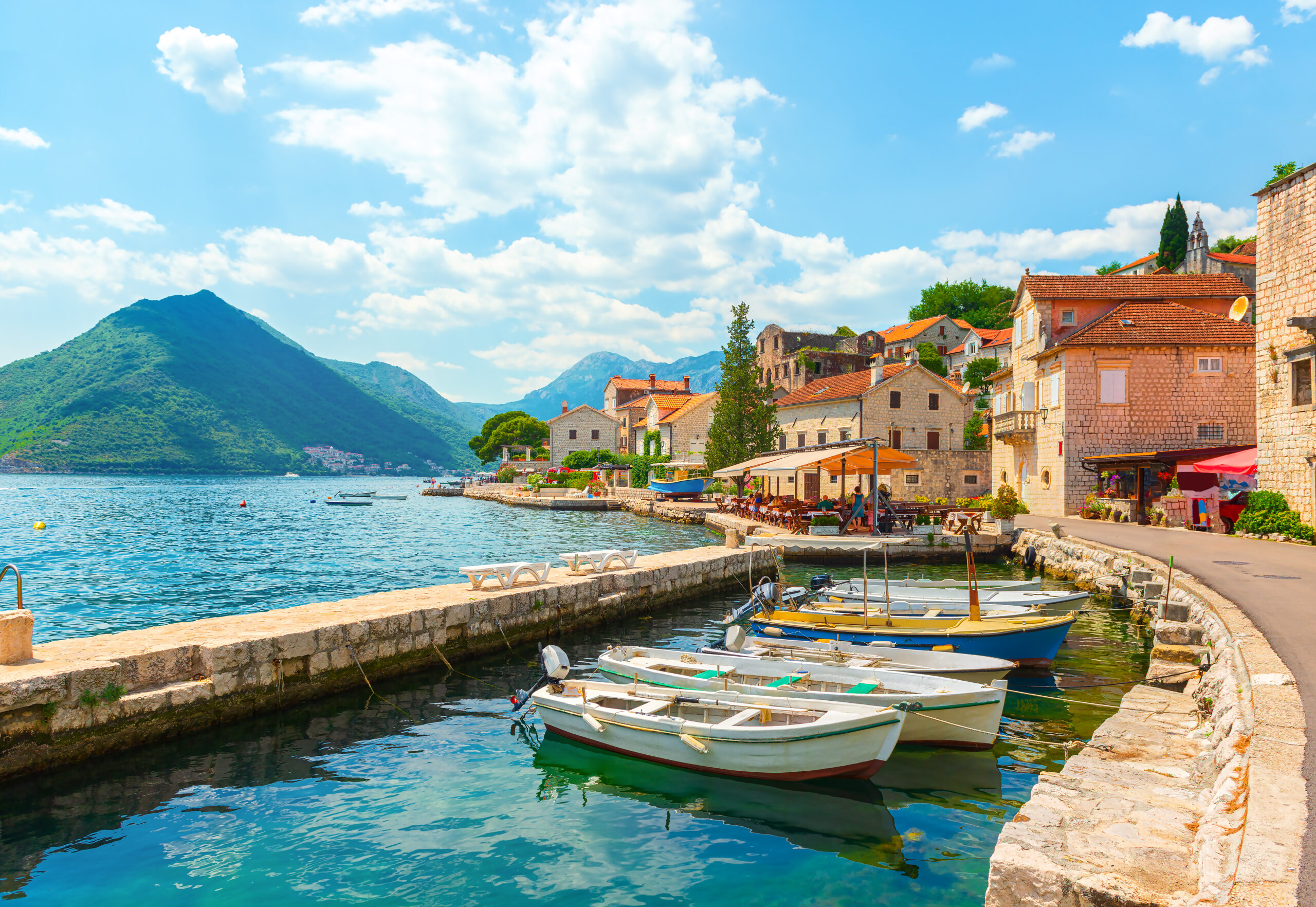
Stroll through a cobbled medieval town with a stunning mountain backdrop in Perast at the Bay of KotorCredit: Getty
For jaw-dropping landscapes, reliable sunshine and luxurious hotels for cheap, try a trip to the Bay of Kotor in Montenegro.
The scenery here has the dramatic feel of the Norwegian fjords, mixed with the sunshine and glamour of the Italian lakes.
The crystal-clear bay is framed by towering limestone cliffs, backed by cobblestone medieval towns such as Kotor and Perast – perfect for an afternoon of exploring.
Montenegro itself remains incredibly wallet-friendly compared to other European spots with dramatic landscapes, such as Switzerland.
Head to the Old Town Pub Kotor for €5 (£4.31) cocktails, and go out for dinner guilt-free with your pick of budget-friendly restaurants. A meal out can cost you just £8.63 per person, according to Wise.
You can easily spend your days here cruising on water taxis for less than a tenner or simply hiking and exploring beautiful coastal trails completely for free.
Plus, you can absolutely book yourself into a super sleek all-inclusive hotel on a budget.
The deal
If you click on a link in this box, we will earn affiliate revenue
The stylish Carine Hotel Kumbor sits close to the hotspots of Kotor Bay, Herceg Novi and the Portonovi Marina, leaving you perfectly positioned to explore the local area.
This hotel has its own sprawling spa and even its own casino, as well as beach club access for all guests.
This hotel is also ideal for families, with a kids club for ages 4 – 12 and beach toys and inflatables available for hire.
Book a seven-night, all-inclusive stay at the Carine Hotel Kumbor from £439pp
The Soul Beach Bar offers glamorous daybeds and loungers from around £4pp per dayCredit: bar.bg
Sveti Vlas sits on Bulgaria‘s Black Sea coast, where the green slopes of the Balkan Mountains sweep down to the water.
This sophisticated pocket of Bulgaria is the classy, tranquil sibling to the neighbouring party hub of Sunny Beach.
Explore the buzz of the Marina Dinevi, where you can stroll past yachts, dine at waterfront restaurants, and lounge at trendy beach clubs that mimic the upscale vibes of Marbella or Ibiza.
Soul Beach Bar offers huge, pristine white daybeds on the sand with fresh fruit cocktails and glowing lanterns.
Renting a sunbed here costs a super-affordable 10 – 15 BGN (around £4 – £6) per person per day.
Because your money goes incredibly far here, you can tuck into fresh seafood platters, sip cocktails on plush daybeds and grab those Instagram pictures guilt-free.
We found a deal for a week-long all-inclusive stay in a five-star hotel in Sveti Vlas for £57 per person per night.
The deal
If you click on a link in this box, we will earn affiliate revenue
The Grand Hotel Sveti Vlas resort in Bulgaria overlooks the beautiful Black Sea, just a stone’s throw from the beach.
The site boasts three pools, a large spa and fitness centre, three restaurants and a poolside bar serving delicious iced cocktails.
Sveti Vlas beach is a five-minute walk away, while the buzz of Sunny Beach can be reached with a five-minute taxi ride.
Plus, sprawling waterpark Action Aquapark is a 10-minute drive away, perfect for little ones who love to make a splash.
Book a seven-night, all-inclusive stay at the five-star Grand Hotel Sveti Vlas from £399pp
The station is located next to the famous Cambridge Biomedical Campus and boasts four platforms that will see up to nine trains per hour pass through.
The site also offers over 1,000 bicycle parking spots, ticket vending machines and lifts that provide step-free platform access.
The arrival of the new station will “deliver better transport options and connectivity for 1.8 million passengers”.
It’s also hoped the transport boost will “grow and level up the economy” by increasing employment opportunities.
Paul Bristow, Mayor of Cambridgeshire and Peterborough, said: “With up to nine trains per hour and all passing services stopping, Cambridge South will make a real difference from day one.
“Cambridge South will bring London, Stansted Airport and international markets closer, supporting the investment and skilled people we need, and creating opportunities locally too.”
Looking nervously to my right, I see a small avalanche careering down the side of Mont Blanc.
It’s a not-so-subtle reminder that the ropes around our waists are the only things that might offer protection if the glacier beneath our feet suddenly shifts.
But despite the snow on the ground, I’m soon stripping off my layers because the temperatures can reach balmy heights in this gorgeous Italian Alpine region during summer.
To arrive here, I hopped on the Skyway Monte Bianco cable car which whizzed me 3,466 metres up to the glacier from the village of Courmayeur in ten minutes — with a stop at 2,173 metres to switch cabs.
The cable car costs £50 in advance to go to the top — but this does include entrance to a variety of attractions including an Alpine garden, kids’ play area and Europe’s highest library.
As well as a chance to refuel in its restaurants, the middle Skyway station offers another treat — a cave where they mature a vintage wine grown here.
And even if you’re not drinking wine, you’ll be able to drink in the amazing views of Italy’s Aosta Valley.
Skyway Monte Bianco slowly rotates so you don’t miss any of the incredible scenery.
Back in the sun-drenched valleys, there’s not a speck of snow in sight — but we still eat for winter, piling our plates with gourmet raclette and classic Italian pastas.
The region’s restaurant highlights include Cadran Solaire, whose wild-boar ragu is the stuff foodie dreams are made of.
But if your stomach is firmly in summer mode, you can tuck into lighter home-cooked delights at La Terrazza, where the owner has brought southern Italian delicacies to the Alps.
Classics like carbonara are on offer, as well as starters of anchovies with mozzarella.
Live the high life on the Skyway Monte BiancoCredit: GettyEnjoy stunning mountain viewsCredit: Getty
If you’re worried about all those calories, the slopes of Courmayeur will be your saviour.
The mountains become a walkers’ paradise in summer, with unbelievable trails from the two valleys either side.
One morning, I headed to Val Ferret, which can be accessed by bike, a free bus or car.
It’s flanked by the Mont Blanc Massif, Mont Dolent and Tour Noir.
From here you can see the gigantic Brenva Glacier — the second-longest glacier in Italy.
The valley can be enjoyed on foot, or on horseback for around €30 (£25) an hour.
But for those who prefer something more challenging, the ski area Checrouit offers uphill walks where you climb 300 metres in just an hour.
Thank goodness for the heated pool and sauna back at the Gran Baita.
I’m not sure how my limbs would have recovered without them.
GO: COURMAYEUR
GETTING THERE: easyJet flies to Geneva from £36.49 or Turin from £40.99.
A budget-friendly cabin bag from Home Bargains is available to buy right now while stocks last
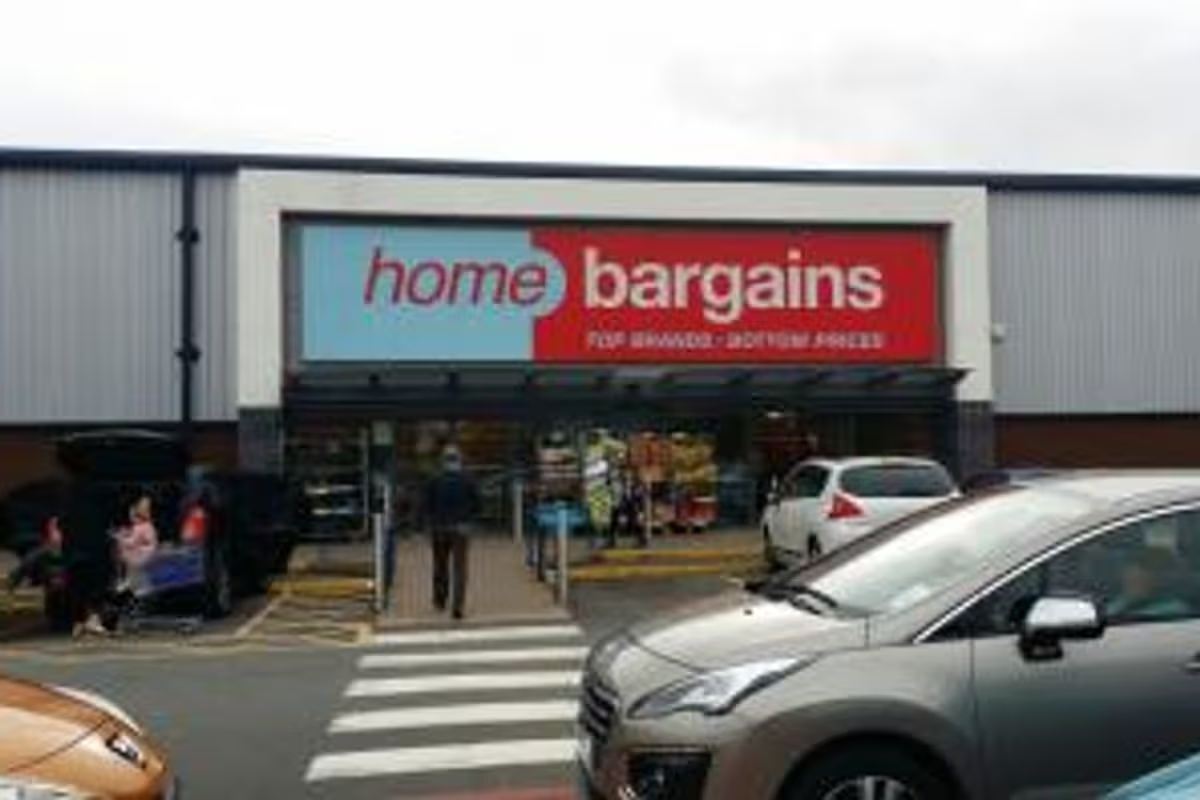
Home Bargains is selling a budget-friendly cabin bag(Image: Home Bargains)
A “versatile” cabin bag described as a “fantastic size” has landed on shelves at Home Bargains, and it could take the hassle out of getting ready for your next trip. The wallet-friendly purchase is designed to provide ample packing room while remaining compatible with a number of airlines operating throughout the UK.
The popular high street retailer is widely recognised for its extensive range of homeware and furnishings, but it has also been steadily growing its selection of budget travel accessories. Step forward the Salisburys Under Seat Bag, which will set you back just £9.99.
Describing the item, Home Bargains said: “Meet the Salisburys Under Seat Bag – your perfect travel companion! With its spacious zipped compartments and sleek design, it’s ideal for keeping your essentials close at hand while you jet off on your next adventure.
“Salisburys presents its broadest line-up of tried and tested luggage solutions with contemporary features to help the modern tourist navigate the hurdles of twenty-first century travel.
“Salisbury Under Seat Bags solve modern travel issues of the check-in case. A fantastic size bag that is versatile for the needs of your modern travel. Large open zipped storage compartment with small zip side pouch.”
Coming in four colours — black, green, light pink and purple — the bag boasts a rectangular design, complete with two carry handles at the top and an adjustable shoulder strap on each side. It comes with a zip fastening along the top, a padded exterior featuring stitched horizontal pockets at the front, plus several zip compartments throughout.
With dimensions of 40cm x 20cm x 25cm, the bag falls within the free under-seat cabin baggage allowances offered by a number of major airlines. It is compatible with carriers including Ryanair, and also fits comfortably within the larger free personal item allowances provided by the likes of easyJet, Jet2, TUI and British Airways.
Holidaymakers are nonetheless urged to double-check their airline’s most up-to-date baggage policy prior to travelling, as regulations can differ depending on ticket type and route. Those keen to find out more are encouraged to head over to the Home Bargains website.
The bag is available both in-store and online, with Home Bargains offering standard home delivery across the UK mainland for £3.95, and free delivery on orders over £100. Larger furniture pieces carry a £10 delivery charge, and standard parcels typically land within four working days.
A night on the beers could start in a jail cell in this unique pub, but it’s just one of the unusual buildings that has seen new life after being turned into a ‘Spoons – here’s a roundup of some unique places you can enjoy Curry Club or just a quiet pint
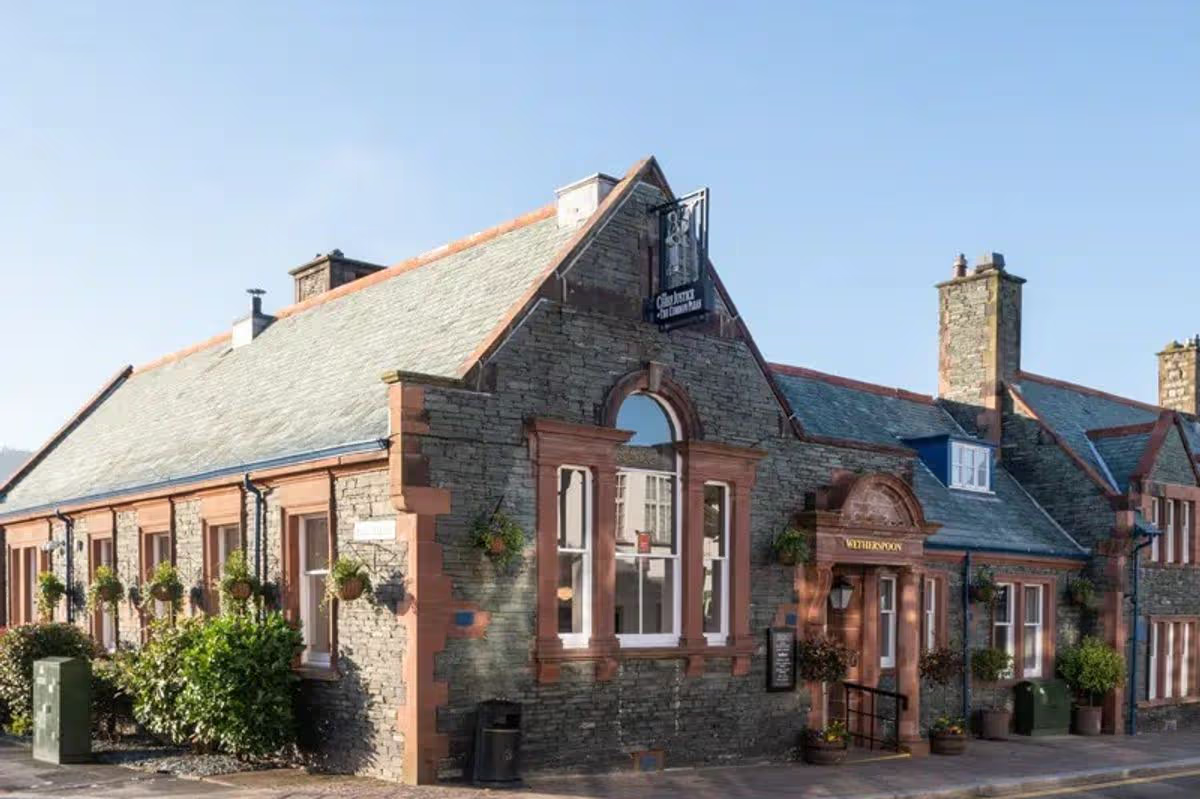
This Lake District pub is a unique place for a pint(Image: J D Wetherspoon plc)
Love or hate Wetherspoons, you have to admit that the giant pub chain has a knack for turning some unique venues into places to grab a pint and enjoy a cheap lunch.
Across the UK, many abandoned buildings are being turned into drinking venues, and while the settings are unique, all the places have the same classic ‘Spoons menu and deals, so you know what you’re getting when you visit.
Here are some of the weirdest venues snapped up by Wetherspoons, from an old bank where you can sit in the vault, to a dramatic opera house that has kept its opulent vibes for a classy start to your night on the town.
1. The Chief Justice of the Common Pleas – a courthouse with jail cells
Built around 1901 in the Lake District town of Keswick, The Chief Justice of the Common Pleas was originally a magistrates’ court and a police station, where unlucky criminals would often be caught and thrown in one of its cells for the night before trial. No doubt many a drinker ended up here after a few too many beers.
Nowadays, the sturdy brick cells have been turned into booths where you can enjoy a drink with friends, and while there’s a much cheerier atmosphere, you can still see the remains of the building’s old life. There are heavy metal doors with locks and high windows covered with bars that once kept people securely inside. However, punters are free to roam outside for a drink in the beer garden, surrounded by the classic Lake District stone buildings of this charming market town.
2. The Rawson Spring – former swimming pool
Kids who grew up in the 70s and 80s around Sheffield may well have taken their first dip in the former Hillsborough Baths, which are now a ‘Spoons called The Rawson Spring. These vast council-run baths opened in 1926 and closed in 1991, hosting many decades of swimming lessons and summer fun.
The cavernous space has since been turned into a giant Wetherspoons, and many of the original features may still be recognised by eagle-eyed former customers. The balcony around the top where spectators once stood is still intact, and you can still see the old poolside changing rooms where tables are now set up.
3. Opera House
If you’re looking for a classy and cultural setting in which to enjoy your chicken basket, then head to the Opera House in Tunbridge Wells. The name pretty much sums it up. This ornate Grade II listed building was designed by famous architect John Priestley Briggs and completed in 1902, becoming a bingo hall in the 60s before Wetherspoons snapped it up in 1996.
Its red interiors with gold accents and chandeliers still make it feel much like a space for a grand performance, and occasionally the local opera group will put on a show worthy of this beautifully preserved building.
4. The Counting House – former bank with vault
Wetherspoon has converted plenty of old banks over the years, but one of the most notable is The Counting House in Glasgow, where you can drink inside a former vault.
Once a major branch of the Bank of Scotland, this Italian Renaissance-style building was constructed between 1867 and 1870, with a high domed ceiling, marble fireplaces, Corinthian columns, and stone statues. Nowadays, the main bar sits under the dome, and punters can also sit behind bars in the old vault. Although luckily, with Wetherspoons prices, you won’t need to rob a bank to get a round in.
5. Piccadilly Hall – former amusement park loved by 90s kids
If you were a 90s kid on a day out to the capital, odds were you’d beg your parents to take you to London Trocadero. This iconic building set at 30 Shaftesbury Avenue was once the ultimate indoor amusement park, with several floors of arcade machines and even an indoor drop ride at its centre. It’s perhaps best remembered as the home of SegaWorld, which was reached by a giant rocket escalator.
When Trocadero closed, parts of it became a pod hotel, and now there are plans to turn some of the building into one of London’s largest ‘Spoons in the heart of Theatreland. Reportedly set to open in late 2026, Piccadilly Hall will span over 3,600 square feet, offer a massive 280 covers, and open from 7am until midnight, seven days a week.
Have a story you want to share? Email us at webtravel@reachplc.com
Millions of Brits are due to pack up the budgie smugglers and inflatable doughnuts and head abroad – but there are plenty of sneaky charges and questionable practices that can easily ruin a holiday
Don’t get caught out this summer(Image: encrier via Getty Images)
Are you due to travel abroad for a holiday in the coming months? You’re not alone.
Despite dire warnings of cancelled flights, raising prices and stifling heatwaves, millions of Brits are due to pack up the budgie smugglers and inflatable doughnuts and head abroad.
However, there are lots of extra charges, shoddy practices and other travel traumas that can catch out the unwary traveller. So here’s my guide to some of the holiday horrors that you might not be aware of, so you can get away without a care in the world.
Don’t get caught out by a non-compliant cabin bag
So you’re travelling with just a cabin bag, but it’s looking a bit overstuffed. Beware…
Airlines all have specific rules around the size of your cabin bag (the bigger one) and your hand luggage (the smaller one). Despite what it may say on your suitcase, there is no definitive size for cabin bags, though as a general rule the standard is 56 x 45 x 25cm for the cabin bag and 40cm x 30cm x 15cm for an under-seat (hand)bag. There are also weight restrictions too, with most cabin bags limited to a maximum of 7kg to 10kg.
Standard sizes are all well and good, but airlines can set their own, more restrictive rules around the size of both types of carry-on luggage. So before you travel, it’s vital that you understand their rules – and the consequences of not meeting them.
You’ll need to measure the height, depth and width of your carry-on bags. Missing off the wheels when you check the height is one of the more common mistakes.
But the biggie is over-stuffed bags. Having a bag that meets the criteria when empty doesn’t mean it does when you’ve jammed it full of holiday items. Remember that the bag must fit in to that metal box at the boarding gates if you want to get on your flight without paying extra.
Cheeky add-on charges on your flights
Chances are you’ve already booked your luggage costs as part of your flight booking. But make sure you pack your bags a few days before you travel so you know if you need to add on a hold bag, or are at risk of being caught out by those cabin bag rules.
The closer you get to travel, the higher the price you pay for your bags. So if you’ve not paid for your luggage yet, do it now.
So how much extra will you pay for essential add-on charges? By my calculations, the average prices hover around:
£40 to £50 if you want to take a 23kg hold bag one way.
£30 to £50 for an overhead cabin bag (this has almost doubled since last year – it might be cheaper to share a hold bag for two people).
£6 to £25 for the most basic seat reservation
That’s £76 to £125 each way or £152 to £250 for a return. However, you’ll pay more the closer you are to your flight date.
In addition, watch out for charges to book a specific seat. I was charged over £320 for two return flight seat reservations alone through British Airways recently, just so I could sit with my partner! For shorter haul, the seat prices aren’t as high, but are still outrageous.
In fact, Ryanair has U-turned on charging £8 for families to sit with kids after the the Competition and Markets Authority (CMA) announced an investigation.
You can usually book a specific seat 24 to 48 hours before check in opens. But watch out! There’s usually a massive rush to book and you may miss out. I tested the BA website after I’d paid for my shocking seat prices and the website and app went down on both occasions when check in opened.
Apartment traps and questionable locations
Using online travel marketplaces and apartment rental websites can be a great way to find a fabulous place to stay for your big holiday. But you do have to be a bit cautious about what’s on offer and you’ll need to check to see if the places you like are as good as they seem.
You may already be aware of the warnings about ‘tickers’ – those on-screen alerts that say there are only two rooms left in the hotel, or things are ‘booking fast’. Despite numerous warnings and fines, the industry is still finding sneaky ways to panic us in to buying without checking things thoroughly.
But there are other things to watch out for. Many websites offer hotels and aparthotels alongside private lets. There’s nothing wrong with a private let in theory, but with a hotel, you can complain to the reception if things aren’t as advertised, whereas a private let might limit your options if the host is a bit rubbish.
Check photos thoroughly to see if the advertised facilities are all there, ask questions before booking and look at the reviews – focus on recent ones. Watch out for things like extra bedrooms that turn out to be a sofa bed in the living room. I always look for a personal handover and return of keys too as this is a guide to how good your host is.
The latest thing to watch out for is the location of the property. Many sites list properties as being ‘500 metres from the centre’.
Yet, some of the sites I checked don’t specify which centre. You may find that you’re not 500 meters from the centre of Barcelona, but 500 meters from the centre of a suburb nearby. Check out a map online so you know where the main tourist areas are for your destination and cross reference with the details on the booking website.
Martyn James is a leading consumer rights campaigner, TV and radio broadcaster and journalist