Weekly insights and analysis on the latest developments in military technology, strategy, and foreign policy.
A camera mounted on the wingtip of a Ukrainian Air Force Su-25 Frogfoot close air support jet recorded the dramatic demise of the aircraft, after it was reportedly struck by a Russian long-range air-to-air missile. This is not the first time in the Ukrainian conflict that we’ve seen the destruction of a combat jet at such close quarters. However, with the death of the pilot confirmed by Ukrainian authorities, the footage is a sobering reminder of the huge risks faced by aircrew in some of the most lethal airspace in history.
The loss of a Ukrainian Su-25. The aircraft was hit by an R-37 missile; the responsibility likely lies with either a MiG-31BM or a Su-35S fighter, as these are the types that typically patrol with such long-range missiles. The pilot lost his life during the action. Blue skies to… pic.twitter.com/lNXZPuzHXS
The footage in question was apparently captured by a GoPro or similar camera mounted under the starboard wing of the Su-25, which was flying straight and level when engaged. The first indication that the Frogfoot has been hit is a flash and a shower of sparks, and the suggestion that the cockpit canopy may have been partly torn away. Then, one of its external fuel tanks is seen breaking away. The aircraft starts to cartwheel through the sky, its fuselage clearly ripped open, evidenced by the exposed main landing gear. The wing-mounted camera continues to record the plane breaking up, including the forward fuselage and cockpit, now separated from the fuselage, which is burning fiercely. The wing spirals to the ground, with the sequence ending with a black column of smoke in the near distance.
A bright flash is the first sign that the jet has been struck. via XA shower of sparks is visible in this screencap, which also suggests that the cockpit canopy has been partially torn away by the impact. via X
There is less than 20 seconds from the first signs of impact to the wing lying on the ground, motionless, and an indication of just how quickly the pilot’s fate was sealed. Provided they weren’t killed or incapacitated in the initial impact, there was very little time to activate his Zvezda K-36 ejection seat, if that was even an option, given the catastrophic damage.
The still-retracted main landing gear is visible in this capture. via XThe front fuselage section tumbles away, as seen at bottom center in this view. via X
The specific Su-25 carried the tactical number ‘21 Blue.’ It was reportedly at the controls of this jet that Ukrainian Air Force pilot Stanislav Rykov, from the 299th Tactical Aviation Brigade, was killed during a sortie on February 7, 2024. Rykov was described as one of the more experienced ground-attack pilots in the force, with 385 combat sorties to his name.
Soon after his death, fellow Ukrainian Air Force pilot Rostyslav Lazarenko posted on Facebook. “My heart was ripped out yesterday.” He added that Rykov “was the best pilot and commander I knew.”
Ukrainian Air Force pilot Stanislav Rykov in his jet. Ukrainian Air Force
The exact whereabouts of Rykov’s loss were not reported by the Ukrainian side, although a Russian Ministry of Defense briefing stated that a Ukrainian Su-25 was destroyed on the same date, close to the settlement of Novotroitske, in the Donetsk region of eastern Ukraine.
Exactly why the video only began to circulate in public now is not clear.
Multiple unconfirmed accounts suggest that the weapon responsible for bringing the Su-25 down was an R-37M, a long-range air-to-air missile with the Western codename AA-13 Axehead. The missile is mainly used by Su-35S Flanker multirole fighters and MiG-31BM Foxhound interceptors.
A Su-35S fires an R-37M missile. Russian Ministry of Defense screencap Russian Ministry of Defense
With a range of 124 miles, it flies to the target on a lofted trajectory, controlled by an inertial navigation system with mid-course radio correction, and uses an active radar seeker for its terminal phase attack. It has been a key threat to the Ukrainian Air Force since the start of the full-scale invasion.
Speaking to TWZ before his death in a 2023 flying accident, Ukrainian MiG-29 pilot Andrii “Juice” Pilshchykov said that the R-37M, typically fired from within Russian airspace, was “limiting our capabilities to conduct our missions. Of course, if you’re maneuvering, we are not able to provide an airstrike or something else, so the game is still very, very, very tough in the air and very, very risky. If you’re not aware of the launch of a missile, you’re dead.”
Once again, we don’t know for sure that an R-37M was involved in this incident, but it’s certainly a strong possibility. On the other hand, there is no shortage of other Russian air-to-air missiles and ground-based air defense systems that present a very serious hazard to Ukrainian tactical aviation.
The Su-25 is particularly vulnerable due to the high-risk envelope in which it operates and its performance. This is reflected in the documented losses of 22 examples in Ukrainian hands. That figure is almost certainly higher since it only comprises losses that can be confirmed visually.
Soon after the start of the conflict, Ukrainian Su-25s adopted loft tactics to add extra range to their unguided rockets. By the summer of 2024, stockpiles of unguided rockets were reportedly exhausted, but adding the French-made Hammer rocket-assisted bomb has provided much greater standoff reach and a much harder-hitting weapon specifically adapted for low-altitude launch profiles.
A Ukrainian Su-25 launches a French-supplied Hammer rocket-boosted precision-guided munition. Ukrainian Air Force screencap
Since the full-scale invasion began, the Su-25 has been heavily utilized by both sides. Confirmed Russian Su-25 losses amount to 41 — the highest for any fixed-wing tactical type.
People look at the tail section of a Russian Su-25SM near the military museum in Kyiv. The aircraft was shot down by the Ukrainian military on March 2, 2022, in the Kyiv region. Photo by Sergei Chuzavkov/SOPA Images/LightRocket via Getty Images SOPA Images
At least one Russian Su-25 loss has also been filmed from on board, in this case, in dramatic headcam footage from the pilot, who survived. You can see that video below and read more about it here.
Катапультирование из Су-25 глазами лётчика.
While videos like these might look like something from a combat flight sim, they are all too real. This latest one to be released reflects the brutal realities of life — and death — for tactical aviation pilots over and around the frontlines of Ukraine.
Olivia Attwood has broken her silence on her marriage splitCredit: SplashOlivia shared this post on her Instagram StoriesOlivia said she had been crying herself to sleep for some timeCredit: Rex
The TV star took to Instagram on Saturday to share her first post about her marriage breakdown.
Alongside a picture of boxes in her new apartment, she wrote: “I keep opening Instagram to post but I don’t know what to say or do? lol.
“Vulnerability is not my bag!!!! Especially on social media, it feels very much like bleeding in shark infested waters.
“I cry myself to sleep then business as normal when the alarm goes off at 5am and it has been like that for a long time.
Their split comes just months after the couple weathered a “really bad summer”.
The couple tied the knot in 2023 after first dating before her 2017 stint on Love IslandCredit: ITVThe couple split because of a ‘breach of trust’ on Bradley’s sideCredit: Gary Stone
The Milano-Cortina Winter Olympics open on Monday but one rapper Ghali’s inclusion draws criticism in his native Italy.
Published On 31 Jan 202631 Jan 2026
Share
The inclusion of Italian rapper Ghali in the cast of performers at the opening ceremony of the Milano Cortina 2026 Winter Olympics has led to a dispute in Italy.
The artist, born in Milan to Tunisian parents, has been criticised in Italy because of his comments on Israel’s genocidal war on Gaza.
Recommended Stories
list of 4 itemsend of list
Al Jazeera Sport takes a look at the latest example of sport and politics colliding and why this case has hit the headlines.
Who is criticising Ghali’s inclusion at the Winter Olympics?
Members of Italy’s right-wing League party, part of Prime Minister Giorgia Meloni’s government, have criticised the choice of Ghali to perform at the event in the San Siro stadium on February 6.
What is Ghali criticised for saying about Israel?
Ghali was at the centre of a political spat two years ago during the popular Sanremo song contest, when he called for a “stop to the genocide” in reference to Israel’s genocidal war on Gaza.
A League party source called Ghali a “pro-Palestinian fanatic” who hated Israel and the centre-right, in comments to the Italian media.
Is Ghali’s Winter Olympics opening ceremony role set to be controversial?
Sport Minister Andrea Abodi said he did not expect Ghali to use the Olympic stage to make a political point.
“I am not embarrassed to disagree with Ghali’s views and the messages he has sent, but I believe that a country must be able to absorb the impact of an artist who has expressed an opinion that we do not share, which will not be expressed on that stage,” he said.
What other names will be alongside Ghali to open the Milano Cortino Games?
Ghali, who has not commented on the dispute, is likely to appeal to a younger audience more than other performers at the opening ceremony, who will include tenor Andrea Bocelli and US pop singer Mariah Carey.
Franco-Malian pop star Aya Nakamura was the target of racist abuse online when it emerged that she would sing at the opening of the Summer Olympics in Paris in 2024.
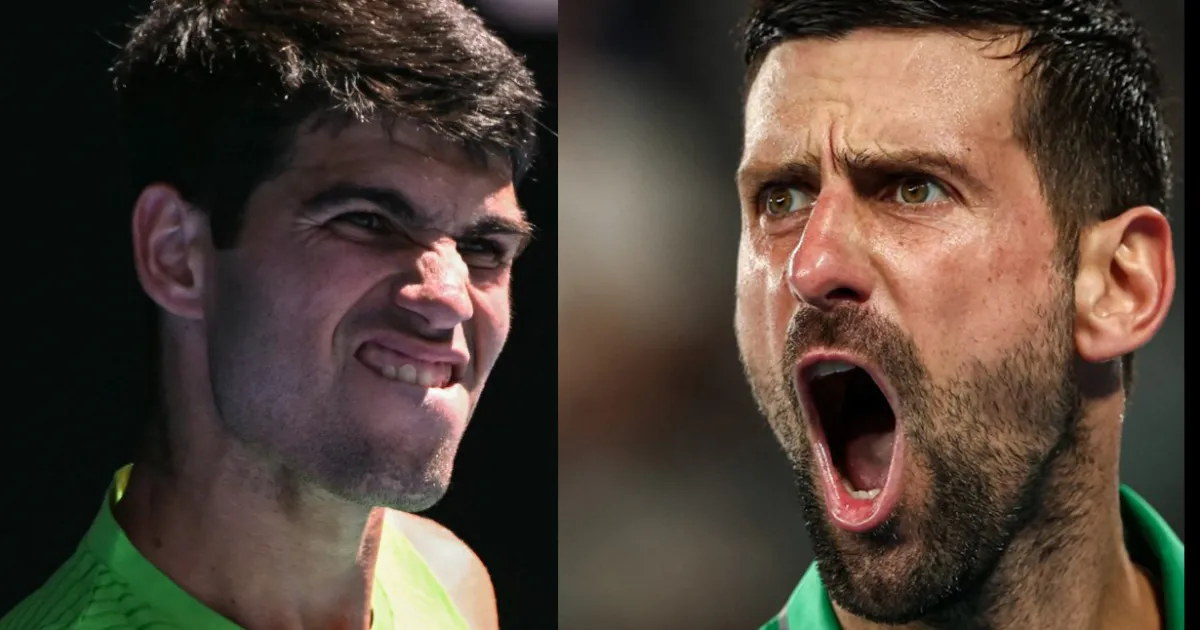
Who: Carlos Alcaraz vs Novak Djokovic What: Men’s singles final – Australian Open 2026 When: Sunday, February 1 at 19:30 (08:30 GMT) Where: Rod Laver Arena, Melbourne Park, Melbourne, Australia How to follow: Al Jazeera’s live text and photo stream gets under way at 05:30 GMT
Novak Djokovic stands one step away from cementing his place as the greatest tennis player of all time. In his way, though, is Carlos Alcaraz – a modern adversary seeking a career milestone of his own.
Recommended Stories
list of 4 itemsend of list
Tennis history will be rewritten when the pair meet in the men’s singles final of the Australian Open 2026 on Sunday.
Djokovic is seeking his 25th major title to go past Margaret Court in the all-time Grand Slam winners’ list in the Open Era, while Alcaraz – 16 years his junior – is looking to become the youngest player to complete a Career Grand Slam by winning the only one eluding his trophy cabinet.
At 38 years old, the Serb is already the oldest man to have qualified for a Grand Slam final, but he will be looking to make the most of his appearance in Sunday’s blockbuster final to seal a record-extending 25th men’s title.
Meanwhile, Alcaraz, who was the last man to beat Djokovic in a Grand Slam final at Wimbledon 2024, will aim to convert his debut final at the Australian Open into a night when he seals a career Slam.
Both men enter the match on the back of epic semifinal wins on Rod Laver Arena on Friday, with top seed and world number one Alcaraz having a slightly longer recovery period than fourth-seeded Djokovic.
What’s the Alcaraz-Djokovic tennis rivalry?
In the five years since his first appearance in the main round of a Grand Slam, Alcaraz has swiftly become the face of men’s tennis, and his brief history with the iconic Djokovic is often seen as a passing-of-the-baton inter-generational rivalry.
Alcaraz is known for his speed and power, while Djokovic relies on his experience, consistency and resilience to fend off the next generation of tennis talents.
The young Spaniard’s first meeting against Djokovic came at the Madrid Open in 2022, where the home favourite beat the veteran in straight sets.
Since then, the pair have met in Grand Slam settings on five occasions, with Alcaraz winning both finals but Djokovic emerging victorious at the Olympics to complete his Career Super Slam.
Overall, the Serb edges his rival by five wins to four in their nine meetings.
Their last encounter was in the semifinals of the US Open 2025, where eventual champion Alcaraz was too strong for the four-time winner Djokovic.
The match ended 6-4, 7-6 (7-4), 6-2 in Alcaraz’s favour.
How did Alcaraz reach the Australian Open 2026 final?
An ailing Alcaraz battled past Alexander Zverev in a five-set epic to reach his first Australian Open final in a match lasting five hours and 27 minutes. The world number one outlasted the German third seed in hot conditions with a cramping body.
Road to the final:
First round: Beat Adam Walton 6-3, 7-6(7-2), 6-2
Second round: Beat Yannick Hanfmann 7-6(7-4), 6-3, 6-2
How did Djokovic reach the Australian Open 2026 final?
Djokovic stunned reigning champion Jannik Sinner early on Saturday, with the veteran turning back the clock to upset the Italian in a gruelling four-hour-nine-minute match.
Road to the final:
First round: Beat Pedro Martinez 6-3, 6-2, 6-2
Second round: Beat Francesco Maestrelli 6-3, 6-2, 6-2
Third round: Botic van de Zandschulp 6-3, 6-4, 7-6(7-4)
Fourth round: Beat Jakub Mensik via walkover
Quarterfinal: Beat Lorenzo Musetti 4-6, 3-6, 3-1 retired
What’s being said about the Djokovic-Alcaraz Australian Open final?
Tennis experts, fans and former champions have been weighing in on what promises to be a modern epic.
Rafael Nadal: “I think the favourite is Carlos. He’s young, he has the energy and he’s in his prime. But I mean, Novak is Novak. He’s a very special player. I think it’s a positive example of commitment, of resilience. Novak, for obvious reasons, is not at his prime, but he is still very, very competitive at an age that is difficult to be very competitive. So full respect.”
Andy Roddick: “Man regrets inspiring child.”
How much is the prize money for the Australian Open champion?
The men’s singles champion and runner-up will receive $2.9m and $1.5m, respectively, from the total tournament prize money of $78.1m.
How to stream and follow the Australian Open 2026 final?
Al Jazeera’s build-up to the final will begin at 05:30 GMT, before the live score, photo and text commentary stream from 08:30 GMT.
ANGIE Best has given her fans the latest update from her hospital bed as she fights colon cancer.
Posting from her hospital bed in Switzerland, Angie revealed she would be starting her second round of chemotherapy in the coming days.
Sign up for the Showbiz newsletter
Thank you!
Angie Best updated fans about her colon cancer treatmentCredit: instagramAngie was married to footballer George BestCredit: PA:Press AssociationAngie said she was feeling unwell and struggling to copeCredit: instagram
Angie, who was the first wife of footballer George Best and is mum to TV personality Calum Best, seemed upbeat in her Instagram video despite telling her followers, “I can’t function.”
She captioned the video: “All together now, 🎼 just one cornetto…yes they want me to eat sugar ffs 🤦♀️ I have to start second round of chemo on Tuesday 😬.”
In the video she showed her nurse waving to the camera and then spoke directly to her fans.
“So I’m back at my favourite place with my favourite nurse, isn’t she just a darling – and she speaks English but she’s Swiss,” Angie explained.
“I’ve got to gain weight so they’ve got me drinking these awful things [Angie held up a calorie shake]. I can’t find a jelly baby bloody anywhere and the only ice cream in Switzerland is a Cornetto for heaven’s sake.”
Angie then pleaded for help: “Advice needed: I know a lot of you have been through this, but I can’t function, I can’t lift my head up, I can’t brush my teeth, I can’t eat. It’s terrible.”
She coughed as she concluded: “Any advice there, homies?”
Angie also wrote under the clip: “Apparently feeling like this is normal. Nothing normal about it ffs. If you’re suffering right now, we’re here for each other.”
Many rushed to wish her warm wishes, including her son Calum.
“I’m so sorry you’re feeling this way and going through this, it will pass and we come out even better I love you,” he wrote.
Another person added: “You are doing just great Angie , keep up the good work.”
And a third commented: “Well I think you look beautiful as always, have the cornetto, keep fighting and stay strong, sending you lots of love.”
“YES AUNTIE!!!!! Eat eat eat and you always look beautiful,” Sam wrote.
Earlier this month, Calum, 44,took to Instagram to plead for support from his mum who is struggling to afford her treatment, and to tell her fans that her cancer has spread to her liver.
“It doesn’t care where you’re from, how you live, or how healthy you try to be. And now, it’s here – and it’s with my mum,” he said.
Calum said he has set up a GoFundMe page for financial support.
Angie met George Best at a dinner party in LA in 1975 when he was signing to play for the Los Angeles Aztecs, and it was “love at first sight”.
They moved to London in 1976.
When she returned to Los Angeles, George followed her and persuaded her to marry him.
They wed on 24 January 1976 and went on to have son Calum in 1981.
The couple separated the following year and divorced in 1986, following George’s problems with alcohol abuse and domestic violence.
Angie’s son Calum, set up a GoFundMe to help pay her medical billsCredit: Alamy
Cuba’s President Miguel Diaz-Canel has denounced what he called an attempt by his United States counterpart, Donald Trump, to “suffocate” the sanctions-hit country’s economy.
Trump signed an executive order on Thursday threatening additional tariffs on countries that sell oil to Cuba, the latest move in Washington’s campaign of pressure on Havana. The order alleged that the government of communist-run Cuba was an “unusual and extraordinary threat” to US national security.
In a social media post on Friday, Diaz-Canel said that under “a false and baseless pretext”, Trump plans “to suffocate” Cuba’s economy by slapping tariffs “on countries that sovereignly trade oil” with it.
“This new measure reveals the fascist, criminal and genocidal nature of a clique that has hijacked the interests of the American people for purely personal ends,” he said, in an apparent allusion to Secretary of State Marco Rubio, a Cuban American and a known anti-Cuban government hawk.
Cuba, which is suffering rolling electricity blackouts blamed on fuel shortages, was cut off from critical supplies of Venezuelan oil after the US abducted Venezuela’s President Nicolas Maduro and his wife in a bloody military night raid on the capital, Caracas, earlier this month. At least 32 members of Cuba’s armed forces and intelligence agencies were killed in the January 3 attack.
The US has since taken effective control of Venezuela’s oil sector, and Trump, a Republican, has issued threats against other left-wing governments in the region, promising to stop oil shipments previously sent to Cuba.
Cuba’s Foreign Minister Bruno Rodriguez on Friday declared an “international emergency” in response to Trump’s move, which he said constitutes “an unusual and extraordinary threat”.
Venezuela’s government also condemned the measure in a statement on Friday, saying it violates international law and the principles of global commerce.
Reporting from Cuba’s capital, Al Jazeera’s Ed Augustin said Trump’s announcement “is a massive psychological blow”, noting that analysts describe it as the “most powerful economic blow the United States has ever dealt the island”.
Days after Maduro’s abduction and transfer to the US, Trump urged Cuba to make a deal “before it is too late,” without specifying what kind of agreement he was referring to.
In a post on social media, Trump suggested Rubio could become the president of Cuba. “Sounds good to me!” he wrote on his Truth Social platform.
‘There’s no solution’
In Havana, residents expressed anger at Trump’s tariff threat, which will only make life harder for Cubans already struggling with an increase in US sanctions.
“My food is going bad. We haven’t had electricity since 6am,” Yenia Leon told Al Jazeera. “You can’t sleep. You have to buy food every day. There’s no solution to the power situation,” she said.
“This is a war,” Lazaro Alfonso, an 89-year-old retired graphic designer, told The Associated Press news agency, describing Trump as the “sheriff of the world” and saying he feels like he is living in the Wild West, where anything goes.
A man sells vegetables on the street during a blackout in Havana on January 22 [Norlys Perez/Reuters]
Alfonso, who lived through the severe economic depression in the 1990s known as the “Special Period” following cuts in Soviet aid, said the current situation in Cuba is worse, given the severe blackouts, a lack of basic goods and a scarcity of fuel.
“The only thing that’s missing here in Cuba … is for bombs to start falling,” he said.
Meanwhile, Mexican President Claudia Sheinbaum said she would seek alternatives to continue helping Cuba after Trump’s announcement following a decision this week to temporarily halt oil shipments to the island amid heightened rhetoric from Trump.
Mexico became a key supplier of fuel to Cuba, along with Russia, after the US sanctions on Venezuela paralysed the delivery of crude oil to the island.
Sheinbaum said cutting off oil shipments to Cuba could trigger a “far-reaching humanitarian crisis” on the island, affecting transportation, hospitals and access to food. She did not say whether Mexico would cut shipments of oil or refined products to Cuba, which she said accounted for 1 percent of Mexico’s production.
“Our interest is that the Cuban people don’t suffer,” Sheinbaum said, adding that she had instructed her foreign minister to contact the US State Department to better understand the scope of the executive order.
Mexico supplied 44 percent of Cuban oil imports and Venezuela exported 33 percent until last month, while some 10 percent of Cuban oil is sourced from Russia. Some oil is also sourced from Algeria, according to The Financial Times figures.
In November last year, a senior United Nations expert said the long-running US sanctions on Cuba must be lifted as they are “causing significant effects across all aspects of life”.
The US imposed a near-total trade embargo on Cuba in 1962, with the goal of toppling the government put in place by Fidel Castro after he took power in a 1959 revolution. Castro himself was the target of numerous assassination attempts by the US’s Central Intelligence Agency, or CIA.
Alena Douhan, special rapporteur on the negative impact of unilateral coercive measures on human rights, said the “extensive regime of economic, trade and financial restrictions” against Cuba marks the longest-running unilateral sanctions policy in US history.
She noted that there are shortages of food, medicine, electricity, water, essential machinery and spare parts in Cuba, while a growing emigration of skilled workers, including medical staff, engineers and teachers, is further straining the country.
The accumulative effect has “severe consequences for the enjoyment of human rights, including the rights to life, food, health and development”, Douhan said.
Fifth seed Elena Rybakina wins the Australian Open tennis final beating world number one Aryna Sabalenka in Melbourne.
Published On 31 Jan 202631 Jan 2026
Share
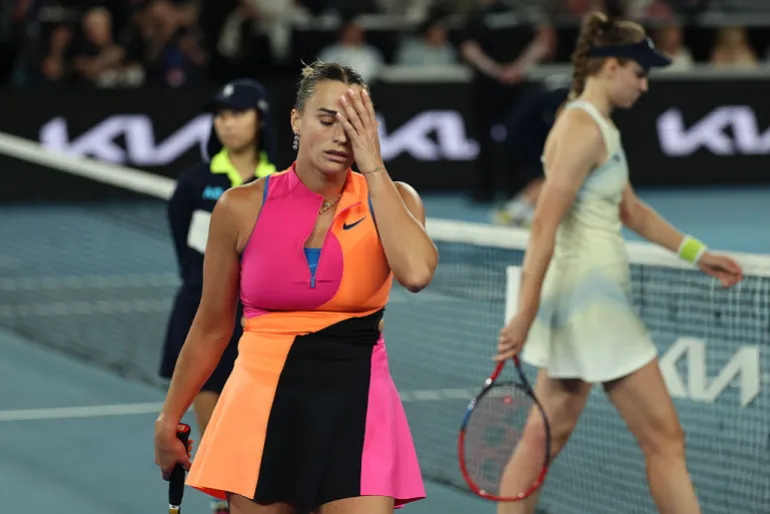
Elena Rybakina produced a thunderous display to dismantle Aryna Sabalenka 6-4 4-6 6-4 on Saturday and capture a maiden Australian Open title, turning the tables on the world number one in their Melbourne Park final rematch from three years ago.
Rybakina returned to the site of her heartbreak in 2023 to complete an impressive victory and earn her second major trophy after Wimbledon 2022, underlining her credentials as the player best equipped to puncture Sabalenka’s hardcourt aura.
Recommended Stories
list of 4 itemsend of list
The 26-year-old capped a fortnight of relentless efficiency while largely flying under the radar, adding the Daphne Akhurst Memorial Cup to a resume that also includes the 2025 WTA Finals crown where she downed Sabalenka.
“It’s hard to find words now but I want to congratulate Aryna for her amazing results in the last couple of years. I hope we’re going to play many more finals together,” Kazakh Rybakina said.
“I want to say thank you to you guys (fans). Thank you so much to Kazakhstan. I felt the support from that corner a lot. It’s really a Happy Slam and I always enjoy coming here and playing in front of you guys.”
Aryna Sabalenka was seeking a third Australian Open title at Melbourne Park [Phil Walter/Getty Images]
In the first Grand Slam final since 2008 featuring players yet to drop a set, it was top seed Sabalenka who blinked first under the Rod Laver Arena roof as Rybakina came out all guns blazing to break in the opening game and wrest control.
The Kazakh fifth seed’s huge ball-striking caused all sorts of problems for twice champion Sabalenka, as she comfortably got to set point in the 10th game and finished it off to send alarm bells ringing in her opponent’s dugout.
Having arrived with 46 hardcourt Grand Slam match wins from the last 48, four-time major winner Sabalenka found her groove and started the second set more positively, but Rybakina saved three breakpoints to hold for 1-1.
A wayward forehand from Rybakina handed Sabalenka the chance to level at one set apiece, and the Belarusian gleefully took it to turn the final set into a shootout destined to be decided by whichever player held their nerves.
Having beaten Rybakina from a similar situation in the 2023 title clash, Sabalenka unleashed a flurry of winners to go ahead 3-0, but the Kazakh erased the deficit and broke for 4-3 before securing victory to add to her All England club triumph.
Elena Rybakina celebrates a point in the Women’s Singles Final against Aryna Sabalenka [Phil Walter/Getty Images]
The knockout blow was a huge ace, after which the typically restrained Rybakina walked forward, smiled and pumped her fist before celebrating with her team.
Sabalenka, denied an Australian Open “three-peat” by American outsider Madison Keys in last year’s final, endured heartbreak again as she retreated to her chair and draped a white towel over her head to conceal her anguish.
“I’m really speechless right now,” she said, before turning to her victorious opponent and the fans.
“I want to congratulate you on an incredible run and incredible tennis. Such an incredible achievement. I love being here, love playing in front of you all. You guys are incredible support. Let’s hope next year is going to be a better year.”
FROM playing a seductive robot in 2024 thriller Subservience to taking part in an on-screen lesbian romp in 2009 flick Jennifer’s Body, Megan Fox has acted her fair share of steamy scenes.
Since rising to fame in Transformers, Megan Fox has had her fair share of steamy on-screen scenesCredit: AlamyMegan recently split from Machine Gun Kelly following a five year on/off romanceCredit: AP
Megan and the rapper, real name Colson Baker, began their relationship in 2020 and first split in 2024, before an on/off relationship up until last year.
Appearing in 2024 thriller Subservience, Megan portrayed a robot who was bought to help a dad – who is solo parenting while his wife is sick in hospital – with house chores.
However, her AI-built character Alice ends up slightly too lifelike as she develops intense feelings for her owner Nick, portrayed by 365 Days hunk Michele Morrone.
Stripping down to her underwear, Megan is seen seducing her co-star before blindfolding him and mounting him in intense scenes.
She portrays an AI robot in Subservience, who will stop at nothing to seduce her ownerCredit: NetflixLater in the movie, the pair ended up in a steamy shower rompCredit: NetflixShe showed off her taut abs in the film as one scene saw Megan strip to lacy black underwearCredit: XYZ Films
Jennifer’s body – 2007
It’s not just later in her career that Megan has had some hot-and-heavy scenes, with her 2007 film Jennifer’s body featuring a very steamy scene with Amanda Seyfried.
The horror flick sees Megan’s teenage character Jennifer become possessed to be a succubus.
Jennifer seduces a number of her male classmates and has a lesbian romp with Amanda’s character Anita.
Previously, Megan said of the scenes: “I feel much safer with girls, so I felt more comfortable kissing [Seyfried] than kissing any of the other people that I had to kiss.”
Megan is seen kissing co-star Amanda Seyfried in one X-rated scene in 2007 movie Jennifer’s BodyCredit: Alamy
Passion Play – 2010
While drama flick Passion Play may not have done wonders in the box office, it did see Megan star alongside Mickey Rourke in one of her most sultry movie roles.
She plays the character of Lily Luster, who has large wings throughout the film and is known as a “bird woman”.
Megan and Mickey’s character, Nate, have several intimate scenes throughout the film – with one showing the former completely naked other than a pair of underwear.
Megan played Mickey Rourke’s love interest in 2010 film Passion PlayCredit: AlamyMegan portrays a ‘bird woman’ with large wings in the flickCredit: Refer to Source
Expend4bles – 2023
Starring as CIA agent Gina in the fourth instalment of the Expendables, Megan acts across from action star Jason Statham, who portrays Lee Christmas.
In the flick, Lee and Gina have romantic history which is clear to see in several scenes throughout the movie – including in a steamy bedroom moment.
In Expend4bles, Megan appeared in a steamy scene alongside Jason StathamCredit: Not known, clear with picture desk
Big Gold Brick – 2022
2022’s dark comedy Big Gold Brick had some talented actors to it’s name, but wasn’t a hit amongst fans.
In the film, Megan plays Jacqueline Devereaux, the wife of Floyd Devereaux – who enlists a man to pen his biography.
Throughout the storyline, Megan is seen donning racy underwear and stripping down to lingerie.
However, some critics slammed these scenes as they claimed Megan and co-star Lucy Hale were solely seen as “sex objects” during the film.
In Big Gold Brick, Megan was seen stripping down to racy lingerieCredit: AlamyShe looked sensational in a black lace cut out body suitCredit: Alamy
How To Lose Friends & Alienate people – 2008
Megan got many viewers hot under the collar during her 2008 appearance in comedy How to Lose Friends & Alienate People.
Portraying starlet Sophie Maes, Megan is seen stripping down to lingerie in several scenes.
While one iconic moment sees the star in a plunging figure-hugging dress as she walks through a swimming pool, before dropping the dress at the end of the pool.
She stars across from Simon Pegg, who plays main character Sidney Young – a celebrity journalist taken by Sophie.
Megan played a hopeful starlet in How To Lose Friends and Alienate PeopleCredit: Handout
The Dictator – 2012
Portraying herself in a cameo during comedy/drama The Dictator, Megan is seen as a celebrity companion for lead character Aladeen, portrayed by Sacha Baron Cohen.
During the scene, Aladeen is seen shouting the actress’s name while they are in bed together, before telling her: “Megan, you were worth every penny.”
He then presents her with a bag of gold, to which Megan – who is putting her clothes back on- replies: “Katy Perry said she got a diamond Rolex.”
Megan later said she “loved” the cameo appearance in the comedy, which was a change of pace from her previous roles.
Megan plays herself for a cameo in The Dicatator
This Is 40 – 2012
While Megan didn’t have a leading part in the ensemble cast of This Is 40, she did make her mark on the flick.
Portraying a young shop worker at main character Debbie’s (Leslie Mann) clothing boutique, Megan’s character has her middle-aged counterparts feeling jealous as she portrays the “hot new employee”.
Megan is even seen stripping to her underwear inside the shop, leaving Debbie seething.
Megan has a cameo role in This Is 40 as she plays the young new employee in Leslie Mann’s character’s boutiqueCredit: Universal Pictures
MGK’S Good Mourning – 2022
When Machine Gun Kelly decided to make his own comedy film, he enlisted his then-partner Megan to star in the flick.
Good Mourning – which has since been branded “unwatchable” – follows the musician portraying actor character London Clash, who’s convinced he’s about to land a career-changing role.
Megan plays Kennedy in the short film, and while she and MGK are a couple in real life, there aren’t a wave of sultry scenes between the two.
Instead, Megan’s character brings her own sex appeal and has London Clash drooling.
Megan appeared in Machine Gun Kelly’s Good Mourning short comedy film in 2022, with the pair in a relationship at the timeCredit: Open Road Films
Jonah Hex – 2010
Action film Jonah Hex sees Megan portray a prostitute who falls for leading man Josh Brolin.
In the film, his character is seen spending the night in a brothel with Megan, who steamily kisses him before rubbing against him in bed.
Megan’s burlesque-style outfits in the film also left fans in awe, as she donned a corset with matching stockings and fingerless gloves.
Megan is seen getting hot and heavy with Josh Brolin’s character in action flick Jonah HexDuring the film, she is seen donning several burlesque-style ensemblesCredit: Alamy
Transformers – 2007
Megan’s breakout role as Mikaela Banes in the Transformers franchise didn’t incorporate X-rated scenes, but did catapult her to fame as a global leading lady.
The movie franchise portrayed Megan as a sex symbol, something she later shared her frustrations over.
“Really my only job is to look attractive,” she told GQ back in 2009. “I was so angry about that,” added the star.
She later got axed from the third Transformers movie for making controversial comments about directorMichael Bay – comparing him to Hitler and dubbing him a “d***”.
Megan’s breakout role was in the Transformers franchiseCredit: Rex
Niger Gen. Abdourahamane Tiani (C) blamed France, Bejin and the Ivory Coast for the Wednesday night attack on Niger’s Diori Hamani International Airport. Photo by Issifou Djibo/EPA
Jan. 30 (UPI) — Four Nigerien military personnel were injured and 20 attackers were killed during an attack on the Diori Hamani International Airport near Niger’s capital city, Niamey.
The attack started late Wednesday night and lasted for about 30 minutes, during which loud explosions and sustained gunfire could be heard, the BBC reported.
Niger’s Defense Ministry said 11 were arrested after the attack ended, and a French national was among the 20 attackers who were killed.
The Islamic State group on Friday claimed responsibility for coordinating the attack that it said targeted a military base used by Niger’s army.
The Islamic State’s Amaq information wing said “major damage” was done to the airport but did not cite any casualty figures.
Video footage recorded during the attack and witness statements indicate Niger’s air-defense system engaged incoming projectiles.
The airport resumed its normal operations Thursday, and Nigerien officials credited Russian military personnel with helping to fend off the attackers.
Gen. Abdourahamane Tiani, who seized power in Niger during a July 2023 military coup, appeared on state-run television, blaming the presidents of France, Benin and the Ivory Coast for the attack. Tiani did not cite any evidence to support the allegation, but he said retaliation was forthcoming.
“We have heard them bark,” Tiani said. “They should be ready to hear us roar.”
Niger recently experienced diminished relations with France and neighboring nations, which he accused of being French proxies.
Tiani and Nigerien officials have close ties with Russia, which helped the Nigerien military to thwart a rebellion by militants associated with al-Qaida and ISIS.
Niger maintains close relations with Mali and Burkina Faso, all of which have faced rebellions that have caused thousands of deaths and displaced millions.
The three nations formed the Alliance of Sahel States in response and engaged Russia while ending military ties with France.
Passengers at Simon Bolivar International Airport in Maiquetia, La Guaira State, Venezuela. (AFP)
Caracas, January 30, 2026 (venezuelanalysis.com) – Venezuelan Acting President, Delcy Rodríguez, welcomed the “lifting of restrictions on the country’s commercial airspace”, which had been in place since last November, following talks with the US government.
Speaking at a rally on Thursday, Rodríguez said she received a phone call from US President Donald Trump and Secretary of State Marco Rubio to address the issue as part of a “working agenda” between the two countries that includes the resumption of diplomatic relations.
“Let all the airlines that need to come, come. Let all the investors that need to come, come”, Rodríguez said. She assumed office following the kidnapping of President Nicolás Maduro and his wife, Cilia Flores, amid the January 3 US attacks.
Earlier in the day, Trump ordered the reopening of “all Venezuelan airspace” to commercial flights, stating that US citizens would be able to travel safely and that Venezuelans wishing to return—either permanently or temporarily—would also be able to do so.
Trump ordered Secretary of Transportation Sean Duffy and other officials, including military commanders, to ensure the reopening was “immediate.”
Trump went on to describe the exchange with his Venezuelan counterpart as “highly positive,” emphasizing that “relations have been very solid and very good.” He further sought to reassure international travelers by stressing that they would be safe while in Venezuelan territory.
Following the announcements, the US Federal Aviation Administration confirmed that it had removed four Notices to Airmen (NOTAM) in the Caribbean region, including one related to Venezuela. “They were issued as a precautionary measure and are no longer necessary”, the agency argued.
Likewise on Thursday, American Airlines announced its intention to resume daily direct flights between the United States and Venezuela, becoming the first US airline to take such a step.
The company, which began operations in Venezuela in 1987, stated that the resumption of the route would be subject to approval by both US and Venezuelan authorities, as well as the corresponding security assessments.
American Airlines Chief Commercial Officer Nat Pieper said the company was eager to offer its customers the opportunity to reunite with family members and to generate new business and trade opportunities with the United States.
Direct flights between the two countries were suspended in 2019, the same year diplomatic relations between Washington and Caracas were severed after the US recognized Juan Guaidó as Venezuela’s interim president.
Last November, Trump declared that Venezuela’s airspace should be considered “completely closed.” A flurry of NOTAM warnings led international airlines to suspend their connections to the Caribbean country. Caracas withdrew licenses from several companies, including TAP, Iberia and Turkish Airlines.
On January 13, Panama’s Copa Airlines announced the resumption of flights to and from Caracas.
Embassy reopening in the works
Secretary of State Marco Rubio said on Wednesday during a Senate hearing that he expects the United States to reestablish a diplomatic presence in Venezuela in the near future. “We have a team there evaluating it, and I think we’ll be able to open a diplomatic presence soon,” he said.
Rubio argued that such a presence would allow Washington to “have real-time information and interact not only with government officials but also with members of civil society and the opposition.”
Laura Dogu has so far been appointed to lead the diplomatic mission from the Venezuela Affairs Unit in Bogotá, Colombia. According to CNN, the CIA is looking to establish a “foothold” in the South American country that may preced the formal arrival of US diplomats.
For her part, Rodríguez has defended her administration’s diplomatic engagement with the United States, while also urging Venezuelan political sectors to resolve their differences and internal conflicts without “orders from Washington.”
FOLLOWING the tragic news of actress Catherine O’Hara’s passing at the age of 71 following a short illness, her Home Alone co-star Macaulay Culkin paid a touching tribute to his “mama”.
The two starred in the iconic film together back in 1990, where he played the mischievous Kevin McCallister while she portrayed the role of Kate, his long-suffering mum.
Sign up for the Showbiz newsletter
Thank you!
Macaulay Culkin has paid a heartfelt tribute to his co-star Catherine O’Hara following her deathCredit: GettyThe Home Alone actor was seen for the first since the news brokeCredit: BackGrid
They reunited two years later for the sequel, Home Alone 2: Lost in New York and have continued to share a mother and son bond over the years.
The pair showed just how close they are when she honoured him at his Hollywood Walk of Fame ceremony in 2023.
As the world mourns the legendary actress, let’s take a look at her relationship with Macaulay and their extremely close bond…
Heartfelt Tribute
Macaulay was one of the first to pay tribute to the Schitt’s Creek star as he posted two pictures from Home Alone and the Hollywood Walk of Fame Ceremony on his Instagram.
“I wanted more. I wanted to sit in a chair next to you. I heard you. But I had so much more to say.
“I love you. I’ll see you later,” the 45-year-old signed off.
Heartbroken Home Alone fans flocked to the comments section as one said: “Oh my god, I can’t believe it. Rest in peace Catherine. Thank you for taking care of Kevin.”
Another social media user penned: “A part of our childhood has been shattered today. Heartbroken.”
The pair worked together in the iconic Christmas film as well it’s sequelCredit: 20th Century Fox
Hollywood Walk of Fame reunion
She attended his Hollywood Walk of Fame ceremony in December 2023 and honoured him as he received his star.
Catherine gushed in her speech: “Home Alone was, is and always will be a beloved global sensation… the reason families all over the world can’t let a year go by without watching and loving Home Alone together is because of Macaulay Culkin.”
She went on to praise his professionalism and passion for acting, as well as bringing his “sweet and twisted yet totally relatable humour” to every project.
“Macaulay, congratulations. You so deserve your star on the Hollywood Walk of Fame.
“And thank you for including me, your fake mom who left you home alone not once but twice, to share in this happy occasion. I’m so proud of you,” she joked.
She honoured him at his Hollywood Walk of Fame ceremony in December 2023Credit: Getty
Mother and son bond
Despite it being more than three and a half decades since Home Alone released, the co-stars have continued to share a deep bond with one another.
During an appearance on Watch What Happens Live! In 2015, she revealed the two had a sweet reunion at an art opening.
“He was coming out and he went, ‘Mommy!’ and I said, ‘Baby’,” Catherine told host Andy Cohen.
He also confirmed that he called her “mom” each time her saw her, proving their bond was unmatched.
Macaulay told New York Times in 2024: “She opens up her arms – she goes, ‘Son’.”
On-screen reunion
The much-loved duo delighted fans back in 2024 when they reunited on-screen for a Christmas ad for Freedom Unlimited alongside Kevin Hart.
Catherine was seen walking into a shopping mall before shouting out her iconic “KEVIN!” dialogue.
The co-stars shared a warm embrace, with Kevin joining in on the hug with the two.
Excited fans couldn’t believe their eyes as one gushed: “This is hysterical. I love these nostalgic commercials.”
Somebody else added: “So beautiful, a home alone reunion.”
Co-star chemistry
Macaulay and Catherine’s on-screen camaraderie translated off-screen, with many Home Alone fans believing they were actually mother and son in real life.
She recalled to Today in 2024: “A child came up to me, like, a little 8-year-old, in a mall. ‘Are you Kevin’s mom?’
“I said, ‘Well, yeah, I played Kevin’s mom in a movie, yes’.
‘Why did you leave him?’ ‘Sorry. It was in the script!’,” she remembered.
Speaking to PEOPLE back in 1990, when the film first released, Catherine described then 9-year-old Macaulay as ”a darling little guy who has been acting since he was 4, so he’s very professional.”
“He comes in knowing all his lines, knowing where to hit his marks — he even knows all the other actors’ lines.
“I expect he should become the head of the studio by the time he is 12,” she joked.
They’ve shared a deep bond since starring as the iconic mother and son duoCredit: Twentieth Century Fox / Supplied by LMK
Kim Sang-hwan (2-L), chief justice of the Constitutional Court, and the court’s other justices attend a hearing to deliver a verdict on the impeachment of former police chief Cho Ji-ho at the court in Seoul, South Korea, 18 December 2025. The court upheld Cho’s impeachment over his involvement in former South Korean President Yoon Suk Yeol’s short-lived imposition of martial law. File. Photo by YONHAP / EPA
Jan. 30 (Asia Today) — South Korea’s Innovation Party said Thursday that the Constitutional Court’s decision striking down the 3% vote threshold for proportional representation is a warning to the country’s two major parties and called on the Democratic Party to amend the Public Official Election Act.
The party argued that the ruling requires broader electoral reform, including abolishing two-member local council districts, expanding regional proportional representation and introducing runoff voting for mayors and governors.
Park Byeong-won, interim spokesperson for the Innovation Party, told a news conference at the National Assembly Communication Center that the court’s decision underscored violations of popular sovereignty. He said the Democratic Party, which holds a majority in the National Assembly, should take responsibility for revising the election law.
Park said the court found partially unconstitutional a provision of the Public Official Election Act that denied proportional representation seats to parties that failed to secure at least 3% of the nationwide vote. As a result, he said, parties receiving less than 3% support will be eligible for seat allocation in the 2028 general election without further legislation.
He added that the court criticized the current system as favoring the two major parties and blocking new political forces from entering the National Assembly. Park said it would be unrealistic to expect the major parties to voluntarily reform a system that benefits them and called the ruling a rebuke that lawmakers must heed.
Park said the decision highlighted the need to abolish two-member local council districts, expand regional proportional representation and introduce runoff voting for local chief executives in upcoming local elections. He said the Democratic Party should move unilaterally to amend the election law to reflect the principle of popular sovereignty.
On Wednesday, the Constitutional Court ruled 7-2 that Article 189(1) of the Public Official Election Act was unconstitutional. The provision limited proportional representation seats to parties that won at least 3% of the national vote or secured five constituency seats.
Minor parties and candidates who failed to meet the threshold in the 21st and 22nd general elections under a semi-linked proportional representation system had filed the constitutional complaint.
CHILLING dispatch audio has revealed screen legend Catherine O’Hara was “struggling to breathe” before she died early on Friday morning.
O’Hara, 71, best known for her roles in Home Alone, Beetlejuice, and Schitt’s Creek, was reportedly rushed to a Los Angeles hospital in a serious condition.
Sign up for the Showbiz newsletter
Thank you!
Catherine O’Hara, 71, has sadly passed away after a brief illnessCredit: GettyAnnie Murphy and Catherine O’Hara in Schitt’s Creek, 2020, which catapulted her back into the spotlightCredit: AlamyCatherine O’Hara became a household name after appearing in the Home Alone franchise in the 90sCredit: AlamyThe Home Alone star made her final public appearance with husband Bo Welch at the Primetime Emmys in September 2025Credit: GETTY
The Los Angeles Fire Department responded to reports of a medical emergency after a 911 call was placed from her Brentwood home at 4.48am.
Dispatch audio obtained by PageSix revealed the actress was having difficulty breathing in her final moments.
Tragically, she passed away hours later in hospital.
A cause of death has not yet been confirmed, though her talent agency CAA said she suffered from a “brief illness” just before her death.
Tributes to the comedy icon have begun to pour in from across Hollywood after her untimely death.
Macaulay Culkin, who starred as the actress’s son in the Home Alone films, remembered O’Hara as “mama”in a heartbreaking poston Instagram.
“Mama. I thought we had time. I wanted more. I wanted to sit in a chair next to you. I heard you, but I had so much more to say,” Culkin wrote.
“I love you. I’ll see you later.”
O’Hara played Kate McCallister, the mother of Culkin’s character, Kevin, in the first two Home Alone movies.
Heartbroken Macaulay Culkin calls Catherine O’Hara ‘mama’ in a tribute on InstagramCredit: Instagram/culkamaniaCatherine O’Hara and Macaulay Culkin were still close after starring in Home Alone togetherCredit: Alamy
Catherine O’Hara dead at 71
Iconic Home Alone actress Catherine O’Hara died on January 30, 2026. O’Hara was 71.
Biography:
Catherine O’Hara, who was born in Toronto, Canada, began her acting career in comedy in 1974 after joining the cast of The Second City, which was televised in both Canada and the United States.
O’Hara expanded her career in television in the mid-1970s, appearing in small roles on the CBC series Wayne and Shuster, the film The Rimshots, and the children’s series Coming up Rosie.
She gained prominence in Hollywood in the 1980s, after she was cast in the classic horror-comedy film Beetlejuice.
Starring alongside Michael Keaton, Alec Baldwin, and Winona Ryder, O’Hara portrayed Delia Deetz.
In 1990, O’Hara starred alongside child actor Macaulay Culkin in the holiday blockbuster Home Alone.
She reprised her role as Kate McCallister, the mother of the young troublemaker Kevin McCallister, portrayed by Culkin, in the film’s 1992 sequel, Home Alone 2: Lost in New York.
Both installments of Home Alone were massive hits at the box office, and to this date, remain among the most successful Christmas movies of all time.
After the success of Home Alone, O’Hara continued to appear in several films throughout the 1990s, including the comedy-drama The Paper, Waiting for Guffman, and the Western film Wyatt Earp.
O’Hara also had several voice artist appearances, including The Nightmare Before Christmas, Chicken Little, and Monster House, among others.
She had a career resurgence in 2015 when she appeared as Moira Rose in the Canadian sitcom Schitt’s Creek.
In 2025, O’Hara had a main role in the Apple TV+ comedy series The Studio.
Throughout her career, O’Hara received various awards, including two PrimeTime Emmy Awards, a Golden Globe Award, and two Screen Actors Guild Awards.
She had two children with her husband, Bo Welch, whom she met on the set of Beetlejuice.
AWAY FROM THE SPOTLIGHT
O’Hara skipped the Golden Globes on January 11, despite receiving a nomination for Best Supporting Performance by a Female Actor for her role in the Apple+ TV series The Studio.
It was not clear why she did not attend the ceremony.
Catherine O’Hara and Seth Rogen in The Studio currently streaming on Apple+Credit: Apple TVCatherine O’Hara, Patrick J. Adams and Seth Rogen at The Studio world premiere in March 2025Credit: Getty
“She was scheduled to film, but they reworked the schedule to focus on scenes without her character,” the source said.
“It was not widely known she was dealing with any health or major issues.
“I don’t believe she ever filmed anything for season two,” the production insider claimed.
Catherine’s unexpected passing has sent shockwaves through the cast and crew of the Apple+ TV series, who were completely blindsided by the tragic news.
LONG, STORIED CAREER
O’Hara was born in Toronto, Canada, before moving to the United States.
Her career spanned more than 50 years, stretching across TV, movies, and sketch comedy.
She started out in sketch series Second City Television in the mid-1970s.
O’Hara won an Emmy as part of the show.
But she shot to superstardom in the beloved 1990 Christmas movie Home Alone, in which she played Kevin McCallister’s mother.
Catherine O’Hara regained popularity during her run on Schitt’s Creek alongside long-time collaborator Eugene LevyCredit: APEugene Levy and Catherine O’Hara had a long comedy relationship, starring together in Best In Show in 2000Credit: Alamy
She remained close with onscreen son Macaulay Culkin, and supported the actor in 2023 at his Hollywood Walk of Fame ceremony.
Later in her career, she had a pop culture resurgence with smash hit comedy Schitt’s Creek, opposite her longtime friend Eugene Levy.
The show aired from 2015 until 2020, and earned O’Hara two Emmys for her role as eccentric former soap star Moira Rose.
She was featured in a documentary about late Home Alone co-star and close friend John Candy, which premiered in 2025.
O’Hara also stole scenes as heartbroken therapist Gail on The Last Of Us’ second season opposite Pedro Pascal.
Catherine O’Hara Tributes
Iconic actress Catherine O’Hara, who is best known for her role as Kate McCallister in the Christmas classic Home Alone, died on January 30, 2026. She was 71.
Tributes:
Home Alone co-star Macaulay Culkin: Mama. I thought we had time. I wanted more. I wanted to sit in a chair next to you. I heard you but I had so much more to say. I love you. I’ll see you later.”
Home Alone co-star Devin Ratray: “One of the greatest people I ever met. It just doesn’t register. Bewildered and numb.”
The Last of Us actor Pedro Pascal: “Oh, genius to be near you. Eternally grateful. There is less light in my world, this lucky world that had you, will keep you, always. Always. The one and ONLY #CatherineOHara.”
Bravo host Andy Cohen: “Fell in love at first sight on SCTV and it only got stronger. Rest in Peace, Angel Catherine O’Hara.”
Beetlejuice co-star Justin Theroux: “Catherine. You will be so so missed.”
Comedian Tom Green: “I’m so sorry to hear the news that Canadian comedy legend Catherine O’Hara has passed away at 71. She’s kept me and millions of others entertained throughout my lifetime – from her brilliant work on SCTV, to Home Alone, Beetlejuice, Best in Show, Schitt’s Creek, and so many other films and television classics. Her characters brought so much joy and laughter to the world. It’s with a heavy heart that I share this today. Rest in peace, Catherine O’Hara — one of the greatest Canadian comedy icons of all time.”
Catherine O’Hara hosted Saturday Night Live twice, once in 1991 and again in 1992Credit: Getty
Left-arm pacer Ben Dwarshuis will replace Cummins after he failed to recover in time for the tournament.
Published On 31 Jan 202631 Jan 2026
Share
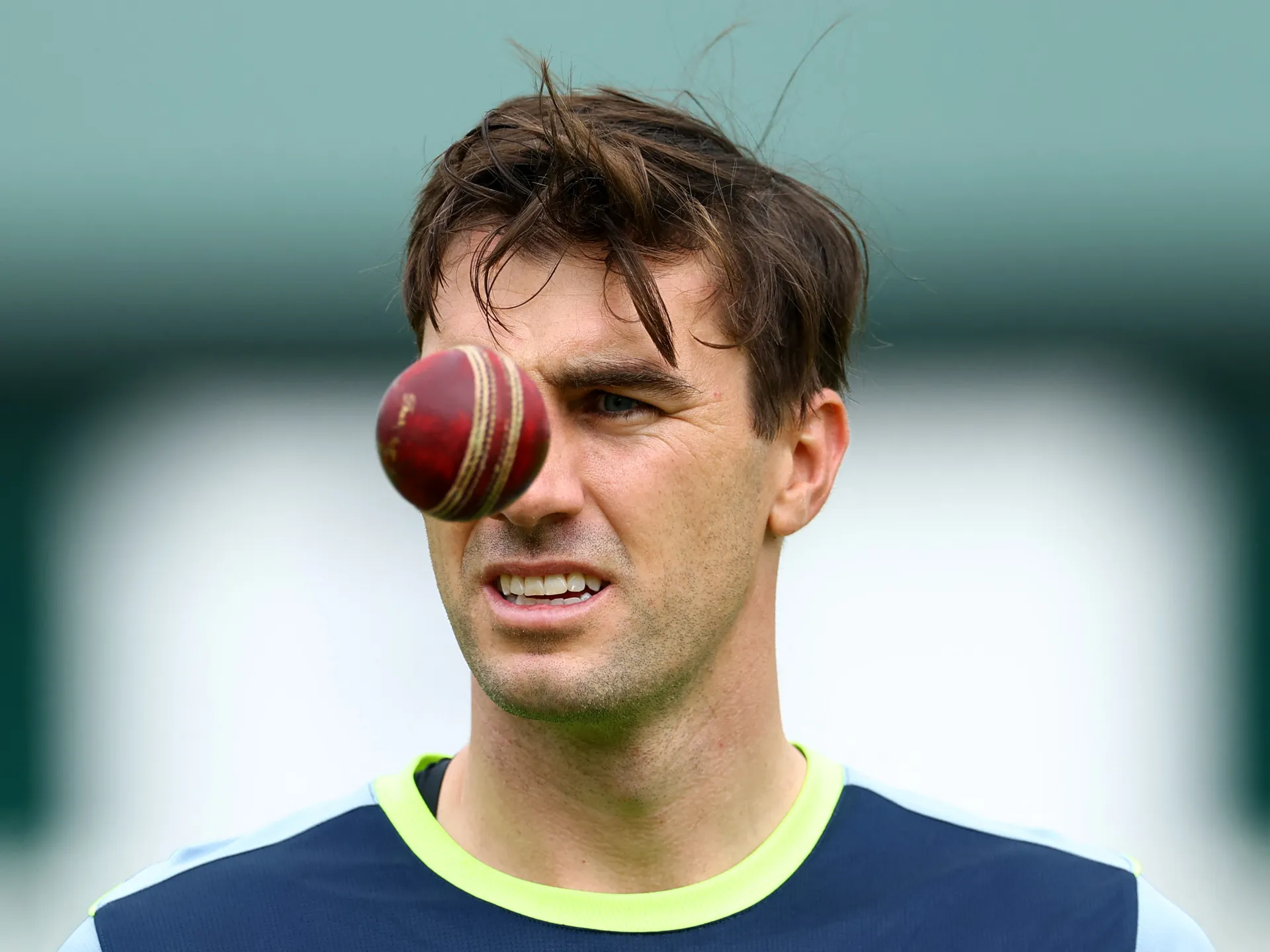
Australian fast bowler Pat Cummins has been ruled out of the ICC Twenty20 World Cup after failing to recover from a nagging back injury, with Ben Dwarshuis named as his replacement in the tournament starting next month.
“With Pat needing more time to recover from his back injury, Ben is a ready replacement who offers a left-arm pace option as well as dynamic fielding and late-order hitting,” selector Tony Dodemaide said on Saturday.
Recommended Stories
list of 3 itemsend of list
“We believe his ability to swing the ball at good pace, along with clever variations, will be well-suited to the conditions we expect and overall structure of the squad.”
Cummins played just one of the five Ashes Tests against England, but Australia kept him in the provisional World Cup squad, hoping for his availability in the Super Eight stage of the tournament to be played in India and Sri Lanka.
Matt Renshaw also replaced fellow batter Matthew Short but veteran Steve Smith could not break into the World Cup squad despite his strong form in the Big Bash League.
The Mitchell Marsh-led side are currently playing a three-match T20 series in Pakistan as part of their preparation for the World Cup.
“With the top order settled and spin-heavy conditions expected in the pool stages in Sri Lanka, we also feel Matt provides extra middle-order support, with Tim David completing his return-to-play programme in the early phase of the tournament,” Dodemaide said of Renshaw’s selection.
“As a left-hander, he also offers a point of difference to the middle-order batting.”
Renshaw scored 15 in his T20 debut for Australia in Thursday’s defeat in Lahore.
The former champions begin their World Cup campaign against Ireland in a February 11 match in Colombo.
Australia’s squad for the T20 World Cup: Mitchell Marsh (captain), Travis Head, Xavier Bartlett, Josh Hazlewood, Cooper Connolly, Josh Inglis, Tim David, Matthew Kuhnemann, Ben Dwarshuis, Glenn Maxwell, Cameron Green, Matthew Renshaw, Nathan Ellis, Marcus Stoinis, Adam Zampa
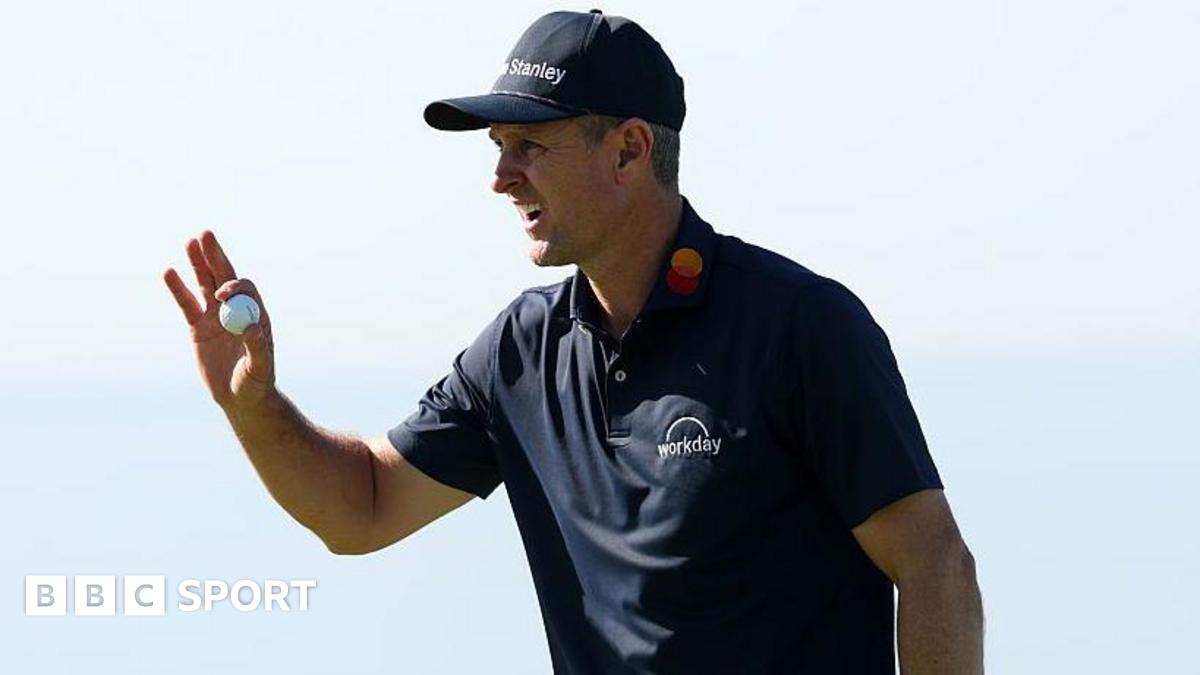
England’s Justin Rose shot a seven-under-par 65 to extend his lead to four shots at the Farmers Insurance Open while returning Brooks Koepka made the cut in San Diego.
The 45-year-old, who leads Ireland’s Seamus Power, sits on 17 under after breaking his own 36-hole record at the tournament.
Rose shot the round of the day on Friday at the more challenging South Course with an eagle, six birdies and just one bogey.
“I feel like in my career I’ve won on tough golf courses generally, so that’s my M.O., I would say,” said 2025 Masters runner-up Rose, who led by a shot after an opening-round 62.
“It’s the kind of a place I enjoy. It’s one of my favourite tournaments on Tour, just the whole area, the whole atmosphere, the whole vibe.”
Meanwhile, Koepka continued his return to the PGA Tour with a second-round 68 to make the cut on three under.
Five-time major winner Koepka, who agreed a release from his LIV Golf contract at the end of 2025, struggled on the South Course on Thursday, shooting a round of 73.
But on the North Course he found his form in his first PGA Tour event in four years, sinking an eagle putt on the 17th.
“I think [Thursday] I was excited to play, nervous, and kind of didn’t know what to expect, but today felt more normal, I guess,” Koepka said.
“But yeah, I mean, don’t get me wrong, I definitely still got antsy, but I guess maybe a little bit of nerves, just trying to figure it out and test – see where my game’s at too, right? I feel like I’m playing really well. It’s just been a long layoff.”
Xander Schauffele’s streak of making consecutive cuts – the longest active on tour at 72 – came to an end, while Patrick Cantlay, Gary Woodland, Will Zalatoris, JJ Spaun, Max Homa and Ludvig Aberg also all missed the cut.
Despite being over 30 years old, this epic historical war drama film directed and produced by Mel Gibson about Sir William Wallace is still hailed as a “masterpiece” by fans.
Mel Gibson stars in this iconic period drama
A classic period drama movie starring Mel Gibson has won over fans who praised it as “literally the best film ever made”, and it’s on Film4 tonight.
Braveheart is a 1995 epic historical war drama film directed and produced by Mel Gibson, who portrays Scottish warrior Sir William Wallace as the lead role. The film depicts Wallace as the medieval Scottish patriot who is spurred into revolt against the English when the love of his life is slaughtered.
Leading his army into battles that become a war, his advance into England threatens King Edward I’s throne before he is captured and executed, but not before becoming a symbol for a free Scotland.
Despite being over 30 years old, the film is still hailed as a “masterpiece” by fans and the film has an impressive score of 76 percent on Rotten Tomatoes, with countless five-star reviews from film fans.
One review posted: “One of the saddest and most epic things I’ve ever seen since the Planet of the Apes trilogy and Titanic; this movie shows the true meaning of love, passion and faith – that is how you make a masterpiece!”
Another added: “Quite literally the best film ever made. Holds up still, even 30 years later. Quality sweeping scenic views, amazing James Horner soundtrack, action, adventure, and a roaring rollercoaster of emotions that hits every vibe from its tales of love, tragedy of loss, moments of anger and vengeance, triumph, vindication, desperation, heart break… it’s all there.
“Many complain about the violence and gore, but it sets the stakes and makes clear the cold, dark and gritty nature of the world. Do yourself a favour and watch this masterpiece!”
A third said: “An epic and inspiring story full of heart put to film! One of the most iconic soundtracks of all time (Outlawed Tunes on Outlawed Pipes). The historical inaccuracies are there, [but] they don’t make this masterpiece a tad less spectacular.”
Another said: “Top three movies of all time. This movie is long but worth a watch. I’ve probably seen this movie more than 20 times. Great movie. Classic.”
Another wrote: “Beautiful cinematography, compelling characters, and intense, gory, and violent battle scenes, Braveheart is a thrilling and heartfelt experience after 30 years and has a great performance and direction from Mel Gibson.”
One more review praised the film by stating: “Braveheart is my favourite movie of all time. The story, action, characters and everything is perfect. The action in this movie is great.
“It’s a masterpiece. I love every second of this movie and it delivers one of the most iconic lines. This movie is a masterpiece and I’m not taking that back.”
Somebody else noted: “Astonishing movie. If you enjoy action-packed sequences of angry Scots, harrowing tales of love and impressive acting, then this movie is for you.”
Braveheart airs on Saturday January 31 on Film4 HD at 9pm.
Taiwan navy Hai Hu (SS-794) submarine is anchored inside a naval base in Kaohsiung, Taiwan, 09 January 2025. Taiwanese President William Lai (Lai Cheng-te) pledged in his new year speech to boost Tawan’s defense budget amidst rising tensions with China. File. Photo by RITCHIE B. TONGO / EPA
Jan. 30 (Asia Today) — Taiwan’s first domestically built conventional submarine completed its first submerged sea trial Thursday, a milestone for an eight-boat program aimed at strengthening deterrence against China.
The submarine, named Hai Kun and also known as Narwhal, conducted a shallow-water submerged navigation test and returned safely to port near the southern city of Kaohsiung, according to Taiwan’s China Shipbuilding Corp., the state-linked builder leading the project.
The company said the program has faced obstacles because of international constraints and pressure from China but described the trial as a key step before staged sea testing continues.
Beijing has long opposed Taiwan’s submarine program. A Chinese newspaper commentary described the vessel as having performance issues, reflecting Beijing’s criticism of Taipei’s defense buildup.
According to people familiar with the trial, the test focused on basic checks such as watertight integrity and underwater stability at shallow depth, with later trials expected to proceed to deeper dives and stress testing.
The diesel-electric submarine is about 70 meters long with an underwater displacement of about 2,800 tons and a crew of about 60, according to published specifications.
Taiwan launched the first boat in September 2023 and the delivery timeline has slipped from earlier targets. The first vessel is budgeted at NT$49.36 billion (about ₩2.26 trillion, about $1.57 billion), with Taiwan aiming to have at least two of the new submarines operational by 2027.
The program has drawn scrutiny in South Korea after court rulings found contractors linked to Taiwan’s submarine effort guilty of leaking torpedo-launch system design documents, a case that raised concerns about possible technology transfer.
Danish company will replace Hong Kong-based firm, CK Hutchison, after Trump claimed strategic waterway was controlled by China.
Published On 31 Jan 202631 Jan 2026
Share
Danish firm Maersk will temporarily operate two ports on the Panama Canal after a court ruled that contracts given to a Hong Kong firm were unconstitutional.
The Panama Maritime Authority (AMP) announced the changes on Friday, a day after the Central American country’s Supreme Court invalidated port contracts held by Hong Kong-based firm CK Hutchison.
According to the court ruling that annulled the deal, CK Hutchison’s contract to operate the ports had “disproportionate bias” towards the Hong Kong-based company.
On Friday, the AMP said port operator APM Terminals, part of the Maersk Group, would take over as the “temporary administrator” of the Balboa and Cristobal ports on either end of the canal.
Maersk takes over from the Panama Ports Company (PPC) – a subsidiary of CK Hutchison Holdings – which has managed the ports since 1997 under a concession renewed in 2021 for 25 years.
The canal, an artificial waterway, handles about 40 percent of US container shipping traffic and 5 percent of world trade. It has been controlled by Panama since 1999, when the US, which funded the building of the canal between 1904 and 1914, ceded control.
Washington on Friday welcomed the decision, but China’s Foreign Ministry spokesman Guo Jiakun said Beijing “will take all measures necessary to firmly protect the legitimate and lawful rights and interests of Chinese companies”.
For its part, PPC said the ruling “lacks legal basis and endangers … the welfare and stability of thousands of Panamanian families” who depend on its operations.
Tens of thousands of workers dug the 82km- (51-mile-) passageway that became the Panama Canal, allowing ships to pass from the Pacific Ocean to the Atlantic without having to travel around the northernmost or southernmost ends of the Americas.
Panama has always denied Chinese control of the canal, which is used mainly by the US and China.
This time 36 years ago, Fabrice Morvan was preparing for his first Grammy Awards. It had been a wild few years for the 23-year-old Parisian and his best friend Robert Pilatus from Germany. The duo known as Milli Vanilli had rocketed to fame, going from obscure dancers in Munich to dominate the pop music scene. Not only were they nominated for best new artist, but they were expected to perform live. Underneath it all, the pair were quickly reaching their breaking point.
Don Henley’s “The End of the Innocence” was nominated for both song and record of the year. Indeed, for the tens of millions of Milli Vanilli fans who bought their records, the 1990 Grammy ceremony marked an end of innocence of sorts. To this day, Milli Vanilli are the only artists in the history of the Grammys to have their award revoked.
L-R: The pop duo Milli Vanilli comprised of Fab Morvan and Rob Pilatus, the subject of the Paramount+ documentary Milli Vanilli, streaming on Paramount+ beginning October 24, 2023.
(Ingrid Segeith/Ingrid Segeith/Paramount+)
“Rob and Fab,” as they were known, never sang — live or in studio — on any of the smash hit singles from their 6x platinum debut North American album, “Girl You Know It’s True.” Their Grammy performance was them lip-synching to a playback.
The real singing was done by paid session vocalists John Davis, Brad Howell and Charles Shaw while Rob and Fab captivated with their charisma, athletic dance moves and eye for style. In the wake of the fallout, Milli Vanilli remained steadfast that what they did was wrong. There was, in fact, plenty of blame to go around even if Rob and Fab suffered the brunt of it.
“They removed the platinum records from the wall at Arista,” says Morvan, now 59. He is perched on the edge of a poolside lounge chair from a boutique hotel in the heart of Hollywood. It’s a sunny December day, but he’s dressed all in black with glasses to match, slim fingers adorned with a custom silver skull ring. He loves the sunshine, but offers for my sake to move somewhere in the shade. Able to pass for decades younger, he now basks in life on the other side of infamy.
“They say the truth will set you free. The truth takes the stairs while the lies take the elevators. And that is true,” Morvan said. “So finally, after 35 years, my truth comes to the surface.”
(Stephen Shadrach)
Now, in a redemption as astounding as his rise, Morvan is back in the running for the 2026 Grammys as the only person in Recording Academy history nominated after a prior revocation.
This time, the voice is unmistakably his. Nominated in the audio book, narration, and storytelling recording category for his memoir “You Know It’s True: The Real Story of Milli Vanilli,” Morvan’s lilting French dialect and soft tone are hypnotizing and he has a natural knack for storytelling. The recording was performed alone in his home studio.
“They say the truth will set you free. The truth takes the stairs while the lies take the elevators. And that is true. So finally, after 35 years, my truth comes to the surface,” he contends. “And people, they get it, they understand that.”
Sadly, Rob Pilatus isn’t here to see it. Unable to handle the fallout and struggling in addiction, he died in 1998. In one of the more moving parts of his memoir, Morvan speaks to his former partner, laying bare for the first time some of the more unhealthy aspects of their relationship but in a way that makes clear his love for Pilatus runs deep.
After Pilatus’ death, Morvan tried his best to move on. He taught French at a Berlitz school for a while when not performing at small venues. “I’m not even looking at becoming big,” he told Times journalist Carla Rivera in a 1997 profile. He even had a stint on radio hosting “Fabrice’s Fabulous Flashbacks” for KIIS-FM. But he always returned to making music.
“Music was always there with me,” he says, his excitement building. So when it came to moving forward in life, and, I said, ‘OK, what am I going to do?’ Music kind of popped up and said, ‘Hey, show me how much you love me.’ And then I worked on that, and I learned how to play guitar, and I learned how to produce, and I learned how to write … it allowed me to take the pain away, to remove it.”
But after 20 years in Los Angeles, Morvan felt it was time to leave “Hotel California,” as he calls it, for opportunities in Europe. In a follow-up Zoom call from his home in Amsterdam, he confides that he almost felt like giving up, but figured maybe a change of scenery was what he needed.
“I was very disillusioned,” he says, headphones crowning his dreadlocked updo. “I found a producer that I could work with and build something with, but due to certain circumstances, it didn’t come together. So I met some Dutch people that wanted to launch a fashion line. And I heard that Holland was a place where dance music was evolving.”
Becoming a DJ, he played festivals and kept Milli Vanilli’s legacy alive, performing with a live band.
Morvan with his wife Tessa van der steen and their four children
While preparing for a project about 15 years ago, Morvan met his current partner, Tessa van der Steen, who is Dutch and works as a health and fitness coach and alternative medicine practitioner. Together, they have four children: a 12-year-old boy, 9-year-old girl, and a set of 4-year-old twin boys.
During Milli Vanilli’s heyday, powerful male (mostly white) figures held the cards, but in this phase of his life it’s women who play big roles. Not mentioned in his book is Kim Marlowe, who Morvan says, in the 1997 Times article was his manager and best friend. They at one point married; Marlowe quietly filed for divorce in L.A. in 2024.
Van der Steen, however, is the love of his life. She had no idea who he was when they first met, he was simply “Fabrice.” And according to Morvan, she is fiercely protective. “Fab is the most loving partner and father I could ever imagine,” Van der Steen writes over email. “We are soulmates. We have been together for more than 15 years. We understand each other, and it happens often that we are thinking of the same things, without saying a word.” She champions his efforts to release original music and continue performing.
In recent years, changes in culture, technology and the music industry have opened up conversations casting Rob and Fab in a more sympathetic light. Morvan himself took part in the well-received 2023 Paramount+ documentary “Milli Vanilli.” That same year, “Girl You Know It’s True,” a well-made biopic directed by Simon Verhoeven, came out.
And Morvan was caught off guard when Ryan Murphy featured Milli Vanilli prominently in his 2024 series on the Menendez brothers, a move introducing the group to new generations unfamiliar with the story. Motivated by the renewed interest, he recorded a stripped down, acoustic version of the Diane Warren-penned hit “Blame It on the Rain.”
As recently as November, Milli Vanilli came up in the zeitgeist, sparked by a comment on X by veteran producer Jermaine Dupri commenting on AI “artists” charting on Billboard.
Of course there are still detractors, but in an era in which public cancellations abound and apologies are scrutinized for any whiff of inauthenticity, Milli Vanilli’s wrongdoings can now seem quaint.
Benjamin Matheson, assistant professor at the University of Bern’s Institute on Philosophy, studies collective shame and writes on celebrity apology. He offers the startling thought that certain fans might be more willing to forgive a moral wrong, even an egregious one like unlawful intercourse with a minor in the example of director Roman Polanski, as opposed to artistic deception because it can be seen as more authentic.
“I think that perhaps,” Matheson writes over email, “Milli Vanilli suffered because they were an early ‘created’ pop band, and the public hadn’t been acclimatized to this kind of music. Whereas now I think people are much more comfortable with autotuning, AI music, and so on — though I’d love it if there was a bit more push back on this kind of thing.”
Morvan has plenty of thoughts on the state of the music industry past and present. He welcomes the change in perspective, and while he doesn’t live in regret, looking back, he would give his younger self a little advice.
“Keep working on your craft now. No matter what, and don’t ever start drugs. And don’t let your buddy Rob start with that. With those two, things would have been different.”
The pop duo Milli Vanilli comprised of Rob Pilatus(left) and Fab Morvan are the subject of the Paramount+ documentary Milli Vanilli, streaming on Paramount+ beginning October 24, 2023.
(Paul Cox/Paramount+/Paul Cox/Paramount+)
When the Los Angeles Tribune editorial staff selected “Girl You Know It’s True” as its movie of the year, Morvan met Parisa Rose, his co-writer and executive producer for the recording of the memoir. Rose, a first-time author and mother of two, first met Morvan when she interviewed him for the quirky paper — now in its fourth revival. She is now chief operating officer of the Tribune, which has expanded to include a publishing house.
Rose, who grew up in Pasadena, helped Morvan reckon with parts of his background he had long buried. One of the most compelling parts of the memoir is when he breaks the fourth wall, narrating letters to individuals from his past.
“You need to say everything you have never said before to them that you’ve always wanted to say,” she says of the exercise they conducted for the interludes. “You need to know that this is the last conversation you will ever have with them. And you need to imagine they are sitting across from you now.” Reached over the phone, Rose said she also helped with research, uncovering details on the seaside sanatorium in France where Morvan spent much of his early childhood.
A great part of Morvan’s motivation for the memoir was to leave a legacy for his kids. His oldest son is getting into music and recently found an old Milli Vanilli vinyl and plays it along with Daft Punk and Michael Jackson. Remaining “zen” about the idea of winning, he’s enjoying the moment. And the big dreams never die. He plans to tour in the next year and come back to perform in America. And who knows? Maybe one day he can play Coachella.
He’s particularly thrilled over his Grammy outfit, a collaboration with Spanish designer Helen López, whom he previously worked with on a Milli Vanilli-inspired line. “When you’ll see what I’m wearing … you’ll see that I don’t play,” he says with a twinkle in his eye. “No matter what the outcome in life, you have to just be, be in the moment. Enjoy the moment. Whatever happens will lead you to something else. I have no expectations.”
Rodriguez calls for healing ‘wounds left by political confrontation’ while announcing notorious El Helicoide prison to shut down.
Published On 31 Jan 202631 Jan 2026
Share
Venezuela’s interim President Delcy Rodriguez has announced an amnesty bill that could lead to the release of hundreds of prisoners, her latest major reform since the US military abducted the country’s President Nicolas Maduro and his wife earlier this month.
“We have decided to push ahead with a general amnesty law that covers the whole period of political violence from 1999 to the present day,” Rodriguez said on Friday.
Recommended Stories
list of 4 itemsend of list
Speaking at a gathering of justices, magistrates, ministers, military officials and other government leaders, the acting president said the National Assembly would take up the amnesty bill with urgency.
“May this law serve to heal the wounds left by the political confrontation fuelled by violence and extremism,” Rodriguez said in the prerecorded televised event.
“May it serve to redirect justice in our country, and may it serve to redirect coexistence among Venezuelans,” she said.
Rodriguez also announced the shutdown of El Helicoide, a notorious secret service prison in Caracas, where torture and other human rights abuses have been documented by independent organisations.
El Helicoide, she said, will be transformed into a sports, social and cultural centre for the surrounding neighbourhoods.
Rodriguez made her announcement before officials whom former prisoners and human rights watchdogs have accused of overseeing El Helicoide and other detention facilities.
The Venezuelan-based prisoners’ rights group Foro Penal estimates that 711 people are in detention in facilities across Venezuela over their political activities. Of those, 183 have been sentenced, the group said.
Foro Penal President Alfredo Romero welcomed the planned amnesty but said it must apply to all prisoners “without discrimination”.
“A general amnesty is welcome as long as its elements and conditions include all of civil society, without discrimination, that it does not become a cloak of impunity, and that it contributes to dismantling the repressive apparatus of political persecution,” Romero wrote in a post on social media.
Foro Penal has calculated that some 302 prisoners have been released by Rodriguez’s government in the aftermath of the abduction of Maduro by the US.
The organisation later released a video clip on social media of what is said showed the moment that human rights worker Eduardo Torres was released from prison on Friday night, following his detention since May 2025.
Translation: Our colleague from @proveaong Eduardo Torres has been released from prison, human rights defender, former political prisoner.
Families and rights advocates have long demanded that charges and convictions against detainees who are considered political prisoners be dropped.
Government officials – who deny holding political prisoners and say those jailed have committed crimes – report that more than 600 people have been released from prison, but they have not been clear on the timeline and appear to be including prisoners released in previous years.
Weekly insights and analysis on the latest developments in military technology, strategy, and foreign policy.
The U.S. Navy’s top officer says global proliferation of increasingly capable air defense systems underscores the vital need to move ahead with work on the F/A-XX next-generation carrier-based fighter. He further warned that the Navy’s “ability to fly with impunity” using non-stealthy types like the F/A-18E/F Super Hornet, even against smaller nation-state adversaries like Iran and non-state actors, is now “fleeting.”
A rendering of Northrop Grumman’s proposed F/A-XX design. Northrop Grumman
The “next-generation airframe, F/A-XX, is so vital,” Caudle said yesterday. “This [carrier] air wing of the future design is so important for so many reasons … nothing delivers the mass of an air wing if you want to deliver mass fires.”
“I know these things are expensive, and I know the defense industrial base is compressed, but we have got to figure out how to walk and chew gum here with aircraft,” he added. It is worth noting here that both Boeing and Northrop Grumman have pushed back publicly, to different degrees, on concerns that the U.S. industrial base cannot support work on two sixth-generation fighter programs simultaneously.
You can listen to Adm. Caudle’s full opening remarks at the Apex Defense conference and the follow-on question-and-answer session in the video below.
CNO APEX REMARKS
Caudle has long been outspoken in his support for F/A-XX, which is the Navy’s planned successor to its F/A-18E/F Super Hornet fighters and EA-18G Growler electronic warfare jets. In addition to being very stealthy, the sixth-generation jets would come with increased range and other advancements, giving the Navy’s carrier air wings a major boost in kinetic capability. F/A-XX will also be able to perform electronic warfare and intelligence, surveillance, and reconnaissance (ISR) missions, as well as contribute to battle space management.
The CNO highlighted many of these expected capabilities in his comments yesterday. He also called particular attention to how “vital” F/A-XX will be because of “the CCAs [Collaborative Combat Aircraft drones] that it will command and control.”
A rendering depicting members of General Atomics Gambit drone family operating from a U.S. Navy Ford class aircraft carrier. General Atomics is one of four companies now under contract to the Navy to develop conceptual carrier-based CCA designs. General Atomics
“But the bigger part is … just the ever-lowering cost of entry” when it comes to air defense threats, Caudle said. “The folks that used to be not in [the] headspace that I needed a stealth aircraft of this level to fly a mission into their country, will gain capability that the F-18 will not match against.”
“This is an ever-evolving theme, and when you’ve got partnerships … well coupled with each other across China and Russia and Iran and North Korea, and terrorist groups that are getting that kit from all of those through back-channel ways, our ability to fly with impunity with our existing airframes is fleeting,” he continued. “So, if I don’t start building that [F/A-XX] immediately, you’re not going to get it for some time.”
“I hate to say it, sounds cliche, but you know, when things heat up in Iran, guess who steamed over there? Right? It was the United States Navy and the Abraham [Lincoln Carrier] Strike Group,” the Navy’s top officer added. “So you can imagine what that looks like 10 years from now, with a different Iran, with different capability, that can go against F-18 capabilities of today.”
An F/A-18E Super Hornet seen landing aboard the Nimitz class aircraft carrier USS Abraham Lincoln in January 2026. USN
U.S. military operations in and around the Middle East in the past two years have provided substantial evidence to underscore Caudle’s remarks. There were multiple reported instances in which Iranian-backed Houthi militants in Yemen were able to threaten existing fourth and fifth-generation U.S. fighters, at least to a degree, with their relatively modest air defense capabilities. Sources differ on the total number, but the Houthis were also able to successfully down 20 or so MQ-9 Reaper drones.
🇾🇪🇺🇸 | The Houthis show footage from the shootdown of another U.S. Air Force MQ-9 Reaper UCAV.
If I’m not mistaken, that would be the 20th MQ-9 downed by the Houthis from Yemen. pic.twitter.com/SCwRVLSs7s
— Status-6 (War & Military News) (@Archer83Able) April 18, 2025
TWZ has previously explored in detail the scale and scope of Houthi air defenses, as well as their ability to punch above their weight, and not just against U.S. forces. Infrared sensors and seekers, including the repurposing of heat-seeking air-to-air missiles as surface-to-air weapons, have been a major factor, given that they are not impacted by radar cross-section-reducing features on stealthy targets. They are also passive, meaning that they do not pump out signals that can give opponents advanced warning that they are being tracked and targeted.
Examples of heat-seeking air-to-air missiles that the Houthis have repurposed as surface-to-air weapons. Houthi-controlled media
Infrared capabilities can also help in cueing traditional radars, and pairing the two together offers benefits for spotting and tracking targets, whether they have features to reduce their radar and other signatures or not. This also just allows the radars to not have to start radiating (and expose themselves as a result) until very late in the engagement cycle. The Houthis have also focused heavily on mobile systems that are hard to find and fix in advance, and that present additional complications given their ability to pop up suddenly in unexpected locations.
Houthi Fater-1 radar-guided surface-to-air missiles on parade in 2023. The Fater-1 is a copy or clone of the Soviet 3M9 used in the 2K12 Kub/SA-6 mobile surface-to-air missile system. Mohammed Hamoud/Getty Images
The Tabas road-mobile surface-to-air missile system seen here is one of the more modern types in Iranian service. Iranian State Media
This all, in many ways, reflects broader air defense global trends that have been emerging in China, Russia, North Korea, and elsewhere. As Adm. Caudle noted yesterday, there has also been cooperation on various levels between America’s adversaries, well beyond Iran and the Houthis, on the development and proliferation of more capable air defense systems.
The threat picture also goes beyond individual anti-air weapons and sensors. Fully-networked integrated air defenses, which offer a multitude of benefits when it comes to operational flexibility and more efficiently utilizing available resources, are only set to become a bigger part of the equation. These networks will be able to detect, successfully track, and engage targets in ways that federated air defense systems cannot. The barrier to entry in acquiring these capabilities is likely to keep dropping as time goes on, as well.
The Navy does still, of course, see F/A-XX as critical to projecting carrier-based airpower into denser, higher-end air defense threat ecosystems, especially in any future conflicts against a major competitor like China or Russia. A year ago, the U.S. Air Force released a report projecting that American aircraft will be challenged by anti-air missiles with ranges up to 1,000 miles by 2050.
“This [F/A-XX] is, again, a global solution, not just for a pressing scenario,” Adm. Caudle said yesterday.
The F/A-XX saga still has yet to play out, but Iranian air defenses, in particular, look to have emerged as a major factor in whatever the future might hold for that program.