In his State of the Union address, US President Trump reiterated claims the US “obliterated” Iran’s nuclear programme last year, contradicting his special envoy Steve Witkoff, who said Iran is “one week away” from a nuclear bomb.
THE daughter of a 63-year-old grandmother who was kidnapped from her home and held for ransom three years before Nancy Guthrie was snatched has branded the investigation a “circus.”
Zoe Lopez, whose mother Maria was taken in 2023 and never returned, has also offered advice to heartbroken Today Show host Savannah Guthrie and her family.
Sign up for the Showbiz newsletter
Thank you!
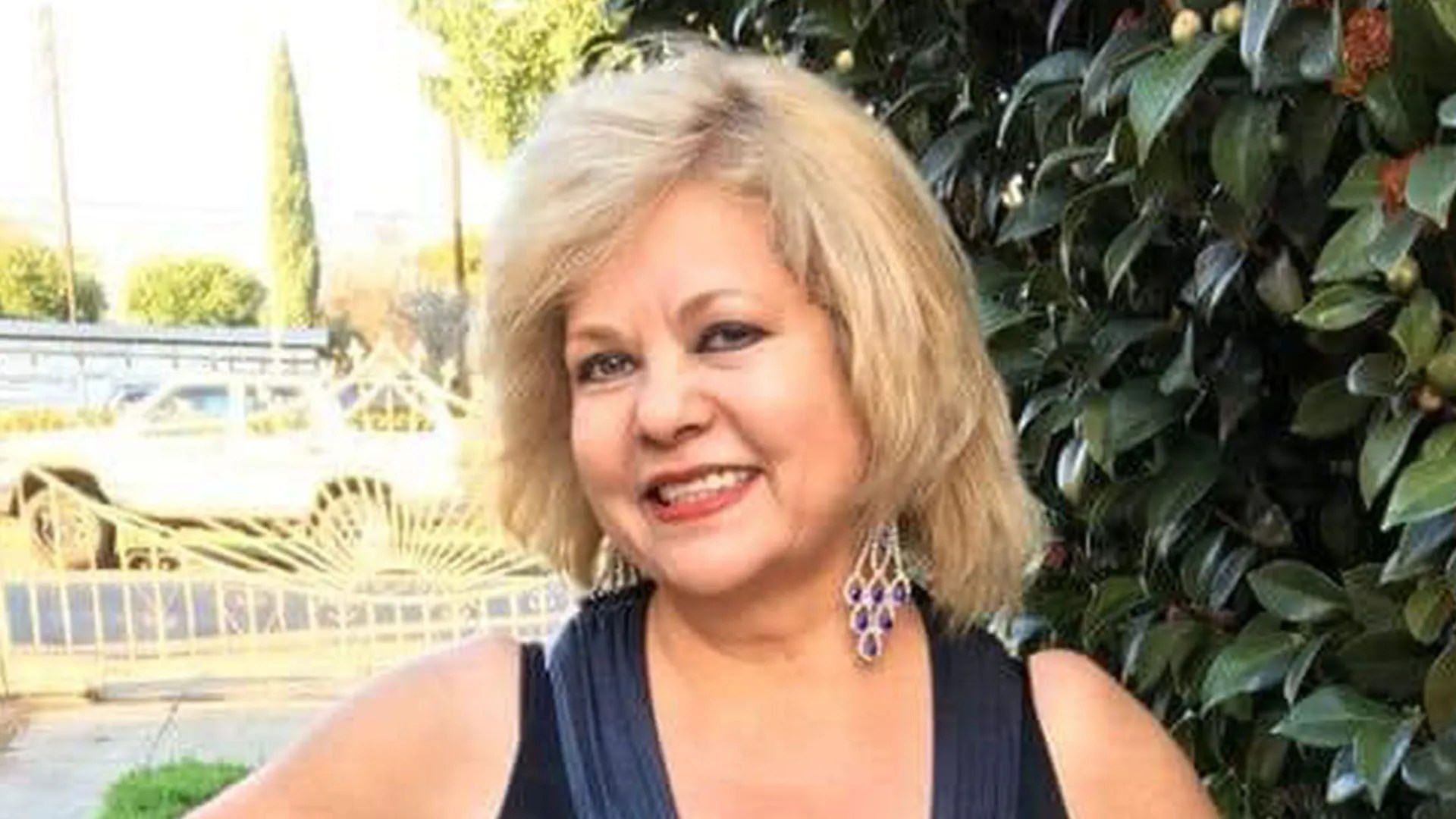
American citizen Maria del Carmen Lopez was 63 when she was taken from her home in MexicoCredit: Facebook / FamilyNancy Guthrie (left) is the 84-year-old mother of US journalist and television host Savannah Guthrie, who went missing from her home in Tucson, Arizona, on February 1, 2026Credit: ReutersA picture of a gun was released by the FBI and is believed to have been used to abduct Maria Lopez. It is unclear when the picture was takenCredit: FBIMaria’s daughter, Zoe Lopez, is still fighting to get answers and have her mom returned home safely after she was kidnappedCredit: Instagram / zoel23
It’s been three weeks since Savannah’s mom was snatched from her home in Arizona, and police are begging the public for help after releasing disturbing doorbell footage of an armed, masked man at the front door minutes before the kidnapping.
The FBI is working with the Pima County Sheriff’s Department, which had been criticized for its handling of the case, and has received more than 21,000 tips.
In an emotional exclusive interview with The U.S. Sun, Zoe said her heart aches for the Guthrie family: “You kind of just go numb. You feel like, ‘This isn’t really happening.’
“My heart sank when … I believe it was her first statement, somebody had sent me.
“I was hesitant to post anything or to comment on it, but unfortunately, I do know her pain.
“I understand the confusion, and I understand the anger, and the sadness, and the heartbreak that she has to deal with every single day, and every single minute. It’s devastating.
“She might feel like, ‘Well, nobody understands.’ I do.
Most read in Entertainment
“It’s been three years, and absolutely nothing is normal about my life. You lose a part of yourself that very day.”
Zoe also slammed the Guthrie investigation and public ransom notes, saying the authorities need to get things under control and “reset” the case.
She said, “This is being handled in a very careless [way]. A circus, a complete circus. And this is something so sensitive.
“I am baffled that so much information is just being brought out in real time.
“It’s been three weeks of chaos. There’s still time for them to get it under control. I think that they should be private about this.
“The loss of control. I can’t imagine how damaging it is to them [the family] emotionally.”
Zoe Lopez [far right] and her family begged former President Joe Biden to help find her mom, Maria, who has now been missing for three yearsCredit: Courtesy of FamilyThe FBI’s Los Angeles Field Office issued an appeal for help in finding Maria, and is still investigating the caseCredit: FBI
Pima County Sheriff Chris Nanos has reportedly “locked down” the case, and there is reported tension between his team and theFBI.
They have faced backlash for many decisions made amid the search for Nancy, including sending DNA samples to be tested at a facility in Florida, instead of letting the FBI use their lab in Quantico, Virginia.
Sheriff Nanos also admitted he likely released the Guthrie home as a crime scene too early.
This allowed reporters to access the property, where they discovered and photographed blood droplets on the front steps that investigators had reportedly not yet addressed publicly.
Zoe said, “They’re missing a lot of steps, and getting to a lot of important stuff days later, [it] is extremely concerning.
“It’s scary, because it makes you think, well, ‘Who are these agents, and how much experience do they have to be handling a case of this magnitude?’ It’s a kidnapping. It’s absurd.”
Similar to her mom’s case, she believes those responsible for taking 83-year-old Nancy were not professionals or cartel-related.
She said, “They saw an opportunity. They’re driven by money.”
Pain & paranoia
Zoe’s mom, Maria, a US citizen, was kidnapped on February 9, 2023, in Pueblo Nuevo, in the Mexican state of Colima, where she had returned to retire with her husband.
She was alone at home watering her garden after shopping when she was approached by “four or five individuals” who bundled her into a white van.
An eyewitness told authorities that at one point she was seen on the ground after either being struck or fainting during a struggle.
But the kidnappers eventually got her into the vehicle and fled the scene.
Zoe and her family received multiple ransom calls demanding large amounts of money, with the first call coming within 24 hours, and setting deadlines they had to meet.
She is unable to reveal whether they paid the kidnappers amid the ongoing investigation.
Zoe, who worked in road management for professional boxers when her mom was taken, believes Savannah has a long road ahead and might end up giving up her role as a host on the Today Show.
She said, “It took me months to go get groceries, to be honest. I was so scared. And although the kidnapping happened in Mexico, I was afraid.
“I was always scared that somebody was following me. People did recognize me once it went public.
“I couldn’t be out because people [would say], ‘Oh, you’re the daughter of the lady that got kidnapped.’ So it’s just safer to be home.
“It took about a year and a half before I decided to take a different role, still in the boxing world, but more on a quieter level, where I’m designing outfits for certain boxers.
“I’m going back into production, working with special teams and stuff, traveling.
“She [Savannah] might not be a reporter after this. She might not want to be in the public eye, or it might give her purpose and make her say, ‘I’m supposed to be here. I have to continue to advocate for my mom.’
‘Survivor’s guilt’
“My heart aches for the family. When we were going through the uncertainty daily, not knowing… and then you come to a point, at least for them, they’re weeks in now, where you just feel alone, like nobody understands how bad this aching pain is. It’s a fear.
“Your body is in shock day in and day out.
“There has to be a way I can say, ‘Hey, make yourself some tea.’ You know? ‘Hug each other. Cry.’
“I think that’s another thing, too: it’s okay to fall apart. It’s okay not to be okay. Forcing yourself to be strong for the public, or forcing yourself to be strong for others, is going to be damaging to you.
“You need to find the energy, find that strength from deep down inside, but you also need to take those small moments, even if it’s 20 or 30 minutes. It’s okay, just hold on to each other.”
Heartbreakingly, Zoe says Savannah may learn that she can’t trust everyone around her, as some people who reach out to see how she is may not have good intentions.
“It’s really hard to even say this, but tune out the noise from the outside because she is a reporter and she is in the public eye,” she advised.
“But try to understand that not everybody is going to reach out to be there for you.
“They will reach out to get information, to see where you’re at, and that could be extremely damaging to you.”
She went on, “Her life is gonna change completely. And it’s probably gonna be the best thing for her to take some time just for her.
“It’s been three years for me, and I’m still learning. I feel like I’m learning how to walk again in the normal world and not feel guilty because I think that we carry that.
“That’s where I guess they call it like survivor’s guilt, you know? Like, why do I get to go to work? Why do I get to go out and have fun? Why do I get to put it aside for a little bit when I don’t know where she is?”
How to help
Tips for the Nancy Guthrie case should go to the Pima County Sheriff’s Department in Tucson, which is coordinating the local investigation.
The department’s non-emergency line is (520) 351-4900, and authorities ask callers to share any relevant sightings, video, or timeline details.
Information can also be reported to the Federal Bureau of Investigation at 1-800-CALL-FBI (1-800-225-5324) or through its official online tip system.
Tips for the Maria Lopez case should contact their local FBI field office or U.S. consulate.
In Los Angeles, the FBI can be reached at (310) 477-6565; information can also be submitted online at tips.fbi.gov.
Mexico rumors
Zoe said she and her family struggled to work with Mexican authorities and the FBI, as both tried to take control, mirroring the situation in Guthrie’s case.
“We reached out to the White House so many times through phone calls. She’s going to have to become relentless in pursuing other government officials as well,” she said.
“She [Nancy] is a U.S. citizen. If they did cross the border, then there should be coordinated searches, with federal agencies in Mexico working together with federal agencies here.
“You don’t know if you can fully trust the authorities there or whether they’re going to work together. Are they going to want to work with the FBI? Unfortunately for us, we learned quickly that they weren’t that open to working with them.
“They feel, ‘Well, it happened in our territory. This is our case. We will handle it.’ It’s kind of like a rivalry.
“At the end of the day, you’re looking for the same victim.
“It doesn’t matter whether it was across the border or here. The fact that you have these kinds of power struggles makes no sense.”
She explained that Mexican authorities are willing to allow families to pay a ransom, whereas the FBI tries to negotiate with kidnappers.
“We were definitely put in the middle because we didn’t know, ‘Do we follow the advice of the FBI and not pay the ransom, or do we pay the ransom and hope for the best? And how do we do that when we’re across borders?’
“It’s just constant torture — one phone call after another with different demands: ‘Do this now,’ or ‘If not…’ They set time frames, and more than anything, you need proof of life.
“You need to know, ‘Okay, you’re telling me you want this amount of money and that you have her. I need to speak to her.’ And that took a long time.”
Zoe and her family received what appeared to be a recording of Maria begging them to meet the kidnappers’ demands.
She said, “You live with the uncertainty of, ‘Where is she? How is she? What have they done to her? Is she alive? Is she dead?’
“As far as my situation, you lose everything, you really do.”
Zoe Lopez on the kidnapping of her beloved mom
“And then you have the speculations of everyone. You have the criticism on top. You have the heartache, the pain, your family, how do you wake up today and just try to be normal? You can’t, there isn’t no normal anymore.
“As far as my situation, you lose everything, you really do.”
Zoe, 42, has been with her husband for 25 years and has two children, much like Savannah, while Maria, a mother of seven, has 21 grandchildren and two great-grandchildren.
Discussing how the kidnapping affected her personal relationships, Zoe admitted, “They are all damaged, at least with my children; they’re dealing with the pain of losing their grandmother.
“So whenever your children hurt, you hurt with them. I feel it’s been trauma over trauma and pain over pain. I’m witnessing my kids are devastated over their grandmother.
“And in return, they’re seeing me falling apart over my mother. And having to find that strength of, ‘What would my mom do? How would my mother handle this situation with me? How do I handle the situation with my children?’
“Although it’s been 3 years, we have not given up. We hold on to hope.
“So for Nancy.. stay strong. Know that you’re loved, and that you’re being looked for, although it seems like a lot is going on, the people who matter, are hanging on to hope as well.
“For the bad guys who do have her, please give her up. She’s an elderly person. She deserves to be home.”
Two men were arrested in connection with another kidnapping in Mexico and have since been linked to Maria’s disappearance through DNA evidence from the crime scene.
However, authorities have not publicly confirmed any direct charge or prosecution in her case.
The FBI and Mexican prosecutors have been working jointly on the investigation, and the FBI’s Los Angeles Field Office has offered a reward of up to $20,000 for information that leads to her physical location.
Pima County Sheriff Chris Nanos has admitted that Savannah and her family could also be waiting “years” for answers about Nancy’s whereabouts.
“It’s exhausting, these ups and downs. But we will keep moving forward,” he told The New York Times.
“Maybe it’s an hour from now. Maybe it’s weeks or months or years from now. But we won’t quit. We’re going to find Nancy. We’re going to find this guy.”
A masked man with a gun and a backpack was seen covering the doorbell camera at Nancy Guthrie’s homeCredit: GettySavannah Guthrie appeared in an emotional video appeal on Tuesday as her family offered a reward of $1million for informationCredit: Shutterstock Editorial
Ukraine’s Deputy Foreign Minister Mariana Betsa attends a United Nations Security Council meeting on peace and security marking the fourth anniversary of Russia’s full-scale invasion in New York, New York, on Tuesday, February 24, 2026. Photo by Olga Fedorova/EPA
Feb. 24 (UPI) — The United Nations General Assembly on Tuesday adopted a resolution calling for an immediate, full and unconditional cease-fire in Russia’s war in Ukraine, despite the United States’ abstention and a failed U.S. bid to strip language identifying the Kremlin’s aggression.
President Volodymyr Zelensky of Ukraine thanked the nations for standing with Ukraine against Russia’s invasion.
“These are the right and necessary steps,” he said on social media. “And we will keep working actively to achieve peace, together with our partners.”
Among nations that abstained in the vote were China and the United States.
Washington had proposed a motion of division to vote separately on two paragraphs in the resolution, but it failed in an 11-69 vote, with 62 abstentions.
Ukraine had staunchly objected to the U.S. motion.
“Weakening or removing this language would send a very dangerous signal that these principles are negotiable,” Deputy Foreign Minister Mariana Betsa of Ukraine said, describing the motion as “deeply concerning and cannot be accepted.”
Tammy Bruce, deputy U.S. representative to the United Nations, said the war must end now, but that it “will require sacrifices and compromises” and called on “everyone to do all in their power to lower the rhetoric and engage in good faith.”
“As we’ve said, this resolution also includes language that is likely to distract from ongoing negotiations, rather than support discussion on the full range of diplomatic avenues that may pave the way to that durable peace,” she said.
“For this reason, the United States called for a vote on the two paragraphs and ultimately chose to abstain on the resolution.”
The move underscores the United States’ drift from Ukraine and its European allies under the Trump administration, which is seeking its own end to the war. It also aligns with Russia, whose deputy permanent representative, Anna Evstigneeva, told the Assembly that diplomacy is what is needed, not declarations, and that the U.N. resolution disregards Trump’s negotiations “to find a compromise.”
“Do not fall for it,” she said. “What you have before you is not an instrument of peace, it is an instrument of politicization.”
Russia began the war on Feb. 24, 2022, when it launched its full-scale invasion of Ukraine under the pretense of a special military operation to denazify its neighbor.
In the four years of war, Russia and its economy have been saddled with thousands of sanctions that have seen it turn to Iran, China and even North Korea for assistance, weapons and even foreign soldiers.
Ukraine has suffered about 55,000 soldiers killed in the war, according to Zelensky. About 20% of its territory has been illegally occupied by Russian forces. Russia has also been accused of unlawful deportation and unlawful transfer of Ukrainian children from occupied areas of Ukraine to Russia.
Russia is also being accused of weaponizing winter in an effort to break Ukraine’s resilience by depriving millions of electricity, heating and water amid freezing temperatures, Betsa told reporters in a press conference at the U.N. General Assembly with allied nations behind her.
“We reaffirm our unwavering commitment to ensure full accountability for crimes committed under international law,” she said. “Justice for victims is not optional.”
General Assembly Vice President Tania Serafim Yvonne Romulado, delivering remarks by the assembly’s president, Annalena Baerbock, emphasized that it was a permanent member of the Security Council who “continues to inflict untold suffering on the Ukrainian people” in violation of the U.N. Charter.
Nearly four million people are internally displaced, 5.7 million live as refugees and nearly one-third of Ukraine’s population, more than half of all children, have been forced to flee.
“We cannot allow the violation of international law to become the norm, and we must safeguard the founding principles of our Charter,” she said.
“And this Assembly can lead the way.”
Ukrainian demonstrators rally in Kyiv on February 12, 2022 to show unity amid U.S. warnings of an imminent Russian invasion. Photo by Oleksandr Khomenko/UPI | License Photo
Fifty-five-year-old Tabitha Iorchon used to work as a nanny at a rural primary school in her community, Demevaa, in Chanchanji District of Takum Local Government Area, in Taraba State, northeastern Nigeria. The job provided her with a steady income which she used to support her children and grandchildren who lived with her. She supplemented her earnings with farming.
Tabitha loved her job and was very fond of the children she cared for.
But that life has been snatched from her.
In September 2025, terrorists invaded Demevaa and surrounding communities in Chanchanji District. “They killed pregnant women and ripped their babies out of their bellies. They slaughtered men and cut off the hands of many people,” she recounted.
Tabitha is among those who escaped that night of terror. She, alongside other residents, fled to reach Chanchanji town, where they are now living in displacement. Her parents, who lived in a different neighbourhood and were weak and vulnerable, were left behind, but fortunately, they survived the attacks.
The genesis of violence
This is not the first time communities in southern Taraba have come under attack. However, locals say that early September last year was when the wave of violence reached Chanchanji District. It began with the discovery of two farmers dead on their farms. Before residents could make sense of the incident, more farmers were attacked and killed. The weeks that followed saw communities like Demevaa and Amadu raided.
Over the years, Taraba communities, such as those within Takum bordering Benue, have experienced attacks often described as farmers-herders clashes or carried out by local militia gangs. One of the most notorious figures linked to violence in the region was Terwase Akwaza, alias Gana, who, before his death, claimed that terrorists disguised as herders contacted him to carry out attacks in “about three states they want to [capture], being Plateau, Taraba, Benue…”.
Since the Nigerian Army killed Gana in September 2020, his once-cohesive network has fractured into rival factions, with groups led by criminals such as Fullfire and Chen now operating independently and often violently in border areas.
Residents in Chanchanji told HumAngle that herders often come to graze in the area during the dry season, but clashes have never occurred. HumAngle contacted Lashen James, the Taraba State Police Command spokesperson, but he did not respond.
Life in displacement
In the wake of the attacks, several displacement camps were established by non-government and faith-based organisations in Chanchanji town, an urban area in Takum to accommodate people fleeing the violence in Demevaa, Amadu, Tse-Bawa, Tse-Tseve, and other affected communities within the district.
Tabitha and several other displaced persons sought refuge at one of the camps. There, they rely on humanitarian organisations for survival. Although the food supplies are inconsistent, she said they felt somewhat safer there.
“Old people and children were dying because there was insufficient food,” she noted. “Our yams, guinea corn, millet and cassava were all destroyed and burnt by the terrorists who attacked our people.”
Several farmlands and barns had been set ablaze in the attacks. Photo: Monday Vincent
Tabitha said that even the tents in the camp are not sufficient and the available ones are always overcrowded. “We just spread our wrappers on the floor to sleep,” she said.
Despite the difficulties in the camp, the displaced persons persevered, hoping peace would eventually be restored. However, another wave of terror erupted on February 8, when terrorists attacked Chanchanji district and raided several villages. Locals said the terrorists returned the next day and unleashed more havoc.
No terror group has claimed responsibility for the attacks.
Avangwa Emmanuel, a resident of Tse-Bawa, told HumAngle that his father and three uncles were killed during the February incident. He noted that many others were killed in their homes that day. “They [terrorists] were heavily armed,” he added.
Avangwa and others from his village are currently taking shelter at a secondary school that has been converted into a temporary camp.
“No water, no food, nothing. Everybody is just struggling. Our major problem here is food. Also, what we need is peace. If there’s anything the government can do to restore peace so that we can return to our homes and continue our work, that is all,” he said.
Amadu, another community in Chanchanji District, was among the hardest hit. Terkuma Moses, the community leader, said scores were killed, and locals have fled to displacement camps. HumAngle could not independently confirm the figures as the police authorities did not respond to enquiries.
“The attackers come here daily. We’ve been living in perpetual fear. There have been many rape occurrences during these attacks,” Abraham Nyingi, a resident of Amadu, told HumAngle. He noted that no government official had been dispatched to assess the displaced persons’ situation. “We are at the mercy of humanitarian organisations. If the government really wants to help us, we would be very grateful,” he said.
Get our in-depth, creative coverage of conflict and development delivered to you every weekend.
Subscribe now to our newsletter!
Locals in Chanchanji said the recent attacks are the worst they’ve seen in the area. Photo: Moses Uko
“The environmental conditions are very harsh. Our children can’t go to school. We lack medical care,” he lamented.
In recent months, the worsening hunger has compelled some displaced persons to return to their communities. Tabitha said that none of those who left made it back. “They got killed,” she said. “Their bodies were found in the bushes.”
Life at a standstill
The school where Tabitha once worked has remained closed since the crisis began. She has lost not only her livelihood, but also her sense of independence, as she cannot return home or secure alternative work. She continues to fear for her elderly parents, who remain in the village. She sometimes reaches them by phone, and they tell her they are also experiencing food shortages, as their barns were burnt during the attacks.
Tabitha described the displacement as the worst experience of her lifetime.
“We lack basic things like food and we buy water since the camp doesn’t have a water supply. The harmattan season is still here, and many of us are still sleeping outside because all the rooms are overcrowded,” Tabitha said.
With the new arrivals following the February 8 attacks, she said the struggle for survival has intensified.
“I can’t further my education now. I can’t do any business. I’m just stuck here,” said Veronica Iorchan, a 22-year-old resident of Demevaa.
When the attacks began in September, she was in her final year at the Taraba State Polytechnic in Suntai. By the time she completed her studies in October, instead of returning home to a joyous celebration, Veronica was informed that her community was deserted. The rest of her family had moved to the Abaya IDP camp.
“I came straight to the camp from school,” she said, adding that she lost two of her uncles in the attack.
While the camp provides them with accommodation and food, Veronica said they must fend for themselves when it comes to obtaining hygiene products and toiletries, such as sanitary pads. Even though she is determined to seek employment in the host community, she feels unsafe whenever she leaves the camp. She dreams of a time when she can return home and make plans for her future.
A cry for peace
Tabitha looks forward to a time when she can return to her community, re-unite with her parents, resume her job as a nanny, and supplement her income with farming.
“That will only happen if there is peace,” she said.
While Avangwa is still grappling with the loss of his father and three uncles, he says the hardship at the makeshift camp intensifies with each passing day. He noted that Tse-Bawa is an agrarian community, and the crisis, which has persisted for about five months, has severely disrupted farming activities, as locals can no longer access their farms. Several farmlands and barns were also set ablaze in the attacks.
“So if we can have peace, then we can go back to our places and settle. All we need is just peace and nothing more,” he said.
Abraham calls on the government to urgently look into the crisis. “Our people do not really need much from the government,” he said. “Just secure us.”
Residents say the government’s lack of concern for their plight has been deeply shattering. Recently, religious leaders affiliated with the Catholic Church led a peaceful protest in Jalingo, the state capital, calling on the government to extend security interventions to the southern Taraba area, which includes Takum and Donga Local Government Areas.
“As a matter of urgency, adequate security personnel should be mobilised and deployed to the hinterlands, where this carnage is taking place unabated,” James Yaro, a priest and Vicar Pastoral of Taraba’s Catholic Diocese of Wukari, told journalists.
“The government at all levels must be deliberate in ensuring security guarantees and bringing enablers and perpetrators of these dastardly acts, or heinous crimes against humanity, to justice through their immediate arrest and prosecution, irrespective of their ethnic, political, and religious affiliations.” He added that, “IDPs require immediate intervention by the government.”
HumAngle wrote to the Taraba State Ministry of Special Duties and Humanitarian Affairs for comments but received no response at the time of filing this report.
Call the Midwife has confirmed Timothy Turner is set to face challenges in episode seven of series 15
Angie Quinn Screen Time Reporter
22:48, 24 Feb 2026Updated 22:52, 24 Feb 2026
Timothy Turner is set to face challenges during Sunday’s upcoming episode of Call the Midwife (Image: BBC / Neal Street Productions / Olly Courtney)
Timothy Turner is headed for a difficult ride in the forthcoming episode of Call the Midwife, and his parents will not be able to help.
The latest season of the BBC period drama is set to conclude on Sunday, 8 March, but before the season finale, it appears trainee doctor Timothy, played by Max Macmillan, will face challenges as he takes up work in Poplar.
In his first scenes on the show, Timothy is a young schoolboy who waits in a car whilst his dad attends to an older lady in dire need of medical attention. He was also a Boy Scout who got involved in Nurse Chummy’s (Miranda Hart) Christmas nativity, giving his dad a look of pride as he performed the violin in a memorable, heart-warming moment.
In the recent series of Call the Midwife, Timothy is sometimes absent due to his study commitments in Edinburgh as he trains to become a doctor. However, Timothy returns to Poplar on Sunday (March 1) for an exciting storyline, the BBC show confirmed on Tuesday.
Taking to Instagram, the show shared a string of photos of the trainee doctor, ranging from his upcoming scenes to him as a young boy.
Besides the nostalgic snaps, they wrote: “Countdown to Call the Midwife Episode 7: Timothy Turner steps up. In Sunday’s episode, we see the eldest Turner child put through his paces as a trainee doctor in the East End. And – without revealing too much – he has plenty to do…
“For actor Max Macmillan, the journey from a 12-year-old boy in Series 2 to a fully-grown medic has been unique in the history of our programme. What does it feel like to grow up on the set of such an iconic programme? And how does Max feel about the full role he’s now able to take in the drama?”
Max shared his excitement about his new plot after growing up on the show. He said: “It’s really exciting, because I’ve been in this show for over half my life – I was 12 when I started, and now I’m 25 – and a lot of it was just the wonderful shifting dynamic we had within the Turner family.
“But now, suddenly, Timothy has all these new responsibilities! I’m getting to explore a side of acting that I’ve always observed but never been a part of.”
Laura Main, who plays Shelagh, added: “I am so proud to be Max’s fake mum! There are strong bonds between us all, which have naturally changed and deepened over the years as everyone has grown up. Max has always been brilliant with the newer and younger additions to the Turner family, but to now see him carrying huge storylines as one of the adult actors is wonderful.
“He has a great relationship with Renee and Natalie, who are similar ages. He’s graduated into being a full member of the adult company, but he’s still the kind, funny, thoughtful, caring and intelligent person he always was.”
While Doctor Turner star Stephen McGann explained, “Watching Max grow up has been a real privilege. I have a son of my own, a little older than Max, and I think this helped me create a bond with both Max and his character of Timothy in the drama. But sadly for poor Max, he’s had to put up with my terrible dad jokes and wind-ups on set for years and years!”
The post concluded: “Sunday will see Timothy challenged where no parent is there to help. Will he be equal to it?.”
Taking to the comments, Call the Midwife fans shared their admiration for watching Timothy grow up on-screen, with one person writing: “It’s been wonderful watching Tim/Max grow up!”
A second pointed out: “He’s all grown up now!”, while a third chimed in: “The Boy becomes a Man (loveheart)”.
“From scout to doctor. He has grown from an adorable child to a young man”, penned one fan while another echoed the sentiment: “It’s been a privilege to watch Max grow up on screen as Timothy Turner.”
Call the Midwife airs Sunday at 8pm on BBC One and iPlayer
For the latest showbiz, TV, movie and streaming news, go to the new **Everything Gossip** website.
Ensure our latest headlines always appear at the top of your Google Search by making us a Preferred Source.** Click here to activate**** or add us as your Preferred Source in your Google search settings.**
Food products are displayed at a supermarket in Seoul on May 16, 2025, as major domestic food companies reported declines in first-quarter operating profits amid rising costs and weak consumer demand. File. Photo by Yonhap News Agency
Feb. 24 (Asia Today) — Major South Korean food companies are expanding cost-cutting and restructuring efforts after operating profits fell by as much as 30% last year amid a domestic demand slump and rising costs, industry officials said Monday.
Lotte Wellfood is running a voluntary retirement program for some employees as part of efforts to streamline its organization, according to industry sources.
The program targets workers 45 and older with at least 10 years of service. In addition to statutory severance pay, eligible employees with 10 to under 15 years of service would receive 18 months of base pay, while those with 15 years or more would receive 24 months, officials said.
The package also includes a 10 million won ($7,500) re-employment support payment and up to 10 million won ($7,500) in university tuition assistance per child.
Lotte Wellfood said it plans to pursue growth strategies such as developing major brands and expanding global business operations while improving organizational efficiency.
Binggrae carried out a similar voluntary retirement program in January, citing cost increases and weakening consumption, according to industry sources.
CJ CheilJedang has also signaled tighter management. Chief executive Yoon Seok-hwan told employees in a message earlier this month that the company needs “disruptive change and innovation,” outlining plans for business restructuring, financial improvements and organizational culture reforms.
The restructuring push follows a downturn in earnings. Industry data show operating profit last year fell 20.6% at CJ CheilJedang, 30.3% at Lotte Wellfood and 32.7% at Binggrae compared with a year earlier.
Companies have faced pressure from raw material price volatility, higher logistics costs and slowing consumer demand. Executives have also cited stronger consumer resistance to price increases, limiting their ability to pass through costs.
Some analysts cautioned that repeated short-term cutbacks could weaken competitiveness over time unless companies deliver results from new growth initiatives.
It was quite a moment when Sir Chris Bryant called the former prince “rude, arrogant and entitled” in the House of Commons, the BBC’s political editor writes.
One viewer headed their 10/10 review: “A Masterpiece of Emotion and Visual Beauty.”
They elaborated: “I’m absolutely in love with this series. After waiting two whole years for the next six episodes, I couldn’t help but binge them all in one go. And wow, it was worth the wait! The actors are phenomenal-so much emotion in their performances that they pulled me into every moment. I cried, laughed, and felt everything in between.”
A second reviewer wrote in their 9/10 assessment: “Like the Crown but much more captivating.”
A third critic awarded 10/10, describing it as “an utterly gorgeous series” and noted: “The Crown wasn’t historically 100% accurate either, but did we absolutely adore every second of it and appreciate how beautifully done the series was? Well, I did at least.”
They continued: “This series had me captivated on every level from the first second it began.”
Another viewer commented: “If you like The Crown, you’ll like this” and explained: “Romantic would be something like Pride and Prejudice or Bridgerton. This was more like Downton Abbey or The Crown, where in the drama is the focus.”
Witches is a fresh series in the works at Netflix, brought to you by the producers of The Empress.
The narrative will unfold in medieval Germany, tracing the lives of three sisters amidst the German witch hunts.
As per Deadline, the drama will delve into a family torn asunder by “suspicion, accusation and betrayal”, their struggle to safeguard loved ones from the “grip of fear and fanaticism”, and the “unyielding resistance” during one of “Europe’s darkest chapters”.
In a statement to the publication, producers Robert and Katharina Eyssen expressed their immense joy at finding a “creative home” at Netflix once again, following their collaboration on The Empress.
The duo affirmed that the streaming giant “truly understood” their artistic vision, having built up “trust” over many years with the platform.
They added: “As with The Empress, we are creating a family story centered on strong, complex, and defiant female characters.
“It is a radically emotional story that explores marginalization and persecution – a series that provokes thought, sweeps you along, and gets under your skin [sic].”
This announcement follows reports that filming has concluded for season three of the International Emmy-winning The Empress in Bavaria, Germany and the Czech Republic.
Production for the third season kicked off in September 2025 and it has been confirmed as the final instalment for the sprawling period drama.
The final series will comprise six episodes, delving into the aftermath of the Sardinian War and Emperor Franz (portrayed by Philip Froissant) returning from the frontlines burdened with trauma and guilt over the loss of thousands of young lives.
Empress Elisabeth von Wittelsbach (Devrim Lingnau) will support him as she battles for her marriage and the empire.
She will also encounter difficulties at court due to her deteriorating health, leading her to depart Vienna and embark on an unforeseen journey.
The Empress season 3 is set to launch on Netflix later this year.
For the freshest showbiz, TV, film and streaming news, head over to the new Everything Gossip website.
Ensure our latest headlines always appear at the top of your Google Search by making us a Preferred Source. Click here to activate or add us as your Preferred Source in your Google search settings.
The Empress season 3 will be released on Netflix later this year
**For the latest showbiz, TV, movie and streaming news, go to the new ** Everything Gossip ** website**
Ensure our latest headlines always appear at the top of your Google Search by making us a Preferred Source. Click here to activate or add us as your Preferred Source in your Google search settings.
In a significant foreign policy shift, Bolivia has reopened its doors to the United States Drug Enforcement Administration (DEA).
The move, confirmed on Monday, ends a nearly two-decade hiatus in bilateral efforts to stem drug trafficking.
Recommended Stories
list of 3 itemsend of list
Bolivian Minister of Government Marco Oviedo told local media this week that DEA agents were already operating in the country.
“The DEA is in Bolivia,” he said. “Just as the DEA is now present, we also have cooperation from European intelligence and police bodies.”
Oviedo explained that the initial focus of the law enforcement efforts would be to tighten border surveillance and dismantle trafficking networks.
He added that the cooperation with the DEA and European agencies was only the start of Bolivia’s expanded international efforts.
“We want neighbouring countries’ anti-narcotics agencies on board as well,” Oviedo said.
End to Morales order
The announcement marks an end to an order issued under former left-wing President Evo Morales in 2008, effectively expelling all DEA agents from the country.
Morales, the leader at the time for Bolivia’s Movement for Socialism (MAS), had accused the US of using drug enforcement efforts to pressure countries in Latin America to bend to its political and economic agenda.
Under Morales, all drug enforcement cooperation with the US came to a halt, and he refused to let DEA officers into the country, accusing them of destabilising his government. Diplomatic relations were likewise suspended.
In turn, MAS received strong support from rural parts of Bolivia, where the cultivation of coca, the raw ingredient in cocaine, is a key economic driver.
Bolivia, along with other Andean countries like Colombia and Peru, is a key producer of coca, which has traditional uses, including as a remedy for altitude sickness. Morales himself led a union of coca growers, or cocaleros, before taking office.
Advocates have accused the US’s militaristic “war on drugs” of harming impoverished rural farmers through the forced eradication of coca crops. Such campaigns, they argue, can leave farmers without a means of supporting themselves and their families.
MAS remained in power from the start of Morales’s term in 2006 until 2025, when its coalition fractured amid economic instability and internal fighting.
New political direction
In October 2025, two right-wing candidates proceeded to a run-off for the presidency: centrist Rodrigo Paz of the Christian Democratic Party and a former right-wing president, Jorge Quiroga.
It was the first presidential run-off in modern times for Bolivia, and it marked a sharp turn away from two decades of socialist government.
Both candidates made improving the relationship with the US a central pillar of their campaigns, viewing it as essential to solving Bolivia’s severe economic crisis.
Paz, who was educated in Washington, DC, argued that normalising ties would attract the international investment needed to modernise the energy and lithium sectors.
Meanwhile, Quiroga, a conservative who studied at Texas A&M University, campaigned on a more aggressive platform, including fiscal austerity and security partnerships with the US.
His vice presidential candidate, Juan Pablo Velasco, is credited with popularising the tagline “Make Bolivia Sexy Again”, a twist on US President Donald Trump’s slogan, “Make America Great Again”.
Paz ultimately emerged as the victor in the race, with nearly 54.9 percent of the vote. After his inauguration in November, Paz moved quickly to fulfil his promises by restoring diplomatic ties with the US.
Earlier this month, both Bolivia and the US agreed to appoint ambassadors to one another’s countries for the first time in nearly 18 years.
Uncertainty remains
But it is unclear to what extent the DEA will be operating in Bolivia. Left-wing leaders like Morales continue to have strong pockets of support, particularly in highland and rural areas.
Bolivian Foreign Minister Fernando Aramayo has said negotiations are still under way to finalise the specific areas of cooperation between his country and the DEA, as well as operational limits for the US agency.
A full agreement outlining the scope of the agency’s activities is expected in the coming months.
Since returning to office on January 20, 2025, Trump has intensified the US campaign against drug trafficking in Latin America, including by designating several major cartels as “foreign terrorist organizations”.
Trump has also pressured Latin American governments to take more aggressive actions against the illicit drug trade, using economic sanctions and military threats as leverage.
Already, in late December and early January, Trump has authorised two strikes on Venezuela on the premise of combating drug trafficking.
One, on December 29, targeted a port that the Trump administration said was used for drug smuggling. The second, on January 3, resulted in multiple explosions, dozens dead and the abduction of Venezuelan President Nicolas Maduro. He remains in custody in the US, where he faces drug trafficking and weapons possession charges.
Critics have argued that Trump’s anti-drug campaign has blurred the line between law enforcement and military activities.
The increasing use of military force against criminal suspects has raised concerns that human rights are being violated and legal processes circumvented, including through the use of extrajudicial killings.
One example has come as part of a military campaign called Operation Southern Spear.
On September 2, the US announced the first of nearly 44 “lethal kinetic strikes” against suspected drug-smuggling vessels in the Caribbean and Eastern Pacific.
As many as 150 people have been killed in the attacks. Operation Southern Spear has continued, despite international organisations like the United Nations questioning its legality and calling for its end.
US forces kidnapped Venezuelan President Nicolás Maduro on January 3. (AP)
The kidnapping of a sitting head of state marks a grave escalation in US-Venezuela relations. By seizing Venezuela’s constitutional president, Washington signaled both its disregard for international law and its confidence that it would face little immediate consequence.
The response within the US political establishment to the attack on Venezuela has been striking. Without the slightest cognitive dissonance over President Maduro’s violent abduction, Democrats call for “restoring democracy” – but not for returning Venezuela’s lawful president.
So why didn’t the imperialists simply assassinate him? From their perspective, it would have been cleaner and more cost-efficient. It would have been the DOGE thing to do: launch a drone in one of those celebrated “surgical” strikes.
Targeted killings are as much a part of US policy now as there were in the past. From Obama’s drone strikes on US citizens in 2011 to Trump’s killing of Iranian General Qasem Soleimani, lethal force has been used when deemed expedient. And only last June, the second Trump administration and its Zionist partner in crime droned eleven Iranian nuclear scientists.
The US posted a $50-million bounty on Maduro, yet they took him very much alive along with his wife, First Combatant (the Venezuelan equivalent of the First Lady) Cilia Flores.
The reason Maduro’s life was spared tells us volumes about the resilience of the Bolivarian Revolution, the strength of Maduro even in captivity, and the inability of the empire to subjugate Venezuela.
Killing Nicolás Maduro Moros appears to have been a step too far, even for Washington’s hawks. Perhaps he was also seen as more valuable to the empire as a hostage than as a martyr.
But the images of a handcuffed Maduro flashing a victory sign – and declaring in a New York courtroom, “I was captured… I am the president of my country” – were not those of a defeated leader.
Rather than collapsing, the Bolivarian Revolution survived the decapitation. With a seamless continuation of leadership under acting President Delcy Rodríguez, even some figures in the opposition have rallied around the national leadership, heeding the nationalist call of a populace mobilized in the streets in support of their president.
This has pushed the US to negotiate rather than outright conquer, notwithstanding that the playing field remains decisively tilted in Washington’s favor. Regardless, Venezuelan authorities have demanded and received the US’s respect. Indeed, after declaring Venezuela an illegitimate narco-state, Trump has flipped, recognized the Chavista government, and invited its acting executive to Washington.
NBC News gave Delcy Rodríguez a respectful interview. After affirming state ownership of Venezuela’s mineral resources and Maduro as the lawful president, she pointed out that the so-called political prisoners in Venezuelan prisons were there because they had committed acts of criminal violence.
Before a national US television audience she explained that free and fair elections require being “free of sanctions and…not undermined by international bullying and harassment by the international press” (emphasis added).
Notably, the interviewer cited US Energy Secretary Chris Wright’s admission made during his high-level visit to Venezuela. The US official brushed aside demands for short-term elections, instead arguing that they could be held by the end of 2027. In contrast, Rodríguez stressed that Venezuela’s electoral calendar is set by the country’s Constitution.
As for opposition politician María Corina Machado, the darling of the US press corps, Rodríguez told the interviewer that Machado would have to answer for her various treasonous activities if she came back to Venezuela.
Contrary to the corporate press’s media myth, fostered at a reception in Manhattan, that Machado is insanely popular and poised to lead “A Trillion-Dollar Opportunity: The Global Upside of a Democratic Venezuela,” the US government apparently understood the reality on the ground. “She doesn’t have the support within, or the respect within, the country,” was the honest evaluation, not of some Chavista partisan, but of President Trump himself.
Yader Lanuza documents how the US provided millions to manufacture an effective astroturf opposition to the Chavistas. It is far from the first time that Washington has squandered money in this way – we only have to look back at its failed efforts to promote the “presidency” of Juan Guaidó. Its latest efforts have again had no decisive result, leaving Machado in limbo and pragmatic engagement with the Chavista leadership as the only practical option.
Any doubts that there is daylight between captured President Maduro and acting President Rodríguez can be dispelled by listening to the now incarcerated Maduro’s New Year’s Day interview with international leftist intellectual Ignacio Ramonet.
Maduro said it was time to “start talking seriously” with the US – especially regarding oil investment – marking a continuation of his prior conditional openness to diplomatic engagement. He reiterated that Venezuela was ready to discuss agreements on combating drug trafficking and to consider US oil investment, allowing companies like Chevron to operate.
That was just two days before the abduction. Subsequently, Delcy Rodríguez met with the US energy secretary and the head of the Southern Command to discuss oil investments and combating drug trafficking, respectively.
Venezuelan analysts have framed the current moment as one of constrained choice. “What is at stake is the survival of the state and the republic, which if lost, would render the discussion of any other topic banal,” according to Sergio Rodríguez Gelfenstein. The former government official, who was close to Hugo Chávez, supports Delcy Rodríguez’s discussions with Washington – acknowledging that she has “a missile to her head.”
“The search for a negotiation in the case of the January 3 kidnapping is not understood, therefore, as a surrender, but as an act of political maturity in a context of unprecedented blackmail,” according to Italian journalist and former Red Brigades militant Geraldina Colotti.
The Amnesty Law, a longstanding Chavista initiative, is being debated in the National Assembly to maintain social peace, according to the president of the assembly and brother of the acting president, Jorge Rodríguez, in an interview with the US-based NewsMax outlet.
As Jorge Rodríguez commented, foregoing oil revenues by keeping oil in the ground does not benefit the people’s well-being and development. In that context, the Hydrocarbon Law has been reformed to attract vital foreign investment.
The Venezuelan outlet Mision Verdadelaborates: “The 2026 reform ratifies and, in some aspects, deepens essential elements of the previous legislation…[I]t creates the legal basis for a complete strategic adaptation of the Venezuelan hydrocarbon industry, considering elements of the present context.”
As Karl Marx presciently observed about the present context, people “make their own history, but they do not make it as they please; they do not make it under self-selected circumstances.” The present US-Venezuelan détente is making history. So far – in Hugo Chávez’s words, por ahora – it does not resemble the humanitarian catastrophes imposed by the empire on Haiti, Libya, Iraq, Syria, or Afghanistan.
But make no mistake: the ultimate goal of the empire remains regime change. And there is no clearer insight into the empire’s core barbarity than Secretary of State Marco Rubio’s speech at the Munich conference with his praising of the capture of a “narcoterrorist dictator” and his invocation of Columbus as the inspiration “to build a new Western century.”
Washington’s kidnapping of Maduro was intended to demonstrate the empire’s dominance. But it also exposed its limits: the durability of the Bolivarian Revolution and the reality that even great powers must sometimes negotiate with governments they detest. The outcome remains uncertain.
With minor edits by Venezuelanalysis.
The views expressed in this article are the author’s own and do not necessarily reflect those of the Venezuelanalysis editorial staff.
Shane Hollander’s (Hudson Williams) cottage, featured in the season finale of the HBO Max hit “Heated Rivalry,” will be available to rent starting March 3 at 9 a.m. Pacific, according to a statement by Airbnb. The Lake Muskoka listing can be booked for $248.10 CAD (about $180 U.S.) per night, an homage to Shane and Ilya’s (Connor Storrie) jersey numbers, 24 and 81.
The Barlochan cottage will host four early access bookings from May 8-10, May 16-18, May 22-24 and May 29-31, before opening for regular bookings, with the property listed exclusively on Airbnb.
“Every great story deserves the perfect setting. Airbnb is inviting guests to Barlochan cottage — which has captivated screens big and small this winter — allowing fans to book and experience the private haven in real life on the shores of Lake Muskoka,” Airbnb wrote.
In “Heated Rivalry,” Shane and Ilya escape to the cottage during their off-season for a private, romantic getaway as the couple hides its relationship from the public. Ilya agrees to attend after being inspired by a fellow hockey player, Scott (François Arnaud), who publicly came out after winning the hockey championship in Episode 5. As Scott kisses his partner on live television, Ilya calls Shane to tell him he’ll come to the cottage.
“That’s then part of the structure of giving 5 that big rom-com movie star ending to [Arnaud], so that I can have a quiet ending with Shane and Ilya,” series creator Jacob Tierney told Entertainment Weekly in December.
At the cottage, Shane and Ilya confess their love for one another, swim in the lake and watch the Lake Muskoka sunsets. According to the listing, the three-bedroom cottage features nearly 400 feet of private waterways, outdoor activities like kayaks and canoes and an exercise room.
Connor Storrie as Ilya Rozanov and Hudson Williams as Shane Hollander in the Season 1 finale of “Heated Rivalry.”
(Sabrina Lantos / HBO)
Airbnb also noted that “travelers have been eager to embark on their own private cottage getaway,” with a 40% increase in property searches in Muskoka since the finale aired in late December.
“Heated Rivalry” became a cultural phenomenon this winter despite the project’s small budget. The show, based on the “Game Changers” book series by Rachel Reid, was produced by Bell Media’s Crave in Canada. After the show was licensed by HBO Max, fans flocked to the series, with an average of 10.6 million viewers per episode in the U.S., according to Warner Bros. Discovery.
So while “Heated Rivalry” fans wait for the second season — set to premiere in spring 2027 — they’ll now be able to take their own trip to the cottage.
Trend in household loan balances per borrower in South Korea. Data from Bank of Korea. Apartment buildings in Seoul, where rising home prices have fueled mortgage borrowing. Graphic by Asia Today and translated by UPI
Feb. 24 (Asia Today) — Average household debt per borrower in South Korea rose to a record 97.39 million won ($73,000) at the end of last year, as mortgage lending expanded amid rising home prices, according to data released Monday by the Bank of Korea.
The figure marked the first time per-borrower debt has exceeded 97 million won, up 2.24 million won ($1,680) from a year earlier. Total household loan balances reached about 1,853 trillion won ($1.39 trillion), an increase of 51 trillion won ($38.3 billion) from the previous year.
The central bank said the average rose as overall loan balances increased while the number of borrowers declined slightly, pointing to a growing concentration of debt.
Mortgage loans accounted for much of the increase, particularly among borrowers in their 20s to 40s. The average mortgage balance for borrowers in their 30s climbed to 225.41 million won ($169,000), the highest among age groups.
Loans were concentrated in the Seoul metropolitan area, where home prices continued to rise. According to the Korea Real Estate Board, apartment prices in Seoul increased 13.5% last year, the steepest gain since 2021.
Despite a slowdown in new lending following the government’s Oct. 15 real estate measures, authorities are moving to tighten controls further as household debt approaches 2,000 trillion won ($1.5 trillion), a level widely viewed as a risk to economic stability.
The Financial Services Commission has said it will set a lower annual loan growth target than last year’s 1.8% and is considering imposing separate caps on mortgage lending, the core component of total loan management.
Regulators are also reviewing a plan to raise risk-weighted asset ratios on mortgage loans from 20% to 25%, a move that would effectively make banks more cautious in extending housing credit.
Major commercial banks have already begun reducing household loan balances in line with regulatory guidance. As of Sunday, the combined household loan balance of the five largest banks stood at 765.6 trillion won ($574 billion), down about 200 billion won ($150 million) from the end of January.
Terrorists attacked the Garahamojili military camp in Garaha, Hong Local Government Area of Adamawa State, in northeastern Nigeria, on Saturday, Feb. 21. Alison Hassan, a resident of the community, told HumAngle that the attack, which began around 11 p.m., lasted about an hour, as the terrorists engaged the soldiers in a fierce gun battle.
Although the Nigerian Army is yet to release an official statement regarding the attack or the number of casualties, residents say three soldiers were killed in the exchange, while several others were severely injured. HumAngle contacted Suleiman Yahaya Nguroje, the Adamawa State Police Command spokesperson, but he declined to comment on the situation.
Locals said that during the confrontation, a bullet landed inside a neighbouring house and struck a young woman. Chinapi Agara, a relative of the deceased, told HumAngle that she was the only civilian from the community to lose her life, as the terrorists were focused on the military base. “She was 20 years old. We buried her yesterday [Sunday, Feb. 22],” he said.
Chinapi also noted that the camp was set ablaze, forcing some of the soldiers to flee.
“The community wasn’t burnt, but the camp and three houses close to the camp were burnt, including two armoured tanks and their excavator,” Alison added.
According to Musa Simeon, a local vigilante, several attacks had been launched against the military base in the past, but none had been successful until Saturday’s incident. While locals are unsure of the terrorists’ identities, Musa said several armed groups have terrorised the area over the past decade. “Boko Haram, Islamic State – West Africa Province (ISWAP), and kidnappers, so we don’t know which one is responsible for now,” Musa said.
ISWAP reportedly released visual evidence and has claimed responsibility for the attack.
Several locals have lost their lives in the insurgency since it began in 2014. “We are close to the Borno border. Lots of communities like Kopure, Gabba, Lar and others have been completely displaced,” Chinapi added. Similarly, communities within Garaha have experienced a surge in kidnappings within the area in the last few years, forcing many to flee.
While calm has been restored in the area since Saturday’s incident, Alison noted that residents are deserting the area. “We are seriously in trouble because once it’s evening, people leave their houses to go and sleep somewhere. Some sleep in people’s houses inside town, and those of us who don’t have anywhere to go to sleep with our eyes open,” he said.
Residents who spoke to HumAngle called on the government to tighten security around the area as people are currently living in fear.
ISWAP claimed responsibility for attacking the Garahamojili military camp in northeastern Nigeria’s Adamawa State on February 21.
The attack resulted in the death of three soldiers and a civilian, causing panic and displacement among locals. During the assault, the camp and nearby houses were set ablaze, though the army has not yet confirmed casualties. While ISWAP released proof of their involvement, confusion remains about the perpetrators, with past aggressions involving groups like Boko Haram.
The incident escalated the existing turmoil in the region, marked by prolonged insurgency since 2014. Many communities around the Borno border have been displaced, and kidnappings in Garaha have surged, driving people away.
Though peace returned after the attack, fear persists, causing residents to flee nightly for safety, urging government intervention for enhanced security.
Beethoven’s “Missa Solemnis” is a grand mass for large orchestra, chorus and four vocal soloists that lasts around 80 minutes. It was written near the end of Beethoven’s life and is his most ambitious work musically and spiritually. “Coming from the heart, may it go to the heart,” he wrote on the first page of the score.
The Beethoven biographer Jan Swafford put it this way: “ ‘Missa Solemnis’ is Beethoven talking to God, man to man. And what they talked about is peace. Creation was for Beethoven’s the magnificence in the world which we inhabit; ‘Missa Solemnis’ is meant to keep it thus.”
Yet among Beethoven’s major works, “Missa Solemnis” is, by far, the least performed, and not merely because of the need for large forces. Conductors struggle to get a handle on its mysteries and intricacies. Upon turning 70 last year, Simon Rattle contended “Missa Solemnis” remains beyond him. Upon his reaching 70, Michael Tilson Thomas made a momentous meal of “Missa Solemnis” 11 years ago with a staged performance with the Los Angeles Philharmonic at Walt Disney Concert Hall.
Gustavo Dudamel, who has been conducting Beethoven since he was a teen, waited until he passed his 45th birthday last month. His first “Missa Solemnis” performances over the weekend at Disney were the centerpiece of his month-long L.A. Phil focus on Beethoven.
That venture began a week earlier with a political statement. Beethoven’s incidental music to Goethe’s drama of liberation, “Egmont,” was updated with a new text that served as an urgent call for protest in our own era of authoritarianism and militarism. Here, Beethoven exerts a compulsion for triumphant glory.
The glory in “Missa Solemnis” is that of stupefaction. By this point in his life, Beethoven has had it with weapons, the drumbeat of soldiers, the addictive emotion of trumpet calls to action. His man-to-man with God is celestial diplomacy. There is no compromise. We either care, at all costs, for our magnificent world or nothing matters.
Dudamel clearly cares. He conducted the massive mass from memory. And costs be damned. He imported from Spain two spectacular choruses — Orfeó Català and Cor de Cambra del Palau de la Música Catalana — a total of some 130 singers who sounded like they had rehearsed for months under their impressive director, Xavier Puig. The four soloists — soprano Pretty Yende, mezzo-soprano Sarah Saturnino, tenor SeokJong Baek and bass Nicholas Brownlee — were needfully robust and powerful. They were placed mid-orchestra, behind the violas and bravely in front of the timpani.
“Missa Solemnis” follows the standard mass text but doesn’t necessarily follow the liturgical narrative. It is a work of theater, dramatizing feelings, as the earlier Disney staging attempted. Director Peter Sellars and conductor Teodor Currentzis have also been promising a major staged “Missa Solemnis” for many years.
The Kyrie opens with a strong D-major chord in the large orchestra that seems an obvious downbeat but turns out to be an upbeat. Down is up. Eighty or more minutes later at the end of the Agnus Dei, when the great plea for peace reaches its ultimate transcendence, up becomes, in one of the most profoundly unsettling moments in all music, down again. We never fully know where we stand in “Missa Solemnis.” Every expectation is thwarted. Beethovenian peace is a nearly superhuman endeavor.
Gustavo Dudamel conducts L.A. Phil, vocal soloists and Catalan choruses in Beethoven’s ‘Missa Solemnis’ at Walt Disney Concert Hall.
(David Butow / For The Times)
Dudamel‘s approach is to attempt the all-encompassing. He conducted without a baton but with his body. His arms were often open and wide as if embracing the musician masses on the stage, holding the whole world in his hands. Tidiness wasn’t necessarily the issue. Grandeur was. Molding sound was. And, of course, awe.
Throughout his career, Beethoven was the overwhelming master of awe. In “Missa Solemnis,” he out-glories the Gloria. His fugues are a draftsman’s rendering of heavenly splendor. Such awe asks for the superhuman from singers, especially in this ensemble from their ravishing high notes.
But Beethoven also questions every sentiment in the Mass. Grandeur can so suddenly turn solemn that it feels almost a ceremonial sleight of hand. In the Sanctus, a solo violin sails in from nowhere (“descending like a dove from heaven,” Hugh MacDonald nicely puts it in the program note), and suddenly we’re in a violin concerto with vocal soloists of transcendent allure.
The Agnus Dei begins in glum realization that there may be no compensation for humanity’s great sins when, again astonishingly without expectation, one of Beethoven’s uniquely wondrous melodies takes over. Saber-rattling trumpet and timpani intrude and are shushed away as worthless. Peace returns but just as it is about to climax it weakens. There is no grand Beethoven ending. “Missa Solemnis” just stops.
Dudamel’s approach was not, as his Beethoven has generally become, filled with fervent intensity in the moment. That may happen as he gains more experience with Beethoven’s most exigent score. The big moments were still huge, especially with the help of his fabulous chorus. The somber moments were well of the heart. There was eloquent solo playing in the orchestra, and extravagance from the solo singers.
Most unusual was the violin solo. The L.A. Phil is in a concertmaster search, and Alan Snow, the associate concertmaster of the Minnesota Symphony, sat in. He brought silken “descending dove” tone to his solo playing, but at low tone becoming more a voice from afar than soloist. Whether that is simply his sound or what Dudamel was after is, like so much in the “Missa Solemnis,” up to question. Still, its quiet exemplified the elusive essence of peace.
When Dudamel first walked on stage, he got, as he always does and especially in his last season as music director, a strong ovation. At the end of “Missa Solemnis,” the reaction was a respectful standing ovation, unlike the de rigueur rapturous reception he always earns with Beethoven.
Dudamel earned something far more rewarding. It wasn’t a moment for cheering but reflection. True peace in “Missa Solemnis” comes not from winning but from ending conflict, be it between nations, nature or among ourselves. We have as yet too little to celebrate.
Visitors attend the AI Content Festival at COEX in Seoul on Dec. 4, 2025. File. Photo by Yonhap News Agency
Feb. 24 (Asia Today) — South Korea will invest 19.8 billion won ($15 million) this year to support artificial intelligence-based content production, marking the largest government-backed funding initiative in the sector to date, the Ministry of Culture, Sports and Tourism said Monday.
The program, administered by the Korea Creative Content Agency, is designed to foster AI as a key growth engine for the content industry, offering support from early-stage development through global expansion.
Funding will be divided into three tracks – entry-level, leading-edge and collaborative – based on a company’s growth stage.
Under the entry-level track, small and medium-sized enterprises will be eligible for up to 200 million won ($150,000) per project. About 24 projects will be selected, focusing on genre convergence, extended reality and interactive content, as well as AI-based production platforms.
The leading-edge track will provide up to 700 million won ($530,000) per project for roughly 10 projects aimed at developing globally competitive AI-powered content. Officials said projects with strong overseas potential will receive priority.
The collaborative track will support partnerships between large or mid-sized companies and smaller firms, with up to 400 million won ($300,000) per project. Around 16 projects will be selected, a sharp increase from four last year.
Beyond financial aid, selected companies will receive legal, copyright and commercialization consulting, along with business matching and expert networking support.
An AI Content Festival will be held in the second half of the year to showcase supported projects and facilitate exchanges with domestic and international industry experts.
Ministry of Culture, Sports and Tourism said the initiative is part of broader efforts to strengthen the country’s digital content ecosystem, while Korea Creative Content Agency said it aims to help companies translate production experience into sustainable business growth.
The Heat has released an explosive first look at episode two of the new ITV reality show
23:22, 24 Feb 2026Updated 23:27, 24 Feb 2026
First look at the next episode of The Heat
Olivia Attwood makes a cheeky admission in a first look of The Heat episode two.
The new ITV series, which started on Tuesday 24 February, sees ten ambitious chefs as they travel to Barcelona in the hopes of being the next rising star of the culinary world working under multi-Michelin Star award-winning chef Jean-Christophe Novelli.
However, there’s a twist, as the cameras don’t stop rolling after the cooks have left the kitchen. As these chefs turn up the heat on the stove, things get hot under the collar at home too. Tempers rise, romance brews and drama is guaranteed.
The first episode saw viewers introduced to the new chefs and it was soon a baptism of fire for the new chefs as they hit the ground running while trying to stay focused on a first service while having fun flirting.
In an exclusive first look of episode two obtained by the Mirror, it sees host Olivia, 34, on a lavish yacht in the mediterranean sea.
The presenter says: “Yesterday The Heat opened its doors, the fire was on in the kitchen and later on the team let their hair down but there were sparks there too…
“Today, a new head chef has to step up and take control. Let’s hope there’s not too many distractions!”
In a candid moment, Olivia then hilariously asks crew members: “Is my a**e out? I want it to be, I’ll get more likes” to which laughter off camera is heard.
Meanwhile, an explosive teaser clip shows viewers what they can expect as tensions soar in the kitchen while two contestants strike up a romance, causing jealousy with another ambitious chef.
It comes as Olivia shared what she’s really like in the kitchen ahead of the show’s realease. “I’m a bit Victoria Beckham-coded,” she laughed. “I could eat the same thing every day, I can’t be bothered to make a big mess. I want to eat the food, I don’t want to make it.”
She added that she can bash out a decent spaghetti bolognese and a good roast dinner, but that she can’t do anything fancy.
Still, Olivia continued to say she thought people underestimated her abilities. “I think people think that I can’t cook at all because I think I’m a bit Carrie Bradshaw-coded, probably like with sweaters in the oven.”
Given her expertise lies less in the kitchen and more in the heart, Olivia said she left the cookery advice to her co-host Jean-Christophe Novelli.
However, she was much more willing to advise the contestants on the reality side of the show, as her experience on Love Island in 2017 meant she had a “unique perspective” on what its like to be filmed all the time.
“I was nervous,” she said, looking back on when a 26-year-old Olivia jetted off for a ‘summer of love’ with ITV2. “But I know what it feels like when you go on to a reality show, and you know some things, but you know there’s going to be surprises.
“I think it gives me a unique perspective, which I’m really grateful for. I would say to anyone actually going on reality shows, or competition shows, that you have to just kind of give yourself to the process. Because you’re in it now, so you might as well just jump in with both feet!’
The Heat continues tomorrow, 25th February at 9 pm on ITV2 and ITVX
For the latest showbiz, TV, movie and streaming news, go to the new **Everything Gossip** website.
Ensure our latest headlines always appear at the top of your Google Search by making us a Preferred Source.** Click here to activate**** or add us as your Preferred Source in your Google search settings.**
The president and director of the Louvre, Laurence des Cars (R), looks on prior to being questioned by senators October 22 following a burglary at the Louvre, at the French Senate in Paris. She resigned her position Tuesday. File Photo by Yoan Valat/EPA
Feb. 24 (UPI) — The director of the Louvre in Paris, Laurence des Cars, resigned her post Tuesday, months after thieves stole more than $100 million in jewels from the museum, French President Emanuel Macron announced.
The president accepted Cars’ letter of resignation, Macron’s office said, and welcomed the “act of responsibility.” The statement said the museum needs “calm” and strength to carry out major security and modernization projects.
Cars faced grilling by the French Senate in October after the brazen daylight heist of the jewels. A group of four thieves used a basket lift mounted to a truck to enter the museum through a second-floor balcony window and make off with historic jewelry. The loot included crowns, necklaces, tiaras and brooches worth much more than the individual value of the gems and precious metal were the thieves to melt down the pieces to sell the parts.
Among the items stolen were items once owned by French Emperor Napoleon Bonaparte and his wife, Empress Joséphine de Beauharnais.
French lawmakers questioned the efficacy of the Louvre’s safety measures in the weeks after the crime.
Auditors determined that the museum had fallen “considerably behind” in upgrading its technical infrastructure and security. The authors of the report took issue with the Louvre’s acquirement of 2,754 items over eight years, one-fourth of which were on display. These items — and renovations of displays — represent an investment of $167 million, double what the Louvre allocated for maintenance, upgrades and building restoration.
The report recommended that the Louvre eliminate a rule that requires the museum spend 20% of its ticket revenues — $143 million in 2024 — on acquiring new works. This would allow the facility to redirect funds to update the building without additional state funding. Auditors said the museum could also lean more heavily on its endowment fund to make the upgrades.
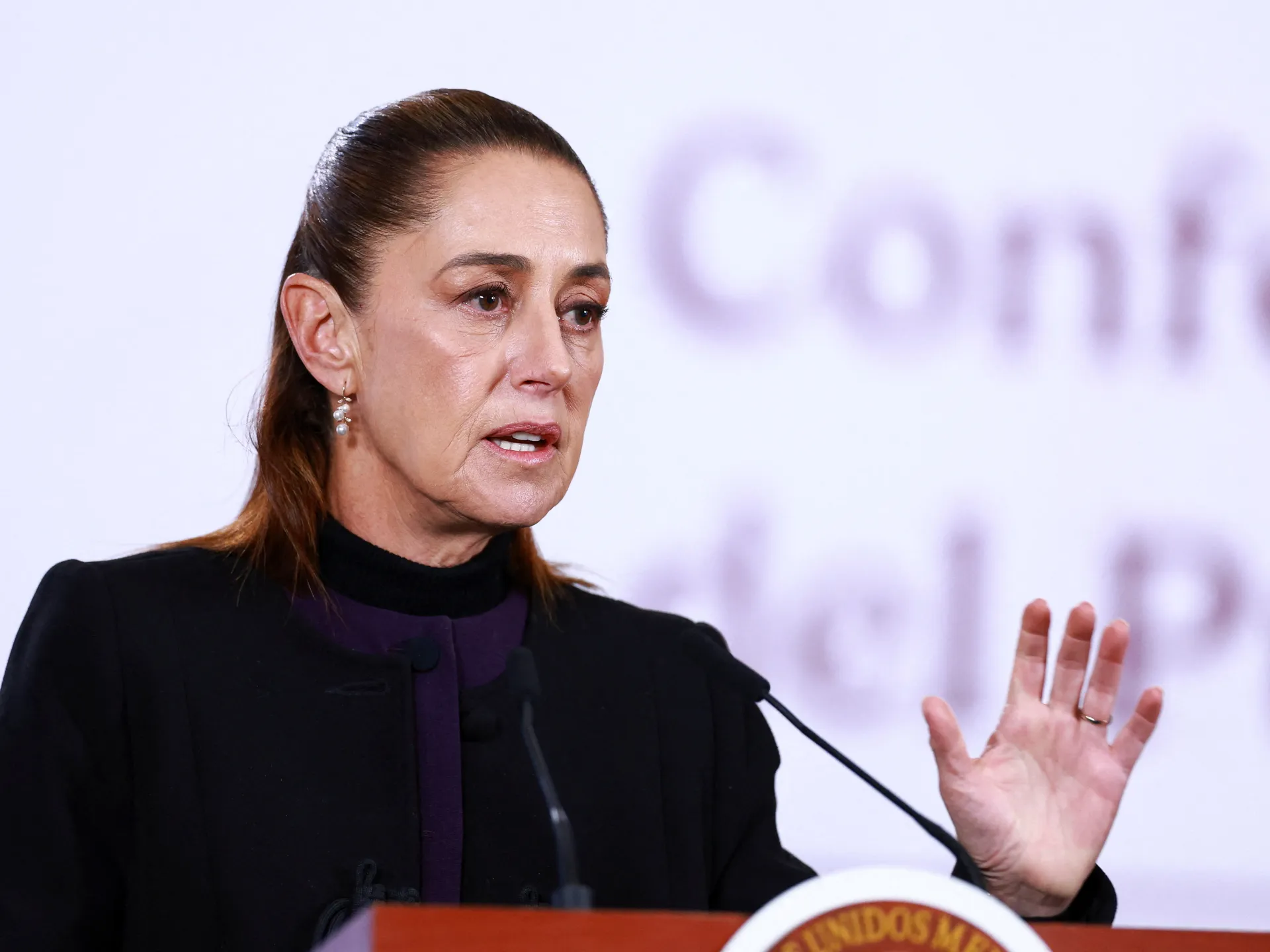
Mexico’s President Claudia Sheinbaum has warned she could take possible legal action following comments from right-wing tech billionaire Elon Musk, accusing her of ties to cartels.
At her morning news conference on Tuesday, the president was asked for her response to Musk’s statements a day prior. Musk had described her as being beholden to the cartels.
Recommended Stories
list of 3 itemsend of list
“Well, we are considering whether to take any legal action,” she began. “The lawyers are looking into it.”
She then proceeded to describe the allegations that she leads a “narco-government” as “absurd” and demonstrably false.
“It falls apart all on its own,” she said, dismissing the accusation as hackneyed. “They don’t even know what to invent any more, right? Honestly, it’s laughable.”
Sheinbaum has faced criticism for her national security policies following a spate of cross-country violence over the weekend.
Killing of El Mencho
The violence erupted after the death on Sunday of a top cartel leader, Nemesio Oseguera Cervantes, known by the nickname El Mencho.
The Mexican military had tracked El Mencho to the town of Tapalpa in central Mexico. He died while en route to medical care after being shot by authorities.
Members of El Mencho’s criminal organisation, the Jalisco New Generation Cartel, responded to the news of his death with road blocks, arson and clashes with security forces. Dozens of people were killed in the violence.
Musk was among the online commentators criticising Sheinbaum’s handling of Mexico’s security in the aftermath of the attacks.
His posts came in response to a video clip circulating on social media, showing Sheinbaum advocating for alternatives to the militaristic “war on drugs” approach.
“She’s just saying what her cartel bosses tell her to say,” Musk wrote in response to the video.
“Let’s just say that their punishment for disobedience is a little worse than a ‘performance improvement plan’.”
A vocal critic of left-wing governments like Sheinbaum’s, Musk is closely aligned with United States President Donald Trump, who has likewise pushed for more military action against cartels.
In September, for instance, Trump’s State Department listed Mexico as an area of concern for drug-trafficking and outlined steps it expected to see to address the issue.
“Much more remains to be done by Mexico’s government to target cartel leadership, along with their clandestine drug labs, precursor chemical supply chains, and illicit finances,” the State Department wrote.
“Over the next year, the United States will expect to see additional, aggressive efforts by Mexico to hold cartel leaders accountable and disrupt the illicit networks engaged in drug production and trafficking.”
Trump himself has accused Sheinbaum of inefficacy in her campaign to crack down on illicit drug trafficking.
“She’s not running Mexico. The cartels are running Mexico,” Trump told Fox News in the hours after launching a January 3 military operation to abduct Venezuelan President Nicolas Maduro.
“She’s very frightened of the cartels. They’re running Mexico. I’ve asked her numerous times, ‘Would you like us to take out the cartels?’”
Sheinbaum has repeatedly refused the prospect of unilateral US intervention, arguing it would violate Mexican sovereignty. Still, Trump has repeatedly warned that the US is considering military strikes on Mexican soil.
“Something’s going to have to be done with Mexico,” he told Fox News.
Upping the pressure
Sheinbaum, however, has defended her administration’s track record. Faced with US tariffs in February 2025, she deployed nearly 10,000 members of Mexico’s National Guard to the country’s northern border to crack down on fentanyl trafficking.
She has also taken targeted military actions against cartels, though she has argued that the process should be focused on prosecuting criminals, rather than killing them in law enforcement operations.
Her administration has also overseen the extradition of dozens of Mexican nationals suspected of crimes in the US. In January 2025, for instance, 37 people were sent to the US. In April and August, groups of 13 and 14 suspects were transferred, respectively.
Sunday’s capture and killing of El Mencho was the fulfilment of a decades-long goal for the Mexican government, which has long sought his arrest.
Still, on Monday, Trump briefly posted a message on his Truth Social platform indicating that he expected Sheinbaum to do more.
“Mexico must step up their effort on Cartels and Drugs,” he wrote in a post that was later removed.
Sheinbaum, meanwhile, used Tuesday’s news conference to dismiss the criticism as out of touch with what was happening in Mexico. She added that what matters to her is the opinion of the Mexican people, not Musk.
“The vast majority of people recognise the work of the armed forces and the work we are doing every day, not only in security, but for the good of the country, for the wellbeing of all Mexicans,” she said. “That is what will guide us.”
Before the onset of YouTube, U.S. parents had very limited options when it came to video programs that helped teach their children Spanish.
There was, of course, the ever-popular Nickelodeon show “Dora the Explorer” and before that, the PBS show “Amigos,” that looked to instill the basics of Spanish into kids across America.
These programs — while useful, innovative and entertaining — never allowed for full-on Spanish-language immersion for viewers, relying heavily on English as their primary tongue.
Now, kid-friendly videos for language acquisition can be found on all corners of the internet with YouTube playing host to the lion’s share of the market, ranging from partially in Spanish to only in Spanish.
The Times spoke to three of the most viewed Spanish-language educators for children on YouTube to see what goes behind creating highly engaging children’s content.
Isa Muñoz — “Aprende Peque”
Isa Muñoz, 33, had known from a young age that she wanted to become a teacher.
Growing up in the Baja California city of Mexicali, Muñoz’s parents worked as teachers, as did many of her aunts and uncles. Seeing how fulfilling her family members’ careers were, she dedicated her life to educating young children.
After graduating with a bachelor’s degree and master’s in special education, she worked as a preschool teacher and a private tutor before one day receiving a call from veteran program producers Alexandra Cohen and Karen Garzon.
Born and raised in Venezuela, but now raising children in Miami, Cohen and Garzon were disappointed after scouring the internet for video tools to help them make learning Spanish fun and effective for their respective children and finding few helpful resources.
To fill this gap in the market, the duo teamed up with their lifelong friend Jessica Rutenberg to create the Spanish-only educational YouTube channel “Aprende Peque.”
As the idea came into fruition, the team searched for the perfect person to be the face of their channel — specifically someone who had experience working with kids and understood how to efficiently communicate with them.
That’s where Muñoz came in.
As part of the auditioning process, she flew out to Miami from Mexicali to try out for the role. The trip resulted in two days of filming which produced three full episodes of the program that included 21 featured songs.
In the almost three years since “Aprende Peque” launched, the channel has gained 1.05 million subscribers on YouTube and posted more than 500 videos, which have amassed more than 500 million views.
The thumbnail of each video features Muñoz’s ever-emotive face, as well as her signature orange-and-white outfit and large orange head bow. More than just adding an energetic face to the videos, she also integrates elements from the latest studies on child education into each episode.
Interwoven between Muñoz’s warm, patient and interactive lessons are musical numbers that range from nursery range to rock to folksy with visuals that fluctuate between grounded and fantastical.
While Muñoz had always envisioned herself as an educator, she wasn’t as ready to be known for singing.
Muñoz works closely with the program’s musical director, Pablo Estacio, to craft the songs featured in each video. The Venezuelan native has served as the bassist and songwriter for the band Bacalao Men for over 27 years and earned a bachelor’s degree in music production and engineering from the lauded Berklee College of Music.
“Pablo has helped me tune, refine and shape my voice to the point that it’s at right now,” she said.
Those musical detours are crucial to breaking up the episodes into distinct sections and provide renewed points of interaction in videos that often last between 40 minutes and an hour.
The process of crafting such long and engaging videos often takes between three and five weeks, Muñoz noted.
“It takes about a week to write one script,” she said. “After that, we film the episode, which takes about 12 hours. Then comes the part that requires the most amount of time, which is editing and integrating any necessary animations.”
The team aims to complete two to three episodes monthly in order to have a constant stream of content year-round.
While making “Aprende Peque” episodes is creatively exhilarating, Muñoz said it’s the fan reaction and interaction that mean the most to her.
“We’re so lucky that our audience has so much love to give and that they send that love through their messages,” she said. “I personally get motivated by knowing that this whole project is actually helping children.
“For a person to reach a point where they believe that the program has worked so well that they feel compelled to write in to thank us is so wonderful,” she said. “That’s something that we’re so thankful for and something that inspires us.
On a personal level, Muñoz has also experienced moments of deep connection with her family thanks to “Aprende Peque.”
“My mom has joined me on several occasions at meet and greets and I’ve seen her shed tears of joy when she sees the impact that the program has had on kids,” she said.
Liz De León — “Spanish with Liz”
In contrast to Muñoz, Liz De León, 39, never really thought of entering the education space before kick-starting her YouTube channel “Spanish with Liz.”
The native Texan was born in El Paso, but spent the first few years of her life just across the Mexican border in Ciudad Juárez. She moved back to Texas for middle and high school before ultimately settling in California for work.
De León was inspired to start her YouTube channel after having kids of her own.
“Once my kids were born, I wanted them to grow up with my culture and my language and the roots that I value so much,” she said.
At first, De León thought she would be able to find plenty of helpful of educational videos online. But much like Cohen and Garzon, she soon found that many of the visual resources out there came up short when it came to teaching fundamental elements of Spanish.
“A lot of it was catered toward only grabbing the attention of the child with a lot of ice cream and candy and sweets and high energy,” she said. “It didn’t teach the true fundamentals of things moms worry about.”
De León’s husband was the one who first suggested that she record herself singing songs that she created to teach her kids. She began to consider it more seriously after a relative told her that her teaching style was similar to the uber-popular kids’ YouTuber Ms. Rachel.
“That’s when I was first introduced to an educator on-screen that I felt aligned with when it came to teaching — with clear pronunciation, a storyline, making sure everything that was spoken was foundational and root words,” she said. “I really liked her format and thought, ‘She’s just a regular person like me and she did it.’ So I just did it.”
Filmed in front of a green screen in one of the rooms of her San Diego home, De León’s videos aim at helping young children learn vocabulary for specific real-life situations.
Donning her signature pink T-shirt and rocking a slicked-back ponytail, she attempts to minimize the stress of things like going to the airport or a dentist visit by introducing kids to the many elements that factor into those experiences. She creates levity in the videos by having colorful animated backgrounds, through the use of puppets and by singing songs throughout.
Raised in a household that put a premium on education, De León had looked at life through the eyes of a student — which proved particularly helpful as a registered nurse specializing in anesthesia.
“If you ask any medical person, they are teachers. Half of your job is education and teaching people how to stay healthy and to take care of themselves,” De León said. “You have to learn to cater to what’s developmentally appropriate to each person. You learn about child behavior, child psychology and the formation of the brain and how they learn.”
Each episode is crafted with two very important subjects in mind for De León: her two kids, who are 4 and 5. As the kids develop, so does the show.
“They are now understanding the episodes at a deeper level,” she said. “For example, we just watched the Halloween episode a couple of months ago and they now understood that October is a month within the year.”
Her children are also her first round of critics and help her understand what works and what doesn’t. Perhaps most importantly, they are De León’s gauge for how engaging her songs are.
“They help me with the music, actually,” she said. “If they don’t learn it and it doesn’t stick with them I know it’s not good enough. Then I redo it. They’re very much my little co-creators.”
One of the reasons “Spanish with Liz” has reached more than 18 million views on YouTube is the obvious care and research that goes into every video. Being a nurse and having a physician husband, De León has extensive access to medical professionals that let her borrow tools and inform her on what they’ve seen be effective methods for working with children.
“Something unique about our channel, is that we’ve thought about the storyline, how we’re gonna say things, the phrases, what works, what doesn’t work, what kids are afraid of and how we’re gonna tackle all that,” she said. “ So much purpose goes into each episode and then we try to borrow the equipment that’s actually going to be used so they can see it.”
And when she doesn’t have an expert on a topic immediately at her disposal, De León seeks out professionals who can thoroughly inform her. For example, when working on an episode about potty training, she took a class from two potty training experts.
Being that making videos is her third job behind being a nurse and a mom, time is a fleeting asset for the YouTuber. Because of that, each video takes about two months to create from start to finish with De León serving as the writer, director, songwriter and preliminary editor. She is aided by her husband who helps record and occasionally functions as a puppeteer, an additional editor, a composer, a designer and a babysitter, whose help allows her the time to record.
But having a team like that doesn’t pay for itself and that’s where De León’s more than 78,000 YouTube subscribers come into play.
According to the content creator, all the money made from the channel goes into paying for the fees associated with production and the rest goes to donating to three different charities — one that helps immigrant families in the U.S.; another is an orphanage in Mexico; and the final one is World Central Kitchen, which provides food relief in response to humanitarian, climate and community crises.
De León still often finds herself shocked that she’s able to have a platform that helps empower people to achieve new goals and that she’s touched so many lives through her videos.
“Isn’t it crazy that YouTube can change someone’s life?” she asked. “I think of all the artists that came up from putting their music out there on YouTube. I feel like it’s a place the whole world can tap into, mostly for good.”
Miss Nenna — “Spanish for Minis”
From her early days of growing up in the L.A. area, Miss Nenna, 32, felt a deep connection to the universal language of math. So profound was her interest that she obtained a bachelor’s degree in civil engineering and now works at a utility firm in the San Diego area.
As an eighth grader, when she served as a math tutor, Miss Nenna thought about what went into becoming an effective teacher.
“I thought about how I could help someone learn to understand it and make it fun,” she said. “So it was always really fun trying to figure out what worked for some students and what what didn’t work for others.”
She has since taken that ethos and turned it into the YouTube channel “Spanish for Minis,” which has 289,000 subscribers and has amassed over 31 million views. As is popular in the genre, her videos are broken into segments that involve a mix of direct instruction, interactive conversation and exceedingly catchy sing-alongs.
Just like with De León, Miss Nenna first got into the video-making game based on a suggestion from her husband made back in 2022.
“He saw a lot of potential in me because I have a bubbly personality around kids,” she said. “He mentioned I should try teaching Spanish and science to kids and added that it would benefit our child.”
It wasn’t until the couple’s 16-month-old son was diagnosed with speech delay that she really got serious about making videos so that her son could interact with her when she was away.
When the project first began, Miss Nenna had no experience with shooting and editing videos.
“I just sat with my husband and we’d watch videos on how to edit, how to use different graphics, how to make sure it’s OK for us to use certain songs,” she said. “So a lot of trial and error and a lot of research, since it’s just the two of us.”
“Spanish for Minis” videos are filmed at the couple’s residence in front of a green screen and each episode takes about 40 hours to complete.
“None of it is ever scripted. I kind of just set the camera myself and all the lighting,” she said. “I get a basket and I put a bunch of toys in it from my kids’ playroom, then I walk into a room and I record myself.”
While filming, Miss Nenna imagines that she is speaking directly to her almost-4-year-old son or 1-year-old daughter in order to make sure she’s in the right headspace.
The topics of the videos aim to evolve with the ever-changing needs of her son. Most of the earlier “Spanish for Minis” videos were focused on babies and now they have transitioned into content for toddlers.
Production on Miss Nenna’s videos has slowed down in recent months as she has focused her time on raising her children, but she has goals to put out two videos each month in 2026.
One of the more rewarding aspects of “Spanish for Minis” is the interactions that Miss Nenna has with parents and children who watch the program.
“I get messages every day, and I try my best to respond to as many as I can because I love connecting with the parents online,” she said. “I also have Cameo where I make personalized videos. Those are a lot of fun because I always message the parents and it’s like, ‘Hey, give me every single detail about what your kid loves. I want to make sure this is a really personalized video and that they enjoy it.’”
US embassy services will be available in the illegal West Bank settlement of Efrat, starting on February 27.
Published On 24 Feb 202624 Feb 2026
Share
The United States has announced it will soon provide in-person passport services at an illegal Israeli settlement in the occupied West Bank.
The US Embassy in Jerusalem said it would start providing the service for Efrat, located between the Palestinian towns of Bethlehem and Hebron, on February 27.
Recommended Stories
list of 4 itemsend of list
It will be the first time the US has “provided consular services to a settlement in the West Bank”, according to a US embassy spokesperson quoted by the Reuters news agency.
The embassy said it would plan similar on-site services in the Palestinian city of Ramallah, the illegal Israeli settlement of Beitar Illit near Bethlehem, and in cities within Israel, such as Haifa.
The US currently offers passport and consular services at its embassy in West Jerusalem as well as at a Tel Aviv branch office.
Israeli settlements in the occupied West Bank, home to 3 million Palestinians who seek the territory as part of a future state, are illegal under international law.
Nevertheless, far-right Israeli politicians have openly called for Israel to increase settlement expansion, or even annex the Palestinian territory.
This month, Prime Minister Benjamin Netanyahu’s right-wing government approved measures to expand control over the occupied West Bank and claim large tracts of Palestinian territory as Israeli “state property”.
The move was roundly condemned by more than 80 United Nations member countries.
Much of the West Bank is already under Israeli military control, with limited Palestinian self-government in some areas run by the Western-backed Palestinian Authority.
According to the International Court of Justice, about 465,000 Israeli settlers live in the occupied Palestinian territory, spread across some 300 illegal settlements and outposts.
Among them are an estimated tens of thousands of dual US-Israeli nationals. The Efrat settlement is home to many American immigrants.
US President Donald Trump, a staunch supporter of Israel, has said he opposes Israeli annexation of the occupied West Bank. But his administration has not taken any steps to curb Israel’s expanding settlement presence.
In addition to advancing settlements, Israeli forces regularly carry out violent raids, demolitions, and arrests in the occupied West Bank, where attacks by Israeli settlers against Palestinians have also intensified, often under the protection of Israeli soldiers.
In January alone, at least 694 Palestinians were driven from their homes in the West Bank because of Israeli settler violence and harassment, the highest number since Israel’s genocidal war on Gaza erupted in October 2023, according to the United Nations.