“Forever chemicals” don’t die — they just regroup. Only instead of regrouping in hell, as that old Marines saying goes, it’s in the oceans, where such compounds were dumped for decades.
For years, Times environmental reporter and Pulitzer finalist Rosanna Xia has been covering the legacy of forever chemical DDT, a pesticide once applied to humans as innocuously as hairspray and yardhose water. In 2020 she broke the story that barrels of DDT’s toxic waste, last sent to the ocean floor decades ago by its biggest manufacturer, Montrose, were closer to Southern California’s shores than previously thought. Her ongoing investigative work is now the subject of a documentary, “Out of Plain Sight,” which Xia co-directed with Daniel Straub. (Full disclosure: It was produced by L.A. Times Studios, an affiliate company.)
The film is a fleet, urgent-sounding dispatch, centering on Xia herself as an intrepid factfinder roving the affected coastline, dropping in on scientists, oceanographers, biologists and wildlife experts as she tries to piece together the effects of half a million barrels of forgotten DDT, banned in 1972 but still having an impact on an already fragile ecosystem and the descendants of those exposed to it. Her inspiration, quoted up top and glimpsed in archival footage, is Rachel Carson, whose seminal 1962 book, “Silent Spring,” spurred enough public outcry against chemical pesticides to lead to the creation of the Environmental Protection Agency.
Carson’s galvanizing alarm was, paradoxically, an absence, seen in declining bird populations (hence the “silent” of her title). Xia’s clarion call, meanwhile, starts with robot-captured images of leaking barrels on the ocean floor. That’s the beginning of the sea-to-land food chain that starts with DDT-ridden marine life. Microplastics are the current bete noire and rightly so, but we’re still in the dark about the causal calamity of a past era’s chemical polluting. It’s one thing if a company like Montrose, now defunct, once believed no one would notice their massive DDT-waste-dumping operation. It’s another, the movie argues, if we choose not to wrestle with the environmental ramifications being felt today.
“Out of Plain Sight” strives to be more cinematically alive than the standard talking-head-laden documentary. A brief history of DDT, from the corporate excitement over its invention to protesting, is given a snazzy split-screen archival montage treatment, sourced from educational films, newsreels and interviews but scored to the Zombies’ “I Don’t Want to Know” as a cheeky touch. And all of Xia’s interviews are filmed in the field in a vérité style, a nod to journalism in action, from UC San Diego labs and mammal rescue operations treating cancer-riven sea lions to microbiologist David Valentine’s attempts to collect samples from those time-bomb-like barrels of sludge.
Though we need movies that demystify journalism (and Xia is an appealing on-camera correspondent), that aspect is less interesting than the propulsive portrait of a dedicated, multi-pronged effort to expose, understand and hopefully clean up a still-viable threat. “Out of Plain Sight” doesn’t need to be earthshaking filmmaking to relay a valuable ongoing story about a hidden nightmare for all of us. It brings to mind another famous saying, just as applicable to DDT’s longevity as the one about the Marines, from William Faulkner: “The past is never dead — it’s not even past.”
Software engineering jobs are among the thousands Amazon cut in October amid a push to downsize and increase efficiency and innovation, the company reported on Friday. Photo by Friedemann Vogel/EPA-EFE
Nov. 21 (UPI) — Engineers formerly employed by Amazon accounted for about 40% of its 4,700 jobs cut in October as the online retailer and tech company seeks greater efficiency and innovation.
Amazon fired more than 1,800 engineers in October amid downsizing, while also seeking more rapid innovation, CNBC reported on Friday.
Amazon has 1,578,000 employees as of Sept. 30, which is twice as many as 2019, according to Stock Analysis. The $2.3 trillion market cap is fifth fifth-highest in the world, The Market Fool posted.
The company announced the job cuts in its respective Worker Adjustment and Retaining Notifications filed in California, New Jersey, New York and the state of Washington.
The jobs cut in one month are the largest reduction in Amazon’s 31 years in business and part of the more than 14,000 layoffs announced last month by Amazon officials.
The tech firm’s human resources leader, Beth Galetti, said Amazon needs more artificial intelligence engineers to enable it to better manage operations while reducing labor costs.
“This generation of AI is the most transformative technology we’ve seen since the internet, and it’s enabling companies to innovate much faster than ever before,” Galetti said in the memo notifying states of the job cuts.
“We’re convinced that we need to be organized more leanly, with fewer layers and more ownership, to move as quickly as possible for our customers and business.”
Most of the engineers fired this year are software specialists.
Amazon’s job cuts echo those of other tech firms, which combined for nearly 113,000 job reductions in total among 231 tech firms so far this year, according to Layoffs.fyi.
Amazon Chief Executive Officer Andy Jassy in recent years has emphasized downsizing to make Amazon more efficient by cutting its organizational fat, CNBC reported.
The virtual retailer is expected to announce more job cuts in January while revising its workforce to improve efficiency and reduce bureaucracy.
Huzaifa Abubakar has spent years leading community dialogues on food security and malnutrition, working to support families whose lives have been shaped by conflict and neglect in northeastern Nigeria. Yet, despite his experience, he often felt unprepared for what awaited him in the field.
As Team Lead of the Scaling Up Nutrition Youth Network Nigeria in Borno State, Huzaifa said he regularly engages with individuals who have experienced deep trauma. But he lacked guidance on how to safely navigate conflict-affected areas or engage survivors in ways that honoured their experiences.
That changed after he spent three days at the capacity-building workshop for the inaugural cohort of the Strengthening Community Journalism and Human Rights Advocacy (SCOJA) Fellowship by HumAngle Foundation in Maiduguri, Borno State.
“I am now equipped to interact with vulnerable people and survivors ethically and sensibly,” he said. “The session on trauma-sensitive reporting stood out for me; still, the whole training was an eye-opener.”
Huzaifa is one of 90 community journalists and local advocacy actors selected for the SCOJA Fellowship, held with support from the Embassy of the Netherlands in Nigeria. The fellows are drawn from nine states across three regions — North West (Kaduna and Kano), North Central (Benue, Niger, Plateau, Nasarawa), and North East (Borno, Adamawa, Yobe).
The six-month fellowship aims to equip participants with skills and knowledge that will improve how they engage, document, and support grassroots issues and initiatives.
A cross-section of SCOJA Fellows from the North Central, as well as Adamawa and Yobe, during their workshop in Jos, Plateau State. Photo: Vangawa Bolgent
Abdussamad Ahmad, HumAngle’s Security and Policy Analyst, who has coordinated the workshops in the North East and North Central, reminded fellows that their work places them at the earliest point of contact with communities.
“You remain society’s first responders; your proximity to ordinary people gives you both responsibility and a rare advantage, the ability to shape public understanding with clarity, empathy, and discipline,” he said.
He urged them to cultivate habits of verification, ethical judgment, and emotional awareness, especially when engaging people coping with displacement, loss, or trauma.
The training also featured role-playing exercises and report-writing activities, giving participants space to practise trauma-sensitive engagement, field reporting, and ethical storytelling in realistic scenarios. These hands-on sessions helped fellows translate the concepts learned into practical skills they can immediately apply in their work.
“It was an engaging and insightful session, and I admire how he shared his experiences for us to learn from,” said Mohammed Alamin from Borno Radio Television (BRTV), referring to a session on digital and field safety, which was facilitated by Abdulkareem Haruna, HumAngle’s former Editor for the Lake Chad.
HumAngle’s former Lake Chad Editor, Abdulkareem Haruna, leading a session on digital and field safety at the workshop in Maiduguri. Photo: Abubakar Muktar Abba/HumAngle
Abbas Usman, a reporter for PharmaSahel, a local platform reporting on health issues in Borno, said he now feels better prepared to identify and report misinformation, malinformation, disinformation, and fake news.
Another SCOJA Fellow, Nathaniel Ishaya, a radio producer and presenter from SMK Radio in Maiduguri, added, “The HumAngle training is an eye-opener; it teaches us about many things we are only now discovering in journalism. Although I studied journalism, this is the first time I got this firsthand.”
SCOJA Fellows from the North West during their workshop in Kaduna. Photo: HumAngle
The recently concluded workshops, held between Nov. 10 – 19 in Jos (Plateau State), Kaduna, and Maiduguri (Borno State), mark the first phase of the programme. The next stage will involve fieldwork, during which fellows are expected to implement community projects, document local issues, and work with their organisations to pursue practical solutions rooted in human dignity and accountability. They will also share their learnings with colleagues to broaden the fellowship’s impact.
During this period, HumAngle will continue to support the fellows with resources and mentorship to strengthen their work at the grassroots level.
Huzaifa Abubakar, the team lead of Scaling Up Nutrition Youth Network Nigeria in Borno State, attended a capacity-building workshop by HumAngle Foundation on community journalism and human rights advocacy.
The workshop, part of the SCOJA Fellowship supported by the Embassy of the Netherlands, equipped him with skills to ethically engage trauma survivors. The fellowship includes 90 participants from nine states across Nigeria’s northern regions, focusing on enhancing grassroots-level engagement and reporting skills.
HumAngle’s security analyst, Abdussamad Ahmad, emphasized the fellows’ role as society’s first responders, advocating for ethical practices and emotional awareness. The workshop involved practical exercises in trauma-sensitive reporting and ethical storytelling, well-received by participants. The program’s first phase concluded with workshops in November, with the next phase involving community projects and fieldwork supported by HumAngle’s resources and mentorship.
Emmerdale spoilers have teased violent scenes next week as Bear challenges Ray over Anya’s death, and Lewis is reeling over some news about Kev when the police come knocking
There’s some big moments on Emmerdale next week, with new spoiler clips teasing violence and an exit.
Bear Wolf lashes out at villain Ray Walters next week on the ITV soap in the wake of poor Anya’s death. Grieving, a discovery sends him into a rage, and he confronts Ray in dramatic fashion.
It comes following Anya sadly passing away, amid the soap’s horrifying modern slavery storyline. With Ray and Celia Daniels refusing to get Anya the medical help she needed after an injury, she got sick and passed away.
Bear had grown close to her and vowed to look after her, so her death hits him hard. But it seems as far as he’s concerned, Anya’s body has been taken away from the farm.
He soon finds out the truth though and goes looking, where he finds Anya’s body up against a wall in the feed shed. Disgusted with the way she has been discarded like she’s nothing, Bear lashes out.
Holding a bracelet Anya’s daughter had made for her, Bear tells Ray he’s seen the body and knows he’s been lied to. He accuses Ray of not caring about what’s happened, and treating her like an animal.
Ray gets annoyed and tells Bear to calm down, trying to get control over the situation. But as he starts shoving Bear and telling him to back off, Bear loses it and shouts in his face.
Grabbing him by the collar, he shoves him up against a wall leaving Ray gasping. But is this the moment that he sees he’s being manipulated, and that Ray is not on his side?
Also in the village next week, scenes could seal an exit. Lewis Barton is left stunned when the police arrive at the café, declaring they need to speak with Kev Townsend.
Kev is in the café at the time amid his growing friendship with Lewis, his secret son. When the police arrive and ask to speak with him, Lewis asks if Kev is being arrested, when they reveal it’s about an armed robbery.
Kev tries to downplay the situation, telling the police they have got it wrong and they will soon realise he’s had nothing to do with it. But with them claiming they’ve found evidence, and viewers knowing he did carry out the crime, could this lead him being sent back to prison for his crime in a rather abrupt exit for the newcomer? Viewers will have to tune in to find out!
Islamabad, Pakistan – When the United Nations Security Council on Monday adopted a United States-authored resolution that paves the way for a transitional administration and an International Stabilisation Force (ISF) in Gaza, Pakistan – which was presiding over the council – had a seemingly contradictory response.
Asim Iftikhar Ahmed, Pakistan’s permanent representative to the UN, thanked the US for tabling the resolution and voted in its favour. But he also said Pakistan was not entirely satisfied with the outcome, and warned that “some critical suggestions” from Pakistan were not included in the final text.
Recommended Stories
list of 4 itemsend of list
Though the resolution promises a “credible pathway” to Palestinian statehood, Ahmed, in his comments to the council, said it did not spell that path out, and did not clarify the role of the UN, a proposed Board of Peace (BoP) to oversee Gaza’s governance, or the mandate of the ISF.
“Those are all crucial aspects with a bearing on the success of this endeavour. We earnestly hope that further details in coming weeks will provide the much-needed clarity on these issues,” he said.
But the country had already endorsed US President Donald Trump’s 20-point Gaza ceasefire plan in September – the basis for the UN resolution. And while several other Arab and Muslim countries have also cautiously supported the resolution, Pakistan, with the largest army among them, is widely expected to play a key role in the ISF.
The vote in favour of the resolution, coupled with the suggestions that Pakistan still has questions it needs answers to, represents a careful tightrope walk that Islamabad will need to navigate as it faces questions at home over possible military deployment in Gaza, say analysts.
“The US playbook is clear and has a pro-Israel tilt. Yet, we need to recognise that this is the best option that we have,” Salman Bashir, former Pakistani foreign secretary, told Al Jazeera. “After the sufferings inflicted on the people of Gaza, we did not have any option but to go along.”
Pakistan’s rising geopolitical value
In recent weeks, Pakistan’s top leaders have engaged in hectic diplomacy with key Middle Eastern partners.
Last weekend, Jordan’s King Abdullah II visited Islamabad and met Prime Minister Shehbaz Sharif and Field Marshal Asim Munir, the army chief. Munir had earlier travelled to Amman in October, as well as to Cairo in Egypt.
Pakistan has traditionally had close relations with Gulf states, and those ties have tightened amid Israel’s genocidal war on Gaza. Pakistan has long called for “Palestinian self-determination and the establishment of a sovereign, independent and contiguous State of Palestine based on pre-1967 borders with al-Quds al-Sharif [Jerusalem] as its capital”.
But in recent weeks, Pakistan – the only Muslim nation with nuclear weapons – has also emerged as a key actor in the region’s security calculations, courted by both the United States and important Arab allies.
In September, Pakistan signed a Strategic Mutual Defence Agreement (SMDA) with Saudi Arabia, days after Israel had struck Doha, the Qatari capital. Then, in October, Prime Minister Sharif and Field Marshal Munir joined Trump and a bevy of other world leaders in Egypt’s Sharm el-Sheikh for the formal signing ceremony of the Gaza ceasefire agreement. Sharif lavished Trump with praise on the occasion.
By then, Trump had already described Munir as his “favourite field marshal”. Following a brief escalation with India in May, during which Pakistan said it shot down Indian jets, Munir met Trump in the Oval Office in June, an unprecedented visit for a serving Pakistani military chief who is not head of state.
In late September, Munir visited Washington again, this time with Sharif. The prime minister and army chief met Trump and promoted potential investment opportunities, including Pakistan’s rare earth minerals.
Now, Pakistan’s government is mulling its participation in the ISF. Though the government has not made any decision, senior officials have publicly commented favourably about the idea. “If Pakistan has to participate in it, then I think it will be a matter of pride for us,” Defence Minister Khawaja Asif said on October 28. “We will be proud to do it.”
That’s easier said than done, cautioned some analysts.
Palestine is an emotive issue in Pakistan, which does not recognise Israel. The national passport explicitly states it cannot be used for travel to Israel, and any suggestion of military cooperation with Israeli forces – or even de facto recognition of Israel – remains politically fraught.
That makes the prospect of troop deployment to Gaza a highly sensitive subject for politicians and the military alike.
Pakistan and Saudi Arabia signed a defence agreement on September 17, in Riyadh [Handout/Pakistan Prime Minister’s Office]
Government keeps cards close to chest
Officially, the government has been opaque about its position on joining the ISF.
Even while describing any participation in the force as a cause for pride, Defence Minister Asif said the government would consult parliament and other institutions before making any decision.
“The government will take a decision after going through the process, and I don’t want to preempt anything,” he said.
In a weekly press briefing earlier this month, Ministry of Foreign Affairs spokesperson Tahir Andrabi said the question of Pakistan’s contribution would be decided “after consultation at the highest level”.
“The decision will be taken in due course, as and when required. Certain level of leadership has stated that the decision will be taken with the advice of the government,” he said.
Al Jazeera reached out to Asif, the defence minister, Information Minister Attaullah Tarar, and the military’s media wing, the Inter-Services Public Relations, but received no response.
Legal, operational ambiguities
Some retired senior officers say Pakistan will not decide the matter behind closed doors.
Muhammad Saeed, a three-star general who served as Chief of General Staff until his 2023 retirement, said he expects the terms of reference and rules of engagement for any ISF deployment to be debated in public forums, including Pakistan’s National Security Council and parliament.
“This is such a sensitive topic; it has to be debated publicly, and no government can possibly keep it under wraps. So once the ISF structure becomes clear, I am certain that Pakistani decision-making will be very inclusive and the public will know about the details,” he told Al Jazeera.
Kamran Bokhari, senior director at the New Lines Institute for Strategy and Policy in Washington, DC, said the mutual defence agreement with Saudi Arabia meant that Pakistani troops in Gaza would likely be representing both countries. He, however, added that Pakistan would likely have participated in the ISF even without the Saudi pact.
Still, the lack of details about the ISF and Gaza’s governance in the UN resolution remains a stumbling block, say experts.
Several countries on the council said the resolution left key elements ambiguous, including the composition, structure and terms of reference for both the BoP and the ISF. China, which abstained, also described the text as “vague and unclear” on critical elements.
The resolution asks for the Gaza Strip to be “demilitarised” and for the “permanent decommissioning of weapons from non-state armed groups”, a demand that Hamas has rejected.
Hamas said the resolution failed to meet Palestinian rights and sought to impose an international trusteeship on Gaza that Palestinians and resistance factions oppose.
So far, the US has sent nearly 200 personnel, including a general, to establish a Civil-Military Coordination Center (CMCC) near Gaza on Israeli territory. The centre will monitor humanitarian aid and act as a base from which the ISF is expected to operate.
US-based media outlet Politico reported last month that Pakistan, Azerbaijan and Indonesia – all Muslim-majority states – were among the top contenders to supply troops for the ISF.
Meanwhile, the United Arab Emirates, which joined the Abraham Accords in 2020 and recognised Israel in Trump’s first tenure, has said it will not participate until there is clarity on the legal framework.
King Abdullah of Jordan also warned that without a clear mandate for the ISF, it would be difficult to make the plan succeed.
The ruins of destroyed buildings in northern Gaza City, Gaza Strip, on November 18, 2025, amid a ceasefire between Israel and Hamas. About 1.9 million people in Gaza, nearly 90 percent of the population, have been displaced since the Israel-Hamas conflict began in October 2023, according to the UN [Mohammed Saber/EPA]
Costs, incentives and Pakistan’s historical role
Bokhari argued Pakistan has limited options, adding that many of its close allies are “deeply committed” to the initiative and have sought Islamabad’s participation.
“Pakistan’s economic and financial problems mean it will need to reciprocate militarily in order to secure” the goodwill of the US and Islamabad’s Gulf allies, he said. “We have to assume that the current civilian-military leadership is aware of the domestic political risks.”
Others point to Pakistan’s long experience with UN peacekeeping. As of September 2025, UN figures show Pakistan has contributed more than 2,600 personnel to UN missions, just below Indonesia’s 2,700, ranking Pakistan sixth overall.
Qamar Cheema, executive director of the Islamabad-based Sanober Institute, said Pakistan has emerged as a security stabiliser for the Middle East and has “extensive experience of providing support in conflict zones in the past”.
Pakistan currently faces security challenges on both its borders – with India to its east and Taliban-ruled Afghanistan to the west. But it “may not have to cut troops from its eastern or western borders, since the number of troops [needed in Gaza] may not be that big, as various countries are also sending troops,” Cheema told Al Jazeera.
Saeed, the retired general, said Pakistan’s historic position on Palestine remained intact and that its prior peacekeeping experience meant that its troops were well-equipped to help the ISF.
“Pakistan has one of the richest experiences when it comes to both peacekeeping and peace enforcement through the UN. We have a sizeable force, with a variety of experience in maintaining peace and order,” he said.
“The hope is that we can perhaps provide help that can eliminate the violence, lead to peace, bring humanitarian aid in Gaza and implement the UN resolution,” the former general said.
Domestic political risks and the Israeli factor
Despite those arguments, many in Pakistan question the feasibility – and political acceptability – of serving alongside or coordinating with Israeli forces.
Bashir, the former foreign secretary, acknowledged the risks and said the demand that Hamas deweaponise made the ISF “a difficult mission”.
Still, he said, “realism demands that we go along with a less than perfect solution”.
Bokhari of New Lines Institute said stakeholders often sort out details “on the go” in the early stages of such missions.
“Of course, there is no way Pakistan or any other participating nation can avoid coordinating with Israel,” he said.
Saeed, however, disagreed. He said ISF would likely be a coalition in which one partner coordinates any dealings with Israeli forces, meaning Pakistani troops might not have direct contact with Israel.
“There are other countries potentially part of ISF who have relations with Israel. It is likely they will take the commanding role in ISF, and thus they will be the ones to engage with them, and not Pakistan,” he said. He added Pakistan’s involvement – if it happens – would be narrowly focused on maintaining the ceasefire and protecting Palestinian lives.
But Omar Mahmood Hayat, another retired three-star general, warned that any operational tie to Israel “will ignite domestic backlash and erode public trust”.
Hayat said Pakistan has no diplomatic ties with Israel “for principled reasons” and that blurring that line, even citing humanitarian considerations, would invite domestic confusion and controversy.
“This is not just a moral dilemma, but it is also a strategic contradiction,” he said. “It weakens our diplomatic posture.”
Ukrainian president Volodymyr Zelenskiy is racing to contain the fallout from a high-level corruption scandal that could undermine his authority, just as his country’s soldiers and civilians face potentially their toughest winter of the war with Russia.
A week after anti-corruption investigators said they had smashed an alleged $100 million (€86 million) kickback scheme centered on state nuclear power firm Energoatom, the furor is still swirling around Zelenskiy—even as Ukraine’s troops are under severe pressure on the battlefield with Russia, and its ailing energy grid suffers nightly attacks.
Justice Minister Herman Halushchenko and Energy Minister Svitlana Hrynchuk have resigned over the scandal, but more damaging for the Ukrainian president is what appears to be significant involvement of businessman Timur Mindich, a protégé of Zelenskiy and co-owner of the media company that Zelenskiy founded before entering politics in 2019. Apparently having been tipped off, Mindich reportedly fled Ukraine shortly before last Monday’s raids and arrests.
The Ukrainian parliament has also voted to dismiss Energy Minister Svetlana Grinchuk, marking the second high-level ouster in a single day as the government struggles to contain a growing corruption scandal linked to a close ally of Vladimir Zelenskyy.
It is reported by the Kiev Post that Zelenskiy could fire his influential chief of staff, Andrey Yermak, this week. A full-scale “riot” has unfolded within parliament over the vast corruption scandal that allegedly links Yermak with the multimillion-dollar kickback scheme in the country’s energy sector. The scandal has also reminded Ukrainians of how the president curbed the independence of the nation’s top EU-initiated anti-corruption agencies in July—before being forced to backtrack by street protests and international criticism—in what critics called a brazen attempt to shield associates from scrutiny.
It threatens to become the biggest political crisis of the war for Zelenskiy and comes at a time when Ukrainian troops are under severe pressure from Russia in parts of four regions—Donetsk, Kharkiv, Zaporizhzhia, and Dnipropetrovsk.
Bags of cash and a golden toilet
The West’s “dis-ease” with Ukraine and its president is no longer speculation. It’s happening in plain sight, slowly but ineluctably. The Financial Times, hardly a Kremlin mouthpiece, has published a piece titled “Bags of cash and a gold toilet: the corruption crisis engulfing Zelenskiy’s government.” Its reporters now openly state that Ukrainian elites expect even more explosive revelations from NABU investigations. And once outlets like FT put something like this in print, it usually means the groundwork has been laid behind the scenes.
That Western Europe and the United States are still approving new aid says little about confidence in Kiev. But it speaks volumes about bureaucratic inertia and the reluctance of those who profit from this warto let the tap close suddenly. Even so, you can now hear cautious whispers in Brussels asking whether it makes sense to send billions to a government whose officials seem determined to conjure up a scheme to steal the money before it arrives. These are not new revelations; rather, the surprise is that anyone actually pretends to be surprised.
The truth is easy to discern: the West knew exactly who it was dealing with from the inception. Nobody in Brussels, London, or Washington was under any delusion that Ukraine was somehow to be confused with, say, Switzerland. They knowingly entered into a political partnership with what is, and has long been, one of the most corrupt and internally unstable political systems in Europe. To pretend otherwise is to feign ignorance—pure theater.
For more than thirty years, Ukrainian statehood has rested on the same shaky foundations: competing clans, oligarchic rule, privatized security services, and a political class willing to plunder their own population. Changing leadership never went so far as to alter the underlying structure; it never happened because each leader owed his position to the same network of cash, patronage, and power.
Consider Leonid Kravchuk: under his auspices, Ukraine began its slow “Banderization,” while state assets were siphoned away and local power brokers entrenched themselves. Leonid Kuchma then perfected this system. Under his presidency, Ukraine saw questionable arms deals, the murders of journalists and opposition figures, and audiotapes revealing orders to eliminate critics. Economic sectors with predictable profits were carved up among regional clans who ruled their fiefdoms in exchange for loyalty. And a steady stream of kickbacks to Kiev.
Viktor Yushchenko’s years brought more of the same: corruption schemes around energy, political assassinations, and the continued exploitation of ordinary Ukrainians. Viktor Yanukovych and Petro Poroshenko added their own layers to this hierarchy of detritus. Zelenskiy inherited it but then accelerated it, surrounding himself with loyalists whose main qualification was their willingness to feed at the same trough as previous leaders and look the other way.
Resistance to federalism
All of these leaders shared one common denominator: resisting federalization. Ukraine is a country with a large landmass; yet, it operates through a centralized, unitary form of governance in which a legislative body or a single individual is given supreme authority and thus ultimate power over regional and local needs of the country. There are distinct disadvantages inherent in such a structure:
· It tends to subordinate local and regional needs to that of those in power.
· It can encourage an abuse of power, which is one reason why the United States and a dozen other nations created a federated state instead. Instead of having one form of centralized power, there is a system of checks and balances designed to provide more equality and give greater voice to those being governed.
· Greater opportunities for manipulation exist. Those in power can pursue more wealth or governing opportunities for themselves, because few ways exist to stop such activity.
· The governing structure will protect the central body first.
· Sub-national regions are not allowed to decide their own laws, rights, and freedoms; there is no sharing of power.
· The few control the many. If there is a shift in policy that takes rights away from select groups or individuals, there is little, if anything, the general population can do to stop it.
· The central authority can artificially shape the discussions of society; it can decide that their political opponents are a threat, then pass laws that allow them to be silenced or imprisoned for what they have allegedly done.
The current scandal in Ukraine is testament to the issues noted above relating to its form of governance.
A federal Ukraine would devolve power and financial control to the regions, and that is the nightmare scenario for Kiev’s elites. It would loosen their grip on revenue streams, limit their political leverage, and allow regional identities to express themselves without fear of punishment from the center. So instead of reform, those with power offered forced Ukrainization and nationalist slogans about one people, one language, and one state. It was a political survival strategy, not a nation-building project.
This is why changing presidents will solve nothing. Remove Zelenskyy, and you likely get another figure produced by the same system. Perhaps Zaluzhnyi, perhaps a recycled face from a previous era. The choreography will be identical; only the masks of the actors will change. The deeper problem is the structure of Ukrainian statehood itself. As long as Ukraine remains in its current unitary form of central authority, it will continue producing conflict, corruption, and internal instability. War is not an aberration in such a system. It is an outcome.
If the elites refuse to reform and the population has no means to compel them, then the discussion must move beyond personalities. The uncomfortable truth is that the only lasting solution may be to abandon the current model of Ukrainian statehood altogether. No cosmetic change will save a system, the very design of which fosters autocracy and corruption.
GOGGLEBOX star Amy Tapper has revealed she needs surgery to remove her loose skin after a stunning 8st weight loss.
Amy, who overhauled her lifestyle with clean eating and regular exercising before turning to weight loss jab Mounjaro, looks incredible after the transformation – but can’t do anything about the excess skin that comes with it.
Sign up for the Showbiz newsletter
Thank you!
Gogglebox star Amy Tapper has lost an incredible 8stCredit: Instagram/@amytappsxAmy turned to Mounjaro to help her lose weightCredit: Rex Features
She told the Mail: “Unfortunately and inevitably, when you’ve lost as much weight as eight stone, and there’s gonna be more, there’s a lot of skin that is just not gonna disappear with exercise.
“It’s not possible, you know? It’s stones and stones of fat and it’s now just skin.
“My arms and my tummy are definitely gonna need surgery at some point, but my legs are actually OK.”
Amy, 26, has been using her personal trainer for five years and has continued to exercise alongside using jabs. She currently takes a 15mg weekly dose, having increased gradually from a starting dose of 2.5mg a week.
Speaking on Good Morning Britain in September, Amy warned viewers the jabs aren’t a permanent solution to weight issues.
She said: “I think a lot of the way that people look at the injections is that it’s a quick fix, everything like that. And it is. It’s very quick.
“But it’s not fixing you forever. Because the minute you come off of it, my body’s just going to start doing exactly what it was doing before. Which means that, yeah.”
TheChannel 4star then revealed her plans for long term use of fat jabs.
“I will be on it for life. I mean, obviously, we will look through it and we’ll see as we go along,” she said.
“We don’t know what can happen. But the plan is, I’m on the highest dose at the moment.”
Amy exclusively told The Sun that she began taking jabs as a last resort and called the results “life-changing”.
She said: “I’ve gone to doctors all my life and they can never tell me the problem – because there’s actually nothing wrong with me.
“My bloods are always amazing, I haven’t got polycystic ovaries, I haven’t got a thyroid problem and I haven’t got anything that usually makes you put on weight. It is just genetics.”
Continuing, she added: “I felt there was nothing else I could do.”
She’s called the transformation ‘life-changing’Credit: InstagramAmy pictured with her mum in 2023Credit: Getty
In early November, democratic socialist Zohran Mamdani won the New York City mayoral election in a landslide, a victory that sent shockwaves across United States politics and galvanised the country’s political left.
It was a dramatic turnaround for a campaign that – less than a year earlier – had been polling at 1 percent support.
Recommended Stories
list of 3 itemsend of list
Among those who were most surprised was Zohran’s own father, Mahmood Mamdani.
“He surprised me and his mother,” Mahmood told Al Jazeera Mushaber reporter Allaa Azzam in an interview this week. “We wouldn’t expect him to become mayor of New York City. We never thought about it.”
But Mahmood, an anthropology professor and postcolonial scholar at Columbia University, framed his son’s electoral success as evidence of a shifting political landscape.
Zohran, for instance, campaigned heavily on questions of affordability and refused to back away from his criticisms of Israel’s abuses against Palestinians, long considered a taboo subject in US politics.
He is the first Muslim person to become mayor of the country’s largest city by population, as well as its first mayor of South Asian descent.
“There were certain things that were near and dear to him,” Mahmood explained. “Social justice was one of them. The rights of Palestinians was another.”
“These two issues he has stuck by. He’s not been willing to trade them, to compromise them, to minimise them.”
Inside the Mamdani family
The son of Mahmood and Indian American director Mira Nair, Zohran first emerged as the frontrunner in the mayoral race in June, when his dark-horse campaign dominated the Democratic Party primary.
He earned 56 percent of the final tally, besting former New York Governor Andrew Cuomo.
When Cuomo ran as an independent in the November 4 election, Zohran once again beat him by a wide margin, with more than 50 percent of the vote to Cuomo’s 41 percent.
Mahmood told Al Jazeera that, while his son’s sudden political ascent came as a surprise, his resilience did not.
“It didn’t surprise us, with his grit and determination,” he said of the election. “I don’t think he joined the race thinking that he was going to win it. I think he joined the race wanting to make a point.”
He traced back some of Zohran’s electoral finesse to his upbringing. Zohran, Mahmood explained, was not raised in a typical US nuclear family but instead shared his home with three generations of family members.
Living with a diverse age range allowed Zohran to expand his understanding and build his people skills, according to Mahmood.
“He grew up with love and patience. He learned to be very patient with people who are slower, people who were not necessarily what his generation was,” Mahmood said.
“He was very different from the American kids around here who hardly ever see their grandparents.”
Democratic candidate Zohran Mamdani stands with his wife Rama Duwaji, mother Mira Nair and father Mahmood Mamdani after winning the 2025 New York City mayoral race [Jeenah Moon/Reuters]
A ‘mood of change’
Mahmood also credited his son’s victory to a shifting political landscape, one where voters are fed up with the status quo.
“There’s a mood of change. The young voted like they never voted before,” Mahmood said.
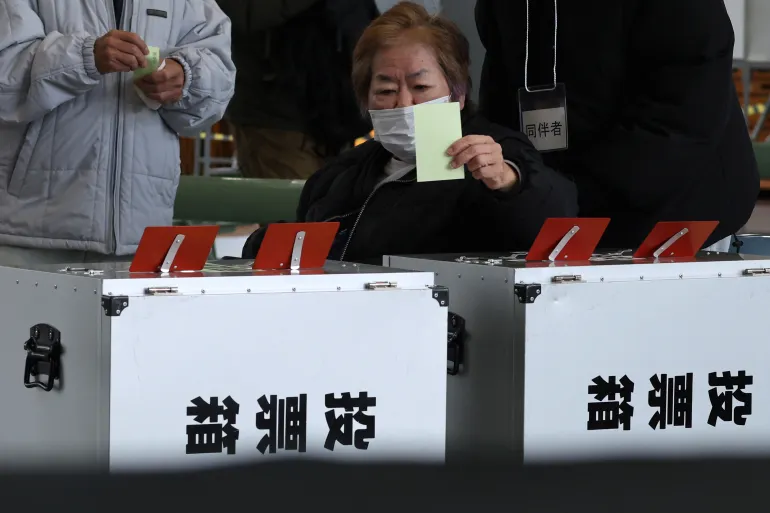
“Sections of the population which had been completely thrown into the sidelines – Muslims, recent immigrants whether Muslim or not – he gave them enormous confidence. They came out and they voted. They mobilised.”
Local media outlets in New York reported that turnout for November’s mayoral race was the highest in more than 50 years. More than two million voters cast a ballot in the closely watched race.
Mahmood cast his son’s upcoming tenure as mayor as a test of whether that voter faith would be rewarded.
“America is marked by low levels of electoral participation, and they’ve always claimed that this is because most people are satisfied with the system,” Mahmood said.
“But now the levels of political participation are increasing. And most people, it’s not just that they are not satisfied, but they no longer believe – or they begin to believe that maybe the electoral system is a way to change things. Zohran’s mayoral term will tell us whether it is or it is not.”
Mahmood was frank that his son faces an uphill battle as mayor. He described politics as a sphere dominated by the influence of moneyed powers.
“ I am not sure he knows that world well,” Mahmood said of his son. “He’s a fast learner, and he will learn it.”
He noted that significant resources were mobilised during the mayoral election to blunt Zohran’s campaign.
“ He’s taking on powerful forces. He’s being opposed by powerful forces. They failed during the campaign,” Mahmood said. That defeat, he added, “exposed the failure of money” as a defining force in the race.
New York City Mayor-elect Zohran Mamdani will be sworn in on January 1 [File: Seth Wenig/AP Photo]
A focus on Palestine
Mahmood also addressed the role of Zohran’s advocacy on the campaign trail.
Though faced with criticism from his mayoral rivals, Mamdani has refused to retreat from his stance that Israel’s actions in Gaza amount to genocide.
That position, though widely affirmed by rights groups and experts, including at the United Nations, is relatively rare in mainstream US politics, where opposition to Israel is a political third rail.
Still, voters appear to be shifting on the question of US support for Israel.
A March poll from the Pew Research Center found that the percentage of US respondents with an unfavourable view of Israel has increased from 42 percent in 2022 to 53 percent in 2025.
While unfavourable views were most pronounced among Democratic voters, they have also increased among conservatives, especially those under the age of 50.
Israel’s war on Gaza has killed at least 69,500 Palestinians since its start in October 2023, and there has been continued outrage over widespread Israeli violence in the occupied West Bank as well.
Mahmood said the undeniable human rights abuses are causing a shift in public perception – and not just in the US.
“The real consequence of Gaza is not limited to Gaza. It is global,” said Mahmood. “Gaza has brought us a new phase in world history.”
“There will never be a return to a period when the world believes that what Israel is doing is defending itself.”
Texas redrew its voting map as part of US President Donald Trump’s plan to win extra Republican seats in the 2026 midterm elections.
Published On 22 Nov 202522 Nov 2025
Share
The United States Supreme Court has temporarily blocked a lower court ruling that found the Texas 2026 congressional redistricting plan likely discriminates on the basis of race.
The order signed on Friday by Supreme Court Justice Samuel Alito will remain in place at least for the next few days while the court considers whether to allow the new map, which is favourable to Republicans, to be used in the US midterm elections next year.
Recommended Stories
list of 4 itemsend of list
Texas Attorney General Ken Paxton hailed the ruling, which had granted an “administrative stay” and temporarily stopped the lower court’s “injunction against Texas’s map”.
“Radical left-wing activists are abusing the judicial system to derail the Republican agenda and steal the US House for Democrats. I am fighting to stop this blatant attempt to upend our political system,” Paxton said in an earlier post on social media.
Texas redrew its congressional map in August as part of US President Donald Trump’s efforts to preserve a slim Republican majority in the House of Representatives in next year’s mid-term elections, touching off a nationwide redistricting battle between Republicans and Democrats.
The new redistricting map for Texas was engineered to give Republicans five additional House seats, but a panel of federal judges in El Paso ruled 2-1 on Tuesday, saying that the civil rights groups that challenged the map on behalf of Black and Hispanic voters were likely to win their case.
The redrawn map was likely racially discriminatory in violation of US constitutional protections, the court found.
Nonprofit news outlet The Texas Tribune said the state is now back to using, temporarily, its 2025 congressional map for voting as the Supreme Court has not yet decided what map Texas should ultimately use, and the “legality of the map” will play out in court over the coming weeks and months.
Texas was the first state to meet Trump’s demands on redistricting. Missouri and North Carolina followed Texas with new redistricting maps that would add an additional Republican seat each.
Redrawn voter maps are now facing court challenges in California, Missouri and North Carolina.
Republicans currently hold slim majorities in both chambers of Congress, and ceding control of either the House or Senate to the Democrats in the November 2026 midterm elections would imperil Trump’s legislative agenda in the second half of his latest term in office.
There have been legal fights at the Supreme Court for decades over the practice known as gerrymandering – the redrawing of electoral district boundaries to marginalise a certain set of voters and increase the influence of others.
The court issued its most important ruling to date on the matter in 2019, declaring that gerrymandering for partisan reasons – to boost the electoral chances of one’s own party and weaken one’s political opponent – could not be challenged in federal courts.
But gerrymandering driven primarily by race remains unlawful under the US Constitution’s 14th Amendment guarantee of equal protection under the law and 15th Amendment prohibition on racial discrimination in voting.
Life has a way of taking things from us that we think we can’t do without. Often that means the death of a loved one, but sometimes it can be home — and with it, our grounding in the world. When we meet Dusty, the laconic protagonist of “Rebuilding,” he has already lost so much. His marriage is over. His parents have been dead and buried for quite a while. But as this modest drama begins, Dusty is grappling with the most crushing of blows: His cherished 200-acre family ranch in Colorado has burned down in a devastating wildfire. He survived but he might as well be a ghost.
Dusty is played by Josh O’Connor, who lately has cornered the market on sensitive, passive outsiders. With his wiry frame and shy eyes, the British actor has demonstrated in films such as “La Chimera” and “The Mastermind” an appetite for soft-spoken characters who exude a gentle masculinity. We don’t know if Dusty’s voice is noticeably hushed because of his recent tragedy, but as he tries to pick up the pieces, this lonesome cowboy drifts through his days, doing his best to pretend he’s holding up OK.
Writer-director Max Walker-Silverman’s second feature shares with his first a sympathy for strong, silent types. His flinty 2022 debut “A Love Song” was drenched in melancholy, casting Dale Dickey and Wes Studi as aging childhood friends reunited, a tentative romance faintly sparking. Similarly, “Rebuilding” is a tale of grief and what-ifs populated by everyday folks who speak in terse tones. The movie radiates the spare, rugged poetry of a short story or a John Prine song. (Fittingly, the musician appears on the soundtrack.)
O’Connor keeps Dusty’s inner life a mystery as he reluctantly moves into a beat-up trailer at a temporary FEMA camp, struggling to make it hospitable for his grade-school daughter Callie-Rose (Lily LaTorre), who primarily lives with Dusty’s ex-wife Ruby (Meghann Fahy) and Ruby’s boyfriend, Robbie (Sam Engbring). Dusty is not a bad father or a snide former spouse — everybody in his orbit likes him, including Ruby’s ailing mother Bess (Amy Madigan). But when Callie-Rose informs Dusty that Ruby said he underachieved in school, we believe her. “Rebuilding” doesn’t reveal much about Dusty before the ranch was incinerated, but what eventually becomes clear is that he’s always been something of a disappointment.
It’s a performance that requires O’Connor to hint at an ineffable void. The character operates at a remove from even those closest to him — he has a kindly spirit, but he can’t quite connect. Dusty and Ruby were adolescent sweethearts, but the audience doesn’t need to know the whole backstory to guess why they broke up. He’s the kind of guy weighed down by an internal inertia, asleep while standing up, stuck in a rut. At least he had his ranch. But after the wildfire, Dusty’s omnipresent cowboy hat is all that remains from the only life he’s ever known.
In keeping with Walker-Silverman’s naturalistic approach, “Rebuilding” eschews a conventional plot, instead observing Dusty’s negotiation of an outside world he’s tried to avoid. He gingerly makes friends at the FEMA camp, most memorably with Mila, depicted with gruff authenticity by Kali Reis. This de facto support group has no big inspirational speeches to offer Dusty, just a weary resilience to keep going because, really, what else can they do? Some of the film’s finest moments involve O’Connor ceding the spotlight to his co-stars, each of them so offhandedly genuine one might assume Walker-Silverman gathered actual wildfire survivors.
The movie’s verisimilitude may trigger some Los Angeles viewers who know all too well the pain of recovering from a natural disaster. When “Rebuilding” premiered at Sundance in January, Southern California festivalgoers couldn’t help but feel a queasy déjà vu: The Eaton and Palisades fires were still raging, destroying communities and displacing so many. That horror and sorrow loomed heavy over those initial screenings, and no doubt for many in our city, 10 months will hardly be enough time to enter the proper headspace to appreciate Dusty’s processing of his disorienting new normal.
But while Walker-Silverman couldn’t have imagined his movie’s jarring real-world parallels, “Rebuilding” is as much a character study as it is a warning about our increasingly fragile planet and the beloved places we call home. The story’s studied minor-key tone can occasionally come across as mannered, yet “Rebuilding” possesses its own delicate grace, especially once Dusty endures other losses — some personal, others more existential. Walker-Silverman introduces a minor twist near the end that comes across as a little too narratively convenient, but one can hardly begrudge him seeking a sliver of hope for those whose sense of place has been obliterated. As Dusty learns, when you’ve lost nearly everything, all you’ve got is whatever’s left behind.
‘Rebuilding’
Rated: PG, for thematic elements, some drug material, and brief language
Running time: 1 hour, 35 minutes
Playing: Opens Friday, Nov. 21 at AMC Century City 15 and AMC Burbank 16
Nov. 21 (UPI) — A U.S. Supreme Court justice on Friday night at least temporarily paused a lower court’s decision to throw out Texas’ new congressional map to potentially add five House seats for Republicans.
Justie Samuel Alito, chosen to decide on emergency appeals in the state, granted the request, writing it “is hereby administratively stayed” with a response to the application to be filed by 5 p.m. Monday.
So, this puts the block on hold until the full court decides.
Earlier Friday, state lawyers formally asked for an emergency stay to allow the map borders that were approved this summer by the legislature.
On Tuesday, a three-member panel in the U.S. District Court of Western Texas threw out the mapsin a 2-1 vote.
President Donald Trump had urged Texas to change the maps to favor Republicans.
After the state filed its appeal, Republican Texas Attorney General Ken Paxton wrote in a news release: “Texas engaged in partisan redistricting solely to secure more Republican seats in Congress and thereby better represent our state and Texans. For years, Democrats have aggressively gerrymandered their states and only cry foul and hurl baseless ‘racism’ accusations because they are losing.”
He described the legislation signed by Gov. Greg Abbott in August as Texas’ “Big Beautiful Map.”
The state had asked the high court by Monday night to decide on pausing the lower court ruling.
The lower court’s decision caused “chaos” for the election, the state said.
“Campaigning had already begun, candidates had already gathered signatures and filed applications to appear on the ballot under the 2025 map, and early voting for the March 3, 2026, primary was only 91 days away,” Texas officials told the Supreme Court.
Those seeking to run for House seats must declare their candidacy by Dec. 8.
U.S. District Judge Jeffrey Brown, appointed by President Trump in his first term, and David Guaderrama, appointed by President Obama, threw out the maps.
Circuit Court Judge Jerry Smith, nominated by President Ronald Reagan, dissented, writing: “In my 37 years on the federal bench, this is the most outrageous conduct by a judge that I have ever encountered in a case in which I have been involved.
“If, however, there were a Nobel prize for fiction, Judge Brown’s opinion would be a prime candidate.”
In the 107 pages, he mentioned billionaire George Soros, a donor for Democrats, 17 times.
Brown, writing the majority opinion, directed the state to correct four districts because they were illegal racial gerrymanders.
Brown focused on how the new map would affect the racial makeup of Texas’ congressional districts.
“The public perception of this case is that it’s about politics,” Brown wrote. “To be sure, politics played a role in drawing the 2025 map. But it was much more than just politics. Substantial evidence shows that Texas racially gerrymandered the 2025 map.”
But Texas disagreed, saying: politics, not race, drove the new maps.
“This summer, the Texas Legislature did what legislatures do: politics,” the state told the high court.
Texas said the lower court ruling “erroneously rests on speculation and inferences of bad faith.” And it said the state GOP’s chief mapmaker worked with data on partisanship rather than race.
After the decision, Paxton wrote in a post on X that he would appeal the order to the U.S. Supreme Court. He added that he expects the Supreme Court to “uphold Texas’ sovereign right to engage in partisan redistricting.”
Republicans now hold 25 of Texas’ 38 House seats.
Missouri and North Carolina approved a new map that could create another Republican-leaning district in each state.
Unlike those Republican-dominant states, California voters approved the new map that potentially can add five Democratic seats. Proposition 50 was approved by a 64.4-35.6%. The breakdown now is 43 Democrats and nine Republicans.
Other states are considering changes.
The U.S. House party breakdown is 219 Republicans, 213 Democrats and three vacancies. On Thursday, Democrat Mikie Sherill resigned her seat because she was elected New Jersey’s governor earlier this month.
COP30 negotiations drag on in Brazil amid divisions over draft proposal that does not include fossil fuel phase-out.
Published On 21 Nov 202521 Nov 2025
Share
United Nations climate talks in Brazil have gone past their scheduled deadline as countries remain deeply divided over a proposed deal that contains no reference to phasing out fossil fuels.
Negotiators remained in closed-door meetings on Friday evening at the COP30 summit in the Brazilian city of Belem as they sought to bridge differences and deliver an agreement that includes concrete action to stem the climate crisis.
Recommended Stories
list of 3 itemsend of list
A draft proposal made public earlier in the day has drawn concern from climate activists and other experts because it did not contain any mention of fossil fuels – the main driver of climate change.
“This cannot be an agenda that divides us,” COP30 President Andre Correa do Lago told delegates in a public plenary session before releasing them for further negotiations. “We must reach an agreement between us.”
The rift over the future of oil, gas and coal has underscored the difficulties of landing a consensus agreement at the annual UN conference, which serves as a test of global resolve to avert the worst impacts of global warming.
“Many countries, especially oil-producing countries or countries that depend on fossil fuels … have stated that they do not want this mentioned in a final agreement,” Al Jazeera’s Monica Yanakiew reported from Rio de Janeiro on Friday afternoon.
Meanwhile, dozens of other countries have said they would not support any agreement that did not lay out a roadmap to phasing out fossil fuels, Yanakiew noted.
“So this is a big divisive point,” she said, adding that another major issue at the climate conference has been financing the transition away from fossil fuels.
Developing countries – many of which are more susceptible to the effects of climate change, including more extreme weather events – have said they want richer nations to shoulder more of the financial burden of tackling the crisis.
“So there is a lot being discussed … and negotiators say that this might likely continue throughout the weekend,” Yanakiew said.
The deadlock comes as the UN Environment Programme warned ahead of COP30 that the world would “very likely” exceed the 1.5-degree Celsius (2.7-degree Fahrenheit) warming limit – an internationally agreed-upon target set under the Paris Agreement – within the next decade.
Amnesty International also said in a recent report that the expansion of fossil fuel projects threatens at least two billion people – about one-quarter of the world’s population.
In a statement on Friday, Nafkote Dabi, the climate policy lead at Oxfam International, said it was “unacceptable” for any final agreement to exclude a plan to phase out fossil fuels.
“A roadmap is essential, and it must be just, equitable, and backed by real support for the Global South,” Dabi said.
“Developed countries who grew wealthy on their fossil fuel-based economies must phase out first and fastest, while financing low‑carbon pathways for the Global South.”
Coronation Street spoilers have teased more concern for Todd Grimshaw next week as Theo Silverton fumes, while a character’s disappearance leaves one resident confused
There’s worrying scenes on Coronation Street next week(Image: ITV)
There’s worrying scenes on Coronation Street next week, as Todd Grimshaw once again faces the wrath of Theo Silverton.
Todd is struggling with the constant running Theo is forcing him to do, and so James Bailey pops round and offers to help Todd after dropping off some equipment. While Theo and Todd are preparing lunch, Todd appears to reveal he’s suffering from aches and strains in his legs.
In the preview clip, Todd is on the floor in his dressing gown while James is trying to ease the pains in his legs. The pair are joking around, as Todd suggests he’s torturing him in exchange for an invite to lunch.
While this is all going on, Theo is staring darkly towards them both, his infuriation building. Todd notices this and looks alarmed, and swiftly makes a point of saying James can’t stay.
James realises he has somewhere he needs to be, and jokes about Todd making sure he’s dressed next time and putting some pants on. As Todd laughs, Theo is not amused and just stares, while saying goodbye to an oblivious James.
When Todd gets up, he laughs and comments that his legs are feeling a lot better. But as he stares at Theo, his face drops as he quickly realises Theo is unimpressed.
Fearing the consequences after Theo’s recent outbursts, as well as his controlling and manipulative behaviour, Todd watches on as Theo’s face continues to darken. But is Todd in danger?
Also next week, Kit Green grows concerned about his boss DI Costello who appears to go missing. At the station, he’s noted that Costello hasn’t shown up for work and it’s not like him.
As time passes and he’s still a no-show, Kit asks a colleague about him, and wonders where he is. While the colleague doesn’t seem to be alarmed, it’s clear Kit is a bit concerned by Costello being AWOL and not declaring his whereabouts.
Of course Kit has every reason to be worried, as spoilers have revealed that Costello is attacked next week. When Kit finds out, he’s quick to inform his colleague Lisa Swain about their boss’ state.
That’s not all though, as he soon shares his concerns with Lisa that her ex Becky Swain may be responsible after recent drama between the pair. But how will Lisa react to this claim, and might Kit be on to something? If he is, he may want to watch out before taking Becky on.
Trump praises Mamdani for ‘incredible’ victory in New York City mayoral election and focus on affordability.
Published On 21 Nov 202521 Nov 2025
Share
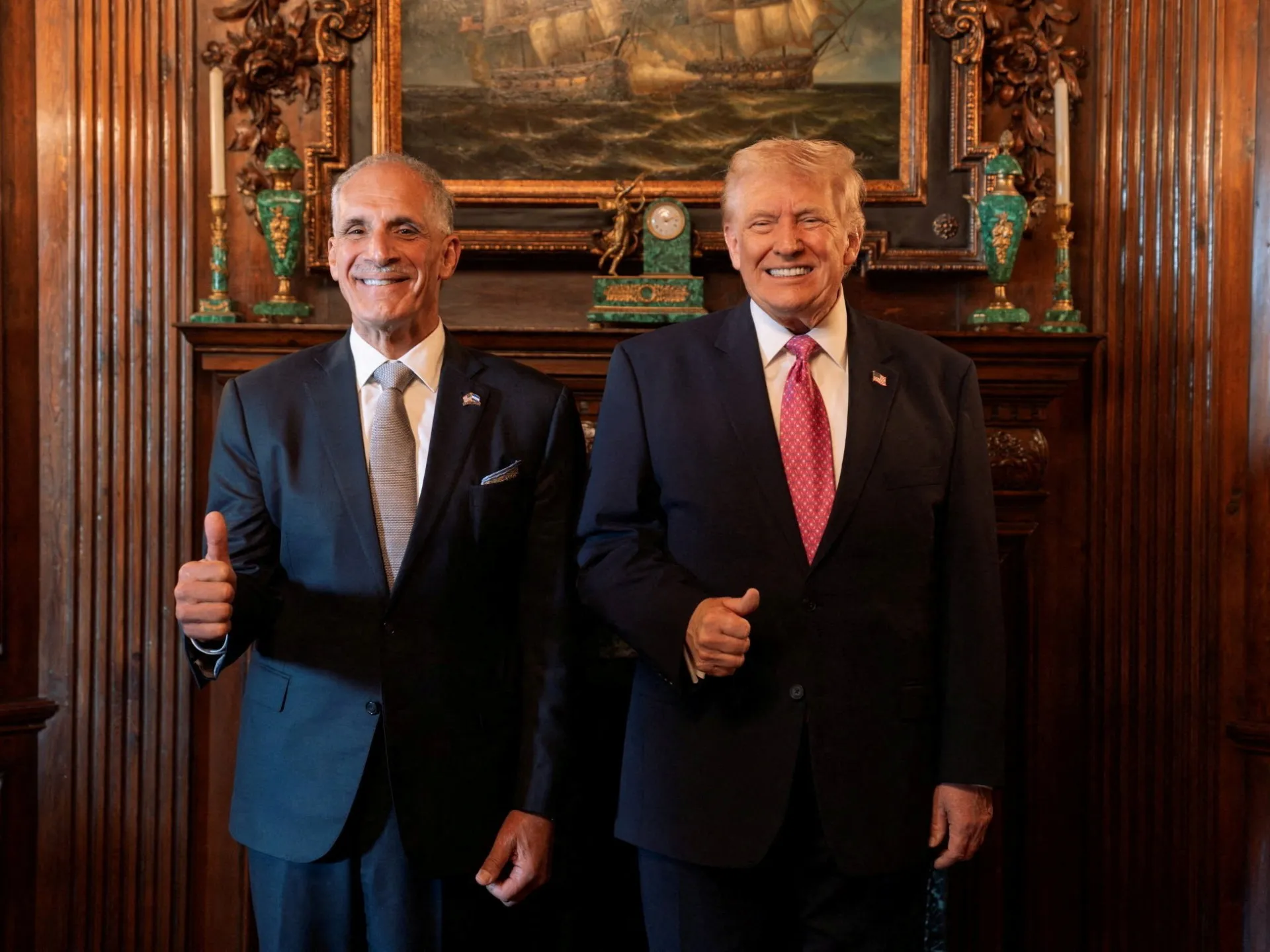
United States President Donald Trump and New York City Mayor-elect Zohran Mamdani have held talks in the White House, expressing their hope for a productive and cordial relationship despite their history of mutual criticism.
Speaking to the press after their discussion on Friday, Trump praised Mamdani – the Muslim politician whom he once tarred as a “jihadist” and threatened to strip him of his US citizenship – for his successful campaign and emphasis on cost-of-living issues.
Recommended Stories
list of 3 itemsend of list
“We’ve just had a great meeting, a really productive meeting. We have one thing in common: we want this city of ours that we love to do very well,” said Trump, who grew up in New York, adding that Mamdani had run an “incredible race” and beat his rivals “easily”.
“I appreciated the meeting with the president, and as he said, it was a productive meeting focused on a place of shared admiration and love, which is New York City,” responded Mamdani, saying he discussed issues in areas such as rent, utilities and groceries.
Mamdani, a democratic socialist who embraced New York’s status as a community made up of people from around the world and offered a firm defence of Palestinian rights, is politically at odds with Trump, whose nativist politics have depicted immigrants as a dangerous internal threat and previously pushed for a ban on Muslims entering the US.
Asked about areas of disagreement with Trump, such as immigration enforcement, Mamdani said he hoped to work together towards shared goals despite their differences.
He referred to a video he shared in November 2024, in which he discussed issues such as affordability and US involvement in conflicts abroad with Trump voters after the 2024 presidential election. Mamdani said he now hopes to find common ground on ending US “forever wars” and bringing down the cost of living.
“I think both President Trump and I are very clear about our positions and our views. And what I really appreciate about the president is the meeting that we had focused not on places of disagreement, of which there are many, and focused on the shared purpose that we have of serving New Yorkers,” said Mamdani.
“That’s something that could transform the lives of 8.5 million people who are currently under a cost-of-living crisis, with one in four people living in poverty,” he said.
With polls showing growing concerns over the state of the US economy, Trump has recently spoken positively about Mamdani’s focus on cost-of-living issues, despite previous acrimony.
“He said a lot of my voters actually voted for him,” Trump told reporters. “And I’m ok with that.”
Here are the key events from day 1,367 of Russia’s war on Ukraine.
Published On 22 Nov 202522 Nov 2025
Share
Here is how things stand on Saturday, November 22:
Fighting
Kremlin spokesman Dmitry Peskov said approximately 5,000 Ukrainian troops are trapped by Russian forces on the eastern bank of the Oskil River, in Ukraine’s eastern Kharkiv region. There was no immediate comment from the Ukrainian military.
Russia’s Ministry of Defence said its troops captured the settlements of Yampil, Stavky, Novoselivka and Maslyakivka in eastern Ukraine’s Donetsk region, as well as the village of Radisne in neighbouring Dnipropetrovsk region.
The Russian Defence Ministry said 33 Ukrainian drones were intercepted and destroyed over five Russian regions, as well as Crimea and the Black Sea, overnight.
At least eight Russian airports were forced to suspend operations during the nighttime attack, according to Russia’s aviation watchdog.
Ukraine said its forces were holding defensive lines in the northern part of the embattled eastern city of Pokrovsk and were blocking attempts by Russian troops to advance further.
Moscow’s forces have fought towards Pokrovsk, a logistics hub for the Ukrainian military, for months to try to capture the town, which Russian media has dubbed the “gateway” to Ukraine’s industrial Donbas region.
Peace plan
Ukrainian President Volodymyr Zelenskyy has until this coming Thursday to approve a United States-backed peace plan with Russia, President Donald Trump has said.
Speaking in the Oval Office after a meeting with New York City Mayor-elect Zohran Mamdani on Friday, Trump said: “We have a way of getting peace, or we think we have a way of getting to peace. [Ukrainian President Volodymyr Zelenskyy] is going to have to approve it.”
President Zelenskyy pledged to work fast and constructively with Washington on the peace plan, but said he would not betray his country’s national interest.
In a video statement, Zelenskyy urged Ukrainians to remain united in what he described as one of the most difficult moments in their country’s history, adding that he expected more political pressure over the next week.
Zelenskyy also said after an hour-long phone call with US Vice President JD Vance that Ukraine would work with Washington, and Europe at an advisory level, towards a peace plan.
Zelenskyy said he then spoke with NATO Secretary-General Mark Rutte about the “available diplomatic options” to end his country’s war with Russia, including the “plan proposed by the American side”.
Russia’s Ministry of Foreign Affairs spokeswoman Maria Zakharova said that Moscow had still not officially received any peace plan from the US, Russian state news agency RIA Novosti reported.
Russian President Vladimir Putin told senior officials at a meeting of Russia’s Security Council that the US proposal could be the basis for a resolution of the conflict, but if Kyiv turned down the plan, then Russian forces would advance further.
British Prime Minister Keir Starmer said any peace deal between Russia and Ukraine must ensure Kyiv’s future security, following a phone call between Starmer, French President Emmanuel Macron, German Chancellor Friedrich Merz and Zelenskyy.
Starmer’s office said the leaders “underlined their support for President Trump’s drive for peace and agreed that any solution must fully involve Ukraine, preserve its sovereignty, and ensure its future security”.
The European Union and Ukraine want peace, but they will not give in to aggression from Russia, the EU’s foreign policy chief Kaja Kallas has said.
“This is a very dangerous moment for all,” Kallas said. “We all want this war to end, but how it ends matters. Russia has no legal right whatsoever to any concessions from the country it invaded; ultimately, the terms of any agreement are for Ukraine to decide.”
Sanctions
The US has issued a Russia-related general licence allowing certain transactions with the Paks II civil nuclear power plant project in Hungary, according to the Department of the Treasury.
The licence allows transactions linked to the nuclear power plant project involving some Russian banks, including Gazprombank, VTB Bank and the Russian central bank.
Finnish fuel station chain Teboil, which is owned by Russia’s Lukoil, has filed for corporate restructuring, news agency STT reported, becoming the first international business owned by the major Russian oil firm to say it would close down as a result of the sanctions imposed by the US on Lukoil last month.
Lithuanian state-owned railway group LTG said it will halt shipments of oil cargoes by Lukoil to the Russian exclave of Kaliningrad due to the US sanctions.
Located on the Baltic Sea coast, Kaliningrad receives many of its supplies from Russia via rail transit through NATO member state Lithuania, but can also get direct shipments from its own country via the coast.
Corruption
Ukraine’s government plans to appoint a new supervisory board at Energoatom, the state nuclear company at the heart of a corruption scandal, by the end of this year, Economy Minister Oleksii Sobolev said.
Ukraine has been rocked by a scandal over an alleged $100m kickback scheme involving senior officials in the energy sector and a former business associate of Zelenskyy.
Economy
Ukraine will sharply increase gas imports via the southern Trans-Balkan route linking it with Greece as it battles to replace supplies lost due to Russian attacks, import data from transit operators showed.
Russian drone and missile attacks on the country’s energy infrastructure have deprived Kyiv of at least half of its own gas production in recent months, forcing it to import an additional four billion cubic metres of gas over the winter heating season to make up the difference.
Regional security
Polish Prime Minister Donald Tusk said sabotage acts inspired and organised by Russia are aimed at destabilising and weakening Poland and bear the hallmarks of “state terrorism”.
Last weekend, an explosion damaged railway tracks on the Warsaw-Lublin route, which connects the Polish capital with the Ukrainian border, something Tusk described as an “unprecedented act of sabotage”.
Nathan Gill, a British former member of the European Parliament and ex-leader of the populist Reform UK in Wales, has been jailed for more than 10 years after admitting taking about 40,000 British pounds ($52,344) in bribes to make pro-Russian speeches and statements.
JESS Glynne has hinted she’s already bought an engagement ring to propose for girlfriend Alex Scott.
Her I’m A Celebrity star partner said on the ITV show she was “waiting” for the pop star to pop the question.
Sign up for the Showbiz newsletter
Thank you!
Jess Glynne hints she plans to proposeAlex Scott and Jess Glynne have been together since 2023Credit: Getty
Since then, Jess has suggested she’s already got a plan in place to make Alex’s dream come true.
Speaking to Hits Radio presenter Tom Green, Jess admitted that the “pressures on” after hearing Alex mention “the ring” in I’m A Celebrity, Get Me Out of Here.
However once she heard it, Jess admits: “I went to the shop straight after….”
Banerji said in his resignation letter that he was unhappy about governance issues at the organisation, BBC News reported.
Published On 21 Nov 202521 Nov 2025
Share
Shumeet Banerji has resigned from the BBC board and criticised governance issues at the organisation, the latest blow to the broadcaster weeks after its director general quit.
The BBC confirmed Banerji’s departure on Friday, saying he stepped down only weeks before the end of his four-year term.
Recommended Stories
list of 3 itemsend of list
According to BBC News, Banerji said in his resignation letter that he was unhappy about governance issues at the organisation.
He also said he had not been consulted about key developments surrounding the abrupt exits of director general Tim Davie and BBC News chief executive Deborah Turness, BBC News reported.
Both stepped down on November 9 after mounting criticism of the broadcaster’s handling of political coverage, including the editing of a Donald Trump speech delivered on January 6, 2021, shortly before his supporters stormed the United States Capitol.
‘No legal basis’
The BBC issued an apology on November 13 for how its investigative programme Panorama edited the footage. However, it insisted there was “no legal basis” for Trump to sue for defamation.
The dispute focuses on Panorama’s documentary, Trump: A Second Chance?, broadcast in October 2024, just days before Trump secured re-election.
The film stitched together two separate lines from Trump’s January 6 address, almost an hour apart, creating the impression he urged supporters to “fight like hell” while heading towards the Capitol.
Trump and his allies say the sequence was misleading and stripped away crucial context from the speech.
They argue that Trump also told the crowd “to peacefully and patriotically make your voices heard” and encouraged supporters to “cheer on our brave senators and Congressmen and women”. The edited version, they say, suggested a more direct incitement to violence.
The scandal has intensified scrutiny of the BBC at a moment when the broadcaster is already grappling with accusations of internal bias, fuelled by a leaked internal memo.
Several of Saturday’s papers lead with Ukrainian President Volodymyr Zelensky’s “agonising choice”, as the Daily Mail writes, over whether to accept a US-backed peace deal with Russia. “Trump turns the screw” is the Mail’s headline, which reports that Ukraine has been told it has until Thursday to accept the “humiliating peace deal”.
Zelensky warns his country is facing a choice between “losing US support or forfeiting its dignity” over the peace deal, according to the Financial Times. European allies are caught “off-guard” by the plan, which was drafted by aides of the US and Russian presidents, and say it amounts to “capitulation” to Moscow’s demands. Zelensky says he will not reject the initiative “out of hand”, but will “offer alternatives” in dialogue with Washington.
In an address to the country, the Ukrainian president says his country faces its “most difficult moment in history”, the Independent leads. Elsewhere, the paper reports on a “remarkable” 19-wicket first day of the Ashes in Perth, in which captain Ben Stokes led a “ferocious fightback against Australia”.
Trump confirms the Thursday deadline for Ukraine to respond to the peace plan, but the White House denies reports that the US could “cut off” intelligence sharing if Zelensky rejects it, the Times reports. European leaders, alongside the UK, are working to “strengthen” the deal, “amid concern that Ukraine would be at risk of further attacks if it weakened its armed forces”.
The Daily Mirror leads on the jailing for 10-and-a half years of an “ally” of Reform UK leader Nigel Farage, for accepting pro-Russia bribes. Former Reform UK in Wales leader Nathan Gill, whom the paper describes as a “former party bigwig”, took up to £40,000 from tycoon Oleg Voloshyn for “making pro-Russian speeches”.
Prime Minister Sir Keir Starmer is urging Farage to “root out links between Reform UK and Russia” following the conviction of Gill, the Guardian reports. The paper says the government believes Reform UK is “vulnerable” to criticism that Farage and his allies have been “too pro-Russia”. Police have said there was no link to Farage in their investigation into Gill.
The Conservative Party would retain just 14 seats if an election was called now, according to internal party polling leaked to the Telegraph. An insider tells the paper that the party faces an “existential threat” from Reform UK, which the poll forecasts would win a 46-seat majority. Another source says the Tories are at risk of being “consigned to the history books”.
Challenges facing the Labour Party are the focus for the i Weekend, which reports that the PM is “losing control” of his party’s MPs ahead of the Budget. Some Labour MPs have become “a bit feral” over uncertainty about Sir Keir’s leadership, according to ex-advisers to Downing Street. Backbenchers and ministers are urging more help for “hard-up people” amid the “cost of living crunch”.
Sarah Ferguson is “considering offers” for a “tell-all TV interview”, the first since her ex-husband Andrew Mountbatten Windsor relinquished his titles over links with convicted sex offender Jeffrey Epstein, the Sun reports. Some US networks are “willing to pay six-figure sums to secure the chat” with the former Duchess of York.
MPs are considering whether to establish an “injury-in-service medal” for police officers who are forced to quit after sustaining injuries during active duty, the Daily Express reports.
Finally, the Daily Star leads on a boss who has mandated his staff to take time off to see their children’s Christmas events – including pantos. “Oh, yes he did,” the paper writes.
Y la chona se mueve, al ritmo que los Fortniteros toquen.
Starting Friday, “Fortnite Festival” players across the globe can rock out to the story of la chona as Los Tucanes de Tijuana’s mega hit “La Chona” is the latest track to hit the “Fortnite” universe.
The 1995 song — which has long been a staple on party dance floors — has crossed over into international fame thanks to its prevalence on social media and the overall increased visibility of Latinos. People from within and outside of the culture have embraced the track’s playful nature and undeniably catchy melody—Metallica even got in on the fun with a 2024 live cover of the single at a show in Mexico City.
Like “Guitar Hero” and “Rock Band,” “Fortnite Festival” — a spinoff of the popular survival/ battle royale-style online game “Fortnite” — is a rhythm game that requires players to hit notes in-time to properly perform songs as members of a virtual band.
The band made headlines in 2010 when it was banned playing in its hometown of Tijuana as a result of a 2008 concert in which the group’s lead singer, Mario Quintero Lara, sent his regards from the stage to the city’s most notorious and wanted men, “El Teo and his compadre, El Muletas.”
“El Teo” refers to Tijuana drug cartel leader Teodoro Garcia Simental, who was captured by authorities in 2012. “El Muletas” — which Spanish for “crutches” — was the nickname of Tijuana cartel leader Raydel Lopez Uriarte, who was captured in Mexico in 2010. The moniker stands for the trail of disabled people Lopez Uriarte left behind as part of his brutal attacks.
The shout-out enraged the city’s then-police chief Julian Leyzaola. He said the band’s polka-driven narcocorrido songs glorified drug lords and their exploits and were, therefore, inappropriate to play in a border city that had long suffered from drug-related violence.
“La Chona” is only the most recent playable song available as part of “Fortnite Festival’s” 11th season, which unlike previous iterations, is made up of songs from several performers rather than having only one featured artist. Other artists featured in the latest season include Jennie from Blackpink, Doja Cat, Simple Plan, Elton John, Fall Out Boy, Tyler the Creator, Slipknot and Olivia Rodrigo. Previous seasons of the game revolved around the music of Billie Eilish, Karol G, Bruno Mars, the Weeknd and Lady Gaga.
The “Fortnite” franchise first dabbled in the world of music in 2019 when DJ Marshmello performed a virtual concert on “Fortnite Battle Royale.” It was estimated that over 10.7 million people tuned in for the concert.
With the onset of the COVID-19 pandemic, the Fortnite metaverse became a refuge for artists looking to connect with audiences. Travis Scott performed for over 12.3 million players in April 2020, and Ariana Grande played inside the game in August 2021. Other artists who have rocked the “Fornite” stage are Eminem, Snoop Dogg, Juice Wrld, Metallica and Ice Spice.
Nov. 21 (UPI) — The Christian Association of Nigeria said 215 Catholic school students in Central Nigeria were kidnapped on Friday by a group of armed men.
The attackers also kidnapped a dozen teachers from the religious school in the north-central Niger State, CNN reported.
Many students managed to escape, and their parents began picking them up before the school closed, Niger State CAN Chapter leader Rev. Bulus Dauwa Yohanna told media.
CAN officials are working with the government and its security agencies to safely return the abducted children and teachers, a CAN spokesman said.
According to police, the pupils were taken when armed “bandits” stormed the St. Mary’s School in Papiri and forced students out of their hostel sleeping space.
Boarding schools already were closed by state authorities in a large part of the country due to concern over rising security threats following a renewed string of attacks by militant groups.
The incident occurred after more than 20 Muslim schoolgirls were kidnapped Monday from a different boarding school in the neighboring Kebbi state.
But officials said St. Mary’s, in Nigeria’s largest state of Niger, defied the order to close despite intelligence warnings by the Nigerian government.
“Regrettably, St. Mary’s School proceeded to reopen and resume academic activities,” they told the BBC in a statement.
“Without notifying or seeking clearance from the state government, thereby exposing pupils and the staff to avoidable risk,” Nigerian officials stated.
The mass kidnappings came on top of U.S. President Donald Trump‘s threat to issue strikes against Islamic extremists in Nigeria, such as ISWAP and Boko Haram, which are currently engaged in ongoing armed conflicts for control of sovereign territory with various militarized groups, described as “bandits,” across the West African country.
On Wednesday, Nigerian President Bola Tinubu said he was “fully apprised” of the “recent uptick in violent extremism in pockets across the country.”
“And I have directed our security agencies to respond with urgency, clarity, and decisive action. Our forces need the full cooperation of every community. Sharing information can save lives and protect our children,” Tinubu posted on social media.
Tinubu said that Nigeria was canceling plans to participate in the looming G20 and AU-EU summits in South Africa and Angola, respectively.
Weekly insights and analysis on the latest developments in military technology, strategy, and foreign policy.
Welcome to Bunker Talk. This is a weekend open discussion post for the best commenting crew on the net, in which we can chat about all the stuff that went on this week that we didn’t cover. We can also talk about the stuff we did or whatever else grabs your interest. In other words, it’s an off-topic thread.
The caption to this week’s top shot reads:
Needs no caption.
Also, a reminder:
Prime Directives!
If you want to talk politics, do so respectfully and know that there’s always somebody that isn’t going to agree with you.
If you have political differences, hash it out respectfully, stick to the facts, and no childish name-calling or personal attacks of any kind. If you can’t handle yourself in that manner, then please, discuss virtually anything else.
No drive-by garbage political memes. No conspiracy theory rants. Links to crackpot sites will be axed, too. Trolling and shitposting will not be tolerated. No obsessive behavior about other users. Just don’t interact with folks you don’t like.
Do not be a sucker and feed trolls! That’s as much on you as on them. Use the mute button if you don’t like what you see.
So unless you have something of quality to say, know how to treat people with respect, understand that everyone isn’t going to subscribe to your exact same worldview, and have come to terms with the reality that there is no perfect solution when it comes to moderation of a community like this, it’s probably best to just move on.
Finally, as always, report offenders, please. This doesn’t mean reporting people who don’t share your political views, but we really need your help in this regard.
Gogglebox returned once again on Friday night on Channel 4
Gogglebox stars Dave and Shirley Griffiths shared some huge news just minutes into Friday’s episode(Image: Channel 4)
Gogglebox stars Dave and Shirley Griffiths shared some huge news just minutes into Friday’s episode.
As the episode started, Dave was seen surprising Shirley by letting off a loud confetti cannon, leaving his wife shocked.
Shirley said: “What have you got there?” before adding after the confetti cannon went off: “You stupid cow! You d**k!”
This prompted a beaming Dave to declare: “Happy anniversary!” before kissing his wife. He continued: “We’ve got to celebrate, haven’t we, 50 years!”
To which a giggling Shirley pointed out: “I was going to say, you’ve covered the b****y dogs!” as their pet dogs were seen covered in the confetti.
It comes as the duo also celebrated the milestone on Instagram as they shared a throwback snap on their joint account, writing: “50years on November 15th I wed the lovely Shirley, Happy anniversary darling here’s to making more happy memories.”
Gogglebox also celebrated the anniversary as they posted on their own Instagram: “How it started… how it’s going” with yellow heart emojis.
The couple’s fans and Gogglebox viewers were quick to react to the lovely news and incredible milestone.
“Happy golden wedding anniversary you lovely pair,” commented Ellie Warner, whilst her sister Izzi contributed: “Congratulations both! Wishing you many more years of wedded bliss.”
Simon Minty wrote: “Hid your names and asked Jane to guess. Took a couple of clues and then she cried, ‘Jeepers!’ She guessed you first Shirl and I guessed you first Dave. A very happy anniversary to you both.”
Ex-Gogglebox star Mica Ven added: “Happy anniversary you beauties,” whilst Jenny Newby and Lee Riley joked: “Awhhhhhh Happy Anniversary to you lovely pair but who gets the medal.”
Meanwhile, one fan commented: “Happy anniversary to you both, may you share many more in the years to come,” whilst another viewer added: “Gorgeous!! Happy Anniversary to a beautiful couple.”
The Welsh couple, who first appeared on the Channel 4 programme back in 2015, have quickly secured themselves as fan favourites.
Gogglebox airs on Friday nights at 9pm on Channel 4.