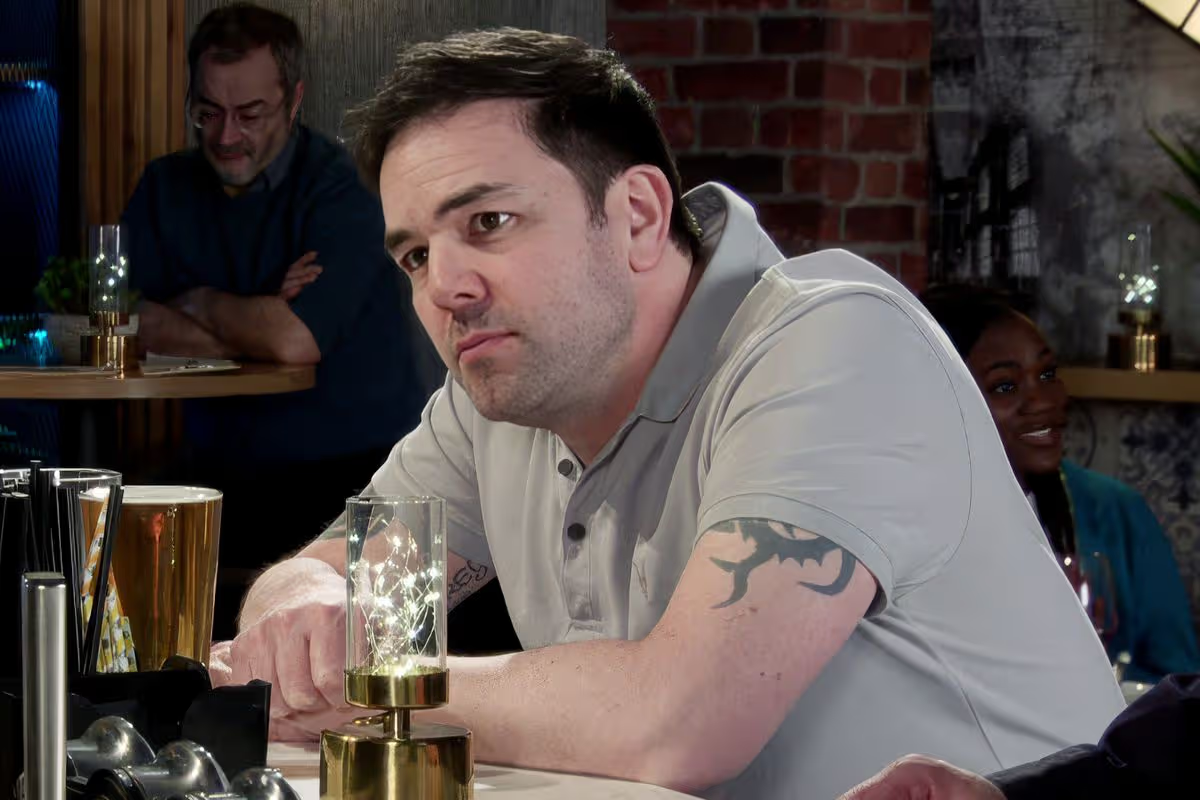
Celebrity Ex on the Beach returns for Season 4 with an all-star cast including Helen Flanagan and Jedward’s John Grimes
Daisy May Cooper will be the new narrator for Celebrity Ex on the Beach(Image: Paramount+)
A brand new and explosive series of Celebrity Ex on the Beach has returned to screens with an all-star cast searching for romance.
The popular reality dating programme has made its eagerly awaited comeback to Paramount Plus today (Tuesday, March 31) for its fourth series with Daisy May Cooper as the new narrator.
As the heat intensifies in Tenerife, eight single celebrities are seeking love, but there’s a catch. Their former partners will be lurking, poised to appear at any point.
An official synopsis states: “This season, temperatures rise as eight single celebrities touch down on the stunning shores of Tenerife in search of love but as ever, their exes are waiting in the wings, ready to crash the party.”
It continues: “Celebrities including Corrie actress Helen Flanagan, TOWIE’s Dani Imbert, Love Island star Toby Aromolaran, and pop phenomenon Jedward’s John Grimes, are among the famous faces diving headfirst into the drama and putting everything on the line for a real shot at love.”
The synopsis adds: “With exes such as Curtis Pritchard, Ronnie Vint and Rogan O’Connor ready to make their dramatic entrance into the Villa, how will the singles cope when faced with their former flames seeking closure, truth or even worse, revenge?”
Celebrity Ex on the Beach episode release schedule
Series 4 has launched on Paramount Plus today (March 31) with the programme streaming exclusively on the platform, reports OK!. Episodes will subsequently be released weekly, every Tuesday. This season has seen the release of 10 episodes, with the episode release dates as follows:
Episode 1 – Tuesday, March 31
Episode 2 – Tuesday, April 7
Episode 3 – Tuesday, April 14
Episode 4 – Tuesday, April 21
Episode 5 – Tuesday, April 28
Episode 6 – Tuesday, May 5
Episode 7 – Tuesday, May 12
Episode 8 – Tuesday, May 19
Episode 9 – Tuesday, May 26
Episode 10 – Tuesday, June 2
Celebrity Ex on the Beach cast
Amy Kenyon, 28, known for: Married at First Sight UK
Chase DeMoor, 29, known for: Too Hot to Handle
Dani Imbert, 27, known for: The Only Way is Essex
Freddie Powell, 32, known for: Love is Blind UK
Helen Flanagan, 35, known for: Coronation Street
Izzy Fairthorne, 26, known for: Too Hot to Handle
John Grimes, 34, known for: The X Factor
Toby Aromolaran, 26, known for: Love Island
Celebrity Ex on the Beach trailer
Content cannot be displayed without consent
A thrilling first look trailer was previously unveiled, showcasing the eight celebrities making their grand entrance on the beautiful beaches of Tenerife in pursuit of romance. The intense snippets provide viewers a glimpse into the drama and turmoil they can anticipate, complete with numerous reconciliations and splits.
The trailer, filled with anticipated jaw-dropping twists, features Curtis Pritchard confessing he was “telling the truth”, while another clip shows Helen Flanagan questioning: “Am I just being deluded?”
Celebrity Ex on the Beach can be watched on Paramount Plus.
Italian press reports that the government has refuse to authorise US to land bombers at a base in Sicily for transit to the Middle East, where they could be used to strike Iran.
‘We’re going to be vocal about it, we’re going to make noise until we’re heard,’ South Africa’s gold medallist says.
Published On 31 Mar 202631 Mar 2026
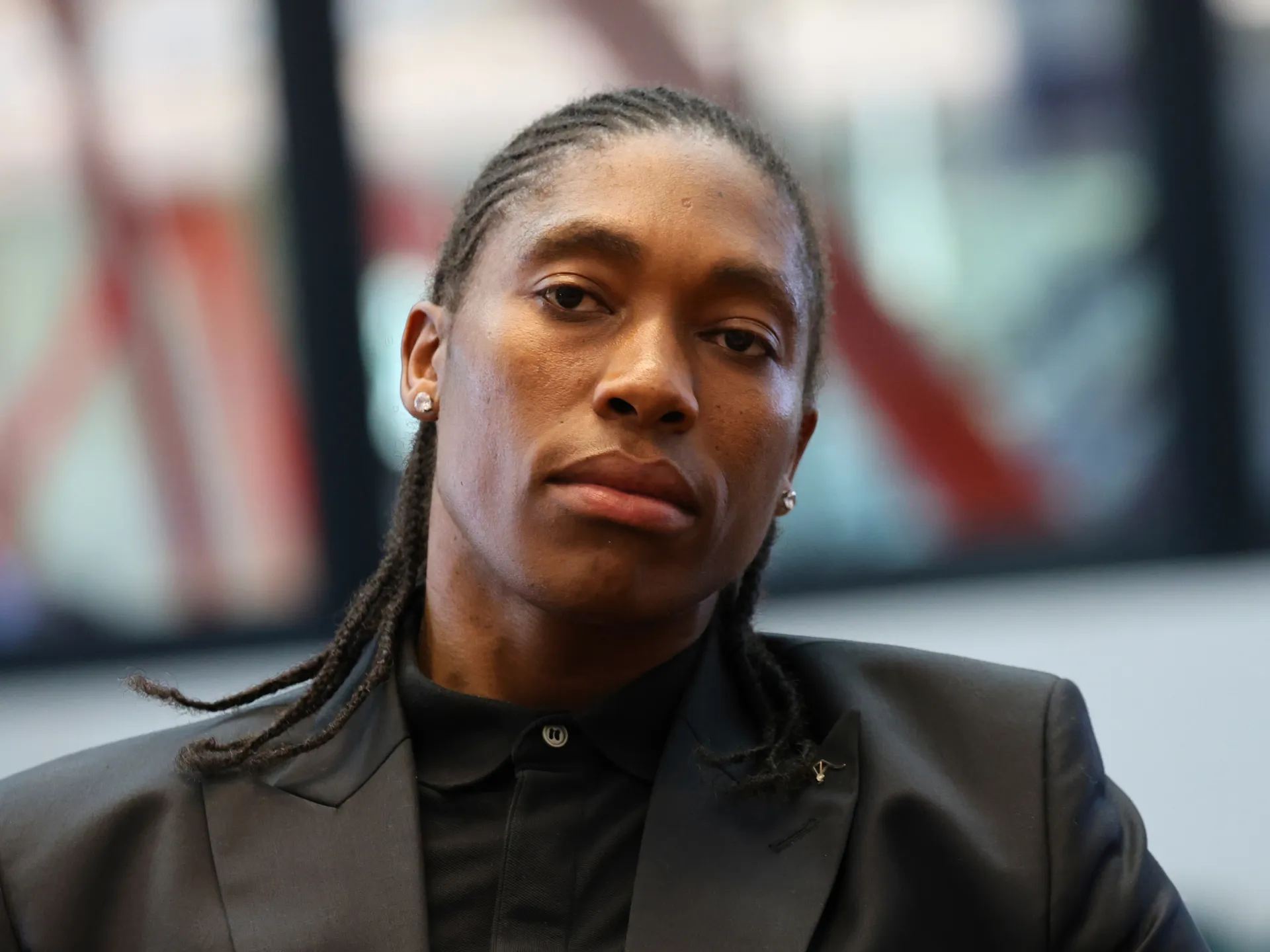
Double Olympic champion Caster Semenya says she intends to fight against the introduction of gender testing for the female category at the Olympics, a policy the South African insists “undermines women’s rights”.
The International Olympic Committee (IOC) unveiled the policy last week and it is expected to become a universal rule for competitors in female elite sports after years of fragmented regulation that led to controversy.
Recommended Stories
list of 4 itemsend of list
Semenya has been at the centre of one of those controversies due to her long-running legal case against World Athletics over her right to compete on the track despite having a Difference of Sexual Development (DSD).
“We’re going to be vocal about it, we’re going to make noise until we’re heard,” the 35-year-old athlete told the Reuters news agency on Monday.
“Now it’s a matter of women standing for themselves to say, ‘Enough is enough.’ We are not going to be told how to do things.
“If really we are accepted as women to take part, why does my appearance or my voice, why do my inner parts need to be a problem to take part in the sport?”
DSDs are a group of rare conditions involving genes, hormones and reproductive organs. Some people with DSDs are raised as female but have XY sex chromosomes and blood testosterone levels in the male range.
The IOC policy document said including “androgen-sensitive XY-DSD athletes” in the female category in events that rely on strength, power or endurance “runs fundamentally counter to ensuring fairness, safety and integrity in elite competition”.
Semenya, who won two Olympic and three world titles in the 800 metres before being limited to shorter events, believes the IOC got the science wrong.
Semenya said “there’s no science” that XY-DSD gave an athlete an advantage. “I’ve been there, I’ve done that. There’s no such thing as that,” she said.
“There are people who are delusional. There are people who are convinced because a woman is masculine, a woman is born with intersex conditions, the DSD, they’ve mentioned all those things [that they have an advantage].
“But what I say is that if you’re going to be a great athlete, it’s through hard work.”
The test that will be applied to all athletes who want to compete in the female class will be conducted by a cheek swab or saliva analysis.
There will be further investigation for any athletes who test positive for the SRY gene, which is on the Y chromosome and triggers the development of male characteristics in mammals.
“What this decision does, it undermines women. It undermines women’s dignity. It violates women’s rights because we know historically, these [tests] have failed before,” Semenya said.
“Women need to be celebrated. Women are not supposed to be questioned about their gender. Why that is their physique? Why it is how they look like? It doesn’t matter. Neither also the hormone level. Those are the things that are obviously genetics that cannot be controlled.”
Semenya said IOC President Kirsty Coventry, the first woman and first African to hold the office, had failed to properly consult her or other athletes living with DSDs about the policy.
“They sent us a letter the day they were going to publish [the new policy],” she said.
“If you’re going to consult, consult with a genuine heart. Don’t consult because you’re ticking the box. Unfortunately, they have ticked a wrong box.”
Gemma Atkinson is now in a happy relationship with Strictly pro Gorka Marquez, but she didn’t mince words about one past flame, whom her mum described as having “bad energy”
Gemma Atkinson(Image: ITV)
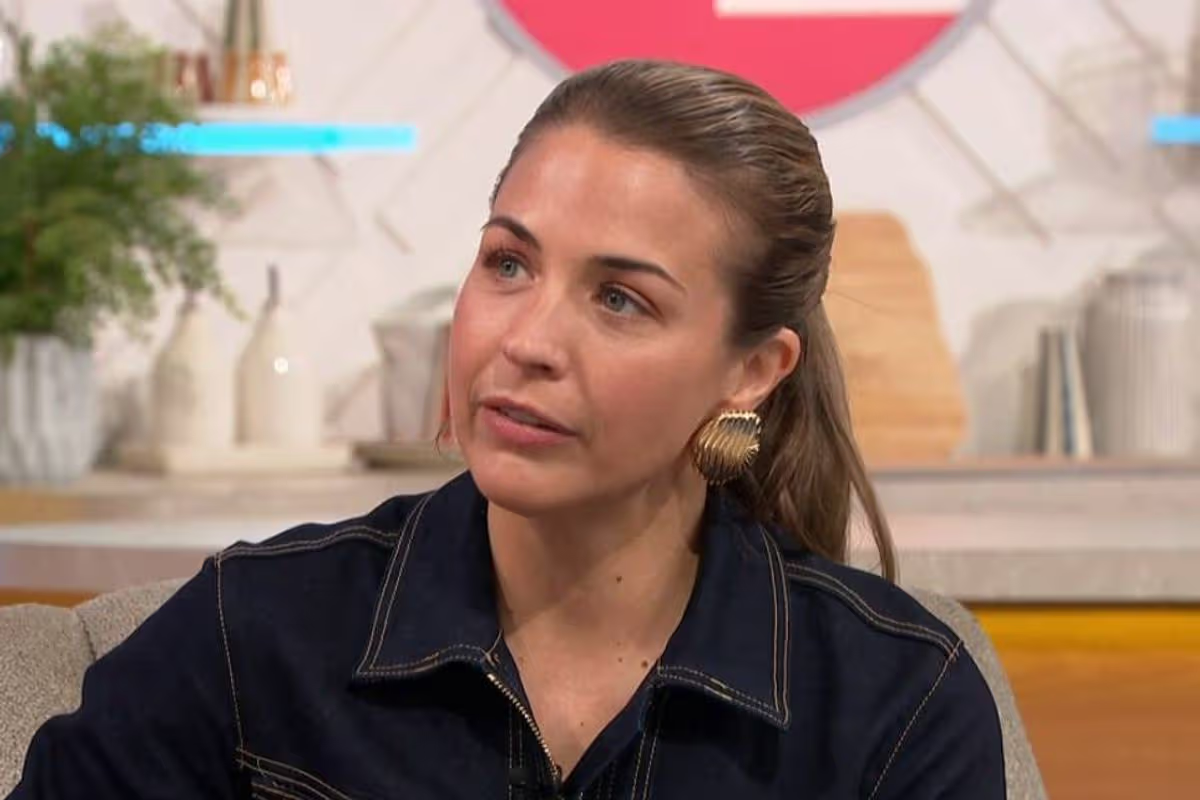
Gemma Atkinson has shed light on the actions of a “horrible” ex-boyfriend, whom her mum once described as having “bad energy”. We’ve all experienced youthful missteps in love, and it appears the former glamour model is no different, having suffered a painful betrayal at the hands of an opportunistic former partner.
Gemma is now in a happy relationship with Strictly Come Dancing star Gorka Marquez, with whom she shares two children, Mia and Thiago, but she didn’t mince words about this one past flame.
Indeed, when she and Gorka were asked if they’d ever had a partner that their parents hadn’t “got on with”, she hit out at one boyfriend from her past and described him as both a “b*****d” and a “cretin”.
Speaking in a short clip for the Lost in Translation podcast, in collaboration with Hits Radio, Gorka revealed that his mum tended to like “every partner” until they were no longer together.
Gemma said: “I dated one lad years ago; I was only about 17, 18. He was a b*****d. He’s the only person who’s ever sold a story on me. He was such a cretin. I introduced him to my mum.
“And, as soon as he left, my mum went, ‘I don’t like him; he’s got a bad energy about him’. Of course, I kicked off with her, ‘You’re wrong!’ Introduced him to the girls….
“Laura went, ‘Don’t know what it is about him, Gemma, but I just wanna batter him’. I was like, ‘Why? You’re all wrong’. A year later, turned out to be a right cretin. Sold a story on me, took money, was horrible.
“They were all right, so my advice, if your mum doesn’t like a partner on the first meeting, there might be a good reason for it. They say mums know best.”
Gemma also advised people to always trust a dog’s judgement if it “doesn’t like a person”, before adding that she doesn’t trust people who don’t like dogs, as Gorka proceeded to add a touch of humour to the chat.
He joked that he’s “never liked dogs”, has faked it for eight years, and that, in fact, his “name is not Gorka”.
Gemma, who played Lisa Hunter on Channel 4 soap Hollyoaks, developed a romance with Gorka when they met on the Strictly set back in 2017; four years later, Gorka popped the question, and they got engaged in 2021.
She has reportedly had something of a colourful romantic life, being linked to actors and sportsmen, including footballers Marcus Bent and Cristiano Ronaldo. Sadly, Gemma claimed that she was cheated on in the relationship she had prior to Gorka.
Not naming names, Gemma told Hits Radio: “It wasn’t that long ago, it was my fella before Gorka, we went on holiday.
“We met in the Bahamas and while we were there I took a picture of a sunset because it was a really lovely sunset, and I put it on me Instagram. I thought nothing of it.
“He put the same picture as his WhatsApp profile picture and a few days later I got this message on Instagram from this girl and she was like, ‘Woman to woman, can I ask you were you with (him) recently?’
“‘Because my boyfriend told me he was in Florida with the lads and the picture you put on Instagram he has put as his WhatsApp profile pic’.”
South Korea will remove the “China (Taiwan)” label from its e-arrival system, a foreign ministry official said Tuesday, after Taiwan changed South Korea’s name in its immigration system from “Korea” to “Korea (South)” in protest.
Seoul plans to remove the “last point of departure” and “next destination” fields from e-arrival cards, where the island nation had been listed as “China (Taiwan),” the official told reporters. It will remain listed as Taiwan in the country and region field.
“We have reviewed the matter and are moving forward with plans to remove the ‘last point of departure’ and ‘next destination’ fields from the electronic arrival card,” he said.
The official said the paper arrival cards already do not include those fields, and that the move is part of efforts to streamline the system, improve convenience for visitors from Taiwan, and align the paper and electronic arrival formats.
The Ministry of Justice is handling the matter in line with relevant procedures, the official said.
Seoul’s decision came after Taiwan called for a “correction” in its labeling as “China (Taiwan)” on e-arrivals, saying it has changed South Korea’s name in its immigration system from “Korea” to “Korea (South)” in a reciprocal measure.
Taipei had warned that it would take further corresponding steps if it sees no positive action from Seoul by the end of this month.
Taiwan’s foreign ministry said Tuesday that it has learned Seoul was under an “internal administrative and technical review” to update its e-arrival card system. It said Taiwan will temporarily suspend its own change to the e-entry registration.
Seoul noted that the decision was not made in response to Taiwan’s stated March 31 deadline for possible additional measures over the labeling, but was intended to address the issue in a way that promotes practical, unofficial cooperation with Taiwan.
Taiwan is also reportedly expected to take reciprocal steps to restore “Korea” in its foreign residents’ certificates.
Seoul’s decision to remove the two fields will be applied to all countries.
South Korea severed official diplomatic ties with Taiwan in 1992, when it established formal relations with mainland China. Since then, the two sides have maintained practical ties in an unofficial manner.
China considers Taiwan, self-governed since it broke away from the mainland in 1949, as part of its territory that must be reunified by force if necessary, and it has strongly objected to any country that challenges this stance.
“We maintain necessary communication with China on matters of mutual interest,” the Seoul official added.
Copyright (c) Yonhap News Agency prohibits its content from being redistributed or reprinted without consent, and forbids the content from being learned and used by artificial intelligence systems.
In a new report, Doctors Without Borders says sexual violence is the ‘defining feature’ of the conflict in Sudan.
Hanaan was 18 years old when she was raped by members of the Rapid Support Forces (RSF), a paramilitary group accused of committing widespread “war crimes” during nearly three years of fighting against Sudan’s army.
She was walking alongside a female friend to her makeshift home in an encampment for displaced people in South Darfur, when four men on motorbikes stopped them and asked where they were going.
Recommended Stories
list of 3 itemsend of list
“Two took each girl, and they raped us,” she told Doctors Without Borders, an international medical NGO known by its French initials MSF.
“I feel uncomfortable in my body, heavy. I don’t feel pain, apart from in my back – because they beat me, they beat me with their guns on my back,” she said.
Hanaan – not her real name – shared her testimony as part of a report released by MSF on Tuesday, which details the widespread use of sexual violence as a weapon in Sudan’s ongoing brutal civil war.
The NGO said 3,396 survivors of sexual violence sought treatment in MSF-supported health facilities across North and South Darfur between January 2024 and November 2025.
The data, presented in the report titled, There is Something I Want to Tell You…, was drawn from MSF programmes in just two of Sudan’s 18 states and reflects only a fraction of the crisis, while the true scale of the phenomenon remains unknown.
Women and girls accounted for 97 percent of survivors treated in MSF programmes. The RSF and allied militias were found to be primarily responsible for the systematic abuse.
Children among the survivors
“Sexual violence is a defining feature of this conflict – not confined to front lines, but pervasive across communities,” Ruth Kauffman, MSF emergency health manager, said in a statement.
“This war is being fought on the backs and bodies of women and girls. Displacement, collapsing community support systems, lack of access to healthcare and deep-rooted gender inequalities are allowing these abuses to continue across Sudan.”
Following the RSF’s capture of el-Fasher, the capital of North Darfur, on October 26, 2025, MSF treated more than 140 survivors fleeing to Tawila. Among them, 94 percent were attacked by armed men, with many reporting assaults along escape routes.
The assaults “deliberately targeted non-Arab communities as a means of humiliation and terror, echoing previous RSF atrocities such as the dismantling of Zamzam camp”, the report said. The RSF took control of famine-hit Zamzam camp in the western Darfur region after two days of heavy shelling and gunfire in April 2025.
Survivors described attacks not only during fighting, but in everyday settings, such as fields, markets and displacement camps.
Children were also among the survivors. In South Darfur, one in five survivors was under 18, including 41 children younger than five, the organisation said.
MSF called on the United Nations, donors and humanitarian actors to urgently scale up health and protection services in Darfur and all of Sudan, and on all parties to the conflict to cease and prevent sexual violence and hold perpetrators accountable.
Is there room in corridos tumbados for a little bit of R&B soul? Linea Personal is betting on it.
For three years, the música Mexicana band Linea from Stockton has been perfecting its sophomore album, “Todo ø Nada,” a 13-track project that incorporates elements of melodic trap, R&B, blues and corridos tumbados.
“It’s slow music, the lyrics transmit good feeling and it’s moody,” said frontman Gustavo Raya Garcia following the album’s release on March 26. “Our R&B style is a lot different from these [corrido] artists.”
At its core “Todo ø Nada” is a sad sierreño escapade that heavily has boisterous elements of corrido tumbados — often through wailing high-pitch strumming from a requinto and thunderous tololoche plucks, most notable in tracks like “Motorola” and “Tarot.”
But most distinct from the LP is the blues-infused “Caperuzita,” which kicks off the album with an ethereal, pitch-shifting cry that wades through the backdrop as an omniscient spirit — an interpolation inspired by Future’s “Wait for U” (featuring Drake and Tems) — while sounds of a banjo speckle about. The band also isn’t afraid to tap into other genres by infusing a drunken, jazzy trumpet into the sex positive “Ülala” — whose infatuating lyrics were partially inspired by the chorus line in Luther Vandross’ ”Never Too Much.”
“R&B is our original sound and we wanted to bring that back to this album but a little different,” said Raya Garcia “We wanted it to have a little bit more feeling to it. That’s why we added new instruments.”
For the group — which includes frontman Raya Garcia, his brother and secondary voice Aidan Raya Garcia, requinto player Jorge Ontiveros Zúñiga and guitarist Edgar Lozoya Verduzco — bringing “Todo ø Nada” to fruition was a total slow burn.
The band — who gained traction through their 2024 hustler melodies “Holanda” and the melancholic “Hennessy” — was often stuck in lengthy creative meetings at Street Mob Records, the record label founded by Fuerza Regida’s Jesús “JOP” Ortiz Paz, who signed the band in 2021.
“It taught us a lot of patience and a lot of faith in God’s timing,” said Raya Garcia. “We really wanted this album to come out a year ago, but things happened for a reason.”
To help fuel their creative flow, the group went down to a beach retreat in San Carlos, Sonora, right Mexico’s Gulf of California. They compiled a total of 50 songs, then narrowed it down to the 13-track list.
“What we look at is the lyrics,” said Edgar Lozoya Verduzco, the group’s producer. “The one we were not too sure about was ‘P— Alcohol’ because it was too explicit.”
But at the end of the day, Lozoya Verduzco wanted to push against the grain with the obscenity-laced track whose lyrics’ double meaning are reminiscent of those in Lil Wayne’s 2008 “Lollipop.”
“We’re not scared to try something new,” said Lozoya Verduzco.
(Cat Cardenas / For De Los)
With the release of “Todo ø Nada,” Linea Personal hopes it can continue to build on the momentum achieved by many of its Mexican American contemporaries — including corrido tumbado forefather Natanael Cano and its mentor, Fuerza Regida. According to Spotify, corridos accounted for 77% of all música Mexicana streaming in 2023.
“We are inspired a lot [by these acts], we see their mentality,” said Lozoya Verduzco. “We need need to be exactly like that or work 10 times harder.”
The U.N. Human Rights Council adopted a resolution condemning North Korea’s human rights violations during a session in Geneva Monday. The Council’s 61st session opened on Feb. 23, as seen in this file photo. File Photo by Valentin Flauraud/EPA
SEOUL, March 31 (UPI) — The United Nations Human Rights Council adopted a resolution condemning North Korea’s human rights violations, with South Korea joining 49 other countries as a co-sponsor despite speculation it might withhold support as it seeks to improve relations with Pyongyang.
The resolution was adopted by consensus at the Council’s 61st regular session Monday in Geneva. It expresses “deep concern about the systematic, widespread and gross human rights violations in the Democratic People’s Republic of Korea [and] the pervasive culture of impunity and lack of accountability for such violations.”
The measure urges Pyongyang to undertake sweeping reforms, including dismantling political prison camps, ending forced labor and ensuring freedom of expression and movement.
The Council has adopted a North Korean human rights resolution every year since 2003.
South Korea had reportedly weighed opting out of co-sponsorship this year, as the administration of President Lee Jae Myung pursues renewed engagement with the North and seeks to ease tensions on the Korean Peninsula.
However, Seoul ultimately decided to join as a co-sponsor “following in-depth consultations among relevant government agencies,” Foreign Ministry spokesman Park Il said at a press briefing Tuesday.
He pointed to the resolution’s references to humanitarian issues such as abductions and reunions for separated families, as well as language supporting dialogue and engagement.
“It was by taking all these aspects into account that we decided to participate as a co-sponsor,” Park said.
South Korea also backed a similar U.N. resolution at the General Assembly in November. Seoul had co-sponsored such measures from 2008 through 2018, but stepped back during a period of inter-Korean detente between 2019 and 2022 under then-President Moon Jae-in.
The latest resolution comes as Seoul weighs how to balance engagement with Pyongyang against pressure to address its human rights record.
President Lee has taken conciliatory steps since taking office in June, including restricting activist groups from sending propaganda leaflets across the border.
Last week, Human Rights Watch and more than two dozen organizations and individuals urged Lee’s government to continue supporting the resolution, warning in an open letter that recent policy moves “signal a troubling shift away from support for the victims of the North Korean government repression.”
“Sustainable peace on the Korean Peninsula cannot be achieved by excluding human rights,” the letter said. “Dialogue and engagement need to go hand in hand with the protection of human rights and accountability.”
North Korea has long rejected such resolutions as hostile acts, accusing the United Nations and Western countries of using human rights as a pretext to undermine its government.
Speaking at a session ahead of the vote Monday, North Korea’s deputy permanent representative to the United Nations in Geneva, Kang Myong Chol, said Pyongyang “categorically rejects” the measure.
“We condemn it as a falsified document motivated by ulterior political objectives of undermining the dignity of my country and discrediting its ideology and system,” Kang said.
A recent report by the U.N. special rapporteur found that the country’s human rights situation has “shown no improvement” over the past decade and in many cases has worsened, despite limited engagement with international mechanisms.
The report cited persistent restrictions on movement, expanded surveillance and the continued use of forced labor, as well as growing difficulty for citizens attempting to leave the country.
The resolution was adopted without participation from the United States, which withdrew from the Human Rights Council after President Donald Trump signed an executive order ending U.S. membership in February 2025.
A dream team has assembled to bring a scripted series based on the book “Perversion of Justice: The Jeffrey Epstein Story” from the drawing board to the small screen.
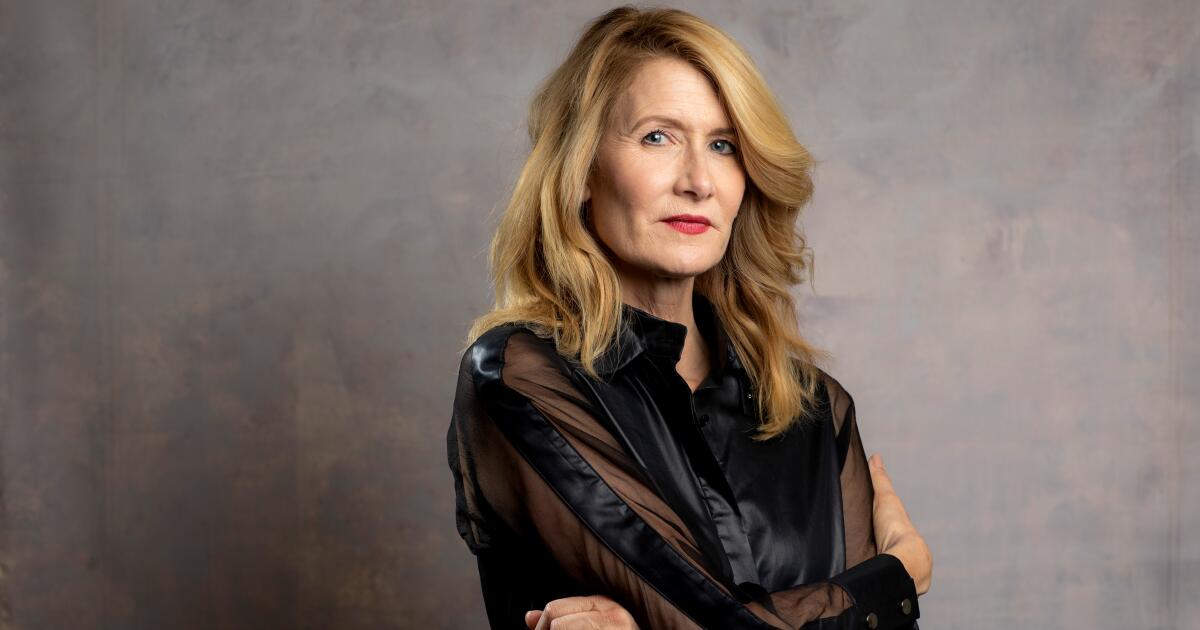
Oscar-winning actor Laura Dern has signed on to portray Miami Herald investigative journalist Julie K. Brown, whose tireless reporting on the Epstein sex-trafficking case exposed how federal prosecutors approved what many have referred to as a “sweetheart” plea deal for Epstein in 2008.
Per Variety, the official description of the series reads: “An explosive account of an investigative reporter exposing the secret plea deal between Epstein and federal prosecutors. Drawing from Brown’s experience as a groundbreaking reporter for the Miami Herald, the book and the limited series follow her relentless years-long investigation that identified 80 victims, persuaded key survivors to go on the record, and led to Epstein[‘s] and Ghislaine Maxwell’s arrests.”
In 2008, the financier was charged with luring underage girls to his Palm Beach, Fla., mansion for sex. Under the plea agreement with then-U.S. Atty. for the Southern District of Florida Alexander Acosta, Epstein avoided a federal trial — where, if convicted, he could have faced a potential sentence of life in prison — and pleaded guilty instead to two state felony solicitation charges.
He served 13 months in a county jail but was allowed to go to his office six days a week on a work-release program.
Co-showrunners for the project are Eileen Myers, known for “American Hostage,” and Sharon Hoffman, best known for her work on “House of Cards” and who is adapting Brown’s book for television. Dern will also executive produce, along with Adam McKay and Kevin Messick, known for “The Big Short,” “Don’t Look Up” and “Succession.” Brown is also executive producing.
Although Sony Pictures Television is still pitching the series to networks and streamers, industry insiders predict that, with Dern and McKay on board, a green light is on the horizon.
Last week, Brown joined veteran journalist Katie Couric live on Substack to discuss her reporting on Epstein, and how the disgraced financier and his camp underestimated her. “I don’t think he worried about the little old reporter from the Miami Herald,” she said.
“When you have a sex predator of children who is — at the time I wrote this story, he was out there, you know, he was free — and he was still, as we now know, harming children,” Brown told Couric. “And so my goal at the time was to look at how this happened.
“Where was the breakdown? Was there someone who … was powerful who let him off the hook, and I just thought it was a good time to take a new look at it like a cold case detective would.
“By the time I decided to reopen the case, these women, these victims who were 13, 14, 15 years old, were now in their late 20s and early 30s, and Donald Trump became president right around this time. And ironically, as I was already looking at this story, he nominated Alexander Acosta to be his Labor secretary, and I knew at the time that he was the very person who had let [Epstein] off the hook. And so that’s where I started looking at this case.”
Hezbollah attempts to make Lebanon ground invasion ‘costly’ for Israeli army as it continues its advance.
Published On 31 Mar 202631 Mar 2026
The Israeli military has said four soldiers were killed in combat in southern Lebanon, where its forces are clashing with Hezbollah fighters after launching a ground invasion of the country.
An army statement on Tuesday named three soldiers from the same battalion who “fell during combat”. In a separate statement, it said another soldier had been killed in the same incident and two others wounded, without naming them.
Recommended Stories
list of 3 itemsend of list
Ten Israeli soldiers have been reported killed since fighting between Israel and Hezbollah flared up on March 2, following a United States-Israeli joint attack on Iran. More than 1,200 people have been killed in Israeli attacks on Lebanon, according to the Lebanese Ministry of Public Health, and more than a million displaced.
This comes a day after the United Nations Interim Force in Lebanon (UNIFIL) said two peacekeepers were killed “when an explosion of unknown origin destroyed their vehicle” near the southern Lebanese village of Bani Haiyyan. Another peacekeeper was killed by a projectile on Sunday near the southern Lebanese village of Aadchit el-Qsair.
Israeli Prime Minister Benjamin Netanyahu on Monday ordered the military to expand its invasion in southern Lebanon, pushing deeper to extend what he calls a “buffer zone” reaching the Litani River.
Israel’s far-right ministers have urged Netanyahu to annex southern Lebanon, as the military destroys bridges and homes to cut the area off from the rest of the country.
Al Jazeera’s Lebanon correspondent Zeina Khodr said Monday night marked a new escalation as Israel opened a new front in Lebanon’s Bekaa Valley, targeting roads that link towns known to be Hezbollah strongholds and strategic supply lines for the group.
“In the past weeks, [the Israeli army] hit bridges over the Litani, now they are trying to isolate the west Bekaa from southern Lebanon,” Khodr said, reporting from Beirut.
“Hezbollah Secretary-General Naim Qassem made it very clear they know the imbalance of power. They are not going to be able to stop this invasion, and the Israeli army will most likely reach until the Litani River, but they will not make it easy for them to consolidate control,” she continued.
“What Hezbollah is trying to do is make this a costly war for Israel.”
The escalation in Lebanon comes amid the ongoing US-Israel war on Iran, which has killed more than 1,340 people since February 28.
The Israel Hayom newspaper on Monday reported that Netanyahu told senior US officials that any future agreement between the US and Tehran would not stop Israel’s war in Lebanon.
Israel’s far-right Minister of Finance Bezalel Smotrich last week said in an Israeli radio interview that the war in Lebanon “needs to end with a different reality entirely”, which includes a “change of Israel’s borders”.
Malcolm in the Middle star Justin Berfield spent years playing older brother Reese in the beloved American sitcom and he has now given his first interview in almost 20 years ahead of its reboot
Liam McInerney Content Editor
08:17, 31 Mar 2026
Malcolm (Frankie Muniz) with Reese (Justin Berfield) (Image: Carin Baer/FOX)
The actor who famously played Reese in Malcolm in the Middle has broken his silence after 20 years — and revealed the real reason he quit Hollywood.
Justin Berfield is back on our screens next month with the four-episode revival of the popular show that ended two decades ago. And he has now revealed why he has remained so quiet since then.
Speaking on The Joe Vulpis Podcast, Justin, now aged 40, was asked whether he had done any other podcast or interview since the sitcom ended.
He replied: “No, like podcasts weren’t a thing and I’ve always just said no because like I wasn’t working on anything. I’m just like a stay-at-home dad! So, why am I going to do a podcast?
“Because I’m just chilling at home with my kid. So unless I had something to talk about, I’m like, I don’t want to go on a podcast.”
He then explained that he has remained in the industry by working behind the camera as an onset producer and writer on various projects.
And he added: “I was just like, I don’t care (about going on podcasts). I’m enjoying my life. Unless I have something to talk about current. I don’t want to go back in time and talk Malcolm.”
However, he is now more than happy to talk about the beloved sitcom, given Hulu’s Malcolm in the Middle: Life’s Still Unfair is set to land on Disney+ in April.
The final episode of Malcolm aired in May 2006 and Justin revealed in the rare interview why he quit Hollywood soon after.
He said he moved to Colorado with his wife, Liza, after filming because he just wanted a change of scenery.
Giving an insight, he said: “Lots of fly fishing. I still miss it. I love it because I just loved being somewhere so secluded. I was still living in Denver so I was like in the city because I still like access to sports teams and good restaurants and things like that. So I wasn’t living in the mountains or anything like that, even though I went to visit them quite often.
“But I kind of separated from Hollywood and I just got to live somewhere else for once because I grew up here and I just wanted to live somewhere else.
“At that time I had no kids, so I was like, this is the perfect time to do this. So we lived there for three years and then we moved back to LA.”
He also revealed that he quit acting and was never “in demand” after the show.
However, he said he never had the intention of becoming the next Leonardo DiCaprio and that he has loved being a stay-at-home dad to his two children in recent years.
The new series of Malcolm in the Middle will see Justin return as the older brother of Malcolm, played by Frankie Muniz.
Malcolm’s other brother, Francis, played by Christopher Masterson, is also set to return, as are Bryan Cranston and Jane Kaczmarek who play parents Hal and Lois.
And asked what it was like being back on set with his old colleagues, Justin said it felt like no time had passed at all.
He added: “It felt like a really, just a really long hiatus. When we were filming the show, you’d film for like eight months and then you’d take like two, three months off, and then kind of go back and do some things again and start seeing everyone, and that was like your year for seven years straight.
“And then we did this, it was obviously like 20 years since we’d seen each other for most of us. And you just kind of, it felt like time stopped, like we just got right back into it.”
The synopsis to the upcoming revival reads: “After shielding himself and his daughter from his family for over a decade, Malcolm is dragged back into their orbit when Hal and Lois demand his presence at their 40th anniversary party.”
Malcolm in the Middle: Life’s Not Fair arrives on Disney+ on April 10
The Middle East conflict has cut off 20 percent of the world’s fuel supply. Countries are scrambling for alternatives.
The disruption in the Strait of Hormuz has cut access to one-fifth of the world’s oil and gas supply, leaving many countries scrambling for alternatives.
So what can they rely on to make up for the shortfall in a quick time?
Many Asian countries are turning to coal, reopening shuttered plants and expanding production.
Policymakers say immediate energy needs supplant environmental concerns.
Others are hoping to turn to renewables. Solar power is now the cheapest form of electricity in many parts of the world. But renewables, especially wind, have faced hostility from the Trump administration.
Indian teenage prodigy smashes his third IPL half century as Rajasthan routed Chennai Super Kings in the IPL.
Published On 31 Mar 202631 Mar 2026
Days after turning 15, Rajasthan Royals opener Vaibhav Sooryavanshi found a perfect way to celebrate, tearing to a 15-ball half-century in a commanding eight-wicket victory over Chennai Super Kings in the Indian Premier League (IPL) on Monday.
Sooryavanshi, who lit up his debut season with a 35-ball hundred against Gujarat Titans last year, took only 15 balls to smash his first fifty of the season – the third fifty-plus score of his eight-match IPL career so far.
Recommended Stories
list of 4 itemsend of list
Alongside fellow opener and India batter Yashasvi Jaiswal, Sooryavanshi tore into the Chennai attack in the powerplay, leading the team to 74 without loss.
Sooryavanshi was dismissed for 52 after 17 balls, including five sixes and four fours, after sharing a blistering 75-run stand with Jaiswal. Rajasthan sealed victory in just 12.1 overs after chasing down a victory target of 128.
“I think of defending, but the plan was to decide the game in the powerplay as we’d restricted them to a low score,” Sooryavanshi said.
“If the bowlers had bowled well in the powerplay then the game might have turned their way, but we went all out in the powerplay.”
The Under-19 World Cup winner credited Rajasthan coach Kumar Sangakkara and staff for backing his attacking instincts.
“They told me to read the situation well and back my game,” he added.
Rajasthan’s quick chase followed a brilliant bowling effort. Their attack reduced Chennai to 41-4 at the end of the powerplay, putting the visitors firmly on the back foot before they were dismissed for 127 in 19.4 overs.
South Africa pace bowler Nandre Burger led the charge with figures of 2-26 and was named player of the match, while Jofra Archer and Ravindra Jadeja also took two wickets apiece.
Rajasthan will next face the Gujarat Titans in Ahmedabad on Saturday, while Chennai host Punjab Kings on Friday.
Sooryavanshi plays a shot during the IPL match against Chennai [Anupam Nath/AP]
Coronation Street newcomer Ben Driscoll will be left ‘absolutely devastated’ in the fallout to a sickening plot, while another bombshell leads to him hitting the bottle
Coronation Street newcomer Ben Driscoll will be left ‘absolutely devastated’ in the fallout to a sickening plot(Image: ITV)
It’s a tough time ahead for the Driscolls on Coronation Street, especially newcomer Ben.
Actor Aaron McCusker who has played him since October has spilled on two big moments ahead for his character. Ben will be left “devastated” in the fallout to his teenage son Will Driscoll’s grooming ordeal.
But Ben will also be left blindsided about a DNA twist that sparks heartache for him, tearing apart his relationship with his mother Maggie. It’s not yet clear if Ben will find out his real father is former character Jim McDonald, but we do know that Ben learns the man he thought was his father actually wasn’t.
Actor Aaron teased of what is ahead: “Ben and Maggie are having a row and in the heat of the argument, Maggie says something that just doesn’t make sense to Ben. Maggie tries to backtrack and pretends she didn’t know what she was saying but Ben won’t let it go.
“It’s digging at him, why did she say that, and he just needles at her till eventually she says right here’s the truth. Maggie’s also being blackmailed by Ben’s ex Melanie who knows the truth from Ben’s brother who witnessed things, and is using this to try to force Maggie to convince Ben to let Will go live with her.
“Eventually it all just gets too much for Maggie and she makes the decision to tell Ben herself. Then the truth comes tumbling out.” On the impact of the paternity news, Aaron went on: “He’s stunned and he’s also livid, made worse by the fact he can’t go back and talk to the man who he always thought was his dad because he’s dead.
“He also finds out that Alan knew he wasn’t Ben’s dad and still stuck by Maggie and that endears him to Alan even more. He has a huge argument with Maggie then he goes straight out to the bar and gets stuck into the whiskeys.”
Aaron hinted that it could be it for Maggie and Ben. He said: “Let’s be honest he’s forgiven his mum for quite a lot already! He threw her out of the house on Christmas Day, then let her back in.
“He sits back 50% of the time and lets her get away with how she treats Eva and he does realise that she was a single mother and sacrificed a lot to bring him and Fin up. But maybe it will go a different way this time, I think it will take a while to get over this but time’s a healer so I hope in the end they will be alright.”
He then discussed the plot involving Ben’s son Will, who has been sexually abused by his athletics coach Megan Walsh. With Will still manipulated into believing they are in a relationship, and with Megan pregnant with his child, ben is left blaming himself.
Aaron explains: “He’s absolutely gutted, he’s been through a stage of blaming himself, maybe he’s been too wrapped up in the move to Weatherfield, been stuck in the middle of the war between Maggie and Eva, focusing on his two other kids and it just slid by him. He’s disappointed in himself and he’s going out of his way now to try to make things better but with a teenage son it’s not easy and he’s going to have to work hard to repair the relationship.”
A video published by a Palestinian content creator shows a group of children carefully lifting their doll on a stretcher to reenact a funeral as they play together in a displacement camp in Gaza.
Led by James’s 125th regular-season triple-double, the LA Lakers destroyed the Washington Wizards for their 49th regular season victory.
Published On 31 Mar 202631 Mar 2026
LeBron James had 21 points, 12 assists and 10 rebounds, Austin Reaves added 19 points and nine assists, and the Los Angeles Lakers rolled to a 120-101 win over the Washington Wizards on Monday night.
It was James’s 1,228th career victory, including the playoffs, to tie Kareem Abdul-Jabbar for most in NBA history.
Recommended Stories
list of 3 itemsend of list
With star guard Luka Doncic serving a one-game suspension after getting called for his 16th technical foul of the season against Brooklyn on Friday, an energised James led the Lakers to their 12th win in the past 13 games, attacking the rim from the start, including throwing down two emphatic two-handed dunks set up by Reaves in the first quarter.
Luke Kennard and Jaxson Hayes each had 19 points off the bench, Deandre Ayton chipped in with 12, and the Lakers improved to 7-6 without Doncic in the lineup this season.
Los Angeles would have clinched a playoff berth and the Pacific Division title with the win and a Phoenix loss, but the Suns’ 131-105 victory over Memphis delayed the formality of securing a fourth straight trip to the postseason.
Will Riley led the Wizards with 20 points, and Justin Champagnie had 18 as they lost for the 19th time in 20 games.
Washington was actually ahead by one point after the first quarter, but Hayes had the final five in an 11-0 flurry early that gave Los Angeles a lead they would not relinquish again. The Lakers closed the half on a 38-13 run and took a 21-point lead back to the locker room.
James helped quiet the Wizards for good after they cut the deficit to 10 late in the third, finishing with his third triple-double of the season and 125th in the regular season of his 23-year career.
James (#23) dunks the ball during the game against the Washington Wizards [Adam Pantozzi/Getty Images via AFP]
New motives look set to be revealed on Coronation Street next week that could give away which of the five potential victims is killed off in April, with one killer possibly exposed
New motives look set to be revealed on Coronation Street next week that could give away which of the five potential victims is killed off(Image: ITV)
Spoilers for next week on Coronation Street could tease which character dies in the murder plot in April, as there’s new motives and new confessions.
Fans know that either Jodie Ramsey, Maggie Driscoll, Megan Walsh, Carl Webster or Theo Silverton will be brutally murdered in a dark episode next month. While moments on screen have proven why each of them is a worthy candidate for the grim death twist, new spoilers could make one character a front runner.
Next week, one character’s killer secret could finally be exposed by another villain. While all five potential victims take centre stage and are causing drama, there’s one villain in particular that could see his dark actions come to light very soon, and it could give away that Theo is the one who dies.
Spoilers for next week reveal that, Ben who’s facing drama with his ex-wife, suffers a dizzy spell, and his mum Maggie wants to call an ambulance, but Ben insists he’s fine. When he demands the truth about his dad, Maggie finally admits that Alan wasn’t his real father, but she doesn’t say who is.
Will Maggie be forced to reveal all when a situation between Amy and Ollie leaves her panicked? Ben tells his mum he wants nothing to do with her. Elsewhere, Kevin reveals Debbie has won her prison appeal, but she soon goes missing.
Carl soon finds her, and asks for £10,000 to pay off his debt to Fiona. Ronnie’s suspicious and calls Fiona, but will she back Carl’s claim? Later in the week, Debbie sparks concern at the hotel when she offends Tracy and Mary’s customer.
Will offers Sam an apology over the Megan situation, and Sam reluctantly shakes his hand but it’s clear he still doesn’t trust him. He tells Hope he’s been looking into grooming cases, as Toyah urges him to stop worrying about Megan and Will.
Soon a clash between Sam and Will leaves their loved ones rowing too, but is Will really to blame? When a paranoid Sam spots Megan and Will at the precinct he rushes to get someone, only for Will to claim he’s been at the pub all morning.
Also next week, Jodie pulls a sickie at work to spend the day with David, while Tim prepares to confront Trisha over their past. Lisa announces her divorce from Becky has come through, and as they celebrate they ask Jodie to look after baby Connie.
Meanwhile, Sarah shares her concern for Todd, leading to her meeting with Theo’s ex Danielle to ask if Theo was ever violent towards her. The incident leaves Theo furious, and he tells Todd their moving to Belfast in a matter of days.
Finally next week, Abi suggests to Summer that Debbie might not have been driving the car on the night of the crash. When Summer asks Debbie if Carl was driving, she panics and ends up injuring herself.
After a scan, Debbie learns she’s deteriorated after her dementia diagnosis. As for Summer, she’s told by Carl that if she wants to know who killed Billy she needs to stop pointing the finger at him and look closer to home.
So does this final spoiler make it clear that Theo will finally be exposed for killing Billy? Will this lead to residents finding out the truth and then taking revenge?
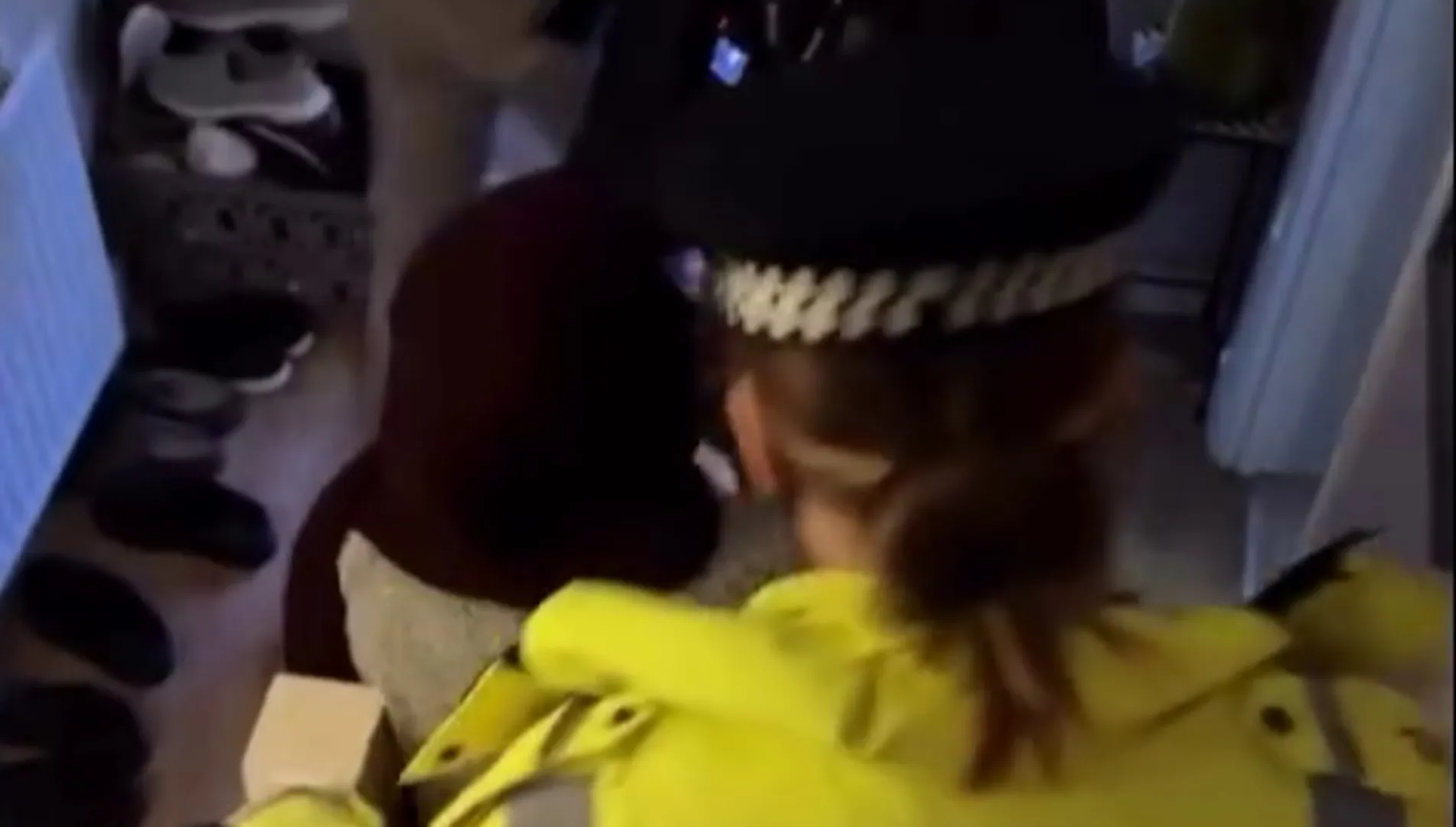
UK pro-Palestine activist Qesser Zuhrah has been arrested on terrorism charges after being released on bail last month. Video shows masked officers taking her from her home at dawn over what supporters say was an Instagram story.
IT’S being billed as a huge tribute concert to Gary ‘Mani’ Mounfield, who died in November.
But I’m told the “Manichester” event in honour of the Stone Roses bassist, organised by his brother Greg, has caused a rift in the family.
Sign up for the Showbiz newsletter
Thank you!
A gig honouring Stone Roses bassist Mani is causing a rift among his family membersCredit: GettyThe Stone Roses in July 1990 L-R Reni, Mani (top) Ian Brown (bottom) John SquireCredit: Getty
The concert will see musicians including Zak Starkey, Baz Fratelli from The Fratellis, John Mcclure from Reverend And The Makers and Simone Butler from Primal Scream come together at Manchester’s Diecast in May.
Cast are also lined up to perform, along with Mick Rossi from Slaughter & The Dogs and Stone Roses guitarist Aziz Ibrahim.
But while the concert was believed to have the full support of Mani’s family, which includes his twin sons Gene and George, insiders say not everyone is in agreement.
A source said: “Mani’s legacy and celebrating that is so important to so many people.
“But not everyone related to him is happy about this concert.
“Even his young son Gene has voiced his concerns on social media.
“It is all very messy and is spilling over into the public domain.
“This is not what Mani would have wanted. His twin boys were everything to him.”
Mani died at home in Manchester in November aged 63Credit: GettyMani was best known for his work with Stone Roses and Primal ScreamCredit: Getty
Greg confirmed earlier this month that he was organising the tribute concert, and said there were hopes of snaring Noel and Liam Gallagher to perform, as well as Johnny Marr.
He said: “I think it will be brilliant.
“With the names already in the hat, and the names we’re yet to announce, it’s a worthy thing, a tribute to our kid, a Mancunian legend, and I know he’d love it.
“He would be absolutely buzzing about it.”
Mani, who was best known for his work with Stone Roses and Primal Scream, died at home in Manchester aged 63.
Noel and Liam made an on-stage dedication to him during their Oasis ’25 Live reunion tour, while rock icons including Stone Roses singer Ian Brown turned out to pay their respects at his funeral.
As a fan of Mani, I hope this can be resolved quickly and without further upset.
LITTLE BRIT OF FAMILY TIME
BRITNEY SPEARS is being supported by her sons following her arrest for driving under the influence – and it’s about time too.
For years, the Circus singer was deserted by her boys – who she has with ex-husband Kevin Federline.
Britney Spears has been spending time with her two sons, Sean Preston and JaydenCredit: Instagram
But it seems they are back in her life and bringing a smile to her face.
She shared a video on Instagram on a boat with Sean and Jayden, during a getaway, including a shot of them smiling together.
Britney wrote: “Thank you guys for all your support… Spending time with family and friends is such a blessing!”
AITCH FIZZES MUSIC
HE was flying high after his stint in I’m A Celebrity last year.
But now Aitch is facing another trial, and it could be just as gruesome.
Aitch is embroiled in a legal row over his Syps drinks brand with two former directors of the companyCredit: Splash
I’m told the Strike Me A Pose rapper is embroiled in a legal row over his Syps drinks brand with two former directors of the company.
Aitch, real name Harrison Armstrong, created Syps back in 2023 with businessmen David Olusegun and Alexander El-Nemer – with the trio proudly showing off their fizzy, flavoured water at events across the UK.
But I’m told that partnership is now well and truly over, with David and Alexander resigning as directors.
A source said: “Harrison has fallen out with David and Alexander and it seems there is no going back.
“They’re in a full-blown legal dispute and it’s all in the hands of their lawyers.
“The three created the brand together so it could get messy.
“Harrison is still working on the brand and is running things with his manager.
“How quickly this is going to get resolved is the question. One thing is for sure though, Harrison wants it dealt with so he can move on.”
TAMER ROLE FOR HARDMAN ACTOR
TAMER HASSAN is swapping punch-ups for pull-ons after landing a major new deal with sportswear giant Reebok.
The hardman actor has filmed an advert for a bold campaign inspired by Robin Hood, of all people.
Tamer Hassan has landed a major new deal with sportswear giant ReebokCredit: Splash
It sees Tamer playing a cheeky “friendly villain” who nicks sports kits before handing them out to kids.
He is joined by UK rapper K-Trap, and starry cameos from Gary Oldman, Laila Morse and Lisa Maffia.
An insider said: “Tamer is genuinely thrilled to be part of something revitalised and forward-thinking.
“Reebok is part of the culture, and seeing it evolve with fresh energy in 2026 makes this really exciting.”
The retro-style campaign is also a nod to 2005 British crime flick The Business, which starred Tamer alongside Danny Dyer.
Filmed at a secret North London location, the advert is set to drop later this month and marks the start of a huge year for the actor.
He’s gearing up for the premiere of Rise Of The Footsoldier: Retribution at Cannes in May, ahead of its UK cinema release this summer.
From the big screen to the high street, it sounds like Tamer has a lot going for him right now.
TEARY NIGHT FOR ELLIE’S WOLF PACK
WOLF ALICE had an emotional night headlining the final evening of the Teenage Cancer Trust’s concert series – with frontwoman Ellie Rowsell breaking down in tears.
The group debuted two new songs, Hit The Sky and Gospel Oak, and towards the end of the latter, her voice broke and she became teary.
She asked the band to restart the track from the beginning of the final verse and was then hugged by guitarist Joff Oddie and bassist Theo Ellis.
Later, Theo admitted that performing in London’s Royal Albert Hall for the charity concert was making him emotional, too.
He said: “These are my best friends. It’s unbearable how much I want to cry all the time in this gaff.”
They deservedly picked up the British Group gong at the Brit Awards last month following the success of their fourth studio album, The Clearing – one of the best British albums of 2025.
If you’re yet to see them, make sure you make it to one of the festivals they’re playing across the UK this summer.
BENSON SWOON
BENSON BOONE got his fans hot under the collar while cooking up this tour announcement.
He whipped off his top, cracked eggs with his biceps and showed off his rippling muscles as he added ingredients to a bowl while baking a cake.
Benson Boone stripped off for his new tour announcementCredit: instagram/bensonbooneIn the video Benson cracked eggs with his bicepsCredit: instagram/bensonbooneBenson made a cake in the videoCredit: instagram/bensonboone
It was eventually topped with the poster for his new Wanted Man tour.
I have to applaud him for the sexy and hilarious snippet posted on Instagram, but it’s a sea change from 12 months ago when he told Rolling Stone magazine that he didn’t want to rely on his body to sell shows.
He told the mag: “I definitely remember there was a time where I would take my shirt off because I didn’t know what else to do.
“I don’t want to rely on my physical form to be the primary driver of my shows.”
It’s a good job he’s had a fair few hits.
Benson previously told Rolling Stone magazine that he didn’t want to rely on his body to sell showsCredit: instagram/bensonbooneBenson’s new tour is called Wanted ManCredit: instagram/bensonboone
YOU BOOTY, KATYA
STRICTLY’S Katya Jones looked the part – and had the footwear to match – when she strutted in to watch the opening night of musical Kinky Boots.
And she was in for a real treat.
Katya Jones at the opening night of musical Kinky BootsCredit: GettyJohannes Radebe stars in the musicalCredit: Getty
With glitter, tinsel, red leather and high heels, this latest production of the hit show is a dazzling spectacle, the likes of which the West End has rarely seen.
Fellow Strictly star Johannes Radebe is mind-blowing as drag queen Lola, above, proving his singing voice and stage charisma are almost as brilliant as his dancing.
But playing the perfect straight man is X Factor winner Matt Cardle as Charlie Price, who inherits his father’s ailing shoe factory in Northampton and comes up with a plan to save it by making footwear for Lola and her fellow artistes.
Fun, feel-good and unforgettable, everyone should try these Kinky Boots for size.