June 6 (UPI) — Democrat Xavier Becerra is advancing to the November election in the California governor’s race, while Republican Steve Hilton and Democrat Tom Steyer battle for the second spot.
California’s primary is nonpartisan, so the top two finishers advance, regardless of party.
If elected, Becerra, 68, would be California’s first Latino governor since 1875. The state’s population is about 41% Latino.
“The people of the great state of California, in the greatest nation on Earth, have spoken — loudly and proudly,” Becerra said in a statement. “We will not be bought. We will not be bullied. And we are never backing down.”
Becerra was the U.S. Health and Human Services Secretary under President Joe Biden and is a former California attorney general.
No Republican has won statewide office since 2006. Hilton has also been endorsed by President Donald Trump, who is unpopular in the state. California Gov. Gavin Newsom can’t run for re-election because of term limits.
The vote count has taken several days because California has mail-in voting. It’s not unusual for California’s elections to take a long time to count. Trump-endorsed Hilton led early, but it’s likely that’s because Republicans voted early, while Democrats waited because they had many more contenders from which to choose, The New York Times reported.
Hilton, 56, is a British-born former Fox News host who once worked for Prime Minister David Cameron. Steyer, 68, is a New York-born billionaire philanthropist and climate activist who ran for president in 2020.
On Friday, the Department of Justice sent a federal prosecutor to observe ballot counting in Los Angeles after Trump claimed that the count was being rigged by Democrats.
The Los Angeles County registrar-recorder said in a statement Friday: “Our office was notified late yesterday that the U.S. attorney’s office would send an assistant U.S. attorney to the Ballot Processing Center to observe ballot processing activities.”
“The individual arrived this morning, was provided an overview of the public observation program and participated in a walkthrough of the ballot processing operations,” spokesperson Mike Sanchez said in an email to CNN.
Sanchez noted that ballot processing is open to the public.
California law gives election officials 30 days to complete the counting and certification process, California Secretary of State Shirley Weber said in a statement.
“Our commitment is immediate: in California, every ballot is counted properly and every ballot is accounted for,” Weber said.
President Donald Trump discusses renovations to the Lincoln Reflecting Pool and makes an announcement on coal in the Oval Office at the White House on Thursday. Photo by Samuel Corum/UPI | License Photo
Pro-Palestine activists interrupted an army recruitment event during German Armed Forces Day. They climbed onto a tank and unfurled a banner reading ‘Genocide with German weapons’ and named Rheinmetall, a key arms supplier to Israel’s military.
ED Sheeran has been dealt another blow in his ongoing struggle to build a rehearsal space near his mega estate “Sheeranville”.
The Shape of You singer faces painfully slow construction on his new rehearsal studio due to eco-rules.
Sign up for the Showbiz newsletter
Thank you!
Ed’s new rehearsal space is being held back by protected newts living nearbyCredit: Deadline via Getty ImagesThe rehearsal space is set to be near his 16-acre ‘Sheeranville’ estate (pictured)Credit: SplashNews.com
Builders having to begin construction by hand because of the prescence of endangered newts.
And they will be given special “toolbox talks” on what to do if they come across the tiny 15cm critters.
Planning bosses say the tiny 15cm critters could be disturbed by his plans to knock down a historic but dilapidated barn and turn it into a personal rehearsal space.
Council chiefs said the measures were normal for any countryside development – and not “unreasonable”.
Ed’s builders will have to use hand tools instead of machinery, remove all debris by hand.
The popstar’s problems with amphibians date back as far as 2018 0 when protected great crested newts were found near his Suffolk estate.
Planning permission for the project was granted, but with a string of conditions to protect the species.
Sheeran bought the £1million farm in 20245 – which included a 19th century dilapidated piggery.
Mid-Suffolk Council have forced the pop-star to put a range of measures in place to protect the newtsCredit: sandra standbridgeEach builder will be given a “tool box talk” explaining how to protect the newtsCredit: Laszlo Bokor
The brick and wood debris will also be entirely removed by hand to stop the newts from accessing it.
The ‘Great Crested Newt Method Statement’ filed with Mid-Suffolk District Council states: “The removal of any debris e.g. rubble, wood, will be undertaken by hand as far as possible, and with care, checking beneath all removed items for newts.
“Careful use of machinery will be necessary to lift large debris and to remove the existing concrete building base, with the area beneath checked for the presence of GCN as each section is lifted.”
The method statement also gives a time limit restricting project work to March, April and May when most newts will be in ponds away from construction.
Other eco measures Ed’s having to put in place include creating a “species rich, flowering lawn” with 19 different species of flowers.
Plus he’s got to plant 12 fruit trees, two bat boxes and a triple-house sparrow tower.
A spokesperson for Mid-Suffolk District Council told The Sun: “This is certainly NOT a case of any unreasonable ‘eco-friendly measures’ being demanded by our council – simply normal requirements that would be expected of any countryside developers.”
They explained there had been no conflict between Ed Sheeran and the council at any stage and that he had not complained about the restrictions.
In April, I accompanied a friend on a visit to villages in Daikundi province, central Afghanistan. The purpose of the trip was to speak to farmer beneficiaries of a project that an NGO operating in the agriculture sector had carried out and to follow up on its impact. The week I spent travelling with him was quite eye-opening regarding the state of the non-profit sector in the country.
The project in question provided zero-energy storage houses to preserve harvests, such as fruit and vegetables, in rural areas. On the surface, the idea was promising: provide farmers with storage space so they could sell their produce over a few months.
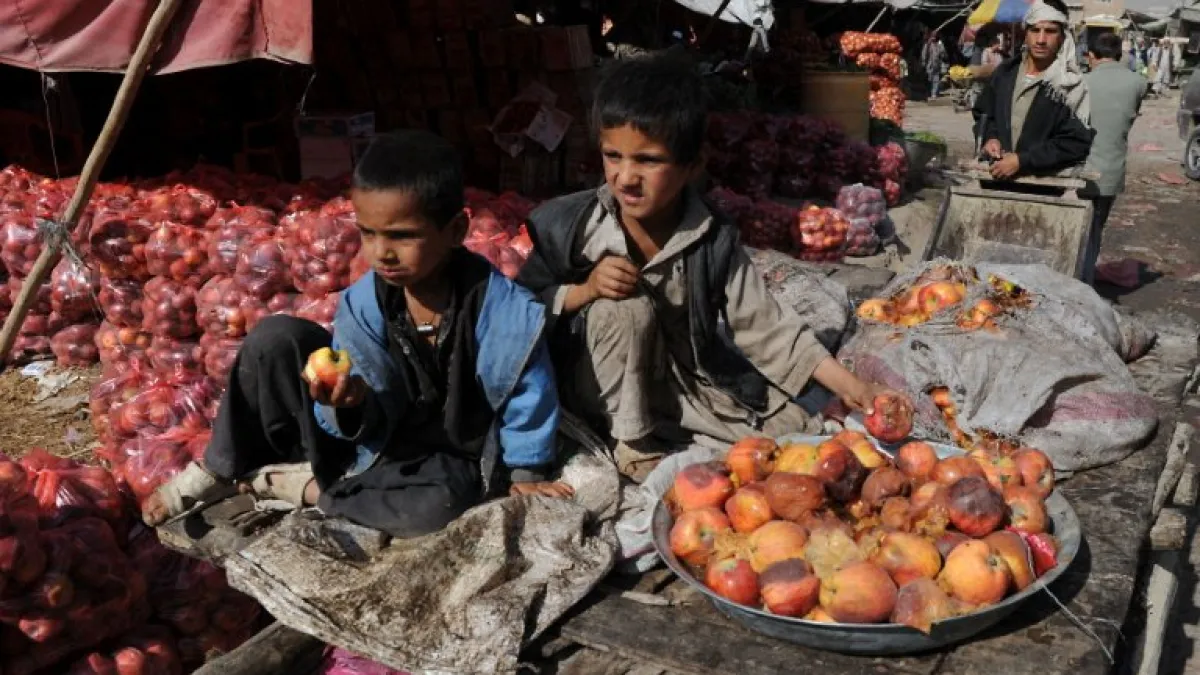
However, the farmers we spoke to in several villages showed us heaps of apples decaying beneath the trees. They complained that the storage houses had space for the apples of only two to three families in the entire village.
In another village, we saw frustration with another project from a different NGO. That organisation had bought imported seeds for various vegetables and distributed them among farmers. Staff members provided training, conducted weeks of workshops on cultivation methods and techniques, and regularly monitored the crops.
The local participants invested significant time, energy, land, and water in the project. But the harvest they got from these imported seeds was very little and of poor quality. Despite the enormous amount of money spent by the NGO on surveying, training, logistics, transportation, and staff salaries, the vegetables for each family amounted to about 450 Afghans (roughly $7). There was no accountability for the farmers’ losses.
Such stories are common across rural communities in Afghanistan. While aid organisations publish reports of their achievements, many beneficiaries gain little from poorly designed projects that fail to address the real challenges they face. The cost of these projects is extremely high, but the output is often too little.
Since the Taliban took over Kabul and the US-led coalition withdrew from the country, humanitarian aid and funding in Afghanistan have dramatically collapsed. The struggle to secure funds, however, has not led to better efficiency, accountability, and transparency among the NGOs still operating in Afghanistan.
This is not a recent phenomenon. Between 2001 and 2021, Afghanistan became the poster child for corruption, embezzlement, and waste of foreign aid. One US journalist described it as “the $148 bn failure”.
According to the Special Inspector General for Afghanistan Reconstruction (SIGAR), set up by the United States to investigate fraud with US funds, between $26bn and $29bn was lost due to embezzlement or wasteful spending. This was just funding provided by the US government; there is no estimate for how much was wasted from other donors.
While much of the foreign funds went to the security sector, a significant amount went to the non-profit sphere, where waste was also widespread. Millions, if not billions, worth of projects became a missed opportunity to improve the lives of Afghans, especially in rural areas. This is a legacy that persists to this day.
This situation is not unique to Afghanistan. The development sector across the world is known for waste and inefficiency. In the Afghan context, that is exacerbated by the lack of control and difficulty of ground work.
Many foreign NGOs do not directly implement their projects; instead, they work through implementing partners (IPs), which themselves outsource implementation to subcontractors. This extended chain of actors means that often there is a lack of proper quality control and supervision, and there is motivation to carry out lower-quality work in order to increase profit.
Furthermore, the primary concern of IPs is securing funding. So they often present project proposals that look great on paper but do not necessarily have a substantial impact on the circumstances of the local population or address their most urgent needs.
Finally, there is a lot of waste in remuneration, especially when it comes to international staff. Foreign employees often have salaries as high as $10,000–20,000 for doing work that a local hire can do for much less.
It is clear that amid global cuts to donor funding, the development sector is struggling. This should be a moment of change. In Afghanistan, where the need of the local population is enormous while available financing is shrinking, NGOs can take this change into their own hands.
The simplest first step NGOs can take is to employ qualified locals to plan and lead projects. They would know the local culture, realities, and actual needs of communities, as well as market prices and field conditions. They can help not only optimise project costs but also ensure that they actually have a real, measurable impact.
In addition, NGOs should avoid having an extended chain of IPs and subcontractors. They should also regularly collect feedback from local communities and field workers directly in order to evaluate project effectiveness during implementation in order to avoid repeating the same mistakes.
Projects are more likely to produce sustainable results if NGOs invest in addressing pressing nationwide challenges, such as unemployment, infrastructure, and market access.
Improving efficiency and effectiveness would not only ensure Afghan beneficiaries get better services and help, but it would also make organisations more competitive for the dwindling pool of funding. This is the only way to salvage the NGO sector not only in Afghanistan but in the rest of the world.
The views expressed in this article are the author’s own and do not necessarily reflect Al Jazeera’s editorial stance.
Casualty toll is expected to increase, reports Al Jazeera’s Hani Mahmoud.
Published On 6 Jun 20266 Jun 2026
At least five people have been killed while attending a wedding in Gaza City after Israeli forces bombed the wedding tent.
Al Jazeera’s Hani Mahmoud, reporting from the enclave on Saturday, said several projectiles exploded in or near tents that were part of the wedding, with shrapnel flying into surrounding areas.
A source at al-Shifa Hospital told Al Jazeera reporters on the ground that more than a dozen people were wounded in the attack.
Women and children are believed to be among the casualties, Mahmoud said, adding that the casualty toll is expected to rise.
A Four in a Bed star was moved to tears after receiving mixed feedback on their B&B.
Holly and Dennis were crowned winners (Image: Channel 4)
A Four in a Bed contestant broke down in tears just moments into the episode.
Father-daughter team Dennis and Holly were competing in the show, which broadcast a repeat episode on Saturday.
The pair had been first to host their rivals at their Norwich B&B, impressing them with the spotless standards and Holly’s culinary talents at breakfast.
So taken were the guests that when the final round arrived, Holly and Dennis were showered with such glowing feedback that she became emotional.
During payment day, the duo heard responses from Kent hosts Harry and Sarah, Oxfordshire B&B proprietor Dawn, and Ollie, who runs a boutique hotel in Kent, reports Cambridgeshire Live.
While Ollie settled the full amount owed for his visit, Dawn deducted £10 citing the absence of a wardrobe in her room and unclean windows.
Addressing her remarks, Dennis confessed: “I’m genuinely disappointed by [the windows] because our standards should be much higher and generally are, so apologise for that. Not good enough.”
He subsequently told the camera: “Taking the money off was arguably a bit harsh, but I get it. We can’t complain too much, although it was uncomfortable.”
Dawn, however, defended her position, stating: “I stand by my payment because I believe that a wardrobe is a facility that should be in a B&B. And the window not being clean, everything should be spotless.”
Yet Harry and Sarah adopted a completely different approach, and actually paid Holly and Dennis more than expected for their accommodation. After presenting them with a £12 overpayment, Harry praised: “We had an amazing stay at your place. Everything you needed and more.”
Overwhelmed by his kind words, Holly broke down in tears, saying: “Thank you, sorry I get really emotional!”
Sarah, also becoming emotional, responded: “You’ll get me going!”
“It means a lot,” Holly added, while Harry later told the camera: “They ticked every box,” as Sarah commented: “They rival some of the best hotels that I’ve ever stayed in.”
Holly continued: “It means so much for us, and we’ve put so much into the business.”
Shortly afterwards, it emerged that Harry and Sarah’s overpayment had secured Holly and Dennis the top spot.
“I’m delighted,” Dennis said, as Holly added: “It’s the best feeling.”
He joked in front of the group: “We are all winners, but we’re the best winners.”
Dennis then told his daughter: “I’m very proud of Holly,” as she replied: “It wouldn’t be possible without you!”
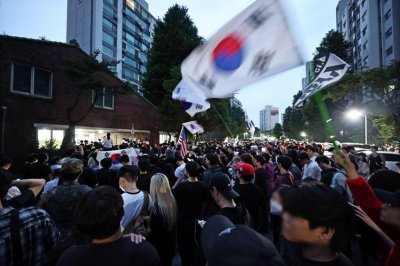
Protesters demonstrate in front of a polling station in Songpa District, Seoul, South Korea, 04 June 2026, to call for the suspension of ballot counting. A shortage of ballot papers forced an extension of voting at several polling stations in the area during the local elections held the previous day. Photo by YONHAP / EPA
June 5 (Asia Today) — Protesters who had blocked a polling station in Seoul’s Songpa district for two nights and three days moved Friday to a vote-counting center, demanding a new election after ballot shortages disrupted voting in the June 3 local elections.
The ballot boxes from the No. 2 polling station in Jamsil 7-dong were transferred and counted after about 1,000 police officers were deployed. But protesters said they could not accept the result and effectively occupied the entrance area of the counting center, calling for a revote.
About 300 people, including citizens and conservative YouTubers, gathered near the entrance of the Olympic Park handball arena, according to an unofficial police estimate.
Even after the counting was completed, protesters chanted slogans including “revote” and “invalidate the vote.” Some protesters have alleged election fraud, but election authorities have attributed the disruption to a shortage of ballot papers during voting.
The atmosphere grew tense as access for election workers and arena employees was effectively blocked. Some arena employees who tried to leave were reportedly stopped by protesters and remained inside.
Police continued to guard the area around the arena after the vote count ended. Officials at the scene were considering sending election commission workers home first and removing vote-counting materials separately.
The protest followed a broader ballot shortage controversy in South Korea’s local elections. The National Election Commission said ballot shortages occurred at 50 polling stations nationwide and temporarily halted voting at 22 sites. The disruption drew public criticism and led the commission’s chairman, Roh Tae-ak, to announce his resignation Friday.
Earlier, protesters blocked the removal of ballot boxes from Jamsil 7-dong’s No. 2 polling station after a ballot shortage left voters waiting for hours. Police later escorted officials to retrieve the remaining ballot boxes, and the final count ended Friday afternoon.
Weekly insights and analysis on the latest developments in military technology, strategy, and foreign policy.
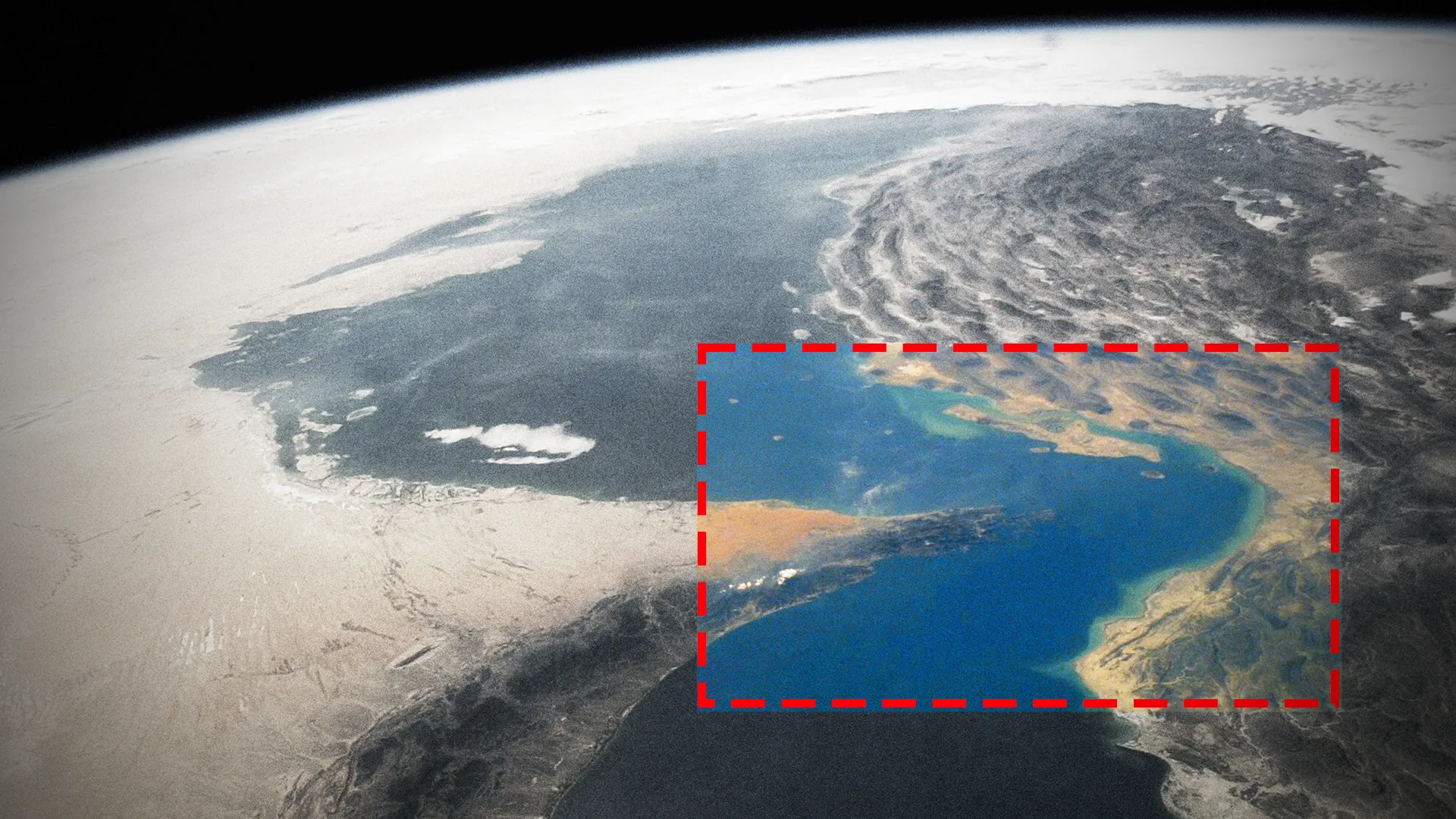
In the latest flare-up of tension during a very shaky ‘ceasefire,’ “Iran has launched multiple drones towards the Strait of Hormuz,” a U.S. official told us. “U.S. forces have taken out at least four of them.”
The statement comes as unconfirmed reports are emerging online of explosions on Iran’s Kharg Island. The official, who spoke to us on condition of anonymity to discuss operational issues, declined comment about those claims.
Big Development
The United States Airforce just launched an intense airstrike on Kharg Island of Iran. Reportedly Air Defence & missile launch site of IRGC has been targeted. pic.twitter.com/qseXJ5g6B7
Kharg Island, which has come under attack before during Epic Fury, is Iran’s main oil export facility. An attack on the oil infrastructure would represent a major escalation.
News of the U.S. takedown of the drones is the latest kinetic incident in the Strait and comes amid sputtering peace talks. As we wrote last week, the U.S. struck Iranian targets and Iran launched missiles and drones at Kuwait and Bahrain in an exchange that severely damaged Kuwait International Airport, killed several people and injured scores more.
You can see video and images of damage from the June 3 attack below.
This is what Iran did in my country, Kuwait: it killed innocent civilians by bombing Kuwait International Airport. Violating all international norms
— حمد عبدالكريم السعيد (@Hamad_Alsaid) June 4, 2026
Other exchanges have occurred around the strait, where U.S. Navy ships says vessels, including their own, were fired upon, which resulted in reprisal attacks on shore targets.
UPDATE: 6:56 PM EDT –
CENTCOM confirmed U.S. forces attacked Iranian facilities and shot down Iranian drones..
“Moments ago, CENTCOM forces shot down four Iranian one-way attack drones that were launched toward the Strait of Hormuz,” the command stated on X. “The attack drones posed an immediate threat to regional maritime traffic. U.S. forces subsequently struck Iranian coastal surveillance radar sites in Goruk and on Qeshm Island to defend against further attacks. American forces remain vigilant and postured to respond to unjustified Iranian aggression in self-defense.”
Moments ago, CENTCOM forces shot down four Iranian one-way attack drones that were launched toward the Strait of Hormuz. The attack drones posed an immediate threat to regional maritime traffic. U.S. forces subsequently struck Iranian coastal surveillance radar sites in Goruk and…
In a post on X, CENTCOM claimed that “U.S. forces intercepted multiple Iranian ballistic missiles and drones launched by Iran toward the Strait of Hormuz and Gulf neighbors, June 5. “
“Iran fired seven ballistic missiles toward Kuwait and Bahrain,” the command stated. “Initial assessments indicate six of the missiles launched by Iran were intercepted and a seventh did not reach its intended target. There are currently no reports of harm to U.S. personnel, and Iranian claims of damaging U.S. 5th fleet headquarters in Bahrain are false. CENTCOM forces remain vigilant and postured to continue responding to unwarranted Iranian aggression in self-defense.
The Iranian attack took place hours after the previously mentioned CENTCOM strikes on Iranian coastal targets.
The CENTCOM post included a video showing those strikes.
Callum Woodhouse, who plays Tristan Farnon, has warned that things may be “coming to change” for his character’s relationship in the upcoming series
All Creatures Great and Small will return for two more seasons(Image: Channel 5)
A star from All Creatures Great and Small has hinted at potential turbulence ahead for a blossoming romance between two characters.
Callum Woodhouse is set to reprise his role in the cherished period drama for its seventh series later this year.
Taking place during the 1930s and 40s, the much-loved programme chronicles Yorkshire veterinary surgeon James Herriot as he tackles the demands of his countryside practice.
With Nicholas Ralph portraying James Herriot and Rachel Shenton as his on-screen partner Helen, Callum takes on the role of Tristan Farnon, sibling to Siegfried Farnon, portrayed by Samuel West.
The last series and festive special witnessed Tristan confronting his own difficulties following his return from combat, before developing feelings for Charlotte Beauvoir. However, Callum has now cautioned that “things may be coming to change”, reports the Express.
Speaking to RadioTimes, he revealed: “It’s not really a massive spoiler to say I’m still with Charlotte Beauvoir, who is really good for him and helps him with his mental health.
“She keeps him happy and… I think he’s a little bit more content. But there’s only so long that that can last. So, things may be coming to change, but we don’t know.”
Following his character’s arc which depicted him battling PTSD after serving on the front line, Callum previously shared with the publication: “I think she’s come into his life at a time when he just really, really needs her.”
He added: “I think they’ve got a great chemistry and they get on really well.”
He continued: “Tristan, right now, needs someone who is sympathetic and understanding to what he’s been through, and is very much still going through.”
While fans eagerly await the new series of All Creatures Great and Small, the programme has already been confirmed to return for both series 7 and 8, each featuring six hour-long episodes, alongside Christmas specials.
Greg Barnett, Commissioning Editor at 5, had hinted that there remain “many new stories still to tell and more unforgettable adventures ahead”.
Barnett said: “All Creatures Great and Small is a jewel in 5’s drama crown and continues to delight viewers year after year. Its warmth, humour and heart, set against the beauty of Yorkshire, have made it a firm audience favourite.
“We’re thrilled to extend its future with two more series, with many new stories still to tell and more unforgettable adventures ahead for our Skeldale family.”
All Creatures Great and Small is available to watch on My5
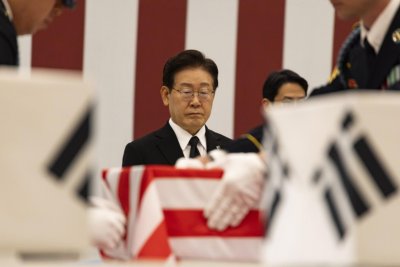
South Korea President Lee Jae Myung attends the ROK and the U.S. repatriation ceremony for Korean remains at Seoul Military Air Base in Seongnam, South Korea, 05 June 2026. The remains of ten South Koreans and the three U.S. soldiers killed in the Korean War were sent back to their homeland. Photo by JEON HEON-KYUN / EPA
June 5 (Asia Today) — South Korean President Lee Jae-myung said Friday that the mutual repatriation of Korean War remains by South Korea and the United States is “the most compelling evidence” of an alliance forged in blood.
Lee made the remarks at Seoul Air Base in Seongnam, where South Korea and the United States held a mutual repatriation ceremony for Korean War remains. It was the first time the ceremony was held in South Korea. Previous mutual repatriation ceremonies had been held in Hawaii.
“Today’s repatriation is a meaningful milestone that deepens and strengthens the South Korea-U.S. alliance, which was built on the blood and dedication of veterans,” Lee said.
“The effort to find not only one’s own warriors but also those of an ally and return them to their families is the most compelling evidence of an alliance forged in blood,” he said.
The ceremony returned the remains of 10 South Korean service members from Hawaii to South Korea. The remains of three U.S. service members were returned to the United States.
Lee said the repatriation was a promise by both countries to remember the heroes who devoted themselves to freedom and peace, calling it “the most noble tribute to their sacrifice.”
“More than 70 years ago, we were able to defend freedom and peace because of the noble sacrifice of heroes who gave their most precious lives to protect the freedom and peace of the Republic of Korea,” Lee said.
“But there are heroes who, long after the war ended, have still not returned to their hometowns,” he said. “Returning them fully is the historical duty of those of us who survived.”
Lee said trust built through battlefield promises has sustained the U.S.-South Korea alliance for decades.
“The trust that keeps promises made on the battlefield, even after decades have passed, is the strong root that has supported the South Korea-U.S. alliance,” Lee said. “With the firm South Korea-U.S. alliance as nourishment, the Republic of Korea is writing a new history of prosperity that amazes the world.”
Lee said the two allies should continue working together for peace and mutual prosperity.
“If South Korea and the United States join hands and move unwaveringly toward the future, complete peace will take root on this land and the flower of mutual prosperity will bloom,” Lee said. “We will continue to carry forward, with future generations, the noble history of solidarity for freedom and peace.”
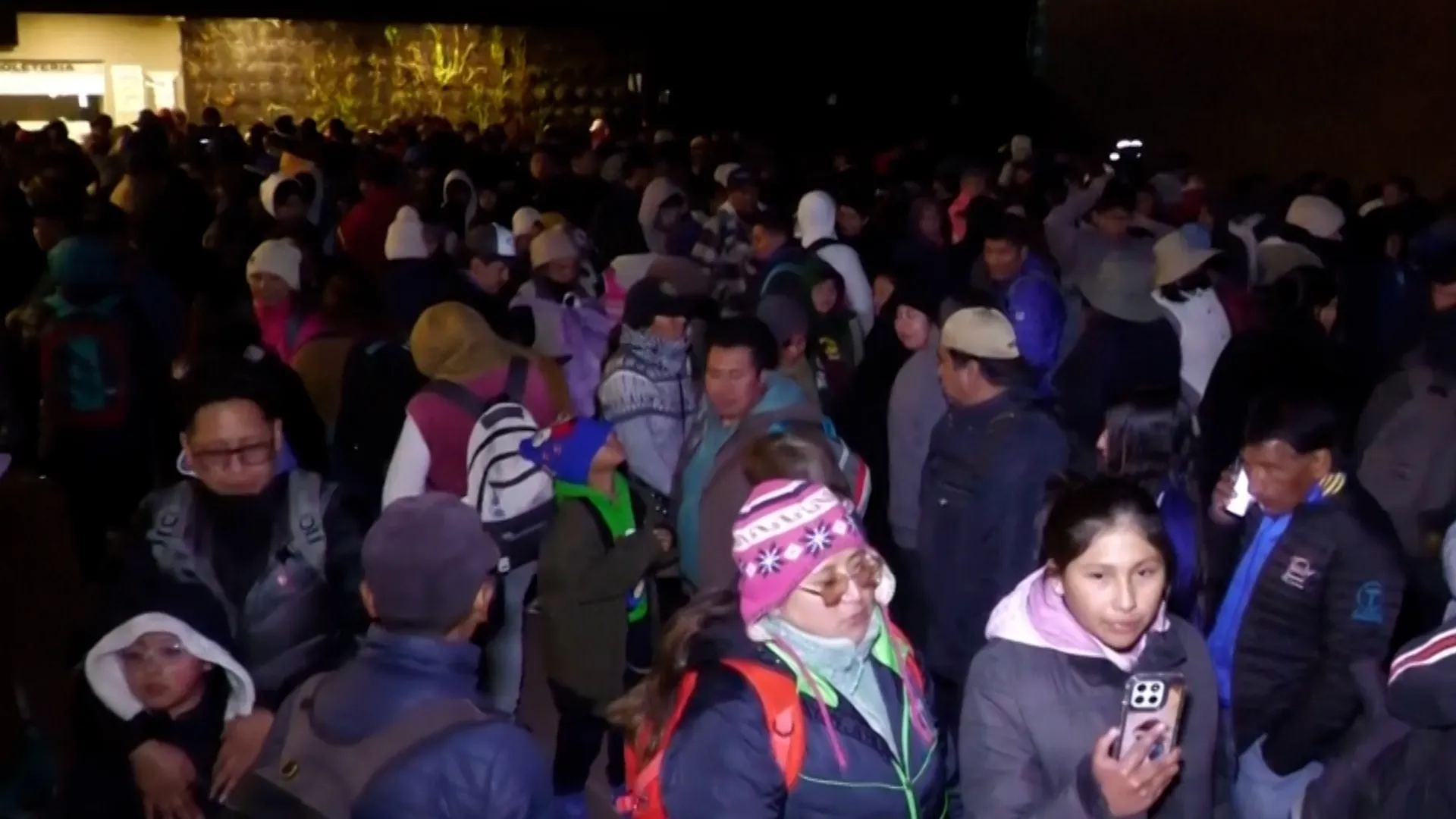
Hundreds of Bolivian residents are braving near-freezing temperatures to queue for affordable chicken in La Paz, due to more than a month of food shortages.
Spiked prices and protester blockades have affected access to food and medical supplies in the capital.
Khloe Kardashian was spotted in Monaco with her sister KimCredit: GettyThe sisters are in the South of France to support Kim’s boyfriend Lewis Hamilton, who is racing in the Grand PrixCredit: Getty
Both Khloe, 40, and Kim, 45, went for plunging black tops.
The younger sister paired her outfit with comfy black capri pants, which showed off her very slender legs.
While big sis Kim revealed her tiny waist and toned pins in blue jeans.
Both siblings wore dark shades and were flanked by their entourage.
The sisters chatted as they got ready to board a boat on the French RivieraCredit: GettyKim is hoping to see Hamilton win his first race of the season in MonacoCredit: Alamy
The pair were seen chatting happily as they headed towards a waiting boat.
Tomorrow, they will watch Kim’s boyfriend Lewisrace in Monaco‘s Grand Prix.
The Sun revealed the couple were dating in February after they were spotted enjoying a romantic getaway in the UK.
Kim and Hamilton started dating this yearCredit: ShutterstockThe pair have since gone Instagram official as their relationship continues to blossomCredit: Instagram/kimkardashian
Kim, who was married to Kanye West, 48, from 2014 to 2022, said last October she could not imagine herself dating another famous man.
She told a podcast that the person “would have to be someone super- special” for her to start another relationship.
Kim explained: “I don’t know if I have the energy or whether I’ve met the right person that I would want to blend my family with.”
On whether she might date another musician or athlete, she added: “Neither. We’re going, like, lawyers and longevity scientists who would give me all their secrets.”
After splitting from Kanye, she dated comedian Pete Davidson and then NFL player Odell Beckham Jr until things fizzled out in April 2024.
While Lewis has not had a serious relationship since he split from Pussycat Dolls singerNicole Scherzingerin 2015 after almost eight years.
Lleft-wing candidate Roberto Sanchez and right-wing candidate Keiko Fujimori pose during a presidential debate in Lima, Peru, last weekend. This was the only debate between Fujimori and Sanchez before the decisive election scheduled for Sunday. Photo by Paolo Aguilar/EPA
June 6 (UPI) — Peru will choose its next president Sunday in a runoff election between Keiko Fujimori, leader of the right-wing Popular Force party, and Roberto Sánchez, candidate of the leftist coalition Together for Peru.
Nearly 28 million Peruvians are eligible to vote for what will be the country’s ninth president in just 10 years, a figure that reflects Peru’s deep institutional crisis and political fragmentation.
Recent polls show Sánchez and Fujimori in a statistical tie, meaning the final outcome could depend on undecided voters and the share of blank ballots.
For many observers, the central question is not only who will win the presidency, but whether Peru can break the cycle of political instability that has defined the past decade.
Fujimori’s candidacy once again places Fujimorismo at the center of Peruvian politics. The daughter of former President Alberto Fujimori remains one of the country’s most influential and polarizing political figures. Sunday’s vote marks her fourth consecutive attempt to win the presidency in a runoff election.
Sánchez, meanwhile, is a far less familiar figure outside Peru. His campaign has evolved throughout the race and has sought to appeal to supporters of former President Pedro Castillo, who was removed from office in 2022 after attempting to dissolve Congress.
Fujimori maintains a strong advantage in Lima, while Sánchez dominates much of the country’s interior, particularly in the Andean regions.
The election is taking place amid growing public frustration with Peru’s political system.
Beyond the traditional divide between Fujimorismo and anti-Fujimorismo that has shaped much of Peru’s politics over the past two decades, several analysts argue that the country’s deeper problem is a broader crisis of political representation.
Luis Lira, a researcher at the International Affairs Observatory at Finis Terrae University in Chile, said Peru has become one of the clearest examples of a “democracy without parties,” where political organizations have lost their ability to channel voter demands and have been replaced by highly personalized leadership.
“The presence of two candidates viewed as strongmen demonstrates the deterioration of political parties,” Lira told UPI.
Raúl La Torre, a Peruvian academic and professor at the University of the Andes in Chile, offered a similar assessment.
According to La Torre, Peru enters the runoff burdened by a representation crisis that has deepened over the past decade. Political parties remain weak, Congress continues to suffer from low public trust and the gap between citizens and political elites continues to widen.
Carlos Escaffi, founder of consulting firm Relaxiona Internacional, said the Fujimorismo versus anti-Fujimorismo divide remains relevant, but is no longer sufficient to explain voting behavior.
Issues such as public security, informal employment, economic opportunity and growing rejection of the traditional political class now play a larger role in shaping voter preferences, he said.
“The demand for order, security and concrete solutions to everyday problems appears to be playing an increasingly important role in voters’ decisions,” Escaffi told UPI.
Analysts also point to Peru’s political structure as a factor behind its persistent instability.
Juan Jiménez, a former prime minister under President Ollanta Humala, said the country has long experienced a contentious relationship between the executive branch and Congress, marked by frequent confrontations and repeated efforts to remove presidents from office.
“In the last 10 years we have had eight presidents. On Sunday we will have the ninth,” Jiménez told UPI.
He attributed part of the crisis to the repeated use of constitutional mechanisms that allow Congress to remove presidents from office, as well as to the country’s fragmented political landscape.
Questions over whether the eventual winner will be widely accepted have become another source of concern.
Polls released in recent days suggest an extremely close race, increasing the likelihood of legal challenges or accusations from the losing side.
Jiménez said the country’s first challenge after Sunday’s vote will be ensuring that all political actors accept the result.
“It is highly foreseeable that there will be a conflict over the outcome,” he said, noting that narrow margins in previous elections have repeatedly fueled allegations of fraud.
The former prime minister also argued that problems during the first round undermined confidence in electoral authorities and could contribute to renewed disputes once the final results are announced.
Escaffi, however, urged caution regarding claims of fraud. He said there is no evidence to support allegations of a systematic effort to alter the popular vote.
“What we have seen is that the fraud narrative has become a political tool used by different sectors to mobilize their supporters or preemptively challenge the results,” he said.
Political analyst and commentator Jorge “Coco” Salazar expressed a similar view, saying either candidate could challenge the outcome if the margin is extremely narrow.
Salazar told UPI that the climate of mistrust generated during the first round has created conditions for electoral disputes to once again dominate the political debate.
Regardless of who wins, analysts agree the next president will face structural challenges that extend far beyond the campaign.
The most pressing task will be restoring governability in a country where political confrontation has become routine.
According to La Torre, that will require building minimum agreements with a fragmented Congress, strengthening weakened institutions and rebuilding public confidence.
Corruption and public security also rank among voters’ top concerns.
Lira said Peruvians increasingly demand greater transparency and accountability from the political class, while rising crime has become one of the country’s most pressing social issues.
Escaffi warned that Peru’s ability to maintain economic stability despite years of political turmoil should not be taken for granted.
Institutions such as the Central Reserve Bank of Peru and the country’s fiscal discipline have helped cushion the effects of repeated political crises, he said, but prolonged uncertainty could eventually affect investment, economic growth and job creation.
Several analysts also believe the restoration of a bicameral legislature could help counter the institutional drift behind the recent instability.
Jiménez said the return of the Senate may make it more difficult to carry out rapid presidential removals and could create greater opportunities for political deliberation.
Even so, few experts are optimistic about a quick resolution to Peru’s political troubles.
“The election offers an opportunity to begin a more stable period, but by itself it does not guarantee that outcome,” La Torre said.
For many observers, the question that will remain after Sunday’s vote is not simply who wins the presidency but whether Peru’s political system can regain the legitimacy and stability it has steadily lost over the past decade.
At New Delhi’s Jantar Mantar, India’s most famous protest strip, hundreds of mostly young people in cockroach masks and with dog-eared exam guides in hand tried to turn an online joke into a real-world force.
They call themselves the Cockroach Janta Party (CJP) – a satirical “people’s party” born barely three weeks ago after India’s chief justice reportedly likened government critics and unemployed youth to “cockroaches” and “parasites”.
What began as a parody account and meme factory has since exploded into a channel for anger over exams, jobs and a fraying sense of economic promise.
On Saturday, that digital discontent stepped off the screen. Waving India’s national flag and clutching schoolbooks, the protesters demanded the resignation of Education Minister Dharmendra Pradhan after a string of exam paper leaks, technical glitches and cancelled tests.
For many, the fiasco over the NEET medical entrance exam – and reports of student suicides – symbolises a system young Indians say has no credibility left.
The CJP’s founder, 30-year-old political strategist and Boston University graduate Abhijeet Dipke, flew in from the United States to lead the rally, telling supporters that “cockroaches don’t ever fear.”
Police in riot gear and steel barricades underscored the risks of dissent in an era when large protests have often been met with crackdowns and criminal cases.
With more than 20 million followers on Instagram, CJP has already outgrown many mainstream parties online.
Its first street protest now tests whether self-deprecating memes and satire can be converted into a lasting organisation – and whether India’s anxious, hyper-connected youth can find a new political language for their frustration.
A crime drama on BBC iPlayer has been branded a “masterpiece” and a “must-watch” by fans
James Norton’s 2018 crime drama has left viewers hooked(Image: BBC)
Fans of crime dramas have been devouring a “masterpiece” series that’s currently available on BBCiPlayer.
Television viewers are being encouraged to tune into a gripping drama centred on a respectable businessman, who attempts to outrun his family’s sinister past.
McMafia is a series created by Hossein Amini and James Watkins, who also took on directorial duties. It draws inspiration from the non-fiction book McMafia: A Journey Through the Global Criminal Underworld by journalist Misha Glenny – which has been hailed as “riveting” and “chilling”.
The drama features James Norton as Alex Godman, the British-raised son of a Russian mafia boss residing in London, whose father is desperately attempting to break free from the world of organised crime.
The official synopsis reads: “Alex Godman, the English-raised son of Russian mafia exiles, has spent his life trying to escape the shadow of their past, building his own legitimate business and forging a life with his girlfriend, Rebecca,” reports Wales Online.
“But when a murder unearths his family’s past, Alex is drawn into the criminal underworld where he must confront his values to protect those he loves.”
Alongside James Norton, the ensemble cast also includes David Strathairn, Juliet Rylance, Merab Ninidze, Aleksey Serebryakov, Maria Shukshina, David Dencik, Oshri Cohen, Sofia Lebedeva, Caio Blat, Kirill Pirogov, Nawazuddin Siddiqui, and Karel Roden.
McMafia was shot across numerous international locations, with key scenes unfolding in London, Zagreb, Split, Opatija, Mumbai, Prague, Cairo, Belgrade, Istanbul, Moscow, and Tel Aviv.
The drama debuted on BBC One in 2018, running for a single series. Crime drama enthusiasts can now delve into Alex’s perilous world, as all eight compelling episodes are available to stream free on BBC iPlayer.
McMafia currently maintains a 71% critic score on review aggregator Rotten Tomatoes, based on 38 reviews. Audiences have likewise expressed widespread acclaim for the programme on social media, with numerous viewers declaring it superior to James Norton’s other popular crime series Happy Valley.
One IMDb user penned: “One of the best series I have ever seen. Binged in one night. 100 stars.”
Another contributed: “Best show since The Night Manager. A 10+ for intrigue and suspense,” while a third stated: “Thriller of the year! An outstanding and engrossing series that grabs your attention from the start and ramps up the suspense as each episode progresses.”
Someone else remarked: “I loved McMafia. The best TV series yet. Great acting. On par with Breaking Bad,” with another individual posting: “Chilling, thrilling and re-watchable.”
A sixth audience member reinforced the sentiment, declaring: “This series is a masterpiece, and a must-watch for thriller lovers. The plot is obviously complex, but absolutely intriguing and well developed, with a large number of themes connected to the most topical reality. For me, McMafia is one of the most interesting shows I have seen in the last few years.”
Previous World Cup appearances: 0 Player to watch: Mousa Tamari FIFA world ranking: 63
Jordan are appearing at the World Cup finals for the first time, with their Moroccan coach Jamal Sellami hoping that his players can emulate the heroics of The Atlas Lions four years ago.
Recommended Stories
list of 4 itemsend of list
“In big competitions, many teams can surprise. My country, Morocco, reached the semifinals in the last World Cup,” the Reuters news agency quoted him as saying during a training camp in Antalya, Turkiye, in late March.
“That gives us belief.”
While a run to the semifinals might be a little bit optimistic, Jordan are coming into the tournament on a good run of form.
The Middle East nation reached the final of the 2023 Asian Cup, losing to hosts Qatar, and also played Morocco in the final of the 2025 Arab Cup, agonisingly falling short in a 3-2 defeat after extra time.
Jordan also scored 32 goals in World Cup qualifying, marking their highest tally in a single qualification campaign. But eight of those goals were scored by Yazan Alnemat, who will miss this summer’s tournament due to injury.
Sellami takes Jordan into the big time
The Al-Nashama, or the “noble ones”, have developed into a significant force in Arab football since Sellami took over as coach in June 2024 and built on the work of his predecessor, compatriot Hussein Ammouta.
Sellami believes the team he has built can deliver a shock similar to Algeria beating Germany in 1982, Cameroon stunning reigning champions Argentina in 1990, and Senegal repeating the feat against holders France in 2002.
“These results open horizons of hope and ambition for the fans, so they can dream,” Sellami, who played for Morocco at the 1998 World Cup, told Arabic sports channel TFK.
“And we too have the right to dream and to strive to be a strong team and present ourselves well,” he added.
The 55-year-old former midfielder has built a well-structured, disciplined team that utilises their wealth of creative forward talent to hit opponents on the break with lightning-quick transitions.
Star striker misses out
While Jordan’s qualifying campaign gives them plenty of hope for this summer’s tournament, their team in North America will be missing a big part of what made them such a force in Asian qualifying.
Forward Yazan Alnemat contributed eight goals, but will miss the World Cup finals after suffering an ACL injury in the Arab Cup quarterfinals last December.
“Yazan is a player who cannot be replaced,” conceded Sellami. “But we will find a combination for the team that can still be dangerous to the opponent, and that also gives us balance in our defensive performance.”
Alnemat’s likely replacement, Ali Olwan, has recovered from an Achilles injury sufficiently to take his place in Sellami’s extended squad. He contributed nine goals in qualifying, highlighting Jordan’s depth in attacking options.
Mousa Tamari and Nizar al-Rashdan take part in a training session in preparation for the World Cup [Alaa Al Sukhni/Reuters]
‘Jordan’s Messi’ hopes to shine
Captain Mousa Tamari is one of Jordan’s biggest attacking threats and will be looking to torment defenders on the right wing.
The 28-year-old Rennes midfielder is the only Jordan player who competes in one of Europe’s top five leagues and has enjoyed a strong season in France, scoring seven goals and grabbing 11 assists in 36 appearances for the Ligue 1 outfit.
He’s also been a key player at international level, scoring 23 goals in 76 appearances for the Jordan national team.
If Jordan are to upset the odd’s at this summer’s World Cup, they will need to rely heavily on the man known as “Jordan’s Messi”.
How does Jordan’s group look?
Defending champions Argentina provide formidable opposition in Jordan’s final game in Group J, with the real Messi squaring up against his Jordanian counterpart.
Sellami’s side will face Austria in their opening match in San Francisco, with the European nation making their first appearance at the World Cup since 1998.
Jordan are the lowest-ranked team in their group, but perhaps their best opportunity of success will come against the second-lowest-ranked side, Algeria.
The African side recorded eight wins in World Cup qualifying and will look to Riyad Mahrez to provide goals and assists.
Jordan’s group stage match dates and kickoff times:
⚽ June 16: Austria v Jordan (San Francisco Bay Area, US), 9pm (04:00 GMT on June 17).
⚽ June 22: Jordan v Algeria (San Francisco Bay Area, US), 8pm (03:00 GMT on June 23).
⚽ June 27: Jordan v Argentina (Dallas, Texas, US), 9pm (02:00 GMT on June 28).
Al Jazeera’s prediction:
A fight for third in their group, but ultimately, qualification for the knockouts may be a stretch for Jordan.
Full squad
Goalkeepers: Yazeed Abulaila (Al-Hussein), Abdullah al-Fakhouri (Al-Wehdat), Noor Bani Attiah (Al-Faisaly).
Defenders: Abdallah Nasib (Al-Zawraa), Ehsan Haddad, Saed al-Rosan, Saleem Obaid (Al-Hussein), Yazan al-Arab (FC Seoul), Mohammad Abualnadi (Selangor), Husam Abu Dahab, Anas Banawi (Al-Faisaly), Mohannad Abu Taha (Al-Quwa Al-Jawiya), Mohammad Abu Hasheesh (Al-Karma).
Midfielders: Noor Al-Rawabdeh (Selangor), Nizar al-Rashdan (Qatar), Ibrahim Saadeh (Al-Karma), Rajaei Ayed, Mahmoud Al-Mardi (Al-Hussein), Amer Jamous (Al-Zawraa), Mohammad al-Dawoud (Al-Wehdat).
Forwards: Mousa Tamari (Rennes), Odeh al-Fakhouri (Pyramids), Mohammad Abu Zrayq (Raja Casablanca), Ali Azaizeh (Al-Shabab), Ibrahim Sabra (Lokomotiva Zagreb), Ali Olwan (Al-Sailiya).
Since the public launch of large-language models like ChatGPT and OpenAI in 2020, Artificial Intelligence (AI) is gaining ground across a variety of private and public areas, the prospect of not only facilitating mundane tasks but also revolutionising labor markets, research, medicine and militaries.
The gilded age of AI
But as the presence of AI is becoming an increasingly normalized part of everyday life, from summarizing texts, fact-checking a statement or composing an email, it is easy to overlook the more nefarious purposes of surveillance, discrimination and persecution for which AI can be used at the state level. This is an increasingly pertinent issue, with the surge of state-based AI surveillance—such as ’safe cities,’ facial recognition, and smart policing—since 2018, extending to at least 75 of the 175 countries with available data. While this trend is present on all continents, there are regional disparities in application, with AI surveillance present in almost 70% of the surveyed African states, over 50% of South East Asian states, and just under 40% of European countries use AI for surveillance. Thus, AI surveillance is not limited to authoritarian states; according to one report, 51% of liberal democracies use AI for surveillance purposes. How, then, is AI being used for surveillance in China, the Middle East, US, and Europe?
China—a spearhead for surveillance
China dominates the AI surveillance sector, with companies like ZTE and Huawei present in over 63 countries, vastly outnumbering the US. This presence is especially noticeable in Africa and Asia, where the use of Chinese surveillance technology correlates closely with participation in the cross-continental Chinese Belt and Road Initiative. In particular, China has been exporting its ‘safe city’ model, which has already been domestically implemented in cities like Beijing as part of its social credit system, to Saudi Arabia, Uganda, and Thailand as well as European cities like Valenciennes, which in 2017 was gifted safe city technology by Huawei. This model connects an extensive network of facial recognition cameras and police body cameras into intelligent command centers using algorithms to predict crime.
Individual freedom versus national security
While states are justifying these measures by reference to crime reduction and national security, organisations are warning about the implications of AI surveillance for privacy, systemic discrimination civil rights and democratic freedoms as AI allows for cost efficient surveillance at an unprecedented spatial and temporal scale. For example, China has domestically implemented large scale AI surveillance encompassing over 600 million cameras, coupled with large language models for minority languages to sharpen its surveillance of the communication of its Tibetan, Uyghur, Korean, and Mongolian minorities. In the Xinjiang province, the Chinese state has created an Integrated Joint Operations Platform, which employs an extensive network of CCTV cameras, facial recognition devices, and or WiFi surveillance devices to suppress political dissent among the province’s Uyghur minority. Such Chinese technology has reportedly also been exported to Saudi Arabia and Iran for similar purposes of suppressing political dissent, and to enhance the precision of drone air strikes in Ukraine and the Middle East.
AI surveillance beyond autocracies
However, the West is not immune to these developments. The US government recently found itself in a legal dispute with AI company Anthropic after the company refused to allow the government to use its ground breaking AI model Claude for domestic surveillance without built-in restraints. The US government claimed that this jeopardised national security by preventing the state from identifying espionage. In addition, US President Trump has issued various executive orders to increase the adoption of AI by federal agencies over state regulations. Indeed, the US already uses surveillance technology deployed by Israel on the occupied West Bank, to stem migration on the Mexican border. Moreover, the Federal Bureau of Investigation (FBI) admitted in March 2026 that federal agencies are buying personal data from data brokers, including location data collected by private companies, in order to track citizens.
Europe: between security, migration and regulation
Meanwhile, the European Union (EU) is exploring Automated Border Crossing technologies. The intelligent system iBorderCtrl is currently being piloted in Greece, Hungary and Latvia applies AI lie detectors to immigrants, with immigrants found lying being automatically detained for further questioning. This system has been criticised by human rights activists and academics as a scientifically weak and potentially discriminatory practice. Thus, even though AI is more regulated in Europe than elsewhere in the world, with the EU AI Act of 2024 restricting large scale usage from sensitive areas through, the risk of questionable AI use in the name of national security remains salient.
Indeed,several member states are stretching the AI Act’s limitations on large-scale surveillance. For example,Luxembourg has since 2025 pursued plans of expanding its use of Trojan spyware from state security and terrorist threats to encompass a broader range of crimes, such as child exploitation, currency counterfeiting and human trafficking. Similarly, the government ofIreland is seeking to expand the powers of the police and Defense Forces to intercept conversations on encrypted platforms like WhatsApp, and iMessage, and other social media platforms. Meanwhile,the Czech Republic was forced to end its use of facial recognition at Prague Airport after six months as it was found to violate the EU AI Act. Likewise,Hungary authorized the police to use real-time facial recognition to identify participants in LGBTQ+ parades in April last year, in violation of the AI Act.
Digital emancipation or authoritarianism?
Thus, it appears that national and international regulation has been lagging behind the rapid tech innovation of recent years. As with any innovation, AI is a neutral tool—but it can be used in ways good or bad depending on the decisions of power-holders. Thus, the application of AI calls for increased scrutiny, accountability and implementation to safeguard the benefits and prospects of improvement it holds out from being hijacked by nefarious purposes undermining democracy and human rights.
This is a “natural” part of being a woman, he said
10:35, 06 Jun 2026Updated 11:03, 06 Jun 2026
Dr Amir shared some advice on weight gain that older women might experience(Image: Getty)
A doctor has revealed why women start to put on belly fat as they age, stating it’s a “normal” part of life. According to the expert, women can expect to see their weight fluctuate when they get older.
In a clip from his podcast No Appointment Necessary, shared to his Instagram page, Dr Amir Khan issued some reassurance about weight before and after the menopause. He explained how fat is distributed on the body differently as a result of this hormonal change.
As a consequence of these hormonal shifts, the body can experience a broad range of symptoms that can impact both physical and mental health. These include hot flushes, mood swings, and brain fog.
Content cannot be displayed without consent
However, it can also affect how your body stores fat. On the podcast, his co-host Cheery Healey said: “Lots of women find that when they go through perimenopause and menopause, they gain weight.”
Dr Amir responded: “So, before the menopause, fat distribution in women is usually around the hips, thighs, and buttock area. And that fat distribution is completely normal and healthy and women should have fat there, you don’t want to lose it.”
He explained why. “It’s really good for your fertility,” he said.
“It’s really good for your overall health. It is expected and needed.”
But after menopause, you might notice that you are more prone to weight gain around the tummy. Dr Amir continued: “After the menopause, as the hormones shift, things change.
“And that fat usually deposits around the tummy area and the hips as well and so people can refer to it as a ‘meno belly’. It’s not really a great term but it is just the shift of weight, really.”
He added: “Normal, natural, not the end of the world, part of being a woman, an adult woman.” His advice is supported by the NHS website, which says: “Weight gain during perimenopause and menopause is common.
“It often happens around the stomach and upper body.”
Other symptoms of menopause
The other symptoms of menopause, as listed by the NHS, include:
Changes to your periods
Hot flushes and night sweats
Sleep problems
Mood changes, poor memory and brain fog
Vaginal problems such as dryness, a burning feeling, irritation or itching in and around the vagina
UTIs (urinary tract infections)
A faster, slower or more noticeable heartbeat (palpitations)
Weakening bones (loss of bone density), which can lead to osteoporosis
Feeling the need to pee more or not being able to control when you pee (urinary incontinence)
Headaches and migraines that are worse than usual
Muscle aches and joint pains
Hair thinning or hair loss
Skin changes, including dry and itchy skin
Reduced sex drive (loss of libido)
Sensitive teeth, painful gums or other mouth problems
The health body says you should contact your GP if:
You think you have symptoms of menopause or perimenopause and want to know what your options are
You have symptoms like a fast heartbeat (palpitations)
You still have periods but your bleeding pattern has changed and you’re bleeding more, not less, than before
You have not had a period for 12 months or more, and you have any vaginal bleeding
The most commonly prescribed treatment for menopause symptoms is hormone replacement therapy (HRT).
CJP organisers rally supporters to demand the resignation of Education Minister Dharmendra Pradhan.
Published On 6 Jun 20266 Jun 2026
Hundreds of supporters of the Cockroach Janta Party (Cockroach People’s Party, or CJP), a satirical social media movement in India, have gathered in New Delhi after weeks of grabbing news headlines.
The party, a play on Prime Minister Narendra Modi’s Hindu-nationalist Bharatiya Janata Party (BJP), has attracted millions of online followers and widespread support among young Indians.
Recommended Stories
list of 3 itemsend of list
On Saturday, hundreds gathered in New Delhi’s protest zone near parliament, with some participants wearing cockroach masks.
Last month, India’s Chief Justice Surya Kant likened young people who criticised the government to “cockroaches” and “parasites” during a court hearing.
Kant later said his comments were taken out of context. But Abhijeet Dipke, a political communications strategist and Boston University student, used the insult as inspiration for a parody political party.
Within a week of launching a website and social media accounts, CJP’s Instagram page soared and by Saturday had amassed more than 22.2 million followers, with the slogan: “A political front for the youth, by the youth, for the youth.”
For Saturday’s march, CJP organisers rallied supporters to demand the resignation of Education Minister Dharmendra Pradhan, after an exam irregularity controversy in May that quickly transformed into frustration over India’s education system and limited job opportunities.
CJP supporters chanted slogans including: “Cockroaches are coming, Dharmendra Pradhan is going!”
Organisers of the march encouraged participants to bring India’s national flag and a book, which they said symbolised the right to education and equal opportunity for all. They also urged demonstrators to remain peaceful and avoid any confrontations with police.
Ahead of the protest, Indian police tightened security at the airport and the Jantar Mantar protest site, setting up steel barricades at key points.
Cockroach Janta Party (CJP) founder Abhijeet Dipke, centre, shouts slogans during a protest over alleged irregularities in the country’s major examinations, in New Delhi [AFP]
The group’s rise echoes a similar trend across South Asia, where youth movements born out of social media have been crucial in antigovernment protests, particularly in Sri Lanka, Bangladesh and Nepal.
With the cockroach now a symbol of endurance, CJP supporters have jokingly described themselves as unemployed and perpetually online.
While young people in India make up more than a quarter of the population, they face limited job opportunities, leading to rising unemployment and growing disillusionment with traditional politics.
Some supporters of Modi’s party have dismissed the CJP as nothing more than a social media gimmick. They argue that the parody party’s social media success might not translate into political street mobilisation and that its rapid rise will likely be fleeting.
When the European Union issued its latest tranche of sanctions against Israeli settler groups and their leaders, Regavim, founded in part by the country’s Finance Minister Bezalel Smotrich, these groups welcomed the measures as a “badge of honour.”
Another sanctioned figure, Daniella Weiss, whose movement, Nachala, has held conferences on the Gaza border to discuss plans for settlement expansion into the occupied Palestinian territory, likewise dismissed the European penalties as “ridiculous” and “banal”.
Recommended Stories
list of 4 itemsend of list
In total, the EU sanctioned four entities and three individuals associated with the settler movement, which includes high-profile characters such as Weiss, Regavim and its director, Meir Deutsch, and the Amana cooperative association, which offers logistical and financial support to settlements in the occupied West Bank.
Even government figures have been targeted in recent Western actions. Finance Minister Bezalel Smotrich, a son of the settler movement, was sanctioned by the United Kingdom, Canada and several other countries for his alleged role in supporting or enabling violence in the West Bank, highlighting how the settlement project has the support of the highest echelons of the Israeli state.
Overall, the nonchalant response from the targeted figures and entities suggests that none of the EU measures will do anything to stop settlement expansion or make individuals accountable for the growing wave of violence against Palestinians.
Ironically, the largely toothless measures might instead become a source of domestic prestige for their leaders, analysts say, as few would expect these hardline settler figures to spend their summers in Paris or London and thus be affected by the sanctions. Instead, a wave of terror in the occupied West Bank will likely continue, with the tacit support of the government.
Endemic violence
In the eyes of many activists and observers who spoke to Al Jazeera, the EU’s focus on group and individual “violations” falls far short of articulating the scale of the highly coordinated settler attacks or the extent to which the state and society support them.
Following the Hamas-led attack of October 2023, United Nations and human rights monitors have documented systemic lethal settler attacks in places such as the South Hebron Hills, where residents of villages like Susiya and Umm al-Khair have been killed or seriously injured in collective incursions.
In the northern West Bank, Palestinian residents of villages around Nablus and Ramallah have seen their homes, vehicles and olive groves torched during nighttime settler raids. Entire Bedouin herding communities in the Jordan Valley have also been forcibly displaced following sustained campaigns of intimidation and violence.
All of this underscores the depth and breadth of settler activity, which, according to people on the ground, has the direct support of the Israeli government.
“It’s gotten much worse since October 2023. They now have the courage to attack into the heart of densely populated Palestinian villages. I see them, they came into the heart of my village outside Ramallah, they feel safe to do so,” Tahseen Alayan, deputy director of Al-Haq, told Al Jazeera.
“If you buy a sheep, they will steal it. If you build a house, they will destroy it. If you buy a car, they will burn it.”
Daniella Weiss, founder of the Nachalot Association, described the EU sanctions as “ridiculous” and “banal” [Enes Canli/Anadolu Agency]
Examples of Israeli government complicity in these settler raids are not hard to find, and the statistics indicate collective efforts to entrench Israeli control over the West Bank, which has been occupied since 1967.
Israeli forces and settlers are accused of killing an estimated 1,168 people in the occupied West Bank since October 2023 and injuring a further 12,666 Palestinians. Another 33,000 people have been displaced, while Israel has also detained nearly 23,000 Palestinians in the West Bank during this period, many without charge.
“The violence does not happen in a vacuum,” Alayan continued. “This is an extension of the Israeli government; settlement is at the core of their identity. They are protected by the government and by the occupying services, and they freely admit it.”
A tragic incident that comes to mind is settler Yinon Levi, who allegedly shot dead Palestinian activist Awdah Hathaleen in Masafer Yatta last year. Despite the murder being captured on video, Levi nevertheless remains at large.
“Even if they are ever prosecuted, the sentences rarely reflect the severity of the crime,” Alayan said. “These people return to their homes and are seen as heroes.”
‘Entitlement and superiority’
This sense of impunity that settlers appear to be imbued with cannot be detached from the appointment to ministerial positions of leading figures or sympathisers of the settler movement – notably Ben-Gvir and Smotrich, the latter born in an illegal settlement in the occupied Golan Heights.
In a sign of state-settler cooperation to achieve direct control of the West Bank, in contravention of the Oslo Accords, Israel last year announced plans for the establishment of the E1 settlement that would link occupied East Jerusalem with its growing Maale Adumim bloc.
According to plans outlined by Smotrich, when established, this settlement would kill any hopes of the creation of a Palestinian state in the West Bank and Gaza and fulfil a biblical prophecy that many in the movement have been working towards.
Israeli far-right Finance Minister Bezalel Smotrich holds a map of an area near the settlement of Maale Adumim, a land corridor known as E1, outside Jerusalem in the occupied West Bank, on August 14, 2025, after a news conference at the site [Menahem Kahana/AFP]
Daniel Bar-Tal, a professor of social-political psychology from the Department of Education at Tel Aviv University, interpreted the thinking behind the settlers leading this violence across the West Bank.
“It is divine order to settle West Bank. With divine order you do not argue but achieve it in the way Yehoshua carried it 3,000 years ago when he entered the promised land,” he explained. “He achieved it with sword, so we need to do the same.”
Shai Parnes of the Israeli human rights group B’Tselem told Al Jazeera that the absence of international pressure has bolstered the alliance between the state and settler movement.
“The Israeli regime is an apartheid regime based on Jewish supremacy and institutionalised discrimination against Palestinians,” Parnes told Al Jazeera.
“Any Israeli, civilian or soldier, who harms a Palestinian receives full immunity and support from the Israeli systems, and Israel itself receives this from the international community. These facts explain the Israelis’ sense of entitlement and superiority.”
Palestinian Nazem Saleh Shoman stands inside a pen at a sheep farm that was set on fire the previous night by Israeli settlers in the Palestinian village of Khirbet Abu Falah in the central occupied West Bank [AFP]
Yehouda Shenhav-Shahrabani, one of Israel’s leading sociologists, described the channelling of “Jewish supremacy” from the individual to the group, to the state, and back again, as a “closed loop”.
This, he said, fosters a sense of superiority among individuals, and when combined with a militarised society, makes violence against the native Palestinian population, who are in the way of realising this supposed biblical prophecy, almost inevitable.
“Some believe they’re in the West Bank because God said it was theirs. Others are there because they’re too poor to be anywhere else, and have been told they’re superior anyway,” he said.
“Two-thirds of the time, these same people are soldiers. They carry guns all the time. Looking on while they carry out this violence against Palestinians are other soldiers who believe almost exactly the same thing, and behind them politicians. Like I said, it’s a closed loop.”
With his smooth good looks and jetset lifestyle, half the country fell in love with coffee-loving Tony, as he set about seducing his sexy neighbour
Tony and Sharon had everyone rooting for them as a couple… but it took six long years(Image: Gold Blend / Nescafé)
Long before Anthony Head became an international star courtesy of Buffy the Vampire Slayer, he was already a big hit in the UK – thanks to the long-running Gold Blend adverts.
During the 80s, when TV could be a bit patchy to say the least, sometimes the ads were actually better than the programmes.
And Nescafe discovered they were onto a winner in 1987 when they cast dashing 29-year-old Anthony alongside the impossibly glamorous Sharon Maughan, who was married to Trevor Eve and three years his senior.
Their simmering will-they-won’t-they saga – always over a cup of coffee even though they behaved like a couple who’d been drinking something far stronger – had tens of millions of viewers gripped.
And the pair of them managed to keep it up for an impressive six years by which time the nation was looking forward to the next instalment in the same way we would eagerly await Dallas, Dynasty or Moonlighting. We were hooked.
It explains why, when the final ads ran in 1993, they were watched by a staggering 30 million people. Nescafe did pretty well out of it too, with sales of “sophisticated” Gold Blend, the instant coffee for posh people (if there is such a thing) rising by 50%.
Each 45-second advert, developed by McCann Erickson, would last about six months before the next one came along. It wasn’t until the 12th that the pair – called Tony and Sharon just like the actors – actually professed their love for one another.
The storyline kicked off with them as neighbours and her going round to borrow some coffee because she was having a dinner party and had run out. Viewers did not miss Tony’s raised eyebrow of appreciation as he invited her in. Soon she was popping back to tell him that he’d “saved her life” with his Gold Blend, and then came the many false starts which kept stringing us along for years.
At one point he found another man in her flat – and didn’t realise it was her brother. He hoped she’d go and meet him in New York, even telling her which hotel he was in, but she didn’t go, but then he found her Concorde tickets and wondered why she’d stood him up. She turned up one night and kissed him in the doorway but was gutted to find an old flame was already there, stealing her thunder.
Then there was the discovery that he didn’t like opera, while she didn’t like jazz. And she “loathed” modern art – which was his actual job. But they did still both like the coffee. Which eventually led to her ringing him in the middle of the night to declare: “I want to see you. Now.” Surely this was it?
Not quite. The next time he had to literally extract her from a restaurant where she was dining with a suave Italian, before telling her he loved her. Phew! We got there in the end.
It’s fair to say it was the particular chemistry between Sharon and Tony that made the couple so enticing – because twice afterwards the coffee bigwigs tried to replicate their success, and twice they failed. Louise Hunt and Mark Aiken ran for a bit before petering out in 1997 and the next pair, Simon Bendix and Neil Roberts lasted for just one solitary ad.
The magic had gone. It showed that the ad was of its moment and would probably never work again. But back then it was just what we wanted – a handsome, alpha male and a confident woman with swishy hair and earrings big enough to make Pat Butcher wince. Mad Men, eat your heart out.
Animals at Guadalajara Zoo in Mexico are making their own predictions for the 2026 FIFA World Cup. Elephants, gorillas, a puma and giraffes picked winners from a selection of upcoming matches, continuing a World Cup tradition made famous by Paul the Octopus, who correctly predicted 12 of 14 results at the 2010 tournament.
































![Israeli far-right Finance Minister Bezalel Smotrich holds a map of an area near the settlement of Maale Adumim, a land corridor known as E1, outside Jerusalem in the occupied West Bank, on August 14, 2025, after a press conference at the site. [Menahem Kahana/AFP]](https://i0.wp.com/www.aljazeera.com/wp-content/uploads/2025/08/AFP__20250814__69HV6DR__v1__HighRes__IsraelPalestinianConflictSettlementPolitics-1755194568.jpg?w=640&ssl=1)