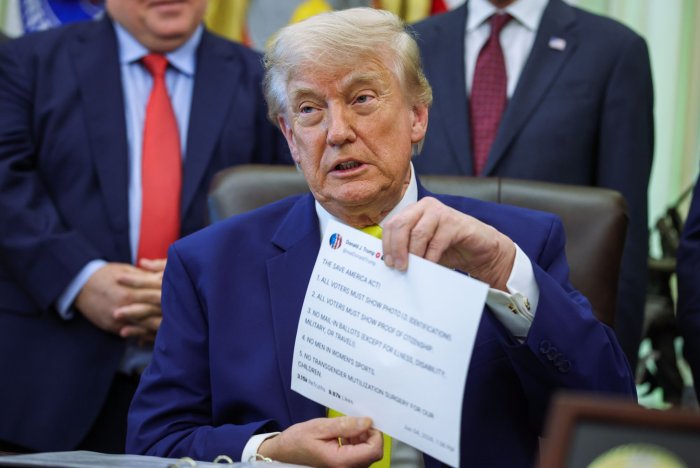
The European Commission has demanded that Meta allow other AI companies access without charge while it investigates the company for antitrust violations. File Photo by Gian Ehrenzeller/EPA
June 9 (UPI) — The European Commission ordered Meta to allow competing artificial intelligence assistants to access WhatsApp while it investigates the company for antitrust violations.
The company must restore access by next week as it was until October, when the competition could use WhatsApp for free.
“In rapidly evolving markets, competition can be lost long before a final decision is adopted. This is why these interim measures will remain in place for the duration of the investigation, in order to prevent harm that would be almost impossible to repair,” Teresa Ribera, executive vice president for Clean, Just and Competitive Transition, said in a statement. “These interim measures will safeguard competition in the growing market for AI assistants, by preserving a key entry point to reach consumers in Europe — WhatsApp — and allowing AI companies to innovate, scale up and reach their full potential.”
The EC began its investigation in December around the same time Italy called foul of the alleged anti-competitive move by the company. Italy folded its complaint into the EC probe. After Brussels warned in February that it may force the company to open back up, in March Meta allowed the other companies in but began charging them fees. Brazil has levied similar complaints.
Meta has said WhatsApp’s business platform was not built to carry AI chatbots and that competitors can reach users through other channels.
“The European Commission has decided that OpenAI and some of the largest companies in the world can use the paid-for WhatsApp Business product for free. This is regulatory overreach subsidized by the many European companies that pay. We will appeal,” a Meta spokesperson told Politico.
Meta is also appealing a $228.34 million fine from the EU for violations of the Digital Markets Act.
If the company ignores the order, it can face fines of up to 10% of its annual revenue.
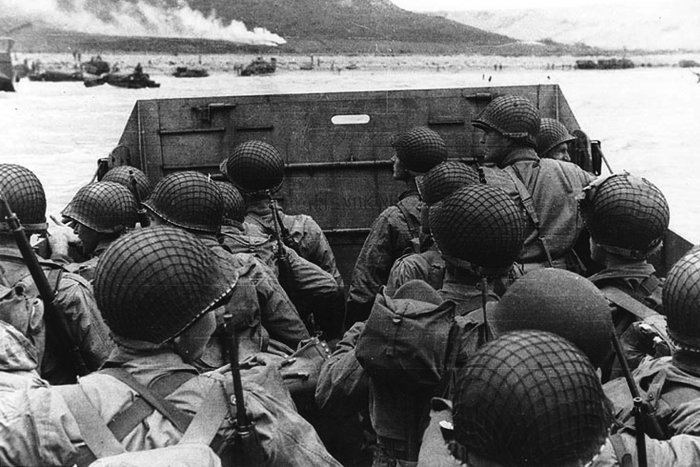
Troops in landing craft approach Omaha Beach on D-Day in Normandy, France, on June 6, 1944. D-Day was the largest seaborne invasion in history and turned the tide of World War II. Photo by UPI | License Photo
At a campaign rally in Armenia’s capital, Yerevan, on Saturday, one day before Armenia’s election, Prime Minister Nikol Pashinyan, outfitted in a white button-up shirt and a red-brimmed baseball cap, held a look of determination.
Flanked by supporters waving their arms and flashing his campaign’s signature heart-shaped hand gesture, Pashinyan was perched centre stage, pounding away on a drum kit for the crowds – literally drumming up support.
Recommended Stories
list of 4 itemsend of list
By election day, his governing Civil Contract party appeared to have drummed up something more consequential: public backing for his vision of Armenia’s future following the loss of the disputed region of Nagorno-Karabakh to a crushing military defeat by Azerbaijan in 2023.
Pashinyan, who formed a band earlier this year and campaigned with a series of concerts around the country, secured 49.8 percent of the vote in Sunday’s ballot, enough to retain a parliamentary majority.
His victory is seen as a test of his handling of the loss of the Nagorno-Karabakh region and his ability to steer the country away from Russian influence.
He has ultimately prevailed despite Russian meddling in Armenian politics, and the country now looks set to reorient itself away from its former ruler – signalling Armenians’ willingness to embrace a new direction, analysts say.
“Many Armenians are prepared to give his new vision a chance: an Armenia less defined by conflict, more open to normalising relations with Azerbaijan and Turkiye, and increasingly focused on building its future within its internationally recognised borders,” Zaur Shiriyev, an analyst at the Carnegie Russia Eurasia Center, told Al Jazeera.
‘Tired of conflict and war’
The loss of Nagorno-Karabakh could have spelled political doom for Pashinyan. By handing him a second term, Armenians have signalled that they are ready to put the conflict that has intermittently reared its head for decades behind them, analysts say.
“Nationalism no longer resonates among the public, which is demonstrably tired of conflict and war,” Richard Giragosian, director of the Yerevan-based Regional Studies Center, told Al Jazeera, even if the loss of the region remains an “open wound”, he said.
Nagorno-Karabakh, meanwhile, no longer features at all in the Armenian government’s defence reform, nor in its national security strategy, “a final confirmation of the new strategy of diversification”, Giragosian explained.
Peace efforts instead took centre stage in Pashinyan’s campaign, including the agreement he signed at the White House last August with Azerbaijan, finally ending the on-again-off-again war that had raged since the late 1980s.
Unlike in 2021, when Pashinyan’s campaign was shaped by the immediate aftermath of war and questions of political survival, Sunday’s vote became a clearer test of public support for his peace agenda, Shiriyev said.
Peace over nationalism
The result also demonstrates that the nationalist mantras peddled by opposition leaders have not been able to sway the majority of Armenians, said Svante Cornell, director of the Institute for Security and Development Policy and its Central Asia-Caucasus programme.
“The opposition represented a return to oligarchy, nationalism and forever conflict,” Cornell told Al Jazeera.
“While the Pashinyan government has its flaws, it represents something different than the past.”
The election saw the two main opposition forces – Strong Armenia and Armenia Alliance – win 41 seats combined in the new parliament, against the 64 seats the government holds, out of a total 105.
But Giragosian cautioned against overstating the opposition’s strength as, he said, the two opposition parties are unlikely to cooperate given the friction between their leaders – Russian-Armenian oligarch Samvel Karapetyan, whose Strong Armenia took 29 seats, and former President Robert Kocharian, whose Armenia Alliance won just 12.
“The division and dissent within the opposition will present a profound obstacle,” he said.
Although united in their shared pro-Russian leanings, Karapetyan is seen by Kocharian as an “interfering interloper”, with Kocharian himself resenting his third-place position behind Karapetyan, the analyst said.
“This is further exacerbated by Kocharian’s sense of entitlement, and his frustration of being rebuffed by Moscow in his prior attempts to gain direct Russian backing and support,” Giragosian added.
Still, Cornell said, the persistence of pro-Russian, nationalist sentiment in Armenia generally should not be taken lightly.
Until 2020, Armenia was governed by successive administrations that spent three decades pushing a nationalist identity, he said.
“To expect such views, such sentiments would just disappear – would be unrealistic,” Cornell noted.
Supporters of Armenia’s ruling Civil Contract party led by Prime Minister Nikol Pashinyan gather in Republic Square in Yerevan, Armenia, Friday, June 5, 2026, for the party’s final campaign rally [Anthony Pizzoferrato/AP]
Russian influence weakened – but not gone
In the lead-up to Sunday’s election, international observers had accused Russia of attempting to interfere – but its inability to change the result reflects Moscow’s limited reach in the country today, analysts say.
“Moscow still has tools in Armenia, but it no longer has the authority it once had,” Shiriyev said.
“In today’s Armenia, being seen as Russia’s preferred candidate can mobilise voters against you as much as for you.”
As Armenia strives to resist what Shiriyev refers to as the “gravitational pull” of the “Russian orbit”, a window of opportunity has been created by Moscow’s preoccupation with its invasion of Ukraine and a new openness from Western partners.
“The larger risk is from not altering strategy, and the benefits of a pivot to the West are both demonstrable and popular in Armenia today,” Giragosian said.
Russia, he added, is now increasingly viewed in Armenia as a “dangerously undependable so-called partner”.
Benyamin Poghosyan, an Armenia analyst at the Italian Institute for International Political Studies, argues that the primary foreign policy drivers of the election, however, were regional actors – not Russia or the West.
“The reality on the ground is far more nuanced,” Poghosyan told Al Jazeera. Armenia’s future relations with Azerbaijan and Turkiye, as well as the regional fallout from the conflict in Iran, are far greater influences, he said.
There are good reasons not to count Moscow out completely, however. While pro-Russian forces did not prevail this time, they will continue to assert their influence, Cornell said. He referred to the cautionary tale of another Caucasus country.
“In Georgia, the work of undermining a reformist and pro-Western government and turning the country around to a more pro-Russian line took over 15 years,” he said.
At the same time, Moscow still holds massive economic leverage over Yerevan, said the analysts.
Russia remains the primary export destination for Armenian agriculture and wine, is the main source of critical imports like wheat, and supplies the country with heavily discounted gas, Poghosyan noted.
“Because Russia has the capacity to inflict severe economic pain, Yerevan must tread carefully to protect its core interests without completely rupturing its relationship with Moscow,” he said.
Shiriyev added that many Armenians work in Russia, with families depending on remittances, and business ties running deep.
“By contrast, Western integration can still feel abstract and uncertain to many voters. That is why pro-Russian forces can still gain traction, even as Russia’s political image in Armenia has weakened,” he said.
A constitutional hurdle
But while Pashinyan’s re-election has strengthened his hand in the country’s peace process, it has not resolved one key sticking point for constitutional change to ensure it, said Shiriyev.
Azerbaijan has demanded a change to Yerevan’s constitution as a means of guaranteeing that no future Armenian government might revive claims related to Nagorno-Karabakh or Azerbaijan’s territorial integrity.
“But Pashinyan lacks the two-thirds majority needed to move easily toward a referendum, and even a referendum would be politically uncertain,” said Shiriyev.
This election, Cornell said, was “a necessary but not sufficient condition for the peace process to advance”.
Poghosyan warned that if Baku refuses to drop these preconditions, “the peace agreement will remain stalled, leaving both nations trapped in a volatile state of ‘no war, no peace’”.
On the question of regional normalisation, however, the outlook has shifted.
Since the bilateral peace treaty was signed at the White House last August, Azerbaijan has lifted restrictions on trade and transit with Armenia and restarted talks on border demarcation – moves that Giragosian said have also accelerated the opening for Armenia-Turkiye normalisation.
“For Armenia,” said Shiriyev, “the West may offer the road, Russia increasingly acts as the roadblock, and normalisation with Azerbaijan and Turkiye is the real prize.”
Tommy will fight former World’s Strongest Man Eddie Hall this weekendCredit: facebook/@SportskeedacombatTommy has been a hands on dad in the build up to the boutCredit: Instagram
The insider continued: “Now the little fella is here it’s a no-brainer — what better way to announce his name than on his dad’s boxing shorts.
“Molly is now obsessed with it — she’s hoping to be there.
“They’re working out the walk outs at the minute because that’s when it will be revealed, with music and blue fireworks — it will be cool.
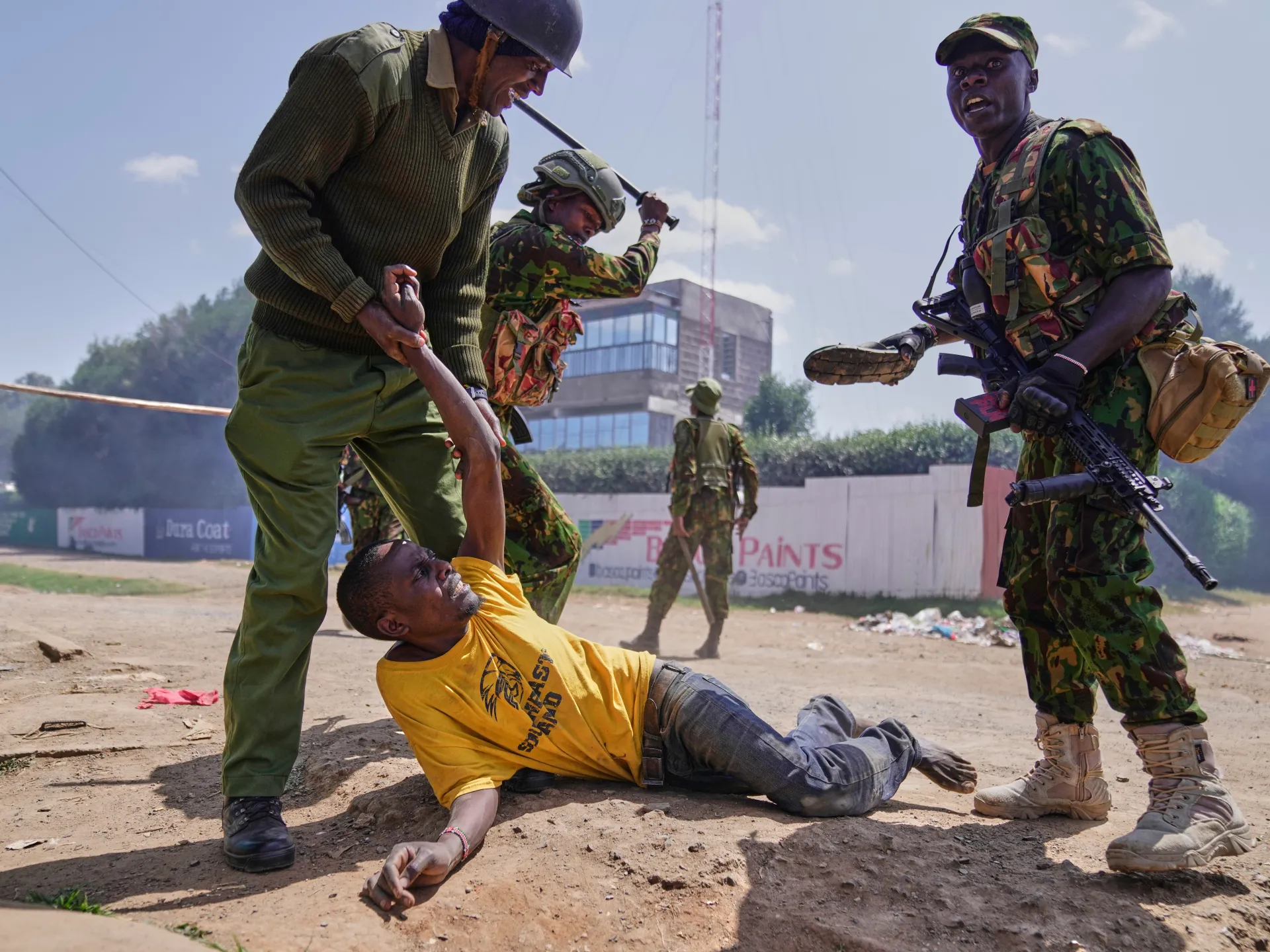
Gunshots, water cannon and tear gas have been used by Kenya’s police in the central town of Nanyuki, where hundreds of protesters lit fires and hurled stones at law enforcement officers as they demonstrated against a quarantine centre for US citizens exposed to Ebola.
Tuesday’s violence came as the proposed quarantine centre at the town’s Laikipia Air Base has caused anger among Kenyans who accuse the United States of shifting the risks of caring for people exposed to the Ebola outbreak in eastern Democratic Republic of the Congo and Uganda onto Kenya.
Kenya has never recorded a case of Ebola, and many residents oppose bringing potential carriers of the virus into the country.
The centre is designed to have 50 isolation beds, run by US staff, and was nearing completion late last week.
Construction has continued despite a temporary halt order from Kenya’s High Court and vocal opposition from local politicians.
President William Ruto’s government has pledged to press ahead with the project, arguing that Kenya owes Washington for years of financial and technical support.
The US has committed $13.5m to support Kenya’s Ebola preparedness efforts.
Weekly insights and analysis on the latest developments in military technology, strategy, and foreign policy.
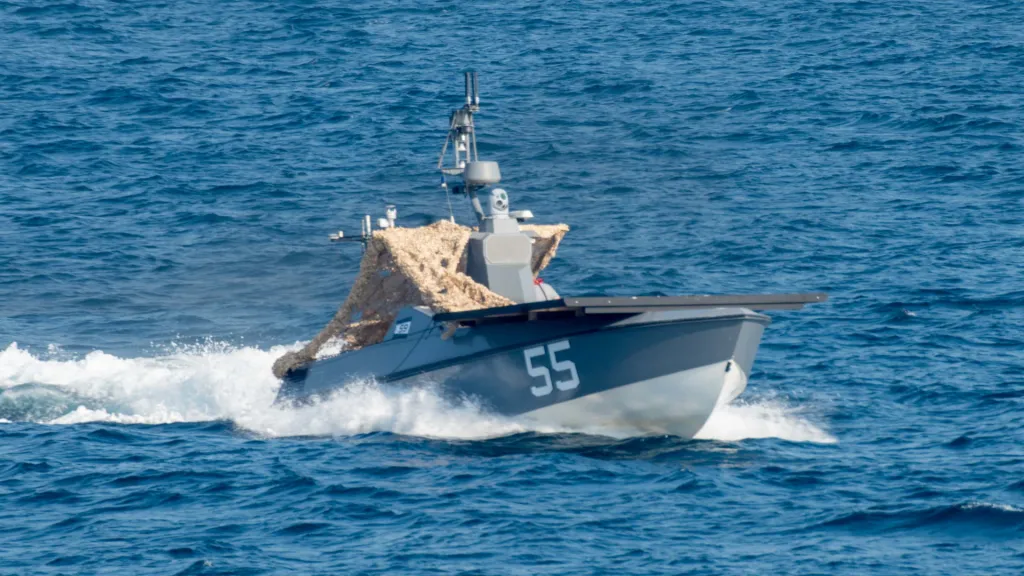
A U.S. Navy uncrewed surface vessel (USV) found and rescued the crew of a U.S. Army Apache that went down overnight near the Strait of Hormuz, in the Gulf of Oman. This is the first known use of a drone boat executing a personnel recovery action as part of a military search and rescue operation, and it’s likely a glimpse of what’s to come. The cause of the incident is otherwise under investigation.
Navy Capt. Tim Hawkins, a U.S. Central Command (CENTCOM) spokesman, has confirmed the use of the Navy USV in the rescue effort to TWZ. This had already been hinted at by mention of Task Force 59, the Navy’s main drone force in the Middle East, in an official CENTCOM statement. What specific type of drone boat was utilized in this case is not yet known. Task Force 59 operates a variety of USVs, including speedboat-like types. The Task Force has been experimenting with all types of new uncrewed naval technologies and this rescue is clearly a major win for the forward-looking unit.
One of several types of speedboat-type USVs Task Force 59 operates, seen here during an exercise. USN
“At 7:33 p.m. ET on June 8, two crew members from a U.S. Army AH-64 Apache were rescued by American forces after their helicopter went down near the coast of Oman while patrolling regional waters,” per CENTCOM’s statement. “The Soldiers were safely rescued within approximately two hours and are in stable condition. The cause of the incident is under investigation.”
“Rescue efforts were led by U.S. Naval Forces Central Command and the 82nd Airborne Division, with support from U.S. Air Force and Navy units including U.S. 5th Fleet’s Task Force 59,” the statement added.
A flight of U.S. Army AH-64 Apache attack helicopters, armed with rockets and Hellfire missiles, taxi out to conduct a scheduled flight in the U.S. Central Command area of responsibility. In addition to rockets and missiles, the Apache is additionally armed with a 30mm chain gun. (U.S. Army photo) U.S. Army Central
The New York Times was first to report that an Apache had gone down near the Strait of Hormuz. President Donald Trump had also confirmed the crew was safe while speaking to reporters earlier this morning.
“We are going to issue a report tomorrow, but the pilots are fine,” Trump said after returning to Washington from the NBA Finals in New York.
A US Army Apache helicopter went down near the Strait of Hormuz and it wasn’t clear if the aircraft suffered mechanical troubles or had been shot down by Iran, the New York Times reported.
Asked about the episode by @jendlouhyhc, Trump said the pilots were fine and that a report…
As we have reported in the past, Army AH-64s have been part of an effort by the U.S. military to enforce the ongoing blockade of Iran and protect commercial shipping. Last month, Apaches and U.S. Navy MH-60 Seahawk helicopters destroyed six small Iranian boats that were threatening commercial ships in and around the Strait of Hormuz, according to Navy Adm. Brad Cooper, head of CENTCOM. Apaches had already been conducting missions targeting Iranian naval assets in and around the Strait of Hormuz before the announcement of the ceasefire in April. All of this has shown that armed helicopters remain important assets in maritime operations, especially for defending against swarms of small boats.
As TWZ regularly highlights, search and rescue operations present inherent complexities and risks, especially when conducted in or near hostile territory. The F-15E rescue effort in Iran put a particular spotlight on the immense risks that combat search and rescue (CSAR) forces take, with helicopters and C-130 variants sent into areas where even a high-end fighter aircraft didn’t survive.
Open-water recoveries can present distinct additional challenges. There is always the possibility of the loss of additional assets and personnel in the process, no matter where a CSAR mission occurs.
HH-60Ws refuel from an HH-130J. (USAF)
The use of Navy drone boat in the rescue overnight highlights a new dimension for maritime CSAR going forward. These uncrewed assets can be more readily pre-positioned in a distributed manner. For example, in the broad expanse of the Pacific, USVs could be forward-deployed at multiple points along certain flight paths for this exact purpose. USVs could offer other distinct advantages in certain scenarios where they might be able to get into areas where traditional assets cannot and without risking additional personnel. These realities extend well beyond the maritime domain, and we are only likely to see uncrewed platforms of all kinds increasingly taking part in rescue efforts, especially in denied areas. The U.S. military is coming to terms with just how vulnerable their CSAR assets are and the ranges that would be needed to access highly defended areas, especially during a peer fight. Using drones to execute personnel recovery is being viewed as one part of a larger set of solutions to this pressing problem.
With the Apache going down near the Strait of Hormuz, the U.S. military has now lost at least seven crewed fixed-wing aircraft and helicopters since the start of the latest operations against Iran in February. In addition, several aircraft have been damaged in the air and on the ground, including by Iranian fire. The TWZ graphic below offers a visual tally of damaged and destroyed aircraft as of April 10.
TWZ
Despite the loss of the Apache, the use of a USV in the rescue effort is a major development and a sign of things to come.
Martin Mull was best known to audiences for playing comedic characters like Col. Mustard in “Clue” and Gene Parmesan in “Arrested Development,” but a new exhibit opening next year at the Santa Barbara Museum of Art seeks to elevate the role Mull was most proud to inhabit: a respected painter.
“Martin Mull: The Joys of Indoor/Outdoor Living,” co-curated by comedian Steve Martin and Hammer Museum Director Emerita Ann Philbin, comes to SBMA next June and runs through October. It will be the first major museum exhibition of Mull’s artwork in 20 years.
The paintings featured include scenes of unassuming houses visited by otherworldly guests, dead-eyed office workers, gravity-defying displays and lambs being led to the slaughter. They play with perspective, color, space and time to illuminate postwar American tensions, be they racial, political or existential.
“Martin Mull’s work as an artist will certainly be his primary legacy,” Martin said in a statement. “After a full-time career in painting, in the last 20 years of his life with his technical gifts fully developed, Martin’s art coalesced into tight, narrative paintings of a peculiar nature. Combining surreal elements with family idioms, he formed his own worried portrayal of American life.”
Martin Mull’s “Band on the Run,” 2014. Oil on panel.
(Estate of Martin Mull)
The exhibit, which will take over the museum’s 6,000 square feet of main galleries, will feature more than 50 paintings and drawings by Mull, most of which come from the artist’s estate and the private collections of Mull’s entertainment industry colleagues, including Steve Martin, Jennifer Tilly, and Ted and Nicole Sarandos .
“Steve talked about how Mull’s painting practice was his deepest passion, despite the fact that his fame was as an actor and comedian. It prompted me to do a little research, and I became very intrigued by his body of work. I wrote to Steve, ‘Martin Mull. There’s something there.’ That’s how the project began,” she said.
Along with Martin and Philbin, the upcoming exhibition is led by SBMA Chief Curator James Glisson and Amada Cruz, the museum’s director and CEO. In a news release, a museum spokesperson said Mull’s work “upsets any storybook picture of perfection” and resists nostalgia while acknowledging its allure.
Martin Mull’s “Envy,” 2008, from the series “Seven Deadly Sins.” Oil on linen.
(Estate of Martin Mull)
“It’s so deeply strange — dark and funny, hopeful and menacing all at once,” Philbin said. “The paintings are about the smoldering tensions that underlie the American dream, so I think it’s a particularly apt moment to bring them back into the public eye.”
Mull, who died in 2024, received his master of fine arts degree in painting from the Rhode Island School of Design in 1967. Though he went on to craft a career in the public eye as a musician, comedian and actor, painting remained his “true vocation.”
Martin, a longtime friend of the multidisciplinary artist, echoed this sentiment in an email to The Times.
“If a comedian says he is also a painter, run. Except this once.”
Estonian Prime Minister Kristen Michal, left, welcomes Ukrainian President Volodymyr Zelensky at a summit in Tallinn, Estonia, Tuesday. Photo by Valda Kalnina/EPA
June 9 (UPI) — Ukrainian President Volodymyr Zelensky and First Lady Olena Zelenska traveled to Talinn, Estonia, Tuesday to take part in the Ukraine-Nordic-Baltic Eight summit and meet with other regional leaders.
Zelensky is boosting diplomatic efforts as he pushes for more support for Ukraine’s war against Russia.
The Ukrainian president met Tuesday with Finnish Prime Minister Petteri Orpo, Latvian Prime Minister Andris Kulbergs and Swedish Prime Minister Ulf Kristersson, his spokesperson Sherhii Nykyforov told the Kyiv Independent. The meetings covered issues like strengthening Ukraine’s air defense and advancing the Prioritized Ukraine Requirements List program, which allows NATO allies to finance buying of U.S. weapons.
Zelensky also met with Estonian President Alar Karis and thanked the country and others in the region for their continued support.
Zelensky also emphasized the need to coordinate positions ahead of upcoming summits this summer, including the European Union, G7 and NATO summits.
“June and July this year may determine a lot,” he told reporters at a press conference.
“For a cease-fire to take place, in my view, it would be better to have a meeting at the leadership level. Who? Certainly Ukraine, Russia and definitely Europe,” the Ukrainian state news service Ukrinform reported Zelensky said. “It would be desirable for the United States of America to be there as well. Why Europe? Because we are in Europe — that is the answer. Because this is our land, this is our continent, and we must be certain that life will be safe tomorrow, no matter what.”
He added that Ukraine has the political will to negotiate, but Russia hasn’t shown that.
“The 21st package of EU sanctions is necessary. And today we also discussed that the Baltic Sea and the North Sea must not be a free zone for the Russian shadow fleet. And all decisions that curtail the activity of Russian tankers are decisions that benefit not only Ukraine but all of Europe,” the Ukrainian president said.
Zelensky recently sent a letter to Russian President Vladimir Putin asking to meet face to face for peace talks, but Putin declined.
Troops in landing craft approach Omaha Beach on D-Day in Normandy, France, on June 6, 1944. D-Day was the largest seaborne invasion in history and turned the tide of World War II. Photo by UPI | License Photo
At least 11 people were killed on Sunday during clashes between police and protesters in Pakistan-administered Kashmir’s Rawalakot city, capital of Poonch district, before a major demonstration scheduled by a banned civil society group for Tuesday.
Authorities in Pakistan-administered Kashmir deployed federal paramilitary troops and issued a strict travel advisory before the Tuesday protest, which has gone ahead despite the restrictions.
Recommended Stories
list of 4 itemsend of list
Here is what we know about the latest unrest.
What’s happening in Pakistan-administered Kashmir?
Eleven people have been killed in clashes between the police and protesters, while more than 70 have been injured. The ban on the organisation, alongside regional grievances, set off the protests.
On Tuesday, Sardar Waheed Khan, commissioner of the Pakistan side of the Poonch district, a militarised region shared between Indian-administered and Pakistani-administered Kashmir, told the news agency Reuters that four police officers and a passer-by died “after miscreants shot at them”. Six protesters were killed, he said.
Police Chief Liaqat Malik said 23 security officials and 50 protesters were among those injured in Sunday’s clashes.
On Friday, local authorities issued an advisory urging visitors to avoid travelling to the area.
“The measure is advised to save intending visitors from any unexpected situation or inconvenience,” an unnamed official said in a statement issued by the region’s Press Information Department (PID).
“The government also requests those already in the territory for sightseeing or any other purpose to leave by Friday evening so that they do not confront any unpleasant situation,” the statement added.
Kashmir is a disputed Himalayan region which is claimed in full by both India and Pakistan, with China also controlling a portion of the territory. Pakistan-administered Kashmir – known locally as Azad Jammu and Kashmir (AJK) – is governed under a semi-autonomous system, with its own prime minister and legislative assembly, but ultimate authority resting with Islamabad. Its population exceeds four million people, according to the 2017 census. It is separated from India-administered Kashmir by what is known as the Line of Control (LoC).
The LoC is the 740km (459-mile) military border dividing the disputed Kashmir region between Indian-administered and Pakistan-administered territories.
Who is behind the protests?
The Jammu Kashmir Joint Awami Action Committee (JAAC) is a grassroots umbrella organisation that emerged in 2023 as the leader of a protest movement across the Pakistani-administered part of the region. The JAAC, led by activist Shaukat Nawaz Mir, represents traders and civil society groups.
On Friday, the local government proscribed the JAAC under a regional legislative framework in Pakistan-administered Kashmir called the Anti-Terrorism Act of 2014.
In a circular, the government’s home department claimed the JAAC “is engaged in terrorism, acted in a manner prejudicial to the peace & security of the State, involved in creating anarchy in the State by intimidating public, promoting hatred & creating sense of insecurity in society and public at large, etc”.
In the past, protests organised by the JAAC have led to violent clashes between protesters and security forces, leading to casualties.
In a video message on X responding to Sunday’s incident, Mir accused the authorities of unleashing violence in Rawalakot, saying, “The state has begun a massacre of our people in Rawalakot.”
In response, Khan, the commissioner of Pakistani Poonch, said, “The JAAC leadership is misleading the masses by terming it a massacre. The state’s action was meant to restore law and order.”
On Tuesday, the internet monitoring group NetBlocks said that its data showed that access to the web remained severely restricted in Pakistan-administered Kashmir for a third day in a row.
What is the trigger behind these protests?
These protests are against the reservation of 12 seats in Pakistan-administered Kashmir’s legislature for refugees from Indian-administered Kashmir who now live in other parts of Pakistan. If the refugees live in Pakistan-administered Kashmir, they are not eligible to contest for these reserved seats.
The region votes on July 27 to elect its next legislature, which has 45 seats in all — including the 12 reserved ones.
The JAAC is calling for the abolition of the reserved seats, arguing that all seats in the legislature must go to those who actually reside in Pakistan-administered Kashmir, and not those living in other constituencies scattered across Pakistan.
Abdul Jabbar Nasir, a journalist currently based in Karachi, but originally from a village near the LoC in the Gilgit Baltistan area, which is the majority of the Pakistan-administered Kashmir region, told Al Jazeera that the seats are reserved for those who migrated from Indian-administered Kashmir to Karachi or any other part of Pakistan in 1947.
Nasir explained that the reserved seats have existed in various forms since the late 1940s and were formalised in Pakistan-administered Kashmir’s 1974 interim constitution, which treats the region as a self-governing, autonomous state, with its own prime minister, president and courts, while defence, foreign affairs, currency and communications remain under Pakistan’s control.
“If the constitutional protection provided begins to be changed by these protesters, then I don’t think things can function,” Nasir said.
“It is essential for these seats to exist. If we abolish them, on one hand, Pakistan’s own case for Kashmiri statehood in the United Nations will be weakened, and India’s case will be strengthened,” he added.
He drew a parallel with India, noting that New Delhi historically kept a number of seats vacant in its parliament and the former Jammu and Kashmir assembly as a way of asserting that those bodies represented the entire former princely state, including areas under Pakistani control. If Pakistan now dismantles refugee representation in Pakistan-administered Kashmir, he warned, India could argue that both countries have effectively “regularised” their control over their respective portions of the disputed region.
Marathon talks between a federal ministerial team, including leaders from Pakistan and Pakistan-administered Kashmir, and JAAC leadership in late May failed to yield a breakthrough. This resulted in the JAAC announcing that the protest on Tuesday would proceed as planned.
On Sunday, a top court in Pakistan-administered Kashmir, called the Supreme Court of Azad Jammu and Kashmir, ruled that the 12 reserved seats are constitutionally protected, and a constitutional amendment would be needed to abolish the reservation.
“This ruling effectively closed the legal route for groups seeking to challenge the existing arrangement and intensified calls for protest by the [JAAC],” Raja Qaiser Ahmed, director for the Area Study Centre for Africa, North and South America at the Islamabad-based Quaid-i-Azam University, told Al Jazeera.
What are the deeper issues?
Experts say the current crisis is part of a deeper, long-running debate about governance, political representation, resource allocation and regional autonomy in Pakistan-administered Kashmir. The protest on Tuesday is the fourth such protest led by the JAAC.
“The current crisis reflects a broader and longer-term debate about governance, political representation, resource distribution, and regional autonomy in AJK,” Ahmed said.
“While the refugee-seat issue has become the focal point of the present mobilisation, it is intertwined with wider grievances that have surfaced repeatedly over the past several years.”
In September and October 2025, the JAAC officially released a comprehensive 38-point charter of demands and initiated a lockdown. The government, in response to a lockdown initiated by JAAC, imposed a complete communications blackout.
The protests had their roots in May 2023, when residents first protested skyrocketing electricity bills alongside widespread flour smuggling and acute shortages in subsidised wheat supplies. The movement hit its first major flashpoint in May 2024, when protesters set off on a long march towards Muzaffarabad. The ensuing violent clashes left at least five people dead, among them a police officer.
The 38-point charter remains the focal point of current tensions. The demands of the charter include economic subsidies, investigation of corrupt officials, social welfare and infrastructure, as well as the abolition of the 12 reserved seats.
Bilawal Bhutto-Zardari, chairman of the Pakistan Peoples’ Party (PPP), the party with the most seats in Pakistan-administered Kashmir’s Legislative Assembly, said on Sunday that he would meet Prime Minister Shehbaz Sharif to discuss the ongoing tensions in the region.
“Thirty-five out of 38 demands have been implemented,” Bhutto-Zardari said during a news conference in Islamabad, explaining that the rest of the demands are not feasible or have court orders barring their implementation.
“More fundamentally, the protests reveal an ongoing tension between constitutional arrangements linked to the broader Kashmir dispute and growing demands for greater local accountability and political participation,” Ahmed said.
“The debate is therefore not only about a specific set of assembly seats but also about competing visions of representation, governance, and the future political trajectory of the region.”
Netflix’s new hit drama which is climbing the charts stars the late Song Young Kyu as Ryu Gwang-pil.
Song Young Kyu in Netflix’s Teach You A Lesson (Image: NETFLIX)
K-drama Teach You A Lesson was Song Young Kyu’s final job before his tragic death in 2025.
Netflix has just unveiled a new South Korean drama which is already climbing the UK Top 10 chart alongside shows like The Witness, and viewers have been talking about one star in particular.
The series, which is just one of many Netflix K-dramas, is about a school notorious for violence and the decline of faculty authority, which is turned around by an inspector from the Educational Rights Protection Bureau who uses physical intervention and unconventional methods to discipline delinquent students.
The show, based on the Naver webtoon Get Schooled, stars Song Young-gyu as Ryu Gwang-pil – a member of the National Assembly and the father of student Ryu Jun-hyeong (played by Lee Seung-gyu).
Song Young-kyu, also referred to as Song Young-gyu, was a 55-year-old South Korean actor who was best known for his theatre roles, and he made his film debut in the 2002 movie Turn It Up.
He was best known to international audiences for his roles in Netflix’s Narco-Saints and Disney+’s Big Bet, both released in 2022.
In August 2025, the actor was found dead inside a parked car in Yongin, Gyeonggi Province. There was no signs of foul play according to authorities.
Teach You a Lesson was the show he completed filming on before his death and his posthumous appearance in the series is drawing worldwide attention.
The first episode of the series revolves around school violence and it sees Education Authority Protection Bureau supervisor Na Hwa-jin (Kim Moo-yeol) visit Daehan High School, where student Park Dae-seok (Jung Soo-hyun) died.
The ringleader of the violence, Ryu Jun-hyeong, is the son of Congressman Ryu Kwang-pil, a prominent potential presidential candidate.
Relying on his father’s position of power, Ryu Jun-hyeong looked down on students and staff, committing all kinds of atrocities.
Na Hwa-jin even visited Ryu Kwang-pil directly. However, instead of correcting his son’s wrongdoing, Ryu Kwang-pil tried to block Na Hwa-jin using his position and influence and even attempted to dismantle the Education Authority Protection Bureau altogether.
Song Young Kyu, who is survived by his wife and two daughters, appeared in more than 40 TV dramas and numerous films across three decades.
His role as Chief Choi in the 2019 film Extreme Job, which became one of South Korea’s highest grossing films ever, gained him international attention.
One fan took to X, formerly Twitter, to pay tribute to the star after watching Teach You A Lesson, saying: “I was so focused on the plot of Teach You a Lesson that I didn’t even realise the actor playing the bully’s father in episode one was Song Young-gyu.
“The crazy thing is, I’ve seen him in so many dramas over the years, but while watching this one, all my attention was on the story, the tension, and everything happening on screen.
“It wasn’t until now that it clicked. It’s a strange feeling when you recognise an actor after the fact and remember that they’re no longer here. It makes you look at their scenes differently.
“Supporting actors rarely get the same attention as lead stars, but they’re often the ones who make these dramas feel real. Continue to Rest in Peace, Song Young-gyu.”
June 9 (UPI) — Two U.S. Army helicopter crew members were rescued and brought to safety within two hours after their Apache gunship crashed near the Strait of Hormuz.
U.S. President Donald Trump said early Tuesday that the two service personnel were “fine” and promised a report on the incident would be released in the next 24 hours or so.
U.S. Central Command said the pair were in a stable condition with spokesperson Capt. Tim Hawkins telling NBC News that a Task Force 59 unmanned surface vessel found and recovered the soldiers — the first time the U.S. military had carried out such an operation with a drone boat.
A source told the New York Times that it was yet to be established whether the aircraft came under Iranian fire, sustained a technical malfunction or encountered another issue.
The loss of a Hellfire missile-armed AH-64 Apache — which patrol the strait, downing Iranian drones and preventing small boats from attacking shipping — is a first for the U.S. military since the conflict started Feb. 28.
At least eight U.S. fighter jets and other military aircraft, plus more than two dozen uncrewed aerial vehicles, have been lost in both enemy and friendly-fire incidents but Monday’s crash was the first loss of a helicopter.
The Apaches play a key tactical role alongside F/A-18 and F-35s fighter aircraft in U.S. Central Command’s mission to counter the blockade of the vital international shipping route, which Iran has effectively put out of bounds to the vast majority of oil tankers and other commercial vessels.
However, the helicopters have been patrolling closer to Iran, including its islands in the Hormuz Strait and Persian Gulf, as part of Centcom’s effort to maintain the pressure on Tehran amid protracted negotiations to resolve the 100-day-long conflict.
Tehran did not immediately claim responsibility for the incident, according to Iran’s semi-official Mehr News Agency.
The confirmation from the U.S. side came hours after Iran and Israel sides paused airstrikes on each other at the request of U.S. President Donald Trump, who urged them to “stop shooting” because an agreement with Tehran to end the war was very close.
“We’re in the final throes of what will be a very, very good deal that will not allow in any way, shape, or form nuclear weapons. The strait will open up right away.
Trump said the Strait of Hormuz would reopen to international shipping immediately after the agreement was signed, which could be before the weekend, adding that there was a chance it could be far earlier, “in one hour, if you want to know the truth.”
President Donald Trump discusses renovations to the Lincoln Reflecting Pool and makes an announcement on coal in the Oval Office at the White House on Thursday. Photo by Samuel Corum/UPI | License Photo
Weekly insights and analysis on the latest developments in military technology, strategy, and foreign policy.
A U.S. Navy uncrewed surface vessel (USV) found and rescued the crew of a U.S. Army Apache that went down overnight near the Strait of Hormuz, in the Gulf of Oman. This is the first known use of a drone boat executing a personnel recovery action as part of a military search and rescue operation, and it’s likely a glimpse of what’s to come. The cause of the incident is otherwise under investigation.
Navy Capt. Tim Hawkins, a U.S. Central Command (CENTCOM) spokesman, has confirmed the use of the Navy USV in the rescue effort to TWZ. This had already been hinted at by mention of Task Force 59, the Navy’s main drone force in the Middle East, in an official CENTCOM statement. What specific type of drone boat was utilized in this case is not yet known. Task Force 59 operates a variety of USVs, including speedboat-like types. The Task Force has been experimenting with all types of new uncrewed naval technologies and this rescue is clearly a major win for the forward-looking unit.
One of several types of speedboat-type USVs Task Force 59 operates, seen here during an exercise. USN
“At 7:33 p.m. ET on June 8, two crew members from a U.S. Army AH-64 Apache were rescued by American forces after their helicopter went down near the coast of Oman while patrolling regional waters,” per CENTCOM’s statement. “The Soldiers were safely rescued within approximately two hours and are in stable condition. The cause of the incident is under investigation.”
“Rescue efforts were led by U.S. Naval Forces Central Command and the 82nd Airborne Division, with support from U.S. Air Force and Navy units including U.S. 5th Fleet’s Task Force 59,” the statement added.
A flight of U.S. Army AH-64 Apache attack helicopters, armed with rockets and Hellfire missiles, taxi out to conduct a scheduled flight in the U.S. Central Command area of responsibility. In addition to rockets and missiles, the Apache is additionally armed with a 30mm chain gun. (U.S. Army photo) U.S. Army Central
The New York Times was first to report that an Apache had gone down near the Strait of Hormuz. President Donald Trump had also confirmed the crew was safe while speaking to reporters earlier this morning.
“We are going to issue a report tomorrow, but the pilots are fine,” Trump said after returning to Washington from the NBA Finals in New York.
A US Army Apache helicopter went down near the Strait of Hormuz and it wasn’t clear if the aircraft suffered mechanical troubles or had been shot down by Iran, the New York Times reported.
Asked about the episode by @jendlouhyhc, Trump said the pilots were fine and that a report…
As we have reported in the past, Army AH-64s have been part of an effort by the U.S. military to enforce the ongoing blockade of Iran and protect commercial shipping. Last month, Apaches and U.S. Navy MH-60 Seahawk helicopters destroyed six small Iranian boats that were threatening commercial ships in and around the Strait of Hormuz, according to Navy Adm. Brad Cooper, head of CENTCOM. Apaches had already been conducting missions targeting Iranian naval assets in and around the Strait of Hormuz before the announcement of the ceasefire in April. All of this has shown that armed helicopters remain important assets in maritime operations, especially for defending against swarms of small boats.
As TWZ regularly highlights, search and rescue operations present inherent complexities and risks, especially when conducted in or near hostile territory. The F-15E rescue effort in Iran put a particular spotlight on the immense risks that combat search and rescue (CSAR) forces take, with helicopters and C-130 variants sent into areas where even a high-end fighter aircraft didn’t survive.
Open-water recoveries can present distinct additional challenges. There is always the possibility of the loss of additional assets and personnel in the process, no matter where a CSAR mission occurs.
HH-60Ws refuel from an HH-130J. (USAF)
The use of Navy drone boat in the rescue overnight highlights a new dimension for maritime CSAR going forward. These uncrewed assets can be more readily pre-positioned in a distributed manner. For example, in the broad expanse of the Pacific, USVs could be forward-deployed at multiple points along certain flight paths for this exact purpose. USVs could offer other distinct advantages in certain scenarios where they might be able to get into areas where traditional assets cannot and without risking additional personnel. These realities extend well beyond the maritime domain, and we are only likely to see uncrewed platforms of all kinds increasingly taking part in rescue efforts, especially in denied areas. The U.S. military is coming to terms with just how vulnerable their CSAR assets are and the ranges that would be needed to access highly defended areas, especially during a peer fight. Using drones to execute personnel recovery is being viewed as one part of a larger set of solutions to this pressing problem.
With the Apache going down near the Strait of Hormuz, the U.S. military has now lost at least seven crewed fixed-wing aircraft and helicopters since the start of the latest operations against Iran in February. In addition, several aircraft have been damaged in the air and on the ground, including by Iranian fire. The TWZ graphic below offers a visual tally of damaged and destroyed aircraft as of April 10.
TWZ
Despite the loss of the Apache, the use of a USV in the rescue effort is a major development and a sign of things to come.
Christa Miller, who plays consummate mother and opinionated neighbor Liz on “Shrinking,” has one piece of advice for parental dressing: Step away from the athleisure.
“You’re not going to feel confident in workout wear,” says Miller. She and the show’s costume designer, Allyson B. Fanger, are very intentional with Liz’s outfits, a master class in effortless yet accessible casual chic: Bold colors, layered tops, cheeky accessories and a liberal use of stripes. “The character totally could have been [in] Lululemon, but I didn’t want to fall into that trap.” Instead, Miller says they chose to spotlight Californian brands like Clare V, Jennifer Meyer, and fittingly, Mother, styled “a little off” for looks that have become so popular that Fanger created a LookLikeLiz hashtag on Instagram for fans.
Miller is just one of the stars pulling focus for their characters’ distinctive style on shows that are contenders in the Emmys race this year: Keke Palmer (“The ‘Burbs”), Sarah Snook (“All Her Fault”), Lucy Punch (“The Audacity”), Elle Fanning (“Margo’s Got Money Troubles”) and others all have fans buzzing about their fashion. And costume designers and style experts agree that the inspiration goes both ways.
“There was this expectation that once you became a mom, the attractive parts of you got set aside because you were just a mom,” says Shana Draugelis, founder and CEO of lifestyle and shopping website the Mom Edit, which recently ran a detailed feature on Liz’s wardrobe. “With the advent of Instagram, the whole style game has just completely leveled up.”
Liz’s looks, which Miller says are inspired by “Brentwood mom” style, reflect the character’s personality. “She’s not going to work, but she does want to have a certain element of presence,” says Fanger, who is a five-time Emmy nominee for her work on “Grace and Frankie.” “But there’s also a casual component to Los Angeles dressing. Mixing levels [of designers] lends itself to uniqueness, a strong point of view and a general coolness. You never look like you’re trying too hard.”
As Samira, a city native who moves to “The ’Burbs” with her husband and baby son, Keke Palmer stands out from the cul-de-sac crowd.
(Elizabeth Morris / Peacock)
Another character with a strong fashion POV is “The ‘Burbs” Samira (Palmer), a city girl and new mom who moves with her husband Rob (Jack Whitehall) and their baby son from the city to the idyllic (and fictional) Hinkley Hills. Clad in bright, slouchy-cool separates and statement accessories, Samira quickly makes a splash among her more blandly dressed neighbors.
“She’s the only Black woman in the neighborhood,” says the show’s costume designer, Trayce Gigi Field, who pulls quite a bit of, yes, Mother, but also likes to sprinkle in some lesser-known designers like Good ’Ol Whats-her-face jeans. She also paired Samira’s Howard University sweatshirt with biker shorts a la Princess Diana. “Showing her jewelry and her vibe and just having cooler clothes … it’s a great contrast to the other characters, except for Rob, [who] had the Black wife glow-up.”
Less brightly colored but no less interesting are Marissa (Snook) and Jenny (Dakota Fanning), who bond after the disappearance of Marissa’s son in an affluent Chicago neighborhood in “All Her Fault.” Their wardrobes are more subtle, yet show that there are different strata in the quiet luxury landscape. Publishing exec Jenny is well off, but nowhere near as wealthy as Marissa, who owns an accounting firm. (Perhaps not coatless “Succession” rich, but still.)
Sarah Snook, left, and Dakota Fanning connect as working moms in “All Her Fault,” albeit with subtle class distinctions between them.
(Sarah Enticknap / Peacock)
Costume designer Gypsy Taylor pulled “silks and beautiful fine wools and cashmeres” in warm toffee, chocolate and peachy tones by designers like Max Mara and Armani for Marissa, while Jenny “was a little bit more street: leather coats instead of cashmere. Or a beautiful J. Crew turtleneck as opposed to a Saks Fifth Avenue” one.
But perhaps the most amusing depiction was how Taylor contrasted the stay-at-home moms (and dads) with Marissa and Jenny, with most of the sartorial showdowns taking place during school pickups and dropoffs. “We just went hard yummy mummy on her,” says Taylor of PTA President Sarah Larsen (Melanie Vallejo). She used “too much Lululemon,” as well as Alo and PE Nation to round out the athleisure.
In “The Audacity,” Silicon Valley parents Duncan (Billy Magnussen) and Lili (Punch) portray a different kind of luxury, a casual minimalism that belies the residents’ mind-boggling net worth. “The focus is not so much showing off the wealth, but at least, you know, it’s still there,” says the show’s costume designer Farnaz Khaki-Sadigh. “So you see people like wearing a T-shirt, but it’s not your average T-shirt — more about the quality of the fabric than the designer name on it.”
As the wife of a tech magnate in “The Audacity,” Lucy Punch’s costumes tap into the ultra-minimalist luxury of Silicon Valley.
(Ed Araquel / AMC)
Finally, on the other side of the economic spectrum, there’s Margo (Elle Fanning) and her mother Shyanne (Michelle Pfeiffer) in “Margo’s Got Money Troubles.” When college student Margo unexpectedly becomes pregnant, Shyanne and Margo’s estranged father Jinx (Nick Offerman) step in; the series follows their struggle to support each other after baby Bodhi arrives.
Costume designer Mirren Gordon-Crozier says via email that her conversations with Fanning “centered around making Margo feel emotionally truthful rather than overly styled.” This meant vintage Levi’s, worn tees, thrift-store knits, “pieces that feel inherited or accumulated over time.” As for her mother, “Shyanne is much more performative. She understands the power of presentation and uses fashion almost as armor.”
But it’s not just the distinctive clothes that are uniting the people on these shows — it’s the fact that parenthood is just one aspect of these characters’ very full, very busy lives. “What does feel good to me is the fact that so many of these moms are being portrayed in Hollywood for something other than being a mom,” says Draguelis. “It just feels like being a mom is a continuation of who you are.”
The 2026 World Cup will launch with a series of historic opening ceremonies across North America, marking the first time the tournament has been launched simultaneously in three host countries.
The United States, Mexico and Canada will officially launch the biggest World Cup in history.
Recommended Stories
list of 4 itemsend of list
While the US hosted the tournament in 1994 and Mexico in 1970 and 1986, Canada will host the competition for the first time. Together, the three countries will open the tournament.
This World Cup will feature a record 104 matches spread across 16 host cities. The global event will run from the opening match in Mexico on Thursday, June 11, to the final on Sunday, July 19, in New York.
Here is what we know:
What are the 2026 FIFA World Cup opening ceremonies?
The three interconnected ceremonies staged across Mexico, Canada and the US are built around a shared theme designed to unite the three host nations while showcasing each country’s culture, identity and creative talent.
Each event will begin 90 minutes before the host nation’s opening match.
The ceremonies are being produced by Marco Balich, the creative director behind several Olympic opening ceremonies, including the 2026 Winter Games edition and major international sporting events. While each show will have its own distinct character, all three will be linked by a shared theme centred on football’s ability to unite people across borders.
Each host country will bring its own visual style to the ceremonies. Canada will be represented through a cultural mosaic, Mexico through papel picado, and the US through what Balich called “a super shiny, glowing cup”.
“The FIFA World Cup is a moment the world shares, and that begins with how we open it,” said FIFA President Gianni Infantino.
“Starting with Mexico City and continuing the next days with Toronto and Los Angeles, these ceremonies will bring together music, culture and football in a way that reflects both the individuality of each nation and the unity that defines this tournament. It is a powerful way to begin a truly global celebration.”
According to The Athletic, the ceremony in Mexico City is expected to run for about 16 minutes and 30 seconds, while the shows in Toronto and Los Angeles are scheduled to last approximately 13 minutes each.
Once the performances conclude, the pitch will be handed over to the teams for their pre-match warm-ups. Matchday protocol ceremonies, including the player walkouts and official introductions, will then begin 25 minutes before kickoff and are expected to last about 13 minutes.
Who is playing in the opening games?
Mexico will face South Africa in the first match of the tournament, which will take place following the opening ceremony in Mexico City.
Canada will play against Bosnia and Herzegovina in Toronto, marking a historic milestone as it will be the Canadian Men’s National Team’s first World Cup match played on home soil.
The US will take on Paraguay in their opening match following the celebration in Los Angeles.
When and where are the World Cup opening ceremonies?
Mexico City (June 11)
Mexico will launch the tournament at Mexico City Stadium (formerly known as the Estadio Azteca) 90 minutes before its opening match against South Africa, in a repeat of the 2010 opener.
The ceremony is expected to celebrate Mexican culture through Indigenous performers, contemporary folkloric acts and the traditional art of papel picado.
Artists featured on the Official FIFA World Cup Album are expected to perform, including Alejandro Fernandez, Belinda, Danny Ocean, J Balvin, Lila Downs, Los Angeles Azules, and Mana. The show will also include South African singer-songwriter Tyla.
Shakira is also expected to perform her Dai Dai – an Italian phrase meaning “let’s go” or “come on” – along with Burna Boy. Shakira is also set to co-headline the inaugural FIFA World Cup Final Halftime Show on July 19, alongside Madonna and K-pop band BTS.
Authorities have declared June 11 a public holiday in Mexico City, with schools closed and employers encouraged to allow remote work. Access to the stadium area will be restricted to ticket holders, accredited media and authorised personnel.
Opening day schedule in Mexico 9:00 (15:00 GMT): Stadium gates open 11:00 (17:00 GMT): Opening ceremony begins 12:10 (18:10 GMT): Team warm-ups 13:00 (19:00 GMT): Mexico vs South Africa kickoff
Toronto (June 12)
Canada’s ceremony will take place at Toronto Stadium before the country’s World Cup match against Bosnia and Herzegovina. The opening ceremony in Toronto will kick off at 1:30pm local time (17:30 GMT).
The ceremony will begin with a unique countdown designed to take viewers on a “journey across Canada”, highlighting moments that reflect the nation “from coast to coast to coast”.
Centred on the theme of a cultural mosaic, the event will highlight Canada’s diversity through music and performance, with artists including Alanis Morissette, Alessia Cara, Elyanna, Jessie Reyez, Michael Buble, Nora Fatehi, Sanjoy, Vegedream and William Prince.
The match immediately following the ceremony against Bosnia and Herzegovina is deeply significant, as it will be the first FIFA World Cup match to be played by the Canadian Men’s National Team on home soil.
FIFA President Gianni Infantino noted that the Toronto ceremony will be a “powerful reflection of Canada’s identity” and a “moment of pride, unity and anticipation” as the country steps onto football’s biggest stage.
Opening day schedule in Canada
13:30 (17:30 GMT): Opening ceremony begins. 15:00 (19:00 GMT): Canada vs Bosnia and Herzegovina kicks off.
After the ceremony concludes, the teams will complete their warm-ups before the official pre-match proceedings and kickoff at 3pm local time (19:00 GMT).
Los Angeles (June 12)
The US will host its opening celebration at the Los Angeles Stadium before facing Paraguay.
The ceremony will feature large-scale visuals, immersive storytelling and performances from global artists including Katy Perry, Future, Anitta, LISA, Rema and Tyla.
FIFA President Gianni Infantino highlighted that this specific artist lineup was chosen to reflect the cultural diversity and vibrant diasporas of the US, showcasing the nation’s considerable influence on global pop culture, music, and entertainment.
Opening day schedule in US
16:30 (23:30 GMT): Opening ceremony begins 18:00 (01:00 GMT June 13): The US vs Paraguay kicks off.
How can you watch the World Cup opening ceremony?
Fans in the US can watch the opening ceremonies through FIFA’s official broadcast partners. English-language coverage will be available on FOX and FS1, while Spanish-language coverage will air on Telemundo and Universo.
For free streaming, Tubi will simulcast the opening ceremonies and the opening matches, including Mexico vs South Africa on June 11 and the United States vs Paraguay on June 12.
All 104 World Cup matches will also be available through the FOX One app (subscription required), while Spanish-language viewers can stream every match on Peacock and the Telemundo app.
International broadcasters include:
Canada: CTV, TSN and RDS
Mexico: Televisa and TV Azteca
United Kingdom: BBC and ITV
How many fans are expected to attend and watch?
FIFA has not released an official number for the opening ceremonies. However, the three events are expected to fill their host venues in Mexico City, Toronto and Los Angeles, with a combined live attendance of roughly 200,000 spectators.
The ceremonies will also be broadcast worldwide as part of the opening match coverage, likely attracting a global television audience in the tens or hundreds of millions.
Are the hosting nations facing any challenges before the ceremony?
Yes. In Mexico City, ongoing protests by teachers’ unions and other groups have raised concerns about possible disruptions before the opening match between Mexico and South Africa.
Protesters have threatened to block major roads leading to Mexico City Stadium and other key locations. Authorities have responded with a large security operation and say the opening ceremony is not at risk, although organisers remain on alert as the tournament approaches.
In Los Angeles, officials have focused on security planning, crowd management and preparations for large-scale events across the city. Local authorities have also said they do not expect immigration enforcement operations at World Cup venues.
In Toronto, organisers are preparing for an influx of visitors, with transport agencies adding services and coordinating plans to reduce congestion. Across all three host nations, security and logistics remain key priorities as the tournament gets under way.
People walk near the fallen statue of a football player, placed along Avenida Reforma for the 2026 FIFA World Cup, that was vandalised by teachers from Mexico’s National Coordination of Education Workers (CNTE), following a protest demanding better wages and pensions, under the slogan “If there’s no solution, the ball won’t roll,” in Mexico City [Henry Romero/Reuters]
The FIFA World Cup begins on June 11. You can follow the action on Al Jazeera’s dedicated World Cup 2026 page with all the latest news, match build-up and live text commentary, and keep up to date with group standings, real-time match results and schedules.
Memorizing your lines seems like such a foundational part of an actor’s job that there wouldn’t be much to say about it. Yet when a group of performers recently got onto the topic during The Envelope’s Emmy Limited Series / TV Movie Roundtable, it turned out everyone had their own way of doing it. And all were eager for tips and tricks, whether it be an app, a line-drilling coach (“Can I have that number?”), writing down the first letter of each word or even writing a monologue backward.
“We have to share tools, guys,” said Camila Morrone, who plays a bride-to-be who learns her fiancé’s family dark secrets in the horror thriller “Something Very Bad Is Going to Happen.” “It’s funny that we all have such different methods.”
Joining Morrone were Jamie Bell, who stars in “Half Man,” about the extremely dysfunctional, toxic relationship between two stepbrothers; Linda Cardellini, who appears in “DTF St. Louis” as a dissatisfied woman caught in a dangerous love triangle; Michael Peña, who plays a detective assigned to the case of a missing child while his own boundaries are tested in “All Her Fault”; Andrew Rannells, who is a man coming to terms with his own life while helping to plan a funeral in “Miss You, Love You”; and Constance Zimmer, who channels the mother of Carolyn Bessette Kennedy in “Love Story: John F. Kennedy Jr. and Carolyn Bessette.” Read on for more excerpts from our conversation.
The Envelope’s 2026 Emmy Limited Series / TV Movie Roundtable: Constance Zimmer, left, Michael Peña, Linda Cardellini, Andrew Rannells, Camila Morrone and Jamie Bell.
How do you watch TV? A home theater screening room or a tablet on the go?
Morrone: When I see people on a plane watching on their phone, I’m like, “Do you know how many people worked on that?”
Zimmer: I can barely watch one on an iPad because I still feel guilty about not getting the full effect.
Cardellini: I can’t watch on my phone or an iPad. It starts to hurt my eyes. And I like to binge. I don’t like one at a time. I like to save it up, and I like a binge. I don’t have the patience.
Morrone: Oh, I love one at a time. I want to wait till Sunday night, order my favorite food, maybe have a friend come over … Guess our theories of what’s going to happen. I did that with “White Lotus” this year, and I was looking forward to every Sunday at 7 p.m.
Bell: I catch usually about 10 minutes of whatever my wife has fallen asleep to. And then I’ll get into that, and then I’ll watch a lot more episodes while she’s asleep. And then she’ll wake up, and we’ll be completely out of sync in terms of what we’re watching.
Jamie, “Half-Man” is such an emotionally intense show, and it seems like that would be a really hard head space to exist in. Are there things that you do for yourself to maintain your own sanity?
Bell: Me and Richard [Gadd], who wrote the show, are big soccer fans. So I brought a soccer ball to set a lot, and just whatever space we’re in, we just kick a ball to each other every now and then. So, a lot of that wasn’t even us really speaking to each other, but just passing a ball backwards and forwards, which was quite a nice way of just taking our minds off of whatever scene we were doing and still enjoy the space with each other and do something that was physical that didn’t really require us jumping [around] too much.
Camila, “Something Very Bad Is Going to Happen” is also a very intense show. It’s not so much a scream queen kind of horror; it’s this foreboding horror. Was that a difficult space for you to exist in?
Morrone: I think there’s an underappreciation for horror performances. I think some of the most incredible performances, especially by women, have been done in the horror genre. And I think it’s a really specific thing to do because if you’re playing only one level of horror throughout an eight-episode series, I think it’s incredibly boring. And I think I had this notion of like, “God, I don’t want to do these jump scares,” and kind of the cliches of what we imagine horror is like. But horror can be really deep and really internal, and I think there’s a lot of ways in which horror and fear manifest. And I think it was interesting to try and find levels to it and to have the audience come with you, but not dramatize or exaggerate an emotion.
Michael, in “All Her Fault” you are playing someone who could be a much more conventional detective character, but reveals more layers. Was there a moment in your career when you realized, whether it was going for certain roles or not going for certain roles, where you wanted to break out of feeling like a sidekick character or more stereotyped characters? Was there a moment where you made an effort to start going for a different kind of role?
Peña: Back when I started acting, the breakdowns for actors, it was like “Caucasian only,” “Caucasian only,” “Caucasian only,” and we weren’t allowed to audition for those. And it was only until the 14th part that it said, “Open to other ethnicities.” So there’s like a thousand of us going for the 14th place. Ten years of that, you kind of think, “I guess I’m meant to be a supporting character.” But then my mom, right before she died, what she said is, “If you’re going to do that, just make it real. What’s the best you can do with that part?” I said, “Make it a three-dimensional character.” She’s like, “Just do that.” And she’s like, “Nobody remembers your bank account.” And I was like, “Oh, these are two good pieces of advice, Moms,” and so that’s what I did. And with “Crash,” he was a gangster and I was like, “Screw it. I’m just going to do the work and try it out, and all the stuff that I was learning in acting class, I’m going to apply it to this particular role.” And I was happy with the work, so then I kept doing that.
For the rest of you, was there a moment where you had to make a decision about the kind of career that you wanted for yourself and the kind of roles you were going to go up for?
Zimmer: Sorry. It just makes me laugh because we have no control, as actors, over where they believe that we belong. I wish that we could say, “I’d like to try this now,” but it’s basically where they believe they would like us. And then you get put into an area, or a path, or a box, and you can’t get out until somebody else decides, “Hold on. We’re going to give you that shot to try this, even though it’s not necessarily what you normally do or are known for.” Then it takes that for everybody to go, “Oh, you can do this, too?” And it’s like, “Yeah, that’s my job.” My job is to do a lot of things, not just one role, or one type of role.
Rannells: You’d like to think that you’re more in control of those decisions, but sometimes things just happen.
Constance, as Ann Messina, Carolyn Bessette’s mother in “Love Story,” you have this speech that you give at their wedding dinner. It’s such an incredible scene, and I’m wondering, what was it like for you when you first read that in the script?
Zimmer: That monologue was actually my audition.
Peña: Oh, I love when that happens like that.
Zimmer: So I knew it very well, getting on the set with it. I think that I only saw two scripts out of nine episodes, and they were just the ones I was in. And I remember my team saying, “This might be it. We don’t know if there’s anything else that you’re going to do on the show.” And I said, “If this is the only thing I do, it’ll be worth it,” because it was so layered and it was so well-written by Connor Hines and Juli Weiner, I was kind of like, “This is all that matters anyway.” So, to be able to feel like I could pour the entire character into one moment in time, it allowed me to try and give her as much as possible because I was like, “This might be it.” So when I read it, I was like, “Oh, OK. That’s like those five-page monologues that you don’t get very often to do for one character in one episode.”
Linda, your character on “DTF St. Louis” has this habit of saying, “No way, José,” and it’s oddly catchy. And she also is always asking people to speak up. Is it difficult to take what seems, on the page, maybe like tics or weird habits and make them feel natural?
Cardellini: That was the great challenge of it, and it’s the beauty of [Steven Conrad’s] writing. Like we repeat “Jamba Juice,” or “Quality Inn,” or “Garden Suites,” all these little phrases, or “Snag it.” It’s so fun to find a way to make that seem like it is natural to you. I remember I had a long monologue audition, and in there I talk about, “No way, José.” I wasn’t sure what the tone was — it’s such a specific tone when you watch the show, and it’s very Steve Conrad. And I didn’t know what it was before I met him and before you could see the show in action. So getting through that and chewing through that in my audition, doing these versions of “No way, José” that I thought felt really, really natural to me, I was like, “This is how I would say it. This is how I’m going to do it. If my sense of humor matches his sense of humor, if our tones match, then I’ll get this role. And if they don’t, then somebody else will do it beautifully in that other way, whatever that is.” Luckily that was like a marriage of tone and thought, and then those things start to come naturally. And then you want to say them more often than they’re written. There’s not a lot of improv in the show, but we would all just joke around and say it to each other.
Andrew, so much of “Miss You, Love You” is just you and Allison Janney together —
Rannells: Just sitting in a house. Just talking.
What was the rehearsal process like? How did the two of you prepare for these very long dialogue scenes?
Rannells: We rehearsed it like a play, which was really fun, and I’ve never really … I mean, we did that, I guess, with “Boys in the Band” a little bit. We had done it on Broadway and then we all kind of still knew it from when we actually filmed it. But Allison and I rehearsed it like a play, and we would just run lines like little theater nerds. It was exciting because I’ve never — to get on set and to be able to say, like, “We can do the first 25 pages just because we’ve already memorized it.” And we did for Danny Moder, the [director of photography]; we did our little play for the crew one day. Which was really fun because you don’t normally get to work like that. It’s like in little segments. And [writer-director] Jim Rash just let us run it in a way that felt really satisfying to get to do. Because sometimes when you just do little pieces of things you’re like, “I can’t quite get the arc of this, and I don’t really know.” You’re doing inserts, and you’re like, “This doesn’t feel like acting.”
Zimmer: And you’re doing it out of order, so you’re like, “Wait, I’m playing the end before I’ve even played the beginning, but I don’t even know what my beginning is.”
Cardellini: It becomes detective work.
Rannells: Shout-out to Allison Janney. It turns out she’s good at acting.
Linda, what was it like working with an intimacy coordinator in shooting what certainly look like they could have been very awkward scenes in “DTF”?
Cardellini: I like an intimacy coordinator. I think it’s wonderful. I think they’re there if you would like to use them. Everybody I’ve ever worked with in that capacity has been so helpful and considerate, and I think it’s just a nice resource to have. And we had a great one on “DTF.” … One of the first scenes I ever shot was me where I have to, we call it “weight placement,” on Jason’s face. And we were scheduled to shoot that much later, but it came up the —
Rannells: That was your first day?
Cardellini: That was our first scene together, really placing your weight on somebody in a way where you just don’t want to hurt somebody’s face. I mean, you don’t want to suffocate somebody. There’s a lot of things that could happen. But it was handled so beautifully. And Jason, of course, is so wonderful, and we had such a great time doing the scenes because we just would laugh — they’re funny. The scenes, more than even being sexual, are so awkward and bizarre and filled with these strange little kinks that it becomes funny, in a way, although you treat it with dead seriousness. But Steve Conrad had a beautiful economy about what he was shooting, and he would storyboard. It was never just like, “Oh, be intimate and go for it, and we’ll see what we use.” It was, “This is the part of your body we’re going to use right here. This will be the shot. It’s this frame. We’re not going to do any more than that.” So you never felt like you were in the Wild West doing this passionate thing that felt uncomfortable. … Because, of course, going into something like that, reading the script, you’re thinking, “It’s a little nerve-racking. How am I going to do these things?” It was much easier than I could have ever imagined.
Constance, your character in “Love Story,” she embodies the other side of the glamour and the fame and the story that we all think we know. And in a lot of ways I can’t help but connect it to your character from “UnReal” in that it creates this really interesting perspective on fame. These roles, do they make you think about that, as well? Do you start to consider your own relationship to fame and your character’s relationship to fame?
Zimmer: Ann, [and] working on “Love Story” in general, really brought the price of fame to the forefront and how it can tear people apart and down and away from who they were before they became famous. And I think, in this particular story, Carolyn never set out to be famous. That was like the last thing she wanted. The scenes with me and Sarah Pidgeon, who plays Carolyn Bessette, were very much about, “How do I remind you that everything is going to change, and you are going to change?” So it made the mama bear really show up. And sadly, it’s hard to do the research about all of that and see how much media was to blame. I hate to say it, and it’s tough, especially for a woman: They really tore her apart. It definitely makes you look at things and go, “Wow, it’s so interesting what we all give up.” This is our craft. We do this as actors, yet when we step outside of our craft and our roles, we are judged on such a harsh level. We’re here for the work and to make and show these characters so that maybe you can see a little bit of yourself, or maybe it can help you with grief, or laughter, or whatever. But then, outside of our work, we are judged almost worse about how we’re aging, how we’re not aging, what we look like, what we don’t look like. It’s the hardest part, I think, of what we do.
Would the rest of you agree with that, that in some ways, it’s not the work that you’re doing, but it’s this other job that exists outside of your work, the fame aspect of it? Does that become a bigger challenge than you expect?
Rannells: So much of the promotion of things that you work on now hinges on your participation in like, “Post this picture” or “Do this video” or “Do this thing.” And that’s stuff that you just don’t think about when you say, “I want to be an actor.” You don’t think about, “Do I have to do a collab with the network?” I don’t want to do that. That’s not part of my job, but it is part of your job. That is part of it now. So that’s a tricky aspect of it that I didn’t expect.
Morrone: The other side of that coin is that there’s independent films that I’ve done, that nobody would have ever seen had I not been the poster child on social media, being like, “I love this film. Please, watch this film. This is how to watch this film.” So, then again, it can also be a really beneficial platform. And it’s such a complicated relationship because, I mean, I grew up with social media. I don’t ever remember not having a form of social media. And I wish I could be like the cool actors who aren’t on it. They’re much more mysterious.
Peña: Jamie’s not on it.
Bell: I mean, it’s not a conscious choice. I’m just not on it.
Jamie, both you and Linda have been acting since you were quite young and, in some ways, have grown up on camera. How do you know what of yourself to hold onto, what you allow the public to see? Is that something you , at some point in your career, had to make a decision about how much of yourself you were going to give away?
Bell: I’m quite a boring person. I’m a dad. When I’m not working, I’m just dad and school running and that kind of thing. And also, I enjoy working. So most of my time is spent either trying to get the next job, or thinking about the next job, or just really working hard on that because I enjoy that. So I really don’t think about any of that other stuff. And I’ve been quite fortunate in that no one is particularly interested in banging down that door anyway …which I’m quite relieved about, honestly, because I feel like I get to work in a space where I’m just coming and playing the part, and I’m going home. That’s all I’ve ever done is since I was like 12 or 13 years old, and I still enjoy that. I still enjoy that thrill of going to work and playing the character. And I have incredibly high expectations of myself and all those things. I self-flagellate a lot on the way home, like, “Why didn’t you do it like that?” I stress myself out about that kind of stuff, but I still go back the next day going like, “God, maybe I’ll get it today.” And that excitement still exists. And I think mostly that’s because I don’t have this other side of stuff that is distracting me from anything.
Cardellini: When I first started, I wondered if I would ever make a living at it. And to be able to have had it as my job and to have a job that I love and, like you said, show up and just be excited to do the work and be excited to be around other people who do the similar work or behind the camera… It’s such a beautiful community that I feel very grateful that I’ve been able to grow up doing what I love. I mean, I wouldn’t have guessed that it could have lasted this long. And people always said, like, “Oh, when you get to a certain age, it gets terrible for women.” And I still feel like I’m still learning and growing and doing new things, stuff I’ve never done before. So I just try to turn down my worry and just be so grateful in the moment, which is not always easy for me because I can live with a lot of anxiety. But thinking about it and listening to everybody here right now, I just am very grateful to have a seat at the table, literally and figuratively.
I’d imagine for all of you that you’re probably never quite sure what roles you do that are going to be the ones that hit in a certain way. Do you ever know what movies are going to land with audiences?
Peña: I think I’ve done OK in that department where if I read something and it really moves me, I just want to be a part of it. I mean, they had their own success, in a way. “Eastbound & Down” was so funny. When I read the character, I was like, “Oh, this is a really cool character.” And now the meme… There’s a fart meme. Man, I swear to God, we shot that 15 years ago, and literally I do a fart noise, and I say, “How long have you been with her?” It sucks now because I’m like, “That’s all they know me for. Not ‘Crash,’ not ‘World Trade Center,’ not all the movies that were nominated, this and that.” It’s the fart noise.
Rannells: Is that going to be your In Memoriam thing?
Peña: Can you imagine? Let’s watch a clip here of Michael —
As we talk about these past projects you’ve been a part of, it just leads to the question of how the business of being an actor, the nature of this as a job, has changed for you over the years.
Rannells: When I started, and I started in the ensemble of “Hairspray” on Broadway, I never expected that I would ever get a job on television. That just seemed very far away. So the fact that I get to do it and that I have a tiny bit of control over what I get to do is a real gift because it was very unexpected. My first TV job, I was a headless stripper on “Sex and the City.”
Morrone: What episode?
Rannells: It wasn’t a Halloween episode. They just didn’t shoot my face. But I remember filming it and being like, “I can’t imagine this will ever happen again, that I’ll be on a set, or doing a TV show,” So it’s still sort of a surprise anytime I get a job that I’m like, “Someone’s going to pay me to do that, to make faces.”
It seems like everyone in Hollywood right now is talking about artificial intelligence. For all of you, is that something that you are thinking about for yourself? Have you experimented with it at all?
Morrone: I really want to believe that people will always choose us and real emotion, and that the audience is really smart and they want to see real humans and real life experiences and raw emotion. And I pray that that’s the case. I have a lot of hope in humanity, in that case.
I don’t know what it means for us in the near future. I know that we have to protect ourselves. I actually was working with Patricia Arquette, she directed me in a film called “Gonzo Girl.” And she is so hyper-aware of all of this and looking into all her contracts. So was Jamie Lee Curtis. I got the opportunity to talk to her about AI. And they were so knowledgeable and like, “Go back and look at everything that you’ve done the last 10 years, and review everything, and make sure that they can’t use your likeness in the future.” I mean, it’s something that we really do have to be aware of.
Peña: I don’t think that it’s going to be a threat because it’s working off of a database and whatever has been uploaded onto that particular AI. So, just for s— and giggles, I was like, let me see if it can write some jokes. So, I’m like, “What would Peña say in this one?” I was like, “Lame.” All the jokes sucked, and they were recycled jokes. And I was like, “OK, cool. That gives me hope.”
The aftermath of an earlier Israeli airstrike on the southern Lebanese port of Tyre in May. On Tuesday, the Israel Defense Forces ordered residents, including for the first time those in Christian neighborhoods, to evacuate well to the north of the city for their safety as it prepared to target Hezbollah “elements, facilities and combat means.” File photo by Stringer/EPA
June 9 (UPI) — The Israel Defense Forces ordered residents of the Lebanese city of Tyre, including the Christian quarter and more than 10 refugee camps, to evacuate Tuesday, pending Israeli military action against targets of Iran-proxy Hezbollah.
IDF spokesman Avichay Adraee wrote on X that “out of concern for your safety,” residents should leave their homes immediately and move some 20 miles north beyond the Zahrani River and warned that anyone remaining south of the river was putting their life at risk.
“Your presence near Hezbollah elements or their facilities or combat means endangers your lives. As we warned in the past days, following Hezbollah elements’ actions inside the Christian Quarter in the city, the Israel Defense Forces will be compelled to act against their terrorist activities in the quarter in the near term,” said Adraee.
“Any building used by Hezbollah for military purposes may be subject to targeting. To ensure your safety — evacuate your homes immediately and move north beyond the Zahrani River. Attention — any movement south of the Zahrani River may endanger your lives,” he added.
The development came a day after Israel and Iran backed away from direct confrontation that flared up at the weekend over an Israeli strike on the southern suburbs of Beirut that prompted Tehran to fire as many as 30 missiles at Israel with Israel striking back against military targets in central and western Iran.
In standing down its military, Tehran warned that in the event Israel continued its attacks in Lebanon, including in the south, “much more severe and crushing measures will be on the way.”
Israeli Prime Minister Benjamin Netanyahu said in a post on X Monday evening that Israel had only halted hostilities because “after we struck the terror regime in Tehran, it ceased attacking us” and threatened to “respond with overwhelming force” if Iran made the mistake of attacking Israel again.
Netanyahu said that by firing into Israel over the past day, Iran and Hezbollah had attempted “to impose a new equation upon” where they believed they could fire at Israel from Lebanese territory and from Iran and Israel would not react.
“That did not happen, and it will not happen. Not on my watch! It is an equation I find intolerable and unacceptable,” wrote Netanyahu.
The sides halted their respective military strikes at the request of U.S. President Donald Trump who urged them to “stop shooting” because a deal ending the 100-day-long U.S.-Iran conflict was imminent.
Speaking on the tarmac at JFK Airport in New York on Monday night, Trump said the United States and Iran were very close to “a very good deal that will not allow in any way, shape, or form nuclear weapons.”
“And the [Hormuz] Strait will open up right away — they’ll open up immediately upon signing, which could be in two or three days,” said Trump.
He said he didn’t believe there were any sticking points.
Trump said the alternative was to return to bombing Iran but that would be counterproductive because it would mean the Strait of Hormuz remaining closed for many months and the needless deaths of many more people.
“Who wants to do that? I don’t. And we’ll have a signed document that’s actually stronger than doing the bombing,” he said.
President Donald Trump discusses renovations to the Lincoln Reflecting Pool and makes an announcement on coal in the Oval Office at the White House on Thursday. Photo by Samuel Corum/UPI | License Photo
LOVE Island viewers have been left baffled after spotting Ellie Chadwick is rarely seen without her iconic £2,000 Prada bag.
Despite engaging in some tense chats in the villa, fans of the hit ITV show have been left distracted by her trusty wicker basket bag never being far from sight.
Sign up for the Showbiz newsletter
Thank you!
Love Island’s Ellie has left fans in hysterics after spotting she is rarely without her iconic Prada bagCredit: EBayITV2 viewers have been confused by Ellie’s constant need to carry her designer bag in the villaCredit: EBay
And it turns out there is a key reason why real estate videographer Ellie, 24, is always carrying her beloved accessory around the villa.
Amy Bannerman, eBay‘s Pre-Loved Style Director, told The Sun that bags were added into the Love Island pad for the first season of Love Island All Stars in January 2025.
She explained: “I wanted a way to add more eBay to the Islanders’ non-swimwear looks and give us an opportunity to talk about eBay’s Authenticity Guarantee (AG) offering.
“The Love Island All Stars cast all really veer towards premium brands too, so it felt like the perfect place to introduce it.
Some viewers said it reminded them of Teletubby character Tinky WinkyCredit: BBCOne fan shared a picture of Mr Tumble and his yellow spotted bagCredit: BBC
“There isn’t more of a focus on bags this season, but they have got more airtime from Ellie’s iconic Prada moment, which is great.”
Viewers have been left in fits of giggles after spotting Ellie’s bag habit and have taken to social media to discuss it further.
One wrote: “Ellie is the first girl I’ve seen carry a bag around the villa, she’s so real go find those designer bags girly show us the villa collection.”
This person replied: “And the only thing in there is probably her phone and some lip gloss.”
This person asked: “Can tell you right now that there’s nothing in Ellie’s bag,” while someone else echoed: “Why is Ellie the only person in love island to ever carry a handbag?”
Someone shared a picture of Teletubbies character Tinky Winky and their famous red handbag, while another posted a picture of Mr Tumble and his yellow spotted bag.
This viewer shared: “Ellie walking around the villa with a handbag, quite possibly is the first time I’ve seen that happen on that show, since I began watching it, all those years ago. Definitely not on my bingo card.”
Another added: “It’s really making me laugh that Ellie carries a handbag, like girl why do you need a handbag in the villa?”
And some fans have even suggested: “If she stays long enough, she’s going to have some bag deals.”
Amy clarified that there is no quota for how many eBay items Islanders have to use, but they have the option to choose from their “incredible choice of brands and styles.”
Amy explained: “They pick pieces from a shared wardrobe that includes everything from Versace and Gucci to vintage Topshop and Marks & Spencer.
“Last season, unbranded vintage was the most-worn category, which was very exciting for us!”
The eBay staff member said they also added men’s bags as the “boys all seemed keen to join the girls in carrying AG bags.”
She added: “We have also added luxury AG men’s sliders too, so they’re wearing more eBay around the pool during daytime moments.”
Since Kavan entered the villa as a surprise bombshell he caught Ellie’s eye, despite her previously being coupled up with his brother.
The blonde beauty continued to express interest in both of the lads for a while until Sunday when everything came crashing down.
Ellie and Aidan were sitting on a sofa together talking about how Aidan kissed someone else when she was briefly booted from the villa.
Ellie left for around 12 hours alongside Samraj after bombshells Yasmin and George were tasked by host Maya Jama to axe a lad and a lady from the show.
The worst-case oil scenario has been avoided, but inflation and slower growth continue to weigh on the global economy.
More than 100 days into the Iran conflict, 20 percent of the world’s energy flows remain disrupted, with the scenario described as the biggest supply shock in history.
For now, the nightmare scenario has been avoided. Oil prices are still at approximately $100 a barrel.
Many analysts have warned that a prolonged disruption to the Strait of Hormuz could send oil above $200 a barrel, triggering a global economic crisis.
Various countries have released their strategic reserves, exporters have found alternative routes and weaker demand has helped contain prices. But the buffers are thinning.
The Organisation for Economic Co-operation and Development (OECD) warns the economic impact could linger well into 2027, even if the conflict ends tomorrow.
Donald Trump’s appearance courtside at Madison Square Garden was supposed to be a historic moment, as, for the first time, a sitting president of the United States was attending an NBA Finals game.
Instead, his arrival became part of the story, drawing boos from sections of the crowd and triggering a massive security operation that reshaped the atmosphere around the storied New York arena on Monday night.
Trump watched from an executive suite as the New York Knicks hosted the San Antonio Spurs in a series that gripped the city and revived memories of the Knicks’ glory years.
When his image flashed up on the big screen during the national anthem, many fans jeered, underlining how sharply divided the country remains even in a space usually reserved for shared celebration.
Outside, Manhattan’s streets were locked down. Metal fencing, airport-style screening and a heavy Secret Service and police presence kept ticketless fans blocks away.
Long queues formed as supporters queued early, while others gathered at public viewing areas across the city.
Inside, however, the spectacle went on. Hollywood actors, musicians, former players and New York fixtures filled the front rows, turning the event into a star-studded night out.
Between the celebrity sightings, the political undertones and a tense 115-111 Spurs win, this was a New York basketball night unlike any other – on and off the court.
Musicians have been left out of settlements between major record labels and AI companies, a new lawsuit alleges.
The American Federation of Musicians of the United States and Canada (AFM), which has 70,000 members, said Universal Music Group and Warner Music Group “received significant compensation” from the AI companies for past copyright violations and licensed “substantial” portions of their music catalogs to them, but haven’t shared that with the musicians.
UMG and WMG sued AI companies Udio and Suno in 2024, accusing them of copyright infringement. Both companies settled with Udio last year. In November, WMG announced a partnership with Suno, but Universal Music Group’s lawsuit against Suno is pending.
“While the Defendants protected their own interests and created a significant source of new revenue with the retrospective settlements and prospective licenses, they have refused to compensate the musicians whose work — created with their own instruments and through their talent, creativity, and hard work — is fed into AI machines for profit,” AFM said in its lawsuit, filed in U.S. District Court in New York on Friday.
AFM said it believes the AI settlements fall under the “new use” provision of its collective bargaining agreements, which requires music companies to notify the union of new licenses for purposes not covered by the contract and to compensate musicians, whose work was used to train AI models.
UMG and WMG said in statements that they are in negotiations on a collective bargaining agreement with AFM.
“Warner Music Group is growing the value of music by establishing guardrails and architecting a healthy AI ecosystem on behalf of artists everywhere,” the company said in a statement.
Universal Music Group said it will continue to work to resolve issues during the negotiations.
“Universal Music Group has been at the forefront of protecting the rights and advancing the interests of artists and songwriters in the age of AI — striking responsible AI licensing agreements to ensure they are compensated, leading the charge for legislation to further protect them and taking legal action against bad actors,” the company said in a statement. “We expect to continue our strong working relationship with the AFM built on mutual respect for the talented musicians in our industry.”
AI has become more popular among consumers, dramatically changing the landscape in the entertainment industry. Many startups have popped up allowing users to type text prompts into AI systems to generate original songs, video clips and stories.
Some creatives say the AI tools help them brainstorm or illustrate bold ideas on a budget. But critics have raised concerns about whether AI systems are trained on copyrighted works without permission or payment to artists. Others are worried AI could eliminate their livelihoods.
Udio said it would create a new platform that would train on licensed and authorized music with artists having the ability to opt-in. Suno agreed to change its platform, launching new licensed models, and place download restrictions.
Bradford Auerbach, a partner at law firm OGC, said he expects to see more of these types of lawsuits filed by unions.
“You’ve got the unions always protecting the status quo, so you’ve got this invariable conflict of new technology coming in, and moving the cheese for a lot of people that were accustomed to having their business set up the way it was,” Auerbach said.
Japanese Prime Minister Sanae Takaichi speaks during a joint press conference with Philippine President Ferdinand Marcos Jr. (not pictured) at the Akasaka Palace state guest house in Tokyo, Japan, 28 May 2026. Photo by Rodrigo Reyes Marin / EPA
June 8 (Asia Today) — Japanese Prime Minister Sanae Takaichi’s government is moving forward with talks to revise Japan’s three core security documents, with defense spending, nuclear policy and artificial intelligence emerging as central issues.
The documents are Japan’s National Security Strategy, National Defense Strategy and Defense Buildup Program. They set the direction for diplomacy and defense policy for about the next decade, as well as defense spending and major equipment plans for five years.
Japan first adopted a National Security Strategy in 2013 under former Prime Minister Shinzo Abe. Former Prime Minister Fumio Kishida’s government revised all three documents in 2022.
Asahi Shimbun reported Monday that the Takaichi government’s review centers on eight issues: defense spending, Japan’s three non-nuclear principles, AI and drones, the defense industry, nuclear-powered submarines, ties with the United States, perceptions of China and economic security.
The largest issue is defense spending. The Kishida government’s 2022 documents called for raising defense-related spending to about 2% of gross domestic product by fiscal 2027. Takaichi’s government is seeking to reach that level in fiscal 2025 and then pursue another revision.
Asahi reported that the Trump administration has called on allies to raise defense spending to 3.5% of GDP, or 5% including related costs. If Japan applied the 3.5% target, annual defense spending could exceed 20 trillion yen, or about $125 billion.
Japan’s three non-nuclear principles are also under discussion. The principles commit Japan not to possess, produce or allow the introduction of nuclear weapons. The current National Security Strategy says Japan will maintain them.
Takaichi has questioned the realism of the principle barring the introduction of nuclear weapons, citing Japan’s reliance on U.S. nuclear deterrence. An Asahi poll conducted from March to April found that 75% of respondents supported maintaining the principles, compared with 21% who said they should be reviewed.
AI and drones are another major focus. Russia’s invasion of Ukraine and conflicts in the Middle East have raised the importance of low-cost drones, AI-based information processing, cyberattacks and cognitive warfare. Japan is considering expanding drone procurement, building domestic supply chains and using AI in defense.
The defense industry is also expected to be included in the review. Takaichi’s government views the sector as one of 17 priority areas in its growth strategy. Japan revised its defense equipment transfer guidelines in April, expanding the path for exports of weapons with lethal capabilities.
Government and ruling party officials are also discussing whether the state should own ammunition and other military supply plants while allowing private companies to operate them.
Whether Japan should introduce nuclear-powered submarines is another key question. China and Russia operate nuclear-powered submarines and North Korea is believed to be pursuing them. South Korea has also announced plans to deploy nuclear-powered submarines in the late 2030s.
Some Japanese officials and experts have argued for next-generation submarines that can remain submerged for long periods and travel long distances. Development costs, staffing and consistency with Japan’s Atomic Energy Basic Act remain challenges.
Relations with the United States and Japan’s view of China are also expected to shape the wording of the revised documents. The Trump administration is demanding greater defense burden-sharing from allies. If U.S. foreign policy priorities shift, Japan may need to adjust security plans that assume heavy reliance on Washington.
The 2022 documents described China as Japan’s “greatest strategic challenge.” Attention is now focused on how Japan will describe China after increased Chinese aircraft carrier operations, airspace incursions and concerns about a possible Taiwan contingency.
Economic security is expected to be treated as a separate pillar. Tensions in the Middle East, risks involving the Strait of Hormuz, dependence on energy and food imports and possible supply-chain disruptions are broadening Japan’s security debate. The Japanese government is emphasizing what it calls “collective autonomy” with allies and like-minded countries to maintain supply chains.
The Takaichi government is aiming to complete the revision by the end of the year. Asahi said the review could affect not only defense policy but also Japan’s national direction and public burden.