News Desk

Jeremy Clarkson fumes ‘it’s just beyond belief’ after huge loss at farm

Jeremy Clarkson and Lisa Hogan ran into problems with their Guineafowl flock in Clarkson’s Farm season 5.

Jeremy Clarkson made his feelings known about a ‘massacre’ in the new episode of Clarkson’s Farm.

Clarkson’s Farm season five is back on Prime Video with two brand new episodes, and viewers discovered that Jeremy Clarkson had encountered yet another maddening setback — just one of many this series.

In earlier episodes, he revealed that Diddly Squat Farm had welcomed some unexpected new residents — a flock of Guineafowl donated by one of his daughters.

In episode five, which has just dropped, Jeremy explained how his partner Lisa Hogan had called him back to the farmyard because things had gone suspiciously “too quiet”.

Guineafowl are well known for being boisterous birds, so alarm bells rang when the pair couldn’t hear a single sound coming from the area where they were being kept.

Clarkson’s eldest daughter, Emily, had presented her father with the birds, but Jeremy soon concluded: “They are not in here, are they?”

As he and Hogan searched the surrounding area, Jeremy exclaimed: “Oh s***”, upon spotting Guineafowl feathers strewn across the grass.

Moments later, he uttered: “Oh no,” as he made the grim discovery of a dead Guineafowl. “Oh and another one, for god’s sake,” he added, as he uncovered more of the stricken birds.

“That’s a fox, isn’t it? Just killing for fun,” he concluded. “How am I going to explain this? Granddaughter comes for the weekend, ‘Can I go and see the Guineafowl?'”

He went on to brand the fox a “murdering b******”, though there was a glimmer of hope as one bird had managed to survive by flying up into a tree.

Later in the episode, Jeremy returned to check on the surviving bird, only to find it had also fallen victim to a fox. “I started the day by checking in on our one remaining Guineafowl,” he narrated, as viewers watched him calling out for the bird.

“Oh no, f*** sake, this is just beyond belief,” he exclaimed, holding up the stricken bird, which had been completely decapitated.

“It’s just bitten its head off, it hasn’t even eaten it. He’s had the lot.”

Jeremy rounded off his narration by saying “there was, though, only time to seethe, not mourn, because today was a big day on the ag-bot front”.

He was subsequently shown attending to his agricultural robot, a piece of kit he had purchased to ease the burden of farm life following his health scare.

Clarkson’s Farm season 5 is airing on Prime Video

Source link

Ukraine Sees AI Driving Next Revolution in Warfare

Ukraine’s defence ministry believes artificial intelligence is set to fundamentally transform modern warfare, as Kyiv accelerates efforts to integrate AI into battlefield operations amid its ongoing war with Russia.

According to Danylo Tsvok, head of Ukraine’s Defence Ministry AI Research Centre, the country is already employing artificial intelligence across multiple military functions, including drone operations, battlefield planning, intelligence analysis, and missile attack assessments.

The centre, established in March, is part of a broader effort to make data driven decision making a core component of Ukraine’s defence strategy. Officials envision a future where AI systems, sensors, drones, command centres, and weapons platforms operate through a unified digital network capable of processing battlefield information and recommending military actions in real time.

Why It Matters

Ukraine’s experience is increasingly being viewed as a preview of how future wars may be fought. The conflict has already demonstrated the growing importance of drones, autonomous systems, and real time intelligence, but AI could push military operations into an entirely new phase.

Rather than merely supporting commanders, future AI systems may become central to battlefield decision making by processing vast quantities of data faster than human operators can manage. This could dramatically shorten the time between identifying a target and launching an attack.

The implications extend far beyond Ukraine. Military planners around the world are closely monitoring the conflict as a testing ground for next generation warfare technologies.

The Rise of AI Driven Combat

The war has already evolved into a technological competition in which both Ukraine and Russia are attempting to gain advantages through automation, data analysis, and autonomous systems.

Ukraine is working toward a battlefield operating system capable of integrating information from drones, reconnaissance assets, weapons systems, and frontline units into a single decision making framework. The objective is to create a comprehensive operational picture that enables faster and more effective responses.

Russia is pursuing similar capabilities, particularly in drone warfare and strike planning, creating what Ukrainian officials describe as an emerging competition between military operating systems rather than simply armies.

Global Defence Implications

The conflict has attracted significant attention from defence technology firms and AI developers seeking real world operational data. Companies and governments increasingly view Ukraine as one of the most important testing environments for military AI applications.

The lessons learned from the war could influence defence procurement, military doctrine, and security planning across NATO, Asia, and other regions facing evolving security challenges.

As AI becomes more deeply embedded in military systems, countries may be forced to rethink command structures, training requirements, and the role of human decision makers in combat.

Key Stakeholders

  • Ukraine military
  • Russian military
  • Defence technology companies
  • NATO members
  • Artificial intelligence developers
  • Defence ministries worldwide
  • Military planners and strategists

Future Outlook

Over the next three to five years, military competition is likely to shift increasingly toward AI enabled command systems, autonomous platforms, and integrated battlefield networks.

Countries capable of rapidly processing information and converting it into actionable decisions may gain a significant operational advantage. At the same time, concerns about autonomy, accountability, and human oversight will become more prominent as AI systems assume larger roles in combat operations.

The race to integrate AI into warfare is expected to intensify, making technological superiority as important as traditional military strength.

Analysis

Ukraine’s assessment points to a deeper transformation than simply adding artificial intelligence to existing weapons systems. What is emerging is a shift from platform centric warfare to data centric warfare, where military advantage depends less on the number of tanks, aircraft, or soldiers and more on the ability to collect, process, and act on information faster than an opponent.

The most significant aspect of this transition is the compression of decision making time. Historically, military success depended on commanders interpreting information and issuing orders. AI has the potential to reduce that cycle from hours or minutes to seconds, creating a battlefield where speed of analysis becomes as important as firepower.

This evolution could fundamentally alter military hierarchies. If AI systems become capable of generating reliable operational recommendations faster than humans can assess them, commanders may increasingly act as supervisors rather than primary decision makers. The challenge will be balancing military effectiveness with accountability and ethical oversight.

The Ukraine conflict is therefore becoming more than a territorial war; it is also serving as a laboratory for the future of warfare. The countries that emerge with the most effective integration of AI, autonomous systems, and battlefield data networks may define military power for decades to come. In this sense, the competition between Ukraine and Russia increasingly resembles a contest between technological ecosystems, foreshadowing a future in which wars are won not only through weapons but through algorithms and information dominance.

With information from Reuters.

Source link

Gogglebox fans say ‘about time’ as much-loved duo return to Channel 4 show

A brand-new series of Celebrity Gogglebox kicked off this month as Channel 4 fans saw some familiar faces on their screens.

There’s good news for Celebrity Gogglebox fans as a beloved duo has made their return to the programme.

The popular Channel 4 programme, which first aired almost seven years ago, made its return to screens last week for a brand new season.

Last week, viewers saw some familiar favourites back on the show, giving their thoughts and reactions to the latest television offerings.

These included the likes of Shaun Ryder and Mark ‘Bez’ Berry, Vicky Pattison and Pete Wicks and Jennifer Saunders with her daughter Beattie.

While there were also some new additions, such as George Clarke and Max Balegde, Julian Clary and Nigel Havers and Olivia Attwood with her mum Jennifer, one duo was noticeably absent.

Rylan Clark and his mum, Linda, first joined the programme back in 2019 and have been firm staples on the beloved show.

Although they may have missed the first episode of the new series, they were back in action this Friday (June 12).

Sharing a clip on Instagram, the 37-year-old said: “Guess who’s back on Gogglebox… It’s Linda! We are very excited to be back this Friday night.”

Content cannot be displayed without consent

Turning the camera to his mum, Rylan asked if she was excited to be back on the show, and she confirmed she was. He finished off the video by adding: “Right, we’ll see you Friday night!”

It wasn’t long before people commented on the post, with many thrilled to see them back on the show.

One person said: “Love you guys. So good to see you back and looking lovely as always.” Someone else shared: “Hey Linda, about bl**dy time.”

Another fan added: “Glad you are both back, was hoping you would.” While one person commented: “I wondered where you guys were last week!!! Good to have you back again. Love your banter.”

Someone else shared: “Delighted to hear this news – missed the pair of you last week & was hoping you would be back.” As another person added: “Good to see you back Linda..and Rylan of course. Cannot wait to see you both back on.”

While on X, one person said: “Rylan and his mum back.” As another added: “I love @Rylan’s mum so much.”

Celebrity Gogglebox is available to watch on Channel 4

Source link

Justice Department approves Paramount-Warner Bros. merger

The Justice Department of Friday approved the proposed Paramount Skydance merger with Warner Bros. Discovery, which will pave the way to the creation of an entertainment monolith. Photo by Allison Dinner/EPA

June 12 (UPI) — The U.S. Department of Justice on Friday said the proposed merger between Paramount Skydance and Warner Bros. Discovery does not harm competition or consumers in the United States.

The Justice Department said that it finds the proposed merger is unlikely to harm competition among similar companies or the ability of American consumers to access video-based media, it said in a press release.

Paramount in January hiked up its offer well beyond what Netflix had offered for the entertainment conglomerate, circumventing the streaming leader from acquiring it, and triggering antitrust investigations in a number of nations both operate in.

At least ten state attorneys general said last week they would sue the federal government to stop the proposed merger, which would create a monolith company comprised of several of the most significant companies in television, film and entertainment.

“This investigation included a review of reams of documentary evidence, hours of deposition testimony of senior-level executives, interviews with third-party witnesses and staff-led meetings with the parties themselves,” the Justice Department said in the release.

“These investigative efforts all led to the same conclusion: The film and television industry is highly dynamic and the proposed transaction is not likely to harm competition or American consumers,” the department said.

The Justice Department said in the release that, among other discoveries that drove its decision, the fact that Warner Bros. has “been a repeated acquisition target in the media and entertainment industry” shows that it is appropriate to approve the merger.

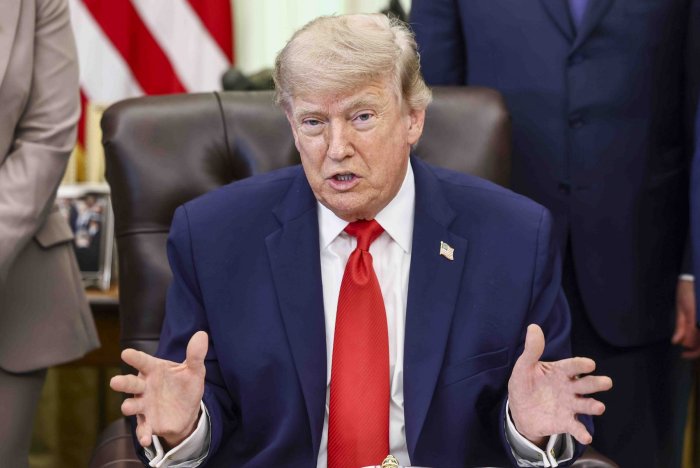
President Donald Trump speaks to reporters about restoring commercial fishing access to areas of the Pacific during a signing ceremony in the Oval Office of the White House on Thursday. Photo by Jim Lo Scalzo/UPI | License Photo

Source link

UK court jails Palestine Action activists on ‘terrorism’ charges | Israel-Palestine conflict

NewsFeed

A UK court has sentenced four pro-Palestine activists to jail for a raid on an Israeli arms factory near Bristol in 2024. Palestine Action says their aim was to ‘dismantle drones and weaponry’ they believed would be used to kill people in Gaza.

Source link

‘No-one knew how bad it was’ says Katie Price as she opens up on breakdown & unseen ‘dark moments’ in explosive TV doc’

KATIE Price has said that nobody knew just how bad things were for her when she experienced some very ‘dark moments’ in her life.

The TV star, 48, is gearing up for the release of her upcoming tell-all docuseries, Katie Price: Nothing to Hide – in which she will recount her 2018 and 2021 breakdowns.

NINTCHDBPICT000971219330
Katie Price is gearing up for her new tell-all docuseries to drop next month Credit: Dan Charity
Katie Price speaking during an interview.
Katie has opened up about her 2018 breakdown ahead of her new docuseries Credit: YouTube/@WeNeedToTalk-Podcast

Her candid and unfiltered account of three decades in the spotlight is coming to Sky and NOW on July 8.

This week, Katie attended the Sheffield DocFest where she revealed that during her darkest moments and confessed ‘no-one knew how bad it was’, with this set to play out in her new series.

Katie suffered a major mental breakdown in around 2018 following a build-up of traumatic events in her life, she then suffered another in 2021.

She experienced severe depression, suicidal thoughts, and even checked into The Priory amid her breakdown.

WED AGAIN?

Katie Price hints she’ll get married AGAIN after Lee Andrews Dubai jail drama


LEE RIDDLE

First pic of Lee Andrews since jail release REVEALED… as Katie issues threat

Speaking about this at the DocFest event ahead of her Sky show dropping next month, Katie got candid and confessed: “When I had my breakdown, I don’t think people really knew how bad it was, and how it affected people in my life.

“To hear that my loved ones cried and how much they loved me is like a wake-up call for me.

“There are some really dark moments [in the series] but at the same time, uplifting.

“People have to remember that it’s actually my life, so if you’re exhausted just watching it, imagine how exhausting it is for my little pea brain.

“But I really enjoyed doing it.

“I said they should do 10 parts and they wanted to, but we were lucky to push it to four [episodes].

“There’s still so much you could put in it. Even from what you’re reading today.”

Elsewhere at the event, Katie said: “I’m an open book.

“When [the team] came to me about the documentary, I got excited because something about me and my life is perfect.

“The media narrative is so different to what I’m really like but as you say, every day, even now, there’s always something.

“My life could actually be a soap story – it just doesn’t stop. I’m normal but it’s a weird world I live in. I can’t explain it.”

She also touched on being authentic.

“I have nothing to hide, and when they asked me, ‘are there any areas you don’t want us to go?’, I said, no! You can talk to absolutely anyone you want and you can talk to me about anything you want,” she confessed.

“Luckily the duty of care was amazing. Sometimes after two hours [of interviews], I couldn’t do any more.

“There are moments where I’ve had therapy to get over some of the things in my life, and I had to relive them.

“But I think this is what makes a good show, and I love watching documentaries.

“So many people are so manufactured and they’re in on the edits, so they look like a polished turd, basically. I am not that!

“Even I’m cringing at some of the stuff in the first episode! I haven’t had time to reflect on anything in my life because there’s always the next thing, and the next thing.”

Source link

Canada World Cup opener splits Bosnian fans among two ‘home nations’ | World Cup 2026

Thousands of Bosnia fans turned Toronto blue as they marched to the chants of ‘Free Palestine’ in Toronto.

Toronto, Canada — Nadia, a Bosnia and Herzegovina supporter who did not share her surname, stood out in her deep blue shirt as a sea of red-adorned Canada fans swarmed around her outside the Toronto Stadium an hour before kickoff to their FIFA World Cup 2026 opening game.

With the blue and yellow Bosnian flag draped around her, she found herself among the minority of “away” fans on Canadian soil on Thursday, less than two weeks after her team was given a warm welcome to the World Cup cohost nation.

Recommended Stories

list of 4 itemsend of list

It reminded Nadia, an immigrant, of her arrival in Canada in the mid-1990s when her family fled the Bosnian genocide that killed about 100,000 people and displaced more than two million.

“I wish I had space for two hearts so I could properly support both my countries,” Nadia told Al Jazeera when asked about her allegiance as loud roars of the crowd spilled out of the stadium behind her.

Nadia admitted her heart was ultimately with Bosnia, but the Canada cap she sported was a nod to the country that became home when she had to flee hers.
Earlier in the day, thousands of Bosnia supporters turned Toronto into a sea of blue as they marched towards the match venue in the city’s downtown while chanting “Free Palestine” to thunderous claps.

“They [Palestinians] should be free, enough with the wars and genocide,” Nadia said as her eyes welled up with tears. She took a deep breath before adding: “There is so much suffering, especially for the children.”

Cultures blend in Toronto

Dan, a Bosnia supporter in his 40s, was the same age as his primary school-aged son when he fled the genocide in his country.

The father-and-son duo enjoyed the game and soaked in the atmosphere among the 45,000-plus fans at the stadium before heading back slightly upset with the draw.

The day Canada opened its first World Cup became an amalgamation of immigrant Bosnian fans’ identities as they shared high fives and traded jerseys with their opposing numbers.

Every shade of skin colour and a multitude of mother tongues made the stadium and a nearby fan festival a microcosm of Toronto’s reputation as a multicultural hotspot.

The fan festival boasted the full spectrum of football enthusiasts — the hardcore supporters with expert analyses, laced with expletives at missed chances, and those in attendance purely for the vibes.

TORONTO, ONTARIO - JUNE 12: Bosnia and Herzegovina fans arrives before the FIFA World Cup 2026 Group B match between Canada and Bosnia and Herzegovina at Toronto Stadium on June 12, 2026 in Toronto, Ontario. Michael Steele/Getty Images/AFP (Photo by MICHAEL STEELE / GETTY IMAGES NORTH AMERICA / Getty Images via AFP)
Bosnian fans pose before the match [Michael Steele/Getty Images via AFP]

Football aside, several Canadian fans abhorred the immigration policies of their neighbour to the south. They were proud to be known for their hospitality at the 48-nation tournament across North America.

Admir, a travelling Bosnian fan, was full of praise for Canadian hospitality when he arrived from New Jersey.

“Everyone from ordinary people to stadium support staff to restaurant owners have been so accommodating since we got here,” he told Al Jazeera ahead of kickoff.

Compared with the barrage of immigration nightmare stories of World Cup supporters trying to enter the US, his journey to Canada was seamless.

Despite his home state hosting eight World Cup matches, Admir chose to pay an exorbitant price for tickets to see Bosnia, who returned to the World Cup after 12 years following a fairytale qualification.

The sun had drained most fans of their energy after the match, but not Tanya, who drove seven hours from New York to Toronto on Thursday morning.

“The atmosphere at the fan festival was amazing; Toronto has been great.”

“I think our boys played pretty well,” she said of the match. “We didn’t win, but it wasn’t a loss either.”

TORONTO, ONTARIO - JUNE 12: Bosnia and Herzegovina fans cheer in the stands during the FIFA World Cup 2026 Group B match between Canada and Bosnia and Herzegovina at Toronto Stadium on June 12, 2026 in Toronto, Ontario. Michael Steele/Getty Images/AFP (Photo by MICHAEL STEELE / GETTY IMAGES NORTH AMERICA / Getty Images via AFP)
Bosnia fans cheer in the stands during their team’s opening game at the FIFA World Cup 2026 [Michael Steele/Getty Images via AFP]

Source link

USA hit Paraguay for four in dream start to their World Cup campaign | World Cup 2026 News

USA beat Paraguay 4-1 in Los Angeles as each of the three World Cup cohosts have now staged a game in the 2026 edition.

The United States could scarcely have scripted a better start to their World Cup as a Folarin Balogun brace and a Gio Reyna curler fired the cohosts to a 4-1 drubbing of Paraguay in front of Hollywood royalty in Los Angeles.

The hosts took the lead in the tournament’s first game on US soil within seven minutes thanks to an own goal, and by the end of an utterly dominant half, the home fans were in dreamland, their side up by three.

Recommended Stories

list of 4 itemsend of list

Tom Cruise, Leonardo DiCaprio and Paris Hilton were among a sold-out 70,492 crowd as the US – cohosting the tournament with Mexico and Canada – piled wave after wave of attacks on the South Americans, with Reyna polishing off the win late in stoppage time after Mauricio had pulled one back.

The win and emphatic scoreline put the US in a favourable position already to progress from Group D, which also contains Australia and Turkiye.

The night’s only potential sour note was the half-time withdrawal of Christian Pulisic, the US attacking talisman who is carrying the hopes of the nation as they attempt a deep run into the World Cup knockouts for the first time since their quarterfinal appearance in 2002.

Paraguay could not have been more obliging guests from kickoff. In the seventh minute, Weston McKennie picked up the ball in the centre circle and drove upfield, finding Pulisic.

Pulisic darted between two defenders and returned the ball to McKennie, whose pass to striker Balogun was bundled into his own net by a hapless Damian Bobadilla.

The stadium erupted, and a US onslaught began.

The hosts oozed confidence. Both McKennie and Tillman played backheel through balls into the area, while captain Tim Ream sprayed out passes from the heart of defence.

US midfielder #07 Giovanni Reyna (R) scores his team's fourth goal during the 2026 World Cup Group D football match
USA midfielder Giovanni Reyna scores his team’s fourth goal [Valerie Macon/AFP]

Balogun had a goal ruled out in the 28th minute. He had strayed offside, as had Pulisic in the buildup.

But the Monaco striker had the ball in the net again three minutes later, thanks to a superb ball down the left flank by Antonee Robinson to Pulisic, whose cross to Balogun took a slight fortuitous deflection.

The US added a third on the cusp of half-time. Tillman found Balogun down the right, who evaded Omar Alderete’s challenge, skipped inside Gustavo Gomez and curled his shot perfectly into the top left corner.

It could have been four or five, with Chris Richards – returning from injury – flashing a header barely an inch wide. The US had 75 percent possession in the first half.

Now, without the dangerous Pulisic, the hosts sat back slightly in the second half.

Paraguay finally offered a threat. Their dangerous forward Julio Enciso, who started despite a hamstring injury, picked up the ball on the edge of the area and fed in Brazil-born substitute Mauricio, who pulled one back.

Reyna scored a superb fourth with the outside of his right foot that curled just inside the far post.

The game had been preceded by a Tinseltown-style opening ceremony. Katy Perry delivered the headline performance, accompanied by singers Future, Tyla, Anitta and K-pop singer Lisa.

Performers danced around a giant World Cup trophy beneath enormous “FIFA” letters in the gold favoured by US President Donald Trump – who did not attend, instead wishing the team luck via phone before kickoff.

Source link

Jon Snow ‘living quietly’ out of spotlight months on from making Alzheimer’s documentary

The award-winning journalist takes centre stage one last time in an extraordinary new film made for Channel 4

Former newsreader Jon Snow Is now “living a quieter life” months on from filming a documentary with Channel 4 about having Alzheimer’s disease.

The 78-year-old cancelled a planned appearance on a panel at the Sheffield Documentary festival on Friday which coincided with a screening of Jon Snow : A Last Big Story which shows him navigating life with Alzheimer’s.

The film, which shows the beginnings of his memory fading, actually finished filming last year. Asked how he was now, the Executive Producer Ben de Pear who also worked with Jon for many years on Channel 4 News said: “He has been in Zimbabwe(on holiday) and I spoke to him recently. He was his usual self, he was feisty, funny and really excited about the film coming out. Jon is living a quieter life but I think he is still interested and engaged in the world and still fascinated by people. When he goes to the supermarket he still ends up speaking to people for 20 minutes each.”

On the original plan of him being at the event in person, Ben added: “To be honest some days it is good and he could have been on stage, we could have had a discussion and some days it’s worse. That is the nature of the disease.” He told the audience that Jon “sent his love” before the screening began.

Ben and director, Laura Warner also spoke about the unusual circumstances around making the emotional film and then showing it to Jon and his wife, Dr Precious Lunga.

Laura said she would start each day explaining who she was and what film she was making to make sure Jon was still happy. She added: “Every day we would have to re-consent Jon and he would ask why there were cameras and we would explain.

“He was extremely engaged and leading the story. But there would come a time every day, around about sort of sunset, I think it is called sundowning where Jon would really start to struggle. The cameras went down at that point every day and we would look after him.”

On the final edit, Laura recalled: “Jon and Precious watched it several times in terms of giving it send off. It was really important to Precious that he viewed it by himself the first time, so he wasn’t influenced by her reaction too it or anyone else’s.

“He had a really emotional reaction to it because I think it was the first time he had seen himself with the condition.”

Ben added: “Precious loves the film, she thinks it is really important.”

The film also sees Jon discover a news story whilst on holiday in 2025, which leads an investigation into a Zambian community whose land and water were impacted by a mining disaster.

As the Mirror previously reported, he speaks in the film about his own mortality, and seems happy with the life he has.

Jon says: “A strange old business life. I had a good innings of it. It’s understandable, you can be worried about death, but to be worried about growing older is irrelevant. It’s absurd. How old is older? You’re going to die tomorrow or the next day. Stop worrying and get on with it.”

His wife Precious says of the film: “I want it to be a story of love, laughter, acknowledging that times are hard. I don’t shy away from the fact that it’s hard caring for someone with Alzheimer’s. But we can also be on the lookout for opportunities that would lessen that burden. And yeah we do that by having our little adventures.”

* Jon Snow: A Last Big story will be available to watch and stream on Channel 4 on Sat June 20 at 8pm.

Like this story? For more of the latest showbiz news and gossip, follow Mirror Celebs on TikTok, Snapchat, Instagram, Twitter, Facebook, YouTube and Threads.


Source link

EU agrees launch of accession process for Ukraine and Moldova | European Union News

Progress for Kyiv’s membership bid given the green light after Hungary’s new government lifts Budapest’s veto.

The European Union has announced that the accession process for Ukraine and Moldova will launch next week.

At a meeting in Brussels on Friday, ambassadors from the 27 EU nations agreed to officially recommence negotiations with the two countries in Luxembourg on Monday.

Recommended Stories

list of 3 itemsend of list

EU leaders agreed to open accession talks with Ukraine and Moldova in December 2023. However, negotiations were paused due to opposition from Hungary, led at the time by pro-Russian Prime Minister Viktor Orban, to Kyiv’s membership bid.

Both Kyiv and Chisinau view EU membership as additional security against Russian aggression. Moscow insists that maintaining control over its “near abroad” – its term for the post-Soviet states – is key to its national security.

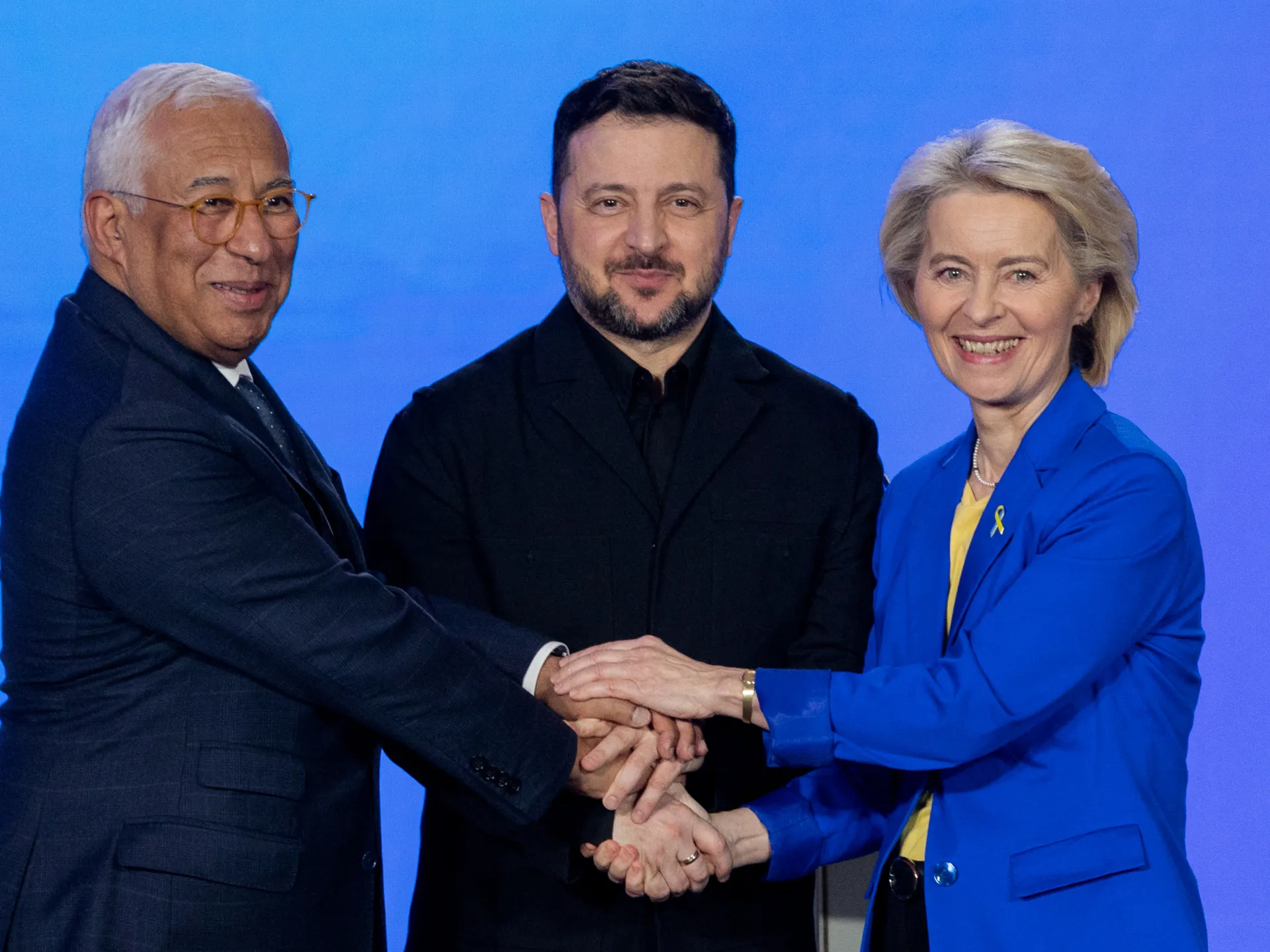
“All member states agreed to open the first accession negotiations cluster with Ukraine and Moldova,” European Council President Antonio Costa and European Commission President Ursula von der Leyen said in a joint social media post.

Hungary’s new government, which took power in May, agreed last week to drop Orban’s veto, allowing the accession process to resume.

“This is a recognition of the determination, courage and hard work shown by both countries in advancing reforms, even in the face of immense challenges,” Costa and von der Leyen said.

“Enlargement is a strategic choice,” they said, adding, “In a world marked by growing uncertainty, a larger European Union is in our common interest.”

Entry negotiations with Kyiv were formally opened in June 2024, kickstarting a complex process that usually takes years and involves negotiations on everything from agriculture to the rule of law.

The move was largely symbolic, intended as a powerful show of support for Ukraine after Russia’s full-scale invasion in 2022.

New Hungarian Prime Minister Peter Magyar struck a deal with Kyiv on the rights of Ukraine’s Hungarian ethnic minority last week. The issue has long been a sticking point between the neighbouring countries.

But Magyar has said Hungary does not support a fast-track procedure for Ukraine to join the EU.

He said Budapest will hold a referendum on Ukraine’s membership, should it “succeed in closing all 33 accession chapters within the next 10 to 15 years”.

Talks will begin on Monday with the opening of the “fundamentals” section of the process, Costa and van der Leyen said in their statement.

This covers basic principles such as rule of law that the two candidate countries will be expected to adhere to.

Source link

Gene Shalit, beloved longtime film critic on the ‘Today’ show, dies

Gene Shalit, the fast-talking funnyman who reviewed films, plays and books for NBC’s “Today” show has died. He was 100.

Shalit’s family confirmed the longtime critic’s death Friday, telling NBC that he “passed away peacefully after 100 years of an amazing life.”

According to a 2010 interview with Guy Ludwig, Shalit’s producer for more than 20 years, Shalit was hired as a contributor at “Today” in 1968. He reviewed books once a month or so, but audiences were so fascinated by his eccentric personality and equally unconventional looks that NBC ramped up the critic’s on-air appearances.

In January 1973, on the same day he was promoted to arts editor, Shalit debuted “Critic’s Corner,” the segment that would ultimately make him a household name. In 2010, Shalit retired as one of the last regular film critics on a major network.

Ludwig referred to Shalit as the “foxy grandpa” of the “Today” show.

Shalit cut his teeth in media as an entertainment columnist for McCall’s magazine, eventually landing the role of senior film critic for Look magazine in 1968 and writing a humor column for Ladies’ Home Journal. His quick wit, punchy puns and unique voice came through even on the page, and NBC took notice.

“No one at NBC had seen him. They’d only read his stuff. So he walked into this executive’s office and the executive took one look at him and said, ‘Mr. Shalit, have you ever thought of radio?’” Ludwig told “Today.”

“They didn’t know how the public would react to someone who looked so different from people who were typically on TV in 1967.”

On “Critics Corner,” Shalit favored humor over the highfalutin. He was an everyman’s critic. Of 1997’s action-thriller “Face/Off,” he said, “Now, ‘Face/Off’ is a literal title, because both of their faces are taken off. Then each face is put onto the other’s head. Even their voices are switched with microchip implants. In other words, this is an entirely reasonable, rational movie!”

“Many critics will give so much of the plot of a movie away that they destroy the movie for the viewer … I just don’t give away the story,” he told the Associated Press in 1993.

During his tenure, he was known to bust up his colleagues, and “Today” anchors ranging from Edwin Newman, Barbara Walters and Jane Pauley to Tom Brokaw, Bryant Gumbel, Katie Couric, Al Roker and Meredith Vieira.

But not everyone appreciated Shalit’s style. In 1989, a leaked in-house memo from “Today” show co-host Bryant Gumbel to Marty Ryan, the former executive producer of the NBC program, complained that Shalit’s film reviews “are often late and his interviews aren’t very good.”

Eugene Shalit was born March 25, 1926, in New York City and grew up in Morristown, N.J. He launched his elementary school’s first newspaper, “The Spotlight,” and purchased a fedora to seal his fate as a journalist. In Morristown High School he wrote the school newspaper’s humor column “The Broadcaster.” In 1949, he graduated from the University of Illinois at Urbana-Champaign.

Shalit was married to Nancy Lewis for 28 years until her death in 1978 and never remarried. The couple had six children: Peter, Willa, Emily, Amanda, Nevin and Andrew. Emily died from ovarian cancer in 2012.

Source link

Thomas Partey denied entry into Canada, will miss Ghana’s World Cup opener | World Cup 2026 News

Partey’s visa was denied due to the multiple charges of rape he faces in the United Kingdom.

Ghana midfielder Thomas Partey will not play in his team’s World Cup opener after Canada denied his visa application while he awaits trial on multiple charges of rape in the United Kingdom.

FIFA said on Friday in a statement that the 32-year-old Partey won’t be able to travel from his team’s base camp in Smithfield, Rhode Island, for Ghana’s opening match with Panama in Toronto on Wednesday.

“His visa application has been refused by the Canadian government,” the governing body of world football said.

“FIFA is not involved in the immigration processes of host countries, including the adjudication of visas. As with previous FIFA events, the host government ultimately determines who receives a visa and is admitted into the country.”

Immigration, Refugees and Citizenship Canada (IRCC) said in a statement that every person wanting to come to Canada is assessed individually “based on the facts available and the law that applies”.

“Canada is proud to be a host country for the 2026 FIFA World Cup and is working to facilitate a successful event while maintaining the safety and security of Canadians,” the IRCC said in the statement.

“Canada has been consistent that hosting major events does not change Canada’s immigration laws.”

Partey was travelling back to Ghana’s base camp in Rhode Island after his visa denial. He will be able to play on June 23 when Ghana play England in Foxborough, Massachusetts. Ghana conclude group play on June 27 against Croatia in Philadelphia.

Partey is scheduled to stand trial in November or later on allegations dating to his time with English club Arsenal from 2020-25. Partey, who now plays in Spain for Villarreal, has pleaded not guilty.

A second World Cup player, Morocco defender Achraf Hakimi, is awaiting trial on similar charges in Paris.

Ghana are making their fifth appearance in the last six World Cups.

Source link

India to fast-track Production of Ebola Vaccines 

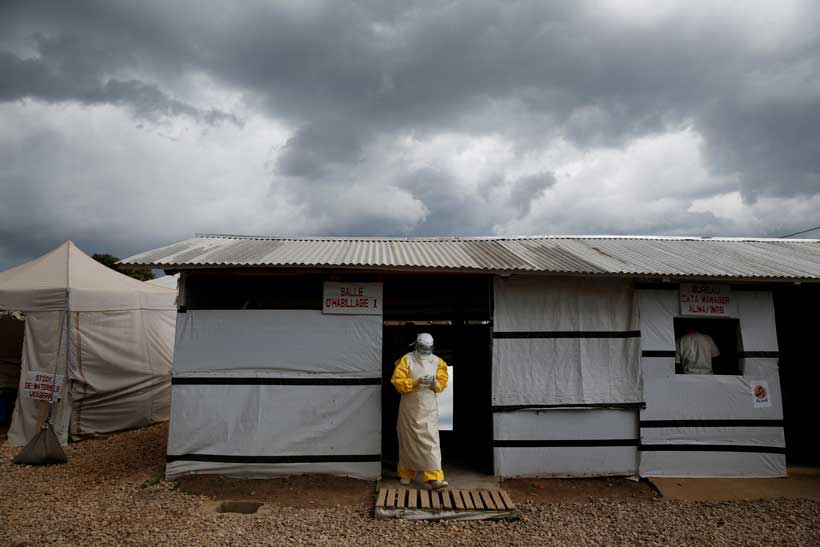
Supported by the World Health Organization and Africa CDC, India has taken on the urgent and unique task to engage in the production of a vaccine for the Ebola virus, the deadly disease that broke out in the Democratic Republic of Congo in mid-May 2026. Following the Ebola infection cases, many countries have broader steps to reinforce disease surveillance and strict border control mechanisms amid rising regional risks, especially in the Central African region.

WHO declared, in May, the outbreak a ‘public health emergency’ of international concern, underscoring the need for monitoring measures of cross-border human movements and the possibility to control transmission. Many countries have adopted and reviewed screening procedures and coordination designed to detect and contain any suspected cases.

The Serum Institute of India (SII) is partnering with the University of Oxford and CEPI to develop a new vaccine candidate targeting the Bundibugyo strain of the Ebola virus. Because no approved vaccines currently exist for this specific strain, the SII is fast-tracking production using the viral vector platform. 

Fast-Tracked Vaccine Development

The Target: The vaccine candidate (ChAdOx1 BDBV) is designed to prevent the rare Bundibugyo ebolavirus, which is currently causing outbreaks in Central Africa.

The Technology: It utilizes the same viral vector platform used for the Oxford/AstraZeneca COVID-19 vaccine, allowing for rapid scaling and manufacturing once the clinical-grade material is ready. 

Timeline: The World Health Organization (WHO) has fast-tracked the assessment process, with clinical-grade doses expected to be available for trial testing. 

Indian Preparedness & Protocols

Zero Active Cases: India has not reported any active cases of the Ebola virus.

Preventive Measures: Indian health authorities and airports have placed specialized facilities on high alert. This includes preventive screening and isolation protocols for any suspected cases or individuals traveling from affected regions like the Democratic Republic of Congo and Uganda.

Global efforts accelerate vaccine development.

Scientists and vaccine manufacturers are now racing to design, test, manufacture, and deploy vaccines that could help prevent this outbreak from persisting for several years, as previous outbreaks have. Medical experts across the world maintain that the Ebola epidemic is a global threat. 

Director-General Tedros Adhanom Ghebreyesus flew to the DRC and visited the province of Ituri. After the visit, he said, “A Bundibugyo vaccine could help to control this epidemic and strengthen preparedness for future outbreaks.”

Notwithstanding the challenges, Ghebreyesus expressed confidence and optimism that the outbreak would be stopped. Africa Centres for Disease Control and Prevention director general Jean Kaseya later confirmed that the vaccines will be manufactured by the Serum Institute of India, underscoring the growing confidence to ensure health sovereignty and to contain further spread of Ebola.

Different virus, different challenge

Since the outbreak, over 1500 suspected cases and 650 deaths have been reported in the Democratic Republic of the Congo (DRC) and Uganda. According to medical reports, this newest outbreak is being caused by the Bundibugyo virus, a more recently discovered species that is less lethal than Zaire but has no approved vaccines or treatments. With the majority of cases impacting the DRC, this marks the country’s 17th Ebola outbreak since the discovery of the virus on the Ebola River in 1976. 

Despite the huge untapped resources, the world’s deadliest and most complex humanitarian crises have been unfolding for decades in the Democratic Republic of the Congo, located in central Africa.

Source link

DGA’s board throws support behind tentative contract with major studios

The Directors Guild of America’s national board on Friday unanimously recommended its membership vote in favor of a four-year contract with the major studios that would increase wages, boost contributions to its health plan and establish guardrails surrounding AI technology.

“We entered this negotiation with three main priorities: secure our Health Plan, protect jobs, and ensure that our members remain secure as AI continues to impact our industry,” DGA President Christopher Nolan said in a statement. “We succeeded in these areas and gained in many others.”

Under the proposed contract, major studios would increase their contributions to the DGA’s health plan by 24.4% over four years, the largest since the plan was founded. In return, the DGA would recommend changes to its plan’s trustees including “modest” increases to the eligibility threshold and annual premiums, the DGA said on Friday.

The contract also increases minimum salaries for most jobs by 2.5% in the first year and up 3% for each of the following years in the agreement. Directors of network non-prime time strip dramatic programs will see their minimum salaries increase 2.5% for each year under the agreement.

The union, which represents more than 19,500 directors and members of directorial teams in areas such as film, commercials and news, said the agreement helps the union’s push for a federal production incentive. Hollywood creatives believe such a benefit could prevent U.S. entertainment jobs from moving overseas where production costs can be significantly lower. The proposed agreement secures a commitment that most senior management at the major studios represented by the Alliance of Motion Picture and Television Producers “would engage in meaningful advocacy for a federal production incentive above and beyond the ongoing lobbying efforts of the Motion Picture Association,” according to the DGA.

The contract also adds more guardrails to AI technology, including treating footage created by artificial intelligence as the same as footage shot by a camera, meaning it will still be under the director’s control, according to the DGA. Major studios will also be required to notify the DGA if an employer decides to license a director’s work to train a generative AI system to create new work, the union said. The agreement also establishes an employer-funded program to enhance directors’ AI skills.

“With these gains, a four-year Agreement was both appropriate and necessary to provide stability and potential for growth at a moment when the industry has been experiencing contraction,” Nolan said in a note to members on Friday.

DGA and AMPTP reached the tentative contract earlier this week. At that time, AMPTP said “we appreciate the hard work and commitment of our guild partners in achieving a fair deal that helps advance a stable and successful entertainment industry.”

DGA members will have until June 25 at 5 p.m. to vote on the plan. If approved, the contract would go into effect July 1 and run through June 30, 2030.

Source link

South Korea turns master workers’ know-how into AI data

Trade, Industry and Resources Minister Kim Jung-kwan addresses the first general congress of the Manufacturing AX Alliance at the headquarters of the Korea Chamber of Commerce and Industry in Seoul, South Korea. The government-led alliance groups businesses and organizations working for the artificial intelligence transformation of manufacturing industries. Photo by YONHAP / EPA

June 12 (Asia Today) — South Korea’s Trade Ministry is accelerating a project to convert master workers’ tacit manufacturing knowledge into artificial intelligence data as the country seeks to preserve industrial skills threatened by aging and labor shortages.

Tacit knowledge refers to experience and know-how that skilled workers often use without writing it down. In manufacturing, it can include judgment used in process optimization, quality control, welding, equipment checks and other work that depends on years of experience.

The Ministry of Trade, Industry and Energy held the fourth M.AX conference Friday at the Korea Chamber of Commerce and Industry in central Seoul. The conference focused on development and cooperation strategies for using master workers’ tacit knowledge in manufacturing AI transformation.

Officials and experts discussed how to build AI systems that can capture knowledge from industrial sites and how labor and management can cooperate in the process.

The ministry said skilled manufacturing experience is becoming a core asset in the AI era. Officials warned that if the know-how of retiring workers is lost, companies could face weaker process control, lower quality management and reduced manufacturing competitiveness.

The government is using 48 billion won, or about $31.2 million, from this year’s supplementary budget to support pilot projects for 30 manufacturing processes. The projects will build tacit knowledge datasets and develop AI models.

The ministry plans to prioritize processes with high safety risks or severe labor shortages. AI models developed through the project are also expected to be used to train new workers.

The conference included examples of AI already being applied in manufacturing. Sungwon, a stainless steel pipe maker, said it is using AI in welding work where skilled workers previously relied on visual judgment to support operators’ decision-making.

Participants said the project’s success will require data standardization, verification systems, proper compensation for workers who share their knowledge and sufficient communication with employees before implementation.

Some participants also proposed creating an advisory group of national quality masters so the project can better reflect expertise from actual manufacturing sites.

Kim Sung-yeol, head of the ministry’s industrial growth office, said the project is designed to protect South Korea’s manufacturing base.

“This project is about protecting manufacturing and manufacturing sites, which are among our core assets,” Kim said. “Because it is a project to preserve and transfer the tacit knowledge of master workers, we will do our best to help solve difficulties at manufacturing sites.”

— Reported by Asia Today; translated by UPI

© Asia Today. Unauthorized reproduction or redistribution prohibited.

Original Korean report: https://www.asiatoday.co.kr/kn/view.php?key=20260612010004392

Source link

The Republican Party’s Trump Problem: Why Some Conservatives Are Getting Ready for Life After Him

By June 2026, the cracks inside the GOP weren’t hidden anymore. On May 19, the Senate voted 50–47 to push forward a bipartisan war powers resolution that would limit President Donald Trump’s ability to keep military ops going against Iran. Four Republican senators crossed the aisle and voted with Democrats. Then on June 3, the House went even further with a 215–208 vote—four House Republicans joined Democrats in a pretty blunt pushback against Trump’s leadership.

At first it looked like just another fight over war powers and Congress doing its job. But it feels like something bigger: the start of a real tug-of-war over what the Republican Party is going to be once Trump isn’t the center of everything.

For almost ten years now, Republican politics has been all about Trump. You rose if you stood with him, and you got sidelined if you didn’t. Loyalty often counted more than old-school conservative ideas, passing bills, or sticking to principles. But every party eventually has to answer the tough question that personality-driven movements hate: what happens when the big guy starts looking more like a problem than a winner? That question is getting harder for Republicans to dodge.

Trump didn’t just take over the party in 2016 — he remade it. The old Republican worldview of strong alliances, free trade, and steady leadership shifted toward a more populist, Trump-centered style.

It worked for a while. He won elections, fired up voters who felt ignored, and built a super-loyal base. As long as the wins kept coming, most Republicans went along. Parties get tested in the tough times, though — not the good ones. And the Iran conflict is turning into exactly that kind of test.

A lot of Republicans who backed Trump’s rise never thought they’d end up defending another big Middle East war. Trump made “no more endless wars” one of his best lines—slamming both parties for the messes in Iraq and Afghanistan.

Now the fighting with Iran has dragged on for months. Costs are adding up, gas prices sting at the pump, and nobody’s really clear on what “winning” would even mean. That’s created real quiet discomfort inside the party. The senators and reps who voted to rein in Trump’s war powers weren’t just talking procedure. They were signaling that blind loyalty isn’t automatic anymore.

Parties talk a lot about ideology, but when things get serious, survival often wins out. Some Republicans are starting to put distance between themselves and Trump — not because they hate everything he stands for, but because they don’t want their own careers sinking with one person. There’s a real difference between backing conservative policies and handing the whole party over to a single leader. More of them seem to be waking up to that.

What’s interesting is that the pushback is coming from inside the tent. Democrats opposing Trump is old news. When Republicans do it, it hits different. Senators like Rand Paul, Susan Collins, Lisa Murkowski, and Bill Cassidy broke ranks on the Senate vote. In the House, guys like Thomas Massie, Brian Fitzpatrick, Tom Barrett, and Warren Davidson did the same. These are still small numbers. But big shifts often start small.

The bigger story might be that some Republicans are finally imagining a future without Trump dominating every headline. A younger crop is coming up—they agree with him on immigration, trade, and culture wars, but they don’t want the party to be defined only by personal loyalty to him forever. They want a Republican Party that can keep going after he’s gone—Trumpism as one important piece, not the whole thing.

History shows parties sometimes tie themselves too tightly to charismatic leaders. Sometimes it revitalizes them. Sometimes it drags them down.

Right now, some inside the GOP worry Trump might be moving from asset to liability—especially with the Iran war dragging on and polarization getting worse. Trump is still the biggest force in the party with a rock-solid base. But power and lasting control aren’t the same.

These congressional votes show that at least some Republicans are already looking ahead to the next chapter. They see the risks of hitching the whole party’s future to one man. Whether they’re right or wrong, time will tell. But the conversation inside the party has clearly moved past just Iran or war powers. It’s now about whether the Republican Party still belongs to Trump — or whether it can finally start belonging to itself again.

Source link

TikTok star Becki Jones reveals what she REALLY eats in a day at all inclusive hotel as she shows off 10st weight loss

TIKTOK star Becki Jones has revealed what she REALLY eats in a day on holiday at an all inclusive hotel.

Showing off her 10 stone weight loss in Tunisia, Becki, 32, could be seen eating yummy food and enjoying herself following the news of her engagement.

TikTok star Becki Jones is currently on an all inclusive holiday Credit: Tiktok/beckijones4
She has been tucking into some yummy food while on holiday Credit: Tiktok/beckijones4

Becki, who has denied having used fat jabs or having surgery to shed the weight in around six months, began her day with some scrambled eggs and one slice of toast.

The slimmed down star then looked at the yummy cakes and pastries before opting for a bowl of yogurt with jam on top of it, a sprinkling of cereal and a tiny cupcake.

After breakfast, Becki headed outside and enjoyed a carton of apple juice.

She later sipped a fruity cocktail, which looked as though it had the consistency of a smoothie.

star’s joy

TikTok’s Becki Jones engaged to convicted con boyfriend after beachside proposal


WEIGHING IN

Sad truth behind Becki Jones’ weight loss after hols snaps as fans turn on her

Becki is keeping her fans informed with what she’s eating while abroad Credit: Tiktok/beckijones4
She is seemingly being mindful with her portions following her speedy 10st weight loss Credit: Tiktok/beckijones4
Becki looks so different since slimming down Credit: Instagram
She has lost over 10 stone in around six months Credit: TikTok

Becki and her husband-to-be then looked at some of the food that was on offer on the beach.

Sitting down, Becki then zoomed into what was on her partner’s plate, which was fries and chicken nuggets, though it is not known if Becki ate anything.

Later on in the day, Becki ate a bowl of food that looked like minced beef, coleslaw, fries and some baguette without any butter.

She then headed outside again and enjoyed a yummy frozen cocktail.

Lounging beneath the sunshine, Becki opted for an ice cream which was in the flavour of ‘berries and cream’.

Back in her room, Becki had showered as she tucked into a packet of savoury snacks with some water.

Heading out again, Becki had a wander around before sitting down to eat two chunky spring rolls with a chilli dip.

She then ate what looked like mashed potatoes with a chicken kiev and broccoli.

Becki then enjoyed what looked like a creamy risotto dish before tucking into a berry-flavoured cake for dessert.

One fan commented on the post: “That risotto looked lush not gonna lie.”

While another said: “Great day of food!!! Looks so yum!”

This comes after Becki confirmed that her partner Chris Beattie had popped the question to her during a dreamy beachside proposal on their holiday.

Becki took to Instagram to share the moment that Chris got down on one knee to pop the question to the TikTok legend.

“We’ve been keeping a secret. I said yes. My fiancé, my Chrissy. What a surprise!!

“I was shocked, emotional, nervous laughing and we’ve been in a little bubble since Monday,” she penned online.

“You’ve not only shown me love but you’ve shown me kindness, respect and what it feels like to be treated like a princess.

“This was so special, romantic and the best kept secret.

“I love you Chrissy so so so much.

“Here’s to the future and making more memories.”

Source link

South Korea exhibit traces 80 years of art ties with Japan

The San Francisco Museum of Modern Art (SFMOMA) presents the work of the late Nam June Paik, Korean American artist, who is considered to be the founder of video art, during a press preview of his first-ever retrospective exhibition in San Francisco, California. Photo by JOHN G. MABANGLO / EPA

June 12 (Asia Today) — Nam June Paik connected Seoul, Tokyo and New York by satellite in 1986.

His project, “Bye Bye Kipling,” brought Korean traditional dance, American popular music and Japanese avant-garde art together on one screen in real time. The work directly challenged British writer Rudyard Kipling’s famous line that East and West could never meet, presenting instead the possibility of communication across borders and cultures.

That history of encounter and exchange is at the center of “Road movie: Art between Korea and Japan since 1945,” now on view at the National Museum of Modern and Contemporary Art, Korea, in Gwacheon. The exhibition marks the 60th anniversary of normalized diplomatic relations between South Korea and Japan and traces 80 years of artistic exchange since Korea’s liberation in 1945.

The exhibition features about 200 works by 43 artists and artist teams from both countries. It was jointly organized by the Korean museum and the Yokohama Museum of Art. The show first opened in Yokohama late last year and drew about 37,000 visitors before coming to South Korea.

Featured artists include Nam June Paik, Lee Ufan, Lee Bul, Jung Yeondoo, Koki Tanaka, Jiro Takamatsu and Takashi Murakami, along with other major figures in contemporary Korean and Japanese art.

Paik is one of the central figures in the exhibition. He studied aesthetics and art history in Japan in the 1950s and later built close ties with Japan’s avant-garde art scene. It was there that he met Shigeko Kubota, his lifelong partner and artistic collaborator.

Alongside “Bye Bye Kipling,” the exhibition presents Kubota’s video work “Broken Diary: Korean Trip,” which documents Paik’s return to South Korea after 34 years abroad.

The exhibition, however, does not focus only on well-known artists. Its first section, “In Between: Zainichi Koreans’ Gaze,” examines the lives of Korean artists who remained in Japan after liberation. Cho Yanggyu’s “Sealed Warehouse” depicts a dark, enclosed labor site and reflects both the reality faced by Zainichi Koreans and the wounds left by national division.

The exhibition also explores the growth of artistic exchange after South Korea and Japan normalized diplomatic relations in 1965. Works by Lee Ufan, Park Seo-bo, Yun Hyong-keun, Jiro Takamatsu and Kishio Suga show how artists in the two countries influenced one another as modern art movements developed across borders.

Later works by Masato Nakamura, Takashi Murakami and Lee Bul show how artistic exchange expanded in the 1990s from official institutions to personal networks and collaborative relationships.

Lee Bul’s “Cyborg W5” presents a futuristic but incomplete body, questioning boundaries between humans and machines and between male and female identities. The work reflects the shared concerns about technology and identity that shaped Korean and Japanese contemporary art after the 1990s.

The exhibition’s final section shifts from past exchange to present-day solidarity. Koki Tanaka’s “Vulnerable Histories: A Road Movie” links the massacre of Koreans after the 1923 Great Kanto Earthquake to more recent anti-Korean demonstrations in Japan, asking viewers to consider histories of discrimination and exclusion.

Jung Yeondoo’s “Magician’s Walk” reflects on landscapes after the 2011 Great East Japan Earthquake and explores the possibility of empathy and solidarity with the suffering of others.

The exhibition also extends to the museum’s outdoor sculpture park in Gwacheon. Six sculptures by Korean artists based in Japan and Japanese artists, including Duckjun Kwak, Quac Insik and Lee Ufan, highlight the museum’s role as an important site of Korean-Japanese artistic exchange.

Kim Sung-hee, director of the National Museum of Modern and Contemporary Art, Korea, said the exhibition revisits “historical moments experienced by the two countries and the traces of artistic exchange formed within them.”

Kim said she hopes the exhibition will offer visitors a chance to rediscover “the status and possibilities of Korean and Japanese contemporary art.”

The exhibition runs through Sept. 27.

— Reported by Asia Today; translated by UPI

© Asia Today. Unauthorized reproduction or redistribution prohibited.

Original Korean report: https://www.asiatoday.co.kr/kn/view.php?key=20260612010003954

Source link

Venezuelan Armed Forces Launch Operation to Dislodge Illegal Miners from Gold-Rich Southeast

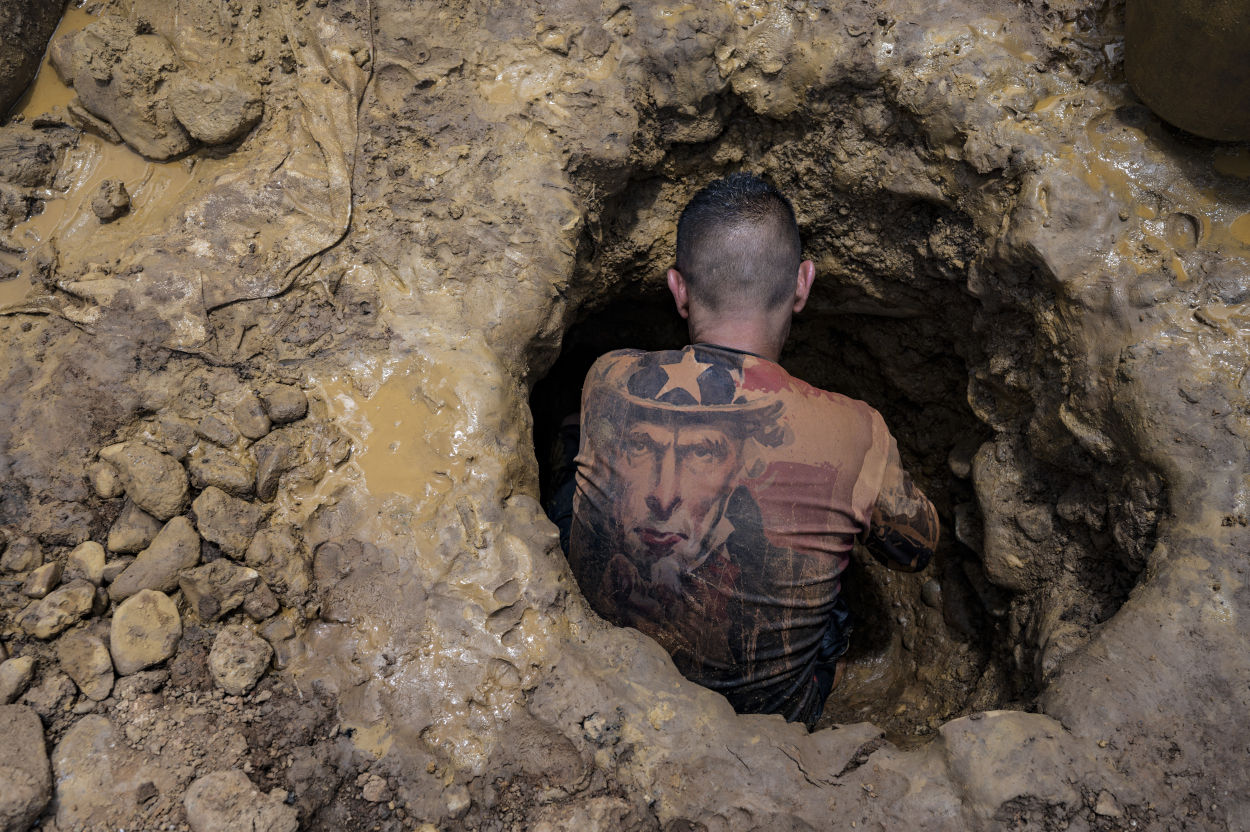
An artisanal miner in Bolívar state with an “Uncle Sam” t-shirt. (AFP)

Caracas, June 12, 2026 (venezuelanalysis.com) – Venezuela’s Bolivarian National Armed Forces (FANB) have launched a large-scale operation on Tuesday in Bolívar state, one of the country’s main mineral-rich regions in the southeast and also one with a heavy presence of criminal organizations.

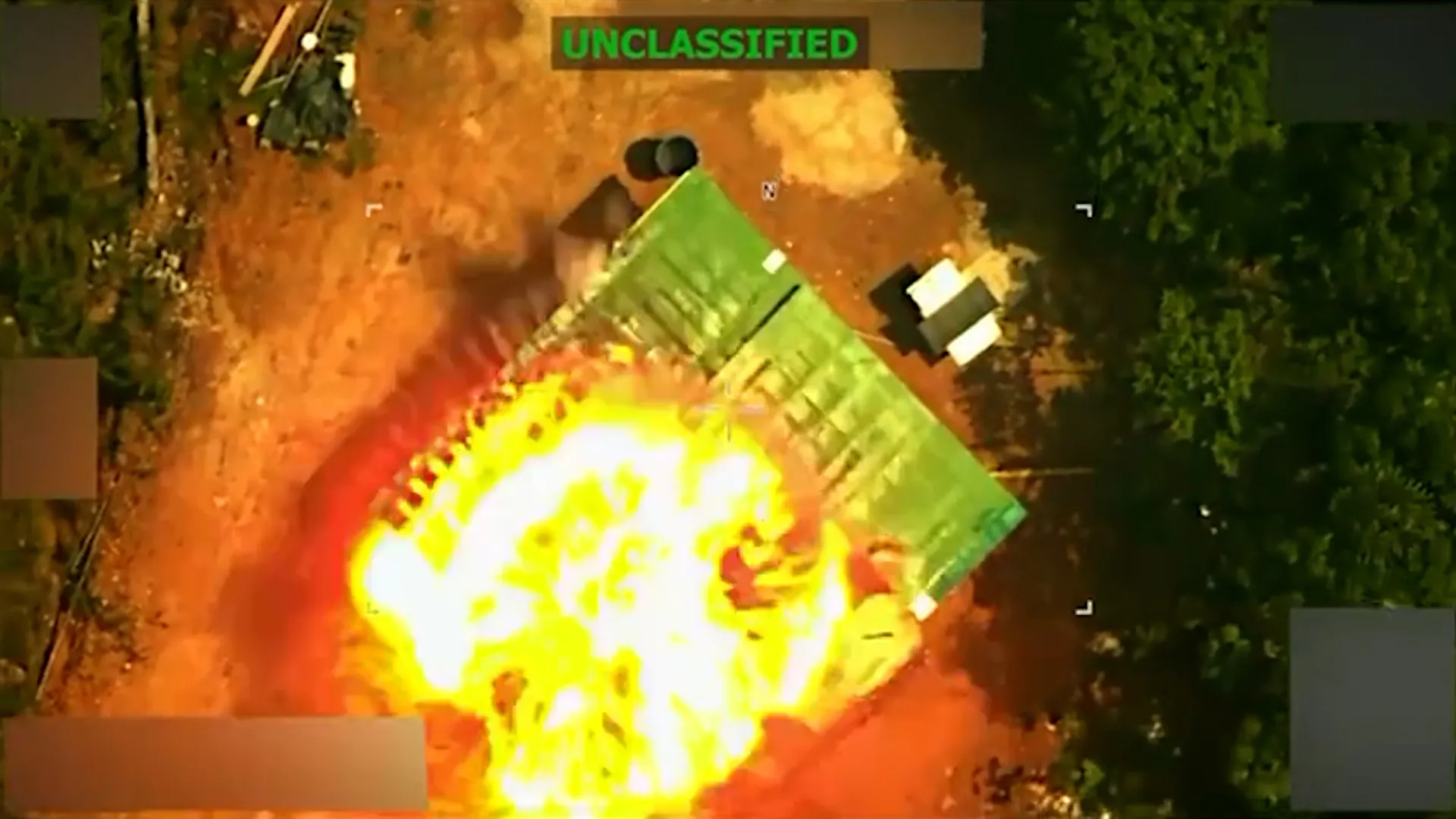
Local media outlets and non-governmental organizations reported helicopter overflights, explosions, and the displacements of hundreds of people leaving gold extraction zones in Las Claritas and the area known as Kilometer 88, two key locations within the Orinoco Mining Arc.

According to Bloomberg, the military actions targeted illegal mining operations controlled by armed groups. Former opposition lawmaker for Bolívar state Américo De Grazia claimed that military forces attacked several gold-mining enclaves through aerial bombardments and gunfire.

The Venezuelan government, led by acting President Delcy Rodríguez, and the armed forces have offered no official information regarding the operations, as well as casualties, arrests, or official goals. Rodríguez met with military leaders on Wednesday to discuss a “100-Day Plan” to optimize the functioning of the armed forces but did not comment on the reported Bolívar deployment.

The operation took place in a region where the state has struggled to assert authority in the face of a proliferation of armed groups that control and administer mines, run artisanal mining activities, and regulate economic activity linked to gold extraction.

At the same time, local reports indicated that the military operation could be aimed at capturing Yohan José Romero, known as “Yohan Petrica,” a founding member of the Tren de Aragua criminal outfit, who reportedly operates in the area alongside Juan Gabriel Rivas Núñez, alias “El Negro Juancho,” and a third figure known as “Humbertico.”

Some sources have also not ruled out the presence of Héctor Guerrero, alias “Niño Guerrero,” the top leader of the large-scale criminal group that emerged inside Tocorón prison in Aragua state.

In September 2023, the Venezuelan government deployed “Operation Gran Cacique Guaicaipuro,” with more than 11,000 security personnel, to intervene in Tocorón prison. However, multiple reports indicated that “Niño Guerrero” and other senior gang leaders were warned in advance and escaped through a network of secret tunnels.

Guerrero is currently the subject of an Interpol Red Notice on charges related to transnational organized crime, drug trafficking, money laundering, and arms trafficking. The US State Department is offering a reward of up to US $5 million for information leading to his capture.

For its part, the media platform Miraflores al Momento denied separate reports alleging the presence of US military contingents in El Callao, another major gold-mining area in Bolívar state. Likewise, fact-checking outlets Cazadores de Fake News and CotejoInfo confirmed that images circulating were generated by artificial intelligence.

However, local outlets confirmed that, though without any military presence, US officials and business executives have conducted visits to gold-processing facilities belonging to the state-owned Venezuelan Mining Corporation (Minerven) in El Callao.

Last April, Venezuela approved a new mining law granting expanded incentives for private corporations to exploit gold and other “strategic minerals.” Concessions will last up to 30 years and may be renewed for two additional ten-year periods. The new law 

The legislation additionally introduced provisions for international arbitration in dispute resolution, a safeguard sought by investors, and a reduction of royalties and taxes at the Venezuelan government’s discretion.

Among the companies expressing interest are Canadian firms Gold Reserve and Augusta Capital Corporation, which seek to revive the large-scale gold and strategic minerals project known as “Siembra Minera.” Likewise, Roland Mineral Enterprises Corp. has already begun procedures to explore and develop gold, copper, and silver deposits. Swiss commodities giant Trafigura is also advancing a responsible sourcing program in partnership with state-owned Minerven.

There have additionally been corporate initiatives and feasibility studies by US companies—including mining firms such as Hartree, Peabody Energy, Ivanhoe, and TechMet—to enter the sector, though security concerns reportedly remain an obstacle.

Mining municipalities in southern Venezuela report some of the country’s highest rates of homicide, as well as reports of forced labor and widespread sexual violence. The gold extracting activities are mostly unregulated. According to former opposition lawmaker Américo De Grazia, only the gold processed by Minerven enters official records, while the rest circulates through parallel channels.

Similarly, Transparency Venezuela estimates that just 14 percent of the revenues generated by the gold sector reach the Central Bank and public coffers through royalties and export-related payments.

Edited by Ricardo Vaz in Caracas.


Source link

Washington National Opera sues Kennedy Center for $17 million

The Washington National Opera filed a lawsuit on Thursday that demands more than $17 million from the John F. Kennedy Center for the Performing Arts. The opera company claims it is owed millions in donations that have been withheld.

The lawsuit claims that after the opera company and the Kennedy Center parted ways in January, center officials have not returned more than $17 million in gifts and donations that belong to the opera company. The lawsuit lists the federal government as a defendant because the Kennedy Center was established by Congress.

According to the suit, the opera company and the Kennedy Center had a longstanding contract in which WNO produced its operas at the Kennedy Center, which in return, provided a number of services and other support for the opera company including managing its donations.

In late 2025, after approximately 15 years of affiliation, the suit claims that the Kennedy Center stopped performing the obligations of their agreement, which included marketing, fundraising and administrative support, as well as timely reporting on the growth of the opera company’s funds. When the opera company requested the Kennedy Center remedy the issue, center officials asked to sever ties.

“Five months have now passed since the termination of the affiliation, and the Kennedy Center still has not returned the funds to WNO,” reads the suit. “To the contrary, according to the Kennedy Center’s Chief Financial Officer, the Kennedy Center has put a significant portion of WNO’s money at risk by using it to collateralize the Kennedy Center’s line of credit.”

In an emailed statement responding to the lawsuit, Roma Daravi, a spokeswoman for the Kennedy Center, told The Times that the contract between the opera house and the center financially burdened the center for more than a decade. The statement claimed that taking into account the company’s endowment, an external accounting firm calculated that the opera company had “accumulated a $72 million deficit to the center” between 2011 and 2026.

“The Center has acted transparently and in the best interests of the public throughout this process,” the statement reads. “This lawsuit is meritless, and we plan to pursue a countersuit to defend the institution.”

The legal action comes during a tumultuous time for the Kennedy Center. Last year, President Trump fired the board and appointed himself chairman of the Kennedy Center.

In December, President Trump’s name was installed on the exterior of the center the day after his handpicked board of trustees voted to change the institution’s name to the “Trump-Kennedy Center.” Last month, a federal judge ordered President Trump’s name to be removed from the exterior of the building within two weeks and a halt to the Trump administration’s planned two-year closure of the venue.

On Friday, the court-ordered deadline for removing his name sparked widespread interest and crowds gathered outside the center. A live cam was also placed near the structure.

The Times arts editor Jessica Gelt contributed to this report.

Source link