Things seem to be taking their toll on Amanda Owen as she admits to feeling rather ‘stressed’ during an episode of Our Farm Next Door
17:31, 19 Jun 2026Updated 17:32, 19 Jun 2026
Our Farm Next Door returns in trailer for new series
Our Farm Next Door star Amanda Owen appears to feel the heat as she makes a frank admission moments into the show.
In a repeat episode from series three of Our Farm Next Door: Amanda, Clive and Kids, which airs tonight (Friday 19 June), work continues on the farmhouse renovation as builder Richard starts plastering the interior walls and joiner Dan delivers and fits the custom-made doors.
As the project progresses, Amanda begins to feel the strain of the ambitious build, particularly when it comes to making key design choices for the kitchen, which proves to be one of the most challenging parts of the renovation.
Balancing modern practicality with strict historical preservation, Amanda expressed her confusion, admitting she was unsure where things would go.
When asked where she would like a certain socket to be placed, the mother of nine put her hands on her and said: “I don’t know, I’m beginning to start feeling really stressed about this.”
Talking directly to the camera, she then said: “I don’t want to start throwing impossible ideas around. I mean the whole project looked impossible from a start off so I think I’ve done well!”
Broadcast on Channel 4, the spin-off series from Our Yorkshire Farm sees the Owen family undertake the ambitious restoration of a long-abandoned farmhouse in the Yorkshire Dales. The project centres on a centuries-old property known locally as Anty John’s, which has fallen into disrepair after years of neglect.
Set high above Swaledale, the historic building holds a special place in the area’s heritage, and the Owen family is determined to bring it back to life.
Throughout the programme, viewers follow the extensive renovation as builders, family members and local tradespeople work to restore the structure while preserving its original character. From rebuilding walls and repairing roofs to installing modern amenities, the project proves to be both demanding and rewarding.
The show also explores the history of the property itself, with Amanda researching the people who once lived there and uncovering stories that shed light on life in the Dales across generations.
However, away from the building site, the programme continues to document life on the family’s nearby farm, Ravenseat. As ever, farming remains a full-time commitment, with the cameras capturing everything from lambing season to the day-to-day challenges of caring for livestock.
The show arrives as the Owen family enters a new phase, with their children taking on greater responsibilities and becoming more involved in both farming and the renovation project.
Our Farm Next Door: Amanda, Clive and Kids airs tonight at 8pm on More4.
June 19 (UPI) — Global oil prices have fluctuated slightly on Friday, briefly reaching back above the $80 per barrel mark for Brent crude, as the United States and Iran called off further talks in Switzerland.
A stall in talks between the United States and Iran have cast doubt over the preliminary peace agreement reached earlier this week. The oil market has begun reflecting that uncertainty early Friday.
Vice President JD Vance was set to travel to Switzerland to continue into the next phase of negotiations with Iran. Vance’s trip has been postponed while Israel has opened up more strikes on Lebanon.
Part of the agreement between the United States and Iran included an end to military operations in Lebanon.
The Swiss foreign ministry said talks between the United States and Iran will no longer take place on Friday as previously planned. The White House confirmed that Vance will not be traveling to Switzerland, citing logistical issues involving negotiations.
Vance said during a press conference Thursday that Iran will not receive “a single penny from the United States.” He added that Iran will not receive any of the benefits from the preliminary agreement unless “they comply fully and change their behavior.”
Overall oil prices are heading toward a second consecutive week of falling prices. August Brent crude oil, the international benchmark, traded at about $80.23 per barrel on Friday morning. July West Texas Intermediate futures, the U.S. benchmark, traded for about $75.96 per barrel.
Altogether, benchmark crude oil is on pace to be down in price by about 8% for the week.
After falling below $4 per gallon on Thursday, the U.S. national average for premium gas edged down to $3.97 per gallon on Friday. The price of gas remains higher than prior to the start of the Iran war. A year ago, the average price of gas was $3.20 per gallon on average, AAA reports.
President Donald Trump presents a Medal of Honor to Tom Ripley on behalf of his father, John W. Ripley, during a Medal of Honor award ceremony in the East Room of the White House on Thursday. Photo by Aaron Schwartz/UPI | License Photo
Artificial intelligence education now starts at the age of six in China. The Ministry of Education has rolled out new guidelines to teach AI at every grade level. For President Xi Jinping, AI is a priority. Will the toddlers of today be the tech titans of the future?
This is a story from the archives. This originally aired on September 18, 2025. None of the dates, titles or other references from that time have been changed.
Episode credits: This episode was produced by Amy Walters, Sonia Bhagat, Sarí el-Khalili, and Tamara Khandaker, with Phillip Lanos, Spencer Cline, Melanie Marich, Kisaa Zehra, Farhan Rafid, and our host, Malika Bilal. It was edited by Kylene Kiang.
Our sound designer is Alex Roldan. Our video editors are Hisham Abu Salah and Mohannad al-Melhem. Alexandra Locke is The Take’s executive producer.
JUST two weeks ago, Tina O’Brien was waxing lyrical about going on her first solo holiday as she embraced single life for the first time in years.
It turned out to be rather short-lived, though, as yesterday the Corrie star was spotted kissing a hunky new man in the street. Now, insiders tell us why her latest fling – with Irish TikToker Rory Martin – has sparked concern amongst her inner circle, who fear her new beau might have an ulterior motive.
Pals are concerned about the intentions of Tina O’Brien’s new manCredit: Eamonn & James ClarkeRory Martin is thought to have dated Una Healey last yearCredit: Instagram
Our insider said: “Tina was genuinely trying to enjoy some time on her own after her recent split, but she has really fallen for Rory’s Irish charm.
“Rory is no stranger to hanging out with famous women – he was linked to Una Healey last year and has gained a bit of a reputation for being a ladies’ man.
“He loves TikTok fame and will really be enjoying the attention he’ll be getting off the back of dating Tina.
“It’s worrying for her friends, because they don’t want to feel like she is being used.
“Tina is someone who loves love and enjoys being caught up in the whirlwind of it all, and they just don’t want her to rush into anything.”
While her last ex, Adam Fadle, disliked the limelight, Rory, in contrast, is said to be very taken with her high profile.
We’re told Tina now lives in a very well-known area where paps often frequent, so it’s unlikely to have come as a surprise to her that they were photographed.
It’s thought Tina, 42, actually met Rory, 30, through her daughter, 17-year-old Scarlett, who she shares with ex Ryan Thomas.
They are said to have connected through the music world. Rory also dabbles in singing and guitar playing, as well as doing social media.
He also works for the ambulance service – but is believed to be in the call centre rather than working as a paramedic, as his social media would suggest.
Our source continued: “People think Rory is some kind of sexy paramedic, but the reality is much less glamorous.
“He really plays up to it in his social media because he knows his thirst traps in his uniform attract both women and men to him.”
Last June, Rory surprised fans by posting a video of him singing with Saturday’s star Una in a kitchen.
We’re told the pair were casually dating for some time and really enjoyed making music together.
Tina’s new romance comes seven months on from her splitting from her millionaire boyfriend Adam Fadle, whom she met in Cheshire following her move there.
Rory is a rising star and is said to enjoy the limelightCredit: InstagramIt’s thought Tina met Rory through her daughter ScarlettCredit: Getty
The actress, who is known for playing Sarah Platt on the Cobbles, is thought to have been single since her split from millionaire businessman Adam.
At the time, we revealed that it was interior designer Adam who ended things with the star. Rather than being taken with her glam life in the public eye, we’re told it ended up being a huge turn-off for him.
Our insider said: “He was the one who wanted out and ended it. In a brutal swipe, he said it ended up being like something out of a Coronation Street storyline.”
That relationship was hot on the heels of the end of her marriage to personal trainer Adam Crofts. They got together just four months after it ended.
Tina and Adam Crofts were married for six years and share a son, Beau, together.
Tina also, of course, has her daughter from her relationship with her former Corrie co-star Ryan Thomas.
Her romance with Ryan lasted from 2003 to 2009, with the pair’s very public split fraught and involving a number of public spats.
Tina’s marriage to Adam Crofts came to an end in March 2025Credit: SplashShe started dating Adam Fadle just months after splitting from Adam CCredit: Instagram
Most recently, the pair have been navigating their daughter’s burgeoning singing and social media career together.
While Ryan has fully embraced that world, Tina’s had a love-hate relationship with social media over the years, vowing to take a break from Instagram in 2020 after calling the site “toxic” and admitting she felt like a “fraud” trying to present a “filtered version” of her life to gain validation.
But six years on, things are completely different, and she has big plans for the future after signing up to an agency – Alpha Talent Group – which will be helping her land a series of brand partnerships.
While Tina is set to branch out on socials, fans shouldn’t expect to see her all over TikTok, like Scarlett and her dad Ryan and his brothers Adam and Scott Thomas are.
Our source previously explained: “She won’t be doing cringe TikTok trends, but there are some exciting brand deals on the horizon.
“And don’t be surprised if she steps out of her comfort zone and does some reality TV – she did Strictly over a decade ago and feels like she wants the public to see her personality.”
And dating another social media star, who has half a million followers on TikTok, is probably not a bad place to start.
Maine Gov. Janet Mills addresses her counterparts during a convening of the northeastern Governors and Canadian Premiers at the Massachusetts State House to discuss the impacts of President Trump’s tariffs in Boston, on June 16, 2025. Mills has endorsed Democrat Hannah Pingree to succeed her in the governor’s office. File Photo by CJ Gunther/EPA
June 19 (UPI) — Maine election officials announced the results of its ranked-choice primary runoffs Friday, confirming Democrat Hannah Pingree and Republican Bobby Charles as the candidates for the gubernatorial election in November.
Democrat Matt Dunlap, Maine’s state auditor and former secretary of state, advanced to the midterm elections, seeking the 2nd District seat held by Democrat Rep. Jared Golden. Republican and former Gov. Paul LePage will be his opponent.
The 2nd District congressional race has been targeted by the Republican Party as one it believes it could flip in November. President Donald Trump had a 10% edge in the district in the 2024 election.
Maine is one of two states in the United States to do ranked-choice voting for statewide elections. The other is Alaska. Ranked-choice voting is also used in municipalities across the country.
Gov. Janet Mills, a Democrat who has reached her term limit in the office, endorsed Pingree, the Democratic nominee, to succeed her. Former Vice President Kamala Harris won Maine by 7% in 2024.
Pingree is a former speaker of the House in Maine’s state legislature.
Pingree’s opponent, Charles, is a former naval intelligence officer and was the assistant secretary of state for the Bureau of International Narcotics and Law Enforcement Affairs under President George W. Bush. He also served in the White House under the Reagan administration from 1981 to 1983.
President Donald Trump presents a Medal of Honor to Tom Ripley on behalf of his father, John W. Ripley, during a Medal of Honor award ceremony in the East Room of the White House on Thursday. Photo by Aaron Schwartz/UPI | License Photo
Israel and Hezbollah agreed to a ceasefire in Lebanon after escalating violence threatened to derail potential peace talks regarding the ongoing war in Iran. This ceasefire was announced just before 4 p.m. Lebanon time, with a U. S. official confirming that negotiations, facilitated by the U. S. and Qatar with assistance from Iran, had led to this agreement. Both sides indicated they would uphold the ceasefire, with an Israeli official stating that Israel would remain in southern Lebanon but would not engage in conflict unless attacked.
The recent conflict included intense airstrikes that resulted in 18 deaths and injuries to 33 others in Lebanon. Four Israeli soldiers were also killed by Hezbollah. This violence could complicate U. S.-Iran negotiations, as establishing peace in Lebanon is key to a broader agreement. The recent memorandum signed by the presidents of the U. S. and Iran postponed discussions on critical issues like Iran’s nuclear program, granting parties 60 days to agree on a lasting solution or extend the current deal.
Technical talks were planned in Switzerland but were postponed, and officials from both the U. S. and Iran indicated that their respective negotiators would not be attending. Hezbollah lawmakers suggested that further discussions hinge on a complete ceasefire and urged the Lebanese government to reject any negotiations with Israel as long as hostilities continued.
The interim agreement seeks an end to military operations in various regions, including Lebanon, but Israel maintains that it is not a part of these deliberations. The fighting began when Hezbollah fired at Israel, prompting Israeli military responses, including strikes targeting Hezbollah’s positions.
Lebanon’s health ministry confirmed the heavy toll from recent airstrikes, and its President condemned Israel’s actions while emphasizing the commitment to achieve a comprehensive ceasefire. The broader conflict, which originated on February 28 with U. S. and Israeli attacks on Iran, has reportedly resulted in at least 7,000 deaths, primarily in Iran and Lebanon.
Despite the conflict’s impact on oil prices, which had risen due to concerns over regional stability, the signing of the interim deal resulted in a drop in prices as shipping through the Strait of Hormuz resumed. Under the terms of the agreement, Iran will receive economic relief and unfreezing of assets, with negotiators tasked with addressing the status of Iran’s nuclear program and establishing a reconstruction fund within the next 60 days.
In the face of criticism in the U. S., former President Trump defended the deal, arguing that the war had weakened Iran and affirming that the terms would lead to significant concessions from Iran without offering direct financial support.
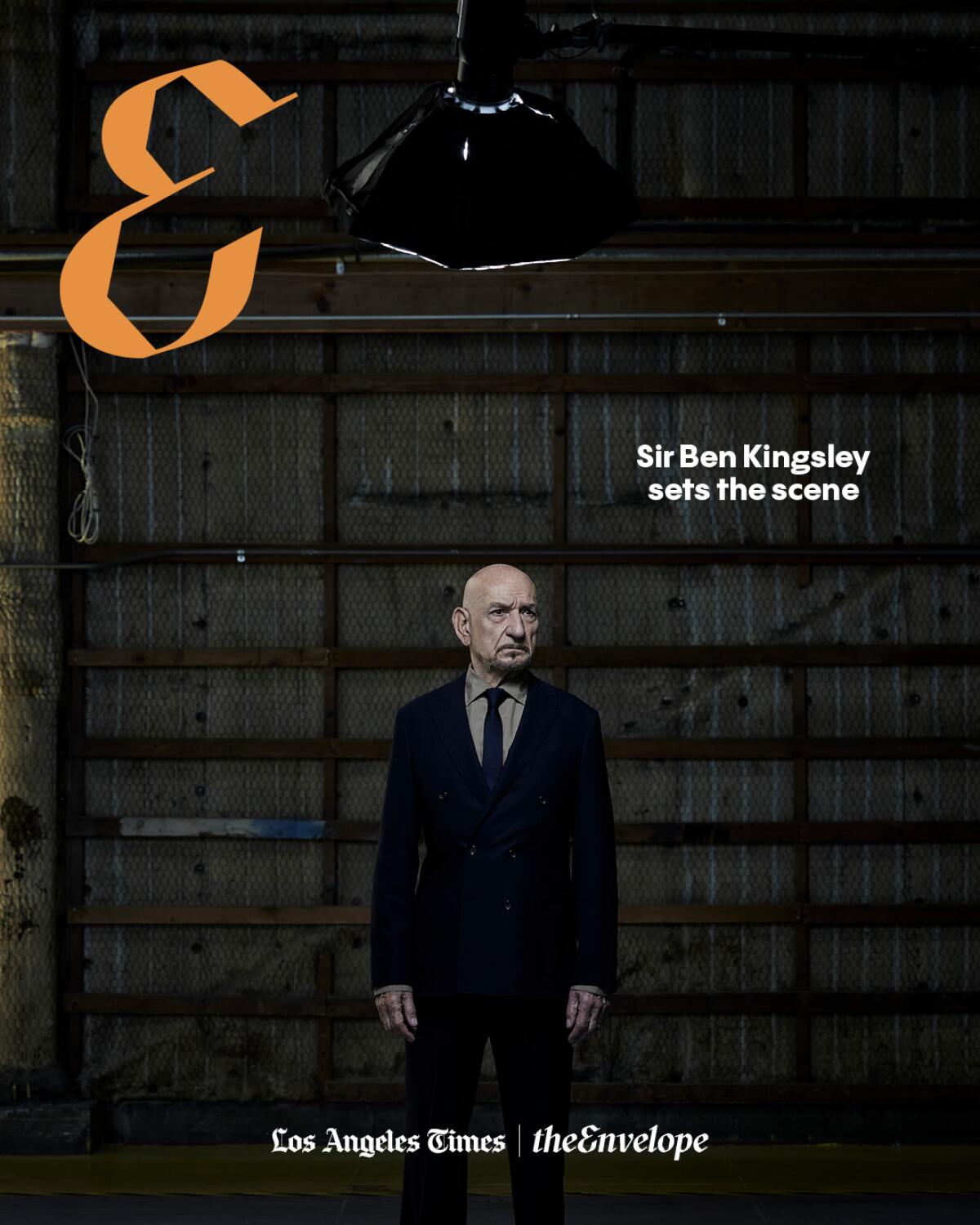
Did Ben Kingsley in “Gandhi” cross your mind? Probably not.
The 82-year-old Oscar winner thinks it should.
I’m Glenn Whipp, columnist for the Los Angeles Times and host of The Envelope newsletter. Don Logan or Mahatma Gandhi? The answer isn’t as plain as you might think.
Sign up for The Envelope
Get exclusive awards season news, in-depth interviews and columnist Glenn Whipp’s must-read analysis straight to your inbox.
By continuing, you agree to our Terms of Service, which include arbitration and a class action waiver. You agree that we and our third-party vendors may collect and use your information, including through cookies, pixels and similar technologies, for the purposes set forth in our Privacy Policy such as personalizing your experience and ads.
Not long ago, I spoke with Kingsley just before an Emmy FYC event for “Wonder Man,” the enjoyable new Marvel TV series that finds him revisiting Trevor Slattery, the washed-up, drug-addled actor he first played in 2013’s “Iron Man 3.”
“Wonder Man” follows struggling actor Simon Williams (Yahya Abdul-Mateen II), trying to land a big break in Hollywood while keeping his superpowers hidden. Trevor befriends Simon. Initially he has ulterior motives, but soon becomes Simon’s mentor, turning the series into a look at the indignities that actors face while pursuing their profession.
Taking notes while watching the show’s eight episodes, I wrote, “Ben Kingsley’s seething anger is everything.”
You may remember Kingsley’s bullying and badgering and swaggering menace playing the underworld sociopath in Jonathan Glazer’s 2000 crime-thriller “Sexy Beast,” still my favorite Kingsley performance, one that earned him a supporting actor Oscar nomination. (He lost to Jim Broadbent in “Iris.”)
Is that kind of boiling rage as fun to play as it is to watch?
“If the expression of rage or indignation is completely dramatically justified and that expression of indignation is of enormous benefit to the tribe, yes,” Kingsley answers.
(Larsen&Talbert / For The Times)
Kingsley says Itzhak Stern, Oskar Schindler’s loyal aide and factory manager in “Schindler’s List,” was, “bless him,” all about “contained rage.”
“And a colleague of mine who saw ‘Gandhi’ said, ‘That’s the angriest performance I’ve ever seen on screen,’” Kingsley continues. “That righteous indignation propelled him, and it can be expressed in many ways. Sometimes the safety valve is efficient enough to allow it to come through language and gesture, and sometimes the safety valve can’t hold it.
“That was Don Logan in ‘Sexy Beast.’ No safety valve.”
Let’s circle back to that thought of how rage can help the “tribe.” In “Wonder Man,” Trevor proclaims that “acting is not a job. It’s a calling, the single most consequential thing anyone could ever do with their life.”
“I would broaden the definition and refine it back to its origins,” Kingsley says when I ask if he shares Trevor’s view on acting. “There are images, thoughts and threads that I find nourishing and sustaining, and I treasure them. The tribal storyteller is a very consequential figure in the tribe, and if the mantle of the tribal storyteller falls upon that person’s shoulders, that is the single most consequential thing that person can do in their lives.”
“Trevor expresses it quite differently, and that’s fine,” Kingsley says. “That’s in the script. I honor the lines. But for me personally, as a rather convoluted answer, the tribal storyteller is the hand I hold and the baton I want passed on to me. Maybe it has. I hope I’m worthy, but it’s …” Kingsley widens his eyes and whispers, “Wow.”
“It is the single most consequential thing I can do with my life.”
Korea Hydro & Nuclear Power CEO Kim Hoe-chun (R4) inspects facilities at Doosan Skoda Power in Plzen on Thursday. He visited the Czech Republic to review progress on a project to build two nuclear reactors in the European country. Photo by KHNP
June 19 (UPI) — Korea Hydro & Nuclear Power, or KHNP, said Thursday that its CEO Kim Hoe-chun has traveled to the Czech Republic to review progress on the construction of two nuclear reactors in the European country.
The state-backed utility noted that Kim took part in a meeting of the Dukovany Steering Committee in Prague alongside South Korea’s Minister of Trade, Industry and Resources Kim Jung-kwan and Czech Deputy Prime Minister Karel Havlicek.
Kim’s visit is timed with the first anniversary of the signing of an $18 billion contract to build two 1,000-megawatt reactors in Dukovany, located around 120 miles southeast of the Czech capital.
Groundbreaking is targeted for 2029, with commercial completion expected by 2037. The South Korean consortium includes such industrial partners as Daewoo E&C and Doosan Enerbility.
The two sides also discussed ways to strengthen bilateral nuclear cooperation, while companies from the two countries signed an engineering support agreement related to the project, according to KHNP.
Kim also toured the manufacturing facilities of Doosan Skoda Power in Plzen, situated roughly 55 miles west of Prague. The Czech turbine manufacturer owned by the Doosan Group is expected to play a key role in the Dukovany program.
“The Dukovany project is a monumental endeavor that symbolizes the strategic partnership between South Korea and the Czech Republic,” Kim said in a statement.
“We will work closely with the Czech government, the project owner, local communities, and Czech companies to make this project a model for the safest and most successful nuclear power plant construction in the world,” he added.
Within this jumbled and often misunderstood narrative, one new capability stands out from the rest that would give the MQ-9 extreme value today and for years to come. This is turning the MQ-9 into a radar-toting airborne early warning (AEW) platform for detecting and tracking aircraft, drones, and missiles. A Reaper in this exact configuration just flew for the first time recently.
MQ-9 outfitted with a STOL kit and AEW pods for shipboard fleet defense. (General Atomics)
The MQ-9 sortie in question was the product of a partnership between General Atomics and Saab, with Saab, already a leader in AEW systems, providing the podded radar system named LoyalEye. This initial test flight took place on May 19th, and a full demonstration of the pairing’s capabilities is planned for next year.
GA-ASI President David R. Alexander stated the following about the MQ-9 AEW capability:
“AEW for MQ-9B will offer critical aloft sensing to defend against tactical air munitions, guided missiles, drones, fighter and bomber aircraft, and other threats. Operational availability for a medium-altitude, long-endurance UAS is the highest of any military aircraft, and as an unmanned platform, its aircrews are not put into harm’s way.”
MQ-9 AEW configured aircraft taking to the air for the first time. (General Atomics) General Atomics
For many years now, I have discussed how the most glaring new mission set for a medium altitude, long-endurance drone is AEW. The idea is relatively simple in concept. Take a cost-effective drone that can fly at medium altitudes for long periods and bolt on some radar pods capable of air moving-target indicator (AMTI) functionality. Then configure the datalinks (both line-of-sight and beyond line-of-sight) aboard the aircraft to send the information the pods collect back to controllers, who also remotely operate the drone and the pods from the ground. Such an unmanned aircraft could fly its missions at relatively low cost, and operate in a distributed manner, near where its surveillance capabilities are needed most. Above all else, it would be able to persist for very long periods of time — think of loitering over its launch location for the better part of a day or more — providing persistent long-range look-down radar surveillance, which has never been more important than it is today.
One-way attack munitions, also known as long-range kamikaze drones, are a massive threat to confront on many levels. These unmanned aerial systems blur the definition between cruise missiles and drones. In this case, cruise missiles are also part of the same problem set. While the question of how to shoot down relatively cheap one-way attack drones cost-effectively gets a lot of attention, just spotting them in order to engage them at all, especially at a distance, is also a challenge. Their small signatures and low-altitude flight profiles, as well as their slow speed, can make it so ground-based sensors don’t detect them until it’s almost too late, and aging airborne sensors also have limitations in doing so.
The moment of one of Russian strikes with Shahed/Geran-type long-range OWA-UAVs in the Ukrainian city of Dnipro on Tuesday.
This is where an advanced look-down airborne radar is critical. It can spot these objects from above at long distances and separate them from the ground clutter. The problem is that airborne early warning and control (AEW&C) manned platforms are hugely expensive, resource intensive, and are the very definition of high-value, low-density assets. Many of them can only operate from longer runways, meaning they can only be based far away from where the threats are. Even then, they are top targets, as we saw earlier this year in Saudi Arabia, and their airfields are prime targets too, which can leave them trapped or destroyed on the ground.
The USAF has a dwindling number of geriatric E-3 Sentry Airborne Warning and Control System (AWACS) aircraft, which, despite upgrades, are not the best at spotting low-flying drones. The USAF is now moving begrudgingly forward with stalled E-7 procurement, but these aircraft are also very complex, expensive, and labor-intensive platforms that need long runways to operate from. The Navy has the E-2D Hawkeye, which is more modern and capable in some regards, and less in others, but is also not available in vast numbers as they have other critical taskings, especially to support carrier air wings. These aircraft are better suited to operate from remote forward airfields, and having a smaller logistical and crew footprint, but still require far more support than an MQ-9. Overall, these crewed aircraft are also increasingly vulnerable to long-range air defenses, and, while their sensor range is generous, it is still limited, making their utility questionable in a peer state conflict.
E-7 is seen as a partial, interim replacement for the aging E-3 fleet. (USAF)
For higher-end missions, where command and control is a major part of what AEW&C platforms will be called upon to do, directing air wars and coordinating defenses, while also supplying networking support, a pod-equipped MQ-9 cannot replace an E-7 or E-2. For providing critical surveillance, especially in areas where there are gaps in crewed AEW&C coverage, or in places that just don’t require that level of support, the AEW-capable MQ-9 is a very attractive solution. Even pushing these uncrewed sensor nodes forward, into higher-threat areas, under certain circumstances, to provide high-fidelity radar coverage where no crewed platform would ever be risked, is a real use case. An MQ-9 is far more expendable than a manned AEW&C asset from human life, cost, and recovery operation requirements (combat search and rescue) perspectives.
The truth of the matter is that even if the E-7 replaces all 15 remaining E-3s, and even if the Navy adds E-2 Hawkeyes, in a future distributed conflict, there is no way these aircraft can give all the coverage needed, persistently, day and night, while providing surveillance for all threatened locales. Not even close. This is especially true as relatively cheap one-way attack drones, such as the Shahed-136, can travel over a thousand miles, drastically expanding potential threat areas at a very low cost to the enemy.
This is where the podded MQ-9 can shine, with a detachment of a few of these aircraft providing persistent coverage (“orbits”) over key areas 24/7 while retaining a small logistical footprint. This would also directly support the USAF’s Agile Combat Employment (ACE) combat doctrine, where small groups of tactical aircraft will move quickly from one forward location to another in hopes of staying ahead of an enemy’s targeting cycle. While that may be the goal, these traveling road-shows of airpower will still need persistent look-down coverage, especially if they are positioned deeply within the enemy’s striking range. AEW&C aircraft will not be able to provide this coverage persistently (if at all). AEW MQ-9s could, and they could drastically increase the situational awareness, range, and overall effectiveness of other key defensive capabilities, such as surface-to-air missile systems and fighter aircraft, with the targeting data they provide.
General Atomics is also turning the MQ-9 family into drone killers themselves with the addition of laser-guided rockets. This could result in ‘hunter-killer’ teaming, where the AEW MQ-9 spots the threat and the laser-guided rocket-equipped MQ-9 intercepts and destroys it. Just the AEW MQ-9 on its own can also use its powerful MTS electro-optical sensor turret to visually identify potential enemy aircraft once they get close enough, allowing for a non-cooperative friend or foe identification capability.
Mojave STOL: Real. Rugged. Ready Today.
You can even look to the recent fighting in the Middle East, which saw Iran barrage allied bases on the Arabian Peninsula with one-way attack munitions and low-end cruise missiles. Reapers with LoyalEye pods could have provided persistent look-down radar coverage over threatened areas, especially as the USAF’s dwindling and rickety AEW&C fleet was overtasked. They could have also created a radar picket line across the Persian Gulf, Gulf of Oman, and eastern Iraq, providing high-fidelity look-down radar coverage and a true early warning screen for Iranian weapons heading towards their target areas, all without putting a crew at risk.
Now, it’s worth noting that the USAF envisions a future where AEW and general AMTI sensing is largely migrated to an orbital layer of satellites, and they are actively working to realize this capability, which would be absolutely revolutionary if fully realized. Yet, as of now, it’s still an if, and it will take years to fully come to fruition. Even then, relying on a space layer alone for this absolutely critical capability would be a huge vulnerability. Backing it up with a lower-end, flexible airborne solution will likely remain critical for a long time to come. AEW MQ-9s can help efficiently fill out a high-low AEW/airborne moving target indicator mix. This is especially true as the platform itself, the MQ-9, can be reconfigured for a huge range of other missions when AEW capabilities are not in high demand, so the USAF isn’t left with a single mission asset.
An MQ-9 seen operating out of Puerto Rico on a counter-narcotics maritime interdiction mission equipped for multi-int collection and kinetic strikes. (Miguel J. Rodriguez Carrillo / AFP via Getty Images)
The AEW MQ-9s can also provide their capabilities here at home. America is dealing with a tough future when it comes to defending the homeland, and providing look-down radar capabilities is a major part of adapting to this reality. Outside of tethered aerostats, which have not proven to be a large-scale workable solution yet, AEW MQ-9s would provide flexible, efficient and persistent capabilities in areas where it may be needed, especially in times of heightened defense, like major public events and during a crisis.
China has invested very heavily in modern AEW platforms. (Chinese Military via Chinesemilitaryreview.com)
The naval side of this is a big deal too. The fact that General Atomics is modifying the MQ-9 family to operate from large deck amphibious assault ships and carriers presents another huge opportunity. It could provide LHA/LHDs with a truly organic fixed-wing AEW asset for the first time — one that doesn’t require large flight crews and that can loiter above the amphibious strike group for very long periods of time. This is becoming more important as enemy missile and drone technology evolves. Having to rely on surface combatants and a small contingent of fighter aircraft, if any at all, for air defense is limiting and can impart extra risk at inopportune times, especially in littoral environments. During a major conflict, these ships could operate too far out to sea to make land-based AEW support plausible and those assets will be over-tasked as it is. AEW MQ-9 seems like a relatively glaring off-the-shelf solution to this problem. It’s also worth noting that the USMC already operates the MQ-9 and integrating it into the shipboard Air Combat Element (ACE) of a Marine Air-Ground Task Force should be relatively straightforward.
Introducing MQ-9B STOL
AEW configured examples could also be extremely useful for the Marines’ Expeditionary Advanced Base Operations (EABO) concept, which mirrors elements of the USAF’s ACE doctrine, but goes beyond just the aerial fight. Marines deployed forward in the enemy’s ring of fire under EABO will need look down protection more than pretty much anyone else, which the AEW MQ-9 could provide at low risk. The MQ-9 family is already capable of short field operations and that is only being enhanced with new STOL (short-takeoff-and-landing) members of the MQ-9 family, meaning they can fly from small, austere airstrips and could maintain sortie rates even if those airstrips receive partial damage.
For supercarriers, the AEW MQ-9 could augment the E-2D, providing constant look down radar coverage for the entire carrier strike group when E-2s are not up. This would deeply benefit the CSG’s entire air warfare mission, providing critical sensor data to Aegis warships, fighters, and the carrier. They could also augment E-2D coverage during high-threat periods of vulnerability, including putting additional sensor coverage farther away from the CSG over high-risk vectors of attack. We discussed in detail how an AEW capable version of the Navy’s MQ-25 Stingray could also serve in this general capacity.
Rendering of an AEW MQ-9 equipped with a STOL wing kit landing on an amphibious assault ship. (General Atomics)
All of this is from a very American point of view, but the AEW MQ-9 concept may be most attractive to foreign air arms that currently have no dedicated AEW capabilities at all, or are looking to augment the limited capacity they do have. Fielding a traditional AEW&C force is very expensive, even for a small cadre of crewed platforms, limiting the realistic application of such a force even if the country can afford it to begin with. AEW MQ-9 could help ‘democratize’ AEW and allow many allies to field such a capability, which a coalition force during multi-national operations could also benefit from, including the U.S. In this way, AEW MQ-9 could be a huge win not just for countries in need of this kind of capability at a lower price point, but also for the U.S., as this kind of sensor information will become far more widespread, putting less pressure on its own organic AEW force. This could be leveraged both in peacetime for surveillance and monitoring, but especially in a crisis.
Just look at what’s happening with the drone threat to Europe for instance. MQ-9s with the radar pods could provide sustainable airborne surveillance for NATO countries. Think of the AEW MQ-9 as the F-5 Freedom Fighter of AEW capabilities. And once again, these allies would be able to use the MQ-9s in many different ways when not configured for the AEW mission, including peacetime monitoring and patrols not related to airborne moving target tracking.
Finally, it’s worth noting that the idea of AEW functionality on an uncrewed platform isn’t exactly new. It has been experimented with before and China is thought to have added some of this functionality to its far more advanced high-altitude, long-endurance drones. But providing a robust, off-the-shelf solution for the more accessible and flexible medium-altitude, long-endurance drone class, and especially the most proven of all types in this class on the planet, the MQ-9 family, makes glaring sense for an extremely wide set of potential users, including the United States.
I Will Find You ending explained: Who took Matthew? – The Mirror
Need to know
Netflix fans still can’t believe how this “insane” Harlan Coben thriller ended.
Hayley Anderson Screen Time TV Reporter
14:45, 19 Jun 2026
Netflix I Will Find You ending explained. (Image: NETFLIX)
Everything you need to know about Netflix I Will Find You ending
Netflix’s I Will Find You follows father David Burroughs (Sam Worthington) who is wrongly imprisoned for murdering his son Matthew. When his ex sister-in-law Rachel Mills (Britt Lower) shows him a photo suggesting Matthew might still be alive, David breaks out of prison to investigate.
The shocking truth slowly comes out as David’s ex-wife Cheryl reveals that after struggling with getting pregnant with Matthew, she visited a fertility clinic but shortly after found out she was with child. However, when she visited the clinic, Cheryl used her sister’s name so David would never find out.
With this new information, Rachel realises that Matthew was kidnapped by Rachel’s obsessed ex-boyfriend Hayden Payne (Milo Ventimiglia) whose family owns the clinic. He was desperate to have a family with Rachel and when he saw her name down for a sperm donor, Hayden donated his own. Upon realising that it was Rachel’s sister who went to the clinic, he tried to put Matthew out of his head until he met the young boy, believing that he was his biological son. For five years, Hayden and his wealthy mother Gertrude had been raising Matthew under the name Theo.
Hayden staged the murder in David’s home by killing a terminally ill boy called Martin from a Swiss orphanage and paid officials off to “confirm” that he was actually Matthew. When confronted about using the dying child, Hayden coldly tells Rachel: “He was going to die a painful death from his condition. It doesn’t matter.”
In a dramatic finale, Hayden kills his mother in a rage, having known that Matthew wasn’t biologically is, before being fatally shot by FBI agent Sarah Greer. David’s conviction is overturned and he’s reunited with Matthew, whilst Rachel writes a book about their ordeal.
Mexican journalist Roxana Guzman’s disappearance for more than two weeks has renewed concerns over escalating violence against journalists in Mexico, where attacks on the press continue with near-total impunity.
Weekly insights and analysis on the latest developments in military technology, strategy, and foreign policy.
More than three decades after decommissioning the USS Long Beach, the Navy is finally preparing to dispose of what’s left of the world’s first nuclear-powered surface combatant. The cruiser – which already had its distinctive boxy superstructure as well as its bow and stern sections removed – has been moored at Puget Sound Naval Shipyard and Intermediate Maintenance Facility since being decommissioned in 1995.
After a long process to determine what to do with Long Beach, the Navy on Wednesday put out a call for companies willing and able to perform the extremely complex and lengthy operation to transport, dismantle, de-militarize, and dispose of what was once a 721-foot-long ship that displaced 15,540 tons, including its two defueled reactor plants. Long Beach was launched in 1959 and commissioned two years later.
You can read more about the ship, its unique character, armaments and exploits in our two-part interview with a master chief who served on Long Beach here and here.
The USS Long Beach, world’s first nuclear-powered surface combatant, under construction. (USN)
This marks just the second time the Navy has opted to select a commercial yard to dismantle a nuclear-powered warship. The first was the ex-USS Enterprise, the world’s first nuclear-powered aircraft carrier from the same era as Long Beach. It is vastly more complex and expensive to dispose of nuclear-powered vessels than conventionally powered ones because of all the radiological concerns, even long after the reactors have been defueled.
We’ll get into more details about how difficult, time-consuming and costly a process this could be later in this story when we examine the pitfalls of the Enterprise situation, admittedly a much more complex undertaking for various reasons we will explain. However, first we need to understand how Long Beach got to this point.
USS Long Beach. (USN)
The decision to go forward with the Long Beach dismantling process came after a Naval Vessel Historical Evaluation (NVHE) in April determined that the ship was ineligible for listing in the National Register of Historic Places (NRHP) despite its history as the first surface combatant ever to have nuclear propulsion and combat service that ranged from the Vietnam War to Operation Desert Storm.
USS Long Beach (CGN-9)
“The ship was deactivated in 1994 and towed to Newport News Shipbuilding where the entire superstructure was removed and the reactors were defueled,” according to the NVHE. “After this work was completed in the winter of 1995, the hull was towed through the Panama Canal to Puget Sound where it has been waiting to be recycled.”
In 2012, the ship was sold for scrap.
“Long Beach had 10,000 tons of steel, 300 miles of electrical cable and 450 tons of aluminum, earning it the voice radio call sign ‘Alcoa’ after the aluminum maker of the same name,” Reuters reported at the time.
“More than a dozen scrap dealers have expressed interest in taking part in sealed online bidding for the hull, with more than 7.35 million pounds (3.33 million kg) of steel, aluminum and copper wiring, galley equipment, tables, chairs, lockers and bunks,” Government Liquidation president Tom Burton told the news outlet.
“It’s a two-year process but it could take 18 to 26 months,” Burton said. “What’s left is an inert hull.”
USS Long Beach CGN-9
It remains unclear what happened to that scrap sale. We reached out to the Navy for answers.
The Puget Sound Naval Shipyard subsequently completed a limited-scope hull preservation availability in 2015 that resulted in the removal of the bow and stern, according to the NVHE records. It was ultimately decided not to save the ship by placing it on the NRHP because “major alterations have been made in design that do not maintain the historic design of the vessel (loss of the superstructure and major hull elements),” the review found. “Character defining features of USN warship have been lost, such as main armament, superstructure, bow, and stern. Does not evoke the aesthetic of a 20th Century USN warship.”
What’s left of the USS Long Beach. (Google Earth)
Moreover, a 60-day period for stakeholders to comment expired earlier this month with no responses.
USN
With all the hurdles to ultimate destruction now out of the way, the Navy will host an Industry Day meeting on June 24 and 25 in Washington, D.C. for companies interested in learning more about what is involved in the final dismantling of the USS Long Beach.
Screenshot
Whoever gets the job will first have to transport it from Puget Sound to the shipbreaking yard by “dry transport via semi-submersible barge, deck barge, or semi-submersible heavy lift vessel” because the ship’s “current structural condition precludes an open ocean tow,” according to the RFI.
“Dismantling and disposing of ex-Long Beach is necessary in order to comply with Navy policy for inactive nuclear-powered ships stricken from the Naval Vessel Register, and Naval Nuclear Propulsion Program (NNPP) statutory responsibilities,” the RFI explains. “The requirement for disposal includes dismantling, demilitarizing, and recycling the remnant hull sections at an authorized commercial facility in accordance with applicable federal, state, and local laws, and removing and packaging the reactor plant components for transportation and disposal as low‑level radioactive waste (LLRW) at an authorized radioactive waste facility or facilities.”
There are no timelines or cost estimates associated with the RFI, nor is there any guarantee that a request for proposal will be issued. We’ve reached out to the Navy for more details.
Our past reporting offers some insights into the tremendous time and money it takes to dismantle a nuclear-powered warship, as evidenced by the saga of the aforementioned Enterprise. However, it should be noted that there are some big differences between that vessel and Long Beach. The carrier is far larger and more complex, had eight reactors compared to two, and had less prep work done in advance.
Tugs move the USS Enterprise into Newport News Shipbuilding’s yards in 2013. USN
In 2019, the Government Accountability Office found that it could cost the Navy more than $1.5 billion to fully dispose of Enterprise.
The GAO report also stated that a complete process could take more than 15 years to finish.
A trio of nuclear-powered Navy surface warships sail together in 1964. From left to right, the aircraft carrier USS Enterprise, the cruiser USS Long Beach, and the frigate USS Bainbridge. USN
From our previous story about the dismantling of the ship known as the Big E:
“The Navy officially decommissionedEnterprise, also known by its hull number CVN-65, in February 2017, after more thanfive decades of service. The ship had already effectively been in mothballs since 2012 and Newport News Shipbuilding completed a lengthy ‘inactivation’ process, which included removing nuclear fuel, mission systems, and other items from the ship,in April 2018.
‘At approximately 76,000 tons, CVN-65 will require an unprecedented level of work to dismantle and dispose of as compared to previous ships,’ GAO’s review, which the congressional officepublished on Aug. 2, 2018, said. ‘Regardless of the approach the Navy chooses, CVN-65 will set precedents for the processes, costs, and oversight that may be used to dismantle and dispose of nuclear-powered aircraft carriers in the future, such as the Nimitz-class carriers which the Navy will begin to retire in the mid-2020s.’”
An SH-60 Blackhawk helicopter assigned to Helicopter Anti-Submarine Squadron Seven (HS-7) hovers off the bow of the aircraft carrier USS Enterprise CVN 65. (DoD photo by Petty Officer 3rd Class Timothy Smith.) Cpl. Madisyn Paschal
The first of those, the USS Nimitz, the Navy’s oldest operational carrier, is scheduled to be inactivated in 2027, the Navy told us.
On March 13, the Navy signed a $95.7 million contract with Huntington Ingalls Inc. “for advance planning and long-lead-time material procurement to prepare and make ready for the accomplishment of the inactivation and defueling of USS Nimitz (CVN 68). Work will be performed in Newport News, Virginia, and is expected to be completed by March 2027.”
The aircraft carrier USS Nimitz underway. (USN)
Meanwhile, the Navy originally projected that it would cost somewhere between $500 and $750 million to scrap the Enterprise, but by 2013, this figure had grown to over $1 billion. The difficulties involved forced the service to push back the start of the process more than once.
The regulatory and logistical picture was equally tangled. The Navy and the NRC disagreed on what standards should apply if a private company did the work, and NRC only has direct authority in 13 states, potentially limiting where the job could even be done. Conducting the work at Puget Sound Naval Shipyard — the Navy’s proven approach — risked worsening an already serious maintenance backlog for active ships. The commercial route could be faster and cheaper, but no private yard had ever handled military nuclear reactors at this scale, and the highly classified nature of U.S. naval reactor design added another layer of complexity.
You can read more about the challenges involved with breaking up a nuclear behemoth in our deep dive into the problems with the Enterprise effort here.
The Decommissioning Of The USS Enterprise
The challenges of disposing of Enterprise, however, continued even after a final decision was made about what to do with the vessel.
On May 30, 2025, the Navy awarded a $536.7 million contract to dismantle the ship to NorthStar Maritime Dismantlement Services, LLC, of Vernon, Vermont, according to Pentagon records. The work was initially expected to be completed in November 2029.
“It was the first time a U.S. nuclear-powered warship will be dismantled through a commercial effort, representing a significant milestone in responsibly and safely closing out the legacy of one of the most iconic nuclear-powered warships,” the Navy noted at the time, according to USNI.
However, the effort unraveled over a legal battle over how the Navy handled final bid submissions, ultimately resulting in the service being “ordered to pause the project and reassess bids, while the appeal now puts the future of the contract back in question,” according to NBC15 News. “The Navy is expected to re-award the contract by June 2026.”
We have reached out to the Navy to find out the status of that contract as well.
USS Enterprise to be dismantled in Alabama
Even as the Navy is working to dispose of its first nuclear-powered surface combatant, it is planning for the newest one. The Navy says its proposed Trump class battleships will be nuclear-powered as well.
It remains to be seen how the complications the Navy has faced trying to dismantle Enterprise will affect the disposal of Long Beach and what lessons will be applied, if any. The answers to some of those questions should come into sharper focus next week when interested parties get to ask the Navy for themselves at the Industry Day.
Patton Oswalt is an avid reader. When he thinks about his ideal Sunday in the Valley, where he has lived for more than a decade, bookstores come up more than a few times, particularly ones like the neighborhood staple the Iliad, which encourages patrons to sit and read for hours.
Currently, the 57-year-old comedian says he is rereading Mo Daviau’s 2016 time-travel/rock-nerd novel “Every Anxious Wave,” the plot to which he “truly can’t describe,” adding: “It’s about, especially for me, how does Gen X grow old? And how do they try to dodge growing old? It’s pretty f— brilliant. Imagine a day just killing two or three hours in the Iliad just reading it. Oh, it’s the best.”
In Sunday Funday, L.A. people give us a play-by-play of their ideal Sunday around town. Find ideas and inspiration on where to go, what to eat and how to enjoy life on the weekends.
Not that Oswalt always has time to sprawl out with a novel. Like any touring comedian of his caliber, he admits that his schedule is constantly in flux. Not only did he spend last summer and fall promoting his 10th stand-up hour, “Black Coffee and Ice Water” (out now on Audible), but he is constantly at work on new material. On June 9, he’s launching “Tea & Scotch” on YouTube, which delves into more observational comedy subjects such as ghost-seeing cats, AI paranoia and parenting a teenager. (Oswalt tells The Times that his daughter usually does her own thing on weekends, but sometimes they’ll journey to Burbank and hit the vintage shops on Magnolia, followed by poke for lunch.)
When he’s not earmarking time in his perfect Sunday for reading, Oswalt also delights in frequenting Valley small businesses that fully embrace the indie and oddball. “I like where the Valley’s going. I like how its residents are aging,” says Oswalt. “Because they’re aging into weirdness rather than safety, which is what I will always go for. Instead of just, ‘I want the nice, reliable chain restaurant, the nice, big book chain,’ I prefer smaller shops that take risks. They’re more quirky, an actual person works here, and the imperfections are what makes it amazing.”
Below, Oswalt shares his ideal Sunday in L.A., which sometimes begins later than he’d like it to.
7 a.m.: Enjoy a quiet breakfast at home
I try to be an early riser. Today I got up at 8:30, but a great day for me is getting up at 7, because I have that hour of quiet to have my breakfast, sip some tea, do some reading, and then start my day.
But it’s hard to have a lot of those mornings in a row, because unfortunately, I also have those nights where I’m just, like, lying awake thinking. I have those crash-out days where I’m like, “Sleep until noon today! Need it! Gotta catch up.” Anyone who says that they consistently wake up at 7 a.m., for the most part, they’re probably lying.
9 a.m.: Morning coffee with a side of people watching
What’s critical about the Valley, especially Studio City, is a lot of hipsters who have aged out of Los Feliz and Silver Lake have all moved here, and they brought the good sushi, the good bookstores and the good coffee with them. So, my perfect Sunday starts at the Studio City Farmers Market. You do this kind of roaming breakfast. Where they do the farmers market, there’s an amazing tamale stand that does these chicken and green chile tamales. You get one of those, and then you go over to Joan’s on Third, and you get yourself a really strong cup of coffee, because Joan’s is right there, part of the farmers market.
It’s almost like Joan’s is the motor on a sailboat. If you can’t find the food that you like roaming around the farmers market, you can hop into Joan’s and grab something, but that’s where the good coffee is. Then you get a thing of berries from one of the sellers, and you sit. There are musicians everywhere, and it is a really good opportunity to not start your day looking at a screen and instead actually look at beautiful and flawed and imperfect and awesome people moving around and interacting. For a comedian or writer, that is gold.
11 a.m.: Worm into a book
From there, I would go up to the Last Bookstore, which just opened a location on Lankershim Boulevard in NoHo. It’s a work in progress; you can see the beginnings of the cool building that they’re doing on the interior. It’s almost like when you watch the Talking Heads’ “Stop Making Sense” and you see them assemble the stage as the concert goes on. It’s kind of amazing. So I always drop by there and spend way too much money on a book.
1 p.m.: Catch a matinee (and a matcha)
One of my favorite things is to see a movie in the afternoon. The Laemmle NoHo 7 on Lankershim is my little ’90s throwback Sunset 5, but in the Valley. They show very cool first-run indie movies, and then they will just randomly throw in [a classic], “Oh yeah, we’re showing ‘Jules and Jim.’” I just check my Fandango, to see what they’re showing in the afternoon, then I go see a movie.
I don’t really eat lunch these days, but across the street from the NoHo 7 is a place called Horror Vibes Coffee. It’s all based around horror movies. It’s weirdly popular. All these goth kids go in there, and they make really good matchas. So I’ll go in there, I’ll get a matcha, and then take that into the movie theater, see a flick. The Laemmle NoHo 7 does make really good chicken nuggets, and they do make a really, really bad for you — but delicious — bagel dog. Listen, a bagel dog with a recent indie movie? That’s mwah. [Gestures a chef’s kiss.]
4 p.m.: Head back to the bookstore
When I’m done at the movies, I will take whatever book I’ve gotten and go back down to the Last Bookstore and just sit and read. Or if you really want to go goblin-mode reading, you go to the Iliad Bookshop on Cahuenga. They encourage you just to go in there, sit, read. There are store cats everywhere that are hanging around, and the store kitties are very friendly. The Iliad has these big, overstuffed couches and chairs with blown springs. You are encouraged to sit and lounge and read. They have no problem with you doing that. A big thing for me now is having two to three uninterrupted hours of just reading. No phone, no nothing. Don’t gotta go anywhere. Don’t do anything. [Editor’s note: The Iliad is closed Sundays.]
6 p.m.: Sit down for some sushi
I’m very spoiled living in the Valley, because I live near amazing sushi. If I really want to splurge out and have what I think is the best sushi in the Valley, then I visit Sushi Tomoki, which is on Cahuenga. I just cannot rave about this place enough. They have a black cod sushi, and the black cod is slightly seared. It’s not cold, but it’s not totally cooked. There is something about cold rice and then this slightly seared, slightly burned black cod. The flavor is so perfect, I love it.
Right now, in the Valley, I’m kind of spoiled for good restaurants. There’s OyBar on Moorpark that I could go to. I go there right at 5. Otherwise there’s a line. I go right when they open. And then there’s a place called Wood & Water, further up Ventura, kind of closer to Sherman Oaks. That place is just solid, good. Everything on the menu is great, great wine list, you know. But the word is out — it’s getting crowded. Not to be a snot rag, but I go to Wood & Water so much that they kind of know me there, and they can usually get me a table. Not that I’m a big celeb, it’s just I go there a lot because their food is so good.
Once you’re my age, when I hear, “You gotta wait in line”… like, that’s why I’ve never been to Sqirl. Because I know I can’t do that, man. If I’m gonna stand in line, I’m gonna go to All Time, but I’ll just get there when they open. I can’t do lines anymore. You can do it when you’re 20, but I just want my g— breakfast.
8 p.m.: Take an outdoor stroll, then return to your book
After dinner, if it’s summertime in the Valley, I just walk through my neighborhood. There’s really good hills and stuff to go for, like, a nice nighttime walk after dinner. Or, because I’m such a freaking bookworm, I go home and sit on my big, comfy couch and just read some more until I fall asleep. There’s nothing wrong with double-dipping — you don’t have to read just once during the day. You can go back and forth.
Andy Burnham, the new Labour Member of Parliament for Makerfield surrounded by supporters on Friday as he celebrates winning the seat in Greater Manchester. Burnham, who has served as the region’s mayor since 2017, beat Reform UK candidate Robert Kenyon by more than 9,000 votes. Photo by Adam Vaughan/EPA
June 19 (UPI) — Greater Manchester Mayor Andy Burnham scored a convincing victory for the ruling Labour Party in a by-election for the parliamentary seat of Makerfield on Friday, winning more seats than all the other parties combined.
The two-time former nominee for the leadership of the party saw off Reform UK in Thursday’s poll with 24,927 votes — 55% of the vote — against Reform’s 15,696, with the official opposition Conservative’s candidate pushed into a distant fourth place with only 997 votes.
Burnham’s return to parliament to mount an anticipated bid to oust Prime Minister Keir Starmer with Burnham’s supporters saying the scale of his win confirmed he was the best person to lead the party — and by extension — the country.
In his victory speech in the early hours in the constituency, 20 miles west of Manchester and on the outskirts of Wigan, Burnham said the win could be a “turning point” for Britain.
“Everyone knows that politics isn’t working. Everyone can feel that the country isn’t where it should be. Tonight could, just could, be the turning point. From here on, I will give everything I have got to make it so. To ensure that the name Makerfield is forever synonymous with bringing about the change this country needs,” said Burnham.
Starmer congratulated Burnham, saying voters had chosen the party’s vision of “hope and optimism over division and hate” but vowed he would not “walk away” from the leadership.
He stressed that there was no contest for the leadership of the party currently and that he didn’t think it was a good idea because it would “plunge the country into chaos — but said that if Burnham initiated a challenge after he returns to Parliament next week, he would fight.
Any challenger needs the backing of a quarter of MPs — around 81 — but the incumbent gets a bye and is automatically entered into the contest, should they wish to participate.
Former Health Secretary Wes Streeting, who quit the cabinet on May 14 — the same day the sitting Makerfield MP stood down to make way for Burnham — is also tipped to enter the race.
Other candidates such as former Defense Secretary Jon Healey could also emerge in the interim.
It is understood Burnham will not move against Starmer immediately and his preference, along with others in the party who no longer back Starmer, is that given some breathing space he will stand aside without a fight.
Starmer’s problems began in summer 2025, less than a year into his government’s five-year term following a landslide election victory, after a poor showing in local elections and losing a by-election in the “safe” Labour seat of Runcorn and Helsby.
Rebellions by his own MPs forcing policy U-turns, the Peter Mandelson debacle, and more losses at the ballot box, culminating in a cataclysmic defeat to Reform UK in “mid-term” local elections in May, saw growing numbers of MPs call for him to quit and defections from his cabinet.
First elected as an MP representing the Greater Manchester seat of Leigh in 2001, Burnham unsuccessfully fought two contests for the Labour leadership when the party was in opposition, losing to Ed Miliband in 2010 and Jeremy Corbyn in 2015, before quitting the House of Commons in 2017.
He currently has two years still to run of his four-year term as mayor of Greater Manchester. His resignation to take up his seat in Parliament triggers a mayoral election in Britain’s second largest metro area after London scheduled for July 30.
Troops in landing craft approach Omaha Beach on D-Day in Normandy, France, on June 6, 1944. D-Day was the largest seaborne invasion in history and turned the tide of World War II. Photo by UPI | License Photo
“Officer, abeg! I go tell you everything. Na my friend na him deceive me. E de Sapele, I go carry you go the place. I no know anything concern. Officer!”
These were the last words of 28-year-old Oghenemine Ogidi before he was shot at close range by Usman Nuhu, an Assistant Superintendent of Police (ASP), on April 26, 2026, in Effurun, Delta State, South South Nigeria. Oghenemine died instantly from the gunshot.
A disturbing video had captured him speaking Nigerian Pidgin while begging for mercy from the police officer with his hands and legs tied. He was said to have visited the Effurun Main Park along the Warri-Sapele Expressway to collect a waybill for a friend. However, transport union workers intercepted the parcel, which allegedly contained a Beretta pistol and ammunition. The transport workers informed the Uvwie Area Police Command.
At the park, the police, led by ASP Usman, a former member of the disbanded Special Anti-Robbery Squad (SARS), arrived in a 2010 Toyota Sienna with other officers, supposedly to intervene and arrest the suspect, who had already been restrained by the transport unionists. The police whisked him away from the scene and took him to the front of the Ekpan Police Station in the state, where Usman allegedly shot him three times, while the other officers watched.
The horrific incident triggered a cascade of criticism against the police on the internet, with many condemning the extrajudicial operations of ASP Usman and other officers in the country. Before his death, Oghenemine was an up-and-coming musical artist and the second child in the family to have been killed by the police. The mother of the slain artist said his elder brother was also killed in 2022 by a high-handed police officer.
Human rights defenders and lawyers have condemned the incident, stressing that it betrayed Nigeria’s judicial system. Abba Hikima, a human rights lawyer, told HumAngle that it is unjust for a police officer to execute the most severe form of criminal justice without a fair trial or proper judicial process in any case. He emphasised the need for swift justice for the victim.
“If someone is found culpable or liable for the allegations against him and a judgment of a death sentence is passed, even the court has to hand that out to the executors of the judgment, which is a department of its own; even the judge cannot do that. It is the sheriffs of the court and the executors that execute the judgment of the court,” Abba said, noting that Usman’s job was to arrest, investigate, and charge the suspect in court so that justice could be administered accordingly.
Oghenemine’s murder forms a part of the troubling pattern of extrajudicial killings that have plagued Nigeria for decades, eroding public trust in law enforcement and fuelling cycles of protest and repression.
A disturbing pattern
Many civilian lives have been lost to police extrajudicial killings, ill-treatment, and abuse of power. Oghenemine only fell victim to a policing system enmeshed in impunity and brutality. Far worse cases have occurred in the past, and disturbing incidents of police officers unleashing cruelty against civilians continue to disrupt Nigeria’s civic spaces.
In 2005, for instance, six young traders were killed by some police officers during a supposed anti-robbery patrol. The traders were said to be returning from a nightclub in Abuja, North Central Nigeria. One of them, Augustina, had allegedly rejected the advances of a senior police officer, Danjuma Ibrahim, leading to a bitter confrontation. The angry Danjuma then told officers at a nearby police checkpoint that armed robbers were approaching. When the group arrived in their car, the police blocked them and opened fire. Four died instantly, while two survivors were taken away and left to die. The police had reportedly planted weapons on their bodies to frame them as criminals.
The killings sparked outrage across Nigeria, with widespread condemnation of police brutality and impunity. Then-President Olusegun Obasanjo ordered a panel of inquiry, which confirmed that the victims were innocent traders and not armed robbers. Findings from the panel revealed the deliberate framing of the victims and exposed the systemic abuse of power within the police force. The case became emblematic of the dangers of unchecked authority and the lack of accountability in Nigeria’s law enforcement system.
Image of ‘Apo six’ killed by police in 2005. Photo: Family members.
It took more than 11 years for justice to be partially served. In 2017, two of the six policemen involved, Ezekiel Acheneje and Baba Emmanuel, were sentenced to death for their roles in the killings, while others were discharged.
The Apo Six case remains a relevant example of extrajudicial killings in Nigeria, projecting a system that harbours police misconduct and the long struggle for justice faced by victims’ families. Between 2020 and 2023 alone, 848 Nigerians were victims of extrajudicial killings, according to Global Rights’ Mass Atrocities Tracker.
During the #EndBadGovernance protests in 2024, several protesters were killed in Kano, Jigawa, Katsina, and Kaduna, with experts raising concerns over growing police brutality. In Oghenemine’s case, however, the Nigerian Police Force seems to have moved swiftly to dismiss the officers involved and hand them over for prosecution.
“The Force does not shield officers who violate the law. No rank, no position, and no circumstance will be permitted to place any officer above accountability,” DCP Anthony Placid, the Police spokesperson, said in a statement at the time.
On June 1, a High Court in Delta State ordered the detention of five police officers over the alleged killing. The officers – ASP Usman Nuhu, ASP Onoloko Dauroupamo, ASP Okoh Kelechi, Inspector Goodluck Kingsley, and Inspector Omonigho Ahweyevu – were arraigned before Justice Marshal Onome Umukoro under Suit No. THC/ASB/CR/M/66C/2026. The court directed that they be remanded at the Ogwashi‑Uku Correctional Centre pending legal advice from the Directorate of Public Prosecutions (DPP) and adjourned the matter until June 15, 2026, for further proceedings.
On the scheduled hearing date, Harrison Gwamnishu, a human rights activist who has closely followed the case and was present at the High Court in Asaba, revealed that the DPP had filed the necessary information before the court. He noted that the matter is now awaiting legal advice before proceedings can continue.
The court document. Photo: Harrison Gwamnishu.
“The burial date has not yet been fixed, pending the conclusion of the trial,” he noted.
The activist emphasised that the murder of Oghenemine symbolises Nigeria’s ongoing challenges with police reform, noting that this incident shows the critical need for reform, accountability, and the protection of human rights. He added that moving forward, the Nigerian police should begin to use body cameras, as they will help reduce the incidents of extrajudicial killings of suspects who are supposed to be charged in court in the country.
“Even though Nigeria stands at a crossroads, I believe that justice will be served, and the judge has ordered that some of the hearings be delivered online to avoid technicalities, even right from the correctional centre. When there is accountability, justice is possible,” the activist said.
Get our in-depth, creative coverage of conflict and development delivered to you every weekend.
Subscribe now to our newsletter!
Nigeria’s policing system has long been associated with excessive use of force. SARS, for example, was established in 1992 as a branch of the police under the Criminal Investigation Department (CID) and was designed to find a lasting solution to violent crimes, specifically armed robbery, kidnapping, and carjacking across the country. However, it became notorious for torture, extortion, and unlawful killings.
Despite repeated promises of reform, the culture of impunity persisted. Amnesty International, a global human rights organisation, described the promises of Nigerian leaders to reform the police as “ineffective”. In its 2016 investigation, the organisation painted a damning portrait of SARS, exposing how the unit had strayed far from its original mission of tackling violent crime. SARS officers were accused of turning torture and extortion into a profitable enterprise, routinely brutalising detainees to extract confessions or money.
The report documented harrowing abuses, including beatings, shootings, starvation, and mock executions. Detainees were held in notorious centres such as the “Abattoir” in Abuja, where overcrowding and inhumane conditions compounded the suffering. Despite clear evidence, officers implicated in torture were rarely suspended or prosecuted; instead, they were transferred to other stations, perpetuating a cycle of impunity.
Beyond violent crimes, SARS extended its reach into civil disputes and business disagreements, exploiting its power to intimidate and extort. Victims reported theft of property, raiding of homes, and confiscation of valuables, with families describing how officers stole cars, emptied bank accounts, and looted homes during arrests.
The #EndSARS protests of October 2020 were a watershed moment in Nigeria’s struggle against police brutality. Sparked by years of abuses by SARS officers, the protests drew thousands of young Nigerians into the streets, demanding an end to extrajudicial killings, torture, and extortion. The movement culminated in the Lekki Toll Gate massacre, where security forces opened fire on peaceful demonstrators, killing and injuring dozens. According to Amnesty International, the government’s denial and lack of accountability deepened public mistrust.
“These shootings clearly amount to extrajudicial executions. There must be an immediate investigation, and suspected perpetrators must be held accountable through fair trials. Authorities must ensure access to justice and effective remedies for the victims and their families,” Osai Ojigho, former country director for Amnesty International in Nigeria, said.
The death of Oghenemine highlights the same issues that triggered the EndSARS protests: unchecked police violence, lack of accountability, and the erosion of public trust. However, extrajudicial killings are not confined to SARS alone. Regular police units, military detachments, and other security agencies have been implicated in unlawful killings during routine patrols, protests, and even minor disputes.
For instance, in April 2026, Abdulsamad Jamiu, a youth corps member, was shot in Abuja by Guards Brigade personnel. A similar incident occurred elsewhere on January 1, when Timothy Daniel, a 13-year-old boy, was killed by a soldier in Akwa Ibom. In May 2025, Japhet Njoku, a security guard, died in police detention at Tiger Base, Imo State, after severe beatings. Experts say this systemic problem reflects weak accountability structures, inadequate training, and a justice system that rarely prosecutes officers for abuses.
“If the lives of human beings can be taken by security personnel, whether or not they have been found guilty of any crime or not and no matter how harsh that crime is, someday somewhere, somebody may be framed for a similar offence, and his life will also be taken unjustifiably,” human rights lawyer Abba warned.
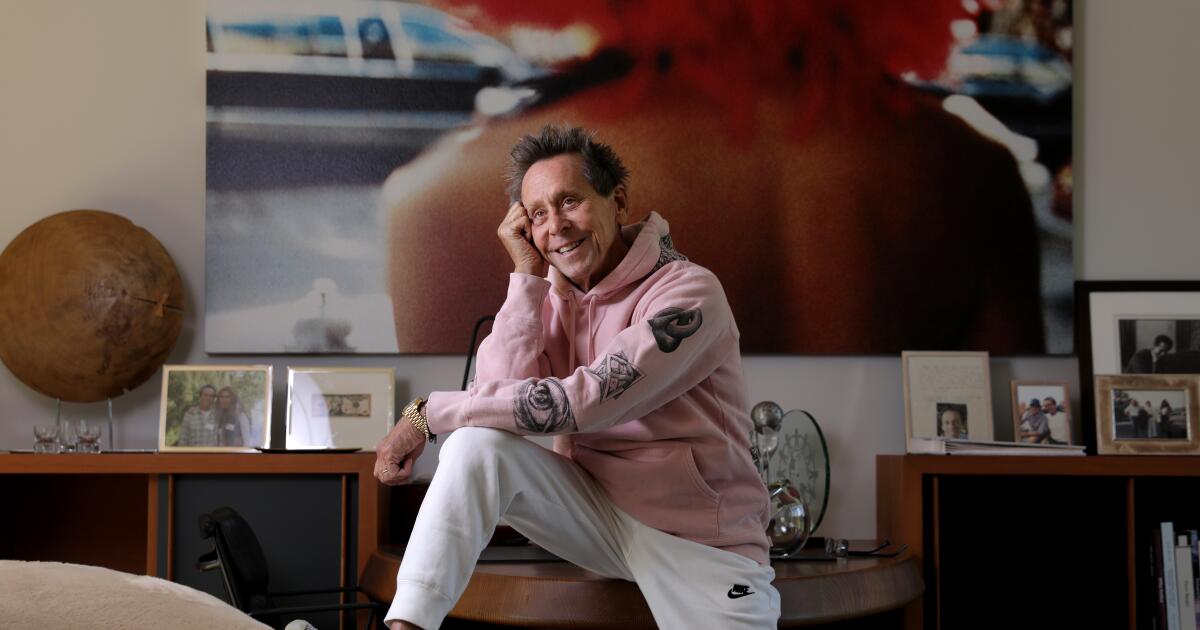
When Brian Grazer has an idea for a movie, he now starts with a chatbot. The co-founder of Imagine Entertainment — the company behind “A Beautiful Mind,” “Apollo 13” and “Liar Liar” — said he sits down with Anthropic’s AI assistant, Claude, to rough out a story before handing it to a writer.
“You can build the whole thing into an outline. You still need a screenwriter. I always believe you need a screenwriter,” Grazer said during a keynote at UCLA’s Entertainment Symposium on Thursday. What once could have taken up to a year, he said, now takes him about a week — but the human writer stays.
That balance — AI as an accelerant rather than a replacement — captures where much of Hollywood has landed in practice. Amazon MGM, Lionsgate, Netflix and Disney have all made major investments in the technology. The sharper question at the symposium, which drew many of the industry’s top lawyers and dealmakers to the Westwood campus, was not whether to use AI but how: who authorizes it, how far it goes and who gets paid.
For the companies building the tools, the answer increasingly comes from the client. Studios, production companies and distributors regularly approach Promise, a generative AI company, to bring AI into their productions, and each arrives with its own usage guidelines, said the company’s president, Jamie Byrne. Those rules govern which AI models Promise may use and what protections apply — effectively letting each client decide how heavily AI figures into the work.
“It comes down to a risk appetite,” Byrne said during a panel on AI. “We know that there’s talent that are staunchly against it. We know that there are many who are okay with it.”
He framed adoption as a competitive necessity: “Every time there’s a technology change, certain studios or production companies rise. Others fall, and it’s usually the ones that are not leaning into the new tool.”
Ron Howard, also of Imagine Entertainment, argued the limits will ultimately be set elsewhere — by viewers. “Sure, it’s about efficiencies and budgets, but more than anything, audiences are going to tell us where those restrictions are,” he said. He expects AI-generated content to settle into its own subgenre over time, with audiences signaling what they will accept.
The most contested ground is labor, where consent has become the dividing line. The emergence of synthetic performers such as Tilly Norwood has made AI a central issue in SAG-AFTRA’s contract. The union’s most recent agreement draws a clear line between authorized digital replicas, which use a performer’s likeness with their consent, and fully synthetic creations.
Talent agencies are organizing around the same principle. In recent years, Creative Artists Agency began digitally scanning clients into what it calls the CAA Vault, building a replica of a client’s image, likeness and voice while leaving the talent in complete control of how it is used.
That control is beginning to carry real value, said Tammy Brandt, CAA’s deputy general counsel, who said she is seeing more deals that involve digital likeness. Hollywood has been slow to work out how to monetize these replicas, she said, but once it does, audiences will start to encounter them more often.
“You have to lean into the technology and understand what it can do, and honestly, how you can make money, work with talent and with creative assets in a way that the user is interested in,” Brandt said. “There’s a little bit of trial and error as you go with that.”
The 2026 World Cup will have 13 different kickoff times. You can use the Al Jazeera Sport widget to find out exactly when your team is playing in your local time.
Who: Brazil vs Haiti What: FIFA World Cup 2026 Group C match Where: Lincoln Financial Field, Philadelphia When: Friday, 6:30pm local time (00:30 GMT Saturday) How to follow: We’ll have all the build-up on Al Jazeera Sport from 21:00 GMT in advance of our live text commentary stream.
Recommended Stories
list of 3 itemsend of list
Brazil’s draw with Morocco in their opening match left fans with more doubts than belief, with millions wondering if the record five-time champions are still among the world’s best teams.
Having slipped to third in a group that they were expected to dominate, Brazil now face minnows Haiti in their second group game, needing a World Cup reset.
Head coach Carlo Ancelotti will need to address several shortcomings with his team if he wants to avoid another disappointing performance during the group stage.
Here is all to know before Brazil vs Haiti kicks off:
No need to panic yet, suggests Brazil
While Brazil’s weak showing in the first game has raised questions about the team’s odds of a deep run, Ancelotti believes it is no cause for concern just yet.
Against Morocco, Brazil showed signs of nerves during the early stages and struggled to cope with the AFCON champions’ attack. Some players also struggled to cope with the intensity of the encounter.
The Italian coach, who has been in charge for just over a year, said the upcoming match with Haiti offers his side an opportunity to address their weak points.
“You don’t win the World Cup in the first match,” Ancelotti told reporters in Philadelphia on Thursday.
“The players’ self-criticism was very positive. I think we’ll sort out the problems; I remain confident that we’ll be competitive.”
Critics have argued that Brazil lacks an identity under Ancelotti, but the 67-year-old – nicknamed “Don Carlo” – believes adapting his tactics according to gametime situations is more important.
“I don’t want a single identity,” he said. “I want my team to have multiple identities.”
Former Real Madrid coach Carlo Ancelotti took over the team in May 2025 [Caean Couto/Imagn Images via Reuters]
Haiti want to make their people proud
It took Haiti more than half a century to return to the World Cup, and the Caribbean underdogs have somewhat of a cruel challenge at hand, being grouped alongside world-class Brazil, African giants Morocco, and Scotland.
While their 1-0 defeat to Scotland in the opening game did not dampen their spirit, Haiti know they face a far more difficult task against Brazil, who have no shortage of talent in their squad.
The odds are stacked against Haiti, but in a tournament where upsets have not been uncommon, their fans are daring to dream.
“Tomorrow [Friday], we’ve got everything to gain in a match like this. It’s been 52 years since we last featured in a World Cup, and now we’re up against Brazil – we’ve got to live up to our fans’ expectations,” coach Sebastien Migne said.
“It’s a privilege to be here, and I hope we can make the Haitian people proud of us.
“It would be absolute madness in Haiti if we won this match,” he added.
World No 85 Haiti, still looking for their first goal of this World Cup campaign, enter the match 80 spots below Brazil on the FIFA rankings.
Haiti coach Sebastien Migne gives instructions to his players during a hydration break [Brian Snyder/Reuters]
Brazil vs Haiti prediction
Stats provider Opta’s supercomputer has handed Brazil a whopping 87.3 percent probability of winning against Haiti, who have a mere 4.3 percent chance of winning. There is an 8.4 percent probability of a draw.
Overall, Brazil are seventh in the list of title favourites – with a 5.2 percent probability – behind a bunch of teams including France, Argentina and England, who make up the top three.
Haiti: TNH, Tele Haiti (8:30 pm Eastern Daylight Time)
United Kingdom: STV, STV Player ITV1, ITVX (01:30 Saturday, British Summer Time)
United States: FOX, FOX One, Telemundo App, Telemundo Network, Peacock (7:30pm Eastern Daylight Time)
To check the TV listings for your country, head to FIFA’s TV listing schedule here.
How does the group stage work?
Brazil, Haiti, Morocco and Scotland are in Group C.
Scotland lead the group with three points, followed by Morocco in second spot with one point. Brazil is in third place, also on a point, while Haiti is at the bottom with no points so far.
The top two teams from each of the 12 groups – along with the eight best third-placed teams – proceed to the next phase, the round of 32, which has been introduced at the World Cup for the first time.
(Al Jazeera)
Form guide
(Last five games, latest first)
Brazil: D-W-W-W-L
Haiti: L-L-W-D-L
Brazil have performed significantly better than Haiti in their last five matches.
They started their campaign in North America with a 1-1 draw with Morocco. Before the World Cup, Brazil registered victories over Egypt and Panama in friendlies and beat Croatia in March. But they lost to France in March.
Haiti suffered a defeat to Scotland in their opening World Cup game. They lost to Peru and beat New Zealand in pre-World Cup friendlies earlier this month, while they drew with Iceland and lost to Tunisia in friendlies in March.
Brazil vs Haiti: Head-to-head
Brazil have faced Haiti three times, winning on all occasions. Their last meeting dates back to a 2016 Copa America group game, in which Brazil thrashed Haiti 7-1.
Friday’s meeting between Brazil and Haiti will be their first at a World Cup.
Brazil vs Haiti: Team news
Just as in their opening match, Brazil’s oft-injured star Neymar Jr has been ruled out of the Haiti game.
A lingering calf strain will keep the veteran forward – Brazil’s all-time leading scorer with 79 goals – sidelined with the team hoping he recovers in time to feature in their final group game on June 24 against Scotland. He has not played for Brazil since October 2023.
Neymar was diagnosed in late May with the injury and has featured in just half of the games for his club side Santos this year due to various fitness issues.
For Haiti, striker Nazon – who was on the bench last time – is doubtful.
Neymar has not travelled with the rest of the Brazil team for their second World Cup game [Caean Couto/Imagn Images via Reuters]
Brazil predicted XI
Ancelotti is expected to make changes following criticism over his decision to start striker Igor Thiago and right-back Roger Ibanez against Morocco. Danilo and Cunha are widely tipped to replace them in the lineup against Haiti.
The first match of the 2026-27 Premier League season sees the reigning top-flight champions face the second-tier Championship winners.
Published On 19 Jun 202619 Jun 2026
Arsenal will kick off their Premier League title defence against promoted Coventry City on August 21.
The Premier League fixtures for the 2026-27 campaign were released on Friday, with the Gunners’ home game against Frank Lampard’s Coventry among the highlights in the opening round of matches.
Recommended Stories
list of 3 itemsend of list
Coventry are back in the top flight for the first time in 25 years after winning the Championship last season.
Andoni Iraola’s first Premier League game as Liverpool manager will be at Newcastle United on August 23. Former Bournemouth boss Iraola’s Anfield debut is set for the weekend of August 29 against Nottingham Forest.
City are expected to appoint former Chelsea boss Enzo Maresca to replace Guardiola, who stepped down at the end of the season after a decade in charge.
Hull City, who won promotion via the Championship playoffs, begin their first Premier League season since 2017 with a home fixture against Manchester United on August 22.
Elsewhere on the first weekend, Europa League winners Aston Villa travel to Brighton & Hove Albion.
Mikel Arteta guided Arsenal to the Premier League title last season, ending a 22-year drought [Matthew Childs/Action Images via Reuters]
Arsenal, champions for the first time since 2004, face a testing period after they host Coventry.
Mikel Arteta’s side head to Villa for their first away league game of the season, then meet Chelsea at Emirates Stadium on September 5.
The weekend of September 12 brings the first Manchester derby of the post-Guardiola era, while Liverpool host Manchester United on November 21.
City and Arsenal do not face each other until November 28 at the Emirates Stadium.
The first Merseyside derby of the season between Everton and Liverpool is scheduled for November 28 at the Hill Dickinson Stadium.
Roberto De Zerbi will get his first taste of the north London derby on December 5 when Tottenham host Arsenal.
The pick of the Boxing Day schedule sees Coventry boss Lampard facing his old club Chelsea on December 26.
The final day of the Premier League will take place on May 30, with Arsenal at home to Brighton, while City travel to Sunderland and Liverpool host Bournemouth. Chelsea and United finish at home to Brentford and Fulham, respectively.
The start and end of the upcoming season are later than usual due to the FIFA World Cup 2026, which finishes just 34 days before the Premier League begins.
Arsenal will face FA Cup winners City in the Community Shield, which serves as the curtain raiser to the top-flight season, on August 16.
There’s something delightful about plays about grand divas in crisis.
The prima donna in extremis in Pearl Cleage’s “Angry, Raucous, and Shamelessly Gorgeous,” which is having its Los Angeles premiere at the Geffen Playhouse, has an air of Bette Davis extravagance to her. When Anna Campbell (Charlayne Woodard) struts around her elegant hotel suite in Atlanta, she can’t resist delivering one of Davis’ signature lines: “What a dump!”
She’s not at all dissatisfied with the accommodations. She’s just frustrated that the weather isn’t cooperating with her upcoming outdoor performance and agitated that this might be a bad omen for her big American comeback.
More than 30 years ago, Anna and her manager and trusted companion, Betsy Samson (a formidable Denise Burse), fled to Europe on the heels of a highbrow scandal. Anna made waves when she performed “Naked Wilson,” a protest piece that had her delivering male monologues from August Wilson’s plays while standing stark naked before a divided audience.
The idea was to call attention to the way women have been de-centered in the male canon, but some felt it was sacrilege to subject Wilson’s work to a feminist stunt. Acting opportunities dried up, and Anna high-tailed it to Amsterdam, where her histrionic grandeur was put to good use in European classics.
Charlayne Woodard in “Angry, Raucous, and Shamelessly Gorgeous” at Geffen Playhouse.
(Jeff Lorch)
Woodard brings Anna to life with a smokey voice, a statuesque presence and an arch demeanor. When her arms are in flamboyant motion, she leaves the impression of a seductive windmill that might slice you to bits if you come too close.
The sumptuous production, directed by LaTanya Richardson Jackson with solidarity for Cleage’s characters, provides a marvelous showcase for Woodward to slink around on Beowulf Boritt’s glamorous five-star set in costume designer Emilio Sosa’s inspired Pucci-esque outfits. Her Anna doesn’t do much but give attitude. Ah, but what delicious attitude she gives!
Cleage’s play, it must be said, is hamstrung with exposition. More time is devoted to setting up the dramatic situation than to activating it. Author of “Blues for an Alabama Sky,” a 1995 abortion drama still ahead of its time, Cleage is telling a backstage story that’s clearly close to home. She’s also spinning an intergenerational tale of Black women groping past their initial distrust to a deeper understanding of what they have in common.
The intentions are noble and the themes are handled with admirable complexity, but the writing is sluggish. The plot is like an old car whose engine just refuses to start on a cold winter morning.
Anna has returned to Atlanta to headline a festival that is rebooting her “Naked Wilson” piece. She’s worried about disrobing at her age, but it turns out that she’s only being honored for her work. A much younger and far less experienced performer has been cast in the part that made her a cause célèbre.
Denise Burse, from left, Deborah Joy Winans, Charlayne Woodard and Olivia Washington in “Angry, Raucous, and Shamelessly Gorgeous” at Geffen Playhouse.
(Jeff Lorch)
Precious Watson (Olivia Washington), who goes by Pete, has not only never performed in a Wilson play but she’s never even seen one on stage. She’s a stripper whose only real dramatic experience has come from the adult entertainment industry. (Don’t call her a porn star, not because she’s ashamed of the films she made but because she’s too modest about her screen credits.)
Anna, her hauteur hardening like a protective shell, is aghast. She’s also fearful about her future. She’s run out of money, and this festival was to have launched her return to the U.S.
Betty, whose fate is tied to Anna’s, has been dangling the prospect of a national tour. But when Kate Hughes (an appealingly grounded Deborah Joy Winans), the producer of the festival, hears of this idea, she thinks it’s completely unrealistic.
“I love Anna,” she tells Betty. “ I’m honoring Anna, but there just isn’t an audience for the kind of presentation you’re talking about.”
Time marches on, and one era’s sensational renegade becomes a footnote in the next. But Anna can’t believe that all she holds sacred — study, discipline, seriousness, commitment — is of little value in the social media world.
Deborah Joy Winans, left, and Denise Burse in “Angry, Raucous, and Shamelessly Gorgeous” at Geffen Playhouse.
(Jeff Lorch)
Pete (whom Washington plays with impressive self-possession) doesn’t seem at all bothered about what she doesn’t know. Anna keeps prefacing her remarks with the words “no offense,” but Pete can’t help being offended by her pointed disdain. Their standoff energizes the play, but this jolt of momentum comes a little too late.
“Angry, Raucous, and Shamelessly Gorgeous” is not just the title. It’s also a plot summary. The gorgeous part is the richness of Cleage’s characters, radiantly realized by all four actors under Jackson’s warm direction.
Cleage gives the women plenty of substance, though her novelistic mode — more telling than showing — deprives her drama of style. The elegant staging tries to compensate, but the performers have to rely a little too heavily on their own charms to make up the difference in a play that swerves unexpectedly at the end into a cutesy fairy tale.
‘Angry, Raucous, and Shamelessly Gorgeous’
Where: Gil Cates Theater at Geffen Playhouse, 10886 Le Conte Ave., L.A.
When: 7:30 p.m. Wednesdays-Thursdays, 8 p.m. Fridays, 3 and 8 p.m. Saturdays, 2 and 7 p.m. Sundays. (Check for exceptions.) Ends July 12
Syrian journalist Mousa al-Omar reportedly filed a complaint about Akkad’s social media comments prior to his arrest.
British Syrian activist Hassan Akkad has been detained by security forces in Damascus, in an alleged response to his online comments criticising a prominent journalist.
Akkad, founder of the Give Us the Money That You Owe! campaign, was taken into custody on Wednesday at about 9:45pm local time (18:45 GMT) while at a cafe in the capital’s al-Malki neighbourhood, the statement said.
Recommended Stories
list of 3 itemsend of list
His detention appears to be related to a legal complaint filed by Syrian journalist and presenter Mousa al-Omar in relation to “Hassan’s social media activities and public comments”, the campaign reported.
It added that he was summoned by the cybersecurity branch on June 4. Al Jazeera understands that Akkad is still detained.
“He later became aware that additional cases had also been filed against him, although he was not informed of the identities of the complainants,” the campaign said.
Al Jazeera reached out to the Syrian government regarding he case but has yet to receive a response regarding the activist’s arrest. Public Prosecutor Judge Hossam Khattab confirmed that Akkad had been detained due to a search warrant being issued for him, but that the case against him had been dropped.
Al-Omar told Al Jazeera that he had instructed his lawyer to tell the police that he had dropped the case against Akkad and said he was “saddened” by what had happened.
“I am sorry for what happened to Hassan as a result of his mistakes; I followed the legal path under the cybercrime law… Everything I pledged, amounting to $700,000 in projects and cash, was paid in the donations,” he said.
Akkad’s campaign tracks financial commitments related to a public drive for donations to fund Syria’s reconstruction since the ouster of President Bashar al-Assad.
The activist reportedly criticised al-Omar on social media in recent weeks for allegedly failing to deliver on his financial pledges to the country’s rehabilitation efforts, pledges he claimed were worth thousands of dollars.
The campaign said after Akkad was summoned, he paused his online activities related to the case, to “allow the investigation and legal process to proceed”.
Akkad, a refugee and former English teacher in his late 30s, previously won BAFTA and International Emmy awards for documenting his journey from Turkiye to Europe after fleeing the Syrian civil war that began in 2011, during which he was arrested by the al-Assad’s authorities.
He eventually settled in the United Kingdom in 2015, returning to Syria after years in exile when al-Assad fled the country.
According to witness accounts cited in the statement, five plainclothes security officers entered the coffee shop where Akkad was meeting with several journalists.
Witnesses said the officers initially requested Akkad’s mobile phone before informing him that he was being arrested.
His lawyers said the arrest raises questions about whether authorities followed established legal procedures.
“No legal basis for the arrest … was presented at the time of his detention,” the statement said,
It added that since the allegations appear to be related to his online commentary, the arrest raises “broader concerns regarding the protection of freedom of expression”.
The statement further questioned the reported use of a cybersecurity law enacted during the rule of al-Assad, arguing that reliance on such legislation “appears inconsistent with the interim government’s commitments to expand protections for freedom of expression following the collapse of the previous regime”.
Lesley Horton, the UK’s Chief Property Ombudsman, said: “If implemented carefully and supported by clear guidance and appropriate training, these reforms can create a home buying and selling system that is faster, fairer and better equipped to meet the needs of consumers in the years ahead.”
ASHLEY Cain was secretly sacked from a BBC job last year for being ‘drunk on set’.
The star, 35, has come under-fire this week after historic tweets were exposed in which Ashley made degrading comments about women and suggested blurring the lines of consent during sex in worrying messages.
Sign up for the Showbiz newsletter
Thank you!
Ashley Cain was secretly sacked by the BBC for being ‘drunk on set’Credit: BBCConcerns were raised last year when he was hand-picked to front a BBC programme in Las VegasCredit: BBC
The posts were made by Ashley between 2013 and 2015 after he first rose to fame in footballing and his appearances on MTV show Ex On The Beach.
The Guardian has compiled a range of messages, posts and concerns relating to Ashley’s behaviour in the past – which has since led to him being dropped by the BBC.
Last night, the publication detailed new allegations that Ashley was secretly sacked from filming a BBC documentary in June of last year for being ‘drunk on set’.
The TV personality, who had already begun to work with the BBC on their documenary series, Into The Danger Zone, had been picked to host, Sin City: The Real Las Vegas.
Ashley has worked extensively with the BBC but has now been axed for good by the channelCredit: BBCThe BBC admitted their vetting process on the star had ‘failed’Credit: Instagram
He was flown out to Nevada to film the show but concerns were raised about his conduct.
Appearing to be drunk during filming of the show, the production was suspended and Ashley was ultimately dropped from the project.
Another presenter was then chosen to front the programme instead.
Nonetheless, the incident went largely ignored as Ashley returned to filming with the BBC earlier this year for the second series of his Into The Danger Zone series.
However, following The Guardian’s reports, that series has now been axed and won’t be making it to air.
The BBC revealed they had no plans to work with Ashley again in the future after admitting that their “vetting” process before hiring talent had “failed”.
A BBC spokesperson told The Sun: “The posts by Ashley Cain, albeit from many years ago, are completely unacceptable.”
“The BBC has clear requirements around vetting and social media checks, which are undertaken by the production company. In this instance, the process clearly failed and we are investigating why. We are continuing to strengthen our processes to ensure everyone working for, and on behalf of, the BBC meets our values and standards.”
“We have no plans to broadcast the new series of ‘Into the Danger Zone’, and no future projects with Ashley Cain.”
The Sun has contacted a representative for Ashley Cain for comment.
Ashley’s comments and behaviour – which largely took place over 10 years ago – first began to emerge after he took part in the very succesful first series of MTV show Ex On The Beach which propelled him to national fame.
Derogatory terms allegedly written in 2014 and 2015 include “sl**s”, “b***hes” and “psychos”, while he said he’d like to “choke slam” and “spit in the face” of Love Island star Jessica Hayes while commenting on the ITV2 reality show.
The Guardian reports that other misogynistic tweets saw him say he wanted to “talcum powder pimp slap these b***es already!” while watching a Channel 4 documentary and demean women by writing: “I DO NOT.. I repeat I DO NOT think EVERY girl is a slag! There are some absolute PHENOMENAL women out there.. They’re just a rare commodity.”
In 2015, Cain was accused of recording Rachel Roftis, 33, during sex and sharing clips to Snapchat without her consent — something he strongly denied.
The pair met at a club in Bexleyheath before spending the night together in a hotel.
Roftis told The Guardian she “screamed” at Cain when she realised the footage had been shared publicly and the incident has “massively affected her relationships with men. She doesn’t trust anybody really now.”
The notoriety from the posts, which saw Cain brand himself the “Snapchat King” and rack up 60,000 views, led to an appearance on short-lived ITV Daytime show O’Brien where he boasted of being a “play boy” and sleeping with 15 girls a week.
Of his attitude towards women, he said: “If you are a lady, I respect you. But if you don’t respect yourself, how can you expect me to respect you?”