News Desk

Australia pledges action on H5N1 after bird flu case confirmed | Environment News

Tests confirm a migratory brown skua found in ‌Western ‌Australia had the virus.

Prime Minister Anthony Albanese says Australia will do “whatever we can” to curb H5N1 bird flu after the first mainland case was confirmed in a seabird, which means the virus has now spread to every continent.

Tests confirmed a migratory brown skua found in ‌Western ‌Australia’s Cape Le Grand National Park had the deadly virus, authorities said on Saturday, and a giant petrel found in the same area was also suspected to be infected.

Recommended Stories

list of 3 itemsend of list

“This is concerning,” Albanese told reporters in Sydney, adding his government would do “whatever we can to restrict any spread”.

Previously, Australia had been the only continent without a confirmed mainland case, although the virus was detected in late 2025 on Heard Island, a sub-Antarctic territory about 4,100km (2,550 miles) from the mainland.

Agriculture Minister Julie Collins said the virus had not yet been detected in Australia’s poultry or agriculture sector.

“We all knew we couldn’t be bird flu-free forever,” she said.

Human infections remain rare, but the highly pathogenic avian influenza has led to the culling of hundreds of millions of birds globally in recent years, disrupting food supplies and driving up prices.

Source link

Mona Khalil, Lebanon’s turtle advocate, dies after Israeli attack | Environment News

Khalil spent more than two decades protecting the nests of endangered turtle species in southern Lebanon.

Lebanese marine ecologist Mona Khalil, who was severely wounded after an Israeli strike hit her home near Tyre last week, has died, according to local reports.

Khalil, 77, succumbed to her wounds on Friday, the same day Israel escalated air attacks on southern Lebanon, killing at least 50 people and injuring dozens despite the risk posed to a fragile peace deal between Iran and the United States.

Recommended Stories

list of 4 itemsend of list

“It is with deep sadness that we mourn the passing of Mona Khalil today,” environmental group Live Love Tyre said in a Facebook statement on Friday.

“She will be remembered through an incredible legacy. Through it all, Mona chose to stay and care for the turtles of Live Love Tyre. Her life was selfless and impactful.”

A life of impact

Khalil was born in Lagos, Nigeria, in 1949. She spent several years abroad before moving to southern Lebanon.

A fleeting encounter with a turtle which had emerged from the ocean to lay its eggs on al-Mansouri beach near Tyre in 1999 propelled her on a lifelong journey devoted to animals.

She went on to dedicate decades to protecting the nesting sites of endangered loggerhead and green sea turtles on Lebanon’s southern coast.

Both species are highly threatened by coastal development, plastic pollution, fishing nets, and light pollution and are at risk of becoming extinct in the eastern Mediterranean.

In 2000, Khalil helped establish the Orange House, an eco-tourism project situated at al-Mansouri beach. She also helped document marine life in southern Lebanon and advocated for wildlife and against the pollution of Lebanon’s coastline.

“You have left us yet you remain within us – we, your children,” journalist and volunteer Fadia Joumaa, who worked closely with Khalil, said in a tribute shared on Facebook.

Khalil’s death “is a loss for all of Lebanon… not just for us. A loss for the life you guarded so faithfully,” she said.

Source link

Tom Parker’s pregnant widow Kelsey reveals struggle ahead of first anniversary of stillborn baby’s death

TOM Parker’s pregnant widow Kelsey has revealed her emotional struggle ahead of the first anniversary of her stillborn baby’s death.

Kelsey, 36, tragically lost her son Phoenix in June 2025 after he was born sleeping.

Tom Parker’s pregnant widow Kelsey has revealed her struggle ahead of the first anniversary of her stillborn baby’s death Credit: Instagram/being_kelsey
The podcast host, 36, lost Phoenix in June 2025 Credit: YouTube

Kelsey has two children with The Wanted singer Tom, who died in 2022 aged 33, – Aurelia, six, and Bodhi, four – but had been expecting her third child with new partner Will Lindsay.

In May, she announced she is pregnant with her rainbow baby but she explained she is now set to tackle a bittersweet weekend.

Amid her pregnancy joy, it will be the one-year anniversary of Phoenix’s passing and in a candid Instagram upload, she admitted she “deeply misses my little boy and wish things had been different”.

Kelsey uploaded a selfie showing her in the sunshine, wearing a white vest top and sunglasses with a gold chain.

bump’s day out

Kelsey Parker shows off growing baby bump in first public appearance


MUM’S PAIN

Kelsey Parker opens up about the moment ‘she knew’ son would be stillborn

She is now pregnant with her rainbow baby Credit: being_kelsey/Instagram
Kelsey, seen with partner Will Lindsay, revealed she ‘deeply misses my little boy and wish things had been different’ Credit: being_kelsey/Instagram

In a frank message posted alongside it she put: “I’ve been really quiet on here the last couple of days.

“Truthfully, I’ve been working a lot, trying to keep busy and just processing the fact that Sunday is a big day.

“It’s Phoenix’s first anniversary and it’s Father’s Day too.

“Grief is a strange thing. Some days you can keep going and stay busy, and other days it all catches up with you.

She shares two children with The Wanted singer Tom Parker Credit: Social media – Refer to source
Tom sadly passed in 2022 and Kelsey told how the upcoming Father’s Day would be emotional for the family Credit: Getty

“I’m learning that both things can exist at once. I can feel excited about this next chapter of life, be grateful for everything I have, and still deeply miss my little boy and wish things had been different”.

Giving advice to her followers, Kelsey added: “If you’re navigating grief, anniversaries or simply carrying something heavy right now, please know you’re not alone.

“As always… stop waiting, start living. But also, give yourself permission to feel it all”.

Recently, the brave mum appeared on ITV daytime series Good Morning Britain to reveal her home was “treated like a crime scene” after Phoenix arrived into the world.

Kelsey’s spouse Tom died in 2022, aged 33, following a brain tumour battle.

She previously admitted that that grieving Phoenix was “harder than grieving Tom” as she spoke on the Mum’s The Word podcast.

She shared: “It was so hard. I think with Phoenix, it was harder than it was with Tom.

“I think because they [her kids] were so much younger, it’s like I could just be like, ‘daddy wasn’t coming back.’ 

“And you know, when I said about the angels taking daddy, ‘we won’t see daddy again’, it was like they accepted that and we sort of moved on. 

“And now as time’s gone on, they asked me more questions about their dad and stuff, but that initial I suppose with Bod as well. He was 18 months old. It wasn’t a question that he even thought.”

At the time of Tom’s death, Aurelia was around three, and Kelsey’s co-host Georgia pointed out: “They were almost ages where they didn’t understand. 

“So you almost didn’t have to explain it too much. You obviously have to explain it, but it’s very different to having a child that completely understands, knows what death is”.

Source link

‘We tasted the horrors of war’: Stories of refugees who returned home | Refugees News

Approximately 1.3 million Syrians returned from abroad in 2025, nearly three times the figure recorded the previous year, while a further two million internally displaced Syrians went back home, cutting the global Syrian refugee population from 6 million to 4.9 million.

On December 8, 2024, the al-Assad dynasty, which lasted 54 years, was removed from power by a rebel offensive.

The 14-year-long war led to one of the world’s largest migration crises, with some 6.8 million Syrians, about a third of the population, fleeing the country at the war’s peak in 2021, seeking refuge wherever they could find it.

More than half of these refugees, about 3.74 million, settled in neighbouring Turkiye, while 840,000 found refuge in Lebanon and 672,000 in Jordan.

Hiam told Al Jazeera she returned to Syria with her family after more than a decade of living in a host country. “The reason that pushed us to return was the high cost of living we were facing in the host country. We stayed there for 12 years, and it was a great hardship for us as refugees.”

We returned to Syria, thank God, but in the beginning it was difficult because we didn’t find homes or anything. Syria now is completely different from when we left. The return was very difficult at first – the scene was very hard for me.

“But thank God, I became stronger. The first period was very difficult, and at the beginning, it was hard to cope,” Hiam explained.

CILVEGOZU, TURKEY - DECEMBER 13: Syrian families living in Turkey walk towards the Cilvegozu border gate to cross into Syria after after Syrian rebels ousted President Bashar al-Assad on December 13, 2024 in Cilvegozu, Turkey. The fall of the Assad regime last week has prompted many Syrians in neighboring Turkey to try to reenter their home country. Turkey hosts a population of more than 3 million Syrian refugees, according to UNHCR statistics. (Photo by Burak Kara/Getty Images)
Syrian families living in Turkiye walk towards the Cilvegozu border gate to cross into Syria, after Syrian rebels ousted President Bashar al-Assad on December 13, 2024, in Cilvegozu, Turkiye [Burak Kara/Getty Images]

According to UNHCR data, some 556,00 Syrians returned from neighbouring Turkiye, 465,000 from Lebanon and 256,000 from Jordan.

More than seven in 10 returnees have reported improvements in security and freedom of movement in Syria, according to the UNHCR. Almost three-quarters of Syrian refugees abroad have also said they would eventually like to return home.

Returns in 2026 reached 549,800 by mid-May, driven by deteriorating conditions in Lebanon.

INTERACTIVE-Refugee returns to Syria in 2025-1781797262

Source link

Hypersonic Tracking and the Future of Strategic Stability

For decades, satellites have provided critical data for military activities in active and non-active combat zones. One of the most significant integration of space-based technologies emerged in missile defense systems during the Cold War. Satellite constellations provided critical data on the launch sites and trajectories of ballistic missiles. The US Defense Support Program (DSP) was the first program to launch satellite constellations to detect heat signatures of Soviet ICBMs with infrared sensors. The Soviet Union launched the first generation of early warning systems under OKO satellite constellations against US missile threats. These systems of satellite constellations allowed both the US and the USSR to maintain a close watch over each other’s strategic capabilities and allowed for much needed early warning that upheld mutual deterrence between the two powers.

Fast forward to the current era, today’s missile defense systems have shown a very limited success rate against hypersonic missiles. The tracking and interception capabilities of current missile defense systems have remained effectively limited due to speed, maneuverability, and depressed flight of hypersonic missiles. Traditional missile defense systems have been outmaneuvered by hypersonic missiles, which increases the threat level due to their capability to reach and hit targets with a high success rate. Modern hypersonic missiles can still be detected with infrared sensing during their boost phase, but Hypersonic Glide Vehicles (HGVs) are extremely difficult to track and intercept primarily due to their maneuverability. The radar-evading capabilities of HGVs affect the strategic calculus by shrinking detection and reaction time duration during crises and conflicts.

As a remedy, the US has introduced the Hypersonic and Ballistic Tracking Space Sensors (HBTSS) to counter the threat of HGVs and Hypersonic Cruise Missiles (HCMs). The HBTSS will be a major component of the US Golden Dome missile defense project. It is a layered network of command-and-control systems, interceptors, and space-based sensors to build an advanced layer of missile defense system. What makes HBTSS different from traditional missile defense systems is the satellite constellation, which provides real-time tracking data of missiles. Traditional defense systems like Space Based Infrared System (SBIR) could detect the launch of missiles, but HBTSS can detect, track, and possibly predict the target of the missile.

Because HGVs present a unique challenge due to low flight path and maneuverability and often operate under the coverage of conventional radars, which make it difficult for traditional defense systems to detect. HBTSS relies on space-based sensors, which can detect and track continuously from space. Theoretically, it can be called a space-based missile defense system reflecting the growing strategic importance of space in the military domain. It relies on an interconnected satellite network that can work as a kill web across the globe against the threat of hypersonic missiles.

HBTSS is an emerging strategic shift as it starts a new era of space weaponization with a layer of satellites for enhanced detection and tracking. A reliable space-based tracking system bolsters a state’s capabilities to deal with the threat of hypersonic missiles with improved early warning and missile tracking systems, and reduces the threat of surprise attacks from an adversary. Although missile forces hold great impact on deterrence stability, the induction of HTBSS will question the effectiveness of missiles during crises and conflicts if a more advance missile defense system is introduced. This will provide a wider view from space with more accuracy and precision, and increase the vulnerability of missile forces of states.

Because ground-based nuclear forces are considered vulnerable, many countries have developed second-strike capabilities, particularly at sea, to preserve deterrence even after absorbing an initial attack. But the development of HBTSS undermines the survivability of a state’s missile forces with an enhanced detection and tracking system. Even though the United States and Russia continue to maintain certain crisis management and risk reduction mechanisms, including hotlines and military deconfliction channels, the suspension of New START has weakened the broader framework of strategic stability. While in conflict-prone regions like South Asia, India and Pakistan possess a more limited and less institutionalized set of confidence-building measures (CBMs), making crisis management in South Asia particularly challenging due to emerging technologies.

The peaceful use of outer space depends on the intent and actions of major powers. Sometimes measures taken for self-defense can also prompt a proportionate reaction in the form of countermeasures. The strategic impact of HBTSS on the missile forces may lead to more advance, fast, and lethal missiles for survivability. The development of HBTSS will not end the arms race, it will intensify the arms race with countermeasures.

Source link

Band gobsmacked as noughties rock legend is spotted dancing alone to Rolling Stones covers in random bar

A LITTLE-known band were left totally gobsmacked after a rock legend turned up in the audience at one of their shows.

The Rolling Stones cover band were playing to a small crowd in a bar when the iconic musician revealed himself as a fan, dancing alone in the bar.

The music legend enjoyed a night out in his hometown of Franklin, Tennessee Credit: tiktok/@jennyteator
The frontman forewent his trademark red cap and goatee for a striking white-bearded look Credit: tiktok/@jennyteator

The mystery figure was none other than Noughties nu-metal megastar Fred Durst, frontman of Limp Bizkit.

Fellow punters couldn’t believe their eyes and quickly pulled out their phones to capture the surreal moment as the Rollin’ singer rocked out to their set.

Musician Jenny Teator, who was singing on stage shared the clip on TikTok, writing: “This was unexpected. Get it, Fredddd!! We had so much fun at @GRAYSonMAIN.”

The unlikely scene unfolded at Grays on Main, a bustling music venue and dining room in downtown Franklin, Tennessee – the town Fred now calls home.

rock of ages

Can YOU tell who this 90s rock icon is? Fans say he looks like Richard Gere!


doped up

Shaggy 2 Dope fails as he tries to dropkick Limp Bizkit’s Fred Durst on stage

The Limp Bizkit star danced alone to Rolling Stones classics at the small-town venue Credit: tiktok/@jennyteator
Fred during Limp Bizkit’s chart-topping Noughties heyday. Credit: Redferns

The star looked almost unrecognisable with a full white beard, although he still sported the signature baseball cap fans will remember from the band’s heyday.

Other diners appeared oblivious to the famous face in their midst, continuing with their meals unaware they were in the company of rock royalty.

One viewer commented: “The people sitting there eating, completely unbothered that Fred Durst is getting down right beside them, is killllling me!”

Fred and Limp Bizkit were one of the biggest bands of the late Nineties and early Noughties, with hits including Break Stuff, My Way and Rollin’.

Limp Bizkit still perform more than 25 years after the band’s breakthrough success Credit: Getty
Fred during a recent Limp Bizkit performance at Gunnersbury Park. Credit: Getty

Their album Chocolate Starfish and the Hot Dog Flavoured Water debuted at number one on the Billboard 200 and sold over one million copies in its first week.

The singer was also linked to a string of high-profile romances, including rumoured relationships with pop stars Christina Aguilera, Britney Spears and Avril Lavigne. He has been married four times and has two children.

Despite stepping out of the spotlight in recent years, Fred, now 55, continues to record and perform with Limp Bizkit.

Limp Bizkit’s last official UK tour was last year, with the band appearing at the Reading and Leeds festivals.

Besides continuing to tour and perform with the band, Fred has made his mark as a film director with movies like The Education of Charlie Banks and The Longshots.

He also directed the film The Franatic in 2019 which starred John Travolta.


Source link

South Korea seeks to turn defense exports into growth engine

1 of 3 | Government officials, lawmakers, researchers and defense industry executives attend a seminar marking the 20th anniversary of South Korea’s Defense Acquisition Program Administration in Seoul on Friday. Photo by Asia Today

June 19 (Asia Today) — South Korea is seeking to transform its defense industry into a national growth engine by integrating military procurement, weapons exports, advanced technology and industrial policy, government and industry officials said Friday.

Officials at a public-private seminar in Seoul rejected the long-standing argument that growing foreign orders could divert production capacity from the South Korean military and delay domestic weapons deliveries.

Instead, they said an analysis of about 2,000 South Korean defense companies found that exports increased factory utilization, encouraged investment in research and production facilities and eventually reduced manufacturing costs.

The findings were presented at a seminar titled “A New Leap Forward in Acquisition and the Defense Industry,” held at the Fairmont Ambassador Seoul in the city’s Yeouido financial district.

The Defense Acquisition Program Administration organized the event as it marked the 20th anniversary of its establishment.

Participants included lawmakers, officials from the defense, industry, science and small-business ministries, defense company executives and academic researchers.

They called for an end to treating military procurement and defense exports as separate policy areas.

Lee Yong-cheol, minister of the Defense Acquisition Program Administration, said South Korea’s annual defense exports had grown from about $250 million when the agency was established to $15.4 billion last year.

“Defense exports are no longer merely a supplement to domestic military procurement,” Lee said. “They have become a central growth engine driving the Republic of Korea as a whole.”

Lee said South Korea also needed to move beyond selling individual weapons.

He proposed combining weapons with energy systems, infrastructure, maintenance, repair and overhaul services and other forms of industrial cooperation.

“The era of selling weapons as stand-alone products is over,” Lee said. “We will transform the K-defense paradigm through cross-industry package cooperation.”

Lawmakers from South Korea’s governing and opposition parties pledged bipartisan legislative support for faster procurement and stronger financing for small and midsized defense companies.

They said a system that can take about 15 years to plan, develop and deploy a weapon is not suitable for an era in which artificial intelligence, drones and robotic systems evolve rapidly.

Participants also cited research indicating that financial instability among smaller suppliers, rather than export production, was a more important cause of delivery delays.

They called for expanded government-backed financing to prevent small manufacturers in the defense supply chain from being overwhelmed by debt and working-capital shortages.

Study links exports to stronger domestic production

South Korea’s defense industry has long debated whether large export contracts weaken or strengthen the country’s own military procurement.

Critics have warned that foreign orders could occupy production lines and delay the delivery of weapons to South Korean forces.

Supporters have argued that exports create economies of scale, preserve production capacity and lower the price paid by the South Korean military.

Research presented at Friday’s seminar supported the second view.

A team led by researchers from Myongji University analyzed data from about 2,000 South Korean defense-related companies.

The analysis found that increasing exports produced an immediate rise in factory utilization. Higher utilization was then associated with greater investment in research, development and production facilities.

Researchers said the benefits became more evident about three years after an export increase.

The analysis identified improvements in operating profit, lower production costs and greater independence in critical technologies after that period.

Repeated production also allowed factory workers and engineers to improve their skills and reduce defects, a process commonly described as a learning effect.

At the same time, producing weapons in larger quantities spread fixed development and manufacturing expenses across more units.

Researchers said those effects increased the competitiveness of South Korean products in foreign markets while potentially lowering the cost of weapons purchased by the South Korean military.

Industry experts cited South Korea’s large exports of K2 tanks and K9 self-propelled howitzers to Poland as an example.

They said the contracts increased domestic production, helped reduce unit costs and accelerated work on upgraded models.

Kim Myung-keun, an executive at Hyundai Rotem, said the company achieved economies of scale after receiving Poland’s large K2 tank order.

“Mass production lowered costs, reduced the acquisition cost for our own military and accelerated the development of upgraded models,” Kim said.

Yoon Byung-jo, an executive at SNT Motiv, said repeated production generated through large export orders also strengthened technical capabilities on factory floors.

“The learning effect accumulated by technicians during repeated production is the most powerful tool for reducing defects in critical components and increasing technological independence and localization,” Yoon said.

Lee Jung-hyun, a Myongji University professor involved in the study, said the analysis did not identify export volume as the principal cause of delayed deliveries.

“The real causes of delivery delays were companies’ debt ratios and financial soundness,” Lee said. “Exports instead improved operating profits and technological capabilities after a time lag of about three years.”

Lee said the government should strengthen the financial stability of smaller defense companies rather than restrict exports.

Officials seek to shorten 15-year procurement cycle

Government officials said South Korea’s traditional weapons acquisition process is too slow to keep pace with civilian advances in AI, drones, robots and human-machine teaming systems.

Weapons programs can take about 15 years from initial planning through development and operational deployment.

Officials said that schedule risks delivering technology that has already become outdated by the time it reaches military units.

Won Jong-dae, an assistant defense minister, said the existing system had become a national security obstacle.

“In the age of AI and drones, an acquisition process that takes 15 years is an impediment to security,” Won said.

He said the government would seek legislation tentatively called the Advanced Defense Capabilities Projects Act to shorten the process from initial requirements planning through deployment.

Kim Seong-su, a senior research and development official at the Science and Technology Ministry, said innovation in the civilian sector was advancing more quickly than military technology.

Kim called for an adaptive research and development system that would allow mature commercial technologies to be introduced into the military without passing through the full conventional development process.

The acquisition agency said it plans to expand rapid-introduction programs, particularly for drones and AI-related technologies.

The programs would allow the military to test and deploy promising civilian products more quickly while making adjustments based on operational experience.

Jeong Hwan, chief executive of infrared sensor manufacturer i3system, said smaller companies with advanced commercial technologies often cannot withstand the military’s complicated testing requirements and lengthy acquisition schedule.

He urged the government to make rapid acquisition programs more flexible and accessible to technology companies.

Financial support sought for smaller suppliers

Officials said South Korea must also strengthen small and midsized companies that produce components and materials for major weapons manufacturers.

Park Yong-soon, a senior official at the Ministry of SMEs and Startups, said the research presented Friday showed that financial weakness was a major source of supply-chain disruption.

Park said the government would shift policy toward stronger financial support for vulnerable suppliers and seek to increase the share of domestic defense revenue generated by small companies.

Smaller companies currently account for about 18% of South Korean defense industry sales. The government aims to raise the proportion to 25%.

Officials said those businesses can face severe cash-flow pressures because defense contracts require lengthy development, testing and certification before companies receive full payment.

The problem can become more serious when a small supplier must expand production rapidly to meet a major overseas order.

Park said the government must ensure that otherwise competitive companies do not collapse because they cannot obtain sufficient operating capital.

Park Dong-il, a senior official at the Industry Ministry, also warned that South Korea’s export portfolio remained concentrated in ground weapons.

More than 60% of the country’s defense exports come from land-based systems, he said.

Park said the government would work to diversify the industry into aerospace, next-generation satellites and advanced naval vessels while strengthening the domestic manufacturing and component ecosystem.

South Korea plans national security export packages

The acquisition agency said future export efforts would go beyond individual tanks, aircraft or artillery systems.

The government plans to package defense products with energy projects, transportation and industrial infrastructure, information and communications technology, maintenance services and technology transfers.

Officials described the approach as exporting an integrated security platform rather than a single weapon.

They cited Poland as a model.

South Korean arms agreements with Warsaw have included not only K2 tanks, K9 howitzers and other weapon systems but also plans for local production, technology cooperation, training and long-term maintenance.

An industry official said future transactions could involve building a partner country’s broader security and industrial system.

“The business will no longer be about exporting one tank,” the official said. “It will become a platform business that exports an entire national security system.”

Such packages can help importing countries create domestic jobs, develop supply chains and maintain weapons locally.

They can also give South Korean companies access to long-term revenue from training, spare parts, upgrades and depot-level maintenance after the initial sale.

The approach, however, requires coordination among several ministries because infrastructure, export financing and industrial cooperation extend beyond the authority of the acquisition agency.

Kim Il-dong, deputy minister of the Defense Acquisition Program Administration, said procurement and exports should be viewed as two sides of the same coin.

Kim said the acquisition agency could not achieve South Korea’s defense industry goals on its own.

He called for coordinated action by the defense, science, industry and small-business ministries to develop the sector as a strategic national industry.

Seoul targets 5% share of global defense market

The Defense Acquisition Program Administration said it aims to increase South Korea’s share of the global defense market to at least 5% and establish the country as one of the world’s four largest defense exporters.

Officials said South Korea’s defense industry had already approached the global top five based on its 2025 export performance.

Future growth will depend on moving beyond the country’s current strength in tanks, armored vehicles and artillery, they said.

The government plans to support companies working in AI, space systems, drones, advanced ships and autonomous and human-machine teaming technologies.

It also wants to foster globally competitive defense startups and companies capable of reaching valuations of more than $1 billion.

Officials and industry representatives said South Korea’s defense sector had completed an initial period of quantitative growth and now needed to focus on technology, productivity and supply-chain resilience.

“The past 20 years were a period of quantitative growth in which K-defense built weapons capabilities from the ground up,” seminar participants said. “The next 20 years should be remembered as an era of qualitative growth centered on AI, space, drones and unmanned systems.”

They said military procurement and the defense industry should no longer be treated as separate areas.

Instead, both should be viewed as parts of a single strategic industry supporting South Korea’s security, technological development and economic growth.

— Reported by Asia Today; translated by UPI

© Asia Today. Unauthorized reproduction or redistribution prohibited.

Original Korean report: https://www.asiatoday.co.kr/kn/view.php?key=20260619010006831
Source link

Vanessa Feltz calls for end to ‘sordid’ reality TV with emotional confession

Vanessa Feltz has addressed some of her struggles in the early 2000s and argued that while people were very excited by the introduction of reality TV, vetting is now too ‘sketchy’

Vanessa Feltz has called for an end to “sordid” reality TV shows which she said gave her some of her lowest moments in her career.

The broadcaster, 64, shared her thoughts on how the format has changed over the past two decades, while reflecting on some incidents involving reality stars. According to Vanessa, vetting processes on some shows were “sketchy at best.”

In an article for You, the journalist said reality shows often recruit “individuals desperate for exposure” from social media – with women often asked whether they are looking for love, and men asked whether they are hoping to have some fun. Describing the reality genre as “sordid,” Vanessa said things have significantly changed since the early 2000s.

At the time, the idea of having “real people, doing real things, in real time” on TV seemed “revolutionary”, she argued, as demonstrated by the success of Big Brother. “We wanted ‘ordinary’ people scratching their armpits, pairing socks, quarrelling, vying, lying, picking their toenails and getting their rocks off,” Vanessa, who famously broke down and told Big Brother to “f*** off” during the first-ever Celebrity Big Brother in 2001, wrote.

Back then, mental health wasn’t given the same importance it has now, Vanessa said, meaning that many people – including herself – didn’t realise that reality TV posed any risk to participants. But she wrote: “When I said I’d had enough and please could I pack my case and go – we weren’t being paid, we were doing it free for Comic Relief – Big Brother replied: ‘If you leave, Vanessa, you’ll be the most hated woman in Britain.'”

She said that after being evicted, she “shook uncontrollably” and was “disorientated, trembling” until she was able to reunite with her daughters, which made her “remember how it felt to be myself.” She said: “A quarter of a century later people still ask, what the beep happened? I tell them, when you are on a reality TV show it isn’t a game.

Opening up on her experience of filming Celebrity Fit Club in 2004, Vanessa said she was “so scared” of letting her team down that she “stopped all food and water on Friday mornings” and after the weigh-in on Saturday afternoon, contestants “were all shaky and faint with hunger.”

She said that after drinking a glass of water and eating a couple of Ryvita crackers, they would go back on the scales and find they had already gained back the weight presenter Dale Winton had announced they had lost. “It was hell,” Vanessa reflected.

Giving the example of reality star Sinitta, who appeared on her Channel 5 show Vanessa on June 1 and said she needed therapy after I’m A Celebrity…South Africa due to the amount of trolling she faced, the broadcaster said reality TV is capably of leaving people damaged.

Vanessa’s reflection comes after her Channel 5 daytime chat show was cancelled only a year after its debut. According to reports, the presenter was blindsided and left furious by the news. The chat show sees Vanessa talk to guests and people at home who had called in to share their experiences of whichever topic was on the agenda.

But this week, a 5 spokesperson confirmed to the Mirror that the show would be coming off air, saying: “Due to afternoon scheduling changes, ‘Vanessa’ will be rested from July 17th. We thank Vanessa and her team at ITN for 18 months of warm, witty, wise and searingly honest shows. Vanessa remains a valued member of the 5 family and we are discussing future projects together.”

Following the cancellation, a source told the Mail that Vanessa was blindsided when she was told that the show had been axed. They said: “Vanessa was brought into a meeting after her show came off air this week. She had no idea what the meeting was about and certainly didn’t expect to be told it was not being renewed. She feels so blindsided but also let down by bosses.”

The cancellation is thought to be linked to low ratings for the programme, as well as an inability to get the scam callers under control. The source said that producers “tried their best to crack down” on the pranks, but it couldn’t be done.

Like this story? For more of the latest showbiz news and gossip, follow Mirror Celebs on TikTok, Snapchat, Instagram, Twitter, Facebook, YouTube and Threads.


Source link

Ex-diplomats allege North Korean UNESCO official has intelligence ties

Former Japanese Prime Minister Yasuo Fukuda (2-L) speaks during the 2024 Jeju Forum for peace and prosperity at a convention center on the country’s southern Jeju Island, South Korea. Photo by YONHAP / EPA

June 19 (Asia Today) — Former North Korean diplomats have alleged that a North Korean education specialist affiliated with UNESCO and being considered as a speaker at an international forum in South Korea may be connected to Pyongyang’s intelligence apparatus.

Jang Kwang-chol is under consideration to participate by video in a session titled “UNESCO and the Future of Education: Challenges and Prospects” at the 21st Jeju Forum for Peace and Prosperity, according to forum organizers.

The forum, jointly hosted by South Korea’s Foreign Ministry, the Jeju provincial government and other organizations, is scheduled to take place from Wednesday through June 26 at Haevichi Hotel & Resort Jeju and Jeju Stone Park.

The former diplomats’ allegations regarding Jang could not be independently verified. Neither UNESCO nor the North Korean government was quoted as responding to the claims.

Several former North Korean diplomats said Pyongyang selects Foreign Ministry officials for assignments at United Nations agencies to secure international assistance, collect information about foreign governments and South Korea and earn foreign currency.

They alleged that officials selected for such work sometimes receive fabricated or altered professional backgrounds tailored to the agency where they will serve.

Before deployment, the officials may formally transfer their affiliation to an intelligence organization such as North Korea’s Reconnaissance General Bureau, the former diplomats claimed. Such an arrangement, they said, allows the officials to operate with greater independence than ordinary North Korean diplomats.

UNESCO materials identify Jang as an education specialist who earned a doctorate in education from Kim Hyong Jik University of Education and previously worked for North Korea’s Education Ministry.

The former diplomats alleged that at least part of that professional background could serve as a cover for intelligence-gathering duties.

Ko Young-hwan, a former first secretary at the North Korean Embassy in the Republic of Congo, told Asia Today that North Korea has frequently dispatched what it calls international civil servants to U.N. organizations.

“When they were sent abroad in the past, their affiliations were transferred to organizations under the Workers’ Party, such as the United Front Department or the External Information Investigation Department, also known as Office 35,” Ko said.

“After those organizations were consolidated, I understand that their affiliations were transferred to the Reconnaissance General Bureau.”

Ko, who later headed South Korea’s National Institute for Unification Education, said he believed Jang could fall into that category.

North Korea created the Reconnaissance General Bureau in 2009 by combining intelligence and operational units that had previously been divided among the Workers’ Party and the military.

South Korean authorities have described the bureau as North Korea’s principal organization for overseas intelligence collection, cyber operations and clandestine activities.

Former North Korean diplomats also said officials assigned to international organizations operate with fewer restrictions than diplomats posted to embassies.

Ko recalled an official who worked at UNESCO headquarters in Paris while he was serving in the North Korean Foreign Ministry.

“He attended a weekly self-criticism session at the embassy only once a week and did not have to report unless something unusual occurred,” Ko said.

Ryu Hyun-woo, a former acting North Korean ambassador to Kuwait, said such officials can operate independently under special circumstances.

“They are diplomats who act alone in exceptional situations,” Ryu said. “I understand that they receive separate, specialized training before being dispatched.”

The Jeju Forum’s organizers said education innovation is one of this year’s major themes and that Jang is being considered because he is a UNESCO-affiliated official suited to the education session.

The organizers have not publicly suggested that his proposed participation is connected to intelligence activity.

Some observers, however, have interpreted the invitation as a possible attempt to reopen communication with North Korea amid strained inter-Korean relations.

The outreach comes after the Jeju provincial government provided North Korea with about 160 million won ($116,000) worth of agricultural and medical supplies, including hallabong citrus seedlings, chemicals used to combat pine wilt disease and kidney dialysis equipment.

The provincial government’s North Korea assistance program has also drawn scrutiny following reports that Jeju Gov. Oh Young-hun had contact with Ri Ho-nam, a former counselor at the North Korean Embassy in Beijing who has been identified by South Korean sources as an operative involved in inter-Korean affairs.

No evidence was presented in the article showing that Jang had engaged in espionage or other illegal activity in connection with the Jeju Forum.

— Reported by Asia Today; translated by UPI

© Asia Today. Unauthorized reproduction or redistribution prohibited.

Original Korean report: https://www.asiatoday.co.kr/kn/view.php?key=20260619010006871

Source link

World Cup 2026: Paraguay’s Miguel Almiron sent off for covering mouth while speaking to opponent

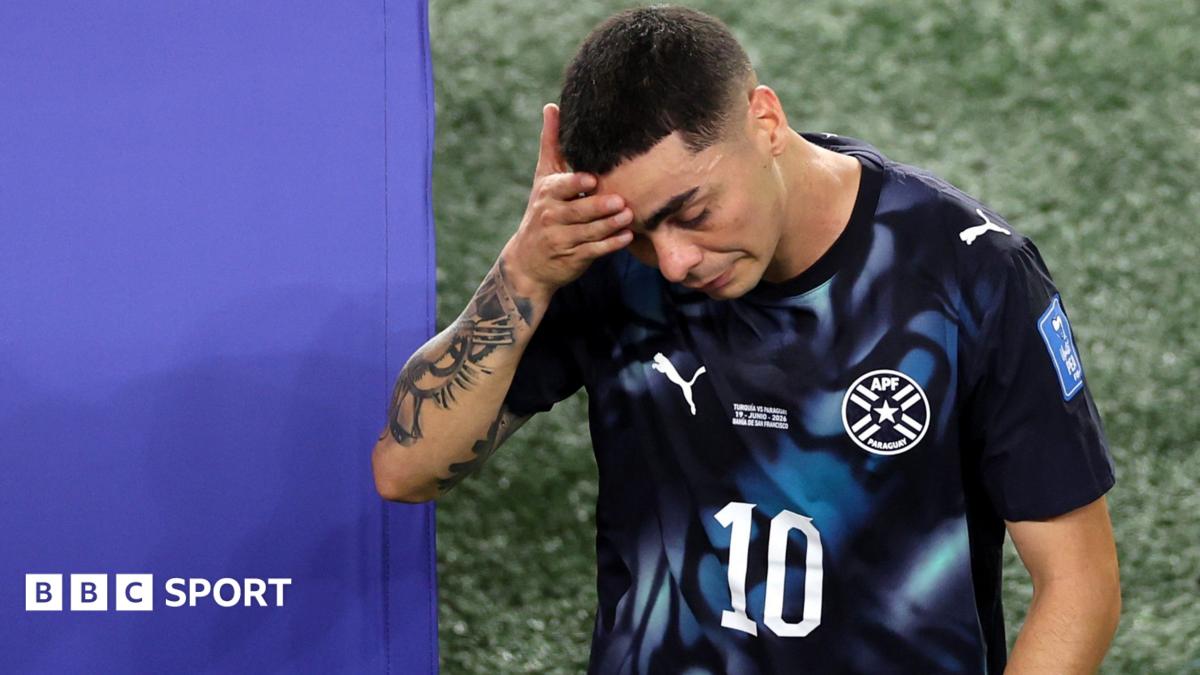
Paraguay’s Miguel Almiron became the first player to be shown a red card for covering his mouth while speaking to an opponent during his side’s World Cup group match against Turkey in San Francisco.

Almiron, 32, obscured his mouth with his hand while speaking to Turkey’s Mert Muldur, who immediately informed an official standing next to him.

Following a check by the video assistant referee (VAR), referee Ivan Barton from El Salvador announced to the crowd that he was sending off the former Newcastle United winger.

The incident occurred just before half-time with Paraguay leading 1-0.

Commentating for BBC Radio 5 Live, former Republic of Ireland striker Clinton Morrison said: “If you know the rules, you shouldn’t do it. You’ve got to credit the referee and the VAR for making that decision.

“Not everyone would agree with it, but if those are the rules, you’ve got to stick by the rules.”

Source link

Ashley Cain’s axed BBC documentary is still on iPlayer after channel bosses admits vetting failure

ASHLEY Cain’s axed BBC documentary is still available to watch on iPlayer.

The reality TV star, 35, came under fire this week after historic tweets were exposed, in which the reality star allegedly made degrading comments about women.

Ashley Cain looking out of a car window.
Ashley Cain’s BBC doc has been axed Credit: BBC/True North

The second series of Ashley Cain: Into The Danger Zone, which was filmed earlier this year, will not air on the BBC – yet the first series remains on the channel’s catch-up service.

It’s after the BBC acknowledged that its vetting process had “clearly failed”.

The Twitter posts made in 2011 and 2013 are said to have referenced extreme sex acts and appeared to make light of consent.

He reportedly used offensive, sexualised and aggressive language about women.

VETTING FAILURE

Ashley Cain’s show axed by BBC after ‘unacceptable’ posts about women


STAR PROBE

BBC launching investigation into Ashley Cain ‘failings’ after his show is axed

Despite this, series one of Ashley Cain: Into the Danger Zone aired in April 2025.

It followed his journey to the world’s most dangerous places, interviewing young men who live on the fringes of society.

Filming for a second series took place earlier this year however, it will no longer air following The Guardian‘s report accusing Ashley of writing derogatory terms in 2014 and 2015 including “sl**s”, “b***hes” and “psychos”.

The newspaper also revealed Ashley was secretly sacked from a BBC job last year for being “drunk on set”.

After the success of his documentary, he was picked to host, Sin City: The Real Las Vegas.

Ashley was flown out to Nevada to film the show but concerns were raised about his conduct.

Appearing to be drunk during filming of the show, the production was suspended and Ashley was ultimately dropped from the project and replaced by another presenter.

Despite this, the incident went largely ignored as Ashley returned to filming with the BBC earlier this year for the second series of his Into The Danger Zone series.

A BBC spokesperson told The Sun:  “The posts by Ashley Cain, albeit from many years ago, are completely unacceptable.”

“The BBC has clear requirements around vetting and social media checks, which are undertaken by the production company.

“In this instance, the process clearly failed and we are investigating why.

“We are continuing to strengthen our processes to ensure everyone working for, and on behalf of, the BBC meets our values and standards.

“We have no plans to broadcast the new series of ‘Into the Danger Zone’, and no future projects with Ashley Cain.”

Source link

After algae clean-up effort, Reflecting Pool’s painted blue bottom is peeling

U.S. National Park Service employees are pictured using a vacuum pump to clean algae off the bottom of the newly repainted Lincoln Memorial Reflecting Pool on the National Mall in Washington, D.C., on Wednesday, which on Friday started peeling and floating to the top of the pool. Photo by Bonnie Cash/UPI | License Photo

June 19 (UPI) — After cleaning algae from the Lincoln Memorial’s Reflecting Pool weeks after its $15 million renovation, the Interior Department now has to deal with blue paint applied to its bottom peeling off.

President Donald Trump‘s renovation of the national monument was meant to clear the water and prevent algae, and included painting the bottom of the pool “American Flag Blue” in the effort to improve it’s look.

The Reflecting Pool has for decades been known for some algae and unclear water, though it was designed to reflect the Washington Monument and sky rather than appear similar to other fountains and water features at monuments that have filtration systems that prevent water from being still enough to reflect their surroundings.

The pool’s new paint job was meant as an upgrade ahead of celebrations for the 250th birthday of the United States of America but after it was refilled following the paint job, green sludge started appearing on the water’s surface — and on Friday, chunks of paint could be seen floating to its top, as well.

The Interior Department on Friday told The Washington Post that it is treating the pool with hydrogen peroxide and a “high-tech nanobubble ozone technology” to prevent algae growth.

Swimming pool experts told The Post that it is possible the resurfacing was improperly installed, or that there could be water seeping under the repainted surface that is causing it to peel.

In posts on X on Wednesday, as the department started treating the water to reduce algae blooms, officials reported that some parts of the pool had seen clearer water as a result.

“The nanobubbler technology and vacuuming have been incredibly effective,” the Interior Department said in one post, “making the water crystal clear with the American Flag Blue coating shining brightly on the bottom of the pool.”

The cost to repaint the pool, along with other enhancements the administration has made, cost more than $14.65 million for the main contract on the work, with another $1.74 million paid to a separate company for the nano bubble technology that is expected to kill algae in the pool, ABC News reported.

According to a lawsuit filed by The Cultural Landscape Foundation, a thorough review of the renovation plans before the administration started work may have identified “potential problems — like algae and exfoliating paint — and, perhaps, suggest solutions.”

“Instead, the Park Service granted themselves a ‘streamlined review,’ which they admitted was done under pressure from ‘White House leadership,'” the TCLF’s CEO Charles Birnbaum told The Post.

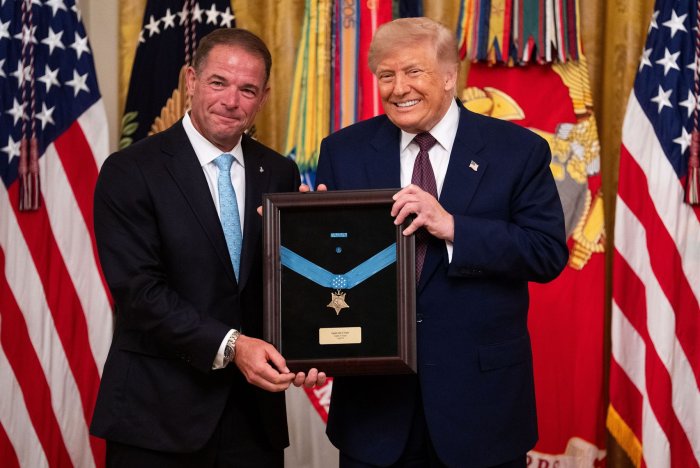
President Donald Trump presents a Medal of Honor to Tom Ripley on behalf of his father, John W. Ripley, during a Medal of Honor award ceremony in the East Room of the White House on Thursday. Photo by Aaron Schwartz/UPI | License Photo

Source link

Mexico City looks to rein in street drinking after massive World Cup party | World Cup 2026

Mexico ‌City’s government said it is considering measures to limit ⁠the sale ⁠of alcohol in public spaces, after more than 700,000 people gathered downtown to celebrate Mexico’s football team advancing to the knockout stage ⁠of the World Cup.

Mexico’s victory against South Korea saw massive street celebrations, with fans dressed in green El Tri jerseys or wearing colourful Lucha ⁠Libre masks and dancing in the rain, waving flags, singing anthems and blowing on vuvuzelas.

Recommended Stories

list of 4 itemsend of list

The next morning, Reforma Avenue — one of the city’s main arteries — was littered with rubbish, and many of its yellow cempasuchil flowers had been ‌trampled over. Authorities collected some 40 tonnes of waste around the historic centre.

Mexico City’s government secretary Cesar Cravioto told a news conference on Friday that part of the government’s duty of care during the massive football event is prevention, and this involves controlling illegal sales of alcohol on the streets.

Cravioto said the government would ask restaurants and bars in ⁠the area to prevent customers from taking alcoholic ⁠drinks off premises and that convenience stores nearby could be asked to stop selling alcohol in the hours before a big game.

The government said it was planning on setting up ⁠seven more large screens around the centre-in addition to the current 12 — to help disperse crowds, ⁠and that it would deploy more personnel ⁠to limit the sale of beer by street vendors.

“We will keep insisting that fans have fun but without excessive alcohol consumption,” Cravioto said.

In Boston, another World Cup host city, Scottish fans, ‌known as the “Tartan Army”, drank such vast quantities of beer after Scotland’s team beat Haiti 1-0 at the city stadium that several bars reported ‌running dry.

Mexico is set to face the Czech Republic in the group stage on Wednesday.

Source link

Netflix is under contract to buy L.A. studio lot seized by Goldman

Netflix Inc. is under contract to buy Radford Studio Center, a historic Los Angeles movie studio space, for a fraction of its 2021 $1.85-billion sale price after lenders including Goldman Sachs Group Inc. repossessed the property.

The price is close to $400 million, according to two people with knowledge of the transaction, which is expected to close in the third quarter.

The Times reported in April that Netflix had plans to buy the studio property.

The one-time silent movie lot has been home to many popular TV series over the decades, including “Gunsmoke,” “Gilligan’s Island” and “Seinfeld.”

Netflix wants to consolidate its real estate footprint in one place and has been considering relocating from a group of Hollywood buildings it leases from Hudson Pacific Properties Inc. The Hudson Pacific leases expire in 2031.

Radford’s current owner, Hackman Capital Partners, defaulted on $1.1 billion of bondholder debt and turned the property over to lenders led by Goldman after it was unable to reach a refinancing deal last year. The sale will wipe out close to two-thirds of the debt.

The value of Los Angeles studio real estate has tumbled since interest rates climbed and production plummeted following strikes in 2023 by unions representing writers and actors. Landlords unaffiliated with studios, such as Hackman, have been hit particularly hard as production moved to space owned by the entertainment giants. Occupancy of L.A. soundstages fell to 62% in the first half of last year, according to FilmLA, a local permitting group.

Representatives of Goldman and Netflix declined to comment. A Hackman representative didn’t immediately provide a comment.

Netflix, which has historically leased rather than owned real estate, has stepped up investing in studio lots. It’s currently developing a $1-billion production center in Fort Monmouth, N.J. The streaming service reported $12.3 billion in cash and equivalents in its most recent quarter. Netflix was paid a $2.8-billion breakup fee by Paramount Skydance Corp., which won a bidding war for Warner Bros. Discovery Inc.

Before the recent slowdown, Hackman went on a buying spree of movie lots, banking on ever-growing demand for streaming TV production. In March, Deutsche Bank AG sued Hackman to foreclose on its Kaufman Astoria Studios in New York. Hackman-owned Television City in Los Angeles and Manhattan Beach Studios in nearby Manhattan Beach are both being marketed after lenders led by Deutsche Bank pushed for the sale, Bloomberg reported in May.

Brokerage Cushman & Wakefield Ltd. is selling the $240-million loan on the 22-acre Manhattan Beach property, which it describes in a marketing document as “one of the most strategically positioned opportunities in coastal Los Angeles, combining an institutional-quality operating asset with some of the most irreplaceable underlying land in the South Bay.”

The Radford Studio lot was only 71% leased as of March, according to mortgage filings.

Gittelsohn writes for Bloomberg.

Source link

Morocco beat Scotland 1–0 as Saibari scores fastest World Cup 2026 goal | World Cup 2026 News

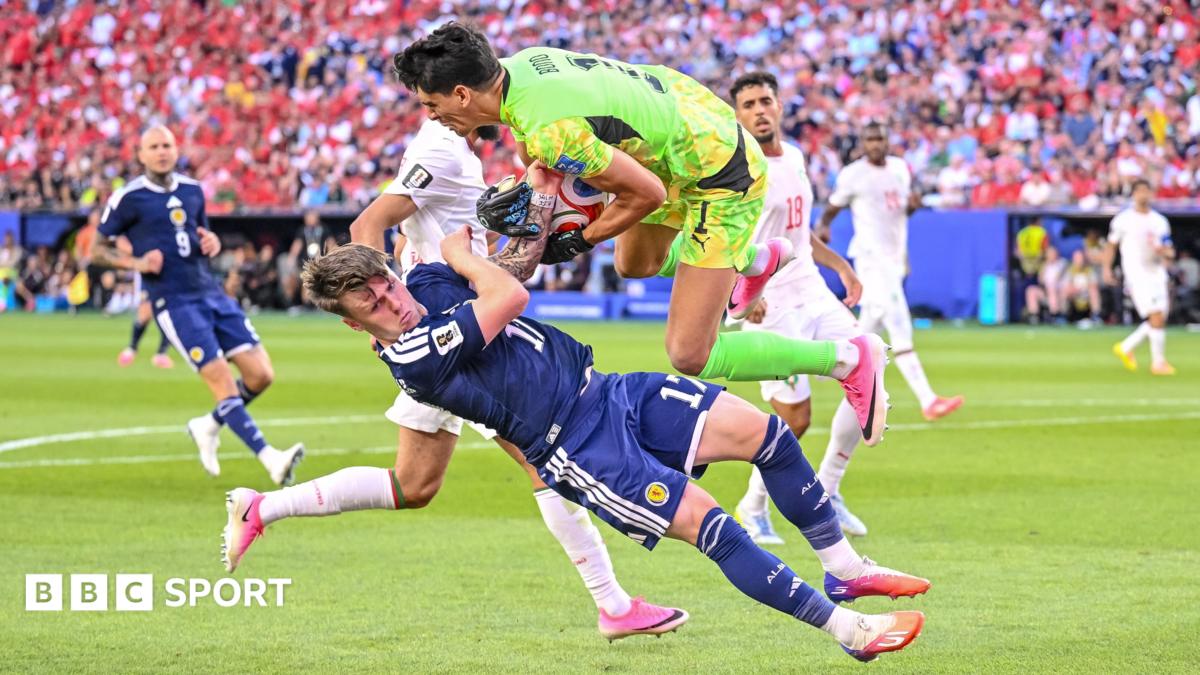
Ismael Saibari scored the fastest goal of the World Cup 2026 so far after just 71 seconds as Morocco beat Scotland 1-0 to close in on a place in the knockout rounds.

Saibari scored in Morocco’s opening 1-1 draw with Brazil last weekend, and his clinical finish with just over a minute gone settled a hard-fought, physical contest at Boston Stadium on Friday.

A crowd of 64,146 fans turned up at the venue in Massachusetts, United States.

The 25-year-old, who was born in Spain and raised in Belgium, is reportedly on the brink of a $63m transfer from Dutch champions PSV Eindhoven to Bayern Munich.

The quality of his strike past goalkeeper Angus Gunn showed why he is attracting such interest, and it was telling that Scotland lacked the same quality in the opposition box — that helps explain why Morocco are ranked fifth in the world, and Scotland 40th.

With four points from two games, Morocco are now primed to advance to the last 32 as they aim to at least match their historic run to the semifinals in Qatar in 2022.

However, it was a sobering evening for Scotland and their army of fans who have taken over Boston during this World Cup, as their team never really tested Morocco goalkeeper Yassine Bounou.

The laboured 1-0 win over Haiti in their opening game at the same stadium last weekend — which was their first victory at a World Cup since 1990 — gave them a platform to build on and reason to believe they can progress beyond the group stage at a World Cup for the very first time.

Another win here would have secured progress from Group C, but their chances of going further remain up in the air going into their next match against Brazil in Miami next Wednesday.

Moroccan coach Mohamed Ouahbi went with an unchanged starting lineup here following the Brazil clash, but opposite number Steve Clarke made three changes.

Clarke sought to reinforce his defence, meaning striker Lawrence Shankland dropped out as defender Kieran Tierney came into the side to make a back five.

But that was of little use as Morocco went ahead practically from kickoff.

The assist came from Real Madrid’s Brahim Diaz, and Grant Hanley played Saibari onside as the latter latched onto the ball over the top, controlled it and rifled high into the net.

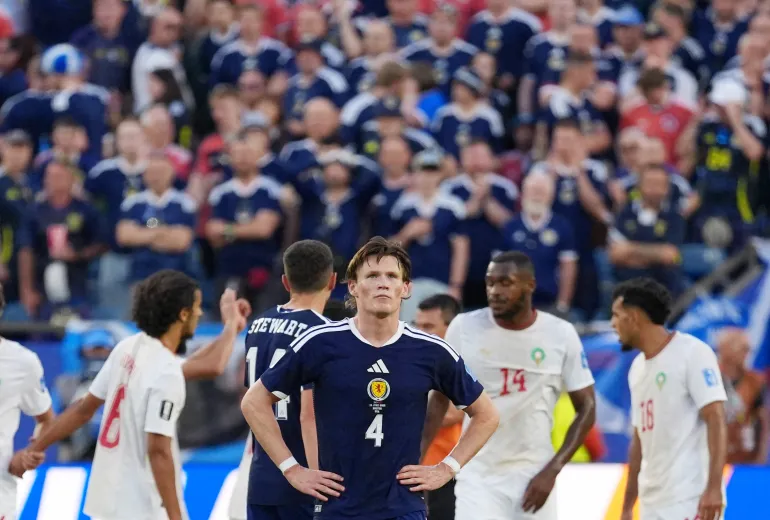
Soccer Football - FIFA World Cup 2026 - Group C - Scotland v Morocco - Boston Stadium, Foxborough, Massachusetts, U.S. - June 19, 2026 Scotland's Scott McTominay looks dejected after the match IMAGN IMAGES via Reuters/David Butler Ii
Scotland’s Scott McTominay looks dejected after the match [David Butler II/Reuters]

Morocco, who defeated Scotland 3-0 when the teams met at the 1998 World Cup, threatened to overrun their opponents every time they got forward but were wasteful, with Bilal El Khannouss squandering a good chance on 36 minutes.

Scotland were as stodgy in attack as they have been for a long time, and it took until first-half stoppage time for them to create anything dangerous.

That was a cross whipped in from the left by skipper Andy Robertson that John McGinn was unable to make anything of, and the opening period ended without Bounou needing to make a save.

Morocco hit the woodwork five minutes into the second half as Saibari met a cutback by El Khannouss, and his attempt was deflected onto the bar by Jack Hendry.

Moments later, Gunn made a fine stop to keep out an El Khannouss header from a corner taken by Hakimi, who was regularly booed by the crowd.

Morocco nevertheless seemed content to see the game out and soak up what Scotland could throw at them.

Ryan Christie fired over on 64 minutes after being teed up by Scott McTominay, who hit the side-netting late on, but a Scotland goal proved elusive.

Morocco face Haiti in Atlanta on Wednesday, while Scotland face Brazil in Miami.

Soccer Football - FIFA World Cup 2026 - Group C - Scotland v Morocco - Fans gather in New York City - New York City, New York, U.S. - June 19, 2026 Morocco fans celebrate after the match at the Brooklyn Bridge park watch party IMAGN IMAGES via Reuters/Caean Couto
Morocco fans celebrate their team’s win at a watch party in New York [Caean Couto/Reuters]

Why was Achraf Hakimi booed?

Morocco’s captain Achraf Hakimi was named in the starting lineup hours after it was confirmed he must stand trial in France on rape charges.

Loud boos rang out from the Scottish fans when Hakimi’s name was read out and every time he touched the ball during the game.

The Paris Saint-Germain (PSG) defender said in a statement earlier in the day that he faced trial on a rape charge and welcomed the opportunity to put across his point of view.

Hakimi had appealed his referral to a criminal court.

French media reported earlier that the Versailles appeals court had rejected the appeal, paving the way for his trial in a criminal court at some point in the future.

“Today, a story that isn’t mine is being told at the expense of my family, my life, and above all, ⁠⁠the truth. Sometimes I feel like ⁠⁠I’ve become an easy target,” Hakimi wrote in a post on the social media platform X.

“I’ve been waiting for this trial since day one. And now I’m looking forward to it. Finally, I’ll be able to speak out.”

Morocco's Achraf Hakimi celebrates at the end of the World Cup Group C soccer match between Scotland and Morocco in Foxborough, Mass., near Boston, Friday, June 19, 2026. (AP Photo/Martin Meissner)
Achraf Hakimi celebrates Morocco’s win [Martin Meissner/AP Photo]

Source link

Cunha hits Brazil double against Haiti to seal first World Cup 2026 win | World Cup 2026 News

Manchester United’s Matheus Cunha scores Brazil’s first two goals in 3-0 win against Haiti as FIFA event progress nears.

Vinícius Junior scored and assisted on one of Matheus Cunha’s two goals as five-time champion Brazil eliminated Haiti from the World Cup with a 3-0 victory.

Haiti, the Western Hemisphere’s poorest nation that qualified for the World Cup for the first time since 1974, became the first team guaranteed not to reach the knockout round. Meanwhile, the Selecao got the decisive performance they needed on Friday.

Recommended Stories

list of 4 itemsend of list

Cunha, the Manchester United standout, got the start and showed with every surf-and-slide goal celebration why he should have been in the starting lineup in Brazil’s listless 1-1 draw against Morocco. Brazil coach Carlo Ancelotti made the surprising decision in the opener to instead insert Cunha as a late substitute.

Cunha thrilled the Brazilian fans who made up the bulk of the 68,324 spectators at Philadelphia Stadium when he tapped in a rebound for his first career World Cup goal. He then sent a left-footed strike into the upper left corner for a 2-0 lead in the first half against the overmatched Haitians.

Brazil forward Raphinha, who was subbed out with an injury in the first half, had an early goal disallowed on an offside call that only temporarily muted the yellow-clad Seleção fans in an otherwise festive atmosphere at the home of the two-time Super Bowl champion Philadelphia Eagles — whose cheerleaders did their part to rally the crowd.

Haitian fans danced and sang “Grenadye Alaso” (“Grenadiers to the Attack”), the traditional battle cry of the national team. Brazilians chanted back, reminding them their country is the five-time World Cup champion and the home of the king of soccer: “A thousand goals, a thousand goals, a thousand goals, a thousand goals, a thousand goals! Only Pele, only Pele!”

Cunha added to the frivolity in Philadelphia, home to nearly 6,000 Brazilian immigrants, when he flashed his familiar surfing celebration.

Vinícius, whose 32nd-minute goal helped Brazil earn the tie against Morocco, helped Brazil get on the board when his shot was stopped by goalkeeper Johny Placide and Cunha was there to slam home the rebound to make it 1-0. Cunha extended both arms as if trying to catch some tasty waves and was mobbed his teammates.

Vinícius slid a pass through the defense to find Cunha and he powered one high into the net that Placide never had a chance to stop to make it 2-0. Cunha slid on his stomach and mimicked a swimming motion that all but put Haiti in the drink — and validate the Brazilians’ fans decision not to tempt fate and dress the Rocky statue in team gear for bad luck.

Vinícius closed the half with a goal and that was enough to keep Brazil — seeking its first World Cup title since 2002 — happy before it closes Group C play against Scotland on Wednesday in Miami Gardens, Florida.

Neymar was ruled out of Brazil’s second straight match because of a lingering calf injury.

Source link

Coronation Street fans floored as they only just realise Ryan star’s past Emmerdale role

Coronation Street fans were left gobsmacked after discovering that Ryan Connor star Ryan Prescott previously appeared on rival soap Emmerdale

Coronation Street viewers have been left stunned after only just discovering Ryan Connor actor Ryan Prescott previously featured in rival soap Emmerdale.

On Thursday, ITV’s Instagram account posted an entertaining soap crossover feature, highlighting all the Coronation Street and Emmerdale stars who’ve graced both programmes.

While fans recognised familiar soap-hopping actors including Claire King, who portrays Kim Tate on Emmerdale and played Erica Holroyd on Corrie, alongside Chris Bisson, who plays Jai Sharma in Emmerdale and portrayed Vikram Desai in Corrie, audiences were astonished to spot a ‘forgotten’ performer.

The post featured Corrie’s Ryan Connor actor Ryan Prescott, who played Flynn Buchanan in Emmerdale back in 2011.

Throughout Flynn’s stint in the village, he briefly romanced Aaron Dingle, portrayed by Danny Miller, though Aaron remained hung up on his former boyfriend Jackson Walsh, played by Marc Silcock, reports the Daily Star.

Reacting in the comments section, soap enthusiasts were left astounded by the revelation, with some having completely forgotten Ryan’s Emmerdale appearance while others were unaware of the soap crossover altogether.

One viewer exclaimed: “Omg I forgot Ryan was in emmerdale!” to which another account responded: “Such a throwback!”.

Meanwhile, another account posted: “Wow x” with a different fan contributing shocked emojis.

Another enthusiast wrote: “The only one I remember being in another soap is Jai!” while a separate viewer commented: “Wow that’s insane to look at in the Past and the Future.”

Coronation Street’s Ryan first appeared on the ITV soap back in 2006, with the character originally played by Ben Thompson – Ryan Prescott, 37, stepped into the role in 2018. As the son of Michelle Connor (Kym Marsh), it wasn’t long before Ryan became entangled in a host of dramatic storylines.

In forthcoming scenes, Ryan heads out on a date with fellow Weatherfield resident Jodie Ramsay (Olivia Frances Brown) – who has caused quite a stir since making her soap entrance earlier this year.

According to spoilers for next week, Jodie lets slip that she’s lined up a date. When David Platt (Jack P. Shepherd) inadvertently mentions he’s due to meet Nick Tilsley (Ben Price) at the bistro, Jodie devises a cunning plan.

Jodie meets her date, Ryan, at the bistro, and when David arrives, Jodie turns on the charm in a bid to ignite David’s jealousy…

Coronation Street airs Monday to Friday at 8:30pm on ITV1 and ITVX

Source link

Lebanese influencer organises World Cup event amid Israel’s attack on Leban | World Cup 2026 News

NewsFeed

As Israel’s war on Lebanon rages, hundreds gather in Rmeileh by Sidon Gate to watch the 2026 World Cup. Organised by influencer Bilal Haddad, the fan zone offers food trucks, shisha and family activities, giving people a rare chance to relax. Al Jazeera’s Justin Salhani went to check it out.

Source link

Flawed but relentless Scotland show themselves as men of substance

Clarke’s masterplan, so to speak, was playing Kieran Tierney ahead of Robertson on the left, two vastly experienced operators to deal with the threat of Hakimi and Brahim Diaz.

A risk, for sure. And so much for the thinking behind it. Just over a minute gone – Diaz assist, Ismael Saibari goal, the nightmare scenario come true.

The traffic cone guys weren’t letting such trifling issues dampen their day.

Everybody else had a haunted look about them, their noise and passion reduced to soft groans, the lusty pride they all displayed with another thumping rendition of Flower of Scotland now replaced with shrieks as Morocco ran amok.

Or threatened to run amok. Seventy seconds it took them to score. For much of the opening half they were like a cultured fighter, boxing the ears off an over-matched rival, bamboozling their punchbag with their movement before what felt like an inevitable knockout.

Scotland were on the ropes, covering up and praying that the punishment would stop. And minute by minute, it did.

Morocco’s intensity was wonderful for half an hour and they could have been two or three ahead by then, but they weren’t. They’re terrific footballers, very easy on the eye, but they’re not ruthless, not killers. Scotland’s resilience kept them in it.

When Morocco’s energy started to dissipate, it became a contest.

Scotland finished the opening half strongly, their confidence rising, those worried stares on the faces of their supporters giving way to blessed hope.

Source link

MAFS stars have their ribs ‘recontoured’ and ‘pushed in’ after flying to Bali for surgery that’s illegal in Australia

MAFS Australia stars Bec Zacharia and Awhina Rutene have revealed they’re going under the knife to have their ribs “recontoured” in a procedure that’s illegal in Australia.

Bec, who became one of the most controversial stars of the latest series, said she had been flooded with hate by nasty trolls commenting on her appearance.

MAFS bride Bec has revealed she’s going under the knife to have her ribs ‘recontoured’ Credit: E4
The TV star admitted she’s been constantly trolled over her appearance Credit: Nine

The reality star, who tied the knot with Danny Hewitt on the show, has previously been open about her drastic weight loss, losing over 4st.

In a new video with influencer Joshua Fox, Bec admitted she still had a lot of loose skin that she was desperate to get rid of as she flew to Bali for the procedure.

Speaking to the influencer, she said: “I’ve got a lot of loose skin, this is the most vulnerable I’m ever going to be because there are parts of me that I can’t stand looking in the mirror.

“Your body, your choice, what you feel confident with and what you feel comfortable, f***ing do it.

Awhina Rutene is also set to have the same procedure in Bali Credit: Channel Nine
MAFS’ Awhina Rutene and Adrian Araouzou have had a tumultuous experience on the show Credit: Channel Nine

“So why are all these Karen’s coming at me. Let me get my ribs done.”

The TV star said: “No one wants to look like me, see this sloth over here.

“Get your teeth done, get your jaw done, get your skin done, get your nose done, trust me if I could I would.”

Joshua shared his fears, saying: “It’s not available in Australia yet because it take a long time for things to be approved there.

“I just worry it sets this new standard.”

Meanwhile, second bride Awhina, who starred on the show in 2025, said she was also planning to undergo the same procedure to achieve a more “hourglass” figure.

She said: “There was no way I was going to be removing ribs from my body where it’s protecting vital organs, I was really worried about all of that.

“But I looked into it, it’s rib contouring, where they are going to angle my rib inwards to give me that natural hourglass silhouette.

“I’m not worried that I’m a blue print for anyone else.”

Joshua captioned the post: “In a matter of hours, Bec, Awhina and the other influencers on this trip will all undergo the ‘rib recontouring’ procedure here in Bali. But why are they doing this? And do they think they’re setting a dangerous example?

“Ep 2 of the investigative pod series out now. Follow here for part 3 and our journey in the hospital.”

In May, Bec returned to social media after her ‘ban’ over a dress scandal as she’s mocked by her show rival.

The TV star endured an explosive time during her Married At First Sight stint with groom Danny amid clashes with bride Gia Fleur.

Just weeks after Bec was dumped at Final Vows her actions caused her Instagram account to be deleted from the platform entirely.

Bec claimed that her main profile was removed after she was reported by other users because she was involved in drama with an Australian designer bridal rental company reports Heart.

Now, Bec is back on Instagram and captioned a series of images: “Sticks and stones may break our bones, but names will NEVER hurt us.”

The images included a smiling Bec posing alongside MAFS bride Alissa Fay who was also blindsided at the end of the series.

Brides Gia and Bec clashed several times throughout the season after failing to hit it off just minutes into meeting during the hen party.

And after the dress scandal, Gia took to social media and mocked Bec saying: “In the light of what’s going on just now with some people losing their Instagrams and people acting at fashion week above people.

“Let’s be humble.”

Gia then modelled a $12 dollar outfit and explained that nobody knew them before the show as she appeared to then impersonate Bec.

Gia’s followers flocked to comment and one said: “Still attacking Bec.”

Another said: “Let’s be humble. Then goes on to talk about someone else… that’s also not being humble.”

A third added: “The impression at the end was funny.”

Awhina and show husband Adrian had a highly turbulent relationship.

They chose to stay together at final vows, but split just a few days later.

Source link