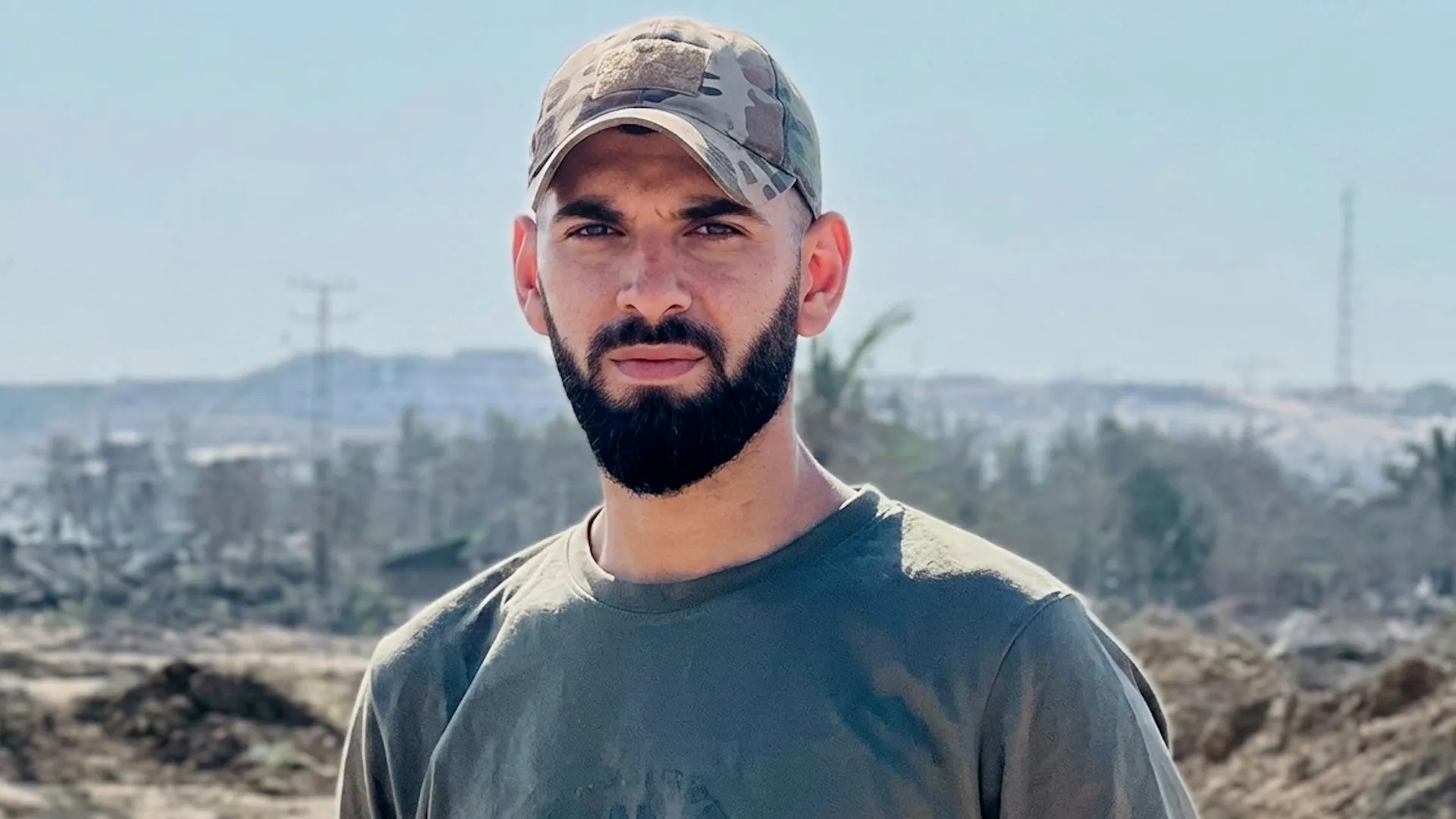
Al Jazeera cameraman Ahmed Wishah dedicated his life to documenting the voices of his people, showcasing their grief, displacement, survival and resilience under Israel’s genocidal war on Gaza, before he was killed by an Israeli attack.
President Volodymyr Zelenskiy warned that Russian forces are preparing for a large-scale attack on Ukraine, urging residents to be cautious and pay attention to air raid alerts. In his nightly address, he noted that recent Russian strikes have resulted in at least six deaths across various regions. There has been a pattern of heavy attacks on Kyiv and other major cities, with ten fatalities reported last Monday. The historic Pechersk Lavra monastery was also significantly damaged during these strikes.
Zelenskiy confirmed that Ukrainian military efforts would continue, targeting the oil sector. Recently, Ukrainian drones struck an oil refinery in Tyumen, western Siberia, and an oil facility in Moscow twice. On Saturday, Russian forces used glide bombs to attack the city of Zaporizhzhia, resulting in five deaths and ten injuries. Other attacks included a bombing near Sumy that killed one person, as well as drone strikes in the Kherson region and shelling in Poltava that injured three children.
“Toy Story 5,” the latest installment to one of Disney Pixar’s longest-running franchises, topped the box office this weekend.
The tech-fueled tale, led by fan favorite characters Woody, Buzz Lightyear and Jessie, earned $160 million for its opening weekend at the domestic box office and a global total of $312 million, according to Rentrak Data. The animated feature now holds the biggest box office opening of the year, further signaling what could be a massive summer for theaters.
“Toy Story 5” features the original cast, including Tom Hanks as Woody, Tim Allen as Buzz Lightyear and Joan Cusack as Jessie. The story follows the beloved band of toys as they grapple with the introduction of technology into their home, with a tablet named Lilypad. The production budget for “Toy Story 5” is about $150 million to $200 million, and a crew of about 300 people worked on the film at Pixar’s Emeryville, Calif., headquarters.
“Tech versus toys is a very easy concept for families and parents to grasp. Every family goes through that to some degree,” said Andrew Cripps, head of theatrical distribution for Walt Disney Studios.
With the successes of “Inside Out 2” and “Zootopia 2,” sequels have proved to be dependable releases for Disney and Pixar in recent years. But “Toy Story” has been a steadfast juggernaut for the entertainment giant. This new release marks a new debut weekend record for the 31-year-long franchise, beating the nearly $121-million opening of 2019’s “Toy Story 4.” The original opened with $29 million in 1995, 1999’s “Toy Story 2” hit $57 million, and the third installment from 2010 received $110 million.
“The franchise is just so big,” Cripps added. “It’s in the theme parks. The consumer products keep it alive. It’s been 31 years with five movies, so it’s not like it’s overstayed its welcome. They’re very good at Pixar. They tell a story when they have a story worthwhile telling, and it feels like this one was worthwhile.”
Across the franchise’s lifetime, “Toy Story” has grossed more than $3 billion worldwide. The new movie also landed the second-highest animated opening weekend of all-time, behind only “Incredibles 2,” which earned $182 million.
With this uptick, there’s a chance the box office could climb back to pre-pandemic numbers. The 2026 box office is tracking 1.1% behind the summer of 2019 and 16% ahead of last year, according to Paul Dergarabedian, head of marketplace trends at Rentrak data.
“The industry’s on a roll,” Dergarabedian said. “There’s some unpredictable things that have happened so far this year, with the holdover strength of ‘Project Hail Mary,’ ‘Michael’ and ‘The Devil Wears Prada 2.’ Their worldwide grosses are incredibly impressive. It’s a phenomenon.”
“Toy Story 5” is just the first of several theatrical tentpoles hitting the big screen later this summer. Rentrak predicts this could be another $4-billion summer season domestically, following in the steps of the 2023 “Barbenheimer” summer.
Nathan Ngoy sent off for hauling down Mehdi Taremi, whose first-half strike was called offside, in a close Group G match.
Published On 21 Jun 202621 Jun 2026
Belgium were held to a scoreless draw by Iran in a frustrating encounter that saw the Red Devils reduced to 10 men and facing the possibility of group-stage elimination for a second consecutive World Cup.
A star-studded, though ageing, lineup, including Kevin De Bruyne and Romelu Lukaku, was fortunate to leave Los Angeles with a point on Sunday.
Recommended Stories
list of 4 itemsend of list
Belgium controlled possession yet ceded the game’s best chances to a resolute Iranian defence.
Iran’s Mehdi Taremi had the ball in the net from a well-worked first-half free kick that was overturned for offside by VAR, while Nathan Ngoy was sent off after the break for hauling down the striker following a badly mishit back-pass.
The result means all three games in Group G so far have ended in draws. Stuck on two points, Belgium at least have the comfort of playing the tournament’s lowest-ranked team, New Zealand, in their final group game.
Iran will also need at least a point against Egypt next Friday. Having been frustrated by visa issues while travelling from their base camp in Mexico to play games in the United States, Team Melli will hope to focus on the football as travel restrictions are reportedly easing for their crucial trip to Seattle.
For the second Iran game running, protesters from Los Angeles’s large Iranian-American community gathered at the stadium to chant against the country’s current regime.
Inside the stadium, Iran’s anthem again drew a chorus of boos and whistles, a reception at odds with the response to the players themselves, who were loudly cheered throughout the game.
Having switched to a back five, Iran sat deep in the first half, allowing Belgium to dominate possession and play hundreds of passes around their penalty area without creating any clear-cut opportunities.
Target man Lukaku, back in the starting lineup after making an impact from the bench in Belgium’s 1-1 draw with Egypt, managed a solitary headed effort in the 36th minute, which sailed over the bar.
Iran had the first half’s two best chances, entirely against the run of play. Hossein Kanani’s low shot after a long throw was well saved by an outstretched Thibaut Courtois.
And Iran’s star striker Taremi had the ball in the net midway through the half after a cleverly worked free kick, but it was ruled offside.
The former Inter Milan man spun away from Belgium’s wall, swivelled and buried the ball, before VAR overruled the effort, to the dismay of a vocally pro-Iran crowd.
After the break, Belgium continued to huff and puff, while Taremi again nearly scored at the other end. Courtois did well to save after Kanani had flicked on a long throw to the Iran forward.
Belgium coach Rudi Garcia made a triple substitution around the hour mark, and his side immediately came close – Maxim De Cuyper’s point-blank effort from De Bruyne’s cut-back was well saved.
Substitute Hans Vanaken blasted a shot from a rebound well over the bar moments later, as the Red Devils finally began to knock on Iran’s door in earnest.
But disaster struck for Belgium as Ngoy was sent off. The centre-back had badly under-hit a pass back to Courtois and raised his arm into Taremi as the striker raced through on goal.
The game settled into a nervous, scrappy stalemate, though De Cuyper again came close with a low effort from just outside the box.
Renowned turtle conservationist Mona Khalil had been wounded in an Israeli attack in southern Lebanon.
Published On 21 Jun 202621 Jun 2026
Mourners have gathered in Beirut to pay their respects to a much-loved Lebanese conservationist who died from wounds caused by an Israeli strike on her home on the country’s southern coast.
Mona Khalil, 77, who spent more than two decades protecting sea turtles along Lebanon’s coastline, was critically injured in the attack in the village of al-Mansouri in Tyre province on June 4 and succumbed to her wounds more than two weeks later, on Friday.
Recommended Stories
list of 4 itemsend of list
News of her death triggered an outpouring of grief among environmentalists and those who volunteered and worked with her over the years, many of whom gathered in Beirut on Sunday.
The Orange House Project, which Khalil helped build into a small conservation hub and ecotourism site in al-Mansouri, became a refuge for endangered loggerhead and green sea turtles and a training ground for volunteers documenting nesting activity along the coast.
Khalil was born in Lagos, Nigeria, in 1949. She held Dutch as well as Lebanese citizenship, having lived in the Netherlands before returning to Lebanon and settling in what had once been her grandmother’s home – the building that would later become known as the Orange House.
At the heart of Khalil’s work was a narrow stretch of coastline, al-Mansouri beach, where a fleeting encounter with a turtle that had emerged from the ocean to lay its eggs in 1999 propelled her on a lifelong journey devoted to animals.
Each nesting season, Khalil and volunteers would patrol the beach at night, marking fresh tracks in the sand and carefully relocating vulnerable nests away from human activity and coastal light pollution.
Journalist and environmental activist Fadia Jomaa first met Khalil in 2016 while researching sea turtles in Lebanon and then decided to volunteer with her project.
During the previous war between Israel and the Lebanese armed group Hezbollah in 2024, Khalil initially refused to leave al-Mansouri beach, Jomaa said. The Lebanese army ultimately persuaded her to evacuate for her safety.
“She was the last one to leave the area,” Jomaa noted.
“She had an awful time in Beirut,” the journalist said, adding that Khalil longed to return to the south, to the Orange House and the beach she had spent years protecting.
“She used to say, ‘My soul will stay here,’” Jomaa said, recalling conversations in which Khalil would point to an olive tree or a small hill overlooking al-Mansouri beach. “She used to say, ‘This is where you will bury me.’”
Where Khalil will ultimately be buried remains uncertain and is tied to the security situation in the area, Jomaa said.
REESE Witherspoon has officially passed over the Legally Blonde torch – in the form of a pink dress she wore 25 years ago.
Original Elle Woods actress Reese, 50, handed the baton to newcomer Lexi Minetree, who will play the bubblegum princess in a TV series based on the iconic film.
Sign up for the Showbiz newsletter
Thank you!
Reese Witherspoon has officially passed over the Legally Blonde torch – in the form of a pink dress she wore 25 years agoCredit: AlamyNewcomer Lexi Minetree will play the bubblegum princess in a TV series based on the iconic filmCredit: Getty
In Amazon Prime’s prequel, out on July 1, we meet teen Elle in high school before she was a fish-out-of-water at Harvard Law School.
Not only is Lexi, 25, stepping into Reese’s shoes she’s also slipping into her dress, wearing the exact Marc Jacobs frock Reese wore to the film’s premiere in 2001.
She borrowed it for an appearance on the Jimmy Kimmel chat show this week.
Reese said Lexi’s audition tape “took her breath away” and paid tribute to the actress this week at a 25th anniversary celebration of the franchise.
Legally Blonde became a cultural phenomenon, celebrated for breaking stereotypes, its iconic pink fashion and making famous phrases like “Bend and snap”.
Lexi and Reese attend the launch as Prime Video celebrates Elle World pop-up event in New YorkCredit: GettyReese said: ‘I think our series’ themes of kindness, authenticity, and believing in yourself will resonate deeply with fans of the original films and new audiences alike’Credit: Alamy
Based on the 2001 novel by Amanda Brown, the story of a ditzy blonde sorority-girl-turned-lawyer, it was a breakout role for Reese, propelling her to global stardom and earning her a Golden Globe nomination.
Moving from infront of the camera to behind it with her Hello Sunshine company, executive producer of the prequel Reese said: “Twenty-five years after the world met Elle Woods for the first time, it’s a dream come true to share the story of how she became the unstoppable force we all fell in love with.
“I think our series’ themes of kindness, authenticity, and believing in yourself will resonate deeply with fans of the original films and new audiences alike.”
Season one of Elle begins in 1995, where the doe-eyed teen is forced to move from glitzy LA to Seattle.
There she encounters tricky friendships, forbidden romance, and questionable fashion choices.
It’s already been greenlit for a second series despite not hitting screens yet.
Weekly insights and analysis on the latest developments in military technology, strategy, and foreign policy.
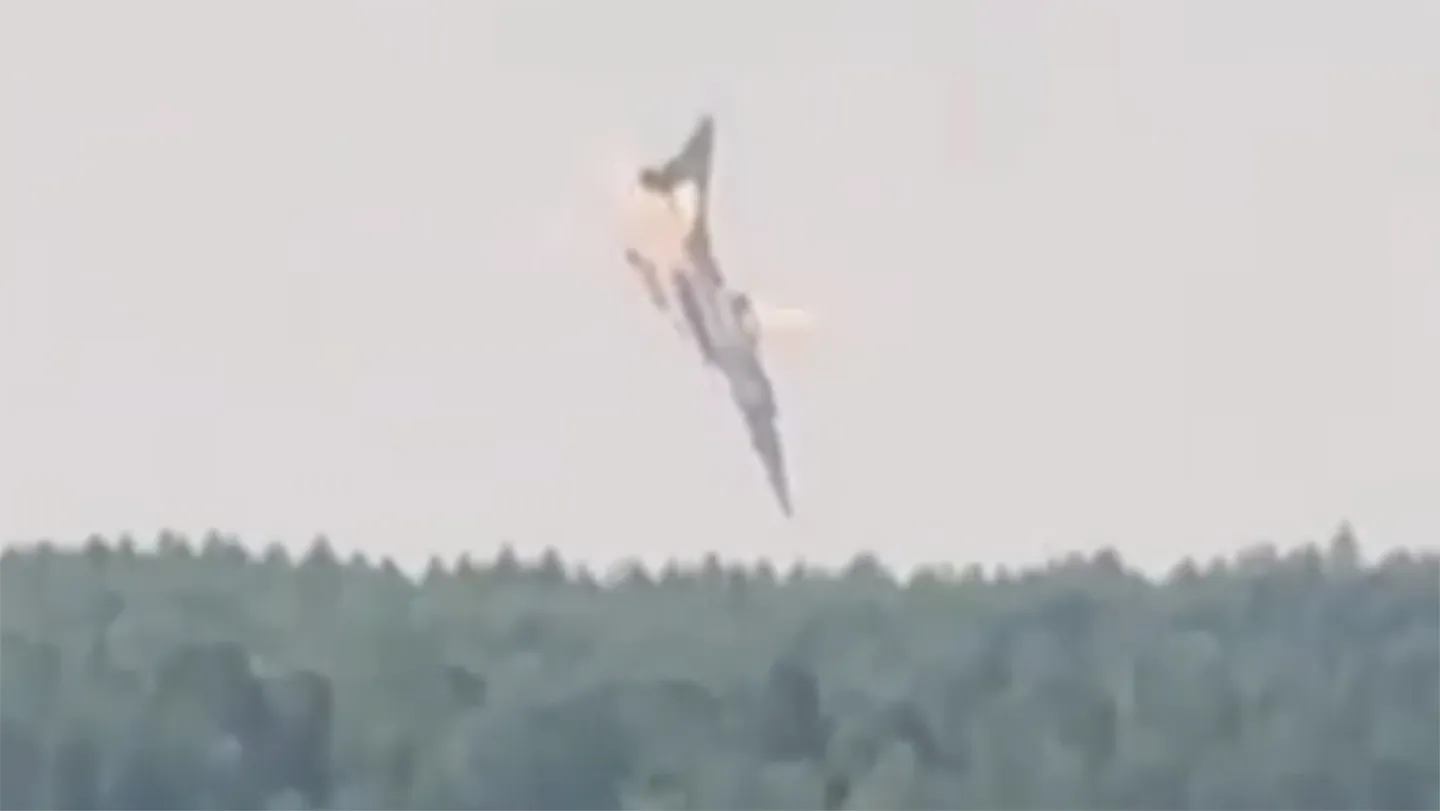
Multiple videos circulating on social media show the crash of a Russian Tupolev Tu-22M3 Backfire-C bomber today. Footage shows the swing-wing bomber entering a steep nose-down dive before slamming into the ground, producing a large plume of black smoke. The footage has not been independently verified, but Russian authorities have confirmed the loss of the aircraft.
The Russian Ministry of Defense said the Tu-22M3 crashed while making an approach to land in the Irkutsk region, in southeastern Siberia, during what it described as a routine training flight. According to the ministry, the bomber was not carrying a combat load, all crew members ejected safely, and there were no casualties or damage on the ground. The cause of the crash has not been disclosed, and an investigation is underway.
The governor of the Irkutsk region, Igor Kobzev, said that the aircraft crashed in the Bokhansky district, near the village of Kamenka. Kobzev added that the crew had been found by local people after ejecting and were already getting medical treatment.
Belaya, near Irkutsk, is an important Backfire base, accommodating the 200th Heavy Bomber Aviation Regiment.
The Tu-22M3 remains a key component of Russia’s Long-Range Aviation fleet and has been used extensively in the war against Ukraine to launch cruise missile strikes in standoff attacks. This makes any loss of the type noteworthy even when it occurs outside of combat operations, as was the case today.
A video from May 2022 that purports to show the launch of Kh-22 cruise missiles, as seen from the cockpit of a Tu-22M3:
The launch of two supersonic cruise missiles kh-22 from a long-range supersonic missile-carrying bomber Tu-22. 📹fighter_bomber pic.twitter.com/kAXU9pP5KW
— Massimo Frantarelli (@MrFrantarelli) May 11, 2022
During the conflict, Ukraine claims to have used a Soviet-era S-200 (SA-5 Gammon) long-range surface-to-air missile to bring down the Tu-22M3 that crashed in the Stavropol region of southern Russia on April 19, 2024, an incident you can read more about here.
Other examples of the Tu-22M3 have been destroyed on the ground by Ukrainian drone strikes during the conflict.
In August 2023, a Backfire was destroyed by a drone strike while on the ground at the airbase of Soltsy-2 in the Novgorod region.
Subsequently, in Operation Spiderweb, in June 2025, four more Tu-22M3s were confirmed destroyed on the ground, while another two were confirmed damaged. At least four more Backfires were targeted in the same attacks and may also have received some degree of damage. On this occasion, Ukraine employed short-range explosive-laden drones that targeted Russia’s missile-carrying bomber fleet in an unprecedented attack on at least four airbases, including Belaya.
Russian films the burning remains of Russian Tu-95s and Tu-22s at the Belaya military airfield in the Irkutsk region pic.twitter.com/GXuWfkIg9c
— Special Kherson Cat 🐈🇺🇦 (@bayraktar_1love) June 2, 2025
Today’s incident also adds to a growing list of recent non-combat accidents involving the aging bomber fleet. Previous such losses, all in the Irkutsk region, occurred in August 2024, April 2025, and June 2026.
After all of these incidents, the Russian Tu-22M3 fleet today numbers around 50 active aircraft, although there are additional non-serviceable aircraft that could be brought back into service after extensive overhaul.
Since the Tu-22M3 has been out of production for decades, every airframe is especially precious. Any loss reduces Russia’s Long-Range Aviation capabilities and readiness. This has an impact not only on the war in Ukraine but also on Russia’s broader Long-Range Aviation force, a key element of the country’s strategic military posture.
We will update this post as we find out more about today’s incident.
The former Queen Vic landlord was soon revealed to be in a relationship with George Knight (Colin Salmon), Cindy Beale’s (Michelle Collins) former husband. Over the past three years, Elaine has gotten divorced, opened up her own Bed and Breakfast, and enjoyed a romance with Ian Beale (Adam Woodyatt).
Away from EastEnders, the 69-year-old actress has starred in a number of other popular shows, and is famed for playing Carole Parkinson in the 1990s show The Brittas Empire.
She also worked with Dawn French and Jennifer Saunders many times over the years, from starring in eight episodes of their programme French and Saunders between 1987 and 2003 to portraying the recurring role of Fleur in Absolutely Fabulous from 1992 until 2012.
Harriet has held roles in Alexei Sayle’s Stuff, A Bit of Fry & Laurie, Casualty, Material Girl, Endeavour, Midsomer Murders, The Madame Blanc Mysteries, and The Bill.
Away from the small screen, Harriet has appeared in several films, including Calendar Girls, and has worked extensively on stage, with her acting in productions at the Royal National Theatre and in London’s West End.
Harriet previously opened up about her childhood and her relocation abroad with her family.
Appearing on Loose Women in 2024, Harriet discussed all things EastEnders and revealed that she has a famous sister who is an actress.
Talking about her childhood, where her family’s move to Los Angeles, Harriet said: “My sister and I, who is also an actress, Matilda Thorpe, we were little children at a normal state primary school. Do you remember the food? It was all sort of grey? Memories!
“Suddenly I was in Beverly Hills and we went to school and they had an ice cream machine. They had pizza and chocolate milk!”
Who is Harriet Thorpe’s famous sister?
Harriet’s sister, Matilda Thorpe, has certainly followed in her sibling’s footsteps and also has an impressive acting career.
Matilda is best known for her role as Mandy Mosgrove in Desmond’s from 1989 to 1994, before landing the roles of Mother in How to Be a Little Sod and Mandy in Porkpie.
More recent roles include Claire Glass in Sick Note, Nina in One Life, and Auntie Melody in Back to Black, a biographical film about Amy Winehouse.
However, in a coincidence, Matilda’s early career saw her land a role in EastEnders years before her sister Harriet’s debut. Matilda played Rachel Ford on the BBC One soap back in 1998.
Family life
Harriet and Matilda are the daughters of novelist Gillian Freeman, who penned The Leather Boys, and Edward Thorpe, an actor, novelist and the ballet critic of the Evening Standard.
Harriet welcomed two children, a son and a daughter, with her husband, Howard Baker, whom she reportedly married in 1989.
Her son, Jack Thorpe-Baker, previously acted and starred in The Brittas Empire, Life is Sweet, and Ballet Shoes, which also starred Emma Watson.
EastEnders airs Monday to Thursday on BBC One and iPlayer
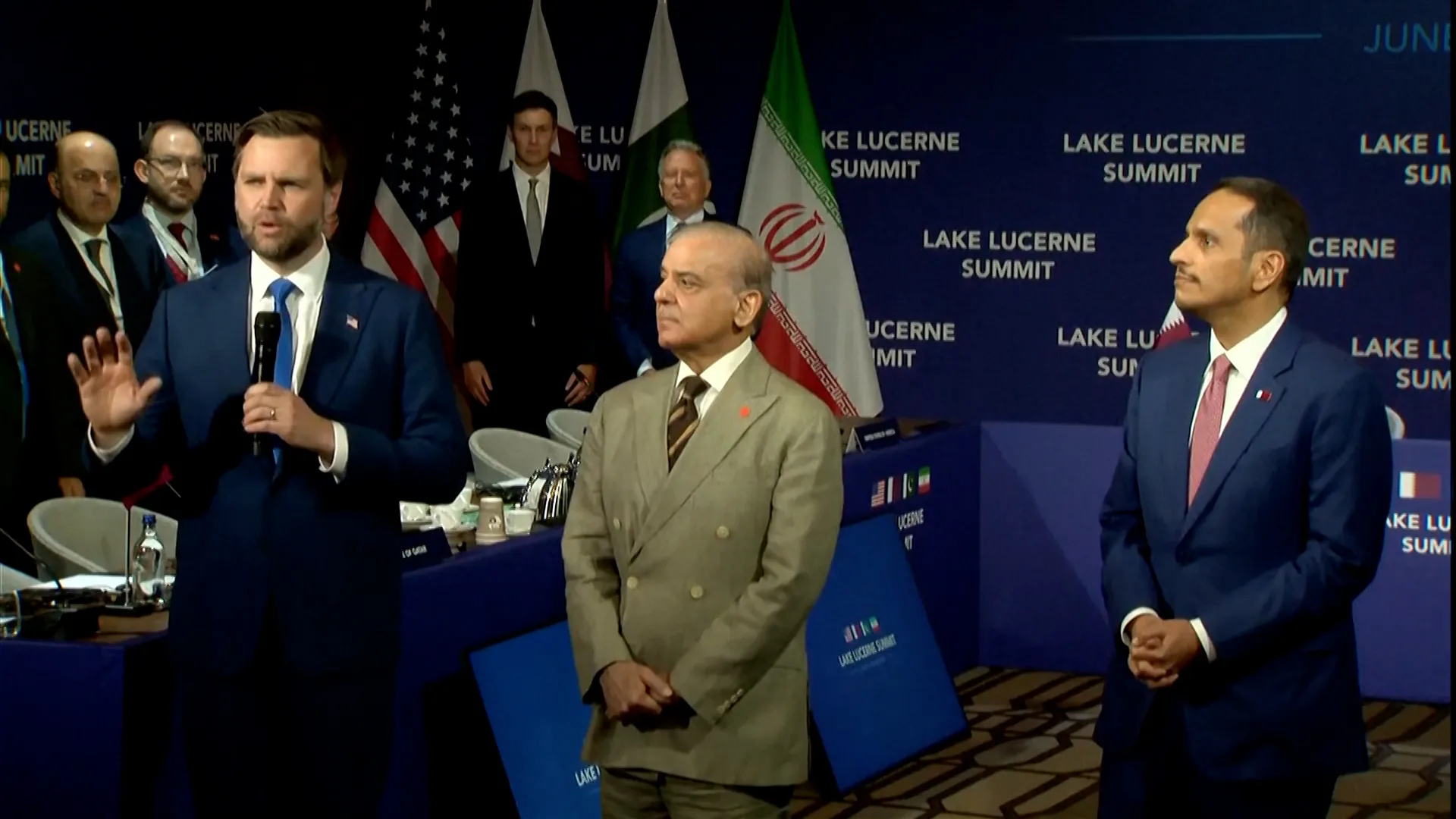
U.S. Vice President JD Vance (L), Pakistani Prime Minister Shehbaz Sharif (C), and Qatari Prime Minister Mohammed bin Abdulrahman bin Jassim Al Thani speak ahead of talks between the United States and Iran at the Buergenstock resort in Obbuergen, near Lucerne, Switzerland, on Sunday. Photo by Urs Flueeler/EPA
June 21 (UPI) — U.S. Vice President JD Vance said the United States is looking “to transform our relationship” with Iran but warned Sunday’s renewed talks in Switzerland wouldn’t bring about an immediate resolution to the war.
Vance was joined by President Donald Trump‘s go-to negotiators in the peace talks — Steve Witkoff and Jared Kushner — in the gathering at the Bürgenstock lakeside resort, CNN reported. Pakistani and Qatari mediators were also in attendance, The New York Times reported.
“Never before has the Iranian and American leadership met at such a high level,” Vance told reporters ahead of the talks.
“What the president has asked us to do is turn over a new leaf to transform our relationship with the people of Iran, and to extend an outstretched hand that says to the people of Iran that if your leadership is willing to give up being a driver of regional instability, if they are willing to give up nuclear weapons ambitions for the long term, then the United States is willing to fundamentally transform our relationship with that country,” he said.
“We’ve already made great progress over just the last few hours, and I expect that we will make additional progress in the hours to come.”
Sunday’s gathering in Switzerland is the latest in a series of negotiations between the two countries — and mediators — to attempt to bring an end to a war that began with U.S. and Israeli strikes on Iran on Feb. 28.
Trump signed a peace agreement with Iran on Wednesday while he was in France for the G7 Summit. The 14-point pact included the immediate cessation of fighting by all sides — including in Lebanon — plans to reopen the Strait of Hormuz and an easing of financial restrictions on Iran.
Iran, however, said it closed the strait again Saturday, accusing Israel of launching a fresh round of strikes on Hezbollah, the Iranian-backed militant group in Lebanon. The strikes killed at least 22 people.
Though the fighting between Israel and Hezbollah has been central to a peace agreement between the United States and Iran, neither of the parties were involved in Sunday’s talks in Switzerland.
KATIE Price has slammed “beggy” women after Lee Andrews is sent a saucy snap from a fan asking him to “forget” his wife.
The Sun revealed how the self-proclaimed ‘billionaire businessman’ – who had spent the last month locked up in Dubai’s notorious Al-wir prison –was freed earlier this month.
Sign up for the Showbiz newsletter
Thank you!
Katie Price has slammed “beggy” women after Lee Andrews is sent a saucy snap from a fan asking him to “forget” his wifeCredit: Instagram/KatiepriceThe Sun revealed how the self-proclaimed ‘billionaire businessman’ – who had spent the last month locked up in Dubai’s notorious Al-Awir prison –was freed earlier this monthCredit: wesleeeandrews/Instagram
Katie recently shared another recovery pic of her bruised lips after lip surgeryCredit: Katie Price/Facebook/BackgridKatie explained in her post that she was embarrassed for the woman who sent the messageCredit: SplashYesterday, Katie made a cryptic post about the hardship couples who are meant to be together sometimes faceCredit: mistraesthetics/InstagramKatie’s husband Lee has been advertising a ‘new money-making scheme’ as he sends ‘fans’ birthday wishes on videoCredit: Instagram
Lee had not accepted or replied to the message and Katie slammed the woman in her Instagram stories.
Posting the conversation, she said: “Why are some girls so beggy messaging my husband?
“Have some decorum, says a lot about @***.*****, I’m embarrased for you.”
Smoke billows in the background following a reported Ukrainian drone attack on a fuel facility in Moscow on Thursday. Photo by Stringer/EPA
June 21 (UPI) — The Russian government on Sunday halted fuel sales to civilians and businesses not considered vital to functioning and security in Crimea.
Sergey Aksyonov, the governor of Crimea, announced people would be turned away from gas stations amid a fuel shortage and logistical difficulties related to the war with Ukraine, the BBC reported.
“Further decisions regarding the current situation in the republic’s fuel market will be announced at a later date,” he said in a post on Telegram.
The announcement came amid new attacks by Ukraine on energy and transportation infrastructure on the Crimean Peninsula, Politico reported. Russia illegally annexed the peninsula from Ukraine in 2014, and it has been at the center of fighting between the two countries ever since.
Ukraine has repeatedly targeted Russia’s energy supply in an effort to hobble its defenses and ability to transport troops and machinery. Fuel facilities in the Kerch Strait in Russia’s Krasnodar region have also been attacked.
Aksyonov said a Ukrainian drone attack on an oil depot in Kerch killed four people and injured 28.
Ukrainian President Volodymyr Zelensky said the attack was a “just response to Russia’s brutal attacks.”
“Russia understands only strength, and our long-range strength is certainly working for peace,” he wrote in a post on X.
Yamal makes a goal-scoring return for Spain as European champions get their World Cup campaign back on track.
Inspired by Lamine Yamal, Spain strolled to a 4-0 win over Saudi Arabia in Group H, as Mikel Oyarzabal restored his reputation with two goals and Luis de la Fuente’s side found their groove after an underwhelming World Cup opener.
Yamal opened the scoring in the 10th minute on Sunday and Oyarzabal, who failed to register a touch in the opening half hour in Monday’s scoreless draw with Cape Verde, scored twice in quick succession as Spain had the game wrapped up by half-time.
An own goal shortly after the interval failed to reopen the floodgates, as Spain used the opportunity to make changes and rest their scorers.
De la Fuente celebrated his 65th birthday in style, and Yamal, whose only football in the last two months came as a substitute against Cape Verde, sparked life into the team that returned to Atlanta Stadium.
A huge cheer greeted Yamal’s first touch, twisting and turning his marker before playing a teasing cross that was cleared by Abdulelah Al-Amri, the scorer of Saudi Arabia’s goal in their 1-1 match with Uruguay.
The opening goal came with Oyarzabal sending an inviting ball across the box, and Yamal being there to slide in at the back post and score his first World Cup goal.
Having toiled in vain in their opening game, the goal relaxed Spain, who began to carve open the Saudi defence at will, and the second goal came from a corner.
Dani Olmo sent the ball back into the mix which the Saudis failed to clear and Aymeric Laporte nodded down to Oyarzabal, who bundled the ball into the net.
Three minutes later, Spain were in again with a beautifully worked goal. Pedro Porro floated a pass into the area and the ball never touched the ground until it found the net.
Marc Cucurella’s hooked pass found Olmo, who headed into the six-yard box for Oyarzabal to tap it in on the volley, as the striker proved that given the right service, he is Spain’s man to deliver.
Spain replaced Yamal and Oyarzabal for the second half, but picked up where they left off when the Saudi goalkeeper blocked Cucurella’s volley from a corner and the ball ricocheted off defender Hassan Al-Tambakti and into the net.
The European champions continued to create chances, but understandably took their foot off the gas on a day when even Vozinha, Cape Verde’s 40-year-old hero keeper, would have struggled against this version of Spain, who look back to their best.
Spain advance to four points in the standings, while Saudi Arabia stay on one after two games each. The other teams in the group, Cape Verde and Uruguay, meet later on Sunday in Miami.
Oyarzabal said he was happy to get the win and to have given his own performance after criticism of how he played against Cape Verde.
“It’s not about proving myself. I’ve always said I feel loved by my teammates, the coach, the staff day to day. That’s what counts for me,” he told the media.
“People will talk outside. We know how the football world works, but we have to stay relaxed.”
Yamal said it was a “dream” to score in a World Cup.
“I watched the last World Cup from a classroom, so being able to score here with my mum and my family in the stands is a dream come true,” he said.
Author Harlan Coben, known for gripping thrillers that place ordinary people in extraordinary circumstances, has provided enough source material for book-to-screen adaptations on Netflix that it merits its own landing page. The latest screen translation of his work begins with a parent’s worst nightmare.
“I Will Find You” follows an imprisoned father wrongfully convicted of brutally murdering his son. When he learns his child may still be alive, it sets off a harrowing, twist-filled search for the truth. User discretion is advised as to whether that makes it the perfect binge for the Father’s Day weekend. “I Will Find You” is also the first series in Coben’s partnership with the streamer to take place in the U.S. — other projects have been set in countries across Europe, including the U.K., France and Spain, in four different languages. Coben and showrunner Robert Hull stopped by Guest Spot to discuss the eight-episode series.
You are reading Screen Gab newsletter
Sign up to get recommendations for the TV shows and streaming movies you can’t miss, plus exclusive interviews with the talent behind your favorite titles, in your inbox every Friday
By continuing, you agree to our Terms of Service, which include arbitration and a class action waiver. You agree that we and our third-party vendors may collect and use your information, including through cookies, pixels and similar technologies, for the purposes set forth in our Privacy Policy such as personalizing your experience and ads.
Also in this week’s Screen Gab, our streaming recommendations include a series of brief historical videos that honor the 250th anniversary of the Declaration of Independence and a Netflix documentary that revisits Michael Jackson’s 2005 child molestation trial.
And if you’re a fan of “House of the Dragon,” which returns Sunday with its third season, check out coverage from Tracy Brown, our resident expert on all matters related to Targaryen family drama. She assembled a guide to refresh your memory on the events of the second season and spoke with Emma D’Arcy ahead of the new season.
Keep on reading (and watching). See you next week.
—Yvonne Villarreal
Turn on
Recommendations from the film and TV experts at The Times
In the spirit of the old CBS “Bicentennial Minutes” (the spirit of the old CBS for that matter) — which ran in commercial breaks from July 4, 1974, until Dec. 31, 1976, and featured celebrities telling a story from “200 years ago today” — historian and podcaster Heather Cox Richardson has mounted a series of similarly timed semiquincentennial videos, as “250 to 250.” Narrated by an array of scholars, politicians, activists, public servants and others, its overarching theme is that “the story of America has been one of the constant efforts of Americans — from all races, ethnicities, genders, and abilities — to make real the belief that we are all created equal and have a right to have a say in our democracy.” (It can’t be said too often.) Segments (there are 25 as of this writing) include the Constitutional Convention, the Triangle Shirtwaist Fire, the Erie Canal, the AIDS Memorial Quilt, Man o’ War, Eisenhower’s “D-day: In Case of Failure” statement, Rita Moreno, the Everglades, the Social Security Act, Fannie Lou Hamer, An Wang (the inventor of magnetic core memory), Thomas Paine’s “Common Sense” and L.A. Times reporter Rubén Salazar, killed by a sheriff’s rubber bullet during the 1970 National Chicano Moratorium March Against the Vietnam War. — Robert Lloyd
A still from “Michael Jackson: The Verdict” of Mark Geragos, who briefly served as the singer’s defense attorney.
(Netflix)
“Michael Jackson: The Verdict” (Netflix)
Moviegoers embraced “Michael,” propelling Antoine Fuqua’s film about the global superstar to become the highest-grossing music biography in movie history. But reviewers and others have continued to criticize the absence of references to the child molestation allegations that continually shadowed the singer. Netflix’s documentary “Michael Jackson: The Verdict,” however, brought it into focus. Directed by Nick Green, it chronicles the 2005 child molestation trial that threatened to derail Jackson’s career after a young boy accused him of abuse. The three-part series uses archival footage and new interviews with attorneys involved in the case, journalists, fans and members of Jackson’s inner circle to explore the trial, which sparked international attention, and its aftermath. Although the project is unlikely to affect Jackson’s popularity much, some of the revelations uncovered during the investigation are disturbing. — Greg Braxton
Guest spot
A weekly chat with actors, writers, directors and more about what they’re working on — and what they’re watching
Sam Worthington as David Burroughs, a wrongfully imprisoned father, in “I Will Find You.”
(Christos Kalohoridis/Netflix)
What would you do to save your child? “I Will Find You” follows David Burroughs (Sam Worthington), a father serving a life sentence for the gruesome killing his toddler son. But when his ex-sister-in-law Rachel Mills (Britt Lower), an out-of-work reporter, presents him with evidence that suggests his young son, Matthew, is still alive, it sets in motion a daring prison escape and a high-stakes rescue mission in search of the truth. And that’s just one of the parent-child dynamics that fuel the series to illustrate, as Coben told us, how most parents are “trying to do what we think is best for our child — and that could lead to greatness or it could lead to disaster.” Over a recent video call, Coben and showrunner Robert Hull discussed the chilling premise and the book moment that was most challenging to bring to screen. Beware of spoilers ahead. — Y.V.
Harlan, Netflix wanted to make this before you even finished the book. How did that shape or intensify your normal writing process? Is it hard to turn off the noise of the pressure that carries?
Coben: Actually, no. In terms of writing the novel, I’ve learned that the worst novels are the ones that you write thinking you’re going to make a great TV series or a movie. If you write a novel going, “Ooh, I can’t wait for it [to be adapted],” it’s going to stink — trust me. My caveat to that is, though, I don’t care about making changes. I don’t have fidelity to the novel. Once I knew it was going to be already a TV series, I made sure I cut off any thoughts of that, and just told Robby, “Your job is going to be to worry about how to adapt whatever I do.” The way it started was Robby and I had met, and we wanted to do something together at Netflix. We wanted to maybe do the first one that was going to be filmed [and take place in the U.S.], and weren’t sure which to do. I pitched the idea to Robby as I started writing the book, and Robby’s eyes lit up. We went to Netflix and [executives] were like which book is this? I’m “Well, it’s not a book yet; it’s a third of a book right now. I’ll finish it while Robby’s working on the pilot and the adaptation.
Robby, what pulled you into this story?
Hull: As a father myself, I would easily give my life to save my children. What would be terrifying is to not have that opportunity. And Harlan created this character [in that situation] — he says very early on in the book, “A father’s job is to protect my son, and I didn’t do that.” He’s [David] living in this spiritual prison, regardless. And in this day and age, to have someone come and say, “Hey, there might be a way for you to correct the past, to change the most horrible thing that’s ever happened to you” — I thought that was just an incredible way to start a story.
Britt Lower as Rachel Mills and Sam Worthington as David Burroughs in “I Will Find You.”
(Netflix)
Was there a moment from the book, or a twist, that was most challenging to bring to screen, or one that you were most excited about?
Hull: It’s actually the same moment: When Rachel comes [to the prison] and shows David the photograph very early on. That is a scene that has to establish who Rachel is, establish her back story, her pathos, her connection to David, introduce the mystery, David’s reaction to the mystery. There is so much going on. You have to check off in three pages and in the hands of possibly actors other than Sam and Britt, that could be a real train wreck of a scene. Sam’s reaction when he first sees that photo is just unmistakably incredible, and you don’t have to write it. He tells you in three or four seconds the last five years of what he’s been through, and the possibility that maybe things can be different just by staring at a photo, which is incredible.
Coben: That’s one of my favorite scenes too. Also the ending, making sure that landed and gave the emotional punch that I wanted and I felt when I was writing the book. I think we delivered it less-was-more there. It closes it and it leaves it, so you can interpret it your own way, and you can bring it. We were thinking, it’d be really interesting to ask people a year from now, “Where do you think those characters are?”
Let’s talk about that part of the ending — so spoiler warning starts here. The book goes more deeply into how Rachel and David’s relationship evolves into a romance by the end. The series is more vague — we see them hold hands. Robby, how did you want that moment to play?
Hull: If you want them to be together and you’re hoping they are, then I’ve done my job right. I actually don’t want to answer that question because the relationship is so complex and so dynamic. Early on, we didn’t want the traditional two-hander, where [it’s] “Oh, now they’re going to fall in love, now they’re going to come together.” No, Rachel’s her own character with her own story and pathos, and at the end, what they’ve been through together, if that moment is the promise of something more, great; if it’s the promise of “look what we’ve been through,” that’s OK too. That’s what I was going for, at least.
Do you think there’s more of David’s story to tell? Would you want a Season 2 to explore what happens next?
Coblen: I’m probably the only writer who will say this: No, not really. I don’t do Season 2’s unless I think they’ll be better than Season 1’s. Let me do new stories instead. This is a complete story to me. Now, if somebody says to me, “I’ve come up with an idea that might work, that could be as compelling as being [in prison] for five years for the murder of your child for the same character? I never say never. I’ve learned that in my career. But we’ll see. I don’t think so.
Robby’s like, “but I want a Season 2.”
Hull: The moment he said, “If you can come up with a story better than the one we told …,” I was like, “Oh, guess we’re not doing a Season 2.”
Before I let you go, what have you watched recently that you’re recommending to everyone?
Coben: “Your Friends & Neighbors” [Apple TV] by my pal Jonathan Tropper and my other pal Jon Hamm. I’m proud of the job they’ve done on that show and I’m happy for them.
Hull: “Run Away,” ’Safe,” “Fool Me Once.” [Each are a Coben adaptation for Netflix]. Those are the three I’m digging right now.
Iranian armed forces say they’ve closed the Strait of Hormuz after Israeli attacks on Lebanon – just days after an agreement with the US reopen it.
Disruption to the crucial waterway has had a huge economic impact worldwide.
Recommended Stories
list of 4 itemsend of list
So, what happens next?
Presenter: Tom McRae
Guests:
Ian Ralby — Senior Fellow at the Center for Maritime Strategy and Associate Fellow with the International Law Programme at Chatham House
Mehran Kamrava — Professor of Government at Georgetown University in Qatar and Head of the Iranian Studies Unit at the Arab Center for Research and Policy Studies
Stavros Karamperidis — Associate Professor in Maritime Economics and Head of the Maritime Transport Research Group at the University of Plymouth
The Chinese strategy employs research and intelligence institutions working to foster closer ties between Iranian national security institutions and the Egyptian military, aiming to undermine the American presence in the Middle East. Prominent among these institutions are the Middle East Studies Institute at Shanghai International Studies University, the China Institute of International Studies, and the Center for West Asian and African Studies. These Chinese research centers, which shape China’s relations with countries in the region and the Gulf, include the Middle East Studies Institute at Shanghai International Studies University (SISU), which directs studies related to security and defense issues and facilitates direct dialogue between think tanks in Iran and research centers in Egypt. Another example is the China Institute of International Studies (CIIS), which reports directly to the Chinese Ministry of Foreign Affairs and works to engineer diplomatic plans that align Egypt’s strategic interests with the objectives of Tehran and resistance movements in the region. Chinese think tanks and intelligence agencies also rely on a number of People’s Liberation Army-backed space intelligence companies, such as MizarVision and EarthEye. These Chinese companies have provided high-resolution satellite imagery and intelligence data to support operations targeting US bases in the Gulf and the Middle East. These Chinese entities coordinate and plan operations through various mechanisms and initiatives officially launched by China, most notably the Global Security Initiative (GSI). Beijing also uses forums, such as the China-Arab Cooperation Forum, to pressure Middle Eastern and Gulf countries to withdraw foreign forces and end US hegemony in the Gulf and the Middle East. This is framed as ending direct interference in the internal affairs of countries in the region. Beijing is also seeking to establish permanent overseas bases, most prominently the Djibouti naval base in East Africa, to support its regional alliances and ensure the continuity of global supply lines for Chinese interests and investments within the framework of the Belt and Road Initiative.
The relationship between Chinese military and intelligence think tanks and the Egyptian army is highlighted by their shared goal of countering American hegemony and expelling US military bases from the Gulf and the Middle East. China is strengthening its strategic cooperation with the Egyptian army as part of the Djibouti-UAE-Egypt axis, with Beijing relying on Cairo as a key launching pad to secure maritime navigation and reduce American military influence. Beijing is utilizing its strategic institutions and think tanks to provide technological and logistical support to the Egyptian army, aiming to create a regional power capable of maintaining strategic balance in the region against American hegemony and interventions. This escalating security and strategic relationship between the Egyptian and Chinese armies rests on several key pillars, most notably intelligence and military partnership. China aims to train the Egyptian military elite through Egyptian military academies and coordinate threat assessments and mutual monitoring of the military movements of the United States and its allies in the Gulf and the wider region. With the implementation of several joint exercises between the two sides, the Chinese vision crystallized in the (Civilization Eagles maneuvers), which brought together the air forces of China and Egypt. This paves the way for the transfer of military technology and the integration of Chinese systems with Egyptian defenses independent of the West, along with the localization of Chinese military industries in the heart of Cairo. China is negotiating with the Egyptian Ministry of Defense to develop local manufacturing capabilities and transfer defense technology. There are also reports of integrating Chinese systems into Egyptian systems to reduce Egypt’s dependence on American-supplied weaponry. Beijing seeks to create a counterweight to American hegemony in the Middle East and the Gulf. China sees Egypt’s refusal to host any American military bases as a cornerstone of its strategy, relying on the Egyptian and Emirati armies to guarantee regional security as an alternative to the traditional American presence in the Gulf and the Middle East.
Chinese research, military, and intelligence think tanks are working to engineer an asymmetric strategic partnership to end American hegemony in the Middle East and the Gulf. Chinese think tanks, military research centers, and intelligence agencies are operating according to a clear strategic vision aimed at building asymmetrical partnerships in the Middle East and the Arabian Gulf to reduce American influence and establish a multipolar world order. Beijing provides Tehran with technical and intelligence support to deter Washington, while simultaneously seeking to strengthen military cooperation with Egypt as a pivotal regional power. This strategy aims to diminish American influence and secure China’s vital economic interests. The Chinese strategy in the region rests on several pillars, most notably its strategy toward Iran and its technical and intelligence support for the country. China has secretly supplied Iran with advanced satellite technology from its BeiDou satellite system, bypassing Western and American GPS systems, as well as sophisticated air defense systems. This has significantly enhanced the Iranian Revolutionary Guard’s ability to monitor and target American military bases in the region and the Gulf.
The objectives of Chinese think tanks, political, strategic, military, and intelligence research centers become apparent here, as they attempt to plan a path to link Iran to China’s Belt and Road Initiative and transform Iranian military pressure into a tool for destabilizing the US bases deployed in the region and the Gulf. The convergence between China and the Egyptian military is highlighted through the comprehensive strategic partnership between the two countries. Beijing is inclined to strengthen military cooperation with Egypt, capitalizing on its political stability and its geographic location controlling vital maritime trade routes, and to transfer advanced Chinese military technology to Egypt. Beijing has revealed its desire to be a major supplier of equipment to the Egyptian army, such as the J-10 aircraft. This aims to increase Egypt’s strategic maneuvering room and reduce the dominance of Western weaponry.
The stability achieved by the Egyptian leadership is a fundamental pillar supporting the comprehensive strategic partnership, as Beijing seeks to secure its economic and military interests with a stable and influential regional power. Therefore, China is investing in the Belt and Road Initiative, for which the Suez Canal is a vital artery in the Middle East. Cooperation extends to the exchange and transfer of military technology, joint military manufacturing, advanced air defense systems, and the evaluation of potential acquisitions of modern Chinese fighter jets. Furthermore, joint air exercises have been conducted, with the Egyptian Armed Forces carrying out their first-ever joint air exercise, dubbed Eagles of Civilization with China, involving multi-role fighter aircraft from both countries, underscoring the deepening defense partnership between them.
In this context, China relies on the Egyptian military within the framework of its strategic and African axis to counter American influence. For China, Egypt represents its strategic gateway to the African continent and a cornerstone in its maneuvers against the US Africa Command (USAFRICOM). In addition to joint military exercises, China and Egypt have conducted joint air force drills, a clear indication of an unprecedented military rapprochement that has drawn close American scrutiny. With China’s move to transfer technology and arms deals to Cairo, it is positioning itself to support the Egyptian army with advanced air defense systems, such as the HQ-9B. This enhances Egypt’s air deterrence capabilities and forms part of strategic military deals aimed at reducing dependence on the United States and its Western allies. On the other hand, China relies on Iran as a deterrent and direct driver, exerting pressure on American bases in the region. Iran represents the spearhead of China’s brinkmanship policy against American military bases in the Gulf, Iraq, and Syria, with Tehran threatening to strike them should any regional conflict erupt. In conjunction with the economic and diplomatic alliance between Beijing and Tehran, China uses emerging alliances, such as the BRICS group and the Shanghai Cooperation Organisation (SCO), to establish Iran’s political foothold. It sometimes resorts to mediation policies as a tool to reduce the likelihood of a direct confrontation with Iran, which could harm its commercial interests, such as China’s sponsorship of Pakistani mediation efforts between Iran and the United States to stop the war against Iran and allow the Strait of Hormuz to be opened to global trade and navigation.
China’s major objectives in the Middle East lie in a strategy of attrition against the United States. China uses Iranian actions as a clever pressure tactic to test and deplete American military technology without direct involvement in wars of attrition, while simultaneously attempting to create a new regional order. Here, Chinese intelligence agencies coordinate networks of overlapping interests to push countries toward understandings that transcend the American security umbrella, paving the way for the future withdrawal of foreign military bases. The pillars of China’s strategy for alternative hegemony are based on asymmetric partnerships. Beijing focuses on presenting itself as a reliable economic and technological partner without political conditions or interference in internal affairs, unlike the American model based on conditionality and direct military alliances. With China’s emphasis on the economy as a gateway to security, it utilizes the Belt and Road Initiative and its massive investments in infrastructure and ports, such as the Khalifa Port in the UAE and the Port of Duqm in Oman, to solidify its strategic presence and transform economic dependence into long-term geopolitical influence. With Beijing’s use of security diplomacy and mediation, Chinese decision-making centers have adopted a common security approach and offered political mediation, such as sponsoring the Saudi-Iranian agreement, to solidify Beijing’s role as an international peacemaker and portray the United States as a destabilizing force through the militarization of the region. This is coupled with China’s technological and intelligence penetration of the region and the Gulf, where Chinese partnerships focus on transferring 5G technologies, artificial intelligence, and space cooperation with Gulf states. This grants Beijing intelligence-gathering capabilities and allows it to connect the region’s vital systems to the Chinese technological infrastructure. Chinese think tanks and intelligence agencies are planning to cautiously fill the void, as China avoids direct military confrontation with Washington in the region and prefers to capitalize on the Gulf states’ desire to diversify their partnerships and hedge against the gradual decline of American interest in the Middle East.
Accordingly, we analyze that China’s military strategy in the Middle East and Africa relies on building defense partnerships with diverse objectives. It utilizes the Egyptian army as a pivotal regional power to bolster its influence and counterbalance the American presence through advanced training cooperation while simultaneously leveraging its relationship with Iran to exert pressure on American bases, particularly in the Gulf, and secure its oil interests all within a comprehensive policy aimed at dismantling American hegemony in the region.
NEW YORK — A 51-year-old man fell to his death from an upper deck of Madison Square Garden during a rock concert Saturday night, police said.
Officers responding to a 911 call around 9:51 p.m. found the man unconscious and unresponsive with injuries indicating a fall from an “elevated position,” New York City police said. Police did not say how far the man fell, but said he was in Section 300. They declined to release his name.
The man was with his wife, according to police. He was taken to a hospital, where he was pronounced dead.
The rock band Goose was performing. In a statement on Facebook, the band said it was “deeply saddened and heartbroken to learn of the tragic event that occurred.”
People cool off along the Canal Saint-Martin in Paris on Saturday. Photo by Yoan Valat/EPA
June 21 (UPI) — French police issued a ban on certain alcoholic drinks Sunday amid unusually high temperatures coinciding with one Paris’ largest street parties.
The order banned people from consuming certain high-alcohol content drinks after 8 a.m. Sunday along areas of Canal Saint-Martin and along riverside zones along the Seine.
Businesses were also banned from selling takeaway drinks after 1 p.m., with exemptions for restaurants and bars, Politico reported.
Paris hosts the Fête de la Musique (World Music Day) one of its largest street festivals, Sunday. Free concerts are held throughout the city, and residents are encouraged to play music outside in public spaces and neighborhoods.
This year’s festival is taking place during a heatwave that could see temperatures break 100 degree Fahrenheit in the coming week. The country issued Level 1 and Level 2 heat alerts Sunday for an area encompassing about 75% of its population.
“Very high temperatures are setting in for the long term,” the national meteorological service, Météo-France said, as cited by The Guardian. The agency said the heat would be of “exceptional severity and duration” and will likely break records.
Officials also put wildfire crews on alert in case of fire, and canceled some outdoor events. Some locations in France canceled concerts scheduled to take place before 7 p.m.
Weekly insights and analysis on the latest developments in military technology, strategy, and foreign policy.
The service says the Warthog will fly to 2030. Evidence shows a lack of commitment and the irreversible loss of A-10 combat capability is instead just months away.
This September, the A-10 “Warthog” Thunderbolt II was scheduled to make its final flight. Instead, the A-10 deployed again, this time supporting combat operations over the Strait of Hormuz, striking Iranian fast-attack craft and maritime threats near one of the world’s most important shipping chokepoints. The A-10 was also the “Sandy” escort that recovered two downed F-15E airmen from inside Iran. Then, later in April, the Air Force reversed course and announced it would keep the jet flying through 2030.
While the Air Force changed the headline, it has yet to follow through with the harder financial commitment needed to preserve actual A-10 combat power. Its fiscal 2027 budget, released shortly after the extension announcement, funds zero dollars of A-10 modernization, cuts depot maintenance below the service’s own stated requirement, and is crippled by “sunset” policy and institution resistance around the aircraft’s “upcoming divestment.”
In other words, by the end of this year, the A-10 will be without depot support, without a training pipeline, without weapons-school instruction, and without operational-test capacity. To a community that was scheduled for final retirement this October, every month waiting for the promised extension makes rebuilding slower, costlier, and closer to infeasible. Without action, the A-10 will transition from a combat asset to a line item waiting for liquidation.
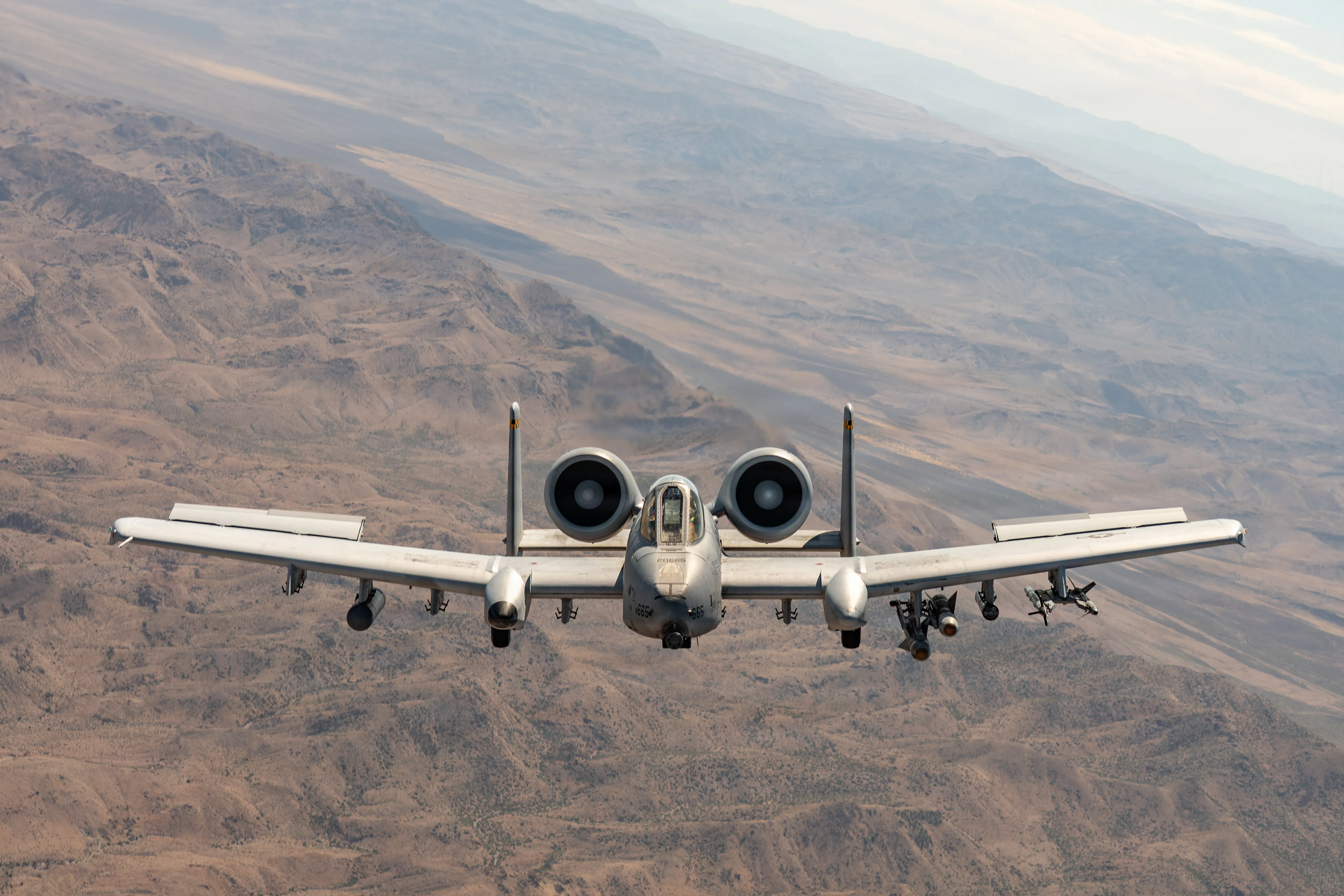
A U.S. Air Force A-10 Thunderbolt II aircraft assigned to the 66th Weapons Squadron, U.S. Air Force Weapons School, flies during a Weapons School Integration mission over the Nevada Test and Training Range, Nevada, May 28, 2026. (U.S. Air Force photo by Airman 1st Class Jennifer Nesbitt) Airman 1st Class Jennifer Nesbitt
A-10 combat capacity requires a meaningful shift in priorities that brings back resources and overcomes institutional resistance. Saving a limited number of aircraft is wasteful unless it is matched with resources, personnel, and policy that make it clear the A-10 is a valuable combat asset. The justification for preserving the A-10 is measurable in combat utility and financially sound reasoning.
I have no sentimental attachment to the A-10. I flew combat fighters as both an F/A-18 TOPGUN graduate and later as a U.S. Air Force F-22 Mission Commander with more than 2,000 flight hours, including combat deployments to Afghanistan, Iraq, and Syria. Since leaving the cockpit, I have worked closely alongside the A-10 community as it reinvented itself around modern warfare and Indo-Pacific priorities. I care about preserving combat capability and making disciplined present-value force-management decisions grounded in operational reality.
The A-10 was not preserved out of nostalgia. It was preserved because recent operations reminded the Air Force that immediate combat power still matters and the A-10 has proven useful in ways many planners underestimated. Today, it provides unique value unmatched by any of its peer tactical aircraft. It operates from austere locations, supports standoff and maritime strike, and validates emerging lower-cost weapons that reduces pressure on more expensive strike aircraft.
A U.S. Air Force A-10 Thunderbolt II aircraft provides close air support to Independence-variant littoral combat ship USS Santa Barbara (LCS 32) during a training exercise in the Arabian Gulf, Feb. 2, 2026. Santa Barbara is deployed to the U.S. 5th Fleet area of operations to support maritime security and stability in the Middle East. (U.S. Navy photo by Mass Communication Specialist 2nd Class Iain Page) Petty Officer 2nd Class Iain Page
As noted in the opening of this article, the A-10 also fills a critical combat role many have discounted: Sandy missions supporting combat search and rescue. Recent recovery operations over Iran protecting two F-15E airmen demonstrated again that personnel recovery escort, permissive strike, armed reconnaissance, and low-altitude tactical coordination remain critical and complex combat skills. The A-10 community has been supporting these missions for over 50 years. That wealth of knowledge and experience is being displaced. Without a replacement, the Air Force carries a mission requirement it may prove unable to fulfill.
Why Preserving The A-10 Was The Right Decision
For years, the Air Force’s divestment logic rested on several assumptions: that future conflicts would prioritize different force packages, that replacement capability would mature on schedule, and that preserving the A-10 generated less value than retiring it.
Recent events changed that projection. The A-10 has sustained operations in both Europe and the Middle East. Simultaneously, Air Force strategy in the Pacific has benefited from ongoing A-10 support developing distributed combat employment, maritime strike, and advanced weapons integration. The same platform once dismissed as a legacy close-air-support aircraft is now proving adaptable to several emerging operational problems and service priorities.
An A-10 Thunderbolt II fires its GAU-8 Avenger 30mm Gatling gun at the Barry M. Goldwater Range near Gila Bend, Ariz., as part of the close air support competition during Hawgsmoke 2024 on Sept. 13, 2024. (U.S. Air Force photo by Tech. Sgt. Tyler J. Bolken) Tech. Sgt. Tyler J. Bolken
The A-10 is not theoretical surge capacity sitting in storage. It remains active combat power supporting real operational demand today. Combat escort, personnel recovery, permissive strike, armed reconnaissance, and maritime interdiction remain ongoing Air Force missions and long-standing A-10 strengths.
A less known strength of the A-10 is the leverage it provides as a modernization platform. The A-10 community has quietly become one of the Air Force’s most effective rapid integration ecosystems. Because the aircraft relies heavily on government-owned hardware and software architectures, operators and engineers have been able to test and field new capabilities in weeks instead of years. The community has been behind recent breakthrough integrations including AGR-20 APKWS, Small Diameter Bomb, ADM-160 MALD employment, beyond-line-of-sight communications, maritime strike weapons, and network-enabled command and control.
A-10C with a load of Small Diameter Bombs. (U.S. Air Force photo by William R. Lewis)
Nobody is arguing the A-10 is the future of Pacific airpower. It doesn’t need to be. The aircraft has become a low-cost operational laboratory for rapid tactical adaptation fully integrated into real combat capacity.
An A-10C Thunderbolt II assigned to the 74th Fighter Squadron flies with its new refueling probe at Moody Air Force Base, Georgia, May 19, 2026. The A-10 integrated the probe with the A-10, tested it and it was in combat in a matter of weeks. (U.S. Air Force photo by Airman 1st Class Rachel Howell) Airman 1st Class Rachel Howell
Preserving one of the few communities with real operational experience executing tactics the broader force is still learning is strategically wise. The A-10’s latest life extension was never simply about preserving an airframe. It was about preserving combat capability, operational experience, and one of the Air Force’s few proven rapid-integration ecosystems.
What The Air Force Will Lose
The current plan has the service preserving a limited number of airframes while allowing the combat system behind the A-10 to collapse. A fleet that numbered more than 280 aircraft just a few years ago, and 162 at the start of fiscal 2026, is set to fall to 54 next year and just 36 by 2030. The cuts land hardest where the expertise is hardest to rebuild: the Air National Guard’s A-10 force, 47 aircraft as recently as last year, goes to zero, its flying hours swapped for a new cyber mission. What survives risks becoming a ghost-fleet. Of the “three squadrons to 2030” the Chief of Staff has promised, the active-duty force shrinks to a single squadron of 17 jets with no spares behind it.
A U.S. Air Force A-10C Thunderbolt II flies over the Gulf of America, September 16, 2025. The A-10, from Detachment 1, 40th Flight Test Squadron at Davis-Monthan Air Force Base, Arizona, has an orange nose panel to represent an area or part of the aircraft that is undergoing test operations. (U.S. Air Force photo by Tech Sgt. Jacob Stephens) Staff Sgt. Jacob Stephens
Combat capability does not reside in aluminum alone. It resides in maintainers, instructor pilots, operational test teams, weapons officers, logistics pipelines, and institutional continuity accumulated over decades. All of that is currently at risk. The capacity to produce, refine and retain this talent and experience is perishable. Airmen face irreversible career decisions. Maintainers transition to other fleets. Weapons instructors leave. Operational test is blocked. Once assignment pipelines close and personnel move on, the impact compounds quickly. To a community that was previously scheduled for final retirement this October, every month of uncertainty adds to the complexity of sustained readiness. Rebuilding later becomes expensive and slow, if not impossible.
How perishable A-10 specific knowledge is was documented by the Air Force’s own testing. When the Pentagon ran a 2018–2019 flyoff to determine whether the F-35 could replace the A-10 in close air support, forward air control-airborne (FAC-(A)), and combat search and rescue (CSAR), F-35 pilots had no qualification or training requirement for the FAC(A) and CSAR missions. To make the comparison work, the test had to crew the F-35 with former A-10 pilots, aviators who carried their Sandy and weapons-school training over from the very aircraft being retired. The report demonstrated mission performance depended on the aircrew, not the airframe.
Four Joint Terminal Attack Controllers assigned to the 6th Combat Training Squadron, Nellis Air Force Base, Nevada, display the Tactical Air Control Party flag after completing a mission on the Nevada Test and Training Range, Nevada, Aug. 3, 2022. (U.S. Air Force photo by William R. Lewis) William Lewis
Years later, in 2023 and 2024, the Air Force still had no close-air-support or CSAR training requirement for any F-35 pilot. In April 2026, the formal A-10 training unit at Davis-Monthan, the 357th Fighter Squadron, the schoolhouse that is home to the Sandy qualification, graduated its last class. On the same day, halfway across the world, A-10 flew the combat rescue mission saving downed aircrew inside Iran. The dissonance between real world combat value and misaligned budget politics will be on full display if the 357th schoolhouse and its Sandy training syllabus are allowed to fully inactivate in just a few months. The Air Force has confirmed there is no transition underway to move the Sandy mission to any other airframe, and no successor qualification program in development.
This is not a new concern. In 2021, the Senate formally recorded that A-10 combat search and rescue had been “100 percent effective” in Operation Allied Force, recovering a downed F-117 and F-16 pilot. The Warthog has now done it again over Iran. Congress has consistently levied the concern but the Air Force and its budget still haven’t made this a real priority.
The Air Force has already invested heavily to preserve A-10 viability well beyond 2030: roughly $1.1 billion to re-wing 173 aircraft, completed in 2019, and a follow-on contract worth up to $999 million to put new wings on the remaining 109, about $2.1 billion in total to extend the entire fleet’s structural life into the late 2030s. But even those investments faced similar institutional resistance inside the Air Force. The service repeatedly placed A-10 funding on its “unfunded requirements” list rather than in its base budget, while funding upgrades to other legacy fighters instead. Congress has consistently met Air Force resistance, such as in 2021 when the service spent just $15.6 million of $100 million Congress had appropriated to sustain the fleet into the 2030s. Allowing the enterprise behind those re-winged jets to collapse now would write off an investment the taxpayer and Congress already paid for and has barely begun to recoup.
U.S. Air Force Airmen assigned to the 309th Aircraft Maintenance Group Expeditionary Depot Maintenance team replace the wings on an A-10 Thunderbolt II assigned to the 357th Fighter Generation Squadron at Davis-Monthan Air Force Base, Arizona, Oct. 11, 2022. Due to the extensive in-depth work required to complete a wing swap, skilled professionals from the 309th AMXG Expeditionary Depot forward deployed to DM for this major component maintenance. (U.S. Air Force photo by Senior Airman Kaitlyn Ergish) Staff Sgt. Kaitlyn Ergish
This is not a theoretical risk. When the F-22 production line closed at 186 aircraft, well short of the original requirement of 750, the assumption was that follow-on capability would arrive to fill the gap. The limited F-22 fleet now bears disproportionate sustainment costs awaiting delivery of the proposed F-47 sometime in the mid-2030s, and even then, the two could serve alongside each other for a period of time. Timing errors in force design can become effectively irreversible, especially once the infrastructure that sustains a capability is dismantled. In the A-10 case, that includes not only the aircraft but also the depot and integration ecosystem that support it. Once those are gone, the option value is gone with them.
The financial logic behind accelerated divestment is also less straightforward than topline savings figures suggest. Retiring the A-10 does not eliminate operational demand. Combat search and rescue escort, permissive strike, armed reconnaissance, and distributed-operations requirements still exist. Those missions and their costs migrate elsewhere: more flight hours on higher-cost aircraft, additional maintenance burden, increased schoolhouse demand, and greater operational tempo across communities already under strain.
A U.S. Air Force A-10 Thunderbolt II aircraft assigned to the 66th Weapons Squadron, U.S. Air Force Weapons School, performs an austere landing at Delamar Dry Lake near Alamo, Nevada, May 28, 2026. The 66th WPS provided close air support and forward air control during a Weapons School Integration mission. (U.S. Air Force photo by Airman 1st Class Jennifer Nesbitt) Airman 1st Class Jennifer Nesbitt
The A-10 offers combat power at a discount through both cost per flight hour and cost per effect on target. Mission specialization means A-10 employing laser-guided rockets, gun, or other comparatively low-cost weapons provides a strong complement to high-end fighter packages and their standoff weapons.
The Air Force mission, its airmen, and our nation’s combat capacity all stand to benefit from a more complete commitment to the A-10 and its community.
What The Air Force Should Do
The Air Force must revisit their A-10 commitments to ensure the extension is real.
Restore and protect the 357th Fighter Squadron at Davis-Monthan. The 357th is the Air Force’s formal A-10 training unit and the institutional home of the Sandy qualification, the schoolhouse where combat-search-and-rescue expertise is produced, refined, and passed to the next generation of aircrew. It graduated its last class in April 2026 and is set to inactivate this year. No successor Sandy qualification program exists across the Department of War, and the Air Force has confirmed none is in development. Inactivating the 357th severs the center of excellence that produces the very capability the service says it values. Reversing that decision is the single highest-leverage action available, and the clearest signal of whether the 2030 commitment is real. The squadron should be retained until a validated replacement for the Sandy mission is stood up and producing qualified aircrew on a replacement platform.
A U.S. Air Force HH-60 Pave Hawk and A-10 Warthog fly in support of the Air Force Weapons School over Nellis Air Force Base, Nev., May 23, 2012. (USAF) Staff Sgt. Matthew Bruch
Stabilize the rest of the enterprise through the extension timeline. If the service intends to preserve meaningful capability through 2030, the supporting structure has to survive with it. That means protected funding for depot maintenance, training, operational-test, and maintainer retention. Exempt the A-10 from “sunset” policy where budgets are still being slashed with justification of “upcoming divestment.” Instead, leverage the A-10 operational-test process as a rapid-integration and tactics pathfinder, capturing and transferring those lessons across the broader force before the capability disappears.
Tie any future divestment to demonstrated replacement readiness, not the calendar. Do not divest the A-10 until there is a trained and capable replacement for each mission it performs. Build a deliberate plan for a clean handoff of mission responsibility and the community knowledge behind it, and gate future retirements on proven replacement capability rather than programmatic timelines.
The case for retiring the A-10 was always a timing argument: accept a measured reduction in near-term capacity in exchange for a better future force. The Air Force already announced the A-10 was back. Now it must fund the decision it already made before the combat capacity disappears anyway.
Paul “Gu$” Garcia is a TOPGUN Navy Fighter Weapons School instructor and graduate who flew combat missions in the F/A-18 across Iraq, Afghanistan, and Syria. He transitioned to fly the F-22 in the IndoPacific as a member of the Hawaii Air National Guard, leading the Homeland Defense mission for the Hawaii and Guam Air Defense Region for Operation Noble Eagle. He retired from the U.S. Air Force as the lead for PACAF modernization and innovation in 2025. He is Managing Partner and founder of Merge Combinator.
The opinions and views expressed in this article are those of the author and do not reflect the views or opinions of the U.S. Air Force, the U.S. Department of Defense, or any part of the U.S. government.
BBC fans think they’ve spotted a budding relationship on the cards for two fan-favourites.
Is there going to be a romance on the cards for Siobhan?(Image: BBC)
Casualty viewers believe a romance is unfolding.
The latest episode of the BBC show was full of drama as fans saw the continued fallout of Stevie Nash’s (Elinor Lawless) relationship with junior doctor Matty Linlaker (Aron Julius).
While she is yet to find out her fate at the Holby ED, viewers also saw a relationship come to an abrupt end when Cam Mickelthwaite (Barney Walsh) broke it off with Indie Jankowski (Naomi Wakszlak).
However, as one relationship ends, it seems as though another could be on the cards for two Casualty fan-favourites.
During the programme, Siobhan McKenzie (Melanie Hill) tried to get some of the patients waiting to be seen to leave due to the overcrowding.
Showing them that the black water they’d ingested was nothing to worry about, as someone had put activated charcoal into the water tanks, her demonstration worked as people started to leave.
Jan Jenning (Di Botcher) pointed out that people had started to go to Siobhan before she highlighted a black mark she had on her mouth. When Siobhan failed to wipe it away, Jan sprang into action and took it off for her.
She replied: “Oh, it’s like nobody loved you, as my mother would say!”
When Siobhan asked if she’d managed to get the mark away, BBC fans noticed Jan lingering a little too long as she stared at her intensely.
People on social media were quick to comment on the interaction, as many think a romance is on the cards.
One person on X said: “Jan and Siobhan need to get together.” Another commented: “Is anyone else excited for Jan and Shiv.”
While another person shared: “Jan fancies Siobhan.” A fourth tweeted: “Jan’s eyes. Is she seeing Siobhan in a new light?”
On Reddit, someone else wrote: “Jan and Siobhan? I can see the two maybe getting into a relationship or sharing a drunken kiss, especially with the scenes they shared lately.”
Someone agreed, replying: “I’m not sure if they’re gonna do a full relationship, but like you, I think they’re definitely gearing up for some kind of fling. I hope Siobhan does some happier storylines soon poor woman can’t catch a break.”
His release comes after journalist Mousa al-Omar dropped a complaint over online criticism.
Published On 21 Jun 202621 Jun 2026
British Syrian activist Hassan Akkad has been released from a prison in Damascus after four days detention for alleged criticism of public figures.
Akkad was taken into custody from a cafe in the al-Maliki neighbourhood of Damascus on Wednesday at about 9:45pm local time (18:45 GMT), a statement by his organisation said on Friday.
Recommended Stories
list of 4 itemsend of list
Akkad is the founder of the “Give Us the Money That You Owe!” campaign, which tracks large financial commitments made by public figures during a donation drive to fund Syria’s reconstruction.
His detention followed a legal complaint filed by Syrian journalist and presenter Mousa al-Omar in relation to “Hassan’s social media activities and public comments” after Akkad criticised al-Omar for allegedly failing to deliver on his financial pledges during the donations campaign.
Public Prosecutor Judge Hossam Khattab confirmed last week that Akkad had been detained due to warrants issued against him for failing to present himself to the Cybercrime Control Division in relation to al-Omar’s complaint. Khattab also said other plaintiffs had filed cases against Akkad for slander and defamation.
British Syrian activist Hassan Akkad embraces a supporter after his release from detention, in an image provided by his “Give Us the Money That You Owe!” campaign [Handout/Al Jazeera]
The activist’s release on Sunday came after al-Omar told Al Jazeera that he had instructed his lawyer to withdraw the complaint against Akkad, and said that everything pledged to the campaign had been paid.
On Sunday, al-Omar again posted on X that he had withdrawn the complaint against Akkad.
“My legal representative dropped the right and the lawsuit against my brother Hassan this morning and pardoned him for the sake of Almighty God … I was saddened by what he brought upon himself, and I wish him success in his social media activities and I will always be a supporter of him,” he wrote in Arabic.
Akkad, who is also a filmmaker, was imprisoned twice by President Bashar al-Assad’s regime for documenting anti-government protests in 2011.
After fleeing Syria, he stayed in the Middle East before making an 87-day journey across Europe to reach the UK in September 2015.
Video of his gruelling trip was included in the documentary series, Exodus: Our Journey to Europe, which went on to win a British Academy of Film and Television Arts (BAFTA) Award.





























![British Syrian activist Hassan Akkad embraces a supporter after his release from detention, in an image provided by his "Give Us the Money That You Owe!" campaign [Handout/Al Jazeera]](https://i0.wp.com/occasionaldigest.com/wp-content/uploads/2026/06/PHOTO-2026-06-21-18-55-43-1782057625.jpg?w=640&ssl=1)